The Seven Richest Billionaires Are All Media Barons.

“we all have to be concerned about the consolidation of huge billionaires getting control of nearly all of the major news outlets.”
No other period in history has seen such a rapid and overwhelming buy up of our means of communications by the billionaire class
Mint Press News, Alan McLeod, 25 Nov 25
Trump loyalist and CIA contractor Larry Ellison’s purchase of CNN appears imminent, and marks the latest venture into media for the world’s second-richest individual. But Ellison is not alone. Indeed, the world’s seven richest individuals are all now powerful media barons, controlling what the world sees, reads, and hears, marking a new chapter in oligarchical control over society and striking another blow at a free, independent press and diversity of opinion.
Media Monopoly
Paramount Skydance– an Ellison-owned company– is in pole position to purchase Warner Brothers Discovery, a conglomerate that controls gigantic film and television studios, streaming services like HBO Max and Discovery+, franchises like DC Comics, and TV networks such as HBO, TNT, Discovery Channel, TLC, Food Network, and CNN. This lead is largely due to Ellison’s proximity to President Trump, who will ultimately have to sign off on such a deal.
Ellison has already spoken to senior White House officials about axing CNN hosts and content that Trump is said to dislike, including anchors, Erin Burnett and Brianna Keilar. It is this willingness to completely reorientate the network’s political direction that has made him the White House’s preferred purchaser of Warner Brothers Discovery. He is reportedly so wealthy that he can afford to pay in cash
Under the planned arrangement, Oracle will oversee the platform’s security and operations, giving the world’s second-richest man effective control over the platform that more than 60% of Americans under thirty years of age use for news and entertainment. Trump himself stated that he was extremely pleased that Oracle would be controlling the platform. “It’s owned by Americans, and very sophisticated Americans,” he said.
Israel’s Biggest US Donor Now Owns CBS
Billionaire David Ellison just bought CBS with Trump’s blessing. His father, Larry Ellison—the top US funder of the Israeli military—backs the move. Bari Weiss is set to reshape the newsroom. Media independence is on life support.
The Ellison family’s sudden venture into the realm of media and communications has shocked many, with senior media figures sounding the alarm. Longtime CBS News anchor, Dan Rather, warned that “we all have to be concerned about the consolidation of huge billionaires getting control of nearly all of the major news outlets.” “It is a particularly tough time for anybody working at CBS News,” he stated, citing pressure to change coverage to be more pro-Trump. “I think if [the Ellisons] were to buy CNN, it would change CNN forever, and it might be another very serious wound to CBS News,” he concluded.
Billionaire Capture
Rather is correct. No other period in history has seen such a rapid and overwhelming buy up of our means of communications by the billionaire class – a fact that raises tough questions about freedom of speech and diversity of opinion. Today, the world’s seven richest individuals are all major media barons, giving them extraordinary control over our media and public square, allowing them to set agendas, and suppress forms of speech they do not approve of. This includes criticisms of them and their holdings, the economic system we live under, and the actions of the United States and Israeli governments.
Sitting on a fortune of over $480 billion, Elon Musk is the wealthiest person in world history, and is projected to, within the next decade, become the planet’s first trillionaire. In 2022, Musk purchased Twitter, in a deal worth around $44 billion. The South-African born tech magnate quickly set about turning the platform into a vehicle for advancing his own far-right politics. In 2024, for example, he was a key figure in promoting an attempt to topple Venezuelan president, Nicolás Maduro, spreading misinformation about the country’s election, and even threatening Maduro with a future in the notorious Guantánamo Bay prison camp.
He has also very publicly rewritten his generative AI chatbot, Grok, on multiple occasions, so it would produce more conservative responses to users’ questions. One result of this was that Grok began to praise Adolf Hitler.
Musk overtook Jeff Bezos last year to become the world’s richest man. And like Musk, the Amazon founder and CEO has made several moves into the world of media. In 2013, he bought The Washington Post for $250 million, and quickly began exerting his influence on the newspaper, firing anti-establishment writers and hiring pro-war columnists. This came just months after he bought a minority stake in Business Insider (now rebranded to Insider).
One year later, in 2014, Amazon paid nearly a billion dollars to purchase Twitch, a streaming platform which hosts around 7 million monthly broadcasters. Amazon also owns a wide range of other media ventures, including movie studio MGM, audiobook platform, Audible, and movie database website, IMDB.
French billionaire, Bernard Arnault, meanwhile, has been buying up large swaths of his country’s media outlets. The chairman of luxury conglomerate, Louis Vuitton Moët Hennessy (LVMH) and the world’s seventh-richest man now sits on a media empire that includes daily newspapers such as Le Parisien and Les Echoes, magazines such as Paris Match and Challenges, as well as Radio Classique.
The remaining three individuals rounding out the top seven list all owe their wealth primarily to their media empires. Google co-founders Sergey Brin and Larry Page are collectively worth over half a trillion dollars. Google has become the dominant force in today’s hi-tech economy, and is also a major player in social media, having bought YouTube in 2006 for $1.65 billion. Thirty-five percent of Americans use the video platform as a primary source of news.
Mark Zuckerberg, meanwhile, owes his $203 billion fortune to his social media and tech ventures, including Facebook, Instagram, and WhatsApp. Like YouTube, Zuckerberg’s companies are major players in the modern news landscape, with 38%, 20% and 5% of Americans relying on Facebook, Instagram, and WhatsApp for their news and views.
MAGA Mouthpieces
Many of these wealthy individuals have joined forces with President Trump, in an effort to support Republican policies and push a conservative worldview. Chief among these is the Ellison family, who quickly announced significant changes as CBS News, promising “unbiased” coverage and more “varied ideological perspectives”– widely understood as a shift towards right-wing, pro-Trump coverage.
Larry Ellison holds deeply conservative views, and became a top donor and fundraiser for the Republican Party, and a close Trump confident………………………………………………………………………………………………………………………………………………………
Pentagon Contractors
A key factor in the rise of many of the world’s top seven richest individuals is their proximity to the U.S. national security state, with many of their companies growing wealthy in part due to feeding from the trough of Pentagon contracts. Today’s wars and espionage rely as much on hi-tech computing equipment as tanks and guns, and in 2022, the Department of Defense awarded Amazon, Google, Microsoft, and Oracle a $9 billion cloud computing contract……………………………………………………………………………………………………………………………………………………..
The Pentagon is Recruiting Elon Musk to Help Them Win a Nuclear War
With billions in defense contracts, Musk’s SpaceX is helping turn Trump’s nuclear vision into reality, threatening to dismantle decades of global nuclear deterrence., AI hypersonic missiles, Castelion SpaceX connection, Elon Musk military contracts, Musk nuclear war plans, Pentagon missile defense, SpaceX Pentagon contracts, Starlink military applications, Trump AI warfare, Trump nuclear defense plan, U.S……………………………………………………………………………………………………………………………………………………………
Arming and Supporting Israel
Another key attribute that many of the world’s richest individuals share is their passionate support for Israel and its expansionist project.
Nowhere is this more evident than with Ellison, who has made it his life’s goal to advance the Jewish State’s interests, both at home and abroad……………………………………………………………………………………. https://www.mintpressnews.com/the-seven-richest-billionaires-are-all-media-barons/290572/
Israel’s threat of nukes shows us who is running U.S. foreign policy.
And so what Israel is successfully doing is drawing Trump into a war with Iran which will be on a scale which no military expect could even imagine was possible………………..Worse, will be any scenario where the Israelis or the U.S. can justify using nuclear weapons if the conventional attack doesn’t quite go to plan.
Martin Jay, November 27, 2025, https://strategic-culture.su/news/2025/11/27/israels-threat-of-nukes-shows-us-who-running-us-foreign-policy/
Isn’t it a failure of both U.S. foreign policy and of Israel that a war with Iran is seen as a solution to America’s failing hegemony?
It is a long-debated subject. Whether it is the U.S. which controls Israel or the other way around. In the 70s, under President Nixon, many analysts firmly believed, despite the JFK assassination, that it was still the U.S. who called the shots and used Israel as a useful tool in the Middle East to keep a rowdy group of Arab states in check and subservient to America’s interests. But it is in recent years where we have to see if Israel has done that effectively and meticulously in America’s interests, given that most analysts agree that Israel and the U.S. are both preparing for war with Iran.
Given that Israel’s main task was to keep the region in order to serve America’s hegemony and its energy needs, one has to ask isn’t it a failure of both U.S. foreign policy and of Israel that a war with Iran is seen as a solution to America’s failing hegemony? And doesn’t this tail wagging the dog scenario show itself in the clear light once and for all?
Recently two startling revelations about Israel’s attacks on Iran in June – otherwise known as the ‘twelve-day war’ have surfaced which should worry Americans as it shows just how far this abusive relationship has become, with Israel playing the role of the spoilt child waving daddy’s pistol as its master. Former CIA whistleblower John Kiriakou and the formidable U.S. academic John Mearsheimer have both confirmed that it was Israel who basically threatened Trump that if he didn’t send ‘bunker buster’ bombs to Iran in a bid to destroy the country’s underground nuclear facilities that they, Israel, would bomb Iran with nuclear weapons. Trump rolled over of course and complied.
But this extraordinary act by Israel illustrates just how far this Nabokov-esque relationship between Lolita and her foster dad has got. To the point that world wars involving nukes is now on the table for any U.S. president who thinks he can play hardball with Israel. The twist to this story is that the bombing of Iran’s nuclear sites was not at all a success as it has become evident that the Iranians knew it was coming and moved out a lot of the nukes days beforehand. And even the bombing itself didn’t have anywhere near the impact that was expected. It was symbolic more than anything in that it sent a message to the Iranians that such an act was possible under the Trump administration.
In many ways the attack was a gift to the Iranians as it focused their minds and made them aware where they needed to improve their defensive capabilities. It was a test run and they learnt from it.
But for the Americans it certainly couldn’t be called a success.
If it were a success, even the laziest two-bit hack in Washington could arrive at the obvious question, when hostilities kick off again, why are we at war with Iran if we’ve taken out their nuclear capability?
The U.S. has been busy in recent weeks sending naval ships and preparing for air-to-air refuelling of Israel’s jets – crucial in any conflict with Iran given the distance between the two countries – which merely confirms two poignant points. Firstly, that Iran’s response the first time round had significant impact on Israel’s military arsenal (many military sites in Israel were taken out completely, barely mentioned by U.S. media); and secondly that even the U.S. had had its own stocks depleted – which is why a pause quickly came about after the twelve-days was. U.S. and Israel needed to rearm but also prepare themselves for the second phase, while Iran itself has improved its own air defences and reached out to Russia and China for rearming.
And so what Israel is successfully doing is drawing Trump into a war with Iran which will be on a scale which no military expect could even imagine was possible, given that this time around Iran is so much better prepared and that the surprise of using Azerbaijani airspace cannot be repeated. The Israelis don’t have any hit-n-run surprise tactics to rely on, which might lead some analysts to believe that a bigger, broader attack is in the making with the U.S. as a key partner rather than chief supplier. Worse, will be any scenario where the Israelis or the U.S. can justify using nuclear weapons if the conventional attack doesn’t quite go to plan. And all this under the watch of Donald Trump whose entire support base was about stopping ‘forever wars’ in the Middle East. How will he explain to his broader support base that he has nothing to do with U.S. troops being sent to their deaths in Iran, that it is Israel who controls such decisions?
Star Wars redux: the false promise of space-based missile defense

by Najam Ul Hassan, November 24, 2025, https://spacenews.com/star-wars-redux-the-false-promise-of-space-based-missile-defense/?utm_source=ActiveCampaign&utm_medium=email&utm_content=Opinions%3A%20Is%20space-based%20missile%20defense%20a%20non-starter%3F&utm_campaign=Opinions%20-%202025-11-29
Star Wars is back in vogue with President Trump’s executive order to establish the “Golden Dome” missile defense shield. It will feature an ambitious space-based boost-phase interceptor program in addition to terrestrial systems. While admittedly the holy grail of defense against ballistic missiles, the obstacles that plagued its discontinued predecessor, “Brilliant Pebble,” under the Strategic Defense Initiative, remain unaddressed. The technological breakthroughs in launch capacity, decreasing costs of sending mass into space and faster data transfer have led to renewed hope for space-based missile defense, but the fundamental hurdle — physics, not technology — remains to be effectively overcome.
Recurrent interest in space-based missile interceptors (SBI) is driven by the motivation to neutralize the missile in the boost phase, contrary to the other air defense systems that intercept either in the mid-course or the terminal phase. This offers numerous advantages: it is substantially easier to detect and target as the booster has not detached yet, making the target bulkier; the plume from the burn makes it visible; its speed is slower compared to other phases; and the target has not hardened yet, making it more vulnerable. Once the missile enters the midcourse, it deploys decoys with a similar radar cross-section as the actual warhead, which float at similar trajectories, making it exponentially harder to achieve an effective kill. Additionally, the deployment of multiple warheads in case of a Multiple Independent Re-entry Vehicle or zig-zag moment of hypersonic glide vehicles adds another layer of complexity to successful interception.
However, this lucrative promise is heavily outweighed by the drawback of what could be termed the absenteeism problem in physics. These satellites, carrying kill vehicles, must be stationed in low Earth orbit (LEO) to reach the target in the boost phase, which only lasts from three to five minutes after launch. The fundamental problem is that objects in LEO cannot be parked above one point on Earth; they revolve around Earth, completing a cycle between 90 and 120 minutes. To cover the entire stretch of potential launching points and establish a genuinely global air defense, a constellation of 950 satellites has to be deployed, according to conservative estimates. The estimated cost, according to the Congressional Budget Office’s estimates, is $542 billion as opposed to the $175 billion claim by President Trump.
Not only is the scaling dynamic flawed, but the system is also easy to defeat. The constellation is easily overwhelmed by simultaneous launches. Even if each satellite were to carry more than one interceptor, the system still saturates quickly. Once that happens, instead of a linear increase in required satellites to intercept additional hostile launches, the requirement jumps exponentially, which is untenable. Besides, the enemy can simply punch holes in the chain by employing anti-satellite missiles, as the satellites can be tracked.
Furthermore, attempts to field even a limited number of SBIs for tests could pose a security dilemma for other states. These SBIs can be effective ASAT vehicles as they would require high thrust and maneuverability, allowing them to potentially reach and attack satellites in geosynchronous orbits. This can trigger an arms race of satellite-based weapons as well as counter-space capabilities, resulting in a net effect of added insecurity for all, including the U.S. itself, which depends heavily on its space capabilities. Challenging the effectiveness of an adversary’s deterrent would have profound strategic implications, at least insofar as it would either find qualitative ways to evade the newly developed defense architecture, or increase the number of their missiles to overwhelm the systems, or both. Ultimately, durable security cannot be achieved alone but in concert with others, including the adversary, and perhaps the only way to prevent attacks and ensure long-term stability remains deterrence by punishment.
The proposal for SBIs has also triggered sharp international reactions. China has already fielded its own “Golden Dome” prototype, which is essentially an early warning system with enormous big data computation ability, that uses the present capabilities in a more integrated and efficient manner, rather than seeking new platforms for interceptors. Criticizing the American approach, Beijing has asserted that SBIs would disturb “global strategic balance and stability” and turn “space into a war zone”, while Moscow has called it “very destabilizing.”
The desire to secure the homeland drives this saga, undergirded by the belief that technology could fundamentally alter defense logics. Yet despite significant progress in almost all the technological components needed to improve the cost-benefit equation, the physical — and perhaps insurmountable — barriers remain as formidable as they were three decades ago. The return to space-based interceptors thus reflects a recurring faith in technological solutions to strategic problems that are, at their core, governed by physics and deterrence. Rather than investing in an orbit-based missile shield that risks instability and imposes exorbitant costs, pursuing balanced security arrangements may offer a sustainable path toward long-term stability.
Najam Ul Hassan is a Research Assistant at the Centre for Aerospace and Security Studies, Lahore.
‘Deeply disappointing’: Experts slam Cop30 for ignoring climate’s impact on food supply

Food and nature experts have expressed dismay at the outcome of Brazil’s
recently-concluded Cop30 climate conference, after the final text failed to
make any mention of the impact of climate change on food systems. A plan to
address food systems emissions is critical to decarbonisation, with the
sector responsible for around one-third of overall emissions, which
originates from areas including livestock, waste disposal, food processing,
as well as rice paddy fields, which produce large quantities of methane.
Independent 28th Nov 2025,
https://www.independent.co.uk/climate-change/cop30-brazil-food-amazon-climate-b2871542.html
Scottish National Party accuses UK Government of ‘swindle’ over energy bills.
The UK Government has been accused of a ‘shameful swindle’ over the reduction of energy bills after a think tank estimated savings could be significantly lower than pledged.
The SNP has warned the Chancellor’s latest announcement to reduce household energy costs by £150 was “already falling apart”.
The Treasury earmarked the savings by scrapping the
energy company obligation scheme – a home insultation programme. It comes after the Resolution Foundation warned energy bills could continue to rise – and the reduction will be lower than anticipated.
Figures from the think tank suggests the average saving on energy bills could be £60 per household by 2029-30. Analysis by the think tank also estimates savings to be £127 in 2026-27, falling to £115 in 2027-28 before reducing again the following year. But prior to the general election in 2024, Labour committed to reducing energy costs by £300 by 2030.
Herald 29th Nov 2025, https://www.heraldscotland.com/news/25658822.snp-accuses-uk-government-swindle-energy-bills/
He once said he was a genius. Now he wants to immortalise himself.

28 November 2025 John Lord, https://theaimn.net/he-once-said-he-was-a-genius-now-he-wants-to-immortalise-himself/
The only man I can think of who could rightfully claim the title of genius is Leonardo da Vince. Now you might dispute that, and you may be right. I don’t recall any research I have done into his persona, in which he refers to himself as a genius, but Donald Trump does.
In many countries that have dictatorial leaders, to satisfy their narcissistic desires, they erect large portraits of themselves on buildings for the populace to stare at. Some stare and worship, while others stare in terror.
In a striking announcement last week, it was reported that Donald J. Trump has instructed the U.S. Treasury to create a distinctive $1 coin adorned with his likeness on both sides. This bold initiative aims to celebrate America’s 250th birthday and to pay tribute to the presidency itself, as Treasury officials noted. The coin promises to be a unique memento, capturing a moment in time while intertwining the legacy of a nation with the persona of its leader.
So, is he placing himself on the same footing as other fascist dictators, who, when in power, like Stalin, Hitler, Mussolini and Marcos built monuments to glorify themselves so they’d be exalted in history?
In the meantime, the “Washington Commanders,” a prominent National League football team rooted in the heart of Washington, D.C., have received a rather audacious request from none other than Donald Trump himself: to adorn their brand-new stadium with his image, an impressive $3.7 billion marvel of modern engineering, with his name. Yes, engraved on the façade of every entry.
What the President wants, the President gets, and it likely will come to fruition, ensuring his legacy is forever linked to an edifice or token.
In another audacious endeavour to secure his place in the tapestry of history. Yes, he dreams of his name forever etched on lustrous coins, expertly engraved into the majestic façades of towering edifices, and artistically inscribed upon the enduring marble walls of the White House. He longs to elevate his stature in ways that resonate through the ages, yearning to revel in a luminescent glow of adoration that transcends the confines of time itself.
He now envisions the much-debated and extravagant $300 million ballroom that Trump is erecting at the White House to be officially named “The President Donald J. Trump Ballroom.” Senior officials within the administration propose that this audacious title is destined to become a prominent symbol linked to the ambitious project, forever etched into the legacy of one of the nation’s most opulent spaces.
Trump is burning to have his name immortalised on anything he can get his name on. So much flattery for a man of so little altruistic understanding.
Only fascist dictators seek to build monuments to glorify their names on teacups and granite to be exalted by the essence of time.
If he is seeking to immortalise himself, then it should be for his character, his aplomb, his decency. Presidents do not usually seek to immortalise themselves with false claims of excellence.
Democracies have a unique way of honouring their heroes – only after their passing and only when the public advocates for such tributes. Donald Trump undeniably merits a place in our collective memory, but not for any noble or virtuous deeds; I struggle to recall even one.
Instead, he should be etched into our history for the numerous acts of offensiveness that have marked his tenure. Imagine a comprehensive list of his missteps plastered across the façades of every government building in the nation—not as a celebration, but as a stark reminder. It is our solemn obligation to ensure that he is remembered not as a champion but as a cautionary figure—a stark warning of the threats he has posed and will continue to pose to the very foundations of American democracy.
Suppose Trump is to be inscribed in the annals of history. In that case, it should be seen as a figure marked by the numerous atrocities against the United States – a betrayal of its cherished Constitution, a violation of its legal framework, and ultimately, an affront to its people.
In a shocking display of unfounded claims, he asserted to the American populace that a monumental election had been “stolen” from him. This incendiary rhetoric ignited a frenzy among his loyal supporters, culminating in an audacious coup attempt that included assembling false electors under duress and intimidating state officials. The harrowing insurrection that followed saw a violent clash at the U.S. Capitol, leaving a tragic toll of five lives lost and 174 police officers injured — a dark Day etched in the nation’s memory.
The American people should not forget that, after his re-election, he wielded the power of pardon to absolve 1,600 individuals who had been convicted for their roles in the Capitol attack, alongside 77 others who had conspired with him in this unprecedented attempt to subvert democracy. In a brazen act of defiance, he dared to label these individuals “patriots,” transforming the narrative of insurrection into a misguided celebration.
If that alone doesn’t suffice, he must also be etched in history as the President who boldly overstepped the boundaries of Congress, seizing power that was never meant to be his. He trampled on the fundamental rights of individuals, denying them the due process guaranteed by law. He orchestrated a campaign against his political adversaries, prosecuting them with fervency. He callously disregarded international norms, carrying out extrajudicial killings of those he branded as enemy combatants. He dispatched military forces into American cities, defying the urgent pleas of mayors and governors alike. And in a shocking display of corruption, he openly accepted bribes.
Whether cast in shimmering gold or lustrous silver, or carved from the finest marble and granite, the American people must never permit the truth of Trump’s misdemeanours to fade into obscurity behind hollow tributes to his legacy. Once he has departed from the stage of history, a striking monument should rise, a powerful testament to remind future generations of the treachery he embodied and the complicity of those officials who stood by him. This monument should stand as a stark reminder, echoing the lessons of the past, ensuring that the shadows of dishonesty do not cloud the nation’s narrative.
Inscribed on the façade of a stark, industrial edifice crafted from iron and cement would be a sombre chronicle of assaults on democracy, detailing the sinister manoeuvres of a leader and naming all those complicit in his transgressions.
Above the entrance, bold and unyielding, words would speak of “Trump’s Treason,” a chilling reminder of a fraught chapter in history. This striking structure should rise on the hallowed grounds of the White House lawn, where the elegant Trump ballroom is being built, which will replace a wing of the white house, that was much admired and captivated visitors with its grandeur. Facing Pennsylvania Avenue, the building will deliberately invite families exploring the nation’s capital to commemorate America’s 500th anniversary to witness the clout of the dictator. This imposing ballroom, a monument in Trump’s name only, will serve as a stark reminder of a dark epoch, ensuring his catastrophic legacy is etched in collective memory for generations to come.
Even his peace plans for the current world trouble spots are calculated to exert maximum pressure on the Nobel Peace Prize committee.
My thought for the Day
The Office of the American President was once viewed by its people as an office of prestige and importance. Trump has reduced it to one of ridicule and contempt.
Visiting bombed nuclear sites is dangerous, Iran FM says.

Nov 27, 2025, https://www.iranintl.com/en/202511276616
ran Foreign Minister Abbas Araghchi warned on Wednesday that approaching nuclear sites hit in recent strikes is unsafe and said inspections there can only resume under new security arrangements.
“It is now dangerous to approach nuclear installations because of security issues,” Araghchi told France 24 in Paris. “There are unexploded munitions, and there are also concerns regarding radioactivity and chemical contamination.”
He said inspections by the International Atomic Energy Agency continue at facilities that were not attacked, but access to damaged sites requires “a new framework and proper modalities.”
Araghchi called last week’s resolution by the IAEA’s 35-nation Board of Governors “a political and unilateral decision,” saying it ignored the reality that Iranian nuclear sites had been bombed. “If you do not include the realities on the ground, then you are committing an error,” he said.
The minister said the Cairo agreement reached earlier this year with IAEA Director General Rafael Grossi had acknowledged that conditions had changed after the attacks and that a new inspection protocol would be needed.
Further attacks possible
Asked whether more strikes could occur, Araghchi said Israel’s recent record suggested the risk remains. “The Israeli regime over the last two years has attacked seven different countries,” he said. “So it’s clear that another attack is possible.”
His comments came a day after IAEA Director General Rafael Grossi said in Manila that the agency wants to “fully reengage with Iran” to restore inspection access and verify enrichment activities. The IAEA’s 35-member Board of Governors last week passed a resolution calling on Tehran to inform it “without delay” about the status of its enriched uranium stock and sites hit in June’s strikes.
Iran condemned the vote as “illegal and unjustified,” saying it undermined the Cairo inspection accord that Grossi reached with Tehran in September through Egyptian mediation. Araghchi accused Western powers of “killing” that agreement, saying it had provided a framework for cooperation before Israel and the United States bombed enrichment facilities during the 12-day conflict in June.
No enrichment after attacks
Earlier this month, Araghchi said Iran was no longer enriching uranium at any site in the country, citing the destruction caused by the attacks. “There is no enrichment right now because our facilities — our enrichment facilities — have been attacked,” he said in response to a question from an Associated Press journalist at a conference in Tehran. “There is no undeclared nuclear enrichment in Iran. All of our facilities are under the safeguards and monitoring” of the IAEA.
Iran had previously enriched uranium up to 60% purity — just short of weapons-grade levels — after the United States withdrew from the 2015 nuclear deal in 2018. Tehran says its atomic program is entirely peaceful.
Attacking nature protections with fudged figures is not the solution to slow growth: rivers charity responds to Hinkley Point C report
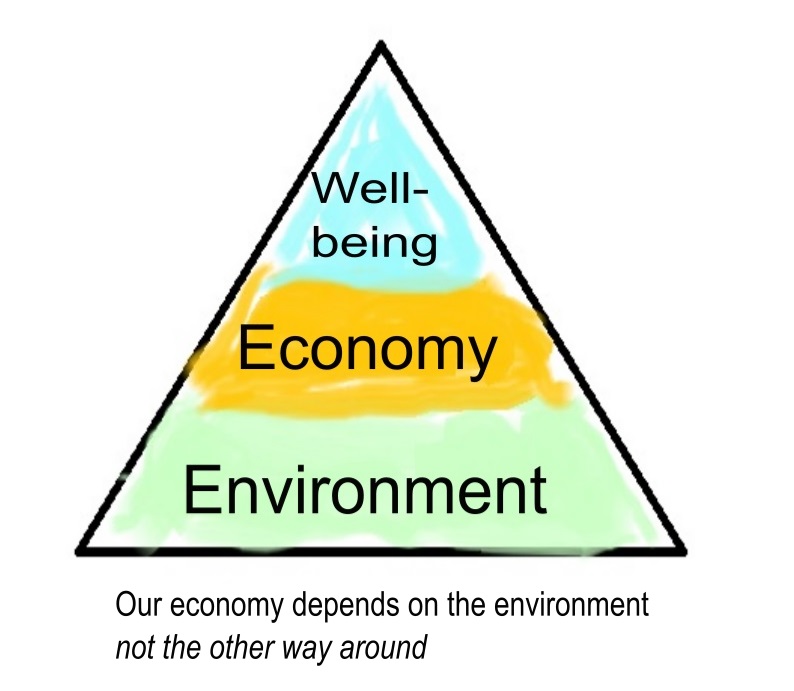
A statement from Mark Lloyd, Chief Executive of The Rivers Trust, https://envirotecmagazine.com/2025/11/26/attacking-nature-protections-with-fudged-figures-is-not-the-solution-to-slow-growth-rivers-charity-responds-to-hinkley-point-c-report/
Yesterday [(25 November)], several prominent newspapers published articles quoting a government-commissioned report into the spiralling costs of EDF’s Hinkley Point C nuclear power station. These articles focused on the report’s claims that a planned fish deterrent system for the power station’s water intakes cost £700m and would “save the lives of 0.083 salmon, 0.028 sea trout, six river lamprey, 18 Allis shad and 528 twaite shad per year”.
These figures, being used to deride the vital importance of the fish deterrent, cannot be taken seriously.
The fish deterrent system at Hinkley is in fact priced at £50m, not £700m. The tiny numbers of fish the report claims it would save are based on EDF’s own modelling, and are preposterously small given that 3.5bn litres of water a day will be sucked into the power station. This is more than the flow of all the rivers flowing into the Severn Estuary.
Such a vast amount of water will undoubtedly contain huge quantities of fish and other marine creatures, many of which are on the verge of extinction. The water intake at Hinkley will come from the most densely populated part of the estuary, killing not just fish but lots of other wildlife, and the knock-on effects on breeding would be catastrophically felt for generations. The abundance of species in the Severn Estuary and their vulnerability is why the area has the highest levels of protection in environmental law.
EDF included the fish deterrent system in the plans it submitted to get this project approved. Instead of disingenuously blaming spiralling construction costs on perfectly reasonable measures to reduce damage to the environment, EDF should honour its commitment. Within a total budget of £45bn to build a nuclear power station at Hinkley, £50m is little more than a rounding error.
This report seems to be another. Within a total budget of £45bn, £50m is little more than a rounding error, and this story is another ridiculous attempt to frame nature as the one and only blocker to growth and prosperity, a narrative that the government seems intent on pushing as we build up to today’s Budget.
The truth is that growth and prosperity are utterly dependent on the health of our natural world. Whilst we recognise the urgent need for new energy infrastructure, the processes being proposed to remove or bypass environmental protections should concern us all. Development and nature can thrive together, but only if the safeguards designed to protect our wildlife, and communities remain in place.
China releases arms control white paper in new era; ‘document injects positive energy, safeguards developing nations’ rights

Global Times By Liu Xuanzun and Guo Yuandan, : Nov 27, 2025
China’s State Council Information Office on Thursday released a white paper titled “China’s Arms Control, Disarmament, and Nonproliferation in the New Era.” An expert told the Global Times that at a time when the existing international arms control mechanisms are facing challenges, the white paper issued by China injects positive energy into the global arms control and nonproliferation process and fully safeguards the rights of developing countries.
Apart from the preface, conclusion, and annexes, the white paper has five sections: “Grim Realities: International Security and Arms Control,” “Position and Policies: China’s Arms Control in the New Era,” “Playing a Constructive Role in International Arms Control,” “Leading International Security Governance in Emerging Fields,” and “Strengthening International Cooperation on Nonproliferation and Peaceful Uses of Science and Technology.”
The white paper reiterated that China upholds a firm commitment to a policy of no-first-use of nuclear weapons and a nuclear strategy of self-defense. It said that China was compelled to make the strategic choice to develop nuclear weapons at a particular point in history to deal with nuclear threats and blackmail, break the existing nuclear monopoly, and prevent nuclear wars. China’s nuclear weapons are not intended to threaten other countries, but for defense and self-protection. China has never used nuclear weapons to threaten other countries nor deployed nuclear weapons outside its own territories, and has never provided a nuclear umbrella for other countries.

China releases arms control white paper in new era; ‘document injects positive energy, safeguards developing nations’ rights’
By
Liu Xuanzun and Guo YuandanPublished: Nov 27, 2025 10:25 PM
latest news
China’s State Council Information Office on Thursday released a white paper titled “China’s Arms Control, Disarmament, and Nonproliferation in the New Era.” An expert told the Global Times that at a time when the existing international arms control mechanisms are facing challenges, the white paper issued by China injects positive energy into the global arms control and nonproliferation process and fully safeguards the rights of developing countries.
Apart from the preface, conclusion, and annexes, the white paper has five sections: “Grim Realities: International Security and Arms Control,” “Position and Policies: China’s Arms Control in the New Era,” “Playing a Constructive Role in International Arms Control,” “Leading International Security Governance in Emerging Fields,” and “Strengthening International Cooperation on Nonproliferation and Peaceful Uses of Science and Technology.”
The white paper reiterated that China upholds a firm commitment to a policy of no-first-use of nuclear weapons and a nuclear strategy of self-defense. It said that China was compelled to make the strategic choice to develop nuclear weapons at a particular point in history to deal with nuclear threats and blackmail, break the existing nuclear monopoly, and prevent nuclear wars. China’s nuclear weapons are not intended to threaten other countries, but for defense and self-protection. China has never used nuclear weapons to threaten other countries nor deployed nuclear weapons outside its own territories, and has never provided a nuclear umbrella for other countries.
Whether confronted with nuclear threats or blackmail during the Cold War, or in a complex international security environment with growing strategic security threats at present, China has always committed to its policy of no-first-use of nuclear weapons, firmly upheld a nuclear strategy of self-defense, and promoted the modernization of its nuclear forces to safeguard China’s own strategic security and overall global strategic stability, according to the white paper………………………………………
…………….China previously issued white papers on arms control in 1995 and 2005. Pointing out new highlights in the new version, Guo told the Global Times that this white paper, for the first time, puts forward China’s vision for arms control – justice, cooperation, balance and effectiveness – emphasizing the balance of rights and obligations. It explicitly opposes abusing the concept of national security and export control measures, and exerting restrictions on developing countries’ rights to peaceful use of technology, Guo said.
Second, it is the first time to specifically address international security governance in emerging fields, detailing governance in the areas of outer space, cyberspace, and artificial intelligence, Guo said, noting that China advocates for strengthening the construction of a global governance system that takes into account the positions and interests of developing countries.
Third, the white paper summarizes China’s arms control policies and practices since the 18th National Congress of the Communist Party of China, highlighting many new practices and approaches. For example, in the field of nuclear arms control, in 2024, China submitted a working paper to the second session of the Preparatory Committee for the Eleventh Review Conference of the Parties to the Treaty on the Non-Proliferation of Nuclear Weapons (NPT), calling on the five nuclear-weapon states to conclude a treaty on mutual no-first-use of nuclear weapons, and also maintaining that nuclear-weapon states should undertake not to use or threaten to use nuclear weapons against non-nuclear-weapon states, Guo said. ………………..
…………………..The white paper said that China upholds a firm commitment to a policy of no-first-use of nuclear weapons and a nuclear strategy of self-defense, stressing that China’s greatest contribution to international nuclear arms control lies in the fact that it has the most stable, consistent and predictable nuclear policy among all nuclear-weapon states. “China’s nuclear weapons policy has remained remarkably consistent since 1964, consistently keeping its nuclear capabilities at the minimum level required for national security,” the expert noted………………………………………
…………………… n the chapter “Playing a Constructive Role in International Arms Control,” the white paper urged Japan to thoroughly destroy the chemical weapons it abandoned in China. During World War II, in flagrant violation of international law, invading Japanese troops used chemical weapons on a large scale in China. A total of 1,791 instances of chemical weapon use have been documented with confirmed dates, locations, and casualty records. The resulting casualties exceeded 200,000. After its defeat, Japan abandoned a large quantity of chemical weapons in China to cover up its crimes. Since the end of World War II, these abandoned chemical weapons have resulted in more than 2,000 poisoning casualties, gravely endangered the lives and property of the Chinese people as well as the environment.
“The Chemical Weapons Convention (CWC) clearly stipulates that a state party which has abandoned chemical weapons on the territory of another state party shall provide all necessary financial, technical, expert, facility as well as other resources for the purpose of destroying these weapons. After the CWC entered into force, the governments of China and Japan signed two memorandums, in 1999 and 2012, on destroying the chemical weapons abandoned by Japan, to advance the destruction process. However, due to insufficient attention and input from the Japanese side, the destruction plan has missed four deadlines. To date, the Japanese side has not yet provided comprehensive, detailed and accurate information on the whereabouts of its abandoned chemical weapons.
…………………………..Introducing the white paper, Chinese Foreign Ministry spokesperson Guo Jiakun said at a regular press conference on Thursday that this year marks the 80th anniversary of the victory in the Chinese People’s War of Resistance against Japanese Aggression and the World Anti-Fascist War, as well as the 80th anniversary of the founding of the UN. ……………………………………………………………………… https://www.globaltimes.cn/page/202511/1349241.shtml
Due to legal considerations UK government is now pausing its planned nuclear regulatory reforms.

Labour is reportedly pausing nuclear-sector reforms despite a sweeping
report urging planning and regulatory changes to cut costs and accelerate
new projects. Legal concerns raised by a government adviser have prompted Reeves to withhold the recommendations from the upcoming Budget, delaying growth-focused measures. ……………………
The Labour government is set to hold fire on pushing through sweeping reforms to nuclear energy due to a legal adviser’s concerns over the “UK’s
environmental, trade and human rights obligations”……….
ITV News has now reported that the Chancellor will
not include the growth-focused recommendations in her Budget speech on
Wednesday. The broadcaster reported that the Chancellor will make reforms “subject to further work and review” after a government adviser voiced concerns about the legal crossovers in the paper with UK obligations………
Oil Price 26th Nov 2025, https://oilprice.com/Alternative-Energy/Nuclear-Power/Britains-Nuclear-Reform-Set-to-Stall-Over-Legal-Concerns.html
UK’s new nuclear body urges scrapping nature protections for new projects

24th November 2025, https://www.cpre.org.uk/news/nuclear-body-urges-scrapping-nature-protections-for-new-projects/
In the spring of 2025, the government set up a Nuclear Regulatory Taskforce to make it easier to build new nuclear projects. Their final report has just been published and its recommendations threaten some of the hard-won measures we have to protect our countryside and nature.
The taskforce was made up of figures working for the nuclear industry. They’re proposing two measures in particular that we’re worried about.
First, it proposes that new nuclear as a whole would get an opt-out of both the Habitats Directive and the mitigation hierarchy. This is a mechanism whereby developers first need to seek to avoid harm and then try to minimise the harm. Only when they cannot do this, they should compensate for the harm by improving the natural environment elsewhere.
The report calls for nuclear developments to pay into the new Nature Restoration Fund being set up by the Planning and Infrastructure Bill and ‘move directly to off-site nature conservation’ as the default. This sweeps away the first part of the hierarchy, which asks developers to avoid or minimise local harms on landscapes and nature in favour of offsetting the harm somewhere else. This is counter to CPRE’s view which is that protecting and regenerating landscapes at the source must come first.
Secondly, it calls for the scrapping of the duty on public bodies to further the statutory purposes of National Parks and National Landscapes, which came in in 2023. The report says the duty ‘has caused confusion, and will likely delay, and add cost, to nuclear development.’
Two CPRE groups – Kent and Friends of the Lake District – have already challenged decisions using the new protected landscapes duty, but in both cases planning permission was still granted.
Scrapping this duty would undermine the progress made in safeguarding our protected landscapes like the South Downs or the Shropshire Hills and return us to the weak duty that existed previously.
The Chancellor has said she welcomes the report and will set out the government’s response on Wednesday, and we’ll be strongly urging ministers not to dilute nature and landscape protections.
CT scans: benefits vs cancer risks
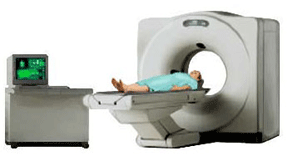
Program: CT scans: benefits vs cancer risks
CT scans can be vital in diagnosing disease, but they do come with small
increased risks because of the radiation exposure. A recent US study found
that if current practices persist, CT-associated cancer could account for
up to five per cent of all new diagnoses. So what can be done to drive down
the risk? One radiologist thinks mandating informed consent before a scan
is done would be a good start.
ABC 28th Nov 2025, https://www.abc.net.au/listen/programs/healthreport/ct-scans-cancer-radiation-risk/106076780
Ministry Of Defence looking at ‘various sites’ for sub dismantling project

COMMENT. Put more simply. the UK government doesn’t really know what to do with the toxic wastes from nuclear submarines.
Governments are obsessed with “defence” against each other. Meanwhile the public thinks ‘jobs, jobs, jobs” even if those jobs are toxic, and part of a useless industry.
By George Allison, November 28, 2025, https://ukdefencejournal.org.uk/mod-looking-at-various-sites-for-sub-dismantling-project/
A written answer in Parliament has confirmed that the Ministry of Defence is actively considering multiple locations for the UK’s permanent submarine dismantling and disposal capability.
Responding to Graeme Downie MP, defence minister Luke Pollard said the demonstrator vessel Swiftsure continues to be dismantled at Rosyth and remains on track to complete in 2026. He noted that “there are six further legacy submarines in Rosyth awaiting to enter the dismantling process.”
Those boats, alongside the 15 stored at Devonport, form the initial batch being processed under the Submarine Dismantling Project.
Pollard confirmed that the enduring solution will be delivered through a separate effort, the Submarine Disposal Capability Project, which is still in its concept phase. He stated that the department is “assessing options for the capability and its location with various sites under consideration within the UK,” adding that Parliament will be informed once a decision is ready.
This aligns with the practical pressures on the Defence Nuclear Enterprise. Rosyth can process only a small number of hulls at a time, while Devonport’s workload is dominated by defuelling, refit work and major safety driven upgrades. Both sites have finite regulatory and environmental headroom.
The broader SDP context helps explain the direction of travel as since 2013 the programme has been tasked with dealing with 27 retired submarines, removing radioactive and conventional waste safely and refining methods as it progresses. Swiftsure’s dismantling has already informed improved procedures, and the MoD reports that later boats will see faster and cheaper waste removal.
The Swiftsure project has proven the process, but the long term question remains open: where should the UK base a facility that will handle future decommissioned submarines on a rolling, multi decade basis. Pollard’s answer confirms that this decision is now in play.
From WMDs to “Narco-States”: How the US Sells Wars the Intelligence Doesn’t Support
Mintpress News, September 18th, 2025, Alan Macleod
The United States is building up its military assets, sparking fears of another regime change attempt against Venezuela—and this one could be far more deadly than the others. Citing an influx of Venezuelan drugs into the U.S., the Trump administration is rapidly building up its military forces, encircling the South American nation, one which has been in Washington’s crosshairs for over a quarter of a century.
Military Buildup
The Trump administration is once again setting its sights on Venezuela. In recent weeks, President Trump deployed additional naval and air assets to the Caribbean, including seven warships, a submarine, and an amphibious assault ship, designed for maritime invasions. A squadron of advanced F-35 fighter jets has also been relocated to Puerto Rico, bringing them within striking distance of Caracas. In total, around 4,500 personnel (including 2,500 combat-ready Marines) have been repositioned to the area.
In what could be the opening salvo of a major war, the military has already begun to flex its muscles. Earlier this month, it destroyed a small Venezuelan vessel, carrying out multiple attacks on the boat to ensure there were no survivors. Trump celebrated the action in a post on Truth Social, claiming that the boat was carrying illicit drugs to the United States, and that its crew were member of the Tren de Aragua cartel (TDA), a group, he said, is “operating under the control of [Venezuelan president] Nicolás Maduro” himself; one that is “responsible for mass murder, drug trafficking, sex trafficking, and acts of violence and terror across the United States.”…………………………………………………………………………………………………
Claims vs Evidence
The Trump administration’s extraordinary claims about Maduro and Venezuela have convinced few experts. Professor Julia Buxton of Liverpool John Moores University, a specialist in both global drug policy and Venezuelan politics, told MintPress:
“The claim that Venezuela is a major drugs producer has been an ongoing theme of the U.S. campaign against Venezuela dating back to the early 2000s. This kind of anti-drug messaging is really common in U.S. foreign policy and strategy for at least 100 years. What we have got here is essentially just recycled Ronald Reagan [talking points] … It is unsubstantiated and absurd, and it is really not backed by any official data.”
The data does indeed jar wildly with the administration’s accusations. The United Nations Office on Drugs and Crime’s World Drug Report 2025 explains that cocaine—the drug most associated with South America—is primarily produced in Colombia, Peru, or Bolivia, and transported via ports in Ecuador to the United States. Venezuela is not mentioned at all in the 98-page document, which catalogs producers, consumers, suppliers, and supply lines of drugs.
The vast majority of lethal drugs produced in South America travel via the Pacific coastline from Ecuador. In terms of supply routes, a small amount of Colombian cocaine is trafficked through the country’s long and porous rainforest border with Venezuela, and then transported via the Caribbean. But this is minuscule in comparison to that transported via Pacific ships, over the land route through Central America and Mexico, or simply flown directly to the U.S. from the cocaine producing states………………………………………………………………………………………………………………………………………………………………………………..https://www.mintpressnews.com/us-venezuela-drug-war-claims/290475/
DARPA Going Hard on Insect-Sized Spy Robots

It’s giving “bugged” a whole new meaning.
By Joe Wilkins, Sep 24, 2025, https://futurism.com/future-society/darpa-robot-insects
Forget robot wolves and missile-deflecting satellites — those things are already becoming old news. Instead, future wars just might revolve around insect-size spy robots.
A recent digest of present-day microbots by US national security magazine The National Interest breaks down the many machines currently in development by the US military and its associates. They include sea-based microdrones, cockroach-style surveillance bots, and even cyborg insects.
Arguably the most refined program to date is the RoboBee, currently being shopped by Harvard’s Wyss Institute. Originally funded by a $9.3 million grant from the National Science Foundation in 2009, the RoboBee is a bug-sized autonomous flying vehicle capable of transitioning from water to air, perching on surfaces, and autonomous collision avoidance in swarms.
The RoboBee features two “wafer-thin” wings that flap some 120 times a second to achieve vertical takeoff and mid-air hovering. The US Defense Advanced Research Projects Agency (DARPA) has reportedly taken a keen interest in RoboBee prototypes, sponsoring research into microfabrication technology, presumably for quick field deployments.
In the future, the little bots may very well carry payloads of monitoring equipment like microphones and cameras, though that’s easier said than done at such a minute scale.
Other developments, like the aforementioned cyborg insect, remain in early stages. Researchers have successfully demonstrated the capabilities of these remote-control systems using of a range of insect hosts, from the unicorn beetle to the humble cockroach.
Though DARPA has been funding insect-machine technology since 2006, their practical application is up in the air. Still, researchers are trying to keep up with the times, looking into ways to tune drone swarming algorithms to fit their cyborg creations.
Underwater microrobotics are another area of interest for DARPA. In this case, the application is said to be less mobile, instead focusing on clandestine monitoring of vulnerable underwater infrastructure.
The Interest also points to an alleged “robo-jelly” the agency has in the works, a soft-bodied autonomous drone which can silently glide through coastal waters. How practical this is remains to be seen — jellyfish are notorious drifters, following the ebbs and flows of coastal tides and deep ocean currents.
Last is the cockroach bot, the Dynamic Autonomous Sprawled Hexapod (DASH) in the works at DARPA’s notorious proving grounds at UC Berkeley. A white paper released by UC Berkeley back in 2009 defines DASH as a 16 gram, 10cm long autonomous robot which maneuvers via six legs powered by a single motor. It’s also capable of surmounting steps greater than its own height, and absorbing significant blows, including falls “from any height.”
According to the Interest, DASH is being developed with an eye toward crush resistance implying a quality-over-quantity approach compared to more agile systems like the RoboBee.
1 This Month
19 February – VIRTUAL EVENT-Decision Time: AI and Our Nuclear Arsenal
12:45 p.m. Central / 1:45 p.m. Eastern
To see nuclear-related stories in greater depth and intensity – go to https://nuclearinformation.wordpress.com
-
Archives
- February 2026 (161)
- January 2026 (308)
- December 2025 (358)
- November 2025 (359)
- October 2025 (376)
- September 2025 (258)
- August 2025 (319)
- July 2025 (230)
- June 2025 (348)
- May 2025 (261)
- April 2025 (305)
- March 2025 (319)
-
Categories
- 1
- 1 NUCLEAR ISSUES
- business and costs
- climate change
- culture and arts
- ENERGY
- environment
- health
- history
- indigenous issues
- Legal
- marketing of nuclear
- media
- opposition to nuclear
- PERSONAL STORIES
- politics
- politics international
- Religion and ethics
- safety
- secrets,lies and civil liberties
- spinbuster
- technology
- Uranium
- wastes
- weapons and war
- Women
- 2 WORLD
- ACTION
- AFRICA
- Atrocities
- AUSTRALIA
- Christina's notes
- Christina's themes
- culture and arts
- Events
- Fuk 2022
- Fuk 2023
- Fukushima 2017
- Fukushima 2018
- fukushima 2019
- Fukushima 2020
- Fukushima 2021
- general
- global warming
- Humour (God we need it)
- Nuclear
- RARE EARTHS
- Reference
- resources – print
- Resources -audiovicual
- Weekly Newsletter
- World
- World Nuclear
- YouTube
-
RSS
Entries RSS
Comments RSS
 nuclear-news