Microplastics are making it harder for oceans to absorb greenhouse gases, study warns

Researchers say tackling plastic pollution is now part of fight against global warming
Stuti Mishra, Independent UK Wednesday 07 January 2026
Microplastics are reducing the capacity of oceans to absorb carbon dioxide, weakening one of the planet’s most critical natural defences against the climate crisis, a new study warns.
Researchers found the spread of microplastics through marine ecosystems was interfering with the processes that allowed oceans to store carbon and regulate temperature.
Oceans are the planet’s largest carbon sink and “microplastics are undermining this natural shield against climate change”, Ihsanullah Obaidullah from the University of Sharjah, one of the study’s authors, said. “Tackling plastic pollution is now part of the fight against global warming.”
Microplastics, particles smaller than five millimetres across, have made their way into every nook of the planet, from deep ocean waters and Arctic ice to soil, air and even human bodies. While they are widely recognised as a major pollution problem, their role in the climate crisis has received much less attention, according to researchers.
“Climate disruption and plastic pollution are two major environmental challenges that intersect in complex ways,” they explained. “Microplastics influence biogeochemical processes, disrupt oceanic carbon pumps and contribute directly to greenhouse gas emissions.”
Oceans absorb about a quarter of the carbon dioxide released by human activity every year, slowing the pace of global warming. A major part of that process is the “biological carbon pump”, in which sea phytoplankton absorb carbon through photosynthesis and transfer it to deeper ocean layers when they die or are eaten.
The study published in the Journal of Hazardous Materials warns that microplastics interfere with this system by reducing phytoplankton photosynthesis and impairing the metabolism of zooplankton, both of which play a central role in carbon cycling.
“In marine ecosystems, MPs alter the natural carbon sequestration by affecting phytoplankton and zooplankton, which are key agents of carbon cycling,” it said.
Researchers also highlight the role of the “plastisphere”, the communities of microbes which colonise plastic particles in the ocean. These microbes can influence carbon and nitrogen cycles and contribute to greenhouse gas production.
Dr Obaidullah warned that the effects could intensify over time. “Microplastics disrupt marine life, weaken the biological carbon pump, and even release greenhouse gases as they degrade,” he said……………………………………. https://www.independent.co.uk/climate-change/news/microplastics-ocean-greenhouse-gases-b2895826.html
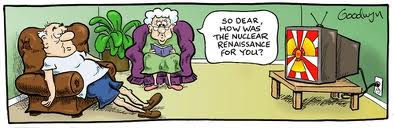
The cost of America’s nuclear revival
On an industrial site on the shores of Lake Michigan, hundreds of workers
are racing to do something that has never been achieved before: restart a
US nuclear power plant scheduled to be decommissioned.
The revival is being
driven by power demand from artificial intelligence data centres and
reshoring of manufacturing, which is straining energy grids and pushing up
electricity prices. Big Tech is attracted to nuclear because it provides
[?] clean power that does not suffer from the intermittency that is a feature
of solar and wind energy.
Concerned that a power crunch could delay the
roll out of data centres, Microsoft and Google have signed long-term power
deals to support the reopening of shuttered nuclear plants in Iowa and
Pennsylvania.
President Donald Trump has also embraced atomic energy,
pledging to slash regulation and invest tens of billions of dollars to
reopen and build new fleets of reactors to provide the power needed to
“win” the global AI race. In May he set a goal of quadrupling US atomic
energy capacity by 2050, a massive undertaking that would involve building
hundreds of new plants.
And in October Washington inked an $80bn
partnership with private equity group Brookfield and reactor designer
Westinghouse, which aims to kick-start construction of eight large-scale
nuclear plants.
Last year private investors funnelled a record $3bn into
start-ups building smaller modular reactors, technologies that provide a
third or less of the power of large-scale nuclear plants. In 2024, Amazon
bought a stake in X-energy, a reactor developer with power supply
agreements to support the construction of 144 small modular reactors (SMRs)
in the US and UK.
But in an industry subject to high financing, regulatory
and reputational risks, not everyone is convinced the resurgence will be
sustained. Only a handful of mothballed nuclear plants in the US are
capable of being restarted, critics warn, and building large-scale reactors
from scratch is a highly complex undertaking prone to delays and cost
overruns in western nations.
None of the more than 50 SMRs under
development in the US has proved they are commercially viable yet nor
obtained an operating licence from the US Nuclear Regulatory Commission.
“The industry is boasting about how things are different now and they are
going to build fleets of new reactors, large and small,” says Edwin
Lyman, a physicist at the Union of Concerned Scientists and critic of
nuclear energy. “But the fundamentals haven’t changed: nuclear is more
expensive than other forms of energy and still poses a risk of accidents
and proliferation. You can’t wish these problems away, so I think
Trump’s so-called nuclear renaissance is built on a house of cards.”
FT 7th Jan 2026,
https://www.ft.com/content/9f6c4db1-559f-48e1-8c21-ac0bc1a1237c
US 21st Century regime change ops: Failure, Failure, Failure, Failure, Failure… To Be Determined
5 January 2026 AIMN Editorial , By Walt Zlotow, West Suburban Peace Coalition, Glen Ellyn, IL, https://theaimn.net/us-21st-century-regime-change-ops-failure-failure-failure-failure-failure-to-be-determined/
The US has spent the entire 21st century toppling regimes it hates. Every one up to Saturday’s removal of Venezuelan president Nicholas Maduro has ended in failure.
2001 Afghanistan
President George W. Bush kicked off the 21st century by changing out the Taliban regime in Afghanistan. America could not confront the real culprit of 911, ally Saudi Arabia, so we picked an easy scapegoat to extract our revenge. It only took 5 weeks to topple the Taliban, allowing installation of a US puppet government. Result? Taliban regrouped to win their country back. Took 20 years but this time it was the hated Yankees ousted, killing 2,461 Americans in the process. America left the failed state of Afghanistan with over 150,000 dead and Afghanistan’s 42 million people worse off than before American’s criminal regime change operation.
2003 Iraq
Bush turned next to hated Iraq to one up Poppy Bush’s failure to oust Saddam Hussein 1991. His regime change turned Iraq into a failed state with over 500,000 Iraqis and 5,984 American soldiers and contractors killed. Over 100,000 Americans were injured in body and mind from in a totally made up, senseless war. Twenty-three years later the US is still defiling Iraqi sovereignty with a couple of thousand soldiers stuck in the Iraq war roach motel.
2011 Libya
George W. Bush’s successor Barack Obama got into regime change business to knock off Libyan strongman Muammar Gaddafi. He employed so called defense alliance NATO to bomb Libby during the Libyan civil war to tip the scales against Gaddafi. Obama’s Secretary of State Hillary Clinton gloated, “We came, we saw, he died”, failing to mention this death resulted from a bayonet to the butt. The US achieved the complete opposite of its intended goal of Libyan and regional stability by turning Libya into one of the most chaotic, failed states on the planet.
2013 Syria
Just 2 years later Obama was at it again, this time intervening in the Syrian civil war, supporting jihadist terrorists to depose hated Syrian President Bashar Assad. Neither Obama nor successor Trump could complete the task finally achieved by President Joe Biden in his last 2 months. US intervention was primarily designed to rid puppet master Israel of one of its regional hegemonic rivals. By prolonging the Syrian civil war for 11 years, the US contributed mightily to the civil war’s half million deaths. Led by new US pal, former US designated al-Qaeda terrorist Ahmed al-Sharaa, Christians, Druze and Alawites are being systematically hunted down and killed by the US backed al-Sharaa regime.
2022 Russia
The US and NATO spent 14 years under 4 presidents provoking Russia to invade Ukraine to keep Ukraine out of NATO. The US knew Russia would eventually invade; indeed, also knew Ukraine could not prevail against the Russian goliath. Didn’t matter. The US believed the war would so weaken Russia it might topple despised President Vladimir Putin, bringing in a Russian puppet amenable to US influence. Four years on Russia and Putin are stronger than ever, pivoting away from Europe to the non-aligned world seeking independence from a war and sanctions crazed America. Ukraine is now a failed state near totally dependent on US, NATO treasure to survive. A fifth of its land is gone forever, soon to be joined by its last warm water port. Looks like the only regime to be removed is Ukraine’s, not Russia’s.
2026 Venezuela
In his first solo adventure in regime change, President Trump kicked off 2026 with a lightning assault that snatched Venezuelan President Nicholas Maduro out of Venezuela to face a Trump style show trial in the US. Trump and his war cabinet are positively ecstatic about completing America’s two decade crusade to snuff out socialism in Venezuela and gobble up its 300 billion barrels of heavy crude in the process. But they might look back at America’s 21st century regime change failures in Afghanistan, Iraq, Libya, Syria, Russia, and ponder whether they’re simply following previous administrations down the rabbit hole of regime change failure.
The Media’s Role in Manufacturing Consent in US-Venezuela Relations
This matters because Australia is rehearsing for bigger targets. The propaganda model deployed against Venezuela, demonisation, economic warfare disguised as humanitarian concern, manufactured democratic pretexts for intervention, is being retrofitted for China. The patterns are identical; only the scale differs.
Venezuela is the laboratory. The techniques perfected there, demonisation, selective omission, ideological framing, strategic amnesia, are being scaled up for larger targets: China, Russia, Iran, any country that challenges United States dominance.
THE INVISIBLE BLOCKADE: How Media Made Economic Warfare Disappear
The Vanishing Act
In February 2019, millions watched in horror as Venezuelan security forces appeared to torch trucks carrying humanitarian aid on the Colombian border. CNN’s cameras were on hand to capture the flames. For The New York Times, it was proof of Maduro’s “cruelty.” Politicians from Marco Rubio to Nancy Pelosi cited the incident as proof that intervention was needed. Video analysis later contradicted that narrative.
The story just was not true. But the lie was given a long run. Weeks later, the New York Times quietly admitted the fire was started by an opposition protester’s Molotov cocktail; a single paragraph buried deep in a longer piece. The original story, complete with inflammatory images, had already done its work: manufacturing consent for economic strangulation that would kill tens of thousands.
Mainstream reporting of Venezuela is the story of how consent gets manufactured in 2025. Forget naff Soviet style propaganda. Instead, train your eyes on a bee dance of selective coverage, ideological framing and strategic amnesia.
Venezuela wins a golden globe for best propaganda show of the 21st century: convincing most of us that United States economic warfare does not exist.
The Crime That Dare Not Speak Its Name
Ask any Aussie what is happening in Venezuela. Chances are you will get a rehearsed answer: socialist dictatorship, economic collapse, humanitarian crisis. Raise the role of United States sanctions and you will often get silence.
In Caracas, you could not miss it. From 2017 to 2020, Washington imposed more than 350 unilateral coercive measures against Venezuela. The Trump administration bragged about a “maximum pressure” campaign, as if it were running a fracking operation and not ruining the lives of millions of innocent bystanders. Treasury Secretary Steven Mnuchin said the United States was targeting Venezuela’s oil sector “to prevent further diverting of Venezuela’s assets by Maduro.”
The message to Caracas was clear: “We are going to starve your people until they revolt and overthrow the government.” Trump’s crew echoes a Latin dictatorship with its junta of elite billionaires, corporate and military figures such as John Kelly and James Mattis. Trumpism is populist braggadocio and bluff.
The same men must know that they have blood on their hands. A 2019 study by economists Mark Weisbrot and Jeffrey Sachs at the Center for Economic and Policy Research estimated that United States sanctions caused around 40,000 deaths between 2017 and 2018 alone. The authors described the measures as collective punishment. Former United Nations Special Rapporteur Idriss Jazairy called such sanctions “crimes against humanity.”
United Nations expert Alfred de Zayas, who visited Venezuela, called the sanctions “economic warfare” and recommended that the International Criminal Court investigate United States officials for possible crimes against humanity. He likened modern sanctions to medieval sieges.
You did not read much of that in the Sydney Morning Herald, did you?
The Propaganda Model in Action
Noam Chomsky and Edward Herman’s Manufacturing Consent outlines filters through which media coverage passes: ownership, advertising, sourcing, flak and ideology. Venezuela’s coverage demonstrates every single one.
Ownership filter: corporate media outlets have material interests in maintaining the neoliberal economic order Venezuela challenged. When Hugo Chávez increased royalties, nationalised key assets and used oil revenues for social programs rather than shareholder profits, he made powerful enemies. Coverage shifted from sceptical to openly hostile.
Sourcing filter: a 2018 FAIR study of United States media coverage found that stories on Venezuela mostly quoted United States officials and opposition figures. Government representatives were largely invisible. International observers who validated aspects of Venezuelan elections rarely appeared. Economists like Weisbrot who questioned the sanctions narrative were pushed to marginal outlets.
Instead, audiences were fed Marco Rubio, Elliott Abrams of Iran Contra fame and Juan Guaidó, a hack who declared himself Venezuela’s president with United States backing.
The flak machine: journalists who deviated from the script faced immediate pushback. When Abby Martin or Max Blumenthal reported from Venezuela and challenged mainstream narratives, they were smeared as “Maduro apologists” or “useful idiots.” The example kept most other reporters in line.
Ideological filter: the anti socialist smear was mandatory. Every story about Venezuelan food shortages led with “socialist mismanagement.” There was little mention that Saudi Arabia, a United States ally, was simultaneously creating mass starvation in Yemen through a blockade that killed hundreds of thousands.
The framing is not about humanitarian concern. It is about ideology.
The Guaidó Gambit
Nothing demonstrates consent manufacturing quite like the Juan Guaidó affair.
On 23 January 2019, this political unknown swore himself in as “interim president” on a Caracas street. Within minutes, the United States, Canada and major Latin American governments recognised him. Corporate media followed at breakneck speed, describing him as Venezuela’s interim president, without quotation marks.
Unfortunately for the narrative, the facts were less convenient. Guaidó’s party had boycotted the previous presidential election. His constitutional claim was dubious. His “interim presidency” had no control of government, no command of the armed forces, no democratic mandate. He was a US-backed figure on standby for regime change.
For two years, Guaidó staged photo opportunities while much of the media treated his fantasy regime as real. He appointed “ambassadors” to empty buildings. He fronted a “humanitarian aid” push that former senior United States officials later admitted was a regime change ploy. He even backed a failed mercenary invasion, a Bay of Pigs style debacle, that landed with a resounding thud in May 2020.
Then something amazing. Guaidó disappears off-stage. No post mortems examined how spectacularly the media was gulled. No accountability for presenting a ludicrously inept United States puppet as a democratic leader. Just sudden, collective amnesia.
By 2023, even much of the opposition had jilted Guaidó. The sanctions stayed, nevertheless, grinding millions into poverty. And seven million into exile.
The Australian Complicity
Australia has been a keen player in US myth. The Morrison government, which itself blurred fact and fiction, recognised Guaidó and joined the Lima Group, a United States orchestrated coalition promoting regime change. At the United Nations, Australia reliably lined up with Washington against Caracas.
And our media? Lockstep, lickspittle compliance.
The ABC, our “independent” public broadcaster, mostly echoed US narratives. SBS, with its multicultural mission, rarely interviewed Venezuelans who support their government, although millions do, despite everything. Murdoch outlets adored a military tattoo and beat the skins off their intervention drum kit.
When Venezuela held presidential elections in July 2024, The Australian and its claque called them fraudulent, even before votes were counted. Opposition claims of victory were reported as fact. Government claims were “disputed.” The opposition refused to present precinct level evidence to Venezuela’s electoral council, but that got scant coverage.
The ABC, our “independent” public broadcaster, mostly echoed US narratives. SBS, with its multicultural mission, rarely interviewed Venezuelans who support their government, although millions do, despite everything. Murdoch outlets adored a military tattoo and beat the skins off their intervention drum kit.
When Venezuela held presidential elections in July 2024, The Australian and its claque called them fraudulent, even before votes were counted. Opposition claims of victory were reported as fact. Government claims were “disputed.” The opposition refused to present precinct level evidence to Venezuela’s electoral council, but that got scant coverage.
International observers, including the Carter Center, raised concerns about pre-election conditions but did not declare the vote fraudulent. Nuance vanishes in translation.
This matters because Australia is rehearsing for bigger targets. The propaganda model deployed against Venezuela, demonisation, economic warfare disguised as humanitarian concern, manufactured democratic pretexts for intervention, is being retrofitted for China. The patterns are identical; only the scale differs.
The Invisible Blockade
The most extraordinary achievement of this propaganda campaign is rendering economic warfare invisible.
United States sanctions do not just prohibit American companies from trading with Venezuela. They impose secondary sanctions on any company worldwide that does business with Venezuela’s oil sector, central bank or state enterprises. This blocks Venezuela from:
- Importing medicine and medical equipment
- Accessing international financial systems for humanitarian purchases
- Selling oil to finance imports
- Receiving spare parts for refineries and infrastructure
- Engaging in normal international commerce
When a Venezuelan child dies because hospitals cannot get dialysis equipment, that is not “socialist failure.” That is economic strangulation by the world’s dominant power. US officials admit that sanctions should cause enough suffering to trigger political change.
Yet media coverage presents Venezuela’s crisis as self inflicted, the inevitable result of Chavista economic policies and corruption. Sanctions are mentioned, if at all, as afterthoughts; minor irritants rather than a central driver of collapse.
This inversion of cause and effect is propaganda at its most sophisticated. It does not require outright lying, just selective emphasis. Mention sanctions late. Lead with empty supermarket shelves. Quote opposition politicians blaming socialism. Ignore United Nations experts describing collective punishment. Repeat.
The result is that we support sanctions without understanding that we are supporting collective punishment of civilians for political ends.
The Double Standard
Ideological filtering is highlighted by comparing coverage of Venezuela and Saudi Arabia.
Saudi Arabia is an absolute monarchy. There are no competitive national elections. Women gained the right to drive only in 2017. Political dissidents are imprisoned, tortured or murdered. Journalist Jamal Khashoggi was dismembered with a bone saw. The Saudi led coalition has inflicted a catastrophic war on Yemen that has killed hundreds of thousands through violence and starvation.
Yet Saudi Arabia remains a close United States ally. Australian media do not call for sanctions. The ABC does not run rolling segments on Saudi humanitarian disasters. Crown Prince Mohammed bin Salman is often treated as a moderniser, not a dictator.
Venezuela, by contrast, holds regular elections; flawed and contested, certainly, but elections nonetheless. International observers have repeatedly validated Venezuelan electoral processes as technically sound, even while questioning campaign conditions. Venezuela has not invaded neighbours or created famines abroad.
But Venezuela challenged neoliberal orthodoxy and United States dominance over its oil. That is the unforgivable heresy.
Or take Honduras, where a United States backed government emerged from a coup, presides over extreme violence and corruption, and fuels migration through poverty. United States aid continues. Media attention is minimal. No sanctions. No serious calls for intervention.
Humanitarian concern is theatre. The metric that matters is compliance with United States interests.
What Gets Memory Holed
Propaganda does not just create false narratives. It makes inconvenient facts disappear. A short list of what Australian coverage of Venezuela tends to omit:
The achievements: between 1999 and 2012, poverty fell from 50 per cent to 25 per cent. Extreme poverty dropped from 20 per cent to 7 per cent. Infant mortality declined markedly. Malnutrition fell sharply. University enrolment went up. Literacy programs reached millions. Venezuela had one of Latin America’s lower levels of income inequality.
Those gains are now being reversed; primarily due to sanctions, oil price collapse and economic warfare, not the social programs that created them.
The coup attempts: Venezuela has endured repeated United States linked coup efforts. A 2002 coup briefly overthrew Chávez before mass mobilisation restored him. Opposition violence in 2014 and 2017 killed dozens. The 2020 mercenary incursion involved former United States special forces personnel. These are not conspiracy theories; United States officials have openly discussed regime change plans.
The oil price context: Venezuela’s economy relies on oil. When prices collapsed from more than 100 United States dollars a barrel in 2014 to under 30 dollars in 2016, the economy tanked, as any petrostate would. Norway, with stronger institutions, would struggle with that volatility. Yet media present Venezuela’s crisis as purely ideological.
The sanctions timeline: the economic crisis accelerated dramatically after comprehensive sanctions in 2017. Obama era sanctions were limited. Trump era sanctions moved into full economic warfare. The timing is hard to ignore unless you are corporate media.
The alternative: Venezuela has offered to negotiate, to hold elections with international supervision, to accept mediation. The United States repeatedly insists on Maduro’s resignation as a precondition. When Mexico and Uruguay proposed dialogue in 2019, the US and the Lima Group rejected it. The goal was never democracy; it was regime change.
The Propaganda Ecosystem
Modern consent manufacturing is more sophisticated than George Orwell imagined. It does not require central coordination or formal censorship. It emerges from institutional incentives, ideological assumptions and career pressures.
Journalists covering Venezuela face structural pressures:
- Editors favour stories that fit existing narratives
- Contradicting United States government claims invites flak from powerful sources
- Career advancement comes from staying in institutional good graces
- Departing from mainstream consensus risks being labelled “biased”
- Stories that challenge dominant frames are buried or spiked
The result is self censorship that does not require overt control. Journalists internalise the pressures and avoid stories that might cause trouble. Editors spike pieces that challenge core assumptions. The spectrum of acceptable opinion narrows to a sliver.
Social media accelerates this dynamic. Nuanced analysis of sanctions demands sustained attention and complex thinking. “Dictator starves his people” fits neatly into a post. The dopamine driven attention economy marginalises the kind of deep reading needed to understand economic warfare.
Add “fact checkers” funded by the same foundations prosecuting the information war, and dissent becomes “misinformation” in a self-reinforcing knowledge ecosystem.
Why This Matters for Australia
You might think Venezuela is distant and irrelevant to Australian concerns. You would be wrong on both counts.
First, Australia is practising. The propaganda model deployed against Venezuela, demonising leadership, emphasising enemy crimes while ignoring allied atrocities, masking economic warfare as humanitarian concern, is being prepared for larger targets.
Coverage of China already shows the same patterns. Replace “Maduro” with “Xi” and “socialism” with “authoritarianism” and you have the same playbook. The difference is that Venezuela cannot fight back. China can. The stakes are far higher.
Second, Australia is complicit. Our government joined the regime change coalition. Our media helped manufacture consent for economic warfare against civilians. Our citizens were persuaded to support policies that have killed thousands of Venezuelans, often without realising those policies exist.
That moral corrosion matters. If we can be convinced to support collective punishment in Venezuela, what will we not support? Where does it end?
Third, this reveals our media’s subordination to United States interests. The speed with which Australian outlets adopted Washington’s framing, the uniformity of coverage, the lack of critical distance, all suggest a serious sovereignty problem. Not sovereignty over resources or territory, but over the information ecosystem that shapes public understanding.
When Australian media cannot or will not challenge United States propaganda, we are not really independent. We are a province of empire, feeding our citizens pre digested narratives manufactured offshore.
The Resistance to Knowing
Perhaps the most depressing aspect of propaganda is how resistant people become to counter evidence. Present Australians with facts about sanctions causing Venezuelan deaths and watch the mental gymnastics.
“Maduro could end the sanctions by stepping down.” So collective punishment of civilians is acceptable if the goal is regime change?
“The economy was already failing.” True, and then sanctions made it catastrophically worse. That is the point.
“Venezuelans are fleeing.” Largely due to economic collapse driven in part by sanctions. Also, why is there no matching call for regime change in Honduras, which generates far more refugees per capita?
“It is about democracy.” Then why do we support Saudi Arabia, Egypt and dozens of other autocracies?
The resistance is not about evidence; it is about identity. Accepting that United States and Australian policy deliberately starves civilians requires confronting uncomfortable truths about our democracies, our media and ourselves. It is easier to cling to stories about dictators and failed socialism.
This is how propaganda succeeds. Not mainly by convincing people of lies, but by making the truth psychologically unbearable.
The Path Forward
So what is to be done?
For journalists: break the pack. The Guaidó debacle showed that challenging official narratives does not just serve truth; it protects professional credibility. Reporters who questioned the regime change fantasy now look prescient. Those who amplified it look like stenographers.
Demand evidence for government claims. Apply consistent standards across countries. Interview diverse sources, including people who challenge Western narratives. Remember that the job is to afflict the comfortable, not manufacture consent for economic warfare.
For media consumers: develop propaganda literacy. When every outlet says the same thing using the same framing, that is not validation; it is synchronisation. Seek alternative sources. Read United Nations reports. Follow independent journalists who have actually visited Venezuela, not desk bound opinion writers recycling State Department talking points.
Ask the questions media outlets avoid. Who benefits from this narrative? What is being omitted? Are we applying consistent standards? What would coverage look like if ideological positions were reversed?
For citizens: demand accountability. Australia joined a regime change coalition that killed thousands through economic warfare. That happened in our name. Our government recognised a “president” who never won the presidency. Our media cheered it on. None of this has been reckoned with.
Write to politicians. Challenge media outlets. Support independent journalism. Refuse the memory hole. Because Venezuela is practice. The same model will be deployed against larger targets, with potentially catastrophic consequences.
Conclusion: The Test We Are Failing
Venezuela represents a test of democratic societies’ capacity for independent thought in the face of sophisticated propaganda. We are failing spectacularly.
A superpower has spent years waging economic warfare against a smaller country that dared to challenge neoliberal orthodoxy. That warfare has killed tens of thousands of civilians, displaced millions more and caused immense suffering. It violates international law and basic morality.
Financial software
Yet most Australians do not even know it is happening. They have been told that Venezuela’s crisis is self inflicted, the inevitable result of socialist economics. They have been trained to support collective punishment without recognising it as such.
That is the triumph of manufactured consent. Not crude lies, but sophisticated narrative construction that makes economic warfare invisible, transforms victims into villains and converts citizens into unwitting accomplices.
Herman and Chomsky wrote Manufacturing Consent in 1988, documenting how media serve power. Decades later, the model is more sophisticated, more effective and more dangerous. The digital information ecosystem has not liberated us. It has created new mechanisms for propaganda.
Venezuela is the laboratory. The techniques perfected there, demonisation, selective omission, ideological framing, strategic amnesia, are being scaled up for larger targets: China, Russia, Iran, any country that challenges United States dominance.
The question is whether we will recognise the pattern before it is too late. Will we demand independent journalism and honest accounting of our governments’ actions? Or will we continue sleepwalking into support for economic warfare, regime change and potentially catastrophic conflicts, never quite realising we have been played?
The invisible blockade around Venezuela is not just physical. It is cognitive. And the most dangerous walls are the ones we cannot see.
This article was originally published on URBAN WRONSKI WRITES
US DOE Awards $2.7B for Uranium Enrichment in Nuclear Power Push
Rigzone, by Jov Onsat. Tuesday, January 06, 2026
The United States Department of Energy (DOE) has awarded $2.7 billion orders to three companies for enrichment services to enable the production of low-enriched uranium (LEU) and high-assay low-enriched uranium (HALEU)…………….
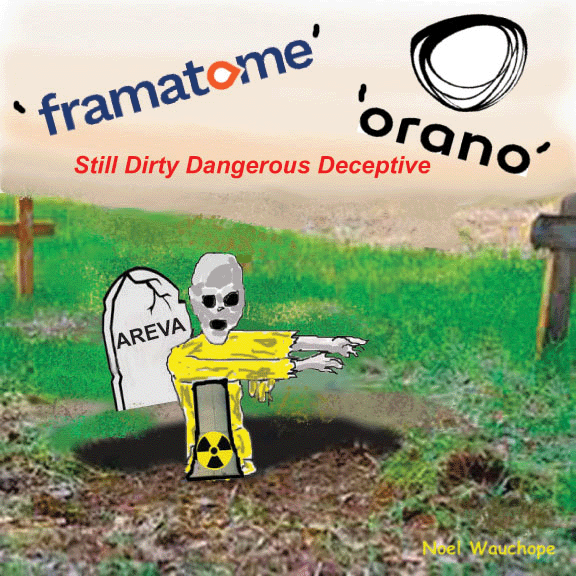
American Centrifuge Operating LLC and General Matter Inc each won $900 million to establish domestic HALEU enrichment capacity for advanced reactors. Orano Federal Services LLC also won $900 million to expand the U.S.’ LEU enrichment capacity.
……………….Currently only China and Russia can produce HALEU at a commercial scale, according to the World Nuclear Association.
Babcock to provide dock for new Dreadnought nuclear subs: will they be carrying nuclear weapons?
By Ally McRoberts, Dunfermline Press 6th Jan 2026
PREPARATIONS are underway in Rosyth for a contingent docking facility to accommodate the next generation of nuclear submarines.
Dunfermline and Dollar MP Graeme Downie had asked about the planned timescale for the work which will see the Dreadnought class berth at the yard during sea trials.
Rosyth will “bridge a gap” by offering a temporary home for the new subs, and last month the Ministry of Defence told local councillors they will not reveal if any of the boats that need repairs or maintenance will be carrying nuclear weapons……………………………………………..
“For operational security reasons further details cannot be released as to do so could be used to undermine the security and capability of our Armed Forces.”
……………………The Royal Navy’s new subs, the Dreadnought class, will be launched from Barrow-in-Furness towards the end of this decade.
The vessels will be maintained at Faslane, however the site on the Clyde won’t be ready until the mid 2030s……………………………
At last month’s South and West Fife area committee, Grant Reekie, head of radioactive waste and health physics at Babcock, had explained: “We have been asked to provide a contingent facility by the MoD to bridge a gap of submarines coming into service in late 2020s from 2029 through to mid 2030s when they will no longer be required as it will be done in Faslane.
………………At the same meeting the MoD told councillors they will not reveal if nuclear weapons will be aboard submarines being repaired at the yard.
They also confirmed that local residents would be given potassium iodate tablets to block radiation in the event of an emergency. https://www.dunfermlinepress.com/news/25743485.babcock-provide-dock-new-dreadnought-nuclear-subs/
Trump’s Annexation Threats: Australia’s Alliance Dilemma
7 January 2026 AIMN Editorial, By Alasdair Black, https://theaimn.net/trumps-annexation-threats-australias-alliance-dilemma/
How can we, Australia, remain allied to the US if they threaten annexation of an ally’s territory?
This throws into question our AUKUS pact with the UK and US, and sets America on the path to being an unreliable – if not dangerous and possibly even hostile – ally.
This is getting all too bizarre.
What of our official status as an “Enhanced Opportunities Partner of NATO”? While we are not a member of NATO, because it is a geographically confined alliance, we have always worked in partnership with them because of our historical connection to the UK and having been involved in European conflicts in both WWI and WWII, and the conflict following the collapse of the former Yugoslavia.
Are we just going to shrug off the violation of a NATO partner’s territory, abandon the support of self-determination, sovereignty, and support of an international rules-based order?
Will the potential collapse of NATO be without repercussions to AUKUS or our relationship with an aggressively military expansionist America?
Do we even want to maintain a relationship with such a dangerous, unreliable partner and ally?
We are in an epoch- or era-changing moment.
Trump is a declining, demented geriatric, raging against the dying of his light, with megalomaniacal and sociopathic tendencies.
This current crisis is possibly the biggest global crisis since Hitler marched into Poland in 1939.
Are we going to choose the moral high ground, or are we going to be on the wrong side of history?
Are we going to, by default, end up being on the side of a Hitlerian maniac, who could quite possibly be setting the foundations of WWIII?
Trump right now is being more of a threat to Europe than Putin, if that’s even possible.
The Trump shit show has just jumped the shark.
America needs to muzzle and chain up its distempered dog.
America, is it time to metaphorically take “Old Yeller” out behind the barn and put him out of his misery.
Are there any adults left in the room in the American Congress, in the American establishment, in the American military-intelligence apparatus?
Where we stand at the moment, in my opinion, is at one minute to midnight on the Doomsday clock.
America, along with their demented President, has dangerously lost the plot.
Trump is turning into a global threat!
Fears of Wider War Over Venezuela Oil as US Seizes Russian-Flagged Tanker
“That is a confrontation of Cold War proportions,” warned one observer.
Jake Johnson, January 7, 2026 https://www.commondreams.org/news/venezuela-russia-oil-tanker
US forces have now boarded and seized control of the Russian-flagged oil vessel in the North Atlantic, the Associated Press reported Wednesday.United States military forces on Wednesday attempted to board and seize control of a Venezuela-linked and Russian-flagged oil tanker after a weekslong pursuit across the Atlantic, sparking fears of a broader conflict stemming from US President Donald Trump’s assault on the South American country.
Reuters reported that the US Coast Guard and military are leading the takeover operation, which came “after the tanker, originally known as the Bella-1, slipped through a US maritime ‘blockade’ of sanctioned tankers and rebuffed US Coast Guard efforts to board it.” According to the Wall Street Journal, “Helicopters and at least one Coast Guard vessel were being used to take control of the tanker.”.
The vessel is reportedly being escorted by a Russian submarine, fueling concerns of a direct confrontation between two nuclear powers.
Video footage published Tuesday by RT purports to show US forces pursuing the tanker, whose name was recently changed to the Marinera.
The New York Times reported that US forces first stopped the tanker in the Caribbean on December 21.
According to the Times:
The ship, which started its journey in Iran, had been on its way to pick up oil in Venezuela.
At the time, the United States said it had a seizure warrant on the vessel because it was not flying a valid national flag. But the Bella 1 refused to be boarded and sailed into the Atlantic, with the United States in pursuit.
Then came a series of moves to ward off the United States. The fleeing crew painted a Russian flag on the hull, the tanker was renamed and added to an official Russian ship database, and Russia made a formal diplomatic request that the United States stop its chase.
Observers voiced alarm over the tense and fast-moving situation.
“Don’t wish to be hyperbolic, but if—if—US special forces are intercepting and seeking to board a now Russian-flagged tanker, apparently with submarine escort, then that is a confrontation of Cold War proportions,” warned British journalist Jon Sopel.
Caught between Trump and Musk’s rockets, a Mexican village despairs
Space Race Echoes on Mexico’s Shores: A Coastal Community Grapples with Progress
Playa Bagdad, a once-tranquil fishing village nestled along the northeastern coast of Mexico, finds itself at the intersection of ambitious technological advancements and the complex realities of community life. Situated just south of the United States border and within earshot of the din of rocket testing, the village is experiencing profound changes, both environmental and social, as the global space industry expands its reach. The narrative unfolding in Playa Bagdad serves as a microcosm of the broader challenges faced by communities bordering burgeoning spaceports around the world.
For generations, the residents of Playa Bagdad have relied on the Gulf of Mexico for their livelihoods. Fishing has been the lifeblood of the community, passed down through families, and deeply intertwined with the rhythms of the sea. However, the increasing frequency of rocket launches and associated activities has raised concerns about the potential impact on marine life and the overall health of the ecosystem. Noise pollution, vibrations, and the potential for accidental spills are among the anxieties voiced by local fishermen and environmental advocates.
Beyond the immediate environmental concerns, Playa Bagdad is also grappling with the socioeconomic shifts accompanying the space industry’s presence. While some residents see the potential for new jobs and economic opportunities, others fear displacement and the erosion of their traditional way of life. The influx of workers and investment can drive up property values and the cost of living, potentially making it difficult for long-time residents to remain in their homes. Furthermore, there are concerns that the focus on technological development may overshadow the needs of the local community, leading to neglect of essential infrastructure and social services.
The situation in Playa Bagdad underscores the importance of responsible and sustainable development in the space industry. As humanity ventures further into the cosmos, it is crucial to consider the impact on communities located near launch sites and to ensure that their voices are heard. Transparent communication, environmental impact assessments, and community engagement are essential to mitigating potential negative consequences and fostering a mutually beneficial relationship between the space industry and the communities that host it.
The Mexican government, along with international organizations, faces the challenge of balancing the economic benefits of the space industry with the need to protect the environment and the rights of local communities. Finding solutions that promote both technological advancement and social well-being is paramount. This requires a collaborative approach, involving government agencies, space companies, environmental groups, and, most importantly, the residents of Playa Bagdad themselves.
The story of Playa Bagdad serves as a potent reminder that progress should not come at the expense of vulnerable communities. As the space race intensifies, it is imperative that we prioritize ethical considerations and strive to create a future where technological innovation and human well-being go hand in hand. The fate of this small Mexican village, caught between the allure of space exploration and the realities of life on Earth, offers valuable lessons for navigating the complex landscape of the 21st century and beyond.
A game of chicken between the US and Denmark
The people of Greenland are merely pawns on a neo-colonial chessboard
Ian Proud, Jan 08, 2026, https://thepeacemonger.substack.com/p/a-game-of-chicken-between-the-us?utm_source=post-email-title&publication_id=3221990&post_id=183816648&utm_campaign=email-post-title&isFreemail=true&r=1ise1&triedRedirect=true&utm_medium=email
Trump’s attempt to claim Greenland as his own is running up against plucky Denmark. This is a David v Goliath game of chicken in which Trump hopes the Danes will back down and they, in turn, are waiting Trump out, hoping that his increasingly unhinged foreign policy leads to a change in power in 2029, whereupon the issue will go away.
Until then, the people of Greenland will remain pawns on a neo-colonial chessboard.
Even though they’ll get no support from European military powers, Denmark should call Trump’s bluff over military action and signal a willingness to defend, even though they would be quickly defeated. Their biggest ally is US public opinion.
But whatever happens, the Greenlanders have the right to self-determination under the 2009 Act and may ultimately be swayed by Trump’s cash.
Report: Nuclear Power Isn’t Viable In Hawaiʻi

Constitutional issues are the basis for the conclusion of the Nuclear Energy Working Group’s final report for the state energy office.
By Lynda Williams, January 6, 2026 , https://www.civilbeat.org/2026/01/nuclear-power-isnt-viable-in-hawaii/
The Hawaiʻi State Energy Office has released the final report of the Nuclear Energy Working Group created by the Legislature under SCR-136. I served on the working group as a representative of 350 Hawaiʻi.
The report concludes that nuclear power is not viable in Hawaiʻi and that the state should not change its laws or constitution to enable it.
The most fundamental obstacle is legal. Hawaiʻi’s Constitution restricts nuclear fission construction, and nuclear power is excluded from the state’s Renewable Portfolio Standard. These restrictions apply regardless of reactor size, design, fuel type or branding. Small modular reactors and so-called “advanced” reactors are still nuclear fission reactors. Making nuclear power legal in Hawaiʻi would require amending the constitution — a process that requires a two-thirds legislative vote. The working group did not recommend taking this step.
Beyond the law, the technology itself remains unfeasible. No advanced nuclear reactors are operating commercially in the United States, and none are expected to come online in any timeframe relevant to Hawaiʻi’s energy or climate goals. Projects cited by nuclear advocates remain stuck in licensing pipelines, demonstration phases or heavily subsidized pilot programs.
Without commercially operating reactors, reliable cost estimates, construction schedules, or grid-integration analyses do not exist. Nuclear power cannot meaningfully address climate change when it cannot be deployed at scale.
The report also acknowledges that radioactive waste is a decisive and unresolved problem. There is no permanent disposal repository operating anywhere in the United States. Hawaiʻi has no capacity to store or manage spent nuclear fuel, and no federal facility exists to accept it.
The Hawaiʻi Constitution explicitly bars nuclear waste storage and disposal facilities unless approved by a two-thirds vote of both legislative chambers. Any nuclear project would therefore require indefinite on-island storage of radioactive material in direct conflict with the constitution, creating ongoing risks related to containment failure and transport. For an isolated island state, this reality alone makes nuclear power unrealistic.
The Hawaiʻi State Energy Office has released the final report of the Nuclear Energy Working Group created by the Legislature under SCR-136. I served on the working group as a representative of 350 Hawaiʻi.
The report concludes that nuclear power is not viable in Hawaiʻi and that the state should not change its laws or constitution to enable it.
The most fundamental obstacle is legal. Hawaiʻi’s Constitution restricts nuclear fission construction, and nuclear power is excluded from the state’s Renewable Portfolio Standard. These restrictions apply regardless of reactor size, design, fuel type or branding. Small modular reactors and so-called “advanced” reactors are still nuclear fission reactors. Making nuclear power legal in Hawaiʻi would require amending the constitution — a process that requires a two-thirds legislative vote. The working group did not recommend taking this step.
Ideas showcases stories, opinion and analysis about Hawaiʻi, from the state’s sharpest thinkers, to stretch our collective thinking about a problem or an issue. Email news@civilbeat.org to submit an idea or an essay.
Beyond the law, the technology itself remains unfeasible. No advanced nuclear reactors are operating commercially in the United States, and none are expected to come online in any timeframe relevant to Hawaiʻi’s energy or climate goals. Projects cited by nuclear advocates remain stuck in licensing pipelines, demonstration phases or heavily subsidized pilot programs.
Without commercially operating reactors, reliable cost estimates, construction schedules, or grid-integration analyses do not exist. Nuclear power cannot meaningfully address climate change when it cannot be deployed at scale.
The report also acknowledges that radioactive waste is a decisive and unresolved problem. There is no permanent disposal repository operating anywhere in the United States. Hawaiʻi has no capacity to store or manage spent nuclear fuel, and no federal facility exists to accept it.
The Hawaiʻi Constitution explicitly bars nuclear waste storage and disposal facilities unless approved by a two-thirds vote of both legislative chambers. Any nuclear project would therefore require indefinite on-island storage of radioactive material in direct conflict with the constitution, creating ongoing risks related to containment failure and transport. For an isolated island state, this reality alone makes nuclear power unrealistic.
Emergency preparedness and regulatory capacity further reinforce that conclusion. Hawaiʻi does not have a nuclear regulatory agency, a trained nuclear emergency-response workforce, evacuation-planning capacity, or land suitable for exclusion zones. These are not minor administrative gaps. They reflect the absence of the institutional and physical capacity needed to respond to potentially catastrophic nuclear accidents.
The analysis also places nuclear power in the context of Hawaiʻi’s history in the Pacific, including nuclear weapons testing and long-term harm to island and Indigenous communities. Public trust cannot be assumed, and meaningful public evaluation is impossible without concrete information about reactor designs, fuel cycles, waste handling, and accident scenarios — information that does not exist.
Hawaiʻi is not alone in facing industry efforts to dismantle state-level protections. Over the past decade, several states with laws restricting or prohibiting new nuclear plant construction — including Wisconsin, Kentucky, Montana, West Virginia, Connecticut and Illinois — have repealed or weakened those laws to allow so-called advanced nuclear technologies such as small modular reactors, often justified by climate or grid-reliability claims. These rollbacks occurred despite the continued absence of commercially operating advanced reactors, the lack of a permanent nuclear waste repository, and mounting evidence that nuclear power cannot be deployed fast enough to play a meaningful role in addressing climate change.
Now is not the time to weaken Hawaiʻi’s protections against nuclear power. At the federal level, environmental protection and public oversight under the National Environmental Policy Act are being aggressively gutted through executive orders and legislation such as the SPEED Act. These measures are designed to shorten environmental review, eliminate meaningful public participation, restrict judicial oversight, and prevent courts from stopping unlawful projects even when agencies violate the law. As federal safeguards are dismantled, Hawaiʻi’s constitutional and statutory protections against nuclear power become more critical, not less.
The report’s only weak point is its suggestion that the state revisit nuclear power every three to five years. Even under the most optimistic assumptions, advanced nuclear reactors, including SMRs, will not be commercially operating, fully tested, or economically viable within that timeframe. Any nuclear reactor operated in Hawaiʻi would require radioactive waste to remain on island for extended periods to cool before transport, and shifting that waste burden onto other Indigenous lands is not an ethical solution and is inconsistent with the values of aloha ʻāina.
Nuclear power is not viable in Hawaiʻi and never will be; the state should instead focus on renewable energy, storage, efficiency, grid modernization and community-centered planning grounded in reality.
Click here to read the final Nuclear Energy Working Group report. You can read more about the Nuclear Energy Working Group at nuclearfreehawaii.org.
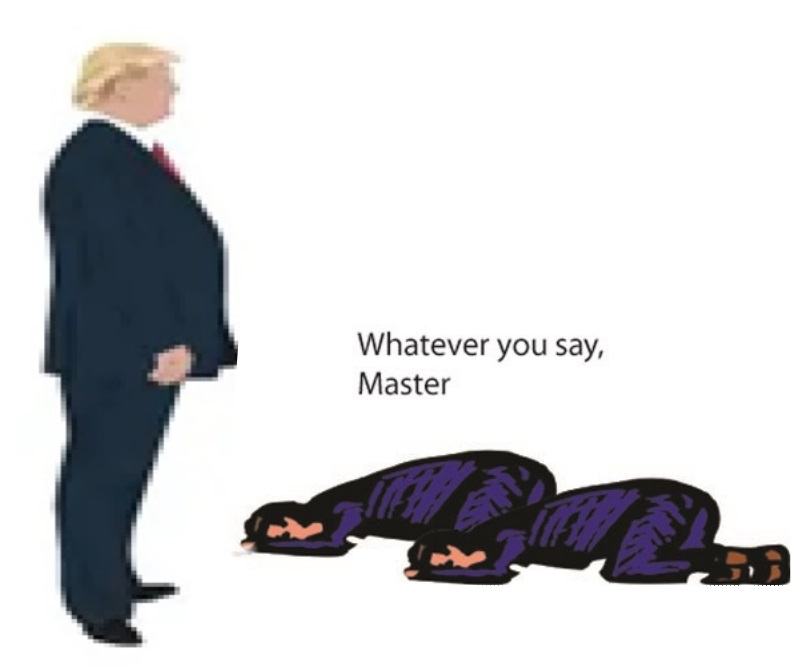
Venal Reactions: US Allies Validate Maduro’s Abduction.
5 January 2026 Dr Binoy Kampmark, https://theaimn.net/venal-reactions-us-allies-validate-maduros-abduction/
On the surface, abducting a Head of State is a piratical act eschewed by States. A Head of State enjoys absolute immunity from foreign criminal jurisdiction, known as ratione personae, at least till the term of office concludes. The International Court of Justice was clear enough about this principle in the 2002 Arrest Warrant Case, holding that high ranked government officials such as a foreign minister are granted immunity under customary international law to enable the effective performance of their functions “on behalf of their respective States.”
That said, international law has been modified on this score by the jurisdiction of theInternational Criminal Court, whose founding Rome Statute stipulates that the official standing of a serving Head of State is no exemption from criminal responsibility. The effectiveness of this principle lies in the cooperation of State parties, something distinctly unforthcoming regarding certain serving leaders. (Israeli Prime Minister Benjamin Netanyahu springs to mind.)
US domestic law puts all of this to side with the highwayman logic of the Ker-Frisbie doctrine. Decided in Ker v Illinois in 1886, the decision overlooks the way, lawful or otherwise, a defendant is apprehended, even if outside the jurisdiction. Once American soil is reached, judicial proceedings can commence without challenge. The US Department of Justice has further attempted to puncture ancient notions of diplomatic immunity by recategorizing (how else?) the standing of a leader – in this case Venezuela’s Nicolás Maduro – as nothing more than a narco-terrorist. Maduro was seized, explains US Secretary of State Marco Rubio, as part of a law enforcement operation.
In addition to being a violation of the leadership immunity principle, the January 3 kidnapping of Maduro and his wife by US forces was an audacious breach of the sovereignty guarantee under Article 2 of the United Nations Charter. Operation Absolute Resolve involved 150 aircraft, strikes on military infrastructure including surface-to-air missile and communication systems, and various depots. The security fantasists from the White House to the State Department treated Venezuela as not merely a dangerous narco-state but one hosting undesirable foreign elements, but it has never posed a military threat to the US homeland.
In the face of such unalloyed aggression – a crime against peace, if you will – the response from Washington’s allies has been feeble and worse. This is made all the more grotesque for their claims to purity when it comes to defending Western civilisation against the perceived ogres and bogeymen of international relations: Russia and China.
From the United Kingdom, Prime Minister Keir Starmer could not have been clearer about his contempt for the processes of international law. “The UK has long supported a transition of power in Venezuela,” he declared in his January 3 statement. “We regarded Maduro as an illegitimate President and we shed no tears about the end of his regime.” Having given a coating of legitimacy to the banditry of the Trump administration, he could still claim to “support” international law. His government would “discuss the evolving situation with US counterparts in the days ahead as we seek a safe and peaceful transition to a legitimate government that reflects the will of the Venezuelan people.” Certainly, judging from this, the will of President Donald Trump.
An official statement from the European Union released by its high representative, Kaja Kallas, was even more mealy-mouthed: “The EU has repeatedly stated that Nicolás Maduro lacks the legitimacy of a democratically elected president and has advocated for a Venezuelan-led peaceful transition to democracy in the country, respectful of its sovereignty.”
The tactic here involves soiling the subject before paying some false respect for such concepts as democracy and sovereignty. We can do without Maduro, and won’t miss him, but make some modest effort to respect some cardinal virtues when disposing of him. All those involved should show “restraint […] to avoid escalation and to ensure a peaceful resolution of the crisis.”
The arrogance of this position is underlined by the concession to diplomacy’s importance and the role of dialogue, when there has been no dialogue or diplomacy to speak of. “We are in close contact with the United States, as well as regional and international partners to support and facilitate dialogue with all parties involved, leading to a negotiated, democratic, inclusive and peaceful resolution to the crisis, led by Venezuelans.”
From the Canadian Minister for Foreign Affairs, Anita Anand, there was not a whisper of Maduro’s abduction, or the US breach of the UN Charter. The phantom conveniently called the Venezuelan People stood as an alibi for lawbreaking, for they had a “desire to live in a peaceful and democratic society.” And there was the familiar call “on all parties to exercise restraint and uphold international law,” marvellous piffle in the face of illegal abductions.
Australian Prime Minister Anthony Albanese did little to improve upon the weak formula in his shabby statement, similarly skipping over the violations of the UN Charter and Maduro’s abduction. “We urge all parties to support dialogue and diplomacy in order to secure regional stability and prevent escalation.” A bland acknowledgement of “the need to respect democratic principles, human rights and fundamental freedoms” is made, along with the risible reference to supporting “international law and a peaceful, democratic transition in Venezuela that reflects the will of the Venezuelan people.”
Who, then, are these idealised people? Presumably these Venezuelans are the vetted ones, sanitised with the seal of approval, untainted by silly notions of revolution and the poverty reduction measures initially implemented by the government of Hugo Chávez. But if EU officials and other states friendly to Washington thought that a Venezuelan appropriately representative of the People’s Will might be the opposition figure and travesty of a Nobel laureate, María Corina Machado, Trump had other ideas. To date the Maduro loyalist Vice President Delcy Rodríguez, has caught his fickle eye. “I think,” he said with blunt machismo, “it would be very tough for [Machado] to be the leader. She doesn’t have the support within or the respect within the country. She’s a very nice woman, but she doesn’t have the respect.” The Venezuelan people’s choice will be, putting democracy and dialogue to one side, the same as Trump’s.
CIA Played Instrumental Role in Maduro Kidnapping.
In reality, while U.S. and British companies were involved in early oil exploration in Venezuela, Venezuela’s oil belongs to Venezuela, pursuant to the international law principle of permanent sovereignty over natural resources.
Venezuela’s socialist government, meanwhile, has used oil revenues to adopt social programs for the poor and to develop Venezuela’s economy, accounting for its electoral successes.
The financial elite the CIA serves is now salivating over the prospects of U.S. corporations retaking control of Venezuela’s oil industry
Jeremy Kuzmarov, Substack, Jan 05, 2026
The Trump administration welcomed the New Year by ordering a brazen Special Forces raid into Venezuela that resulted in the kidnapping of Venezuelan President Nicolás Maduro, who was brought to the U.S. to face charges for alleged drug trafficking.
Called Operation Absolute Resolve, the kidnapping had been preceded by months of terrorist activities that included bombing a Venezuelan oil tanker and fishing vessels, resulting in the deaths of more than 100 civilians.
On January 3, The New York Times reported that a CIA source within the Venezuelan government had monitored Maduro’s location in the days and moments before his capture, tipping off the Special Forces about his whereabouts. The CIA also produced the intelligence that led to Maduro’s capture with a fleet of stealth drones.
According to a person familiar with the agency’s work, the CIA was able to recruit informants in Maduro’s inner circle because of the $50 million bounty placed on Maduro’s head.
Donald Trump watched the Operation Absolute Resolve from Mar-O-Lago with CIA Director John Ratcliffe and Secretary of State Marco Rubio. [Source: yahoo.com]
Beginning in August, the informants worked clandestinely to provide the CIA with information about Maduro’s “pattern of life” and daily movements.
The CIA had Maduro so precisely monitored that even his pets were known to U.S. intelligence agents, according to General Dan Caine, Chairman of the Joint Chiefs of Staff and former CIA associate director for military affairs.
In late December, the CIA used an armed drone to conduct a strike on a dock that U.S. officials claimed was being used by a Venezuelan gang to load drugs onto boats.
These actions fulfilled a promise of CIA Director John Ratcliffe in his confirmation hearing that he would lead a more aggressive CIA willing to conduct large-scale covert operations.
Despite claiming to be doing battle with the “deep state,” President Donald Trump authorized the CIA to take more aggressive action last fall and openly authorized CIA operations in Venezuela when the CIA normally operates covertly.
To the Victor Go the Spoils
The symbiotic relationship between the CIA and the financial elite intent on profiting from regime change are epitomized by the CIA’s former Venezuelan station chief, Enrique de la Torre, who advertised immediately after Maduro’s kidnapping that his lobbying firm, Tower Strategy,[1] was supporting clients intent on “rebuilding Venezuela’s energy sector.”
De la Torre published a blog post in late November entitled “The Case for Ending Maduro’s Rule………………
Venezuela’s Bolivarian Revolution under Hugo Chávez (1998-2013) and then Maduro (2013-present) had in fact been designed to establish Venezuela’s economic sovereignty, empower the poor and Indigenous people, and revitalize the legacy of Latin America’s great liberator, Simón Bolívar.
It was opposed by the U.S. financial elite precisely because it threatened to inspire other Latin American and Third World countries to take control over their own economies and limit the influence of American corporations.
Donald Trump echoed de la Torre in stating after the announcement of Maduro’s capture that “we’re going to have our very large United States oil companies, the biggest anywhere in the world, go in and spend billions of dollars and fix the oil infrastructure—the badly broken oil infrastructure—and start making money for the country.”[2]
Similarly, former CIA Director Mike Pompeo told Fox & Friends last week that, in the event of the overthrow of the Maduro government, “American companies can come in and sell their products — Schlumberger, Halliburton, Chevron — all of our big energy companies can go down to Venezuela and build out an economic capitalist model.”
These latter comments combined with de la Torre’s action make clear the agenda behind Operation Absolute Resolve.
Stephen Miller, a top aide to President Trump, openly proclaimed that Venezuela’s oil belongs to Washington, describing the nationalization of Venezuela’s petroleum industry as “theft.”
According to Miller, “American sweat, ingenuity and toil created the oil industry in Venezuela. Its tyrannical expropriation was the largest recorded theft of American wealth and property. These pillaged assets were then used to fund terrorism and flood our streets with killers, mercenaries and drugs.”
In reality, while U.S. and British companies were involved in early oil exploration in Venezuela, Venezuela’s oil belongs to Venezuela, pursuant to the international law principle of permanent sovereignty over natural resources.
The Venezuelan government never actually denied the U.S. access to its oil and, as late as 2017, remained the U.S.’s third-largest foreign supplier of energy.[3]
Venezuela’s socialist government, meanwhile, has used oil revenues to adopt social programs for the poor and to develop Venezuela’s economy, accounting for its electoral successes.
During his presidency from 1998 to 2013, Hugo Chávez cut poverty by 20% and extreme poverty by 30%.
Literacy rates in this period also increased, child malnutrition rates declined dramatically, millions of hectares of state-owned land were distributed, and Venezuela’s UN Human Development Index, a composite measure of national income (GDP), access to education, and child mortality—rose from seventh in the region to fourth.[4]
Maduro was continuing the same trajectory as Chávez, though Venezuela’s economy was undermined during his presidency by declining world oil prices, internal corruption typical of South and North American countries and harsh U.S. sanctions imposed by the Obama, Trump I and Biden administrations, whose purpose was to set the groundwork for regime change.[5]
Long War Against Venezuela’s Left
In Modernizing Repression: Police Training and Nation-Building in the American Century, I detail how the Kennedy, Johnson and Nixon administrations set the groundwork for today’s foreign policy by providing significant police aid to help prop up centrist governments in Venezuela that carried out a dirty war against left-wing movements.
The latter sought to nationalize Creole Petroleum Company, Venezuela’s largest oil company, which was largely controlled by the Rockefeller-owned Standard Oil empire.
Run under the cover of the United States Agency for International Development (USAID), the CIA-led Office of Public Safety (OPS) provided riot-control gear and other repressive police instruments and assisted Venezuelan police in compiling blacklists of left-wing “subversives.”
The OPS’s support for hard-line police tactics was apparent in its push to eliminate the requirement that a policeman who killed a suspect be arrested, paving the way for death-squad activity.
Showing where their true priorities rested, OPS police advisers met monthly with security officials of Creole Petroleum and the major foreign mining companies in Venezuela to discuss “insurgency problems.”……………………………………………………………………………………………………………………………………………………………………………………… https://jeremykuzmarov.substack.com/p/cia-played-instrumental-role-in-maduro?publication_id=2091638&post_id=183483325&isFreemail=true&r=3alev&triedRedirect=true&utm_source=substack&utm_medium=email
Rubio Says “Not a War” as Trump Threatens Half the Hemisphere
By Joshua Scheer, SCHEEPOST, 5 Jan 26
Welcome to another day in the empire we might as well call 1984. Marco Rubio, who only yesterday said the U.S. didn’t need congressional approval because the situation in Venezuela is not a war but the capture of a fugitive, adding, to the BBC saying “That’s not a war. I mean, we are at war against drug trafficking organizations. That’s not a war against Venezuela,”
But has the narrative really shifted, or is this just good cop/bad cop—or whatever you want to call the times we are living in? Meanwhile, with President Trump threatening both the incoming president of Venezuela and other left-leaning nations, the United States seems to be lurching toward a space where it resembles a new Rome—a power with seemingly no regard for history.
That was made clear in an interview with The Atlantic yesterday, when asked about Iraq and the current intensifying situation, Trump said: “I didn’t do Iraq. That was Bush. You’ll have to ask Bush that question, because we should have never gone into Iraq. That started the Middle East disaster.”
He threatened Venezuela’s new president Delcy Rodríguez, saying that “if she doesn’t do what’s right, she is going to pay a very big price—probably bigger than Maduro,” adding that “she’s essentially willing to do what we think is necessary to make Venezuela great again.” He went on to declare, “The country’s gone to hell. It’s a failed country. It’s a totally failed country. It’s a disaster in every way.”
I wonder why a country that has been subjected to coercive actions by the United States and repeated coup attempts can’t get ahead—especially when, even now, its oil is being seized and treated as if it belongs to the U.S. This is a madman being guided by what I would describe as delusional people. The truly frightening part, however, is that they know exactly what they are doing, and that is what makes it so dangerous.
This was a man when campaigning in 2016 spoke saying “stop racing to topple foreign regimes that we know nothing about.” He had campaigned that year in opposition to “nation building,”
Great—who’s paying attention? Which Trump are we seeing this morning—the 2016 isolationist of the highest order? Reports are emerging of a split within the MAGA camp (Make America Great Again, for those unfamiliar), with the New York Times highlighting tensions among the more isolationist figures from Trump’s first administration. “The lack of framing of the message on a potential occupation has the base bewildered, if not angry,” said Stephen K. Bannon, the pro-Trump podcaster. “While President Trump makes the case for hemispheric defense, Rubio confuses with talk of removing Hamas and Hezbollah.”
At the same time MAGA darling Candice Owens tweeting “Venezuela has been “liberated” like Syria, Afghanistan, and Iraq were “liberated”. The CIA has staged another hostile takeover of a country at the behest of a globalist psychopaths. That’s it. That’s what is happening, always, everywhere. Zionists cheer every regime change. There has never been a single regime change that Zionists have not applauded because it means they get to steal land, oil and other resources.”
In the video below, [on original] in a strange twist, right‑wing superstar Tucker Carlson—of all people—defends Venezuela, apparently because it’s the most Christian nation in Latin America. So there you go.
Of course, this MAGA split—and the difference between Trump in 2016 and now—really shows that the true worm in the drink is Marco “the Neocon” today believes that countries shouldn’t have friends—because the threat is global. Why? Because Venezuela is friends with Iran, Russia, and China… oh my. Of course they are—they certainly aren’t ours.
Here’s “little” Marco discussing why he feels the need to protect the oil because “Why does China need their oil? Russia? Iran? This is the West. This is where we live”Adding, for good measure, that after we take our “fair share,” maybe the people of Venezuela would finally get theirs. That’s entirely on brand for the United States—its free‑market ideology and trickle‑down economic system.
Speaking about China’s reaction, they strongly condemned the U.S. seizure of President Maduro, calling it a violation of international law and an overreach of U.S. power, even as some analysts note Beijing may see the situation as a chance to challenge American global dominance and assert its own influence on the world stage.
Many commentators have draw parallels between Washington’s actions in Venezuela and China’s ambitions toward Taiwan, analysts suggest that China is less concerned with the sovereignty of the self-ruled island. Instead, Beijing sees the U.S. move as an opening to question America’s leadership on the world stage. ……………………………………………………. https://scheerpost.com/2026/01/05/rubio-says-not-a-war-as-trump-threatens-half-the-hemisphere/
Editorial Boards Cheer Trump Doctrine in Venezuela.
Even now we’re still asking: Why? Why is the US taking such drastic military action? Is it to “take back” our oil? To deport Venezuelans en masse? To fight drug trafficking? To send a message to Cuba?
Perhaps this cloud of justifications just conceals the truth—there is no real reason. Trump seems to be doing this because he can.
FAIR, Ari Paul, 6 Jan26
“……………………………. ‘Hemispheric hygiene’
The Wall Street Journal editorial board (1/3/26) called the abductions “an act of hemispheric hygiene,” a dehumanizing comparison of Venezuela’s leaders to germs needing to be cleansed.
For the Journal, the abductions were justified because they weren’t just a blow to Venezuela, but to the rest of America’s official enemies. “The dictator was also part of the axis of US adversaries that includes Russia, China, Cuba and Iran,” it said. It called Maduro’s “capture…a demonstration of Mr. Trump’s declaration to keep America’s enemies from spreading chaos in the Western Hemisphere.” It amplified Trump’s own rhetoric of adding on to the Roosevelt Corollary, saying “It’s the ‘Trump Corollary’ to the Monroe Doctrine” ”—a nod to the long-standing imperial notion that the US more or less owns the Western Hemisphere.
The next day, the Journal editorial board (1/4/26) even seemed upset that the Trump administration didn’t go far enough in Venezuela, worrying that it left the socialist regime in place, whose “new leaders rely so much on aid from Cuba, Russia, China and Iran.” “Despite Mr. Trump’s vow that the US will ‘run the country,’ there is no one on the ground to do so,” the paper complained, thus reducing “the US ability to persuade the regime.”
The Washington Post board (1/3/26) took a similar view to the Journal. “This is a major victory for American interests,” it wrote. “Just hours before, supportive Chinese officials held a chummy meeting with Maduro, who had also been propped up by Russia, Cuba and Iran.”
The Post, which has moved steadily to the right since Trump’s inauguration a year ago, seemed to endorse extreme “might makes right” militarism. “Maduro’s removal sends an important message to tin-pot dictators in Latin America and the world: Trump follows through,” the board wrote. (Really? Did we miss when Trump “followed through” on his promise to end the Ukraine War within 24 hours? Or to take back the Panama Canal? Or make Canada the 51st state?) It belittled Democratic President Joe Biden, who “offered sanctions relief to Venezuela, and Maduro responded to that show of weakness by stealing an election.”
Like the Journal, the Post board (1/4/26) followed up a day later to push Trump to take a more active role in Venezuela’s future. It worried about his decision to leave in place “dyed-in-the-wool Chavista” Delcy Rodriguez and other “hard-liners” in Maduro’s administration.
The Post chided Trump for dismissing the idea of installing opposition leader María Corina Machado, who it deemed a worthy partner in imperial prospects: “She has a strong record of standing for democracy and free markets, and she’s committed to doing lucrative business with the US.” As with the Journal, the assumption that it’s up to the US to choose Venezuela’s leadership went unquestioned.
‘Fueled economic and political disruption’
The New York Times editorial board (1/3/26), on the other hand, condemned the abductions, saying Trump’s attack “represents a dangerous and illegal approach to America’s place in the world.”
But the board only did so after the requisite vilifying, asserting that “few people will feel any sympathy for Mr. Maduro. He is undemocratic and repressive, and has destabilized the Western Hemisphere in recent years.”
You’re writing from the country that has spent the past four months blowing up small craft in the Caribbean, and you think it’s Maduro who has “destabilized the Western Hemisphere”?
Even as CBS News content czar Bari Weiss spiked a 60 Minutes piece about the plight of Venezuelan migrants under the administration’s brutal round-ups, the Times editorial blamed Maduro alone for the humanitarian crisis at hand. “He has fueled economic and political disruption throughout the region by instigating an exodus of nearly 8 million migrants,” the editorial said. As is typical in US commentary on Venezuela (FAIR.org, 2/6/19), the word “sanctions” does not appear in the editorial, though US strictures have fueled an economic collapse three times worse than the Great Depression.
And it comes after the Times opinion page gave space calling for regime change in Venezuela. “Washington should approach dismantling the Maduro regime as we would any criminal enterprise,” wrote Jimmy Story (New York Times, 12/26/25), a former US ambassador to Venezuela. Right-wing Times columnist Bret Stephens wrote a piece simply headlined “The Case for Overthrowing Maduro” (11/17/25).
The Times didn’t mention the recent seizures of ships carrying Venezuelan oil (BBC, 12/21/25; Houston Public Media, 12/22/25)—or the issue of Venezuela’s oil at all, though even the paper’s own news section (1/3/25) admitted that oil was “central” to the kidnapping. “They stole our oil,” Trump dubiously claimed in his public address, bragging that the door to the country was now open to have “very large United States oil companies, the biggest anywhere in the world, go in, spend billions of dollars…and start making money for the country.”
These are glaring oversights by the Times board, even if it ultimately waved its finger at the administration for its military action. Contrast this to the editorial board of the Houston Chronicle (1/3/26), which serves a huge portion of the energy sector:
Even now we’re still asking: Why? Why is the US taking such drastic military action? Is it to “take back” our oil? To deport Venezuelans en masse? To fight drug trafficking? To send a message to Cuba?
Perhaps this cloud of justifications just conceals the truth—there is no real reason. Trump seems to be doing this because he can.
‘Not a guarantee’
Elsewhere in the press, the operation against Maduro won support from editorial boards that also reserved the right to say “I told you so.” “Maduro Had to Be Removed,” said the Dallas Morning News editorial board (1/3/26) in its headline, adding in the subhead, “But the US Cannot ‘Run’ Venezuela.”
And the Miami Herald editorial board (1/3/26), which serves a large anti-socialist Latin American population, said that while Maduro out of power was “obviously cause for enormous joy,” this was “not a guarantee for democracy.” “Is Trump’s true interest to see democracy in Venezuela,” it asked, “or to install a new leader who’s more friendly to the US and its interests in the nation’s oil reserves?”
The Chicago Tribune editorial board (1/5/25) heaped paragraphs of praise on the Maduro mission—”we don’t lament Maduro’s exit for a moment”—and scoffed at “left-wing mayors” who “howled in protest at the weekend actions.” But it saw a moral dilemma:
What moral authority does the US now have if, say, China, removes the Taiwanese leadership, deeming it incompatible with Chinese interests? Not much. And this action surely weakens the moral argument against Vladimir Putin, though Ukrainian President Volodymyr Zelenskyy is now hoping Russia’s leader is the next authoritarian Trump takes out.
The New York Times editorial board (12/21/89) said something similar 36 years ago, when the US invaded Panama. While justifying the invasion, it asked, “What kind of precedent does the invasion set for potential Soviet action in Eastern Europe?”
Perhaps rather than worrying that US behavior will encourage some other country to behave lawlessly, US papers could be more concerned about their own country’s lawlessness. By kidnapping a foreign head of state, the Trump administration is saying that international law doesn’t apply to the United States. That’s a sentiment most American editorialists are all too ready to applaud—despite the danger it poses for Americans, and for the world. https://fair.org/home/editorial-boards-cheer-trump-doctrine-in-venezuela/
1 This Month

of the week – Shut Down Drone Warfare!


Tell the Ukrainian Government to Drop Prosecution of Peace Activist Yurii Sheliazhenko

Petition to revoke the licensing of the Near Surface Nuclear Disposal Facility (NSDF) at Chalk River. https://www.ourcommons.ca/petitions/en/Petition/Details?Petition=e-7247
To see nuclear-related stories in greater depth and intensity – go to https://nuclearinformation.wordpress.com
-
Archives
- April 2026 (44)
- March 2026 (251)
- February 2026 (268)
- January 2026 (308)
- December 2025 (358)
- November 2025 (359)
- October 2025 (376)
- September 2025 (257)
- August 2025 (319)
- July 2025 (230)
- June 2025 (348)
- May 2025 (261)
-
Categories
- 1
- 1 NUCLEAR ISSUES
- business and costs
- climate change
- culture and arts
- ENERGY
- environment
- health
- history
- indigenous issues
- Legal
- marketing of nuclear
- media
- opposition to nuclear
- PERSONAL STORIES
- politics
- politics international
- Religion and ethics
- safety
- secrets,lies and civil liberties
- spinbuster
- technology
- Uranium
- wastes
- weapons and war
- Women
- 2 WORLD
- ACTION
- AFRICA
- Atrocities
- AUSTRALIA
- Christina's notes
- Christina's themes
- culture and arts
- Events
- Fuk 2022
- Fuk 2023
- Fukushima 2017
- Fukushima 2018
- fukushima 2019
- Fukushima 2020
- Fukushima 2021
- general
- global warming
- Humour (God we need it)
- Nuclear
- RARE EARTHS
- Reference
- resources – print
- Resources -audiovicual
- Weekly Newsletter
- World
- World Nuclear
- YouTube
-
RSS
Entries RSS
Comments RSS
 nuclear-news