Scholz stands firm on long-range weapons for Kiev
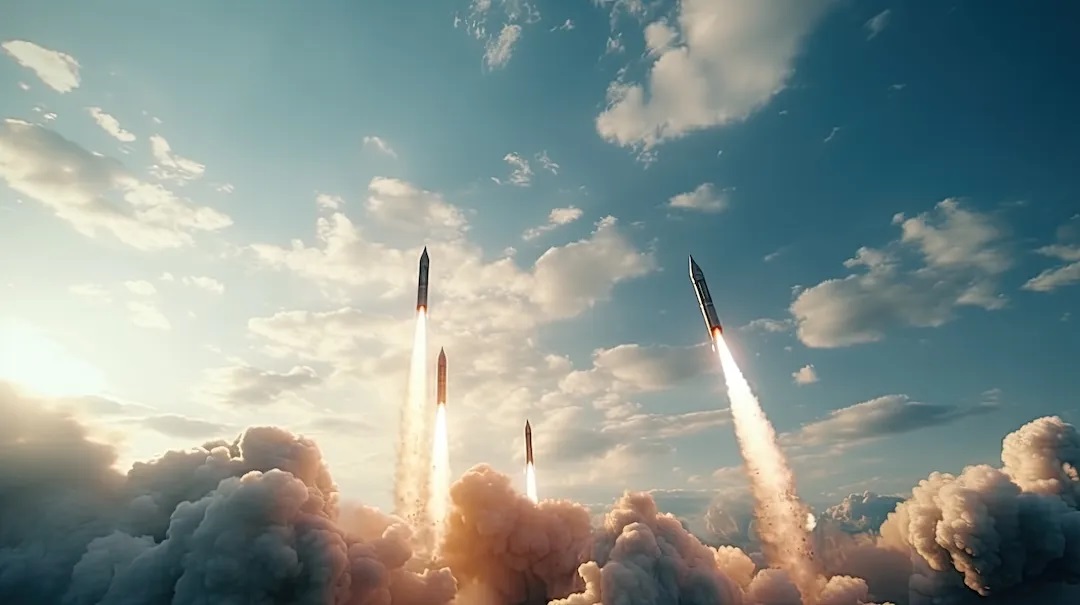
https://www.rt.com/news/604037-scholz-long-range-weapons-kiev/ 16 Sept 24
Berlin will not lift restrictions on its more advanced weaponry, even if Ukraine’s other allies do, German chancellor has said.
Germany will not allow its long-range weapons to be used for Ukrainian strikes deep into Russia, even if other states choose to do so, Chancellor Olaf Scholz has said.
Washington and London have suggested that they could allow Kiev to use missiles such as the American-made ATACMS and the British-made Storm Shadow to hit such targets.
Berlin retains its policy of not permitting Ukraine to use German-provided long-range weapons for such attacks, Scholz said on Saturday at a Q&A session in Prenzlau, Brandenburg.
I’m sticking to my stance, even if other countries decide differently,” Scholz said. “I won’t do that because I think it’s a problem.”
Germany is Ukraine’s second-largest military donor after the US. Berlin has provided or pledged more than €28 billion ($31 billion) in lethal aid to Kiev since the start of the conflict with Russia, according to data from the Federal Government website.
However, Berlin has so far refused to follow the UK and France’s example in arming Ukraine with long-range missiles. In May, Scholz explained that supplying Ukraine with Taurus missiles with a range of 500 km (310 miles) would amount to Berlin’s direct participation in the conflict.
“It would only be tenable to deliver [these weapons] if we determine and define the targets ourselves, and that is again not possible if you don’t want to be part of this conflict,” he stressed.
On Thursday, Russian President Vladimir Putin warned Western powers against further escalating the hostilities. “We are not talking about allowing or prohibiting the Kiev regime from striking Russian territory,” Putin explained, noting that Ukraine was already doing this.
Western-supplied ATACMS and Storm Shadow missiles have been used by Ukraine to strike targets in Crimea and Donbass – Russian territories that Kiev claims as its own – leading to multiple civilian casualties.
Kiev lacks the ability to independently use Western long-range systems, Putin explained.
Targeting for such strikes relies on intelligence from NATO satellites, while firing solutions can “only be entered by NATO military personnel.”
“This will mean that NATO countries, the US, European countries are fighting against Russia,” Putin stressed. Such direct participation will change “the very essence, the very nature of the conflict”, meaning Russia will have to “make the appropriate decisions on the threats,” the Russian leader warned.
In June, Putin pledged that Moscow would shoot down any missiles used in long-range strikes, and retaliate against those responsible. One possible response would be to send similar high-tech weaponry to forces that are in conflict with the West.
Data center emissions probably 662% higher than big tech claims. Can it keep up the ruse?

Emissions from in-house data centers of Google, Microsoft, Meta and Apple may be 7.62 times higher than official tally
Guardian, Isabel O’Brien, 16 Sept 24
Big tech has made some big claims about greenhouse gas emissions in recent years. But as the rise of artificial intelligence creates ever bigger energy demands, it’s getting hard for the industry to hide the true costs of the data centers powering the tech revolution.
According to a Guardian analysis, from 2020 to 2022 the real emissions from the “in-house” or company-owned data centers of Google, Microsoft, Meta and Apple are likely about 662% – or 7.62 times – higher than officially reported.
Amazon is the largest emitter of the big five tech companies by a mile – the emissions of the second-largest emitter, Apple, were less than half of Amazon’s in 2022. However, Amazon has been kept out of the calculation above because its differing business model makes it difficult to isolate data center-specific emissions figures for the company.
As energy demands for these data centers grow, many are worried that carbon emissions will, too. The International Energy Agency stated that data centers already accounted for 1% to 1.5% of global electricity consumption in 2022 – and that was before the AI boom began with ChatGPT’s launch at the end of that year.
AI is far more energy-intensive on data centers than typical cloud-based applications. According to Goldman Sachs, a ChatGPT query needs nearly 10 times as much electricity to process as a Google search, and data center power demand will grow 160% by 2030. Goldman competitor Morgan Stanley’s research has made similar findings, projecting data center emissions globally to accumulate to 2.5bn metric tons of CO2 equivalent by 2030.
In the meantime, all five tech companies have claimed carbon neutrality, though Google dropped the label last year as it stepped up its carbon accounting standards. Amazon is the most recent company to do so, claiming in July that it met its goal seven years early, and that it had implemented a gross emissions cut of 3%.
“It’s down to creative accounting,” explained a representative from Amazon Employees for Climate Justice, an advocacy group composed of current Amazon employees who are dissatisfied with their employer’s action on climate. “Amazon – despite all the PR and propaganda that you’re seeing about their solar farms, about their electric vans – is expanding its fossil fuel use, whether it’s in data centers or whether it’s in diesel trucks.”
A misguided metric
The most important tools in this “creative accounting” when it comes to data centers are renewable energy certificates, or Recs. These are certificates that a company purchases to show it is buying renewable energy-generated electricity to match a portion of its electricity consumption – the catch, though, is that the renewable energy in question doesn’t need to be consumed by a company’s facilities. Rather, the site of production can be anywhere from one town over to an ocean away………………………………………………………………………………………………………………………………………………………………
2025 and beyond
Even though big tech hides these emissions, they are due to keep rising. Data centers’ electricity demand is projected to double by 2030 due to the additional load that artificial intelligence poses, according to the Electric Power Research Institute.
Google and Microsoft both blamed AI for their recent upticks in market-based emissions…………………………………………..
Whether today’s power grids can withstand the growing energy demands of AI is uncertain. One industry leader – Marc Ganzi, the CEO of DigitalBridge, a private equity firm that owns two of the world’s largest third-party data center operators – has gone as far as to say that the data center sector may run out of power within the next two years.
And as grid interconnection backlogs continue to pile up worldwide, it may be nearly impossible for even the most well intentioned of companies to get new renewable energy production capacity online in time to meet that demand. https://www.theguardian.com/technology/2024/sep/15/data-center-gas-emissions-tech
‘Obvious Conflict of Interest’: Report Reveals 50+ US Lawmakers Hold Military Stocks


“It’s abjectly terrifying that the personal benefit of any member of Congress is factored into decisions about how to wield and fund the largest military in the world,” said one critic.
Brett Wilkins 12 Sept 24, https://www.commondreams.org/news/members-of-congress-who-own-defense-stock
At least 50 U.S. lawmakers or members of their households are financially invested in companies that make military weapons and equipment—even as these firms “receive hundreds of billions of dollars annually from congressionally-crafted Pentagon appropriations legislation,” a report published Thursday revealed.
Sludge‘s David Moore analyzed 2023 financial disclosures and stock trades disclosed in other reports and found that “the total value of the federal lawmakers’ defense contractors stock holdings could be as much as $10.9 million.”
Melanie D’Arrigo, @DarrigoMelanie
Over 50 members of Congress, who vote to approve the military budget and approve the sale of weapons, own up to $10.9M in military contractor stocks. Military contractors have also donated $29M this year to election campaigns. That isn’t national defense. That’s corruption.
According to the report:
The spouse of Sen. Susan Collins (R-Maine), the ranking member of the Defense Appropriations subcommittee, holds between $15,000 and $50,000 worth of shares in each of Boeing and RTX, as well as holdings in two other defense manufacturers. Sen. Jerry Moran (R-Kansas), another Defense Appropriations subcommittee member, holds up to $50,000 in the stock of Boeing, which received nearly $33 billion in defense contracts last year. On the Democratic side of the aisle, Sen. John Hickenlooper (Colo.) holds up to a quarter of a million dollars’ worth of stock in RTX…
The most widely held defense contractor stock among senators and representatives is Honeywell, an American company that makes sensors and guiding devices that are being used by the Israeli military in its airstrikes in Gaza. The second most commonly held defense stock by Congress is RTX, formerly known as Raytheon, the company that makes missiles for Israel’s Iron Dome, among other weapons systems.
All 13 senators whose households disclosed military stock holdings voted for the most recent National Defense Authorization Act, which, as Common Dreams reported, allocated a record $886.3 billion for the U.S. military while many lawmakers’ constituents struggled to meet their basic needs.
“It is an obvious conflict of interest when a member of Congress owns significant stock investments in a company and then votes to award the same company lucrative federal contracts,” Craig Holman, government affairs lobbyist at the consumer advocacy group Public Citizen, told Sludge.
“Whether or not the official action is taken for actual self-enrichment purposes is beside the point. There is at least an appearance of self-enrichment and that appearance is just as damaging to the integrity of Congress,” Holman added. “This type of conflict of interest is already banned for executive branch officials and so should be for Congress as well. The ETHICS Act would justly avoid that conflict of interest by prohibiting members of Congress and their spouses from owning stock investments altogether.”Holman was referring to the Ending Trading and Holdings In Congressional Stocks (ETHICS) Act, introduced earlier this year by Sens. Jeff Merkley (D-Ore.), Jon Ossoff (D-Ga.), Gary Peters (D-Mich.), and Josh Hawley (R-Mo.).
In the House of Representatives—where the 2024 NDAA passed 310-118, with the approval of over two dozen members who own shares in military companies—House Foreign Affairs Committee Chair Michael McCaul’s (R-Texas) household owns up to $2.6 million in General Electric, Oshkosh Corporation, and Woodward shares. Rep. Dave Joyce (R-Ohio), who sits on the Defense Appropriations subcommittee, owns as much as $100,000 worth of Boeing and General Electric stock.
Other House lawmakers with potential conflicts of interest include Rep. Gerry Connolly (D-Va.), a member of the Foreign Affairs Committee, who owns Leidos shares worth as much as $248,000; Rep. Debbie Dingell (D-Mich.), who owns up to $100,000 worth of RTX stock; and Rep. Patrick Fallon (R-Texas), a member of the Armed Services Committee who holds Boeing stock worth between $100,000 and $250,000.
“Every American should take a long, hard look at these holdings to conceptualize the scope of Congress’ entanglement with defense contractors,” Public Citizen People Over Pentagon advocate Savannah Wooten told Sludge. “It’s abjectly terrifying that the personal benefit of any member of Congress is factored into decisions about how to wield and fund the largest military in the world.”
“Requiring elected officials to divest from the military-industrial complex before stepping into public service would create a safer and more secure world from the outset,” she added.
Southern boom town that is just 24 miles away from dangerous canyon contaminated by plutonium

By Alex Hammer For Dailymail.Com, 16 September 2024, https://www.dailymail.co.uk/news/article-13765533/canyon-contaminated-plutonium-santa-fe-boom-town.html
Residents of Santa Fe, New Mexico – less than a half-hour drive from the birthplace of the atomic bomb – are drinking from a water supply with alarming traces of plutonium, scientists have found.
The shocking samples were taken from Los Alamos’s soil just 24 miles from Santa Fe, which has roughly 90,000 residents.
Experts warned have since warned that the discovery could mean a rehabilitation project is necessary to save the city’s drinking water.
The contaminated soil can be found right on the cusp of Los Alamos, in the area’s appropriately named Acid Canyon, where radioactive waste seeped into the land from 1943 to 1964.
‘We need to permanently protect precious, irreplaceable groundwater and the Rio Grande while providing high-paying cleanup jobs for decades,’ said Jay Coghlan, executive director of Nuclear Watch, in an email to Santa Fe New Mexican this past spring.
Pointing to maps showing the contaminated spots across an area of land, Coghlan asserted that there was proof a ‘genuine cleanup’ is needed.
While the water in Santa Fe is still drinkable with its current levels of plutonium, Coghlan said the radioactive drinking water ‘should be of great concern to Northern New Mexicans’.
In Santa Fe County, up to 3 picocuries per liter of plutonium were recorded in the water supply – twice the guideline set by the New Mexico Administrative Code, according to the outlet.
Nuclear Watch also compiled data plutonium contamination below the soil from 1992 and 2023 through plot points on a map.
Huge hot spots were found at dump sites of an old lab used for experiments.
This, of course, was at Los Alamos’ National Laboratory, located a little more than a mile out of town, and one of 16 research and development sites used and owned by the United States Department of Energy.
Contamination in surface water like streams and rivers has been traced back to places including the hiking trail Acid Canyon, where the lab discarded waste from 1943 to 1964.
Its past pollution could now be migrating down to the area’s unseen aquifer underground – likely bringing the pollutants across San Ildefonso Pueblo land and into the Rio Grande, Coghlan warned.
The river feeds into the Buckman Direct Diversion Project, a system of integrated infrastructure used to divert as much as 2.8 billion gallons of surface water to Santa Fe annually.
That water serves as nearly half of Santa Fe’s public drinking supply – a cause for concern, according to Coghlan.
Over the past 40 years, Santa Fe has seen its population almost double to roughly 90,000, leading it to earn the distinction of ‘boom town’ in a 2019 national survey.
In the years since, the city added roughly 5,000 residents, for an increase of about 6 percent as occupied homes and per capita income have also grown.
The news of Acid Canyon’s contamination comes almost 20 years after the Department of Energy and the University of California – the lab’s previous operator – made an agreement with the New Mexico Environment Department to clean up the contamination.
Spread out over decades, the efforts have so far been unsuccessful in remediating the fallout, data from Nuclear Watch shows – as the NMED seeks a full cleanup at one of the dump sites at a cost of over $800 million to protect Santa Fe’s drinking water.
As it stands, radiation levels are not high enough to hurt those walking the Acid Canyon trail, but Coghlan pointed out another danger that would happen if a fire broke out.
‘Were Acid Canyon to burn in a wildfire, and we know that threat is all too real, that could be dangerous in the form of respirable plutonium that is released to the air through wildfire,’ he said.
Warning the smoke inhaled could lead to lung cancer, Coghlan had his concerns echoed by the Professor Emeritus of Chemistry and Biochemistry at Northern Arizona University, Dr. Michael Ketterer.
‘I’m just trying to show New Mexicans what the truth is here,’ he said after collecting and analyzing plutonium samples from trailheads at Acid Canyon. ‘I see a lot of things to be concerned about here.’
We can’t really predict where it’s going to go and how bad it’s going to be,’ he continued, of the possibility of a fire creating deadly conditions in the area.
Surrounding communities could be at risk as well, including historic Santa Fe, as the shocking contamination data saw Ketterer question whether official warnings should be posted across the trail.
‘I’ve never seen anything quite like it in the United States,’ Ketterer. ‘This is an unrestricted area.’
He went on to compare radiation levels seen at the popular park to those at the site of the Soviet Union’s Chernobyl nuclear disaster.
‘It’s just an extreme example of very high concentrations of plutonium in soils and sediments,’ the biochemist said. ‘It’s hiding in plain sight.’
The biochemist also noted that high concentrations of plutonium in the canyon’s water posed wider environmental risks to communities and habitats downstream.
‘Under monsoon storm flow conditions, Pu [plutonium] laden water and sediment flow through Acid Canyon and into Los Alamos Canyon and ultimately, the Rio Grande,’ he noted in a presentation for Nuclear Watch New Mexico.
Radioactive plutonium in ground water, Ketterer noted, can also be absorbed by plants where it enter the food chain via local veggie-eating herbivores, or spread as airborne ash following increasingly common wildfires.
‘This is one of the most shocking things I’ve ever stumbled across in my life,’ the biochemist recently told The Guardian of the unsettling find.
Meanwhile, the cleanup of the lab’s Cold War sites is only half complete, the DOE reports.
Should the department’s plans be finalized, all pits and shafts would be excavated and radioactive waste interred at Carlsbad’s Waste Isolation Pilot Plant.
Japan, to make the biggest mistake in history: nuclear energy with water, and risk of explosion
by Jessica A., 09/15/2024, https://www.ecoticias.com/en/nuclear-energy-japan-hydrogen/6246/
Japan has a traumatic history with nuclear power, but that’s not stopping the country from taking new risks
The Fukushima nuclear disaster of 2011 devastated Japan and left the rest of the world terrified of nuclear power. While it wasn’t as horrific as the Chernobyl nuclear reactor explosion of 1986, it still traumatized both the Japanese people and the government. Yet now, Japan is facing an energy crisis, and nuclear energy may be the only realistic solution.
Japan is one of the countries at the forefront of the green energy revolution. The Japanese government understands that solar, wind, and hydroelectric energy can only produce a portion of the fuel and electricity the country and the world need. Hydrogen will have to make up some of the difference in the industrial sector, for uses in shipping, aviation, and manufacturing. Japan wants to use next-generation nuclear reactors to produce hydrogen with zero emissions.
Next-generation nuclear reactors have lower energy outputs and marginally better safety records
To make hydrogen a viable option for industrial fuel needs, Japan plans to use nuclear reactors
Many companies are already producing hydrogen for the industrial sector, but they often use natural gas or fossil fuels to do it. These methods result in at least some greenhouse emissions, and Japan wants to have a zero-emissions hydrogen production process in place by 2040 to help meet the world’s energy needs.
Nuclear reactors seem to offer a good solution to this problem because they generate a lot of heat, and that heat can be used to break down water for hydrogen harvesting. Hydrogen is the only clean fuel that scientists know of that can power industrial shipping vessels, planes, and large machinery.
To avoid making the climate crisis worse, governments need to commit to making the production of hydrogen a green process, meaning releasing zero emissions. Japan is looking at innovative ways of designing nuclear reactors to keep them safe so that they can power homes and produce hydrogen.
Many people are skeptical of nuclear energy, and Japan could be courting disaster with its plans to use high temperatures to break down water. One more nuclear explosion could mean the end of nuclear power forever. Only time will tell if the next-gen reactors pass all the safety tests required to go online.
NuScale Power Is Great. Here’s Why You Shouldn’t Buy It.

The Motley Fool, By Reuben Gregg Brewer – Sep 14, 2024
NuScale Power (SMR 12.17%) is at the leading edge of the nuclear power sector. It is doing great things and making important progress toward its goal of mass-producing small-scale modular nuclear reactors. In a world increasingly looking toward carbon-free energy sources, it is positioning itself well for a bright future. But it won’t be a good fit for every investor. Here’s why you might want to buy the stock and why you might not want to buy it.
NuScale is moving (slowly) toward the nuclear future
Today, nuclear reactors are giant infrastructure assets that cost huge sums of money to build and years of effort to get up and running. NuScale Power is working to upend that inefficient model by offering small, modular reactors that would be built in a factory and then delivered where they are needed.
If one reactor isn’t enough, they can be linked to create a larger reactor………….
Adding to the allure here is a balance sheet with zero debt and $136 million in cash. In other words, it is working from a strong financial position. Also, NuScale Power’s largest shareholder is Fluor (FLR 2.21%), a large construction company.
Clearly, Fluor has its own motives in backing NuScale, like supporting the growth of a new market (small-scale nuclear power plant construction), but it means that NuScale has a strong parent to help it along. That’s showing up right now, too, as a project from Fluor is going to help add revenue to NuScale’s earnings statement, helping the upstart nuclear power company pay for its own product development plans.
There are indeed some good reasons to like the future prospects for NuScale power, including that, as management likes to highlight, it is “the only SMR certified by the U.S. Nuclear Regulatory Commission.” So, it basically has a leg up on the competition right now.
NuScale Power comes with some big risks
Despite the positives, NuScale Power is not going to be a good fit for every investor. In fact, only aggressive types should really be looking at the stock today. There are a host of reasons.
For starters, NuScale Power’s product plans are approved by U.S. regulators, but not fully approved to the point where it can start building and selling units. So, there’s more work to be done before NuScale Power even has a product to sell. And while it has inked a tentative deal to sell its first units, it can’t actually do that yet. It has to spend even more money on the effort to get the final government nod to start building and delivering a product.
That, in turn, means more red ink. NuScale Power is basically still in start-up mode, so it isn’t unusual that more money would be going out the door than coming in. The revenue from the work with Fluor will help, but the income statement is likely to look ugly for years to come. That’s because it will still have to ramp up its production abilities even after it gets all the approvals it needs. All in all, NuScale Power has a great story, but that story is still in its early chapters.
NuScale Power is an acquired taste
To highlight the risks here, it helps to look at the stock price. Over the past year, the stock has gone from a low of roughly $2 per share to a high of just over $15, and it currently sits at around $7. If you can’t handle price swings like that, you definitely don’t want to own this nuclear power start-up.
That said, investors with a high tolerance for risk might be interested in NuScale power, given that it has achieved a great deal on its path to producing small-scale modular nuclear reactors. But for most investors, the risks are likely too great at this point in time to justify hitting the buy button. https://www.fool.com/investing/2024/09/14/nuscale-power-is-great-heres-why-you-shouldnt-buy/
Why SMRs Are Taking Longer Than Expected to Deploy
Oil Price, By Felicity Bradstock – Sep 14, 2024
“…………………………………………..Several energy companies and startups, such as Terrapower – founded by Bill Gates, are developing SMR technology. The founders of Terrapower decided the private sector needed to take action in developing advanced nuclear energy to meet growing electricity needs, [?] mitigate climate change and lift [?] billions out of poverty.
Several SMR projects are also being backed by government financing. For example, in the U.S., the Department of Energy announced $900 million in funding to accelerate the deployment of Next-Generation Light-Water SMRs. In addition, many companies, such as Microsoft, have signed purchase agreements with energy companies to use SMRs, or are developing their own SMR strategies, to power operations with [?]clean energy.
While there is huge optimism around the deployment of SMR technology, many of the companies developing the equipment have faced a plethora of challenges, which has led to delays and massive financial burdens. At present, only three SMRs are operational in the world, in China and Russia, as well as a test reactor in Japan. Most nuclear energy experts believe SMRs won’t reach the commercial stage in the U.S. until the 2030s.
NuScale cancelled plans to launch an SMR site in Idaho in 2023 after the cost of the project rose from $5 billion to $9 billion owing to inflation and high interest rates. This is a common issue, as companies must predict the costs of a first-of-a-kind project. Once one SMR site is launched and companies can establish tried-and-tested methods of deployment, a second site is expected to be cheaper and faster to develop. A trend that will continue as companies gain more experience. Eric Carr, the president of nuclear operations at Dominion Energy, explained, “Nobody exactly wants to be first, but somebody has to be.” Carr added, “Once it gets going, it’s going to be a great, reliable source of energy for the entire nation’s grid.”
Another issue is access to uranium. Russia is currently the only commercial source of high-assay low- enriched uranium (HALEU), which companies require to power their reactors. In late 2022, Terrapower announced it would be delaying the launch of its first SMR site in Wyoming due to a lack of fuel availability. However, the U.S. is developing its domestic production capabilities. The Biden administration is expected to award over $2 billion in the coming months to uranium enrichment companies to help jumpstart the supply chain. Meanwhile, Terrapower announced this summer that it is finally commencing construction on its Wyoming SMR site and is working with other companies to develop alternate supplies of HALEU. https://oilprice.com/Energy/Energy-General/Why-SMRs-Are-Taking-Longer-Than-Expected-to-Deploy.html
Serbia picks EDF, Egis for study on introduction of nuclear energy
The Ministry of Mining and Energy of Serbia awarded a contract to French
state-owned energy utility EDF and engineering company Egis Industries for
a preliminary technical study for considering the peaceful use of nuclear
energy. Following an agreement last month between Serbia and EDF to assess
the potential for developing a civil nuclear program, the French
state-owned energy utility and engineering firm Egis Industries won a
tender for the country’s first study.
The government in Belgrade adopted
changes to the Law on Energy in August as well, aiming to abolish a 1989
moratorium on the construction of nuclear power plants.
Balkan Green Energy News 13th Sept 2024
One big factor could decide if one of Wales’ biggest (nuclear) projects can happen
Ken Skates says he is determined to deliver on ‘big road projects’
Wales Online, By Owen Hughes, Daily Post Business Editor, Ben Summer, Senior reporter, 14 Sept 24
Welsh Government Transport Secretary Ken Skates says he wants to deliver on “big road projects”, while discussing a key factor that might resurrect a major transport scheme. The Welsh Government’s roads review, which delivered its conclusion in 2023, shelved several prominent Welsh transport initiatives – especially in north Wales where the Menai crossing, Llanbedr bypass and Flintshire ‘Red Route’ were all cancelled.
These choices were made by then-transport minister Lee Waters, guided by a panel of transportation and environmental specialists appointed by the Welsh Government. This was criticised last year by Ken Skates when he was a backbencher; he later took on the transport minister position under Vaughan Gething and has maintained it with First Minister Eluned Morgan’s new leadership.
Mr Skates hasn’t announced an outright reversal of previous decisions, but he’s hinted at potential modifications to the projects to improve their environmental impact as well as underline the economic benefits of the projects, reports North Wales Live. This week, he spoke about progress made and specifically pointed out that the future of a third Menai crossing might hinge on one pivotal element.
This relates to the dormant Wylfa B project near Cemaes; should it advance, it would necessitate better road network capacity to support the construction of the multi-billion-pound nuclear facility. Wylfa was identified by the preceding UK Government as the optimal site for the nation’s next significant nuclear station.
This week it has been reported that the new UK Government is reviewing the potential of the Wylfa Newydd site, with one option being to repurpose it for a number of small modular reactors (SMRs). Whichever path is taken, be it SMRs or another venture, will require billions in investment and significant road improvements………………………………………
https://www.walesonline.co.uk/news/politics/one-big-factor-decide-one-29935573
Putin Warns of ‘Direct’ War as US Mulls Letting Ukraine Use Long-Range Western Missiles

“It is a question of deciding whether or not NATO countries are directly involved in a military conflict,” said Russian President Vladimir Putin.
Jake Johnson, Sep 13, 2024, https://www.commondreams.org/news/putin-direct-war-nato
Russian President Vladimir Putin said Thursday that if the United States and the United Kingdom allow Ukraine to strike deep inside Russia with Western missiles, “it will mean nothing less than the direct involvement of NATO countries.”
“This is not a question of allowing the Ukrainian regime to strike Russia with these weapons or not. It is a question of deciding whether or not NATO countries are directly involved in a military conflict,” Putin told Russian state TV. “This will be their direct participation, and this, of course, will significantly change the very essence, the very nature of the conflict.”
Putin’s remarks came amid reports that U.S. President Joe Biden appears poised to let Ukraine use long-range missiles against Russia, signaling a perilous new phase in a deadly war that has dragged on for two and a half years since Russia’s invasion in February 2022.
According toThe New York Times, “President Biden appears on the verge of clearing the way for Ukraine to launch long-range Western weapons deep inside Russian territory, as long as it doesn’t use arms provided by the United States.”
Russian President Vladimir Putin said Thursday that if the United States and the United Kingdom allow Ukraine to strike deep inside Russia with Western missiles, “it will mean nothing less than the direct involvement of NATO countries.”
“This is not a question of allowing the Ukrainian regime to strike Russia with these weapons or not. It is a question of deciding whether or not NATO countries are directly involved in a military conflict,” Putin told Russian state TV. “This will be their direct participation, and this, of course, will significantly change the very essence, the very nature of the conflict.”
Putin’s remarks came amid reports that U.S. President Joe Biden appears poised to let Ukraine use long-range missiles against Russia, signaling a perilous new phase in a deadly war that has dragged on for two and a half years since Russia’s invasion in February 2022.
According toThe New York Times, “President Biden appears on the verge of clearing the way for Ukraine to launch long-range Western weapons deep inside Russian territory, as long as it doesn’t use arms provided by the United States.”
“The issue, which has long been debated in the administration, is coming to a head on Friday with the first official visit to the White House by Britain’s new prime minister, Keir Starmer,” the Times reported Thursday. “Britain has already signaled to the United States that it is eager to let Ukraine use its ‘Storm Shadow’ long-range missiles to strike at Russian military targets far from the Ukrainian border. But it wants explicit permission from Mr. Biden in order to demonstrate a coordinated strategy with the United States and France, which makes a similar missile.”
Ahead of the decision, the Pentagon pointed to Iran’s alleged transfer of ballistic missiles to Russia as further reason to bolster Ukraine’s military capabilities. A spokesperson for Iran’s foreign ministry said in response that “the publication of false and misleading reports about the transfer of Iranian weapons to some countries is simply ugly propaganda to conceal the large illegal arms support of the United States and some Western countries for the genocide in Gaza.”
Ukraine, which has received roughly $55.7 billion in military assistance from the U.S. since February 2022, has already launched repeated drone attacks deep inside Russia, but Western permission for Kyiv to use long-range missiles could be a dire escalation.
As Politiconoted, Moscow could retaliate against a long-range missile strike on Russia by hitting “a target inside NATO, such as the critical weapons supply hub in the Polish city of Rzeszów.” Such an exchange could result in direct conflict between the nuclear-armed powers.
“Military experts argue any guidelines agreed for the British weapons at the two-hour summit in Washington could also then pave the way for the Ukrainians to fire U.S.-supplied ATACMS—a tactical ballistic missile system—at airfields and army bases deep inside Russia,” the outlet observed.
The potential intensification and spread of the war comes as the prospect of a diplomatic resolution appears nonexistent, at least in the near term.
Aída Chávez, communications director and policy adviser at Just Foreign Policy, wrote for The Intercept earlier this week that members of the U.S. Congressional Progressive Caucus were “pilloried” over an October 2022 letter urging Biden to “make vigorous diplomatic efforts in support of a negotiated settlement and ceasefire, engage in direct talks with Russia, explore prospects for a new European security arrangement acceptable to all parties that will allow for a sovereign and independent Ukraine, and, in coordination with our Ukrainian partners, seek a rapid end to the conflict and reiterate this goal as America’s chief priority.”
Today, Chávez wrote, the progressives who signed the letter—which was ultimately withdrawn by the CPC leadership—”look more prescient than ever.”
“Since the ill-fated letter, the war has ground on—with devastating results for the people of Ukraine,” Chávez continued. “Ukraine is not in a position to win the war, nor does it have a stronger bargaining position in talks than it did in late 2022 when the CPC letter came out.”
Ukraine will join NATO – Blinken

https://www.rt.com/news/603873-blinken-ukraine-kiev-nato/— 11 Sept 24
The top US diplomat has repeated Washington’s talking points while visiting Kiev
Washington wants to see Kiev win the conflict against Moscow and join NATO, US Secretary of State Antony Blinken has said.
Blinken is visiting Kiev with his British counterpart, David Lammy, to reiterate Anglo-American support for Vladimir Zelensky’s government.
“At the July summit, we declared that Ukraine’s path to NATO membership is irreversible,” Blinken said on Wednesday, reminding his hosts that the US-led bloc has “established a command dedicated to support Ukraine’s membership.”
Blinken has made the case for Kiev’s membership in NATO before. However, the bloc has officially declared, both in Washington this summer and last year in Lithuania, that this could only happen “when allies agree and conditions are met.”
Hungary and Slovakia have already said they will not agree under any circumstances, as bringing Ukraine into NATO would mean war with Russia.
During the same speech in Kiev, Blinken painted a rosy picture of Ukraine’s military industry, claiming it had expanded six-fold over the last year.
“In the coming years, that’s going to give Ukraine one of the most advanced defense industries in the world, and it will be able to take that to the global market and take global market share away from other countries like Russia, and also supply NATO allies,” he added.
Kiev is presently entirely dependent on the West for weapons, equipment, ammunition and even cash infusions to keep its government going. Ukraine is also facing widespread electricity shortages, as Russian missile strikes have degraded power production capacity. Blinken himself announced on Wednesday that the US will send $325 million to help repair the Ukrainian power grid and provide emergency backup generators for critical infrastructure.
Another $290 million has been earmarked for “food, water, shelter, health care and education programs for Ukrainians” both in the country and abroad, with the remaining $102 million designated for landmine removal.
“The bottom line is this: We want Ukraine to win,” Blinken declared at another point during his visit, according to AP.
This, too, was stated by Western officials before, as a prerequisite for Kiev’s membership in NATO. This effectively means that Ukraine will never join the bloc, Russian Deputy Foreign Minister Sergey Ryabkov said in June.
NATO’s 2008 announcement about Ukraine’s possible membership “became the trigger for much of the entire crisis that we are observing today,” Ryabkov said at the time. “If NATO members are ready to fall into the same trap again and history teaches them nothing, then they will get hit again and their bruises will get worse,” he added.
Opposed to Netanyahu, two-thirds of Israelis want to negotiate with Hamas
Voltairenet.org, by Thierry Meyssan 13 Sept 24
The recent general strike in Israel is not just a demonstration against the rhetoric that we shouldn’t negotiate with terrorists and that the IDF will release the hostages held in Gaza. It marks the beginning of a realization that Prime Minister Benyamin Netanyahu is not defending Jews. While Jewish Israelis are not yet aware of the ethnic cleansing in Gaza, they are becoming aware of the anti-Arab pogroms in the West Bank. Gradually, they are beginning to admit that their enemies are not their neighbours, but are among them. These are the revisionist Zionists.
Voltaire Network | Paris (France) | 12 September 2024
Israeli public opinion is changing. After having turned away from Prime Minister Benyamin Netanyahu, ineffective during the October 7 attack, some Israelis rallied behind him again after the Iranian retaliation on April 11. About a third of them now support him. They are both settlers, illegally implanted in the West Bank, and citizens who perceive Arabs, Turks and Persians as enemies.
The remaining two-thirds are slowly opening their eyes. The execution of six hostages by Hamas on August 31, just as the “Defense Forces” (IDF) were about to free them, showed them that, far from allowing their release, the presence of soldiers in Gaza condemns them to death. They now see the Prime Minister’s obstinacy in invading not only Gaza, but also the West Bank, to the detriment of the hostages’ lives, as proof that he serves the interests of the settlers alone, and not those of all Israeli Jews. Yet they fail to see the suffering of Israeli Arabs, the pogroms in the West Bank and the ethnic cleansing in Gaza.
It was against this backdrop that Israel’s historic trade union, the Histadrut, which was the main Yichuv organization between the wars, called a general strike. ……………………………………………………the strike was well attended. It inscribed in the minds of Israelis that Benyamin Netanyahu did not defend Jews, that he had never defended them.
At the same time, one of the government’s 32 members, Defense Minister General Yoav Gallant, declared in cabinet that the Prime Minister’s new objective of occupying the Philadelphia Corridor (i.e., the small Egyptian-Gazawi border strip) violates the Camp David Accords without bringing the slightest strategic advantage. When the cabinet discussion turned to invective, General Gallant took the matter public……………………………………………………………………………..
At the time, no one understood the connection between the unionists and the general. However, we later learned that he had been dismissed for having exploded in the Council of Ministers and demanded an explanation for the Prime Minister’s lack of reaction to reports from the Shin Bet (counter-intelligence) and the IDF. Four months before the October 7 attack, all Israeli intelligence services were drafting report after report announcing the “Perfect Storm” (code name for the October 7 “Al-Aqsa Flood” operation) that the Palestinian Resistance was preparing. The Prime Minister refused to listen. He remained deaf to General Gallant’s outburst. He did not defend his country during the October 7 attack, but used it to ethnically cleanse Gaza and allowed anti-Arab pogroms to multiply in the West Bank.
As a result, the question we’ve been asking since mid-November [1] is also starting to resonate with Israelis: what if Benyamin Netanyahu wasn’t incompetent, but an accomplice in the attack?
This question is on the minds of many Israelis, who have called for a state commission of inquiry into all aspects of the October 7 attack, its preparation and response. Israel’s Attorney General, Gali Baharav Miara, who considers the issue relevant, has also called for this. However, Benjamin Netanyahu and his accomplices opposed it.
This question has been on everyone’s lips ever since the Israeli press revealed that the counter-espionage Shin Bet/Shabak had warned the Prime Minister of the imminent attack 10 weeks earlier [2]. This time, we’re no longer talking about foreign sources, but about one of Israel’s security agencies.
Gradually, the story of the current coalition government resurfaces. Jewish supremacists (the Kahanists) are not just another Jewish sect. Certainly, they militate for the destruction of the Al-Aqsa mosque and the rebuilding in its place of Solomon’s temple, whereas the Haredi rabbis, both Ashkenazi and Sephardic, in addition to the leading Israeli rabbis, consider such acts impure and forbid all Jews to enter the courtyards of the Al-Aqsa mosque. They thus seem to distinguish themselves from the revisionist Zionists of Volodymyr Jabotinski and Benzion Netanhayou, who campaigned for a Jewish state from the Nile to the Euphrates. In reality, Rabbi Meïr Kahane was an agent of Yitzhak Shamir (Jabotinky’s successor) in the United States, who financed him through Mossad, of which he was then one of the leaders. In fact, during his first term as Prime Minister, in 1996, Benjamin Netanyahu had a tunnel dug under the Al-Aqsa mosque.
No one in Israel would fail to recall that Volodymyr Jabotinsky and Benzion Netanhayou (the Prime Minister’s father) were allies of Benito Mussolini, who hosted their militia, the Betar, in Rome [3]. A fortiori, no Israeli dares question the links between these historic fascists and Nazism. It’s true that Jabotinsky died at the start of the war, on August 4, 1940, in New York, without having to comment on the latter’s racial ideology. But during the inter-war period, as a director of the (World) Zionist Organization, he had allied himself with the Ukrainian integral nationalists of Symon Petlioura and Dmytro Dontsov against the Soviets. Their men massacred Jews without eliciting the slightest reaction from him. When the Zionist Organization demanded an explanation, he resigned without reply.
David Ben Gurion, Israel’s first Allied Prime Minister, said that Jabotinsky was surely a fascist and possibly a Nazi, which is why he opposed the transfer of his ashes to Jerusalem.
The question arises for two reasons: firstly, revisionist Zionists conducted negotiations with the Nazis throughout the Second World War against the Allies. It was the Germans who refused to go any further in their collaboration, whereas the Jewish followers of Jabotinsky were for continuing……………………. more https://www.voltairenet.org/article221242.html
The NATO/Ukraine Defeat in Kursk (and Beyond)
by Gordonhahn, September 14, 2024, https://gordonhahn.com/2024/09/14/the-nato-ukraine-defeat-in-kursk-and-beyond/
Contrary to the view of Beltway pundits regarding the sunny side or various alleged successes of Ukraine’s Kursk incursion (https://nationalinterest.org/blog/buzz/kursk-offensive-and-future-russia-ukraine-war-%C2%A0-212669), the Ukrainian President Volodomyr Zelenskiy’s newest simulacra attack – substituting a fake reality for the real one – has led to yet another predictable catastrophe in the real world of war and politics.
Zelenskiy’s gambit had no military logic behind it. Its essence was made up of a propagandistic/PR component and perhaps a terrorist element. It was a reckless, desperate last roll of the dice to overturn the playing board which never had a hope of succeeding. Not one of the goals stated by Ukrainian officials was achieved, nor was the unstated, potential goal of seizng the Kursk Nuclear Power Plant achieved. What was ‘achieved’ was a decimation of some of Ukraine’s best remaining men and materiel`.
Ukrainian officials publicly stated several goals of the operation: (1) to force Moscow to redeploy troops away from Russian forces’ increasingly rapid advance on Pokrovsk and across the Donetsk front; (2) to seize Russian territory to encourage Moscow to negotiate and to trade for the return of Ukrainian lands in peace talks with Moscow; (3) to capture Russian prisoners of war to exchange for Ukrainian prisoners; (4) to create angst in Russia among the elite and population in order to weaken support for the war and/or Putin’s hold on power; and (5) to make Russia feel the pain of death and destruction that Ukraine has been feeling (Zelenskiy alone said this). None of these goals was achieved.
Regarding the first goal, Ukrainian Armed Forces Commander Gen. Oleksandr Syrskii has acknowledged that the Russian forces did not redeploy from Donetsk to Kursk. The strategy was misconceived from the get-go. The Ukrainians tried to get the Russians to make an obvious mistake: divert forces need for their offensives in Donetsk to the Ukrainians’ mini-salient in Kursk and thereby weaken their offensive force. Ironically, in order to get the Russians to make the mistake of diverting valuable resources from Donetsk to Kursk the Ukrainians had done the same. This led to an acceleration of the Russian advance towards Pokrovsk – a key hub and perhaps the last best barrier hindering the Russian army’s march to the Dnieper.
Regarding the second and third, before the incursion Putin and other Russian officials had repeated their willingness to negotiate, but Kiev refused or ignored each statement. After the incursion, the Russians announced that there will be no talks while Ukrainian forces remain in Kursk and other Russian territories, according to Moscow’s definition (https://ctrana.news/news/471809-v-rf-snova-zajavili-chto-ne-budut-vesti-perehovory-s-ukrainoj.html).
Moreover, as one exiled Ukrainian newspaper Ctrana.news, notes, no Russian is going to give back 18 percent of Ukrainian territory held by Russia in return for 5 percent of Kursk region’s territory. The same paper notes that even prominent Russian liberals, editor-in-chief of the banned Ekh Moskvy Aleksei Venediktov and Yabloko Party leader Grigorii Yavlinskii (who met with Putin weeks back to discuss peace talks), thought negotiations might have begun by year’s end until the Kursk incursion spoiled the mood in the Kremlin (https://uiamp.org/kurskiy-tormoz-kakie-seychas-perspektivy-peregovorov-ukrainy-i-rossii). No talks means there will be no trading for land or prisoners, contrary to Kiev’s goals.
Regarding the fourth goal, there has been no discernible elite or popular demand for a change in Putin’s ‘special operation policy’ (SMO). To the contrary, prominent hardliners and others intensified their clamor for untying the Russian military’s hands and undertaking a full-scale war on Ukraine, and this may explain an escalation in Russian missile attacks. In terms of the population, public opinion surveys demonstrate both continuing popular support for Putin and the mirror opposite effect on its views than that intended by Kiev. Ukrainian forces began their incursion on August 6th, crossing the Ukrainian-Russian border between Sumy, Ukraine and Kursk, Russia. In the Levada Center’s polling in July Putin’s approval rating was 87 percent. In August it fell a mere 2 points to 85 percent (within the margin of error) ((www.levada.ru/2024/08/29/rejtingi-avgusta2024-goda-otsenki-polozheniya-del-v-strane-nastroeniya-respondentov-odobrenie-organov-vlasti-doverie-politikam-i-partiyam/?utm_source=mailpoet&utm_medium=email&utm_source_platform=mailpoet&utm_campaign=newsletter-post-title_81).
Levada’s polling also shows that after a short period of shock regarding the Kursk incursion, Russian public opinion adapted and is taking in stride. It ranks fifth in the populace’s mind among the most important events since the SMO’s start in February 2022. Concern was largely localized to regions around Kursk, and discontent with performance was directed at the military, border troops, and intelligence services, not the political leadership, no less Putin personally. Levada’s monthly polling on the public mood showed a barely significant jump just above the margin of error. Whereas in July negative feeling was registered among 18 percent, in August it rose to 24 percent.
However, Levada offered comparative context by noting that this jump pales in significance to the more than doubling (21 to 47 percent) of those admitting to a negative mood in autumn 2022, when the Putin government announced a mobilization of new soldiers for the SMO (www.levada.ru/2024/09/03/privychnaya-trevoga-chto-dumayut-rossiyane-o-nastuplenii-vsu-v-kurskoj-oblasti/?utm_source=mailpoet&utm_medium=email&utm_source_platform=mailpoet&utm_campaign=newsletter-post-title_81 and www.levada.ru/2024/08/30/konflikt-s-ukrainoj-i-napadenie-na-kurskuyu-oblast-osnovnye-pokazateli-v-avguste-2024-goda/?utm_source=mailpoet&utm_medium=email&utm_source_platform=mailpoet&utm_campaign=newsletter-post-title_81). Support for the SMO strengthened in the wake of the Kursk invasion as of August. Support for the military’s war efforts slightly increased (78 percent), and the percentage of those who supported continuing the war without peace negotiations and of those who supported beginning talks shifted from 58 percent and 34 percent, respectively, to 49 percent and 41 percent, respectively. (www.levada.ru/2024/09/03/privychnaya-trevoga-chto-dumayut-rossiyane-o-nastuplenii-vsu-v-kurskoj-oblasti/?utm_source=mailpoet&utm_medium=email&utm_source_platform=mailpoet&utm_campaign=newsletter-post-title_81).
The only way the Kursk incursion could spark greater discomfort with the SMO and Putin’s course would be if a second mobilization is undertaken in response, since this was the most alarming event for Russians since the SMO began, according to Levada’s surveys (www.levada.ru/2024/08/30/konflikt-s-ukrainoj-i-napadenie-na-kurskuyu-oblast-osnovnye-pokazateli-v-avguste-2024-goda/?utm_source=mailpoet&utm_medium=email&utm_source_platform=mailpoet&utm_campaign=newsletter-post-title_81).
Regarding the Ukrainians’ goal of making Russians feel their pain, as noted above the pain has been limited and adjusted to by Russians. Moreover, if there was pain it was in response to Ukrainian brutality broadcast on Russian media and it has led, as noted above, to greater support for continuing the SMO or upgrading it to full-scale war, which so far Putin has resisted. Thus, among those in the already noted Levada opinion survey who expressed concern about Ukraine’s Kursk invasion, the second-most frequently expressed concern (25 percent) was outrage over the cruelty of the Ukrainian troops in relation to Russian civilians as conveyed by Russian media (www.levada.ru/2024/09/03/privychnaya-trevoga-chto-dumayut-rossiyane-o-nastuplenii-vsu-v-kurskoj-oblasti/). This, as noted in Levada surveys noted above, and the fact of the incursion itself apparently provoked outrage that only increased the desire among Russians to continue the war and decreased the number of those preferring to start peace talks.
In regard to the Kursk gambit’s unstated and likely real goal of seizing the Kursk NPP and or nuclear weapons storage site in the hope of holding the local population and the Putin government hostage to a possible terrorist attack and/or trading control of the Kursk object(s) for control over the Zaporozhe NPP, now held by the Russians and badly needed to help Ukraine get throught the upcoming winter, given the diminution of the country’s electricity system as a result of Russia’s repeated attacks. So just like the attempts to destroy the Crimean Bridge and the drone attacks on Moscow and St. Petersburg, the effect of this newest Kievan-Western move has been the precise opposite of what was supposedly intended. Moscow and all Russia are even more committed to ‘Putin’s unprovoked war of aggression’ and any ‘unprovoked responses’ the Kremlin may mount.
Worst of all for the bright lights who conjured up this operation in Langley or elsewhere, the war is getting closer to ‘the last Ukrainian.’ The Kursk gambit has led to the destruction of much of Kiev’s best fighters and equipment, and it is likely many of those Ukrainian and other troops who made the incursion will be encircled in short time. At the same time, the Kursk gambit made Russian advances greater along much of the front but especially on the Donetsk and southern Donetsk fronts, which will lead to the more rapid fall of Pokrovsk, Vugledar, and the entire Ukrainian defense effort east of the Dnieper River. And do the Second Ruin of Ukraine continues with Western crocodile tears and calls to keep up the fight in defense of NATO expansion for as long as ‘it’ takes.
Why nuclear power plants are so expensive, especially in the West

David Toke, Sep 13, 2024,
https://davidtoke.substack.com/p/why-nuclear-power-plant-are-so-expensive
An explanation for a lot of the reason for nuclear power’s high costs can be found in the so-called ‘Baumol effect’. This is named after a US economist who discussed how it is that some sectors of the economy do not improve their productivity, yet sell their services at increasing cost. This includes nuclear power because, as an industry that is, essentially, an exercise in large-scale construction, it does not improve its productivity. In fact, it has been dragged by the need to make it safer away from increases in productivity towards the opposite direction. It became more focused on achieving safety standards rather than improving production efficiency. There’s little potential for production efficiency anyway since it is based on steam generation technology which has long ago achieved all it can. All attempts to build nuclear power plant in the West this century, in the USA, France, Finland and now, it seems in the UK, have involved massive delays and cost overruns. But then large-scale construction projects of all types in the West often suffer the same fate.
Economist Andrew Sissons describes the Baumol effect (see HERE) thus:
‘when productivity rises in one part of the economy — often the manufacturing sector — wages rise in all parts of the economy, even in industries where productivity does not grow. This helps to explain why musicians, hairdressers, economists have seen their wages rise dramatically even if they produce no more output than they did 100 years ago’. He also lists construction as one of the areas where productivity has not risen.
In my book ‘Energy Revolutions’ (see HERE: Pluto Press, page 30), I talk about reasons why nuclear power is so expensive:
‘Among the problems facing efforts to develop new nuclear power plants, there are four big issues. First is the fact that nuclear power plant designers have incorporated safety features designed to minimise the consequences of nuclear accidents, but in doing so the plants have become much more complicated and difficult to build without great expense. A second reason is that large construction projects of whatever type, at least in the West, tend to greatly overrun their budgets.40 In the West, improvements in health and safety regulations to protect construction workers have no doubt played a part in this. A third factor is that, in the West at least, the cheap industrialised labour force that dominated the industrial economies of the past and which could be used to develop nuclear programmes (in the way that France did in the 1980s) has ceased to exist. A fourth factor is simply that renewable energy technologies, especially wind and solar power, can be largely manufactured offsite in a modular fashion and their costs have rapidly fallen, leaving nuclear power increasingly uncompetitive.’
The point, with respect to nuclear power, is that as other parts of the economy improve their productivity, the (massively) construction-based nuclear power becomes more and more expensive. Meanwhile, those energy technologies that have the benefit of improvements through manufacturing and a rapidly expanding market – such as solar pv and batteries – become relatively cheaper. Supporters of nuclear power will always claim that the next plant will be cheaper, but the reverse will happen – it becomes ever more expensive, a consequence of its stagnating productivity. It is claimed that nuclear plant outside the West are being delivered more cheaply. To the extent that might be true it is a simple reflection of the relatively lower wage levels, apart from anything else, in these countries. The cost will go upwards in these countries as wage levels rise.
Advocates of ‘small modular reactors’ get the benefit of wishful thinking that there will be an advance in productivity based on mass manufacturing. But there will be no mass manufacturing. Probably hardly any apart from, if they are lucky, single, demonstration plant heavily underwritten by the state.
The logic of the Baumol effect is indeed that nuclear power is on a path to oblivion through ever-rising costs.
How Corporate News Has Tried To Numb Americans To The Horrors In Gaza

“a consistent bias against Palestinians.” Those highly influential news outlets “disproportionately emphasized Israeli deaths in the conflict” and “used emotive language to describe the killings of Israelis, but not Palestinians.”
eurasia review By Norman Solomon
As the Gaza war enters its 12th month with no end in sight, the ongoing horrors continue to be normalized in U.S. media and politics. The process has become so routine that we might not recognize how omission and distortion have constantly shaped views of events since the war began in October.
During the first five months of the war, the New York Times, Wall Street Journal, and Washington Post applied the word “brutal” or its variants far more often to actions by Palestinians (77 percent) than to Israelis (23 percent). The findings, in a study by Fairness and Accuracy In Reporting (FAIR), pointed to an imbalance that occurred “even though Israeli violence was responsible for more than 20 times as much loss of life.” News articles and opinion pieces were remarkably in the same groove; “the lopsided rate at which ‘brutal’ was used in op-eds to characterize Palestinians over Israelis was exactly the same as the supposedly straight news stories.”
Despite exceptional coverage at times, what was most profoundly important about the war in Gaza—what it was like to be terrorized, massacred, maimed, and traumatized—remained almost entirely out of view. Gradually, surface accounts reaching the American public came to seem repetitious and normal. As death numbers kept rising and months went by, the Gaza war diminished as a news topic, while most interview shows seldom discussed it.
Gaps widened between the standard reporting in media terms and the situation worsening in human terms. “Gazans now make up 80 percent of all people facing famine or catastrophic hunger worldwide, marking an unparalleled humanitarian crisis in the Gaza Strip amid Israel’s continued bombardment and siege,” the United Nations reported in mid-January 2024. The UN statement quoted experts who said: “Currently every single person in Gaza is hungry, a quarter of the population are starving and struggling to find food and drinkable water, and famine is imminent.”
President Biden dramatized the disconnect between the Gaza war zone and the U.S. political zone in late February when he spoke to reporters about prospects for a “ceasefire” (which did not take place) while holding a vanilla ice-cream cone in his right hand. “My national security adviser tells me that we’re close, we’re close, we’re not done yet,”……………………………………………………… more https://www.eurasiareview.com/10092024-how-corporate-news-has-tried-to-numb-americans-to-the-horrors-in-gaza-oped/
The Gaza war received a vast amount of U.S. media attention, but how much the media actually communicated about the human realities was a whole other matter. Easy assumptions held that the news enabled media consumers to see what was really going on. But the words and images reaching listeners, readers, and viewers were a far cry from experiences of being in the war zone. The belief or unconscious notion that news media were conveying of the war’s realities ended up obscuring those realities all the more. And journalism’s inherent limitations were compounded by media biases.
In-depth content analysis by the Intercept found that coverage of the war’s first six weeks by the New York Times, Washington Post, and Los Angeles Times “showed a consistent bias against Palestinians.” Those highly influential news outlets “disproportionately emphasized Israeli deaths in the conflict” and “used emotive language to describe the killings of Israelis, but not Palestinians.” For example: “The term ‘slaughter’ was used by editors and reporters to describe the killing of Israelis versus Palestinians 60 to 1, and ‘massacre’ was used to describe the killing of Israelis versus Palestinians 125 to 2. ‘Horrific’ was used to describe the killing of Israelis versus Palestinians 36 to 4.”
1 This Month

22 June – Virtual Event –Climate Change: New Data, New Debate

Monday, June 22, 2026 2:30 p.m. – 3:15 p.m. CT
YouTube. Register here

25 June- THE PUKE ON NUKES
Thursday, June 25, 2026
7pm Central Time (8pm ET, 6pm MT, 5pm PT) UTC – 5
From NRC & DOE Deregulation to Techno-Fascist Billionaires Going Nuclear, Plus a Few Songs from Atomic Cabaret REGISTER
26 June – Radiation Trainwreck at the NRC / Join the Protect Better Campaign – https://us02web.zoom.us/meeting/register/4ZlZ5_qLSHGiLSCg8FF6Bg#/registration
1st July – Webinar Waste of Space: The Environmental Harm of Military and Civil Space Activity st July, 7 pm

Report Launch Online: We are seeing an increasing exploitation of space for military and commercial purposes. This must change.

Protect Sazan Island from the Trump family! https://secure.avaaz.org/campaign/en/protect_sazan_island_from_the_trump_family_loc/?bqFCVab&v=174511&cl=22707147157&_checksum=5e9dde668860e8231c33699735e16a1fbf22ab2cb01da50c999fe8732b9775ef&utm_source=email&utm_medium=blast_email&utm_campaign=174511


Cuba Is Not a Failed State – It Is a Besieged State
PETITION: “Global Appeal to Endorse Palestinian Right of Return of Refugees”
To see nuclear-related stories in greater depth and intensity – go to https://nuclearinformation.wordpress.com
-
Archives
- June 2026 (227)
- May 2026 (306)
- April 2026 (356)
- March 2026 (251)
- February 2026 (268)
- January 2026 (308)
- December 2025 (358)
- November 2025 (359)
- October 2025 (376)
- September 2025 (257)
- August 2025 (319)
- July 2025 (230)
-
Categories
- 1
- 1 NUCLEAR ISSUES
- business and costs
- climate change
- culture and arts
- ENERGY
- environment
- health
- history
- indigenous issues
- Legal
- marketing of nuclear
- media
- opposition to nuclear
- PERSONAL STORIES
- politics
- politics international
- Religion and ethics
- safety
- secrets,lies and civil liberties
- spinbuster
- technology
- Uranium
- wastes
- weapons and war
- Women
- 2 WORLD
- ACTION
- AFRICA
- Atrocities
- AUSTRALIA
- Christina's notes
- Christina's themes
- culture and arts
- Events
- Fuk 2022
- Fuk 2023
- Fukushima 2017
- Fukushima 2018
- fukushima 2019
- Fukushima 2020
- Fukushima 2021
- general
- global warming
- Humour (God we need it)
- Nuclear
- RARE EARTHS
- Reference
- resources – print
- Resources -audiovicual
- Weekly Newsletter
- World
- World Nuclear
- YouTube
-
RSS
Entries RSS
Comments RSS
 nuclear-news