From the ashes, arises a Phoenix: Scottish NFLAs resolve to chart a new path

The UK/Ireland Nuclear Free Local Authorities will tomorrow pass into history as the Manchester-based Secretariat will cease to function and the post of NFLA Secretary will be disestablished.
But now at least there is the expectation that from out of the ashes a new phoenix will arise; for today our Scottish affiliated authorities took the decision ‘in principle’ to reform a Scottish Nuclear Free Local Authorities network with a Glasgow-based Secretariat.
NFLA Policy Advisor Pete Roche, known to many
of you for his invaluable daily and weekly information bulletins published
through No 2 Nuclear Power www.no2nuclearpower.org.uk, will continue to
support the new body. Over the next two months, the leadership of the
Scottish NFLAs will take legal and financial advice to best place the new
SNFLAs on a secure footing for the future. And, with Scotland facing
increasing nuclear threats from Ministers at Whitehall and a looming
Scottish Parliament election, the decision could not be timelier.
NFLA 30th Jan 2026, https://www.nuclearpolicy.info/news/from-the-ashes-arises-a-phoenix-scottish-nflas-resolve-to-chart-a-new-path/
SNP rules out any new nuclear power plants in Scotland

By Neil Smith, Largs & Millport Weekly News 30th Jan 2026
THE Scottish Government has again ruled out building new nuclear power plants, despite a plea from West Scotland MSP Jamie Greene.
At Holyrood on Thursday, the Liberal Democrat member asked if the SNP government would continue its opposition to new nuclear plants.
A new plant to replace Hunterston A and B in North Ayrshire has been called for in recent years – to no avail.
Cabinet Secretary for Climate Action and Energy, Gillian Martin, responded: “We do not support the construction of new nuclear power stations in Scotland under current technologies.
“And while we recognise the role that nuclear has played, new nuclear would take decades to deliver, comes at a very high cost and creates long-term radioactive waste liabilities.
“Scotland has abundant resources with the clear potential to meet electricity demand through continued deployment of renewable energy and storage, and we are prioritising technologies that are quicker to deliver, lower cost and proven to maintain security of supply rather than the new nuclear projects that would take decades to materialise.”……………………….
“I have to point out the cost of nuclear, if you look at Hinkley Point C. It was expected to be completed in 2025 at a cost of £18 billion. Now the cost is estimated at £46 billion and it is delayed until 2031. I think that’s a lesson for all” https://www.largsandmillportnews.com/news/25808021.snp-rules-new-nuclear-power-plants-scotland/
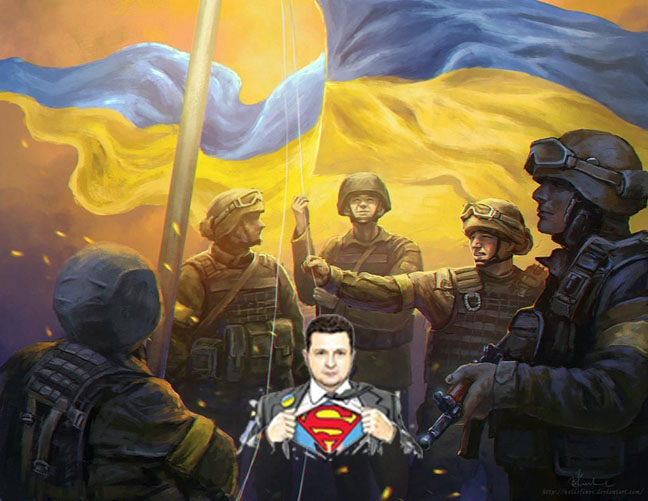
UN watchdog warns Ukraine war remains world’s biggest threat to nuclear safety.
30 January 2026, https://news.un.org/en/story/2026/01/1166863
The war in Ukraine remains the world’s biggest threat to nuclear safety as a fifth year of combat looms, the head of the UN nuclear watchdog warned on Friday, citing continued risks to power supplies at nuclear sites vulnerable to fighting nearby.
Addressing the International Atomic Energy Agency (IAEA) Board of Governors, Director General Rafael Grossi said the agency remains focused on preventing a nuclear accident as fighting continues to endanger critical infrastructure.
“The conflict in Ukraine is about to enter its fifth year,” Mr. Grossi said. “It continues to pose the world’s biggest threat to nuclear safety.”
IAEA teams remain deployed at all nuclear power plants affected by the conflict and publish regular updates on nuclear safety and security conditions.
The Board of Governors is the IAEA’s main decision-making body, bringing together representatives of 35 countries to oversee nuclear safety, security and safeguards, and to guide the work of the UN nuclear watchdog. Its current membership includes, among others Russia, the United States, United Kingdom, and France.
Off-site power a critical safety lifeline
Mr. Grossi stressed that a central safety requirement is reliable off-site power – the electricity a plant receives from the national grid. Without it, nuclear sites must rely on backup systems to run cooling and other essential safety functions.
“There must be secure off-site power supply from the grid for all nuclear sites,” he said, pointing to the IAEA’s “Seven Pillars” guidance for nuclear safety during armed conflict, where off-site power is pillar number four.
He also cited Principle 3 of the IAEA’s Five Principles for protecting the Zaporizhzhya Nuclear Power Plant (ZNPP) that “all efforts should be made to ensure off-site power remains available and secure at all times.”
Mr. Grossi said both sets of guidance have broad international support, including from the parties directly involved, and that he has repeatedly called for adherence to them, including at the UN Security Council.
Progress at Zaporizhzhya amid ongoing risks
He reported recent progress at ZNPP, where Europe’s biggest plant was reconnected on 19 January to its last remaining 330-kilovolt backup power line after repairs were carried out under a temporary ceasefire negotiated with Ukrainian and Russian counterparts.
The line had been damaged and disconnected since 2 January, reportedly due to military activity.
Until the reconnection, ZNPP relied on its last remaining 750-kilovolt main line to provide off-site power for safety systems needed to cool its six shutdown reactors and spent fuel pools. IAEA teams are also monitoring the plant’s ability to manage winter conditions, including keeping water in cooling and sprinkler ponds from freezing.
Beyond the plants themselves, Mr. Grossi warned that Ukraine’s electrical substations are also crucial to nuclear safety. “Damage to them undermines nuclear safety and must be avoided,” he said. An IAEA expert mission is now assessing 10 substations vital to nuclear safety amid ongoing strikes on the country’s power infrastructure.
Other nuclear sites also affected
IAEA teams have also reported military activity near other nuclear facilities, including the Chornobyl site, where damage to a critical substation disrupted multiple power lines and forced temporary reliance on emergency diesel generators. The affected lines have since been reconnected.
Mr. Grossi said the IAEA has shown how international institutions can help reduce risks and provide predictability in a volatile war. But, he added, technical measures have limits.
“The best way to ensure nuclear safety and security,” he said, “is to bring this conflict to an end.”
The US Is Pushing So Many Regime Change Agendas It’s Hard To Keep Up.
Caitlin Johnstone, 30 Jan 26, https://www.caitlinjohnst.one/p/the-us-is-pushing-so-many-regime?utm_source=post-email-title&publication_id=82124&post_id=186298268&utm_campaign=email-post-title&isFreemail=true&r=1ise1&triedRedirect=true&utm_medium=email
It’s just incredible how quickly and aggressively the US is advancing longstanding agendas of global conquest under the Trump administration. Now they’re racing to take out Cuba.
The US president has signed an executive order to impose new tariffs on countries which supply oil to Cuba, even indirectly, which is expected to dramatically increase the pressure on the already struggling island nation. This comes as Financial Times reports that “Cuba only has enough oil to last 15 to 20 days at current levels of demand and domestic production” after the US cut off the supply from Venezuela and Mexico shelved a planned oil shipment.
Trump’s order itself contains the usual excuses we’ve come to expect from the empire of propaganda and lies, with its authors babbling without evidence about Hamas and Hezbollah and “transnational terrorist groups” receiving support from Havana, thereby making this crushing act of siege warfare a self-defense measure implemented in protection of the American people.
We’re being asked to believe that Cuba is Hamas, so Washington needs to strangle it to death in self-defense. The fact that the US has been pursuing regime change in Cuba for generations, we are told, is merely a coincidence.
The lies get dumber and dumber with each new imperial power grab. It’s just insulting at this point.
Last week The Wall Street Journal published an article titled “The U.S. Is Actively Seeking Regime Change in Cuba by the End of the Year” which cited anonymous senior US officials saying they viewed the operation to remove Maduro from Caracas as a “blueprint” for bringing down Havana.
Here’s an excerpt:
“Emboldened by the U.S. ouster of Venezuelan President Nicolás Maduro, the Trump administration is searching for Cuban government insiders who can help cut a deal to push out the Communist regime by the end of the year, people familiar with the matter said.
“The Trump administration has assessed that Cuba’s economy is close to collapse and that the government has never been this fragile after losing a vital benefactor in Maduro, these people said. Officials don’t have a concrete plan to end the Communist government that has held power on the Caribbean island for almost seven decades, but they see Maduro’s capture and subsequent concessions from his allies left behind as a blueprint and a warning for Cuba, senior U.S. officials said.”
The Wall Street Journal reports that administration officials have been meeting with “Cuban exiles and civic groups in Miami and Washington” with the goal of “identifying somebody inside the current government who will see the writing on the wall and want to cut a deal,” in a way similar to how assets within the Maduro government were recruited to facilitate his removal.
In a new segment on Trump’s frenzied efforts to topple Havana, CNN’s Patrick Oppmann reports from Cuba that he’s “heard from a US embassy source that diplomats there have been advised to quote ‘have their bags packed’ as the Trump administration explores new ways to destabilize the communist-run government.”
The US likes to immiserate the populations of targeted nations using economic strangulation with the goal of fomenting unrest and turning people against their leaders. In 2019 Trump’s previous secretary of state Mike Pompeo openly acknowledged that the goal of Washington’s economic warfare against Iran was to make the population so miserable that they “change the government”, cheerfully citing the “economic distress” the nation had been placed under by US sanctions. Economic distress has been widely cited as a primary factor in the deadly protests that have rocked Iran in recent weeks.
Starvation sanctions are the only form of warfare where it is widely considered both normal and ethical to deliberately target a civilian population with deadly force. Deliberately impoverishing an entire nation so that it erupts in conflict and civil war is one of the most evil things you can possibly imagine, but it’s the go-to Plan A for the US empire when it comes to removing foreign leaders who refuse to kiss the imperial boot.
From Palestine to Lebanon to Yemen to Syria to Venezuela to Cuba to Iran, these last couple of years the US has been in a mad scramble to eliminate governments and resistance groups which attempt to insist on their own sovereignty. There’s a new excuse every time, but the end goal is always the same: the furtherance of planetary domination.
The US empire is the single most tyrannical and murderous power structure on this planet. If any regime is in need of changing, it’s that one.
The U.S. plan for Gaza has nothing in it for Palestinians
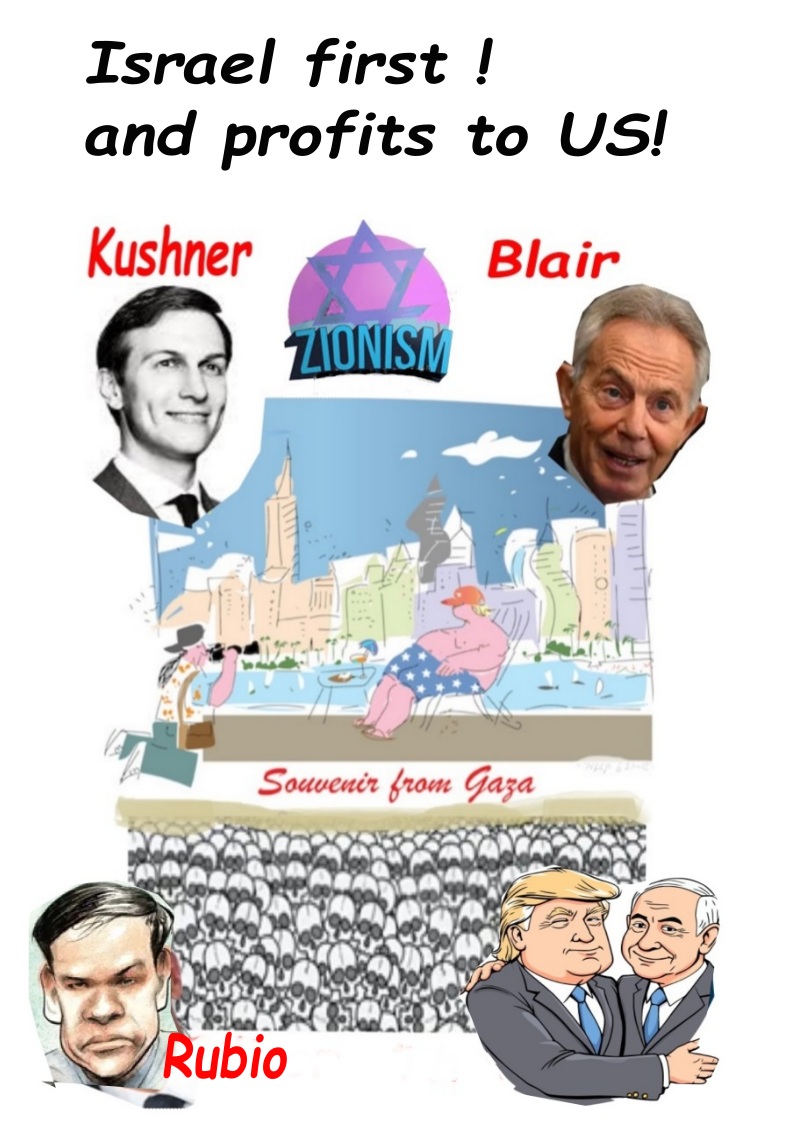
The U.S. plan for Gaza envisions a Gaza for investors, not Palestinians.
By Qassam Muaddi January 28, 2026 , https://mondoweiss.net/2026/01/the-u-s-plan-for-gaza-has-nothing-in-it-for-palestinians/
The latest iteration of the future U.S. plan for Gaza was revealed last week by U.S. President Trump’s son-in-law, Jared Kushner, at the inaugural ceremony of the so-called “Board of Peace,” which is tasked with overseeing the reconstruction and administration of the Strip. Kushner’s presentation included a map of what Gaza would look like after reconstruction, including industrial zones, residential blocks, and tourism beaches. The plan advertises a new Rafah and a new Gaza City, completely separate from one another. Meanwhile, the edges of the Strip — which once served as Gaza’s farmland and bread basket — would now be home to industrial complexes. Kushner’s plan doesn’t foresee any restoration of Palestinian neighborhoods or villages, and offers no place for natural Palestinian life to exist. Only fixed residential blocks, surrounded by investments.
After two years of genocide, the outcome that is being laid out for the people of Gaza — and the Palestinian people as a whole — is the creation of a dystopian reality that sees the building of luxury resorts on top of their destroyed homes and communities.
The only role for Palestinians in this vision is to be managed — controlled, “concentrated” in confined zones, and later possibly expelled. All of this is masked as a “historic” humanitarian effort.
A Gaza without Palestinians
Soon, it will be four months since the ceasefire in Gaza went into effect. On Monday, the first phase of the agreement officially ended after the Israeli government announced that Israeli forces had found the body of the last dead Israeli soldier held captive in Gaza. Israel had refused to move to the second phase of the ceasefire before Hamas handed over the remaining body, which the Israeli army reportedly found on the Israeli-controlled side of the Strip.
Coincidentally, in the past few days, U.S. President Trump announced the formation of the Board of Peace, initially planned to oversee the transition in Gaza during the second phase of the ceasefire. Simultaneously, the Israeli government agreed to reopen the Rafah crossing, a crucial step for the second phase. A week earlier, the Palestinian technocratic committee for the administration of Gaza was also announced.
But what’s actually happening on the ground started well before the technocratic committee was formed. Israel’s longstanding plans for Gaza — to corral its population into concentrated zones ahead of their possible expulsion — have been silently unfolding on the ground. Last week, Drop Site News revealed documents obtained from the U.S.-Israeli military and civil command center in Israel showing preparations for a residential area to be built in Rafah. According to Drop Site, if developed, the “planned community” in Rafah “would contain and control its residents through biometric surveillance, checkpoints, monitoring of purchases, and educational programs promoting normalization with Israel,” comparing it to a panopticon. Rafah was completely leveled by the Israeli army earlier in 2025.
Based on an analysis of satellite imagery conducted by Forensic Architecture, the Drop Site report indicates that the new “community” is being prepared on a 1-square-kilometer plot of land in Rafah at the intersection of two military corridors.
Jonathan Whittall, a senior UN official in Palestine between 2022 and 2025, said that “this is the next phase in the weaponization of aid,” after reviewing the materials obtained by Drop Site
This idea to “concentrate” Palestinians into a highly surveilled area is in line with previous statements made by Israeli Defense Minister, Israel Katz, who said last July that Palestinians who would be allowed into the so-called “humanitarian city” — proposed to be built over Rafah’s ruins — would not be allowed to leave it. The scheme was widely decried by human rights groups as a thinly-disguised plan to build a “concentration camp,” and was seen as a first step toward pushing Palestinians to leave Gaza entirely. Israeli Prime Minister Benjamin Netanyahu explicitly told his cabinet as much in September, under the label of “voluntary emigration.”
Meanwhile, the National Committee for the Administration of Gaza (NCAG), the body of Palestinian technocrats set to oversee day-to-day governance in the Strip, is about to enter Gaza. It has so far garnered the support of all Palestinian factions, yet remains subordinate to Trump’s Board of Peace, with only limited executive powers. The Board of Peace, on the other hand, plays a political role in drafting plans for Gaza.
The NCAG is the first-ever Palestinian governing body in Palestine that is not part of the PLO’s institutional structure, which effectively splits Gaza politically from the rest of Palestine. Instead, its ultimate political reference now lies in a Board of Peace headed by Trump and, among others, Israel. The vision it is advancing for Gaza is one without Palestinians.
In fact, all the unfolding information about the U.S. plan for Gaza shows that it treats the Palestinian question as a purely humanitarian issue shorn of any political content. It completely ignores the centrality of Gaza to the Palestinian cause as a political question and fails to address the basic element of the “conflict” — Palestinian self-determination.
This should not be surprising, given that decision-making is dominated by U.S. business interests, ambitions of regional control and power, and Israel’s ideological drive to push Palestinians out. In the midst of all this, no Palestinian voice is present.
Rubio Dodges Accountability at Senate Hearing as Deadly Boat Strikes Continue.

As the top official at the State Department, Rubio also appeared to distance himself from the boat strikes and repeatedly deferred questions from members of both parties about the legal justification to the Department of Defense, where Hegseth reportedly ordered the strikes under Trump’s authority
The Constitution gives Congress the power to declare war, not the president, but this standard has eroded over decades of U.S. imperialism and the “war on drugs.”
The families of two men killed on a small boat targeted by the US military filed a wrongful death lawsuit this week.
By Mike Ludwig , Truthout, January 29, 2026
As former colleagues fumed about the administration’s failure to consult Congress, Secretary of State Marco Rubio defended President Donald Trump’s rapid escalation of the “war on drugs” in the Caribbean and Latin America before the Senate Foreign Relations Committee on January 28. Rubio testified for almost three hours in his first congressional hearing since U.S. forces invaded Venezuela and abducted President Nicolás Maduro and his wife, Cilia Flores, in a deadly raid on January 3.
“This is the first public hearing we’ve had. Two hundred folks who were on secret designated combatant lists have been killed, U.S. troops have been injured, hundreds of millions of dollars have been spent, an armada amassed, and the announcement of a new Monroe doctrine which does not land well in the Americas,” said Sen. Tim Kaine (D-Virginia), noting operations began nearly five months ago. “Democrats have asked over and over again, can we have a public hearing?”
After months of U.S. military belligerence in international waters without congressional oversight, Rubio claimed the U.S. is not at war with Venezuela but is at war with drug smugglers, which he called “enemy combatants” with advanced weapons. However, Rubio distanced himself from dozens of airstrikes on small boats that have killed at least 126 people since September, deferring questions to Defense Secretary Pete Hegseth, despite Rubio’s double role as Trump’s national security advisor. Rubio’s prepared remarks did not mention the boat strikes…………………………………………………………………………….
Rubio’s testimony came one day after the families of two Trinidadian men killed in a U.S. boat strike on October 14 filed a landmark wrongful death lawsuit against the Trump administration in federal court………………………………………..
Echoing many experts, the lawsuit argues there is no legal justification for the boat strikes, videos of which quickly became content for the Trump administration’s social media propaganda. “These are lawless killings in cold blood; killings for sport and killings for theater, which is why we need a court of law to proclaim what is true and constrain what is lawless,” said Baher Azmy, legal director of the Center for Constitutional Rights, a group representing the Trinidadian families, in a statement on January 27.
“It is absurd and dangerous for any state to just unilaterally proclaim that a ‘war’ exists in order to deploy lethal military force,” Azmy said.
At the Senate hearing, Kaine said the committee was unable to properly discuss the fatal boat strikes because the administration is keeping the intelligence behind them classified and out of public view — including any evidence that the people on the boats were smuggling drugs rather than fishing or traveling from one place to another as the families of Joseph and Samaroo have said.
“I would like to talk about the complete weakness of the legal rationale about striking boats in international waters, but I can’t, because the administration has only shared it with members in a classified setting,” Kaine said. “I can’t tell you the domestic rationale is hollow and the international rationale is hollow.”…………………………………………………………………………………….
As the top official at the State Department, Rubio also appeared to distance himself from the boat strikes and repeatedly deferred questions from members of both parties about the legal justification to the Department of Defense, where Hegseth reportedly ordered the strikes under Trump’s authority……………………………………………………………………
The Constitution gives Congress the power to declare war, not the president, but this standard has eroded over decades of U.S. imperialism and the “war on drugs.”…………………..
On January 14, the Senate’s GOP majority narrowly blocked a war powers resolution that would have required the president receive permission from Congress before taking further military action. Republicans also blocked an resolution to prohibit the deadly boat strikes and reign in Trump’s war on drug cartels shortly before breaking for the holidays in December. https://truthout.org/articles/rubio-dodges-accountability-at-senate-hearing-as-deadly-boat-strikes-continue/
The BBC pushes the case for an illegal war on Iran with even bigger lies than Trump’s.
Notice too – though the BBC won’t point it out – that the US sanctions are a form of collective punishment on the Iranian population that is in breach of international law and that last year’s strikes on Iran were a clear war of aggression, which is defined as “the supreme international crime”.
29 January 2026, https://www.jonathan-cook.net/blog/2026-01-29/bbc-illegal-war-iran-lies/
The UK state broadcaster streams disinformation into our living rooms – deceptions that not only leave us clueless about important international events but drive us ever closer to global conflagration
Here is another example of utterly irresponsible journalism from the BBC on tonight’s News at Ten.
Diplomatic correspondent Caroline Hawley starts by credulously amplifying a fantastical death toll of “tens of thousands of dead” from recent protests in Iran – figures provided by regime opponents. Contrast that with the BBC’s constant, two years of caution and downplaying of the numbers killed in Gaza by Israel.
The idea that in a few days Iranian security forces managed to kill as many Iranians as Israel has managed to kill Palestinians in Gaza from the prolonged carpet-bombing and levelling of the tiny enclave, as well as the starvation of its population, beggars belief. The figures sound patently ridiculous because they are patently ridiculous.
Either the Iran death toll is massively inflated, or the Gaza death toll is a massive underestimate. Or far more likely, both are intentionally being used to mislead.
Watch Caroline Hawley’s two-minute report here: [on original]
The BBC has a political agenda that says it is fine to headline a made-up, inflated figure of the dead in Iran because our leaders have defined Iran as an Official Enemy. While the BBC has a converse political agenda that says it’s fine to employ endless caveats to minimise a death toll in Gaza that is already certain to be a huge undercount because Israel is an Official Ally.
This isn’t journalism. It’s stenography for western governments that choose enemies and allies not on the basis of whether they adhere to any ethical or legal standards of behaviour but purely on the basis of whether they assist the West in its battle to dominate oil resources in the Middle East.
Notice something else. This news segment – focusing the attention of western publics once again on the presumed wanton slaughter of protesters in Iran earlier this month – is being used by the BBC to advance the case for a war on Iran out of strictly humanitarian concerns that Trump himself doesn’t appear to share.
Trump has sent his armada of war ships to the Gulf not because he says he wants to protect protesters – in fact, missile strikes will undoubtedly kill many more Iranian civilians – but because he says he wishes to force Iran to the negotiating table over its nuclear programme.
There are already deep layers of deceit from western politicians regarding Iran – not least, the years-long premise that Iran is seeking a nuclear bomb, for which there is still no evidence, and that Tehran is responsible for the breakdown of a deal to monitor its civilian nuclear power programme. In fact, it was Trump in his first term as president who tore up that agreement.
Iran responded by enriching uranium above the levels needed for civilian use in a move that was endlessly flagged to Washington by Tehran and was clearly intended to encourage the previous Biden administration to renew the deal Trump had wrecked.
Instead, on his return to power, Trump used that enrichment not as grounds to return to diplomacy but as a pretext, first, to intensify US sanctions that have further crippled Iran’s economy, deepening poverty among ordinary Iranians, and then to launch a strike on Iran last summer that appears to have made little difference to its nuclear programme but served to weaken its air defences, to assassinate some of its leaders and to spread terror among the wider population.
Notice too – though the BBC won’t point it out – that the US sanctions are a form of collective punishment on the Iranian population that is in breach of international law and that last year’s strikes on Iran were a clear war of aggression, which is defined as “the supreme international crime”.
The US President is now posturing as though he is the one who wants to bring Iran to the negotiating table, by sending an armada of war ships, when it was he who overturned that very negotiating table in May 2018 and ripped up what was known as the Joint Comprehensive Plan of Action.
The BBC, of course, makes no mention whatsoever of this critically important context for judging the credibility of Trump’s claims about his intentions towards Iran. Instead its North America editor, Sarah Smith, vacuously regurgitates as fact the White House’s evidence-free claim that Iran has a “nuclear weapons programme” that Trump wants it to “get rid of”.
Watch Sarah Smith’s one-minute report here: [on original]
But on top of all that, media like the BBC are adding their own layers of deceit to sell the case for a US war on Iran.
First, they are doing so by trying to find new angles on old news about the violent repression of protests inside Iran. They are doing so by citing extraordinary, utterly unevidenced death toll figures and then tying them to the reasons for Trump going on the war path. Its reporting is centring once again – after the catastrophes of Afghanistan, Iraq, Libya and elsewhere – bogus humanitarian justifications for war when Trump himself is making no such connection.
And second, the BBC’s reporting by Sarah Smith coolly lays out the US mechanics of attacking Iran – the build-up to war – without ever mentioning that such an attack would be in complete violation of international law. It would again be “the supreme international crime”.
Instead she observes: “Donald Trump senses an opportunity to strike at a weakened leadership in Tehran. But how is actually going to do that? I mean he talked in his message about the successful military actions that have definitely emboldened him after the actions he took in Venezuela and earlier last year in Iran.”
Imagine if you can – and you can’t – the BBC dispassionately outlining Russian President Vladimir Putin’s plans to move on from his invasion of Ukraine into launching military strikes on Poland. Its correspondents note calmly the number of missiles Putin has massed closer to Poland’s borders, the demands made by the Russian leader of Poland if it wishes to avoid attack, and the practical obstacles standing in the way of the attack. One correspondent ends by citing Putin’s earlier, self-proclaimed “successes”, such as the invasion of Ukraine, as a precedent for his new military actions.
It is unthinkable. And yet not a day passes without the BBC broadcasting this kind of blatant warmongering slop dressed up as journalism. The British public have to pay for this endless stream of disinformation pouring into their living rooms – lies that not only leave them clueless about important international events but drive us ever closer to the brink of global conflagration.
What does the US want from Iran? Tracking one month of Trump’s changing demands.
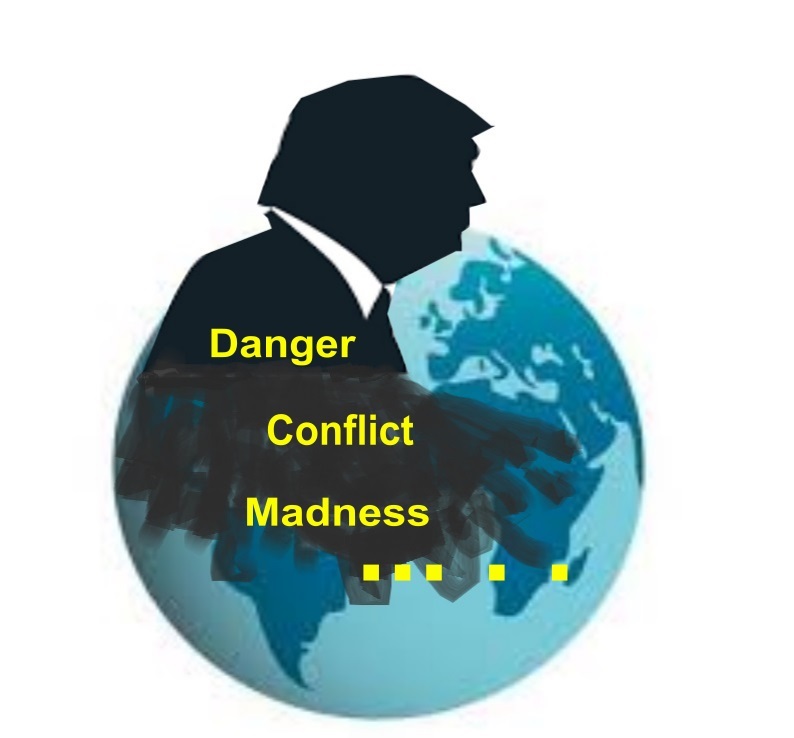
After saying the US would attack if protesters were harmed, the president appears now to be tying the threat of airstrikes to Iran’s nuclear programme.
Jonathan Yerushalmy, Thu 29 Jan 2026 , https://www.theguardian.com/us-news/2026/jan/29/trump-iran-usa-one-month-demands-protesters-nuclear
Donald Trump has warned that Iran must come to the table to negotiate a deal over its nuclear programme or face the possibility of airstrikes and regime change, capping off a month of bellicose posturing and whiplash inducing u-turns from the US president.
The US president’s demands threaten to open a new chapter in America’s long and tumultuous relationship with Iran, which in just over a decade has seen rapprochement, broken deals, targeted assassinations and unprecedented airstrikes.
Here’s a recap of just the last 31 days:
29 December : ‘We’ll knock the hell out of them’
At the end of December, Trump suggested that Iran was “building up weapons” again, just six months after the US launched unprecedented strikes against the country’s nuclear sites.
Speaking beside Israeli prime minister Benjamin Netanyahu in Florida, Trump said if Iran was working to build up again “we’ll knock the hell out of them. But, hopefully, that’s not happening.” He added that the consequences of such a move would be “more powerful than the last time”.
After Netanyahu suggested that Iran may be attempting to rebuild its nuclear programme, the country’s foreign minister called for renewed talks with the US.
2 January: ‘We are locked and loaded and ready to go’
After Iranians took to the streets in the largest national demonstrations in years, Trump said that if protesters were killed, the US would “come to their rescue”.
“We are locked and loaded, and ready to go,” he said.
The unrest, triggered by an unprecedented decline in the value of the national currency, prompted a renewed escalation in tensions between the US and Iran.
6 January: ‘Make Iran Great Again’
Days after Trump launched strikes on Venezuela and captured the country’s president Nicolás Maduro, Trump was pictured posing with a “Make Iran Great Again” hat.
With protests in Iran spreading and reports of dozens dead, Trump again said that if Tehran “violently kills peaceful protesters” the US would “come to their rescue”.
10 January: ‘The USA stands ready to help!!!’
As the reported death toll in the protests soared into the hundreds, Trump was said to be weighing a response. “Iran is looking at FREEDOM, perhaps like never before. The USA stands ready to help!!!,” the US president said on the Truth Social platform.
The speaker of Iran’s parliament warned that Israeli and US interests in the Middle East would be “legitimate targets” if Washington attacked Iran.
13 January: ‘Help is on its way
Trump announced new 25% tariffs on countries that do business with Iran, but there was no official documentation from the White House and it appears they were never implemented.
Amid reports of a brutal regime crackdown on the protesters, Trump had initially claimed Iran wanted to negotiate, but later went on to say that he had cancelled all meetings with officials.
“Iranian Patriots, keep protesting – take over your institutions!!! … help is on its way,” Trump said in a post on Truth Social on Tuesday.
14 January: ‘The killing in Iran is stopping’
Despite reports that as many as 3,428 Iranians had been killed and that executions as punishment were imminent, Trump said he had been told that “the killing in Iran is stopping … And there’s no plan for executions.”
It was understood he had reviewed the full range of options to strike Iran but was unconvinced by any single action. His administration had also been lobbied by Middle Eastern allies not to go ahead with strikes, with fears that an attack would lead to a major and intractable conflict across the region.
In the days that followed the huge protest movement slowed under the weight of the regime’s brutal crackdown. Mass arrests followed and many Iranians said they felt betrayed and confused by the president’s sudden about turn.
22 January: ‘We have a lot of ships going that direction’
After several days which saw Trump distracted by anti-ICE protests in Minneapolis and a breakdown in relations with European allies over the fate of Greenland, Trump returned to the issue of Iran, saying “We have a lot of ships going that direction, just in case.”
With the death toll from the protests now said to be more than 5,000 – and reports it could be many times higher than that – Trump’s decision to send the aircraft carrier USS Abraham Lincoln and several guided-missile destroyers to the Middle East were thought to be in response to the regime’s brutal crackdown.
28 January: ‘Time is running out’
With US ships now in position in the Middle East, Trump issued an extraordinary threat to Iran, saying of the armada, “like with Venezuela, it is, ready, willing, and able to rapidly fulfill its mission, with speed and violence, if necessary.”
Warning that Iran must “make a deal”, Trump said that the country would have “NO NUCLEAR WEAPONS”.
The statement marked a shift in his administration’s rationale for sending the armada to the region, with no mention of the protesters, their demands or the regime’s brutal crackdown.
The US’s Multi‑Front War: A House of Cards
Trump’s Ponzi War Machine: The US Empire Eats Itself
From Caracas to Tehran, the self‑devouring logic of perpetual conflict; and why the blowback will be biblical
30 Jan 2026, https://urbanwronski.com/2026/01/30/the-uss-multi-front-war-a-house-of-cards/
In my previous piece, I depicted a US on the precipice of a war with Iran, a war corporate media will not cover. Time to pull back on the camera and see the Trump Regime as a nation at war with itself while it makes the fatal error of fighting, not just a war on two fronts, but on reality, itself.
It can only end badly.
Picture an elderly grifter at a roulette table, betting the house on red after red. Each clattering spin is meant to recover the losses of the last. But it’s not that simple. The croupier is his own Pentagon. Or Department of War. The chips are borrowed from China. The wheel is rigged by a man who changes the rules mid‑spin.
That’s Donald Trump’s foreign policy. It’s a lunatic Ponzi scheme of perpetual war, where every failure funds the next fiasco, and the only thing compounding faster than the body count is the interest bill.
From the shambles of Venezuela to the barbed‑wire barbarity of ICE, MAGA’s own goon-militia, a terror-squad with quotas and bonuses; from the clown‑car, Pentagon, newly clean-shaven, to the minefield of Iran, Washington is not expanding its power. It’s cannibalising it. Drunk on it, at the same time.
The empire has become a pyramid scheme running on debt, bluff, gratuitous violence and cruelty. Running on empty, morally, spiritually and in every other way known to humanity.
Project 2025 : The Architecture of an American Upheaval

30 January 2026 Dr Andrew Klein, PhD, https://theaimn.net/project-2025-the-architecture-of-an-american-upheaval/
In an era of complex global challenges, a blueprint for the radical restructuring of the United States government and its role in the world has moved from the fringes of policy workshops to the centre of power. Known as Project 2025, this initiative is no mere political manifesto; it is a detailed, nearly thousand-page operational plan to consolidate executive power, dismantle long-standing federal institutions, and reorient American society and foreign policy according to a specific, hardline conservative vision.
While its architects publicly frame it as a preparatory tool for any conservative president, its DNA is unmistakably Trumpist. The project is a direct response to the perceived failures of Donald Trump’s first term, designed to ensure that a future administration is not hindered by a non-compliant bureaucracy or a lack of ideological clarity. An analysis found that just four days into his second term, nearly two-thirds of Trump’s executive actions “mirror or partially mirror” proposals from Project 2025. This is not a coincidence; it is the implementation of a premeditated design.
The Architects and the Blueprint
Project 2025 is the brainchild of The Heritage Foundation, a cornerstone of American conservative thought, which has orchestrated a coalition of over 100 partner organisations. The project’s director is Paul Dans, a former chief of staff in Trump’s Office of Personnel Management, and its president is Kevin Roberts, who has openly described the organisation’s role as “institutionalizing Trumpism.”
The initiative is built on “four pillars” that function as an integrated system for seizing the levers of government: a 920-page policy bible called the “Mandate for Leadership“; a personnel database of vetted, ideologically loyal individuals; a training academy for these recruits; and a secretive “Playbook” of draft executive orders for the first 180 days. The project operates with a stated budget of $22 million and is supported by a network of groups, with nearly half having received funding from a dark money network linked to Leonard Leo, a key architect of the conservative judiciary.
Core Aims and Ideological Drivers
The agenda laid out in Project 2025 is sweeping, touching upon nearly every aspect of governance and American life. Its central ideological drivers are the concentration of presidential power, the advancement of a Christian nationalist social agenda, and a dramatic rollback of the federal government’s regulatory and social welfare functions.
In the realm of government and power, the plan aims to dismantle the “administrative state” by reinstating “Schedule F,” a measure that would reclassify up to 50,000 career civil servants as political appointees, allowing for their replacement with administration loyalists. It also seeks to bring independent agencies like the Department of Justice and the FBI under direct presidential control.
On social policy, the blueprint is equally transformative. It proposes using the 1873 Comstock Act to criminalise the mailing of abortion pills and to reverse FDA approval of the abortion medication mifepristone. It aims to remove legal protections against anti-LGBTQ+ discrimination, mandate discrimination against transgender people in the military and in disaster assistance, and eliminate all Diversity, Equity, and Inclusion (DEI) programs across the federal government.
For the economy and environment, the project advocates for slashing corporate taxes, instituting a flat individual income tax, and cutting spending on social programs like Medicare and Medicaid. On the environment, it calls for the United States to withdraw from international climate agreements and to unleash maximum domestic fossil fuel production under a mantra of “drill, drill, drill,” with one proposal going so far as to suggest abolishing the National Oceanic and Atmospheric Administration (NOAA).
Regarding immigration and security, the plan outlines a policy of executing the arrest, detention, and mass deportation of undocumented immigrants. It also proposes ending birthright citizenship, dismantling the asylum system, and deploying the U.S. Armed Forces for domestic law enforcement.
The Trump-Project 2025 Nexus
Despite Donald Trump’s public attempts to distance himself, the connections are deep. The initiative is staffed by over 200 former Trump administration officials, and at least six of his former cabinet secretaries are authors or contributors to the project’s policy bible. Crucially, key figures behind the project have been appointed to Trump’s second-term administration. Russell Vought, a Project 2025 co-author, was reappointed as Director of the Office of Management and Budget. Stephen Miller, whose group advised the project, was appointed as a White House advisor. Tom Homan, a contributor, was appointed as “Border Czar,” and Pam Bondi, an ardent supporter, was nominated for U.S. Attorney General. This integration demonstrates that the project’s ultimate aim – to provide a “government in waiting” – has been realised.
Global Implications and the Australian Context
The project’s vision explicitly aims to reshape America’s role in the world. Its foreign policy prescriptions include a “pivot” to counter China, which analysts suggest would come at the expense of focus on Russia and European democracies. It advocates for a “comprehensive cost-benefit analysis of U.S. participation in all international organizations,” signaling a strong isolationist and unilateralist turn. Furthermore, it would embed conservative religious goals into foreign policy, for instance, by making “protecting life” a “core objective” of foreign assistance.
For Australia, the direct mentions in the project’s materials are few, primarily suggesting greater defence collaboration. However, the indirect consequences would be profound. A U.S. withdrawal from climate agreements and a massive increase in fossil fuel production would cripple global efforts to combat climate change, a dire outcome for a region highly vulnerable to its effects. A shift in U.S. commitment to international institutions would create significant uncertainty and force a realignment of strategic partnerships in the Indo-Pacific. The Heritage Foundation’s open admiration for Viktor Orban’s Hungary as “the model” for conservative statecraft indicates a foreign policy more friendly to authoritarian leaders, potentially altering the global democratic landscape in which Australia operates.
A Contested Legacy
Project 2025 is celebrated by its proponents as a necessary measure to dismantle an unaccountable bureaucracy. Its critics, including pro-democracy advocates and civil liberties unions, have labeled it an authoritarian and Christian nationalist plan that would undermine the rule of law, separation of powers, and civil liberties.
The implementation of this project represents a fundamental test for the American system of government. It is a deliberate, well-funded, and systematic effort to transform the structure of the state itself. As this blueprint becomes reality, its effects will reverberate far beyond Washington, D.C., challenging democratic norms and international alliances, and forcing nations like Australia to navigate a world reshaped by an America that has chosen a radically different path.
Aldermaston named on Russia nuclear war UK ‘strike list’

30th January, By Suzanne Antelme, https://www.readingchronicle.co.uk/news/25809589.aldermaston-named-russia-nuclear-war-uk-strike-list/
A small Berkshire village has been named on an alleged list of UK targets that Russia might strike with missiles or nukes if war between the two countries ever breaks out.
The alleged strike list of 23 sites was revealed by a Russian politician, according to LADbible.
The outlet reported that Dmitry Rogozin, a Russian senator and the country’s former deputy prime minister, shared a map of the potential targets as tensions rose between NATO and Russia last year.
The list of 23 targets includes Aldermaston, a village in Berkshire that happens to be the main site for the UK’s atomic weapons programme.
Aldermaston has hosted the programme since 1950, and it was in this humble village that the Atomic Weapons Research Establishment (AWRE) designed the UK’s first hydrogen bomb in 1957.
The AWRE has since become the AWE Nuclear Security Technologies, and Aldermaston remains at the centre of the government’s nuclear capabilities, responsible for designing and manufacturing the UK’s nuclear warheads.
Trump May Launch Strikes on Iran — Regime Change, Not Nukes, Is the Goal.
January 30, 2026, By Joshua Scheer, https://scheerpost.com/2026/01/30/exclusive-trump-may-launch-strikes-on-iran-regime-change-not-nukes-is-the-goal/
A Drop Site News exclusive reports that senior U.S. military officials have informed the leadership of a key Middle Eastern ally that President Donald Trump could authorize direct military strikes on Iran as early as this weekend, with targets potentially extending beyond nuclear and missile facilities to include senior Iranian leadership — a push some strategists say aims at precipitating regime change rather than merely halting Tehran’s military programs. This after new sanctions were placed on Iran by the US treasury department.
With Drop Site reporting “This isn’t about the nukes or the missile program. This is about regime change,” said a former senior U.S. intelligence official who consults for Arab governments and is an informal advisor to the Trump administration on Middle East policy. He told Drop Site that U.S. war planners envision attacks that target nuclear, ballistic, and other military sites around Iran, but will also aim to decapitate the Iranian government, and in particular the leadership and capabilities of the Islamic Revolutionary Guard Corps (IRGC). The IRGC is a branch of the Iranian armed forces created after the country’s 1979 revolution whose leadership now plays a major role in the country’s politics and economy.
Trump not sharing that regime change is part of the plan posted “Hopefully Iran will quickly ‘Come to the Table’ and negotiate a fair and equitable deal – NO NUCLEAR WEAPONS – one that is good for all parties,” Trump wrote on his Truth Social platform. “Time is running out, it is truly of the essence!”
From Senator John Cornyn: in a foregin realtions meeting with Rubio: Cornyn stating: “I know the President is being presented with a range of options. We’ve noticed a lot of movement into the region by our Navy… but what happens if the Supreme Leader is removed in Iran?”
From Marco Rubio: “We have to have enough force and power in the region to defend against the possibility that, at some point, as a result of something, the Iranian regime decides to strike at our troop presence in the region.”
“I hope it doesn’t come to that, but I think what you’re seeing now is the effort to posture assets in the region to defend against what could be an Iranian threat against our personnel.”
This came from Department of War head Pete Hegseth during a recent Cabinet meeting: the Iranians “have all the options to make a deal,” he said. But if the goal is purely regime change, what deal is even possible? Hegseth also claimed that the war in Ukraine and the October 7 massacre “would not have happened” if Trump had been in power.
Iranian officials have made clear that they would respond with a major counterstrike using all means necessary if the U.S. attempts a Venezuela‑style operation or, worse, targets Iranian leadership — a scenario that has regional allies deeply concerned about the risk of a wider war. With Iran’s misison to the UN tweeting…..
While the region waits Iranian Foreign Minister Abbas Araghchi stated in Istanbul saying about the above issue “The Islamic Republic of Iran, just as it is ready for negotiations, it is also ready for war,”
adding:
“Our position is exactly this: Applying diplomacy through military threats cannot be effective or constructive,” Araghchi told journalists Wednesday outside of a Cabinet meeting. “If they want negotiations to take shape, they must abandon threats, excessive demands and the raising of illogical issues.”
Looking at Iran’s past stance versus what could be coming, a recent interview sheds some light with Dr. Foad Izadi, a professor at the University of Tehran, telling Drop Site that in the past:
“a number of high-ranking military officials … made the decision to inform the United States when they were attacking the U.S. bases.”
“The idea was basically trying to ride out the Trump administration, not to confront him in a serious manner, respond to him, but respond in a very limited style so they don’t start a huge war with the United States,” he said. “This was their decision. And they were killed in June,” during the 12-day bombing campaign unleashed against Iran by the U.S. and Israel.”
The report comes amid escalating U.S.–Iran tensions that have woven together diplomatic brinkmanship, regional alliances, and conflicting strategic priorities. While U.S. and Israeli forces previously carried out coordinated strikes on Iranian nuclear sites in 2025 — prompting retaliatory missile barrages and suspending negotiations — the Trump administration has continued to oscillate between threats of further military action and claims it prefers a negotiated settlement over Iran’s nuclear ambitions.
International concern is growing, with Arab states urging restraint to prevent a wider regional conflagration, even as Tehran signals readiness for both talks and defense in the face of mounting pressure.
With at least two nations, Saudi Arabia and the United Arab Emirates, have made it clear they will not allow their airspace to be used for any potential U.S. strike on Iran. Yet the United States has moved the USS Abraham Lincoln and several guided-missile destroyers into the region, assets capable of launching attacks from the sea. Egypt’s Foreign Ministry emphasized diplomacy, with top diplomat Badr Abdelatty engaging both Iranian Foreign Minister Abbas Araghchi and U.S. Mideast envoy Steve Witkoff to “work toward achieving calm, in order to avoid the region slipping into new cycles of instability.”
Meanwhile, Saudi Arabia, Turkey, Oman, and Qatar have all been in contact with Washington and Tehran, warning that any escalation could destabilize the region and disrupt energy markets. Arab and Muslim states fear that even a limited U.S. strike could provoke immediate retaliation from Tehran, potentially targeting regional or American interests and causing collateral damage. Saudi Defense Minister Khalid bin Salman, currently in Washington for high-level talks, reinforced this message, noting on social media that he discussed “efforts to advance regional and global peace and stability” with Secretary of State Marco Rubio, Defense Secretary Pete Hegseth, and other top U.S. officials. With Saudi prince Khalid bin Salman tweeting from the west wing:
This is a developing story, but in Washington, it feels like the only ones pushing it are Trump and his allies. The Saudis are calling for calm, Israel is en route to the capital, and the only thing anyone can predict is that more fuel might soon be thrown on an already blazing fire. Tensions are high: Iran warns it will strike at the heart of Tel Aviv, and whispers of war are spreading across Israel.
The memories of past conflicts remain sharp for Israelis. The latest round of threats between Tehran and Washington has stirred anxiety and put the country on edge. During previous wars, Israel’s air defenses were remarkably effective—but citizens still ran for shelter at the sound of sirens, and the fear of another confrontation has only intensified in recent weeks.
As U.S. warships draw closer, Israeli headlines have been dominated by speculation over a potential American strike on Iran—and the grim expectation that Israel, as the closest U.S. ally in the region, would bear the first wave of retaliation.
Some towns are reopening public bomb shelters. Airlines are canceling flights, hotels are seeing reservations vanish, and citizens are stockpiling food and water. Yet the government and the Home Front Command—Israel’s alert system based on real-time security intelligence—have issued no special guidance.
Without official word, rumors flourish. Both Trump’s and Iran’s statements are heavy on drama, light on specifics, and in Israel, everyone knows “someone who knows something.” Daily chatter revolves around alleged knowledge of a U.S. strike—hours or days away—and debates over whether to cancel travel or postpone events.
In the end, nobody—neither in Tehran nor Tel Aviv—can say for sure what’s coming next.
What we all know is this: war is bad for humans, and our leaders don’t care.
The UN is Being Undermined by the ‘Law of the Jungle’
By Thalif Deen, IPS UN Bureau Report, https://www.ipsnews.net/2026/01/the-un-is-being-undermined-by-the-law-of-the-jungle/?utm_source=email_marketing&utm_admin=146128&utm_medium=email&utm_campaign=The_UN_is_Being_Undermined_by_the_Law_of_the_Jungle_Moving_Towards_Agroecological_Food_Systems_in_So
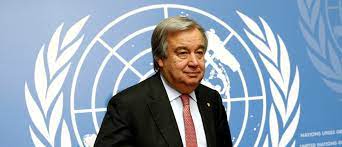
UNITED NATIONS, Jan 30 2026 (IPS) – UN Secretary-General Antonio Guterres was dead on target when he told the Security Council last week that the rule of law worldwide is being replaced by the law of the jungle.
“We see flagrant violations of international law and brazen disregard for the UN Charter. From Gaza to Ukraine, and around the world, the rule of law is being treated as an à la carte menu,” he pointed out, as mass killings continue.
“The New York Times on January 28 quoted a recent study pointing out the four-year war between Russia and Ukraine has resulted in over “two million killed, wounded or missing”. The study published last week by the Center for Strategic and International Studies in Washington says nearly 1.2 million Russian troops and close to 600,000 Ukrainian troops have been killed, wounded or are missing.
In the war in Gaza, over 70,000 Palestinians, mostly civilians, including women and children, have been killed since October 7, 2023, with figures reaching over 73,600 by early January 2026, according to various reports from the Gaza Health Ministry and human rights organizations.
These killings have also triggered charges of war crimes, genocide and violations of the UN charter, as in the US invasion of Venezuela and the takeover threats against Greenland.
Guterres said in an era crowded with initiatives, the Security Council stands alone in its Charter-mandated authority to act on behalf of all 193 Member States on questions of peace and security. The Security Council alone adopts decisions binding on all.
No other body or ad hoc coalition can legally require all Member States to comply with decisions on peace and security. Only the Security Council can authorize the use of force under international law, as set out in the Charter. Its responsibility is singular. Its obligation is universal, declared Guterres.
Dr Ramzy Baroud, Editor of Palestine Chronicle and former Managing Editor of the London-based Middle East Eye, told IPS the statement by the Secretary-General is long overdue.
Too often, he said, UN officials resort to cautious, euphemistic language when describing egregious violations of international law—especially when those responsible are UN Security Council veto holders, states that have ostensibly sworn to uphold the UN Charter and the core mission of the international system.
Unfortunately, the UN itself has become a reflection of a rapidly shifting world order—one in which those with overwhelming military power sit at the top of the hierarchy, abusing their dominance while steadily hollowing out the very institutions meant to restrain them, he pointed out.
“We must be honest with ourselves and acknowledge that this crisis did not begin with the increasingly authoritarian misuse of law by the Trump administration, nor is it limited to Israel’s absolute disregard for the international community during its two-year-long genocide in Gaza.”
The problem is structural. It is rooted in the way Western powers have long identified—and exploited—loopholes within the international legal system, selectively weaponizing international law to discipline adversaries while shielding allies and advancing their own strategic agendas, he declared.
Responding to a question at the annual press briefing on January 29, Guterres told reporters it is obvious that members of the Security Council are themselves violators of international law –and it doesn’t make life easy for the UN in its efforts.
Unfortunately, he said, there is one thing that we miss. “It’s leverage. It’s the power that others eventually have, to force countries and to force leaders to abide by international law. But not having the power, we have the determination, and we’ll do everything possible with our persuasion, with our good offices, and building alliances to try to create conditions for some of these horrible tragedies we are witnessing. And from Ukraine to Sudan, not to mention what has happened in Gaza, we will be doing everything we can for these tragedies to stop”.
Dr Jim Jennings, President of Conscience International, told IPS the global humanitarian situation described by the Secretary-General is grim but very real. The climate crisis, natural disasters, numerous ongoing and expanding conflicts, and the impact of new technologies, all add to today’s global economic instability and affect every person on earth.
While President Trump continues bombing countries and strutting the world stage with his adolescent dream of US territorial expansion, a major readjustment of the global power balance among China, the US, Europe, and the BRICS nations is underway, he noted.
Stripping life-giving aid away from the poorest countries on earth to benefit those already rich, as his policies guarantee, is a recipe for even more global suffering and violence.
“Clearly one of the most blatant and harmful reasons for the present disastrous situation worldwide is the reduction of funding for UN agencies by the United States, which has traditionally paid a high percentage of their costs”.
With the further curtailment of The Department of State-USAID’s enormous support for people in critical need in almost every country in the world, the Trump administration’s one-two punch has already threatened to make a challenging set of problems unmanageable.
What is to be done? People and governments everywhere must stand up, speak out, and act against the colossal forces now arrayed against some of the world’s most vulnerable populations. How to do that has never been easy, Dr Jennings argued.
Put in the simplest terms, Secretary-General Guterres was merely pointing out the glaring fact of the true global situation and appealing for the critical need UN agencies have for support if their mission is not to fail. The answer is straightforward— more private funding.
Why not raise the level of our individual, corporate, and foundation donations to the UN Agencies and other aid organizations while continuing to advocate for responsible government backing for the irreplaceable United Nations agencies? he asked.
Dr Palitha Kohona, a former Chief of the UN Treaty Section, told IPS international relations, for a very long time, were dependent on the whims of powerful states and empires. Might was right and disputes were settled by using force. Land inhabited for centuries was annexed to empires and native populations were dispossessed or even exterminated.
From such fractured beginnings, an orderly world governed by agreed rules began to emerge gradually, although most of the rules were established by the powerful.
Thousands of treaties were concluded, customary rules were respected and a rudimentary judicial structure began to be established. The world rejoiced in the establishment of the United Nations.
Though lacking in proper enforcement mechanisms and largely dependent on voluntary mutually beneficial compliance, a rule based international order was beginning to emerge.
Dr Palitha Kohona, a former Chief of the UN Treaty Section, told IPS international relations, for a very long time, were dependent on the whims of powerful states and empires. Might was right and disputes were settled by using force. Land inhabited for centuries was annexed to empires and native populations were dispossessed or even exterminated.
From such fractured beginnings, an orderly world governed by agreed rules began to emerge gradually, although most of the rules were established by the powerful.
Thousands of treaties were concluded, customary rules were respected and a rudimentary judicial structure began to be established. The world rejoiced in the establishment of the United Nations.
Though lacking in proper enforcement mechanisms and largely dependent on voluntary mutually beneficial compliance, a rule based international order was beginning to emerge.
Israel’s genocide in Gaza, the war in Ukraine, and the ongoing atrocities in Sudan and elsewhere are not aberrations. They represent the culmination of decades of legal erosion, selective enforcement, and the systematic degradation of the international legal order.
While I agree—and even sympathize—with Canadian Prime Minister Mark Carney’s comments at the World Economic Forum in Davos, in which he expressed criticism of the new power dynamics that have rendered the international political system increasingly defunct, one cannot help but ask why neither he nor other Western leaders are willing to confront their own governments’ historical role in creating this reality.
Without such reckoning, calls to defend international law risk sounding less like principled commitments and more like selective outrage in a system long stripped of credibility.
European powers that are critical of Trump have not raised their voice with the same intensity and vigor against Netanyahu for doing a lot worse than anything that Trump has done or threatened to do.
This also begets the same question about the latest comments by the UN Secretary-General. He should offer more specifics than generalized decrying the collapse of international morality.
“Moreover, we expect a roadmap that will guide us in the process of re-establishing some kind of a sane global system in the face of the growing authoritarianism, dictatorship, and criminality all around”, declared Dr Baroud
‘We are back in the Middle Ages’: How the EU literally starves dissenting experts like Jacques Baud.
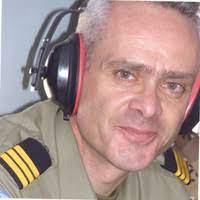
No one is safe from the ‘Russian propaganda’ sanctions – even those who never touch Russian sources. Baud is one of nearly 60 public figures under sanctions from the EU
Eva Karene Bartlett, Jan 29, 2026
On December 15, 2025, the European Union slapped sanctions on former Swiss intelligence officer and ex-NATO employee Jacques Baud. No day in court, no charges filed, just abrupt, suffocating, sanctions.
Why did the EU sanction Baud? For “Russian propaganda,” of course, although many of the sources he cites in his reports on the West provoking war with Russia years prior to Russia’s military operation are Western and Ukrainian – including the SBU and Aleksey Arestovich, a former adviser to Vladimir Zelensky.
Welcome to the latest EU insanity.
Widely respected for his deep knowledge and analysis, much of which is based on his own research while working with NATO, Baud has grown increasingly popular over the years, appearing on numerous podcasts and interviews, authoring numerous books and articles as well.
Since Russia began its military operation in Ukraine, Western media have been howling about an “unprovoked invasion.” Baud has written and spoken extensively about realities which counter this claim: facts on the ground prior to February 2022, going back (unlike most legacy media who have developed selective amnesia) to even before the 2014 Maidan coup.
What is interesting about Baud is he does not use Russian sources to back his claims and he has not taken a public position in favor of either Russia or Ukraine.
He has simply analyzed the situation, based on information he had access to. How did he have access to this information? In 2014, when working for NATO in charge of countering proliferation of small arms, he was tasked with investigating accusations of Russia supplying arms to Donbass resistance.
He wrote of this in 2022, noting, “The information we received then came almost entirely from Polish intelligence services and did not ‘fit’ with the information coming from the OSCE – despite rather crude allegations, there were no deliveries of weapons and military equipment from Russia.”
“The rebels were armed thanks to the defection of Russian-speaking Ukrainian units that went over to the rebel side. As Ukrainian failures continued, tank, artillery and anti-aircraft battalions swelled the ranks of the autonomists.”
As a result of his research, he was also able to unequivocally debunk accusations of Russia sending military units into Donbass, by quoting the SBU (Ukrainian security service) itself as well as other Ukrainian sources.
In a September 2024 interview I did with Baud, he spoke of this.
“I can categorically say no, there were no Russian forces in Donbass. The guy you encountered (I had mentioned meeting one sole Russian former soldier when I went to the Donbass in 2019) represents exactly the kind of Russian presence that was at that time, recognized by the SBU and recognized also by the Ukrainian Chief of Staff.
“In a public interview in 2015, just after the signature of the Minsk Agreement 2, the head of the Ukrainian General Staff said publicly that there were no Russian military units fighting in Donbass; that there were only individual soldiers exactly the same case as the one you just mentioned.”
It is clear he is not citing Russian information (or “propaganda”) but Ukrainian and Western sources. An even better illustration of this is what he had to say about the prelude to Russia commencing its Special Military Operation in February 2022.
Referring to a March 2021 decree by Zelensky (to take back Crimea and the south of Ukraine), Baud spoke of an interview two years prior with Zelensky’s former adviser, Arestovich.
“He says in order to join NATO, we had to have a war with Russia. When the interviewer asked him when would this conflict happen, Arestovich says end of 2021 or 2022.” A position, Baud noted, which aligned with a March 2019 300-page document published by the Rand Corporation, “that explains how to defeat and to destabilize Russia.
The EU is almost certainly pissed off that Baud likewise demolished the Western propaganda claims about Russia invading Crimea in 2014. He told me, “The Ukrainian army at that time was a conscript army, meaning that within the Ukrainian army you had both Ukrainian speakers and Russian speakers. When the army was ordered to shoot or to fight against demonstrators, those who were Russian speakers just defected, they just changed side. They just went to support the protesters and they became in fact those the famous ‘little green men’.”
Keep in mind that Baud was working for NATO then. “There was absolutely not the slightest indication that Russia brought new troops to Crimea. Based on the status of force agreement signed between Russia and Ukraine, you had up to 25,000 Russian troops stationed in the Crimean peninsula. At that time they were not even 25,000, there were 22,000. A Ukrainian lawmaker on Ukrainian TV said that out of the 20,000 (sic) Ukrainian soldiers that were deployed in Crimea, 20,000 defected to the Russian-speaking side.”
As for “Russian propaganda,” it is a term bandied about quite easily by legacy media and NATO mouthpieces to taint reputations or lead to censorship of voices. The war backers are upset that their own “Russia started it” propaganda isn’t working
Sanctions prevent Baud from even buying food
Baud lives in Brussels, and now as a result of the sanctions is unable to even buy food for himself. Nor can well-intending people do so on his behalf. In an interview on Dialogue Works at the end of December, 2025, Baud said:
“Yesterday, a friend of mine tried from Switzerland to buy food for me, to be delivered to my home (in Belgium). She could order, but the payment was blocked. Any delivery to my home is prohibited, even if the funds come from Switzerland.”
People who are aware of his unjust situation have been physically bringing him food, to alleviate his inability to purchase it himself.
In a more recent interview on Judging Freedom, Baud highlighted that his case was a foreign policy decision, denying him due process.
“This is not a decision that has been taken by any court. I was not judged by anybody. In fact I was not in front of a jury. I could not present my case. I could not defend my case. This decision was not taken by a court but by the council of the foreign ministers of the European union.”
The most he can do, Baud explained, is, “go to the European Court of Justice and try to make my case saying that the decision was not just, and the court of justice may then study the case and have an assessment on that.” Even if the court concludes the sanctions are not justified, all it can then do is “advise the council of foreign ministers to change their mind.”
Given that the sanctions against Baud are punitive for his not toeing the line, it is unlikely minds will be changed.
A growing list of EU sanctioned voices
Jacques Baud isn’t the first to be sanctioned by the EU. Many journalists and public figures have been sanctioned for their writings or words on the Donbass, Crimea, corruption in Ukraine, and so on…………………………………………………………………………. https://evakarenebartlett.substack.com/p/we-are-back-in-the-middle-ages-how?utm_source=post-email-title&publication_id=3046064&post_id=185812458&utm_campaign=email-post-title&isFreemail=true&r=1ise1&triedRedirect=true&utm_medium=email
Doomsday Clock setting feels more like 8 or 7 seconds to midnight than 87 seconds.

Walt Zlotow, West Suburban Peace Coalition, Glen Ellyn IL, 28 Jan 26
Lived all but the first 4 months of my 81 years under the threat of nuclear annihilation. So every January, I take seriously the annual Bulletin of the Atomic Scientists Doomsday Clock announcement of our countdown to global catastrophe.
The Bulletin of the Atomic Scientists wasfounded in 1945 by Albert Einstein, J. Robert Oppenheimer, and University of Chicago atomic bomb scientists. They created the Doomsday Clock in 1947 to dramatize peoplekind’s threats to existence. Originally focused on nuclear annihilation, the Clock’s setting now includes climate crisis, biological threats, and disruptive AI technologies.
Tuesday’s announcement was disturbing. The Bulletin moved the Clock at 87 seconds to midnight, the closest it’s been in its 79 year countdown. Tho just two seconds closer than its previous worst of 89 seconds last year, the Bulletin sees nary of sign of progress in halting the proliferation of nuclear weapons, unstoppable wars, hostel military entanglements and refusal to address the escalating climate crisis.
The return of President Trump casts gloom over reducing nuclear tensions. In his first term he exited both the Intermediate Range Nuclear Forces Treaty (INF) and the Open Skies Treaty with Russia. He also failed to renew the New Start Treaty which thankfully was extended for 5 years by successor Biden within 2 weeks of taking office. Set to expire again in 7 days, Trump’s refusal to renew it marks the end of all US Russian nuclear agreements. It will quickly accelerate US and Russian development of their nuclear arsenals limited under New Start.
Trump has bombed 7 countries this past year, Iraq, Syria, Iran, Venezuela, Somalia, Nigeria and Yemen. His bombing of Iran’s imagined nuclear program could have triggered a massive Middle East war with the potential of going nuclear. It also likely increases Iran’s perceived need to go nuclear.
Daniel Holz, chair of the group’s science and security board give this stark assessment. “Hard-won global understandings are collapsing, accelerating a winner take all great power competition undermining international cooperation needed to reduce existential risks. If the world splinters into an us v. them, zero-sum approach, it increases the likelihood we all lose,”
The furthest from midnight the Doomsday Clock ticked was 17 minutes (1,020 seconds) in 1991 when the US and Soviet Union signed the Strategic Arms Reduction Treaty (START). Followed by the demise of the Soviet Union, further progress on nuclear disarmament should have a snap. Instead, the US foreign policy elite snapped, ramping up a new Cold War against a weakened Russia. This culminated in the 2022 US proxy war on Russia destroying Ukraine, putting the world at risk of it going nuclear every day it continues.
No wonder the current 87 seconds, for those of us seeking an end to the specter of nuclear annihilation, feels more like 8 or 7 seconds
1 This Month

of the week – Shut Down Drone Warfare!


Tell the Ukrainian Government to Drop Prosecution of Peace Activist Yurii Sheliazhenko

Petition to revoke the licensing of the Near Surface Nuclear Disposal Facility (NSDF) at Chalk River. https://www.ourcommons.ca/petitions/en/Petition/Details?Petition=e-7247
To see nuclear-related stories in greater depth and intensity – go to https://nuclearinformation.wordpress.com
-
Archives
- March 2026 (251)
- February 2026 (268)
- January 2026 (308)
- December 2025 (358)
- November 2025 (359)
- October 2025 (376)
- September 2025 (257)
- August 2025 (319)
- July 2025 (230)
- June 2025 (348)
- May 2025 (261)
- April 2025 (305)
-
Categories
- 1
- 1 NUCLEAR ISSUES
- business and costs
- climate change
- culture and arts
- ENERGY
- environment
- health
- history
- indigenous issues
- Legal
- marketing of nuclear
- media
- opposition to nuclear
- PERSONAL STORIES
- politics
- politics international
- Religion and ethics
- safety
- secrets,lies and civil liberties
- spinbuster
- technology
- Uranium
- wastes
- weapons and war
- Women
- 2 WORLD
- ACTION
- AFRICA
- Atrocities
- AUSTRALIA
- Christina's notes
- Christina's themes
- culture and arts
- Events
- Fuk 2022
- Fuk 2023
- Fukushima 2017
- Fukushima 2018
- fukushima 2019
- Fukushima 2020
- Fukushima 2021
- general
- global warming
- Humour (God we need it)
- Nuclear
- RARE EARTHS
- Reference
- resources – print
- Resources -audiovicual
- Weekly Newsletter
- World
- World Nuclear
- YouTube
-
RSS
Entries RSS
Comments RSS
 nuclear-news