Weatherwatch: Labour’s stance on nuclear power is worryingly familiar
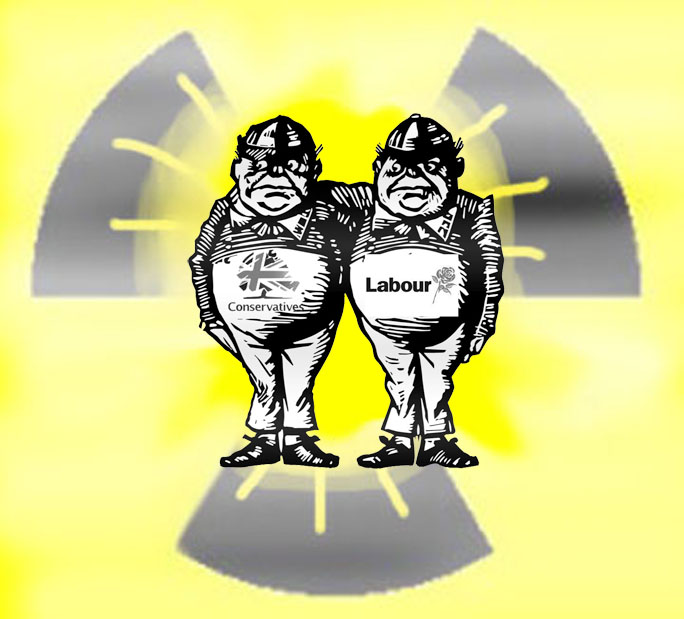
There is little difference between this government’s and its Conservative predecessor’s policies on expansion
Paul Brown, Fri 27 Sep 2024, https://www.theguardian.com/news/2024/sep/27/weatherwatch-labour-nuclear-power-conservative-policies
There seems to be no difference between Conservative and Labour policies on nuclear power. Both support the current building of Hinkley Point C in Somerset, the planned Sizewell C station in Suffolk, an unspecified number of small modular reactors all over Britain as well as the far-off dream of nuclear fusion.
However, few scientists serious about the threat of the climate crisis believe new nuclear power stations are part of the solution in reducing carbon output. Building them is too slow and costly, while solar and wind are quicker and cheaper in making a dent in fossil fuel consumption and eliminating it.
While supporting nuclear expansion seems to be politically expedient, the reality on the ground appears to be different. As the 2024 World Nuclear Status report published this month points out, if Britain gets anywhere near its plan to double onshore wind, triple solar power and quadruple offshore wind by 2030, it will be producing more electricity from these sources than the country consumes.
The experts also say if Rolls-Royce’s “heroic assumption” of the cost of electricity from small modular reactors was correct, any planned construction of large stations would immediately be abandoned.
Why NuScale Power Stock Dropped Today

Motley Fool, By Rich Smith – Sep 26, 2024
NuScale’s potential growth just got smaller by exactly one country.
Shares of NuScale Power (SMR 5.55%) slipped 3.2% through 11 a.m. ET Thursday on some disconcerting news out of Great Britain. According to World Nuclear News (WNN), the British government just narrowed the list of companies competing to begin building small modular nuclear reactors (SMRs) in the U.K. to four names.
NuScale isn’t one of them.
SMRs in the U.K.
According to WNN, the list of companies competing for this program initially numbered six, but two companies have been cut: NuScale and France’s EDF. General Electric subsidiary GE Hitachi Nuclear Energy, Rolls-Royce-owned Rolls-Royce SMR, and privately owned Holtec and Westinghouse all made the cut with reactor designs based on existing technology married to “modular production techniques.”
Britain plans to narrow its list further to two or perhaps three companies that will win co-funding contracts to complete their designs and obtain permits. Then the government will make a final decision to proceed with power plant construction in 2029.
………………….The bad news is that the closest company to a pure play in this new technology, NuScale Power, is now no longer an option in the U.K. Furthermore, Britain’s decision to pass on NuScale’s technology may give U.S. regulators second thoughts about it as well. All things considered, I’d say this is bad news for NuScale stock.
The other bad news is that the options that remain, Rolls-Royce and GE, are valued at $60 billion and $200 billion, respectively. While nuclear power may one day become a bigger part of their businesses, it’s going to be a long time before either company gets big enough in nuclear to move the needle on their revenue or earnings, or for investors to see them primarily as nuclear power stocks.
Investors seeking pure plays on nuclear power should probably look elsewhere. https://www.fool.com/investing/2024/09/26/why-nuscale-power-stock-dropped-today/
The Looming Catastrophe in the Middle East (w/ Gideon Levy) | The Chris Hedges Report
September 28, 2024
It has become quite rare to hear any meaningful accountability for Israel’s actions from Israeli citizens themselves. Israeli journalist Gideon Levy is an anomaly in Israel by today’s standards, as for his entire career he has challenged the apartheid and occupation of the Israeli state. On today’s episode of The Chris Hedges Report, Levy joins host Chris Hedges to discuss his book, The Killing of Gaza: Reports on a Catastrophe, and explain the spiritual destruction, both of Israel and Palestine, that the current genocide in Gaza is causing as well as the implications of new military operations in Lebanon.
The worst change, according to Levy, is that Israel has lost its humanity. “Everything is acceptable,” Levy tells Hedges as he describes the ongoing slaughter of Palestinian civilians in Gaza, the brutal killing of prisoners, the censorship at the hands of the state and the overall indifference to it all.
“There is practically only one camp in Israel, the camp which supports apartheid and occupation,” Levy says.
There isn’t even any room left for empathy of the innocent victims in Gaza, according to Levy. Teachers have been subject to interrogation and termination because they “express[ed] empathy with the children of Gaza, with the victims of Gaza. Even this is not legitimate anymore in Israeli society 2024,” Levy contends.
Although the horrors following October 7 are devastatingly unprecedented, Levy asserts that this entire catastrophe was years in the making and the meaningless gestures of advocating for a two-state solution, for example, will perpetuate it further.
In the first years following the war in 1967, the occupation of Palestinians as a way of life quickly became normalized, according to Levy. “[Palestinians] clean our streets, they build our buildings, they pave our roads and they will never have citizenship. The only people in the world without any citizenship of any state,” Levy says.
As Israeli society attempts to continue this way of living, only disruptive movements and moments, such as the First Intifada, the Yom Kippur war and now October 7, will bring meaningful attention to the Palestinian struggle most of the world is okay with ignoring.
As Levi writes in his book,
“The way of terror is the only way open to the Palestinians to fight for their future. The way of terror is the only way for them to remind Israel, the Arab states and the world, of their existence. They have no other way. Israel has taught them this. If they don’t use violence, everyone will forget about them, and then a little later, only through terrorism will they be remembered. Only through terrorism will they possibly attain something. One thing is certain, if they put down their weapons, they are doomed.”
Levy says that history has told the Palestinians and the world something crucial about Israel: “the message is, if you want to achieve anything from us, only by force. And the message for the world is the same, if you want the world to care about you, raising your voice is not enough. You have to take measures. You have to take actions, and unfortunately, many times violent ones, aggressive ones, and many times even barbarian ones, like on the seventh of October.”……………………………………………more https://scheerpost.com/2024/09/28/the-looming-catastrophe-in-the-middle-east-w-gideon-levy-the-chris-hedges-report/
US company eliminated from race to build Britain’s first mini-nuclear plant.

NuScale Power will not proceed to the final round of the competition’s selection process
Executives at NuScale Power were told on
Wednesday afternoon that they had been eliminated from the small modular
reactor (SMR) design competition.
The decision by officials at Great
British Nuclear (GBN), a government agency, leaves four companies battling
to secure support for their proposed technologies: Rolls-Royce,
Westinghouse, GE-Hitachi and Holtec Britain. Those businesses will now
progress to the final stage of the process, which will see them submit
“final best offers” to the Government.
GBN is then expected to announce
two winners either late this year or early in 2025, with the companies then
awarded sites and funding.
Earlier this year, a sixth company, the French
state-owned energy giant EDF, effectively dropped out of the contest when
it decided not to submit a bid by the required deadline. A spokesman for
NuScale also confirmed the decision. He said the company had been told it
did not meet the criteria for the SMR competition as it had already begun
production of its reactors and did not need support getting to market.
The decision is a fresh blow to NuScale, which suffered another setback last
November when its $1.4bn (£1bn) project to build a plant for a Utah power
provider was cancelled amid spiralling costs. The Government has not yet
confirmed where the first SMRs will be built. However, GBN purchased sites
in Wylfa, on the Welsh island of Anglesey; and Oldbury, Gloucestershire,
earlier this year.
Telegraph 25th Sept 2024
New developments at Sellafield for endless storage of ever-increasing amounts of highly radioactive spent nuclear fuel.
Sellafield to store all fuel from UK’s operational nuclear power stations, by Business Crack, September 25, 2024

I would have thought that it might be a good idea to plan for not making any more of this poisonous stuff.
But I guess that’s not in the official, expert, thinking.
A new space-saving rack at Sellafield will enable the site to store all the fuel expected from the UK’s operational nuclear sites.
The first fuel has been placed into a storage rack and the firm said it was set to save billions of pounds.
Known as the 63-can rack, the container allows the Thorp pond to store 50% more spent nuclear fuel.
Without the rack, a new storage pond would have to be built, potentially costing billions of pounds.
The rethink was required because Thorp needs to store more fuel than previously thought because the UK no longer reprocesses spent fuel, but instead stores it underwater prior to disposal.
The rack has been 16 years in the making and represents a success story for UK manufacturing.
Weighing 7 tonnes and standing 5.5 metres high, the stainless steel containers are being built by a consortium of Cumbrian manufacturers and Stoke-based Goodwin International.
Between them, they will manufacture 160 racks. Another 340 racks will be needed in the future…………………………………………………………………….
“These racks will increase fuel capacity from 4,000 tonnes to 6,000 tonnes, meaning we can accommodate all current and future arising, negating the need for a new storage facility……………………………………………………………………..
Because fuel will be stored for longer than was originally intended, the pond has required other alterations including raising the pH level to avoid corrosion and installing new cooling capacity, Sellafield Ltd said. https://businesscrack.co.uk/2024/09/25/sellafield-to-store-all-fuel-from-uks-operational-nuclear-power-stations/
Ukraine’s Zelensky arriving in US….to pitch WWIII.
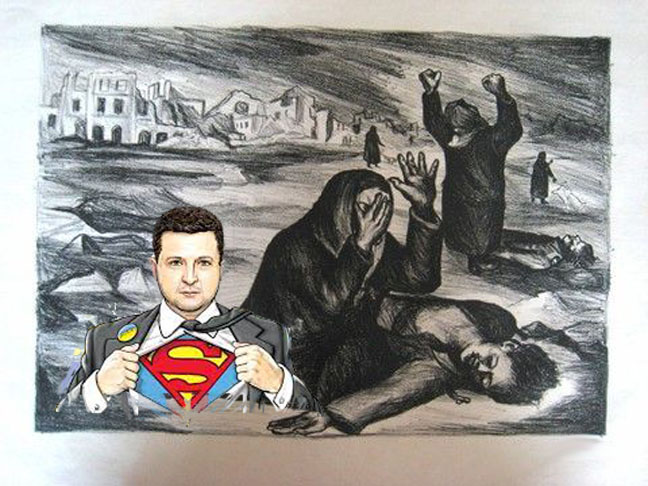
Walt Zlotow, West Suburban Peace Coalition, Glen Ellyn IL, 26 September 24
Ukrainian President Volodymyr Zelensky has long been the most dangerous man in the world.
Since the US provoked Russian invasion of Ukraine 31 months ago, he’s been begging, cajoling, indeed demanding the US and UK allow him to attack deep into Russia with US and UK long range missiles. He’s got both in his weapons arsenal to which the US and UK still have strings attached tying them to Russian targets in Ukraine. Russian President Putin has made it abundantly clear that strikes deep into Russia signal the West is at war with Russia, requiring swift, military response.
But Zelensky remains unconcerned that his war strategy may get him incinerated along with the rest of us if a single nuke goes off from his deranged escalation plan.
Astonishingly, Zelensky has already got newbie UK PM Keir Starmer on board in. Starmer traveled to the US recently to pitch Zelensky’s plan to use the UK Storm Shadow missiles. Starmer needs US approval since his Storm Shadows contain US components and require US guidance data to hit choice Russian targets.
To his credit, Biden publicly rebuffed Starmer’s pitch even before their September 13 talks were concluded. Starmer scurried back to Downing Street disappointed.
But undaunted, Ukraine’s Mr. ‘Let’s Provoke WWIII’ is traveling 4,668 miles from Kyiv to New York to continue lobbying Biden for their use at the UN’s 79th General Assembly meeting this week.
In a bizarre twist, Biden’s State Department is ready to sign off, possibly on their own demise, while Defense has demurred. Defense Secretary Lloyd Austin has publicly advised that long range missile strikes will not achieve any strategic benefit, especially since Russia has already moved over 90% of prime targets beyond range of even the long range UK Storm Shadows and US ATACMS.
Austin knows the US proxy war against Russia in Ukraine is lost so why risk WWIII. Somehow, top diplomat Tony Blinken remains in denial.
Let’s hope President Biden doesn’t weaver in his sensible pushback to all out war with Russia. A dwindling number of we Americans still recall hoping to survive the angst of living thru the Missiles of October during the Cuban Missile Crisis. Sixty-two years later, we inexplicably must deal with the angst of surviving the Missiles of September.
US Gives Israel $8.7 Billion in Military Aid for Operations in Gaza and Lebanon

The new aid comes as the US claims it’s pushing for a ceasefire in Lebanon
by Dave DeCamp September 26, 2024. https://news.antiwar.com/2024/09/26/us-gives-israel-8-7-billion-in-military-aid-for-operations-in-gaza-and-lebanon/#gsc.tab=0
On Thursday, the Israeli Defense Ministry announced that it secured $8.7 billion in military aid from the US to support its “ongoing military efforts,” meaning the genocidal slaughter in Gaza and Israel’s dramatic escalation in Lebanon.
The ministry said in a statement that its director-general, Maj. Gen. Eyal Zamir, concluded negotiations in Washington to secure the military aid. It said the package includes $3.5 billion for “essential wartime procurement” that has already been sent to Israel and a $5.2 billion grant for air defenses.
The ministry said the $5.2 billion for air defenses “will significantly strengthen critical systems such as Iron Dome and David’s Sling while supporting the continued development of an advanced high-powered laser defense system currently in its later stages of development.”
Secretary of Defense Lloyd Austin vowed Thursday that the US would continue arming Israel and brushed off the idea of the US setting red lines. “We’ve been committed from the very beginning to help Israel, provide the things that are necessary for them to be able to protect their sovereign territory and that hasn’t changed and won’t change in the future,” he said.
So far, the US has not announced the details of the $8.7 billion weapons package, but the funds are likely being pulled from the $17 billion in new military aid for Israel that was included in the $95 billion foreign military aid bill President Biden signed into law back in April. Israel also receives $3.8 billion from the US in annual military aid.
News of the new US support for Israel comes as the Biden administration claims it’s pushing for a ceasefire in Lebanon. But the US has not altered its support of full-throated support for Israel, and the military aid and pledges to defend Israel if the situation escalates have only emboldened Prime Minister Benjamin Netanyahu, who rejected the US calls for a truce on Thursday.
Karen Silkwood and Kerr-McGee: A Reinvestigation

Silkwood was an outspoken advocate of both maintaining union representation and taking precautions to protect the workers from plutonium contamination caused by the company’s poor handling practices.
Van De Steeg’s analysis is definitive proof that Silkwood never spiked her samples. Kerr-McGee argued that she did it to embarrass the company……… Van De Steeg testified that after Bill Silkwood filed his lawsuit, his lab notebook containing his notes on Silkwood’s samples was removed from his lab and was never seen again.
[The film] Silkwood poorly portrays the real Silkwood…………………. she cared about the lives of her friends and co-workers at the plant and channeled that care about others into activism.
the real Karen Silkwood “died defending her trade union and coworkers against a powerful employer—one whose lax practices threatened not only its employees, but also the community and possibly the entire nation.
By Steven H. Wodka, September 25, 2024, https://www.wodkalaw.com/karen-silkwood-and-kerr-mcgee?fbclid=IwY2xjawFi1zBleHRuA2FlbQIxMAABHbdJGAfN8QXm-MRvButaJeYwt7KZrRu3b1OHQNkIkSlxxJ8rmbk2rRMLvQ_aem_Laom06PdDllnHMWJxw7Wsg
In 1974, Karen Silkwood and her union, the Oil, Chemical and Atomic Workers, were engaged in a confrontation with her employer, the Kerr-McGee Corporation, and its regulator, the Atomic Energy Commission. On November 5th, Silkwood became contaminated with plutonium and died in a car crash a few days later. Fifty years later, even after repeated investigations, the basic questions on how these events occurred have gone unanswered.
On November 7, 1974, the Atomic Energy Commission (AEC) took responsibility for determining “the cause and extent of the contamination.” But by December 16, 1974, the AEC had given up and stated that its “investigation did not reveal exactly how the contamination occurred.”
After Silkwood’s death on November 13, 1974, the US Department of Justice (DOJ) ordered the Federal Bureau of Investigation (FBI) to commence an investigation of her car crash. On February 21, 1975, the DOJ further ordered the FBI, after a request from the newly formed Nuclear Regulatory Commission (the NRC, a successor to the AEC), to expand its investigation to include the circumstances of Silkwood’s contamination with plutonium. The unauthorized possession and use of plutonium is prohibited by the Atomic Energy Act of 1954.
Silkwood’s union, the OCAW, had high hopes for a thorough investigation. The FBI was known for its massive response to the 1964 murders of three civil rights workers in Philadelphia, Mississippi. Within six months, even though it was operating in hostile territory, the FBI had their suspects, which included the county sheriff and his deputy. We expected no less for Silkwood.
However, neither the DOJ nor the FBI effectively supervised the FBI agent placed in charge of the Silkwood investigation, Lawrence J. Olson, Sr. There was no dispute that plutonium from Kerr-McGee’s nuclear fuel manufacturing plant at Crescent, Oklahoma had escaped and contaminated Silkwood’s apartment. Yet Olson failed to treat anyone associated with the plant with suspicion, except for Silkwood.
Olson joined forces with Kerr-McGee’s internal security to defend the corporation and destroy Silkwood’s credibility. In the course of his investigation, Olson uncovered critical evidence that indicated that someone other than Silkwood had placed plutonium in her urine and fecal sample kits. Olson also obtained information that it was likely that an anti-union worker had spiked her kits. But Olson never pursued any investigation into a potential perpetrator.
Read more: Karen Silkwood and Kerr-McGee: A ReinvestigationUltimately, the DOJ conceded that the FBI’s investigation “did not determine” how the plutonium was taken out of the plant. The FBI’s failure allowed for rampant speculation. On March 9, 1976, The Washington Star reported, without any supporting facts, that Silkwood “managed to carry a small quantity of plutonium oxide out of the plant without being detected.”
The failures of the AEC and the FBI led to Congressional investigations. In the Senate, the Government Operations Committee led by Sen. Lee Metcalf (D-MT), started to look into the matter, but Kerr-McGee intervened and Metcalf backed off. In the House, Rep. John Dingell (D-MI) led a two day hearing by his Subcommittee on Energy and the Environment. But Jacque Srouji, who claimed to have a “special relationship” with the FBI, successfully sidetracked the Subcommittee’s investigation before it could make any meaningful progress.
In November 1976, Silkwood’s father, Bill Silkwood, as administrator of his daughter’s estate and on behalf of her children, filed a civil action against Kerr-McGee in Federal court in Oklahoma City. This action presented Bill Silkwood with the opportunity to use the court’s discovery process to pick up the leads that Olson had dropped.
Instead, Silkwood’s attorney, Danny Sheehan, used the discovery process to pursue nonsensical conspiracy theories concerning the Oklahoma City police, wiretapping, physical surveillance, and anti-nuclear dissidents. Sheehan took eight depositions of members of the Oklahoma City Police Department that went nowhere. As a result, most of the available time and money, as well as the patience of the court, was wasted by Sheehan, who never pursued the evidence before him on Silkwood’s contamination.
At the trial of the lawsuit, from March 7 to May 18, 1979, Silkwood’s personal injury claim was saved by brilliant lawyering conducted by another attorney, Gerry Spence. The circumstances of Silkwood’s contamination pervaded the trial. Kerr-McGee contended that Silkwood contaminated herself while spiking her urine and fecal samples in order to embarrass the company. Bill Silkwood, the plaintiff, didn’t offer any proof on how the samples were spiked. Rather, the plaintiff followed a tort rule of strict liability that applied to ultra-hazardous activity, such as the handling of plutonium. Under strict liability, if such dangerous activity gets out of control and hurts someone, the owner or operator of the dangerous activity is liable, regardless of how much care was taken.
But before reaching that issue, the jury had to determine whether “Karen Silkwood intentionally, that is knowingly and consciously, carried from work to her apartment the plutonium that caused her contamination.”
The jury answered that question in the negative and went on to award Silkwood $10,505,000 in damages, a sum that included $10 million for punitive damages that was ultimately affirmed by the US Supreme Court. But the last word on that award was issued by the US Court of Appeals for the Tenth Circuit, which ordered a new trial and took away $10.5 million of the award. The Tenth Circuit held that Silkwood’s contamination arose in the course of her employment. Accordingly, the exclusivity of workers’ compensation barred any tort recovery against Kerr-McGee for personal injuries suffered by Karen Silkwood. As a result, the case settled for $1.38 million.
The question of how Silkwood got contaminated was never answered during the trial.
My Reinvestigation
Since 1974, I have attempted to follow every twist and turn of this case. At the time, I was a staff representative for the Oil, Chemical, and Atomic Workers International Union (OCAW) at its legislative office in Washington, DC. In 1981, I left the union, went to law school, and then practiced law for 37 years representing workers who had developed cancer as a result of exposure to toxic chemicals.
I retired in 2023. I finally had unlimited time to explore the obscure edges of this case and double and triple check the claims that others had made. I still had my notes and files from 1974. I also had multiple responses from Freedom of Information Act requests that I had made to the AEC and the FBI. I also obtained the entire discovery record and trial transcript of Silkwood v. Kerr-McGee that had been held in the National Archives repository in Kansas City.
In 1974, Kerr-McGee was known by the OCAW as a brutal and ruthless employer. From May through November 1973, the OCAW members who worked at Kerr-McGee’s uranium mine in Grants, New Mexico went on strike for more than six months in order to obtain a new contract. At Grants, Kerr-McGee followed the same tactic that it had successfully used in the prior year against Silkwood’s local at the Crescent plant.
Instead of negotiating with its union for a new contract, Kerr-McGee would impose a new contract on the union. If the union didn’t like the terms of the contract that Kerr-McGee sought to impose, the local could go on strike. In fact, Kerr-McGee took a nine week strike at Crescent from late 1972 to early 1973, but Kerr-McGee got its way. Silkwood and her co-workers went back to work in February 1973 under a contract that was worse than the one they had before the strike. This defeat for the union set the stage for a vote on whether to decertify the OCAW as the bargaining agent for the workers in October 1974.
Kerr-McGee was also vindictive. The Grants local believed that Kerr-McGee’s uncompromising stance was directly connected with the union’s successful efforts in 1971 to get the State of New Mexico to reduce the allowable radiation exposure in the mines, which was a proven cause of lung cancer in the miners. At Crescent, the exposures were far worse than in the mines because plutonium was much more radioactive than the radon gas found in the uranium mines. Thus, if Silkwood’s local union managed to win the decertification election in October 1974, it would still need all the leverage imaginable in order to obtain a decent new contract in November 1974 without going on a lengthy strike.
I had known Silkwood during this tumultuous period of her life. We first met on September 27, 1974, when she came to Washington, DC to meet in person with the AEC with her fellow local union leaders Jack Tice and Gerald Brewer. We saw each other again on October 10, 1974, when the OCAW arranged for an educational session for the members of her local union on the health effects of exposure to plutonium. The last time I saw her was on November 8 and 9, 1974, in Oklahoma City, when she was being interviewed by the AEC after her plutonium contamination and I was arranging for her medical care.
In March 2023, I set to work to see if I could answer the still unanswered questions about what had happened to Karen Silkwood in 1974. Here is what I found.
The Events Leading up to November 9th
When we met in Washington, DC on September 27, 1974, Silkwood and Brewer, who worked in the plant’s laboratory where quality checks were run, described a multi-faceted effort by Kerr-McGee to speed up production by shipping plutonium fuel rods which should have been rejected. According to Silkwood and Brewer, the results of quality control checks were being manipulated. Anthony Mazzocchi, the OCAW’s legislative director, and I had never encountered such an effort by any manufacturer. Our first instinct was that if the OCAW was going to make an accusation against Kerr-McGee on its manipulation of such quality control checks, such a charge needed to be documented, or no one would believe our claim.
Even though Brewer had brought his personal notes that identified specific welding samples, rods and pellet lots that had passed quality control checks when they should have been failed, it was Silkwood who volunteered to assemble the documentation upon her return to Oklahoma. Brewer didn’t have any company documents that contained any incriminating data or statements. This is what Silkwood offered to find.
Within ten days of her arriving back in Oklahoma, Silkwood called me on October 7th and described the information that she had amassed to date. On October 10th we met at an educational session sponsored by the local union to inform the members about the hazards of plutonium. She told me that she was still collecting records. The contract negotiations were set to begin on November 6th. The contract expiration date was December 1, 1974. On October 30th, we made arrangements for her to meet with reporter David Burnham of The New York Times on November 13th in Dallas.
It is well documented that Silkwood was found to be contaminated at work with plutonium on Tuesday, November 5, 1974, and again at work the next day. However, there were no leaks or exposures at work that could have accounted for the contamination on either day. After being decontaminated on November 6th, she was instructed to report directly to the Health Physics (HP) office upon her arrival at work the next day, and not go into any work areas where there was any potential for exposure. Health physics is the science and practice of radiation protection.
On Thursday, November 7, 1974, Silkwood did as she was instructed and came directly to the HP office after parking her car and walking in the door. She was very hot (heavily contaminated with plutonium) and the urine and fecal samples that she was carrying with her were very hot as well. It was evident to the HPs that the source of her contamination was off-site. Her car was first checked but it was clean of any contamination.
Silkwood and the HPs then went to her apartment and discovered that it was contaminated. Kerr-McGee started the process of decontaminating it and discarding her possessions. The AEC was notified.
Karen called me and asked me to come down from Washington. She was quite upset and told me that she had no idea whether she was going to live another day. She called her mother and told her that she thought that she was dying from radiation. Her boyfriend, Drew Stephens, reported that Silkwood arrived at his home that night “crying and shaking.”
As for the meeting with Burnham, I assumed that all bets were off. First, if Silkwood lived, I thought that she would be bedridden or at least far too ill to travel or engage in meetings. I also assumed that whatever Kerr-McGee documents that she had collected were now back in Kerr-McGee’s hands. As of November 7th, Kerr-McGee had complete control over her apartment and everything in it. She couldn’t store such documents at the plant. They must have been in her home. She could have easily called off the meeting and no one would have questioned her decision.
I arrived in Oklahoma City the next day, November 8th. Silkwood’s short life was dissected in back to back interviews of her by the AEC investigators, by the AEC’s medical consultant, and by Kerr-McGee’s medical consultant, Charles Sternhagen, MD. She cried often. Her skin was so raw from the decontamination treatments that she told us that her tears were burning the skin on her face.
Plans were made for Silkwood to be examined by Sternhagen the next day, November 9th, at Oklahoma City’s Baptist Hospital. Additional arrangements were made for Silkwood, her roommate Sherri Ellis, and Drew Stephens to fly to New Mexico on November 10th for two days of testing at the AEC facility in Los Alamos.
On November 8th, I was surprised when Silkwood made it clear that she still had her documentation against Kerr-McGee and that she still wanted to go forward with the planned meeting with Burnham on November 13th. To accommodate her upcoming trip to New Mexico, we moved the site of the meeting to Oklahoma City. Burnham agreed.
Throughout this time period, beginning on the evening of November 5th, and lasting for the next five days, Silkwood was required to collect all of her urine and fecal voidings into sample jars that were part of a kit prepared by the HPs. The kit was placed on a shelf in a hallway approximately 30 steps from the HP office, a location that all employees passed on entry to and exit from the plutonium plant. It was labeled with her name and badge number. It consisted of four one-liter plastic bottles in a cardboard carrying box. Silkwood was instructed to pick it up on her way out of the plant.
The urine and fecal samples that Silkwood brought with her to the plant on the morning of November 7th were heavily contaminated with plutonium that was not the result of Silkwood’s exposure to, inhalation of, or excretion of this highly radioactive substance. Rather, the plutonium had been intentionally placed into the sample containers. They had been “spiked.” Moreover, on November 7th, the spiked plutonium had evidently gotten out of the sample container and contaminated Silkwood’s apartment.
Plutonium is a special nuclear material under the Atomic Energy Act of 1954. It is an intense emitter of alpha radiation and can be made into a nuclear weapon. As described at the trial by Dr. John Gofman, sixteen billionths of a gram of plutonium will release two thousand alpha particles per minute. The half-life of plutonium-239, one of the isotopes that Silkwood was handling, is 24,300 years. Plutonium is poorly excreted from the body. It can be readily taken into the lung and absorbed during inhalation. According to Gofman, when these plutonium particles get into the lung, they are “hitting right through the cells of the lung with two and a half million times the energy that you would get from a carbon burning.”
The Atomic Energy Commission had the responsibility for making certain that plutonium could not leave Kerr-McGee’s nuclear fuel fabrication plant in any unauthorized manner. It was evident that the AEC safeguards had failed. Yet, the AEC never attempted to determine the identity of the perpetrator, nor did it ever penalize Kerr-McGee for its failure to protect this weapons-grade material.
On December 16, 1974, the AEC investigators signed off on their report of Silkwood’s contamination. They admitted that their “investigation did not reveal exactly how the contamination occurred.” The agency’s report did indicate that the spiking of Silkwood’s samples had begun earlier than first believed and also continued after November 7th.
At some point between October 15 and 22, 1974, and again on October 31, 1974, Silkwood used urine sample kits that had been spiked. In addition, the fecal sample kit that Silkwood used on Saturday, November 9, 1974, at the Baptist Hospital when she was undergoing an examination by Dr. Sternhagen, contained an extraordinary amount of insoluble plutonium. The fact that the spiking of the samples began in October and continued through November 9th is significant.
On October 16, 1974, Silkwood and her union achieved an upset victory. On that day, the National Labor Relations Board (NLRB) conducted the decertification election. In September 1974, more than 80 hourly workers had signed a petition to the NLRB to have the OCAW decertified as their collective bargaining agent. On October 16th, the union only had 30 dues paying members. But the union won the “decert” by a vote of 80 votes for the union and 61 votes for no union.
Silkwood was an outspoken advocate of both maintaining union representation and taking precautions to protect the workers from plutonium contamination caused by the company’s poor handling practices. In the laboratory section where Silkwood worked, 19 out of the 21 hourly workers opposed the union. Even after the decert vote, the lab workers circulated a petition that was submitted to the company and the union on November 6th. The petition demanded that the lab workers be excised from the union’s jurisdiction and be placed on salaried status. But the petition was too little and too late. Under the NLRB rules, the decert election was the only opportunity for the workers to vote the union out.
In this plant handling radioactive materials, there was another way to silence a union activist. If a worker’s urine or fecal samples indicated potential contamination, the worker is deemed “hot” and is restricted from working in areas where there is potential exposure. At Kerr-McGee, a sample result greater than 10 disintegrations per minute is cause to “[i]mpose work restrictions that prevents [the] individual from entering any radiation area.”
Kerr-McGee’s normal handling of such samples allowed for a delay between the collection of the sample and receipt of the results. Normal, routine samples, where no contamination was expected, were analyzed for Kerr-McGee by an outside testing company. The collection, mailing, and routine analytical process typically consumed a month or more between the collection date and the date when the results were received. Thus, on November 5th, the results of the samples provided by Silkwood in mid and late October were not known. Negotiations between the OCAW and Kerr-McGee on a new contract were set to begin on November 6th.
When Silkwood was found to be contaminated while working in the lab on the evening of Tuesday, November 5th, the investigators could not find any source for the exposure. The deposition and trial testimony of Kerr-McGee’s HPs convinced me that they had properly tested both the gloves and the glovebox at which Silkwood was found contaminated and could not find any leaks.
On November 5th, Silkwood had arrived at the plant at 1:20 PM. She was carrying with her a routine urine sample that she had voided earlier that day at home. She handed in the sample at the HP office before proceeding to her work area. Because it was routine, this sample was not checked when it arrived at the plant. Weeks later this sample was reported as hot, containing 27,000 disintegrations per minute per 100 milliliters of urine. The AEC designated this sample as “spiked,” the same label that was applied to the two prior urine samples that were provided in October.
During the AEC’s interrogation in my presence on November 8th, Silkwood stated that she checked herself twice on November 5th, at 3:15 PM and again at 5:30 PM, and did not find any contamination. Only after working in a glovebox and testing herself at 6:30 PM did Silkwood discover the contamination.
During this late afternoon period, after the day shift workers had left, very few people remained in the lab. It would have taken only seconds for another lab worker to walk by the glovebox and, by using a syringe (which were plentiful in the lab), eject a tiny dab of plutonium into the recesses of the glove, where Silkwood would soon place her hands and forearms. Kerr-McGee estimated that the entire amount of plutonium involved in all of Silkwood’s contamination from October through November 1974 was “about the amount of a No. 8 shot, which is smaller than the head of a pin.”
The identity of the workers present in the lab during the late afternoon of November 5th could have been easily determined by Olson. Yet he never subjected any of them to an interview as to their animus to Silkwood and the union, or as to their activities on November 5th
The Sample at Baptist Hospital
Olson also failed to investigate the spiked fecal sample that Silkwood provided at the Baptist Hospital on Saturday, November 9th. This sample provides the most compelling evidence that Silkwood could not have been spiking her samples.
By November 9th, Silkwood’s life was in tatters. She had been exposed to plutonium and inhaled it. She didn’t know how much was in her. She didn’t know whether she would soon become ill from the effects of acute radiation exposure. Even though she had been decontaminated at the plant for the third time on the morning of November 7th, and checked again on November 8th by the AEC investigators with Geiger counters, Silkwood felt that she was radioactive and that she was exhaling plutonium particles. She was placing all of her tissues from blowing her nose into a plastic bag.
The process of being decontaminated was horrifying. Wayne Norwood, Kerr-McGee’s Health and Safety Manager, was present in the HP office on November 6th and described at trial what Silkwood underwent in order to remove the “fixed” contamination from her skin:
Her and Mr. Fine went into the first aid room area there at the wash basin and proceeded to decontaminate the fixed area. They used a de-con solution of clorox and water, which is 25 percent clorox with a little Tide thrown in for sudsing to remove it. That removed part of the contamination.
There was still some left that was even more stubborn. So, we applied potassium permanganate to that, and normally applied several applications and wait for each application to dry. So, it takes some time to wait between applications, and then we used sodium bisulfite to remove the potassium permanganate, which removed the fixed contamination.
Not mentioned by Norwood is that the mixture of Tide and Clorox was applied to Silkwood’s skin with a vegetable brush.
She had no place to live. Kerr-McGee’s HPs dressed in moon suits and breathing through respirators were in her apartment, going through all of her possessions, testing them for plutonium contamination, and if they were contaminated, tossing them into 55 gallon drums for disposal as radioactive trash. She was under intense scrutiny from Kerr-McGee and the AEC. Even the local news media was camped outside her motel room at the Holiday Inn. Yet, Kerr-McGee argued at the trial that throughout this time period she continued with her “scheme” to spike her samples.
At around 6:00 PM on November 9th, Silkwood met with Dr. Sternhagen at the emergency department of the Baptist Hospital in Oklahoma City. She had complained of constipation and Sternhagen had advised her to take a laxative. It had the desired effect. Silkwood assumed that the hospital would have a kit for the collection. But none was available.
She had been driven to the hospital by Drew Stephens. Since she knew that she was on a total collection, they had brought a sample kit with them in the trunk of his car. Drew went out to his car in the parking lot, retrieved the sample kit, brought it into the hospital, and handed it to Silkwood. Silkwood used the kit in the examining room at the emergency department.
Gerald Sinke was Kerr-McGee’s Coordinator for Radiation Health and Safety. He told Olson that he had responsibility for auditing the health physics program at the plant and writing health physics procedures. He had accompanied Sternhagen to the hospital. Sinke took possession of the kit from Silkwood. Sinke locked the kit in the trunk of his car. But before he left the hospital, he checked Room 8 of the emergency department for contamination with a survey meter. He found none.
On November 10th, Sinke took the fecal samples to the plant and examined them through the exterior of the containers using a wound counter which measures gamma radiation. He told Olson that he was “surprised that they were highly contaminated.” He even returned to the emergency department at the Baptist Hospital to check again with survey meter to make sure that it wasn’t contaminated. These surveys were again negative. But no effort was made by Sinke or by anyone else with Kerr-McGee to track down Silkwood or Stephens, determine the origin of this fecal kit, and confiscate the remaining kits that they had.
On Monday, November 11th, Sinke drove Silkwood’s sample directly to Kerr-McGee’s Technical Center at 3301 NW 150th Street in Oklahoma City. There, the sample was analyzed by Garet Van De Steeg, a PhD radiochemist who had been heading up Kerr-McGee’s radiochemistry program since 1972. Van De Steeg’s function, in the event of a release of plutonium, was “to analyze the urine and fecal samples from the employees on a rush basis to provide the company with as rapid information as possible regarding any potential contamination of the individual.”
Van De Steeg was interviewed by Olson on April 2, 1975. Olson recorded the interview on a FBI form FD-302, which is used by FBI agents to memorialize their interviews and report their results. The contents of a FD-302 are meant to be used for potential court testimony and are supposed to be truthful. Olson dictated the FD-302 the following day, April 3, 1975.
Van De Steeg told Olson that there was “an extremely high amount of radioactive material” in the fecal sample. Olson wrote, “[t]here was a total of twenty micrograms in the sample he saw.” Van De Steeg concluded, with respect to the fecal samples provided by Silkwood earlier on November 7th and then on November 9th at the Baptist Hospital, that “it does not appear to him that the plutonium seen in these two samples was ingested.”
Van De Steeg’s analysis is definitive proof that Silkwood never spiked her samples. Kerr-McGee argued that she did it to embarrass the company, but after November 7th Kerr-McGee was already embarrassed and under intense investigation by the AEC. Kerr-McGee had violated its license with the government. If Silkwood had thought that she could spike her samples without hurting herself, the events of November 7th demonstrated that she had miscalculated. By November 7th, Silkwood knew that her life, as well as the lives of her friends and lovers, were now in danger from the plutonium contamination spread throughout her apartment.
Van De Steeg made his observations on Monday, November 11th. Silkwood had already left for New Mexico the previous day, but was scheduled to return on Tuesday, November 12th. Based on Van De Steeg’s findings, Kerr-McGee should have moved immediately to confiscate and analyze any unused sample kits in Silkwood’s possession. Such action was never taken.
But Kerr-McGee did confiscate Van De Steeg’s handwritten record of his observations. In his deposition, Van De Steeg testified that after Bill Silkwood filed his lawsuit, his lab notebook containing his notes on Silkwood’s samples was removed from his lab and was never seen again.
Norwood, Kerr-McGee’s Health and Safety Manager, also drew similar conclusions about Silkwood’s November 9th fecal sample. On March 26, 1975, Olson recorded an interview with Norwood in a FD-302. Norwood told Olson that the evidence suggested that “one of the containers furnished by STEPHENS to SILKWOOD was contaminated prior to her voiding therein.” Norwood further advised Olson “that the containers utilized by SILKWOOD had been furnished to her by DREW STEPHENS who got the containers from his car.”
On June 5, 1975, Olson interviewed Drew Stephens for the third time. By this time, Olson knew that Silkwood had not used a bathroom at the hospital, but rather she had provided the fecal sample in an examining room of the emergency department. It would have been highly unlikely that Silkwood could have spiked a sample there, assuming that she was engaging in such conduct, as a hospital staff member could have walked into the room at any time. The sample container that Stephens took out of his car must have been already spiked.
There is no record of Olson asking Stephens about the origin of this kit. The interview is totally silent on the subject. Rather, Stephens repeated his earlier statement to Olson, that he “still does not feel that KAREN would have knowingly contaminated herself nor does he feel that KAREN would have spiked her urine and fecal samples.”
Another Lab Employee Likely Caused Silkwood’s Contamination
I submit that another employee of Kerr-McGee, with access to plutonium at the plant, must have intentionally contaminated Silkwood’s urine and fecal sample kits beginning in October 1974. Such criminal conduct violated the Atomic Energy Act of 1954. There has never been an arrest.
One month after interviewing Van De Steeg, Olson interviewed Gerald Brewer, Silkwood’s closest confidant at the plant and the only other lab worker who supported the union. Brewer was one of the three members of the local union leadership committee, along with Silkwood and Jack Tice, who met with Mazzocchi and I, in Washington, DC on September 27, 1974.
While both Silkwood and Brewer had witnessed the quality control procedures in the lab being compromised, Brewer brought notes to the meeting that identified specific welding samples, rods and pellet lots that had passed quality control checks when they should have been failed. Brewer also described the improper practice of another lab analyst who used a felt-tipped pen to touch up photographic negatives taken of weld samples. Both Kerr-McGee and the US Energy Research and Development Administration ultimately confirmed Brewer’s allegation that this lab analyst had improperly touched up the negatives. In real life, Brewer was far removed from the country bumpkin as he was portrayed in Mike Nichols’ and Nora Ephron’s movie, Silkwood.
On May 5, 1975, Olson interviewed Brewer. As recorded by Olson in a FD-302, Brewer stated that “it would be very possible that some unknown employee who disliked SILKWOOD and her union activities, may have acted on his own without the knowledge of the company and in so doing, spiked SILKWOOD’s urine samples and contaminated SILKWOOD’s apartment.” On June 18, 1975, Olson sent this FD-302 to FBI headquarters in Washington where it was reviewed. There is no record that the Bureau directed Olson to follow up on Brewer’s suggestion, nor is there any indication that Olson attempted to determine which employees disliked Silkwood and her union activity.
In 1975, Olson was a FBI Special Agent, assigned to the Oklahoma City Field Office, having served as a Special Agent of the FBI since September 1961. The contamination investigation was deemed a “Special” by the FBI. Due to this designation, Olson was required to prepare daily and weekly summaries of his investigative efforts which were forwarded to FBI Headquarters. According to Olson, the results of his investigation were set forth on internal FBI reports which were reviewed by his supervisor, George C. Robb. These reports were then forwarded to Andrew J. Duffin, supervisor of Atomic Energy Desk, Intelligence Division, at FBI Headquarters in Washington, DC. Olson has further asserted that his reports “were forwarded by the FBI to the Internal Security Section, Criminal Division, Department of Justice for review to determine whether there had been violations of the federal laws.”
On April 26, 1976, Jacque Srouji testified before Congressman John Dingell’s Subcommittee on Energy and Environment of the House Committee on Small Business. Srouji enraged Dingell and his staff with her testimony implying that she, as a journalist from Tennessee, due to a “special relationship” that she had with the FBI and specifically with Olson, was able to obtain access to Olson’s entire file. That file, of course, was being sought by Dingell’s committee and the FBI had denied them access to it. Srouji’s testimony was highly successful in derailing Dingell’s investigation into Silkwood’s contamination. Two years later, Srouji was equally successful in diverting Sheehan and causing him to spend scarce time and funds on depositions, hearings and motions that went nowhere.
Srouji did focus Dingell’s attention onto Olson. The FBI resisted providing Olson for public testimony. Ultimately, Attorney General Edward Levi intervened and arranged for Olson to be interviewed privately by the Subcommittee counsel, but on the record and under oath. The interview occurred on May 7, 1976, but the transcript was not published by the Subcommittee until 1977.
Olson testified that he had “thoroughly studied and understood how one would obtain the kits.” According to Olson, the workers obtained the urine and fecal sample kits on a “random” basis from a storage area on the “clean” side of the men’s and women’s locker rooms. Thus, Olson testified, the “likelihood of people being able to predict a particular kit to Silkwood was very remote” and that Silkwood’s name would only be “applied to the kit after–by the employee after donation.”
Olson lied to the Subcommittee while under oath. Olson never interviewed Kerr-McGee’s HPs who reported that they had issued specific urine and fecal sampling kits to Silkwood. Even the AEC report did not support Olson’s testimony. In its December 16, 1974 report on Silkwood’s contamination, the AEC stated that on November 5th:
[a] urine kit and a fecal kit were prepared for her use by a health physics technician and she was requested to begin a total collection program which was to last for the next five days. Between 9 and 10 p.m. these kits, which bore a label with her name and badge number, were placed on a shelf situated for this purpose in the hallway leading to the air lock through which all personnel must pass.
The Subcommittee counsel had this AEC report as well. Their failure to stop Olson at this point and use the AEC report to cross-examine him is inexplicable.
At trial, under direct examination by Bill Paul, counsel for Kerr-McGee, Norwood further confirmed that Olson’s testimony was erroneous:
Q. Now, who writes in the name, the badge number, the location, and so on?
A. The health physics technician.
Q. And on November 5th that was Mr. Fine who did that, who testified here earlier, isn’t that so?
A. That is correct.
Q. Okay. Then the kit is issued to the employee?
A. Yes, sir.
After 1974, Kerr-McGee moved the shelf with the marked sample kits to an area within the view of the plant guards.
Ten days after Olson’s testimony, on May 17, 1976, the FBI Intelligence Division issued the following report in order to close out their investigation into Silkwood’s contamination:
Intensive investigation into the contamination incidents resulted in no evidence being found that would definitely prove that Silkwood was contaminated accidentally, purposefully by her own hand or purposefully by someone else without her knowledge. Indications are however that she purposefully contaminated herself in an attempt to discredit KMC [Kerr-McGee Corporation]. These indications are a result of the fact that Silkwood was uncooperative in the submission of body samples for analysis and the fact that many of her samples indicated that they had been “salted” and were not the result of normal bodily functions. A thorough review of this case fails to locate any possible loop holes.
That was it. No explanation was provided for how “the fact that many of her samples indicated that they had been ‘salted’” supports the Bureau’s conclusion that she did it. By the time that the FBI got involved, it was already established that the samples had been spiked. Rather, the Nuclear Regulatory Commission had asked the FBI to determine the who, how, and why of the spiking.
On January 12, 1977, the majority and minority counsels to Dingell’s Subcommittee issued a joint statement “that the FBI did not conduct an encompassing investigation, and this has resulted in continuing problems.” Remarkably, the Subcommittee counsels acknowledged that the “Silkwood investigation of this Subcommittee ends not with a bang, but a whimper.”
The Missing Documents
I am convinced that Silkwood had some form of documentation on quality control when she left the Hub Café in Crescent about 7:00 PM on the night of November 13th. Co-worker Jean Jung was the last person to see Silkwood alive and talk to her. For several months, Silkwood had confided in Jung that she was gathering information on the poor safety conditions and the falsification of the quality control checks.
Jung stated in a subsequent affidavit that she noticed Silkwood carrying a “brown manila folder filled with papers, about an inch thick.” Silkwood also had a “reddish-brown spiral notebook about 8 by 10 in size.” Jung noticed that some of the papers in the folder “were quite heavy — almost like cardboard — and smaller than typewriter paper.” According to Jung, they “looked to me like they might be photographs.” Jung further described some of the papers as “yellow, apparently from a yellow tablet.”
Silkwood then told Jung that there was one thing she was glad about, that she had all of the proof concerning the health and safety conditions in the plant, and concerning falsification of records. As she said this, she clenched her hand more firmly on the folder and the notebook she was holding. She told me she was on her way to meet Steven Wodka and a New York Times reporter at the Holiday Inn Northwest to give them this material.
None of the material described by Jung ever got to me. Silkwood left the Hub Café shortly after 7:00 PM. By 7:30 PM she was dead.
Seven miles south of Crescent, Silkwood, in her 52 horsepower, 1600 pound, 1973 Honda Civic, went off the left hand side of the two-lane highway, traveled approximately 255 feet on the grass adjacent to the road’s shoulder, flew through the air over a culvert carrying a small stream, and then hit a concrete wingwall head on. The Oklahoma Highway Patrol (OHP) estimated that her car was traveling about 40 to 45 miles per hour at the moment of impact. The collision crumpled the front-end of her car. The impact pushed the firewall, dashboard, and steering wheel of the car into the driver’s compartment. The windshield flew out. The car landed on its driver’s side into the red mud of the stream. The steering wheel pinned Silkwood to the ceiling of the car. She died instantly.
The first three people who arrived at the scene of the accident were John Trindle, James Mullins, and Dalton Ervin. Trindle was interviewed on January 29, 1975 by Kerr-McGee’s security department. When Trindle saw the wreck, he drove to a gas station and called the Oklahoma Highway Patrol. He returned to the wreck site. According to Kerr-McGee’s report of this interview,
TRINDLE stated while he was in the creek near the wrecked car assisting, he noticed some scattered papers and the victim’s purse on the ground in front of the wreck. He said he did not bother thesearticles and they were gathered up by the patrolman and placed in the wrecked car.
Mullins and Ervin confirmed Trindle’s observation to Kerr-McGee’s investigators.
Rick Fagan was the officer for the Oklahoma Highway Patrol who responded to Trindle’s call. On November 19, 1974, Fagan told Jim Reading, the head of Kerr-McGee’s security, that his original inspection of the interior of the vehicle revealed a red notebook and two bundles of paper, 8-½ x 11, in the vehicle. His second inspection of the vehicle was with the AEC inspectors in Crescent, Oklahoma, where the vehicle had been stored after the accident. At this time, these papers and notebook was checked for contamination and proved to be negative. During this inspection, he noted the contents referred to the Kerr-McGee operations and labor negotiations at the Cimmaron facility.
Eight days later, on November 27, 1974, Fagan was interviewed by Olson. According to Olson’s FD-302, Fagan said that he observed on the “rear seat there were two stacks of paper approximately one-half inch thick each which contained papers relative to Kerr-McGee – Union Bargaining Session.” Fagan also said that he saw “a thin spiral notebook, red in color, approximately nine inches by eleven inches in size.”
More than four years later on February 20, 1979, Fagan was deposed by Sheehan. Fagan testified that when he arrived at the crash site at 8:15 PM on November 13th, he didn’t recall seeing any documents scattered around the crash nor did he recall ever picking up documents around the car and putting them back in the car. Fagan did recall that he saw a “red notebook” in the car.
It is difficult to reconcile the recollections of Jung, Trindle, Mullins, and Ervin with Fagan. Fagan claims that two stacks of paper remained resting on the rear seat of the car when he arrived at the crash site. Such an observation would defy the law of physics. Fagan had estimated that Silkwood’s Honda was traveling at 40 to 45 miles per hour when it hit a concrete wall head on. Anything unrestrained that was sitting on the rear seat would have continued moving forward at 40 to 45 miles per hour until it hit something else. Even the windshield of the car flew out. In addition, according to Fagan and confirmed by other eyewitnesses, the car came to rest on its left hand, driver’s side, in the mud created by the stream flowing through the culvert. It would have been difficult for papers resting on the back seat to have remained in two stacks.
During the afternoon of November 14th, the day after the accident, Bill Silkwood authorized the garage, to which the Honda had been towed, to release all of Silkwood’s possessions in the car to Stephens and me. In these materials, there was no “reddish-brown spiral notebook about 8 by 10 in size” as described by Jung, nor “a thin spiral notebook, red in color, approximately nine inches by eleven inches in size” as described by Fagan. None of the documents concerned quality control. Rather, they were all connected with the company-union bargaining sessions for a new contract. In addition, all of the documents released to us were clean. None of them were dirtied by any mud from the crash site.
In his deposition, Fagan testified that earlier that day, at about 1:00 AM on November 14th, he met a Crescent police officer and three men who said that they were with the AEC at Sebring’s garage in Crescent where the car had been towed. The AEC also confirmed that it sent two representatives to Sebring’s garage that night, but that the third person was with Kerr-McGee, not the AEC. Olson ultimately determined that this third person was Kerr-McGee’s Gerald Sinke. All three surveyed Silkwood’s automobile for contamination, but none was found.
According to Fagan, it took about 15 to 20 minutes for them to check the car for “radiation.” Fagan testified that “they handled the documents in her car” and checked them with Geiger counters. Such checking for plutonium contamination, if done properly, would have required every piece of paper to be individually surveyed. To the extent that there were Kerr-McGee quality control documents in the wreck, as well as the red or reddish-brown notebook that was seen by both Jung and Fagan, Sinke had the opportunity to remove them during the wee hours of the morning of November 14th.
Silkwood poorly portrays the real Silkwood
Dr. Karl Z. Morgan, the renowned “father” of the science of health physics, has characterized Silkwood as one of the worst cases of plutonium contamination. At the trial, he testified that the Kerr-McGee plant “was one of the worst operations” that he had ever studied because of the “wanton disregard for the health and safety of the employees” and “a burning desire and motivation to put production first.” Morgan found that Silkwood “had a terrific insight and realized that plutonium was extremely hazardous material, and it was very much to her credit that she did all she could to bring this to the attention of the authorities, not only for her own protection but for her fellow-employees.”
There is much speculation as to what drove Karen Silkwood to speak up at the plant and talk back to the Kerr-McGee management. In the movie, Silkwood, she was wrongly portrayed by Meryl Streep as a careless, chain-smoking, and apolitical woman, who was living in squalor and who was consumed by a lonely fight against the world. At age 28, Silkwood was already the mother of three children. At bottom, she cared about the lives of her friends and co-workers at the plant and channeled that care about others into activism. In a phone conversation with me on October 7, 1974, these instincts were apparent. She told me that
in the laboratory we’ve got 18 and 19 year old boys, you know, 20 and 21. I mean and they didn’t have the schooling so they don’t understand what radiation is. They don’t understand, Steve, they don’t understand.
Her union, however, did understand what she was trying to do, but we should have done more. We should not have allowed her to leave the Hub Café alone that night for the drive to Oklahoma City. We should have met her there.
Suzanne Gordon wrote in Ms. Magazine that the real Karen Silkwood “died defending her trade union and coworkers against a powerful employer—one whose lax practices threatened not only its employees, but also the community and possibly the entire nation.” It was a privilege to have known her.
Outgoing French nuclear safety chief warns of 25% budget cut

(Montel) France’s ASN nuclear safety authority faces a 25% cut to its budget next year which would leave the body “unable to operate”, its outgoing head, Bernard Doroszczuk, has told parliamentarians.
by: Muriel Boselli, 25 Sep 2024
The same would apply when ASN plans to merge with its technical arm, the Institute for Radiation Protection and Nuclear Safety (IRSN), to create a new body ASNR from 2025, he told a French lower house committee on Tuesday.
“Whether it’s the ASNR or the separate ASN and IRSN, we don’t have the means to operate with these figures,” he said.
The planned cuts, due to be tabled in the government’s finance bill next month, would leave a EUR 37m hole in ASN’s EUR 150m budget, Doroszczuk said, adding this was “very alarming”.
Merger on 1 January?
President Emmanuel Macron proposed the head of the nation’s nuclear waste agency Pierre-Marie Abadie to succeed Doroszczuk when his term ends on 12 November.
One of Abadie’s first tasks will be to oversee the controversial merging of the ASN and the IRSN from 1 January 2025 as approved by parliament and officially stipulated as law on 22 May.
Despite legislative delays following France’s snap election, the launch of ASNR could go ahead on 1 January as planned even if “it won’t be perfect”, Doroszczuk said.
It would be a “transitional” entity at first, with only 30 reconfigured positions out of more than 2,000. The general management will be unified, but the entities responsible for nuclear safety and radiation protection within ASN and IRSN will remain unchanged.
European Union morphs into NATO’s financial war machine
SOTT, Finian Cunningham, Strategic Culture Foundation Tue, 24 Sep 2024,
Two key posts – in foreign and defense policy – reveal the militarist and anti-Russia direction of the European Union.
Ursula Von der Leyen, the president of the European Commission – which works as the executive branch of the European Union – announced her new team of commissioners for the next five years.
Taking over as foreign affairs minister for the 27-nation bloc is Kaja Kallas who is a staunch Russophobe and vigorous supporter of Ukraine. Kallas has called for more EU and NATO military funding for Ukraine to “defeat Russia” and the break up of the Russian Federation.
The former Estonian prime minister has led the movement to destroy Soviet Red Army monuments across the Baltic states. (This is while her investor husband continues to profit from doing business with Russia.)
Working closely alongside Kallas will be another rabid Russophobe, the former Lithuanian prime minister Andrius Kubilius, who is taking up a newly created EU post as defense commissioner. The creation of that post is an alarming sign of how the EU bloc has transitioned from a trade and political union to a military organization.
But what’s even more alarming is the assigning of such an anti-Russia hawk as Kubilius to oversee military policy.
At a time when relations between the EU and Russia have become so fraught with tensions, the European bloc is giving politicians from hostile Baltic states a driving seat to push relations even further towards conflict.
Indeed, the first announcement Kubilius made as the prospective new defense commissioner was that the European Union would likely be at war with Russia in the next six to eight years. That assessment is shared by Kaja Kallas.
Kubilius said the sole focus during his tenure is ramping up military spending by the EU nations to boost NATO and aid Ukraine. He said that he will be working closely with foreign policy chief Kallas to tap funds.
What this means is that the European Union is moving towards making it mandatory for national budgets to allocate more to military procurement. That’s a breakthrough for all the worst reasons.…………………………………………………………………………
This is an astounding transformation of the European Union. The organization has its roots in the 1950s as a loose trade federation of Western European nations – principally France and the Federal Republic of Germany – which proclaimed that lessons of the Second World War had been learned and would never be repeated because of commitments to good neighborliness and commercial partnership. In its earlier incarnations, the European bloc sought out friendly relations with the Soviet Union, primarily with energy trade being a cornerstone of cooperation.
NATO’s proxy war in Ukraine against Russia is the continuation of Western imperialist designs on subjugating Russian territory that was previously pursued by Nazi Germany.
The European Union has subverted its earlier ideals of pacifism and cooperation to become part of NATO’s war machine. Crucially, what the EU brings to the war machine is legalized enforced funding, even for nations that are not part of NATO.
Added to that is the EU is being directed by people who drool about war with Russia: Von der Leyen, the former German defense minister and descendant of Nazi ideologues, is aided and abetted by Kaja Kallas and Andrius Kubilius who cannot think of Russia without fantasizing about its “defeat”.
The Nazi specter is resurrected in NATO and its EU financial wing. https://www.sott.net/article/495026-European-Union-morphs-into-NATOs-financial-war-machine
Swarm of over 100 earthquakes hits Hanford nuclear site near Tri-Cities in Washington, U.S.
The Watchers, By Rishav Kothari, Thursday, September 26, 2024
A series of over 100 shallow earthquakes have struck 48 km (30 miles) on the edge of the Hanford nuclear site northwest of Washington’s Tri-Cities since Saturday, September 21, 2024, with scientists attributing the tremors to tectonic activity near the Yakima Fold and Thrust Belt.
Over 100 earthquakes have been recorded around 48 km (30 miles) northwest of the Tri-Cities area in Washington since Saturday. The quakes were recorded on the western edge of McGee Ranch, at the Hanford Reach National Monument.
Most of the quakes were below M2.0, with the largest being M2.9, which struck the north end of the swarm at 20:22 LT on Sunday, September 12. Most of them occurred at a depth of around 8 km (5 miles), classified as shallow crustal quakes.
…………………………………….. As there was no clear mainshock and only short intervals between the quakes, scientists are classifying them as a swarm. The quakes appear to have been caused by regular tectonic activity associated with the Yakima Fold and Thrust Belt on a fault line near Umatanum Ridge.
“This is a completely natural phenomenon. Although this swarm occurs just outside the Hanford Site, it has no connection to the radioactive waste stored there,” said Renate Hartog, manager of the Pacific Northwest Seismic Network. https://watchers.news/2024/09/26/swarm-of-over-100-earthquakes-hits-hanford-nuclear-site-near-tri-cities-in-washington-u-s/?fbclid=IwY2xjawFi1spleHRuA2FlbQIxMQABHbPlO3FW6M25Zs-Wzr71HhurIRjDtZISc92qOHDaDl7ZCS8V2dBgUTDrYQ_aem_Twt2AQaNNa6c4MMkNTE6zA
Nuclear finance will rely on consumers’ stomach for risk.

Projects prove too tricky to fund through normal financing methods.
Western governments have flip-flopped on nuclear power for decades. But the current enthusiasm for atomic energy in countries such as the Czech Republic, Sweden, the US
and the UK now also appears to be spreading to the private sector.
This week, 14 of the world’s biggest banks and financial institutions pledged
to increase their support for nuclear power. Nuclear power projects prove
too tricky to fund through normal project financing methods.
Upfront costsare high and construction is lengthy. If the company set up to construct
the project defaulted, a half-built nuclear plant would be pretty worthless
as security. The interest lenders would demand for that level of risk would
simply make projects unviable, says Jens Weibezahn, assistant professor at
the Copenhagen Business School.
Projects running overtime and budget, such
as EDF’s Hinkley Point C plant in south-west England, have hit
confidence. On the French utility’s last estimate, the initial £18bn
budget for the 3.2 gigawatt plant had ballooned to £31bn-£35bn in 2015
prices (£41.6bn-£47bn in today’s money).
Several other countries are also considering models such as the regulated asset base, involving consumers paying towards the construction of nuclear power plans before
they start operating. Microsoft’s deal points to another way in which the
private sector can support a nuclear renaissance — although its agreement
is notably not for a new build.
FT 25th Sept 2024
https://www.ft.com/content/0608e36e-51cd-4ab7-bd18-62a536808536
Blinken Lied To Congress About Israeli War Crimes Because He Knows He’ll Get Away With It
Caitlin Johnstone, Sep 25, 2024, https://www.caitlinjohnst.one/p/blinken-lied-to-congress-about-israeli?utm_source=post-email-title&publication_id=82124&post_id=149377307&utm_campaign=email-post-title&isFreemail=true&r=1ise1&triedRedirect=true&utm_medium=email
As Israel butchers hundreds of civilians in its latest attacks on Lebanon, leaked documents have surfaced revealing that US Secretary of State Antony Blinken knowingly lied to congress about Israel’s siege warfare against civilians in Gaza.
ProPublica’s Brett Murphy, who has been covering aspects of this story for months, has a new article out titled “Israel Deliberately Blocked Humanitarian Aid to Gaza, Two Government Bodies Concluded. Antony Blinken Rejected Them.” In it we learn that both USAID and the State Department’s Bureau of Population, Refugees and Migration produced two separate reports this past spring concluding that Israel was deliberately blocking much-needed humanitarian aid from Palestinian civilians in Gaza, which under US law should have led to the suspension of US weapons supplies. Blinken dismissed these findings, as did the rest of the headless cohort known as the Biden administration.
Days after receiving these reports, Blinken delivered a statement to congress that he knew to be false, saying, “We do not currently assess that the Israeli government is prohibiting or otherwise restricting the transport or delivery of U.S. humanitarian assistance.”
This was a lie. Blinken’s own people were telling him Israel was obstructing aid, but he lied to congress about it in order to ensure that Israel would keep receiving the weapons it needs to keep killing Palestinian and Lebanese civilians.
This is what happens when you don’t prosecute your war criminals. Blinken lied to congress that Israel wasn’t assessed to have been blocking aid when both USAID and the State Department’s refugees bureau had indeed assessed that the Israeli government is doing precisely that, because he knew he’d never be jailed for lying in facilitation of horrific war crimes.
Blinken has watched George W Bush’s entire cabinet not only walk free but continue to have high-profile careers in government, punditry, think tanks and the military-industrial complex, when they all should have been caged for two decades now. He watched CIA officials like Michael Hayden lie to congress about the agency’s torture program without ever facing any consequences. He watched Director of National Intelligence James Clapper lie to congress about the NSA’s surveillance program without ever facing any consequences. He knew he could lie to congress about some of the worst atrocities his nation has ever participated in because he knew there would never be any consequences for this.
None of the world’s worst people are in prison, but if you ever did anything to try to bring them to justice yourself you’d spend the rest of your life behind bars, or be executed. The law doesn’t exist to protect ordinary people from the worst of our society, it exists to protect the worst of our society from ordinary people.
It’s worth noting here that while powerful men in Washington break the law and lie in facilitation of mass atrocities, the US is executing Black men without evidence of their guilt. The state of Missouri just executed a man named Marcellus Williams despite objections from prosecutors, jurors, and the victim’s own family due to a lack of solid evidence that he actually committed the murder he was convicted of. Days earlier, Khalil Divine Black Sun Allah was executed in North Carolina despite the key witness in his case recanting his testimony against him.
Both men were Black, and both men were Muslim. As men with white skin lie with impunity to help butcher brown-skinned civilians in the middle east, I personally find this noteworthy.
This has been going on a long time. In 1902, the renowned attorney Clarence Darrow said the following in a speech to inmates at the Cook County Jail in Chicago:
“Those men who own the earth make the laws to protect what they have. They fix up a sort of fence or pen around what they have, and they fix the law so the fellow on the outside cannot get in. The laws are really organized for the protection of the men who rule the world. They were never organized or enforced to do justice. We have no system for doing justice, not the slightest in the world.”
It’s just as true in 2024 as it was in 1902.
“Peaceful” and war-making nuclear industries get together in tertiary education
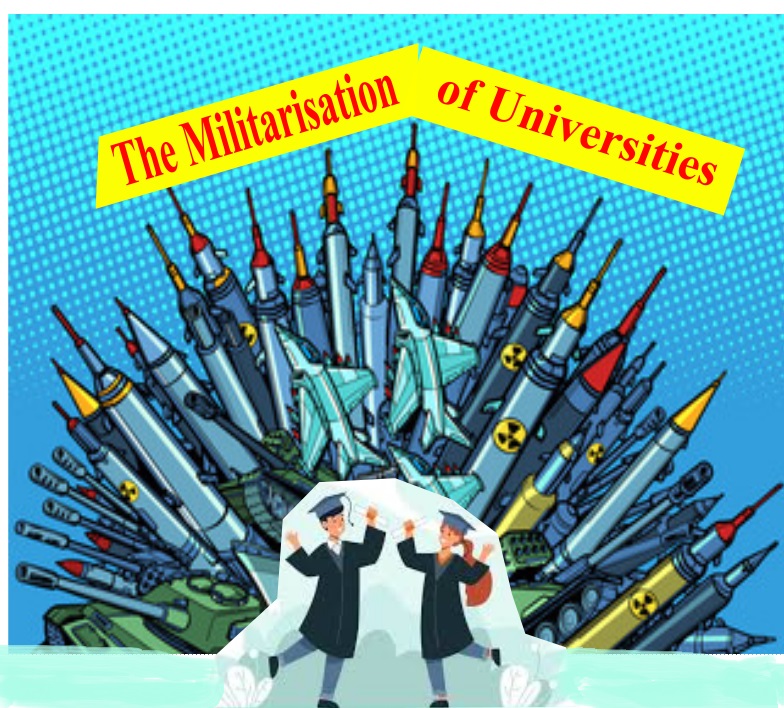
The University of Sheffield Advanced Manufacturing Research Centre (AMRC)
and Holtec, the USA’s largest nuclear components exporter, have entered a
formal partnership to collaborate on SMRs and large-scale nuclear and
fusion in the civil and defence sectors.
Earlier this week, the two
organisations signed a Memorandum of Understanding (MoU) for ‘Cooperation
on Nuclear Advanced Manufacturing Technology’ at the AMRC’s facility in
Sheffield.
Machinery Market 24th Sept 2024 https://www.machinery-market.co.uk/news/38159/SMRs-and-large-scale-nuclear-and-fusion-collaboration
Spent nuclear fuel shipped to Japan’s 1st interim storage facility in Aomori
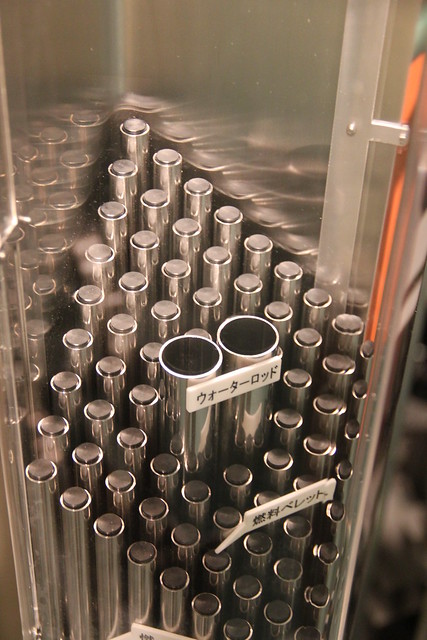
The interim storage facility, set up with joint investment from TEPCO and Japan Atomic Power Co, can store up to 5,000 tons of spent nuclear fuel for up to 50 years.
But there are concerns that the storage period will be exceeded
Sep. 25 TOKYO, https://japantoday.com/category/national/spent-nuclear-fuel-shipped-to-japan’s-1st-interim-storage-facility
The operator of a nuclear power plant in central Japan on Tuesday shipped spent fuel to the country’s first interim storage facility.
Tokyo Electric Power Company Holdings Inc sent 69 spent fuel assemblies from the Kashiwazaki-Kariwa plant in Niigata Prefecture by ship. The fuel will be delivered to the interim storage facility in Mutsu, Aomori Prefecture, on Thursday at the earliest.
With capacity at spent fuel pools at the plant’s No. 6 and No. 7 reactors approaching the limit, TEPCO plans to transfer two containers that can hold 138 fuel assemblies and five containers with 345 assemblies from the plant to the interim storage facility in fiscal 2025 and fiscal 2026, respectively.
The 69 assemblies, which had been kept at the No. 4 unit, were shipped out in a metal container.
The interim storage facility, set up with joint investment from TEPCO and Japan Atomic Power Co, can store up to 5,000 tons of spent nuclear fuel for up to 50 years.
But there are concerns that the storage period will be exceeded as a nuclear fuel recycling plant due to be built in Rokkasho, also in Aomori, has yet to be completed.
The storage facility is expected to begin operations in late October following inspections by the Nuclear Regulation Authority.
There were 13,752 spent fuel assemblies kept at the Nos. 1-7 reactors at Kashiwazaki-Kariwa before the shipment, accounting for over 80 percent of the spent fuel pools’ capacity. At No. 6 and No. 7 units, the spent fuel pools were at over 90 percent capacity.
1 This Month
To see nuclear-related stories in greater depth and intensity – go to https://nuclearinformation.wordpress.com/
Now until to February 10, 2026 Radioactive waste storage in France: the debate is finally open! How to participate?

-
Archives
- February 2026 (20)
- January 2026 (307)
- December 2025 (358)
- November 2025 (359)
- October 2025 (376)
- September 2025 (258)
- August 2025 (319)
- July 2025 (230)
- June 2025 (348)
- May 2025 (261)
- April 2025 (305)
- March 2025 (319)
-
Categories
- 1
- 1 NUCLEAR ISSUES
- business and costs
- climate change
- culture and arts
- ENERGY
- environment
- health
- history
- indigenous issues
- Legal
- marketing of nuclear
- media
- opposition to nuclear
- PERSONAL STORIES
- politics
- politics international
- Religion and ethics
- safety
- secrets,lies and civil liberties
- spinbuster
- technology
- Uranium
- wastes
- weapons and war
- Women
- 2 WORLD
- ACTION
- AFRICA
- Atrocities
- AUSTRALIA
- Christina's notes
- Christina's themes
- culture and arts
- Events
- Fuk 2022
- Fuk 2023
- Fukushima 2017
- Fukushima 2018
- fukushima 2019
- Fukushima 2020
- Fukushima 2021
- general
- global warming
- Humour (God we need it)
- Nuclear
- RARE EARTHS
- Reference
- resources – print
- Resources -audiovicual
- Weekly Newsletter
- World
- World Nuclear
- YouTube
-
RSS
Entries RSS
Comments RSS
 nuclear-news