‘We have emotions too’: Climate scientists respond to attacks on objectivity

Climate scientists who were mocked and gaslighted after speaking up about
their fears for the future have said acknowledging strong emotions is vital
to their work. The researchers said these feelings should not be suppressed
in an attempt to reach supposed objectivity. Seeing climate experts’
fears and opinions about the climate crisis as irrelevant suggests science
is separate from society and ultimately weakens it, they said. The
researchers said they had been subject to ridicule by some scientists after
taking part in a large Guardian survey of experts in May, during which they
and many others expressed their feelings of extreme fear about future
temperature rises and the world’s failure to take sufficient action. They
said they had been told they were not qualified to take part in this broad
discussion of the climate crisis, were spreading doom and were not
impartial.
Guardian 25th Oct 2024,
https://www.theguardian.com/environment/2024/oct/25/we-have-emotions-too-climate-scientists-respond-to-attacks-on-objectivity
Nuclear Energy Firm Orano Halts Niger Uranium Production

By Boureima HAMA avec Nathalie ALONSO à Paris, October 24, 2024, https://www.barrons.com/news/nuclear-energy-firm-orano-halts-niger-uranium-production-ed2fd6b6
French nuclear fuel firm Orano said on Wednesday it was halting its uranium production in junta-ruled Niger from October 31, citing a “highly deteriorated” situation and its inability to operate.
The Nigerien government, whose leader Abdourahamane Tiani seized power in a July 2023 coup, has previously made clear it would overhaul rules regulating the mining of raw materials by foreign companies.
Orano-owned mining subsidiary “Somair’s worsening financial difficulties have compelled the company to suspend its operations,” in the Artlit region of north Niger where Orano has operated since 1971, the French group’s Paris spokeswoman told AFP on Wednesday.
The Sahel nation’s military rulers have turned their backs on Paris, ordering French troops deployed there to leave and instead forging ties with fellow juntas in Burkina Faso and Mali — as well as Iran and Russia.
Niger’s position as the world’s seventh-largest uranium producer plays an important role in the shifting relations.
Iran has significantly increased its stock of enriched uranium in recent months, while strengthening ties with Niger, according to the International Atomic Energy Agency.
The production of uranium concentrate will cease from October 31 as Orano was unable to export the commodity, in part due to landlocked Niger’s closed border with coastal Benin, the firm said.
“Despite all the efforts deployed” with the military regime “to try and resolve the situation” and obtain export licenses, “all of our proposals were left unanswered”, said the spokeswoman of the group, which specialises in nuclear fuel.
Nigerien authorities did not follow up on an Orano proposal to export uranium by air via Namibia.
“Maintenance will continue but there will be no more production,” she added.
Nigerien authorities did not comment on the matter.
Niamey in June rescinded Orano’s licence to operate in one of the largest deposits in the world, Imouraren, with estimated reserves of 200,000 metric tonnes (220,000 US tons).
Niger’s Council of Ministers on September 19 passed a draft decree proposing to create a state company named “Timersoi National Uranium Company”, without detailing the move.
Slovenia’s referendum on new nuclear cancelled
WNN, Friday, 25 October 2024
The nationwide referendum due to be held in Slovenia on 24 November about proposed new nuclear power units has been called off and may now be staged later in the project process, in 2028, instead.
The decision by Slovenia’s parliament to cancel the vote – just days after the elected members had voted for it to happen – followed challenges to the wording and allegations that it was not being properly conducted………………..
Prime Minister Robert Golob has committed to hold a referendum on the project before it goes ahead, with a number of key studies and documents to be published beforehand to “enable citizens to make an informed decision”. The current timetable for the project is for a final investment decision to be taken in 2028, with construction beginning in 2032.
Among a raft of reviews and documents published over the past few months, was an economic review of the estimated cost of the project which put the cost, depending on the power-generating capacity selected, at EUR9.5 billion to EUR15.4 billion (USD10.3 billion to USD16.7 billion).
The opposition Slovenian Democratic Party (SDS) -… – said it now opposed the referendum because, they say, Energy Minister Bojan Kumer had requested, and not published, an analysis of the costs if there was no nuclear energy and up to 100% renewable energy instead.
SDS MP Zvone Černač said if media reports were
true “and Minister Kumer hid the study from the public for two months, he should resign”. Černač
accused the minister of using the “rhetoric of renewable energy activists” and said that in the current circumstances carrying out a referendum “would be irresponsible”……………………… https://www.world-nuclear-news.org/articles/slovenias-referendum-on-new-nuclear-cancelled
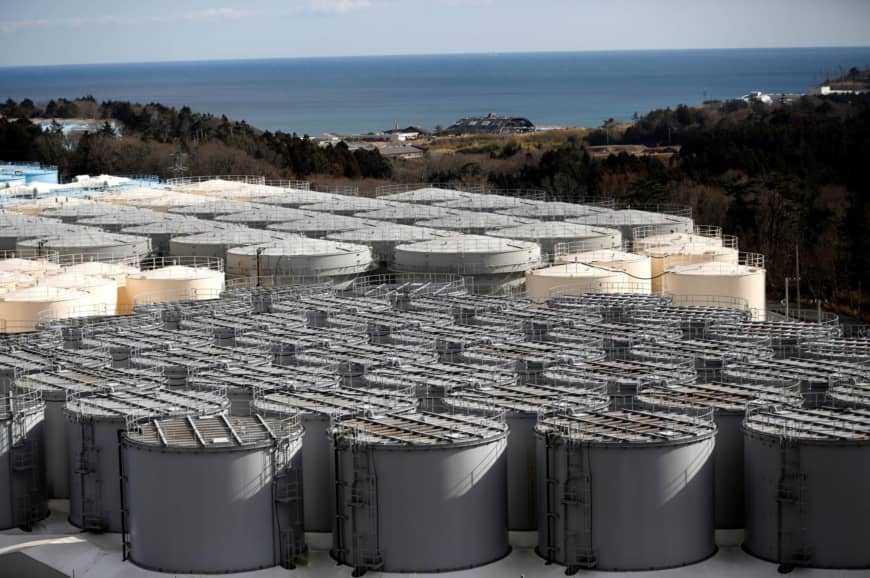
Japan to resume trial removal of Fukushima nuclear debris, reports say
https://www.japantimes.co.jp/news/2024/10/25/japan/fukushima-debris-removal/
The operator of the tsunami-stricken Fukushima No. 1 nuclear plant will resume an operation to remove a sample of highly radioactive material next week, reports said Friday, after having suspended the effort over a technical snag.
Extracting the estimated 880 tons of highly radioactive fuel and debris inside the former power station remains the most challenging part of decommissioning the facility, which was hit by a catastrophic tsunami in 2011.
Radioactivity levels inside are far too high for humans to enter, and last month engineers began inserting an extendable device to try and remove a small sample.
However, operator Tokyo Electric Power Company Holdings had to halt the procedure after noticing that remote cameras on the apparatus were not beaming back images to the control center.
Tepco on Friday said it would resume the removal on Monday after replacing the cameras with new ones, the Asahi Shimbun daily and other local media reported.
Tepco officials could not immediately be reached to confirm the reports.
Three of Fukushima’s six reactors went into meltdown after a tsunami triggered by the nation’s biggest earthquake on record swamped the facility in one of the world’s worst nuclear accidents.
Japan last year began releasing into the Pacific Ocean some of the 540 Olympic swimming pools’ worth of reactor cooling water amassed since the catastrophe.
China and Russia banned Japanese seafood imports as a result, although Tokyo insists the discharge is safe, a view backed by the U.N. atomic agency.
Beijing last month said it would “gradually resume” importing seafood from Japan after imposing the blanket ban.
In a Tepco initiative to promote food from the Fukushima area, swanky London department store Harrods began selling peaches grown in the region last month.
US nuclear regulator kicks off review on Three Mile Island restart
By Laila Kearney, October 26, 2024
- Summary
- Companies
- NRC holds first public meeting on Three Mile Island restart
- Constellation wants to restore Unit 1’s operating license
- NRC requests more emergency, environmental restart plan details
- Watchdog group questions plans, including simulator
NEW YORK, Oct 25 (Reuters) – U.S. nuclear regulators kicked off a long-winding process to consider Constellation Energy’s (CEG.O), opens new tab unprecedented plans to restart its retired Three Mile Island nuclear power plant in an initial public meeting held on Friday.
Constellation, which announced last month that it had signed a 20-year power purchase agreement with Microsoft that would enable reopening the Unit 1 reactor at Three Mile Island, made its case before the Nuclear Regulatory Commission to restore its operating license for the plant.
The company also sought to extend the life of the plant and change its name to the Crane Clean Energy Center.
Three Mile Island, which is located in Pennsylvania on an island in the Susquehanna River, is widely known for the 1979 partial meltdown of its Unit 2 reactor. That unit has been permanently shut and is being decommissioned.
Members of the NRC requested details about the emergency evacuation plans for the restarted plant and information about the commercial deal with Microsoft, while imploring Constellation to quickly work on permitting related to its water use for the plant.
The NRC also raised questions about how the restart of Unit 1 would intersect with the decommissioning of Unit 2, which began last year, nearly 45 years after the partial meltdown.
Utah-based nuclear services company EnergySolutions owns Unit 2 and related infrastructure, while Constellation owns Unit 1 and the site’s land.
Unit 1 shut down due to economic reasons in 2019, some 15 years before the operating license was set to expire. At the time, Constellation said it did not anticipate a restart.
Constellation now expects to restart the 835-megawatt Unit 1 in 2028, delivering power to the grid to offset electricity use by Microsoft’s data center in the region.
A recent jump in U.S. electricity demand, driven in part by Big Tech’s energy-intensive AI data center expansion has led to a revival of the country’s struggling nuclear industry.
No retired reactor has been restarted before. The Palisades nuclear plant in Michigan, owned by Holtec, is also in the process of being resurrected.
…………………..The physical work to restore Three Mile Island, which is expected to start in the first quarter of 2025, cost at least $1.6 billion, and could require thousands of workers, still needs licensing modifications and permitting.
Local activists have also vowed to fight the project over safety and environmental concerns, including the storage of nuclear waste on the site.
Scott Portzline, who is with nuclear watchdog group Three Mile Island Alert in Harrisburg, questioned the site’s backup power and criticized the proposed nuclear control room simulator used for training.
“I have a constitutional right to know how my nuclear plants are operating and the utility ought to be able to answer that,” Portzline said during the meeting……….
Under the National Environmental Policy Act, the NRC will be required to complete an environmental assessment within the final year of any restart. The plant will require other environmental permits, including ones for air emissions and water pollutants. https://www.reuters.com/business/energy/us-nuclear-regulator-hears-three-mile-island-power-plant-restart-plan-2024-10-25/
CND condemns ‘outrageous railroading’ of US-UK nuclear agreement renewal through Parliament.
Anti-arms campaigners today condemned the
“outrageous railroading” of the US-UK Mutual Defence Agreement (MDA)
renewal through Parliament. The MDA, active since 1958, enables vital
nuclear material and technology transfers between the US and Britain,
reviewed every 10 years. But the Campaign for Nuclear Disarmament (CND)
condemned the government’s intention to make the treaty permanent by
removing the clause that requires the treaty to be extended and enables
debate and amendment, including rejection.
Morning Star 25th Oct 2024 https://morningstaronline.co.uk/article/cnd-condemns-outrageous-railroading-us-uk-nuclear-agreement-renewal-through-parliament
Crew members on Royal Navy nuclear submarine left with ‘low supplies’ and suffering fatigue
Medics reportedly feared for a ‘serious loss of life’ after plans to resupply the vessel failed to materialise
Holly Evans, 25 Oct 24,
https://www.independent.co.uk/news/uk/home-news/nuclear-submarine-royal-navy-uk-b2635513.html
Medics on a Royal Navy nuclear submarine were reportedly left fearing a “serious loss of life” after crew members were forced to share food when supplies ran low.
During a six-month patrol, crew began to suffer from fatigue with mistakes caused by concentration lapses, while the vessel closed its honesty shop over fears of hoarding.
Navy chiefs reportedly asked the crew to hand in any supplies of chocolate or sweets and off-duty sailors were instructed to sleep to conserve calories and limit their movements.
A source told The Sun: “It was miserable. If you weren’t on watch your movements were limited to conserve energy and encouraged to sleep to burn less calories.”
They added: “Medical staff raised concerns about a serious loss of life due to fatigue and people either not concentrating or falling asleep on critical duties.”
The Vanguard-class vessel, which has not been named for security reasons, had been due to resupply at sea but had been unable to do so.
A former submarine captain said the conditions onboard the vessel were “horrific”.
Due to the shortage of available submarines, patrols have been extended for six-months rather than the usual customary 80 days.
One submarine, which forms part of the UK’s nuclear deterrent force, is always on patrol with their location remaining top secret, with sailors only allowed to receive one 40-word message each week that is censored for bad news.
The Royal Navy has emphasised that robust practices and procedures are always in place to ensure the safety of its crew on operations.
It comes three weeks after the head of the Royal Navy apologised after an investigation found “misogyny, bullying and other unacceptable behaviours” in the submarine service.
There was at least one report of rape, and women suffered lewd comments and sexual gestures, an official report has revealed.
Will AI’s huge energy demands spur a nuclear renaissance?
Contracts with Google and Amazon could help, but bringing new types of reactor online will take larger investments — and time.
Davide Castelvecchi, Nature , 25vOct 24
Last week, technology giants Google and Amazon both unveiled deals supporting ‘advanced’ nuclear energy, as part of their efforts to become carbon-neutral.
Google announced that it will buy electricity made with reactors developed by Kairos Power, based in Alameda, California. Meanwhile, Amazon is investing approximately US$500 million in the X-Energy Reactor Company, based in Rockville, Maryland, and has agreed to buy power produced by X-energy-designed reactors due to be built in Washington State.
Both moves are part of a larger [??] green trend that has arisen as tech companies deal with the escalating energy requirements of the data centres and number-crunching farms that support artificial intelligence (AI). Last month, Microsoft said it would buy power from a utility company that is planning to restart a decommissioned 835-megawatt reactor in Pennsylvania.
The partnerships agreed by Google and Amazon involve start-up companies that are pioneering the design of ‘small modular reactors’, which are intended to be assembled from prefabricated pieces………….they still have a way to go before they become a reality.
Nature talked to nuclear-energy researchers to explore the significance and possible implications of these big-tech investments.
Could these deals spur innovation in the nuclear industry?
Building nuclear power stations — a process often plagued by complex permit procedures, construction delays and cost overruns — is financially risky, and betting on unproven technologies is riskier still…………..
the details of the deals are murky, and the level of support provided by Amazon and Google is likely to be “a drop in the bucket” compared with the billions these start-ups will ultimately need, says physicist Edwin Lyman, director of nuclear power safety at the Union of Concerned Scientists in Washington DC. “The PR machine is just going into overdrive,” says Lyman, but “private capital just doesn’t seem ready yet to take that risk”.
Allison Macfarlane, director of the School of Public Policy and Global Affairs at the University of British Columbia in Vancouver, Canada, and former chair of the US Nuclear Regulatory Commission (NRC), says that the speed of progress in computer science raises another question. “If we’re talking 15 years from now, will AI need that much power?”
Are there safety advantages to the small modular designs?
“The smallest reactors, in theory, could have a high degree of passive safety,” says Lyman. When shut down, the core of a small reactor would contain less residual heat and radioactivity than does a core of the type that melted down in the Fukushima Daiichi disaster that followed the cataclysmic 2011 tsunami in Japan.
The companies also say that the proposed pebble-bed reactors are inherently safer because they are not pressurized, and because they are designed to circulate cooling fluids without the help of pumps (it was the loss of power to water pumps that caused three of the Fukushima plant’s reactors to fail).
But Lyman thinks it is risky to rely on potentially unpredictable passive cooling without the backup of an active cooling option. And as reactors become get smaller, they become less efficient. Another start-up company, NuScale Power, based in Portland, Oregon, originally designed its small modular reactor — which was certified by the NRC — to produce 50 MW of electricity, but later switched to a larger, 77-MW design. The need to make the economics work “makes passive safety less credible”, Lyman says.
Do small modular reactors carry extra risks?
In some cases, small modular reactors “could actually push nuclear power in a more dangerous direction”, says Lyman. “Advanced isn’t always better.”
In particular, Lyman points out that the pebble-bed designs drawn up by X-energy and Kairos would rely on high-assay low-enriched uranium (HALEU), which comprises 10–20% uranium-235 — compared with the 5% enrichment level required by most existing reactors (and by NuScale’s reactor). HALEU is still classified as low-enrichment fuel (as opposed to the highly enriched uranium used to make nuclear bombs), but that distinction is misleading, Lyman says. In June, he and his collaborators — including physicist Richard Garwin, who led the design of the first hydrogen bomb — warned in a Science article that a bomb could be built with a few hundred kilograms of HALEU, with no need for further enrichment1.
Smaller reactors are also likely to produce more nuclear waste and to use fuel less efficiently, according to work reported in 2022 by Macfarlane and her collaborators2. In a full-size reactor, most of the neutrons produced by the splitting of uranium travel through a large volume of fuel, meaning that they have a high probability of hitting another nucleus, rather than colliding with the walls of the reactor vessel or escaping into the surrounding building. “When you shrink the reactor, there’s less material in there, so you will have more neutron leakage,” Macfarlane says. These rogue neutrons can be absorbed by other atomic nuclei — which would then themselves become radioactive.
Will small reactors be cheaper to build?
The capacity to build components in an assembly line could drastically cut reactors’ construction costs. But there are also intrinsic economies of scale in building larger reactors, says Buongiorno. “Don’t believe people blindly” when they say smaller reactors will produce cheaper energy, he says: nuclear energy has a lot going for it, but “it ain’t cheap” — and that is unlikely to change significantly.
Will all of these efforts help to combat climate change?
…………….. whether building new reactors is the best way to rapidly cut emissions is debated. Macfarlane points out that solar panels and wind turbines can be deployed at a much faster rate.
https://www.nature.com/articles/d41586-024-03490-3
Israel’s War on Journalism

Israel, with the fulsome support of the U.S. government, is eviscerating the last shreds of freedom of the press.
All CNN journalists reporting on Israel and Palestine must submit their work for review by the network’s Jerusalem bureau prior to publication, a bureau that is required to abide by rules set down by Israeli military censors.
To the powerful, the war makers and the domesticated media, these real journalists are the enemy. This is the reason Julian Assange was mercilessly hounded and persecuted for 14 years………..What is new is the scale of Israel’s assault on journalism.
Chris Hedges, October 25, 2024, https://scheerpost.com/2024/10/25/chris-hedges-israels-war-on-journalism/
Israel has not defeated Hamas. It has not defeated Hezbollah. It will not defeat Iran. But it must convince its own public, and the rest of the world, it is winning. Censorship and the silencing of journalists who expose Israel’s war crimes and the suffering Israel inflicts on civilians is an Israeli priority.
It would be reassuring to call Israel an outlier, a nation that did not share our values, a nation that we support in spite of its atrocities. But of course, Israel is an extension of ourselves.
As the playwright Harold Pinter said:
US foreign policy could be best defined as follows: kiss my arse or I’ll kick your head in. It is as simple and as crude as that. What is interesting about it is that it is so incredibly successful. It possesses the structures of disinformation, use of rhetoric, distortion of language, which are very persuasive, but are actually a pack of lies. It is very successful propaganda. They have the money, they have the technology, they have all the means to get away with it, and they do.
In accepting the Nobel prize for literature, Pinter said: “The crimes of the United States have been systematic, constant, vicious, remorseless, but very few people have actually talked about them. You have to hand it to America. It has exercised a quite clinical manipulation of power worldwide while masquerading as a force for universal good. It’s a brilliant, even witty, highly successful act of hypnosis.”
The most important impediment to Israel’s mass hypnosis are the Palestinian journalists in Gaza. This is why the kill rate is so high. It is why U.S. officials say nothing. They, too, hate real journalists. They, too, demand reporters domesticate themselves to scurry like rats from one choreographed press event to the next.
The U.S. government says and does nothing to protect the press because it endorses Israel’s campaign against the media, as it endorses Israel’s genocide in Gaza.
Journalists, along with the Palestinians, are to be extinguished.
There are some 4,000 foreign reporters accredited in Israel to cover the war. They stay in luxury hotels. They go on dog and pony shows orchestrated by the Israeli military. They can, on rare occasions, be escorted by Israeli soldiers on lightning visits to Gaza, where they are shown alleged weapons caches or tunnels the military says are used by Hamas. They dutifully attend daily press conferences. They are given off-the-record briefings by senior Israeli officials who feed them information that often turns out to be untrue. They are Israel’s unwitting and sometimes witting propagandists, stenographers for the architects of apartheid and genocide, hotel room warriors. Bertolt Brecht acidly called them the spokesmen of the spokesmen.
And how many foreign reporters are there in Gaza? None.
The Palestinian reporters in Gaza who fill the void often pay with their lives. They are targeted, along with their families, for assassination. At least 128 journalists and media workers in Gaza, the West Bank and Lebanon, have been killed and 69 have been imprisoned, according to the Committee to Protect Journalists, marking the deadliest period for journalists since the organization began collecting data in 1992.
Israel bombed a building on Friday in southern Lebanon housing seven media organizations, killing three journalists from Al Mayadeen and Al Manar and injuring 15 others. Since Oct. 7, Israel has killed 11 journalists in Lebanon.
Al Jazeera cameraman Fadi al-Wahidi, who was shot in the neck in the Jabalia refugee camp in northern Gaza by an Israeli sniper earlier this month, is in a coma. Israel has refused permission for him to seek medical care outside of Gaza. Like most of the targeted journalists, including his murdered colleague Shireen Abu Akleh, he was wearing a helmet and flak jacket that identified him as press.
The Israeli military has branded as “terrorists” six Palestinian journalists in Gaza who work for Al Jazeera.
“These 6 Palestinians are among the last journalists surviving Israel’s onslaught in Gaza,” United Nations Special Rapporteur on the Occupied Palestinian Territories, Francesca Albanese, said. “Declaring them ‘terrorists’ sounds like a death sentence.”
The scale and savagery of the Israeli assault on the media dwarfs anything I witnessed during my two decades as a war correspondent, including in Sarajevo where Serb snipers regularly took aim at reporters. Twenty-three journalists were killed in Croatia and Bosnia and Herzegovina during the Yugoslav Wars between 1991 and 1995. Twenty-two were killed when I covered the war in El Salvador. Sixty-eight journalists were killed in World War II and 63 were killed in Vietnam. But unlike in Gaza, Bosnia and El Salvador, journalists were usually not targeted.
Israel’s assault on press freedom is unlike anything we have experienced since William Howard Russell, the godfather of modern war reporting, sent back dispatches from the Crimean War. Its onslaught against journalists is in a category by itself.
Representative James P. McGovern and 64 House members sent a letter to President Joseph Biden and Secretary of State Antony Blinken calling for the United States to push for Israel to allow unimpeded access for U.S. and international journalists. In July, over 70 media and civil society organizations signed an open letter calling on Israel to permit foreign reporters into Gaza.
Israel has not budged. Its ban on international journalists in Gaza remains in place. Its genocide grinds forward. Hundreds of Palestinian civilians are killed and wounded daily. During October, Israel killed at least 770 Palestinians in northern Gaza. Israel spins out its lies and fabrications, from Hamas using Palestinians as human shields, to mass rape and beheaded babies, to a captive press that slavishly amplifies them. By the time the lies are exposed, often weeks or months later, the media cycle has moved on and few notice.
Israel’s wholesale censorship and assassination of journalists will have ominous consequences. It further erodes what few protections we once had as war correspondents. It sends an unequivocal message to any government, despot or dictator that seeks to mask its crimes. It heralds, like the genocide itself, a new world order, where mass murder is normalized, totalitarian censorship is permissible and journalists who try and expose the truth have very short life expectancies.
Israel, with the fulsome support of the U.S. government, is eviscerating the last shreds of freedom of the press.
Those who wage war, any war, seek to shape public opinion. They court the reporters they can domesticate, the ones who prostrate themselves before generals and, although they do not openly admit it, seek to stay as far away from combat as possible. These are the “good” journalists. They like to “play” at being a soldier. They enthusiastically assist in disseminating propaganda in the guise of reporting. They want to do their part for the war effort, to be part of the club. Sadly, they constitute the majority of the media in the wars I covered.
All CNN journalists reporting on Israel and Palestine must submit their work for review by the network’s Jerusalem bureau prior to publication, a bureau that is required to abide by rules set down by Israeli military censors.
These domesticated journalists and news organizations are, as Robert Fisk pointed out, “prisoners of the language of power.” They dutifully parrot the official lexicon — “terrorists,” “peace process,” “two state solution” and “Israel’s right to defend itself.”
The New York Times, The Intercept writes, “instructed journalists covering Israel’s war on the Gaza Strip to restrict the use of the terms ‘genocide’ and ‘ethnic cleansing’ and to ‘avoid’ using the phrase ‘occupied territory’ when describing Palestinian land, according to a copy of an internal memo obtained by The Intercept.”
“The memo also instructs reporters not to use the word Palestine ‘except in very rare cases’ and to steer clear of the term ‘refugee camps’ to describe areas of Gaza historically settled by displaced Palestinians expelled from other parts of Palestine during previous Israeli–Arab wars,” The Intercept notes. “The areas are recognized by the United Nations as refugee camps and house hundreds of thousands of registered refugees.”
“There is no battle between power and the media,” Fisk noted. “Through language, we have become them.
Retired general David Petraeus, one of the authors of the 2006 U.S. Counterinsurgency Manual used by U.S. and NATO forces in Afghanistan, argues that persuading the public that you are winning — even if, as in Afghanistan, you are trapped in a quagmire — is more important than military superiority. The domesticated media is vital in perpetrating this deception.
Then there are the real journalists. They shine a light into the machinery of power. They tell the truth, for as the poet Seamus Heaney said, “There’s such a thing as truth and it can be told.” They make public the cruelty, mendacity and criminality of the powerful. They expose the collaboration of the domesticated media.
To the powerful, the war makers and the domesticated media, these real journalists are the enemy. This is the reason Julian Assange was mercilessly hounded and persecuted for 14 years. WikiLeaks published a 2,000-page Ministry of Defence document where British government officials equated investigative journalists with terrorists. The animosity is not new. What is new is the scale of Israel’s assault on journalism.
‘Climate crunch time’: UN warns world risks over 3C warming without urgent action this decade.

Capping global warming at 1.5C remains technically
possible, but only with unprecedented action from governments around the
world to slash global greenhouse gas emissions by an average of 7.5 per
cent every single year over the next decade, the United Nations has warned.
Published today, the UN Environment Programme’s (UNEP) annual assessment
calculates the ’emissions gap’ between what scientists say must happen to
limit global warming to the 1.5C goal established by the Paris Agreement,
and the emissions reductions targeted and delivered by governments
worldwide.
As ever, the report underscores the rapidly closing window of
time to deliver the deep emissions reductions required this decade if the
goals of the Paris Agreements are to be met, warning that based on current
policies the world risks careering towards catastrophic temperature
increases of between 2.6C and 3.1C over the course of this century.
Business Green 24th Oct 2024
Isotopic signature of plutonium accumulated in cryoconite on glaciers worldwide

Science Direct, Volume 951, 15 November 2024,
Edyta Łokas a, Giovanni Baccolo b, Anna Cwanek a, Jakub Buda c, Katarzyna Kołtonik a, Nozomu Takeuchi d, Przemysław Wachniew e, Caroline Clason f, Krzysztof Zawierucha c, Dylan Bodhi Beard g, Roberto Ambrosini h, Francesca Pittino i, Andrea Franzetti i, Philip N. Owens j, Massimiliano Nastasi kl, Monica Sisti i, Biagio Di Mauro m
Highlights
- •Cryoconite samples show larger deposition of 239+240Pu, but not of 238Pu, in the Northern than in the Southern Hemisphere
- •Isotopic signatures of Pu in cryoconite show that besides the global fallout the regional contributions may be significant
- •First evidence of 238Pu contamination from the crash of Interplanetary Station “Mars’96”
Abstract
Glaciers are recognized as repositories for atmospheric pollutants, however, due to climate change and enhanced melting rates, they are rapidly transitioning from being repositories to secondary sources of such apollutants. Artificial radionuclides are one of the pollutants found on glaciers that efficiently accumulate onto glacier surfaces within cryoconite deposits; a dark, often biogenic sediment. This work provides information about the accumulation, distribution and sources of plutonium (Pu) isotopes in cryoconite samples from glaciers worldwide.
Plutonium is an artificial radionuclide spread into the environment in the last decades as a consequence of nuclear test explosions, accidents and nuclear fuel re-processing. Samples collected from 49 glaciers across nine regions of Earth are considered. Activity concentrations of plutonium in cryoconite are orders of magnitude higher than in other environmental matrices typically used for environmental monitoring (e.g. lichens, mosses, soils and sediments), particularly in the Northern Hemisphere.
Isotopic ratios indicate that plutonium contamination of cryoconite is dominated by the global signal of stratospheric fallout related to atmospheric nuclear tests. However, specific glaciers in Svalbard reveal a signature compatible with a contribution from the re-entry of the SNAP-9A satellite in 1964, which was equipped with a 238Pu radioisotope thermoelectric generator. Similarly, an excess of 238Pu is observed in cryoconite from the Exploradores Glacier (Chile). This could be associated with the November 1996 crash of the automatic Interplanetary Station “Mars ’96” which was carrying a 238Pu thermoelectric generator. This is the first time ever that an isotopic evidence for this event is reported. These findings highlight the role that cryoconite can play in reconstructing the radioactive contamination history of different glaciated regions of the Earth.
Introduction
Atmospherically derived radioactivity is the component of environmental radioactivity that is deposited on the Earth’s surface through wet and dry deposition from the atmosphere. The deposited radionuclides are also named fallout radionuclides (FRNs). Some FRNs have a natural origin, such as cosmogenic 7Be and 14C, or are decay products of primordial isotopes. This is the case for 210Pb, which derives from 238U.
However, most FRNs are artificial and occur globally as a result of atmospheric nuclear tests and unintentional nuclear accidents (UNSCEAR, 1982, UNSCEAR, 2000). A key requirement when dealing with environmental radioactivity is the assessment of contamination levels, including the reconstruction of contamination histories, the identification of transport pathways, and of the fate of the radioactivity released into the diverse environmental compartments (Engelbrecht and Schwaiger, 2008).
Glaciers are especially important for studying atmospheric fallout history (Jaworowski et al., 1978). First, glaciers consist of deposits of atmospheric precipitation and intrinsically accumulate fallout species, including FRNs. Under specific conditions (i.e. no melting, low horizontal ice flow), by studying the stratigraphy of ice and snow layers, it becomes possible to reconstruct the depositional history of FRNs (Gabrieli et al., 2011; Olivier et al., 2004). In addition to glacier ice, attention has recently turned to another environmental matrix typical of glaciated landscapes which accumulates radioactivity; cryoconite that is a type of sediment found on the surface of glaciers worldwide (Cook et al., 2016). …………………………………..
Plutonium (Pu) is a toxic, radioactive and predominately anthropogenic element produced through neutron irradiation of uranium in nuclear reactors and during nuclear weapon detonations (Zhong et al., 2019). The most significant releases of plutonium in the Northern Hemisphere were associated with global fallout (GF) resulting from atmospheric nuclear weapon tests carried out between 1945 and 1980, with a peak in the 1960s (UNSCEAR, 1982, UNSCEAR, 2000).
Other important sources are related to catastrophic events such as the 1978 crash of the Cosmos-954 satellite, which had a nuclear reactor on board (Krey et al., 1979; Tracy et al., 1984), as well as the Chernobyl nuclear power plant disaster in 1986 (UNSCEAR, 2010) and the Fukushima Daiichi accident in 2011 (Povinec et al., 2013a; Povinec et al., 2013b). Moreover, from 1964 to 1980, China conducted atmospheric nuclear testing at the Lop Nor test site in north-western Chi
The Northern Hemisphere has received two-thirds of global plutonium deposition (Clark et al., 2019). Fig. 1 illustrates the most significant atmospheric nuclear testing and accident sites in the Northern and Southern Hemispheres, including those near the Equator.
The tests conducted in the Northern Hemisphere have received significant interest but much less is known regarding the deposition that took place in the Southern Hemisphere. The United Kingdom (UK) was at the forefront of the atmospheric nuclear testing program in the Southern Hemisphere between 1952 and 1957 in Australian territory (Johansen et al., 2019), while France conducted extensive open-air nuclear testing in French Polynesia in the South Pacific Ocean from 1966 to 1974 (Bouisset et al., 2021). The UK tests resulted in a substantial amount of regional fallout (i.e., tropospheric fallout), compared to the higher-yield French tests, which contributed to the stratospheric fallout.
In 1964, the Transit 5BN3 satellite carrying a SNAP 9A radioisotope thermoelectric generator, launched by the United States of America (USA), failed to achieve orbit. The satellite burned up when descending into the upper atmosphere over Madagascar. The 238Pu load (1 kg) was dispersed worldwide and was detected globally in the environment, even in remote areas. Most of the fallout of 238Pu from this satellite occurred in the Southern Hemisphere (Hardy et al., 1972, Hardy et al., 1973).
Another important event, although not well-documented, was reported by the International Atomic Energy Agency (Radiation and Safety, 2001) in their inventory of accidents and losses at sea involving radioactive material. According to the report, it involved the atmospheric re-entry of the automatic Interplanetary Station “Mars ’96”, which was launched on November 16th, 1996. The station fell off the coast of Chile near the border with Bolivia and has not been located to date.
Plutonium isotope deposition after weapons testing can be local, regional and global, depending on detonation height, yield and meteorological conditions ………………….
This study, for the first time, presents a comprehensive global analysis of the variation in activity concentrations of 238Pu and 239+240Pu, along with activity (238Pu/239+240Pu) and atomic (240Pu/239Pu) ratios, observed in cryoconite on glaciers from both hemispheres.
…………………………….Conclusions
This study provides new insights into the provenance of Pu isotopes (238Pu, 239Pu, 240Pu) in glaciers based on cryoconite samples collected from nine glaciated regions of six continents. The 239+240Pu activity concentrations are significantly higher in the Northern Hemisphere than in the Southern Hemisphere, which reflects the uneven deposition of global fallout between hemispheres. Within the Northern Hemisphere the highest concentrations occur in Scandinavia and the European Alps…………………………………………….. more https://www.sciencedirect.com/science/article/abs/pii/S0048969724055062
Crippling The United Nations Relief and Works Agency for Palestine Refugees (UNRWA): The Knesset’s Collective Punishment of Palestinians
UN Secretary-General Guterres was aghast at the two bills. “It would effectively end coordination to protect UN convoys, offices and shelters serving hundreds of thousands of people.”
October 26, 2024, by: Dr Binoy Kampmark, https://theaimn.com/crippling-unrwa-the-knessets-collective-punishment-of-palestinians/—
The man has a cheek. Having lectured Iranians and Lebanese about what (and who) is good for them in terms of rulers and rule (we already know what he thinks of the Palestinians), Israeli Prime Minister Benjamin Netanyahu has been keeping busy on further depriving access and assistance to those in Gaza and the West Bank. This comes in draft legislation that would prevent the United Nations Relief and Works Agency for Palestine Refugees in the Near East (UNRWA) from pursuing its valuable functions in the Occupied Palestinian Territory.
The campaign against UNRWA by the Israeli state has been relentless and pathological. Even before last year’s October 7 attacks by Hamas, much was made of the fact that the body seemed intent on keeping the horrors of the 1948 displacements current. Victimhood, complained the amnesiac enforcers of the Israeli state, was being encouraged by treating the descendants of displaced Palestinians as refugees. Nasty memories were being kept alive.
Since then, Israel has been further libelling and blackening the organisation as a terrorist frontbest abolished. (Labels are effortlessly swapped – “Hamas supporter”; “activist”; “terrorist”.) Initially came that infamous dossier pointing the finger at 12 individuals said to be Hamas participants in the October 7 attacks. With swiftness, the UN commenced internal investigations. Some individuals were sacked on suspicion of being linked to the attacks. Unfortunately, some US$450 million worth of donor funding from sixteen countries was suspended.
UNRWA Commissioner-General Philippe Lazzarini was always at pains to explain that he had “never been informed” nor received evidence substantiating Israel’s accusations. It was also all the more curious given that staff lists for the agency were provided to both Israeli and Palestinian authorities in advance. At no point had he ever “received the slightest concern about the staff that we have been employing.”
In April, Lazzarini told the UN Security Council that “an insidious campaign to end UNRWA’s operations is under way, with serious implications for peace and security.” Repeatedly, requests by the agency to deliver aid to northern Gaza had been refused, staff barred from coordinating meetings between humanitarian actors and Israel, and UNRWA premises and staff targeted.
Israel’s campaign to dissuade donor states from restoring funding proved a mixed one. Even the United Kingdom, long sympathetic to Israel’s accusations, announced in July that funding would be restored. In the view of UK Foreign Secretary David Lammy, UNRWA had taken steps to ensure that it was meeting “the highest standards of neutrality.”
In August, the findings of a review of the allegations by former French foreign minister Catherine Colonna, instigated at the request of the UN Secretary-General António Guterres,were released. It confirmed UNRWA’s role as “irreplaceable and indispensable” in the absence of a political solution between Israel and the Palestinians, a “pivotal” body that provided “life-saving humanitarian aid and essential social services, particularly in health and education, to Palestinian refugees in Gaza, Jordan, Lebanon, Syria and the West Bank.”
In identifying eight areas for immediate improvement on the subject of neutrality (for instance, engaging donors, neutrality of staff, installations, education and staff unions), it was noted that “Israel has yet to provide supporting evidence” that the agency’s employees had been “members of terrorist organizations.”
On October 24, UNRWA confirmed that one of its staffers killed by an Israeli strike in Gaza,Muhammad Abu Attawi, had been in the agency’s employ since July 2022 while serving as a Nukhba commander in Hamas’s Bureij Battalion. Attawi is alleged to have participated in the killing and kidnapping of Israelis from a roadside bomb shelter near Kibbutz Re’im in October last year. His name had featured in a July letter from Israel to the agency listing 100 names allegedly connected with terrorist groups. But no action was taken against Attawi as the Israelis failed to supply UNRWA with evidence. Lazzarini’s letter urging, in the words of Juliette Touma, the agency’s director of communications, “to cooperate … by providing more information so he could take action” did not receive “any response”.
Having been foiled on various fronts in its quest to terminate UNRWA’s viable existence, Israeli lawmakers are now taking the legislative route to entrench the collective punishment of the Palestinian people. Two bills are in train in the Knesset. The first, sponsored by such figures as Yisrael Beytenu MK Yulia Malinovsky and Likud lawmaker Dan Illouz, would bar state authorities from having contact with UNRWA. The second, sponsored by Likud MK Boaz Bismuth, would critically prevent the agency from operating in Israeli territory through revoking a 1967 exchange of notes justifying such activities.
Even proclaimed moderates – the term is relative – such as former defence minister Benny Gantz support the measures, accusing the UN body of making “itself an inseparable component of Hamas’s mechanism – and now is the time to detach ourselves entirely from it.” It did not improve the lot of refugees, but merely perpetuated “their victimisation.” Evidently for Gantz, Israel had no central role in creating Palestinian victims in the first place.
By barring cooperation between any Israeli authorities and UNRWA, work in Gaza and the West Bank would become effectively impossible, largely because Jerusalem would no longer issue entrance permits to the territories or permit any coordination with the Israeli DefenseForces.
UN Secretary-General Guterres was aghast at the two bills. “It would effectively end coordination to protect UN convoys, offices and shelters serving hundreds of thousands of people.” Ambassadors from 123 UN member states have echoed the same views, while the Biden administration has, impotently, warned that the proposed “restrictions would devastate the humanitarian response in Gaza at this critical moment” while also denying educational and social services to Palestinians in the West Bank and Jerusalem.
In their October 23 statement, the Nordic countries also expressed concern that UNRWA’s mandate “to carry out […] direct relief and works programmes” for millions of Palestinian refugees as determined by UN General Assembly Resolution 302 (IV) would be jettisoned. “In the midst of an ongoing catastrophic humanitarian situation in Gaza, a halt to any of the organisation’s activities would have devastating consequences for the hundreds of thousands of civilians served by UNRWA.”
The statement goes on to make a warning. To impair the refugee agency would create a vacuum that “may well destabilise the situation in [Gaza, and the West Bank, including east Jerusalem], in Israel and in the region as a whole, and may fundamentally jeopardize the prospects of a two-state solution.”
These are concerns that hardly matter before the rationale of murderous collective punishment, one used against a people seen more as mute serfs and submissive animals than sovereign beings entitled to rights and protections. Israel’s efforts to malign and cripple UNRWA remains a vital part of that agenda. In that organisation exists a repository of deep and troubling memories the forces of oppression long to erase.
Lying Western Press Scramble To Frame Israel’s Attack On Iran As Self Defense.
26 Oct 2024 JOHNSTONE radio, Israel has launched a round of airstrikes on Iran which the western news media are falling all over themselves to falsely frame as “retaliatory” strikes against an unprovoked missile attack by Iran.
Letter laments the unscientific assurances of safety by spokesmen from the nuclear industry.

Dr. Paul Moroz, 25 Oct 24
I am writing about the Deep Geological Registry (DGR) proposed for Teeswater by the NWMO as a way of managing all of Canada’s high-energy nuclear waste. I can no longer remain silent as I have witnessed the reckless way that the NWMO has misinformed the public and municipal leaders on the real potential risks of DGR technology.
I am a Professor of Medicine having taught in Canadian and US medical schools for more than three decades. I have served as an independent reviewer for many, many research proposals for new medications, new surgical procedures, new technologies with the obvious focus being on the evidence-based demonstration of human safety for the proposed intervention.
Having observed for the last two years the public disclosures by the NWMO, I am appalled at their claims of DGR technology as a “settled science” and “best practice” for the management of high-level nuclear waste near human settlements and water-sources. There are currently no functioning DGRs anywhere in the world. One currently being built in Finland is years away from starting up. Also, three test-DGRs done in the last two decades (one in the US and two in Germany) all reportedly leaked or had major problems. The NWMO are simply in no position to call this a “settled science” or “best practice”.
The NWMO may think it is a “settled science” from a geological point of view, but they cannot claim this from a medical or population health perspective at this time. No one can. Yet, NWMO nuclear engineers and physicists claim it is safe for humans; but, where are NWMO’s doctors, professors, population health experts and epidemiologists? They do not have any, as far as I can see.
I contacted Health Canada to ask about DGR safety and they told me they have left this all to the Canadian Nuclear Safety Commission (CNSC), an offshoot of the nuclear industry. I cannot trust this relationship as a truly independent assessment of something so crucial as the possibility of thousands of years of leaking radiation into our environment. This is just so wrong.
No Canadian or US medical school or medical regulatory board would accept this kind of non-evidence-based, non-independent claim of safety of an unproven technology, I believe. If a surgeon tried to perform a never-done-before surgical procedure without first extensive study, testing and reliable confirmation of testing over time, that surgeon would very quickly lose [his or her] medical license.
Yet, it seems OK for the NWMO to so openly mislead the public and council members with claims of safety when they simply do not know how safe a DGR really is. No one does, since there are no working DGRs anywhere in the World. “Taking a chance” with a million years of decaying high-level nuclear waste in populated farmland and watershed is simply just unacceptable if it can first be tested remotely.
Canada’s first DGR should be done in an area far away from populated farmland and waterways and certainly away from the Great Lakes, the source of water for 40 million people in both Canada and the US. Such a DGR could then be tested for a reasonable period of time before it can be labeled “safe”. I would suggest testing a DGR for at least 100 years. Yes, 100 years is not unreasonable given that DGR radioactivity will be active for an estimated one million years. Only then might we call a DGR “reasonably safe” to nearby humans.
I went to NWMO sponsored DGR public meetings twice, once in Teeswater in 2023 and once in Mildmay in 2024. Opposition voices were not allowed a platform – so much for an open public meeting. No open microphone for questions were allowed and written submitted questions were hand-picked. I submitted questions that were not read out or answered.
On Oct 5, 2024 Protect Our Waterways featured presentations in Teeswater by physicians, nuclear physicists, scientist/broadcaster David Suzuki and a legal scholar, all of whom were never invited to speak at NWMO public meetings. Open minded people should be asking themselves why? All these speakers were against the unproven DGR claims made by NWMO.
I am not anti-nuclear, and I am not even anti DGR technology. But the fashion in which this has been presented by the NWMO is irresponsible and misleading, I believe. No one should accept placing never-before tested DGR technology into populated farmland and cattle country near the Great Lakes, the biggest collection of fresh water in the world. The risks over the course of thousands of years of possible radiation leakage, even a small one, is simply too much for a never tested technology.
Dr. Paul Moroz, MD, MSc, FRCSC, FAAOS,
Southampton, Ontario
Prof of Surgery (part-time), McMaster University,
Faculty of Health Sciences.
Former Prof of Surgery,
University of Hawaii,
John A. Burns School of Medicine.
Slovenia cancels referendum on new nuclear plant
By Reuters, October 25, 202, Reporting by Daria Sito-Sucic; Editing by Christina Fincher-
https://www.reuters.com/world/europe/slovenia-cancels-referendum-new-nuclear-plant-2024-10-24/
Slovenian lawmakers on Thursday voted to cancel a referendum on building a new nuclear plant after environmental groups and experts filed complaints questioning its legality at the constitutional court.
The new JEK 2 plant was due to be constructed next to Slovenia’s existing Krsko nuclear power plant, which is jointly owned by Slovenia and Croatia and meets about 20% of the electrical energy demand in Slovenia and 16% in Croatia.
Sixty-nine MPs in the 90-seat parliament voted to cancel the public referendum, one was against and one abstained from voting. The referendum had been due to take place on Nov. 24.
Earlier this month, Slovenia’s parliament decided to call the referendum with the question: “Do you support the implementation of the JEK 2 project, which together with other low-carbon sources will ensure a stable supply of electricity?”
But public criticism of both the question and the project led the parliamentary groups to withdraw their support for the referendum.
Lawmakers said there were valid doubts about whether voters could make an informed, autonomous and responsible decision on such an issue.
“I am personally satisfied that there will be no referendum,” Slovenia’s President Natasa Pirc Musar was quoted as saying by state STA news agency. “I will always emphasize that significantly more information is needed for such a referendum.”
But observers say the cancellation of the referendum next month does not mean it might not take place at a later time.
The government has said it will work on the preparation of a special law on JEK 2, and that the state-owned GEN Energija will continue working on the development of the project, which has been estimated to cost between 9.6 billion euros ($10.37 billion) and 15.4 billion euros.
Slovenia and Croatia agreed in 2023 to prolong the lifespan of the Krsko plant by 20 years until 2043. The thermal power capacity of Krsko is 1,994 Megawatts (MW) with net power output of 696 MW.
1 This Month
To see nuclear-related stories in greater depth and intensity – go to https://nuclearinformation.wordpress.com/
Now until to February 10, 2026 Radioactive waste storage in France: the debate is finally open! How to participate?

-
Archives
- February 2026 (11)
- January 2026 (307)
- December 2025 (358)
- November 2025 (359)
- October 2025 (376)
- September 2025 (258)
- August 2025 (319)
- July 2025 (230)
- June 2025 (348)
- May 2025 (261)
- April 2025 (305)
- March 2025 (319)
-
Categories
- 1
- 1 NUCLEAR ISSUES
- business and costs
- climate change
- culture and arts
- ENERGY
- environment
- health
- history
- indigenous issues
- Legal
- marketing of nuclear
- media
- opposition to nuclear
- PERSONAL STORIES
- politics
- politics international
- Religion and ethics
- safety
- secrets,lies and civil liberties
- spinbuster
- technology
- Uranium
- wastes
- weapons and war
- Women
- 2 WORLD
- ACTION
- AFRICA
- Atrocities
- AUSTRALIA
- Christina's notes
- Christina's themes
- culture and arts
- Events
- Fuk 2022
- Fuk 2023
- Fukushima 2017
- Fukushima 2018
- fukushima 2019
- Fukushima 2020
- Fukushima 2021
- general
- global warming
- Humour (God we need it)
- Nuclear
- RARE EARTHS
- Reference
- resources – print
- Resources -audiovicual
- Weekly Newsletter
- World
- World Nuclear
- YouTube
-
RSS
Entries RSS
Comments RSS
 nuclear-news