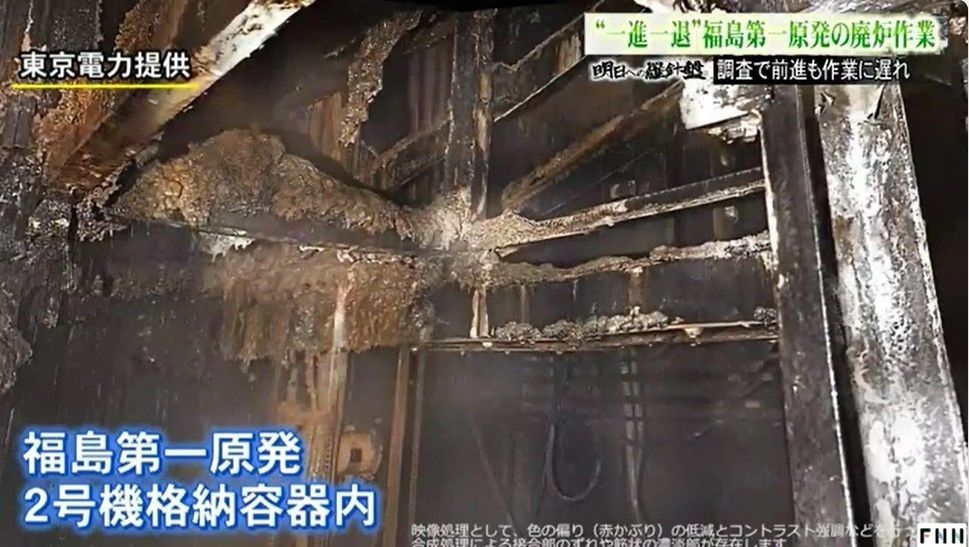
Nuclear debris retrieved from Fukushima reactor weighs 0.7 gram, (Just 880 tons to go)
Japan Times 9th Nov 2024
The nuclear fuel debris collected on a trial basis from a crippled reactor at the Fukushima No. 1 nuclear power station weighs 0.7 gram, Tokyo Electric Power Company Holdings said Friday.
The collected substance will be analyzed at four facilities, including the Japan Atomic Energy Agency, for research toward full-scale extraction of nuclear fuel debris from reactors at the Tepco plant in Fukushima Prefecture…………………..
The company plans to spend the next few days preparing for the transportation of the fuel debris to the four facilities.
The four facilities will share the nuclear fuel debris and analyze its components and hardness over several months to a year.
TEPCO collected the debris from the No. 2 reactor Thursday, about two months after the trial work was launched Sept. 10. It was the first time that fuel debris has been removed from a damaged reactor at the Fukushima No. 1 plant.
A total of about 880 tons of nuclear debris, a mixture of melted fuel and reactor parts, is believed to remain in the No. 1 to No. 3 reactors………
https://www.japantimes.co.jp/news/2024/11/09/japan/fukushima-tepco-nuclear-debris/
The Guardian view on Trump’s planet-wrecking plans: the UK government’s resolve will be tested

The new president’s disruptive policies will challenge Sir Keir Starmer’s green goals. But with strong leadership he could enhance Britain’s global influence.
Donald Trump’s electoral earthquake in America will complicate Sir Keir Starmer’s plans. Nowhere will the shock of Mr Trump’s win be more intensely felt than in environmental policy. His stance on climate – advocating a US exit from the Paris climate agreement and rallying behind “drill baby drill” – is more disruptive than constructive. This should concentrate Sir Keir’s mind as he heads to Cop29, the UN’s annual climate summit, in Baku, Azerbaijan.
At last year’s conference, world leaders agreed to “transition away” from fossil fuels in a just and orderly manner for the first time. Mr Trump, however, dismisses the climate crisis as a hoax. With this year likely to be the hottest on record, the devastating effects of global heating are undeniable, as extreme weather batters the planet. Mr Trump may ignore the facts, but the trail of climate-related chaos and destruction speaks for itself.
This ought to steel the prime minister’s resolve. Mr Trump’s plan to give the US an advantage in world trade through tariffs will complicate Labour’s goals of greening the economy, producing zero-carbon electricity, and cutting energy prices. The worst move Sir Keir could make would be to listen to rightwing voices arguing that if other nations are dropping green commitments, so should Britain. That would be a serious misstep, as leadership on climate not only reduces Britain’s carbon emissions but builds strategic alliances around the globe.
Mr Trump’s trade war threatens to disrupt supply chains, hike costs, jeopardise Britain’s green transition and stall its growth. His push for higher Nato defence spending could, in the UK, divert public funds from environmental initiatives. But this misses the point: Britain’s growth will be turbocharged by embracing green energy, leveraging its strengths in areas like offshore wind. Plus, most voters see a green shift as a path to lower energy costs and a stronger economy – a cause Sir Keir would be smart to champion.
The prime minister should double down on the plans of his energy secretary, Ed Miliband, rather than waver in the face of Trumpian pressure that prioritises short-term gains over a cleaner future. Mr Trump’s stance may also soften. He wants to gut Joe Biden’s Inflation Reduction Act and eliminate its clean tech subsidies. Yet most investment under the act has flowed to red and swing states in America’s south and midwest that voted for Mr Trump. Republican leaders in those states have vowed to protect these projects.
The profits of Elon Musk’s electric vehicle company Tesla would gain under Mr Trump’s deregulatory agenda. Mr Musk was $26bn richer the day after Mr Trump won. That reveals how the world’s richest person’s wealth is tied to political forces undermining green protections. Once a critic, Mr Musk now cosies up to Mr Trump. The quid pro quo is clear: Mr Trump, who once mocked electric cars, pandered to Mr Musk, telling a rally in August: “I’m for electric cars … because Elon [Musk] endorsed me.”
Mr Trump’s absence from future Cop meetings would be a mixed blessing. On one hand, he would hinder proceedings rather than help them. But having Mr Trump in the room might be preferable to him causing trouble from the outside. With some European leaders backing off green leadership due to domestic challenges, and others likely to follow Mr Trump’s lead, Sir Keir has a chance to step up on the world stage. This is a popular position at home. It would also be welcomed by his embattled counterparts on the continent – and beyond.
Clean Energy Community Mobilizes as Trump Rises, Supporters Embrace Project 2025
Energy Mix 8th Nov 2024, Primary Author: Mitchell Beer
As leaders, citizens, and climate and energy practitioners around the
world absorb the prospect of a second Donald Trump term in the White House,
two overlapping realities are beginning to emerge.
The next U.S. government will be determined to reverse and defeat efforts to get climate change under control and speed up the shift to a clean energy economy. And the
response is already taking shape—from industries and technologies that
are far more advanced and entrenched than they were eight years ago, and
from an international community that is determined to keep the transition
going, with or without the next Trump administration at the table.
How those two forces collide will largely determine how badly the U.S. falls
short of its 2030 emission reduction target under the Paris climate
agreement, and how much is left of the already-diminished prospect of
meeting the global goal of holding average global warming to 1.5°C…………. https://www.theenergymix.com/clean-energy-community-mobilizes-as-trump-rises-supporters-embrace-project-2025/
Micro-reactor developer optimistic about connecting South Wales project by 2027
08 Nov, 2024 By Tom Pashby
The CEO of a micro nuclear reactor developer aiming to build in Wales this
decade has told NCE he is confident that grid connection reforms will help
keep his company’s ambitious plans on schedule.
Last Energy is a developer of micro-reactors, which fall within the overall category of
small modular reactors (SMRs). The firm is hoping to build and commission
four 20MW reactors in South Wales by 2027.
Details of its Prosiect Egni Glan Llynfi project in Bridgend County were released last month and raised eyebrows. Last Energy calls it, in English, the Llynfi Clean Energy Project
and is proposed on the site of the former coal-fired Llynfi Power Station
which was in operation from 1951 to 1977.
The SMR designs in Great British
Nuclear’s competition are subject to a generic design assessment (GDA) by
regulators of the UK nuclear sector. This allows the regulators to assess
the safety, security, safeguards and environmental aspects of new reactor
designs before site-specific proposals are brought forward.
Jenner said Last Energy is not going through the generic design assessment approach. He
said the ONR “stated that that’s not absolutely essential”. “It’s
one route you can take. We are going straight to the site licensing
route,” he said. “We are linking our project and our design straight to
our project in this case, is Llynfi in South Wales, so you go through the
same rigor, but it’s linked to a site.
” Even with all the benefits for
rapid deployment, the 2027 commission date seems ambitious. Jenner said
Last Energy had not commenced any works at the site yet. “When we expect
to is something that we are still working through the timeline on in our
discussions with the ONR (Office for Nuclear Regulation),” he said.
New Civil Engineer 8th Nov 2024,
https://www.newcivilengineer.com/latest/interview-micro-reactor-developer-optimistic-about-connecting-south-wales-project-by-2027-08-11-2024/
Donald Trump can’t stop global climate action. If we stick together, it’s the US that will lose out

Bill Hare, Guardian 7th Nov 2024, https://www.theguardian.com/commentisfree/2024/nov/07/donald-trump-cant-stop-global-climate-action-if-we-stick-together-its-the-us-that-will-lose-out
How damaging this presidency is to the planet depends very much on how other countries react. There’s no time to waste.
Donald Trump can’t stop global climate action. If we stick together, it’s the US that will lose out
Bill Hare
How damaging this presidency is to the planet depends very much on how other countries react. There’s no time to waste
Thu 7 Nov 2024 09.34 AEDTShare209
Donald Trump’s re-election to the White House is a major setback for climate action but ultimately it’s the US that could end up losing out, as the rest of the world will move forward without it.
The US is the world’s biggest economy and its second biggest emitter. Positive US engagement on climate has been crucial to landmark leaps forward, like getting the Paris agreement over the line, and just last year committing to transitioning away from fossil fuels.
The US missing in action in the latter half of this critical decade for climate action is nobody’s idea of a good outcome.
President-elect Trump has promised to leave the Paris agreement and reports have emerged that he could be thinking of pulling out of the underlying United Nations framework treaty on climate change. But we’ve been here before and the truth is that a second Trump presidency can’t stop climate action, just like his denial of human-induced climate change won’t spare the US from its impacts.
The energy transition is now well under way. The economics of renewable technologies are so attractive that they have become an energy juggernaut. Since the Paris agreement was signed in 2015, global investment in clean energy has increased by 60%.
Nearly US$2tn a year is now invested in clean energy projects, almost double that spent on new oil, gas and coal supply. Before the pandemic, this ratio was closer to 1:1. The US added 560 gigawatts of renewable capacity in 2023. That’s about six times the size of Australia’s entire electricity capacity, added in just one year.
Domestically, Joe Biden’s Inflation Reduction Act has set wheels in motion for climate investment that will be hard, and politically unpopular, to undo. Famously, no Republicans voted for the legislation but red states have been the main beneficiaries of the money, projects and jobs it has created. House Republicans have even pushed back against their peers to protect some of the act’s clean energy tax credits.
Climate impacts are accelerating in pace and scale that is untenable to ignore. Hurricanes Helene and Milton, supercharged by climate change, are expected to cost more than US$50bn. Fires in California, heatwaves in the sunbelt states, and flooding in the US South are wreaking huge damage on Americans. Last year a poll showed a majority of them feel that climate change is already causing serious effects.
None of this stops the day Trump re-enters the White House.
Internationally, we’ve been in this position before. In 2001 George W Bush quit the 1997 Kyoto deal. Last time Trump was in power, he left the Paris agreement, albeit for a short time. I don’t want to downplay the impacts of Trump, or the Project 2025 agenda to which he has been linked, but climate action didn’t stop then and it will not stop now.
Other players, notably China, are increasingly moving into a leadership position on the issue, because of the strategic policy and economic interests it advances. The European Union is moving ahead with its green economic development agenda despite a rightward shift in the balance of power across the EU27 – with action on the climate emergency driving the economic development needed for this region of 350 million people.
The US, if Trump does enact the changes he has campaigned on, will find itself falling behind on new technologies and markets.
How damaging the second Trump presidency is to climate action depends very much on how other countries react. If many follow Trump in either rolling back – or slowing down – their action, the damage will be severe, long-lasting and difficult to overcome.
On the other hand, if countries stick together and, as they should, deepen their commitments aligning with the Paris agreement’s 1.5C limit, the damage will be significant but not severe.
In Australia we’re on the frontline of climate impacts and damages. The Great Barrier Reef has suffered enormous damage with increasingly frequent bleaching. Forests in Western Australia have experienced browning and dieback at an unprecedented scale due to extended drought and heat.
We know that the climate crisis and its impacts on our neighbours is one of our most serious security threats – although it’s not one that our government wants to particularly talk about.
The Australian government, especially given its intention to host COP31, must play a strong diplomatic role to help ensure the fallout from the second Trump presidency is limited, and that international domestic action everywhere else continues to move ahead.
This requires leadership. The government must step up and work with other like-minded countries to bring together a coalition prepared to move forward on climate. And it needs to move forward itself.
There is no time to waste on this. COP29 starts in Baku in a few days and real leadership will be needed urgently to maintain the momentum needed to get agreement on the difficult issues that need to be solved to maintain action globally.
Bill Hare, a physicist and climate scientist, is the chief executive of Climate Analytics
The death of Karen Silkwood—and the plutonium economy

The vision first created during World War II—and fostered with tens of billions of dollars of public funds—to establish nuclear power plants fueled by plutonium started to take on a nightmarish quality.
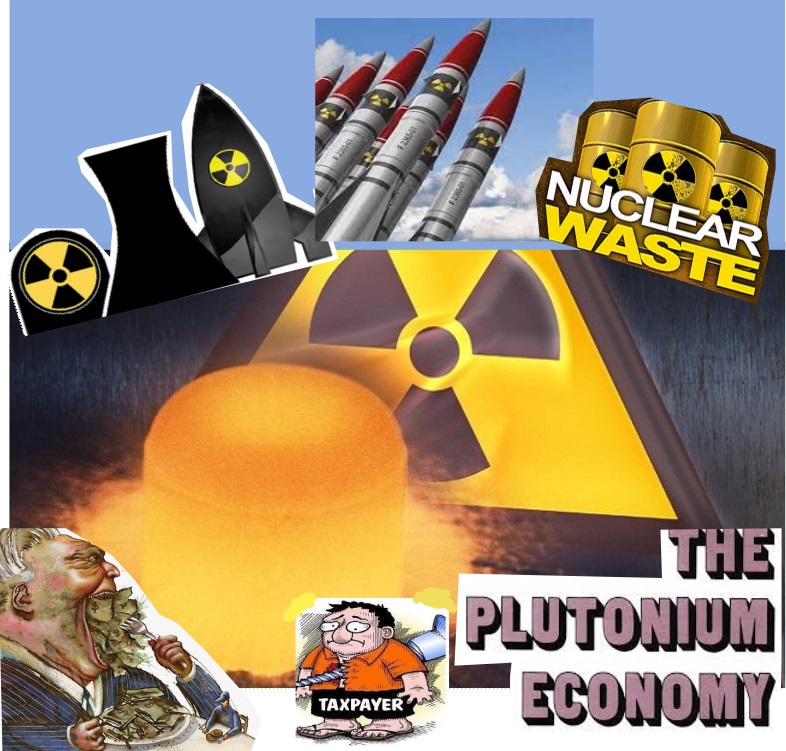
Within the next 10 years following the Indian nuclear explosion and Karen Silkwood’s death, the US Congress pulled the plug on the Liquid Metal Fast Breeder Reactor project, ending the Atomic Energy Commission’s vision of a plutonium economy, and the Supreme Court provided a little bit of justice for Karen’s parents and children, upholding a jury decision that for the first time cast aside the legal shield of the federal government protecting the nuclear industry.
Bulletin, By Robert Alvarez | November 8, 2024
On the evening of November 13, 1974—that is, 50 years ago—Karen Silkwood was driving to a meeting with a New York Times reporter and an official of the Oil, Chemical and Atomic Workers (OCAW) union. Her car flew off the road and hit a culvert on a lonely highway in western Oklahoma, killing her instantly. Karen was a union activist working as a technician at a plutonium fuel fabrication plant in Cimarron, Oklahoma owned by the Kerr-McGee Corp.
Several days before her death, Silkwood’s apartment was purposefully contaminated with highly toxic plutonium—which she had no access to—from the nuclear plant where she worked. Because of her activism, the company had put her and her roommates under constant surveillance. Documents about problems at the plant that two witnesses had seen before Silkwood’s fateful drive were missing. An independent investigation found evidence that her car was run off the road—contradicting official conclusions.
Karen became a whistleblower in large part because Kerr-McGee never bothered to tell workers that microscopic amounts of plutonium in the body can cause cancer. Karen became alarmed after dozens of workers, many fresh out of high school, had breathed in microscopic specks of plutonium and were required to undergo a risky procedure (chelation) to flush the radioactive contaminant from their bodies. It’s a procedure that can, even if successful in removing contaminants from the body, harm the kidneys.
Between 1970 and 1975, two metric tons of weapons-usable plutonium were shipped by truck from the Hanford nuclear production complex in Washington state to the Kerr-McGee plant in Oklahoma, where the plutonium was to be mixed with uranium and placed into 19,000 stainless steel fuel rods. At the time of Karen’s death, the Atomic Energy Commission found that about 40 pounds of plutonium had gone missing—enough to fuel several atomic bombs.
Since then, numerous books, articles, documentaries, and a critically acclaimed Hollywood motion picture have focused on the circumstances surrounding Silkwood’s death. My late wife and I were engaged in efforts for nearly a decade to achieve justice for her parents and children; those efforts were chronicled in some detail in Howard Kohn’s 1981 book, Who Killed Karen Silkwood? Was this an unfortunate accident, or was Karen Silkwood run off the road and killed to stop her from revealing dark secrets? After more than 40 years, the definitive answers to these questions remain unavailable.
The beginnings of the Silkwood saga. Karen Silkwood’s death heralded an end of America’s romance with the atom as a source of limitless cheap energy. There was no doubt on the part of the AEC, then the dominant force behind US energy policy, that commercial nuclear power would expand so rapidly and widely that by the end of the 20th century, the world would exhaust its supplies of uranium. If nuclear power was to thrive thereafter, according to AEC doctrine, a new generation of reactors fueled by plutonium extracted from spent nuclear fuel would have to be built. This new generation of so-called “breeder” reactors held the promise of producing vast amounts of cheap electricity while producing up to 30 percent more plutonium than they consumed. It turned out that the AEC’s nuclear power growth projection was off by an order of magnitude. Even today, world uranium supplies remain more than sufficient to fuel existing and reasonably contemplated commercial power plants.
Were it not for my wife, Kitty Tucker, and our friend, Sara Nelson, the death of Karen Silkwood would have been erased from public memory, like a sand painting blown away by the wind. I am proud to have played a supporting role, working with Karen’s parents and congressional staff, raising funds, reviewing technical documents, helping with the news media, cooking a lot of meals, and recruiting expert witnesses for the trial of a lawsuit over Silkwood’s death that would unfold in the spring of 1979.
Working with little and often no financial resources but a lot of grit, Kitty and Sara organized a national campaign that led to a congressional investigation revealing that Karen’s concerns over nuclear safety at the Kerr-McGee plant were more than justified. The congressional investigation exposed an FBI informant with a long history of spying on US citizens and revealed that enough plutonium to create several nuclear weapons was missing from the plant. These findings set the stage for a lawsuit organized on behalf of Karen’s parents and children.
The nine-week trial before a federal court jury in Oklahoma City resulted in a landmark jury decision that held Kerr-McGee liable for contaminating Silkwood and her home and awarded her estate a multimillion-dollar verdict. But the path to that verdict was long and uncertain and often disorganized and contentious, a David-and-Goliath story that ran from a near-commune of a house in a leafy portion of the District of Columbia through a variety of congressional offices and investigators and into the pages of Rolling Stone magazine. Along the way, a lot of young and idealistic lawyers and activists—led by Kitty and Sara—worked, mostly for free, to make sure Karen Silkwood’s death was not brushed under a bureaucratic rug and forgotten. I feel lucky to have been one of them.
………………………………………………………………………………………………………………………………………………………………… Kitty’s dogged research found that Silkwood was justified in being outspoken in her struggle to stop constant plutonium leaks and worker exposures at the Cimarron, Okla. Kerr-McGee plant. She and several other co-workers suffered from repeated plutonium exposures while on the job. Between 1971 and 1975, in fact, contamination reports show that at least 76 workers were exposed to plutonium at the Cimarron plant,[1] some more than once.[2] About a third of the exposed workers inhaled enough plutonium to require emergency treatment with experimental chelating drugs to help flush the radioactive metal out of the body. By comparison, during that same period, less than one percent of 3,324 employees at the Energy Department’s Rocky Flats nuclear weapons plant in Colorado[3]—which processed tens of tons of plutonium per year and became notorious for its poor plutonium-handling practices—required this extreme emergency measure.[4]
Kerr-McGee’s role in the plutonium economy. Long a leader of domestic uranium mining for US nuclear weapons, Kerr-McGee was among the first corporations to get in on the ground floor of the US government’s push to establish a plutonium fuel economy. The Atomic Energy Commission’s vision for such an energy economy was outlined in 1970 by its chairman, Glenn Seaborg, who discovered plutonium 30 years earlier. By the end of the 20th century, Seaborg estimated, an enormous expansion of nuclear power plants would have all but exhausted world uranium reserves, and new US reactors would require 1,750 tons of plutonium. This would be more than 66 times the amount of this deadly nuclear explosive in today’s worldwide nuclear weapon stockpiles.[5]
Kerr-McGee came in with a low bid to design and operate one of two of the first privately owned plutonium fuel plants that would handle tons of this fissile material. The Kerr-McGee facility was engineered to extract plutonium nitrate liquid from spent nuclear fuel generated at Hanford’s material production reactor and sent by guarded trucks to the Cimarron, Oklahoma plant. Once there it underwent 14 complex processing steps. The first blended liquid plutonium with uranium. The blended material was then sent to a furnace where it was dried into a powdered oxide. The powder was then heated, compressed, and ground into pellets. The pellets were then placed into stainless-steel rods, after which the ends of the rods were welded shut. All told, some 19,000 of these fuel rods were shipped back to Hanford, where they were used in experiments at the Fast Flux Test Facility (FFTF) and another research reactor. These reactor experiments were aimed at the development of the first large-scale liquid metal fast breeder reactor (LMFBR), to be built along the Clinch River near the government’s Oak Ridge nuclear site in eastern Tennessee.
It turned out that Kerr-McGee cut corners at the expense of the health and safety of its workers from the outset of its operation. The company squeezed in as much equipment as possible into its facility, a space about half the size of a typical high-school gymnasium, leading to spills that were often difficult to clean up. Miles of pipes in the cramped workplace were so close together and poorly routed that they would not fully drain, creating excessive radiation levels[6] in the plant.
Cramped piping also made it difficult to account for the plutonium carried through them, which was classified by the government as a Category I strategic special nuclear material—that is, material that “in specified forms and quantities, can be used to construct an improvised nuclear device capable of producing a nuclear explosion.”[7]
Gloveboxes—the laboratory workstations with gloves in their transparent walls, so workers could manipulate plutonium without coming into direct contact with it—became a major source of contamination because the type installed by Kerr-McGee used plastic seals that US weapons plants had long known could degrade and leak. Also, there were few contained connections between gloveboxes, so workers had to transfer radioactive materials in the open, creating greater risks of contamination. The ventilation systems did not permit rooms in the facility to be isolated from one another to minimize the spread of contamination when it occurred. Even the plant’s radiation air filters were configured in a way that made them difficult to replace.[8]
As substandard facilities led to contamination, Kerr-McGee failed to inform workers that plutonium can cause cancer. Managers often claimed that it was harmless. “There has been no lung cancer caused by plutonium exposure,” William Utnage, the plant designer, told employees. “From human experience to date, we have nothing to worry about.” Based on numerous animal studies, the Atomic Energy Commission considered plutonium to be a potent carcinogen.
Read more: The death of Karen Silkwood—and the plutonium economyTurnover was high at the Kerr-McGee Cimarron plutonium plant, with an average of 90 people out of the plant’s total workforce of 150 quitting each year.[9] AEC inspections found that the company could not keep accurate track of radiation doses, making it difficult if not impossible to know the frequency and severity of exposures. Given the need to constantly replace three out of five workers every year, many people were hired fresh out of high school, provided minimal training, and sent on the line to operate a high-hazard nuclear facility.
After being repeatedly exposed to plutonium at the plant that required often painful scrubbing of her skin, Karen Silkwood began documenting dangerous practices at the plant, including the doctoring of X-rays of fuel rod welds by a technician who used a felt-tip pen to hide defects shown in the X-rays.
Days before she died in the car crash, plutonium contamination was found in the home that Silkwood shared with her boyfriend, Drew Stephens, and roommate, Sheri Ellis. The highest concentrations were in lunch meat in her refrigerator and on the toilet seat. Karen, Drew, and Sheri were soon flown to Los Alamos Laboratory, where it was determined that Karen had sustained a significant dose of plutonium in her lungs. Subsequent laboratory analyses concluded that the plutonium in her home came from a batch at the plant to which she did not have access. These revelations all happened within the few days before her fatal drive that night of November 13, 1974.
Congress takes interest. In a way. Just five months before Karen Silkwood’s death, India conducted its first nuclear weapon test; it involved a bomb fueled with plutonium extracted from spent fuel produced by Canadian nuclear reactors. Growing concern in the US Congress about the thought of plutonium circulating in world commerce focused attention on the missing plutonium from the Kerr-McGee plant where Silkwood had worked. Although the amount of the unaccounted-for material was less than a tenth of a percent of the 2.2 tons handled at the plant, it was enough to fuel as many as four nuclear weapons. The Silkwood case also led to greater congressional scrutiny of how the government accounted for and safeguarded its stocks of nuclear materials.
…………………..In the spring of 1975, with our infant daughter Amber in a stroller, my wife Kitty and Sara Nelson met with Tony Mazzochi, legislative director of the Oil Chemical and Atomic Workers (OCAW), and his union colleague Steve Wodka. Both had worked closely with Karen Silkwood in support of efforts to prevent Kerr-McGee from decertifying the union and to strengthen worker safety. The night Silkwood died, Wodka was in a hotel room waiting with New York Times reporter David Burnham for Karen to show up. Shortly after that meeting, Kitty and Sara were recruiting a legal team, led by Daniel Sheehan, to take this case into federal court, on behalf of Karen’s parents.
……….. As I began my work at EPC, one of my first tasks was to serve as a representative on Capitol Hill for Bill and Meryl Silkwood, Karen’s parents. Deeply upset by the suspicious death of their daughter, they approached us in the late fall of 1975 seeking help………………………….. Among the initial appointments I set up for them on Capitol Hill was one in the high-security offices of the Joint Committee on Atomic Energy on a top floor of the US Capitol, accessed by a special elevator. After we went over numerous safety concerns about the Kerr-McGee plant, we were given a polite but frosty response by the committee’s staff director, who curtly advised Bill to go back home and write a letter to his congressman.
The response came as no surprise. Kerr-McGee founder Robert S. Kerr held sway over atomic energy matters as a US senator from the late 1940s until he died in 1963. In 1948, the year Robert Kerr was elected to the U.S. Senate, Kerr-McGee became the first oil company to take advantage of the uranium boom, opening mines on the Navajo reservation to take advantage of the US government’s lucrative price guarantees. By 1954, the company dominated the US uranium market.
By the summer of 1975, Kitty and Sara had collected 8,500 signatures from NOW members and others petitioning Sen. Abraham Ribikoff, chair of the US Senate Committee on Governmental Affairs, to launch an investigation into the circumstances surrounding Karen Silkwood’s death.
On the anniversary of Silkwood’s death—November 13, 1975—during a congressional recess, several NOW members pressed Ribikoff in his home state of Connecticut. Six days later, Ribikoff and his Senate colleague Lee Metcalf of Montana met with a large delegation including Karen’s parents, Kitty, Sara, newly elected NOW President Eli Smeal, religious advocates, and me. Also joining the meeting were Peter Stockton, on loan from Michigan Congressman John Dingell’s staff, and Win Turner. Ribicoff quickly agreed to an investigation and passed the baton to Senator Metcalf……………………………………
In addition to raising serious questions about the investigation of the accident that killed Silkwood, Newman and Stockton revealed that 40 pounds of plutonium was missing and unaccounted for at the Kerr McGee plant. The AEC failed to successfully black out this discrepancy from the document Newman obtained under the Freedom of Information Act. Twenty years later, after the Cimarron plant was dismantled, only 20.2 pounds were recovered from its pipes, leaving enough missing plutonium to fuel two Nagasaki-type atomic bombs.
Turner and Stockton now had a congressional green light to press the Energy Research and Development Administration, the Nuclear Regulatory Commission and especially the FBI for their investigative documents covering the Silkwood case…………………………
………………………….. By this time, pressures were mounting for Turner and Stockton to back off investigating Silkwood’s death. Republican staff on the Governmental Affairs Committee blocked travel funds needed to interview key officials. Turner had to prevail on a less-than-enthusiastic Senator Metcalf to intervene. Eventually, Stockton prevailed on Dingell to pay for his trip to Nashville to try to gain greater cooperation from Srouji.
Shortly thereafter, Metcalf dropped the investigation into Silkwood’s death,[10] but Dingell picked up the ball, thanks in large part to his trust in Stockton, and held two public hearings that showed the disturbing lack of safety working at the plant.
………………………………………..Under the threat of being held in contempt of Congress, Srouji turned over documents she claimed to have obtained from the FBI. The documents indicated that the FBI’s investigation of events surrounding Silkwood’s death was superficial. Most conspicuous by its absence was any documented effort by Olson and the FBI to address the AEC’s concern that Kerr McGee could not account for about 40 pounds of plutonium.[12]
The Silkwood lawsuit begins. By the fall of 1976, congressional investigations had run their course, leaving Karen’s parents only with the option of going to court. ………………………………………..
The complaint had three basic components: Kerr McGee was liable under state law for the contamination of Karen Silkwood in her home; Kerr McGee violated Silkwood’s civil rights to travel on the highway; and finally Kerr McGee conspired to violate Silkwood’s civil rights. It turned out that the contamination of Karen’s home with plutonium from the plant became the anchor for the lawsuit………………………………………………………………………………………………………..
Bill Paul, Kerr McGee’s lead attorney and former president of the Oklahoma Bar Association, seemed determined to stop the case from going to trial by proving we were “outside agitators” in a conspiracy, supposedly run by Ralph Nader and the Communist Party, to stop nuclear power in the United States……………………………………………………… Through the efforts of investigative reporter Howard Kohn and his wife and assistant Diana, Rolling Stone made the Silkwood case a major investigative focus and played an important role in raising funds for the lawsuit.[15]
………………………………………………………………………….As trial approached, Danny and his investigators tried to shine a light on efforts by Kerr-McGee to spy and intimidate Silkwood, possibly to the point of running her off the road, and the FBI’s efforts to conceal Kerr McGee’s wrongdoings. Even though Danny and his colleagues found a considerable amount of evidence to back these claims, the federal judge on the case, Frank Thies, ruled that conspiracies to violate Karen Silkwood’s civil rights were not covered by the law. This left the legal liability against Kerr McGee for contaminating Silkwood in her home as the only issue to be argued in court.
………………………………………………………………………..Kitty and I moved out to Oklahoma City and watched the 47-day trial unfold as Gerry Spence masterfully took apart Kerr-McGee’s defense. Bill Paul, Kerr’s McGee’s lead attorney, had not faced a seasoned court roombrawler like Gerry Spence before. From the outset, Spence, with his large-brimmed cowboy hat sitting on the table and cattle rancher demeanor, and his co-counsel, the much shorter, frizzy-haired Arthur Angel, created a “David vs Goliath” atmosphere. Ranged against them were a half dozen defense attorneys in three-piece suits who immediately became known as the “men in grey.”
After 43 witnesses gave testimony, the case went to the jury, and on May 18, 1979, the jury rendered its verdict. Bill and Merle Silkwood sat beside Kitty and our 4-year-old daughter, Amber. Dean McGee, the president and co-founder of the Kerr-McGee Corp., and leaders of the Oklahoma State Legislature were also present to hear the jury find Kerr McGee liable for $505,000 in actual damages and $10 million in punitive damages. On January 11, 1984, the US Supreme Court upheld the jury’s verdict, but allowed Kerr-McGee to contest the punitive damages in another trial. Not wanting to go through another lengthy trial Karn’s family agreed to a $1.38 million setlement.
Even so, the lawsuit set an important precedent that federal regulation of nuclear safety did not shield nuclear facilities from being held accountable under state tort laws.
The end of the plutonium economy. A highly eventful year followed Karen’s death; those events would impact the future of nuclear energy around the world.
In May 1974, India shocked the world by detonating a nuclear weapon underground in the remote desert region of Rajasthan. Called the “Smiling Buddha,” the weapon was fueled by plutonium produced in a reactor provided by Canada that used heavy water supplied by the United States from the Savannah River Plant, a nuclear weapons material production facility in South Carolina. India extracted the plutonium from spent reactor fuel at a reprocessing plant built with the assistance of the United States and France. The Indian weapons experts who designed Smiling Buddha were trained by the Soviet Union.
India declared its weapon test a “peaceful nuclear explosion.” Between 1961 and 1975, the United States and the Soviet Union set off 35 and 124 “peaceful” nuclear detonations, respectively, in a quest to dig channels, recover minerals, excavate tunnels for highways, store oil and gas, and build dams. Undeterred by the radiological problems peaceful nuclear explosions would cause, the United States actively promoted their use, which made sure that other countries would follow, as an integral part of the “peaceful” uses of nuclear power allowed under the 1970 Nuclear Non-Proliferation Treaty.
In 1976, then-President Gerald Ford responded, suspending reprocessing of spent nuclear fuel to recover plutonium in the United States. The next year, President Jimmy Carter converted the suspension into a ban, issuing a strong international policy statement against establishing plutonium as fuel in global commerce. As the US government continued to refuse to support reprocessing of nuclear fuel, US utilities with nuclear power plants opted to support underground disposal of spent fuel.
The vision first created during World War II—and fostered with tens of billions of dollars of public funds—to establish nuclear power plants fueled by plutonium started to take on a nightmarish quality. Within the next 10 years following the Indian nuclear explosion and Karen Silkwood’s death, the US Congress pulled the plug on the Liquid Metal Fast Breeder Reactor project, ending the Atomic Energy Commission’s vision of a plutonium economy, and the Supreme Court provided a little bit of justice for Karen’s parents and children, upholding a jury decision that for the first time cast aside the legal shield of the federal government protecting the nuclear industry.
Eventually, Kerr-McGee’s destructive practices caught up with it. In April 2014, after fraudulently trying to avoid paying for the cleanup of the massive environmental damage it had wrought throughout the United States, Kerr-McGee entered into a $5.5 billion settlement with the US Justice Department. Kerr-McGee is now a bankrupt legacy of the atomic age, a relic of a plutonium economy that never came to be in the United States.
Notes…………………………………………………………………………………. more https://thebulletin.org/2024/11/the-death-of-karen-silkwood-and-the-plutonium-economy/
Nuclear sector’s views on second Trump administration mixed as Rogan interview raises questions

Donald Trump enacted pro-nuclear policies during his first term and supported an “all-of-the-above” energy policy during the campaign, but some advocates fear a “divide between words and actions.”
UTILITY DIVE, By Brian Martucci, Nov. 8, 2024
Dive Brief:
- President-elect Donald Trump in August vowed to “approve new drilling, new pipelines, new refineries, new power plants [and] new reactors” on “day one” of his administration.
- But Trump has more recently sounded skeptical about federal backing for large-scale nuclear builds like Vogtle, which he said in an Oct. 25 interview with podcaster Joe Rogan “get too big, and too complex and too expensive,” raising questions about his second administration’s willingness to support the industry.
- The nuclear sector has mixed views on the incoming administration’s potential support, with some expressing optimism that Trump would build on pro-nuclear policies enacted during the Biden and first Trump administrations and others concerned about a pullback in federal funding for advanced nuclear development.
Dive Insight:
The second Trump administration is likely to “pursue an overall domestic energy agenda focused on energy production and dominance in the United States” but may not continue the Biden-Harris administration’s “massive appropriations” to the nuclear sector, American Nuclear Society Director of Public Policy John Starkey said.
At least one prominent Trump ally, environmental lawyer and former presidential candidate Robert F. Kennedy Jr., has an anti-nuclear track record. Kennedy, a Trump ally who is expected to have an official role in the incoming administration, fought for years to close New York’s Indian Point nuclear plant. More recently, he has voiced opposition to federal nuclear energy subsidies.
“We should have no subsidies … all the companies should internalize their costs in the way that they internalize their profits,” Kennedy told Tesla CEO and fellow Trump backer Elon Musk in an online discussion last year.
But the first Trump administration was broadly supportive of the U.S. nuclear industry. It provided billions in loan guarantees to facilitate construction of Plant Vogtle units 3 and 4; supported the failed Carbon Free Power Project at Idaho National Laboratory, a proposed 462-MW plant that would have used NuScale’s small modular reactor technology; and advanced the pro-nuclear Partnership for Transatlantic Energy Cooperation, the Trump presidential campaign said in 2023.
……………………………………………………………………………………………………………………….But the incoming administration’s likely focus on reducing federal discretionary spending — Musk called for at least $2 trillion in spending cuts last month after Trump in September floated his appointment to a new “government efficiency commission” — “is a concern for a lot of potential customers” for advanced nuclear, said Jessica Lovering, co-founder and executive director of the Good Energy Collective, a pro-nuclear advocacy group.
…………………………….In addition, Trump has vowed to repeal Inflation Reduction Act tax credits for electric vehicles, offshore wind and other cleantech sectors. But the production tax credit benefiting many existing nuclear generators could be more durable given its bipartisan origins, Constellation Energy CEO Joe Dominguez suggested Monday on the company’s third-quarter earnings call.
……………………….. utilities are unlikely to invest in new large light-water reactor construction during the second Trump term without further federal policy support………………… https://www.utilitydive.com/news/nuclear-energy-sector-mixed-views-second-trump-administration-joe-rogan/732407/
Report Details Israel’s Ethnic Cleansing Campaign in Beit Lahia, Northern Gaza

There is no longer a single house people can live in, and the Israeli military fires artillery rounds to ensure any remaining civilians leave
by Dave DeCamp November 6, 2024, https://news.antiwar.com/2024/11/06/report-details-israels-ethnic-cleansing-campaign-in-beit-lahia-northern-gaza/
A report from the Israeli newspaper Haaretz published on Wednesday detailed the situation in Beit Lahia, a city in northern Gaza near the Israeli border where Israeli forces are implementing an ethnic cleansing campaign.
At the beginning of October, Israel ordered hundreds of thousands of Palestinians living in northern Gaza to head south. Many ignored the order since there was nowhere safe to go, and the Israeli military focused its renewed assault on the north on Beith Lahia and neighboring Beit Hanoun and Jabalia, where it imposed a full siege to starve out civilians.
The Israeli military has said it forcibly expelled 55,000 Palestinians from the Jabalia refugee camp, and it has no intention of allowing them back. According to Haaretz, only a few thousand civilians remain in Beit Lahia and Beit Hanoun.
“There is no intention of allowing the residents of the northern Gaza Strip to return to their homes,” IDF spokesman Brig Gen Itzik Cohen told reporters on Tuesday.
The Haaretz reporters traveled to Beit Lahia and al-Atatra, a neighborhood northwest of the city, and described the destruction they saw. “In [al-Atatra] and Beit Lahia, there isn’t a single house that people can return to and live in. The area looks like it was hit by a natural disaster. There are no civilians to be seen among the ruins,” the report says.
As an attempt to remove any remaining civilians, the Israeli military fires artillery into Beit Lahia at night. “Those who want to return can’t do so, because the army prevents it. The bottom line is that it makes no difference what the IDF calls its actions. The army has begun the stage of cleansing the northern Strip while it prepares to hold onto the area for a long time to come,” the report reads.
Israeli media has reported that the Israeli military is carrying out a version of the “general’s plan,” an outline for ethnic cleansing drawn up by retired IDF generals. The plan calls for the complete evacuation of all Palestinian civilians from northern Gaza to below the Netzarim Corridor, a strip of land controlled by the Israeli military. Under the plan, if civilians don’t leave, they are to be treated as combatants and killed either by military action or starvation.
While the Israeli military claims its cleansing campaign is about removing Hamas, the IDF commander in charge of Beit Lahia, Col. Yaniv Barot, acknowledged they found no significant militant infrastructure in the area. “Barot says his mission is to continue to locate and eliminate terror infrastructure and Hamas activists. But he says that in the course of the most recent operation, no underground infrastructure, heavy war materiel or weapons production sites were found,” the report says.
The Haaretz report said the activity on the ground proves that the Israeli military is bisecting northern Gaza, potentially to pave the way for the construction of Jewish settlements, an idea strongly supported by many Israeli ministers and members of the Knesset.
The Biden administration has claimed it opposes any implementation of the “general’s plan” and the advancement of settlements but has continued to provide military aid for the ethnic cleansing campaign.
This year ‘virtually certain’ to be hottest on record, finds EU space programme

Guardian 7th Nov 2024, https://www.theguardian.com/environment/2024/nov/07/this-year-virtually-certain-to-be-hottest-on-record-finds-eu-space-programme
It is “virtually certain” that 2024 will be the hottest year on
record, the European Union’s space programme has found. The prognosis
comes the week before diplomats meet at the Cop29 climate summit and a day
after a majority of voters in the US, the biggest historical polluter of
planet-heating gas, chose to make Donald Trump president.
Trump has described climate change as a “hoax” and promised to roll back policies
to clean up the economy. The report found 2024 is likely to be the first
year more than 1.5C (2.7F) hotter than before the Industrial Revolution, a
level of warming that has alarmed scientists. “This marks a new milestone
in global temperature records and should serve as a catalyst to raise
ambition for the upcoming climate change conference,” said Dr Samantha
Burgess, deputy director of the Copernicus Climate Change Service.
Minimal role for nuclear in UK government agency’s Clean Energy plan
NFLA 6th Nov 2024 https://www.nuclearpolicy.info/news/minimal-role-for-nuclear-in-government-agencys-clean-energy-plan/
The Nuclear Free Local Authorities have noted that a report from Labour’s new National Energy System Operator (NESO) just out identifies a miniscule contribution from nuclear in Britain’s future clean energy mix.
Clean Power 2030 highlights the priorities for the new agency and two primary pathways – one with and one without a flexible contribution from biomass, hydrogen and Carbon Capture and Storage – to achieve a clean power network by the end of this decade.
In a network generating 143 gigawatts (GW) through a mix of renewable technologies, nuclear is only earmarked to provide a supplement of 4.1 GW.
The report calls for a tripling in offshore wind generation from 15 to 43 – 50 GW, a doubling in onshore wind from 14 to 27 GW, and a tripling of solar panel generation from 15 to 47 GW.
NESO also emphasises the need to dramatically increase battery storage capacity from 5 GW to over 22 GW, to increase long-duration storage capacity from 3 to 8 GW, and to invest significant sums to quickly roll out the necessary enhanced transmission system to support the transition of heat, industry and transport to electrification[i].
The derisory contribution from nuclear is clearly a sop to the nuclear industry and unions, and a means to retain the necessary transferable knowledge to maintain Britain’s nuclear arsenal.
It is calculated by assuming that one reactor at Hinkley Point C will come on-line by 2030 and that an existing Advanced Gas Cooled reactor plant and Sizewell B remain in operation[ii].
Generation from Hinkley’s second reactor will come sometime beyond that date, and any deployment of Small Modular Reactors and development of Sizewell C remains uncertain.
Commenting NFLA Chair Councillor Lawrence O’Neill said: “NESO recognises that a clean power future means our reliance upon electricity generated by renewables. Renewable generation can be delivered quicker and cheaper, without risk or radioactive contamination, deliver many new jobs, and provide this nation and its people with homegrown energy security.
“Not so long ago there was much talk of the need for nuclear power as a baseload, but in this report, this myth is destroyed as the contribution of nuclear power is identified as marginal. Its inclusion in the mix is clearly them a sop to the nuclear industry and unions, and a means to retain the necessary transferable knowledge to maintain Britain’s nuclear arsenal.
“Nuclear and clean power should not be seen in the same room for how can nuclear be clean when the National Audit Office has recently identified that to ‘clean up’ the radioactive legacy at Sellafield could cost taxpayers up to £253 billion in a mission lasting a further 100 years?”
“Nuclear and clean power should not be seen in the same room for how can nuclear be clean when the National Audit Office has recently identified that to ‘clean up’ the radioactive legacy at Sellafield could cost taxpayers up to £253 billion in a mission lasting a further 100 years?”
.For more information contact NFLA Secretary Richard Outram by email to richard.outram@manchester.gov.uk
[i] Page 18, https://www.neso.energy/document/346651/download
[ii] Page 28, Ibid
IEA: Countries not on course to double rate of energy efficiency improvement by 2030

Stuart Stone, 07 November 2024
Much faster progress on energy efficiency is needed to meet target set at
COP28 Climate Summit, International Energy Agency warns.
One year on from the historic pledge at COP28 to double the rate of energy efficiency
improvements by 2030, a new analysis has cautioned that signatories to the
agreement brokered in Dubai are not badly off track to meet the goal.
According to the International Energy Agency’s (IEA) Energy Efficiency 2024
report, global primary energy intensity, the overarching measure of energy
efficiency, is set to improve by around one per cent in 2024 – the same
rate as in 2023, and around half the average rate experienced between 2010
and 2019.
At the COP28 Climate Summit in Dubai last year almost 200
countries signed up to the UAE Consensus, which included headline targets
to treble renewables capacity and double the rate of energy efficiency
improvements by 2030, which would mean improving energy intensity from two
per cent in 2022 to four per cent by the end of the decade.
Business Green, 7th Nov 2024 https://www.businessgreen.com/news/4377058/iea-countries-course-double-rate-energy-efficiency-improvement-2030
Tepco removes [a tiny sceric]of nuclear fuel debris from Fukushima disaster site
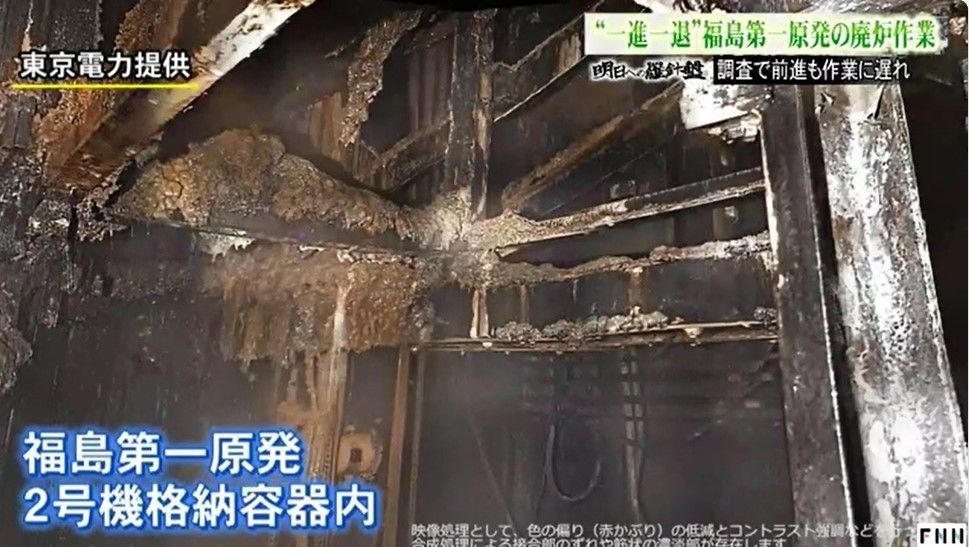
The whole process is expected to cost around ¥23 trillion ($149 billion) and take decades to complete. About 880 tons of radioactive material, like melted fuel and metal cladding, are said to be stuck at the bottom of the three reactors at the plant.
By Shoko Oda, Bloomberg, Japan Times 7th Nov 2024
https://www.japantimes.co.jp/news/2024/11/07/japan/tepco-debris-removal-demonstration/
Tokyo Electric Power Company Holdings says it has removed nuclear fuel debris left inside a reactor in a demonstration at its Fukushima No. 1 power plant, 13 years after a meltdown there.
Radioactive debris was removed from the Unit 2 reactor at the plant and was placed inside a sealed container for transportation, the power producer said in an emailed statement on Thursday.
The demonstration is part of Tepco’s cleanup plan for the site, after the March 2011 Great East Japan Earthquake and tsunami overwhelmed the facility and led to the worst nuclear disaster since Chernobyl. The whole process is expected to cost around ¥23 trillion ($149 billion) and take decades to complete. About 880 tons of radioactive material, like melted fuel and metal cladding, are said to be stuck at the bottom of the three reactors at the plant.
Tepco, which is decommissioning the plant alongside the government, is using a robotic arm that looks like a fishing rod with a claw grip to remove a small sample of the nuclear debris. The company had planned to remove just 3 grams as part of the demonstration.
The removed debris is set to be transported to Japan Atomic Energy Agency’s research facility for analysis, according to Tepco’s website.
The retrieval process began in September but faced challenges. A camera attached to the robotic arm stopped working, forcing Tepco to suspend the demonstration to replace the camera.
10 reasons why Donald Trump can’t derail global climate action, especially in Australia
Wesley Morgan & Ben Newell, Nov 8, 2024, https://reneweconomy.com.au/10-reasons-why-donald-trump-cant-derail-global-climate-action/
If you care about saving Earth from catastrophe, you might be feeling a little down about the re-election of Donald Trump as United States president. Undeniably, his return to the White House is a real setback for climate action.
Trump is a climate change denier who has promised to increase fossil fuel production and withdraw the US from the Paris climate deal, among other worrying pledges.
But beyond Trump and his circle, there remains deep concern about climate change, especially among younger people. Support for climate policy remains high in the US and around the world. And studies based on data from 60,000 people in more than 60 countries suggest individuals’ concern about climate change is widely underestimated.
So now is a good time to remember that efforts to tackle the climate crisis – both in Australia and globally – are much bigger than one man. Here are ten reasons to remain hopeful.
1. The global clean energy transition can’t be halted
The global shift to clean energy is accelerating, and Trump can’t stop it. Investment in clean energy has overtaken fossil fuels, and will be nearly double investment in coal, oil and gas in 2024. This is a historic mega-trend and will continue with or without American leadership.
2. Clean energy momentum is likely to continue in the US
Much of the Biden-era spending on clean energy industries went to Republican states and Congressional districts. New factories for batteries and electric vehicles will still go ahead under the Trump administration. After all, entrepreneur Elon Musk – who is expected to join the Trump administration – makes electric vehicles.
Some of Trump’s financial backers are receiving subsidies for clean energy manufacturing and 18 Republican Congress members have gone on record to oppose cuts to clean energy tax credits.
3. The US still wants to beat China
There is bipartisan concern in Washington about the US losing a technological edge to Beijing. China currently dominates global production of electric vehicles, batteries, wind turbines and solar panels. So internal pressure in the US to counter China’s manufacturing might will continue.
4. The federal government is not everything in the US
When Trump was last in power, he withdrew the US from some climate commitments, such as the Paris Agreement. But many state and local governments powered ahead with climate policy, and that will happen this time around, too. For example, California – the world’s fifth largest economy – plans to eliminate its greenhouse gas footprint by 2045. Even Texas, a Republican heartland, is leading a shift toward wind and solar power.
5. The US climate movement will be more energised than ever
During Trump’s first presidency, the US climate movement developed policy proposals for a “Green New Deal”. Many of these proposals were later implemented by the Biden administration. Initial reactions to Trump’s re-election suggest we can expect similar policy advocacy this time around.
6. Global climate cooperation is bigger than Trump
If Trump makes good on his promise to leave the Paris Agreement (again), he will only be leaving the room where the world’s future is being shaped. The US has walked away from global climate agreements before – for example, refusing to join the Kyoto Protocol in 2001. But other nations rallied for global action, and will do so again.
7. The rules-based global order will remain
When a nation walks away from rules that have been agreed after decades of negotiation, responsible countries must work together to bolster global cooperation. This applies to trade and security – and climate is no different.
As our Foreign Minister Penny Wong recently explained, Australia, as a middle power on the world stage, wants:
a world where disputes are resolved by engagement, negotiation and by reference to rules [and] norms […] We don’t want a world in which disputes are resolved by power alone.
8. Australian diplomacy matters
Australia is seeking to co-host the United Nations climate talks with Pacific island countries in 2026, and is emerging as the favourite. Hosting the conference, known as COP31, would be a chance for Australia to help broker a new era of international climate action, even if the US opts out under Trump.
Hosting the talks would also help cement Australia’s place in the Pacific and assist our Pacific neighbours to deal with the climate threat.
9. Australia’s clean energy shift is accelerating
About 40% of Australia’s main national electricity grid is powered by renewables and this is set to rise to 80% by 2030. Some states are surging ahead – for example, South Australia is aiming for 100% renewables by 2027.
Australians love clean energy at home, too. One in three households have rooftop solar installed, making us a world-leader in the technology’s uptake. Trump’s occupation of the Oval Office cannot stop this momentum.
10. Trump cannot change the science of climate change
The science is clear – burning coal, oil and gas fuels climate change and increases the risk of disasters that are harming communities right now. In Australia, we need look no further than the Black Summer bushfires in 2019-20 and unprecedented Lismore floods in 2022.
And the damage is happening across the globe. In October, twin hurricanes in the US – made stronger by the warming ocean – left a damage bill of more than US$100 billion. And hundreds of people died when a year’s worth of rain fell in one day in Spain last month.
On gloomy days – like, say, the election of a climate denier to the White House – it might feel humanity won’t rise to Earth’s biggest existential challenge. But there are many reasons for hope. The vast majority of us support policies to tackle climate change, and in many cases, the momentum is virtually unstoppable.
Wesley Morgan, Research Associate, Institute for Climate Risk and Response, UNSW Sydney and Ben Newell, Professor of Cognitive Psychology and Director of the UNSW Institute for Climate Risk and Response, UNSW Sydney
Nuclear lobby continues its infiltration of education

Alde Valley Academy students design Sizewell C power station
Alde Valley Academy students design Sizewell C power station. Students were
tasked with a unique challenge to design the planned Sizewell C nuclear
power station using digital Lego bricks.
East Anglian Daily Times 8th Nov 2024
1 This Month
To see nuclear-related stories in greater depth and intensity – go to https://nuclearinformation.wordpress.com/
31st January – Challenging the War Machine – a DECLASSIFIED UK SUMMIT




Website of the Week
Now until to February 10, 2026 Radioactive waste storage in France: the debate is finally open! How to participate?
-
Archives
- January 2026 (306)
- December 2025 (358)
- November 2025 (359)
- October 2025 (376)
- September 2025 (258)
- August 2025 (319)
- July 2025 (230)
- June 2025 (348)
- May 2025 (261)
- April 2025 (305)
- March 2025 (319)
- February 2025 (234)
-
Categories
- 1
- 1 NUCLEAR ISSUES
- business and costs
- climate change
- culture and arts
- ENERGY
- environment
- health
- history
- indigenous issues
- Legal
- marketing of nuclear
- media
- opposition to nuclear
- PERSONAL STORIES
- politics
- politics international
- Religion and ethics
- safety
- secrets,lies and civil liberties
- spinbuster
- technology
- Uranium
- wastes
- weapons and war
- Women
- 2 WORLD
- ACTION
- AFRICA
- Atrocities
- AUSTRALIA
- Christina's notes
- Christina's themes
- culture and arts
- Events
- Fuk 2022
- Fuk 2023
- Fukushima 2017
- Fukushima 2018
- fukushima 2019
- Fukushima 2020
- Fukushima 2021
- general
- global warming
- Humour (God we need it)
- Nuclear
- RARE EARTHS
- Reference
- resources – print
- Resources -audiovicual
- Weekly Newsletter
- World
- World Nuclear
- YouTube
-
RSS
Entries RSS
Comments RSS
 nuclear-news