Australia US Alliance: Is It Time to Rethink Our Loyalty?
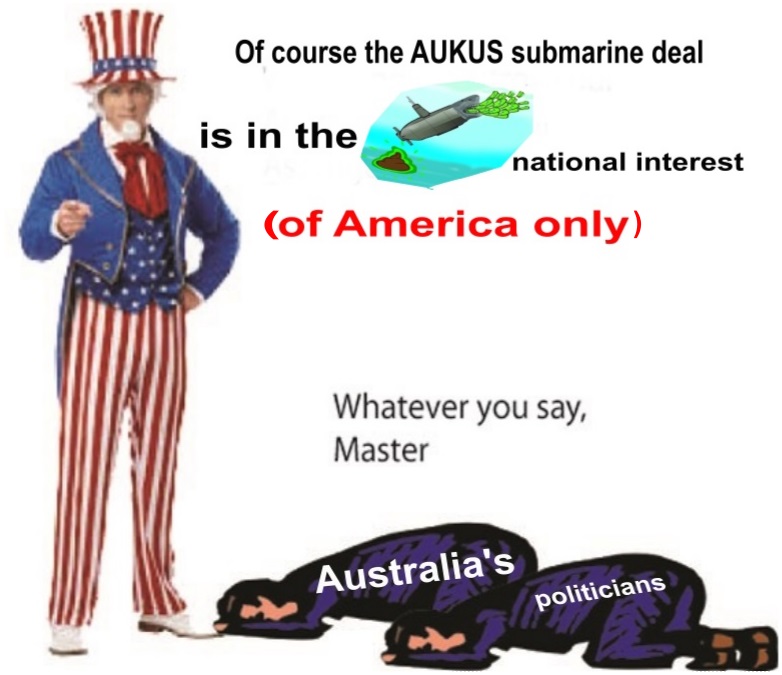
November 10, 2024, by: The AIM Network, By Denis Hay
Australia US alliance has costs. Learn how this impacts Australians and how reallocated funds could benefit citizens.
Introduction
Australia and the United States have been strategic allies for over seventy years. This Australia US alliance, often celebrated with the phrase “old allies and true friends,” is rooted in shared history and mutual defence agreements like the ANZUS Treaty.
However, many Australians are now questioning if the costs of this alliance—both in terms of military and economic impact—outweigh the benefits. This article explores the consequences of Australia’s allegiance to the U.S., the human costs of U.S. interventions, and how Australia’s financial resources might better serve its citizens’ social well-being.
1. The Costly Legacy of the Australia-U.S. Alliance
– Historical Overview: Australia US alliance began formally with the ANZUS Treaty in 1951. Through wars in Korea, Vietnam, Iraq, and Afghanistan, Australia has stood beside the U.S., incurring both financial costs and human losses.
– Casualty Estimates: The human toll of this alliance is staggering. The wars led by the U.S. have resulted in estimated casualties of over 200,000 American troops, 60,000 Australian troops, and millions of civilians globally. For instance, the Iraq War alone caused around 500,000 civilian deaths and displaced over 3 million people.
– The Refugee Crisis: The consequence of U.S.-led wars has been a refugee crisis affecting countless lives. Countries like Syria, Iraq, and Afghanistan have seen millions of citizens fleeing war zones, often with little support from Western nations. Australia’s involvement in these wars contributes to a moral responsibility for the refugee influx, yet the country struggles to support displaced persons adequately.
2. The Social Cost of Alliance-Bound Military Spending
– Military Expenditures at the Cost of Social Welfare: Australia’s defence budget has increased significantly, with estimates of $48.7 billion given in 2023. Much of this spending is tied to keeping military readiness to support the U.S. in conflicts. These funds could otherwise enhance healthcare, education, and housing for Australians.
Military funding without public transparency.
– Impact on Public Services: Redirecting even a part of the defence budget could fund initiatives like universal healthcare, improved mental health services, and housing for the homeless. For example, just 10% of the current defence budget could support building 10,000 public housing units annually or fund a significant expansion of mental health services for underserved communities.
– Consequences of Refugee and Displacement Crises: Australia’s participation in U.S.-led interventions indirectly contributes to refugee crises that strain social services and humanitarian aid. Public sentiment on immigration has also been affected, often creating divisive views within Australian society about who should be supported and who is viewed as a “burden.”
3. A Call for a More Independent and Socially Conscious Foreign Policy
Australia’s alliance with the United States has provided strategic support over the decades, yet many argue that it is time for Australia to pursue a foreign policy that is more reflective of its own interests, values, and the well-being of its citizens.
Despite growing public interest in a more independent, socially conscious approach, Australian governments have hesitated to diverge significantly from U.S.-aligned policies. This reluctance may stem from multiple factors:
1. Fear of Political and Economic Repercussions:
– Australian policymakers often cite strategic security concerns as a reason for adhering closely to U.S. foreign policy, fearing that any independence might jeopardize Australia’s access to American intelligence, technology, and defence resources.
– Economically, a close alliance with the U.S. bolsters trade relations and provides access to powerful American markets. For some politicians, the potential economic fallout of alienating a significant trading and security partner outweighs the call for a more independent stance.
2. Lack of Political Courage and Vision:
– Some critics argue that the Australian government lacks the courage to challenge established norms or take bold steps toward an independent foreign policy. This lack of vision may stem from a longstanding alignment with U.S. interests that has become entrenched in Australia’s political and diplomatic culture.
– Breaking away from such a powerful ally requires a willingness to redefine national priorities, a path that requires courage, strategic foresight, and often a willingness to face criticism from powerful interest groups invested in maintaining the alliance.
3. Disconnect from Public Opinion:
– Surveys show that Australians increasingly favour a more balanced, socially conscious approach to foreign policy, especially as they see the domestic impact of military spending and U.S.-influenced policies. However, successive Australian governments have often ignored this sentiment, raising questions about whether the government genuinely prioritizes the public’s voice in its decisions…………………………..
4. Influence of External Powers and Lobbying:
– Australian foreign policy decisions are also influenced by lobbying from powerful industries, including defence contractors and political think tanks with ties to the U.S. These entities often push for policies that favour a strong alliance with the U.S., as it aligns with their economic and strategic interests.
– The cumulative effect of these influences can stymie efforts for a more independent policy path, effectively sidelining the public’s desire for a foreign policy that prioritizes social well-being and peaceful diplomacy.
In summary, Australia’s reluctance to adopt a more independent, socially conscious foreign policy is a combination of economic dependency, political caution, and a systemic disconnect from the will of the people.
For Australia to shift toward a foreign policy that truly serves its citizens, it would require not only a realignment of political priorities but also a renewed commitment to placing the public’s interests and values at the heart of its foreign relations.
1. The Historical Basis of Australia-U.S. Relations and Its Human Cost……………………………………………….
2. Australia’s Position on U.S. Leaders and Policies
– Unquestioned Loyalty: Australian leaders often affirm support for U.S. presidents and foreign policies without critical evaluation. This approach reflects a hesitancy to challenge U.S. decisions even when they conflict with Australia’s best interests.
– Impact on Australian Sovereignty: The uncritical acceptance of Australia US alliance policies can undermine Australia’s autonomy. For example, Australia’s alignment with U.S. policies on China has strained trade relationships, affecting vital economic sectors like agriculture, tourism, and education. The result is a compromise of national interests to support a symbolic “alliance.”
3. U.S. Military Interventions, Global Casualties, and the Refugee Crisis
– Scope of U.S.-Led Wars: The U.S. has been involved in conflicts worldwide, from the Middle East to Latin America and beyond, often resulting in widespread devastation. These conflicts have had lasting impacts, including millions of civilian deaths and widespread destruction.
– The Refugee Crisis and Australia’s Responsibility: Australia’s support for U.S. interventions creates a moral obligation to help refugees from war-torn countries. However, current refugee policies fall short, leaving many displaced people without adequate support or protection. Accepting more refugees from conflict zones would reflect Australia’s commitment to international human rights and fulfill part of its alliance-driven responsibility.
4. Australia’s Role as a Supporting Partner and Its Consequences
– Participation in Conflicts and Reputational Impact: Australia’s involvement in U.S. wars affects its international reputation, often casting the country as a secondary player rather than an independent, neutral voice in global politics. This alignment can make Australia appear complicit in conflicts driven by U.S. interests, compromising its image as a peaceful nation.
– Economic and Social Impact on Australians: By aligning with U.S. defence priorities, Australia diverts significant public money to defence spending, reducing resources for vital services. Citizens bear the costs through reduced access to affordable healthcare, housing shortages, and an underfunded education system. The pressure to conform to U.S. policies, especially in the Indo-Pacific, risks escalating regional tensions that could directly affect Australians.
5. The Opportunity Cost: How Reallocating Military Spending Could Benefit Australians……………………………………………………………..
Rethinking Australia’s Foreign Policy Approach for the Future
As global dynamics shift, Australia faces a critical juncture in deciding how to position itself on the world stage. A key element of this decision lies in its relationship with China, a rapidly growing economic and political power in the Indo-Pacific region.
While the Australia US alliance has historically shaped much of Australia’s foreign policy, the rise of China presents an opportunity for Australia to pursue a balanced, independent approach that prioritizes regional stability and mutual benefit.
1. China’s Role as Australia’s Major Trading Partner:……………………………………….
2. Promoting Regional Stability and Security:
– As a dominant power in the Indo-Pacific, China’s influence on regional security is substantial. Building a constructive, diplomatic relationship with China could position Australia as a mediator and stabilizer within the region, promoting dialogue over conflict.
– With rising tensions between the U.S. and China, Australia has a unique opportunity to champion a foreign policy that values peace, cooperation, and shared interests, rather than one that escalates division. This approach would reduce the risk of Australia being drawn into potential conflicts that do not serve its national interests.
3. Economic and Diplomatic Benefits of Non-Alignment:………………………….
4. Preparing for a Multipolar World:
– The global power landscape is shifting from U.S.-led dominance to a multipolar world where countries like China, India, and emerging economies play a larger role. For Australia, recognizing and adapting to this reality is crucial for staying relevant and resilient in the international arena…………………………….
Conclusion
Australia US alliance has served strategic purposes in the past, but as global dynamics shift, it’s vital to reassess whether the benefits of this alliance outweigh the costs. The loss of lives, the displacement of millions, and the diversion of public money from critical social services highlight the urgent need for a foreign policy that prioritizes Australia’s long-term interests and humanitarian values.
By adopting a more independent stance, Australia could enhance the social well-being of its citizens and contribute to a more peaceful, stable global community. https://theaimn.com/australia-us-alliance-is-it-time-to-rethink-our-loyalty/
Hinkley Point C ‘using cheap foreign labour’, say striking workers.
Engineers claim colleagues brought in from outside the UK and EU are paid
less than half their wages.
EDF Energy is investigating claims that a
company in its supply chain is using cheap foreign labour to undercut
British engineers working on its Hinkley Point C and Sizewell C nuclear
power station projects.
The allegation was made by cabling and pipework
engineers who went on strike last week after claiming that they had not
received a pay rise in four years. They allege that since beginning their
dispute last year with Alten, their employer, which provides engineering
services for the projects, they have discovered that foreign colleagues
brought in from outside the UK and EU from places such as India and Nigeria
are being paid about half their wages.
Times 11th Nov 2024 https://www.thetimes.com/business-money/energy/article/hinkley-point-c-using-cheap-foreign-labour-say-striking-workers-g3gw20v65
Occupational exposure to radiation among health workers: Genome integrity and predictors of exposure

Mutation Research/Genetic Toxicology and Environmental Mutagenesis
Volume 893, January 2024, Hayal Çobanoğlu, Akın Çayır
Highlights
- •Significant increase of genomic instability biomarkers reflecting long term disease risk
- •Significant association between radiation exposure and NPB, and NBUD frequencies
- •Work-related parameters have the potential to explain increase of genomic instability
- •Higher risk of exposure in plain radiography field
Abstract
The current study aimed to investigate genomic instabilities in healthcare workers who may experience varying levels of radiation exposure through various radiological procedures. It also sought to determine if factors related to the work environment and dosimeter reading could effectively explain the observed genomic instabilities. Utilizing the cytokinesis-block micronucleus assay (CBMN) on peripheral blood lymphocytes, we assessed a spectrum of genomic aberrations, including nucleoplasmic bridge (NPB), nuclear budding (NBUD), micronucleus (MN) formation, and total DNA damage (TDD). The study uncovered a statistically significant increase in the occurrence of distinct DNA anomalies among radiology workers (with a significance level of P < 0.0001 for all measurements). Notably, parameters such as total working hours, average work duration, and time spent in projection radiography exhibited significant correlations with MN and TDD levels in these workers. The dosimeter readings demonstrated a positive correlation with the frequency of NPB and NBUD, indicating a substantial association between radiation exposure and these two genomic anomalies. Our multivariable models identified the time spent in projection radiography as a promising parameter for explaining the overall genomic instability observed in these professionals. Thus, while dosimeters alone may not fully explain elevated total DNA damage, intrinsic work environment factors hold potential in indicating exposure levels for these individuals, providing a complementary approach to monitoring.
Introduction
Ionizing and non-ionizing radiation constitute inevitable forms of environmental exposure, to which a substantial portion of the global population remains consistently subjected. Among those at heightened risk are individuals employed in radiology, who utilize radiation sources for both diagnostic and therapeutic procedures. More than 30 million medical radiology workers are exposed to low level of radiation worldwide [1], [2], which provides the opportunity to understand the health risks of chronic exposure to low-dose ionizing radiation (IR) [3].
It has been observed that there are increased risks for many cancer types, including skin, leukemia, breast, and thyroid, in medical radiology workers who started working before the 1950 s [4], [5], [6], [7], [8]. These results probably reflect higher occupational radiation exposure of medical radiology workers [5], [9]. Today, even if radiation exposure is less than in the past owing to technological advances and radiation safety measures [9], recent studies show that long-term exposure to low-dose IR may still be a significant health risk [10], [11], [12].
Introduction
Ionizing and non-ionizing radiation constitute inevitable forms of environmental exposure, to which a substantial portion of the global population remains consistently subjected. Among those at heightened risk are individuals employed in radiology, who utilize radiation sources for both diagnostic and therapeutic procedures. More than 30 million medical radiology workers are exposed to low level of radiation worldwide [1], [2], which provides the opportunity to understand the health risks of chronic exposure to low-dose ionizing radiation (IR) [3]. It has been observed that there are increased risks for many cancer types, including skin, leukemia, breast, and thyroid, in medical radiology workers who started working before the 1950 s [4], [5], [6], [7], [8]. These results probably reflect higher occupational radiation exposure of medical radiology workers [5], [9]. Today, even if radiation exposure is less than in the past owing to technological advances and radiation safety measures [9], recent studies show that long-term exposure to low-dose IR may still be a significant health risk [10], [11], [12].
Despite the efforts to minimize radiation exposure, radiation-exposed health workers may frequently encounter low levels of ionizing radiation due to various occupational factors, including excessive work hours, inadequate shielding in their work environment, a high volume of daily imaging procedures, and failure to employ personal protective equipment during imaging activities. Although traditional methods such as physical dosimeters and blood-based clinical assessments are routinely used to monitor worker health, these approaches possess limitations when it comes to assessing the long-term effects of low-dose radiation exposure. Consequently, it is imperative to implement more robust biomarkers to routinely monitor radiology workers………………………………………………………………………………………………………………………………… more Link: https://www.sciencedirect.com/science/article/abs/pii/S1383571824000020
Israel Keeps Finding New Ways To Play Victim While Committing Genocide
Caitlin Johnstone, Nov 10, 2024, https://www.caitlinjohnst.one/p/israel-keeps-finding-new-ways-to?utm_source=post-email-title&publication_id=82124&post_id=151441702&utm_campaign=email-post-title&isFreemail=true&r=1ise1&triedRedirect=true&utm_medium=email
Israel is really struggling with how difficult its present circumstances make playing the victim. It keeps having to invent new abuses to be victimized by like the imaginary Amsterdam “pogrom” and the fake mass rape narrative that surfaced months after October 7, because it can’t sit comfortably in the role of victimizer while on trial for genocide in international courts.
Playing victim is too deeply ingrained in the narrative control strategies of Israel and its apologists, so they have to keep coming up with new and innovative ways for Israel to be victimized even when it is very clearly the last state on earth who has any business being viewed as such.
We keep seeing the word “pogrom” used to refer to Israeli hooligans getting their asses kicked for obnoxious behavior in Amsterdam even as Israeli settlers keep committing textbook pogroms in the occupied West Bank.
Just a week ago armed Israeli settlers went on a violent rampage torching Palestinian people’s houses, vehicles and olive trees in order to terrorize them and drive them away. This is the exact type of behavior that the word “pogrom” has historically been used to describe, but you never hear that word used in the mass media to describe Israeli thuggishness. Instead we’re seeing it used to describe Israeli soccer hooligans getting beat up after they tore down Palestinian flags and sang chants about murdering children in Gaza.
So we’re seeing some good news and some bad news about Donald Trump’s potential cabinet picks when it comes to US warmongering and militarism.
The good news is that Trump has publicly ruled out giving psychopathic war hawks Nikki Haley and Mike Pompeo a role in his next administration, explicitly naming them in a post on Truth Social and saying they won’t be invited.
This announcement suggests that Trump is at least trying to win the favor of the more anti-interventionist faction of his base. Pundits like Tucker Carlson have been publicly crusading against both Haley and Pompeo throughout this election cycle, and I mention Carlson specifically because he reportedly has Trump’s ear and was believed to have played a role in talking Trump out of bombing Iran in 2019.
The bad news is that other professional warmongers appear to be working their way into the administration. Reports from both Bloomberg and Fox News say the horrible Mike Rogers is under consideration to be the next secretary of defense. The Ron Paul Institute’s Daniel McAdams has a good thread on Twitter calling Rogers “an utter warhawk neocon” who is “arguably worse than Pompeo and Rubio,” noting that Rogers has promoted insanely hawkish positions on Ukraine/Russia, Israel/Iran, and China.
This news, in addition to Trump’s selection of Iran hawk Brian Hook to help staff the incoming State Department, makes it clear that Trump could still easily wind up with a cabinet packed full of warmongering swamp monsters just like last time. Hopefully he keeps getting pressured not to do so.
In a new article on “the expanding ground occupation of the Gaza Strip by the IDF” about the way Israel has been carving up Gaza and seizing more and more territory, Israel’s Ynet News reports that far right elements within the Israeli government are simply waiting for the Israeli hostages held by Hamas to die so that their deaths can be used to justify continued occupation and the construction of Jewish settlements in Gaza.
It’s like a false flag conspiracy theory, except it’s definitely happening and is being done right out in the open, and is even being announced ahead of time.
Democrats: Oh no the right wing voters we again tried to win over voted Republican again and we lost again.
Leftists: So stop doing that and win over the left instead by promoting immensely popular social policies.
Democrats: No way man, if we do that we’ll lose.
‘Unaffordable, Undesirable and Unachievable’ – NFLAs welcome launch of academic papers exposing ‘nuclear fantasy’

The UK/Ireland Nuclear Free Local Authorities have welcomed the publication
earlier this month by two renowned academics and opponents of nuclear power
of reports exposing the folly of the Labour Government in pursuing an
energy future for Britain which embraces nuclear power.
Professor Andy Blowers OBE is an Emeritus Professor of Social Sciences with the Open
University; a former member of the Committee on Radioactive Waste
Management (CoRWM) and the Radioactive Waste Management Advisory Committee
(RWMAC); and is the author of The Legacy of Nuclear Power. Professor
Stephen Thomas is an Emeritus Professor of Energy Policy at the University
of Greenwich and the Editor-in-Chief of the journal Energy Policy.
Professor Thomas is also a member of the EPA Radiological Protection
Advisory Committee, which plays an advisory role to the Irish Government.
NFLA 8th Nov 2024 https://www.nuclearpolicy.info/news/unaffordable-undesirable-and-unachievable-nflas-welcome-launch-of-academic-papers-exposing-nuclear-fantasy/
A ‘Cop of peace’? How can authoritarian, human rights-trashing Azerbaijan possibly host that?
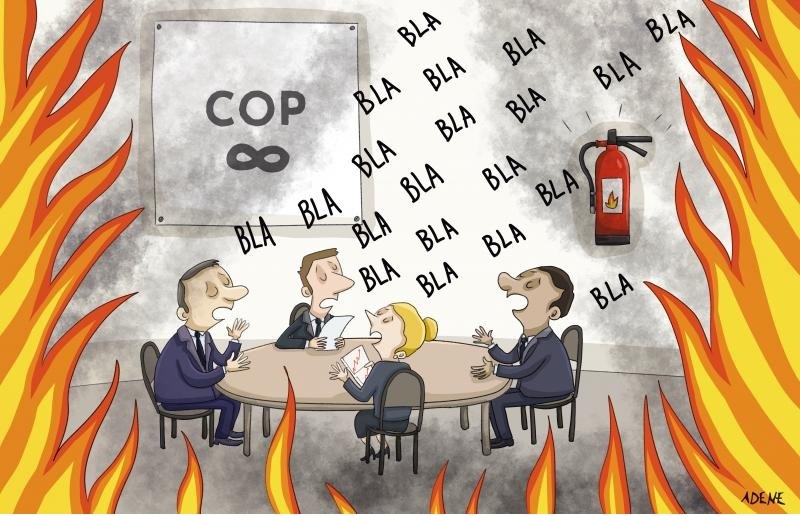
The ‘theme’ chosen for Cop29 must be some kind of dark joke. This summit, like those before it, is a mere act of greenwashing.
Greta Thunberg, Guardian, 11 Nov 24
During rapidly escalating climate and humanitarian crises, another authoritarian petrostate with no respect for human rights is hosting Cop29 – the UN’s latest annual climate summit that starts today and is being held after the re-election of a climate-denier US president.
Cop meetings have proven to be greenwashing conferences that legitimise countries’ failures to ensure a livable world and future and have also allowed authoritarian regimes like Azerbaijan and the two previous hosts – the United Arab Emirates and Egypt – to continue violating human rights.
Genocides, ecocides, famines, wars, colonialism, rising inequalities and an escalating climate collapse are all interconnected crises that reinforce each other and lead to unimaginable suffering. While humanitarian crises are unfolding in Palestine, Yemen, Afghanistan, Sudan, Congo, Kurdistan, Lebanon, Balochistan, Ukraine, Nagorno-Karabakh/Artsakh, and many, many other places, humanity is also breaching the 1.5C greenhouse gas emissions limit, with no signs of real reductions in sight. Instead, the opposite is taking place – last year, global emissions reached an all-time high. Heat records have been shattered, and this year is “virtually certain” to be the hottest year ever recorded, with unprecedented extreme weather events pushing the planet further into uncharted territory. The destabilisation of the biosphere and the natural ecosystems we depend on to survive is leading to untold human suffering and further accelerating the mass extinction of flora and fauna.
Azerbaijan’s entire economy is built on fossil fuels, with the state-owned oil company Socar’s oil and gas exports accounting for close to 90% of the country’s exports. Despite what it might claim, Azerbaijan has no ambition to take climate action. It is planning to expand fossil fuel production, which is completely incompatible with the 1.5C limit and the goals of the Paris agreement on climate change.
Many attenders of this year’s Cop are scared to criticise the Azerbaijan government. Human Rights Watch recently published a statement explaining how it couldn’t be certain that attenders’ rights to peacefully protest would be guaranteed. In addition, Azerbaijan land and sea borders will remain closed during Cop29, making it only possible to travel in and out of the country by air, which causes pollution and which many Azerbaijan citizens can’t afford. The reason given for closing borders at all Cops since the start of the Covid pandemic is to maintain “national security”, but I’ve heard many Azerbaijanis describe the situation as being “kept in a prison”.
The Azerbaijan regime is guilty of ethnic cleansing, humanitarian blockades and war crimes, as well as repressing its own population and cracking down on the country’s civil society. The independent watchdog Freedom House ranks the country as the least democratic state in Europe, with the regime actively targeting journalists, independent media outlets, political and civic activists, and human rights defenders. Azerbaijan also accounts for about 40% of Israel’s annual oil imports, thus fuelling the Israeli war machine and being complicit in the genocide in Palestine and Israel’s war crimes in Lebanon. The Azerbaijan-Israel ties are mutually beneficial as the majority of weapons used by Azerbaijan during the second Nagorno-Karabakh war and likely those used in the September 2023 military operation into the Karabakh region were imported from Israel.
The “Cop of peace” is one theme chosen for this year’s climate conference by the host, which wants to encourage states to observe a “Cop truce”. It is gut-wrenching, to say the least, to talk of global peace after the terrible human rights violations committed by Azerbaijan’s Aliyev regime against ethnic Armenians living in the Nagorno-Karabakh/Artsakh region. Furthermore, Azerbaijan is planning to greenwash its crimes against Armenians by building a “Green Energy Zone” on territories where the population has been ethnically cleansed.
How did this country get to host the climate summit? It was eastern Europe’s turn. But Russia vetoed EU member states, so the options were either Armenia or Azerbaijan. Armenia lifted its veto against Azerbaijan and supported its bid in exchange for a release of prisoners, although a large number of Armenian political prisoners are still being held. Last year, the regime critic Gubad Ibadoghlu was imprisoned after criticising Azerbaijan’s fossil fuel industry. Other political prisoners include peace activist Bahruz Samadov, ethnic minority researcher Iqbal Abilov, political activists Akif Gurbanov and Ruslan Izzatli and journalists.
The climate crisis is just as much about protecting human rights as it is about protecting the climate and biodiversity. You cannot claim to care about climate justice if you ignore the sufferings of oppressed and colonised people today. We cannot pick and choose whose human rights to care for, and who to leave behind. Climate justice means justice, safety and freedom for everyone.
During Cop29, the picture of Azerbaijan reported by the media will be a whitewashed and greenwashed version that the regime is desperate to portray. But make no mistake – it is a repressive state accused of ethnic cleansing.
We need immediate sanctions targeted against the regime and a halt to the import of Azerbaijani fossil fuels. Diplomatic pressure must also be put on the regime to release its Armenian hostages and all political prisoners – and ensure the right to a safe return for Armenians.
- Greta Thunberg is a Swedish activist and international climate crisis campaigner
When you combine AI and nuclear power, the results can be catastrophic

by Linda Parks, opinion contributor – 11/10/24, https://thehill.com/opinion/energy-environment/4981304-microsoft-ai-nuclear-power-dangers/?fbclid=IwY2xjawGeg21leHRuA2FlbQIxMQABHWYiopnuIePPG9Ljv_TROxe6zZNXuK_9Be67zrRjotECxbLEyeCYwMBE3A_aem_aflz3yBO4ySUH5GvKjedCQ
The recent news that Microsoft has made a deal to restart the Three Mile Island Nuclear Power Plant to run its AI data centers brings together two technologies that have each been described as having the potential for a “nuclear-level catastrophe.”
Putting aside whether AI is mature enough to be feeding it with astronomical amounts of our energy supplies, powering it with renewable energy is critical for our energy future and safety.
Mark Jacobson, director of Stanford’s atmosphere and energy program, finds that “Every dollar spent on nuclear is one less dollar spent on clean renewable energy and one more dollar spent on making the world a comparatively dirtier and more dangerous place, because nuclear power and nuclear weapons go hand in hand.”
It is a fallacy to think that nuclear power is reasonable when compared with renewable energy sources. In fact, nuclear energy and its carcinogenic radioactive waste is the most dangerous and fiscally risky energy option.
The deal that Gov. Gavin Newsom and California State Legislature struck with Pacific Gas and Electric to extend the life of its last nuclear plant, the Diablo Nuclear Power Plant, will saddle California ratepayers with some of the highest electricity rates in the nation for years to come. Yet such rate increases are unnecessary thanks to the state’s rapid transition to renewable energy and an estimated 13,391 MW of battery storage — well above the 2,200 MW produced by Diablo Canyon’s reactors.
Now is the time to be clear-eyed and double down on renewable energy. With the energy demands of AI increasing, other states are considering following the same expensive and dangerous path as Pennsylvania’s Three Mile Island Nuclear Power Plant, the site of the country’s worst commercial nuclear accident. Even with Microsoft’s investment, the deal is reliant on massive government subsidies. Without those government handouts, powering AI data centers with nuclear power doesn’t pencil out.
Nuclear plants cost billions of dollars to build and billions of dollars to upgrade. That’s why the nuclear industry depends on tax dollars, tax credits (like Three Mile Island), and ratepayers to pay higher electricity bills.
That same transfer of costs onto the backs of the public occurs if there’s a nuclear accident. A “nuclear-level catastrophe” at a nuclear power plant would leave the public with uninsurable property loss, astronomical clean-up costs and, more importantly, the very real human costs — particularly to young children, who are most vulnerable to radiation. The lack of any solution for nuclear waste disposal further extends the risk of radiation exposure out tens of thousands of years into the future
When the safety of nuclear plants becomes questionable, like at Diablo Canyon (unknowingly built along active earthquake faults) and with Fukushima, Three Mile Island, Chernobyl and the Santa Susana Field Lab all happening in our lifetimes, it becomes abundantly clear that nuclear accidents happen. The fallout isn’t worth the risk.
Big tech needs to find more energy-efficient ways to run AI data centers, and direct its major energy investments, along with the government, to clean renewable energy that doesn’t make our world dirtier and more dangerous.
Linda Parks is on the board of Mothers for Peace, an organization committed to the decommissioning of the Diablo Nuclear Power Plant. She is executive director of Save Open-space and Agricultural Resources in Ventura County and is on the board of the Environmental Defense Center. She served on the Ventura County Board of Supervisors from 2003-2022 and was a mayor and councilmember of Thousand Oaks. While a supervisor, she chaired the Ventura County Regional Energy Alliance and was a founding member and vice chair of the Clean Power Alliance.
US F-15 Fighter Jets Arrive in Middle East as Part of Buildup Aimed at Iran
The US announced last week that it was sending additional military assets to the region for the ‘defense’ of Israelby Dave DeCamp November 7, 2024
By Dave DeCamp / Antiwar.com, https://news.antiwar.com/2024/11/07/us-f-15-fighter-jets-arrive-in-middle-east-as-part-of-buildup-aimed-at-iran/
The US military said Thursday that additional F-15 fighter jets arrived in the Middle East as part of a buildup meant as a threat to Iran as Tehran is vowing it will respond to Israel’s October 26 airstrikes on Iranian territory.
“Today, US Air Force F-15E Strike Eagles from the 492nd Fighter Squadron, RAF Lakenheath, England, arrive in the US Central Command area of responsibility,” US Central Command wrote on X.
The Pentagon announced last week that it was sending additional military assets to the region for the “defense” of Israel. CENTCOM said that B-52 bombers arrived in the region on November 2.
According to flight and satellite data, six US B-52 bombers are at al-Udeid Air Base in Qatar. Haaretz reported that the US F-15 fighter jets were being sent to Jordan. The Pentagon said it would also be deploying additional US Navy destroyers and tanker aircraft to the region.
Before the latest US deployments, the Pentagon sent a THAAD missile defense system and about 100 troops to Israel. The US assets in Israel and elsewhere in the region could become potential targets of Iranian missiles since the US is vowing to defend Israel.
Recent media reports have said Iran is planning to launch a major attack on Israel from Iraqi territory. Baghdad has denied the rumors, saying they’re “false pretexts” to justify aggression against Iraq.
Everybody Wants to Join BRICS
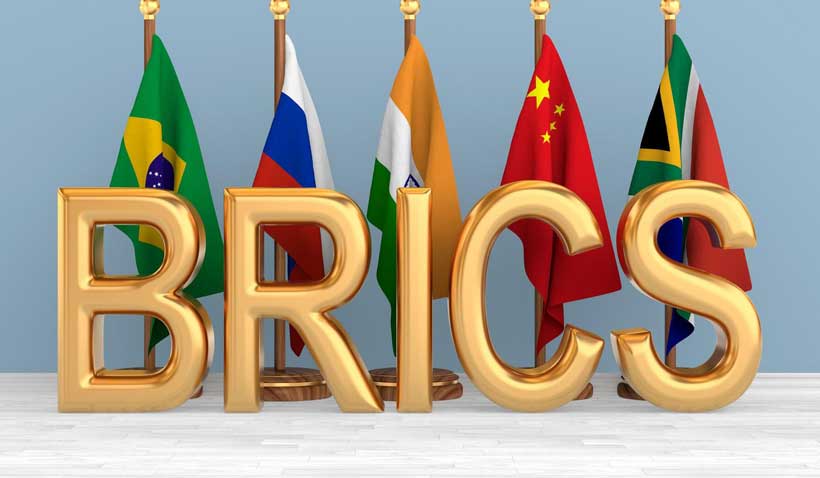
CounterPunch, November 9, 2024 Eve Ottenberg
If there’s one thing the recent BRICS summit in Kazan revealed, it’s that when you divide the world into the West and the Rest, the Rest is a lot bigger and quite alienated from the western oligarchy. Much of the Rest also wants to join BRICS. After all, it’s a good deal: A way to forge economic and political connections and to adopt sane economic policies, without a bully like Washington meddling in your affairs. What’s not to like? At a time when Europe has forgotten Bismarck’s motto – that the secret to success in politics is a good treaty with Russia – and no one in Washington ever heard of it, going back generations to archaic American lies about bolshevism, while this is the case in the west, much of the Rest has learned the value of such a treaty. And not just with Russia, with China and India as well.
After Kazan, BRICS now boasts nine members and 13 partner countries, all dedicated to multipolarity. Another key aim, according to Geopolitical Economy October 26, is fostering “alternative economic institutions that are more representative and democratic, not dominated by the western powers.” In other words, the Global South is sick of IMF and World Bank debt traps and sees BRICS as a convenient exit from what Bolivian president Luis Arce described in Kazan as “the tyranny of the dollar.” BRICS provides this hope because its members contain over 40 percent of Earth’s population, 30 percent of global oil production, and over one-third of world GDP (in purchasing power parity), reports Geopolitical Economy. G7 nations are much smaller, with “less than 10 percent of the world population and under 30 percent of GDP.” BRICS nations have apparently tired of the global aristocracy.
BRICS’ original five members are Brazil, Russia, India, China and South Africa. Its four new members are Egypt, Ethiopia, Iran and the United Arab Emirates. It recently accepted 13 partners – Algeria, Belarus, Bolivia, Cuba, Indonesia, Kazakhstan, Malaysia, Nigeria, Thailand, Turkey, Uganda, Uzbekistan and Vietnam. Argentina, under center-left president Alberto Fernandez 2023, accepted joining BRICS, but reactionary ruler Javier Milei was too busy destroying Argentina’s economy, which he has accomplished with remarkable speed, and he canceled the BRICS accession bid tout de suite. Meanwhile, Saudi Arabia, doubtless under intense pressure from Washington to spurn BRICS, remains firmly on the fence.
One word sums up Washington’s aversion to BRICS: de-dollarization. With Russia and China in the lead, BRICS encourages its members and partners to trade in local currencies, not, as previously, in dollars. This weakens the greenback’s position as the world reserve currency, and with enough of that, there could be serious repercussions here in what Fidel Castro called the heart of the empire. But it’s not just BRICS. Eighty nations have determined to conduct their trade in local currencies. Many of these are not even in BRICS – like lots in the Association of South East Asian Nations. Abandoning the dollar has, most unfortunately for us Americans, come to be viewed as a national security move.
De-dollarization, would not even be a thing, had not the geniuses in the Biden white house weaponized the American currency like no tomorrow. Between massive sanctions on anybody Washington doesn’t like and outright theft of foreigner’s financial assets stored in western banks, non-western money managers became a little, well, leery, of the Exceptional Empire’s previously accepted financial hegemony. So listen up, Washington: The U.S. has had a very nice deal with the dollar since the end of World War II, but now courtesy of BRICS, and more significantly, our own idiotic and near-sighted foreign economic policies, we glimpse the very beginning of the end. Maybe Trump’s vow to ditch sanctions makes sense?
After all, what have sanctions done for us lately besides backfire? …………………………………………….
BRICS is not going away. Neither is the G7. Nor, for the moment, is their adversarial relationship, but that could change. Remember, as Moon of Alabama posted October 25, “BRICS is a long-term project.” Realistically, despite the hype, as he observes, it won’t replace the dollar, nor is it a military alliance. As both MofA and Geopolitical Economy note, the truly eye-popping BRICS development occurred shortly before the summit. That was India abandoning its anti-China policies, which the U.S. had nurtured, and, per MofA “shunning U.S. attempts to make it a sidekick for U.S. policies in Asia.”
Asia Times elaborated October 24: “India and China have recently agreed to disengage from their prolonged border standoff in the western sector of the India-China Himalayan border on the sidelines of the 16th BRICS summit.” In other words, BRICS facilitated a gigantic step toward peace between two nuclear-armed nations. For that alone, humanity should be grateful to this institution, even if Washington isn’t.
But maybe it’s time for a different method from Inside the Beltway, one that is less arrogant and no longer demands allies approach it on their knees. The world is changing, but Washington remains frozen and indeed left behind in its post-1991 delusion as the unipolar global chieftain and its “my way or the highway” attitude to everything beyond its borders. This is simply no longer sustainable, just as, someday soon, the mega-brains in the white house may come to realize that supporting over 800 foreign military bases is unsustainable. Insanity can be temporary. Reason can regain lost ground. Let’s hope with Joe “We Rule the World” Biden’s departure from Washington, it becomes safe for rationality to return.
Eve Ottenberg is a novelist and journalist. Her latest novel is Booby Prize. She can be reached at her website. https://www.counterpunch.org/2024/11/08/everybody-wants-to-join-brics/
Poodles and puppet masters – Mutual Defence Agreement puts USA in charge of UK military policy

The Mutual Defence Agreement (MDA) of 1958 effectively ensures that the UK remains a nuclear weapon power by allowing the US to provide it with nuclear materials, including uranium and plutonium, nuclear weapons components, and submarine reactors. It also permits the sharing of staff and know-how between the two countries.
There will be no dispute mechanisms allowed. No parliamentary scrutiny. And it will not be subject to approval by the US congress.”
The Mutual Defence Agreement now permanently ties British nuclear weapon dependency to the United States, writes Linda Pentz Gunter
Remember the pet poodle that used to belong to US President George W. Bush? “I must correct you,” I hear you say. It was Scottish terriers that W had, not poodles.
Yes, but I refer here not to Barney and Beazley but to Bush’s third dutiful dog, Blair, as in Tony Blair, the contemporaneous British prime minister, who was routinely featured in cartoons as the compliant canine — specifically a poodle — glued to W’s side.
“I will be with you, whatever,” Blair had written to Bush in a confidential note eight months before the ill-fated invasion of Iraq, launched on the basis of exaggerated and downright false information.That declaration and other professions of poodlish loyalty, were revealed in the 2016 report issued by the Chilcot Commission examining events around the ensuing Iraq war.
“I express more sorrow, regret, and apology than you can ever believe,” was Blair’s response to the report’s findings. Based on his activities since then —which include serving as a well-paid advisor to corporate financial institutions, charging speaking fees as high as $300,000 a pop, and amassing a net worth of at least $60 million — no, we won’t ever believe it.
Perhaps Sir Keir Starmer, whose popularity continues to plummet, is also eagerly awaiting such post-prime ministerial plentitude. At least then, he will be able to pay for his own suitable suits.
But after winning the UK general election in July and duly ascending to US poodlehood, Starmer knew he needed to quickly mark some territory before the departure of the gray-muzzled mutt then occupying both the dog house and the White House.
In order to ensure that the so-called special relationship — the canine cordiale — between the UK and the US remained intact, Starmer orchestrated a fundamental change to a key joint defense policy, cunningly by-passing parliamentary oversight.
The Mutual Defence Agreement (MDA) of 1958 effectively ensures that the UK remains a nuclear weapon power by allowing the US to provide it with nuclear materials, including uranium and plutonium, nuclear weapons components, and submarine reactors. It also permits the sharing of staff and know-how between the two countries.
Thus far, a section of the MDA has required renewal by the UK parliament every ten years. Those key clauses were due to expire this December.
Britain is in possession of four Vanguard class attack submarines armed with American-made Trident II D-5 ballistic missiles carrying UK-made warheads. As long time British national security correspondent, Richard Norton-Tayor, explained in Declassified: “The MDA enables the US to provide Britain with nuclear weapons materials and know-how without which Trident would not be able to function.” It also makes the program affordable for UK coffers.
In a briefing put out by the British nuclear watchdog group, Nuclear Information Service, the MDA is described as “the treaty that governs the relationship between the nuclear weapons programmes of the United Kingdom (UK) and the United States (US), which is unique amongst nuclear armed states for the level of dependency and technical integration involved.”
Now the MDA will endure in perpetuity. That’s because the Starmer government skillfully avoided a vote on the lifting of the sunset clause by first introducing its amendment during parliamentary recess, thus guaranteeing six weeks of inaction, then setting the expiry deadline for October 23 during which politicians from both parties were consumed with party conferences and budget issues.
Consequently, the key amendments to the MDA slipped through without debate.
As NIS’s David Cullen summed it up, “The idea is to put this beyond democratic accountability in perpetuity.”
Specifically, the amended treaty contains three important clauses that leash the nuclear poodle tightly to its American owner. As reported in a debate in the British House of Lords, which did discuss the MDA renewal, can choose to oppose any changes, but has no actual jurisdiction over it, these are:
- Article 4 which makes the provisions on naval nuclear propulsion cooperation reciprocal and allows the UK to transfer technology to, and share information with, the US.
- Article 5 which removes the expiry provisions that relate to article III bis and allows for the MDA, as a whole, to remain in force on an “enduring basis”. As such, the agreement will not require renewal every ten years.
- Article 13 adds new final provisions to the agreement that will ensure that information, material or equipment shared or transferred under the MDA will continue to be protected should the agreement be terminated by either party in the future.
What this means in real terms, explained NIS’s Cullen at a recent conference held in London by the Campaign for Nuclear Disarmament, is that Rolls Royce parts “can be used in the next generation of US nuclear submarines. There will be no dispute mechanisms allowed. No parliamentary scrutiny. And it will not be subject to approval by the US congress.”
The amendment also increases the already considerable secrecy shrouding the precise language in the MDA. “Efforts to scrutinise this relationship are regularly deflected by the government under the guise of national security,” said outgoing CND general secretary, Kate Hudson, in a statement.
According to the NIS report, “no information abut plutonium transfers after March 1999 or transfers of HEU [highly enriched uranium] and tritium outside the three barter exchanges has been made public, and the MOD [Ministry of Defence] has rejected Freedom of Information Requests for information about more recent transfers.”
Likewise, “there is little information in the public domain about the quantity and nature of transfers of non-nuclear components under the MDA,” says NIS.
“This ‘special relationship’ tethers British military and foreign policy to Washington – and makes redundant the claim that Britain has an independent nuclear weapons system,” Hudson added. “Without US support, Britain would be unable to sustain its nuclear arsenal.”
But why the rush to do away with the renewal clause and preserve key terms of the agreement in aspic? The answer, it appears, was insurance, to make the treaty impervious to the bite of the orange attack dog then potentially poised to return to the White House. This was necessary, the argument went, because Donald Trump had already shown a predilection under his previous presidential term for shredding nuclear treaties.
Trump withdrew the US from the 1987 Intermediate-Range Nuclear Forces (INF) Treaty with Russia, a key instrument of global arms control, leaving Russia free to develop as many intermediate-range nuclear missiles as it wants and potentially triggering a new nuclear arms race.
Trump also tore up the Joint Comprehensive Plan of Action — or Iran nuclear deal — which, while still in place, at least allowed for independent verification and oversight of Iran’s civil uranium enrichment activities in exchange for sanctions relief. Iran has already said it has now enriched uranium above 60%, well within the weapons-usable range if not yet weapons-grade.
In January, Trump will indeed be US president again. Starmer has decided to remain as his nuclear lapdog. The MDA may be impermeable to MAGA meddling. But how else Trump may choose to use his UK nuclear proxy should fill all of us with dread.
Linda Pentz Gunter is the international specialist at Beyond Nuclear and writes for and edits Beyond Nuclear International. Her forthcoming book, Hot Stories. Reflections from a Radioactive World, will be published in the new year.
‘Horrific Reality’: Nearly 70% of UN-Verified Gaza Deaths Are Women and Children

The United Nations human rights office noted the “unprecedented levels of killings, death, injury, starvation, illness, disease, displacement, detention, and destruction” wrought by Israel’s 13-month onslaught.
Brett Wilkins, Nov 08, 2024, https://www.commondreams.org/news/how-many-women-and-children-have-died-in-gaza
Nearly 7 in 10 people killed by Israeli forces in Gaza during an earlier six-month period of the ongoing assault on the Palestinian enclave were women and children, the United Nations human rights office said Friday.
The U.N. Office of the High Commissioner for Human Rights (OHCHR) verified 8,119 of the more than 34,500 Palestinians killed by Israel Defense Forces (IDF) bombs and bullets between November 2023 and April 2024. Among those killed were 3,588 children and 2,036 women ranging in age from newborns to nonagenarians. Minors under the age of 18 made up 44% of the victims in the analysis.
The OHCHR report noted the “unprecedented levels of killings, death, injury, starvation, illness, disease, displacement, detention, and destruction” wrought by Israel’s onslaught, as well as the “wanton disregard” by Israeli forces and Hamas of international humanitarian law.
The analysis also highlights “the Israeli government’s continuing unlawful failures to allow, facilitate, and ensure the entry of humanitarian aid, the destruction of civilian infrastructure, and repeated mass displacement.”
“If committed as part of a widespread or systematic attack directed against a civilian population… these violations may constitute crimes against humanity,” OHCHR said. “And if committed with intent to destroy—in whole or in part—a national, ethnical, racial, or religious group, they may also constitute genocide.”
South Africa is leading a genocide case against Israel at the International Court of Justice (ICJ) in The Hague. On Thursday, Ireland became the latest of around 30 countries and regional blocs to announce its intent to intervene in the case on behalf of Palestine.
OHCHR found that 88% of the verified Palestinian fatalities from Israeli attacks on residential buildings were people killed in strikes that claimed at least five lives. In recent weeks, Israel’s renewed offensive in northern Gaza—which some experts believe is an attempt to ethnically cleanse the area by bombing and starving its people before forcibly expelling them to make way for Israeli recolonization—has wiped out a staggering number of civilians, including many women and children, in single strikes on homes, hospitals, and refugee camps.
“The high number of fatalities per attack was due to the IDF’s use of weapons with wide area effects in densely populated areas,” the analysis states, adding that some Palestinians may have been killed by errant projectiles launched by Hamas or other Gaza-based militants.
The new report also raises concerns over Isrsel’s forcible transfer of Palestinians, systematic attacks on medical workers, journalists, and reported use of white phosphorus munitions—which are banned in populated areas.
Israel has not yet responded to the OHCHR report but has previously said that it “will continue to act, as it always has done, according to international law.”
Since October 7, 2023, when Israeli forces launched their assault on the densely populated coastal enclave of 2.3 million people in response to the Hamas-led attack on Israel, the Gaza Ministry of Health and U.N. agencies say that more than 43,600 Palestinians have been killed and over 102,500 others wounded. More than 10,000 others are missing and believed dead and buried beneath the ruins of bombed homes and other structures.
Among those killed, say officials, are more than 18,000 children. Last month, the U.K.-based charity Oxfam International said that Israel’s yearlong assault on Gaza has been the deadliest year of conflict for women and children anywhere in the world over the past two decades.
The relentless death and destruction has caused the “complete psychological destruction” of Gaza’s youth, according to the charity Save the Children. The same has been said of many Gazans of all ages.
Last December, the U.N. Children’s Fund called Gaza “the world’s most dangerous place to be a child.” Earlier this year, U.N. Secretary-General António Guterres for the first time added Israel to his so-called “List of Shame” of countries that kill and injure children during wars and other armed conflicts.
The ICJ—which is a U.N. body—has issued three provisionsal orders in the ongoing genocide case, including directives for Israel to prevent genocidal acts, stop its assault on Rafah, and allow humanitarian aid into Gaza. Israel has been accused of flouting all three orders.
The trends and patterns of violations, and of applicable international law as clarified by the International Court of Justice, must inform the steps to be taken to end the current crisis,” U.N. High Commissioner for Human Rights Volker Türk said in a statement Friday.
“The violence must stop immediately, the hostages and those arbitrarily detained must be released, and we must focus on flooding Gaza with humanitarian aid,” he added.
Robert F Kennedy NOT a fan of nuclear power

RFK Jr. , Elon Musk talk nuclear energy, Nuclear Newswire, Fri, Jun 23, 2023
Environmental attorney Robert F. Kennedy Jr., the 69-year-old son of the late Senator Robert F. Kennedy, ……. has been voicing his views on a wide range of issues in numerous interviews and podcasts.
Kennedy spoke with tech mogul Elon Musk in one recent online discussion, a roughly two-hour livestreamed event hosted by Musk on the Twitter Spaces platform on June 5 (and later posted on YouTube)…………..
Nuclear talk: The exchange between Kennedy and Musk on nuclear (beginning at about the 1:18:30 time stamp in the YouTube video) began with Musk saying, “Let me ask, on the energy subject, what are your views on nuclear power?”
Kennedy responded with skepticism: “What I’ve always said . . . is I’m all for nuclear power if you can make it safe and if you can make it economical, and right now . . . it’s not me saying it’s unsafe, [but] the insurance industry regards this nuclear power as so unsafe that they will not give them an insurance policy.” Kennedy brought up the Price-Anderson Act, which, according to him, “absolves [the nuclear industry] from liability,” and he bemoaned the tritiated water storage at Fukushima before briefly mentioning Chernobyl.
Kennedy also commented on some rough numbers about the cost per gigawatt of energy, stating that solar and wind were far cheaper and that “no utility in the world will build a nuclear power plant unless it’s fully subsidized by the public.” He called himself a “free-market absolutist” and stated, “I believe that we should take the cheapest form of energy, that we should have no subsidies, no externalities, and all the companies should internalize their costs in the way that they internalize their profits. And that means the cost of pollution.”…………………………………………………………………… https://www.ans.org/news/article-5111/rfk-jr-elon-musk-talk-nuclear-energy/?fbclid=IwY2xjawGehSBleHRuA2FlbQIxMAABHT-HGrinPRkoU3frJBw1evDGFPdSFyBmZk8vtuLemFBBCEQ-K9szuImj4A_aem_7d-lnVYB-3kkYaLuSsS9fQ
UN nuclear head to visit Iran for talks on country’s nuclear program as next Trump presidency looms
VIENNA (AP) — The head of the United Nations’ nuclear watchdog said Sunday he will travel to Iran in the coming days to hold talks regarding the country’s nuclear program. The visit comes amid wider tensions gripping the Mideast over the Israel-Hamas war and uncertainty over how U.S. President-elect Donald Trump will approach Iran after his inauguration in January.
Specifically, the Director General of the International Atomic Energy Agency, Mariano Grossi, will have high level meetings with the Iranian government and will hold technical discussions on all aspects related to the joint statement agreed with Iran in March 2023.
It is intended as a path forward for cooperation between the IAEA and Iran on how to expand inspections of the Islamic Republic’s rapidly advancing atomic program.
The 2023 statement included a pledge by Iran to resolve issues around sites where inspectors have questions about possible undeclared nuclear activity, and to allow the IAEA to “implement further appropriate verification and monitoring activities.”
The meetings in Tehran will build on Grossi’s discussions with Iranian Foreign Minister Abbas Araghchi on the sidelines of the United Nations General Assembly in September, a statement by the IAEA said.
“It is essential that we make substantive progress in the implementation of the joint statement agreed with Iran in March 2023,” Grossi said. “My visit to Tehran will be very important in that regard.”
Iran is rapidly advancing its atomic program and continues to increase its stockpile of uranium enriched to near weapons-grade levels in defiance of international demands, according to recent reports by the IAEA.
Grossi, has warned that Tehran has enough uranium enriched to near-weapons-grade levels to make “several” nuclear bombs if it chose to do so. He has acknowledged the U.N. agency cannot guarantee that none of Iran’s centrifuges may have been peeled away for clandestine enrichment………………………………………………………………………………………………………………………………………
As Trump is to take office again in a few weeks, Iranians are divided on what his next presidency will bring. Some foresee an all-out war between Tehran and Washington, particularly as other conflicts rage in the region. Others hold out hope that America’s 47th president might engage in unexpected diplomacy as he did with North Korea. https://apnews.com/article/iaea-grossi-iran-nuclear-negotiations-efa8ad94a3424135eb21261cccaf4641
Climate talks to open in shadow of Trump victory

World leaders are set to arrive at a big annual UN climate meeting hoping
to rein in rising global temperatures, which are making deadly events like
the recent floods in Spain far worse.
A key aim at this year’s meeting in
Azerbaijan is agreeing on how to get more cash to poorer countries to help
them curb their planet-warming gases and to help them cope with the growing
impacts of climate change.
But the US election victory of Donald Trump – a
known climate sceptic – as well as wars and cost of living crises are
proving a distraction, and some important leaders are not attending. Hosts
Azerbaijan are also under intense scrutiny over their human rights record,
as well as accusations they are using the meeting to line up fossil fuel
deals.
BBC 8th Nov 2024 https://www.bbc.co.uk/news/articles/c2k0zd2z53xo
Trump planning to withdraw from Paris climate agreement
Donald Trump is preparing to withdraw from the Paris climate agreement
when he returns to office in January. The president-elect’s team has
already prepared an executive order that would see the US leave the
international treaty, which commits countries to cutting their greenhouse
gas emissions.
More executive orders have been prepared for Mr Trump to
sign when he re-enters the White House that would shrink the size of
national monuments to allow more drilling and mining, The New York Times
reports. It is one of the first signs of how Mr Trump plans to undo the
legacy of Joe Biden, who has frequently touted his administration’s green
credentials and spent billions of dollars on renewable energy projects.
Telegraph 9th Nov 2024,
https://www.telegraph.co.uk/us/politics/2024/11/09/trump-planning-withdraw-from-paris-climate-agreement/
1 This Month
To see nuclear-related stories in greater depth and intensity – go to https://nuclearinformation.wordpress.com/
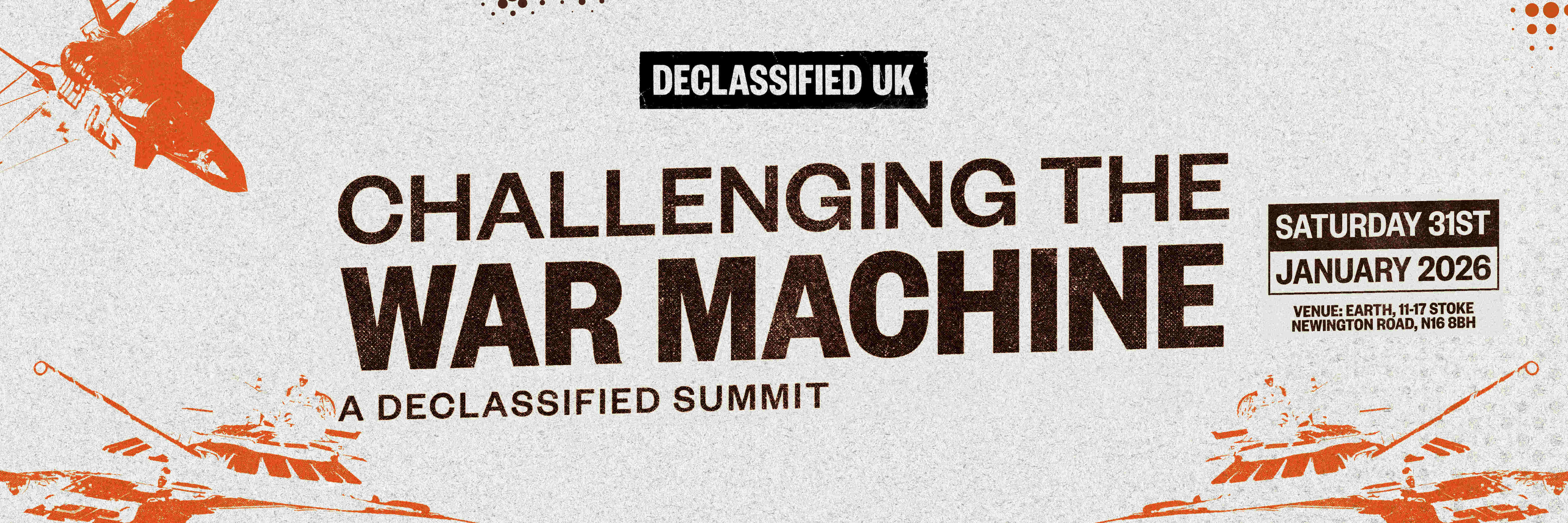
31st January – Challenging the War Machine – a DECLASSIFIED UK SUMMIT



Website of the Week
Now until to February 10, 2026 Radioactive waste storage in France: the debate is finally open! How to participate?
-
Archives
- January 2026 (306)
- December 2025 (358)
- November 2025 (359)
- October 2025 (376)
- September 2025 (258)
- August 2025 (319)
- July 2025 (230)
- June 2025 (348)
- May 2025 (261)
- April 2025 (305)
- March 2025 (319)
- February 2025 (234)
-
Categories
- 1
- 1 NUCLEAR ISSUES
- business and costs
- climate change
- culture and arts
- ENERGY
- environment
- health
- history
- indigenous issues
- Legal
- marketing of nuclear
- media
- opposition to nuclear
- PERSONAL STORIES
- politics
- politics international
- Religion and ethics
- safety
- secrets,lies and civil liberties
- spinbuster
- technology
- Uranium
- wastes
- weapons and war
- Women
- 2 WORLD
- ACTION
- AFRICA
- Atrocities
- AUSTRALIA
- Christina's notes
- Christina's themes
- culture and arts
- Events
- Fuk 2022
- Fuk 2023
- Fukushima 2017
- Fukushima 2018
- fukushima 2019
- Fukushima 2020
- Fukushima 2021
- general
- global warming
- Humour (God we need it)
- Nuclear
- RARE EARTHS
- Reference
- resources – print
- Resources -audiovicual
- Weekly Newsletter
- World
- World Nuclear
- YouTube
-
RSS
Entries RSS
Comments RSS
 nuclear-news