Licensing of Finnish repository further delayed

WNN, Thursday, 5 December 2024
Finland’s Radiation and Nuclear Safety Authority has been given another one-year extension to complete its review of Posiva Oy’s operating licence application for the world’s first used nuclear fuel repository.
Radioactive waste management company Posiva submitted its application, together with related information, to the Ministry of Economic Affairs and Employment on 30 December 2021 for an operating licence for the used fuel encapsulation plant and final disposal facility currently under construction at Olkiluoto. The repository is expected to begin operations in the mid-2020s. Posiva is applying for an operating licence for a period from March 2024 to the end of 2070.
The government will make the final decision on Posiva’s application, but a positive opinion by the Radiation and Nuclear Safety Authority (STUK) is required beforehand. The regulator began its review in May 2022 after concluding Posiva had provided sufficient material. The ministry had requested STUK’s opinion on the application by the end of 2023. However, in January this year, STUK requested the deadline for its opinion be extended until the end of 2024.
STUK has now said Posiva “has not completed the materials necessary” for it to conduct a safety assessment concerning the plant’s operating licence. At STUK’s request, the ministry has agreed to extend the deadline for the regulator’s opinion to 31 December 2025.
……………………………………………………………… The government granted Posiva a construction licence for the project in November 2015 and construction work on the repository started in December 2016. Once it receives the operating licence, Posiva can start the final disposal of the used fuel generated from the operation of TVO’s Olkiluoto and Fortum’s Loviisa nuclear power plants. The operation will last for about 100 years before the repository is closed. Posiva announced in late August the start of a trial run – expected to take sev more https://www.world-nuclear-news.org/articles/licensing-of-finnish-repository-further-delayederal months – of the operation of the final disposal facility, albeit still without the used fuel.
Relationship Between Urinary Uranium and Cardiac Geometry and Left Ventricular Function: The Strong Heart Study
Uranium is a potentially cardiotoxic, nonessential element commonly found
in drinking water throughout the United States. The purpose of this study
was to evaluate if urinary uranium concentrations were associated with
measures of cardiac geometry and function among American Indian young
adults from the Strong Heart Family Study.
Urinary uranium levels were
adversely associated with measures of cardiac geometry and LV function
among American Indian adults, including increases in pulse pressure and LV
hypertrophy.
These findings support the need to determine the potential
long-term subclinical and clinical cardiovascular effects of chronic
uranium exposure, and the need for future strategies to reduce exposure.
JACC Journals 3rd Dec 2024 https://www.jacc.org/doi/10.1016/j.jacadv.2024.101408
Drugs found in control room at Dungeness Nuclear Power Station
Millie Bowles
https://www.kentonline.co.uk/romney-marsh/news/drugs-found-in-nuclear-power-station-control-room-316864/
mbowles@thekmgroup.co.uk. 05 December 2024
Staff were drug tested and sniffer dogs were deployed after a bag of suspected drugs was found at a nuclear power station.
The package, believed to have contained powdered drugs thought to be cocaine, was discovered by a worker at Dungeness B Power Station last month.
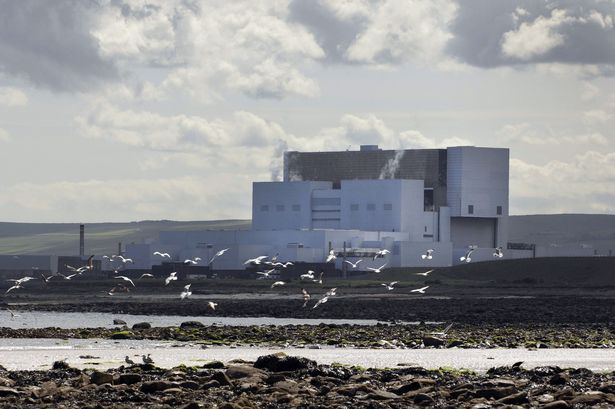
Safety warnings as cracks rise at Torness nuclear plant
Rob Edwards, The Ferret, 22 July 24,

The number of cracks in the core of an ageing nuclear reactor at Torness in East Lothian has risen to 46, prompting warnings that prolonging its operation would be “gambling with public safety”.
The UK Office for Nuclear Regulation (ONR) told The Ferret that the cracks were detected in April 2024 and were “at the upper end of expectations”. The first three cracks were discovered at Torness in February 2022. July 21, 2024
ONR has previously said that spreading cracks could result in debris inhibiting the cooling of hot radioactive fuel. This can lead to a reactor meltdown, which can result in the escape of radioactivity to the environment.
In 2021 the plant’s operator, EDF Energy, said that Torness would be closed in 2028 – two years earlier than expected – because of expected cracking. The station was originally scheduled to close in 2023, and in 2016 its expected life was extended to 2030.
But in January 2024 EDF changed its mind, and announced it would review whether the plant’s life could again be extended beyond 2028 “subject to plant inspections and regulatory approvals”.
Campaigners are now worried that EDF could be putting nuclear safety at risk. They are calling for Torness to be shut down “sooner rather than later”.
EDF, however, insisted that the cracks did not affect normal operations or the ability to shut down Torness in an emergency. The plant’s life would be reviewed “by the end of 2024” with the “ambition” of generating electricity after 2028.
ONR pointed out that EDF would have to demonstrate Torness would be safe to operate beyond 2028. “We will not allow any plant to operate unless we are satisfied that it is safe to do so,” it said.
The cracks have opened up in the ring-shaped graphite bricks packed around the reactor’s highly radioactive uranium fuel. They were detected in one of the two reactors at Torness during EDF’s latest inspection on 18 April 2024.
“EDF’s sampling of fuel channels showed 46 bricks with a single full height axial crack (a crack all the way through), which was at the upper end of expectations,” said ONR in response to freedom of information requests from The Ferret…………………………………………………………………………….
Scotland’s other nuclear power station at Hunterston in North Ayrshire was closed down in January 2022, more than a year earlier than planned. This followed the discovery of an estimated 586 cracks in its two reactors.
Torness ‘well past’ its design life
Pete Roche, a veteran nuclear critic, pointed out that it was EDF that decided to close Torness in 2028 because of cracking. “Given that the number of cracks are increasing, they would be gambling with public safety to now go back to a 2030 closure date,” he said.
“It’s difficult to avoid the conclusion that EDF is prepared to gamble because the plant it is building in England at Hinkley Point C is so late.”
The Guardian reported in February 2024 that delays and cost overruns at Hinkley in Somerset had cost EDF £11 billion. The plant was originally due to be built for £18bn in 2017, but is now expected to cost £46bn and be completed by 2031.
According to environmental campaigner, Dr Richard Dixon, Torness was “well past” its 30 year design life. “Now the cracks are meeting the worst predictions but suddenly EDF thinks it is a good idea to run the reactors for longer,” he said.
The Scottish Greens warned of the “devastating destruction” that could be caused by poorly maintained nuclear plants. “These reports are very worrying and should concern us all,” said the party’s co-leader and Lothian MSP, Lorna Slater.
“When it comes to something as dangerous as nuclear energy, there can be no room for error or regret. It underlines why Torness needs to be shut down sooner rather than later.”……………………………………………………………………………………………. more https://theferret.scot/torness-safety-warnings-as-cracks-rise/
Amnesty International investigation concludes Israel is committing genocide against Palestinians in Gaza

By Amnesty International 5 Dec 24
Amnesty International’s research has found sufficient basis to conclude that Israel has committed and is continuing to commit genocide against Palestinians in the occupied Gaza Strip, the organization said in a landmark new report published today.
The report, ‘You Feel Like You Are Subhuman’: Israel’s Genocide Against Palestinians in Gaza, documents how, during its military offensive launched in the wake of the deadly Hamas-led attacks in southern Israel on 7 October 2023, Israel has unleashed hell and destruction on Palestinians in Gaza brazenly, continuously and with total impunity.
“Amnesty International’s report demonstrates that Israel has carried out acts prohibited under the Genocide Convention, with the specific intent to destroy Palestinians in Gaza. These acts include killings, causing serious bodily or mental harm and deliberately inflicting on Palestinians in Gaza conditions of life calculated to bring about their physical destruction. Month after month, Israel has treated Palestinians in Gaza as a subhuman group unworthy of human rights and dignity, demonstrating its intent to physically destroy them,” said Agnès Callamard, Secretary General of Amnesty International.
“Our damning findings must serve as a wake-up call to the international community: this is genocide. It must stop now.
“States that continue to transfer arms to Israel at this time must know they are violating their obligation to prevent genocide and are at risk of becoming complicit in genocide. All states with influence over Israel, particularly key arms suppliers like the USA and Germany, but also other EU member states, the UK and others, must act now to bring Israel’s atrocities against Palestinians in Gaza to an immediate end.”
Over the past two months the crisis has grown particularly acute in the North Gaza governorate, where a besieged population is facing starvation, displacement and annihilation amid relentless bombardment and suffocating restrictions on life-saving humanitarian aid.
“Our research reveals that, for months, Israel has persisted in committing genocidal acts, fully aware of the irreparable harm it was inflicting on Palestinians in Gaza. It continued to do so in defiance of countless warnings about the catastrophic humanitarian situation and of legally binding decisions from the International Court of Justice (ICJ) ordering Israel to take immediate measures to enable the provision of humanitarian assistance to civilians in Gaza,” said Agnès Callamard.
“Israel has repeatedly argued that its actions in Gaza are lawful and can be justified by its military goal to eradicate Hamas. But genocidal intent can co-exist alongside military goals and does not need to be Israel’s sole intent.”
WHY IS THIS A GENOCIDE?
………………………………………………………………………… Amnesty International’s report examines in detail Israel’s violations in Gaza over nine months between 7 October 2023 and early July 2024. The organization interviewed 212 people, including Palestinian victims and witnesses, local authorities in Gaza, healthcare workers, conducted fieldwork and analysed an extensive range of visual and digital evidence, including satellite imagery. It also analysed statements by senior Israeli government and military officials, and official Israeli bodies. On multiple occasions, the organization shared its findings with the Israeli authorities but had received no substantive response at the time of publication.
Unprecedented scale and magnitude
Israel’s actions following Hamas’s deadly attacks on 7 October 2023 have brought Gaza’s population to the brink of collapse. Its brutal military offensive had killed more than 42,000 Palestinians, including over 13,300 children, and injured over 97,000 more, by 7 October 2024, many of them in direct or deliberately indiscriminate attacks, often wiping out entire multigenerational families. It has caused unprecedented destruction, which experts say occurred at a level and speed not seen in any other conflict in the 21st century, levelling entire cities and destroying critical infrastructure, agricultural land and cultural and religious sites. It thereby rendered large swathes of Gaza uninhabitable.
Mohammed, who fled with his family from Gaza City to Rafah in March 2024 and was displaced again in May 2024, described their struggle to survive in horrifying conditions:
“Here in Deir al-Balah, it’s like an apocalypse… You have to protect your children from insects, from the heat, and there is no clean water, no toilets, all while the bombing never stops. You feel like you are subhuman here.”
Israel imposed conditions of life in Gaza that created a deadly mixture of malnutrition, hunger and diseases, and exposed Palestinians to a slow, calculated death. Israel also subjected hundreds of Palestinians from Gaza to incommunicado detention, torture and other ill-treatment.
Viewed in isolation, some of the acts investigated by Amnesty International constitute serious violations of international humanitarian law or international human rights law. But in looking at the broader picture of Israel’s military campaign and the cumulative impact of its policies and acts, genocidal intent is the only reasonable conclusion.
Intent to destroy
To establish Israel’s specific intent to physically destroy Palestinians in Gaza, as such, Amnesty International analysed the overall pattern of Israel’s conduct in Gaza, reviewed dehumanizing and genocidal statements by Israeli government and military officials, particularly those at the highest levels, and considered the context of Israel’s system of apartheid, its inhumane blockade of Gaza and the unlawful 57-year-old military occupation of the Palestinian territory.
Before reaching its conclusion, Amnesty International examined Israel’s claims that its military lawfully targeted Hamas and other armed groups throughout Gaza, and that the resulting unprecedented destruction and denial of aid were the outcome of unlawful conduct by Hamas and other armed groups, such as locating fighters among the civilian population or the diversion of aid. The organization concluded these claims are not credible. The presence of Hamas fighters near or within a densely populated area does not absolve Israel from its obligations to take all feasible precautions to spare civilians and avoid indiscriminate or disproportionate attacks. Its research found Israel repeatedly failed to do so, committing multiple crimes under international law for which there can be no justification based on Hamas’s actions. Amnesty International also found no evidence that the diversion of aid could explain Israel’s extreme and deliberate restrictions on life-saving humanitarian aid.
In its analysis, the organization also considered alternative arguments such as ones that Israel was acting recklessly or that it simply wanted to destroy Hamas and did not care if it needed to destroy Palestinians in the process, demonstrating a callous disregard for their lives rather than genocidal intent.
However, regardless of whether Israel sees the destruction of Palestinians as instrumental to destroying Hamas or as an acceptable by-product of this goal, this view of Palestinians as disposable and not worthy of consideration is in itself evidence of genocidal intent.
Many of the unlawful acts documented by Amnesty International were preceded by officials urging their implementation. The organization reviewed 102 statements that were issued by Israeli government and military officials and others between 7 October 2023 and 30 June 2024 and dehumanized Palestinians, called for or justified genocidal acts or other crimes against them.
Of these, Amnesty International identified 22 statements made by senior officials in charge of managing the offensive that appeared to call for, or justify, genocidal acts, providing direct evidence of genocidal intent. This language was frequently replicated, including by Israeli soldiers on the ground, as evidenced by audiovisual content verified by Amnesty International showing soldiers making calls to “erase” Gaza or to make it uninhabitable, and celebrating the destruction of Palestinian homes, mosques, schools and universities.
Killing and causing serious bodily or mental harm
Amnesty International documented the genocidal acts of killing and causing serious mental and bodily harm to Palestinians in Gaza by reviewing the results of investigations it conducted into 15 air strikes between 7 October 2023 and 20 April 2024 that killed at least 334 civilians, including 141 children, and wounded hundreds of others. Amnesty International found no evidence that any of these strikes were directed at a military objective.
In one illustrative case, on 20 April 2024, an Israeli air strike destroyed the Abdelal family house in the Al-Jneinah neighbourhood in eastern Rafah, killing three generations of Palestinians, including 16 children, while they were sleeping.
While these represent just a fraction of Israel’s aerial attacks, they are indicative of a broader pattern of repeated direct attacks on civilians and civilian objects or deliberately indiscriminate attacks. The attacks were also conducted in ways designed to cause a very high number of fatalities and injuries among the civilian population.
Inflicting conditions of life calculated to bring about physical destruction
The report documents how Israel deliberately inflicted conditions of life on Palestinians in Gaza intended to lead, over time, to their destruction. These conditions were imposed through three simultaneous patterns that repeatedly compounded the effect of each other’s devastating impacts: damage to and destruction of life-sustaining infrastructure and other objects indispensable to the survival of the civilian population; the repeated use of sweeping, arbitrary and confusing mass “evacuation” orders to forcibly displace almost all of Gaza’s population; and the denial and obstruction of the delivery of essential services, humanitarian assistance and other life-saving supplies into and within Gaza.
After 7 October 2023, Israel imposed a total siege on Gaza cutting off electricity, water and fuel. In the nine months reviewed for this report, Israel maintained a suffocating, unlawful blockade, tightly controlled access to energy sources, failed to facilitate meaningful humanitarian access within Gaza, and obstructed the import and delivery of life-saving goods and humanitarian aid, particularly to areas north of Wadi Gaza. They thereby exacerbated an already existing humanitarian crisis. This, combined with the extensive damage to Gaza’s homes, hospitals, water and sanitation facilities and agricultural land, and mass forced displacement, caused catastrophic levels of hunger and led to the spread of diseases at alarming rates. The impact was especially harsh on young children and pregnant or breastfeeding women, with anticipated long-term consequences for their health.
The international community’s seismic, shameful failure for over a year to press Israel to end its atrocities in Gaza, by first delaying calls for a ceasefire and then continuing arms transfers, is and will remain a stain on our collective conscience.Agnès Callamard, Amnesty International
Time and again, Israel had the chance to improve the humanitarian situation in Gaza, yet for over a year it has repeatedly refused to take steps blatantly within its power to do so, such as opening sufficient access points to Gaza or lifting tight restrictions on what could enter the Strip or their obstruction of aid deliveries within Gaza while the situation has grown progressively worse.
Through its repeated “evacuation” orders Israel displaced nearly 1.9 million Palestinians – 90% of Gaza’s population – into ever-shrinking, unsafe pockets of land under inhumane conditions, some of them up to 10 times. These multiple waves of forced displacement left many jobless and deeply traumatized, especially since some 70% of Gaza’s residents are refugees or descendants of refugees whose towns and villages were ethnically cleansed by Israel during the 1948 Nakba.
Despite conditions quickly becoming unfit for human life, Israeli authorities refused to consider measures that would have protected displaced civilians and ensured their basic needs were met, showing that their actions were deliberate.
They refused to allow those displaced to return to their homes in northern Gaza or relocate temporarily to other parts of the Occupied Palestinian Territory or Israel, continuing to deny many Palestinians their right to return under international law to areas they were displaced from in 1948. They did so knowing that there was nowhere safe for Palestinians in Gaza to flee to.
Accountability for genocide
“The international community’s seismic, shameful failure for over a year to press Israel to end its atrocities in Gaza, by first delaying calls for a ceasefire and then continuing arms transfers, is and will remain a stain on our collective conscience,” said Agnès Callamard.
“Governments must stop pretending they are powerless to end this genocide, which was enabled by decades of impunity for Israel’s violations of international law. States need to move beyond mere expressions of regret or dismay and take strong and sustained international action, however uncomfortable a finding of genocide may be for some of Israel’s allies.
“The International Criminal Court’s (ICC) arrest warrants for Prime Minister Benjamin Netanyahu and former Defense Minister Yoav Gallant for war crimes and crimes against humanity issued last month offer real hope of long-overdue justice for victims. States must demonstrate their respect for the court’s decision and for universal international law principles by arresting and handing over those wanted by the ICC.
“We are calling on the Office of the Prosecutor of the International Criminal Court (ICC) to urgently consider adding genocide to the list of crimes it is investigating and for all states to use every legal avenue to bring perpetrators to justice. No one should be allowed to commit genocide and remain unpunished.”
Amnesty International is also calling for all civilian hostages to be released unconditionally and for Hamas and other Palestinian armed groups responsible for the crimes committed on 7 October to be held to account.
The organization is also calling for the UN Security Council to impose targeted sanctions against Israeli and Hamas officials most implicated in crimes under international law.
Background
On 7 October 2023 Hamas and other armed groups indiscriminately fired rockets into southern Israel and carried out deliberate mass killings and hostage-taking there, killing 1,200 people, including over 800 civilians, and abducted 223 civilians and captured 27 soldiers. The crimes perpetrated by Hamas and other armed groups during this attack will be the focus of a forthcoming Amnesty International report.
Since October 2023, Amnesty International has conducted in-depth investigations into the multiple violations and crimes under international law committed by Israeli forces, including direct attacks on civilians and civilian objects and deliberately indiscriminate attacks killing hundreds of civilians, as well as other unlawful attacks on and collective punishment of the civilian population. The organization has called on the Office of the ICC Prosecutor to expedite its investigation into the situation in the State of Palestine and is campaigning for an immediate ceasefire.
For the Hebrew translation of this press release, click here. https://www.amnesty.org/en/latest/news/2024/12/amnesty-international-concludes-israel-is-committing-genocide-against-palestinians-in-gaza/
Niger takes control of French nuclear firm’s uranium mining operations

Morning Star 5th Dec 2024, https://morningstaronline.co.uk/article/niger-takes-control-french-nuclear-firms-uranium-mining-operations
AUTHORITIES in Niger have taken control of the uranium mining operations of a French nuclear firm, it was reported on Wednesday.
After coming to power in July last year, Niger’s military leaders said they intended to seize back the natural resources of the west African country for the benefit of the people rather than Western interests.
The government said they would revamp rules regulating the mining of raw materials by foreign countries and earlier this year withdrew the permit for French nuclear company Oreno to mine one of the world’s largest uranium deposits.
Orano responded by suspending production of uranium in Niger.
Niger accounts for about 5 per cent of global uranium output, making it one of the world’s top 10 producers of uranium vital for the generation of nuclear weapons and the generation of nuclear power.
Last month, Niger’s Minister of Mines, Colonel Abarchi Ousmane said: “The French state, through its head of state, has declared that it does not recognise the current authorities in Niger. Does it seem possible to you that we, the state of Niger, would allow French companies to continue extracting our natural resources?”
Orano said that it intended “to defend its rights,” but also wanted to work with “stakeholders to re-establish a stable and sustainable mode of operation.”
Countdown to an ice-free Arctic: New research warns of accelerated timelines
2/3/2024 By Yvaine Ye
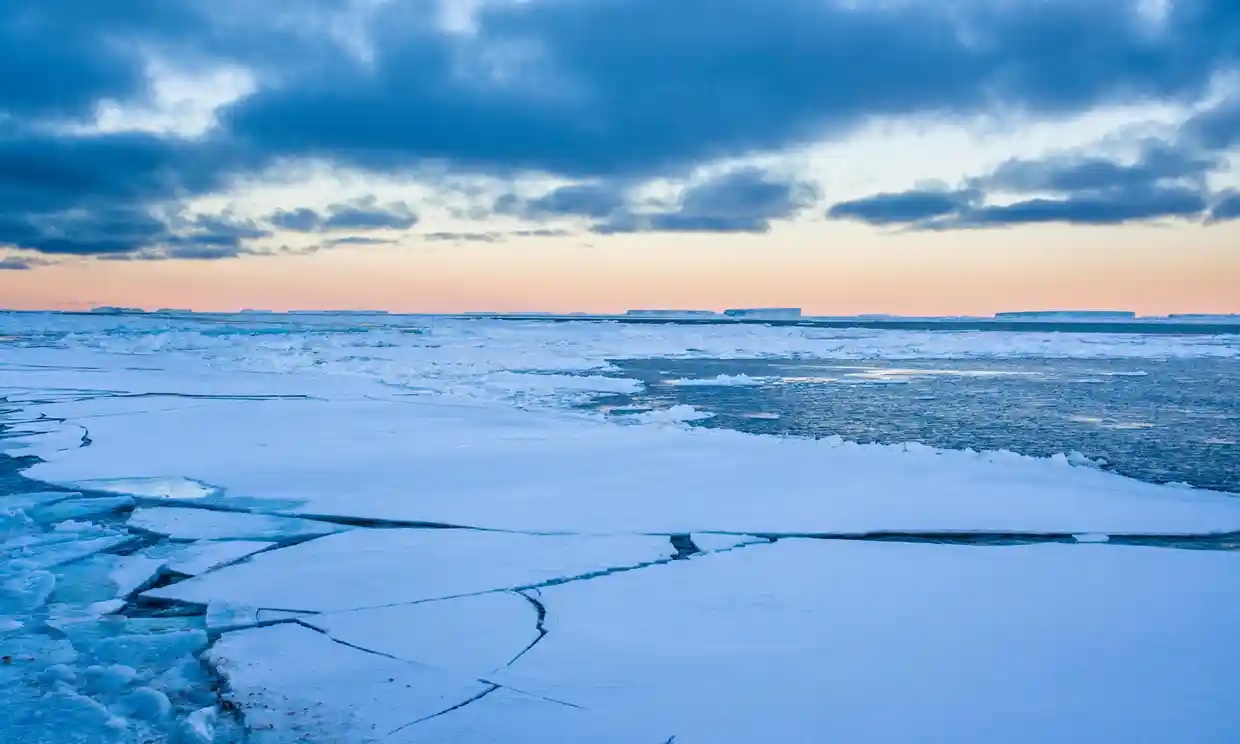
The first summer on record that melts practically all of the Arctic’s sea ice, an ominous milestone for the planet, could occur as early as 2027.
For the first time, an international research team, including CU Boulder climatologist Alexandra Jahn and Céline Heuzé from the University of Gothenburg in Sweden, used computer models to predict when the first ice-free day could occur in the northernmost ocean. An ice-free Arctic could significantly impact the ecosystem and Earth’s climate by changing weather patterns.
“The first ice-free day in the Arctic won’t change things dramatically,” said Jahn, associate professor in the Department of Atmospheric and Oceanic Sciences and fellow at CU Boulder’s Institute of Arctic and Alpine Research. “But it will show that we’ve fundamentally altered one of the defining characteristics of the natural environment in the Arctic Ocean, which is that it is covered by sea ice and snow year-round, through greenhouse gas emissions.”
The findings were published Dec. 3 in the journal Nature Communications. Jahn will also present the results in Dec. 9 at the American Geophysical Union annual meeting in Washington D.C.
A Blue Arctic
As the climate warms from increasing greenhouse gas emissions, sea ice in the Arctic has disappeared at an unprecedented speed of more than 12% each decade.
In September, the National Snow and Ice Data Center reported that this year’s Arctic sea ice minimum—the day with the least amount of frozen seawater in the Arctic—was one of the lowest on record since 1978.
At 1.65 million square miles, or 4.28 million square kilometers, this year’s minimum was above the all-time low observed in September 2012. But it still represents a stark decline compared to the average coverage of 6.85 million square kilometers between 1979 and 1992.
When the Arctic Ocean has less than 1 million square kilometers of ice, scientists say the Arctic is ice free.
Previous projections of Arctic sea ice change have focused on predicting when the ocean will become ice free for a full month. Jahn’s prior research suggested that the first ice-free month would occur almost inevitably and might happen by the 2030s.
…………………………………………………….The researchers found that a series of extreme weather events could melt two million square kilometers or more of sea ice in a short period of time: A unusually warm fall first weakens the sea ice, followed by a warm Arctic winter and spring that prevents sea ice from forming. When the Arctic experiences such extreme warming for three or more years in a row, the first ice-free day could happen in late summer.
Those kinds of warm years have already happened. For example, in March 2022, areas of the Arctic were 50°F warmer than average, and areas around the North Pole were nearly melting. With climate change, the frequency and intensity of these weather events will only increase, according to Heuzé.
Sea ice protects the Arctic from warming by reflecting incoming sunlight back into space. With less reflective ice, darker ocean waters will absorb more heat from the Sun, further increasing temperatures in the Arctic and globally. In addition, warming in the Arctic could change wind and ocean current patterns, leading to more extreme weather events around the world.
But there’s also good news: A drastic cut in emissions could delay the timeline for an ice-free Arctic and reduce the time the ocean stays ice-free, according to the study.
“Any reductions in emissions would help preserve sea ice,” Jahn said. https://www.colorado.edu/today/2024/12/03/countdown-ice-free-arctic-new-research-warns-accelerated-timelines?fbclid=IwY2xjawG_IhlleHRuA2FlbQIxMQABHX8KyQRLhAP2U6lYO1AMgR9kgUX3J1KhOcalDwdskFX_vdF1LEoxQsDBMw_aem_LPnxIx4MdGaxAfZFAm28gw
Meta misguided in calling for massive nuclear energy scale-up

Johanna Neumann and Jon Maunder, 4 Dec 24, https://environmentamerica.org/center/media-center/statement-meta-misguided-in-calling-for-massive-nuclear-energy-scale-up/
BOSTON — Meta announced a request for proposals (RFP) on Tuesday, asking energy developers to respond with plans to build 1-4 GW of new nuclear generation capacity to be delivered in the early 2030s. The tech giant wants to use the power for data centers to support energy-intensive artificial intelligence (AI).
The agreement comes on the heels of other large technology companies expressing interest in nuclear. In October, Google announced a partnership with California’s Kairos Power, to buy energy from small nuclear reactors starting in 2030, and Amazon announced that it signed agreements to support the development of new nuclear energy projects. Earlier this fall, Microsoft inked a deal with Constellation Energy that aims to restart the Three Mile Island nuclear plant.
Energy-intensive computing is projected to drive a surge in electricity demand after nearly two decades of little to no new growth. Already, this projected increase is prolonging America’s dependence on dirty energy. Polluting coal and gas fired plants are having their lives extended, new gas plants have been proposed, and there’s interest in reopening additional previously shuttered nuclear plants, such as Palisades in Michigan.
Environment America Research & Policy Center’s Senior Director of the Campaign for 100% Renewable Energy, Johanna Neumann, issued the following statement:
“The long history of overhyped nuclear promises reveals that nuclear energy is expensive and slow to build all while still being inherently dangerous. America already has 90,000 metric tons of nuclear waste that we don’t have a storage solution for. Do we really want to create more radioactive waste to power the often dubious and questionable uses of AI?
“In the blind sprint to win on AI, Meta and the other tech giants have lost their way. Big Tech should recommit to solutions that not only work but pose less risk to our environment and health.”
“Data centers should be as energy and water efficient as possible and powered solely with new renewable energy. Without those guardrails, the tech industry’s insatiable thirst for energy risks derailing America’s efforts to get off polluting forms of power, including nuclear.”
Canada’s nuclear waste problem is not solved

A quick media scan shows many casual observers leaping to the conclusion that Canada’s nuclear waste problem is “solved,” erasing a major obstacle to a costly and dangerous expansion of nuclear power. Nuclear promoters are encouraging this misleading assumption.
Without a doubt, nuclear waste owners to the south are watching these developments closely. U.S. utilities and government have even more waste in temporary storage and no permanent solution in sight.
ANNE LINDSEY, 4 Dec 24
ON Nov. 28, right on schedule, the Nuclear Waste Management Organization (NWMO) triumphantly declared they have picked their site for the future Deep Geological Repository (DGR) for all of Canada’s high-level nuclear waste.
NWMO is a federal government-created consortium of companies that own and must manage Canada’s nuclear waste — 130,000 tonnes (and counting) of highly toxic radioactive materials currently sitting in temporary storage at reactor sites. Their chosen repository site is near Revell Lake, between Ignace and Dryden, Ont. The Revell area is on the territory of Treaty 3 First Nations, the closest being Wabigoon Lake Ojibway Nation (WLON). It sits at the headwaters of Wabigoon and the Turtle-Rainy River watersheds — flowing north and west, eventually into Lake Winnipeg, via the English-Wabigoon system, Lake of the Woods and the Winnipeg River.
In July, the town of Ignace signed a “willingness declaration” agreeing to host a DGR in the Revell area (notwithstanding that Ignace is not even on the same watershed as the Revell site), and only days before the site selection announcement, headlines across multiple news outlets suggested that WLON had also declared itself to be a willing host.
In fact, WLON’s news release about its recent community vote says “the yes vote does not signify approval of the project.” It does say that the nation agrees to further study of the site. This is an important distinction. (The Nation has also since stated that the project will be subject to Wabigoon’s own regulatory assessment and approval process. What this means legally in terms of WLON’s ability to reject the project in the future is not currently known).
NWMO’s process says it must receive a “compelling demonstration of willingness” from a host community before proceeding to site characterization (further geological study of the chosen site to see if it’s even suitable for keeping nuclear waste out of groundwater and the environment for the required hundreds of thousands of years).
NWMO says it is “confident” that specific location studies will prove that their out-of-sight, out-of-mind concept of deep burial of some of the most dangerous toxins on Earth will be safe. They’ve been expressing that cavalier confidence for decades, lulling Canadians into believing that it’s fine to keep producing the waste because eventually it will be dealt with.
A quick media scan shows many casual observers leaping to the conclusion that Canada’s nuclear waste problem is “solved,” erasing a major obstacle to a costly and dangerous expansion of nuclear power. Nuclear promoters are encouraging this misleading assumption.
Without a doubt, nuclear waste owners to the south are watching these developments closely. U.S. utilities and government have even more waste in temporary storage and no permanent solution in sight.
But is the waste problem solved? Even if (predictably), the industry deems its concept technically feasible, and even if WLON eventually decides it is a “willing host,” what about all the other communities impacted by this decision?
They must have their say. This means everyone along the transportation routes from southern Ontario and New Brunswick — let’s remember we are talking about three massive shipments per day for the next 40 years just for existing waste on the sometimes-treacherous highways of northern Ontario.
It also means all the downstream communities (including in Manitoba) whose waters would be affected by any release of radioactivity. Many Treaty 3 First Nations near the Revell site as well as the Grand Council of Treaty 3, Nishnawbe Aski Nation and Anishinabek Nation have already made statements opposing transportation and burial of nuclear waste in northern Ontario.
It’s telling that not a single community or First Nation other than Ignace and Wabigoon Lake has voiced support for the Revell site.
Since Ignace first expressed interest in 2009, both of those communities have been actively courted by the NWMO. Cash and other incentives are known to have been provided to Ignace. Little is publicly known about any agreements that may exist between NWMO and WLON. Those details may never be known as NWMO is mysteriously exempt from freedom of information requests (even though it claims to be transparent).
What is clear is that NWMO has not yet achieved its necessary goal of a “compelling demonstration of willingness.” What it has done is corrupted its own process by claiming consent where none exists, with the blessing of the federal government. Perhaps worst of all — and one might say this is historically predictable — it has created a situation in which neighbouring communities may end up pitted against each other.
Meanwhile, the nuclear waste problem is not “solved.”
Anne Lindsey volunteers with the No Nukes MB campaign of the Manitoba Energy Justice Coalition and has been monitoring nuclear waste since the 1980s. She lives in Winnipeg and spends time in Northwestern Ontario.
NRC Finds Apparent Security Violations at Pilgrim

‘Escalated enforcement action’ may be needed to protect spent fuel storage area
By Christine Legere Dec 4, 2024, https://provincetownindependent.org/featured/2024/12/04/nrc-finds-apparent-security-violations-at-pilgrim/?fbclid=IwY2xjawG_bYNleHRuA2FlbQIxMQABHRMjawO4ghOC07jcvzHdYK-Z08vbUu96Mv-XIptTK2WiXfSaQprWaAR6YA_aem_WZtXDCevpDJCECdblhfnww
PLYMOUTH — Inspectors from the Nuclear Regulatory Commission (NRC) have found apparent violations in the security measures being used to protect the spent fuel storage area on the grounds of the Pilgrim Nuclear Power Station.
The problems were found in early November, according to a Nov. 26 letter to Holtec International, which now owns the plant, from Paul Krohn, the director of the NRC’s Radiological Safety and Security Division. That notification letter is publicly available, but details of the violations are not, because the infractions relate to security, according to the letter.
The inspection examined activities related to Holtec’s physical security plan for the area where radioactive spent fuel rods used during Pilgrim’s five decades of operation are stored in mammoth steel and concrete casks. The inspectors looked at procedures and records, conducted interviews with personnel, and observed security activities.
Based on the results of that inspection, “escalated enforcement action” is being considered, the letter says.
Holtec was given 10 days from Nov. 26 to notify the federal agency of its acceptance of the violation finding or to provide a written response contesting the report. The company could also request a pre-enforcement conference within the 10 days. If the NRC does not hear from Holtec by the deadline, the agency “will proceed with its enforcement decision,” the letter says.
NRC spokesman Neil Sheehan told the Independent by email on Dec. 3 that Holtec had not yet responded. Holtec spokesman Patrick O’Brien said in an email that because the matter is security related he could not comment other than to say, “Our focus remains on a safe and secure decommissioning of Pilgrim Station.”
Detection Limits
The day before the letter was sent, at a meeting of the Nuclear Decommissioning Citizens Advisory Panel, two scientists from the Woods Hole Oceanographic Institution gave updates on their assessments as to where the station’s contaminated wastewater would likely flow if it were to be released into Cape Cod Bay.
Holtec is looking to release the wastewater into the bay after filtering it to reduce contaminants including some of the radioactive isotopes it contains.
Initially, Holtec sought to release 1.1 million gallons of radioactive water. That quantity is now down to about 916,500 gallons because some of it has already been released as evaporation, thanks to heaters Holtec is running during the cold months at the former plant. In spite of public criticism of the release by evaporation, those heaters are now running again, according to Dave Noyes, senior compliance manager for Holtec Decommissioning International.
The state Dept. of Environmental Protection has denied the company an amendment to its water discharge permit required to release the water, saying the state Ocean Sanctuaries Act prohibits it.
Holtec has appealed that decision.
At the November NDCAP meeting, Irina Rypina, a physical oceanographer at WHOI, said her models of the currents in the bay, which factor in the seasons, tides, and wind directions, showed the wastewater has a very high probability of flowing toward Provincetown and then hugging the coastline, affecting Wellfleet on both the bay and ocean sides and Dennis inside the bay.
Based on her study, the wastewater would reach Provincetown within a week of its release and would reach the rest of the bay in three weeks.
“We’re talking about putting radioactive material into the ocean,” said Ken Buesseler, a WHOI marine radiochemist. “I can’t do that from a research vessel, and you could not put this material on a ship and take it to the middle of the ocean and release it. It’s not allowed.”
RADIOACTIVITY
NRC Finds Apparent Security Violations at Pilgrim
‘Escalated enforcement action’ may be needed to protect spent fuel storage area
By Christine Legere Dec 4, 2024
PLYMOUTH — Inspectors from the Nuclear Regulatory Commission (NRC) have found apparent violations in the security measures being used to protect the spent fuel storage area on the grounds of the Pilgrim Nuclear Power Station.
The problems were found in early November, according to a Nov. 26 letter to Holtec International, which now owns the plant, from Paul Krohn, the director of the NRC’s Radiological Safety and Security Division. That notification letter is publicly available, but details of the violations are not, because the infractions relate to security, according to the letter.
The inspection examined activities related to Holtec’s physical security plan for the area where radioactive spent fuel rods used during Pilgrim’s five decades of operation are stored in mammoth steel and concrete casks. The inspectors looked at procedures and records, conducted interviews with personnel, and observed security activities.
Based on the results of that inspection, “escalated enforcement action” is being considered, the letter says.
Holtec was given 10 days from Nov. 26 to notify the federal agency of its acceptance of the violation finding or to provide a written response contesting the report. The company could also request a pre-enforcement conference within the 10 days. If the NRC does not hear from Holtec by the deadline, the agency “will proceed with its enforcement decision,” the letter says.
NRC spokesman Neil Sheehan told the Independent by email on Dec. 3 that Holtec had not yet responded. Holtec spokesman Patrick O’Brien said in an email that because the matter is security related he could not comment other than to say, “Our focus remains on a safe and secure decommissioning of Pilgrim Station.”
Detection Limits
The day before the letter was sent, at a meeting of the Nuclear Decommissioning Citizens Advisory Panel, two scientists from the Woods Hole Oceanographic Institution gave updates on their assessments as to where the station’s contaminated wastewater would likely flow if it were to be released into Cape Cod Bay.
Holtec is looking to release the wastewater into the bay after filtering it to reduce contaminants including some of the radioactive isotopes it contains.
Initially, Holtec sought to release 1.1 million gallons of radioactive water. That quantity is now down to about 916,500 gallons because some of it has already been released as evaporation, thanks to heaters Holtec is running during the cold months at the former plant. In spite of public criticism of the release by evaporation, those heaters are now running again, according to Dave Noyes, senior compliance manager for Holtec Decommissioning International.
The state Dept. of Environmental Protection has denied the company an amendment to its water discharge permit required to release the water, saying the state Ocean Sanctuaries Act prohibits it.
Holtec has appealed that decision.
At the November NDCAP meeting, Irina Rypina, a physical oceanographer at WHOI, said her models of the currents in the bay, which factor in the seasons, tides, and wind directions, showed the wastewater has a very high probability of flowing toward Provincetown and then hugging the coastline, affecting Wellfleet on both the bay and ocean sides and Dennis inside the bay.
Based on her study, the wastewater would reach Provincetown within a week of its release and would reach the rest of the bay in three weeks.
“We’re talking about putting radioactive material into the ocean,” said Ken Buesseler, a WHOI marine radiochemist. “I can’t do that from a research vessel, and you could not put this material on a ship and take it to the middle of the ocean and release it. It’s not allowed.”
The wastewater has not yet been treated to filter out contamination. Test samples drawn and analyzed by both Holtec and the state Dept. of Public Health in May 2023 showed the presence of five radioactive isotopes above detection limits: manganese 54, cobalt 60, zinc 65, cesium 137, and tritium.
The results showed those isotopes in “very high numbers relative to the ocean,” Buesseler said. The level of manganese was two million times higher than what naturally occurs in the ocean’s sediment.
Noyes said the company monitors contamination in the sediment, shellfish, finfish, and other marine life.
Buesseler responded that he was not aware of that specific monitoring program but “what I saw were pretty high detection limits, so a ‘no detect’ doesn’t tell me anything as a scientist.”
The dose to humans and sea life will depend on the treatment system used to clean up the wastewater, Buesseler said. He said he thought the dose would likely be low after the water is treated. “You will be able to swim and be able to boat in Cape Cod Bay,” he said. “I never said Cape Cod Bay will be destroyed.” But he said there were better options for dealing with the wastewater than releasing it into the bay.
“Tritium is difficult to get out of water, but if you just cleaned up things that were more harmful, you would be left with water that’s largely tritium, which you could hold for its decay,” said Buesseler.
The plant’s radioactive spent fuel assemblies are now stored in 62 casks on the Pilgrim plant property. “We’re talking about a site where they will have to maintain high-level waste for decades, centuries, and beyond, until we have permanent waste disposal for commercial reactors,” the radiochemist said. If the wastewater were to be treated and then stored on the site, the tritium level would go down to 6 percent in 48 years.
“In 60 years, less than 3 percent would be left,” he said.
Baseload power generators not needed to guarantee supply, say science and engineering academies
Sören Amelang, Dec 5, 2024 https://reneweconomy.com.au/baseload-power-generators-not-needed-to-guarantee-supply-say-science-and-engineering-academies/
An energy system dominated by solar and wind energy does not require baseload power stations to guarantee supply security, German research academies have said.
“The academy project ‘Energy Systems of the Future’ (ESYS) has concluded that a secure energy supply is also possible without baseload power plants,” said the National Academy of Science and Engineering (acatech), the German National Academy of Sciences (Leopoldina), and the Union of the German Academies of Sciences and Humanities.
Baseload power plants supply electricity continuously, whereas so-called residual load plants run only intermittently when needed.
“A combination of solar and wind energy with storage, a flexible hydrogen system, flexible electricity demand and residual load power plants will be necessary for a climate-friendly and reliable electricity supply,” the academies said.
The German government plans to use hydrogen-fuelled gas turbine plants to back up its renewables-based future electricity system.
The researchers modelled the potential of four baseload technologies: nuclear power plants, geothermal energy, natural gas power plants with CO2 capture, and nuclear fusion power plants.
Their results showed that baseload plants could become part of future energy systems if they save costs – a scenario the scientists consider unlikely. Baseload plants’ greatest impact on the overall system is that their surplus electricity could be used to run electrolysers, which would turn electricity into hydrogen, they said.
“For baseload power plants to lead to a substantial cost reduction, their costs would have to fall significantly below the level forecast today,” said Karen Pittel, who heads the ifo Institute’s Center for Energy, Climate and Resources, and is also deputy chair of the ESYS board of directors.
“In fact, we estimate that the risks of cost increases and delays in baseload technologies tend to be even higher than with the further expansion of solar and wind energy.”
Nuclear energy debate draws stark gender split in Australia ahead of next year’s election.

Lisa Cox, 5 Dec 24, https://www.theguardian.com/environment/2024/dec/04/nuclear-energy-debate-draws-stark-gender-split-in-australia-ahead-of-next-years-election
Survey finds 25 percentage point gender gap across all age brackets on whether nuclear power would be positive for the country, with majority of men saying it would.
New data points to a stark gender split in attitudes towards nuclear energy, with women much more likely to say they don’t support it or think the risks are too great.
Research company DemosAu surveyed 6,000 people on behalf of the Australian Conservation Foundation and found 26% of women thought nuclear energy would be good for Australia, compared with 51% of men.
DemosAu head of research, George Hasanakos, said the 25 percentage point gender gap was “the sharpest divide in attitudes between men and women” that the research firm had seen on any issue.
The polling found the split was pronounced regardless of the age of the people surveyed, with young men and women just as divided as those from older generations.
While 51% of men agreed nuclear energy would be good for Australia, that support dropped when asked if they would be happy to live near a nuclear plant.
A reported 38% of men agreed they would support a nuclear plant being located close to their city, with 44% disagreeing and 18% neutral. Among women, just 18% agreed they would be happy to have a nuclear plant near their city, with 63% disagreeing and 19% neutral.
“Men support nuclear much more than women,” the ACF chief executive, Kelly O’Shanassy, said.
“But as soon as you ask men more details such as ‘Would you be happy to live next door to a plant?’ or ‘Do you think one will be built within the next decade?’ – that level of support really comes down.”
The report found female respondents were more likely to answer “neutral” compared with male respondents. It identified this as both “a risk and opportunity for campaigners on both sides of the issue” as Australia approaches a federal election but said pro-nuclear campaigners would have to contend with widely held safety concerns about nuclear among women.
On the subject of transporting nuclear waste, the poll found 57% of women and 43% of men said it wasn’t worth the risk.
The prime minister, Anthony Albanese, has said the next election will be a referendum on nuclear power.
The Coalition has proposed seven sites where it says it would eventually replace coal-fired power plants with nuclear plants but not how much this would cost. The government has rejected the idea and the federal House of Representatives is conducting an inquiry into the consideration of nuclear power in Australia.
Multiple energy analysts have argued nuclear energy would be more expensive than other options and a nuclear industry would not be possible in Australia until after 2040.
O’Shanassy said among the report’s more interesting findings was that despite the gender gap on many aspects of nuclear, men and women were aligned in the view that renewables were cheaper.
A reported 47% of men agreed renewables would deliver cheaper energy, compared with 31% who disagreed (with 22% neutral).
While 47% of women also agreed renewables would deliver cheaper energy, 20% disagreed and 33% were neutral.
In separate data, the climate advocacy organisation 1 Million Women surveyed an additional 3,351 women among its own supporters and found 93% were concerned about nuclear.
“Nuclear energy is a distraction to meaningful climate solutions and women don’t have the time or patience to entertain the Coalition’s proposal,” its founder, Natalie Isaacs, said.
Tony Blair think tank says UK needs to build new nuclear ‘at pace’.

“The latest example is today’s report for the Tony Blair Institute – which effectively ignores the poor comparative performance, costs and build times, of nuclear compared to zero carbon alternatives.“
“If it is inadvertently deceived by military pressures into ignoring the real growing obsolescence of nuclear power in the face of renewable alternatives, then
democracy itself is at risk.”
By Tom Pashby New Civil Engineer 2nd Dec 2024
The UK needs to build new nuclear “at pace” if it wants to remain competitive against similar countries pursuing nuclear power programmes, according to a report from the Tony Blair Institute for Global Change (TBIGC).
It structured its recommendations to the UK Government around
three main points. The first was that the UK should “create a modernised,
streamlined and efficient planning and regulatory regime for new nuclear
technologies. This would reduce delays and enhance the standardisation
required to unlock new low-cost projects at scale.”
It specifically called out the Office for Nuclear (ONR) Regulation, the UK Government’s
nuclear sector regulator, saying it recommended that the government require
the ONR “to regard approval of a single reactor as the basis for fleet
approval, to standardise design across deployment.” It also suggested:
“Introducing a two-year limit for the ONR and Environment Agency to
license nuclear reactors that are similar to previously licensed
designs.”
The report continued in its recommendations: “Second, the UK
government should use the conclusion of its ongoing SMR competition to help
kick-start the SMR pipeline.” It said this would “create options” for
the government to buy SMR capacity for use on the national grid.
And third, it said: “The government should deepen the UK-US partnership on SMR and
the deployment of advanced modular reactors (AMRs), also known as Gen IV
reactors, including cooperation on fuels, financing and supply-chain
development.”
Nuclear Free Local Authorities (NFLAs) says it is “the
voice for local authorities opposed to civil nuclear power and in favour of
renewables.” NFLAs policy adviser Pete Roche said: “Tony Blair’s
Institute is clearly not keeping up with the latest research which shows
that 100% renewable energy scenarios are perfectly feasible, require less
energy, cost less and create more jobs than business as usual scenarios.
“Instead it has fallen for a fantasy promoted by the nuclear industry
which can only increase our electricity bills and will fail to reduce
carbon emissions in time to protect us from rising temperatures.”
Academic says case for nuclear ‘at its weakest’ University of Sussex
professor of science and technology policy Andy Stirling said: “Whatever
opinion is held on issues around nuclear power, the same simple question
pops up, ‘Why has support for nuclear power grown most noisy, just as the
case is at its weakest?’
“The latest example is today’s report for
the Tony Blair Institute – which effectively ignores the poor comparative
performance, costs and build times, of nuclear compared to zero carbon
alternatives. “Over the past two decades, the relative competitiveness of
nuclear power and renewables-based zero carbon strategies has shifted
massively in favour of the latter.
As a recent Royal Society report
confirms, there is no level of nuclear contribution to UK electricity
supply that does anything other than raise electricity prices.” Stirling
went on to say it is “increasingly only in situations dominated by
entrenched military interests or shadily-funded thinktanks, that the
clamour of emotive nuclear outbursts is most loudly heard. “For media
coverage to become skewed by this noise threatens more than just energy
futures and the future efficacy of climate action.
“If it is inadvertently deceived by military pressures into ignoring the real growing
obsolescence of nuclear power in the face of renewable alternatives, then
democracy itself is at risk.”
New Civil Engineer 2nd Dec 2024
https://www.newcivilengineer.com/latest/tony-blair-think-tank-says-uk-needs-to-build-new-nuclear-at-pace-02-12-2024/
The LA Times Makes the Case for Shutting the Diablo Canyon Nukes

Harvey Wasserman, 4 Dec 24 https://www.counterpunch.org/2024/12/03/the-latimes-makes-the-case-for-shutting-the-diablo-canyon-nukes/?fbclid=IwY2xjawG8YRJleHRuA2FlbQIxMQABHSQ9odEebiUpHvQEucI8G6sh43u-Rh8KUrx7a82De1V7jLHnoraX19z0Dw_aem_NVnlx2KzztXtkLu2amu4_w
In a landmark front page feature, the Los Angeles Times has made a powerful argument for shutting California’s last two atomic reactors.
The forty-year-old Diablo Canyon nukes are being subsidized by statewide ratepayers to the tune of nearly $12 billion in over-market charges slated to enrich Pacific Gas & Electric through 2030. PG&E’s CEO, Patti Poppe, was paid more than $40 million in 2022. The company has been convicted of more than 90 federal manslaughter charges stemming from fatal fires in San Bruno in 2010, and in northern California in 2017
Taking up a quarter of the Times’s November 25 cover, the feature by Melody Peterson reports that a “glut” of solar-generated electricity is regularly shipped out of state at enormous losses to California rate payers. Green energy capable of powering more than a half-million homes is regularly “curtailed.”
But the cost of generating that electricity with solar panels is a fraction of Diablo Canyon’s hyper-expensive “base load power”, which is currently jamming and jeopardizing the California grid.
During most afternoons, photovoltaic cells in the Central Valley regularly produce electricity “too cheap to meter” (wind turbines in west Texas regularly do the same).
As it pours into the grid, the cheap solar juice is often used to charge industrial-scale batteries that power the state into the evening hours after sunset.
During part of virtually every day now, California’s entire electric supply comes from solar, wind and geothermal sources, at far less cost than what comes from Diablo Canyon. Atomic reactors are shut on average 9% of every year.
A landmark plan to phase-out Diablo Canyon by 2024 and 2025 was signed in 2018 by then-Lieutenant Governor Gavin Newsom. Compiled through two-years of intense top-level dialog, involving scores of public hearings and countless hours of research, the plan was signed by then-Governor Jerry Brown. It was endorsed by the state legislature and regulatory agencies, neighboring local governments, the plant’s labor unions, a wide range of public safety and environmental groups, leading ratepayer organizations and PG&E itself.
The Diablo phase-out relied on the projected ability of renewable sources and battery back-ups to replace the reactors’ output. As indicated by the LATimes’s cover piece and more, rapid advances in solar, wind, geothermal and battery technologies have far exceeded expectations for replacing Diablo’s base-load output. They’ve also plummeted far below current nuclear price levels…as well as those projected for future Small Modular Reactors in the unlikely event any should come on line within the next decade.
Battery technologies in particular have hugely advanced, all but eliminating the “periodicity” that comes when the sun doesn’t shine and the wind doesn’t blow. The industry has been largely dominated by lithium ion technology, which has gotten a huge boost from two major finds in California. But Vanadium, iron air and sodium technologies are also booming toward much cheaper, cleaner and more powerful storage systems that are rapidly accelerating the green-powered paradigm, especially when it comes to the large solid state units that will dominate non-vehicular uses in homes, business and factory settings.
This increasing renewable-based flexibility is accelerating the ability of grid operators synchronize supply with fluctuating demand. By contrast, nuclear power’s rigid base-load mode blocks cheaper renewables off the grid, forcing some to be shipped out of state.
California’s backup battery capability—, much of it decentralized and privately owned—has at least twice saved the state from impending blackouts. The Golden State’s battery-based reserves—-still rapidly expanding—-now exceed Diablo’s maximum output by more than 400%.
But in April, 2022, Newsom shredded the nuclear phase-out plan he signed four years earlier. Allowing no public hearings, Newsom strong-armed the legislature into a widely resented 11th hour rubber stamp.
Newsom’s hand-picked Public Utilities Commission then trashed California’s well-established “Net Metering” system that initially helped foster some two million rooftop solar installations. The moves cost the state more than 17,000 of its 70,000 solar installer jobs (about 1500 workers are employed at Diablo Canyon).
Newsom’s pro-nuclear package gifted a “forgivable” $1.4 billion loan to PG&E. Running the two reactors through 2030 could cost the public $11+ billion in over market billings, a gargantuan hand-out to the state’s biggest private utility. Even consumers who get zero power from Diablo are expected to pay.
Thus it’s no surprise that California suffers the US’s second-highest electric rates (behind only Hawaii, which gets much of its electricity from burning oil…but is rapidly now shifting to renewables).
Newsom has issued an executive order to “research” why our electric rates are so high. But as shown by the LATimes’s cover story (entitled “Solar Power Glut Boosts California Electric Bills. Other States Reap Benefit,” by Melody Peterson) much of California’s solar electricity can’t get access to a grid jammed by a rigid, hyper-expensive nuclear base load.
Diablo now faces federal licensing challenges. Like all commercial US reactors, it has no private liability insurance to compensate the public for catastrophic accidents. Shown to be dangerously embrittled in 2002, Unit One has not been tested since. Some 45 miles from the San Andreas, Diablo is surrounded by a dozen known earthquake faults whose impacts a long-time NRC site inspector (among others) says the plant can’t withstand.
Diablo pours radioactive carbon 14 into the atmosphere along with other greenhouse gasses emitted during the mining, milling and fabrication of its fuel rods. Thousands of tons of radioactive waste sit on site in cracked dry casks with nowhere else to go. .
Diablo’s twin cores operate around 560 degrees Fahrenheit, heating Avila Bay and the Earth in violation of state and federal law.. They kill countless marine creatures with thermal, chemical and radioactive emissions.
Despite their huge economic costs, devastating jobs impacts, and bitter public opposition, Newsom has opted to keep Diablo running.
Without a hint of irony, the LATimes’s latest attack blames the “glut” of green power on the success of renewables.
But it underscores (without ever mentioning Diablo) that Newsom’s $11+ billion “nuclear base-load tax” could be avoided by letting the PV industry fill the grid with its far cheaper power.
The Times also confirms that nothing terrifies the fossil/nuclear industry and its monopoly utilities more than the prospect of a global energy economy run on renewable power produced by rooftop solar, delivered through public-owned green grids and decentralized micro-grids, all backed up by a new generation of advanced batteries.
With the Olympics coming to Los Angeles in 2028, the Games could be totally powered by covering the state’s available rooftops with cheap, reliable, battery-backed solar cells.
The epic drop in electric rates and rise in employment and economic well-being could win the Earth’s ultimate, life-sustaining gold medal.
It would also make great copy for yet another LATimes cover story…this one celebrating rather than denigrating the astonishing success of the Golden State’s sustainable energy industries.
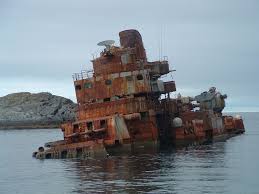
Putin’s huge, rusting nuclear battlecruisers symbolise Russian naval decline.
In losing nearly as much tonnage as it built in 2023, the Russian navy joins an exclusive and embarrassing club of stagnating navies that, startlingly, also includes the 886,000-ton – and shrinking – Royal Navy. In recent years, the British fleet has been decommissioning more and bigger vessels than it builds.
Apart from its submarines, the Kremlin will soon have only a coastal navy
David Axe, https://www.telegraph.co.uk/news/2024/12/02/putin-naval-decline-kirov-class-nuclear-battlecruisers/
The hulking Kirov-class nuclear powered battlecruisers were symbols of Moscow’s naval strength during the later Soviet era. A generation later, they’re symbols of Moscow’s slow naval collapse.
The Soviets built four of the 28,000-ton, missile-armed vessels to lead far-ranging battle groups meant to confront Nato warships on the high seas. Three were commissioned in time to see service with the Soviet navy before the Soviet Union collapsed in 1991; the final vessel joined the Russian fleet in 1998 following years of construction delays.
That youngest Kirov, the Northern Fleet’s Pyotr Velikiy, is the only battlecruiser still in active service. She’s one of a dwindling number of big Soviet-vintage warships – including the rusty Admiral Kuznetsov, Russia’s sole aircraft carrier – that sustain Russia’s fading capacity for projecting maritime power across oceans.
A second old battlecruiser, Admiral Nakhimov, has been pierside at Sevmash shipyard in Severodvinsk, in northern Russia, since 1999. The farcical story of her planned return to service is indicative of Russia’s wider naval decline.
The Kremlin decided to return Admiral Nakhimov to service way back in 2008. Refurbishment got underway in 2013. Planned upgrades include the fitting of Kalibr and Oniks cruise missiles plus new sensors and communications. As recently as this fall, photos circulated online showing modest but visible progress with the installations.
But the work has been missing deadlines – for years. In 2014, the plan was for Admiral Nakhimov to return to service in 2020. She didn’t. As of 2018, the battlecruiser was supposed to recommission in 2021. A year later, the recommissioning slipped to 2022. That deadline came and went, as did the next deadline for a 2024 return to service. Now the plan is for Admiral Nakhimov to rejoin the fleet in 2026.
Don’t hold your breath. The costs of Russia’s 33-month wider war on Ukraine have driven up inflation and driven down investment in Russia. The economy is teetering. The costly effort to squeeze a few more years of front-line use from a 38-year-old warship may soon seem like an extravagance.
If and when the effort to reactivate Admiral Nakhimov finally fails, it could signal a new – and humbler – era for the Russian fleet.
In 2023, the Russian navy added just 6,300 tons to its total tonnage, ending the year with warships totalling 2,152,000 tons. The Russians would have added 17,700 tons last year through the new construction of a new frigate, corvettes, a minesweeper and a few submarines, but Ukrainian missiles and drones destroyed vessels together weighing 11,400 tons.
In losing nearly as much tonnage as it built in 2023, the Russian navy joins an exclusive and embarrassing club of stagnating navies that, startlingly, also includes the 886,000-ton – and shrinking – Royal Navy. In recent years, the British fleet has been decommissioning more and bigger vessels than it builds.
For the Russians, it mostly comes down to strategy, money … and engines. Big ships are expensive – and unnecessary for a country whose main strategic ambitions lie along its land border. The Russians still build plenty of modern nuclear-powered submarines and can deploy them to deter direct conflict with a major foe. Given that safeguard, a globally-deploying surface fleet is a luxury.
Which is fortunate for Russia’s leaders, as it’s not clear Russian industry could build big new warships even if it had the money to do so and a clear reason to try. Prior to 2014, Russian shipbuilders imported most of their large maritime engines from Ukraine. It should go without saying they no longer do so.
Lacking a source of new engines, it’s much easier for Russia to restore an old battlecruiser than to build a new one from scratch. It actually helps that Admiral Nakhimov has a nuclear powerplant, as Russian industry still manages to build and maintain those on its own.
When the last big Soviet ships finally sail for the last time, the Russian navy will become a mostly coastal navy – albeit one with a powerful undersea deterrent. Even if Admiral Nakhimov does rejoin the fleet and deploys a few more times, she’ll only delay that inevitability.
1 This Month
29 Jan. Thursday 7-8 p.m. Webinar – World’s Largest Nuclear Station in Port Hope, ON?
To see nuclear-related stories in greater depth and intensity – go to https://nuclearinformation.wordpress.com/



31st January – Challenging the War Machine – a DECLASSIFIED UK SUMMIT


Website of the Week
Now until to February 10, 2026 Radioactive waste storage in France: the debate is finally open! How to participate?
-
Archives
- January 2026 (288)
- December 2025 (358)
- November 2025 (359)
- October 2025 (376)
- September 2025 (258)
- August 2025 (319)
- July 2025 (230)
- June 2025 (348)
- May 2025 (261)
- April 2025 (305)
- March 2025 (319)
- February 2025 (234)
-
Categories
- 1
- 1 NUCLEAR ISSUES
- business and costs
- climate change
- culture and arts
- ENERGY
- environment
- health
- history
- indigenous issues
- Legal
- marketing of nuclear
- media
- opposition to nuclear
- PERSONAL STORIES
- politics
- politics international
- Religion and ethics
- safety
- secrets,lies and civil liberties
- spinbuster
- technology
- Uranium
- wastes
- weapons and war
- Women
- 2 WORLD
- ACTION
- AFRICA
- Atrocities
- AUSTRALIA
- Christina's notes
- Christina's themes
- culture and arts
- Events
- Fuk 2022
- Fuk 2023
- Fukushima 2017
- Fukushima 2018
- fukushima 2019
- Fukushima 2020
- Fukushima 2021
- general
- global warming
- Humour (God we need it)
- Nuclear
- RARE EARTHS
- Reference
- resources – print
- Resources -audiovicual
- Weekly Newsletter
- World
- World Nuclear
- YouTube
-
RSS
Entries RSS
Comments RSS
 nuclear-news