Hinkley Point plays down reports of suspected ‘spy’ at nuclear power plant
A spokesperson for Hinkley Point C has played down press reports about a
man suspected of being a spy at the nuclear power plant. A 67-year-old
Italian national who worked at Hinkley Point C from 2020 to 2023 was
questioned by counter-terrorism police after he flew into Heathrow airport
on April 12th, 2023.
It was reported that several documents were found in
his possession and were seized by the authorities. Counter terrorism police
retained the man’s hard drives for national security reasons. He was not
charged with any offence.
A spokesperson for EDF’s Hinkley Point C adds:
“Hinkley Point C takes information security very seriously and there are
rigorous measures in place to protect sensitive data.” “This individual
did not have access to sensitive nuclear information. The information he
removed was outdated.” The spokesperson adds that the man’s contract
with his employer, a supplier to EDF’s Hinkley Point C, has since ended.
Burnham-on-Sea.com 4th Feb 2025, https://www.burnham-on-sea.com/news/hinkley-point-plays-down-press-reports-of-suspected-spy-operating-at-nuclear-power-plant/
Fury over switch of possible nuclear waste dump site to village land near Louth
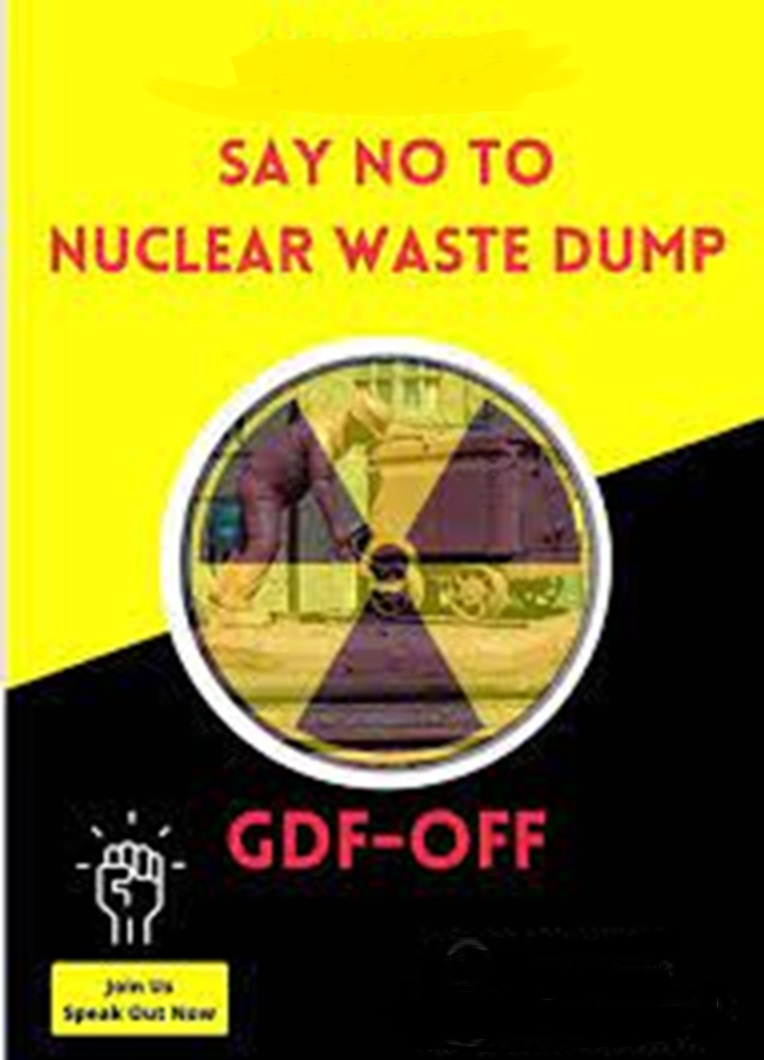
A previous survey revealed that 85 per cent of local residents were against the dump, which would store nuclear waste beneath up to 1,000 metres of solid rock until its radioactivity naturally decayed.
By Richard Silverwood, 3rd Feb 2025,
The bombshell news that a nuclear waste dump could now be built on greenfield land close to Louth has been greeted with dismay by campaigners and the town’s MP.
East Lincolnshire has long been identified as one of three potential locations for the dump, known as a GDF (geological disposal site).
And the government agency, Nuclear Waste Services (NWS), charged with finding a suitable area, has focused its attention on the former gas terminal site, operated by Conoco, within the coastal village of Theddlethorpe.
But now NWS has announced that it is looking inland and “beyond Theddlethorpe”. Instead, it is “prioritising” largely agricultural land to the north of the A157 road, between the villages of Gayton le Marsh and Great Carlton and south-west of Gayton Wind Farm.
A network of underground vaults and tunnels would transfer shipments of waste to a sealed storage area under the seabed which would extend 22 kilometres from the coast.
NWS insists nothing has been decided and has promised to keep all residents informed. A series of webinars and public drop-in events is already under way and will continue throughout February.
However, opponents of the dump, led by Conservative MP Victoria Atkins, are furious and are calling for a public vote on the entire scheme.
Ms Atkins said: “I have opposed the threat of a nuclear waste dump on the Lincolnshire coast since the proposal came to light several years ago.
“In that time, residents have had to live with the uncertainty, worry and financial costs of having this monstrous carbuncle threatened in their area.
“People have been left in limbo and have had their house prices severely impacted by these proposals.
“This latest news will be very distressing for the residents in and around the area. Rest assured, I will be meeting NWS in the coming week to continue to put pressure on them to move their focus away from Lincolnshire entirely………………………
The campaign group, Guardians Of The East Coast, has also lambasted the latest proposal, claiming the switch has been made because the Theddlethorpe site would not be large enough.
Chairman Mike Crookes said the fresh site would span 900 acres of agricultural land, including at least one farm. He called on Lincolnshire County Council to withdraw their apparent engagement with the dump scheme process.
“The council has expressed its outrage at agricultural land being taken for solar farms and pylons by National Grid,” Mr Crookes said.
“But it seems perfectly happy with a square mile of agricultural land being used to bury high-level nuclear waste, including weapons-grade plutonium.
“When the project was first announced, the council said it was policy to make use of ‘brownfield’ sites such as the gas terminal.
“But if it has a policy of opposing the industrial use of agricultural land, why is it apparently facilitating this project?”
Another group firmly against the nuclear waste dump is the Nuclear Free Local Authorities (NFLA), whose secretary Richard Outram described the fresh site as “worse than the original”.
“The news will have come as a tremendous shock to the residents of Gayton le Marsh and Great Carlton, where the threat of a dump suddenly appears writ large.
“Those residents are already up in arms and, doubtless in the coming days, new protest groups will be formed to represent the people affected.
“It is important to emphasise that the decision on the final site for a GDF is still a long way off. There is still time to organise and fight back.”
Coun Travis Hesketh, who represents the ward of Withern and Theddlethorpe on East Lindsey District Council, said residents were demanding a public vote – and this year, not in 2027 as previously promised.
A previous survey revealed that 85 per cent of local residents were against the dump, which would store nuclear waste beneath up to 1,000 metres of solid rock until its radioactivity naturally decayed.
However, NWS is hoping to win people over and has set up a community partnership group to fully explain the scheme.
Hidden history of RAF airfield may be lost in latest nuke dump plan
The latest announcement by Nuclear Waste Services making the site of RAF
Millom part of the Area of Focus in South Copeland may lead to the airfield
and its rich wartime history being lost to a nuclear waste dump.
NFLA 4th Feb 2025, https://www.nuclearpolicy.info/news/hidden-history-of-raf-airfield-may-be-lost-in-latest-nuke-dump-plan/
The national missile defense fantasy—again

Bulletin, By Joe Cirincione | February 4, 2025
National missile defense advocates live in a world of magic and make-believe. Fantasy replaces science, assertions replace facts, and cartoon weapons replace real capabilities.
This enduring fantasy, however, has real-world consequences.
President Donald Trump’s pledge last week to build “a next-generation missile defense shield” that would “defeat any foreign aerial attack on the Homeland [with] space-based interceptors” has provoked a predictable reaction. Russia blasted Trump’s plan, detailed in his new executive order, “The Iron Dome for America.”
But no magic shield is going to protect the United States against nuclear attack.
An idea that never dies. Russian Foreign Ministry spokesperson Maria Zakharova said on Friday of Trump’s plan that “it directly envisages a significant strengthening of the American nuclear arsenal and means for conducting combat operations in space, including the development and deployment of space-based interception systems.”
“We consider this as another confirmation of the US focus on turning space into an arena of armed confrontation… and the deployment of weapons there,” Zakharova added.
The Russian reaction could scuttle Trump’s stated desire to negotiate limits on nuclear weapons. If so, it would repeat the role strategic defenses have played in the Cold War’s nuclear arms race. Efforts to build national defenses always trigger efforts to overcome them with more missiles and other counter-measures—the well-known security dilemma.
Despite all the formidable technical and geopolitical evidence against such schemes, however, “faith in national missile defense never dies,” Washington Post columnist Max Boot observes.
It is no coincidence that Trump’s new order is lifted almost entirely from the Heritage Foundation’s Project 2025 wish list. In the 1980s, the group championed President Ronald Reagan’s original dream to “put in space a shield that missiles could not penetrate—a shield that could protect us from nuclear missiles just as a roof protects a family from rain,” as he told a 1986 high school graduating class.
“Like Israel’s highly effective system of the same name, President Trump’s Iron Dome will provide an impenetrable defense for the American people that will bring peace through strength,” Heritage Foundation fellow Victoria Coates said. It “will fulfill President Reagan’s vision for the Strategic Defense Initiative laid out some four decades ago,” she added.
Doomed to fail. Trump’s executive order is a jumble of false claims and imaginary solutions. It begins by declaring that the risk of a missile attack “remains the most catastrophic threat facing the United States.” That would surprise most experts on existential risks. The climate crisis, the threat of new pandemics, artificial intelligence, and crippling cyber attacks are all at least as likely catastrophic events as nuclear weapons delivered by other means. But threat inflation has always been a key part of efforts to justify urgent action and massive investment.
Trump claims that “over the past 40 years, rather than lessening, the threat from next-generation strategic weapons has become more intense and complex.” Despite being utter nonsense, this claim has gone largely unchallenged.
While it is true that new technologies have increased the lethality of missiles, the missile threat to the United States has decreased dramatically. Arms control treaties and the collapse of the Soviet Union slashed the number of nuclear weapons and nuclear-armed missiles threatening the United States.
In 1985, the Soviet Union deployed 2,345 land-based and submarine-based missiles carrying over 9,300 nuclear warheads. That was the threat Reagan hoped to render “impotent and obsolete” with his missile shield.
Thanks to negotiated agreements, today’s Russia fields only 521 missiles, carrying 2,236 warheads. China’s land-based nuclear-armed missiles capable of reaching the United States have increased from around 20 in 1985 to some 135 today (carrying 238 warheads) and perhaps 72 single-warhead submarine-based missiles. In sum, the United States today faces roughly one-fifth the number of enemy missiles compared to 40 years ago and one-quarter of the nuclear warheads (728 vs. 2,365 missiles and 2,546 vs. 9,320 warheads). That is still a very dangerous threat but by no means a greater one.
Where arms control succeeded, missile defense technology failed.
None of the scores of systems developed by Reagan’s Strategic Defense Initiative (SDI) and its successor organizations have ever come close to providing the imaginary shield that Reagan promised. National missile defenses did not work then. They do not work now. They will likely never work………………………………………
As it became clear that the space-based laser weapons Edward Teller told Reagan he could build were a fantasy, Reagan and subsequent presidents scaled down the program to try to get some kind of workable defense. But after spending over $415 billion over decades, all the United States has to show for the effort is 44 ground-based interceptors in Alaska and California that can hit a cooperative target in carefully scripted demonstrations—about half of the time. Congress currently allocates $30 billion a year on missile defense and defeat programs, most run by the SDI successor, the Missile Defense Agency.
Not an iron dome; more like an iron colander. The major technical problems that remain unresolved—and eventually forced the cancellation of all SDI’s ambitious plans—are the same obstacles that have ruled out an effective ballistic missile defense for more than 60 years:
- the ability of the enemy to overwhelm a system with offensive missiles;
- the questionable survivability of space-based weapons;
- the inability to discriminate among real warheads and hundreds or thousands of decoys;
- the problem of designing battle management, command, control, and communications that could function in a nuclear war; and,
- the low confidence in the ability of the system to work perfectly the first—and, perhaps, only—time it is ever used.
……………………………………………………………………“There is zero possibility of a comprehensive missile defense of the United States in the foreseeable future,” James N. Miller, who served as undersecretary of defense in the Obama administration, told Max Boot. “We are not going to escape mutual assured destruction vis-à-vis Russia or China.”
As shown repeatedly over the past 60 years, the only way to eliminate the threat of nuclear-armed missiles is to negotiate their elimination. Pretending that there is a magic shield that can be willed into existence will only make the problem of national missile defense worse. https://thebulletin.org/2025/02/the-national-missile-defense-fantasy-again/
Google deletes policy against using AI for weapons or surveillance

The pledge had been in place since 2018.
Mashable By Amanda Yeo on February 5, 2025
Google has quietly deleted its pledge not to use AI for weapons or surveillance, a promise that had been in place since 2018.
First spotted by Bloomberg, Google has updated its AI Principles to remove an entire section on artificial intelligence applications it pledged not to pursue. Significantly, Google’s policy had previously stated that it would not design nor deploy AI technology for use in weapons, or in surveillance technology which violates “internationally accepted norms.”
Now it seems that such use cases might not be entirely off the table.
“There’s a global competition taking place for AI leadership within an increasingly complex geopolitical landscape,” read Google’s blog post on Tuesday. “We believe democracies should lead in AI development, guided by core values like freedom, equality, and respect for human rights. And we believe that companies, governments, and organizations sharing these values should work together to create AI that protects people, promotes global growth, and supports national security.”
While Google’s post did concern its AI Principles update, it did not explicitly mention the deletion of its prohibition on AI weapons or surveillance. ……………………..
Google first published its AI Principles in 2018, following significant employee protests against its work with the U.S. Department of Defense. (The company had already infamously removed “don’t be evil” from its Code of Conduct that same year.) Project Maven aimed to use AI to improve weapon targeting systems, interpreting video information to increase military drones’ accuracy.
In an open letter that April, thousands of employees expressed a belief that “Google should not be in the business of war,” and requested that the company “draft, publicize and enforce a clear policy stating that neither Google nor its contractors will ever build warfare technology.”
The company’s AI Principles were the result, with Google ultimately not renewing its contract with the Pentagon in 2019. However, it looks as though the tech giant’s attitude toward AI weapons technology may now be changing.
Google’s new attitude toward AI weapons could be an effort to keep up with competitors. Last January, OpenAI amended its own policy to remove a ban on “activity that has high risk of physical harm,” including “weapons development” and “military and warfare.” In a statement to Mashable at the time, an OpenAI spokesperson clarified that this change was to provide clarity concerning “national security use cases.”
“It was not clear whether these beneficial use cases would have been allowed under ‘military’ in our previous policies,” said the spokesperson……………
Now Google’s revised policy has consolidated this list to just three principles, merely stating that its approach to AI is grounded in “bold innovation,” “responsible development and deployment,” and “collaborative process, together.” The company does specify that this includes adhering to “widely accepted principles of international law and human rights.” Still, any mention of weapons or surveillance is now conspicuously absent. https://mashable.com/article/google-ai-weapons-surveillance-policy
Local opinion: Raytheon pushes The Doomsday Clock closer to midnight

because of their work on both the LRSO and Tomahawk cruise missiles, Raytheon is now seen as the leading contender to produce even more nuclear weapons in the form of new sea-launched nuclear cruise missiles. This further escalation would represent a huge setback to hard-won nuclear arms control progress, when nuclear-armed Tomahawks were removed from submarines over 30 years ago.
Jack Cohen-Joppa Special to the Arizona Daily Star, Jan 31, 2025, 31, 2025, https://tucson.com/opinion/column/local-opinion-raytheon-pushes-the-doomsday-clock-closer-to-midnight/article_46da901c-df20-11ef-8e77-235556fbeeb6.html
In Tom Lehrer’s classic Cold War ditty, “So Long Mom,” a nuclear bomber pilot sings, “I’ll look for you when the war is over, an hour and a half from now.”
It’s darkly funny, because even though we don’t talk much about it, we all know it’s true. Planned or imagined, nuclear war scenarios rarely last longer.
But how much time have we got before then? How near is that threat of omnicide today?
The Doomsday Clock is a visual metaphor created by the Bulletin of Atomic Scientists back in 1947 to illustrate how close we are to global calamity from nuclear weapons and other looming threats to civilization as we know it. Originally set at seven minutes to midnight, in 2023 it advanced to 90 seconds to midnight, largely due to nuclear threats from war in Ukraine.
And Raytheon keeps pushing us closer.
In April 2020, Raytheon, with more than 12,000 local employees and the bulk of its research, development and production based here in Tucson, was awarded a sole-source contract to produce about 1,000 new nuclear-armed, air-launched cruise missiles. Known by the anodyne acronym LRSO (Long Range Stand Off), the missile is arguably both redundant and destabilizing in a time of disappearing nuclear diplomacy.
Not only that, but because of their work on both the LRSO and Tomahawk cruise missiles, Raytheon is now seen as the leading contender to produce even more nuclear weapons in the form of new sea-launched nuclear cruise missiles. This further escalation would represent a huge setback to hard-won nuclear arms control progress, when nuclear-armed Tomahawks were removed from submarines over 30 years ago.
Why aren’t we talking about it in Tucson? Senators Mark Kelly and Ruben Gallego and Rep. Juan Ciscomani all vote for U.S. nuclear domination. Only Rep. Raul Grijalva has spoken out for the 2017 Treaty on the Prohibition of Nuclear Weapons, now adopted by more than half the nations of the world. Despite near-universal condemnation of nuclear weapons by leaders of the world’s religions, we could use more local political and religious leaders speaking out against this blasphemous enterprise in our backyard.
It’s not as if it’s a military secret. The industry press has recently carried reports of LRSO flight tests, budget allocations, production schedules and more. Yet local media have not kept up.
Raytheon also has nothing to say. Usually, Southern Arizona’s largest employer and exporter is mighty proud of the panoply of products in their military portfolio. Their website is filled with fulsome boasts and lurid photos of deadly hardware. But the baddest boy of the bunch is missing in action. The nuclear-armed LRSO only pops up in a handful of financial reports. Raytheon’s original press release heralding the multibillion-dollar contract was posted on its website and quoted by the Tucson media in April 2020. But now it’s gone, simply deleted from its media archive.
Perhaps management has realized that there is nothing to be gained by crowing about their only product that, if used as intended, would be the instrument of multiple war crimes and crimes against humanity (incomprehensible death and devastation, disproportionate civilian casualties, lasting contamination of land and water, etc.). Raytheon’s “products” are certainly nothing I’m proud of as a Tucsonan.
This is the same Raytheon/RTX that last November was fined nearly $1 billion for defrauding the government (i.e., the taxpayer) and paying multiple bribes to promote business with the government of Qatar.
Experts debate whether the LRSO is intended for a nuclear surprise attack, or just another layer of “deterrence.” But if it isn’t meant to be used first, that just makes it fit into plans for a full-scale nuclear war. All ninety minutes of it.
Shouldn’t we all pay more attention, and demand that our elected leaders resist this insanity?
Trump Asks Congress To Approve $1 Billion Arms Transfer to Israel

The deal will be funded by US military aid and includes 1,000-pound bombs and armored bulldozers
by Dave DeCamp February 3, 2025 , https://news.antiwar.com/2025/02/03/trump-asks-congress-to-approve-1-billion-arms-transfer-to-israel/
The Trump administration has asked congressional leaders to approve a new $1 billion weapons transfer to Israel that will be funded by US military aid, The Wall Street Journal reported on Monday.
The deal includes 4,700 1,000-pound bombs worth more than $700 million and $300 million worth of armored bulldozers, which the Israeli military uses to demolish homes and infrastructure in Gaza and the West Bank.
The request for the new arms transfer comes as Israeli Prime Minister Benjamin Netanyahu is in Washington and set to meet with President Trump at the White House on Tuesday. He’s expected to push for US support for Israel to restart its genocidal war in Gaza instead of fully implementing the ceasefire deal.
The Journal report said Netanyahu is also expecting Trump to push ahead with a massive $8 billion deal that President Biden notified congressional leaders about in early January. The report said some Democrats in Congress put a hold on the massive sale and that the Trump administration is now pushing congressional leaders to unblock it.
The $8 billion deal includes munitions for fighter jets and attack helicopters as well as artillery shells. The Trump administration also recently released a hold on a shipment of 2,000-pound bombs for Israel.
Israeli officials suggested that the increased military aid was part of a deal to get Netanyahu to agree to the Gaza ceasefire deal. Trump’s envoy for the Middle East, Steve Witkoff, has said he’s pushing for the full implementation of the agreement, but the ceasefire is very fragile as Netanyahu doesn’t want to implement the second phase.
OpenAI Strikes Deal With US Government to Use Its AI for Nuclear Weapon Security
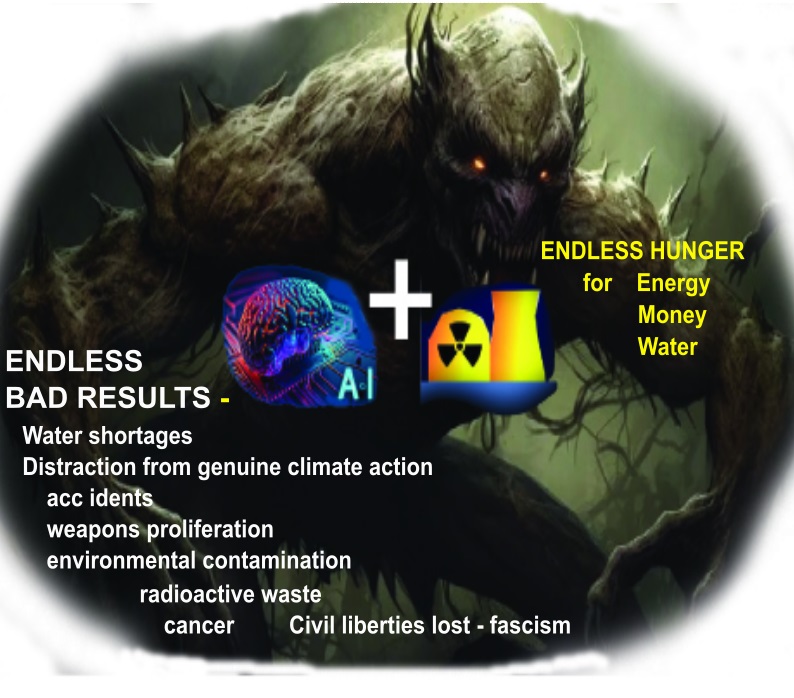
31 Jan24, https://futurism.com/openai-signs-deal-us-government-nuclear-weapon-security
Wait, isn’t this the plot to the “Terminator” movies?
“There was a nuclear war,” a character explains. “Defense network computers. New… powerful… hooked into everything, trusted to run it all. They say it got smart, a new order of intelligence. Then it saw all people as a threat, not just the ones on the other side. Decided our fate in a microsecond: extermination.”
It seems like either the execs at OpenAI have never seen it or they’re working overtime to make that premise a reality.
Don’t believe us? OpenAI has announced that the US National Laboratories will use its deeply flawed AI models to help with a “comprehensive program in nuclear security.”
As CNBC reports, up to 15,000 scientists working at the institutions will get access to OpenAI’s latest o1 series of AI models — the ones that Chinese startup DeepSeek embarrassed on the world stage earlier this month.
According to OpenAI CEO Sam Altman, who announced the partnership at an event in Washington, DC, the tech will be “focused on reducing the risk of nuclear war and securing nuclear materials and weapons worldwide,” as quoted by CNBC.
If any alarm bells are ringing by this point, you’re not alone. We’ve seen plenty of instances of OpenAI’s AI models leaking sensitive user data and hallucinating false claims with abandon.
OpenAI’s been making a huge push into government. Earlier this week, the Sam Altman-led company released ChatGPT Gov, a platform specifically designed for US government use that focuses on security.
But whether the company can deliver on some sky-high expectations — while also ensuring that its frequently lying AI chatbots won’t leak the nuclear codes or trigger the next nuclear war — is anyone’s guess.
The news comes after the Wall Street Journal reported that OpenAI is in early talks for a new round of funding that would value it at a gargantuan $340 billion, double its previous valuation last year.
Altman has also fully embraced president Donald Trump, gifting him $1 million for his inauguration and claiming that he had “really changed my perspective on him” after trashing him in years past.
OpenAI also signed onto Trump’s $500 billion AI infrastructure deal, dubbed Stargate, with the plan of contributing tens of billions of dollars within the next year.
Whether the company’s o1 reasoning models will prove useful in any meaningful way to the researchers at the US National Laboratories remains to be seen.
But given the widespread dismantling of regulations under the Trump administration, it also feels like an unbelievably precarious moment to be handing over any amount of control over nuclear weapons to a busted AI system.
Trump says he wants new nuclear deal letting Iran ‘prosper’
AFR, Arsalan Shahla, Feb 6, 2025
Washington | US President Donald Trump said he was willing to immediately start working on a new nuclear deal with Iran that allows the country to “peacefully grow and prosper”, seemingly softening his stance on the Islamic Republic.
“Reports that the United States, working in conjunction with Israel, is going to blow Iran into smithereens, ARE GREATLY EXAGGERATED,” Mr Trump said in a post on his social networking site Truth Social on Wednesday (Thursday AEDT).
He didn’t give details on what such an agreement would entail, and Iranian officials haven’t yet responded to the post.
The US has long accused Tehran of using a decades-old civilian nuclear program to disguise ambitions to develop weapons, a claim repeatedly denied by Iran. The latest comments contrast with Mr Trump’s attitude in his first term, when he ordered a fatal strike on Iran’s most senior military general and prompted fears that the US would be drawn into war.
Mr Trump posted the Truth Social statement hours after signing a directive that calls for tough enforcement of existing sanctions. The move effectively revives his first-term “maximum pressure” strategy, including unilaterally quitting a landmark 2015 agreement that limited Iran’s nuclear program in exchange for sanctions relief.
Those measures weakened Iran’s economy but failed to thwart the country’s regional ambitions and instead triggered a security crisis in the oil-rich Persian Gulf that embroiled neighbouring Saudi Arabia and sent jitters through global energy markets.
Earlier, Iranian Foreign Minister Abbas Araghchi said Mr Trump’s maximum pressure strategy would continue to fail. “If the main issue is ensuring that Iran doesn’t pursue nuclear weapons, that’s already a firm commitment, Iran’s position is clear,” Mr Araghchi said in comments aired on state TV.
Oil prices fell as traders weighed concerns that a trade war between the US and China will hurt global growth against the possibility of further economic pressure on OPEC member Iran.
Withstanding the pressure
Mr Araghchi said Iran was already party to the treaty on the non-proliferation of nuclear weapons – a post-war international agreement seeking to prevent the spread of atomic bombs – and the country’s supreme leader, Ayatollah Ali Khamenei, had years earlier issued an Islamic ruling forbidding them.
However, the world’s top nuclear regulator said last month Iran’s stockpile of near-bomb-grade enriched uranium continued to grow. France, Germany and the UK asked inspectors with the International Atomic Energy Agency to prepare a special report in the first half of 2025 about Iran’s nuclear activities.
During Mr Trump’s initial term, the “maximum pressure” regime translated into strong sanctions and tough enforcement, including chasing Iranian oil cargoes on the high seas and killing the country’s most powerful military figure in a targeted drone strike……. https://www.afr.com/world/north-america/trump-says-he-wants-new-nuclear-deal-letting-iran-prosper-20250206-p5l9y6
UAE Turns to Satellites to Shield Region’s Only Nuclear Plant From Climate Risks
The United Arab Emirates, which operates the Gulf’s only commercial
nuclear power station, is for the first time taking special measures to
protect the project from the devastating impact of climate change. Since
September, the Federal Authority for Nuclear Regulation and the Mohammed
Bin Rashid Space Centre have been monitoring climate and the environment
around the Barakah plant from space, officials from the regulatory body
said in Abu Dhabi. They have been collecting information on sea levels,
land and water temperatures, earthquakes and other threats, and assessing
their severity and potential impact.
Bloomberg 4th Feb 2025, https://www.bloomberg.com/news/articles/2025-02-04/uae-turns-to-satellites-to-shield-region-s-only-nuclear-plant-from-climate-risks
Ministers will relax rules to build small nuclear reactors
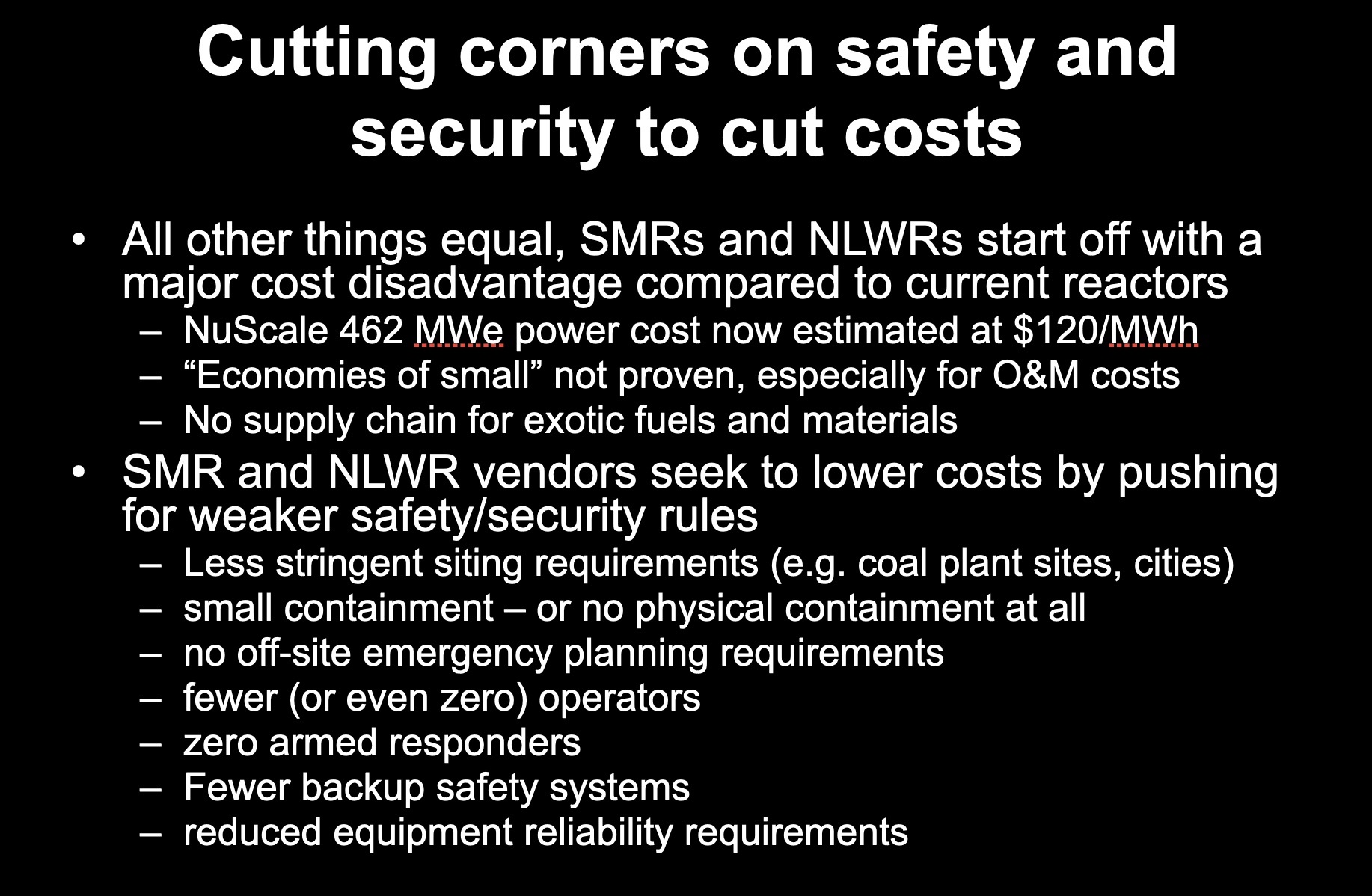
Ministers are preparing to relax planning rules to make it easier to build mini nuclear
power plants in more parts of the country in order to hit [?] green energy
targets and boost the industry.
They are also examining whether it is
possible to streamline the process for approving the safety of new nuclear
power plants as a way to reduce construction delays. At present rules state
that only the government may designate sites for potential nuclear power
stations, of which there are eight, severely limiting where they can be
built. T
his is seen as a serious barrier to developing small modular
reactors (SMRs) that could be placed in various locations across the
country, providing power for remote areas or power-hungry developments such
as data centres for artificial intelligence.
Under plans to update the
planning regime with a new national policy statement on nuclear power,
companies would be free to develop SMRs in most areas of the country
outside built-up areas and would also benefit from fast-tracked planning
approval, as the power plants would be designated nationally significant
infrastructure.
Rachel Reeves, the chancellor, is expected to use the
government’s spending review to announce funding for one of two small
modular reactors designs. GE Hitachi Nuclear Energy and Rolls-Royce are
among companies competing for the funding in a process being run by Great
British Nuclear. Reeves is also expected to make a final funding decision
on Sizewell C.
Times 5th Feb 2025, https://www.thetimes.com/uk/politics/article/labour-ministers-rachel-reeves-relax-nuclear-reactor-rules-92cpcc6wj
IAEA chief, in Kyiv, warns of nuclear risk from attacks on Ukraine grid
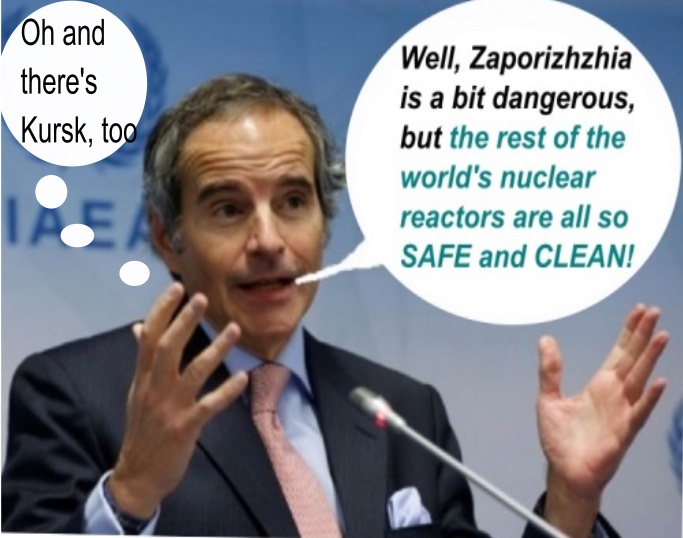
International Atomic Energy Agency (IAEA) chief Rafael Grossi said late on
Monday that he was on his way to visit Kyiv and inspect a key substation
that is critical for the safety of Ukraine’s nuclear power. “On my 11th
visit to Ukraine since the war began,” Grossi wrote on X. “I’m heading to
Kyivska substation, critical for the safety of Ukraine’s nuclear power, to
assess damage and help prevent a nuclear accident.” Last week, the IAEA
said in a statement that Grossi would visit Kyiv for “high-level” meetings
to ensure nuclear safety in the war that Russia started in February 2022.
Reuters 3rd Feb 2025, https://www.reuters.com/world/europe/iaeas-grossi-heads-kyiv-crucial-nuclear-safety-inspection-2025-02-03/
Engineer who worked on Hinkley Point C nuclear project quizzed on suspicion of being a Russian spy
A nuclear power station worker was quizzed on suspicion of being a spy
after he returned to the UK from Russia. Mario Zadra, a 67-year-old Italian
national, worked at Hinkley Point C in Somerset from 2020 to 2023, and was
questioned by counter-terrorism police after he flew into Heathrow airport
on April 12, 2023. It was reported that potentially sensitive documents
were found in his possession and were seized by the authorities to prevent
them being ‘used to carry out a hostile attack’.
Daily Mail 3rd Feb 2025,
https://www.dailymail.co.uk/news/article-14355483/Nuclear-power-worker-suspicion-Russian-spy.html
AI’s Energy Demands Threaten a Nuclear Waste Nightmare
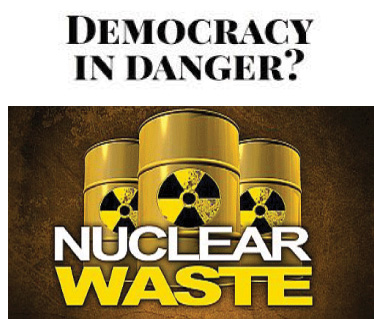
Reviving nuclear power plants to power AI threatens an avalanche of nuclear waste
By Michael Riordan , https://www.scientificamerican.com/article/ais-energy-demands-threaten-a-nuclear-waste-nightmare/ January 31, 2025
Long in decline, the U.S. nuclear industry is hoping for resurrection at two sites of its greatest failures: Three Mile Island in Pennsylvania and the Hanford Site in Washington state. Nuclear power, the industry claims, will help satisfy the surging power demands from data centers and the growing AI economy. But such a wrong turn ignores the long-unresolved problems of radioactive nuclear wastes that AI cannot wish away.
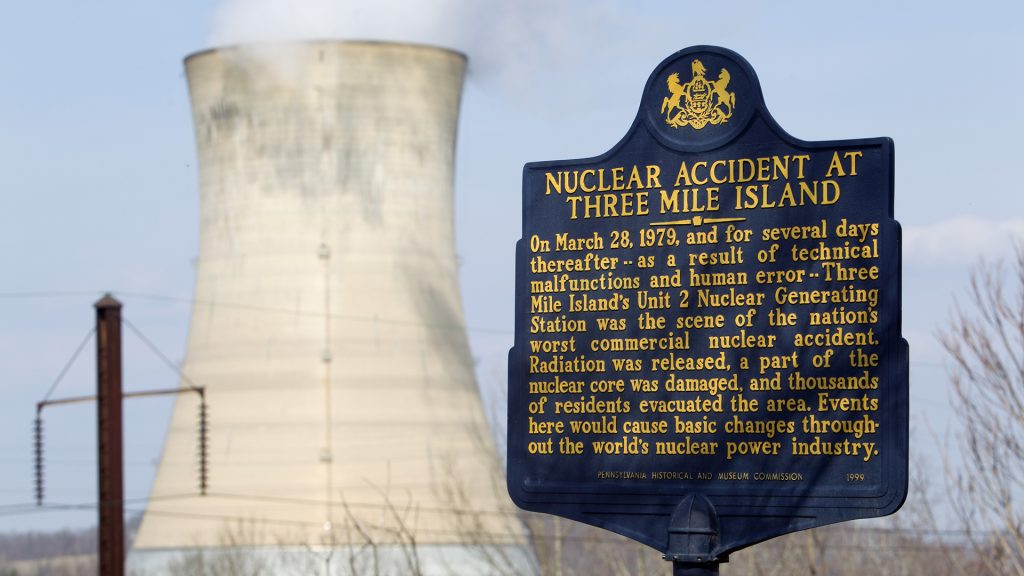
In September Constellation Energy announced plans to restart a shuttered reactor at Three Mile Island, prodded by Microsoft, which will need many gigawatts of power to perform extensive AI calculations in its expanding fleet of data centers. Amazon followed suit and announced in November that it will invest $334 million to develop small modular nuclear reactors (SMRs) at Hanford, site of the world’s first plutonium-production facility.
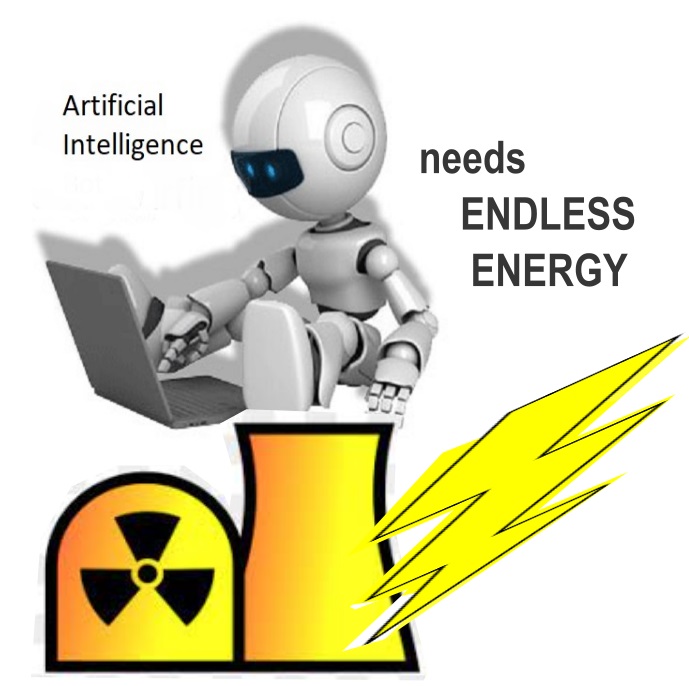
Google and Meta are also hoping to bring nuclear power back. In October 2024 Google announced it eventually plans to purchase 500 megawatts of electricity from Kairos Power, which is developing a novel SMR in Oak Ridge, Tenn., on the site of the national lab that long refined uranium for the nuclear industry. And Facebook parent Meta is seeking bids for nuclear power plants for its data centers.
These tech giants recognize that the next generation of microprocessors to be used for AI calculations at data centers will require oodles of electricity to power and cool them. A single Nvidia Blackwell chip, for example, can draw up to two kilowatts, more than what is needed for a typical house. Cram thousands of them in servers inside a data center, and they will need as much power as a small city.

So-called hyperscale data centers require over 100 megawatts (100 MW)—a sizeable fraction of the output of a major power plant. And that power should be cheap, steady and reliable.
An authoritative December 2024 report from the U.S. Department of Energy, written by energy experts at the Lawrence Berkeley National Laboratory, is especially illuminating. The growth in U.S. data-center energy usage over the next five years, they state, would correspond “to a total power demand for data centers between 74 and 132 [gigawatts].” That would represent some 7 to 12 percent of the U.S. electricity consumption forecast for 2028.
Where on Earth is all this power going to come from? Given the challenges electric utilities face in supplying electricity to meet other growing needs, including electric vehicles, it’s small wonder that big tech has turned back to the atomic nucleus. But the power demands outlined in the DOE report would require building or resurrecting the equivalent of at least 40 Three Mile Island reactors over the next five years. That’s impossible.
Several years ago Amazon, Google, Meta and Microsoft promised not to exacerbate atmospheric carbon-dioxide levels. But that laudable goal is becoming increasingly difficult to achieve, given their data centers’ exploding electricity consumption. So they have instead begun touting a return to nuclear power to avert this thorny problem. That’s a huge mistake.
Nuclear power is indeed a source of carbon-emission-free energy, but it is hardly a clean energy source, and it is definitely not renewable. All along the uranium supply chain—from mining to enrichment to the fabrication of fuel rods or pellets—opportunities abound for radioactive releases. In South Texas, for example, landowners worry about contamination of their groundwater by renewed uranium mining activities nearby.
The diagram below illustrates carbon emissions – but the same picture applies also to radioactive emissions

Since 1989, the DOE has spent hundreds of billions of taxpayer dollars cleaning up the original nuclear complex—including the gargantuan Oak Ridge factory that enriched much of the uranium used for commercial nuclear power. And despite decades of trying, the department has yet to fully clean up and dismantle the oozing, disintegrating tanks of highly radioactive wastes left over from plutonium processing at Hanford.

The storage and containment of spent nuclear fuel is in fact the crucial unresolved challenge of the U.S. nuclear industry. Over 90,000 tons of these wastes are stored at 77 sites in 35 states—an amount increasing by over 2,000 tons a year.
Small modular reactors, promoted by Microsoft co-founder Bill Gates and others, will only add to this growing burden. As former U.S. Nuclear Regulatory Commission (NRC) chair Allison Macfarlane and Rodney C. Ewing of Stanford University stated, “In some cases these new reactors may make it worse by creating more waste that’s more costly to manage, new kinds of complex waste, or just more waste, period.”
Elsewhere, Macfarlane stressed the procedural and practical difficulties faced by novel nuclear reactor technologies in gaining NRC acceptance and achieving commercial success. Shortly after it had received NRC certification in 2023, for example, the much-touted NuScale SMR project was abandoned after anticipated construction costs more than doubled to $9.3 billion. Leaving aside the waste problem, a commercially successful SMR design is probably over a decade away.
But the relentless AI gold rush, if left unchecked, will impose unattainable demands on projected power supplies well before that. Meanwhile, electricity rates will rise inexorably in light of the law of supply and demand. That looming energy crisis explains big tech’s efforts to slow shutdowns of fossil-fueled power plants and to resurrect shuttered reactors.
Amazon, Google, Meta and Microsoft executives should instead take a deep breath and begin reevaluating their options. Do they really need to build and upgrade data centers at such a breakneck pace? Or is this devil-take-the-hindmost AI arms race just the result of bitter competition, prodded by recent advances in semiconductor technology?
And what about the truly clean, renewable energy sources they once embraced—especially solar, wind and geothermal? Yes, the variability of solar and wind energy makes them a poor match to the steady power requirements of data centers. But energy storage has come a long way recently and has a promising future. And the recent startling success of the Chinese DeepSeek AI program demonstrates that software efficiency will play an important role in this effort.
Given the dark clouds still lingering over nuclear power, especially its unresolved waste problem, these renewable alternatives deserve renewed consideration.
They won’t tell you these truths about nuclear energy
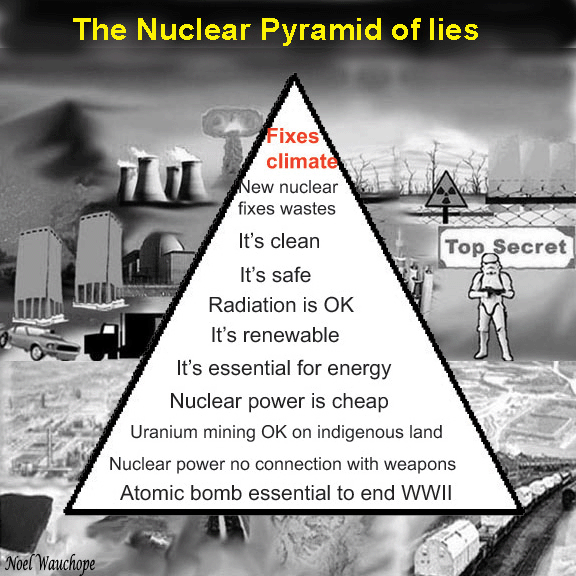
by Cindy Folkers and Amanda M. Nichols, opinion contributors – 02/02/25 , https://thehill.com/opinion/energy-environment/5118792-nuclear-power-industry-radiation-debunk/?fbclid=IwY2xjawIOldhleHRuA2FlbQIxMQABHfrKakROFL169LYfifqZe6YoIrO_jAtv23bm6hkyL0zF7neIUesv9XURpw_aem_ocJM3kdP_FV_AlGdyUVxdg
Scientists have been arguing about the health risks from radiation since the end of the 19th century, when radioactivity was first discovered. Today, with electricity demand soaring and AI companies clamoring for their own nuclear power plants, from small modular reactor projects to giant new nuclear builds, that century-old argument is ongoing.
But now it’s mostly a battle between scientists on the one hand and the nuclear industry, the politicians it lobbies and gullible media on the other.
Currently, scientists are being drowned out. The Biden administration proposed to triple U.S. nuclear capacity by 2050, and President Trump is perceived as favoring nuclear expansion as well. Despite reams of peer-reviewed studies and books showing radiation’s harmful effects, there is persistent denialism that seems impervious to fact-checking.
It took until this century for the U.S. government to finally admit that radiation had killed workers at nuclear weapons plants. For Congress, compensating them remains politically radioactive: lawmakers failed to reauthorize the Radiation Exposure Compensation Act that expired in 2024. Media coverage increasingly and uncritically repeats the talking points of nuclear industry spokespeople, who preposterously claim you would have to stand next to nuclear waste for a year to get as much radiation as having an X-ray, or that eating a banana gives you as much radiation exposure as living next to a nuclear plant.
This is dangerous disinformation in a long line of dangerous disinformation.
After the U.S. dropped atomic bombs on Japan, the director of the Manhattan Project, Gen. Leslie R. Groves, debunked reports of radiation sickness as Japanese “propaganda.” Later, when he had to admit its existence, Groves misled Congress and the public by saying it was “a very pleasant way to die.”
Spreading such lies is bad enough. What is even worse is that the truth of the matter has been actively and deliberately suppressed.
Scientists who first dared to expose radiation’s harms — cancer, birth defects, disproportionate impacts on females — had their funding and data seized and suffered professional ostracism and vilification.
Spreading such lies is bad enough. What is even worse is that the truth of the matter has been actively and deliberately suppressed.
Scientists who first dared to expose radiation’s harms — cancer, birth defects, disproportionate impacts on females — had their funding and data seized and suffered professional ostracism and vilification. Yet their early scientific findings were largely vindicated. It’s now well established that exposure to ionizing radiation has adverse health impacts, affecting the heart, lungs, thyroid, brain and immune system, causing blood disorders, cataracts, malignant tumors, keloids and other chronic conditions. It wreaks genetic havoc that can result in cancer, organ dysfunction and immune and metabolic disorders. Children and pregnant women are particularly vulnerable.
It’s also proven that ionizing radiation disproportionately impacts women and girls, with the youngest worst affected. Ethnicity and other factors beyond biological sex and age may be contributing or compounding factors. There is also a growing body of evidence that radiation has transgenerational impacts.
Meanwhile, regulators set dose limits for radiation exposure that fly in the face of the evidence. These limits purport to set a “safe” level of radiation exposure, ignoring radiation researchers who have long stressed there is no such thing as a safe level, since any exposure can contribute to adverse health impacts.
In fact, nuclear technologies, including civilian power reactors, have poisoned large swaths of land — and not only the areas around Chernobyl and Fukushima, whose radioactive cesium contaminated Tokyo. The U.S. nuclear industry has left a lasting legacy of radiation in our environment, including in our water and food, which U.S. regulators are hardly able to effectively track, let alone remediate.
Uranium mining and nuclear weapons testing particularly and disproportionately affect Indigenous land and Native Americans, compounding the harms of colonization, exploitation and marginalization on already overburdened communities. Nuclear technologies have done and will continue to do long, slow violence, especially to the poor and marginalized, leaving long-lasting ecological, human-health and genetic impacts.
We seem unable to keep these inconvenient truths in our heads, the more so since well-financed nuclear lobbyists and their government targets have misdirected our attention by reframing nuclear power as key to fighting climate change.
This is a fallacy. There’s actually plenty of evidence showing the opposite — that relying on nuclear power actually makes climate change worse, and undercuts the true climate solution of renewables and efficiency. Even the Government Accountability Office called out the Nuclear Regulatory Commission for its nonsensical refusal to consider the growing dangers of operating nuclear plants amid climate change. But none of that has prevented countenancing the myth of nuclear as a climate strategy and other big lies about it
Perhaps the biggest lies about nuclear stem from Eisenhower’s 1953 “Atoms for Peace” speech, a carefully crafted bid to recast nuclear technology as peaceful after the atrocious 1945 Hiroshima and Nagasaki bombings. Atoms for Peace promised to make electricity “too cheap to meter” and “make the deserts bloom,” while deliberately concealing the truth that nuclear was utterly uncompetitive and not remotely economically viable as a power source. Civilian nuclear power was misdirection away from the real agenda of building nuclear power plants, which was to help supply the nuclear weapons complex, producing enriched plutonium as feedstocks for nuclear bombs in the burgeoning arms race.
Today, nuclear weapons are still the hidden agenda and secret rationale behind the otherwise nonsensical nuclear power industry. The resurgent nuclear arms race is the real reason why many tens of billions in federal subsidies ($53.5 billion in the Inflation Reduction Act alone, plus billions more in state subsidies) are propping up the utterly uncompetitive nuclear power industry, and why many billions more of taxpayers’ money is now getting thrown at corporations pushing chimerical “advanced” nuclear and uneconomical, dirty, failing small modular reactors (SMRs).
But some are pushing back, like Indigenous nations and public interest advocates in southwest Washington, where Amazon is pushing to build SMRs to power its AI business, heedless of their negative impacts and prohibitive costs.
Of all the dangers of reckless nuclear boosterism, the most insidious is disinformation concealing and denying nuclear’s past, present and future harms while wildly exaggerating its benefits. These are the perennial tactics of the nuclear industry. They litter its history, and they’re again getting traction today.
But they can be countered with sunshine — both the kind that powers real renewables with which nuclear can’t compete, and the kind that exposes its prevarications and lies with scientific evidence and public scrutiny.
Cindy Folkers is the radiation and health hazard specialist at the NGO Beyond Nuclear, and co-author with Ian Fairlie of the new book “The Scientists who Alerted us to the Dangers of Radiation.” Amanda M. Nichols, Ph.D. is a postdoctoral research fellow at University of California Santa Barbara’s Environmental Studies Program, and managing editor of the peer-reviewed Journal of Religion, Nature and Culture.
1 This Month
29 Jan. Thursday 7-8 p.m. Webinar – World’s Largest Nuclear Station in Port Hope, ON?
To see nuclear-related stories in greater depth and intensity – go to https://nuclearinformation.wordpress.com/



31st January – Challenging the War Machine – a DECLASSIFIED UK SUMMIT


Website of the Week
Now until to February 10, 2026 Radioactive waste storage in France: the debate is finally open! How to participate?
-
Archives
- January 2026 (283)
- December 2025 (358)
- November 2025 (359)
- October 2025 (376)
- September 2025 (258)
- August 2025 (319)
- July 2025 (230)
- June 2025 (348)
- May 2025 (261)
- April 2025 (305)
- March 2025 (319)
- February 2025 (234)
-
Categories
- 1
- 1 NUCLEAR ISSUES
- business and costs
- climate change
- culture and arts
- ENERGY
- environment
- health
- history
- indigenous issues
- Legal
- marketing of nuclear
- media
- opposition to nuclear
- PERSONAL STORIES
- politics
- politics international
- Religion and ethics
- safety
- secrets,lies and civil liberties
- spinbuster
- technology
- Uranium
- wastes
- weapons and war
- Women
- 2 WORLD
- ACTION
- AFRICA
- Atrocities
- AUSTRALIA
- Christina's notes
- Christina's themes
- culture and arts
- Events
- Fuk 2022
- Fuk 2023
- Fukushima 2017
- Fukushima 2018
- fukushima 2019
- Fukushima 2020
- Fukushima 2021
- general
- global warming
- Humour (God we need it)
- Nuclear
- RARE EARTHS
- Reference
- resources – print
- Resources -audiovicual
- Weekly Newsletter
- World
- World Nuclear
- YouTube
-
RSS
Entries RSS
Comments RSS
 nuclear-news