So Called Small Modular Reactors Would Be Nuclear Nightmares

Stanford-led research found that small modular reactors would exacerbate challenges of highly radioactive nuclear waste “We found that small modular reactors will generate at least nine times more neutron-activated steel than conventional power plants. These radioactive materials have to be carefully managed prior to disposal, which will be expensive.”
Note they took the word “Nuclear” out rather like the Geological Disposal Facility, lets not scare the horses!
Marianne Birkby, Radiation Free Lakeland 16th Feb 2025
There was an excellent letter in the Westmorland Gazette this week, a newspaper covering the South Cumbria area.
The letter from Philip Gilligan of South Lakeland and Lancaster District CND points out that the so called Small Modular Reactors would produce nuclear waste. This is true and bad enough but only tells part of the story. The waste from these new reactors would be far more dangerous than from existing reactors. Stanford-led research found that small modular reactors would exacerbate challenges of highly radioactive nuclear waste “We found that small modular reactors will generate at least nine times more neutron-activated steel than conventional power plants. These radioactive materials have to be carefully managed prior to disposal, which will be expensive.”
The study also found that the spent nuclear fuel from small modular reactors will be discharged in greater volumes per unit energy extracted and can be far more complex than the spent fuel discharged from existing power plants. Along with the increased radioactive wastes each site would require the presence of armed police from the Civil Nuclear Constabulary. As Noel Wauchope writes on the Australian Independent Media Network …
‘New Civil Engineer brought up a few points that have escaped notice, following the publication of the draft National Policy Statement for nuclear energy generation (EN-7) They note that; “Despite EN-7 being 64 pages, just two lines are dedicated to specifically addressing the security of SMRs.”
The new regulations for SMRs would allow for many new nuclear sites near communities.………… https://radiationfreelakeland.substack.com/p/so-called-small-modular-reactors
Starmer’s shortsighted push for more nuclear power.

So Starmer is going to sweep opposition aside in his shortsighted push for more nuclear power. Two good reasons why no nuclear power stations have been built since Sizewell B are the exorbitant cost and the impossibility of safe disposal of nuclear waste.
The nuclear industry is very good at promises, but poor on delivery. The size of nuclear power stations increased to get the savings of scale. We now see the nuclear industry rehashing technologies that were long abandoned because of cost or because the technology was too difficult.
Unbelievably, Sizewell C is progressing at pace and has been for two years, despite no investment decision having been made and an inadequate supply of water. We must not forget that the result of the inquiry recommended refusal of the development consent order application, but was overridden by the minister of state.
Arthur Stansfield
Wickham Market, Suffolk
Guardian 16th Feb 2025, https://www.theguardian.com/environment/2025/feb/16/starmers-nuclear-reactors-wont-be-small-cheap-or-popular
Trump open to Iran talks only if it abandons nuclear program, says US official
Iran International 16 Feb 25
US National Security Advisor Mike Waltz on Sunday said President Donald Trump is willing to engage in talks with Iran only on condition that Tehran fully abandon its nuclear program.
“The President has also expressed a willingness to take whatever action is necessary. All options are on the table,” Waltz told Fox News on Sunday, leaving the option of diplomatic channels open.
“They [Iran] are an irrational actor that we cannot allow to have their finger on the button,” he added.
He explained that Trump is willing “to talk to Iran” only on condition of giving up the “entire [nuclear] program and not play games as we’ve seen Iran do in the past”.
Waltz said that Iran’s nuclear program – which the head of the UN’s nuclear watchdog last year said is “weeks not months” from a weapon – could not only pose a threat to the region, but globally.
“President Trump is absolutely serious, deadly serious, when he says Iran can never have a nuke, and certainly not on his watch,” Waltz said.
“That not only would be existential for Israel, I think it would be existential for the entire world, because it could kick off a nuclear arms race in the Middle East,” he added.
‘No outreach from Iran’
Trump’s state secretary, Marco Rubio, told CBS later on Sunday that the US administration does not “have any outreach from Iran.”…………………………………………… more https://www.iranintl.com/en/202502164969
Will U.S. resume nuclear testing?

Experts warn of catastrophic fallout should atomic testing restart, writes Karl Grossman
“The United States may need to restart explosive nuclear weapons testing,” declared Robert Peters, research fellow for nuclear deterrence and missile defense at The Heritage Foundation, the right-wing organization close to the Trump administration, in a lengthy report last month. Issued on January 15, it was titled: “America Must Prepare to Test Nuclear Weapons.”
Peters stated that “the President may order the above-ground testing of a nuclear weapon….And while the United States leaving the [Nuclear] Test Ban Treaty may not be optimal and may indeed have negative downstream effects, doing so may be necessary to stave off further adversary escalation.”
There has not been a nuclear weapon tested above-ground in the United States since 1962, Peters said. That was a year before the Nuclear Test Ban Treaty of 1963 was signed by the U.S., Soviet Union and United Kingdom. It prohibits nuclear weapons tests in the atmosphere, underwater or in outer space. It allowed underground tests as long as they didn’t result in “radioactive debris to be present outside the territorial limits of the state under whose jurisdiction or control” the test was conducted.
“Resuming atmospheric testing of nuclear weapons would be disastrous,” says Joseph Mangano, executive director of the Radiation and Public Health Project. He cited the “lessons learned from above-ground nuclear weapons testing—the radioactive fall-out that harmed many people, especially infants and children.”
Testimony by a co-founder of the Radiation and Public Health Project, the late Dr. Ernest Sternglass, a physicist, before the then Congressional Joint Committee on Atomic Energy, was instrumental in President John F. Kennedy signing the Nuclear Test Ban Treaty of 1963. ……………………………………………………………………………………………………………………………………… more https://beyondnuclearinternational.org/2025/02/16/will-u-s-resume-nuclear-testing/
Secret terror blueprints for US NSC to ‘help Ukraine resist’ exposed.
The Grayzone, By Kit Klarenberg – February 15, 2025
Newly-leaked documents reveal a crew of military academics pitching the US National Security Council a series of extreme strategies for Ukraine, from IED’s inspired by Iraqi insurgents to sabotaging Russia’s infrastructure to propaganda “from ISIS’ playbook.”
Conceived under the auspices of the UK’s University of St. Andrews, the plans were outsourced through third parties to ensure “plausible deniability.”
Explosive leaked documents reviewed by The Grayzone show how a shady transatlantic collective of academics and military-intelligence operatives conceived schemes which would lead to the US “helping Ukraine resist,” to “prolong” the proxy war “by virtually any means short of American and NATO forces deploying to Ukraine or attacking Russia.”
The operatives assembled their war plans immediately in the wake of Russia’s invasion of Ukraine in February 2022, and delivered them directly to the highest-ranking relevant US National Security Council official in the Biden administration.
Proposed operations ranged from covert military options to jihadist-style psychological operations against Russian civilians, with the authors insisting, “we need to take a page from ISIS’ playbook.”
ISIS was not the only militant outfit upheld as a model for Ukraine’s military. The intelligence cabal also proposed modernizing IEDs, like those staged by Iraqi insurgents against occupying US troops, for a potential stay-behind guerrilla army in Russia, which would attack rail lines, power plants and other civilian targets.
Many of the cabal’s recommendations were subsequently enacted by the Biden administration, dangerously escalating the conflict and repeatedly crossing Russia’s clearly-stated red lines.
Included among the proposals were providing extensive training to “Ukrainian expatriates” in using Javelin and Stinger missiles, enabling “cyberattacks on Russia by ‘patriotic hackers’ with deniability,” and flooding Kiev with “unmanned combat air vehicles.” It was also foreseen that “replacement fighter aircraft” would be provided by “many sources,” and that “non-Ukrainian volunteer pilots and ground crews” would be recruited to fight air battles in the manner of the Flying Tigers, a World War II-era force composed of American Air Force pilots, which was formed in April 1941 to help the Chinese oppose Japan’s invasion before Washington’s formal entry into the conflict.
The document was written and cosigned by a quartet of academic armchair warriors with colorful pasts. They included historian Andrew Orr, the director of the University of Kansas Institute for Military History. His recent academic contributions include a chapter in an obscure academic volume entitled, “Who is a Soldier? Using Trans Theory to Rethink French Women’s Military Identity in World War II.”
Joining him was Ash Rossiter, assistant professor of international security at the United Arab Emirates’ Khalifa University, and described as “ex-British Army Intelligence Corps.” Also participating was Marcel Plichta, then a doctoral candidate at St. Andrews. He’s described as a veteran of the US Defense Intelligence Agency, and his LinkedIn profile indicates he interned at NATO before working in roles with Pentagon contractors, then joined the DIA as an intelligence analyst. Along the way, Plichta claims to have “[nominated] known or suspected terrorists to the national watchlisting and screening community.”
Also involved in the academic cabal was Zachary Kallenborn, a self-styled US Army “mad scientist” currently pursuing his PhD in War Studies at King’s College London, with a focus on drones, WMD, and other edgy forms of modern warfare. Kallenborn, who has moonlighted at the DC-based Center for Strategic and International Studies, contributed to the Ukraine war planning by offering proposals for Iraqi insurgent-style “smart” IED attacks on Russian targets, and planting bombs on Russian trains and railways.
The cabal appears to have been led by Marc R. DeVore, a senior lecturer at Britain’s St. Andrews University. Little about his personal or professional background can be ascertained online, although his most recent academic publications discuss military strategy. Around the time the secret proposal document was being drafted, he published an article with Orr for the Pentagon’s in-house Military Review journal entitled “Winning by Outlasting: The United States and Ukrainian Resistance to Russia.” Moreover, he is a fellow at the elite Royal Navy Strategic Studies Centre, a Ministry of Defence-run “think tank.”
Emails show DeVore passed the group’s handiwork directly to Col. Tim Wright, who was the Director for Russia in the Biden administration’s National Security Council (NSC) at the time the emails were sent, according to his LinkedIn profile. Since July 2022, Wright has been the Assistant Head for Research and Experimentation in the Futures Directorate of the British Army.
The Grayzone attempted to contact Orr, Rossiter, and Devore by phone and email in order to solicit comment about their role in proxy war scheme, and about whether St. Andrews University was aware it was being used as a base for planning terror attacks against Russia. None have responded to our requests.
Surging the Ukrainian diaspora to the front
…………………………………………………………………….. This diaspora, it was believed, could easily be identified and recruited due to their registration with Ukrainian “consulates or embassies” in the West, then given “intensive classes” in using “shoulder-launched missiles” before being dispatched to Kiev………..
“Volunteer cyber warriors” conceal state hacking
The quartet’s plans extended into the realm of cyberware, calling for “Western intelligence agencies” to “provide cyber tools and suggestions” to “volunteer hackers who want to strike their blow for Ukrainian independence, while also warning them what targets we do not want attacked.”
A “major task for these volunteer cyber warriors,” the four wrote, “could be to make certain that videos of Russian indiscriminate attacks, the use of objectionable weapons such as thermobarics, Ukrainian civilian casualties, Russian casualties and poor befuddled captured Russian conscripts” were made available to Russian audiences. Simultaneously, “patriotic hackers” could seek to bombard Russians with propaganda “about domestic opposition to the war.”
The intelligence cabal made clear they aimed to achieve the same psychological impact as the world’s most notorious terrorist organization, declaring, “we need to take a page from ISIS’ playbook in agilely communicating our message to Russians.”………………………………………………………………………………… more https://thegrayzone.substack.com/p/secret-terror-blueprints-for-us-nsc?utm_source=post-email-title&publication_id=474765&post_id=157234988&utm_campaign=email-post-title&isFreemail=true&r=4ds0bd&triedRedirect=true&utm_medium=email
Belgium’s oldest nuclear reactor shut down for good after 50 years
15 February 2025, https://www.belganewsagency.eu/oldest-nuclear-reactor-shut-down-for-good-after-50-years
The Doel 1 nuclear reactor was definitively shut down safely on Friday night, the Federal Agency for Nuclear Control (FANC) has confirmed. After 50 years of electricity production, Belgium’s oldest nuclear reactor, with a capacity of 445 megawatts, was disconnected from the high-voltage grid at 21.37.
The FANC said the operation was carried out in complete safety. “Technically, there is no difference from a temporary maintenance shutdown, except that the reactor will not be restarted to produce electricity,” it said in a press release.
A shutdown phase lasting approximately five years is now beginning, during which the fuel will be cooled in order to “significantly reduce the radiological risk to the environment”. The waste will also be removed and the pipes emptied and rinsed. Then the actual dismantling will begin, which could last up to 15 more years.
Lifespan extended
Doel 1 is the third reactor to be definitively decommissioned, after Doel 3 in 2022 and Tihange 2 in 2023. Tihange 1 will also be shut down in the autumn.
The shutdown phase for Doel 1 will be slightly different to that for the other reactors, as Doel 1 and 2 are “twin” reactors that share certain systems, such as the control room and the engine room. These parts will only be shut down when Doel 2 is definitively decommissioned on 30 November.
Belgium will then have only two active nuclear reactors: Doel 4 and Tihange 3. Their operating period has been extended by 10 years until 2035 and the new federal government hopes to extend them for another decade.
There really ARE necessary nuclear industry jobs – IN DEMOLISHING NUCLEAR REACTORS!

Dounreay to take on 23 new apprentices
One of Britain’s most complex environmental restoration projects is taking on 23 new apprentices.
Nuclear Restoration Services and Nuclear Decommissioning Authority 13 February 2025,
https://www.gov.uk/government/news/dounreay-to-take-on-23-new-apprentices
The decommissioning of the former centre of fast reactor research and development at Dounreay is continuing to create long-term opportunities for young people.
Applications are open for the next intake of apprentices, with 23 places in total available.
The apprenticeships are in engineering trades, engineering design, construction scaffolding, construction painting, business administration and project management, and vary in length from two years to four years.
The closing date for applications is 14 to 21 February, with start dates in August.
Dounreay’s operator, Nuclear Restoration Services, is also in the process of recruiting 9 health physics surveyor trainees.
Their 2-year training programme equips them with an NVQ Level 2 Diploma in Radiological Protection.
Dounreay also has 15 places this year for graduate recruitment. Applications for these posts closed on 6 January.
More information about the opportunities at Dounreay can be found at the site’s careers website at www.dounreaycareers.com.
Dounreay has a long and proud history of high-quality training for young people across a wide range of disciplines and I’m delighted we are able to continue this during the decommissioning phase of the site,
said Dave Wilson, managing director of NRS Dounreay.
The site is complex, its decommissioning is challenging and we can offer superb training and development opportunities at the cutting edge of science and engineering.
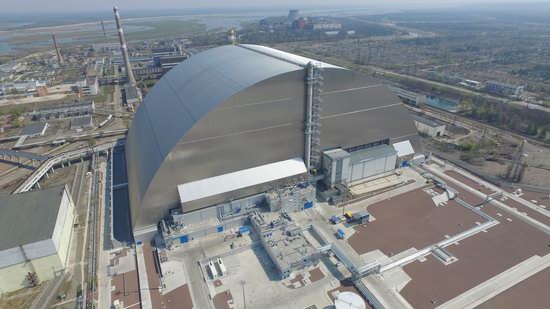
A drone pierced the outer shell of Ukraine’s Chernobyl nuclear plant. Radiation levels are normal
AP News 14th Feb 2025
CHERNOBYL NUCLEAR POWER STATION, Ukraine (AP) — A drone armed with a warhead hit the protective outer shell of Ukraine’s Chernobyl nuclear plant early Friday, punching a hole in the structure and briefly starting a fire, in an attack Kyiv blamed on Russia. The Kremlin denied it was responsible.
Radiation levels at the shuttered plant in the Kyiv region — site of the world’s worst nuclear accident — have not increased, according to the U.N. International Atomic Energy Agency, which said the strike did not breach the plant’s inner containment shell.
The IAEA did not attribute blame, saying only that its team stationed at the site heard an explosion and was informed that a drone had struck the shell.
Fighting around nuclear power plants has repeatedly raised fears of a nuclear catastrophe during three years of war, particularly in a country where many vividly remember the 1986 Chernobyl disaster, which killed at least 30 people and spewed radioactive fallout over much of the Northern Hemisphere.
The Zaporizhzhia nuclear power plant, which is Europe’s biggest, has occasionally been hit by drones during the war without causing significant damage……………………………………………………………………
Kremlin spokesman Dmitry Peskov denied Russia was responsible. “There is no talk about strikes on nuclear infrastructure, nuclear energy facilities. Any such claim isn’t true. Our military doesn’t do that,” Peskov said in a conference call with reporters.
It was not possible to independently confirm who was behind the strike. Both sides frequently trade blame when nuclear sites come under attack. https://apnews.com/article/russia-ukraine-war-chernobyl-zelenskyy-71d781dbd66754d0a548edd388f3447a
World’s sea-ice falls to record low

The world’s frozen oceans, which help to keep the planet cool, currently
have less ice than ever previously recorded, satellite data shows. Sea-ice
around the north and south poles acts like a giant mirror by reflecting
much of the Sun’s energy back into space. But as rising temperatures cause
this bright layer to shrink, the dark ocean below can absorb more heat,
warming the planet further. This latest sea-ice low appears to have been
driven by a combination of warm air, warm seas and winds breaking apart the
ice. Over the 5 days to 13 February, the combined extent of Arctic and
Antarctic sea-ice was 15.76 million sq km (6.08 million sq miles),
according to BBC analysis of data from the US National Snow and Ice Data
Center (NSIDC). This breaks the previous 5-day record low of 15.93 million
sq km (6.15 million sq miles) from January-February 2023.
BBC 15th Feb 2025,
https://www.bbc.co.uk/news/articles/cvgeydkz08go
Radioactive Roulette: Uranium Mining Threatens Vital Southern African Aquifer
Andrew Maramwidze , 16 Jan 25, https://namibianminingnews.com/radioactive-roulette-uranium-mining-threatens-vital-southern-african-aquifer/?fbclid=IwY2xjawIeBAdleHRuA2FlbQIxMQABHSb3NRHlM9u5GURoopgphOqCBJptJNaq2Brc8FAAJr2DXIXC9rPY_nk-uA_aem_TR9RB_c4htmreaRa1XUdXA
The idyllic image of the Stampriet Transboundary Aquifer System, a vast freshwater reserve stretching across Namibia, South Africa, and Botswana, is under threat. The Namibian government has issued a flurry of uranium exploration permits, igniting fears that this precious resource could be irrevocably contaminated by the very industry it is meant to sustain.
This aquifer, roughly the size of Austria, provides a lifeline for over 50,000 people across the region. However, the allure of uranium, a key component in nuclear power generation, has enticed mining companies to stake their claims. While the Namibian government insists on safeguarding the aquifer, the potential for contamination looms large.
Uranium mining, by its very nature, carries significant environmental risks. The process often involves injecting sulfuric acid into the ground to dissolve uranium-rich rock, a method that can leach radioactive fluids into the surrounding environment. The long-term consequences of such contamination are dire, potentially leading to severe health issues for local populations, including cancer, kidney damage, and respiratory problems.
The experience of other mining regions, such as the boreal zone in Canada, provides a sobering cautionary tale. Acid mine drainage and mine effluents have contaminated numerous water sources, highlighting the difficulty of mitigating the environmental impact of large-scale mining operations. Furthermore, the long-term rehabilitation of mine sites often proves challenging, with determining individual mine’s responsibility for environmental damage proving to be a complex and protracted process.
The Namibian government, while acknowledging the potential risks, has awarded 35 uranium exploration permits, covering a vast expanse of territory. This raises serious concerns about the adequacy of environmental impact assessments and the long-term sustainability of the aquifer.
The potential impact on the aquifer extends beyond Namibia’s borders. The Stampriet Transboundary Aquifer System is a shared resource, and its contamination would have far-reaching consequences for South Africa and Botswana.
The need for cooperation between the three nations is paramount. A comprehensive, independent scientific assessment of the potential risks is crucial, along with the development of robust environmental safeguards and a clear plan for long-term monitoring and mitigation.
While the allure of mineral wealth is undeniable, it is imperative to prioritize the long-term health and well-being of the people who depend on this vital water source. The potential consequences of uranium mining in this sensitive region are simply too grave to ignore.
The question remains: Is the short-term economic gain worth the long-term environmental and human cost? The answer, for the sake of future generations, must be a resounding no.
Nuclear missing from Europe’s draft Clean Industrial Deal subsidy rules
And green hydrogen might get more preferable treatment than low-carbon hydrogen
Stefano Porciello Euractiv , Feb 14, 2025, https://www.euractiv.com/section/eet/news/nuclear-missing-from-draft-clean-industrial-deal-subsidy-rules/
Nuclear energy isn’t mentioned once in the European Commission’s draft rules for looser state aid.
The draft, seen by Euractiv, appears to contradict the EU industry chief Stéphane Séjourné, who said that Europe would “finally stop ignoring nuclear power” with its new strategy just two days ago.
Looser state aid rules are a key component of the Commission’s ‘Clean Industrial Deal’ package, which aims to boost the fortunes of Europe’s decarbonised industry. The main text is expected to land on 26 February.
The draft state aid rules, which could still change before the final draft is published, shows that preferential treatment may be offered to renewable ‘green’ hydrogen over ‘low-carbon’ hydrogen, which can be produced from nuclear or fossil fuels matched with carbon capture.
When industry decarbonisation projects use hydrogen, EU member states should either make sure that these use only green hydrogen.
Alternatively, if low-carbon hydrogen is used, the project should also use a minimum proportion of green hydrogen. This threshold is linked to the amount of renewable power on the country’s electricity grid.
The new rules are expected to replace the Temporary Crisis and Transition Framework, which was adopted in March 2023 to boost Europe’s green transition.
The recently adopted EU Competitiveness Compass indicated that a new state aid framework could be expected in the second quarter of 2025.
A finalised draft of the new state aid rules could be published after the Clean Industrial Deal and may be adopted before summer.
UK Government urged to scrap nuclear weapons ‘once and for all’
While our armed forces wrestle with two decades of cuts, the UK Labour Government is determined to waste more than £100 billion on nuclear weapons over the next decade.
By Lucy Jackson, Multimedia Journalist, The National 15th Feb 2025
THE UK Government has been urged to scrap its nuclear weapons arsenal “once and for all” amid concerns the country’s defence capability is in a “woeful state”.
It comes after a former head of the army urged Keir Starmer to commit to defence spending or “be consigned” to “the bin of history”.
Speaking on BBC Radio 4, ex-chief of the general staff Lord Dannatt said defence spending should rise to a 3.5% share of the economy.
The UK currently spends around 2.3% of gross domestic product on defence, a figure the UK Government wants to increase to 2.5%.
Dannatt said: “Unless Keir Starmer and Rachel Reeves can find ways of producing more money, well beyond 2.5%, towards 3% or 3.5% for starters on our defence budget, then this strategic defence review is going to be hollow, it’s going to be a failure and, frankly, it’ll consign Keir Starmer to the bin of history.
“Our military is so run down at the present moment, numerically and as far as capability and equipment is concerned, it would potentially be quite embarrassing.”
The SNP have backed calls for defence spending to be increased to at least 2.5%.
However, the party called for the UK Government to scrap its nuclear weapons defence enterprise “once and for all”.
The UK’s nuclear weapons arsenal is stored in Scotland at HM Naval Base Clyde, west of Glasgow. Submarines are based at Faslane, while nuclear warheads are stored, processed and maintained at the nearby Royal Naval Armaments Depot at Coulport.
The party’s Westminster defence spokesperson, Dave Doogan, said Britain’s defence capability was in a “woeful state”.
Doogan told The National: “As insecurity and conflict foment across the world, including here in Europe, the comments from Lord Dannatt are incredibly concerning and reveal the woeful state of Britain’s defence capability.
“While our armed forces wrestle with two decades of cuts, the UK Labour Government is determined to waste more than £100 billion on nuclear weapons over the next decade.
“With the UK’s nuclear weapon vanity obsession hanging like a millstone around our conventional forces’ budget, the Labour Government should for once do the right thing and scrap the defence nuclear enterprise once and for all.”……………………. https://www.thenational.scot/news/24938558.uk-government-urged-scrap-nuclear-weapons-once-all/
Japan to pick final disposal sites for Fukushima soil around 2030

The Environment Ministry plans to decide around 2030 or later where to finally dispose of soil removed from the ground during decontamination work after the March 2011 disaster at Tokyo Electric Power Company Holdings’ Fukushima No.1 nuclear power plant, it was learned Wednesday.
The plan was included in a draft timetable for the final disposal of such soil outside Fukushima Prefecture by March 2045, presented by the ministry at a meeting of a related expert panel on the day. The ministry will consider a process for selecting final disposal sites from fiscal 2025.
As of the end of December, about 14 million cubic meters of such soil had been transported to an interim storage facility straddling the Fukushima towns of Okuma and Futaba.
Three-quarters of the soil had radiation concentrations of 8,000 becquerels per kilogram or less and will be reused in public works, while the rest will be subject to final disposal.
Final disposal sites are estimated to require up to 50 hectares if the volume of the soil is not reduced, or 2 to 3 hectares if the volume is reduced. Meanwhile, radiation levels would be higher in the reduced soil.
The government is slated to draw up a basic plan as early as this spring for reusing some of the soil and finally disposing of the rest.
Trump: Military Spending Could Be Cut in Half and There’s No Reason To Build New Nuclear Weapons
The president said he wants to have a global conference with Russia and China to discuss cutting military spending
by Dave DeCamp February 13, 2025 , https://news.antiwar.com/2025/02/13/trump-says-military-spending-could-be-cut-in-half-and-that-theres-no-reason-to-build-new-nukes/
President Trump told reporters on Thursday that he believes US military spending could eventually be cut in half and that he wants to pursue the idea as part of an agreement with Russia and China. He also said there was no reason to build new nuclear weapons.
“At some point, when things settle down, I’m going to meet with China and I’m going to meet with Russia, in particular those two, and I’m going to say there’s no reason for us to be spending almost $1 trillion on the military … and I’m going to say we can spend this on other things,” Trump said.
“When we straighten it all out, then one of the first meetings I want to have is with President Xi of China and President Putin of Russia, and I want to say let’s cut our military budget in half. And we can do that, and I think we’ll be able to do that,” he added.
The US spends significantly more on its military than Russia and China combined. According to the Stockholm International Peace Research Institute (SIPRI), in 2023, the US accounted for 37% of global military spending. China came in second but was still far behind, accounting for 12% of military spending, and Russia was in third at 4.5%.
Discussing nuclear weapons, Trump said, “There’s no reason for us to be building brand new nuclear weapons. We already have so many you could destroy the world 50 times over or 100 times over. And here we are building new nuclear weapons, and [Russia] is building new nuclear weapons, and China is building new nuclear weapons.”
The US has been working to modernize its nuclear triad, a project that’s expected to cost $1.5 trillion. Trump also repeated his call to seek “denuclearization” with Russia and said Russian President Vladimir Putin had agreed to do so “in a very big way.”
Trump has previously claimed that he was pursuing denuclearization with Russia and China in his first term in office, but the US also withdrew from key arms control treaties during that time.
Russia recently said the outlook was not good for the state of US arms control as the last nuclear arms control treaty between the two powers is due to expire in February 2026, and there’s currently no replacement. But Trump’s talks with Russian President Vladimir Putin on the Ukraine war could lead to arms control negotiations.
On the other hand, Trump also recently signed an executive order to build a major new missile defense system to cover the US and its military bases abroad, which could lead to a new arms race and will come with a huge price tag. Republicans in Congress are also looking to increase military spending by at least $100 billion.
Two-thirds of Americans still believe climate change is impacting the Earth, despite what Trump contends

As the Trump administration works to dismantle and erase any mention of
climate change on a federal level, a new report has found that the majority
of Americans believe the Earth’s warming is affecting weather across the
country. Two-thirds of those recently surveyed by the Yale Program on
Climate Change Communication and the George Mason University Center for
Climate Change Communication said they think global warming is impacting
U.S. weather. Those who believe global warming is happening outnumber those
who believe it is not by a ratio of more than five to one, the survey also
found.
Independent 14th Feb 2025 https://www.independent.co.uk/climate-change/trump-climate-change-americans-poll-b2698628.html
1 This Month
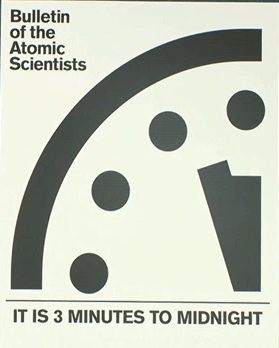
Watch the 2026 Doomsday Clock unveiling live here on January 27 at 10 a.m. EST
To see nuclear-related stories in greater depth and intensity – go to https://nuclearinformation.wordpress.com/

29 Jan. Thursday 7-8 p.m. Webinar – World’s Largest Nuclear Station in Port Hope, ON?


31st January – Challenging the War Machine – a DECLASSIFIED UK SUMMIT

Website of the Week
Now until to February 10, 2026 Radioactive waste storage in France: the debate is finally open! How to participate?
-
Archives
- January 2026 (277)
- December 2025 (358)
- November 2025 (359)
- October 2025 (376)
- September 2025 (258)
- August 2025 (319)
- July 2025 (230)
- June 2025 (348)
- May 2025 (261)
- April 2025 (305)
- March 2025 (319)
- February 2025 (234)
-
Categories
- 1
- 1 NUCLEAR ISSUES
- business and costs
- climate change
- culture and arts
- ENERGY
- environment
- health
- history
- indigenous issues
- Legal
- marketing of nuclear
- media
- opposition to nuclear
- PERSONAL STORIES
- politics
- politics international
- Religion and ethics
- safety
- secrets,lies and civil liberties
- spinbuster
- technology
- Uranium
- wastes
- weapons and war
- Women
- 2 WORLD
- ACTION
- AFRICA
- Atrocities
- AUSTRALIA
- Christina's notes
- Christina's themes
- culture and arts
- Events
- Fuk 2022
- Fuk 2023
- Fukushima 2017
- Fukushima 2018
- fukushima 2019
- Fukushima 2020
- Fukushima 2021
- general
- global warming
- Humour (God we need it)
- Nuclear
- RARE EARTHS
- Reference
- resources – print
- Resources -audiovicual
- Weekly Newsletter
- World
- World Nuclear
- YouTube
-
RSS
Entries RSS
Comments RSS
 nuclear-news