British taxpayers bankroll French nuclear giant while Hinkley Point C quietly receives 500-tonne reactor heart.

The contrast couldn’t be starker: French taxpayers owning British energy infrastructure, while British taxpayers guarantee the profits.
For a typical family using 3,000 kWh annually, the Hinkley surcharge could add £15-25 yearly to bills once the plant is operational. That might sound modest, but it’s on top of already record-high energy costs and other energy levies.
Olivia Hunt February 15, 2026, https://secom.es/hinkley-point-c-receives-500-tonne-reactor-heart-british-taxpayers-bankroll/
Sarah Mitchell stared at her energy bill in disbelief. £340 for the month. Again. The single mother from Bristol had already switched off the heating in two bedrooms and started cooking with just one burner. Yet somewhere across the Channel, a massive steel cylinder was being loaded onto a ship, destined for her county of Somerset. That 500-tonne nuclear reactor vessel would eventually power her home—and she was helping to pay for it, twice over.
It’s a story playing out across Britain right now. While families ration their heating and businesses close early to save on electricity, a French-built nuclear giant is making its way to British shores. The destination is Hinkley Point C, the controversial power station that’s become a symbol of everything complicated about Britain’s energy choices.
The scene in Cherbourg was deliberately low-key. No cameras, no politicians cutting ribbons. Just dockworkers watching as France’s most sophisticated nuclear technology rolled toward a waiting vessel, bound for a country that’s paying through the nose for foreign expertise.
Hinkley Point C represents the biggest bet Britain has made on its energy future in decades. When the deal was struck in 2016, it looked like smart planning. Today, with energy prices through the roof and household budgets stretched thin, it feels more like an expensive gamble with other people’s money.
The reactor pressure vessel now crossing the English Channel is the beating heart of what will become Britain’s newest nuclear power station. Built by Framatome, France’s state-owned nuclear champion, this steel colossus will sit at the center of two European Pressurised Reactors (EPR) designed to generate enough electricity for six million homes.
“This vessel represents the pinnacle of nuclear engineering,” explains Dr. James Crawford, a nuclear physicist at Imperial College London. “But the question isn’t whether it’s impressive technology—it’s whether British taxpayers should be funding French state enterprises while struggling with their own energy costs.”
The numbers behind Hinkley Point C make for uncomfortable reading. The project has ballooned from an initial estimate of £18 billion to potentially over £35 billion. Meanwhile, British households are locked into paying a guaranteed “strike price” of £92.50 per megawatt-hour for the electricity it produces, inflation-adjusted over 35 years.Follow the Money: Who Pays and Who Profits
The financial structure of Hinkley Point C reads like a masterclass in how to transfer risk from private companies to ordinary citizens. Here’s how the money flows:
| Who Builds | Who Owns | Who Pays | Who Guarantees |
| EDF (French state-owned) | EDF (66.5%) + CGN (Chinese, 33.5%) | British bill payers | British government |
| Framatome (French) | Foreign shareholders | British taxpayers | British taxpayers |
The strike price mechanism means British energy users will pay a premium for Hinkley’s electricity regardless of market conditions. If wholesale prices fall, we top up the difference. If they rise above £92.50 per MWh, EDF keeps the extra profit up to a point—but taxpayers still carry the underlying risk.
Key financial commitments include:
- £92.50 per MWh guaranteed electricity price (2012 prices, now worth over £110 with inflation)
- 35-year contract duration with built-in price increases
- Government loan guarantees reducing EDF’s borrowing costs
- Planning and regulatory costs covered by British authorities
- Decommissioning fund contributions from British sources
“It’s the most expensive electricity deal in Europe,” notes energy economist Professor Michael Roberts from Oxford University. “We’re essentially giving EDF a 35-year annuity underwritten by British households, while they retain ownership of a strategic asset.”
Real Homes, Real Bills, Real Consequences
While the nuclear reactor makes its journey from France, the human cost of Britain’s energy choices plays out in living rooms across the country. The Hinkley Point C contract means every household will contribute to EDF’s guaranteed profits through their electricity bills for the next three and a half decades.
For a typical family using 3,000 kWh annually, the Hinkley surcharge could add £15-25 yearly to bills once the plant is operational. That might sound modest, but it’s on top of already record-high energy costs and other renewable energy levies.
The timing feels particularly brutal. As the French-built reactor vessel crosses the Channel, British families are making impossible choices between heating and eating. Food banks report unprecedented demand, partly driven by people choosing groceries over gas bills.
“My constituents are furious,” says MP Caroline Davies, whose constituency includes several towns near Hinkley Point C. “They see foreign companies profiting from guaranteed contracts while they’re choosing between turning on the heating or buying school uniforms for their kids.”
The broader economic impact extends beyond household bills:
- Small businesses closing early to avoid peak-rate electricity charges
- Manufacturers relocating to countries with cheaper, more predictable energy costs
- Public services cutting back on heating and lighting in schools and hospitals
- Pensioners rationing heating despite rising winter fuel allowances
Meanwhile, EDF’s shareholders—ultimately the French state—benefit from one of the most generous infrastructure deals in recent British history. The contrast couldn’t be starker: French taxpayers owning British energy infrastructure, while British taxpayers guarantee the profits.
The situation raises fundamental questions about energy sovereignty and democratic accountability. When foreign state-owned companies control critical infrastructure that British citizens are compelled to fund, traditional notions of national ownership become meaningless,
Energy analysts warn this model could extend to other major projects. If Hinkley Point C proves profitable for foreign investors at British expense, similar deals for future nuclear plants, offshore wind farms, and other infrastructure become more likely.
As that 500-tonne reactor vessel approaches British waters, it carries more than just sophisticated nuclear technology. It represents a profound shift in how Britain powers itself—and who controls the switch.
Trump buildup for war with Iran mimics George W. Bush’s buildup for 2003 Iraq war.

Trump frames the ongoing negotiations as designed to prevent Iran from developing nuclear weapons. This despite Trump’s bragging that he completely destroyed their nuclear program with his one-off bombing last June
Walt Zlotow West Suburban Peace Coalition Glen Ellyn IL, 17 Feb 26
Back in 2002 the US demanded Iraq give up its WMD, weapons of mass destruction, ostensibly to prevent another 911 attack a year earlier. To back up its demand the US threatened attacking the Iraqi regime to safeguard the Homeland.
Along with most Americans, I fell for the line that the US would stand down due to the weapons inspectors and intelligence resources in Iraq concluding Iraq had no WMD and was not a threat to America whatsoever.
Then in August 2002, I read a report buried deep in the Chicago Tribune describing America’s massive military buildup, concluding with the strong implication that such a buildup made attack on Iraq inevitable with nothing Iraq could do to prevent it.
At that moment I knew everything the Bush administration said about the Iraqi danger was a vicious lie in service of ousting Saddam Hussein and conquering Iraq. Seven months later, contrary to all the evidence, Bush did precisely that.
I’m getting the same ominous feeling when I hear Trump bragging out his massive buildup of air and naval forces near Iran poised to attack should Iran not capitulate to Trump’s non-negotiable demands that Iran give up its missile defense resources and cease supporting its regional allies.
Trump frames the ongoing negotiations as designed to prevent Iran from developing nuclear weapons. This despite Trump’s bragging that he completely destroyed their nuclear program with his one-off bombing last June in support of Israel’s 12 day war on Iran that utterly failed to topple the Iranian regime.
The current negotiations in Geneva have nothing to do with Iran’s nuclear weapons program since, like Iraq’s imaginary WMD program in 2002, Iran has none. Indeed, for verification Iran is willing to negotiate limited nuclear enrichment for peaceful domestic purposes; even allow inspections to verify compliance But they will never negotiate away their missile program which is their only defense against further Israeli, US attacks such as they incurred last June.
Another similarity to Bush’s illegal invasion of Iraq 23 year ago? It had nothing to do with vital US national interests. It had to do with Israeli demands that successive US administrations, bought up with Israel Lobby money, take out any Israeli rivals for Middle East hegemony.
Trump’s fealty to Israeli demands, encouraged by their near quarter billion in campaign support, fueled Trump’s blowing up Obama’s sensible 2015 Iran nuclear agreement in 2018. He lied to us then how the deal favored Iran by not ending its nuclear bomb program that did not exist. Trump is lying to us now on the urgency of destroying Iranian sovereignty which includes the right to self-defense.
But there is one huge difference between Trump’s trumped up Iranian threat likely presaging all out war today and George W. Bush’s falsified Iraqi threat in 2002. Unlike Iraq which had no defensive military means and no powerful allies to assist his defense, Iran has both.
They have thousands of missiles scattered thruout their large country capable of inflicting massive damage on US and Israeli forces. In addition they are getting defensive support from Russia and especially China in the form of intelligence resources to track approaching US bombers and provide accurate targeting information in retaliation.
History shows that sending a military armada near a pretend enemy never gets recalled. Its sole purpose is to attack and destroy based on a tissue of lies. And any lie and any ludicrous demand to negotiate an impossible deal in furtherance of war will be used to justify attack.
George W. Bush got 4,497 soldiers and 1,487 civilian contractors killed for nothing in his made up Iraq war. Trump’s march to war with Iran may make Bush’s folly pale in comparison.
Small modular nuclear reactors for developing countries: Expectations and evidence Open Access

Friederike Friess , Maha Siddiqui , M V Ramana, PNAS Nexus, Volume 5, Issue 2, February 2026,
https://academic.oup.com/pnasnexus/article/5/2/pgag006/8419276
Abstract
Many developing countries have shown interest in acquiring nuclear power plants, particularly small modular reactors (SMRs). By analyzing presentations made by national representatives at International Atomic Energy Agency conferences, we identified 3 key expectations of SMRs expressed by many officials: that they generate electricity at low cost, that the design be demonstrated through operating experience elsewhere, and that there be potential for local manufacturing associated with the nuclear power project.
However, based on the available evidence regarding SMR designs, we demonstrated that these expectations are unlikely to be fulfilled.
SMRs do not benefit from economies of scale, unlike large nuclear power plants. Because electricity from large nuclear plants is expensive, SMRs will produce more costly power.
Second, it is unrealistic to expect that SMRs will qualify as proven technology in the near future because of the very limited number of SMRs currently in operation or under construction. The performance of currently operating SMRs has also been underwhelming.
Finally, the idea of local manufacturing conflicts with the proposed economic model of mass production. At the same time, the skilled local workforce needed to operate these reactors is not readily available in many newcomer countries.
Major leak at Highland nuclear site triggers hunt for mystery bunkers

A 1960s bunker at a Highland nuclear site quietly leaked radioactive water
for at least a year before the alarm was raised – and officials have now
ordered a hunt for other similar hidden structures that may be leaking too,
the Sunday National can reveal.
Dounreay, on the Caithness coast, was the
UK’s centre for experimental fast‑reactor research from the 1950s until
the 1990s and is now a major nuclear decommissioning site. The clean‑up
is funded by the UK Government’s Nuclear Decommissioning Authority and
carried out locally by Nuclear Restoration Services (NRS), which runs the
site and is responsible for managing its ageing reactors, waste pits and
other legacy facilities.
The National revealed last year that radioactive
material had been accidentally released at Dounreay between July 2023 and
August 2024 and that Scotland’s environmental watchdog, SEPA, found the
operator had breached its permit.
But now, a new internal investigation
report, released to the Sunday National under freedom of information, goes
further: it warns that other underground structures with “unrevealed
hazards” may still be waiting to be found. The original leak source was a
disused underground carbon bed filter – essentially a concrete bunker –
built in the early 1960s as part of a ventilation system for one of
Dounreay’s facilities. It was taken out of normal use decades ago and
left as a legacy structure to be dealt with during decommissioning.
The report notes that it “was never designed to retain water”, yet by 2017,
it was known to contain thousands of litres of radioactive liquor and had
already been identified as a possible source of contamination at one of the
site’s outfalls.
A spokesperson for the Scottish Environment Protection
Agency (SEPA) said: “In June 2024, Nuclear Restoration Services Ltd (NRS)
notified SEPA of a potential leak of radioactively contaminated water from
a carbon bed filter on the Dounreay site. It was subsequently established
that there was a small leak from the carbon bed filter. Monitoring by the
operator has not detected any increase in radioactivity in groundwater
downstream.
“SEPA’s investigation concluded that the operator had
breached conditions of its Environmental Authorisations (Scotland)
Regulations 2018 (EASR) authorisation. To secure compliance, we have issued
a Regulatory Notice requiring NRS to take specified steps, including
reviewing groundwater monitoring arrangements and undertaking
characterisation to establish the extent of contamination which has arisen
from the leak from the carbon bed filter.”
The National 15th Feb 2026, https://www.thenational.scot/news/25854472.major-leak-highland-nuclear-site-triggers-hunt-mystery-bunkers/
The Unelected Overlord: How Kushner Turned the White House into Israel’s Backroom Deal Den

Viewed closely, a pattern emerges, pointing to a presidency where private capital, foreign networks, and personal access converge to shape outcomes that consistently serve Israeli interests, and not Americans
Freddie Ponton, 21st Century Wire, February 2, 2026 , https://21stcenturywire.com/2026/02/02/the-unelected-overlord-how-kushner-turned-the-white-house-into-israels-backroom-deal-den/
”Trump did not walk into the White House alone. He stormed in with a promise to “drain the swamp,” but trailing in his shadow was Jared Kushner, carrying a tangled web of private financial networks, offshore holdings, and foreign capital so deeply embedded it functioned like a quiet engine at the heart of the presidency. Years later, FBI documents released alongside the Epstein files crystallised the danger, with a Confidential Human Source (CHS) alleging that Trump had been compromised by Israel, and that Kushner was the true centre of gravity, orchestrating both the Trump Organisation and the White House from within.
Here -documents: [on original]
DOCUMENT: Federal Bureau Of Investigation (FBI) – CHS Reporting Document, 10/19/2020 (Source: US DOJ)
This is not theatre. Intelligence reporting rarely accuses outright; it maps vulnerability, flags leverage, and exposes the invisible pathways through which foreign influence can seep into the corridors of American power, remaining unnoticed, unchallenged, and structurally unstoppable
The question is not whether the allegation would hold up in court. The question is whether the record itself, including Trump’s 2025 mandate, his cascade of executive orders, and his most consequential foreign policy moves in the Middle East, confirms the risk it described. Viewed closely, a pattern emerges, pointing to a presidency where private capital, foreign networks, and personal access converge to shape outcomes that consistently serve Israeli interests, and not Americans’. The decisions emanating from the Trump 2:0 administration appear to be dictated from within rather than guided by democratic oversight. As this story unfolds, it becomes clear that these are not isolated incidents or accidental alignment—they are structural, enduring, and deeply consequential.
READ MORE: Trump Team Didn’t Just Collude with Israel, Kushner was Acting as Foreign Agent for Tel Aviv
A Presidency Rewired from the Inside
Continue readingThe global elite in the shadow of Jeffrey Epstein
17 February 2026 AIMN Editorial, https://theaimn.net/the-global-elite-in-the-shadow-of-jeffrey-epstein/
The mainstream media is largely ignoring the real scandal in this story.
By Antony Loewenstein
For years, I mostly ignored the Jeffrey Epstein story. Not because it wasn’t interesting and relevant but there was a distinct lack of hard evidence backing the (often) wild conspiracy theories connecting Epstein to the global political and financial elites, and Israel.
It’s now undeniable that Epstein was incredibly close to Israeli intelligence, a fact that remains largely ignored in the Western media. What this says about the nature of Epstein’s vast criminality, against children and women, speaks volumes about the wilful blindness expressed by legacy media outlets.
The US outlet, Drop Site News, have produced many stunning stories on how Epstein became a key power broker connecting Israel and its defence/surveillance sectors to innumerable nations from Mongolia to the Ivory Coast.
One of the writers of these investigations, Murtaza Hussain, explains both the significance of the revelations and the reticence of corporate media to explore it:
Because of elite capture of many institutions, the coverage of Epstein’s activities by establishment news outlets feels a lot more like damage control than accountability. Despite his extensively documented political influence and even his role in shaping frontier research in AI and biotechnology, Epstein himself has attempted to be quarantined as merely a “con-man” and “dead pervert.” What is being covered up here are not his sexual abuses, but what his role and activities reveal about how power actually operates today.
With some notable exceptions, the general public has had to read independent mediato really understand the Epstein scandal while outlets like the New York Times produce huge amounts of coverage and mostly ignore the late paedophiles’ ties to global intelligence networks.
On my recently launched weekly podcast series, I examined how Epstein, Israel and former Israeli Prime Minister Ehud Barak were key nodes in an international campaign to deepen the Jewish state’s influence:
Very traumatic for whom Mr. Trump?

Walt Zlotow West Suburban Peace Coalition Glen Ellyn IL, 15 Feb 26 , https://theaimn.net/very-traumatic-for-whom-mr-trump/
President Trump recapped his sixth meeting this year with his real boss, Israeli Prime Minister Benjamin Netanyahu, by stating it will be “Very traumatic” for Iran if a nuclear deal isn’t reached soon.
With his vast military armada perched on Iran’s doorstep, Trump’s warning is clear. The US is preparing a massive attack to decapitate the Iranian regime and splinter Iran into a failed state. Of course this has nothing to do with US national security interests. It’s about Israel’s decade’s long demand that its US servants remove Israel’s last hegemonic rival for Middle East supremacy.
When asked about a timeline for Iran to capitulate to every US, Israeli demand that would essentially nullify Iranian sovereignty, Trump said “I guess over the next month. They should agree very quickly.” Netanyahu echoed that delusional assessment stating “The president believes the Iranians now understand who they are dealing with” (and that) “conditions could emerge for achieving a good agreement.”
Trump and Netanyahu know full well Iran will never negotiate away their ballistic missile defense which will devastate both US military forces and Israel itself once Trump launches all out war.
Knowing no deal is possible, Trump and Netanyahu likely spent their 3 hour meeting discussing when and how to destroy Iran militarily. The Israeli news site Ynet, concurred, stating the two leaders discussed military options and that Israeli officials expect the US will eventually attack Iran.
Best we in the peace community can hope for is that someone close to Trump convinces him that the trauma Trump threatens Iran with will boomerang into unfathomable trauma for the US and Israel as well as Iran.
Trump Team Didn’t Just Collude with Israel, Kushner was Acting as Foreign Agent for Tel Aviv.
So Trump’s éminence grise, the wunderkind, who some people have called the President In-Law, is really Israel’s man inside the White House
Granted, this is a very serious charge – which comes with some serious consequences if Kushner would ever be indicted, but the facts clearly demonstrate beyond any reasonable doubt, that then President-elect’s son-in-law was using his proximity to the incoming Commander and Chief to execute a series of highly sensitive foreign policy maneuvers at the request of a foreign country.
So what exactly are Jared Kushner’s credentials in international relations and diplomacy that he has been charged with negotiating Middle East affairs for the United States of America? Without sounding too cruel here, it’s difficult to find anything to say in his defense. In the end, his only visible qualification is that he’s married to the President’s daughter, and that’s he’s “a good friend” of Netanyahu. That’s really it
December 7, 2017 By NEWS WIRE Patrick Henningsen, 21st Century Wire
Much was made this week in the US media about Michael Flynn’s recent guilty plea to making false statements to the FBI, as part of Special Counsel Robert Mueller’s never-ending “Russia probe.” Beyond the political window dressing however, there’s a much bigger and more profound story lingering in the background.
Continue readingNetanyahu pushing to turn US into ‘slave state for Israel’s expansionist dreams’: Analyst
“Now, with increased US military presence in [West Asia], Trump is preparing strikes on Iran — not for American interests, but to appease his Zionist bosses. This isn’t ‘peace’; it’s escalating conflicts to advance Greater Israel fantasies, displacing millions and looting American taxpayers.”
Wed, 11 Feb 2026, https://www.sott.net/article/504639-Netanyahu-pushing-to-turn-US-into-slave-state-for-Israels-expansionist-dreams-Analyst
Israeli Prime Minister Benjamin Netanyahu has been deliberately steering the United States toward confrontation with Iran in an escalation that pushes America into a “slave state for Israel’s expansionist dreams,” says an American analyst.
In an interview with the Press TV website, Michael Rectenwald, an author and former professor, pointed to the strong Zionist influence in the US policy-making:
“The Zionist stranglehold on US policy prioritizes Israel’s aggression over American sovereignty. Netanyahu knows that provoking Iran draws in US forces and funds, turning our country into a slave state for Israel’s expansionist dreams.”
He noted that Tel Aviv’s push to see an all-out Iran-US war is not “just a willingness” but “a calculated strategy to bleed America dry.”‘Rectenwald, founder of the Anti-Zionist America Political Action Committee (AZAPAC), said Trump’s record stood in stark contrast to his campaign vows to end wars:
“He ran on ending endless wars and putting America first. In practice, his administration had served as Israel’s munitions depot and ATM, bombing countries like Yemen, Iraq, Syria, and others at Israel’s behest while funneling billions in arms and aid to support Israel’s genocidal actions in Gaza and beyond.”
In Rectenwald’s assessment, the expansion of US military assets in the region signaled preparation for direct confrontation with Tehran.
“Now, with increased US military presence in [West Asia], Trump is preparing strikes on Iran — not for American interests, but to appease his Zionist bosses. This isn’t ‘peace’; it’s escalating conflicts to advance Greater Israel fantasies, displacing millions and looting American taxpayers.”
Trump’s rhetoric has sharpened in recent months. Following economic protests in Iran, which were later hijacked and turned into terrorist riots by US and Israeli spy agencies, he had warned that military action remained on the table and said that “help is on its way.”
In late January, he stated that “another beautiful armada” of warships was “floating beautifully toward Iran,” later suggesting the deployment might pressure Tehran back into nuclear negotiations,while Tehran said it had never abandoned talks.
Trump further threatened that failure to reach a deal would bring consequences “far worse” than the previous strike on Iran’s nuclear facilities.
Tehran responded with its own warnings, declaring that any aggression would meet a swift and forceful response.
After an attack on its nuclear facilities in June — which ironically came during indirect Tehran-Washington talks — Iran launched a barrage of missiles at Al Udeid Air Base in Qatar, which hosted US forces and equipment.
Rectenwald argued that the push toward confrontation with Iran could not be understood without examining Israel’s strategic calculus and its influence in Washington. He contended that Netanyahu had been actively seeking a broader war between Washington and Tehran.
Rectenwald noted that Trump himself had been complicit in this pattern:
“Netanyahu and the Zionist regime in Israel are desperate for an all-out war between the US and Iran, as it would eliminate a key regional rival while keeping the US entangled as Israel’s military golem.
“Trump is no anti-war president; he’s a Jewish mobster puppet, dragging the US into more bloodshed for a parasitic state.”
Rectenwald described the president’s foreign policy as subservient to Israeli priorities rather than grounded in American sovereignty.
The risks of confrontation with Iran, he argued, were neither abstract nor hypothetical. Rectenwald said Trump had been fully aware of Iran’s military capabilities, particularly its missile arsenal.
“Trump is fully aware of Iran’s formidable missile capabilities, which have already pierced Israel’s multi-layered defenses and could devastate US assets and troops scattered across the region.”
Despite that awareness, Rectenwald believes the president had been influenced more by hardline voices aligned with Israel than by strategic caution. He described Trump as “more beholden to Zionist hawks like those in his administration and the pro-Israel lobby that dictates US policy.”
In making his case, Rectenwald contrasted Iran’s posture with Israel’s record:
“Iran hasn’t attacked US ships like the USS Liberty (that was Israel), nor does it control our political class or siphon our resources for genocide; that’s Israel’s playbook,.”
He argued that Trump had ignored the strategic dangers while appealing to domestic political instincts. The president, he said, had been “pumping up his base with pre-war rhetoric and aligning with figures who see siding with Israel as ‘good vs. evil.'”
Rectenwald warned:]”Attacking Iran would be another disastrous war for Israel, not fought for America, endangering our troops and economy.”
The latest round of talks between Tehran and Washington took place in Muscat on February 6, mediated by Omani Foreign Minister Badr Al Busaidi. The delegations exchanged their views and approaches through Omani channels.
Iranian Foreign Minister Abbas Araghchi described the process as a “good start” and said that the continuation of talks depended on refraining from threats and pressure.
However, Rectenwald repeated his warning against Israeli influence, which can derail the talks as happened in June.
“Trump isn’t acknowledging Iran’s power; he’s blinded by Zionist influence, risking catastrophe to serve foreign interests,” he said.
For Rectenwald, the stakes extended beyond a single military decision. The broader issue, he argued, concerned sovereignty and governance. “We must end this control and reclaim American governance for Americans.”
Why can’t western leaders accept that they have failed in Ukraine?
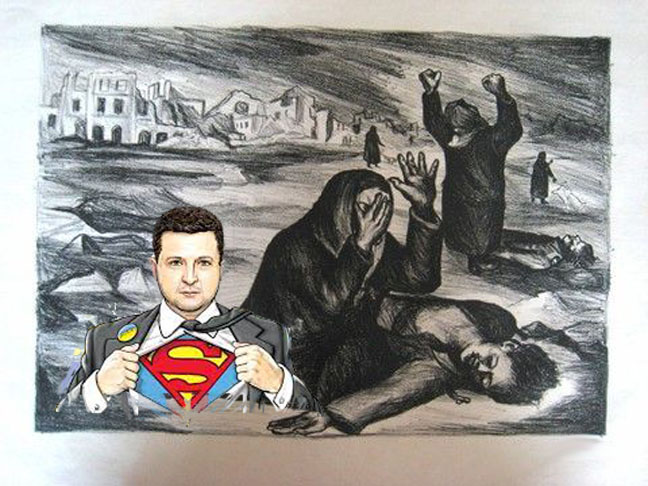
Some western pundits claim that, well, Russia is advancing so it is collecting its dead as it moves forward. But those same pundits are the ones who also claim that Russia is barely moving forward at all. In a different breath, you might also hear them claim that Russia is about to invade Estonia at any moment.
Those western pundits who also tell you that Russia will run out of money tomorrow – it really won’t – never talk about the fact that Ukraine is functionally bankrupt and totally dependent on financial gifts which the EU itself has to borrow.
Ian Proud, Feb 15, 2026, https://thepeacemonger.substack.com/p/why-cant-western-leaders-accept-that?utm_source=post-email-title&publication_id=3221990&post_id=187976200&utm_campaign=email-post-title&isFreemail=true&r=1ise1&triedRedirect=true&utm_medium=email
Since the war started, voices in the alternative media have said that Ukraine cannot win a war against Russia. Indeed, John Mearsheimer has been saying this since 2014.
Four years into this devastating war, those voices feel at one and the same time both vindicated and unheard. Ukraine is losing yet western leaders in Europe appear bent on continuing the fight.
Nothing is illustrative of this more than Kaja Kallas’ ridiculous comment of 10 February that Russia should agree to pre-conditions to end the war, which included future restrictions on the size of Russia’s army.
Comments such as this suggest western figures like Kallas still believe in the prospect of a strategic victory against Russia, such that Russia would have to settle for peace as the defeated party. Or they are in denial, and/or they are lying to their citizens. I’d argue that it is a mixture of the second and third.
When I say losing, I don’t mean losing in the narrow military sense. Russia’s territorial gains over the winter period have been slow and marginal. Indeed, western commentators often point to this as a sign that, given its size advantage, Russia is in fact losing the war, because if it really was powerful, it would have defeated Ukraine long ago.
And on the surface, it might be easy to understand why some European citizens accept this line, not least as they are bombarded with it by western mainstream media on a constant basis.
However, most people also, at the same time, agree that drone warfare has made rapid territorial gains costly in terms of lost men and materiel. There is a lot of evidence to suggest that since the second part of 2023, after Ukraine’s failed summer counter-offensive, Russia has attacked in small unit formations to infiltrate and encircle positions.
Having taken heavy losses at the start of the war using tactics that might have been conventional twenty years ago, Russia’s armed forces had to adapt and did so quickly. Likewise, Russia’s military industrial complex has also been quicker to shift production into newer types of low cost, easy build military technology, like drones and glide bombs, together with standard munitions that western providers have been unable to match in terms of scale.
And despite the regular propaganda about Russian military losses in the tens of thousands each month, the data from the periodic body swaps between both sides suggest that Ukraine has been losing far more men in the fight than Russia. And I mean, at a ratio far greater than ten to one.
Some western pundits claim that, well, Russia is advancing so it is collecting its dead as it moves forward. But those same pundits are the ones who also claim that Russia is barely moving forward at all. In a different breath, you might also hear them claim that Russia is about to invade Estonia at any moment.
Of course, the propaganda war works in both directions, from the western media and, of course, from Russian. I take the view that discussion of the microscopic daily shifts in control along the line of contact is a huge distraction.
The reality of who is winning, or not winning, this war is in any case not about a slowly changing front line. Wars are won by economies not armies.
Those western pundits who also tell you that Russia will run out of money tomorrow – it really won’t – never talk about the fact that Ukraine is functionally bankrupt and totally dependent on financial gifts which the EU itself has to borrow, in order to provide. War fighting for Ukraine has become a lucrative pyramid scheme, with Zelensky promising people like Von der Leyen that it is a sold investment that will eventually deliver a return, until the day the war ends, when EU citizens will ask whether all their tax money disappeared to.
Russia’s debt stands at 16% of its GDP, its reserves over $730 billion, its yearly trade surplus still healthy, even if it has narrowed over the past year.
Russia can afford to carry on the fight for a lot longer.
Ukraine cannot.
And Europe cannot.
And that is the point.
The Europeans know they can’t afford the war. Ukraine absolutely cannot afford the war, even if Zelensky is happy to see the money keep flowing in. Putin knows the Europeans and Ukraine can’t afford the war. In these circumstances, Russia can insist that Ukraine withdraws from the remainder of Donetsk unilaterally without having to fight for it, on the basis that the alternative is simply to continue fighting.
He can afford to maintain a low attritional fight along the length of the frontline, which minimises Russian casualties and maximises Ukraine’s expenditure of armaments that Europe has to pay for.
That constant financial drain of war fighting is sowing increasing political discord across Europe, from Germany, to France, Britain and, of course, Central Europe.
Putin gets two benefits for the price of one. Europe causing itself economic self-harm while at the same time going into political meltdown.
That is why western leaders cannot admit that they have lost the war because they have been telling their voters from the very beginning that Ukraine would definitely win.
At the start of the war, had NATO decided to back up its effort by force, to facilitate Ukrainian accession against Russia’s expressed objection, then the war might have ended very differently.
NATO would simply not have been able to mobilise a ground operation of sufficient size quickly enough to force Russia back from the initial territorial advances that it had made in February and March of 2022. That means, the skirmishes at least for the first month would have largely been in the form of air and sea assets, including the use of missiles.
There is nothing in NATO doctrine to suggest that the west would have taken the fight to Russia, given the obvious risk of nuclear catastrophe.
While it is pointless to speculate now, my view is that a short, hot war between NATO and Russia would have led to short-term losses of lives and materiel on both sides that forced a negotiated quick settlement.
Europe avoided that route because of the risk of nuclear escalation and the great shame of the war is that our leaders were nonetheless willing to encourage Zelensky to fight to the last Ukrainian, wrecking our prosperity in the process.
Who will want to vote for Merz, Macron, Tusk, Starmer and all these other tinpot statesmen when it becomes clear that they have royally screwed the people of Europe for a stupid proxy war in Ukraine that was unwinnable?
What will Kaja Kallas do for a job when everyone in Europe can see that she’s a dangerous warmonger who did absolutely nothing for the right reason, and who failed at everything?
Zelensky is wondering where he can flee to when his number’s up, my bet would be Miami.
So if you are watching the front line every day you need to step back from the canvas.
There is still a chance that European pressure on Russia will prevail, which makes this whole endeavour a massive gamble with poor odds.
More likely, when the war ends, Putin will reengage with Europe but from a position of power not weakness.
That is the real battle going on here.
What if Nuclear Deterrence was an Obsolete Concept?
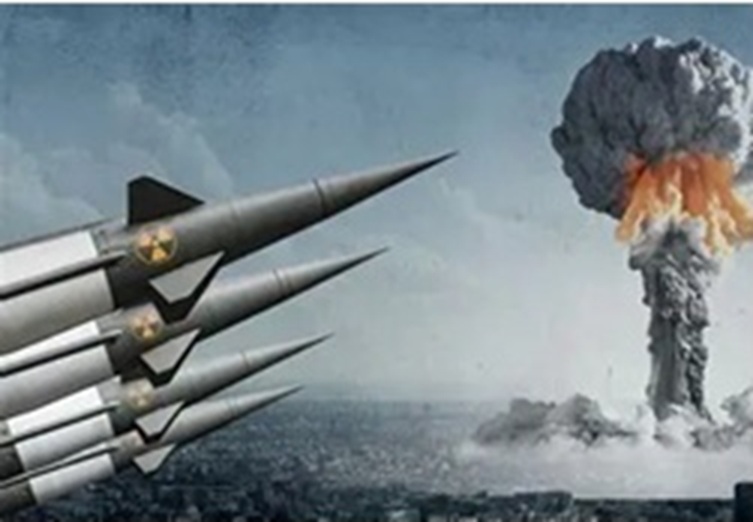
nuclear deterrence is currently an act of power, an act of domination by “those who have” over “those who have not.”
03 Apr 2024, Trends, Pierre Boussel, Researcher, Associate Fellow at the Fondation pour la Recherche Stratégique (FRS), France
The nuclear bomb is one of the few weapons in the world that can claim to have spilled more ink than blood. Thousands of books written on the subject debate the validity of the original concept of ultimate chaos deterring mankind from provoking a global conflict.[1] Its tactical and strategic raison d’être remains unresolved.
The American nuclear bombing of Japan in 1945 and the establishment of a managed nuclear world order (IAEA, NPT, UN Security Council, CTBTO)[2] have not deterred warmongers from launching invasions, starving besieged populations, committing genocide, carrying out terrorist attacks, committing war crimes or provoking humanitarian crises. Israel’s nuclear arsenal did not prevent the Yom Kippur War, the First and the Second Intifada, and the Gaza War. The Uppsala Conflict Data Program estimates that since the Hiroshima tragedy there have been 270 to 300 state and non-state conflicts worldwide.[3]
Nuclear deterrence does not bring peace. It does not prevent frontal clashes and it does not speed up peace settlements. Countries wage war despite threats like Russian President Vladimir Putin’s words, “We will use them if necessary”[4] over Ukraine. At best, conflicts are limited to what the military calls “acceptable damage.”[5] When the Russian army targets the Zaporizhzhia power station and has its bombers modified to carry nuclear warheads, the U.S. limits the firepower of weapons delivered to the Ukrainians. This means that the war will continue as is, with several hundred people killed every day, and not escalate.[6]
Assuming the Worst
The atomic bomb embodies both the desire for hyper-power and the fear of chaos, and there has been no shortage of initiatives to curb its proliferation.[7] The Treaty on the Non-Proliferation of Nuclear Weapons (NPT) came into force in 1970, signed by 191 nations. Arab countries have not been left behind. In the 1960s,[8] Egypt promoted the creation of a Middle East Nuclear-Weapon Free Zone (MENWFZ)[9] to protect the Middle East from nuclear proliferation. This did not prevent Israel from developing its first bombs at a secret site in Dimona (Beer Sheva).
In 1974, the Shah of Iran adopted the Egyptian idea of creating a nuclear weapon-free zone (ZEAN),[10] but it did not materialize. After the Israeli bombing of Iraq’s Osirak reactor,[11] several Arab chancelleries tried to resolve the issue of access to the atom. In 1991, Cairo called for a ban on weapons of mass destruction and demanded that Israel’s arsenal be exposed — in vain. It was as if the West had turned a deaf ear to Arab demands, preferring to entrust the IAEA with organizing disarmament forums and verifying suspected sites.[12] Once again, in vain: the only constant in these meetings has been, in the end, their ineffectiveness.[13]
The West has been ambivalent about nuclear energy. It has not responded to Arab diplomatic proposals and has not been very tough in condemning countries that have been tempted by military nuclear capabilities: Libya, Iraq, Syria, or Iran, whose military program was discovered by the IAEA in 2002-2003. Despite its ambivalence the West does fear insane behavior of a leader who appears ready to bring about the end of the world and considers that low and medium intensity conflicts increase the risk of escalation. The worst-case scenario for the West would be the use of tactical nuclear weapons, i.e., limited power (10 to 25 kilotons) with a ballistic capability of a hundred kilometers.[14] What would happen if the Afghan Taliban acquired tactical nuclear weapons? Would they use them against the local branch of the Islamic State group (IS-K)? How many warheads would have to be launched to defeat radical fighters hiding in deep, inaccessible mountains? What operational effectiveness would be recommended, and for what level of environmental disaster?
The West believes it can manage a war, for example, in Ukraine, because it considers itself to have the insight and maturity to avoid a nuclear conflagration. Anyone else who aspires to this capacity must demonstrate clarity and serenity to qualify for membership in the club of the powerful.
While the West enjoys the power of the atom and poor countries — suspected of being “irrational” or “slippery” — are exhausted by endless asymmetric wars, little attention is paid to India and Pakistan, two major nuclear powers fighting over control of Kashmir. This illustrates the differences in approach between the defenders of deterrence, who believe that the atom fulfills its deterrent mission and prevents the conflict from degenerating, and the detractors of deterrence, pointing out that these two countries have behaved beyond reproach. Meanwhile, Islamabad could be criticized for being unstable because of its alleged involvement in Afghanistan, and India for having mutated from Gandhian pacifism to unabashed nationalism.
The Vexation Strategy
Nuclear deterrence is, above all, vexatious, a notion too often overlooked in studies. Yet it has importance. One can imagine a country, say a poor, landlocked and indebted nation, that develops a weapon of unprecedented power — the ultimate weapon, the one that could replace all others. How would Washington, Moscow, Beijing, or Brussels react if the president of that country refused to share the new technology on the grounds that the superpowers are unreasonable and risk violating the principles of precaution and military proportionality? How would the nuclear giants react if they were deprived of this capability in the name of non-proliferation? Perhaps then the great powers would understand what it means to be offended: to be suspected of irresponsibility and forced to justify oneself and show their credentials in the vein hope of obtaining a new technology.
Access to the atom granted as a reward for good behavior raises the question of eligibility: the ability of a country to manage endogenous factors including terrorism, secessionism, and regional ambitions. This form of nuclear elitism is asserted with so much authority that we forget that the exemplarity on which the powerful pride themselves is shaky. On several occasions, humanity has come within a hair’s breadth of catastrophe. The history of nuclear power is littered with harrowing incidents: misunderstood orders that almost released chaos, technical errors corrected at the last minute (the Petrov affair), poorly applied procedures and even a simple airplane crash. On 17 January 1966, a U.S. Air Force Boeing B-52 collided with its tanker and crashed. Two of its four H-bombs spread radioactive material around the Spanish village of Palomares (250 hectares), where they fortunately fell without exploding. The United States, the world’s leading power, which never fails to show absolute intransigence on the conditions of access to nuclear energy, has lost at least six nuclear bombs.[15]………………………………………………………………………………………………………………………………………………………………………………………………………………………………
The World Atomic Order
Ultimately, the fundamental question is: what regulates access to nuclear energy, and what are the right or wrong reasons for authorizing or prohibiting its use. History tells us that the great despots — Hitler, Pol Pot, and Stalin — engaged in destructive follies that were terribly rational and attracted considerable popular support (Thomas C. Schelling).[31] Caution is therefore called for. It is not only legitimate but necessary, given the specific characteristics of nuclear energy and the devastating uses to which it can be put.[32] There is unanimity on this point.
The problem is that the nuclear world order mechanically provokes defiant reactions, like those of Iran and North Korea, two nations that have deliberately chosen to continue their clandestine nuclear enrichment programs.[33] Not only international authorities (IAEA, UN) have no means to act, but worse still, Pyongyang, for instance, is in the process of reappropriating the concept of deterrence, with no limits other than those set by itself. It has created a de facto counter-system in which it can do as it pleases with minimal risk, keeping superpowers from considering the dismantlement of their nuclear arsenals.
The discretionary power of the major powers to grant nuclear licenses, like a “delegation of authority”, to countries in urgent need of energy, creates a sense of inequality. One example is the nuclear cooperation agreement with the U.S., which operates under Article 123 of the U.S. Atomic Energy Act (AEA),[34] nicknamed the “gold standard”. Washington reserves the right to terminate agreements at the first sign of non-compliance on uranium enrichment. So even when signed, this type of agreement is only partially secure. The same is true of the IAEA, which imposes highly restrictive charters on would-be nuclear-weapon states, while Russia is suspected of developing a space-based nuclear weapon[35] likely to reignite proliferation. Add to this the New Start Treaty expiring in 2026 with no prospect of reducing arsenals, and China, which continues to grow in power. It would not take much to write that we have entered into a re-nuclearization of the strategic chessboard, a new arms race, less spectacular, less media-friendly, but one that takes us further away from the Treaty on the Prohibition of Nuclear Weapons, signed by 92 states in 2017.[36]
At the end of the Second World War, the geopolitics of the blocs was based on the concept of Melian dialogue, which postulates that justice between men is exercised when their “forces are equal.” [37] When this is not the case, “the strong exercise their power and the weak must yield.”[38] This model has been eroded in recent decades. Weaker states (Vietnam, Afghanistan) have defeated superpowers and the uncertainty factor, by definition, remains unresolved. In the 1950s, the Swedish diplomat Dag Hammarskjöld declared that the great organizations dedicated to peace were working “not to create paradise, but to avoid hell.”[39] The uncertainty factor should not be underestimated, but nuclear deterrence is currently an act of power, an act of domination by “those who have” over “those who have not.” Nuclear power is all too often seen as a lever to exert pressure on countries that are being asked to make their energy transition as quickly as possible, but to which control and non-proliferation norms are being imposed — countries that, in most cases, are simply expressing the desire to have access to nuclear energy to support their economic development. All in all, a normal request.
References………………………………………………………………………………………………………………………………….https://trendsresearch.org/insight/what-if-nuclear-deterrence-was-an-obsolete-concept/
As Landmark Treaty Expires, No Binding Limits on US-Russia Nuclear Arsenals

Fully terminating START communicates to the entire world that the US and Russia are so diplomatically inept that they cannot be trusted to continue to hold the entire world hostage to annihilation by holding thousands of first-use-ready nuclear weapons over everyone’s heads without adequate reasonable restraint
UNITED NATIONS, Feb 12 2026 (IPS) By Thalif Deen, https://www.ipsnews.net/2026/02/as-landmark-treaty-expires-no-binding-limits-on-us-russia-nuclear-arsenals/?utm_source=email_marketing&utm_admin=146128&utm_medium=email&utm_campaign=A_Business_Necessity_Align_With_Nature_or_Risk_Collapse_IPBES_Report_Warns_As_Landmark_Treaty_Expire
– When the nuclear Strategic Arms Reduction Treaty (START) between the US and Russia expired last week, it ended a historic era— but triggered widespread speculation about the future.
UN Secretary-General Antonio Guterres said “February 5 was a grave moment for international peace and security”.
For the first time in more than half a century, he pointed out, “we face a world without any binding limits on the strategic nuclear arsenals of the Russian Federation and the United States of America – the two States that possess the overwhelming majority of the global stockpile of nuclear weapons.”
US President Donald Trump dismissed the termination of the treaty rather sarcastically when he told the New York Times last month: “if it expires, it expires”—and denounced the expiring treaty as “a badly negotiated deal”.
“We will do a better agreement”, he promised, adding that China, which has one of the world’s fastest growing nuclear arsenals, “and other parties” should be part of any future treaty.
The Chinese, according to the Times, “have made clear they are not interested”.
Currently, the world’s nine nuclear powers are the US, UK, Russia, France and China—all permanent members of the Security Council—plus India, Pakistan, Israel and North Korea.
Collectively, they possess an estimated 12,100 to 12,500 nuclear warheads, with Russia and the US owning nearly 90% of the total eve while all nine are actively modernizing their arsenals.
Jonathan Granoff, President, Global Security Institute told IPS the START Treaty should be extended at least a year by formal or informal means. Is that as good as obtaining a new treaty that would include China as the US administration wants? No.
“Is it as good as fulfilling legally required steps such as adherence to the International Court of Justice’s (ICJ) unanimous ruling to negotiate the universal elimination of nuclear weapons or the fulfillment of the promise of nuclear disarmament embodied in Article 6 of the Nuclear Nonproliferation Treaty (NPT)? No”.
However, argued Granoff, doing nothing is asserting that a modest threat reducing easily obtained step now should not be taken because there are better ways forward. A modest positive step is no impediment to moving in other desired manners.
Fully terminating START communicates to the entire world that the US and Russia are so diplomatically inept that they cannot be trusted to continue to hold the entire world hostage to annihilation by holding thousands of first-use-ready nuclear weapons over everyone’s heads without adequate reasonable restraint, said Granoff.
The arguments being put forth as to why nothing can be done are inadequate.
First, the US argues that a new arrangement, a new treaty, is needed to bring China into the fold of restraint, he said.
“A modest step of extending START for a year by mutual presidential decrees while new negotiations take place does not negate creating a new treaty that would include China.”
Second, the arguments used to rationalize the new arms race fail to consider the folly of producing more accurate, usable, and powerful nuclear weapons”, declared Granoff.
Guterres pointed out the dissolution of decades of achievement could not come at a worse time – the risk of a nuclear weapon being used is the highest in decades.
“Yet even in this moment of uncertainty, we must search for hope. This is an opportunity to reset and create an arms control regime fit for a rapidly evolving context.”
“I welcome that the Presidents of both States have made clear that they appreciate the destabilizing impact of a nuclear arms race and the need to prevent the return to a world of unchecked nuclear proliferation.
“The world now looks to the Russian Federation and the United States to translate words into action. I urge both States to return to the negotiating table without delay and to agree upon a successor framework that restores verifiable limits, reduces risks, and strengthens our common security’, said Guterres.
In a statement released last week, Parliamentarians for Nuclear Non-Proliferation and Disarmament (PNND), a global network of legislators working to achieve a nuclear weapons-free world, said the importance of the New START treaty is hard to overstate.
“As other nuclear treaties have been abrogated in recent years, this was the only deal left with notification, inspection, verification and treaty compliance mechanisms between Russia and the US. Between them, they possess 87% of the world’s nuclear weapons.”
The demise of the treaty will bring a definitive and alarming end to nuclear restraint between the two powers. It may very well accelerate the global nuclear arms race, PNND warned.
This was one of the key reasons that on January 27, 2026, the Bulletin of Atomic Scientists reset the Doomsday Clock to 85 Seconds to Midnight.
Last year, PNND Co-President Senator Markey introduced draft legislation into the US Senate urging the government to negotiate new post-START agreements with Russia and China. The legislation is supported by a number of other Senators and by a companion bill in the House of Representatives. But this seems to have fallen on deaf ears in the Trump Administration.
Granoff, providing a deeper analysis, told IPS the scientific data makes clear that a full-scale nuclear war between the US and Russia would annihilate humanity and that a limited nuclear exchange of less than 2% of the world’s arsenals would put around 5 million tons of soot into the stratosphere leading billions of deaths and the devastation of modern civilization everywhere.

“Realism reveals that the alleged need to duplicate the arsenals of adversary nations is not needed for deterrence. Realism also reveals that there is actually little to no meaningful difference between a nation having 600 (as China does now) or over 1400 deployed nuclear weapons, mirroring the US and Russia, or 30,000 nuclear weapons as Russia and the US each had at the height of the last arms race”.
“The reality is that devastation globally of a small portion of the world’s nuclear arsenals would be unambiguously unacceptable to any sane person. We could say that realism informs us that we have moved from Mutually Assured Destruction (MAD) to Self-Assured Destruction (SAD). The fact is that if any of the 9 states with the weapons were to use several hundred nuclear weapons that nation itself would also be devastated. MAD today reveals a new acronym, SAD.”
Meanwhile, a posting in the US State Department website reads
Treaty Structure: The Treaty between the United States of America and the Russian Federation on Measures for the Further Reduction and Limitation of Strategic Offensive Arms, also known as the New START Treaty, enhances U.S. national security by placing verifiable limits on all Russian deployed intercontinental-range nuclear weapons. The United States and the Russian Federation had agreed to extend the treaty through February 4, 2026.
Strategic Offensive Limits: The New START Treaty entered into force on February 5, 2011. Under the treaty, the United States and the Russian Federation had seven years to meet the treaty’s central limits on strategic offensive arms (by February 5, 2018) and are then obligated to maintain those limits for as long as the treaty remains in force.
Aggregate Limits
Both the United States and the Russian Federation met the central limits of the New START Treaty by February 5, 2018, and have stayed at or below them ever since. Those limits are:
• 700 deployed intercontinental ballistic missiles (ICBMs), deployed submarine-launched ballistic missiles (SLBMs), and deployed heavy bombers equipped for nuclear armaments;
• 1,550 nuclear warheads on deployed ICBMs, deployed SLBMs, and deployed heavy bombers equipped for nuclear armaments (each such heavy bomber is counted as one warhead toward this limit);
• 800 deployed and non-deployed ICBM launchers, SLBM launchers, and heavy bombers equipped for nuclear armaments.This article is brought to you by IPS NORAM, in collaboration with INPS Japan and Soka Gakkai International, in consultative status with the UN’s Economic and Social Council (ECOSOC).
IPS UN Bureau Report
Iran war described as ‘biggest opportunity’ at US oil lobby’s DC summit
Max Blumenthal, THE GRAYZONE, February 13, 2026
An attendee told The Grayzone that oil industry heavyweights were less excited about Trump’s Venezuela policy, privately complaining about the President’s aggressive push to restart their operations.
When the American Petroleum Institute (API) gathered oil industry leaders and lobbyists for a “State of American Energy” summit on January 16, 2026, the geopolitical landscape seemed to be shifting dramatically in their favor. However, an attendee of the resource extraction cartel’s most important annual lobbying conference told The Grayzone that participants privately grumbled about President Donald Trump’s heavy-handed attempts to steer their agenda, particularly in Venezuela, where he has demanded they immediately restart operations.
Two weeks before the API summit, the US military kidnapped Venezuelan President Nicolas Maduro in a violent raid, enabling the Trump administration to commandeer the country’s oil reserves. Meanwhile, foreign-backed riots left thousands dead in oil-rich Iran on January 8 and 9, generating enough instability to excite Western governments about the prospects of regime change.
From the stage at Washington DC’s Anthem theater, veteran industry consultant Bob McNally of the Rapidan Energy Group could not contain his excitement over the prospect of toppling the Islamic Republic of Iran.
“Iran holds the biggest promise as well, though they’re the biggest risk, but the biggest opportunity,” McNally proclaimed. “If you can imagine the United States opening an embassy in Tehran, the regime in Tehran reflecting its people – the most pro American population outside of Israel in the Middle East, culturally, commercially adept – historic. If you can imagine our industry going back there, we would get a lot more oil, a lot sooner than we will out of Venezuela.”
According to McNally, who formerly advised President George W. Bush on energy policy, a US regime change war on Iran would be a “terrible day for Moscow, [a] wonderful day for the Iranians, the United States, the oil industry and world peace.”
However, like many industry titans at the API summit, McNally saw Venezuela as a high-risk, low-return investment, even after the de facto US takeover of its resources. “Since the President’s decision to apprehend Nicolas Maduro, I think we’ve seen, you know, private conversations, the meeting at the White House, the administration has had to learn, you don’t go into Venezuela, turn a tap and 3 million barrels a day flow. It doesn’t happen like that,” he commented.
McNally went on to suggest the oil industry was pushing back on Trump’s demands that it immediately reinvest in Venezuela: “The prize in Venezuela is getting back from below a million barrels a day to between three and four million barrels a day, and that we will measure in many years and many decades. And that’s the truth. And the industry is speaking that truth to the administration.”………………………………………………………………………………………………………………………………………………..
The oil lobby sponsors a TV show to glorify itself
The API “State of American Energy” summit’s program closed with a session which demonstrated the power of America’s oil lobby to influence Hollywood content.
On stage beside actor Andy Garcia, a star of a new Paramount+ show, Landman, API President Mike Sommers boasted about his role in sponsoring a dramatic series which glorifies a heavily maligned industry on a Trump-aligned network.
According to Axios, API provided Landman with “a seven figure ad campaign,” ensuring the show’s viability on Paramount+, a network purchased in 2025 by the pro-Trump, ultra-Zionist billionaire heir David Ellison.
Landman’s plotlines sell viewers on the image of America’s extraction industry as a vital force that is entitled to bend the rules and make crooked deals in order to keep the oil flowing. In one episode, the roguish “landman” protagonist Tommy Norris, played by Billy Bob Thornton, finds himself involved in a turf war with a Mexican narco-cartel which controls a valuable plot of land. To increase his leverage over the cartel, Tommy threatens to trigger Drug Enforcement Agency (DEA) involvement unless they stand down. Ultimately, the cartel agrees to co-exist with Tommy’s company, M-Tex Oil, ensuring secure drilling and lucrative profits.
It’s a plot that could have been ripped from actual headlines about the US oil industry’s secret dealings with Mexican cartels and designated terrorist groups. And just months after the Trump administration initiated a legally dubious anti-drug operation off Venezuela’s coast to increase pressure on Maduro, who now languishes in a federal prison cell as Washington dictates energy policy to Caracas, the API-sponsored Landman feels increasingly like predictive programming. https://thegrayzone.com/2026/02/13/iran-war-opportunity-oil-lobbys/
Uranium Neo-colonialism in Mongolia: Crime but No Punishment
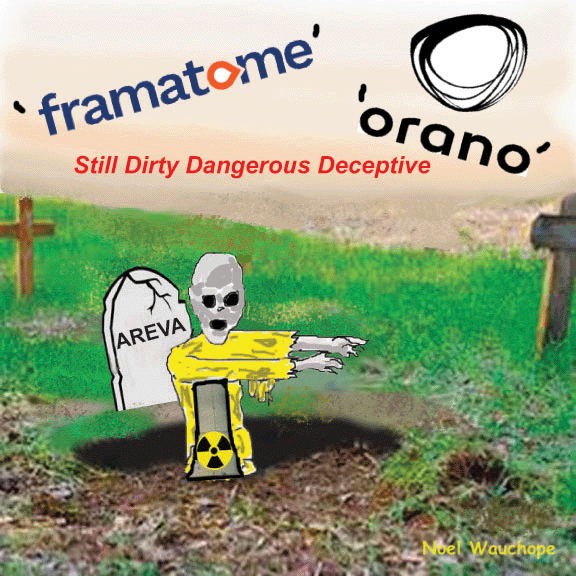
The unexplained illnesses and deaths of animals, a desert veterinary clinic run by a uranium mining corporation, and its attempts to ignore the troubling facts are perplexing.
Orano has set a stark precedent, demonstrating that even lenient mining laws are no real constraint. According to activists, the company simply ignored the required environmental impact assessment for some of its ISL mining projects in Dornogobi Aimag. Coincidentally, Orano was also bribing officials to secure mining licenses during this same period.
Environmentalists square off against a French mining company.
By Tatyana Ivanova | February 12, 2026, https://fpif.org/uranium-neo-colonialism-in-mongolia-crime-but-no-punishment/
On a warm April 1st day last year, Budee Khekhee, head of local non-profit The Power of Unity for the Sake of Our Homeland, led a team into the Gobi Desert to investigate reports of a mysterious illness causing the death of wild and domestic animals, which he obtained from the local herders. A former resident who’d assisted his father’s veterinary work, Budee knew the terrain and knew authorities had ignored previous alarms.
In Zamyn Ud, they spotted numerous white-tailed gazelles lying on the ground, unable to get up, and twitching their legs convulsively. The activists livestreamed their discovery. “My heart was overwhelmed with despair,” Budee later testified. “I realized I couldn’t just abandon them here to die.”
Suspecting that the epidemic was caused by French uranium company Orano’s in-situ leach operations, he loaded four gazelles aboard a truck and drove to the corporation’s clinic gate, broadcasting on Facebook. Orano had built and was operating a veterinary clinic in the mining area. Budee didn’t trust them a lot, but he hoped that the staff would assist in rescuing the animals. Those hopes were dashed when, after two hours of standing outside the locked clinic doors, no one appeared, and the animals died. Left with little choice, the activists dissected the gazelles’ bodies and took tissue samples for independent analysis. They livestreamed their actions to Facebook.
For many Mongolian herders, resource neocolonialism is not an abstract concept. They have resulted in tangible losses, illness, and deaths. Descendants of the Mongol Empire now face uranium mining invaders. After the Soviets departed—leaving behind a legacy of toxic mining—the “clean” French uranium industry arrived, reproducing similar patterns of corruption while poisoning the land. At the same time, these colonialists have participated in the persecution of environmental activists.
Should they be held accountable before domestic and international communities?
The Revenge
In official reports, human rights defenders often refer to the persecution of activists as “unjust” or “disproportional punishment.” However, what happened in the case of the Mongolian herders was closer to pure revenge. Unidentified individuals made police reports accusing Khekhee of illegal hunting. He was subjected to repeated questioning for several months after the criminal investigation began.
The local prosecutor’s office then reclassified the matter as an administrative offense. The state’s Environmental Protection Office determined that Khekhee illegally pursued and killed four gazelles. They penalized him $1,200, a substantial sum for an average Mongolian. His July appeal was denied in full in September, but the court of first instance postponed the sentence for three months, thereby conceding that the case lacked merit.
Neither the investigation nor the court determined why Budee Khekhee allegedly needed to kill the gazelles. However, a local journalist discovered the “motive,” writing in August 2025 that it was done “to mislead the public about the consequences of uranium mining by the joint Mongolian-French enterprise ‘Badrakh Energy’ LLC.”
Prosecution for Independent Dosimetry
The unexplained illnesses and deaths of animals, a desert veterinary clinic run by a uranium mining corporation, and its attempts to ignore the troubling facts are perplexing. Especially when combined with the absurd accusation of poaching directed at an environmental activist whose action was widely livestreamed. When connected to other similar events, a pattern emerges.
In mid-August 2025, the same non-profit invited Russian nuclear physicist Andrey Ozharovskiy to conduct dosimetry measurements. Their focus on radioactive pollution was encouraged by groundwater assessments, which had revealed high uranium and arsenic levels in the area. Ozharovskiy, who had extensive experience in identifying radioactive sources, agreed to come. He entered Mongolia legally with his dosimetry and spectrometry equipment for “business purposes.”
On August 15–17, activists drove him along dirt roads in the Gobi Desert to Orano’s pilot ISL uranium extraction wells, where locals reported trucks carrying pregnant solution or liquid waste. It didn’t take the Russian expert long to discover three dried-up puddles emitting gamma radiation 20-50 times above background levels. Spectrometry identified uranium decay products—radium-226, bismuth-214, and lead-214, which, according to Ozharovskiy, was consistent with mining spills rather than natural radiation. The activists published their finding on social media, and this is how the Mongolian authorities learned about the expedition.
The group later traveled across Mongolia along similar dirt roads to Maradai. On August 19, while measuring radiation near abandoned Soviet mining sites, the group was detained by a border officer and some people in plain clothes. According to the activists, the authorities used drones to spot them in the desert. After spending a day or two in several offices, Ozharovskiy was transferred to the Main Intelligence Directorate in Ulaanbaatar. There, after being questioned, he was told that he was suspected of espionage and immigration violations.
Although the authorities released Ozharovskiy, they took his passport so that he couldn’t leave the country. A few days later he was taken again, forced to admit administrative violations, including using unregistered dosimetry devices, and to pay a fine. Then they brought him to the border with Russia and expelled him without his belongings but with a 10-year entry ban. The local activists, meanwhile, have spoken of intimidation, police reporting requirements, smartphone searches, and non-disclosure agreements.
In the same days the Mongolian Nuclear Regulatory Commission issued a formal statement, where accused Ozharovskiy of spreading false information about radiation background. Some media labeled the activists foreign agents undermining Franco-Mongolian projects in Russia’s interest.
A System That Favors Abuse and Distrust
Mongolian law prohibits radiation measurements using devices that haven’t been registered with the country’s Nuclear Regulatory Commission. After his first detention, Ozharovskiy donated some of his measuring devices to the non-profit. Activists brought them to the NRC but were denied certification with no clear explanation. The only reason provided, though invalid, was that the devices belonged to a Russian citizen.
The activists explained why they hadn’t registered the devices beforehand: they didn’t want authorities to know about their survey in advance. “If they knew about the devices, they wouldn’t let us measure anyway,” one activist said. “We don’t trust them,” Khekhee added.
This distrust is entirely justified given the broader context documented by prominent human rights organizations. Mongolia has earned a reputation for cracking down on critics and human rights defenders, particularly those challenging the mining industry. Amnesty International’s 2024 report documents that criticism of authorities and mining corporations has become effectively criminalized. According to the report Our Land, these corporations commit massive environmental violations, causing significant environmental pollution and deterioration of public health, and undermining traditional Mongolian livelihoods. To attract investors, Mongolian mining lobbyists even managed to pass corporate-friendly legislation. According to Our Land, in 2006 and again in 2013–2015 they weakened environmental safeguards, reducing water protection zones and allowing mining on private and even protected lands.
Another Face of the French Republic
Continue reading1 This Month

of the week – Shut Down Drone Warfare!


Tell the Ukrainian Government to Drop Prosecution of Peace Activist Yurii Sheliazhenko

Petition to revoke the licensing of the Near Surface Nuclear Disposal Facility (NSDF) at Chalk River. https://www.ourcommons.ca/petitions/en/Petition/Details?Petition=e-7247
To see nuclear-related stories in greater depth and intensity – go to https://nuclearinformation.wordpress.com
-
Archives
- March 2026 (251)
- February 2026 (268)
- January 2026 (308)
- December 2025 (358)
- November 2025 (359)
- October 2025 (376)
- September 2025 (257)
- August 2025 (319)
- July 2025 (230)
- June 2025 (348)
- May 2025 (261)
- April 2025 (305)
-
Categories
- 1
- 1 NUCLEAR ISSUES
- business and costs
- climate change
- culture and arts
- ENERGY
- environment
- health
- history
- indigenous issues
- Legal
- marketing of nuclear
- media
- opposition to nuclear
- PERSONAL STORIES
- politics
- politics international
- Religion and ethics
- safety
- secrets,lies and civil liberties
- spinbuster
- technology
- Uranium
- wastes
- weapons and war
- Women
- 2 WORLD
- ACTION
- AFRICA
- Atrocities
- AUSTRALIA
- Christina's notes
- Christina's themes
- culture and arts
- Events
- Fuk 2022
- Fuk 2023
- Fukushima 2017
- Fukushima 2018
- fukushima 2019
- Fukushima 2020
- Fukushima 2021
- general
- global warming
- Humour (God we need it)
- Nuclear
- RARE EARTHS
- Reference
- resources – print
- Resources -audiovicual
- Weekly Newsletter
- World
- World Nuclear
- YouTube
-
RSS
Entries RSS
Comments RSS
 nuclear-news