Britain’s nuclear submarines bill spirals by £5bn
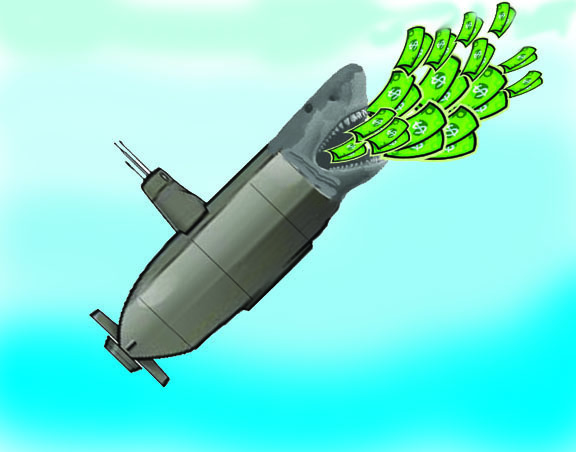
The MoD blames inflation as the cost of replacing the UK’s at-sea deterrent hits £37bn
Szu Ping Chan Economics Editor. Matt Oliver Industry Editor
The cost of replacing the submarines carrying Britain’s nuclear deterrent
has ballooned by more than £5bn in just three years, according to official
documents. The Ministry of Defence (MoD) has raised its estimate for the
lifetime cost of manufacturing and maintaining four new ballistic missile
submarines to £36.7bn as of March last year, up from an estimate of
£31.5bn in 2020-21. It is also £2.5bn more than projected in March 2023.
Telegraph 9th March 2025, https://www.telegraph.co.uk/business/2025/03/09/cost-for-britains-new-nuclear-submarines-spirals-by-5bn/
US support to maintain UK’s nuclear arsenal is in doubt, experts say.
Guardian 8th March 2025,
Malcolm Rifkind joins diplomats and analysts urging focus on European cooperation to replace Trident.
Britain’s ability to rely on the US to maintain the UK’s nuclear arsenal is now in doubt, experts have warned, but working with European states to replace it will be costly and take time.
An existing debate about the future of Trident – Britain’s ageing submarine-launched nuclear missile system – has taken a dramatic new turn in recent weeks amid fears Donald Trump could pull out of Nato.
A range of concerns had already loomed over the £3bn-a-year programme, not least around its efficiency and effectiveness after a second embarrassing failed test launch last year.
Costs have also been a longstanding challenge but replacing Vanguard submarines on time has been prioritised over coming in under budget.
Downing Street sought to play down concerns earlier this week after diplomatic figures including the former British ambassador to the US Sir David Manning floated the scenario of an end to Anglo-US nuclear cooperation.
However, calls for Britain to make alternative plans have been joined by the former UK foreign secretary Sir Malcolm Rifkind, who initiated talks in the 90s between the UK and France on nuclear weapons cooperation.
“It really is necessary for Britain and France to work more closely together because if American reliability ever came into question, then Europe could be defenceless in the face of Russian aggression,” he said.
“The contribution by America must now be to some degree in doubt, not today or tomorrow, but over the next few years and certainly as long as Trump and people like him are in control in Washington.”………………………………………………………………………………………………. https://www.theguardian.com/world/2025/mar/08/us-support-uk-nuclear-arsenal-in-doubt-trident-france
The Russians aren’t coming, the Russians aren’t coming.
The US should continue to work with Russia to end the war, reestablish normal diplomatic relations and reinstate the 3 nuclear agreements America dumped with Russia this century The survival of peoplekind depends on this détente
Walt Zlotow, West Suburban Peace Coalition, Glen Ellyn IL, 9 Mar 25
The US pause of all weapons and intelligence to Ukraine has got some Western European countries in uproar.
French President Emmanuel Macron is scrambling to make up the slack by pledging massive military aid to Ukraine by France and whichever neighbors he can con into squandering their treasure to sustain Ukraine’s lost cause against Russia. Macron may as well be shouting the ‘The Russians are coming, the Russians are coming.’ when he blurted out “Russia has become a threat to France and Europe for years to come. I want to believe that the United States will remain by our side, but we need to be ready if that were no longer the case. The future of Europe should not be decided in Washington or in Moscow.”
European Commission President Ursula von der Leyen warned, “We are living in the most momentous and dangerous of times.” German Chancellor-in-waiting Friedrich Merz recently declared that Europe had “five minutes to midnight.”
For 76 years Europe NATO members have been dependent on Uncle Sam to save their bacon from an imaginary enemy. The aforementioned leaders are now pledging to make up for America’s pullback from their own economies already weakened by three years of aid to the lost war in Ukraine.They are calling for EU member states to take on additional debt and ramp up military spending by $840 billion over four years, some of which will continue weaponizing the war in Ukraine till the last Ukrainian soldier is dead.
Macron recklessly went further stating that French troops could be sent to Ukraine. “Our forces will be there if necessary to guarantee peace, not before a peace agreement is signed. We will continue to meet with allies to move toward the signing of such an agreement. The only thing French and other European troops in Ukraine will guarantee is being attacked by Russia and possibly triggering nuclear war.
The US should continue to work with Russia to end the war, reestablish normal diplomatic relations and reinstate the 3 nuclear agreements America dumped with Russia this century The survival of peoplekind depends on this détente.
While a daunting task, if those objectives can be achieved the US should further encourage Europe to provide for their own defense by withdrawing from NATO which became obsolete 34 years ago when the Soviet Union went poof. With a GDP ten times Russia’s, that should be snap.
If America does withdraw from Europe, the hardliners in France, Germany and the EU, might come to their senses that…the Russians aren’t coming, the Russians aren’t coming.
Britain’s nuclear weapons fiasco is a nightmare for Rachel Reeves
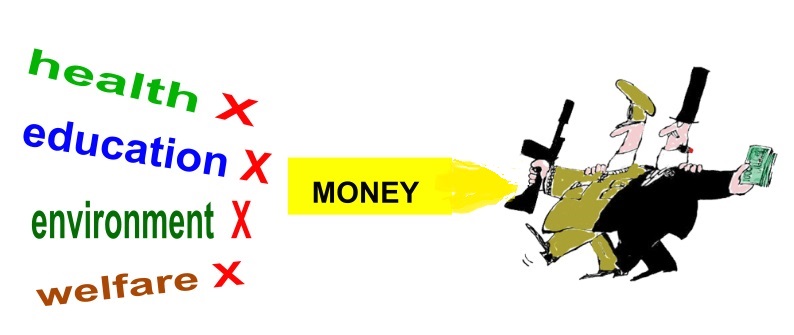
Overhauling the UK’s ageing defence has left the Chancellor facing a fresh battle to balance the books
Sir Keir Starmer was the first Labour leader in three decades to visit the
Barrow shipyard where Britain’s next generation of nuclear submarines are
being assembled. The Prime Minister, on the opposition benches at the time,
was unflinching in his support for the UK’s submarines-based nuclear
deterrent – a continuous at-sea presence that the Royal Navy has
maintained since 1969.
But while keeping Britain safe may be priceless,
being ready for war doesn’t come cheap. Trident, Britain’s nuclear
deterrent, gobbles up a significant share of our defence budget, leaving
the share devoted to troops and guns far below the 2pc Nato baseline. While
the Treasury said in October that its commitment to the UK’s nuclear
deterrent was “absolute”, many have warned that costs are spiralling
out of control, piling more pressure on a Chancellor who is already
struggling to balance the books.
Telegraph 8th March 2025, https://www.telegraph.co.uk/business/2025/03/08/britains-nuclear-weapons-fiasco-nightmare-rachel-reeves/
Radioactive pollution is increasing at Britain’s nuclear bases

7 Mar 25 https://cnduk.org/radioactive-pollution-is-increasing-at-britains-nuclear-bases/
Radioactive air emissions have been increasing year-on-year at Coulport one of Britain’s nuclear submarine bases in Scotland. This development is of some concern as it would lead to increased health risks wherever the emissions were inhaled.
Investigations by The Ferret and The National newspaper found that emissions of radioactive tritiated water vapour had doubled at the Royal Navy’s nuclear weapons storage depot at Coulport on Loch Long between 2018 and 2023. According to the Scottish Pollution Release Inventory, tritiated water vapour emissions at Coulport were 1.7 billion becquerels (units of radioactivity) in 2018, rising steadily to 4.2 billion units in 2023. Tritiated water vapour is harmful when inhaled, ingested or absorbed through the skin as its radiation causes cancer and cardiovascular diseases including strokes.
The investigation also found that eight miles from Coulport at Faslane, where Britain’s nuclear submarines are based, tritiated water containing over 50 billion units of radioactivity had been dumped into the Gareloch. The level of dumping peaked in 2020, when 16.6 billion units were discharged.
The Ferret noted that in 2019, the Scottish Environment Protection Agency (SEPA) “changed the rules to allow certain tritium-contaminated effluents from nuclear submarines at Faslane to be discharged into the Gareloch.” Both SEPA and the MoD claim these emissions are within official safety limits.
However Dr Ian Fairlie, CND’s science advisor, states that these limits are unreliable, as official estimated doses from tritium contain “large uncertainties.”
CND General Secretary Sophie Bolt said:
“From faulty nuclear-armed subs on dangerously extended patrols to crumbling nuclear waste sites, Britain’s nuclear industry is putting us all at great risk. Instead of enforcing the highest levels of environmental standards, the government is just redefining what ‘acceptable risk’ means. All so it can allow the dumping of radioactive water, putting local people at greater risk of cancer. This is beyond reckless. It’s time to scrap Trident and its replacement, and decommission the nuclear industry.”
East Lindsey District Council wants to claim costs for nuclear waste site work
By James Turner, Local Democracy Reporter, 07 March 2025
A council is seeking to claim costs incurred while participating in a
process that could see a nuclear waste site built in Lincolnshire.
Following a demonstration outside the East Lindsey District Council offices
in Horncastle, members backed a motion urging leader Craig Leyland
(Conservative) to pursue a claim against Nuclear Waste Services (NWS) for
expenses incurred during the Geological Disposal Facility (GDF) process.
The council’s executive is set to discuss withdrawing from the process on
April 23 after the government agency ruled out the former gas terminal site
in Theddlethorpe, instead considering land between Gayton le Marsh and
Great Carlton, near Louth. Two other sites, in Mid Copeland and South
Copeland in Cumbria, are also under consideration.
Lincs Online 7th March 2025 https://www.lincsonline.co.uk/horncastle/council-wants-to-claim-costs-for-nuclear-waste-site-work-9407507/
Ripping up the rules on nuclear power heightens the risk to us all

CND, Labour Outlook 7th March 2025 https://labouroutlook.org/2025/03/07/ripping-up-the-rules-on-nuclear-power-heightens-the-risk-to-us-al
“Ripping up the rules for nuclear greatly exacerbates the risk of accidents, will contaminate more of our environment with radioactive waste, and above all, raise the spectre of nuclear conflict.”
Sam Mason, convenor of CND’s Trade Union Advisory Group explains why the government’s new rules for expanding nuclear power production must be opposed.
The government’s announcement that it is going to ‘rip up the rules to fire-up nuclear power’ may be music to the ears of nuclear proponents but for CND, it is something we must vehemently oppose.
Part of wider planning law reforms to put ‘builders not blockers’ first and ‘build baby, build’, the proposal is to extend beyond the eight sites identified for nuclear power plants in 2009, and to include small or advanced modular reactors. This means nuclear sites could be constructed anywhere across England and Wales, and anyone opposing them on legitimate grounds of safety or the environment for example dismissed as NIMBYs.
According to the government, nuclear is needed for energy security and to satisfy high demand from ‘local users such as data centres, gigafactories, hydrogen and synthetic fuel production and/or industrial clusters’. It also includes using nuclear for district heat networks, being placed closer to centres of population, and in proximity to military activities.
A further driver for the government’s plans is the creation of good jobs, to drive growth and support climate action. With the impacts of climate change accelerating across the globe there is an urgent need to decarbonise our energy system, but nuclear power is not the answer on any of these levels.
The government’s laudable aim to decarbonise electric power by 2030 includes 4.5 gigawatts of nuclear power. For reference, the long over budget and delivery of Hinckley Point C in Somerset is due to generate 3.2gw of power.
Assurances about maintaining high standards of regulation do little to assuage fears of this nuclear proliferation. The addition of a new Nuclear Regulatory Taskforce to speed up delivery will cover both civilian and defence nuclear. Reporting directly to the Prime Minister, it serves to further emphasise we cannot decouple civilian nuclear from the weapons system.
Much is made about the low level of risk from nuclear, including new technologies such as SMRs. However, as we mark the 14th anniversary of the Fukushima Daiichi nuclear power plant disaster on 11 March, it should serve as a stark reminder of the impact of nuclear, and its legacy to current and future generations.
Ripping up the rules for nuclear greatly exacerbates the risk of accidents, will contaminate more of our environment with radioactive waste, and above all, raise the spectre of nuclear conflict. We must do all we can to oppose these plans.
Air Force Activates Key Unit for Nuclear Modernization at VSFB

COMMENT. Well, they conned a woman into this killer industry, coddled and “educated” her into this top military job.
The nuclear lobby made keen to promote their pretence that nuclear weapons are good for women!
Most women would not like being part of this.
March 7, 2025, By Jennifer Green-Lanchoney
VANDENBERG SPACE FORCE BASE, Calif. —
In a ceremony marking a new chapter in America’s nuclear deterrence strategy, U.S. Air Force Lt. Col. Suzanne Lamar assumed command of the newly activated Site Activation Task Force (SATAF) Detachment 9 at Vandenberg Space Force Base, March 6.
The activation of SATAF Detachment 9 represents a crucial step in modernizing the nation’s Intercontinental Ballistic Missile (ICBM) capabilities, as the Air Force prepares to replace the aging Minuteman III system with the new LGM-35A Sentinel.
Vandenberg SFB’s Western Range serves as the primary testing ground for the Air Force Global Strike Command’s ICBM deterrent architecture. The Sentinel program represents a significant update to U.S. nuclear deterrent capabilities.
“Space superiority and nuclear deterrence start here at Vandenberg,” said U.S. Air Force Lt. Gen. Michael Lutton, Air Force Global Strike Command deputy commander. “Seventy years ago, Vandenberg hosted the dawn of ICBM testing, and we carry that forward here as we bring this new capability to the joint force.”……………………………….
The SATAF detachments, including Detachment 9 at Vandenberg, are crucial components of AFGSC’s strategy to maintain a “continuously viable, secure, and effective land-based nuclear deterrent.” Similar detachments are scheduled for activation at F.E. Warren AFB, Wyoming (April 3); Malmstrom AFB, Montana (April 4); and Minot AFB, North Dakota (summer 2025)……………………………………………………… https://www.afgsc.af.mil/News/Article-Display/Article/4112894/air-force-activates-key-unit-for-nuclear-modernization-at-vsfb/
University of Suffolk co-opted by the nuclear industry.

Ipswich jobs fair showcases Sizewell C opportunities
The University of Suffolk hosted a jobs fair showcasing Sizewell C
opportunities. More than 200 people attended the event, organised by the
Department of Work and Pensions (DWP) and Sizewell C. The fair provided
information on the thousands of jobs, apprenticeships, and training
opportunities available at the nuclear power plant. Attendees had the
chance to connect with local companies in the Sizewell C supply chain, as
well as colleges and charities.
Ipswich Star 7th March 2025 https://www.ipswichstar.co.uk/news/24986367.ipswich-jobs-fair-showcases-sizewell-c-opportunities/
Does the Deep State really exist, and if so, is it being dismantled?
March 9, 2025, https://theaimn.net/does-the-deep-state-really-exist-and-if-so-is-it-being-dismantled/ .
What is the Deep State? Does it really exist?
These questions are hard to answer. I had heard the term Deep State over many years, and I connected it with all sorts of conspiracies – not just about U.S. politics and intelligence systems, but with wild ideas about satanism, reptilian shapeshifters, the antichrist, child-trafficking, blood harvesting – and all connected with extreme right-wing and pro- Trump propaganda. So I just dismissed and ignored them – there was no such thing as the Deep State !
It is not that simple.
Indeed, it is very complex.
If you start delving, the term Deep State takes you back to Turkey, over 100 years ago, where the concept of a “shadow government” a “secret state within the state” was a real thing. In more modern times the Deep State is defined as:
“The deep state conspiracy theory in the United States is an American political conspiracy theory that posits the existence of the deep state, a clandestine network of members of the federal government (especially within the FBI and CIA). The theory argues that there exist networks of collaborators within the leadership of the high-level financial and industrial entities, which exercise power alongside or within the elected United States government” – Wikipedia
So, OK it’s still just a theory – a conspiracy theory pushed by Donald Trump’s supporters in order to discredit USA’s Biden Democrat administration? And various extreme religious and other wacky groups tacked the more sinister stuff onto it.
The trouble is, as with many problems, there is some truth in it. Over the decades since World War 2, successive U.S. Presidents have turned to secret discussions with unelected officials from the CIA in particular, but also from other agencies and business circles, relying on their advice to make decisions. The decisions were then pretty much rubber-stamped by a complacent and oblivious Congress.
The following (annoying advertisement-afflicted) video from early 2024, is unmistakably a propaganda piece for the Trump campaign. But it does contain some telling information. Even from its first example, we see that J.F. Kennedy, in the Cuban missile crisis, went not to his advisors, but to a social group of very secret members of the CIA to decide what to do. The development of the very powerful, very secretive CIA, in partnership with military leaders, rocket scientists from Germany, media and business leaders, produced an information network on which Presidents relied for decision-making. The CIA’s spying powers that were appropriate in war against the enemy are now directed also against the American public, even in peacetime. Huge well-funded resources went to secret activities that included misinformation and disinformation against civil rights and peace activists. Congress accepts these secret programmes in the name of security.
That video – however pro-Trump it might be, does not mention satanism, etc. If you separate that wacky stuff from the Deep State story – it is all remarkably convincing. To an American public, fed up with the secrecy, the endless expensive pointless wars – Vietnam, Iraq Afghanistan …, Donald Trump’s promise of change, and of dismantling the Deep State sounded attractive.
And hey – presto ! Trump is doing it! He’s sacking those unelected officials, thousands and thousands of them. He’s purging law enforcement and intelligence agencies, and plans to cut 70 percent of staff from various government agencies — freezing of billions of dollars in funding,
Ain’t that great!
Actually, no.
We might welcome the disruption of a Deep State system based on militarism, with the USA forever fomenting trouble overseas, and spending unknown $squillions on military gimmickry. A phrase springs to mind – “Throwing the baby out with the bath-water” . That’s a very corny metaphor. But what is really happening is this:
Trump’s aim is nothing to do with the “Deep State” . Trump’s goal and methodology was set out, detailed in Project 2025, the Center for Renewing America and the America First Policy Institute. The goal is the destruction of democracy – removing or rendering useless the laws, regulations, protocols and rules that prevent autocratic power. No more compromise, limited power, checks and balances and accountability. He made a good start in getting control over the Supreme Court
And I don’t know if everybody noticed two salient points in Trump’s “defeat of the Deep State”
- the power and unaccountable funding of the Pentagon will continue.
- Trump’s getting rid of “unelected officials” – but apparently taking orders from unelected Elon Musk.
The end goal is the dictatorship of Donald Trump. It would be funny if it were not so deadly serious. The first step – the “Trump’s Birthday and Flag Day Holiday Establishment Act” gives a clue as to what will follow.

The President Trump phenomenon will end eventually, for sure in chaos. Western World leadership is in the hands of a powerful, but unhinged , dictator, who is taking the advice of another powerful unelected unhinged billionaire, Elon Musk.
The whole process is far too much to pay for the destruction of the Deep State. Yes, it is welcome that the secretive decision-making by unelected officials and business leaders – taking the USA into endless wars – has been stopped. But its replacement is a terrifying fascism.
And at the end of it all, after the chaos, what will emerge? If we’re lucky enough to avoid catastrophes of global heating, and war, will we again get a government of men that are happy to have decisions made by macho men in bureaucracy and industry, who are itching for war – another Deep State in the name of “security”?
We’ve failed to stop climate change — this is what we need to do next.

While we can still limit warming by cutting emissions, we now face having to adapt to more extreme weather.
Ben Spencer, Science Editor, |Anna Dowell, Data Journalism Trainee, Thursday March 06 2025, https://www.thetimes.com/uk/environment/article/climate-change-adaptation-decarbonisation-times-earth-93jln78vd
here is a story that used to be told about the fight against climate change. It was a narrative of hope, of a battle to be fought and won.
“This is the moment when we must come together to save this planet,” Barack Obama told a crowd of 200,000 people in Berlin in 2008, the summer before he was elected president.
That moment, of course, came and went. But there were more speeches, more moments of urgency. Al Gore tried, so did Leonardo DiCaprio. Sir David Attenborough and Greta Thunberg attempted to mobilise the masses; even the King has had a go.
Boris Johnson tried again in 2021 at the Cop26 climate summit in Glasgow, urging world leaders to “keep alive” the hope of limiting global warming to 1.5C, enshrined in the Paris Agreement of 2015. He said: “Let’s keep moving forward and make this the moment we irrefutably turn the tide against climate change.”
There are only so many times, however, that the same stories can be told.
Laurie Laybourn, director of the Strategic Climate Risks Initiative, said: “It’s only really now that the penny is dropping that we didn’t prevent a global-scale climate crisis. We’re now in a global-scale climate crisis.”
The wildfires in Los Angeles, flooding in Valencia, and the storms that have battered the British Isles this winter — Bert, Darragh and Éowyn — have confirmed what the scientists have long forecast. Climate change is no longer something that can be averted: it has arrived.
In January the Met Office announced that global average temperatures for 2024 had risen 1.5C above pre-industrial levels for the first time. One year’s weather records do not in themselves mean the 2015 Paris Agreement, which set out to limit global warming long-term, has failed. But the Met Office also warned that carbon dioxide in the atmosphere is still rising, and is now “incompatible” with the modelled pathways that would keep warming below the totemic 1.5C.
“There is an adjustment that’s needed now to understand that that preventative project has not worked,” Laybourn said. “Emissions reductions were not tried at the scale that were needed — being confronted with that failure is actually quite difficult for people.”
After years of focusing on averting climate change, what climate scientists refer to as “mitigation”, experts are warning that we now need far greater focus on adaptation to cope with the new weather that comes with a warming world.
There is no doubt that in the UK we are not ready for climate change. Chris Stark, former chief executive of the climate change committee (CCC) and now a senior energy official, in 2022 described the government’s planning for global warming as “genuinely poor”, blaming a “wilful reluctance” to factor adaptation into policy.
This reluctance goes back years. In a speech at Chatham House in September, the former Labour politician David Miliband admitted that preparing for global warming had been something of a taboo. “When I was environment secretary in 2006-7, it felt as though talking about adapting to climate change meant admitting defeat on mitigating climate change.”
Climate change for the UK means hotter, drier summers and wetter winters with more frequent, more severe storms…………………………………………………………………………………………………………………………………
It is not just the UK failing to prepare. The United Nations Environment Programme (Unep) in November published its “adaptation gap” report, setting out how far the issue has been neglected. It found that annual global spending on climate adaptation is between $187 billion and $359 billion short of what it should be, “with adaptation planning slowing and implementation falling behind”.
Inger Andersen, Unep executive director, said in the foreword: “People and the natural systems upon which our livelihoods depend are increasingly in danger from the hell and high water that climate change is bringing. The world must get serious about adaptation, now.”
MARK PASSMORE/ALAMY
Laybourn stressed that while much more must be done to adapt to climate change, it does not mean that politicians should abandon decarbonisation. “You have to do both,” he said. “If you’re busy mopping the floor you mustn’t forget to turn off the tap.”
Part of the reluctance to push forwards with climate adaptation is finding ways to pay for it. Decarbonisation is a relatively easy sell: it is not difficult to persuade a developer to build a wind farm or install solar panels if they can then profit from the cheap power they generate.
Flood defences, on the other hand, do not generate a return, so central investment is needed.
But experts say a long view is required. Existing flood defences in Britain prevent £1.15 billion in damage each year. Laybourn thinks this approach is required for other sectors. “If the UK had a more nature-abundant, more balanced, sustainable farming system, for example, it would mean that the farming system was better able to handle shocks.”
A UK government spokesman insisted adaptation was being taken seriously………………………… https://www.thetimes.com/uk/environment/article/climate-change-adaptation-decarbonisation-times-earth-93jln78vd
Jeffrey Sachs: Negotiating a Lasting Peace in Ukraine

The time has arrived for diplomacy that brings collective security to Europe, Ukraine, and Russia.
Jeffrey D. Sachs, Mar 06, 2025Common Dreams
There should be little doubt about how a lasting peace can be established in Ukraine. In April 2022, Russia and Ukraine were on the verge of signing a peace agreement in Istanbul, with the Turkish Government acting as mediator. The U.S. and U.K. talked Ukraine out of signing the agreement, and hundreds of thousands of Ukrainians have since died or been seriously injured. Yet the framework of the Istanbul Process still provides the basis of peace today.
The draft peace agreement (dated April 15, 2022) and the Istanbul Communique (dated March 29, 2022) on which it was based, offered a sensible and straightforward way to end the conflict. It’s true that three years after Ukraine broke off the negotiations, during which time Ukraine has incurred major losses, Ukraine will eventually cede more territory than it would have in April 2022 — yet it will gain the essentials: sovereignty, international security arrangements, and peace.
In the 2022 negotiations, the agreed issues were Ukraine’s permanent neutrality and international security guarantees for Ukraine. The final disposition of the contested territories was to be decided over time, based on negotiations between the parties, during which both sides committed to refrain from using force to change boundaries. Given the current realities, Ukraine will cede Crimea and parts of southern and eastern Ukraine, reflecting the battlefield outcomes of the past three years.
Such an agreement can be signed almost immediately and in fact is likely to be signed in the coming months. As the U.S. is no longer going to underwrite the war, in which Ukraine would suffer yet more casualties, destruction, and loss of territory, Zelensky is recognizing that it’s time to negotiate. In his address to Congress, President Donald Trump quoted Zelensky as saying “Ukraine is ready to come to the negotiating table as soon as possible to bring lasting peace closer.”
The pending issues in April 2022 involved the specifics of security guarantees for Ukraine and the revised boundaries of Ukraine and Russia. The main issue regarding the guarantees involved the role of Russia as a co-guarantor of the agreement. Ukraine insisted that the Western co-guarantors should be able to act with or without Russia’s assent, so as not to give Russia a veto over the Ukraine’s security. Russia sought to avoid a situation where Ukraine and its Western co-guarantors would manipulate the agreement to justify renewed force against Russia. Both sides have a point.
The best resolution, in my view, is to put the security guarantees under the authority of the UN Security Council. This means that the U.S., China, Russia, U.K., and France would all be co-guarantors, together with the rest of the UN Security Council. This would subject the security guarantees to global scrutiny. Yes, Russia could veto a subsequent UN Security Council resolution regarding Ukraine, but it would then face China’s opprobrium and the world’s if Russia were to act arbitrarily in defiance of the will of the rest of the UN.
Regarding the final disposition of borders, some background is very important. Before the violent overthrow of Ukrainian President Viktor Yanukovych in February 2014, Russia did not make any territorial demands vis-à-vis Ukraine. Yanukovych favored neutrality for Ukraine, opposed NATO membership, and peacefully negotiated with Russia a 20-year lease for Russia’s naval base in Sevastopol, Crimea, home of Russia’s Black Sea Fleet since 1783. After Yanukovych was toppled and replaced by a U.S.-backed, pro-NATO government, Russia moved quickly to retake Crimea, to prevent the naval base from falling into NATO hands. During 2014 to 2021, Russia did not push for annexing any other Ukrainian territory. Russia called for the political autonomy of the ethnic Russian regions of eastern Ukraine (Donetsk and Luhansk) that broke away from Kyiv immediately after Yanukovych was toppled.
The Minsk II agreement was to implement autonomy. The Minsk framework was inspired in part by the autonomy of the ethnic Germany region of South Tyrol in Italy. German Chancellor Angela Merkel knew the South Tyrol experience and viewed it as a precedent for similar autonomy in the Donbas. Unfortunately, Ukraine strongly resisted autonomy for the Donbas, and the U.S. backed Ukraine in rejecting autonomy. Germany and France, which ostensibly were guarantors of Minsk II, stood by silently as the agreement was thrown aside by Ukraine and the United States.
Following six years in which Minsk II was not implemented, during which the U.S.-armed Ukrainian military continued to shell the Donbas in an attempt to subdue and recover the breakaway provinces, Russia recognized Donetsk and Luhansk as independent states on February 21, 2022. The status of Donetsk and Luhansk in the Istanbul process was still to be finalized. Perhaps a return to Minsk II and its actual implementation by Ukraine (recognizing the autonomy of the two regions in the Ukrainian constitution) could have been ultimately agreed. When Ukraine walked away from the negotiating table, alas, the issue was moot. A few months later, on September 30, 2022, Russia annexed the two oblasts as well as two others, Kherson and Zaporizhzhia.
The sad lesson is this. Ukraine’s loss of territory would have been averted entirely but for the violent coup that toppled Yanukovych and brought in a U.S.-backed regime intent on NATO membership. The loss of territory in eastern Ukraine could have been averted had the U.S. pushed Ukraine to implement the UN Security Council-backed Minsk II agreement. The loss of territory in eastern Ukraine could probably have been averted as late as April 2022 in the Istanbul Process, but the U.S. blocked the peace agreement. Now, after 11 years of war since the overthrow of Yanukovych, and as a result of Ukraine’s losses on the battlefield, Ukraine will cede Crimea and other territories of eastern and southern Ukraine in the coming negotiations.
Europe has other interests that it should be negotiating with Russia, notably security for the Baltic States and for European-Russian security arrangements more generally. The Baltic States feel very vulnerable to Russia, understandably so given their history, but they are also gravely and unnecessarily adding to their vulnerability by a stream of repressive measures taken against their ethnic Russian citizenry, including measures to repress the use of the Russian language and measures to cut their citizens’ ties with the Russian Orthodox Church. Baltic state leaders are also provocatively engaging in remarkable Russophobic rhetoric. Ethnic Russians are about 25% of the population of both Estonia and Latvia, and around 5% in Lithuania. Security for the Baltic States should be achieved through security-enhancing measures taken on both sides, including the respect for minority rights of the ethnic Russian populations, and by refraining from vitriolic rhetoric.
The time has arrived for diplomacy that brings collective security to Europe, Ukraine, and Russia. Europe should open direct talks with Russia and should urge Russia and Ukraine to sign a peace agreement based on the March 29 Istanbul Communique and the April 15, 2022 draft peace agreement. Peace in Ukraine should by followed by the creation of a new system of collective security for all of Europe, stretching from Britain to the Urals, and indeed beyond.
Europe’s Face-Saving Theater on Ukraine
That Ukraine would lose was obvious two years ago to Macron and German Chancellor Olaf Scholz when they both gently broke that news to Zelensky privately in Paris in February 2023.
It seems that U.S. and European leaders kept an unwinnable war going until now to save their own careers. They could never admit defeat. But it did not save Biden or Harris or Blinken or Scholz or Trudeau, and Macron is in trouble too as voters saw through them all.
Britain’s prime minister called an “emergency” summit in London following the Oval Office Fiasco to try to convince the world it will not be Europe’s fault, but America’s (Read: Donald Trump’s) when Ukraine collapses, writes Joe Lauria.
By Joe Lauria, Consortium News, https://consortiumnews.com/2025/03/05/europes-facing-saving-theater-on-ukraine/
In his speech following the emergency European summit he called in London on Sunday, British Prime Minister Keir Starmer said Britain was prepared to send “boots on the ground” and “planes in the air” to defend Ukraine against the evil madman, Vladimir Putin.
Then Starmer added: but only if the United States joins us.
He said:
“We will go further to develop a ‘coalition of the willing’ to defend a deal in Ukraine…
And to guarantee the peace.
Not every nation will feel able to contribute.
But that can’t mean we sit back.
Instead, those willing will intensify planning now – with real urgency.
The UK is prepared to back this…
With boots on the ground, and planes in the air…
Together with others.
Europe must do the heavy lifting…
But to support peace on our continent.
And to succeed, this effort must have strong US backing
Donald Trump has made it clear he is not going to commit U.S. troops to Ukraine, however. And Russia has said it would never accept Western troops there.
What Starmer is really saying is: Europe stands ready to fight and die as peacekeepers to save Ukraine if necessary, but only with the Americans. So when they refuse to come and the disastrous Project Ukraine at last comes crashing on our heads, don’t blame us, blame the U.S.A.
The theater piece directed by Starmer at Lancaster House with an assembly of 15 European heads of government (and Justin Trudeau of Canada) was not really choreographed to try to convince Trump to reverse course, which appears unlikely, but as an elaborate presentation to save the hides of politicians who invested so much of their own political capital and wasted so much of their citizens’ money in the inevitable and humiliating defeat of Ukraine.
The summit was called by Starmer within two days of what he and the other Europeans saw transpire in the Oval Office on Friday. [See: Trump, Vance School Zelinsky on Reality of His War]. That occured at the end of a week in which both Starmer and French President Emmanuel Macron had paid a visit to the same Oval Office where they learned first hand Trump’s determination to end the war even if it means Ukraine’s defeat.
That Ukraine would lose was obvious two years ago to Macron and German Chancellor Olaf Scholz when they both gently broke that news to Zelensky privately in Paris in February 2023.
Trump will become even easier to blame now that he has cut off military aid and intelligence to Ukraine.
[The theater continued on Thursday at another European summit in Brussels, dubbed a “War Summit” by Politico, in which French President Emmanuel Macron, and still German Foreign Minister Alena Baerbock said Europe needed to get ready for war with Russia.]
The private remarks clashed with public statements from European leaders who had routinely said then, and still say today, that they will continue to support Ukraine for as long as it takes to achieve victory on the battlefield. That was Joe Biden’s line too.
The Wall Street Journal, which reported on the private remarks to Zelenksy two years ago, wrote:
“The public rhetoric masks deepening private doubts among politicians in the U.K., France and Germany that Ukraine will be able to expel the Russians from eastern Ukraine and Crimea, which Russia has controlled since 2014, and a belief that the West can only help sustain the war effort for so long, especially if the conflict settles into a stalemate, officials from the three countries say.
‘We keep repeating that Russia mustn’t win, but what does that mean? If the war goes on for long enough with this intensity, Ukraine’s losses will become unbearable,’ a senior French official said. ‘And no one believes they will be able to retrieve Crimea.’”
Indeed Ukraine’s losses have become unbearable. Macron and Scholz tried to tell Zelensky at that Élysée Palace dinner in February 2023 that he must consider peace talks with Moscow, the Journal reported.
According to its source, the newspaper quoted Macron as telling Zelensky that “even mortal enemies like France and Germany had to make peace after World War II.”
Macron told Zelensky “he had been a great war leader, but that he would eventually have to shift into political statesmanship and make difficult decisions,” the newspaper reported.
One wonders then why Scholz and Macron and the rest of Europe have persisted in fueling a lost cause that has since chewed up tens of thousands of additional Ukrainian lives. Could they be so corrupt that the survival of their political careers was worth the carnage of another nation’s men?
Could they have been as corrupted as Antony Blinken, who insisted to the end of his time as U.S. secretary of state that Ukraine lower the conscription age to 18, even though he knew these youth would be sent to certain death? Have Western leaders not understood that the only chance Ukraine had to win the war was with NATO’S direct participation, risking a nuclear holocaust ?
It seems that U.S. and European leaders kept an unwinnable war going until now to save their own careers. They could never admit defeat. But it did not save Biden or Harris or Blinken or Scholz or Trudeau, and Macron is in trouble too as voters saw through them all.
They’d all staked too much on the outcome of the war. They allowed their economies to fall. They pushed government censorship of social and alternative media to hide criticism that they were allowing men to die so that they would not be accused of “losing Ukraine.”
It’s been a cornerstone of history from ancient emperors to Lyndon Johnson and Richard Nixon in Vietnam, and now Biden and Starmer in Ukraine: Let them die so that we may stay in office.
With defeat staring them in the face, who better to blame it on than the ogre, Donald Trump, who has dared to inject realism into the twisted dream of using Ukraine to weaken and defeat Russia.
It’s a failed policy that the European and Ukrainian leaders desperately need to keep going. One way to attempt this, as Chicago University professor John Mearsheimer said, is for the British, French and Ukrainians to “trap” the United States into giving a “security guarantee” to Ukraine.
Language in the mineral deal Zelensky had gone to the U.S. on Friday to sign calls for “common protection of critical resources.” Mearsheimer told a TV network in India that that is “the way they are trying to trap Trump and Co., and Trump won’t be trapped.”
This became evident in the Oval Office dust up last Friday when Trump angrily rejected Zelensky’s insistence on a U.S. “security guarantee” before he’d agree to a ceasefire and sign the mineral agreement. [See: Trump, Vance School Zelensky on Reality of His War]
The only way to keep their war going is to cajole Trump into getting the U.S. deeper into the morass, rather than wisely pulling out and pushing for a deal to end it.
As much as they might despise Trump, Starmer’s Sunday performance was designed to suck up to him. And an ungrateful Zelensky, reconsidering his public feud with Trump, is trying to make up with a man that seems susceptible to flattery.
In his address to the U.S. Congress Tuesday night, Trump said:
“Earlier today I received an important letter from President Zelensky of Ukraine. The letter reads: ‘Ukraine is ready to come to the negotiating table as soon as possible to bring lasting peace closer.’
‘Nobody wants peace more than the Ukrainians,’ he said. ‘My team and I stand ready to work under President Trump strong leadership to get a peace that lasts. … We do really value how much America has done to help Ukraine, maintain its sovereignty and independence. … Regarding the agreement on minerals and security, Ukraine is ready to sign it at any time.’
That is convenient for you. I appreciate that he sent this letter. I just got it a little while ago. Simultaneously we’ve had serious discussions with Russia. Then I’ve received strong signals that they are ready for peace. Wouldn’t that be beautiful? Wouldn’t that be beautiful?
Wouldn’t that be beautiful?
It’s time to stop this madness. It’s time to halt the killing. It’s time to end the senseless war. If you want to end wars, you have to talk to both sides.”
Desperate Europeans and Ukrainians need Trump to keep their war and thus their careers going, perhaps none more so than Zelensky.
Will Trump stand firm, or will he succumb to a trap?
Non-Proliferation Treaty ‘struggling’ in new nuclear age, expert warns
A CRUCIAL international treaty seen as the cornerstone of nuclear relations is “really struggling” in the modern age as nuclear-armed states fail to meet their obligations under it, an expert has warned.
Speaking to The National from a UN summit on the Treaty on the Prohibition
of Nuclear Weapons (TPNW), the University of Glasgow’s Dr Rhys Crilley
said there was “a lot of frustration internationally” with
nuclear-armed states like the UK failing to live up to their commitments
under the older Nuclear Non-Proliferation Treaty (NPT).
The National 6th March 2025, https://www.thenational.scot/news/24988503.non-proliferation-treaty-struggling-new-nuclear-age-expert-warns/
Supreme Court wrestles with nation’s frustrating search for nuclear waste storage

Justice Sonia Sotomayor, looking ahead to the United States’ 250th anniversary next year, said, “I hope that we make it another 250, but if it takes 40 or 80 years for a solution to come, it would still be temporary, correct?”
By ASSOCIATED PRESS, 6 March 2025 ,
https://www.dailymail.co.uk/wires/ap/article-14464455/The-Supreme-Court-confronts-national-headache-What-growing-pile-nuclear-waste.html
WASHINGTON (AP) – The Supreme Court on Wednesday wrestled with whether to restart plans to temporarily store nuclear waste at sites in rural Texas and New Mexico even as some justices worried about safety issues and the lack of progress toward a permanent solution.
The justices heard arguments in a case that reflects the complicated politics of the nation´s so far futile quest for a permanent underground storage facility. A plan to build a national storage facility northwest of Las Vegas at Yucca Mountain has been mothballed because of staunch opposition from most Nevada residents and officials.
The court took up a challenge by the Nuclear Regulatory Commission and a private company with a license for the Texas facility to an appellate ruling that found the commission had no authority to grant the license. The outcome of the case will affect plans for a similar facility in New Mexico roughly 40 miles (65 kilometers) away.
The licenses would allow the companies to operate the facilities for 40 years, with the possibility of a 40-year renewal.
“That doesn’t sound very interim to me,” Justice Neil Gorsuch said, while also questioning the advisability of storing spent nuclear fuel “on a concrete platform in the Permian Basis, where we get all our oil and gas from.”
Justices Samuel Alito and Clarence Thomas joined Gorsuch in asking questions suggesting they were the most likely to uphold the ruling from the 5th U.S. Circuit Court of Appeals.
Roughly 100,000 tons (90,000 metric tons) of spent fuel, some of it dating from the 1980s, is piling up at current and former nuclear plant sites nationwide and growing by more than 2,000 tons (1,800 metric tons) a year. The waste was meant to be kept there temporarily before being deposited deep underground.
The NRC has said that the temporary storage sites are needed because existing nuclear plants are running out of room. The presence of the spent fuel also complicates plans to decommission some plants, the Justice Department said in court papers.
Justice Sonia Sotomayor, looking ahead to the United States’ 250th anniversary next year, said, “I hope that we make it another 250, but if it takes 40 or 80 years for a solution to come, it would still be temporary, correct?”
Justice Department lawyer Malcolm Stewart agreed, noting that the spent fuel has to be kept somewhere, whether at operating and decommissioned plants or elsewhere.
Security also is cheaper with the waste in one or two locations, Stewart said, relying on arguments made by Interim Storage Partners LLC, the company with the Texas license.
Sotomayor, along with Justices Ketanji Brown Jackson, Elena Kagan and Brett Kavanaugh, seemed most inclined to reverse the 5th circuit. Chief Justice John Roberts and Justice Amy Coney Barrett said little or nothing to reveal where they stand.
The NRC’s appeal was filed by the Biden administration and maintained by the new Trump administration. Texas Gov. Greg Abbott,. a Republican, and New Mexico Gov. Michelle Lujan Grisham, a Democrat, are leading bipartisan opposition to the facilities in their states.
The justices will consider whether, as the NRC and Interim Storage Partners argues, the states and a private energy company forfeited their right to object to the licensing decisions because they declined to join in the commission´s proceedings.
Two other federal appeals courts, in Denver and Washington, that weighed the same issue ruled for the agency. Only the 5th Circuit allowed the cases to proceed.
The second issue is whether federal law allows the commission to license temporary storage sites. Opponents are relying on a 2022 Supreme Court decision that held that Congress must act with specificity when it wants to give an agency the authority to regulate on an issue of major national significance. In ruling for Texas, the 5th Circuit agreed that what to do with the nation´s nuclear waste is the sort of “major question” that Congress must speak to directly.
But the Justice Department has argued that the commission has long-standing authority to deal with nuclear waste reaching back to the 1954 Atomic Energy Act.
The NRC granted the Texas license to Interim Storage for a facility that could take up to 5,000 metric tons of spent nuclear fuel rods from power plants and 231 million tons of other radioactive waste. The facility would be built next to an existing dump site in Andrews County for low-level waste such as protective clothing and other material that has been exposed to radioactivity. The Andrews County site is about 350 miles (560 kilometers) west of Dallas, near the Texas-New Mexico state line.
The New Mexico facility would be in Lea County, in the southeastern part of the state near Carlsbad. The NRC gave a license for the site to Holtec International.
Alito, who said the interim sites could remove the incentive to find a permanent solution, asked Brad Fagg, a lawyer for Interim Storage Partners, for a prediction of when a permanent site would open.
“I’ve been in this stew for a lot of years,” Fagg said. “I would be kidding myself and this court if I said I had a date.”
A decision is expected by late June.
1 This Month
To see nuclear-related stories in greater depth and intensity – go to https://nuclearinformation.wordpress.com/

29 Jan. Thursday 7-8 p.m. Webinar – World’s Largest Nuclear Station in Port Hope, ON?


31st January – Challenging the War Machine – a DECLASSIFIED UK SUMMIT

Website of the Week
Now until to February 10, 2026 Radioactive waste storage in France: the debate is finally open! How to participate?
-
Archives
- January 2026 (271)
- December 2025 (358)
- November 2025 (359)
- October 2025 (376)
- September 2025 (258)
- August 2025 (319)
- July 2025 (230)
- June 2025 (348)
- May 2025 (261)
- April 2025 (305)
- March 2025 (319)
- February 2025 (234)
-
Categories
- 1
- 1 NUCLEAR ISSUES
- business and costs
- climate change
- culture and arts
- ENERGY
- environment
- health
- history
- indigenous issues
- Legal
- marketing of nuclear
- media
- opposition to nuclear
- PERSONAL STORIES
- politics
- politics international
- Religion and ethics
- safety
- secrets,lies and civil liberties
- spinbuster
- technology
- Uranium
- wastes
- weapons and war
- Women
- 2 WORLD
- ACTION
- AFRICA
- Atrocities
- AUSTRALIA
- Christina's notes
- Christina's themes
- culture and arts
- Events
- Fuk 2022
- Fuk 2023
- Fukushima 2017
- Fukushima 2018
- fukushima 2019
- Fukushima 2020
- Fukushima 2021
- general
- global warming
- Humour (God we need it)
- Nuclear
- RARE EARTHS
- Reference
- resources – print
- Resources -audiovicual
- Weekly Newsletter
- World
- World Nuclear
- YouTube
-
RSS
Entries RSS
Comments RSS
 nuclear-news