US Threatens Possible Military Response After Tehran Rejects Nuclear Outreach
The White House again warned Tehran that it can be dealt with either through military means or by reaching a deal over its nuclear program, remarks that came hours after Iran’s Supreme Leader Ayatollah Ali Khamenei rejected a US proposal for negotiations between the two bitter rivals.
“We hope the Iran Regime puts its people and best interests ahead of terror,” White House National Security Council spokesman Brian Hughes said in a statement on March 9 while reiterating remarks by President Donald Trump that “if we have to go in militarily, it’s going to be a terrible thing.”
In an interview with Fox Business recorded on March 6, Trump said, “There are two ways Iran can be handled: militarily, or you make a deal” to prevent Tehran from acquiring nuclear weapons.
“I’ve written them a letter saying, ‘I hope you’re going to negotiate because if we have to go in militarily, it’s going to be a terrible thing,'” Trump said.
“I would rather negotiate a deal. I’m not sure that everybody agrees with me, but we can make a deal that would be just as good as if you won militarily,” Trump added.
“But the time is happening now. The time is coming up. Something’s going to happen one way or the other.”
Snippets of the interview were aired on March 7, but the full sit-down will be broadcast on March 9, Fox said.
In separate comments to reporters, Trump said: “We have a situation with Iran that, something’s going to happen very soon. Very, very soon.”
Ali Khamenei, speaking on March 8 to a group of Iranian officials — without specifically mentioning Trump or the United States — said, “Their talks are not aimed at solving problems.”
“It is for…’Let’s talk to impose what we want on the other party that is sitting on the opposite side of the table.'”
“The insistence of some bullying governments on negotiations is not to resolve issues…. Talks for them is a pathway to have new demands; it is not only about Iran’s nuclear issue…. Iran will definitely not accept their expectations,” Khamenei was quoted by state media as saying.
Iranian Foreign Minister Abbas Araghchi on March 8 said Tehran had not yet received a letter from Trump……………………………… more https://www.rferl.org/a/iran-trump-nuclear-khamenei-negotiations/33341412.html
Turbine, cooling: these unforeseen events that keep the Flamanville EPR at a standstill.
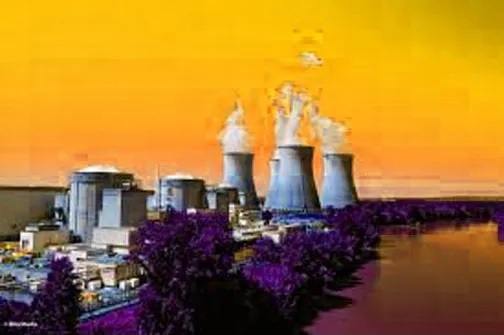
EDF is extending an unscheduled shutdown of the Flamanville EPR until the end of March in order to make adjustments to the turbine. During its first 100 days of operation, the nuclear reactor will have undergone 76 days of maintenance.
By Amélie Laurin, March 6, 2025
EDF had warned: the ramp-up of the Flamanville EPR, the first nuclear reactor to be commissioned in France in twenty-five years, would be very gradual. The public group has once again shut down, for a month and a half, its Normandy pressurized water reactor, which had been connected to the electricity grid on December 21, the first day of winter.
These maintenance operations were not planned and are the result of technical difficulties. They began on February 15 and are due to continue until March 30, after being extended three times.
Turbine heating
This work follows two initial suspensions of electricity production at Flamanville, between Christmas and mid-January, and at the turn of February. Two shutdowns that were, themselves, scheduled. In total, the reactor will have been immobilized for 76 days, during its first 100 days of operation.
The cause: various technical adjustments. In mid-February, the EPR stopped producing electrons due to an insufficient water flow in the seawater cooling circuit, which is only used “in exceptional situations”. This was followed by an intervention “on a temperature probe of the main circuit”, specifies a regulatory press release.
More Guns, Less Butter: Starmer’s Defence Spending Splash

To pursue such rearmament, Starmer has decided to take the axe to the aid budget,
March 8, 2025 Dr Binoy Kampmark, https://theaimn.net/more-guns-less-butter-starmers-defence-spending-splash/
The urge to throw more money at defence budgets across a number of countries has become infectious. It was bound to happen with Donald Trump’s return to the White House, given his previous insistence that US allies do more to fatten their own armies rather than rely on the largesse of Washington’s power. Spend, spend, spend is the theme, and the UK Prime Minister Keir Starmer has shown himself willing to join this wasteful indulgence.
On February 25, just prior to his visit to Washington, Starmer announced that spending on defence would reach 2.5% of GDP from April 2027. In the next parliament, it would rise to 3%. “In recent years,” states a UK government press release, “the world has been reshaped by global instability, including Russian aggression in Ukraine, increasing threats from malign actors, rapid technological change, and the accelerating impacts of climate change.”
Almost predictably, the term “Cold War” makes its retro appearance, with the spending increase the largest since that conflict of wilful misunderstandings and calculated paranoia. Russia figures prominently, as do “malign actors” who have burdened “the working people of Britain” with “increased energy bills, or threats to British interests and values.”
The governing Labour Party has also gone a bit gung-ho with the military–industrial establishment. In an open letter reported by the Financial Times, over 100 Labour MPs and peers thought it wise that ethical rules restricting investment by banks and investment firms in defence companies be relaxed. Financial institutions, the letter argues, should “rethink ESG [environmental, social and governance] mechanisms that often wrongly exclude all defence investment.” It was also important to address the issue of those “unnecessary barriers” defence firms face when “doing business in the UK.” Among such barriers are those irritating matters such as money laundering checks banks are obliged to conduct when considering the finance needs of defence and security firms, along with seeking assurances that they are not financing weapons banned under international law.
That these uncontroversial rules are now being seen as needless barriers to an industry that persists in shirking accountability is a sign of creeping moral flabbiness. Across Europe, the defence and arms lobbyists, those great exploiters of fictional insecurity, are feeling more confident than they have in years. They can rely on such figures as European Commission President, Ursula von der Leyen, who stated on March 4 that, “We are in an era of rearmament. And Europe is ready to massively boost its defence spending.”
To pursue such rearmament, Starmer has decided to take the axe to the aid budget, reducing it from its current level of 0.5% of gross national income to 0.3% in 2027. It was, as the press release goes on to mention, a “difficult choice” and part of “the evolving nature of the threat and the strategic shift required to meet it.” The Conservatives approved the measure, and the populist Reform UK would have little reason to object, seeing it had been its policy suggestion at the last election.
It was a decision that sufficiently troubled the international development minister, Anneliese Dodds, to quit the cabinet. In a letter to the prime minister, Dodds remarked that, while Starmer wished “to continue support for Gaza, Sudan and Ukraine; for vaccination; for climate; and for rules-based systems,” doing so would “be impossible … given the depth of the cut.”
Making the Office of Overseas Development Assistance absorb such a reduction would also see Britain “pull-out from numerous African, Caribbean and Western Balkan nations – at a time when Russia has been aggressively increasing its global presence.” It would be isolated from various multilateral bodies, see “a withdrawal from regional banks and a reduced commitment to the World Bank.” Influence would also be lost at such international fora as the G7 and G20.
Defence establishment figures have also regarded the decision to reduce aid with some consternation. General Lord Richards, former Chief of Defence Staff, saw the sense of an increase in military spending but not at the expense of the aid budget. “The notion that we must weaken one to strengthen the other is not just misleading but dangerous,” opined Richards in The Telegraph. “A lack of investment and development will only fuel greater instability, increase security threats and place a heavier burden on our Armed Forces.”The aid budgets of wealthy states should never be seen as benevolent projects. Behind the charitable endeavour is a calculation that speaks more to power (euphemised as “soft”) than kindness. Aid keeps the natives of other countries clothed, fed and sufficiently sustained not to want to stray to other contenders. The sentiment was expressed all too clearly by a disappointed Dodds: a smaller UK aid budget would embolden an already daring Russia to fill the vacuum. How fascinating, then, that a daring Russia, its threatening posture inflated and exaggerated, is one of the primary reasons prompting an increase in Britain’s defence spending in the first place.
US report discusses possibility of nuclear submarine accident, if subs supplied to Australia

A report to the US Congress discusses the possibility of an accident with a nuclear-powered submarine if it supplies one to Australia.
This comes amid renewed questions over whether an AUKUS submarine deal would leave the US vulnerable, and an accident off the English coast where a tanker carrying jet fuel for the US military has hit a cargo ship.
The risk of a marine accident is one of three risks looked at around the submarines deal that is central to the the AUKUS Pillar One pact.
The congressional research report said an accident “might call into question for third-party observers the safety of all US Navy nuclear-powered ships”.
That could erode US public support and the ability of US nuclear-powered ships to make port calls around the world.
The 111-page report by the Congressional Research Service discussed the US not handing over the subs at all – although Canberra just made a $870m downpayment on them.
Keeping them might make up for the US sub fleet hitting “a valley or trough” around now till the 2030s, and shipbuilding being at a low point, it said.
Donald Trump’s pick for the top defence policy role at the Pentagon, Elbridge Colby, has said AUKUS could leave the US short and “it would be crazy to have fewer SSN Virginia-class [attack submarines] in the right place and time”.
The new research report to Congress said Pillar One was launched in 2021 without a study of the alternatives.
One alternative “would keep all US-made SSNs under the control of the US Navy, which has a proven record extending back to 1954 of safely operating its nuclear-powered ships”.
The original Pillar One pact is for the US to sell between three and five subs to Australia, then Australia to use US and UK nuclear propulsion technology to build another three-to-eight nuclear powered, conventionally armed submarines itself, for a total fleet of eight.
Australia’s Defence Minister Richard Marles said on Monday that Elbridge Colby was broadly supportive of AUKUS, if enough subs were available.
Canberra was aware of the challenge in the US around producing submarines, “and that’s why we’re contributing to the US industrial base”.
“And it’s a significant contribution and it’s going to increase the availability of Virginia class submarines for the United States.
“That’s a point which has been accepted and understood by the US Defence Secretary, Pete Hegseth, in the meeting that I had with him.”
Australia was last year included as a “domestic source” of US military production for the first time, and is aiming to ramp up making ammunition and missiles, as well as test hypersonic weapons with the US and UK.
“That’s going well in the sense that we are making the contributions, we are seeing an increase in production rates, and over the time frame in which we are looking to have our Virginia class submarines transferred to us, we are confident that this challenge can be met,” Marles told the ABC.
In the US, Trump appears most focused on building an ‘Iron Dome’ missile defence system, as he mentioned in his speech to Congress. This would be another huge pressure on military spending.
The report to Congress covered three big risks – accidents and whether Pillar One was the best option for deterrence and “warfighting cost-effectiveness”, and how the tech – the “crown jewels of US military technology” – could be kept secret, especially from China.
It debated a different “military division of labour”.
“Australia, instead of using funds to purchase, build, operate, and maintain its own SSNs, would instead invest those funds in other military capabilities – such as … long-range anti-ship missiles, drones, loitering munitions, B-21 long-range bombers, or other long-range strike aircraft” to conduct “missions for both Australia and the United States”.
The general rule was programmes should not go ahead without a sound business case, it noted.
“There is little indication that, prior to announcing the AUKUS Pillar 1 project in September 2021, an analysis of alternatives … or equivalent rigorous comparative analysis was conducted to examine whether Pillar 1 would be a more cost-effective way to spend defence resources for generating deterrence and warfighting capability”.
The report made no mention of how New Zealand, Japan, Korea and others might join AUKUS Pillar Two, an agreement for sharing advanced military tech.
Coalition’s nuclear plan most expensive option for Australia, former US climate official says

Dr Jonathan Pershing, a former US special envoy for climate change and climate negotiator under Democratic presidents, says few countries building nuclear power plants
Adam Morton Climate and environment editor, Tue 11 Mar 2025 , https://www.theguardian.com/australia-news/2025/mar/11/coalitions-nuclear-plan-most-expensive-option-for-australia-former-us-climate-official-says
A longtime senior US climate official has weighed in on Australia’s energy debate, saying “very, very few people” internationally are building new nuclear power plants and, in most cases, the combination of solar and batteries delivers “higher reliability than gas”.
Dr Jonathan Pershing, a former US special envoy for climate change and climate negotiator under Democratic presidents, was in Sydney on Monday to speak at the city’s climate action week. Asked whether nuclear power as proposed by the Coalition was a viable option for Australia, he said “almost all the numbers that I have seen suggest that that’s a more expensive option than other choices”.
“What’s really interesting is the global community’s progress on nuclear with, frankly, a bigger head start than Australia’s had, because the ban here has been in place for a long time,” he told Guardian Australia.
“Very, very few people are building new nuclear.”
Pershing, who is program director at the William and Flora Hewlett Foundation, said even if Australia was able to overcome two immediate hurdles to nuclear energy – the legislated ban and an historical lack of public support for the technology – it then faced asking taxpayers to pay “holding costs” for 10 to 20 years when it could be building the same amount of generating capacity sooner.
“The cheapest one still globally, and I think here as well, is probably a combination of solar plus batteries – and that’s firm capacity, by the way,” he said. “If we look at the way that’s been analysed, the combination of the two [solar and batteries] gets you higher reliability than you get from gas.
He cited the example of the 40-year-old Diablo Canyon nuclear plant, in California. He said it was not likely to be replaced with a new nuclear generator once it reached the end of its life because of the cost. “They’ll do some life extensions, but they don’t think it is even plausible to imagine building new capacity there,” he said. “It’s just too expensive.”
The Coalition has claimed that its proposal to slow the rollout of renewable energy, extend the life of ageing coal plants, rely more on gas-fired power and later build publicly funded nuclear plants at seven sites, mostly after 2040, would be cheaper and more reliable than Labor’s promise of sourcing 82% of Australia’s electricity from renewable energy by 2030.
Peter Dutton has said the Coalition’s claim is supported by a report by consultants at Frontier Economics. But several other independent energy experts have argued the Coalition’s plan would, in relative terms, be likely to be more expensive for consumers over the next decade, at least, and less reliable and lead to substantially higher greenhouse gas emissions.
Pershing said a another problem for Australia would be training personnel for a nuclear power industry. Technical experts would have to be brought from overseas, which isn’t the case for other types of energy generation, he said.
That expertise could come from Canada, China, France or Russia, adding that in the case of Russia, “I’m not so convinced that that’s where you’d want to go”.
Pershing said the Trump administration’s anti-climate action stance would have an effect “but, I think, less than people might imagine”. He said the change in the US was an opportunity for Australia, “depending on how it chooses to engage”.
“The thing that’s most salient is that the rest of the world has decided that the least-cost solution to provide for more energy, particularly for electricity, is through some combination of renewables technologies plus batteries,” he said, citing International Energy Agency data showing it was the cheapest and faster solution “for about 80% of the world”.
“In much of the world, demand [for energy] is rising and you’re going to have to supply that demand from something. That means transition minerals, and that means technology, and that means investment. Those are places that the Australian economy is well positioned to deliver.”
Based on Trump’s language and early actions, the US was likely to slow the construction of wind and solar power and electric vehicles while increasing its demand for critical minerals, he said. But the US was “not the primary place where things are happening”.
“The place where things are happening is across Asia, broadly, with enormous continued demand from China, demand from India, demand from Indonesia and then actually others around the world who are building on that capacity,” he said.
Regarding fossil fuel exports, Pershing said the question for Australia was how it replaced the economic value of the coal and gas it sells with other exports, and what commitments it has made that were consistent with keeping global heating to less than 2C.
Australia could, for example, build a new mutually beneficial trade relationship with Japan where Australia produced and sold zero carbon steel and other metals. Pershing said Australia would also have to deal with the future of communities, such as in the Hunter Valley and its nearby port of Newcastle, that rely heavily on coal mining and coal exports.
“I think these are difficult questions, and they’re legitimate ones for the whole society to take up,” he said. “[A change] is coming. It’s not that it won’t come, but if we don’t manage it, it’ll have enormously negative consequences for communities, and I think that’s on the collective government, civil society and thought leadership to resolve and to address”.
What if a Fukushima-sized nuclear accident happened in Australia?
Today is the 14th anniversary of the Fukushima disaster, and this morning the good folks at Don’t Nuke the Climate released a huge research project that shows what a Fukushima-style nuclear disaster would look like if it happened at one of Dutton’s seven proposed reactor sites.
About these maps, https://nuclearplume.au/ 11 Mar 25
The seven sites on this map have been selected by the federal Coalition to house multiple nuclear power reactors.
You can select the reactor site and wind direction to see how a Fukushima-scale nuclear disaster would contaminate different areas surrounding the seven sites in Australia.
The interactive map uses a radiation plume map, originally peer reviewed and published by the European Geosciences Union. It shows the deposition of radioactive caesium-137 from the Fukushima disaster as of July 2011. The darker the shading, the higher the level of radioactive contamination and the higher the radiation exposures for people in those areas. At distances far from the Fukushima plant, radiation exposures were low but even low radiation doses can cause negative health impacts including fatal cancers and cardiovascular disease.
Caesium-137 has been one of the most significant radioactive contaminants since the March 2011 Fukushima disaster but many other types of radioactive particles contaminated wide areas (iodine-131, xenon-133, etc.).
Other radiation fallout maps from the Fukushima disaster can be seen here and here.
Why is an ‘ethical’ investor funding arms companies?
Norway’s sovereign wealth fund holds shares in UK weapons firms that arm Israel, despite its ethical guidelines.
ANDREW FEINSTEIN and JACK CINAMON, 5 March 2025, https://www.declassifieduk.org/why-is-an-ethical-investor-funding-arms-companies/?utm_source=Email&utm_medium=Button&utm_campaign=ICYMI&utm_content=Button
Scandinavian countries are often held up as models for a better society. None more so than Norway, flush with North Sea oil wealth, which it can invest responsibly.
The money is put aside in a sovereign wealth fund, owned by the Norwegian government and managed by the country’s central bank, Norges Bank. It is the largest such fund in the world, worth £1.4 trillion.
Called the Government Pension Fund Global (GPFG), or just the Oil Fund, it is supposed to adhere to ethical guidelines by excluding certain companies from its portfolio.
That’s if they are involved in serious violations of human rights – especially in conflicts – gross corruption, the production of nuclear weapons and more.
However, in outright contradiction to these guidelines, the GPFG invests billions of pounds in many of the world’s largest arms companies. In fact, it owns stakes in exactly half of the world’s top 100 arms companies, accumulating at almost £14 billion.
This includes arms companies here in the UK that supply Israel – despite Norway recognising the state of Palestine as recently as May 2024 and excluding companies from the GPFG involved in activities violating international law.
So why is Norwegian money finding its way into Britain’s arms industry, which supplies Israel?
Arming Israel
Among these investments is QinetiQ in which the GPFG holds over £46 million in shares.
The British defence tech firm has collaborated with the Israeli military to develop the Watchkeeper drone system, a joint project with Israel’s Elbit Systems, a company dropped from the fund in 2009 for supplying surveillance systems for the separation barrier in the West Bank.
Following sustained direct action from Palestine Action, Elbit Systems UK lost its largest-ever British arms contract, worth over £2.1bn, after the UK Ministry of Defence scrapped its Watchkeeper drone programme.
QinetiQ subsidiaries, such as QinetiQ Australia, are involved in the F-35 fighter jet program. Israel has used its fleet of these aircraft to pound Gaza.
Then there is the almost £35m invested in Babcock International, another UK company in Norway’s portfolio. It claims to not provide weapons to Israel, but with partnerships involving Israeli defence firms IAI, Elbit, and Rafael Systems, the line between ‘not involved’ and ‘indirectly arming’ becomes quite blurry.
Babcock also sustains the entirety of the UK’s submarine fleet, including by delivering through-life support and life extension of the UK nuclear armed Vanguard class submarine.
Rolls-Royce and Leonardo
Norway’s largest UK arms investment, however, is in British engineering giant Rolls-Royce, where the fund holds around £1.07bn in shares, representing over 2% of the company.
Rolls-Royce is not just about luxury cars, it is a critical supplier on the F-35 program, powering Israeli military operations. Case in point: Rolls-Royce’s German subsidiary, MTU, produces the engines for Israel’s Merkava tanks and most of the Israeli Navy’s vessels.
Divesting from the UK defence sector is far from unlikely, as the Oil Fund previously decided to exclude BAE Systems, the UK’s largest arms company, from its portfolio in 2018 for its involvement in nuclear weapons production.
However, few investments in Norway’s portfolio illustrate its ethical blind spots as starkly as its stake in Anglo-Italian arms manufacturer Leonardo. Leonardo’s presence in the UK comes largely from its ownership of Leonardo UK, formerly AugustaWestland.
Leonardo operates from several locations in the UK, and has deep collaborations with the UK MOD, BAE Systems, Rolls-Royce and MBDA UK, especially with reference to its joint venture program, the Tempest new-generation fighter jet, expected to enter service in 2035.
With around £165m invested; the company has become a focal point for divestment campaigns – and for good reason.
Leonardo supplies weapons to Israel, including naval guns for Sa’ar 6 warships used in the bombardment and siege on Gaza, and it is a key player in the F-35 program.
Ignorance or hypocrisy?
Despite a history of corruption – linked to bribery scandals in Indonesia and India – Leonardo remains on the GPFG portfolio, even managing to convince the Council of Ethics (the body tasked with reviewing investments) “that the risk of gross corruption in the company’s operations no longer is unacceptable” as they occupied an observation list for five years until being revoked from assessment in 2022.
The company has recently been accused of providing the military junta in Myanmar with weapons in violation of a UN arms embargo. The company also contributes to nuclear weapons production through MBDA, a joint venture with BAE Systems and Airbus SE. Leonardo’s role in Israel’s military operations and its corruption scandals demand urgent re-evaluation by the Council on Ethics.
The fund clearly channels billions of pounds into corporations that fuel violence, sustain occupations, and profit from human suffering. These aren’t just financial decisions; they’re moral failings, directly contradicting the fund’s stated ethical guidelines.
How does Norway square these investments with its loud-and-proud commitment to peace and human rights? Is this ignorance or hypocrisy? Norway must divest from UK arms companies, sending a powerful message: that peace and human rights are not negotiable, and profit should never come at the expense of human lives.
To see the full list of investments in the world’s top 100 arms companies click here.
Part of a more detailed blog published by Corruption Tracker
Canada Unveils $490-Million Push Towards Nuclear Energy

Energy
10 Mar 25,
A massive push towards nuclear in Canada is set after several investments have been announced by Minister of Energy and Natural Resources Jonathan Wilkinson. Wilkinson is pushing what the government describes as “crucial steps towards clean, affordable, and homegrown nuclear technology.”
Central to Canada’s nuclear revival is a $304 million joint investment with engineering firm AtkinsRéalis to advance the next generation of Canada’s signature CANDU reactor. The initiative aims to refine the standard design of this Canadian-developed reactor technology.
Also key to Canada’s nuclear expansion involves small modular reactors, which provide scalable and versatile solutions for regional power needs. Ontario Power Generation received $55 million through the Future Electricity Fund to develop pre-construction activities for three SMRs at its Darlington facility.
Saskatchewan also received a substantial $80 million investment for SMR predevelopment. Managed by SaskPower through Saskatchewan’s Crown Investments Corporation, the project will focus on technical, regulatory, and community engagement tasks.
In Alberta, Capital Power Limited Partnership secured $13 million to evaluate potential SMR locations in the province, alongside a notable $8.3 million investment in the Peace Region for preliminary work on a large-scale nuclear facility with a potential capacity of 4,800 MW.
Western University in London, Ontario, received nearly $5 million to study advanced nuclear fuels, specifically the TRi-structural ISOtropic or TRISO fuel type. Canadian Nuclear Laboratories, situated in Chalk River, Ontario, was awarded over $3.5 million to establish new standards and strategies for SMR deployment across Canada, aiming to optimize waste management.
Additionally, the Saskatchewan Industrial and Mining Suppliers Association received approximately $2.8 million to assess and enhance the province’s nuclear supply chain readiness, explicitly incorporating Indigenous businesses.
Complementary to nuclear advancements, the Alberta Electric System Operator secured $18.5 million to develop IT infrastructure capable of managing increased complexity arising from clean electricity generation. Alberta is also investing $1.3 million in the Tent Mountain Pumped Hydro Energy Storage Project near Coleman for advancing integrated clean energy storage solutions alongside nuclear development.
Families sickened by radiation exposure want Congress to revive this key compensation program.
7 Mar 2025
The Radiation Exposure Compensation Act or RECA, first enacted in 1990, created a compensation program to process claims from people exposed to radiation leftover from nuclear testing done by the U.S. government.
After the latest expansion of the bill expired in June 2024, communities across the country, including Missouri and the Navajo Nation say they are waiting for the legislation to not only be taken up again, but also to include communities like theirs that were never originally included. https://www.youtube.com/watch?v=0icfLF6AVEQ
How the Media Walked us into Autocracy (w/ Ralph Nader) | The Chris Hedges Report
They’re abusing them for the profits they want to make from advertising, which of course begins to replace journalists and editors who want to do the right thing with journalists and editors who got their finger to the wind and are worried about the money before reporting the truth in an equitable fashion. It even gets worse. The Times created Trump. They kept giving him more and more publicity. They created JD Vance. Whoever heard of JD Vance? They kept writing about his book.
By Chris Hedges / The Chris Hedges Report, 9 Mar 25
This interview is also available on podcast platforms and Rumble.
The American corporate coup d’état is almost complete as the first weeks of the Trump administration exemplify. If there has been one person who saw this coming, and has taken courageous action over the years to prevent it, it would be Ralph Nader. The former presidential candidate, consumer advocate and corporate critic joins host Chris Hedges on this episode of The Chris Hedges Report to chronicle his life’s work battling the corporate takeover of the country and how Americans can still fight back today despite the growing repression from the White House.
“The sign of a decaying democracy is that when the forces of plutocracy, oligarchy, multinational corporations increase their power, in all sectors of our society, the resistance gets weaker,” Nader tells Hedges.
Nader asks people to look around them and witness the decay through the ordinary parts of their lives. “If you just look at the countervailing forces that hold up a society—civilized norms, due process of law and democratic traditions—they’re all either AWOL [absent without official leave] or collapsing,” he said. Civic groups are outnumbered by corporate lobbyists, the media barely pays attention to any grassroots organizing and the protests that do occur, such as the encampments at universities, are brutally suppressed.
It’s not an impossible task, Nader says, recalling the precedent of organizing in the U.S. He says the fundamental basics are supported by a majority of people regardless of their political labels.
Chris Hedges
The New York Times published a lead column on January 18th, 2025, titled, “Are We Sleepwalking Into Autocracy?” The columnist’s answer is yes, unless, and I quote, “defenders of democracy have to stay united, focusing on ensuring that checks and balances remain intact and that crucial democratic watchdog institutions elude capture.” What is absent from the Times article is the complicity of the media, and especially the New York Times, in shutting down coverage of the fight by unions, grassroots movements, whistleblowers, and civic organizations, often led by the consumer advocate and former presidential candidate Ralph Nader, to placate their advertisers. This decision, made by newspapers such as the New York Times four decades ago, essentially erased these popular initiatives from public consciousness.
This erasure—done to placate wealthy corporations and oligarchs and boost revenue—bolstered the power of corporations and the government to dominate and shape public discourse and in the process saw them become ever more secretive and ever more autocratic. As Ralph Nader notes, the regular reporting about what activists were doing in the 1960s and 1970s made possible the consumer, environmental, labor, and freedom of information laws. Similar efforts now cannot gather momentum with media invisibility. Legislative hearings, prosecutions, and regulatory actions cannot get jump-started just by the people insistent on a just and democratic society. How often do you see op-eds from civic labor advocates, Ralph asks. How often do you read reviews of their books? How often do you see profiles of them?
How often have the groundbreaking studies by Public Citizen, Common Cause, Center for Science in the Public Interest, Veterans for Peace, Union of Concerned Scientists, etc. received coverage? This erasure stands in stark contrast to the coverage given over to those on the far right and corporations. Figures like Donald Trump, Marjorie Taylor Greene, and Elon Musk get plenty of press. The media landscape is siloed. Media outlets, both the legacy media and the digital media, cater to well-defined demographics. But the power of the legacy media, should it decide to use its power, is to help set the agenda through its reporting. Most digital sites feed off of the reporting of the establishment media spinning it left or right. And what it does not cover often does not get covered. Legions of reporters, 500 full-time reporters cover the Congress, hundreds more sit at the feet of the titans of commerce and Wall Street, spit back to the public official communiques, and fawning interviews with the powerful, the famous, and the rich. Unless they are deployed outside the halls of Congress and the centers of power, what is left of our democracy, and not much of it is left, will wither and die.
Joining me to discuss our march towards tyranny, the complicity of institutions such as the media and the liberal class, including the Democratic Party, and what we must do to wrest back power is Ralph Nader, who has been fighting corporate power longer more effectively and with more integrity than any other American. Ralph, let’s go back to where we were because where we are now is a reaction to what you, you were at the epicenter of it, built. We can begin with your groundbreaking book, “Unsafe at Any Speed,” which should be taught in every journalism school. It is a masterful piece of investigative reporting. But let’s go back to what we had and then how they organized to take it away.

Ralph Nader
Yeah, thank you, Chris. It’s very well documented, the whole history of it. When I wrote the book, “Unsafe at Any Speed,” a reporter for Science Magazine picked it up and then the New York Times picked it up off of Science Magazine and it made page one. And so that was a good start.
Chris Hedges
Ralph, just want to interrupt for people who don’t know, these were cars made by GM that were not safe…………………………………………………………………………………………………………………………………….
Chris Hedges
Let me just stop you because Ralph, let’s not bypass the fact that GM mounted a pretty intense and dirty campaign against you.
Ralph Nader
Yes, they hired a private detective with several former FBI people. That’s what happened to a lot of FBI agents when they retired, they go to work for these large corporations to follow me around the country, try to get dirt on me, to discredit my testimony before Congress. ……………………………………………………………………………………………………………………………………
……………………………………………………………………………………….. Ralph Nader
Yes, and at the same time the companies hired a firm called Wilmer, Cutler and Pickering and Lloyd Cutler would go and have meetings with editors of the New York Times and Post and saying, what are you guys doing giving this guy so much print? Don’t you know he’s bad for business? And the inference was that they were going to lose advertising if they didn’t shut us out. Once the Times started scaling down, then the Washington Post took note because they were of the same mindset and both of them were about to go public and sell stock on the stock exchange, which gave them even more vulnerability to suppression. And then that dried up more and more of the evening news. We used to get on the network news.
It’s almost impossible to get on the network evening news now. And the same with radio. At the same time, there emerged public radio and public broadcasting, and they were scared from the get-go that the companies would go after their funding on Capitol Hill and crimp their style. And so they covered us very little as well.
……………………………………………………….the cycle starts again against the whole set of new injustices. But all these forces I’ve just mentioned started shutting us down. We were saved for a short period by the Jimmy Carter administration. He appointed very good people to the regulatory agencies, the auto safety agency, the job safety agency, the EPA, and so on. But that was just a four-year reprieve and they were still counter-attacking. More lobbyists, more political action committees, more indignant calls to reporters and editors and publishers to shut us down. So, you know, that was their golden age, the mass media, what we call now the corporate media. And it’s completely changed now. And I say to reporters or editors, or publishers that I can manage to reach. It’s not easy. What are you ashamed of your golden age for? Look what you did for the country, just exercising your duty and professional responsibilities for newsworthiness. And now you don’t do it.
………………………………………………………………………………………………………………………………………………………………………………………………………………………….. we’re paying the price now in wars of empire, in the domination of corporate supremacists over everything.
They’re raising our children with that iPhone five, seven hours a day, undermining parental authority, separating these children from family, community, nature, harming their health with junk food and sedentary living, with very little kids playing outside anymore. There isn’t anything that corporate commercialism now has not invaded. They’ve commercialized the churches. They’ve commercialized the academic world. They’ve commercialized almost everything outside the marketplace they see as a profit center. So they want to corporatize the post office. They want to take over public drinking water departments and corporatize them. They want to corporatize the public school system. One way or another, they want to corporatize the public lands or take the public lands. And they’ve never been more aggressive, never been more successful. And the civic community, which used to be relied on to resist, can’t get any media. And we have tried. Last year, we made a major effort to turn Labor Day into a real workers day with events all over the country. We got the unions behind us……………………………………………………………….
………………………………………………………….. . So basically when you shut out the civic community, Chris, you shut down democracy. And I placed the responsibility not just on the Democratic Party, but first and foremost on the mass media.
…………………………………………… the independent press is not such a hot shot either. The magazines like In These Times, Washington Monthly, Progressive Magazine, The Nation, they don’t cover civic community activities. They just pontificate. They do have some good articles, and they have their columnists, many of whom are getting very tired and repetitive. They don’t cover what Public Citizen, Common Cause, Pension Rights Center, Center for Science in the Public Interest, Union of Concerned Scientists, Veterans for Peace especially gets completely blacked out regardless of their demonstrations and non-violent civil disobedience all over the country against the military machine, the empire, the weaponization of the genocide in Gaza. They haven’t had a single article, they had to put out all kinds of great material people go to veteransforpeace.org and see for yourself.
These are veterans who’ve known wars and they can’t even get any coverage. And you can’t get any coverage of the lack of coverage. You can’t get the journalism publications to do any coverage of the censorship. So this is the ultimate censorship, the shutdown of the First Amendment. When the press, which is given a cachet in the First Amendment, there’s no other industry mentioned by name in the Constitution, are abusing their privileges for a mess of prodigies.
They’re abusing them for the profits they want to make from advertising, which of course begins to replace journalists and editors who want to do the right thing with journalists and editors who got their finger to the wind and are worried about the money before reporting the truth in an equitable fashion. It even gets worse. The Times created Trump. They kept giving him more and more publicity. They created JD Vance. Whoever heard of JD Vance? They kept writing about his book. They kept writing about his Senate race more than the opponent, Tim Ryan, and the US Senate race in Ohio………………………………………………………………………….
…………………………………………………………………………………………………………………………………………………………… Ralph Nader
In a broader sense, all it comes down to are two things. Trump will self-destruct because he knows no boundaries. So his greatest enemy is Trump. And you will see the unraveling of Trump in the succeeding weeks. I would not be surprised that if he continues his bull in the China shop, illegal, wild, flailing, affecting tens of millions of people in terms of their dire necessities of life in favor of his corporate supremacist, that he will be impeached and convicted in the U.S. Senate. His own party will turn against him because when they see the polls, which are already dropping since January 20th, by the way, when they see the polls and they realize it’s either them or Trump, they will always take their own political survival.
………………………………………………………………………………………………………………………. more https://scheerpost.com/2025/03/08/how-the-media-walked-us-into-autocracy-w-ralph-nader-the-chris-hedges-report/
Trump plans to make Ukraine a US economic colony, exploiting its critical minerals

COMMENT. The USA has played Zelensky for a sucker, all along. Now Ukraine is faced with trying to make the least worst deal to end the war. That is still better than annihilation and the very grave gamble with nuclear war.
Former US Defense Secretary Lloyd Austin stated clearly that Washington was using Ukraine to “weaken” Russia.
Trump also revealed that the United States plans to use Ukraine’s critical minerals to create “weaponry that we’re going to use in many locations”.
GeoPolitical Economy, By Ben Norton, 2 Mar 2025
Donald Trump’s fight with Ukrainian leader Volodymyr Zelensky in the White House reflected how the US treats Ukraine as a colony. Trump demands control of the country’s rare earths and critical minerals, to weaken China, re-industrialize, and build tech products. Trump wants to be paid $350 billion, roughly twice Ukraine’s GDP.
The fight that broke out in the White House between US President Donald Trump and Ukraine’s leader, Volodymyr Zelensky, on February 28 was a stark symbol of the colonial relationship between the two countries.
“You’re in no position to dictate”, Trump yelled at Zelensky in the Oval Office. “You don’t have the cards right now. With us, you start having cards”.
The Trump administration has sought to impose an exploitative deal that will “make Ukraine a US economic colony”, in the words of the conservative British newspaper The Telegraph.
Trump is demanding control over Ukraine’s minerals, and plans to use revenue from the sale of its natural resources to pay the United States hundreds of billions of dollars, equivalent to roughly twice Ukraine’s GDP.
The US government believes that Ukraine could have trillions of dollars worth of rare earth elements and other critical minerals, which are needed for advanced technologies.
Trump wants to re-industrialize the United States, and he is offering corporations access to Ukraine’s resources to make their products.
This is part of Washington’s attempt to remove China from the supply chain for critical minerals, which has been a top priority of the Pentagon and the US House select committee on the Communist Party of China.
The Telegraph reported that Ukraine’s resources could be worth $15 trillion, writing that its “minerals offer a tantalising promise: the ability for the US to break its dependence on Chinese supplies of critical minerals that go into everything from wind turbines to iPhones and stealth fighter jets”.
Trump has stated that he wants to “un-unite” Russia and China, and his efforts to end the war in Ukraine also aim at splitting Moscow from Beijing.
Trump demands Ukraine pay the US twice its GDP
The US government pushed Ukraine into war with Russia, after expanding NATO up to Russia’s borders and backing a coup d’etat that overthrow Ukraine’s democratically elected, geopolitically neutral government in 2014. This set off a violent conflict that escalated into a massive proxy war between NATO and Russia in 2022.
Former US Defense Secretary Lloyd Austin stated clearly that Washington was using Ukraine to “weaken” Russia.
At different times, Trump has falsely claimed that the United States gave Ukraine $350 billion or $500 billion in aid. This is not true.
Independent analysts have calculated that the United States spent $119.7 billion on Ukraine-related “aid” since 2022.
According to the US Department of Defense, $182.8 billion was appropriated for military operations related to Ukraine from the end of 2021 to the end of 2024. The BBC noted that this figure includes military training in Europe and US weapons supplies.
Much of this “aid” consisted of US government contracts with private, for-profit weapons corporations, which produced the arms and ammunition that were sent to Ukraine.
In other words, the US military-industrial complex made a killing off of Ukraine “aid”.
Regardless, Trump is demanding that Ukraine pay the United States at least $350 billion, which is nearly two times the size of the country’s entire economy.
Ukraine’s GDP in 2024 was reported by the IMF to be $184.1 billion — although this figure is questionable, given the war.
The US wants Ukraine’s critical minerals
Republican Senator Lindsey Graham, a close Trump ally, has repeatedly said that the United States wants to exploit Ukraine’s critical minerals.
In a June 2024 interview on CBS, Graham stated:
What did Trump do to get the weapons flowing [to Ukraine during his first term]? He created a loan system.
They’re sitting on $10 to $12 trillion of critical minerals in Ukraine. They could be the richest country in all of Europe. I don’t want to give that money and those assets to Putin, to share with China.
If we help Ukraine now, they can become the best business partner we ever dreamed of. That $10 to $12 trillion of critical mineral assets could be used by Ukraine and the West, not given to Putin and China. This is a very big deal, how Ukraine ends.
In an interview on Fox News, just two weeks after Trump won the presidential election in November 2024, Graham argued that “the war is about money”, and he promised that Trump would impose a deal to “enrich ourselves with rare earth minerals”:………………
It is not known if Ukraine actually has these large reserves of rare earths. This claim has been called into question.
Nevertheless, the Trump administration believes there could be trillions of dollars worth of untapped minerals, and it wants to carry out exploration operations.
In the disastrous White House press conference with Zelensky on February 28, Trump was asked if his plan would provide security for Ukraine, and he replied: “We have security in a different form. We’ll have workers there, digging, digging, digging, taking the raw earth [sic], so that we can create a lot of great product in this country”.
Trump also revealed that the United States plans to use Ukraine’s critical minerals to create “weaponry that we’re going to use in many locations”.
“This is an incredible agreement for Ukraine, because we have a big investment in their country now”, he said in the meeting with Zelensky. “And what they have, very few people have. And we’re able to really go forward with very, very high-tech things, and many other things, including weaponry — weaponry that we’re going to use in many locations, but that we need for our country”.
Throughout the press conference, Trump repeatedly referred to rare earth elements as “raw earth”.
A journalist asked Trump how exactly Ukraine will benefit from his one-sided deal. Trump responded by enthusiastically explaining how it will help the United States. The following is a partial transcript:
REPORTER: How does this provide long-term security for Ukraine?
DONALD TRUMP: Well, we don’t know exactly how much, because we’re going to be putting some money in a fund, that we’re going to get from the raw earth, that we’re going to be taking, and sharing, in terms of revenue. So it’s going to be a lot of money will be made from the sale, and from the use of raw earth……………………………………………….
Trump’s remarks criticizing US environmentalists over their opposition to the mining of rare earths was an implicit acknowledgment that the process is toxic.
In a peer-reviewed article published in 2024, scientific experts warned that the “long-term, large-scale mining and utilization of rare earths has caused serious environmental pollution and constitutes a global health issue, which has raised concerns regarding the safety of human health”.
The US government has apparently made the assessment that it would be better to pollute Ukraine by exploiting rare earths there, where Americans won’t suffer from the environmental impact.
Trump boasts of arming Ukraine
Trump’s discourse on Ukraine has been utterly contradictory. He has alternated between blaming Democratic Presidents Joe Biden and Barack Obama for the war, while simultaneously boasting of supplying Kiev with weapons that Obama had initially refused to send.
Trump has repeatedly demanded credit for, during his first term, arming Ukraine with Javelin anti-tank missile systems, which were used to fight against Russian-backed forces in the eastern Donbas region.
In a press conference at the White House on February 25, a journalist asked Trump about the minerals deal. The following is a transcript of his response:
REPORTER: What does Ukraine get in return, Mr. President?
DONALD TRUMP: Uhh, $350 billion, and lots of equipment, and military equipment, and the right to fight on, and, originally, the right to fight.
Look, Ukraine, I will say, they’re very brave, and they’re good soldiers, but without the United States, and its money, and its military equipment, this war would have been over in a very short period of time.
In fact, I was the one that gave the Javelins. You remember the famous Javelins? That was me. That wasn’t Obama; it wasn’t Biden; it wasn’t anybody else; it was me. And they wiped out a lot of tanks with those Javelins.
And the expression was that Obama gave sheets, and I gave the Javelins. That was a big deal, at the time. It wiped out — that was the beginning, when people said, “Wow, that’s something”.
Well, that was American equipment. Without American equipment, this war would have been over very quickly. And American money, too. I mean, a lot of money.
During his fight with Zelensky on February 28, the US president made similar comments.
Trump blamed the Ukraine war on Biden, whom he called “stupid”. At the same time, however, although he denied responsibility for the war, Trump could not help but brag about sending weapons to Ukraine during his first term, which exacerbated the war that was already ongoing at the time, before it massively escalated in 2022.
“We gave you military equipment, and your men are brave, but they had to use our military equipment”, Trump yelled at Zelensky. “If you didn’t have our military equipment, this war would have been over in two weeks”.
USA will control Ukraine’s reconstruction fund
The text of the agreement that Trump has sought to impose on Ukraine has not been publicly released.
The conservative British newspaper The Telegraph obtained the early draft of the deal, which the media outlet said would “amount to the US economic colonisation of Ukraine, in legal perpetuity”.
This draft stated that the United States would get control over Ukraine’s “mineral resources, oil and gas resources, ports, other infrastructure (as agreed)”. It is based not on Ukrainian law, but rather New York law.
The Telegraph wrote:
The US will take 50pc of recurring revenues received by Ukraine from extraction of resources, and 50pc of the financial value of “all new licences issued to third parties” for the future monetisation of resources. There will be “a lien on such revenues” in favour of the US. “That clause means ‘pay us first, and then feed your children’,” said one source close to the negotiations.
It states that “for all future licences, the US will have a right of first refusal for the purchase of exportable minerals”. Washington will have sovereign immunity and acquire near total control over most of Ukraine’s commodity and resource economy. The fund “shall have the exclusive right to establish the method, selection criteria, terms, and conditions” of all future licences and projects. And so forth, in this vein. It seems to have been written by private lawyers, not the US departments of state or commerce.
This leaked draft caused international outrage, given how explicitly colonial it was.
To try to save face, US Treasury Secretary Scott Bessent published an op-ed in the Financial Times on February 22 explaining the Trump administration’s plans for Ukraine.
Bessent is a billionaire hedge fund manager who previously worked for the billionaire oligarch George Soros, who is ironically a bugbear of Western conservatives.
Bessent traveled to Ukraine in February to negotiate the agreement with Zelensky.
In his FT article, Bessent explained that, under the deal, the United States will oversee a joint fund with the Ukrainian government. He wrote:
The terms of our partnership propose that revenue received by the government of Ukraine from natural resources, infrastructure and other assets is allocated to a fund focused on the long-term reconstruction and development of Ukraine where the US will have economic and governance rights in those future investments.
The Treasury secretary strongly implied that US corporations will benefit from these investments, writing, “When I was in Kyiv, I met with many American companies that have been on the ground in Ukraine for years”.
Bessent stressed that the “terms of this partnership will mobilise American talent, capital, and high standards”.
In a separate, accompanying article, the Financial Times noted that, in his op-ed, Bessent had conveniently left out how much of Ukraine’s export revenue will be paid to the US.
A draft of the deal obtained by the FT stated that Ukraine’s fund will be set up “with the encumbrance (legal claim) of such revenues in favour of the United States”. The text made it clear that Washington will be given power over reconstruction projects in Ukraine.
This framework is reminiscent of the colonial arrangement that the United States imposed on Iraq, after invading the country in an illegal war of aggression in 2003 and overthrowing its government. The US central bank, the Federal Reserve, administers the money that Iraq receives from selling its crude oil.
Ukraine’s Prime Minister Denys Shmyhal stated that his country had agreed to Trump’s mineral deal, two days before Zelensky’s meeting at the White House. It is unclear if the fight changed the status of the agreement.
The other major revelation in Bessent’s FT article was that Zelensky himself had visited Trump Tower in September, just a few weeks before the presidential election. There, in Bessent’s words, “Zelenskyy proposed giving the US a stake in Ukraine’s rare earths elements and critical minerals”.
This was the biggest irony of all: Zelensky had long showed himself to be an obedient vassal of the United States, and he offered Trump some of Ukraine’s natural resources as an incentive to continue arms shipments.
Trump apparently loved the idea, but he wanted total control, not just a little. Now, Trump is demanding to be paid roughly twice the GDP of the country.
The colonial deal that the Trump administration is imposing on Ukraine recalls an infamous quote from the late US imperial strategist Henry Kissinger, who said in the context of Washington’s puppet regime in South Vietnam, “It may be dangerous to be America’s enemy, but to be America’s friend is fatal”.
The people of Ukraine have learned this lesson the hard way. https://geopoliticaleconomy.com/2025/03/02/trump-ukraine-us-economic-colony-minerals/
Treaty on the Prohibition of Nuclear Weapons States agree – the ban is the alternative to reckless nuclear deterrence and proliferation as Third Meeting of States Parties draws to a close.
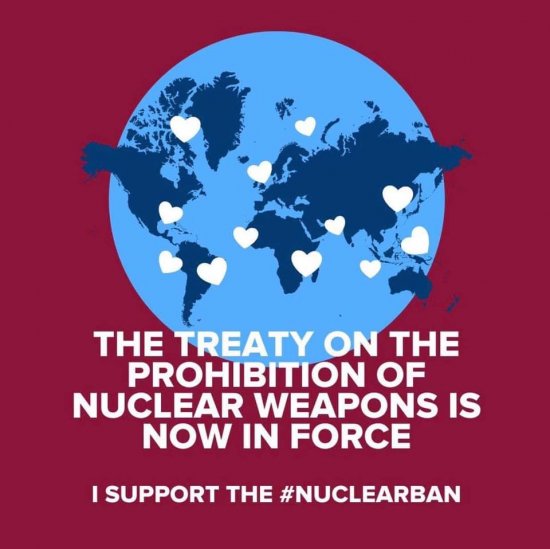
The Third Meeting of States Parties to the UN Treaty on the Prohibition of Nuclear Weapons (TPNW) has successfully concluded at UN Headquarters with a powerful political declaration rejecting nuclear weapons and challenging nuclear deterrence, and adopting a host of decisions that strengthen the Treaty’s process.
86 countries participated in the meeting as states parties or observers, engaging in a robust and interactive debate during the week, adopting a political declaration and package of decisions. The meeting also counted the active participation of a thousand representatives from 163 civil society organisations, including many affected community voices, and nine International Organisations. Over 70 events took place in the context of the 3MSP, in the UN and across the city during Nuclear Ban Week.
Connecting nuclear disarmament to global security concerns and introducing the roadmap to dismantle nuclear deterrence
80 years after nuclear weapons were first tested and used, and against a backdrop of increasing instability and calls for nuclear proliferation in Asia and Europe, the states parties and signatories to the Treaty are showing leadership to put an end to the threats that nuclear weapons and nuclear deterrence pose to their – and everyone else’s – security.
In the Declaration adopted at the end of the meeting, TPNW states parties agreed that the best way to advance global security from nuclear weapons is to bring more countries on board the Treaty, now including 94 signatories and 73 states parties. States parties agreed that “nuclear weapons are a threat to the security, and ultimately the existence, of all states, irrespective of whether they possess nuclear weapons, subscribe to nuclear deterrence or firmly oppose it.”
A report submitted to the conference provided detailed recommendations on how TPNW states can challenge current nuclear weapon doctrines and ways in which it threatens their security, including at the UN Security Council, with media and bilaterally with nuclear-armed states. The Declaration also rejects nuclear deterrence as a threat to TPNW member states, challenging the increasing reliance on deterrence by the nuclear-armed states and other pro-nuclear weapons states that we are seeing in both Europe and Asia, stating: “Nuclear deterrence is posited on the very existence of nuclear risk, which threatens the survival of all.” This is the strongest condemnation of nuclear deterrence seen in a multilateral process.
Incorporating calls for nuclear justice from affected communities
Communities affected by nuclear weapons, including Indigenous Peoples, were integral to the meeting and the strength of its outcomes. The 3MSP heard the calls from Nobel Peace Laureates, Nihon Hidankyo, and affected individuals from the Yankunytjatjara People, Kazakhstan, the Republic of Korea, Maohi Nui (French Polynesia), Kiribati, Fiji, the Navajo Nation, among others on how TPNW states can best support those most affected through their implementation of the Treaty.
Across a series of events, including the fourth edition of the Nuclear Survivors Forum, affected community representatives were active and vocal in reinforcing the urgent need to address past harms from the use and testing of nuclear weapons – and do so in a manner that is meaningfully inclusive. The Declaration emerging from the meeting pledged “to continue to collaborate through an inclusive approach with all States, international organizations, parliamentarians, civil society, scientists, financial institutions, youth as well as communities and individuals affected by nuclear weapons, including Indigenous Peoples.”
Outlining an inclusive and bold path forward for the TPNW
States agreed to continue to work on the 50 point Vienna Action Plan adopted at the first Meeting of States Parties in 2022, in order to be able to take stock of progress and prepare the next series of actions at the Review Conference.
The Review Conference for the TPNW will be held at UN Headquarters in New York in November 2026, with South Africa serving as the president.
American companies profit from Canada’s radioactive waste
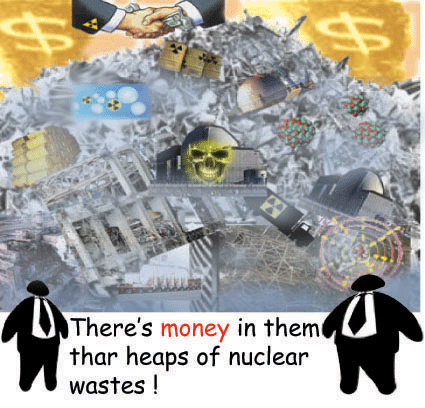
Toxic radioactive waste is expensive to clean up. Canada’s contract to clean up itslegacy waste is worth billions for a three-company consortium: Canada’s AtkinsRéalisand Texas-based Fluor and Jacobs. The two American companies run nuclear weaponsfacilities in the U.S. and U.K. in addition to their Canadian nuclear interests.
Parliament’s payment to the consortium last year was $1.3 billion. The annual payments have risen each year of the 10-year contract that will end in September 2025.
The consortium operates “Canadian Nuclear Laboratories” (CNL) in a “Government-owned, Contractor-operated” (GoCo) arrangement with Atomic Energy of Canada Limited (AECL).
The U.K. abandoned GoCo contracts because of exorbitant costs and poor value for money. Under Canada’s GoCo contract, AECL owns lands, buildings, and radioactive waste, and the three-company consortium operates AECL’s sites.
When the Harper government issued the 10-year GoCo contract during the 2015 federal election period, they said AECL lacked the ability to clean up Canada’s multi-billion radioactive waste liability dating to World War II and needed “private sector rigour. From their billion-dollar annual payout, the three partner corporations take $237 million for “contractual expenses.” The salaries of 44 senior CNL managers, mostly Americans, average over $500,000 each.
Canada’s liability includes radioactive contamination in Port Hope, Ontario where uranium was refined for the U.S. nuclear weapons industry, radioactive contamination at the Chalk River nuclear laboratory site from producing plutonium for U.S. nuclear weapons, and radioactive contamination from AECL’s shutdown “prototype” CANDU reactors and its Whiteshell research lab in Manitoba.
The radioactive clean-up cost has grown each contract year, as have the consortium’s ambitions. The focus has shifted to “revitalizing” the Chalk River facility, where Parliament has allocated additional funds to build an “Advanced Nuclear Materials Research Centre.”
The Centre will conduct SMR research including research on plutonium fuels. Both American companies have interests in SMRs. The new Centre did not undergo a licensing process or environmental assessment under the Canadian Nuclear Safety.
AECL is expected to soon announce the awarding of a new 10-year Go-Co contract. Before the contract is signed, MPs should consider whether the arrangement benefits Canada, and whether these billions should be in the hands of American managers and corporations.
Commission.
Europe’s Face-Saving Theater on Ukraine
Could they have been as corrupted as Antony Blinken, who insisted to the end of his time as U.S. secretary of state that Ukraine lower the conscription age to 18, even though he knew these youth would be sent to certain death? Have Western leaders not understood that the only chance Ukraine had to win the war was with NATO’S direct participation, risking a nuclear holocaust ?
Britain’s prime minister called an “emergency” summit in London following the Oval Office Fiasco to try to convince the world it will not be Europe’s fault, but America’s (Read: Donald Trump’s) when Ukraine collapses, writes Joe Lauria.
By Joe Lauria, Consortium News, https://consortiumnews.com/2025/03/05/europes-facing-saving-theater-on-ukraine/
Then Starmer added: but only if the United States joins us.
He said:
“We will go further to develop a ‘coalition of the willing’ to defend a deal in Ukraine…
And to guarantee the peace.
Not every nation will feel able to contribute.
But that can’t mean we sit back.
Instead, those willing will intensify planning now – with real urgency.
The UK is prepared to back this…
With boots on the ground, and planes in the air…
Together with others.
Europe must do the heavy lifting…
But to support peace on our continent.
And to succeed, this effort must have strong US backing.
We’re working with the US on this point, after my meeting with President Trump last week.”
Donald Trump has made it clear he is not going to commit U.S. troops to Ukraine, however. And Russia has said it would never accept Western troops there.
What Starmer is really saying is: Europe stands ready to fight and die as peacekeepers to save Ukraine if necessary, but only with the Americans. So when they refuse to come and the disastrous Project Ukraine at last comes crashing on our heads, don’t blame us, blame the U.S.A.
Trump will become even easier to blame now that he has cut off military aid and intelligence to Ukraine.
[The theater continued on Thursday at another European summit in Brussels, dubbed a “War Summit” by Politico, in which French President Emmanuel Macron, and still German Foreign Minister Alena Baerbock said Europe needed to get ready for war with Russia.]
The theater piece directed by Starmer at Lancaster House with an assembly of 15 European heads of government (and Justin Trudeau of Canada) was not really choreographed to try to convince Trump to reverse course, which appears unlikely, but as an elaborate presentation to save the hides of politicians who invested so much of their own political capital and wasted so much of their citizens’ money in the inevitable and humiliating defeat of Ukraine.
The summit was called by Starmer within two days of what he and the other Europeans saw transpire in the Oval Office on Friday. [See: Trump, Vance School Zelinsky on Reality of His War]. That occured at the end of a week in which both Starmer and French President Emmanuel Macron had paid a visit to the same Oval Office where they learned first hand Trump’s determination to end the war even if it means Ukraine’s defeat.
That Ukraine would lose was obvious two years ago to Macron and German Chancellor Olaf Scholz when they both gently broke that news to Zelensky privately in Paris in February 2023.
The private remarks clashed with public statements from European leaders who had routinely said then, and still say today, that they will continue to support Ukraine for as long as it takes to achieve victory on the battlefield. That was Joe Biden’s line too.
The Wall Street Journal, which reported on the private remarks to Zelenksy two years ago, wrote:
“The public rhetoric masks deepening private doubts among politicians in the U.K., France and Germany that Ukraine will be able to expel the Russians from eastern Ukraine and Crimea, which Russia has controlled since 2014, and a belief that the West can only help sustain the war effort for so long, especially if the conflict settles into a stalemate, officials from the three countries say.
‘We keep repeating that Russia mustn’t win, but what does that mean? If the war goes on for long enough with this intensity, Ukraine’s losses will become unbearable,’ a senior French official said. ‘And no one believes they will be able to retrieve Crimea.’”
Indeed Ukraine’s losses have become unbearable. Macron and Scholz tried to tell Zelensky at that Élysée Palace dinner in February 2023 that he must consider peace talks with Moscow, the Journal reported.
According to its source, the newspaper quoted Macron as telling Zelensky that “even mortal enemies like France and Germany had to make peace after World War II.”
Macron told Zelensky “he had been a great war leader, but that he would eventually have to shift into political statesmanship and make difficult decisions,” the newspaper reported.
One wonders then why Scholz and Macron and the rest of Europe have persisted in fueling a lost cause that has since chewed up tens of thousands of additional Ukrainian lives. Could they be so corrupt that the survival of their political careers was worth the carnage of another nation’s men?
Could they have been as corrupted as Antony Blinken, who insisted to the end of his time as U.S. secretary of state that Ukraine lower the conscription age to 18, even though he knew these youth would be sent to certain death? Have Western leaders not understood that the only chance Ukraine had to win the war was with NATO’S direct participation, risking a nuclear holocaust ?
It seems that U.S. and European leaders kept an unwinnable war going until now to save their own careers. They could never admit defeat. But it did not save Biden or Harris or Blinken or Scholz or Trudeau, and Macron is in trouble too as voters saw through them all.
They’d all staked too much on the outcome of the war. They allowed their economies to fall. They pushed government censorship of social and alternative media to hide criticism that they were allowing men to die so that they would not be accused of “losing Ukraine.”
It’s been a cornerstone of history from ancient emperors to Lyndon Johnson and Richard Nixon in Vietnam, and now Biden and Starmer in Ukraine: Let them die so that we may stay in office.
With defeat staring them in the face, who better to blame it on than the ogre, Donald Trump, who has dared to inject realism into the twisted dream of using Ukraine to weaken and defeat Russia.
It’s a failed policy that the European and Ukrainian leaders desperately need to keep going. One way to attempt this, as Chicago University professor John Mearsheimer said, is for the British, French and Ukrainians to “trap” the United States into giving a “security guarantee” to Ukraine.
Language in the mineral deal Zelensky had gone to the U.S. on Friday to sign calls for “common protection of critical resources.” Mearsheimer told a TV network in India that that is “the way they are trying to trap Trump and Co., and Trump won’t be trapped.”
This became evident in the Oval Office dust up last Friday when Trump angrily rejected Zelensky’s insistence on a U.S. “security guarantee” before he’d agree to a ceasefire and sign the mineral agreement. [See: Trump, Vance School Zelensky on Reality of His War]
The only way to keep their war going is to cajole Trump into getting the U.S. deeper into the morass, rather than wisely pulling out and pushing for a deal to end it.
As much as they might despise Trump, Starmer’s Sunday performance was designed to suck up to him. And an ungrateful Zelensky, reconsidering his public feud with Trump, is trying to make up with a man that seems susceptible to flattery.
In his address to the U.S. Congress Tuesday night, Trump said:
“Earlier today I received an important letter from President Zelensky of Ukraine. The letter reads: ‘Ukraine is ready to come to the negotiating table as soon as possible to bring lasting peace closer.’
‘Nobody wants peace more than the Ukrainians,’ he said. ‘My team and I stand ready to work under President Trump strong leadership to get a peace that lasts. … We do really value how much America has done to help Ukraine, maintain its sovereignty and independence. … Regarding the agreement on minerals and security, Ukraine is ready to sign it at any time.’
That is convenient for you. I appreciate that he sent this letter. I just got it a little while ago. Simultaneously we’ve had serious discussions with Russia. Then I’ve received strong signals that they are ready for peace. Wouldn’t that be beautiful? Wouldn’t that be beautiful?
Wouldn’t that be beautiful?
It’s time to stop this madness. It’s time to halt the killing. It’s time to end the senseless war. If you want to end wars, you have to talk to both sides.”
Desperate Europeans and Ukrainians need Trump to keep their war and thus their careers going, perhaps none more so than Zelensky.
Will Trump stand firm, or will he succumb to a trap?
Changing nuclear policy would make ‘SNP as bad as Tories’, MSP warns
By Xander Elliards Content Editor, 9th March
CHANGING the SNP’s policy on nuclear weapons would be a “panic measure” demonstrating the same lack of principles as the Tories or Labour, an MSP has warned.
Bill Kidd, who is also co-president of the
global group Parliamentarians for Nuclear Non-Proliferation and
Disarmament, issued a warning to his party after its long-standing policy
on nuclear weapons came under fire on multiple fronts – including from
within.
As the fear of Russia rises in Europe, Labour have chosen nuclear
weapons as an issue on which to attack the SNP. Just this week, Prime
Minister Keir Starmer took aim at the party’s stance on nuclear weapons
in the Commons – followed by Labour MP Joani Reid and Scottish Secretary
Ian Murray doing the same two days later. Then, Ian Blackford, the SNP’s
former Westminster leader, joined the calls for the SNP to change tack on
nuclear weaponry – saying the party should support multilateral
disarmament instead of unilateral disarmament.
The question being asked is
simple: will the SNP stick with their support for the removal of nuclear
weapons from Scotland on day one of independence? Or, will they change tack
and say nukes can stay on the Clyde indefinitely (which, in practice, is
what waiting for multilateral disarmament means)?
For Kidd, who spoke to
the Sunday National from a UN summit on the Treaty on the Prohibition of
Nuclear Weapons (TPNW), the answer is clear. “There may be increasing
pressure from the UK, from the UK political parties – and in fact I
expect that there will be – but that is another example of why the SNP
should stand firmly as an anti-nuclear [party],” he said.
The National 9th March 2025, https://www.thenational.scot/news/24992541.changing-nuclear-policy-make-snp-bad-tories-msp-warns/
1 This Month
To see nuclear-related stories in greater depth and intensity – go to https://nuclearinformation.wordpress.com/

29 Jan. Thursday 7-8 p.m. Webinar – World’s Largest Nuclear Station in Port Hope, ON?


31st January – Challenging the War Machine – a DECLASSIFIED UK SUMMIT


Website of the Week
Now until to February 10, 2026 Radioactive waste storage in France: the debate is finally open! How to participate?
-
Archives
- January 2026 (271)
- December 2025 (358)
- November 2025 (359)
- October 2025 (376)
- September 2025 (258)
- August 2025 (319)
- July 2025 (230)
- June 2025 (348)
- May 2025 (261)
- April 2025 (305)
- March 2025 (319)
- February 2025 (234)
-
Categories
- 1
- 1 NUCLEAR ISSUES
- business and costs
- climate change
- culture and arts
- ENERGY
- environment
- health
- history
- indigenous issues
- Legal
- marketing of nuclear
- media
- opposition to nuclear
- PERSONAL STORIES
- politics
- politics international
- Religion and ethics
- safety
- secrets,lies and civil liberties
- spinbuster
- technology
- Uranium
- wastes
- weapons and war
- Women
- 2 WORLD
- ACTION
- AFRICA
- Atrocities
- AUSTRALIA
- Christina's notes
- Christina's themes
- culture and arts
- Events
- Fuk 2022
- Fuk 2023
- Fukushima 2017
- Fukushima 2018
- fukushima 2019
- Fukushima 2020
- Fukushima 2021
- general
- global warming
- Humour (God we need it)
- Nuclear
- RARE EARTHS
- Reference
- resources – print
- Resources -audiovicual
- Weekly Newsletter
- World
- World Nuclear
- YouTube
-
RSS
Entries RSS
Comments RSS
 nuclear-news