International pressure forces Israel to change account of Gaza medics’ killing.
by Daily Sabah with Agencies, ISTANBUL Apr 06, 2025
The Israeli military was forced to revise its initial account of last month’s deadly strike that killed 15 emergency workers near Rafah after incriminating video footage of the incident was released by the Palestinian Red Crescent.
It has released new details while acknowledging that investigations into the incident are still ongoing.
The 15 paramedics and emergency responders were shot dead on March 23 and buried in a shallow grave where their bodies were found a week later by officials from the United Nations and the Palestinian Red Crescent. Another man is still missing.
The military initially said soldiers had opened fire on vehicles that approached their position “suspiciously” in the dark without lights or markings. It said they killed nine Hamas and Islamic Jihad members, who were traveling in Palestinian Red Crescent vehicles.
But video recovered from the mobile phone of one of the dead men and published by the Palestinian Red Crescent showed emergency workers in their uniforms and clearly marked ambulances and fire trucks, with their lights on, being fired on by soldiers.
The only known survivor of the incident, Palestinian Red Crescent paramedic Munther Abed, also said he had seen soldiers opening fire on clearly marked emergency response vehicles.
An Israeli military official said late Saturday the investigators were examining the video and conclusions were expected to be presented to army commanders Sunday.
He claimed the initial report received from the field did not describe lights but that investigators were looking at “operational information” and were trying to understand if this was due to an error by the person making the initial report.
“What we understand currently is that the person who gives the initial account is mistaken. We’re trying to understand why.”
Israeli media briefed by the military reported that troops had identified at least six of the 15 dead as members of Palestinian resistance groups.
However, the official declined to provide any evidence or detail of how the identifications were made, saying he did not want to share classified information.
“According to our information, there were … there but this investigation is not over,” he told reporters at the briefing late Saturday………………………………………………………………………………………..
The U.N. confirmed last week that it had been informed of the location of the bodies but that access to the area was denied by Israel for several days.
It said the bodies had been buried alongside their crushed vehicles – clearly marked ambulances, a fire truck and a U.N. car.https://www.dailysabah.com/world/mid-east/intl-pressure-forces-israel-to-change-account-of-gaza-medics-killing
With US bombers at the ready, can Trump cut a deal with Iran and avoid a war?
The United States and Iran are once again on a collision course over the
Iranian nuclear program. In a letter dated early March, US President Donald
Trump urged Iranian Supreme Leader Ayatollah Ali Khamenei to negotiate a
new deal.
The new deal would replace the defunct nuclear agreement
negotiated in 2015 between the United States, Iran and five other global
powers. Trump withdrew from that agreement, called the Joint Comprehensive
Plan of Action (JCPOA), during his first term.
Trump gave the Iranians a
two-month deadline to reach a new nuclear deal. If they don’t, the US will
bomb the country. In recent days, American B-2 bombers and warships have
been deployed to the region in a show of force. In response, Tehran has
agreed only to indirect negotiations. It has ruled out any direct talks
while under a US policy of “maximum pressure”.
Khamenei and his
generals have promised a “harsh response” to any military venture. Iran
has vowed to target all American bases in the region. France, one of key
negotiators in the 2015 deal, said this week a failure to secure a new deal
would make a military confrontation “almost inevitable”. In a positive
sign, however, Washington is reportedly “seriously considering” Iran’s
offer for indirect negotiations. And Trump is now suggesting Iran may
actually be open to direct talks.
The Conversation 5th April 2025 https://theconversation.com/with-us-bombers-at-the-ready-can-trump-cut-a-deal-with-iran-and-avoid-a-war-253828
Canada supplied uranium for atomic bombs in WWII — 80 years later, the cleanup continues
Gordon Edwards, 6 Apr 25
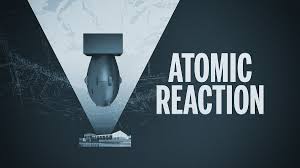
Atomic Reaction is a documentary feature film dealing with the radioactive history and contamination of the town of Port Hope Ontario, located on the North shore of Lake Ontario just east of Toronto.
Here is a YouTube of the film: https://www.youtube.com/watch?v=8jC1DPOYoQ0
Canada played a key role in chemically refining uranium from Canada and the Congo for use in the first two atomic bombs dropped on the cities of Hiroshima and Nagasaki in 1945. Canada then became the largest supplier and exporter of uranium in the world, in the post-war period, most of it sold for tens of thousands of nuclear warheads during the Cold War, until the sale of Canadian uranium for nuclear weapons was ended by Prime Miniister Pearson in 1965.
In the process, the town of Port Hope (where all this refining took place until 1980) became thoroughly contaminated with radioactive wastes that were carelessly discarded and dispersed all about town – dumped into the harbour and into open ravines about town, used in roadways and mingled with the sandy beach, and used in huge quantities as construction material and as fill for up to a thousand buildings – homes, schools, offices, throughout town – requiring a massive radioactive cleanup costing over two billion dollars, resulting in two surface mounds of about a million tons each which will remain highly radiotoxic for many thousands of years to come. The cleanup is stlll ongoing today.
A similarly sized mound of radioactive waste is currently planned for the cleanup of the Chalk River Laboratories, created near the end of World War 2 as a secret site for producing plutonium for the US bomb program among other things. Canada sold plutonium to the US military for weapons purposes.
For 20 years after the end of World War 2. The Chalk River megadump has been approved by Canada’s Nuclear regulator, but two of three court challenges have been successful in delaying the implementation pending legally required consultations with the Algonquin peoples on whose traditional land the megadump would be located, and pending the careful evaluation of alternative sites or waste management options that will not destroy the habitat of several endangered species.
Russian sensors suspected of attempting to spy on the UK’s nuclear submarines have been found hidden in the seas around Britain.
The discovery by the British military was deemed a potential threat to national security
and has never been made public.
Several were found after they washedashore, while others are understood to have been located by the Royal Navy.
The devices are believed to have been planted by Moscow to try and gather
intelligence on Britain’s four Vanguard submarines, which carry nuclear
missiles. One of these submarines is always at sea under what is known as
the UK’s continuous at-sea deterrent.
The Sunday Times has chosen to withhold certain details, including the locations of the sensors. During a three-month investigation we spoke to more than a dozen former defence
ministers, senior armed forces personnel and military experts to expose how
Russia is using its unrivalled underwater warfare capabilities to map, hack
and potentially sabotage critical British infrastructure.
Times 5th April 2025 https://www.thetimes.com/uk/defence/article/russia-secret-war-uk-waters-submarines-dpbzphfx5
The West has big plans for nuclear power: Will geopolitics play ball?
According to data from the US government, Russia holds roughly 44% of the
world’s uranium enrichment capacity. In terms of US demand for enriched
uranium, Russia accounted for 27% of this total (SWU) in 2023. To turn to
data from Euratom, Russia provided 37.9% of the total enrichment work to
supply EU utilities in the same year.
Faced with this dependency on Moscow,
former US president Joe Biden brought in a law banning uranium imports from
Russia in mid-2024. The legislation allowed some shipments to continue
until the end of 2027, although Russia then hit back with its own measures
— placing a temporary ban on these exports to the US.
“The US and Europe can quite quickly bring on new conversion facilities, but enrichment
will be more difficult,” Benjamin Godwin, head of analysis at PRISM, told
Euronews. “Inconsistency in policymaking in both the US and EU does make
it difficult for companies to commit to such capital-intensive projects,
but, as the Trump administration beds in, there is hope that industry will
be given a clearer signal on this,” he added.
One issue, experts claim,
is that both power plant operators and fuel suppliers are hesitant to be
the first to commit to future projects. Those producing nuclear power don’t
want to sign up to long-term supply deals unless they know uranium
processing facilities are being built. On the other hand, processors are
reluctant to expand unless they have agreements from buyers.
Euro News 5th April 2025, https://www.euronews.com/business/2025/04/05/the-west-has-big-plans-for-nuclear-power-will-geopolitics-play-ball
Federal regulator approves Canada’s first small modular reactor
the commissioners heard concerns from intervenors that GE-Hitachi hadn’t yet finished designing the reactor, raising questions about how its safety could be analyzed properly.
CNSC decisions are particularly vulnerable to challenges from First Nations.
Matthew McClearn, April 5, 2025, https://www.theglobeandmail.com/business/article-federal-regulator-approves-canadas-first-small-modular-reactor/
The federal nuclear safety regulator has authorized construction of an American small modular reactor (SMR) at the Darlington Nuclear Generating Station in Clarington, Ont., a crucial milestone for a project that has garnered worldwide attention.
The Canadian Nuclear Safety Commission granted the license to Ontario Power Generation on Friday for its Darlington New Nuclear Project. OPG has said it will finish building the first 327-megawatt reactor by the end of 2028, and begin supplying electricity to the province’s grid the following year. The reactor’s cost has not been disclosed publicly, but estimates suggest it could be several billion dollars.
“We now await the go-ahead from the Ontario government to proceed,” said OPG spokesperson Neal Kelly.
The Darlington SMR would represent a host of firsts, accompanied by larger risks and anticipated benefits. It would be the only nuclear reactor under construction in the Western hemisphere, and Canada’s first reactor start since the mid-1980s.
It would also represent the first SMR in any G7 country. And it would be the first BWRX-300; utilities in other jurisdictions (including Saskatchewan, the U.S., Poland and Estonia) have announced plans to build reactor fleets based on the same design.
The BWRX-300 is being designed by Wilmington, N.C.-based GE-Hitachi Nuclear Energy, a leading American reactor vendor. Its construction would make Canada more reliant on U.S. suppliers for enriched uranium fuel and other critical inputs at a moment when relations between the two countries are rapidly deteriorating.
Yet this has not diminished support from Canadian officials. In a statement Friday, Ontario Energy Minister Stephen Lecce called the license “a historic milestone” for his province and the country.
“Ontario is realizing its potential as a stable democratic energy superpower, and I look forward to sharing next steps for this exciting project in the coming weeks.”
OPG applied for the license in late 2022. During hearings held this fall and winter, the commissioners heard concerns from intervenors that GE-Hitachi hadn’t yet finished designing the reactor, raising questions about how its safety could be analyzed properly.
But the commissioners dismissed this concern, finding OPG had supplied adequate information. They noted that an OPG representative told them the design was 95 per cent done; CNSC staff said in other countries, licenses are typically issued when designs are less than one-third complete.
Intervenors also said that the BWRX-300 lacked two fully independent emergency shutdown systems, because it features two systems that insert the same set of control rods into the reactor. The CNSC’s own staffers confirmed this, but told the Commission the probability both insertion systems would fail was “very low.” The Commission said OPG would have to provide additional information about this at a later date.
In response to concerns from certain First Nations concerning OPG’s and the CNSC’s obligation to engage with them, the CNSC imposed what it calls “regulatory hold points.” The first occurs before construction begins on the reactor building’s foundation, another before OPG can install the reactor’s pressure vessel, and a third before testing and commissioning of the facility can begin. The Commission delegated responsibility for supervising these license conditions to CNSC chief regulatory operations officer Ramzi Jammal.
“The Commission is satisfied that the honour of the Crown has been upheld and that the legal obligation to consult and, where appropriate, accommodate Indigenous interests has been satisfied,” the commissioners wrote in their decision.
CNSC decisions are particularly vulnerable to challenges from First Nations. In February the Federal Court granted an application from Kebaowek First Nation for a judicial review of the CNSC’s decision to approve construction of a nuclear waste disposal facility at Chalk River Laboratories. Justice Julie Blackhawk found that the commissioners erred when they declined to apply the United Nations Declaration on the Rights of Indigenous Peoples, and ordered a resumption of consultations.
The CNSC’s authorization applies only to OPG’s first SMR. Since the 1960s, Ontario’s long-standing practice has been to build “four-packs,” power plants with four identical reactors sharing workers and common infrastructure. In 2023, the Ontario government instructed OPG to begin planning for another three BWRX-300s at Darlington.
Over the past several years the utility has cleared and re-graded the site for the first reactor; ongoing excavation has reached 8 metres below ground level. OPG has been installing utilities all four reactors would share, such as water and sewer lines and network cabling.
OPG’s pivot to SMRs means the plant will generate far less power than originally envisioned. Under an earlier plan the site was licensed for up to 4,800 megawatts, whereas the BWRX-300s would possess a quarter of that capacity. (According to rough industry estimates, a single BWRX-300 could meet electricity demand from a city the size of Markham or Vaughan, Ont.)
Also working on the project are AtkinsRealis Group Inc., serving as architect-engineer, and construction giant Aecon Group Inc. Major reactor components are to be built by subcontractors in Ontario: BWX Technologies, for example, is preparing to build its massive pressure vessel at its plant in Cambridge. A 2023 study by the Conference Board of Canada said the four-reactor plant would increase Canada’s GDP by $15.3 billion over 65 years, and support 2,000 jobs.
Promoters, including OPG, have argued that building the first SMR will grant Ontario “first-mover” advantage and allow its nuclear industry to participate in subsequent BWRX-300 constructions worldwide. With numerous U.S. federal officials proclaiming an era of American energy “dominance” and imposing punishing tariffs on allies and trading partners, some observers now doubt this will happen. Mr. Lecce, though, appeared to dismiss that concern in his statement Friday.
“Our government has insisted and successfully negotiated that local Ontario and Canadian businesses must be overwhelmingly used to build SMRs for the world.”
Cost of EPR2 : Reporterre publishes a censored alert.

By Émilie Massemin April 4, 2025 https://reporterre.net/Cout-des-EPR2-Reporterre-publie-une-alerte-censuree
The guarantor of the public debate on the EPR2 project in Bugey (Ain) was alarmed by the lack of economic information provided by EDF . His letter was removed from the website of the National Commission for Public Debate three hours later… Reporterre reveals it.
The public debate on the project for two EPR2s at the Bugey nuclear power plant (Ain) is becoming explosive. On February 27, David Chevallier, the guarantor who headed the team responsible for organizing the debate [1] , sent a letter to the president of the National Commission for Public Debate ( CNDP ), Marc Papinutti. In this letter , revealed by Reporterre , he openly raises the question of the continuation of the debate and believes that, if it can continue, ” its modalities must evolve “ .
Mr. Chevallier’s annoyance stems from a lack of information on the cost and financing of the EPR2 program —the daily newspaper Les Échos had just revealed that the estimate for the future reactors had been pushed back to the end of the year—and on the ” decision-making and legislative framework “ that governs the program of six EPR2s . This letter was posted on the public debate website on March 10 at around 10 a.m. and, in a rare occurrence, was unpublished three hours later.
Great uncertainty surrounding the cost
Let’s rewind. The construction program for six EPR2 reactors in France was announced by Emmanuel Macron during his speech in Belfort on February 10, 2022. These new 1,670 megawatt ( MW ) reactors are to be built in pairs on existing nuclear sites, in Penly (Seine-Maritime), then in Gravelines (Nord) and finally in Bugey. Preparatory work for this last pair could begin in the second half of 2027, with a target of commissioning at the beginning of the 2040s. The public debate on this project opened on January 28 and will end on May 15.
It seemed possible and important […] that the public debate on Bugey would finally provide clarification on two key issues that were not addressed in the two
previous public debates in Penly and Gravelines , “ wrote David Chevallier in his letter to the CNDP :
” clarification of the decision-making and legislative framework “ and
” clarification of the costs and financing of this six EPR2 program. “
Regarding the first point, the president of the special public debate commission ( CPDP ) on the EPR2 project in Bugey notes the absence of an energy and climate programming law .
” How can we work in dialogue if we don’t have this information ? “
But it is especially on the second point that he dwells. The estimate of the overall cost of these new reactors continues to be revised upwards: from 51.3 billion euros in April 2021, it rose to 67.4 billion euros in February 2024. The Court of Auditors, in
a January 2025 report , mentioned a bill of 79.9 billion euros. Its president even spoke of a cost ” likely to exceed 100 billion euros “ .
” EDF had assured us that the cost update would take place during the debate “
, writes Mr. Chevallier. The CPDP had even planned a public meeting by videoconference on April 29, on the theme ” What costs ? Who finances ? “ .
This is why the announcement of the postponement of the cost estimate fell like a hammer blow to the guarantors, both in substance and in form.
” On the same day, we had indicated during a public forum that the debate would continue on the question of costs. We are in dialogue with the director of public debate at
EDF every day. And it is through the press that we learned that there will be no update. How can we work in dialogue if we don’t have this information ? “ , the guarantor was indignantly interviewed by Reporterre .
Hence the letter to the CNDP , written in an unfriendly tone, and its publication on the debate website.
” We said to ourselves that we had to make our thoughts within the team public. We had started the public debate by asking the public about trust, both in this procedure and with regard to the project leader. It emerged that this debate had to provide information ,
“ continues David Chevallier. The letter also emphasizes the need to debate
” the appropriateness of the EPR2 program “ and alternatives to the project,
” including without nuclear energy. “
” The State and EDF must provide transparent and sincere answers to the public “
Was it under pressure from the CNDP , EDF , or both, that this famous letter was unpublished from the site three hours later ? ” Before publishing it, we sent it to EDF and
RTE , who did not appreciate it, because they were working on what they could say in the context of this debate. That is also why we removed the letter, it was worth remaining in dialogue, “ replied Mr. Chevallier, while specifying that unpublishing a document ” is not usual . “ Asked about this episode, the CNDP replied that ” it was an internal letter, which is why [it] was unpublished. “
It nevertheless responds in an opinion published on Tuesday, March 25, in which it reaffirms that ” the public debate must in particular guarantee the public respect for its right to access complete, objective and qualitative information “ and that ” the State and
EDF must provide transparent and sincere answers to the public concerning the cost and progress of each of the EPR2 pairs , as well as the financing scheme .
“ Also contacted, EDF sent an email to Reporterre in which the letter is not mentioned and which simply says that ” the public debate is an essential step for the integration of the project into the territory . “
” Serious and serious failings on the part of EDF “
The CPDP is not the only one to question the possibility of organizing a quality public debate.
” We note serious and serious failings on the part of
EDF , which is incapable, on the one hand, of providing studies concerning the state and flow of the Rhône by 2100 and, above all, of producing a definitive overall cost and a financing plan for the entire project , “ warned eleven associations [2] in
an open letter to the guarantors of the public debate dated March 19, in which they request a ” postponement “ of the debate pending this information. Jean-Pierre Collet, president of Sortir du nucléaire Bugey, clarified to Reporterre that when sending this letter, the associations were not aware that the CPDP had itself written to the CNDP to share its concerns.
The CPDP responded to this letter with a letter sent on Monday, March 31, in which it rejected the associations’ proposal.
” Not knowing the cost and financing of such a program – and therefore the projected price of the electricity produced by this equipment – constitutes, in our view, a significant gap in the public’s right to information and participation, “ wrote Mr. Chevallier.
However, ” suspending the debate would mean waiting for the right moment when information on costs and financing would be sufficiently advanced and reliable to be able to be put up for debate, and we do not control this timetable. Furthermore, the debate would suffer from this interruption: resuming it would be difficult in terms of organization and communication with the public
These warnings come at a time when participatory democracy and the public’s right to information are under particular strain . A decree aimed at removing all industrial projects from the scope of the CNDP was rejected by the Council of State, the media outlet Contexte revealed on March 21. But the executive does not intend to stop there and is expected to try again by way of an amendment to the
so-called economic simplification bill , which began to be examined by a special committee on March 24.. “
Although nuclear projects are not affected by this reform, this letter affair shows that public information and participation during public debates remain largely insufficient.
” The post-debate and the possible ongoing consultation that would take place following the public debate must already be considered, “ the guarantor wrote in his letter.
The future of Europe won’t be shaped by mushroom clouds – why nuclear weapons don’t provide security
International Campaign to Abolish Nuclear Weapons (ICAN), April 2025
In these uncertain times, some argue that nuclear weapons are the answer to Europe’s security. But the future of Europe will not be written in the shadow of mushroom clouds, it will be shaped by those who believe in dialogue, diplomacy, and disarmament. Across the continent, people are pushing back against this dangerous illusion. From parliamentary action to media interventions, referendum campaigns, and grassroots organizing, we are proving that real security comes from diplomacy and disarmament, not nuclear weapons. Join us in building a safer, nuclear – weapons – free future. Find local partners near you: http://icanw.org/partners
Miliband pours £2.7bn into nuclear power plant after EDF cuts stake
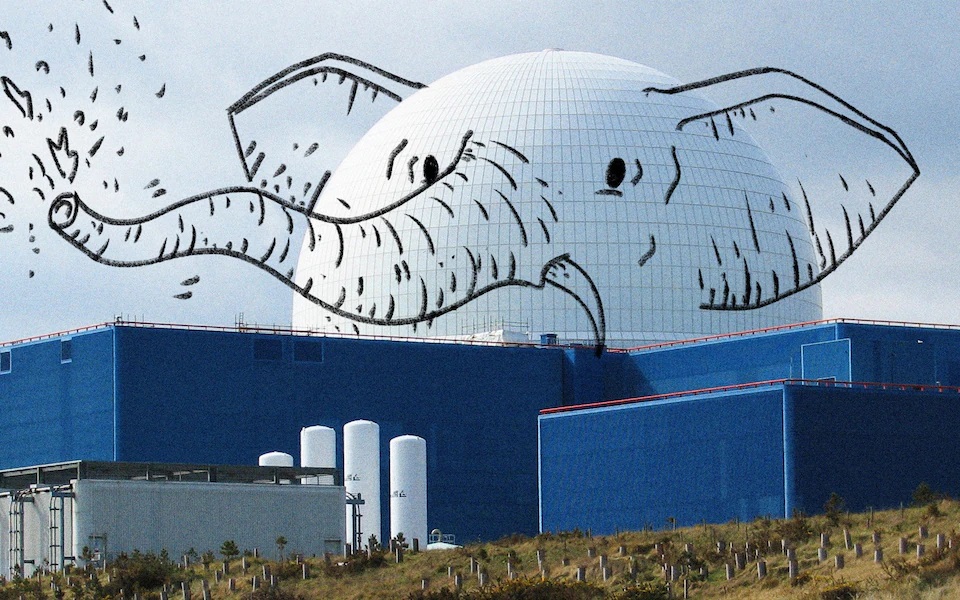
Sizewell C’s funding boost means UK taxpayers have now spent £8bn on the project
Ed Miliband has sunk an extra £2.7bn into Sizewell C after EDF slashed
its stake in the nuclear power project. The Energy Secretary said the
additional money would boost energy security, jobs and the race for net
zero.
However, anti-Sizewell campaigners questioned the wisdom of pouring
billions into a project that the Government has still not taken a final
decision to build.
UK taxpayers have so far spent a total of £8bn on the
nuclear power station. The latest cash is thought to be aimed at building
confidence in the project, potentially attracting other investors as EDF
steps back. The French energy giant recently reduced its stake from 24pc to
16pc amid pressure from Emmanuel Macron, the French president, to cut back
on risky overseas commitments.
EDF was told it should instead focus on
making a success of multibillion-euro projects at home, ensuring they were
profitable and built on time. Sizewell C is a proposed 3.2-gigawatt nuclear
power station planned for the Suffolk coast, potentially generating power
for 6m homes. Its design would be similar to the Hinkley Point C power
station being built by EDF in Somerset, whose start date has been delayed
by a decade to the mid-2030s (sic?) with costs that have doubled to £40bn.
EDF’s decision to trim its involvement has forced the UK Government into
an undignified search for alternative investors. Those approached are said
to include Centrica, the owner of British Gas, Emirates Nuclear Energy,
Amber Infrastructure Group and Schroders Greencoat, with Barclays advising
the Government.
Telegraph 4th April 2025 https://www.telegraph.co.uk/business/2025/04/04/miliband-pours-27bn-into-nuclear-power-plant-after-edf-cuts/
Germany deploys troops to Russia’s doorstep for first time since the Nazis
2 Apr, 2025 https://www.rt.com/russia/615122-germany-activates-brigade-lithuania/
A 5,000-strong armored brigade in Lithuania is set to be combat-ready by 2027, according to army plans
The German military has begun its first permanent deployment of troops on foreign soil since World War II. The 45th Armored Brigade is being positioned in Lithuania, near Russian ally Belarus, as Berlin prepares for a potential conflict in the coming years.
On Tuesday, a ceremony was held outside Vilnius, with Brigadier General Christoph Huber assuming command of the newly established unit, as reported by the German Bundeswehr Association (DBwV) lobby group and state media.
We have a clear mission. We have to ensure the protection, freedom, and security of our Lithuanian allies here on NATO’s eastern flank,” the general said during the ceremony.
Military personnel who arrived in Lithuania last year to prepare for the deployment have been formally integrated into the brigade. Once fully staffed and combat-ready by 2027, the unit will comprise approximately 5,000 military and civilian personnel, equipped with around 2,000 heavy weapons, according to German Army plans.
Moscow views NATO as a hostile entity, describing its expansion in Europe as a direct threat to Russian national security. The bloc’s pledge to admit Ukraine as a member and its increasing involvement with the nation have been cited by Russian officials as key causes of Moscow’s conflict with Kiev. German Defense Minister Boris Pistorius, a staunch advocate for troop deployment in Lithuania, has claimed that Russia could launch an attack on NATO by 2029 or 2030 – a claim that Moscow categorically rejects.
In 2023, Berlin and Vilnius signed a stationing agreement, initially designating the new German unit as the 42nd Brigade. Two of its battalions will consist exclusively of German soldiers, while the third will incorporate personnel from other NATO countries. Portions of the brigade will be stationed at the Rudninkai training ground in southeastern Lithuania, only 20 kilometers (12 miles) from the Belarusian border, while additional units will be stationed near the village of Rukla between Vilnius and Kaunas.
Post-Nazi Germany previously restricted military deployments abroad to temporary assignments, such as contributing to NATO forces following the occupation of Afghanistan in 2001.
Deloitte seeks to avoid liability over US nuclear fiasco.
Deloitte has asked a US judge to throw out demands that it compensate
shareholders who lost money in the collapse of one of the country’s
largest nuclear power projects, in a case that has exposed the inner
workings of the Big Four audit firm.
Recently filed documents detail Deloitte’s work auditing the South Carolina utility Scana before the company abandoned construction of two nuclear reactors that had fallen far
behind schedule and billions of dollars over budget. The 2017 fiasco led to
the cut-price sale of Scana to a rival utility, the bankruptcy of the
construction group Westinghouse and jail time for Scana’s former chief
executive, who pleaded guilty to misleading regulators.
A class-action lawsuit on behalf of Scana shareholders alleges Deloitte helped the company
hide burgeoning problems at the VC Summer nuclear project by signing off on
financial statements that indicated it would be completed on time. In fact,
an internal whistleblower at Scana had claimed as early as 2015 that
Westinghouse was impossibly far behind, and Deloitte failed to follow other
red flags, the lawsuit claims.
FT 3rd April 2025, https://www.ft.com/content/89b10731-fcd0-4854-8bb5-1f4067f1bba2
Military confrontation ‘almost inevitable’ if Iran nuclear talks fail: French FM
Daily Mail 3rd April 2025 AFP
‘Our priority is to reach an agreement that verifiably and durably constrains the Iranian nuclear program,’ Jean-Noel Barrot told lawmakers
France’s foreign minister warned on Wednesday that a military confrontation with Iran would be “almost inevitable” if talks over Tehran’s nuclear programme failed.
“In the event of failure, a military confrontation would appear to be almost inevitable,” Jean-Noel Barrot said in parliament, adding that it would severely destabilise the region.
Earlier Wednesday, President Emmanuel Macron chaired a meeting on Iran.
US President Donald Trump has threatened that Iran will be bombed if it persists in developing nuclear weapons. Iran’s supreme leader, Ayatollah Ali Khamenei, has promised to hit back………………………………………………………. https://www.dailymail.co.uk/wires/afp/article-14564181/Military-confrontation-inevitable-Iran-nuclear-talks-fail-French-FM.html
Nuclear site given more time to fix safety breach
Jason Arunn Murugesu, BBC News, North East and Cumbria, 4 Apr 25,
https://www.bbc.co.uk/news/articles/cgkgxdddmlyo
A nuclear site which breached hazardous substance regulations has been given more time to figure out how best to protect workers.
Last year, the Office for Nuclear Regulation (ONR) served two improvement notices on Sellafield Ltd, near Whitehaven, Cumbria, after it “failed to manage the risks of working with nickel nitrate and to prevent or adequately control exposure of workers to this hazardous substance”.
The breaches did not compromise either nuclear or radiological safety, the ONR said.
Sellafield Ltd said it had completed one improvement notice and “significant progress” had been made on the other. It has until September to come up with a solution.
Used in the treatment of effluent, nickel nitrate is not radioactive but is a hazardous substance and could cause harm to the health of a worker exposed to it.
To mitigate these risks, operations involving the chemical should be conducted in a glovebox to protect workers from any harmful health effects.
However, contamination was found outside the glovebox area at a Sellafield facility, which resulted in workers potentially being exposed to the chemical, the ONR previously said.
A poorly designed and maintained glovebox appeared to have contributed to the situation, it added.
‘Technical challenges’
Sellafield Ltd was required to complete a nickel nitrate risk assessment by the end of October, and to “prevent or adequately control” the exposure of workers to nickel nitrate by March.
However, the ONR said “technical challenges” had come to light regarding the exposure of workers to the material and it would now give the nuclear plant until 30 September to come up with a solution.
Hygiene controls would remain in place in the facility, monitored by an occupational hygienist, until full compliance with both improvement notices was achieved, the ONR explained.
Millom nuclear waste plans ‘currently detrimental’ to locals.
Proposed plans for a nuclear waste dump in Millom have been described as
‘detrimental’ for one of the town’s estates. Members of the community were
invited to attend a Town Council meeting at the end of last month to
discuss the construction of a Geological Disposal Facility (GDF) near
Haverigg. Residents of the Bank Head housing estate, which sits alongside
the proposed site, asked for support from the local authority, with a
particular concern on the impact of house prices in the area.
A spokesperson from Millom Town Council said: “[We continue] to have a
neutral stance and support the principle that residents will have the final
say if they wish to be the future host community for a GDF. “Whilst this
could be the biggest economic opportunity for the area since iron ore was
found at Hodbarrow, we cannot deny that the way the current Area of Focus
has been drawn on the map by NWS is currently detrimental to the residents
of the Bank Head estate.
“We do not believe at this early stage of the
investigation that any of our residents should be impacted in the way the
Bank Head estate currently is, with local estate agents reporting that they
have had no requests for viewing homes on this previously popular
estate.” A campaign group, Millom and District Against the Nuclear Dump,
argued that the majority of locals were ‘resoundingly’ against the GDF.
Whitehaven News 4th April 2025 https://www.whitehavennews.co.uk/news/25060423.millom-nuclear-waste-plans-currently-detrimental-locals/
1 This Month
To see nuclear-related stories in greater depth and intensity – go to https://nuclearinformation.wordpress.com/

29 Jan. Thursday 7-8 p.m. Webinar – World’s Largest Nuclear Station in Port Hope, ON?


31st January – Challenging the War Machine – a DECLASSIFIED UK SUMMIT


Website of the Week
Now until to February 10, 2026 Radioactive waste storage in France: the debate is finally open! How to participate?
-
Archives
- January 2026 (259)
- December 2025 (358)
- November 2025 (359)
- October 2025 (376)
- September 2025 (258)
- August 2025 (319)
- July 2025 (230)
- June 2025 (348)
- May 2025 (261)
- April 2025 (305)
- March 2025 (319)
- February 2025 (234)
-
Categories
- 1
- 1 NUCLEAR ISSUES
- business and costs
- climate change
- culture and arts
- ENERGY
- environment
- health
- history
- indigenous issues
- Legal
- marketing of nuclear
- media
- opposition to nuclear
- PERSONAL STORIES
- politics
- politics international
- Religion and ethics
- safety
- secrets,lies and civil liberties
- spinbuster
- technology
- Uranium
- wastes
- weapons and war
- Women
- 2 WORLD
- ACTION
- AFRICA
- Atrocities
- AUSTRALIA
- Christina's notes
- Christina's themes
- culture and arts
- Events
- Fuk 2022
- Fuk 2023
- Fukushima 2017
- Fukushima 2018
- fukushima 2019
- Fukushima 2020
- Fukushima 2021
- general
- global warming
- Humour (God we need it)
- Nuclear
- RARE EARTHS
- Reference
- resources – print
- Resources -audiovicual
- Weekly Newsletter
- World
- World Nuclear
- YouTube
-
RSS
Entries RSS
Comments RSS
 nuclear-news