First Nations warn of conflict if Ontario proceeds with Bill 5
‘They’re looking for a world of opposition from First Nations in Ontario that are not going to just sit idly by’: First Nations leadership publicly slams proposed bill that would cut ‘red tape’ for economic projects — and potentially erode treaty rights.
Bay Today.ca, James Hopkin, 19 May 25
First Nations leadership is calling on Premier Doug Ford and the Ontario government to put a stop to a newly proposed bill that chiefs say would bulldoze the inherent rights of the Anishinabek and their existing treaty relationships with the Crown.
Robinson Huron Waawiindamaagewin (RHW) is publicly opposing Bill 5, which the political organization says will give extended powers to the province through the creation of “special economic zones” that would allow for the cabinet to exempt selected proponents and projects from requirements under any provincial law or regulation.
This includes bylaws of municipalities and local boards that would otherwise apply in that zone — all while repealing the Endangered Species Act.
RHW spokesperson and Anishinabek Nation Regional Chief Scott McLeod told SooToday that Ford framing Bill 5 as a way of cutting red tape for infrastructure and resource development projects is a “gross understatement,” and that Ontario is essentially gutting environmental checks and balances while undermining the treaty relationship with First Nations in Robinson Huron Treaty territory.
“He’s undermining the reality that Ontario, under the jurisdiction of Canada, inherited the treaty of 1850 from the British Crown, which laid out our relationship as title owners to the land and our willingness to share those resources,” McLeod said during a telephone interview Wednesday.
“He simply is moving forward on this as if Ontario owns the resources outright, and has no obligations to the treaties that are within Ontario.”
The tabling of Bill 5, known as the Protect Ontario by Unleashing Our Economy Act, has also triggered opposition from the Anishinabek Nation, a political advocate for 39 member First Nations representing approximately 70,000 citizens across the province.
The organization says the bill “reflects a dangerous and false narrative that presumes the Government of Ontario has unilateral authority to legislate over lands and resources without consultation or consent from the rightful Anishinabek title holders.”
“To allow lands of economic value that have been cited for development to be exempt from protective checks and balances, such as archaeological assessments and wildlife and ecosystem protections as proposed in this bill will cost First Nations and Ontarians profoundly, exposing and setting back species at risk protection and leading to the destruction of First Nation burial sites and artifacts,” Anishinabek Grand Council Chief Linda Debassige said in a release issued Tuesday. …………………………………………………………………………………………. https://www.baytoday.ca/local-news/first-nations-warn-of-conflict-if-ontario-proceeds-with-bill-5-10673506?utm_source=Email_Share&utm_medium=Email_Share&utm_campaign=Email_Share
Trump Admin Fast Tracks Anfield’s Velvet-Wood Uranium Project in Push for US Energy Independence

Giann Liguid, Investing News 15th May 2025
Anfield Energy’s Velvet-Wood uranium-vanadium project in Utah is the first US uranium asset to receive a fast-track designation.
The US Department of the Interior announced on Monday (May 12) that it will fast track environmental permitting for Anfield Energy’s (TSXV:AEC,OTCQB:ANLDF) Velvet-Wood uranium project in Utah
The decision slashes what would typically be a years-long review process down to just 14 days, and makes Velvet-Wood the first uranium project to be expedited under a January 20 statement from President Donald Trump. In it, he declares a national energy emergency and emphasizes the importance of restoring American energy independence.
This week’s decision signals what Anfield calls “a decisive shift in federal support for domestic nuclear fuel supply.”
The Velvet-Wood project, located in San Juan County, Utah, is expected to produce uranium used for both civilian nuclear energy and defense applications, as well as vanadium, a strategic metal used in batteries and high-strength alloys.
Secretary of the Interior Doug Burgum characterized the move as part of an urgent federal response to what he said is “an alarming energy emergency” created by the “climate extremist policies” of the previous administration.
“President Trump and his administration are responding with speed and strength to solve this crisis,” he said. “The expedited mining project review represents exactly the kind of decisive action we need to secure our energy future.”
Anfield acquired Velvet-Wood, which is currently on care and maintenance, from Uranium One in 2015…………………….
The Trump administration’s decision to pause the implementation of its new reciprocal tariffs for 90 days provided utilities with the breathing room needed to resume contracting……………
These moves align with a broader US Department of Energy strategy that includes identifying 16 federal sites for co-locating data centers and new energy infrastructure. https://investingnews.com/trump-fast-tracks-velvet-wood/
UK’s Geological Disposal Facility Community Partnership operates under restrictive government guidance and the management of Nuclear Waste Services
An interesting article recently sent to the NFLAs prompted a reply by our
Secretary identifying the limitations placed upon members of the Geological
Disposal Facility Community Partnerships wishing to source independent
information or commission bespoke research.
Such Community Partnerships operate under restrictive government guidance and the management of Nuclear Waste Services.
The Author and Article: A Quiet Resistance is run by a
writer, author, and marketing copywriter, living with her small family near
Millom. Understanding how language is used to persuade, convince, and
influence the decisions of mass populations, she set out to unpack the
messaging around the unfolding climate catastrophe, to help others decode
truth from fiction for themselves, and to open up critical thinking
pathways through the consumerism.
A Quiet Resistance documents this journey of discovery. AQuietResistance.co.uk –
https://aquietresistance.co.uk/the-media-scientific-consensus-toxic-nuclear-waste
23 April 2025. The media, scientific consensus, and toxic nuclear waste
When government agencies are hard to trust, who do we look to? Scientists. But
what job is the concept of scientific consensus doing in the marketing of
the GDF? ‘Scientific consensus’ carries a lot of weight in news media
discussing the proposed Geological Disposal Facilities (GDFs) (nuclear
waste dumps) in West Cumbria.
This consensus is also being used as a
persuasion tool in the official literature handed out to communities by
Nuclear Waste Services (NWS). Since most of us aren’t scientists in either
the nuclear industry or geodisposal, we have to turn to those who are if
we’re to understand what’s going to happen to our community. Alongside the
regular newsletters and other marketing from NWS, we usually access those
people through articles in the news and on the internet. But it’s important
to keep asking questions about what we’re reading. ‘Scientific consensus’
doesn’t mean the science is settled; articles can contain facts and still
be biased.
NFLA 16th May 2025, https://www.nuclearpolicy.info/wp/wp-content/uploads/2025/05/A431-NB317-The-media-scientific-consensus-and-toxic-nuclear-waste-May-2025.pdf
Trump’s “wins” on nuclear power are losses for taxpayers and public safety

Many in the industry expected President Trump to be an even bigger booster of nuclear power than his predecessor. They must now be confused by the mixed signals coming out of the new administration.
To really “unleash” nuclear power, far greater subsidies would be required.
But this is not looking too likely in the current frenetic cost-cutting environment.
The future of other incentives, such as the tax credits under the Inflation Reduction Act, also remains uncertain, causing consternation within the nuclear industry.
By Edwin Lyman | May 19, 2025, https://thebulletin.org/2025/05/trumps-wins-on-nuclear-power-are-losses-for-taxpayers-and-public-safety/?utm_source=ActiveCampaign&utm_medium=email&utm_content=Russian%20nuclear%20arsenal%20today&utm_campaign=20250519%20Monday%20Newsletter
The US nuclear power industry is justifiably apprehensive about its future under the second Trump administration. President Donald Trump’s predilection for taking a sledgehammer to both the federal budget and the administrative state would appear to be the exact opposite of what the industry crucially needs to move forward: a predictable, long-term expansion of the billions of dollars in public funding and tax benefits it received under Joe Biden, arguably the most pro-nuclear power president in decades.
With little attention to safety and security concerns, President Biden and Congress made available an array of grants, loans, and tax credits to both operating and proposed nuclear plants, hoping to make them more appealing to risk-averse private investors. Now, at least some of these programs, which stimulated the emergence of a vast bubble of nuclear startups funded by token amounts of venture capital, may be on the chopping block. But this would not be bad news for the industry in the long run. The Biden administration’s “all of the above” support for nuclear power was on shaky ground even before Trump took office, and it needed a critical evaluation and reset.
However, if made final, the draft White House executive orders meant to bolster nuclear power growth that were leaked earlier this month would be a huge lurch in the wrong direction. By focusing on the wrong issues—namely, by scapegoating the Nuclear Regulatory Commission (NRC)’s oversight over the industry’s own inability to raise sufficient capital and competently manage large, complex projects—the orders would undermine the regulatory stability that investors demand, not to mention create the potential for significant safety and reliability problems down the road.
Trump’s mixed messages. Many in the industry expected President Trump to be an even bigger booster of nuclear power than his predecessor. They must now be confused by the mixed signals coming out of the new administration.
On the first day of his second term, Trump ordered an immediate pause and review of all appropriations provided through the 2022 Inflation Reduction Act and the 2021 Infrastructure Investment and Jobs Act. The decision initially swept up grants and loans for nuclear power along with other low-carbon energy projects, including a $1.52 billion loan guarantee that the Biden administration had awarded to Holtec International to restart the Palisades nuclear plant in Michigan, as well as billions in grants for the two so-called “advanced demonstration power reactor projects” proposed for construction: the TerraPower Natrium sodium-cooled fast reactor in Kemmerer, Wyoming and the X-Energy Xe-100 high temperature gas-cooled reactor complex in Seadrift, Texas.
Despite giving lip service to the need to “unleash” nuclear power, the actions of Energy Secretary Chris Wright, a former fossil fuel industry executive, have not matched the rhetoric. As part of the Trump administration’s self-congratulatory celebration of its first 100 days, the Energy Department posted a list of “11 big wins for nuclear.” However, these were typically continuations of programs from previous administrations rather than radically new initiatives.
The first claimed “big win” was restarting the Palisades nuclear plant. It referred to a March announcement that the Energy Department’s Loan Projects Office was going to release additional installments of the Palisades loan guarantee. But this had already been approved under the Biden administration. Even so, the future of the nuclear-friendly office, which in the past had awarded $12 billion in loan guarantees to prop up the two new (and wildly over-budget) reactors at the Vogtle plant in Georgia, remains in doubt under the new administration’s effort to shrink federal agencies. After reports of major staff cuts at the Loan Projects Office—or maybe rather “at the loan office”—surfaced in April, panicked nuclear advocates wrote to Secretary Wright in protest, and there are indications that the department may be moving to shrink the office even though some level of support for nuclear projects could remain.
The second so-called “win” on the Energy Department’s list—“unleashing American-made SMRs” (small modular reactors)—was simply a reissuance of a 2024 solicitation making available $900 million in repurposed funding provided by the Infrastructure Investment and Jobs Act. The funding redirection seeks to support the development of light-water SMRs, minus the Biden administration’s requirements for advancing societal goals, such as community engagement, that could help facilitate siting unpopular facilities. But this amount of funding is inconsequential considering the billions of dollars that likely would be needed to build even a single SMR facility. The first light-water SMR to receive a design certification from the Nuclear Regulatory Commission (NRC), NuScale, was estimated to cost $9.3 billion for a plant with six modules of 77 megawatts of electric power each.
The third nuclear so-called “win” was the submission in March by X-Energy and Dow of a construction permit application to the NRC to build the Long Mott plant (four Xe-100 reactors) in Seadrift, Texas. This can only be considered a win for the Trump administration if one forgets that the application was filed at least a year later than originally anticipated.
The fourth so-called “win”—high-assay low-enriched uranium (HALEU) for advanced reactor developers—would be better characterized as an admission of failure. HALEU is the fuel that most non-light-water reactors under development with Energy Department funding would use, which means it must be available if these reactors are ever going to operate. But because the United States has failed to date to enable industrial-scale enrichment of HALEU to support the new reactor projects, the Energy Department must instead draw from stockpiles of “unobligated” enriched uranium that is not constrained by peaceful-use agreements. These stockpiles were originally preserved for other uses, such as fueling operating reactors that produce tritium for the nuclear weapon stockpile. The decision to tap into this reserve is essentially a loan to the commercial sector, but it will likely have to be repaid in the future.
The remaining seven “big wins” are primarily incremental technical milestones in ongoing research programs: interesting, perhaps, but hardly major achievements.
What is missing from the Trump administration’s “nuclear wins” list, unfortunately, is any mention of a National Academies of Sciences, Engineering, and Medicine (NASEM) study that was announced in the final days of the Biden administration by former National Nuclear Security Administrator Jill Hruby to assess the proliferation risks of HALEU. Hruby ordered the study in response to an article in Science magazine last year in which my colleagues and I raised concerns about the potential usability of HALEU for nuclear weapons. The study was suspended by the Trump administration, and its future remains uncertain.
The cost of “winning.” With the Trump administration determined to cut trillions of dollars from the federal budget, the mere survival of any program might be considered a “win” by the program’s supporters. But simply staying the course is not going to be nearly enough to see the nuclear projects already underway to completion, much less pay for all the new reactors that nuclear advocates hope will spring up to meet the huge increases in demand, such as from the deployment of data centers.
Since 2020, the costs of the Xe-100 Seadrift and Natrium projects have ballooned due to inflation and supply chain problems. In 2023, X-Energy revised the cost of its four-reactor Long Mott plant upward to $4.75 to $5.25 billion, and in 2024, Bill Gates, the founder of TerraPower, estimated the cost of the Natrium project as “close to ten billion” dollars. Yet, these estimates were made before factoring in the potential impacts of the Trump tariffs on commodity prices and the supply chain. In total, the cost of these two projects has more than doubled, even as the original authorized amount of $3.2 billion of government support has not changed.
If the pipeline for providing previously appropriated funding continues and Congress does not provide billions of additional dollars for these projects, the remaining cost burden will fall on the companies themselves. It is not at all clear if TerraPower is going to be willing to pony up.
Similarly, the tax credits provided by the Inflation Reduction Act for new nuclear plants (if they survive) are not likely to be enough to make them commercially viable. Even factoring in the tax credits, NuScale’s “Carbon Free Power Project” was still too expensive, and the project was cancelled in 2023.
To really “unleash” nuclear power, far greater subsidies would be required.
But this is not looking too likely in the current frenetic cost-cutting environment. In its proposed budget for the next fiscal year, the White House plans to cut funding for the Office of Nuclear Energy by $408 million (over a quarter of its current annual budget), which it says corresponds to “non-essential research on nuclear energy.” The future of other incentives, such as the tax credits under the Inflation Reduction Act, also remains uncertain, causing consternation within the nuclear industry.
Looking at the “nuclear loss” side of the ledger is the Trump administration’s assault on independent federal agencies, including the NRC. Only last year, there was bipartisan concern as to whether the NRC would have enough experienced personnel to efficiently handle a projected onslaught of new applications. Now, the succession of attacks on the NRC’s workforce—from DOGE’s fork-in-the-road e-mail offering voluntary departure to federal workers, to the end of remote work, to the termination of its collective bargaining agreement—will have predictably devastating effects on employee morale, retention, and recruitment. Moreover, Trump’s burdensome and confusing executive orders—including requirements that agency actions be reviewed in secret by White House political appointees, and all energy permitting regulations be periodically reissued or scrapped—are recipes for delays and chaos.
Being serious about supporting safe and economical nuclear energy. What would a genuine “win” look like for the US nuclear energy industry and the public, then?
A good start would be a comprehensive and objective reassessment of the technical viability and realistic costs versus benefits of the Energy Department’s ambitious nuclear power and fuel cycle programs. The focus of these programs must be on their safety, security, proliferation, and waste management implications. While the leaked draft executive orders display a predictable hostility to science-based analysis and environmental protection, President Trump—as a self-proclaimed savvy businessman—may appreciate when taxpayers are getting a bad deal. After all, during his first administration, he terminated the $100 billion “mixed-oxide” (or MOX) Fuel Fabrication Facility project in South Carolina. Trump terminated the MOX fuel program despite the entreaties of some of his most loyal supporters, such as Sen. Lindsey Graham, a Republican from South Carolina. Trump would be right to question, for example, whether a company founded by Bill Gates—one of the richest people in America—needs to continue receiving countless billions of dollars of federal subsidies.
A nuclear power program based less on hype and more on fiscal realities and genuine safety improvements could ultimately be a win not just for the corporate recipients of government largesse, but for the public at large.
Trump should not threaten sanctions when he talks to Putin

It is clear to me that further US sanctions on Russia would kill stone dead any chance of a ceasefire in Ukraine at a time when Russia still has the upper hand.
Europe has neither the political capital nor the funds to maintain a losing war in Ukraine at enormous expense without massive domestic political blowback in their own countries.
Russia will keep fighting, Ukraine will lose all of the Donbass and Europe will pay the price
Ian Proud, May 18, 2025, https://thepeacemonger.substack.com/p/trump-should-not-threaten-sanctions?utm_source=post-email-title&publication_id=3221990&post_id=163841246&utm_campaign=email-post-title&isFreemail=true&r=1ise1&triedRedirect=true&utm_medium=email
Trump should not threaten Putin with sanctions during their planned phone call on Monday 19 May. This would only lock in the fighting for the rest of the year and leave Europe on the hook for a massive bill and political disruption that it cannot afford.
In the run up to the Russia-Ukraine bilateral peace talks which finally took place in Istanbul last week, both the EU and the UK imposed new sanctions on Russia. On 9 May, as Russian commemorated victory Day, Britain imposed sanctions on Russia’s shadow fleet and the EU followed suit with its 17th package of Russia sanctions on 14 May, the day before the Istanbul talks were due to start. Both the UK and EU have threatened further sanctions should Russia not agree a full and unconditional ceasefire in Ukraine and, with Zelensky, have actively urged the US to follow suit, which it has not done, so far. However, the Americans have spoken increasingly about the possibility of massive new sanctions against Russia: this would be a huge mistake.
Sanctioning a country before peace talks have already started, or while they are still going on, is already a bad look. Very clearly, the Ukrainians, Europeans and British hope that new sanctions will apply such pressure on Russia that it agrees to terms that are more favourable to the Ukrainian side. I.e. that Ukraine does not have to go back to the Istanbul 1 commitment to adopt permanently neutral status. The western mainstream press has been carpet bombing their intellectually degraded readers with the latest press line that Ukraine should not have to go back to the Istanbul 1 text as a starting point for talks. This is unrealistic.
But, in any case, there’s a problem. For this strategy to be effective, the sanctions have to work.
As I’ve pointed out before, sanctions against Russian have had limited impact, not just since 2022, but since 2014. Nothing about the glidepath of sanctions since February 2014 suggests that new sanctions will work now.
This latest round of UK and EU sanctions aimed to apply more pressure on enforcement of the G7 oil price cap of $60 which was first imposed in December 2022. Since the war started, that policy has failed.
Between 2021 and 2024, total volumes of Russian oil exported fell by just 0.2 million barrels per day, or 2.6%. After a bumper year for tax receipts in 2022 caused by Russian tumbling rouble and skyrocketing energy prices, Russia pulled in current account surpluses of $49.4bn and $62.3bn in 2023 and 2024. This was on the back of still strong goods exports of $425bn and $433bn respectively.
There are several reasons why the oil price cap didn’t work, the biggest being that Russia diverted 3 million barrels per day, around 39.5% of total oil exports to India (1.9 mbd), Türkiye (0.6 mbd) and China (0.5 mbd). Türkiye and India boosted exports of refined fuels to Europe providing a backdoor route for Russian oil to Europe. The second reason the oil price cap didn’t work is the near ten month time lag between war starting and the limit being imposed, which gave Russia space to readjust before punitive measure had been imposed. During this period, oil prices also dropped sharply from the high of $120 in the summer of 2022, to around $80 when the measure was imposed: the G7 missed the boat to impose maximum damage; this reinforces the point I make all the time that coalitions cannot act with speed and decisiveness.
Today, the Russian Urals oil price is below the $60 G7 cap meaning that any registered shipping company can transport it without penalty, which renders the British and European sanctions as pointless in any case.
Let’s be clear, western nations imposing sanctions against Russia that don’t work is not a new phenomena. As I have pointed out many times before, the vast majority (92%) of people that the UK has imposed assets freezes and travel bans upon have never held assets in the UK nor travelled here. For companies, the figure is just 23. The same, I am sure, is true of EU and US sanctions, which cover largely the same cast list of characters and companies, as we all share and compare the same lists of possible designations. Financial sector sanctions prompted a massive readjustment of Russia’s financial sector. Energy and dual use sanctions drove self-sufficiency in technology production, through Rosnet, Gazprom and RosTec: i.e. these companies invested more in R&D on component production while sourcing components from alternative markets, in particular China.
At well over 20,000 sanctions imposed so far, Russia’s economy has proved remarkably robust and its key export sectors still find ways to deliver similar volumes across the world. At some point, I hope policy makers in London, Brussels and Washington will start to ask whether this policy is working. We long ago passed the point of diminishing marginal returns. I fear, however, they have their heads in the sand or, possibly another, darker, place.
So, coming back to Trump’s phone call with Putin on Monday 19 May you might ask yourself, ‘so what if he imposes a few more sanctions if they won’t work anyway?’
Putin would see the imposition of new US sanctions as a complete 180, destroying any emerging trust he had in Trump or any belief in America’s stated intentions to end the war in Ukraine.
It is clear to me that further US sanctions on Russia would kill stone dead any chance of a ceasefire in Ukraine at a time when Russia still has the upper hand. Russia has increased the pace of its advance since the Victory Day ceasefire and seems to be adding new blocks of red to the battle map each day. At the current rate of advance, even without a catastrophic Ukrainian collapse, it seems realistic to expect that Russia would paint out the remaining territory in Donetsk and Luhansk during the remainder of this year. In the process they would need to overcome the heavily fortified towns of Pokrovsk, Kramatorsk and Sloviansk, in what would likely be brutal and attritional battles killing many thousands more on both sides.
Moreover, dragging out the war for longer would simply add to Europe’s contingent liability to fund Ukraine’s war effort at a time when it is only ever going to lose. Ukraine is spending over 26% of GDP on defence in 2025 and 67.5% of its budget expenditure is on defence and security, leaving a budget black hotel of $42bn that has to be filled. America under Trump isn’t going to fill this hole. And, as Ukraine is cut off from international lending markets, that black hole is being filled by Europe.
There is no money for this.
Europe has neither the political capital nor the funds to maintain a losing war in Ukraine at enormous expense without massive domestic political blowback in their own countries.
Notwithstanding the possibly understandable fear among European leaders of failing and being seen to fail in Ukraine, keeping the war going is at best, a gesture in cynical self-preservation, pushing their eventual political demise further down the track.
Unfortunately, we have been here so many times before. Right back to the Minsk II agreement, Ukraine has been pushing for ever more sanctions against Russia that only ever served to ramp up resentment and exacerbate the conflict. European leaders have invested too much in Zelensky and his self-serving demands aimed primarily at staying in power. He is quickly becoming the gun that shoots European elites in the head.
If Trump really wants to be seen as a peacemaker, he should avoid doing what every other western leader before him including Sleepy Joe did and resist the temptation to impose more sanctions. Instead, he should continue to press the President Putin to continue to engage with bilateral peace talks that finally recommences in Istanbul last week. He must also tell the Eurocrats and Zelensky that they must make compromises rather than plugging the same old failed prescriptions.
Don’t vent tritium gas
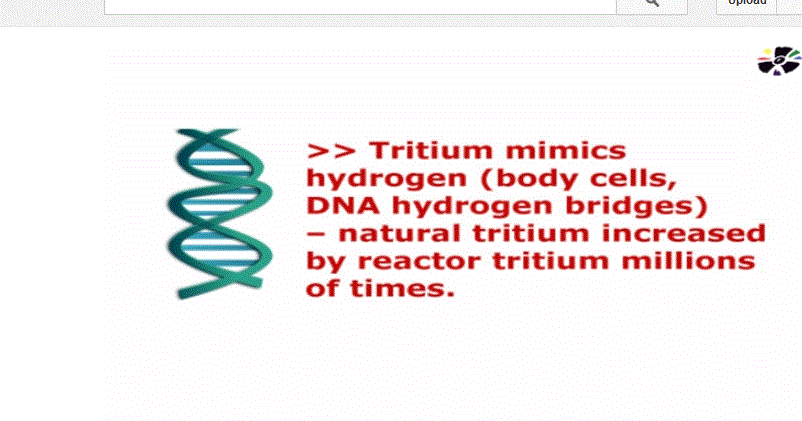
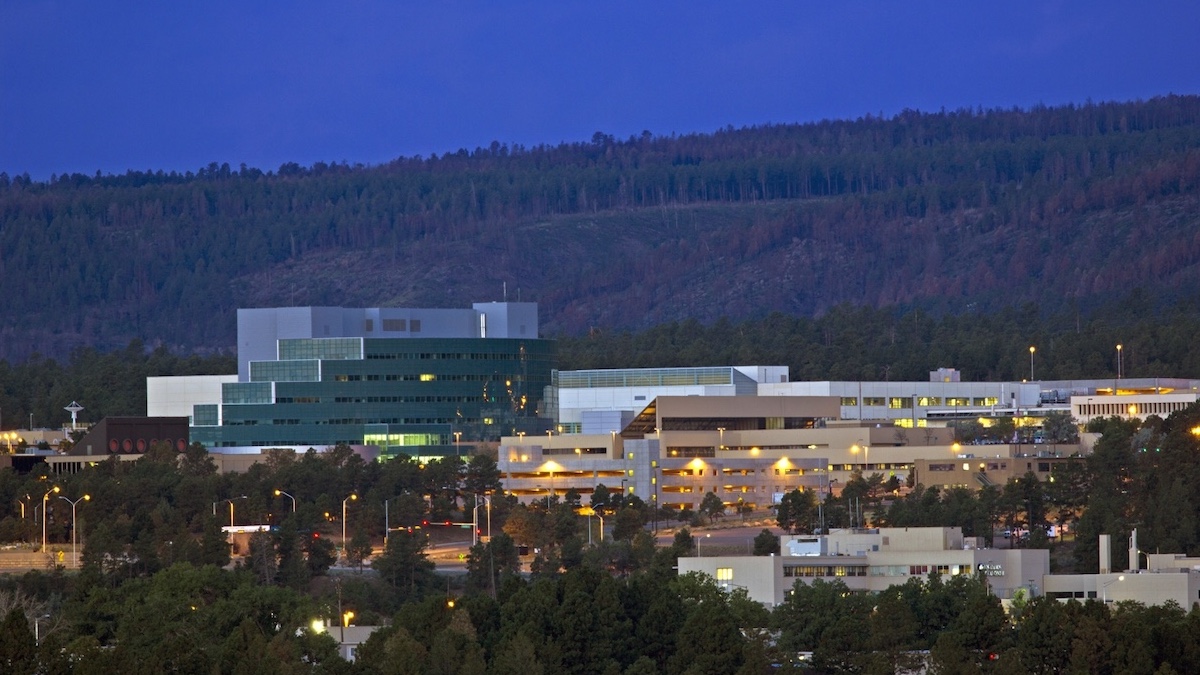
Lab should explore credible alternatives say Nuclear Watch New Mexico and Tewa Women United
The Los Alamos National Laboratory plans to begin large releases of radioactive tritium gas any time after June 2, 2025. The only roadblock to the Lab’s plans is that it needs a “Temporary Authorization” from the New Mexico Environment Department to do so.
Reasons why the New Mexico Environment Department should deny LANL’s request are:
1. The state Environment Department has a duty to protect the New Mexican public. As it states, “Our mission is to protect and restore the environment and to foster a healthy and prosperous New Mexico for present and future generations.”
2. Why the rush? LANL explicitly admits there is no urgency. According to the Lab’s publicly-released “Questions and Answers” in response to “What is the urgency for this project?” “There is no urgency for this project beyond the broader mission goals to reduce onsite waste liabilities.”
3. In addition, the National Nuclear Security Administration (NNSA) admits that the end time frame for action is 2028, not 2025. Therefore, there is time for deliberate consideration.
4. Contrary to NMED’s Resource Conservation and Recovery Act permit for LANL, the Lab has not fulfilled its duty to inform the public via NMED of possible alternatives to its planned tritium releases. According to Tewa Women United, “LANL has told EPA there are 53 alternatives; that list of alternatives, initially requested in 2022, has not yet been disclosed. Tewa Women United has repeatedly asked LANL to provide the public with that list.”
5. Despite extensive prompting by the Environmental Protection Agency on possible better alternatives, the NNSA categorically rejected any modifications.
6. NNSA’s January 2025 draft LANL Site-Wide Environmental Impact Statement had no substantive discussion of the planned tritium releases, much less the required “hard look” at credible alternatives. Further, LANL and NNSA included these planned releases in the “No Action Alternative,” with the specious justification that “The Laboratory and NNSA have been integrating with the EPA and NMED to obtain approval to move forward with the plan to vent the Flanged Tritium Waste Containers currently located in TA-54.” Seeking approval makes them No Action? NNSA and LANL are legally required to consider public comments submitted for the LANL SWEIS. These planned tritium releases should not proceed until NNSA issues a Record of Decision on the final LANL Site-Wide Environmental Impact Statement.
7. NNSA’s publicized maximum release of 30,000 curies is merely an administrative decision point at which LANL will stop the venting process to avoid exceeding the Clean Air Act’s 10 millirem public exposure limit for radioactive air emissions. It is not the potential total quantity of tritium that will have been released. LANL’s radioactive air emissions management plan sets an annual administrative limit of 8 millirem for the tritium releases, meaning venting will cease once this limit is reached but may resume in subsequent periods.
8. In addition, these planned releases are not necessarily a one-time event, as indicated above, contrary to what the LANL Site-Wide Environmental Impact Statement falsely states.
9. Nor are these planned releases strictly confined to just Area G, as claimed.
10. LANL declares “There are no cumulative impacts from this operation. All limits are conservative, and well within regulatory limits that are protective of the public.” However, one independent report calculates that the effective dose to infants could be three times higher than to adults (therefore likely violating the 10 millirem Clean Air Act standard for “any member of the public”) and all of LANL’s calculated doses would be higher in the event of low wind speeds and low humidity.” Another independent report noted how tritiated water can pervade every cell in the body while the planned LANL tritium releases are three times the amount of tritium that the crippled Fukushima nuclear power plant would release to the ocean over 30 years.
11. LANL claims “This critical milestone [the planned tritium releases] furthers \ the cleanup of Area G.” But what so-called cleanup means to LANL is “cap and cover” of ~200,000 cubic yards of existing toxic and radioactive wastes at Area G, leaving them permanently buried in unlined pits and shafts as a permanent threat to groundwater. NMED knows this all too well given the draft order it issued to the Lab to excavate and treat all wastes at the smaller Area C waste dump, which LANL categorically opposes. NMED should carefully consider the extent to which approving these planned tritium releases is consistent with its desire for full comprehensive cleanup at the Lab, including Area G.
Recommendation: Given the self-admitted lack of urgency and remaining uncertainties in potential doses, times, locations and ultimate purpose of these planned tritium releases,NMED should deny LANL’s request for a “Temporary Authorization” to proceed until there has been an open and transparent analysis of alternatives and all possible public health impacts.
This fact sheet is available here. For more contact Nuclear Watch New Mexico and Tewa Women United.
And please sign the petition — Petition to Deny LANL’s Request to Release Radioactive Tritium into the Air.
Treaty the planet’s best chance to get rid of its worst weapons

By Dave Sweeney | 19 May 2025, https://independentaustralia.net/politics/politics-display/treaty-the-planets-best-chance-to-get-rid-of-its-worst-weapons,19758
From Jakarta to the Vatican, Prime Minister Albanese’s journey underscores a global call to ban the world’s most destructive weapons, writes Dave Sweeney.
ON HIS FIRST overseas trip since his sweeping election victory, Prime Minister Anthony Albanese made for two very different destinations.
The first stop was steamy Jakarta, the capital of Indonesia, the world’s most populous island nation and home to the world’s largest Muslim population with around 240 million or 13 per cent of the globe’s believers.
After Indonesia, the PM switched time zones and belief systems and headed to the Vatican, the world’s smallest sovereign state in terms of area and population, and the (sacred) heartland of the Catholic faith.
These two places are very different worlds, with very different worldviews, but both have an active desire to protect our shared world from its most avoidable existential threat: nuclear war.
Prime Minister Albanese also holds this view.
In December 2018, he championed Federal Labor’s support for the newly adopted UN Treaty on the Prohibition of Nuclear Weapons (TPNW), stating:
“Nuclear weapons are the most destructive, inhumane and indiscriminate weapons ever created. Today we have an opportunity to take a step towards their elimination.”
The TPNW, adopted by the UN in 2017 with more than 120 nations voting in favour, grew from an Australian initiative by the International Campaign to Abolish Nuclear Weapons (ICAN).
ICAN was launched in Melbourne in 2007 and was awarded the 2017 Nobel Peace Prize in recognition of the group’s work ‘to draw attention to the catastrophic humanitarian consequences of any use of nuclear weapons’ and its ‘groundbreaking efforts to achieve a treaty-based prohibition of such weapons’.
The TPNW entered into force in January 2021, an act which has finally and formally seen nuclear weapons be declared unlawful under international humanitarian law.
Supporters of the TPNW have described the Treaty as our planet’s best way to get rid of its worst weapons.
The fragile and fractured global situation starkly highlights the urgency of this task.
Two nuclear weapon states, Israel and Russia, are actively involved in hot wars.
Two more, India and Pakistan, are engaged in risky posturing that could dramatically escalate, while two others, China and the United States, are shaping up for a trade war with hints of worse to come.
Against this grim background, the TPNW is a star that provides some light and hope and a navigation point to help chart a safer and saner course for our shared future.
Nations are embracing this path with half of the world’s countries having signed, ratified or acceded to the Treaty, including Indonesia and the Vatican/Holy See.
When it ratified the TPNW last September, Indonesia – a leading player in the global Non-Aligned Movement – made clear that ‘the possession and use of nuclear weapons cannot be justified for any reason’
Speaking at the time, then Foreign Minister Retno Marsudi posed the fundamental question and delivered the humane answer:
Should fear of nuclear weapons be our guarantee for peace? Indonesia’s answer will forever be no.
Indonesia reaffirms its commitment to a nuclear weapon-free world.
The late Pope Francis was a strong supporter of the TPNW and gave expression to the principle of “blessed are the peacemakers” with the Vatican’s championing and early adoption of the Treaty. The Pope described the very existence of nuclear weapons as “an affront to heaven”. In his final Easter Sunday sermon, shortly before he died, he made a powerful call for peace and weapons abolition.
These calls for nuclear abolition and for ways of addressing conflict that do not risk all that ever was, is or could be on our shared planet are finding a resonance and echo in many other nations.
Labor’s National Platform is clear:
Labor acknowledges the growing danger that nuclear weapons pose to us all and the urgent need for progress on nuclear disarmament.
Labor will act with urgency and determination to rid the world of biological, chemical and nuclear weapons.
Commits itself to redoubling efforts towards a world without nuclear weapons…
Labor in government will sign and ratify the Ban Treaty…
In this year that marks 80 years since the unveiling of the age of Armageddon with the first atom bomb test in New Mexico and the first atom bombings of the Japanese cities of Hiroshima and Nagasaki, it is time to turn a political platform into a prescription for a habitable world.
It is time for Australia to follow the example of Indonesia, the Vatican and many other nations and to show that the pen is mightier than the sword by signing the TPNW.
As they say, Prime Minister, when in Rome…
Nuclear veterans hand ‘evidence dossier’ to police
Annabel Tiffin, BBC North West Tonight, 18 May 25
A man who was exposed to nuclear tests in the 1950s is calling on police to investigate what he has described as a 74-year injustice.
John Morris, of Rochdale, Greater Manchester, was 18 when he was sent to Christmas Island in the Pacific, where bombs were detonated in a series of infamous tests, and has suffered a range of health problems since.
Now 87, he is part of a group of veterans who have lodged a criminal complaint about the Ministry of Defence (MoD) saying they are “devastated at the way veterans are being denied justice”.
They claim the department’s actions amount to potential misconduct in public office with a cover-up of radiation experiments – a claim the MoD refutes.
Mr Morris said the evidence the veterans have is a “ticking time bomb”.
He said he witnessed the testing of four hydrogen bombs as part of Britain’s effort to demonstrate its nuclear capabilities during the Cold War.
The veterans, alongside the Greater Manchester mayor Andy Burnham, have now handed in a 500-page dossier of evidence, collated by the Mirror newspaper, to the Metropolitan Police.
Mr Morries was dressed in just shorts, a shirt and sunglasses even though he was positioned less than 20 miles (32km) away from the explosion, he told BBC North West Tonight.
He also worked in a laundry, washing contaminated clothing.
“I helped to produce an evil, evil weapon and trust me what I saw will live with me forever,” he said.
Mr Morris was one of about 22,000 military personnel exposed to the nuclear tests.
Many have since died and Mr Morris said many of his troop died from cancer.
He has also had cancer and lost a son at four months old, which he believes was down to his own exposure to radiation……………………….
Regarding their dossier for the police, Mr Morris said “time is of the essence” as many of the survivors are now in their 80s and taking the case to the police was a “last resort”, but he has grown frustrated with what he feels is a lack of accountability.
The veteran had a meeting with Sir Keir Starmer in 2021 when he was leader of the opposition but is now appealing to meet him as Prime Minister – to make good on what the group believe was a pledge made by the Labour Party.
“All I want is to sit down with Keir Starmer and to find a resolution which will suit the government and the veterans,” he said…..
‘Clear evidence’
Mayor Andy Burnham said: “In my view, there is clear evidence of misconduct in public office and following the 80th anniversary of VE day the investigation of it can wait no longer.”…………. https://www.bbc.com/news/articles/cyvme62jej8o
Sellafield Plutonium treatment plant moves a step closer to completion

COMMENT. So now they think they can make more of the toxic stuff?
And provide more dirty dangerous jobs for the boys?
Sellafield Ltd and Nuclear Decommissioning Authority 15 May 2025
The Sellafield Product and Residue Store Retreatment Plant (SRP) is one of our largest and most complex construction projects.
When finished it will play an essential role in managing the UK’s plutonium stockpile.
The project celebrated an important milestone this week as its roof was sealed with a final concrete pour, making the main building watertight and ready for internal fit-out.
Once operational, the plant will retreat and repackage existing material into more durable, long-term storage packages, ensuring they can be safely stored into the next century and beyond.
The project is being delivered under Sellafield’s Programme and Project Partners (PPP) infrastructure delivery model which brings together KBR, Amentum, Morgan Sindall Infrastructure, Altrad Babcock, and a wider supply chain, to deliver a 20-year pipeline of major infrastructure projects.
Completing the vast roof slab required 12 weeks of work and over 2,700 cubic metres of concrete to be poured and pumped to heights up to 30 metres.
The achievement moves the project closer to active commissioning and operations in support of the government’s plutonium disposition strategy announced earlier this year……… https://www.gov.uk/government/news/flagship-sellafield-project-seals-major-milestone
Chris Hedges: The New Dark Age

Gaza puts to rest the lie of human progress, the myth that we are evolving morally. Only the tools change. Where once we clubbed victims to death, or chopped them to pieces with broadswords, today we drop 2,000-pound bombs on refugee camps, spray families with bullets from militarized drones or pulverize them with tank shells, heavy artillery and missiles.
Such a Bright Future – by Mr. Fish
By Chris Hedges ScheerPost, May 18, 2025, https://scheerpost.com/2025/05/18/chris-hedges-the-new-dark-age/
CAIRO, Egypt — It is 200 miles from where I am in Cairo to the Rafah border crossing into Gaza. Parked in the arid sands in the northern Sinai of Egypt are 2,000 trucks filled with sacks of flour, water tanks, canned food, medical supplies, tarps and fuel. The trucks idle under the scorching sun with temperatures climbing into the high 90s.
A few miles away in Gaza, dozens of men, women and children, living in crude tents or damaged buildings amid the rubble, are being butchered daily from bullets, bombs, missile strikes, tank shells, infectious diseases and that most ancient weapon of siege warfare — starvation. One in five people are facing starvation after nearly three months of Israel’s blockade of food and humanitarian aid.
Israeli Prime Minister Benjamin Netanyahu, who has launched a new offensive that is killing upwards of 100 people a day, has declared that nothing will impede this final assault, named Operation Gideon’s Chariots.
There will be “no way,” Israel will stop the war, he announced, even if the remaining Israeli hostages are returned. Israel is “destroying more and more houses” in Gaza. The Palestinians “have nowhere to return.”
“[The] only inevitable outcome will be the wish of Gazans to emigrate outside of the Gaza Strip,” he told lawmakers at a leaked closed-door meeting. “But our main problem is finding countries to take them in.”
The nine-mile border between Egypt and Gaza has become the dividing line between the Global South and the Global North, the demarcation between a world of savage industrial violence and the desperate struggle by those cast aside by the wealthiest nations. It marks the end of a world where humanitarian law, conventions that protect civilians or the most basic and fundamental rights matter. It ushers in a Hobbesian nightmare where the strong crucify the weak, where no atrocity, including genocide, is precluded, where the white race in the Global North reverts to the unrestrained, atavistic savagery and domination that defines colonialism and our centuries long history of pillage and exploitation. We are tumbling backwards in time to our origins, origins that never left us, but origins that were masked by empty promises of democracy, justice and human rights.
The Nazis are the convenient scapegoats for our shared European and American heritage of mass slaughter, as if the genocides we carried out in the Americas, Africa and India did not take place, unimportant footnotes in our collective history.
In fact, genocide is the currency of Western domination.
Between 1490 and 1890, European colonization, including acts of genocide, was responsible for killing as many as 100 million indigenous people, according to the historian David E. Stannard. Since 1950 there have been nearly two dozen genocides, including those in Bangladesh, Cambodia and Rwanda.
The genocide in Gaza is part of a pattern. It is the harbinger of genocides to come, especially as the climate breaks down and hundreds of millions are forced to flee to escape droughts, wildfires, flooding, declining crop yields, failed states and mass death. It is a blood-soaked message from us to the rest of the world: We have everything and if you try and take it away from us, we will kill you.
Gaza puts to rest the lie of human progress, the myth that we are evolving morally. Only the tools change. Where once we clubbed victims to death, or chopped them to pieces with broadswords, today we drop 2,000-pound bombs on refugee camps, spray families with bullets from militarized drones or pulverize them with tank shells, heavy artillery and missiles.
The 19th century socialist Louis-Auguste Blanqui, unlike nearly all of his contemporaries, dismissed the belief central to Georg Wilhelm Friedrich Hegel and Karl Marx, that human history is a linear progression toward equality and greater morality. He warned that this absurd positivism is perpetrated by oppressors to disempower the oppressed.
“All atrocities of the victor, the long series of his attacks are coldly transformed into constant, inevitable evolution, like that of nature… But the sequence of human things is not inevitable like that of the universe. It can be changed at any moment.” Blanqui warned.
Scientific and technological advancement, rather than an example of progress, could “become a terrible weapon in the hands of Capital against Work and Thought.”
“For humanity” Blanqui wrote, “is never stationary. It either advances or goes back. Its progressive march leads it to equality. Its regressive march goes back through every stage of privilege to human slavery, the final word of the right to property.” Further, he wrote, “I am not amongst those who claim that progress can be taken for granted, that humanity cannot go backwards.”
Human history is defined by long periods of cultural barrenness and brutal repression. The fall of the Roman Empire led to immiseration and repression throughout Europe during the Dark Ages, roughly from the sixth through the 13th century. There was a loss of technical knowledge, including how to build and maintain aqueducts. Cultural and intellectual impoverishment led to collective amnesia. The ideas of ancient scholars and artists were blotted out. There was no rebirth until the 14th century and the Renaissance, a development made possible largely by the cultural flourishing of Islam, which, through translating Aristotle into Arabic and other intellectual accomplishments, kept the wisdom of the past from disappearing.
Blanqui knew history’s tragic reverses. He took part in a series of French revolts, including an attempted armed insurrection in May 1839, the 1848 uprising and the Paris Commune — a socialist uprising that controlled France’s capital from March 18 until May 28 in 1871. Workers in cities such as Marseilles and Lyon attempted, but failed, to organize similar communes before the Paris Commune was militarily crushed.
We are entering a new dark age. This dark age uses the modern tools of mass surveillance, facial recognition, artificial intelligence, drones, militarized police, the revoking of due process and civil liberties to inflict the arbitrary rule, incessant wars, insecurity, anarchy and terror that were the common denominators of the Dark Ages.
To trust in the fairy tale of human progress to save us is to become passive before despotic power. Only resistance, defined by mass mobilization, by disrupting the exercise of power, especially against genocide, can save us.
Campaigns of mass killing unleash the feral qualities that lie latent in all humans. The ordered society, with its laws, etiquette, police, prisons and regulations, all forms of coercion, keeps these latent qualities in check. Remove these impediments and humans become, as we see with the Israelis in Gaza, murderous, predatory animals, reveling in the intoxication of destruction, including of women and children. I wish this was conjecture. It is not. It is what I witnessed in every war I covered. Almost no one is immune.
The Belgian monarch King Leopold in the late 19th century occupied the Congo in the name of Western civilization and anti-slavery, but plundered the country, resulting in the death — by disease, starvation and murder — of some 10 million Congolese.
Joseph Conrad captured this dichotomy between who we are and who we say we are in his novel “Heart of Darkness” and his short story “An Outpost of Progress.”
In “An Outpost of Progress,” he tells the story of two European traders, Carlier and Kayerts, who are sent to the Congo. These traders claim to be in Africa to implant European civilization. The boredom, the stifling routine, and most importantly the lack of all outside constraints, turns the two men into beasts. They trade slaves for ivory. They fight over dwindling food and supplies. Kayerts finally murders his unarmed companion Carlier.
“They were two perfectly insignificant and incapable individuals,” Conrad wrote of Kayerts and Carlier, “whose existence is only rendered possible through the high organization of civilized crowds. Few men realise that their life, the very essence of their character, their capabilities and their audacities, are only the expression of their belief in the safety of their surroundings. The courage, the composure, the confidence; the emotions and principles; every great and every insignificant thought belongs not to the individual but to the crowd: to the crowd that believes blindly in the irresistible force of its institutions and its morals, in the power of its police and of its opinion. But the contact with pure unmitigated savagery, with primitive nature and primitive man, brings sudden and profound trouble into the heart. To the sentiment of being alone of one’s kind, to the clear perception of the loneliness of one’s thoughts, of one’s sensations — to the negation of the habitual, which is safe, there is added the affirmation of the unusual, which is dangerous; a suggestion of things vague, uncontrollable, and repulsive, whose discomposing intrusion excites the imagination and tries the civilized nerves of the foolish and the wise alike.”
The genocide in Gaza has imploded the subterfuges we use to fool ourselves and attempt to fool others. It mocks every virtue we claim to uphold, including the right of freedom of expression. It is a testament to our hypocrisy, cruelty and racism. We cannot, having provided billions of dollars in weapons and persecuted those who decry the genocide, make moral claims anymore that will be taken seriously. Our language, from now on, will be the language of violence, the language of genocide, the monstrous howling of the new dark age, one where absolute power, unchecked greed and unmitigated savagery stalks the earth.
US mainstream media still censoring US enabled Israeli genocide in Gaza

May 18, 2025 AIMN Editorial, By Walt Zlotow, https://theaimn.net/us-mainstream-media-still-censoring-us-enabled-israeli-genocide-in-gaza/
For the past 586 days US mainstream media refuses to condemn US enabling Israeli genocide of 2,300,000 Palestinians in Gaza.
The word genocide never appears in their print or pixels. They barely cover the genocide. But when they do make oblique references to it, simply calling it ‘Israel’s war on Hamas.’
US enabling of Israel’s genocide is bipartisan, with not a single pushback from the 535 congresspersons who, like the genocide enabling Biden and Trump administrations, betray their oath to protect life by promoting peace.
Special Trump Middle East envoy Steve Witkoff brushed off inquiries when the US will stop supporting Israeli genocide saying:
“We’re not the Israeli government. We don’t disagree. The Israeli government is a sovereign government. They can’t tell us what to do, and we can’t tell them what to do.”
Witkoff conveniently omitted that without America’s $20 billion providing over 50,000 tons of genocide weapons, Israel would be powerless to carry out 586 days of genocidal ethnic cleansing of Gaza with no end in sight.
Trump is even more ghoulish in promoting Israel’s genocide. On his Middle East trip Trump said.
“I’d be proud to have the United States have it (Gaza), take it, make it a freedom zone, let see good things happen. Put people in homes where they can be safe.”
Those people in safe homes won’t be Palestinians whom Trump has been lobbying African countries to take in so they don’t have to all be killed off.
With their bombs, planes and drones, Biden and Trump have made the Israeli genocide possible. It is no different than if FDR was supplying the Nazis with Zyklon B gas to complete their genocide 80 years ago.
With mainstream media compliance, the US enabled genocide will continue to its completion so Trump can build his ultimate real estate development on the bodies and destroyed homes of 2,300,000 Palestinians.
But if mainstream media began the first story of every day condemning America and Israel’s genocide body count from bombs and forced starvation, it might just galvanize the 535 congresspersons to acknowledge and resist the genocide they’re ignoring. It might even force the grotesque Trump administration to turn back from inflicting the worst horror on helpless people ever inflicted by the self-proclaimed greatest nation on earth.
Tomorrow is Day 587 of mainstream media genocide denial. Unless they pivot to peace in Gaza, mainstream media moguls will follow the Biden Trump administrations and Congress down the rabbit hole of genocide infamy.
The real reason politicians back nuclear power instead of renewables

Simon Barrow: The cost of the Trident programme alone over the next three
decades alone is going to be well north of an eye-watering £250 billion.
Imagine what could be done for human good with that scale of investment?
But as the well-attended Scottish CND “Work, Wellbeing and Security”
meeting at the recent STUC conference emphasised, the real challenge goes
far deeper than that. It concerns the multiple connections between
downscaling and eventually scrapping Trident and the huge industrial
revolution required both to utilise the expansion of AI for positive
purposes and to transition rapidly away from harmful fossil-fuel and
nuclear dependence.
As Craig Dalzell of Common Weal pointed out at the STUC
meeting, without a civil nuclear power programme there can be no nuclear
weapons. So, when politicians, including those in Scotland, are talking
about expanding nuclear power – despite the fact that renewables are
cheaper, greener, safer, more effective and create far more jobs – what
they are actually trying to do is shore up support for a military
infrastructure that generates huge profits for their friends in big
corporations.
But politicians know they cannot say that directly, in the
same way that carbon industry companies cannot admit that their preference
for nuclear power over renewable energy is all about massive subsidies and
profits, rather than what makes sense economically and delivers a
sustainable, liveable future.
These are issues which trade unionists must
speak out about more loudly. As EIS general secretary Andrea Bradley
pointed out at the STUC meeting, part of that involves promoting school and
public education on alternatives to a dangerous war economy. But raising
awareness has to be accompanied by practical work on the industrial
revolution required and the change of political will needed to achieve
that. At the Glasgow rally last Saturday, tireless RMT Scotland regional
organiser Gordon Martin, who also spoke at the STUC meeting, acknowledged
frankly that trade unions are still divided on a number of these key
issues.
The National 16th May 2025, https://www.thenational.scot/politics/25168853.real-reason-politicians-back-nuclear-power-instead-renewables/
President Trump to unleash atomic power

May 15, 2025, https://beyondnuclear.org/president-trump-unleashes-atomic-power/
On May 14, 2025, E&ENews updated reports on President Donald Trump’s four “pre-decisional” White House Executive Orders to radically alter the historic role of the US Nuclear Regulatory Commission’s (NRC) to oversee the performance of reactor design safety reviews and the regulatory approval of reactor siting, construction and operation of commercial atomic power plants.
In President Trump’s view, the NRC’s overly burdensome regulations are the primary obstacle to guaranteeing the development and deployment of a national “nuclear renaissance.” As a result, The White House is eyeing a “wholesale regulatory revision” of the federal agency that includes mandatory “reductions in force.” Simultaneously, the White House envisages authorizing the US Department of Energy and Department of Defense to instead take charge of quadrupling the current domestic nuclear energy capacity to 400 gigawatts by 2050. In order to achieve this goal, the draft Executive Orders outline 1) “overhauling NRC”; 2) significantly accelerating “nuclear R&D”; 3) redefining commercial nuclear power development as critical infrastructure for the “national security,” and 4) dramatically building out the domestic “nuclear supply chain” to include significantly ramping up domestic uranium mining, milling, enrichment and fabrication of US nuclear fuel.
While no energy generation system is entirely domestically sourced, the US nuclear fuel supply is predominantly sourced through foreign imports. According to the U.S. Energy Information Agency reporting in 2025, US domestic uranium mines produce roughly 1% of the uranium concentrate (U3O8) needed to fuel the current US nuclear fleet in 2023. Foreign imports accounted for 99% of our nation’s U3O8 with 48% coming from Russia and Russia-influenced Kazakhstan and Uzbekistan. Presently, Russia is the only commercially viable global supplier of high-assay low enriched uranium (HALEU fuel is less than 20% enriched uranium-235) as is rated for advanced Small Modular Reactor designs, including Bill Gate’s TerraPower Natrium reactor liquid sodium-cooled fast reactor and X-Energy’s Xe-100 high-temperature gas-cooled pebble-bed reactor.
The Trump Administration has declared by a Executive Order in February 2024 that it will no longer recognize any federal agencies as “independent” but rather all federal agencies are now in the President’s wheelhouse and subject to his supervision and control. All “significant regulatory actions” of the NRC would be reviewed by the White House’s Office of Information and Regulatory Affairs, or OIRA, opening the process to the White House review for comments, edits and influence. E&E news observed the new process “obscures the public record of internal commission deliberations” and is an apparent violation of the Atomic Energy Act which clearly states that it is expressly for the NRC to decide.
The draft order to overhaul the NRC would also require the agency to reconsider its standard for radiation exposure where it now understands that there is no safe dose of radiation. Dr. Edwin Lyman, a physicist and Director of the Nuclear Power Safety for the Union of Concerned Scientists is quoted in the E&E article to say, “Documented scientific evidence has only indicated that [low-level radiation exposure] is more dangerous than was known decades ago, when these standards were set.” Furthermore, Dr. Lyman adds, “Evidence has emerged about the impact of the level of radiation exposure on cardiovascular disease.”
The White House draft order to reframe nuclear power deployment for “national security” sets up the US Department of Energy and Department of Defense to “work around the NRC-led licensing and safety review processes” by providing the Secretaries of Defense and Energy accelerated schedules to “identify 9 military facilities at which advanced nuclear technologies can be immediately installed and deployed.” Those military base sited nuclear power plants can then provide transmission to the electric grid for commercial power.
It should be alarming that the Trump Executive Orders to fast track the still elusive and unpredictably costly construction of unproven Generation IV reactors by decommissioning the NRC comes at precisely the wrong time.
This is the still the 50th Anniversary Year of the creation of the NRC following the abolition of the U.S. Atomic Energy Commission by Congress for its blatant fast track promotion of atomic power plant licensing and a dangerous disregard of public health and safety. Least we forget, too many of those aging and now deteriorating nuclear power stations that are approaching and have exceeded 50 years of very harsh operating experience of radioactive neutron bombardment, embrittlement and cracking in base metal and dissimilar weld materials, fatigue, corrosion and a combination of extreme heat, pressure and vibration. Nobody knows better the growing level uncertainty, the multitude of technical knowledge gaps and innumerable shrinking reactor safety margins than those NRC nuclear engineers. Certainly, not Trump.
A home guard to protect British nuclear power plants against enemy attacks
A home guard will be established to protect British power plants and
airports against attack from enemy states and terrorists, under plans put
forward in the government’s strategic defence review (SDR).
It will be modelled on the citizens’ militia created in 1940, when Britain faced the
prospect of invasion by Nazi Germany during the Second World War. It would
be made up of several thousand volunteers, who would be deployed to
safeguard assets such as nuclear power plants, telecommunications sites and
the coastal hubs where internet cables connecting Britain to the rest of
the world come onto land. Guards could also be deployed to other sensitive
sites, such as energy stations providing power to major airports, with
senior sources pointing to the recent fire that shut down Heathrow as
evidence more resources are needed to guard them.
The home guard plan is a central part of the review, which focuses heavily on homeland security, national resilience and the need for the public to realise that Britain has
entered a pre-war era, as tensions heighten with an axis of Russia, Iran
and North Korea.
Times 17th May 2025 https://www.thetimes.com/uk/politics/article/home-guard-to-protect-uk-from-attack-lg2wf0slx
Airlines update nuclear war insurance plans as escalation threats grow.

COMMENT. The airlines are insane to want to keep flying in the case of a “small” nuclear war.
Airlines are taking steps to ensure that they can keep flying even after the outbreak of a nuclear war.
Jets could continue to fly following an atomic blast under special insurance policies being drawn up to address the possibility of conflicts escalating in Ukraine and Kashmir.
Current policies that date back to the 1950s would force the grounding of all civil aircraft worldwide in the event of a single nuclear detonation, assuming that this would lead to the outbreak of a third world war.
However, with the deployment of nuclear weapons now regarded as more likely to involve so-called tactical warheads used in a limited role on the battlefield, the insurance industry has developed plans to allow flights to continue in regions removed from conflict zones.
Gallagher, the world’s largest aviation insurance broker, began working on the scheme when Vladimir Putin threatened to deploy Russia’s atomic weapons against Ukraine in 2022.
Its plans have been given fresh impetus by the recent clash between India and Pakistan over Kashmir, where hostilities reached a level not seen for decades.
Nigel Weyman, senior partner at Gallagher, said the Ukraine conflict had revived interest in nuclear-related insurance policies.
He said: “Back when the wording was drawn up, it was assumed that any hostile detonation meant that it would all be over, Armageddon. But what they didn’t have in those days was tactical nuclear weapons that vary in size and impact and which are, ultimately, very usable.”
The latest generation of the American B61 air-launched gravity bomb carries a nuclear warhead with a yield as low as 0.3 kilotons, for example.
That compares with 15 kilotons for the bomb dropped on Hiroshima in 1945, and 100 kilotons for a single Trident II missile warhead.
While Britain retired its last tactical nuclear weapons in 1998, Russia is believed to have almost 2000. North Korea unveiled what it claimed was a tactical weapon in 2023, while Pakistan’s Nasr missile can also carry a battlefield nuclear warhead.
Weyman said, “Why should Air New Zealand, for example, be grounded in the event of a nuclear detonation in Europe that was quite minor, albeit not for the people near it?”
“Airlines find workarounds for whatever challenges they face, safe corridors, minimum heights so that ground-to-air missiles can’t reach them.
“Volcanic ash clouds affect big areas, but the world keeps flying. Yet a few words on an insurance policy can ground every jet there is.”
Threat management
The broker has come up with a plan that would see a select number of insurers evaluate where airlines should be permitted to fly after a nuclear detonation, aided by analysis from security experts at risk-management specialists Osprey Flight Solutions.
The 15-strong group, which includes Allianz, the world’s largest insurer, would meet within four hours of a detonation and evaluate the threat to airlines on a country-by-country basis.
The plan would provide each carrier with $US1 billion ($1.56 billion) per plane of war cover for passengers and third parties, compared with $US2 billion or more under existing policies.
Weyman said the cost of the scheme would amount to less than the price of a cup of coffee per passenger, if ever triggered, something “easily passed on in ticket prices”.
Airlines spent about $3.1 billion on insurance premiums last year to cover slightly over 4 billion passenger journeys, indicating a current cost of around 33 cents per customer.
About 100 airlines have so far signed up to the plan, out of the 500 or so worldwide. About 60 in Europe have joined, though low-cost operators are proving reluctant, Weyman said.
Airlines could yet be grounded by other insurance stipulations, including a “five powers war clause” that terminates cover in the event of a military clash between any of the UK, US, France, Russia and China.
That could be invoked in the event of any British or French troops sent to Ukraine being fired on, according to some industry experts.
1 This Month



31st January – Challenging the War Machine – a DECLASSIFIED UK SUMMIT



Website of the Week
Now until to February 10, 2026 Radioactive waste storage in France: the debate is finally open! How to participate?
-
Archives
- January 2026 (227)
- December 2025 (358)
- November 2025 (359)
- October 2025 (377)
- September 2025 (258)
- August 2025 (319)
- July 2025 (230)
- June 2025 (348)
- May 2025 (261)
- April 2025 (305)
- March 2025 (319)
- February 2025 (234)
-
Categories
- 1
- 1 NUCLEAR ISSUES
- business and costs
- climate change
- culture and arts
- ENERGY
- environment
- health
- history
- indigenous issues
- Legal
- marketing of nuclear
- media
- opposition to nuclear
- PERSONAL STORIES
- politics
- politics international
- Religion and ethics
- safety
- secrets,lies and civil liberties
- spinbuster
- technology
- Uranium
- wastes
- weapons and war
- Women
- 2 WORLD
- ACTION
- AFRICA
- Atrocities
- AUSTRALIA
- Christina's notes
- Christina's themes
- culture and arts
- Events
- Fuk 2022
- Fuk 2023
- Fukushima 2017
- Fukushima 2018
- fukushima 2019
- Fukushima 2020
- Fukushima 2021
- general
- global warming
- Humour (God we need it)
- Nuclear
- RARE EARTHS
- Reference
- resources – print
- Resources -audiovicual
- Weekly Newsletter
- World
- World Nuclear
- YouTube
-
RSS
Entries RSS
Comments RSS
 nuclear-news