Leaked Nuclear Secrets: China Arrests Top Military Leader Close to Xi Jinping
Vladislav V., January 25, 2026, https://militarnyi.com/en/news/leaked-nuclear-secrets-china-arrests-top-military-leader-close-to-xi-jinping/
China’s top general has been accused of leaking information about the country’s nuclear program to the United States and of accepting bribes to facilitate official promotions, including that of an officer to the post of defense minister.
This was reported by The Wall Street Journal, citing attendees of a closed briefing on the case.
The briefing, attended by some of China’s senior military commanders, took place shortly before the Ministry of National Defense of the People’s Republic of China issued a statement announcing an investigation into General Zhang Youxia.
He had previously been considered one of Chinese leader Xi Jinping’s closest military allies.
The official statement provided minimal details, only noting that Zhang was under investigation for serious violations of party discipline and state law.
Sources familiar with the undisclosed briefing said Zhang is suspected of forming political cliques — a term in the Chinese system that refers to informal networks undermining the Communist Party’s unity.
He is also accused of abusing his authority in the Central Military Commission, the top body overseeing the PLA’s administration.
Investigators are focusing on the period when Zhang headed the influential department responsible for military research, development, and procurement.
According to sources, the general allegedly received large sums in exchange for official appointments and promotions within the military procurement system, which operates with multi-billion-dollar budgets.
Zhang Youxia’s Removal and Its Consequences
Zhang’s removal makes the purge of the PRC general staff one of the largest personnel reshuffles in the Chinese military since the dispersal of protests in Tiananmen Square in 1989.
Control over the armed forces is widely seen as critical to the power and political survival of Chinese leaders. Historically, internal party struggles have often been won by those with authority and influence over the military.
Zhang’s dismissal highlights Xi’s drive for absolute concentration of power.
As first vice chairman of the Central Military Commission, a role combining responsibilities similar to those of a US defense minister, chairman of the Joint Chiefs, and national security adviser, Zhang held exceptionally broad authority.
He oversaw strategy, promotions, and budgets, and reported directly to Xi. Analysts had considered him virtually untouchable due to his combat experience and personal ties to Xi.
Zhang had survived previous purges among the generals, retained significant loyalty within the military, and remained in his top post well past the normal retirement age.
Analysts say his removal reflects Xi’s urgent effort to “restore order” in the military leadership, despite Zhang’s planned retirement at the next party congress in 2027.
Xi’s unprecedented consolidation of military power also narrows the circle of decision-makers on Taiwan and other strategic issues, including control of China’s nuclear arsenal.
Analysts note that the older generation of PLA leaders has historically acted as a moderating influence in military planning.
The reshuffle comes as Xi seeks to rapidly modernize the military and achieve strategic objectives, including the declared ability to conduct operations against Taiwan by 2027.
Michael Parenti (1933-2026): 1918
January 25, 2026, https://consortiumnews.com/2026/01/25/michael-parenti-1933-2026-1918/
Michael Parenti, who died on Saturday at 92, wrote for Consortium News what appears to be his last article on the occasion of the 100th anniversary of the end of WWI.
Michael Parenti, a giant on the American left, who influenced generations of activists, scholars and ordinary Americans, died on Saturday in Berkeley, California. He was 92. Parenti wrote for Consortium News what is believed to be his last article, about the horrors of World War I. It appeared on U.S. Memorial Day, May 28, 2018, and we republish it here ahead of a tribute Consortium News is preparing.
On Memorial Day 2018, in the year marking the 100th anniversary of the end of World War I, Michael Parenti contemplates the trenches and the oligarchs who caused so much unnecessary misery.
Looking back at the years of fury and carnage, Colonel Angelo Gatti, staff officer of the Italian Army (Austrian front), wrote in his diary:
“This whole war has been a pile of lies. We came into war because a few men in authority, the dreamers, flung us into it.”
No, Gatti, caro mio, those few men are not dreamers; they are schemers. They perch above us. See how their armament contracts are turned into private fortunes — while the young men are turned into dust: more blood, more money; good for business this war.
It is the rich old men, i pauci, “the few,” as Cicero called the Senate oligarchs whom he faithfully served in ancient Rome. It is the few, who together constitute a bloc of industrialists and landlords, who think war will bring bigger markets abroad and civic discipline at home.
One of i pauci in 1914 saw war as a way of promoting compliance and obedience on the labor front and—as he himself said—war, “would permit the hierarchal reorganization of class relations.”
Just awhile before the heresies of Karl Marx were spreading among Europe’s lower ranks. The proletariats of each country, growing in numbers and strength, were made to wage war against each other.
What better way to confine and misdirect them than with the swirl of mutual destruction.
Then there were the generals and other militarists who started plotting this war as early as 1906, eight years before the first shots were fired.
War for them means glory, medals, promotions, financial rewards, inside favors, and dining with ministers, bankers, and diplomats: the whole prosperity of death.
When the war finally comes, it is greeted with quiet satisfaction by the generals.
Moguls and Monarchs Prevail
But the young men are ripped by waves of machine-gun fire or blown apart by exploding shells. War comes with gas attacks and sniper shots: grenades, mortars, and artillery barrages; the roar of a great inferno and the sickening smell of rotting corpses.
Torn bodies hang sadly on the barbed wire, and trench rats try to eat away at us, even while we are still alive.
Farewell, my loving hearts at home, those who send us their precious tears wrapped in crumpled letters. And farewell my comrades. When the people’s wisdom fails, moguls and monarchs prevail and there seems to be no way out.
Fools dance and the pit sinks deeper as if bottomless. No one can see the sky, or hear the music, or deflect the swarms of lies that cloud our minds like the countless lice that torture our flesh.
Crusted with blood and filth, regiments of lost souls drag themselves to the devil’s pit. “Lasciate ogni speranza, voi ch’entrate.” (“Abandon all hope, ye who enter” as our Dante delivered his painful message).
Meanwhile from above the Vatican wall, the pope himself begs the world leaders to put an end to hostilities, “lest there be no young men left alive in Europe.” But the war industry pays him no heed.
Finally the casualties are more than we can bear. There are mutinies in the French trenches! Agitators in the Czar’s army cry out for “Peace, Land, and Bread!” At home, our families grow bitter. There comes a breaking point as the oligarchs seem to be losing their grip.
At last the guns are mute in the morning air. A strange almost pious silence takes over. The fog and rain seem to wash our wounds and cool our fever. “Still alive,” the sergeant grins, “still alive.” He cups a cigarette in his hand. “Stack those rifles, you lazy bastards.”
He grins again, two teeth missing. Never did his ugly face look so good as on this day in November 1918. Armistice embraces us like a quiet rapture.
Not really a quiet rapture with smiling sergeants. Many troops on both sides continued killing to the bitter end, with a fury that had no mercy.
In one day, November 11, the last day of war, some 10,900 men were wounded or killed from both sides, a furious rage in the face of peace, years of slaughter; now moments of vengeance.
The Fall of Eagles
A big piece of the encrusted aristocratic world breaks off. The Romanovs, Czar and family, are all executed in 1918 in Revolutionary Russia. That same year, the House of Hohenzollern collapses as Kaiser Wilhelm II flees Germany. Also in 1918, the Ottoman empire is shattered.
And on Armistice Day, November 11th, 1918, at 11:00 a.m.—the eleventh hour of the eleventh day of the eleventh month—we mark the end of the war and with it the dissolution of the Habsburg dynasty.
Four indestructible monarchies: Russian, German, Turkish, and Austro-Hungarian, four great empires, each with millions of bayonets and cannon at the ready, now twisting in the dim shadows of history.
Will our children ever forgive us for our dismal confusion? Will they ever understand what we went through? Will we? By 1918, four aristocratic autocracies fade away, leaving so many victims mangled in their wake, and so many bereaved crying through the night.
Back in the trenches, the agitators among us prove right. The mutinous Reds standing before the firing squad last year were right. Their truths must not be buried with them. Why are impoverished workers and peasants killing other impoverished workers and peasants?
Now we know that our real foe is not in the weave of trenches; not at Ypres, nor at the Somme, or Verdun or Caporetto. Closer to home, closer to the deceptive peace that follows a deceptive war.
Now comes a different conflict. We have enemies at home: the schemers who trade our blood for sacks of gold, who make the world safe for hypocrisy, safe for themselves, readying themselves for the next “humanitarian war.”
See how sleek and self-satisfied they look, riding our backs, distracting our minds, filling us with fright about wicked foes. Important things keep happening, but not enough to finish them off. Not yet enough.
Michael Parenti was an internationally known, award-winning author and lecturer. He was one of the nation’s leading progressive political analysts. His highly informative and entertaining books and talks have reached a wide range of audiences in North America and abroad. His books include Profit Pathology and Other Indecencies; Inventing Reality, The Politics of News Media; Make-Believe Media: The Politics of Entertainment; Democracy for the Few; Land of Idols: Political Mythology in America; History as Mystery; The Assassination of Julius Caesar, A People’s History of Ancient Rome and the first part of his memoir, Waiting for Yesterday: Pages from a Street Kid’s Life.
Scottish communities need obstacles to local energy removed .

26th January, By Liz Murray, Community Energy Scotland
SINCE locals installed four wind turbines on the Isle of Gigha some years ago, the benefits across the whole community have been huge.
The hundreds of thousands of pounds made from selling their locally generated
electricity to the grid has come directly back into the community and has
been used to help fund housing developments and restorations, business unit
development, moorings and tourism accommodation.
Jane Millar, development
manager of the Isle of Gigha Heritage Trust, said: “The turbine income
has been absolutely essential to the success of Gigha. We have grown our
population from 90 to 170; we have been able to build decent housing that
has retained and recruited young families to live here.
“We are now able
to protect and restore the famous Achamore Gardens and our new camping and
motorhome facilities ensure we provide a much better visitor experience
while reducing vehicle traffic and protecting our beautiful island.”
There are other stories like this in Scotland, where local communities own
and control renewable energy developments. Different communities do
different things with the income – that’s what being in control is
about. But the common factor is that the income generated from
community-owned renewables stays in the community, is invested in things
that benefit people across the community – and in many cases is used to
bring in further income.
Research has shown that community-owned wind
provides 34 times more financial benefit to local communities than
privately owned wind farms. And community energy projects also generate
10-fold additional local employment and income impact, over and above the
energy project itself.’
There’s so much potential but there aren’t
nearly enough stories like that of Gigha. For Scotland to have more stories
like Gigha, we urgently need the obstacles to community-owned energy to be
removed, so the benefits of Scotland’s renewable energy revolution can be
more fairly shared.
The National 26th Jan 2026, https://www.thenational.scot/news/25794945.scottish-communities-need-obstacles-local-energy-removed/
The ‘Peace President’ Who Bombed 10 Countries and Wants $1.5 Trillion for War
SCHEERPOST, Joshua Scheer,
Donald Trump keeps insisting he’s a “peace president.” The record shows something closer to a global arsonist with better PR. In just one year of his second term, he bombed seven countries—adding to a list that now reaches ten, more than any president in U.S. history—while demanding a $1.5 trillion Pentagon budget that would eclipse the military spending of nearly the entire planet combined.
This video dissects the chasm between Trump’s self‑mythology and the reality of an empire that has only expanded its reach, its violence, and its appetite for public money. It also exposes the bipartisan machinery behind it: Democrats and Republicans alike feeding the military‑industrial complex while slashing social programs at home and calling it “efficiency.”
As Ben Norton lays out, the U.S. isn’t just waging endless wars abroad—it’s waging a class war at home, shifting wealth upward while telling working people to tighten their belts. Trump’s rhetoric may promise peace, prosperity, and fiscal responsibility, but the policies tell a very different story: more bombs, more debt, more suffering, and more power for the same billionaire class that bankrolls Washington.
This is the reality behind the branding. And it’s why journalism that cuts through the mythology is more essential than ever.
Some facts to consider
Trump repeatedly brands himself a “peacemaker” and “peace president,” despite overseeing more bombings than any president in U.S. history.
In 2025 alone, he bombed seven countries; across both terms, the total reaches ten
The countries bombed so far include Afghanistan, Pakistan, Yemen, Somalia, Libya, Syria, Iraq, Nigeria, Iran, and Venezuela—on top of ongoing U.S. military actions and blockades throughout Latin America. And now Washington is posturing against Mexico as well.
In the last few days, a Cuban diplomat accused the United States of “international piracy” as Washington continues blocking Venezuelan oil shipments to the island in the aftermath of the U.S. attack on Venezuela and the abduction of President Nicolás Maduro. Carlos de Céspedes, Cuba’s ambassador to Colombia, told Al Jazeera that the U.S. is effectively imposing a “marine siege.”
Trump, meanwhile, is bragging that “Cuba is ready to fall.” On January 5 he declared, “Cuba now has no income. They got all of their income from Venezuela, from the Venezuelan oil. They’re not getting any of it. Cuba literally is ready to fall.”
All of this sits atop a much longer record: Brown University researchers estimate that U.S. wars since 2001 have caused at least 4.5 million deaths and displaced 38 million people worldwide.
This is certainly not a peace president or a peaceful country. And for anyone who still needs to understand how U.S. policy devastates other nations through coercive measures that overwhelmingly harm children, an October study published in The Lancet found that sanctions imposed by the United States and its Western allies from 1971 to 2021 caused more than 550,000 deaths every year—a toll comparable to the annual global deaths from war, both military and civilian, over the same period.
For more on his campaigns, remember that “Little Marco” and his own State Department were hailing Trump as the “Peacemaker‑in‑Chief” as recently as August—a whiplash‑inducing reversal given today’s situations globally.
For more stories about these issues:……………………………………………………………………………………………………………………………………………………………………………………………………….. https://scheerpost.com/2026/01/26/the-peace-president-who-bombed-10-countries-and-wants-1-5-trillion-for-war/
US military moves Navy, Air Force assets to the Middle East: What to know
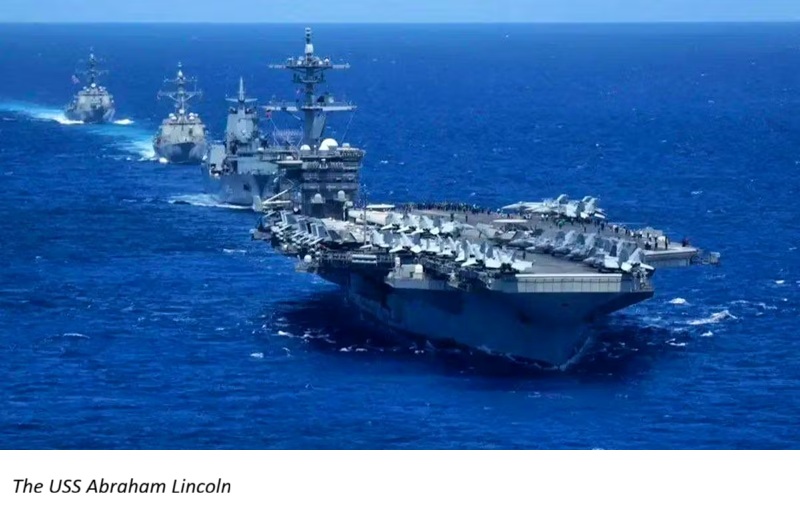
Trump says US ‘armada’ is heading towards the Gulf, raising fears of a military escalation in the region.
Aljazeera, By Yashraj Sharma, 25 Jan 2026
A United States aircraft carrier strike group is heading towards the Gulf as tensions build with Iran.
The US military last staged a major build-up in the Middle East in June – days before striking three Iranian nuclear sites during Israel’s 12-day war with Tehran.
This month, US President Donald Trump backed antigovernment protesters in Iran. “Help is on its way,” he told them as the government cracked down. But last week, he dialled down the military rhetoric. The protests have since been quashed.
So what are the US military assets moving to the Gulf? And is the US preparing to strike Iran again?
Why is the US moving warships?
Trump said on Thursday that a US “armada” is heading towards the Gulf region with Iran being its focus.
US officials said an aircraft carrier strike group and other assets are to arrive in the Middle East in the coming days.
“We’re watching Iran. We have a big force going towards Iran,” Trump said.
“And maybe we won’t have to use it. … We have a lot of ships going that direction. Just in case, we have a big flotilla going in that direction, and we’ll see what happens,” he added.
The aircraft carrier Abraham Lincoln changed its path from the South China Sea more than a week ago towards the Middle East. Its carrier strike group includes Arleigh Burke-class destroyers equipped with Tomahawk cruise missiles capable of striking targets deep inside Iran.
The US military vessels en route to the Middle East are also equipped with the Aegis combat system, which provides air and missile defence against ballistic and cruise missiles and other aerial threats.
When Washington hit Iran’s nuclear sites, US forces reportedly launched 30 Tomahawk missiles from submarines and carried out strikes with B-2 bombers.
When asked on Thursday if he wanted Iranian Supreme Leader Ali Khamenei to step down, Trump replied: “I don’t want to get into that, but they know what we want. There is a lot of killing.”
He also reiterated claims that his threats to use force stopped authorities in Iran from executing more than 800 people who had taken part in the protests, a claim denied by Iranian officials.
An unnamed US official told the Reuters news agency that additional air defence systems were being considered for the Middle East, which could be critical to guard against an Iranian strike on US bases in the region.
Iranian state media said the protests killed 3,117 people, including 2,427 civilians and members of the security forces.
How widespread is the US military presence in the Middle East?
The US has operated military bases in the Middle East for decades and has 40,000 to 50,000 soldiers stationed there.
According to the Council on Foreign Relations, the US operates a broad network of military sites, both permanent and temporary, at at least 19 locations in the region.
Of these, eight are permanent bases, located in Bahrain, Egypt, Iraq, Jordan, Kuwait, Qatar, Saudi Arabia and the United Arab Emirates.
The first US deployment of soldiers in the Middle East was in July 1958 when combat troops were sent to Beirut. At its height, almost 15,000 Marines and Army soldiers were in Lebanon.
The US naval movement towards Iran was ordered despite a new National Defense Strategy being released on Friday. The document is drawn up every four years by the Department of Defense, and the latest security blueprint outlines a pullback of US forces in other parts of the world to prioritise security in the Western Hemisphere.
How has Iran responded?
Ali Abdollahi Aliabadi, who heads coordination between Iran’s army and its Islamic Revolutionary Guard Corps, warned on Thursday that any military strike on Iran would turn all US bases in the region into “legitimate targets”.
General Mohammad Pakpour, the commander of the Revolutionary Guard, said two days later that Iran is “more ready than ever, finger on the trigger”.
He warned Washington and Israel “to avoid any miscalculation”……………………………………………………………………………………………. https://www.aljazeera.com/news/2026/1/25/us-military-moves-navy-air-force-assets-to-the-middle-east-what-to-know
The Global Billionaire Steal: Wealth, Authoritarianism and Media

26 January 2026 Dr Binoy Kampmark AIM Extra , https://theaimn.net/the-global-billionaire-steal-wealth-authoritarianism-and-media/
It’s official. This tormented, heated, traumatised planet is now home to over 3,000 billionaires. (That number was reached last year.) In October 2025, Elon Musk became the first man to have wealth exceeding half a trillion dollars. These developments could still take alongside the fact that one in four people across the globe face hunger.
Oxfam’s Resisting the Rule of the Rich has, as its subtitle, “defending freedom against billionaire power.” It’s an important link, as money, rather than knowledge, tends to be the indicator of raw power. In her foreword to the report, the Secretary General of Amnesty International, Agnès Callamard, links the stirrings of authoritarianism with the pains of inequality. They were neither “separate problems” nor “distinct dilemmas.” They were “entwined, as governments across the world side with the powerful, not the people, and choose repression, not redistribution.” Reading such words commands an echo from US Supreme Court Justice Louis Brandeis, who observed in 1941 that, “We can have a democratic society or we can have the concentration of great wealth in the hands of a few. We cannot have both.” (The Oxfam authors also cite the same quote, though not its questionable provenance.)
The charity accepts that the rich influencing and moulding politics is hardly new. That scale of influence, however, has burgeoned. What took place in the US last year, with the victory of a billionaire president, supported and sponsored by billionaires, running a cabinet with billionaires, made this “viscerally clear: in country after country, the super-rich have not only accumulated more wealth than could ever be spent, but have also used this wealth to secure the political power to shape the rules that define our economies and govern our nations.”
Considering data from 136 countries, the authors confirm the thesis that the unequal distribution of economic resources correlates with unequal political power. “This leads to policy outcomes that reflect the preferences of upper-income groups more than those in lower-income groups.” Those in the highest income bracket have, by means of this fact, secured influence in purchasing political representatives, seeking to legitimise elite power, and secure direct access to institutions.
News coverage and commentary have also been infiltrated by the billionaire class, with over half of the stable of global media companies owned by it. Of the 10 top social media companies, nine are in the hands of six billionaires. A chilling nexus with artificial intelligence has also developed, with its inexorable shaping of the information environment, given that 8 of the top 10 AI companies are steered by billionaires. These are individuals who are not only affecting the nature of wealth distribution but the nature of how knowledge and understanding is sought.
The authors do not throw their hands up in despair at these dire developments. They suggest measures of amelioration. One idea, and unlikely to take off, is the proposal of “limitarianism” advocated by philosopher Ingrid Robeyns. Just as societies define a poverty line, they should just as well define an “Extreme Wealth Line”. (Robeyns puts this limit at US$10 million, an amount bound to make the tech tyrants goggle.)
More feasible is the construction of a “strong firewall between wealth and politics.” Governments can tax the wealthiest – a thorny point given the threatening influence they exert both within and outside representative chambers. Lobbying and the revolving door phenomenon between public and private interest should be regulated. Modest measures include transparent budgetary processes, reforming regulations, establishing mandatory public lobby registries and enforcing rules on conflicts of interest.
Addressing the hoary old chestnut of concentrated media ownership is another suggestion, be it through rules limiting individuals and corporations to secure a lion’s share of the market, encouraging alternative public and independent media outlets, compelling media companies to be transparent about how they use algorithms and rein in the distribution of harmful content. “Oversight and enforcement should be led by a state-funded, governmental body independent of billionaire influence.” The authors fail to appreciate that such supposedly independent bodies can come with their own problems, becoming censors in chief and paternalistic killjoys, a point aptly illustrated by the Australian eSafety Commissioner’s guerilla campaign against the Internet.
The very nature of political campaigning is also targeted by the charity’s recommendations. Political financing by the wealthy should be subject to accountability and transparency guidelines. Those running for office would have to make commitments to reduce their reliance on private donations, have such donations capped, with political parties having to abide by transparency rules regarding funding and electoral campaign financing.
While all these measures point to the drafters, regulators and lawmakers, Oxfam insists on “political power of the many” as a noble, necessary agenda, with governments needing to “guarantee an enabling civic space, in line with international legal frameworks, standards and guidance.” This would involve promoting freedom of expression, lawful assembly and association and enforcing such standards “through regular reporting and scrutiny by both state and non-state actors.”
The Oxfam report will be dismissed by the aspirational and the moneyed as the rantings of the envious and the airings of the lazy. The obscenely wealthy often assume that a mixture of hard work, prudence and basic genetics will get you the loot. In the end, it remains loot, protected by the systems that encourage it, and officials who remain complicit in weakening any mechanism that seeks redistribution and levelling.
U.S. Department of Energy signs additional OTAs to accelerate nuclear reactor pilot projects

Energies Media, by Warren, January 24, 2026
The U.S. is aiming to lead the surge in new nuclear energy developments across the international market
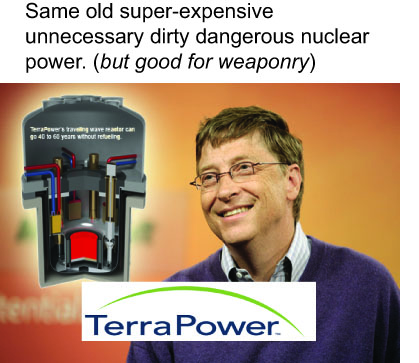
Since taking office for his second term, Donald Trump has shaken the U.S. energy market to its core. Trump signed several executive orders aimed at increasing the oil and gas production in the U.S., and has actively been approving the nuclear buildout as part of the government’s efforts to increase nuclear energy output in the United States.
The U.S. DOE has now finalized two new Other Transaction Agreements with Terrestrial Energy and Oklo. The new OTAs form part of the U.S. Reactor Pilot Program, which has outlined a target of fast-tracking the deployment of the reactors by July 4 of this year.
The context behind the new nuclear development in the U.S.
In August of 2025, the U.S. DOE formally selected ten companies as part of the Reactor Pilot Program, a new path for nuclear energy developers to leverage the accelerated DOE approval instead of the standard Nuclear Regulatory Commission licensing process. Initially, the U.S. was targeting to get up to three reactors online within a year, but that target was amended by Energy Secretary Chris Wright at the 2025 ANS Winter Conference & Expo.
Other notable selections by the Department as part of the Reactor Pilot Program include:
- Aalo Atomics
- Deep Fission
- Last Energy
- Natura Resources
- Standard Nuclear
Oklo and Terrestrial Energy will boost the U.S. nuclear energy output capacity
Oklo is as unique as it gets within the framework of the Reactor Pilot Program, as it has three distinct nuclear energy projects in the United States, namely the Aurora Powerhouse development, the Pluto reactor, and a third reactor being developed by the company’s subsidiary, Atomic Alchemy…….
Terrestrial Energy, on the other hand, follows a more conventional OTA process. The company’s Project Tetra has been slowly developing over the past few months and has now been added to the Reactor Pilot Program by the U.S. authority………………………. https://energiesmedia.com/us-department-of-energy-signs-additional-otas/
Over 2 Million Ukrainians Are Dodging The Draft
Andrew Korybko, Jan 23, 2026
The 2.2 million men that are currently on the run amounts to 6.8% of the Ukrainian population and is slightly larger than the percentage of Asians in the US.
New Ukrainian Defense Minister Mikhail Fedorov shockingly revealed that 200,000 men have already deserted thus far and ten times more (2 million) are actively dodging the draft, which are probably an underestimate but are in any case still very large numbers. To put that into context, Ukraine claimed in early 2025 to have had a population of 32 million, likely an overestimate, so the 2.2 million men who either deserted or dodged the draft amounts to at least 6.8% of the population currently on the run.
Rada Deputy Dmitry Razumkov claimed during a parliamentary session last month that his country had already lost half a million troops by then with an equal number wounded, possibly also an underestimate, while Ukraine is thought to currently field around 900,000 active troops. All of this data enables observers to better understand the significance of these “voluntary losses” since it should be clear by now that 2.2 million more troops would have certainly made a major difference for Ukraine.
That’s not to imply that it would have been able to reverse the military-strategic dynamics of the conflict that have trended in Russia’s favor since the epic failure of Ukraine’s NATO-backed counteroffensive in summer 2023, but perhaps it might have been able to decelerate the pace of its losses afterwards. Ukraine could have thus also been in a comparatively better diplomatic position too going into Trump 2.0 a year ago and that might have in turn predisposed him to a relatively harder line towards Russia as well.
For that reason, while the scale of its desertions and draft-dodging can’t credibly be described as a game-changer, it can still be considered a significant variable that adversely affected Ukraine’s fortunes. By contrast, this was never a relevant factor for Russia, which hasn’t conscripted anyone unlike Ukraine. On that topic, it’s worthwhile reminding readers about Ukraine’s forcible conscription policy that’s been made infamous by viral videos showing officials snatching young and old men alike off the streets.
This footage and stories that draft-eligible males (25-60 years of age) heard through the grapevine are partly why 2 million of them decided to go on the run and dodge the draft. They’ve also seen drone footage of the conflict zone and are therefore well aware of how likely it is that they’ll be killed shortly after being deployed to the front. These men might sincerely consider themselves to be Ukrainian patriots in their hearts, however they conceptualize it, but they’re not willing to die for nothing.
This segues into the plummeting popularity of the conflict among the populace and increasing support for a quick end thereto per recent Gallup polling. Trump just blamed Zelensky for stalling peace talks, which is in direct opposition to the will of the same people in whose name he still acts despite the expire of his term in May 2024. Other than his authoritarian tendencies, corruption is likely responsible for his obstinance since he’s thought to be profiting from the conflict and might thus fear charges once it ends.
Whenever he’s asked about the conflict, Trump usually says that he wants to end it as soon as possible in order to stop the killing, which it’s now known has spooked at least 2.2 million Ukrainian men into either deserting or dodging the draft. The 6.8% of the population that’s currently on the run is slightly larger than the Asian population in the US (6.7%) per the last census. The sooner that the conflict ends, the sooner that they can re-enter the economy and help rebuild their country, unless they flee abroad first.
Tribunal says Swahili ban at nuclear firm was discrimination
An employment tribunal has ordered the taxpayer owned company tasked with
safely decommissioning the UK’s first-generation nuclear power sites pay
more than £10,800 in compensation to a worker who was banned from speaking
Swahili. The Glasgow tribunal found that Nuclear Restoration Services
Limited (NRS) discriminated against Mr K Ruiza after his line manager
instructed him to only speak English while on site. The judge said the
order left him humiliated, distressed and fearful he would lose his job.
The tribunal ruled the company must pay £9,000 for injury to feelings,
plus £1,875.94 in interest, bringing the total award to £10,875.94.
Herald 26th Jan 2026, https://www.heraldscotland.com/news/25794684.tribunal-says-swahili-ban-nuclear-firm-discrimination/
Another miserable year for nuclear power as renewables surge.

All renewables (including hydro) accounted for 47.7 percent while nuclear (which fell by nearly two percent last year) now accounts for less than half that amount (23.4 percent)
Jim Green, Jan 27, 2026, https://reneweconomy.com.au/another-miserable-year-for-nuclear-power-as-renewables-surge/
The latest World Nuclear Industry Status Report has crunched the numbers to show that 2025 was another underwhelming year for nuclear power.
Here are the key 2025 global figures:
- * power reactor startups (grid connections): 4 reactors, 4.4 gigawatts (GW) capacity
- * permanent shutdowns: 7 reactors, 2.8 GW
- * net growth of nuclear capacity: 1.6 GW
- * power reactor construction starts: 11 reactors, 12.0 GW
The four reactor startups were in China (2), Russia and India. That is the lower number of startups since 2017.
The seven permanent reactor shutdowns were in Belgium (3), Russia (3) and Taiwan.
The net decline of three operating reactors makes 2025 the worst year on that criterion since 2012, when many reactors were permanently closed due to the Fukushima disaster in March 2011.
The 11 construction starts in 2025 — the highest number since 2010 — were in China (9), South Korea and Russia.
As of 1 January 2026, according to the World Nuclear status report – WNISR-2026:
- * 404 nuclear power reactors were operating in the world — five less than a year earlier and 34 less than the historic peak of 438 in 2002.
- * Nuclear accounted for 9.0 percent of global electricity generation, barely half its historic peak of 17.5 percent in 1996.
- * 31 countries were operating nuclear power plants worldwide, one fewer than a year earlier as Taiwan closed its last reactor in May 2025.
Taiwan is the fifth country to abandon its nuclear power program following Italy (1990), Kazakhstan (1999), Lithuania (2009) and Germany (2023).
Overall, the 25-year pattern of global stagnation continues, with no end in sight. Installed nuclear capacity of 4.4 GW in 2025 was 180 times lower than the estimated 793 gigawatts of solar and wind capacity (up from 717 GW in 2024).
In China, new nuclear capacity in 2025 amounted to 2.5 GW whereas solar capacity installed in the first 11 months of 2025 amounted to an estimated 275 GW. The nuclear share of electricity generation in China has fallen for four years in a row after peaking at 5.0 percent in 2021.
That’s despite China’s status as the only significant growth market in the world, with a net growth of around 50 reactors over the past 20 years and a net decline of around 50 reactors in the rest of the world.
Conspicuously absent from the lists of reactor startups and construction starts are any small modular reactors or any ‘Generation IV’ reactors such as fast neutron reactors, fusion reactors, molten salt reactors, etc.
Dramatic drop in number of countries building reactors
The number of countries building power reactors has fallen off a cliff. WNISR-2026 notes:
“The number of building countries declined by almost one third, from 16 to 11, in just two years, with several countries having completed their last construction project (France, United Arab Emirates, United States), or suspended if not terminated construction (Argentina, Brazil, Japan), while only one country was added to the list (Pakistan).
“Only eight of the 31 countries currently operating commercial nuclear plants are building new ones, while three are newcomer countries (Bangladesh, Egypt, Türkiye) in the course of building their first reactors, all implemented by the Russian nuclear industry.”
The number of countries operating power reactors reached 32 in the mid-1990s. Since then it has fallen to 31.
Globally, the number of power reactors under construction increased by seven in 2025 — entirely due to China. China has 36 reactors under construction, more than half of the global total of 66.
Not a single power reactor is under construction across the 35 countries of the American continent.
Only one reactor is under construction in the European Union (in Slovakia). Solar and wind (30 percent combined) overtook fossil fuels (29 percent) for EU electricity generation last year.
All renewables (including hydro) accounted for 47.7 percent while nuclear (which fell by nearly two percent last year) now accounts for less than half that amount (23.4 percent).
Over the six-years from 2020-26, Chinese and Russian companies have been the only builders worldwide responsible for reactor construction starts, with the exception of one project in South Korea. Only Russia, China and France are building reactors abroad.
The ‘peaceful atom’
WNISR-2026 notes that of the total of 66 reactors under construction in 11 countries, 63 (95 percent) are either in nuclear-weapon states (50) or are implemented by companies controlled by nuclear-weapon states in other countries (13). Only the three construction projects in South Korea fall outside this category.
Iran’s uranium enrichment program drew attention to the potential to weaponise the ‘peaceful atom’ and the military attacks on Iran’s nuclear facilities last year by Israel and the US added to the long history of nation-states attacking nuclear plants to prevent weapons proliferation (or for that reason among others).
Other examples of conventional military attacks on nuclear plants to prevent weapons proliferation include Israel’s destruction of reactor components awaiting shipment to Iraq, in France in 1979; Israel’s destruction of a research reactor in Iraq in 1981; military strikes by Iraq and Iran on each other’s nuclear facilities during the 1980-88 war; the United States’ destruction of a research reactor in Iraq in 1991; Iraq’s attempted missile strikes on Israel’s nuclear facilities in 1991; and Israel’s bombing of a suspected nuclear reactor site in Syria in 2007.
Russia’s attacks on nuclear plants in Ukraine probably aren’t motivated by weapons proliferation concerns. Nonetheless, the risk of a nuclear catastrophe on top of the ongoing mass murder of conventional warfare highlights the role of nuclear plants as stationary terrorist targets or weapons of mass destruction.
International Atomic Energy Agency chief Rafael Grossi recently said that fighting around the Zaporizhzhia nuclear power plant has left Europe’s largest nuclear plant in an “extremely fragile, volatile condition”.
Apart from the fragile, volatile situation at Zaporizhzhia, low-lights in 2025 included a drone attack which seriously damaged the protective dome over the stricken Chernobyl #4 reactor and, more importantly, more than 10 attacks on nuclear power plant substations in Ukraine which are, according to the IAEA, “essential for nuclear safety and security” and “absolutely indispensable for providing the electricity all nuclear power plants need for reactor cooling and other safety systems.”
Industry hype
Despite the 25-year pattern of stagnation, the World Nuclear Association claims that global nuclear power capacity could more than triple to reach 1,446 GW by 2050. But there’s plenty of fine-print undermining this absurd projection:
* A big chunk of the projected growth (542 GW) “is not yet supported by identified projects”.- * Another big chunk (425 GW) comprises reactors that are planned, proposed or potential … all essentially meaningless categories.
- * A “substantial” share of the required capacity growth depends “on large-scale programmes for proposed, potential, and government-targeted capacity that are not yet supported by firm investment decisions”.
- * The required 65 GW per year from 2046-2050 is “roughly double the historic peak build rate seen in the 1980s”.
- * Achieving the projection will require “unprecedented construction rates, strategic lifetime extension of existing reactors, and significant policy and market reforms”.
- * Several national targets (such as the 293 GW of new capacity required to meet the United States’ 400 GW target) “rely heavily on an expansion of nuclear capacity where there is currently little or no ongoing construction, or identified reactors planned or proposed for deployment”.
Here’s the World Nuclear Association’s decidedly ‘iffy’ conclusion:
“If governments uphold their stated ambitions, if regulatory and market frameworks are adapted to support both existing and new reactors, and if the nuclear industry expands its capacity to deliver at scale, the world’s nuclear fleet can more than triple by 2050.”
It’s all comical nonsense. But put yourself in the position of a spin-doctor employed by the World Nuclear Association … could you do any better than to play make-believe?
A much more likely scenario is that the past 25 years of nuclear stagnation will be followed by another 25 years of stagnation. If there is any growth — and there may not be due to the ageing of the global reactor fleet and the industry’s other challenges — it will be marginal growth.
Nuclear power is staggeringly, stunningly and possibly irretrievably uneconomic
At the top of the list of the industry’s challenges is that it is staggeringly, stunningly and possibly irretrievably uneconomic. Here are the costs of some recent and proposed projects:
| USA — Vogtle (Georgia) US$34 billion / 2.4 GW | A$23.5 billion / GW (completed) |
| UK — Hinkley Point£46 billion / 3.2 GW | $A29.4 billion / GW (under construction) |
| UK — Sizewell C£47.7 billion / 3.2 GW | A$30.6 billion / GW (construction yet to begin) |
| France — Flamanville€19.1 billion / 1.6 GW | A$21.3 billion / GW (completed) |
| SMR — NuScale (USA)US$9.3 billion / 462 MW | A$30.1 billion / GW (cancelled before construction began) |
| SMR — Darlington (Canada)C$20.9 billion / 1.2 GW | A$19.1 billion / GW (construction yet to begin) |
| SMR — CAREM (Argentina)US$750 million / 32 MW | A$34.0 billion / GW (construction began in 2014, abandoned 2025) |
Nuclear stagnation vs. renewables growth
As noted above, installed nuclear capacity of 4.4 GW in 2025 was 180 times lower than new solar and wind capacity.
The International Energy Agency (IEA) predicts the installation of 4,600 GW of new renewable capacity in the five years from 2025-2030, twice as much as in the previous five years. (Current global nuclear capacity is 369 GW.)
The IEA stated in October 2025 that:
- * Renewables will surpass coal at the end of 2025 (or by mid-2026 at the latest) to become the largest source of electricity generation globally. (The World Economic Forum states that renewables overtook coal in the first half of 2025.)
- * The share of renewables in global electricity generation is projected to rise from 32 percent in 2024 to 43 percent by 2030.
- * From 2025-2030, renewables are expected to meet over 90 percent of global electricity demand growth.
Over the past decade we’ve seen renewable electricity generation double then triple nuclear power generation. By the end of this decade renewables will out-generate nuclear by a factor of 5-7.
Dr. Jim Green is the national nuclear campaigner with Friends of the Earth Australia and a member of the Nuclear Consulting Group.
Artificial intelligence will not revive the nuclear industry
by beyondnuclearinternational, https://beyondnuclearinternational.org/2026/01/25/artificial-intelligence-will-not-revive-the-nuclear-industry/
On the contrary, we need renewable energy and natural intelligence, writes Stéphane Lhomme
The current boom in artificial intelligence is accompanied by a massive increase in energy and water consumption, and, according to what we are told, this phenomenon is only just beginning and will grow exponentially.
However, far from taking measures to stop or at least slow down this phenomenon, industrial and political leaders are instead competing with announcements and decisions to support it. As a result, various countries, including France, are trying to attract data centers by promising their owners, mainly the famous GAFAM (Google, Amazon, Facebook, Apple, Microsoft), to provide them with cheap and, above all, “green” electricity.
France is offering its nuclear power because, as everyone knows, nuclear power is “clean”… if we are willing to forget the devastation caused by uranium mines, the massive radioactive, chemical, and thermal discharges from power plants into rivers and oceans, radioactive waste, and the occasional contamination of an entire country or continent (during disasters such as Fukushima and Chernobyl).

During the World Nuclear Energy Exhibition (WNE) held in Paris from November 4 to 6, 2025, the vast majority of the media reported the countless announcements about a supposed “return to favor of nuclear power,” which, however, is just as illusory as the “great return of nuclear power” announced in the early 2000s – already accompanied by much fanfare at the time – by the same media outlets and sometimes the same journalists, who are taking advantage of the general amnesia of our “information” societies.
Despite the efforts of the high priestess of nuclear power at the time, Ms. Lauvergeon, revered by most of the media (always the same ones!) before leading her company Areva into bankruptcy (we are still waiting for the investigations that have been ongoing for 15 years to result in a trial), there was no “great comeback.”
Producing 17.1% of the world’s electricity in 2001, nuclear power has since seen its share steadily decline to below 10% in 2020 and below 9% in 2024 (8.97% to be exact). A veritable collapse as a “return to favor.” But we would have to believe that this time, buoyed by GAFAM and their unlimited checkbooks, the nuclear industry will truly experience a golden age (or rather a plutonium age). Let’s take a look at some of the thunderous announcements made in recent months.
Last June, Google announced that it would be relying on nuclear fusion to power its data centers! Let’s just remember that for 70 years, the major nuclear powers have failed completely in this endeavor, even when they joined forces in the Iter project in Cadarache (Bouches-du-Rhône). If nuclear fusion really is what powers Google, then this search engine is bound to shut down quickly!

In fact, last October, Google fell back on a plan B: restarting the Duane Arnold nuclear power plant in Iowa, which had been shut down since 2020. Never one to be late in relaying the nuclear industry’s announcements, AFP produced a dispatch reminding readers that this was the third project of its kind.
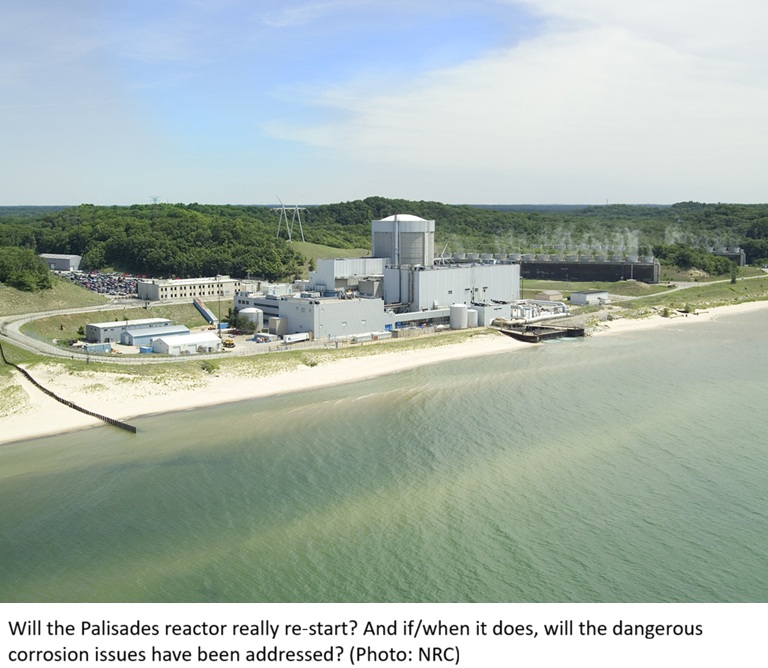
Indeed, the restart of the Palisades nuclear power plant in Michigan has been announced for 2023. But almost no one mentioned the official report of October 2024 revealing that the reactor, which had been shut down for several years, was severely affected by corrosion.
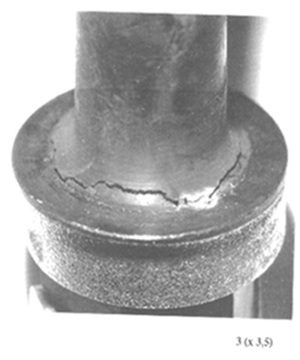
In reality, it is highly likely that this plant will never restart, nor will the Duane Arnold or Three Mile Island plants: in the latter case, the plan is to restart reactor 1, which was shut down in 2019, and not reactor 2 (whose core melted during a serious accident in 1979), as reported by the media, which we will charitably describe as inattentive.
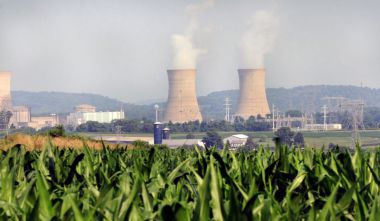
Another avenue for the supposed “return to favor of nuclear power” and its ability to fuel the insane consumption of AI is that of the famous SMRs, small modular reactors, which are of course touted as being “safe, easy to build, and inexpensive.” So all we had to do was think of it.

However, the 127 SMR projects identified worldwide by the OECD’s Nuclear Energy Agency, far from making this idea a reality, show instead a total lack of focus: many start-ups are chasing subsidies generously granted by politicians who are ignorant and, above all, terrified of being seen as dinosaurs who have missed the boat on renewal.
The SMR bubble is about to burst. In France, the main start-ups (Naarea, Newcléo, Jimmy, etc.) are in serious difficulty or have already suspended payments, and EDF’s Nuward project has been postponed indefinitely. In the US, the only project that had made any progress, NuScale, has already closed down.

After initially announcing the construction of new nuclear reactors (large or SMRs), then falling back on restarting shut-down reactors, GAFAM companies are now cautiously turning to existing facilities. In the US, for example, gas-fired power plants are being called upon. In addition, Meta (Facebook) has signed an agreement to purchase the output of the Clinton nuclear power plant (Illinois), a plant that is currently in operation: this is safer than relying on virtual or shut-down plants!
It is already clear that, wherever data centers are built, GAFAM will monopolize electricity production to the detriment of the population. This situation, which one might have thought was the stuff of science fiction, is already a reality in the US, for example in Virginia, Georgia, and Arizona, where the population is deprived of water, which is monopolized for cooling the numerous data centers built in these states, which attracted them by exempting them from taxes (again to the detriment of the population).
The same is true, for example, in Chile and already, or soon, in all countries that have had the bad idea of welcoming these famous data centers. Selfishly, we can only hope that, despite the grandstanding of the showman Macron, France will fail to attract data centers. It will then be the “winners” of this absurd race who will fall victim to GAFAM, and thus there will be electricity and water left for the needs of the French population. It should also be noted that various countries are beginning to take measures to slow down or suspend the installation of data centers.
Unfortunately, it is to be feared that nothing and no one will put a stop to the madness of AI and its senseless consumption of electricity (not to mention the “mining” of bitcoins and other cryptocurrencies, an activity that also consumes a tremendous amount of energy and water).
However, contrary to what is claimed in the numerous articles mentioned above, nuclear power will not be able to meet this demand: as demonstrated by the failures of large reactors—EPR (France) and AP1000 (USA)—as well as SMRs, the construction of nuclear power plants is far too uncertain, slow, and costly.
Moreover, according to the International Energy Agency, since 2020, 90% of new electricity generation capacity worldwide has been renewable, which is much cheaper than nuclear power and, above all, can be brought online very quickly. AI will therefore not save nuclear power; quite the contrary: once they have finished with their absurd announcements, even the GAFAM companies will turn away from it and choose realistic options. That said, while it is of course much better for electricity to be renewable rather than nuclear, one wonders where the progress will be if it is monopolized to power AI rather than meet the needs of the population.
On this subject, there is still time to cancel the senseless EPR reactor projects (even renamed EPR2 to make them seem like an improvement), which EDF is proving incapable of building and operating, and to devote the available money to realistic, decentralized energy efficiency and renewable energy projects that are supported by and for the population: Natural intelligence and renewables rather than artificial “intelligence” and nuclear power.
Stéphane Lhomme is the founder and director of Observatoire du nucléaire. This article was originally published by Observatoire du nucléaire.
No Healthy Person Wants To Rule The World Or Become A Billionaire
Caitlin Johnstone, Jan 26, 2026, https://www.caitlinjohnst.one/p/no-healthy-person-wants-to-rule-the?utm_source=post-email-title&publication_id=82124&post_id=185791943&utm_campaign=email-post-title&isFreemail=true&r=1ise1&triedRedirect=true&utm_medium=email
No mentally healthy person wants to rule the world.
Nobody with a functioning conscience and a working empathy center in their brain is interested in becoming a billionaire.
We are ruled by the most dysfunctional members of our species. The most wounded, neurotic and sociopathic among us. The least wise, caring and insightful.
What drives a person to claw their way to the top of a wildly sick society and become a lord of the dystopia?
What compels someone to amass obscene amounts of wealth in a world where so many have far too little?
What causes someone to ascend to political leadership of a power structure that’s built for the purpose of robbing and oppressing the most underprivileged populations on earth?
Nothing wholesome, to be sure. That impulse is never coming from anywhere good.
The worst among us are striving to prevail in this dystopia by riding the tides of its ugliest inclinations, while the best among us are striving to dismantle the dystopia and replace it with something kind and equitable. This causes the worst of us to be elevated to the top and the best of us to be smacked down to the bottom.
Under our current system the easiest way to set yourself on a trajectory from millionaire to billionaire to trillionaire is to exploit workers, crush your competition, plunder the available resources of the global south, externalize the costs of industry onto society and the ecosystem, bribe the government to advance your corporate interests via lobbying and campaign donations, contract with the most murderous military and intelligence agencies in the world, and psychologically manipulate the public into consuming products and services they don’t need.
Who is going to be most successful in this endeavor? The very worst people alive. People whose hearts and minds are so stunted and dysfunctional that they see other human beings as tools for their own personal enrichment, to be used up and discarded like juice boxes or condoms.
These are the people who are touching the most lives on this planet. These are the people whose decisions affect the most of us.
Michael Parenti has passed away after a luminous life advancing powerful ideas and insights about the abusive dynamics of human civilization and how best to address them. He did not die a wealthy man. The mainstream papers did not report on his departure from our world. Only a relatively small percentage of the population is aware he ever lived.
But everyone knows who Elon Musk is. Everyone knows who Jeff Bezos is. Who Bill Gates is.
The best of us live and die in relative obscurity, generally being subjected to scorn and derision from the ruling establishment the entire time. The worst of us become plutocratic demigods.
It’s an uphill battle. You spend your life swimming against the current of dystopia, and you are not handsomely rewarded for your efforts. You’ll get deplatformed, censored and smeared. You might even get shot by government agents for standing up for the disempowered. And you’ll definitely never be a billionaire.
But it’s absolutely worth it, and you should do it. Fighting for truth and justice in a civilization made of injustice and deceit is the only way to live. It’s the only way to feel satisfied with your efforts during this life. The only way to be sure that when you are on your deathbed you can look back and know you spent your time here in a right and admirable way.
It costs a lot to fight for a healthy world. But it costs a lot more not to.
War is Silicon Valley’s new business

Today in the US, Trumpism favours war.com, fuelling and justifying risky investments ==> investments take the State hostage ==> the State secures many contracts and in turn the contracts produce infrastructure ==> infrastructure such as megaservers, clouds, low-altitude satellites, cable networks, etc., become indispensable to the population and generate large profits ==> profits finance more risky investments…and so on, to the detriment of State Sovereignty and in favour of the Digital Oligarchy.
Ismaele, Jan 26, 2026
Today I am providing my English translation of an article by Glauco Benigni, originally in Italian and published first on ItaliaNelFuturo.com on Wednesday 3rd December 2025 and then on ComeDonChisciotte.org on Sunday 7th December 2025
Over the last 30 years, a fifth Caste has been added to the four dominant Castes that have been handed down through history, namely Brahmins, Merchants, Warriors and Scribes: the Caste of Digital Tycoons. Many of them are former executives involved in the various processes that took place at the end of the 1990s in the “forge” of PayPal. They are “affectionately” known as the PayPal Mafia. Now fifty-year-old billionaires, these former Silicon Valley youngsters grew up in the cyber world, combining the skills of the previous castes and conquering important parts of Nasdaq, every social network, artificial intelligence and e-commerce. What’s more, they have a monopoly in the West on the collection and processing of big data.
Today, each of them is a mix of Brahmin, Merchant and Scribe. For some time now, they have also been revealing themselves as Warriors, both because they build and manage the weapons of Cognitive Warfare and because they have put their knowledge and best practices at the service of the Armed Men (Pentagon, Intelligence, Private Security), in many cases eliminating the distance between the client (the Warrior State) and the contract manager and, as we shall see, officially taking on prestigious positions in the institutions to which they provided services and consultancy.
The leading representatives of this new Caste are: Peter Thiel and Alex Karp, founders in 2003 of Palantir (a technology company specialising in big data analysis and artificial intelligence). The two are known as “the architects” of the new system; Elon Musk, now known as “the voice of the techno-populist right”; Davide Sacchi, known as “the techno-currency czar”, and Marc Andreessen, the ideologue of acceleration. To these must be added J.D. Vance, US Vice-President (according to gossip columns: Peter Thiel’s boyfriend) and Donald Trump Jr., son of the current occupant of the White House. Of course, Bill Gates, Jeff Bezos and Mark Zuckerberg are also closely linked to the Circus of Wonders we have described. This is undoubtedly a “fine little team”, whose financial strength (turnover and stock market capitalisation) amounts to several trillion US dollars. In other words, more than the 2024 national GDPs of countries such as the UK, Germany or France.
Trump has surrounded himself with them in the hope – not even a secret one – that they can anaesthetise many of the fractures and pains still caused by the Deep State. How? Mainly by exercising remote control over antagonists and cognitive warfare: sophisticated activities that you can engage in if you have computing power and networks, megaservers, microchip production and the cloud at your disposal. In essence, Trump’s choices are consolidating the new powers of the third millennium, namely the Webcracy that I describe at length in my book of the same name.
The new Caste has made its way into the White House, NASA, the Pentagon and the intelligence agencies, and is taking the helm of change in the US, first thanks to the cuts made by Elon Musk’s DOGE programme and now thanks to funding diverted to the digital bosses and taken away from the old Fordist world figures who have ended up in the shadows.
At the end of July 2025, in the labyrinthine corridors of the Pentagon, the US Army calmly signed away a piece of its sovereignty. A ten-billion-dollar contract with Palantir Technologies – one of the largest contracts in the history of the Department of Defence – was presented to the public and promoted in the business world as a step towards “efficiency”. The contract consolidated seventy-five previous procurement agreements into a single mutual commitment. This new relationship is considered a fundamental strategic step, thanks to which military functions are conferred on a private company. So far, there would be little to be surprised about if its founder, Peter Thiel, did not go on television to declare the Truth as seen from his privileged observatory: “freedom and democracy are no longer compatible”.
Translated: “You are all being monitored 24/7 without your knowledge, and we use your Big Data to guide your choices and make you like robots”. Honestly, Westerners living in NATO territories should not sleep peacefully after hearing these words: in addition to the spectre of war looming over us, we are now being told to forget the dream of freedom and to go along with the new aggressive and belligerent technological tyranny.
A nice little s****y programme, which goes hand in hand with the implied statement to the peoples already involved in the delirium of conflict: “Stop shooting each other or we won’t sell you any more weapons”.
We are therefore witnessing an increasingly authoritarian technology that tends towards dictatorship. In this scenario, US Vice President J.D. Vance, supported in his election campaign with $15 million from Peter Thiel, has become the face of techno-right governance. Behind him, his financier and boyfriend has firmly established himself in the techno-military heart of the state.
Waving the flag of “patriotic technology”, this new bloc is building the infrastructure of control: clouds, artificial intelligence, financial positioning, drones, satellites, an integrated system that Americans call the authoritarian Stack1. A faster, more ideological and almost completely privatised form of governance: a regime in which the boards of digital corporations, rather than public law, set the rules.
Some US media outlets describe Webcracy as a large lobby that operates with powers similar to those of the state: it writes or omits rules as its interests change, wins contracts and exports its model to Europe, where it poses a direct challenge to what remains of the Old Continent’s democratic governance. A governance so fragile and sick that it is unable to react. So let’s clarify one thing: Silicon Valley is no longer building search engines, social networks and apps, it is building a new empire. Or at least it is trying with all its might. Which is no small thing…………………………………………………………………………………
Guys… the die is cast! War tout court, war.com, has become the engine of development for NATO countries and is leading us towards privatised military sovereignty. Unlike the old authoritarianism built on fear and force, this new system governs through algorithms, the anarchic proliferation of financial capital and the ownership of networks that carry digital signals (web, telephones, TV, etc.).
Today in the US, Trumpism favours war.com, fuelling and justifying risky investments ==> investments take the State hostage ==> the State secures many contracts and in turn the contracts produce infrastructure ==> infrastructure such as megaservers, clouds, low-altitude satellites, cable networks, etc., become indispensable to the population and generate large profits ==> profits finance more risky investments…and so on, to the detriment of State Sovereignty and in favour of the Digital Oligarchy.
Let’s see which venture capital firms are currently active in the scenario described above:
Founders Fund, Thiel’s $17 billion flagship company, took Anduril from a valuation of $1 billion to $30.5 billion. It was the first institutional investor in Palantir and SpaceX, which are Thiel and Musk’s respective “crown jewels”. Palantir’s quarterly revenue now exceeds $1 billion, up 53% thanks to government contracts.
1789 Capital was founded by Thiel’s confidants and recently acquired by Donald Trump Jr. ……………………………………
The five domains of privatised sovereignty
Critical State infrastructure is being privatised in five sectors – data, defence, space, energy and money – the foundations of contemporary power. These domains constitute the architecture of privatised sovereignty: a technological regime in which power manifests itself through algorithms, laws, infrastructure, platforms and automated procedures…………………………………………………………………………………………………………………………………………………….
Once Palantir becomes indispensable, once Anduril drones are standard NATO weapons, once nuclear plants power the AI that manages everything else… the transformation is irreversible. Europe faces an existential choice: build true technological sovereignty now, or accept governance exercised through platforms whose architects see democracy as a slow and obsolete operating system. https://geopolitiq.substack.com/p/war-is-silicon-valleys-new-business?publication_id=2232768&post_id=182686946&isFreemail=true&r=3alev&triedRedirect=true&utm_source=substack&utm_medium=email
Australia’s Lack Of Speech Protections Means We Should Be MORE Hostile To Speech Regulation
Caitlin Johnstone, Jan 25, 2026, https://www.caitlinjohnst.one/p/australias-lack-of-speech-protections?utm_source=post-email-title&publication_id=82124&post_id=185687870&utm_campaign=email-post-title&isFreemail=true&r=1ise1&triedRedirect=true&utm_medium=email
A normal, healthy person would look at Australia’s lack of free speech protections and say “Hmm, Australian leaders should be extremely resistant to new laws and policies which restrict speech then, because it would be very easy for those restrictions to become abusive.”
Australian leaders look at our lack of free speech protections and say “See? This means we get to take away your right to protest genocide!”
Nowhere is this more clearly exemplified than the repeated statements from New South Wales premier Chris Minns saying it’s fine to silence Australians because we don’t have free speech rights.
Over and over again Minns has defended his promotion of authoritarian speech crackdowns in his state by claiming it’s okay to stomp out dissident speech of Australians because Australians don’t have the same speech protections as Americans, saying “we don’t have the same free speech rules that they have in the United States and I make no apologies for that” and similar statements in recent weeks.
To be clear, Minns is being repulsively tyrannical when he says this, but factually speaking he isn’t wrong.
As Joe Lauria wrote for Consortium News following the passage of Australia’s frightening new “hate speech” bill:
“Unlike the United States, Australia has no Bill of Rights in its Constitution protecting freedom of speech, assembly and other rights. Much as Israel would want it, a law such as this adopted in Australia would still be difficult to pass in the U.S. on paper, despite the Israel Lobby’s hold over the U.S. Congress.”
If Australians had the same speech protections that they have in the United States, we could appeal tyrannical new laws on First Amendment grounds. Because we have no such protections, it is much harder to oppose authoritarian speech restrictions once they are in place.
As I often remind readers, Australia is the only so-called democracy in the world which has no national charter or bill of rights of any kind. A tremendous amount of faith has been placed in state and federal legislators to simply do the right thing, which has proved foolish and ineffective. Professor George Williams wrote for the Melbourne University Law Review in 2006:
“Australia is now the only democratic nation in the world without a national bill of rights. Some comprehensive form of legal protection for basic rights is otherwise seen as an essential check and balance in democratic governance around the world. Indeed, I can find no example of a democratic nation that has gained a new Constitution or legal system in recent decades that has not included some form of a bill of rights, nor am I aware of any such nation that has done away with a bill of rights once it has been put in place.”
It has been clearly and conclusively established that this system does not work. State and federal governments are working frenetically to shred the right of Australians to oppose the actions of the state of Israel, with their assault on our civil rights disguised as an effort to fight “antisemitism” in our country and help Jewish Australians feel more safe. The fact that this happens to advance the information interests of the western power alliance, we are told, is purely coincidental.
The evidence is in and the case is closed. The Australian system does not work. We need a national bill of rights, and we need free speech to be enshrined in our constitution.
In the meantime, we need to be aggressively opposed to laws and policies which assault our freedom of speech. We need to be more aggressive in our opposition than Americans would be, because we have fewer safeguards against tyrannical abuses.
It’s so disgusting how these freaks are telling us right to our faces “Yeah well you guys don’t have any rights, so I’m going to silence you and oppress you and I make no apologies about that.”
That kind of arrogant, abusive authoritarianism deserves nothing but ferocious defiance.
Every Nation in the World Should Reject Trump’s Absurd and Dangerous ‘Board of Peace’

Refusal to join will be an act of national self-respect. The UN-based international order, however flawed, should be repaired through law and cooperation, not replaced by a gilded caricature.
Jeffrey D. Sachs, Sybil Fares, Jan 22, 2026, Common Dreams, https://www.commondreams.org/opinion/trump-board-of-peace
The so-called “Board of Peace” being created by President Donald Trump is profoundly degrading to the pursuit of peace and to any nation that would lend it legitimacy. This is a trojan horse to dismantle the United Nations. It should be refused outright by every nation invited to join.
In its Charter, the Board of Peace (BoP) claims to be an “international organization that seeks to promote stability, restore dependable and lawful governance, and secure enduring peace in areas affected or threatened by conflict.” If this sounds familiar, it should, because this is the mandate of the United Nations. Created in the aftermath of World War II, the UN has as its central mission the maintenance of international peace and security.
It is no secret that Trump holds open contempt for international law and the United Nations. He said so himself during his September 2025 speech at the General Assembly, and has recently withdrawn from 31 UN entities. Following a long tradition of US foreign policy, he has consistently violated international law, including the bombing of seven countries in the past year, none of which were authorized by the Security Council and none of which was undertaken in lawful self-defense under the Charter (Iran, Iraq, Nigeria, Somalia, Syria, Yemen, and Venezuela). He is now claiming Greenland, with brazen and open hostility towards the US allies in Europe.
So, what about this Board of Peace?
It is, to put it simply, a pledge of allegiance to Trump, who seeks the role of world chairman and the world’s ultimate arbiter. The BoP will have as its Executive Board none other than Trump’s political donors, family members, and courtiers. The leaders of nations that sign up will get to rub shoulders with, and take orders from, Marco Rubio, Steve Witkoff, Jared Kushner and Tony Blair. Hedge Fund owner and Republican Party mega-donor Marc Rowan also gets to play. More to the point, any decisions taken by the BoP will be subject to Trump’s approval.
If the charade of representatives isn’t enough, nations will have to pay $1 billion for a “permanent seat” on the Board. Any nation that participates should know what it is “buying.” It is certainly not buying peace or a solution for the Palestinian people (as the money supposedly goes to Gaza’s reconstruction). It is buying ostensible access to Trump for as long as it serves his interests. It is buying an illusion of momentary influence in a system where Trump’s rules are enforced by personal whim.
The proposal is absurd not least because it purports to “solve” a problem that already has an 80-year-old global solution. The United Nations exists precisely to prevent the personalization of war and peace. It was designed after the wreckage of two world wars to global base peace on collective rules and international law. The UN’s authority, rightly, derives from the UN Charter ratified by 193 member states (including the US, as ratified by the US Senate in July 1945) and grounded in international law. If the US doesn’t want to abide by the Charter, the UN General Assembly should suspend the US credentials, as it once did with Apartheid South Africa.
Trump’s “Board of Peace” is a blatant repudiation of the United Nations. Trump has made that explicit, recently declaring that the Board of Peace “might” indeed replace the United Nations. This statement alone should end the conversation for any serious national leader. Participation after such a declaration is a conscious decision to subordinate one’s country to Trump’s personalized global authority. It is to accept, in advance, that peace is no longer governed by the UN Charter, but by Trump.
Still, some nations, desperate to get on the right side of the US, may take the bait. They should remember the wise words of President John F. Kennedy in his inaugural address “ those who foolishly sought power by riding the back of the tiger ended up inside.”
The record shows that loyalty to Trump is never enough to salve his ego. Just look at the long parade of Trump’s former allies, advisers, and appointees who were humiliated, discarded, and attacked by him the moment they ceased to be useful to him.
For any nation, participation on the Board of Peace would be strategically foolish. Joining this body will create long-lasting reputational damage. Long after Trump himself is no longer President, a past association with this travesty will be a mark of poor judgment. It will remain as sad evidence that, at a critical moment, a national political system mistook a vanity project for statesmanship, squandering $1 billion of funds in the process.
Ultimately, refusal to join the “Board of Peace” will be an act of national self-respect. Peace is a global public good. The UN-based international order, however flawed, should be repaired through law and cooperation, not replaced by a gilded caricature. Any nation that values international law, and the respect for the United Nations, should decline immediately to be associated with this travesty of international law.
1 This Month





PLEASE OPPOSE HR 8255 AND S.3639 – bills would accelerate satellite deployment, with no environmental review or safeguards – https://ncstd5li.quorum.us/campaign/169331/
To see nuclear-related stories in greater depth and intensity – go to https://nuclearinformation.wordpress.com
-
Archives
- October 2026 (10)
- September 2026 (339)
- August 2026 (330)
- July 2026 (355)
- June 2026 (287)
- May 2026 (306)
- April 2026 (356)
- March 2026 (251)
- February 2026 (267)
- January 2026 (308)
- December 2025 (358)
- November 2025 (359)
-
Categories
- 1
- 1 NUCLEAR ISSUES
- business and costs
- climate change
- culture and arts
- ENERGY
- environment
- health
- history
- indigenous issues
- Legal
- marketing of nuclear
- media
- opposition to nuclear
- PERSONAL STORIES
- politics
- politics international
- Religion and ethics
- safety
- secrets,lies and civil liberties
- spinbuster
- technology
- Uranium
- wastes
- weapons and war
- Women
- 2 WORLD
- ACTION
- AFRICA
- Atrocities
- AUSTRALIA
- Christina's notes
- Christina's themes
- culture and arts
- Events
- Fuk 2022
- Fuk 2023
- Fukushima 2017
- Fukushima 2018
- fukushima 2019
- Fukushima 2020
- Fukushima 2021
- general
- global warming
- Humour (God we need it)
- Nuclear
- RARE EARTHS
- Reference
- resources – print
- Resources -audiovicual
- Weekly Newsletter
- World
- World Nuclear
- YouTube
-
RSS
Entries RSS
Comments RSS

