Britain has escalated the global nuclear arms race – and is bringing us closer to armageddon

Simon Tisdall, 8 June 2025, https://www.theguardian.com/commentisfree/2025/jun/08/uk-strategic-defence-review-nuclear-arms-race-armageddon
The UK’s strategic defence review risks normalising nuclear warfare. Don’t believe the PR hype: these weapons are immoral, irrational and catastrophic.
Britain has escalated the global nuclear arms race – and is bringing us closer to armageddon

The UK’s strategic defence review risks normalising nuclear warfare. Don’t believe the PR hype: these weapons are immoral, irrational and catastrophicSun 8 Jun 2025 15.00 AESTShare1,163
Plans by Keir Starmer’s government to modernise and potentially expand Britain’s nuclear weapons arsenal, unveiled in the 2025 strategic defence review (SDR), seriously undermine international non-proliferation efforts. They will fuel a global nuclear arms race led by the US, China and Russia. And they increase the chances that lower-yield, so-called tactical nukes will be deployed and detonated in conflict zones.
This dangerous path leads in one direction only: towards the normalisation of nuclear warfare.
These unconscionable proposals are a far cry from the days when Robin Cook, Labour’s foreign secretary from 1997 to 2001, championed unilateral nuclear disarmament and helped scrap the UK’s airdropped gravity bombs. They are a continuation of a redundant, inhuman, immoral, potentially international law-breaking deterrence policy that cash-strapped Britain can ill afford, will struggle to implement at cost and on time, and which perpetuates illusions about its global power status.
Starmer’s justification for spending an additional £15bn on nuclear warheads for four as yet un-built Dreadnought-class submarines, whose price tag is £41bn and rising, is that the world – and the threat – has changed. But in terms of nuclear arms, it really hasn’t. Even as cold war tensions receded, the eight other known nuclear-weapons states – the US, Russia, China, France, India, Pakistan, North Korea and Israel – clung on to their arsenals. Some expanded them.
Today, as the global security environment deteriorates again, governments that ignored an obligation to pursue nuclear disarmament “in good faith” under article six of the 1970 non-proliferation treaty (NPT) are finding new reasons to keep on doing so. Britain must not compound its decades-long failure to honour the spirit of the treaty. The SDR’s assertion that “continued UK leadership within the NPT is imperative” seems disingenuous, given government intentions.
The SDR concedes the NPT, up for review next year, is close to failing. “Historical structures for maintaining strategic stability and reducing nuclear risks have not kept pace with the evolving security picture,” it says. “With New Start [the 2010 US-Russia strategic arms reduction treaty] set to expire in February 2026, the future of strategic arms control – at least in the medium term – does not look promising.”
This is a Trident missile-sized understatement. Nuclear proliferation is once again a huge problem. The US will spend an estimated $2tn over 30 years on weapons development. Donald Trump said in February he wants to “denuclearise”. Guess what! He’s doing the opposite. The White House is seeking to raise the National Nuclear Security Administration’s annual weapons budget by 29%, to $25bn, while slashing funding for the arts, sciences and foreign aid. That’s on top of several multibillion-dollar Pentagon weapons programmes.
China’s nuclear strike force has more than doubled in size since 2020, with some pointed at Taiwan. Russia’s expanding capabilities include a nuclear-capable hypersonic missile, recently fired into Ukraine. And Trump’s Golden Dome plan upends prior undertakings on anti-missile defence. By joining the proliferators, hypocritical Britain sends a cynical signal to Iran, Saudi Arabia and others whose supposed nuclear ambitions it opposes.
One future scenario is especially chilling: the possible reintroduction by Britain of air-launched nuclear weapons for the first time since Cook scrapped them. This could involve buying US F-35A fighters and arming them with US-designed B61-12 bombs. These bombs have variable yields and could be used tactically, against a battlefield target, a command HQ or a city. They could be launched remotely, using unmanned drones. They bring the prospect of nuclear warfare measurably closer.
Starmer is leaning heavily on the review’s claim that Russian “nuclear coercion” is the biggest menace facing the UK. Even if true, no amount of nuclear missiles and bombs may suffice if political will is lacking to directly confront Vladimir Putin by, for example, deploying Nato conventional forces to defend Ukraine and responding forcefully to hybrid attacks on Britain. Like the former US president Joe Biden, Starmer gives too much credence to Moscow’s crude threats. Putin knows that if he presses the nuclear button, it will explode in his face. He’s many things – but not suicidal.
This is the conundrum at the heart of nuclear deterrence theory. Nuking a nuclear-armed adversary guarantees self-destruction (which is why India and Pakistan jibbed at all-out war last month). And hurling nuclear threats at states and foes that lack nuclear weapons is ineffective. As Ukraine shows, they grow more defiant. As a weapon, nuclear blackmail is overrated. Fear of British nukes did not deter Argentina’s 1982 Falklands invasion. Nukes did not stop al-Qaida in 2001 or Hamas in 2023. So why have nukes at all?
Retaining nuclear weapons at current or increased levels does not make Britain safer. Their use would be immoral, irrational and catastrophic. They are grossly expensive, consuming resources that the UK, facing painful Treasury cuts again this week, could more sensibly use to build hospitals and schools and properly equip its armed forces.
It’s uncertain how independent of the US the British deterrent really is in practice. Does Starmer or Trump have the final word on use? Official secrecy prevents adequate democratic scrutiny. And the idea that nuclear warfare, once the taboo is broken, might somehow be contained or limited is a fast-track ticket to oblivion. Gradual disarmament, not rearmament, is the only way to escape this nightmare.
The SDR urges a government PR campaign to convince the British people of the “necessity” of a nuclear arsenal. No thanks. As Russia again raises nuclear war fears, what’s needed is public education about the dangers of weapons proliferation. People worry about everything from an existential global climate emergency to the cost of living. But what we’re discussing here is the universal cost of dying.
Nuclear warfare is the most immediate threat to life on earth. Worry about that first. It’s a shortcut to apocalypse – now.
From Media Darling to Persona Non Grata: Greta Thunberg’s Journey
Alan Macleod, 7 June 25, https://www.mintpressnews.com/greta-thunberg-canceled-capitalism-israel/289936/
Once the favored child of the establishment, Greta Thunberg has been dropped by the global elite. A MintPress News study finds that coverage of Thunberg in The New York Times and Washington Post has dwindled from hundreds of articles per year to barely a handful, precisely as she widens her focus from the environment to the capitalist system that is causing climate breakdown, and the Israeli attack on Gaza, which the Swedish activist has labeled a “genocide.”
Her message of the urgent need to address the impending climate crisis was one that was palatable to authorities, who attempted to co-opt her with access and accolades. In 2019, despite being only 16 years old, she won the Swedish Woman of the Year award and was named by Forbes magazine as one of the world’s 100 most powerful women. Time magazine even awarded her its prestigious Person of the Year, for, in their words, “sounding the alarm about humanity’s predatory relationship with the only home we have,” “bringing to a fragmented world a voice that transcends backgrounds and borders,” and for “showing us all what it might look like when a new generation leads.”
While conservatives were hostile to her from the start, more liberal institutions showered her with attention and praise. The New York Times, for example, described her as “a modern-day Cassandra for the age of climate change,” and noted that her work had “inspired huge children’s demonstrations” across the planet.
Yet Thunberg refused to be turned into a mascot for the elites, and the co-optation failed. As a result, coverage of her in elite media outlets has plummeted to almost nothing, even as she continues to fight for global causes and risks her life trying to break the illegal blockade of Gaza.
This phenomenon can be seen by studying the coverage of Thunberg in The New York Times and The Washington Post. Shooting to public attention in 2018, Thunberg and her activities were, at first, given copious coverage in both newspapers, amounting to hundreds of articles per year in each outlet. Yet this has dwindled to virtually nothing by 2025, with only three Times and two Post articles even mentioning Thunberg, and only one in each covering her in any detail beyond a passing reference.
The data was compiled by searching for the term “Greta Thunberg” in the New York Times archive and Dow Jones Factiva news database, a tool that records the content from more than 32,000 U.S. and international media outlets.
Dr. Jill Stein, a three-time presidential candidate for the United States Green Party, was not surprised by the findings. “It comes with the territory when you go from inside the box to outside the box, and it is a real sign of integrity when the media stops covering you,” she told MintPress; “Greta has been canceled, like many of the best activists I know of.”
The precipitous drop in corporate media interest closely correlates with Thunberg’s increasingly radical stances. In 2022, she identified capitalism as a prime cause of climate collapse and explained the need for a comprehensive global revolution, stating that:
What we refer to as ‘normal’ is an extreme system built on the exploitation of people and the planet. It is a system defined by colonialism, imperialism, oppression, and genocide by the so-called global North to accumulate wealth that still shapes our current world order.”
At the same public event, she dismissed the United Nations Climate Change Conferences as a waste of time, and merely an opportunity for “people in power… to [use] greenwashing, lying and cheating.”
She has also gone out of her way to support workers’ struggles against their bosses. Last year, she visited the GKN auto parts factory in Florence, Italy, a site that striking workers have occupied. “Climate justice = workers’ rights,” she explained, noting that,
[E]very necessity to choose between the struggle for labour and the struggle for climate justice is abolished. The territory defends the factory, the factory defends the territory. The fight to get to the end of the month is the same fight against the end of the world.”
She has spoken out against the Moroccan occupation of Western Sahara, in support of striking Indian farmers, and against the Russian invasion of Ukraine. Undoubtedly, however, it is her solidarity with the Palestinian people and their cause that has earned her the most flak. In 2021, she shared a social media post accusing Israel of carrying out war crimes, adding that it was “Devastating to follow the developments in Jerusalem and Gaza,” adding the hashtag #SaveSheikhJarrah to her post. In the wake of the October 7 attack and the Israeli bombardment that followed it, she called for an immediate ceasefire and for freedom and justice for Palestine. And last year, she was arrested while protesting Israel’s inclusion in the Eurovision Song Contest.
For these actions, she has been vocally condemned by many of the same outlets that, only a few years previously, had celebrated and promoted her. Just days after her calls for a ceasefire, Forbes magazine ran a story headlined “Greta Thunberg’s stand with Gaza is a problem for the climate change movement,” which claimed that sharing “controversial opinions that only serve to alienate entire demographics” does not “advance an environmental cause,” and “only weakens her ability to advocate and harms the overall climate change movement.” Another Forbes article described her career arc as a “tragedy” and claimed that she was driven by an all-encompassing “hatred of Israel” and a determination to “destroy the Jewish state.” Meanwhile, influential German publication Der Spiegel, which had awarded her its “Person of the Year” in 2019, branded her an “antisemite.”
For Stein, Thunberg’s media excommunication cannot simply be explained by the notion that the exploits of a 22-year-old organizer are less newsworthy than those of a precocious teenager. Rather, it was her public stances against capitalism, imperialism, and Israel’s actions in Gaza that angered them.
“Each of those [stances] were a step-down in the eyes of mainstream media and the oligarchy they defend,” she said. “You could see the pushback against her starting when she began to speak about climate, social and economic justice. But when she began to take a stand on Gaza, that was the last straw, and you didn’t see her getting mainstream media coverage after that,” she added.
Thunberg sees the fight for a greener world as inseparable from the struggle for political and economic freedom. “For me, there is no way of distinguishing the two,” she said, adding:
We cannot have climate justice without social justice. The reason why I am a climate activist is not because I want to protect trees. I’m a climate activist because I care about human and planetary well-being, and those are extremely interlinked.”
Dimitri Lascaris, a lawyer and former Green Party of Canada leadership candidate who has sailed on multiple “freedom flotillas” attempting to break the Gaza blockade, said that the shunning of Thunberg also represents “an indictment of the environmental movement.” As Lascaris told MintPress:
Before Greta took an incredibly courageous stand for the victims of Israel’s genocidal regime, she was the darling of the movement, but many of those same ‘environmentalists’ who lionized her have fallen silent as she risks her life to draw attention to the suffering of Palestinians. Environmental justice and human rights are inextricably linked. If you will not stand with Greta now, then you have no right to call yourself an ‘environmental activist.’”
Dangerous Waters
In addition to her political trajectory, Thunberg is currently on a physical journey, sailing on an aid ship to Gaza in an attempt to break the Israeli blockade. She is one of 12 public figures to board the Madleen at the Sicilian port of Catania, which is scheduled to reach the densely populated strip on June 7. Others include “Game of Thrones” actor Liam Cunningham and French politician Rima Hassan.
The ship is carrying urgently-needed supplies, including flour, rice, and other staples, as well as baby formula, feminine hygiene products, medical supplies, crutches, prosthetic limbs, and water desalination kits. The Madleen is a small vessel, and the aid is but a drop in the ocean of what authorities say is needed. Organizers, however, emphasize the symbolic importance of breaking the blockade from the outside. “We are doing this because no matter what odds we are against, we have to keep trying, because the moment we stop trying is when we lose our humanity,” Thunberg explained. The volunteers and crew are sailing unarmed and have been trained in non-violence.
Corporate media have largely ignored the Madleen’s voyage. The New York Times, for example, has not covered it at all, while the Washington Post has dedicated a single article to it. Other outlets, however, have bitterly denounced the operation. “Greta Thunberg’s narcissism has escalated to terrifying levels,” ran the headline in Britain’s daily, The Telegraph, which labeled it a “self-serving stunt masquerading as a daring act of charity.”
Some commentators have displayed even more hostility to the mission. U.S. Senator Lindsey Graham, for instance, stated that the hopes “Greta and her friends can swim,” openly suggesting the aid ship should be attacked.
Israel has stated it will block the Madleen from entering Gazan waters, and its drones are already circling the ship. In May, the Israeli military attacked another boat attempting to deliver lifesaving aid to Palestine, firing missiles at the vessel just outside Maltese waters. The incident was largely ignored in the Western press.
Stein was impressed by Thunberg’s bravery, telling MintPress:
It is heroic, it is inspirational, and it is galvanizing to have this example of her and the others on the Freedom Flotilla. Their incredibly courageous, compassionate humanitarian example is the polar opposite of this horrific genocide. They are risking their lives and they know it… But they refuse to accept a genocide, or to be powerless in the face of it.”
The lack of press attention likely does not surprise Thunberg, who identified Western corporate media as active participants in the slaughter. “Our governments, our institutions, our companies are supporting this genocide… It is our tax money. It is our media who are continuing to dehumanize Palestinians,” she said. “On behalf of the international community, the so-called Western world, I am so sorry that we have betrayed you by not supporting you enough,” she added.
The manner in which the ruling class has collectively dumped Thunberg is far from an isolated incident. Elite liberal forces have historically attempted to defang and dilute radical challenges to the status quo, such as Black Lives Matter, the LGBT liberation movement, and the Occupy Wall Street protests, offering their leaders access and privileges. If this strategy fails, figures and movements are shunned, rebuked, or attacked. While Martin Luther King focused his attention on racist Southern sheriffs, he was treated with respect. But after his anti-war “Beyond Vietnam” speech, where he trained his guns on the “triple evils of racism, extreme materialism and militarism,” he became public enemy number one, and was ignored, denounced, and, ultimately, assassinated.
Thunberg shows no sign of backing down. “We are standing up for justice, sustainability, liberation for everyone. There can be no climate justice without social justice,” she said. That is precisely the kind of talk that got her ejected from elite polite society in the first place.
Nuclear Watchdog Meeting Sparks Tensions With Iran
By RFE/RL staff – Jun 07, 2025,
https://oilprice.com/Energy/Energy-General/Nuclear-Watchdog-Meeting-Sparks-Tensions-With-Iran.html
- Iran has vowed to react strongly to potential IAEA findings of noncompliance pushed by Western nations, citing past actions as precedent.
- The IAEA’s latest report indicates a sharp increase in Iran’s production of highly enriched uranium, exceeding limits set by the 2015 nuclear deal.
- US-Iran nuclear talks have stalled, leading to heightened risk of escalation, and Israel has reportedly assured the US it will not strike Iran’s nuclear sites without explicit authorization.
Iran has vowed to take strong action against Western nations pushing a resolution at a quarterly meeting of the UN nuclear watchdog that would find the Islamic republic in noncompliance with its safeguards obligations for the first time in 20 years.
In a June 6 post on X, Iranian Foreign Minister Abbas Araqchi slammed Britain, France, and Germany — collectively known as the E3 — for “falsely accusing Iran” of violating its obligations and claimed the move was “designed to produce a crisis.”
“Mark my words as Europe ponders another major strategic mistake: Iran will react strongly against any violation of its rights. Blame lies solely and fully with irresponsible actors who stop at nothing to gain relevance,” Araqchi warned.
A draft resolution prepared by the E3 and backed by the United States was shared on June 5 with the 35 members of the International Atomic Energy Agency’s (IAEA) Board of Governors, which will hold its quarterly meeting on June 9-13.
Araqchi pointed to a similar episode in 2005 when Iran resumed uranium conversion activities after suspending them during earlier negotiations with the E3.
In response, the European trio pushed for Iran to be declared in noncompliance and referred to the UN Security Council. Iran retaliated by ending voluntary transparency measures and significantly expanding its uranium enrichment program — a turning point Araqchi described as “in many ways the true birth of uranium enrichment in Iran.”
In its latest quarterly report, the IAEA said Iran has sharply increased its production of highly enriched uranium, stockpiling 408.6 kilograms enriched to 60 percent — up from just under 275 kilograms in February.
The agency also criticized Iran for poor cooperation, particularly its failure to explain nuclear traces detected at undeclared sites.
While 60 percent enrichment is below the 90 percent threshold required for weapons-grade material, it far exceeds the 3.67 percent limit set by the 2015 nuclear deal, which US President Donald Trump exited in 2018 during his first term in office. Trump returned to the presidency in January.
The Trump administration has held five rounds of talks with Iran since April to reach a new agreement on Tehran’s nuclear program. But this week, Iran’s Supreme Leader Ayatollah Ali Khamenei rejected a US proposal after Trump stated that Iran would not be allowed to continue enriching uranium under any future deal.
Axios says the White House’s “interpretation” of Trump’s two-month deadline for a deal is that it expires next week. Israel, which has long been planning to strike Iranian nuclear sites, is said to have assured Washington it will not launch a military strike on Iran unless diplomatic negotiations fail and it receives explicit clearance from Trump.
Group protest against Sizewell C ahead of Spending Review
Campaigners gathered to further protest against Sizewell C just days
before the conclusion of the Spending Review. Supporters of Stop Sizewell C
and Together Against Sizewell C (TASC) met for an ‘Outrage’ rally at
Sizewell Beach on Saturday, June 7. The weekend rally also paid tribute to
former TASC chair and campaigner Pete Wilkinson who died in January of this
year. His daughters Emily and Amy spoke at the protest and tied yellow
ribbons onto the fence. The protest came ahead of the conclusion of the
Spending Review on Wednesday, June 11 where it is believed the government
will set out its plans for future investment in Sizewell C.
East Anglian Daily Times 8th June 2025,
https://www.eadt.co.uk/news/25222586.group-protest-sizewell-c-ahead-spending-review/
Israeli Forces Board Gaza Aid Flotilla Boat
Drones dropped a white paint-like substance on the Madleen before the boardingby
Dave DeCamp June 8, 2025 https://news.antiwar.com/2025/06/08/israeli-defense-minister-orders-military-to-stop-gaza-aid-boat/
The Madleen, a sailboat that was trying to break Israel’s starvation blockade on Gaza, has been boarded by Israeli forces, and the 12 activists onboard have been detained, according to the Freedom Flotilla Coalition (FFC), the group behind the humanitarian effort.
“Connection has been lost on the ‘Madleen’. Israeli army have boarded the vessel,” the FFC wrote on Telegram.
Francesca Albanese, a UN Special Rapporteur for the occupied Palestinian territories, was in touch with the crew before they lost communications and said that the boat was being circled by Israeli speedboats and quadcopter drones that dropped a white paint-like substance on the Madleen.
“The Madleen is currently under assault in international waters. Quadcopters are surrounding the ship, spraying it with a white irritant substance. Communications are jammed, and disturbing sounds are being played over the radio,” the FFC said before the boarding.
The Israeli Foreign Ministry released a statement that said the activists on the boat would return to their homes. “The ‘selfie yacht’ of the ‘celebrities’ is safely making its way to the shores of Israel. The passengers are expected to return to their home countries,” the ministry wrote on X.
Earlier in the day, Israeli Defense Minister Israel Katz ordered the IDF to intercept the Madleen. The boat was carrying 12 civilian activists who are traveling unarmed, including Swedish climate activist Greta Thunberg, who Katz labeled “antisemitic” due to her opposition to Israel’s genocidal war on Gaza.
“I have instructed the IDF to act to ensure that the hate flotilla ‘Madleen’ does not reach the shores of Gaza—and to take all necessary measures to achieve this,” Katz wrote on X.
“To the antisemitic Greta and her friends, propagators of Hamas propaganda, I say clearly: You’d better turn back—because you won’t reach Gaza. Israel will act against any attempt to break the blockade or assist terrorist organizations—by sea, air, or land,” Katz added.
A senior Israeli official told Israel’s Channel 12 that if the boat doesn’t turn around, it would be boarded by Israeli Navy commandos and brought to the port of Ashdod.
“We are surrounding Gaza from every direction in order to strangle Hamas and not enable [Gaza] to get any aid from any factor that is not overseen by Israel. If we allow one flotilla to enter, masses will follow, and this provocation will create a wave of flotillas that are hostile to Israel. We will not let this happen,” the official said.
Back in 2010, Israeli commandos raided six Freedom Flotilla boats that were attempting to break the blockade on Gaza and killed 10 Turkish activists. Just last month, an Israeli drone hit a Freedom Flotilla boat, the Conscience, when it was off the coast of Malta.
Israel supporters in the US have suggested Israel should sink the Madleen, including Sen. Lindsey Graham (R-SC). “Hope Greta and her friends can swim!” Graham said in a post on X.
Trump’s Nuclear Power Obsession

He failed to mention the “nuclear clause” in all homeowners insurance policies in the U.S. which states: “This policy does not cover loss or damage caused by nuclear reaction or nuclear radiation or radioactive contamination.”
Karl Grossman – Harvey Wasserman, June 6, 2025, https://www.counterpunch.org/2025/06/06/trumps-nuclear-power-obsession/?fbclid=IwY2xjawKxt5pleHRuA2FlbQIxMQBicmlkETFvTWNBeXVHWThCTEtyczlZAR4Wy4zp3k26LXBFk9nJmvu3gAlxlzaxf_bLpDX3vn4MeB8PdK4OTy_hrIw0-Q_aem_GM2n7mrZ43KodEXQfa0ZsA
Donald Trump on May 23rd declared nuclear power to be “a hot industry.” Nuclear power plants are “very safe and environmental,” he said. He made the claims as he issued executive orders to quadruple nuclear energy capacity in the United States.
He failed to mention that nuclear power plants are subject to catastrophic accidents—such as the Fukushima, Chernobyl and Three Mile Island disasters. And in routine operation, they release deadly radioactive emissions. Also, the nuclear fuel cycle—including mining, milling, enrichment of nuclear fuel—is highly carbon-intensive.
He missed the fact that in pure economic terms they portend the largest economic debacle in human history. He omitted mention of who would pay for 300+ new nuclear plants in the U.S. to be built under his executive orders. (There are currently 94 nuclear plants operating in the U.S.)
Trump didn’t say why the nation would quadruple nuclear power capacity when renewables—primarily wind turbines and solar panels—account for more than 80% of the world’s new electric generating capacity and are coming in at up to 90% cheaper than nukes and years faster to deploy.
He failed to mention the “nuclear clause” in all homeowners insurance policies in the U.S. which states: “This policy does not cover loss or damage caused by nuclear reaction or nuclear radiation or radioactive contamination.”
That’s been the situation since 1957 when, with the insurance industry refusing to cover nuclear plant disasters, the Price-Anderson Act was enacted limiting liability in the event of a nuclear plant catastrophe. Congress passed it to jump-start the “Peaceful Atom” program of seven decades ago. The Price-Anderson Act has been extended and extended and Congress recently renewed it for another four decades to cover the untested “Small Modular Reactors” now all the rage in the latest ultra-hyped so-called “nuclear renaissance.”
Trump was surrounded at a signing ceremony in the Oval Office of The White House by executives of the nuclear power industry, including Joe Dominguez, president and CEO of Constellation Energy, the largest nuclear power plant operator in the U.S., Jake Dewitte, CEO of Oklo Inc., and promoters, including Maria Korsnick, president and CEO of the Nuclear Energy Institute, the main nuclear power lobbying organization in the U.S.
Also present was U.S. Interior Secretary Doug Burgum who said: “This is a huge day for the nuclear industry.”
It was a flip from Trump’s comments on the Joe Rogan podcast last year in which he said: “I think there’s a little danger in nuclear.” An article about this on the E&E energy website of Politico said his reservations “seem to qualify his campaign promise to ‘unleash energy production from all sources, including nuclear.’”
But it was a total nuclear advocacy declared by Trump in his executive orders.
One of the four, titled “Ordering the Reform of the Nuclear Regulatory Commission,” notes that since 1978 “only two reactors have entered into commercial operation….Instead of efficiently promoting allegedly “safe, abundant nuclear energy,” the NRC has instead tried to insulate Americans from the most remote risks without appropriate regard for the severe domestic and geopolitical costs of such risk aversion. The NRC utilizes safety models that posit there is no safe threshold of radiation exposure and that harm is directly proportional to the amount of exposure. Those models lack sound scientific basis and produce irrational results.”
“Beginning today,” said this order, “my Administration will reform the NRC, including its structure, personnel, regulations, and basic operations. In so doing, we will produce lasting American dominance in the global nuclear energy market…”
The order then says: “It is the policy of the United States to: Reestablish the United States as the global leader in nuclear energy” and “Facilitate the expansion of American nuclear energy capacity from approximately 100 GW [gigawatts] in 2024 to 400 GW by 2050.”
To avoid a politically suicidal brush with economic reality, Trump ducked this simple calculation: the most recent new U.S. reactors, at Vogtle, Georgia, have come online seven years late, at a price of $18 billion each. (They were originally estimated to cost $7 billion each.) Meanwhile, the other two reactors, the construction of which began also this century, an expected $9.8 billion project at the V.C. Summer nuclear plant site in South Carolina, was abandoned when its estimated cost increased to $25 billion, having generated no electricity at all,
Today there are no large reactors under construction in the U.S. Based on the Vogtle/Summer experiences, to build another 300 nuclear power plants from scratch would cost a “base price” minimum of $5.4 trillion, though the historic likelihood is that they would cost at least double or triple that. Each would likely require 15 years or more to build.
A parallel and thus far theoretical fleet of the much-hyped Small Modular Reactors (“silly mythological rip-offs”) is certain to cost more. Their development has been plagued with soaring price projections, lagging production schedules and a series of cancellations. SMRs produce more radioactive waste per kilowatt-hour than the older, bigger nukes, nuclear proliferation concerns, and there are other problems.
Edwin Lyman, director of nuclear power safety at the Union of Concerned Scientists, in an article last year titled “Five Things the ‘Nuclear Bros’ Don’t Want You to Know About Small Modular Reactors” on its publication “The Equation” starts off with: “1. SMRs are not more economical than large reactors.” He said, “According to the economies of scale principle, smaller reactors will in general produce more expensive electricity than larger ones,” and he elaborates. He further exposes other SMR issues.
Of the Trump order to “reform” the Nuclear Regulatory Commission, in an article published last week in the Bulletin of the Atomic Scientists, Lyman wrote it “mandates that the NRC fundamentally change its mission to support the absurd and reckless goal of quadrupling of U.S. nuclear energy capacity to 400 gigawatts by 2050—which would, if achieved, add the equivalent of 300 large nuclear plants to the U.S. fleet—by prioritizing speedy licensing over protecting public health and safety from radiation exposure. This would effectively make the NRC a promotional agency not unlike its predecessor, the Atomic Energy Commission, thereby undoing the NRC’s 51-year history as the independent safety regulator established by the 1974 Energy Reorganization Act.” The piece was titled: “NRC’s new Mission Impossible: Making Atoms Great Again.”
Another Trump executive order, specifically on “advanced reactors,” was titled “Deploying Advanced Nuclear Reactor Technologies for National Security” and say they “have have the potential to deliver resilient, secure, and reliable power…”
The nuclear industry in recent years has been touting what it calls “advanced” nuclear power plants—which include the SMR—claiming they are safer than current designs.
However, the Union of Concerned Scientists conducted extensive research on the “advanced” plants and its 140-report, authored by Lyman, a physicist, “found that they are no better—and in some respects significantly worse—than the light-water reactors in operation today.”
Another Trump order, “Reforming Reactor Testing at the Department of Energy,” directs “the Department of Energy, the National Laboratories, and any other entity under the [Energy] Department’s jurisdiction to significantly expedite the review, approval, and deployment of advanced reactors.”
And a fourth executive order, “Reinvigorating the Nuclear Industrial Base,” states: “Swift and decisive action is required to jumpstart America’s nuclear energy industrial base and ensure or national and economic security by increasing fuel availability and production, securing civil nuclear supply chains, improving the efficiency with which advanced nuclear reactors are licensed, and preparing our workforce to establish America’s energy dominance and accelerate our path towards a more secure and independent energy future.”
A former chairman of the U.S. Nuclear Regulatory Commission, Dr. Gregory Jaczko, a physicist, commented that the Trump orders show that “he is committed to further lawlessness, more nuclear accidents, and less nuclear safety. This guillotine to the nation’s nuclear safety system will only make the country less safe, the industry less reliable, and the climate crisis more severe….The executive orders look like someone asked an AI, ‘how do we make the nuclear industry worse in this country?’”
Lyman in a statement distributed by the Union of Concerned Scientists said: “Simply put, the U.S. nuclear industry will fail if safety is not made a priority. By fatally compromising the independence and integrity of the NRC, and by encouraging pathways for nuclear deployment that bypass the regulator entirely, the Trump administration is virtually guaranteeing that this country will see a serious accident or other radiological release that will affect the health, safety and livelihoods of millions. Such a disaster will destroy public trust in nuclear power and cause other nations to reject U.S. nuclear technology for decades to come.”
Paul Gunter, director of the Reactor Oversight Project of the organization Beyond Nuclear, said of the order on “reform” of the NRC, that it “most explicitly exposes the Trump Administration’s deliberate attack upon the public’s democratic due process regarding undisputably still hazardous nuclear power and strips away the appearance of maintaining an ‘independent’ federal regulatory agency exercising its due diligence in the interest of public health, safety, security and environmental protection.”
Gunter cited the 1974 Energy Reorganization Act, as did Lyman in his article in the Bulletin of the Atomic Scientists. “The U.S. Atomic Energy Commission (AEC) was abolished by Congress” by the act “precisely because it could no longer maintain the façade of being both the chief promoter and regulator” of nuclear power, said Gunter. This Trump order, said Gunter, “illuminates the obvious 50-year throwback to AEC and its abolition by Congress in 1975 for its blatant ‘conflict of interest’ as simultaneously a promotional agency for atomic power and supposedly an unbiased regulator.”
Tim Judson, executive director of the Nuclear Information and Resource Service, said: “After 70 years of promoting nuclear power, it is still too expensive and produces radioactive waste that will be dangerous for over a million years. President Trump’s executive orders will not fix those problems….There is no ‘fixing’ or ‘reviving’ nuclear energy. The orders are a shortsighted, wasteful effort that will only make nuclear power less safe and more polluting. They will further weaken the Nuclear Regulatory Commission and forever sabotage its already dubious ability to protect public safety and national security.”
Judson said, “One order ignores decades of scientific findings and thousands of families’ tragic experiences with radioactivity, directing the NRC to reduce radiation protections. The National Academy of Sciences has repeatedly found that radiation increases the risk of cancer and other diseases. Only kooks and crackpots under the spell of a Dr. Strangelove-like infatuation with nuclear power say otherwise.”
“Another order,” Judson continued, “will slash the NRC’s staff and subjugate the agency to White House approval of its regulations and licensing decisions, ending even the pretense that an independent regulator will be there to protect the public health and safety. The root of the Fukushima Daichi nuclear meltdowns in 2011 was found to be the subjugation of a nuclear safety regulator to politicians and corporations. The disaster displaced over 100,000 people, shut down the whole nuclear industry, and will cost Japan up to $700 billion. President Trump’s executive orders will increase the changes that could happen here.”
And Judson, like many others, concludes: “The truth is, we can meet all of our energy needs, safely, securely, and affordably, with renewable energy sources that are ready to deploy today. In the last two years alone, the world brought online as much new wind and solar as the entire nuclear industry worldwide can generate after 60 years.”
The Trump pro-nuke executive orders have sparked immediate stock market jumps for Trump’s insider atomic cronies while promising almost incomprehensible losses for the rest of us which includes the spread of atomic machines prone to catastrophe, regularly spewing lethal radioactivity, producing unmanageable waste and this funded by trillions of public dollars.
It further will sink us all into what Forbes Magazine in 1985 described as “the largest managerial failure in business history, a disaster on a monumental scale,” in a lead article titled “Nuclear Follies.”
Meanwhile, renewables are more than ready now, safe power which we can live with. Yet while prices and production times for renewable sources plummet, Trump and his anti-green minions have been vigorously assaulting the wind, solar and other green energy technologies. Trump has attacked not only tax breaks and clean energy grants for the clean energy movement, he has also assaulted the permitting process for renewables, at the same time pushing to expedite it for nuclear power.
He has been joined by California’s “Green Democrat” Governor Gavin Newsom, who has showered subsidies on two decrepit reactors at Diablo Canyon while slashing permits and rate and tax supports for renewables and forcing California ratepayers to fork over $11 billion for the Diablo reactors which are near multiple earthquake fault lines and slated to now be closed, Diablo Canyon is the last nuclear plant running in California. Newsom has devastated the state’s once-booming rooftop solar industry, destroying at least 17,000 green jobs, while sticking California with the continental U.S.’s highest electric rates.
Democratic governors in Michigan, Massachusetts, Pennsylvania, Illinois and elsewhere have also boosted nuclear power while assaulting renewables.
Led by Trump and Newsom, the corrupt corporate leadership of both political parties thus seems bound and determined to bankrupt and irradiate us all with deadly, “nuclear-clause”-covered atomic reactors that can’t compete with the otherwise vibrant, fast-evolving renewable revolution which they are so cynically aiming to kill.
Harvey Wasserman wrote the books Solartopia! Our Green-Powered Earth and The Peoples Spiral of US History. He helped coin the phrase “No Nukes.” He co-convenes the Grassroots Emergency Election Protection Coalition at www.electionprotection2024.org Karl Grossman is the author of Cover Up: What You Are Not Supposed to Know About Nuclear Power and Power Crazy. He the host of the nationally-aired TV program Enviro Close-Up with Karl Grossman (www.envirovideo.com)
When Will Western Support for Israeli Genocide Finally Crack?
If the so-called international community were really “very, very clear on that,” the United States and Israel would not be able to wage a campaign of genocide for more than 600 days while the world looks on in horror.
The U.S., U.K., Canadian, and other governments remain deeply complicit in Israel’s atrocities and violations of international law. But the rhetoric is shifting and protest movement is growing louder.
By Medea Benjamin and Nicolas J.S. Davies / Common Dreams, 5 June25 https://www.commondreams.org/opinion/when-will-western-support-for-israeli-genocide-finally-crack
After 20 months of horror in Gaza, political rhetoric in Western countries is finally starting to shift—but will words translate into action? And what exactly can other countries do when the United States still shields Israel from efforts to enforce international law, as it did at the UN Security Council on June 5th?
Trump’s military and political support for Israel’s genocide stands in stark contradiction to the image he promotes of himself as a peacemaker—and which his most loyal followers believe in.
On May 30th, Tom Fletcher, the UN Under-Secretary-General for Humanitarian Affairs, accused Israel of committing a war crime by using starvation as a weapon against the people of Gaza. In a searing interview with the BBC, Fletcher explained how Israel’s policy of forced starvation fits into its larger strategy of ethnic cleansing.
“We’re seeing food set on the borders and not being allowed in, when there is a population on the other side of the border that is starving,” Fletcher said. “And we’re hearing Israeli ministers say that is to put pressure on the population of Gaza.”
After 20 months of horror in Gaza, political rhetoric in Western countries is finally starting to shift—but will words translate into action? And what exactly can other countries do when the United States still shields Israel from efforts to enforce international law, as it did at the UN Security Council on June 5th?
On May 30th, Tom Fletcher, the UN Under-Secretary-General for Humanitarian Affairs, accused Israel of committing a war crime by using starvation as a weapon against the people of Gaza. In a searing interview with the BBC, Fletcher explained how Israel’s policy of forced starvation fits into its larger strategy of ethnic cleansing.
“We’re seeing food set on the borders and not being allowed in, when there is a population on the other side of the border that is starving,” Fletcher said. “And we’re hearing Israeli ministers say that is to put pressure on the population of Gaza.”
He was referring to statements like the one from Finance Minister Bezalel Smotrich, who openly admitted that the starvation policy is meant to leave Palestinians “totally despairing, understanding that there’s no hope and nothing to look for,” so that they will submit to ethnic cleansing from Gaza and a “new life in other places.”
Fletcher called on Prime Minister Benjamin Netanyahu to stop this campaign of forced displacement, and insisted, “we would expect governments all over the world to stand for international humanitarian law. The international community is very, very clear on that.”
Palestinians might wish that were true. If the so-called international community were really “very, very clear on that,” the United States and Israel would not be able to wage a campaign of genocide for more than 600 days while the world looks on in horror.
Some Western governments have finally started using stronger language to condemn Israel’s actions. But the question is: Will they act? Or is this just more political theater to appease public outrage while the machinery of destruction grinds on?
This moment should force a reckoning: How is it possible that the U.S. and Israel can perpetrate such crimes with impunity? What would it take for U.S. allies to ignore pressure from Washington and enforce international law?
If impoverished, war-ravaged Yemen can single-handedly deny Israel access to the Suez Canal and the Red Sea, and drive the Israeli port of Eilat into bankruptcy, more powerful countries can surely isolate Israel diplomatically and economically, protect the Palestinians and end the genocide. But they haven’t even tried.
Some are now making tentative moves. On May 19th, the U.K., France, and Canada jointly condemned Israel’s actions as “intolerable,” “unacceptable,” “abhorrent,” “wholly disproportionate,” and “egregious.” The U.K. suspended trade talks with Israel, and they promised “further concrete actions,” including targeted sanctions, if Israel does not end its offensive in Gaza and lift its restrictions on humanitarian aid.
The three countries publicly committed to the Arab Plan for the reconstruction of Gaza, and to building an international consensus for it at the UN’s High-Level Two-State Solution Conference in New York on June 17th-20th, which is to be co-chaired by France and Saudi Arabia.
They also committed to recognizing Palestinian statehood. Of the UN’s 193 member states, 147 already recognize Palestine as a sovereign nation, including ten more since Israel launched its genocide in Gaza. President Emmanuel Macron, under pressure from the leftist La France Insoumise party, says France may officially recognize Palestine at the UN conference in June.
Canada’s new prime minister, Mark Carney, claimed during his election campaign that Canada already had an arms embargo against Israel, but was swiftly challenged on that. Canada has suspended a small number of export licenses, but it’s still supplying parts for Israel’s 39 F-35s, and for 36 more that Israel has ordered from Lockheed Martin.
A General Dynamics factory in Quebec is the sole supplier of artillery propellant for deadly 155 mm artillery shells used in Gaza, and it took an emergency campaign by human rights groups in August 2024 to force Canada to scrap a new contract for that same factory to supply Israel with 50,000 high-explosive mortar shells.
The U.K. is just as compromised. The new Labour government elected in July 2024 quickly restored funding to UNRWA, as Canada has. In September, it suspended 30 out of 350 arms export licenses to Israel, mostly for parts used in warplanes, helicopters, drones, and targeting. But, like Canada, the U.K. still supplies many other parts that end up in Israeli F-35s bombing Gaza.
Declassified UK published a report on the F-35 program that revealed how it compromises the sovereignty of partner countries. While the U.K. produces 15% of the parts that go into every F-35, the U.S. military takes immediate ownership of the British-made parts, stores them on British air force bases, and then orders the U.K. to ship them to Texas for use in new planes or to Israel and other countries as spare parts for planes already in use.
Shipping these planes and parts to Israel is in clear violation of U.S., U.K. and other countries’ arms export laws. British campaigners argue that if the U.K. is serious about halting genocide, it must stop all shipments of F-35 parts sent to Israel–directly or indirectly. With huge marches in London drawing hundreds of thousands of people, and protests on June 17th at three factories that make F-35 parts, activists will keep applying more pressure until they result in the “concrete actions” the British government has promised.
Denmark is facing a similar conflict. Amnesty International, Oxfam, Action Aid, and Al-Haq are in court suing the Danish government and the nation’s largest weapons company, Terma, to stop them from sending Israel critical bomb release mechanisms and other F-35 parts.
These disputes over Canadian artillery propellant, Danish bomb-release mechanisms, and the multinational nature of the F-35 program highlight how any country that provides even small but critical parts or materials for deadly weapons systems must ensure they are not used to commit war crimes.
In turn, all steps to cut off Israel’s weapons supplies can help to save Palestinian lives, and the full arms embargo that the UN General Assembly voted for in September 2024 can be instrumental in ending the genocide if more countries will join it. As Sam Perlo-Freeman of Campaign Against the Arms Trade said of the U.K.’s legal obligation to stop shipping F-35 parts,
“These spare parts are essential to keep Israel’s F-35s flying, and therefore stopping them will reduce the number of bombings and killings of civilians Israel can commit. It is as simple as that.”
Germany was responsible for 30% of Israel’s arms imports between 2019 and 2023, largely through two large warship deals. Four German-built Saar 6 corvettes, Israel’s largest warships, are already bombarding Gaza, while ThyssenKrupp is building three new submarines for Israel in Kiel.
But no country has provided a greater share of the tools of genocide in Gaza than the United States, including nearly all the warplanes, helicopters, bombs, and air-to-ground missiles that are destroying Gaza and killing Palestinians. The U.S. government has a legal responsibility to stop sending all these weapons, which Israel uses mainly to commit industrial-scale war crimes, up to and including genocide, against the people of Palestine, as well as to attack its other neighbors.
Trump’s military and political support for Israel’s genocide stands in stark contradiction to the image he promotes of himself as a peacemaker—and which his most loyal followers believe in.
Yet there are signs that Trump is beginning to assert some independence from Netanyahu and from the war hawks in his own party and inner circle. He refused to visit Israel on his recent Middle East tour, he’s negotiating with Iran despite Israeli opposition, and he removed Mike Waltz as National Security Advisor for engaging in unauthorized warmongering against Iran with Netanyahu. His decisions to end the Yemen bombing campaign and lift sanctions on Syria suggest an unpredictable but real departure from the neocon playbook, as do his negotiations with Russia and Iran.
Has Netanyahu finally overplayed his hand? His campaign of ethnic cleansing, territorial expansion in pursuit of a biblical “Greater Israel,” the deliberate starvation of Gaza, and his efforts to entangle the U.S. in a war with Iran have pushed Israel’s longtime allies to the edge. The emerging rift between Trump and Netanyahu could mark the beginning of the end of the decades-long blanket of impunity the U.S. has wrapped around Israel. It could also give other governments the political space to respond to Israeli war crimes without fear of U.S. retaliation.
The huge and consistent protests throughout Europe are putting pressure on Western governments to take action. A new survey conducted in Britain, Denmark, France, Germany, Italy and Spain shows that very few Europeans—between 6% and 16% in each country—find Israel’s assault on Gaza proportionate or justified.
For now, however, the Western governments remain deeply complicit in Israel’s atrocities and violations of international law. The rhetoric is shifting—but history will judge this moment not by what governments say, but by what they do.
NYT Goes Silent on Greta Thunberg’s Gaza Voyage
this is all part of the Palestine exception, where liberal groups and outlets might show concern for humanitarian crises around the world, but lower their outrage or stay completely silent on the subject of Palestine.
Ari Paul, 6 June 25
When Swedish activist Greta Thunberg was fighting for climate justice in her home country and the world stage, the New York Times gave her top billing. She co-authored an op-ed (8/19/21), and was the subject of a long interview (10/30/20).
Acclaimed film director Darren Aronofsky wrote a piece for the Times (12/2/19) headlined “Greta Thunberg Is the Icon the Planet Desperately Needs.” Seeing a photo of her at 15, staging her first environmental protest, he said: “Here was the image—one of hope, commitment and action—I needed to see. An image that could spark a movement.” Her work was highlighted constantly in the Paper of Record (e.g., New York Times, 2/18/19, 8/29/19, 9/18/19, 1/21/20, 4/9/21, 11/4/21, 6/30/23).
Now Thunberg is sailing to Gaza with a group of 11 other activists in what AP (6/2/25) called an “effort to bring in some aid and raise ‘international awareness’ over the ongoing humanitarian crisis.” The Israeli blockade of Gaza and the ongoing military strikes on the devastated territory is leading to a massive starvation crisis (UN News, 6/1/25; FAIR.org, 4/25/25).
No fawning coverage of Thunberg’s activism from the Times this time. No Hollywood big shot saying that he hoped her trip would “spark a movement.”
‘Professional tantrum-thrower’
The right-wing press is upset about Thunberg’s voyage and Palestine advocacy, of course. The Israeli military “says it is ‘prepared’ to raid the ship, as it has done with previous freedom flotilla efforts,” reported the Daily Mail (6/4/25), adding IDF spokesperson Gen. Effie Defrin’s remark: “We have gained experience in recent years, and we will act accordingly.” Israeli security sources have reportedly vowed to stop the vessel before it gets to Gaza (Jerusalem Post, 6/4/25, 6/5/25).
The British Spectator‘s Julie Burchill (6/4/25) said:
When we consider child stars through the ages, the girls generally age better than the boys; Judy Garland, Elizabeth Taylor, Billie Piper all made the seamless switch from winsome cuties to gifted entertainers. The same cannot be said of Greta Thunberg, though she’s certainly remained consistently irritating. Neither a singer nor a thespian, she is a professional tantrum-thrower, more comparable to the fictional horrors Violet Elizabeth Bott and Veruca Salt than the trio of troupers listed above.
“Hope Greta and her friends can swim!” said Republican Sen. Lindsey Graham of South Carolina (X, 6/1/25), a ghoulish statement suggesting that an attack on the ship was imminent. The Council on American-Islamic Relations (6/2/25) called the message a “grotesque social media post suggesting a possible Israeli state terrorism attack on peaceful international activists aboard a humanitarian aid ship bound for Gaza.”
The pro-Israel media criticism website HonestReporting (6/4/25) called Thunberg’s participation in the aid mission an “anti-Israel publicity stunt.” “Greta Thunberg’s beliefs are as shallow as her need for attention,” said Fox News host Greg Gutfeld (6/3/25). Rita Panahi of Australia’s Sky News (6/4/25) called Thunberg a “doom goblin.”
These comments aren’t just mean-spirited but ominous, considering that the group’s previous mission was aborted when their ship suffered a drone attack (Reuters, 5/6/25), and an aid flotilla to Gaza 15 years ago ended up with Israeli special forces killing ten activists (Al Jazeera, 5/30/20).
From star to nonentity
And yet while the New York Times (5/2/25) covered the aborted mission and Thunberg’s involvement, it has not yet reported on the current mission and Thunberg’s role. As noted earlier, AP (6/2/25) covered the launch of the current mission, with Thunberg aboard, which was re-run in the Washington Post (6/2/25). She has done interviews with other media from the boat (Democracy Now!, 6/4/25).
How could she have gone from a star in the Times‘ pages to such a nonentity? Given how much attention she received in the Times for leading a movement for climate justice, one might think that her dedication to the strife in Gaza might warrant some attention, too.
For activists and journalists who have covered the press response to the crisis in Gaza, this is all part of the Palestine exception, where liberal groups and outlets might show concern for humanitarian crises around the world, but lower their outrage or stay completely silent on the subject of Palestine.
FAIR (5/22/25) recently noted another example of this phenomenon at the Times. An op-ed by its publisher, A.G. Sulzberger (5/13/25), decried attacks on the freedom of the press around the world, but omitted that the biggest killer of journalists in the world today is the Israeli government……………………………………………………………………………………….
Accurso and Thunberg’s advocacy for Palestinian civilians is dangerous to those cheerleading the slaughter in Gaza, because their status as clear-eyed and big-hearted people give public legitimacy to the Palestinian cause. The Times invoking the Palestinian exception against them is a part of a larger effort to keep public opinion from turning against Israeli militarism. https://fair.org/home/nyt-goes-silent-on-greta-thunbergs-gaza-voyage/
Trump’s embrace of dystopian Palantir spying tool sends stock soaring

Palantir is already playing a decisive role in the besieged Gaza Strip, where its products assists Israel’s application of a ferocious AI targeting system known as Lavender which directs its ongoing genocide.
Kit Klarenberg·June 4, 2025, The Grayzone,
The Trump administration has charged the surveillance firm Palantir with agglomerating the US population’s personal data across government agencies, raising alarm about a centralized spying tool targeting hundreds of millions without oversight. Wall Street responded to the news by sending Palantir’s stock price to unprecedented heights.
During an end-of-year investor call this February, Palantir co-founder and militant Zionist Alex Karp bragged that his company was making a financial killing by enabling mass murder.
“Palantir is here to disrupt and make the institutions we partner with the very best in the world and, when it’s necessary, to scare enemies,” he stated, adding: “And on occasion, kill them.”
On this front, Karp claimed Palantir was “crushing it,” and he professed to be “super-proud of the role we play, especially in places we can’t talk about.”
Karp went on to predict social “disruption” ahead that would be “very good for Palantir.”
“There’s a revolution. Some people are going to get their heads cut off,” he warned, suggesting that his firm was producing the most vital technology enabling elites to restore control during the coming unrest.
Palantir is already playing a decisive role in the besieged Gaza Strip, where its products assists Israel’s application of a ferocious AI targeting system known as Lavender which directs its ongoing genocide. In the face of public protest, Karp has acknowledged that he is directly involved in killing Palestinians in Gaza, but insisted the dead were “mostly terrorists.”
At the start of January, the overtly pro-Israeli firm’s board of directors gathered in Tel Aviv for its first meeting of the new year. Since then, its financial fortunes have improved dramatically.
Throughout May, Palantir’s stock exploded, making it the S&P 500’s top-performing company. On June 2, Palantir’s share price hit an all-time high, a year-on-year jump of 512%, turbocharging the company’s market value to roughly $311 billion. Driving this abrupt burst of investor exuberance was a series of lucrative deals signed with multiple US government agencies since Donald Trump took office, and the expectation Palantir will ink massive contracts going forward.
Palantir’s products expand mass surveillance at home, Pentagon targeting across the globe
On May 30th, the New York Times published a lengthy probe linking these deals to an executive order signed by Trump in March, calling for seamless, mass sharing of data across government agencies through a Palantir application called Foundry.
The report did not explain to readers how Palantir emerged as a small startup thanks to sponsorship from the CIA’s venture capital wing, In-Q-Tel, which gifted Peter Thiel’s company $2 million in 2004. Instead, the paper leaned in to a partisan angle playing on Democratic fears that Trump could abuse a unified database to target political foes.
Nonetheless, the Times provided valuable insight into Palantir’s penetration of a vast array of US government agencies, by raking in more than $113 million in federal government spending since Trump took office, on top of “additional funds from existing contracts as well as new contracts with the Department of Homeland Security and the Pentagon.” In late May, the company’s existing contract with the Department of Defense was beefed up by $795 million, bringing it to an eye-popping total award of $1.3 billion.
Palantir currently provides the Pentagon with AI targeting software known as Maven, which it uses in battlefields from Syria to Yemen to Ukraine and beyond. The contract will last until at least May 2029. The Trump administration’s fondness for Palantir has placed its data analytics and storage tool Foundry in at least four federal agencies, including the DHS and Health and Human Services Department. Talks are also apparently ongoing with the Social Security Administration and Internal Revenue Service to adopt the resource. This would facilitate merging all these agencies’ datasets.
According to the Times, Palantir was selected to deliver on Trump’s order to enhance intradepartmental data sharing by Elon Musk’s Department of Government Efficiency. At least three DOGE members previously worked at the company, while two others have worked at Thiel-funded firms. The outlet cited leaked screenshots indicating DHS officials exchanged emails with DOGE in February about merging citizen records, while quoting nameless Palantir employees worrying “about collecting so much sensitive information in one place,” particularly given the allegedly “sloppy” approach to security of “some DOGE employees”. …………………………………………………………………………………………
Palantir penetrates the West as privatized national security state backbone
For years, Palantir has been at the heart of US-led efforts to neutralize Iran’s alleged nuclear program. It has created a predictive analytical tool dubbed Mosaic for the purpose, used by the International Atomic Energy Agency and US officials to visualize ties between the people, places and material involved in the Islamic Republic’s nuclear activities. Data harvested and pored over by the resource includes potentially tainted material supposedly stolen from Tehran by Mossad.
Such work mimics the services Palantir has provided for US government agencies such as the CIA, DHS, FBI, and Pentagon. These entities routinely turn over untold quantities of data to the firm to exploit for a variety of applications. For example, Palantir’s Gotham tool has been weaponized by the US military to supposedly predict insurgent attacks. In Afghanistan, it combined maps, intelligence briefings, and incident reports for mission planning, leading Bloomberg to dub Palantir the “secret weapon” of the so-called war on terror.
Meanwhile, documents leaked by NSA whistleblower Edward Snowden indicate the US signals intelligence giant and its British counterpart GCHQ have relied heavily on Palantir’s products. A leaked 2011 presentation connected the company’s wares to multiple secret Five Eyes spying operations, and provided glowing personal testimonials from the agencies’ analysts. One crowed: “[Palantir] is the best tool I have ever worked with. It’s intuitive, i.e. idiot-proof, and can do a lot you never even dreamt of doing.”…………………………………………………………………………….
……………………………………………………………… Having penetrated the national security state of countries across the West, the firm and its messianic CEO are working to consolidate a trans-Atlantic network of control with unprecedented powers, lucrative profits, and a growing body count. https://thegrayzone.com/2025/06/04/trumps-palantir-spying-stock/
£127M wasted on failed UK nuclear cleanup plan

Don’t worry, only 100 more years of Sellafield nuclear site cleansing to go
Lindsay Clark, Sat 7 Jun 2025,
https://www.theregister.com/2025/06/07/mps_find_127_million_wasted_sellafield/
The center for the UK’s nuclear industry wasted £127 million ($172 million) during delays and replanning as it scrambled to find alternatives for facilities which treat and repackage plutonium, a Parliamentary report found.
In the face of a 2028 deadline to replace its 70-year-old analytical lab, Sellafield Limited, part of a group of companies and government bodies on the northwest England Sellafield site, has abandoned plans for its Replacement Analytical Project (RAP). Ditching RAP was chalked up to multiple expected delays from 2028 until at least 2034 and a half-a-billion-pounds cost increase to £1.5 billion ($1.93 billion).
A new report from the Parliament’s public spending watchdog says RAP “has been managed very poorly indeed.”
Sellafield, formerly known as Windscale, has been the center of the UK’s nuclear industry since the 1950s. While the site is home to a number of companies, and the government’s Nuclear Decommissioning Authority, Sellafield Limited, is a British nuclear decommissioning Site Licence Company controlled by the NDA.
In October last year, the UK’s public spending watchdog said Sellafield depends on an on-site laboratory that is “over 70 years old, does not meet modern construction standards and is in extremely poor (and deteriorating) condition.”
The National Audit Office said [PDF] the laboratory is “not technically capable of carrying out the analysis required to commission the Sellafield Product and Residue Store Retreatment Plant (SRP)” to treat and repackage plutonium.
Sellafield’s plan in 2016 was to convert a 25-year-old laboratory on the site, which would replace the 70-year-old lab, under the “Replacement Analytical Project.” The outline business case was approved in 2019 with an estimated cost of between £486 million and £1 billion ($626 million – $1.3 billion).
It later emerged that it could take until December 2034 to deliver the full capability, while cost could reach £1.5 billion ($1.93 billion). Sellafield “strategically paused” RAP in February 2024.
In a report this week, the House of Commons’ Public Accounts Committee said: “Sellafield Ltd’s performance in delivering major projects (such as new buildings to store waste or make it safe) has historically been very poor, with large cost increases and delays occurring all too frequently.
“There are signs of improvement – however, given Sellafield’s track record, we are yet to be fully convinced that this is not another false dawn. Another reason to be skeptical is Sellafield’s poor management of the RAP. At the point it paused work, the forecast cost had risen by £820 million, and the project was five years delayed,” the PAC report said.
After abandoning the RAP, Sellafield plans to convert a different building to support a Store Retreatment Plant, which re-treats and repackages existing plutonium material, making it more suitable for durable, long-term storage. It also plans to refurbish the 70-year-old existing building — including replacing the roof — so it can carry on using it until 2040. The alternative plan would provide a service until 2040, whereas the RAP was expected to remain in use until 2070.
However, the Nuclear Decommissioning Authority told PMs the new plan would cost between £420 million and £840 million ($570 million – $1.1 billion), much less than the RAP. Although some of the costs from the early projects could be recouped in the new plan, the PAC said £127 million ($172 million) spent on RAP will have been wasted.
The NDA expects the clean-up of the Sellafield site to go on until 2125 and cost £136 billion ($184 billion), an estimate which has increased nearly 19 percent since March 2019. ®
Nuclear power: a dream not worth having
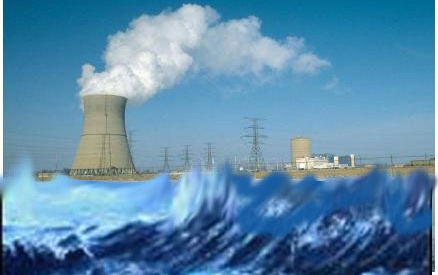
The Government wants more nuclear power stations, but renewable energy is cheaper, safer, and more sustainable.
by Steve Dawe, 7 June 2025, https://westenglandbylines.co.uk/business/energy/nuclear-power-a-dream-not-worth-having/
Labour is committed to building new nuclear power stations on eight coastal sites. Margaret Thatcher was also an enthusiast for nuclear power. She wanted one new nuclear power station built each year in the UK during the 1980s. Only one, Sizewell B, was built. Why? Because it cost too much, as was obvious in 1990:
Mr Illsley: “The Secretary of State must be aware that recent estimates have put the final cost of Sizewell B at about £3.8 bn, taking into account the cost overruns, delays and lack of economies of scale… £2bn can be saved by cancelling the project now. Does the Secretary of State agree that the time to cancel Sizewell B is right now?”
(House of Commons Debates, 25 June 1990).
Renewables are cheaper
Sizewell B did not come online until 1995. The Government admitted in 2020 that renewables can be cheaper than they thought. Given decades of nuclear industry propaganda intended to obscure the deficiencies of this sector, support for nuclear appears less about stating a technology preference than an indirect political statement in favour of nuclear weapons.
We need electricity; we don’t need it to come from nuclear. But successive UK governments have used public money to subsidise the industries involved, instead of using it for things actually sustainable, cost-effective, and with minimal pollution. Keir Starmer has even ignored the nuclear watchdog when he blamed regulations for implementation delays.
The extensive range of reasons to oppose nuclear power
Here is a short list of some of the reasons to oppose new nuclear power stations, and phase out existing ones:
- Nuclear power is too slow to implement to be relevant to the climate emergency. Construction times are an average of 10 years per nuclear power station.
- Nuclear power stations are at risk of terrorist sabotage or attack in war, as has been demonstrated in Ukraine.
There are comprehensive reasons to oppose nuclear power, based partly on the British experience and that of other states recently. These also include:
The radioactive waste that needs storage for at least 100,000 years makes the true costs of nuclear power incalculable.- Part of the reason for this storage is the known health effects of radiation.
- Since major nuclear accidents have continued to occur and spread radioactive material into the environment, preference for other means of generating electricity and for radically improving insulation in buildings to reduce energy needs is unarguable.
- This is especially the case when the water implications are considered: nuclear power stations require water for cooling, on a planet with increasing droughts and extreme weather events. Nuclear power stations using water from watercourses have had to shut down during periods of drought, emphasising the desirability of solar and wind power which do not require water to operate.
- Making it easier to build more nuclear power stations on the eight coastal sites the Government prefers completely ignores the risk of sea level rise discussed below. It is extraordinary that these sites have been chosen.
Hence, to quote from one of the recent critical analyses, new nuclear power is “doomed to fail“. It is certainly prone to extreme weather events such as storms, if the proposed sites are used.
Nuclear power supports nuclear weapons
Most countries in the world do not have nuclear weapons. Today, 120 countries belong to the Non-Aligned Movement, committing themselves not to belong to alliances which perpetuate long-term confrontations between states.
The UK Government admits part of its support for existing and new nuclear power stations is to maintain essential supplies to its nuclear weapons programme. What is true for the UK clearly applies to other states with nuclear weapons.
Since nuclear weapons proliferation is against the general interest of all species on the planet, phasing out both nuclear power and nuclear weapons would be rational when alternatives exist, are becoming cheaper, and are expanding in use year after year.
New nuclear is too expensive to consider
Nuclear power is notoriously expensive. The International Energy Agency reported in 2023 that new solar and on-shore wind are cheaper than fossil fuels. Greenpeace has summarised the current situation, comparing renewables to nuclear, as follows:
“The cost of generating solar power ranges from $36 to $44 per megawatt-hour (MWh), the World Nuclear Industry Status Report said, while onshore wind power comes in at $29–$56 per MWh. Nuclear energy costs between $112 and $189 per MWh. Over the past decade, the World Nuclear Industry Status Report estimates levelised costs… for utility-scale solar have dropped by 88% and for wind by 69%. According to the same report, these costs have increased by 23% for nuclear.”
Worse for the British Government, an authoritative report asserts that the new nuclear power in the UK would actually be the world’s most expensive. Support by political parties in the UK for nuclear power is therefore a choice of the most expensive of options under consideration.
Jonathon Porritt, former head of the Government’s Sustainable Development Commission, has indicated that the cost of Hinkley C and Sizewell C are both likely to rise to about £75bn each. Others have argued that nuclear power may simply not be cost-effective in relation to realistic cost assessments including paying for very long-term radioactive waste storage.
The toxic twins: Hinkley C and Sizewell C
“Hinkley C in Somerset will cost the energy bill payer up to £17.6bn in subsidies. The agreed price of £92.50 per MW/hour is over double the current wholesale price at just over £41 per MW/hour.” (People Against Wylfa-B)
The construction costs were already predicted to rise by a third in early 2024, illustrating the general problem of high-cost infrastructure in the UK. Sizewell C costs were also predicted to double in early 2025.
Nuclear is never ‘clean’
The UK is going ‘all out’ to be a clean energy superpower, said Keir Starmer. But nuclear power has never been a ‘clean’ technology. Essentially, many alleged solutions to the problem of radioactive nuclear waste need to rely on perfect storage for 100,000 years.
This is a conception worthy of science fiction. Uranium mining is known to cause health problems in proximate populations, often to indigenous peoples.
Small modular nuclear reactors – why bother?
The nuclear industry has problems with scaling up to reduce costs. Nuclear power construction and related expense means reduced costs do not materialise.
The small modular reactor (SMR) is allegedly going to change this. However, a US Department of Energy report of September 2024 suggested a cost per megawatt more than 50% higher than for large reactors.
There are only three operating SMRs: one in China, with a 300% cost overrun, and two in Russia, with 400% cost overrun. In March, a Financial Times analysis labelled such small reactors “the most expensive energy source.” Others concur that SMRs are very expensive, and slow to construct, with negative environmental implications.
Sea level rise and nuclear sites
All eight of the Government’s preferred sites for new nuclear power development are coastal. There are concerns about the impact of sea-level rises for all the sites. There should also be concerns about storms increasing in power and frequency too as the climate changes.
Hinkley and Sizewell are already in development. Will an island be created to protect the proposed Sizewell C site from the sea? Does the Government privately think this might be necessary for all eight sites?
The Intergovernmental Panel on Climate Change(IPCC) may have under-estimated sea level rise up to 2100. Scientific papers have been predicting higher sea level rises than the IPCC since at least 2012. It has been suggested that: “All energy-related infrastructure is at risk from the impacts of climate change, especially due to the changing frequency and intensity of surface water and coastal flooding.”
And the rate of sea level rise has been increasing. Very low-lying sites like that of Sizewell C should be abandoned. And back in 1981, the Hinkley Point site was flooded, forcing closure of a nuclear power station there for a week.
Communities with nuclear legacies need alternatives
Communities with declining nuclear industry work would need alternative jobs. This is a general need for all localities experiencing employment transitions.
Each district and unitary council should have its own Green New Deal to promote and directly support just transitions. This would involve re-introducing a version of the Community Programme of the 1980s to employ people in projects and programmes, in cooperation with local voluntary bodies where possible. This should both support existing sustainability initiatives and help introduce new ones.
Training on the job should feature, to provide a better range of local skills appropriate to a just transition in areas like construction, forestry and nature, gardening, agriculture, energy efficiency, installing heat pumps in homes and more.
Just transition or another failure to future-proof the UK?
The colossal financial impact of nuclear power in the past and future in the UK is difficult to calculate, especially when radioactive waste storage is considered. The repercussions of public spending on this technology and its aftermath include inadequate spending on sustainable retrofitting of the existing built environment.
We certainly need electricity. We have never needed it to be specifically from nuclear power. The scale and diversity of energy alternatives are more than enough to meet future needs, including by increasing battery storage to address any potential problems in maintaining baseload supply.
Political will is absent. The long shadow of nuclear power remains in place over the major political parties, at public expense and with zero long-term vision.
To Trump, a million casualties in Ukraine war he’s enabling, is nothing more than a kids’ fistfight

Actually, it takes three to tango since the war goes on because Trump continues enabling it with billions in weapons, logistics and Intel support. Pull that away and Ukraine’s Zelensky would have to negotiate the peace he ran away from in April 2022 at America’s behest. Had he made peace then Zelensky would still control the 45,000 square miles annexed and not incurred over a million senseless casualties.
Walt Zlotow, West Suburban Peace Coalition, Glen Ellyn IL 7 June 25
The depravity of Trump’s view of catastrophic war was on full display in his White House meeting with fellow Ukraine war enabler, German Chancellor Friedrich Merz. Trump told reporters present about the million plus dead and wounded in the largely degraded Ukraine:
To Trump, a million casualties in Ukraine war he’s enabling is nothing more than a kids’ fistfight
The depravity of Trump’s view of catastrophic war was on full display in his White House meeting with fellow Ukraine war enabler, German Chancellor Friedrich Merz. Trump told reporters present about the million plus dead and wounded in the largely degraded Ukraine:
Actually, it takes three to tango since the war goes on because Trump continues enabling it with billions in weapons, logistics and Intel support. Pull that away and Ukraine’s Zelensky would have to negotiate the peace he ran away from in April 2022 at America’s behest. Had he made peace then Zelensky would still control the 45,000 square miles annexed and not incurred over a million senseless casualties.
And cruel, clueless, delusional Trump sits back pretending he’s still concerned about ending a catastrophic war he’s enabled for the past 137 days.
Tehran releases explanatory note defending 60% enrichment
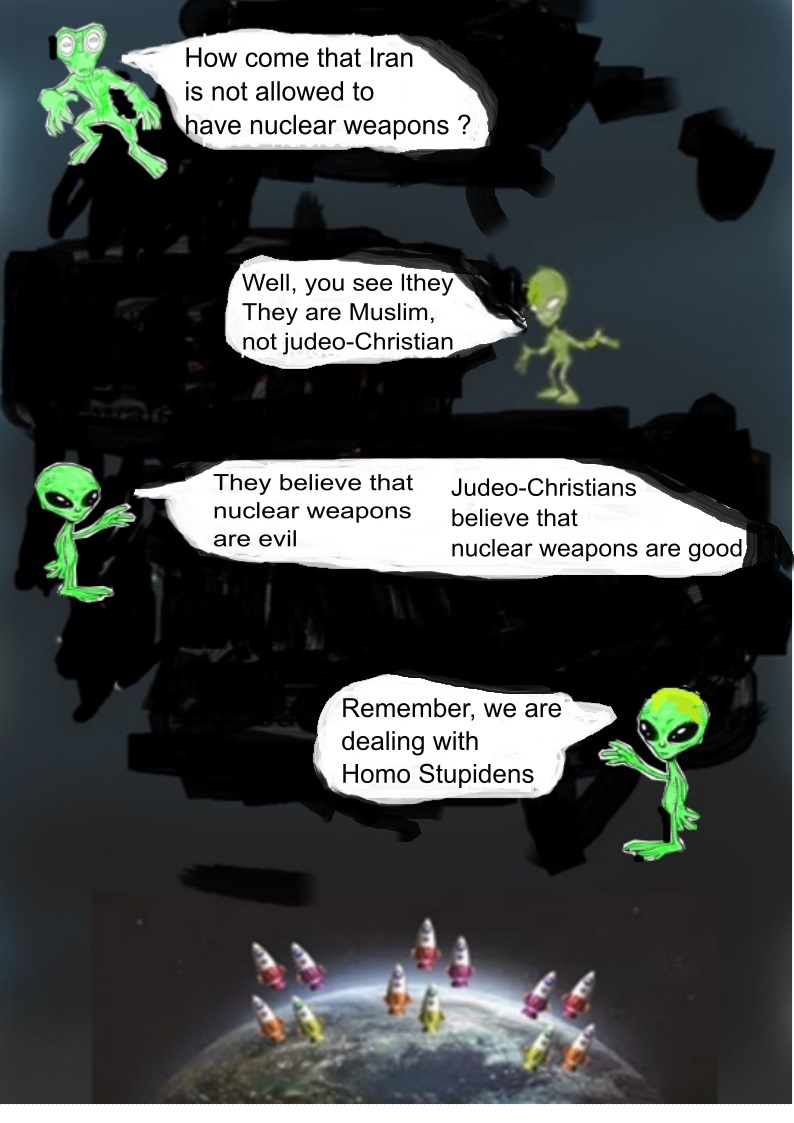
Jun 7, 2025,
https://www.iranintl.com/en/202506078822
Iran has formally defended its enrichment of uranium to 60% purity in a public statement, insisting the activity is not prohibited under the Nuclear Non-Proliferation Treaty (NPT).
The explanatory note, released ahead of a key meeting of the IAEA Board of Governors, criticized the agency’s latest report for relying on “unverified” and “politically influenced” sources, saying the findings reflect a “departure from the principles of impartiality and professionalism.”
“Enrichment to 60% is not banned by the NPT, and all related activities are declared and verifiable,” said the statement published on the Atomic Energy Organization of Iran’s website.
Iran further said that traces of uranium found at certain undeclared sites may be the result of sabotage or hostile actions, citing findings by its own security investigations.
The IAEA report, leaked to Western media late last month, concluded that Iran now possesses over 400 kg of 60%-enriched uranium—enough, if further enriched, to build approximately 10 nuclear weapons. The report also cited ongoing Iranian non-cooperation on safeguards and expressed “serious concern” over the country’s continued enrichment at levels with “no civilian justification.”
Iran pushes back against pressure
Iranian officials condemned the IAEA’s findings. Deputy Foreign Minister Kazem Gharibabadi said the report was based on “fabricated Israeli intelligence” and aimed at reopening matters previously closed under a 2015 resolution. He accused the agency of acting under political pressure from the United States and European powers.
In a phone call last week with IAEA Director General Rafael Grossi, Foreign Minister Abbas Araghchi called on the agency to “reflect realities” and warned that any politically driven action by the IAEA Board would be met with a firm response. “Iran will react strongly to any violation of its rights,” Araghchi said in a separate post on X. “The responsibility lies solely with those misusing the agency to gain political leverage.”
Tensions rising ahead of IAEA board vote
The IAEA board is expected to convene next week, with diplomats telling Reuters the United States and the so-called E3 — Britain, France, and Germany — plan to table a resolution formally declaring Iran in violation of its safeguards obligations. If adopted, it would mark the first such finding since 2005, a move that could pave the way for a referral to the UN Security Council and further sanctions.
Israel has accused Iran of being “fully committed” to obtaining nuclear weapons, with Prime Minister Benjamin Netanyahu’s office saying “there is no civilian explanation” for Iran’s current enrichment levels.
Iran, for its part, continues to insist that its nuclear program is strictly peaceful and has dismissed the possibility of negotiating over the principle of enrichment.
No deal without enrichment, Tehran says
In comments echoed by other senior Iranian officials, Parliament National Security Committee chair Ebrahim Azizi said enrichment is a “red line.” “There can be no negotiation over the principle of enrichment,” he said. “It is a matter of national sovereignty.”
Iran also criticized Western suggestions of a fuel consortium or a temporary freeze on enrichment. “Without recognition of our right to enrichment, no agreement will be possible,” said Alaeddin Boroujerdi, another senior MP.
Snapback and retaliation threats
The mounting tension comes as Western capitals also weigh triggering the so-called snapback mechanism under the 2015 nuclear deal, which would restore UN sanctions. Iranian hardline media warned that such a move would be seen as “blackmail” and would provoke a fundamental shift in Iran’s nuclear doctrine.
The conservative daily Khorasan said Iran “could produce 10 atomic bombs” and that its missile program should not be underestimated. It warned that activating the snapback would mean “Iran’s cooperation with the IAEA has yielded nothing.”
Defence review dodges Britain’s nuclear blind spot.

THE UK’s nuclear enterprise is in crisis. Not just because of cost
overruns or ageing submarines, but because of the deepening secrecy and
silence that surrounds it. That silence should have been broken by the
Labour Government’s new Strategic Defence Review 2025.
Instead, it was quietly reinforced. Presented as a roadmap to “Make Britain Safer”, the
review promised clarity and accountability, but it fails to confront the
most pressing truths: that the UK’s nuclear programme is financially
unsustainable, strategically unbalanced, increasingly unaccountable and a
real and present danger to us all.
These concerns are not hypothetical. In
the final months of the last Parliament, I raised them on the floor of the
House of Commons, not out of party dogma, but in response to serious and
public allegations from Dominic Cummings, former chief adviser to the then
prime minister, remember him? He described Britain’s nuclear
infrastructure as a “dangerous disaster”, responsible for the secret
“cannibalisation” of other national security budgets and shielded from
meaningful scrutiny. Instead of confronting the truth, the review restates
familiar platitudes and leaves the public and Parliament no wiser about the
scale cost, or consequences of the UK’s nuclear commitment. The Defence
Secretary, who heard these warnings first-hand from the opposition bench,
is now in a position to act – he has chosen not to.
The National 8th June 2025,
https://www.thenational.scot/politics/25222635.defence-review-dodges-britains-nuclear-blind-spot/
1 This Month

31st January – Challenging the War Machine – a DECLASSIFIED UK SUMMIT



Website of the Week
Now until to February 10, 2026 Radioactive waste storage in France: the debate is finally open! How to participate?
-
Archives
- January 2026 (220)
- December 2025 (358)
- November 2025 (359)
- October 2025 (377)
- September 2025 (258)
- August 2025 (319)
- July 2025 (230)
- June 2025 (348)
- May 2025 (261)
- April 2025 (305)
- March 2025 (319)
- February 2025 (234)
-
Categories
- 1
- 1 NUCLEAR ISSUES
- business and costs
- climate change
- culture and arts
- ENERGY
- environment
- health
- history
- indigenous issues
- Legal
- marketing of nuclear
- media
- opposition to nuclear
- PERSONAL STORIES
- politics
- politics international
- Religion and ethics
- safety
- secrets,lies and civil liberties
- spinbuster
- technology
- Uranium
- wastes
- weapons and war
- Women
- 2 WORLD
- ACTION
- AFRICA
- Atrocities
- AUSTRALIA
- Christina's notes
- Christina's themes
- culture and arts
- Events
- Fuk 2022
- Fuk 2023
- Fukushima 2017
- Fukushima 2018
- fukushima 2019
- Fukushima 2020
- Fukushima 2021
- general
- global warming
- Humour (God we need it)
- Nuclear
- RARE EARTHS
- Reference
- resources – print
- Resources -audiovicual
- Weekly Newsletter
- World
- World Nuclear
- YouTube
-
RSS
Entries RSS
Comments RSS
 nuclear-news