European Commission assesses nuclear investment needs of around €241 billion by 2050
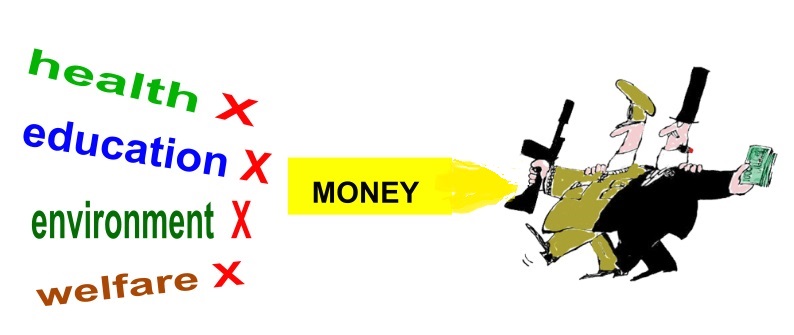
Delivering Member States’ plans regarding nuclear energy will require significant investments, of around €241 billion until 2050, both for lifetime extensions of existing reactors and the construction of new large-scale reactors. Additional investments are needed for Small Modular Reactors (SMRs), Advanced Modular Reactors (AMRs) and microreactors and in fusion for the longer-term future, the Commission has assessed in its eighth nuclear illustrative programme (‘PINC’).
Staring Down The Barrel Of War With Iran Once Again
Caitlin Johnstone, Jun 12, 2025, https://www.caitlinjohnst.one/p/staring-down-the-barrel-of-war-with?utm_source=post-email-title&publication_id=82124&post_id=165756570&utm_campaign=email-post-title&isFreemail=true&r=1ise1&triedRedirect=true&utm_medium=email
Well it looks like the US is on the precipice of war with Iran again.
US officials are telling the press that they anticipate a potential impending Israeli attack on Iran while the family members of US military personnel are being assisted with evacuation from bases in the region.
This comes as Tehran issues a warning that it will strike all US military bases within range of its missiles if it comes under attack. There are reportedly some 50,000 US troops in 10 bases which could come under fire should this occur.
The US is also evacuating its embassy in Iraq, and has authorized the departure of non-essential personnel from its embassies in Kuwait and Bahrain.
Asked by the press about the evacuations, President Trump said, “They are being moved out because it could be a dangerous place, and we’ll see what happens. We’ve given notice to move out.”
Trump is openly declaring a willingness to strike Iran if nuclear negotiations fall through, while saying he is now “much less confident” that any deal will be made.
“If they don’t make a deal, they’re not gonna have a nuclear weapon; if they do make a deal they’re not gonna have a nuclear weapon too,” the president said in an interview published on Wednesday, adding that “it would be nicer to do it without warfare, without people dying.”
If the US backs an Israeli attack on Iran and then Iran retaliates by killing a bunch of US military personnel, we could be looking at a full-scale direct war between the US and Iran.
As I’ve said in this space many times before, this would be the absolute worst-case nightmare scenario for the middle east, unleashing horrors that dwarf all the other terrible abuses currently happening in the region. As Trump’s now-Director of National Intelligence Tulsi Gabbard said in 2019 (back when she publicly opposed Trump’s warmongering), “What is important that the American people know is a war with Iran would make the war in Iraq look like a cakewalk.”
It’s so stupid that this keeps happening. This could all be avoided by the US simply ceasing to support the genocidal apartheid state of Israel no matter what it does. The fact that Washington has continued to pour weapons into Israel despite all its warmongering and genocide since 2023 means the US supports everything that Israel has been doing.
If a war with Iran does occur, you will doubtless hear western pundits and politicians trying to spin this as America getting “drawn into” another war in the middle east, or Trump being tricked or manipulated into war. But make no mistake: the US could have turned away from this path at any time, and still can.
If this Pandora’s box is opened, it will be because the US empire knowingly chose to open it.
Group of Australian MP’s Call for AUKUS Inquiry

Crossbench MPs from the House of Representatives and Senate have written to Deputy Prime Minister and Defence Minister Richard Marles, calling for an urgent parliamentary inquiry into AUKUS.
In April, the UK Parliament’s Defence Committee announced an inquiry into the AUKUS arrangements, and this week the US defence department announced they were undertaking a rapid review of AUKUS.
AUKUS represents Australia’s largest defence investment in decades and is central to our defence and foreign affairs strategy.
Australians are concerned to know more about the strategic and financial implications of this policy which has been jointly adopted by major party governments without significant parliamentary scrutiny.
A full and formal parliamentary inquiry is therefore both important and timely.
Quotes from letter to Deputy Prime Minister, Richard Marles
Allegra Spender, Independent MP for Wentworth
AUKUS is the centrepiece of our defence and foreign policy strategy, but it’s been adopted by the major parties with very poor public engagement. AUKUS will shape Australia’s future for decades with enormous implications both financially, economically, and strategically, but in discussions at the community level, there are consistent questions and concerns that have not been addressed. AUKUS won’t work without wider community interrogation and engagement, and a parliamentary inquiry is the first step to building that.
We also need a more open discussion of the challenges facing AUKUS. Most urgently, the US Navy is currently short of attack submarines and there is a very clear risk that the US President at the time will not be able to certify that the Virginia class submarines can be transferred to Australia without undermining US Navy capability: a requirement of the current enabling legislation. We must publicly face those risks and actively manage them including identifying viable alternatives.
Helen Haines, Independent MP for Indi
In light of the reviews of AUKUS by our two partner nations and the consequential nature of the agreement, it important for our Parliament to apply the same level of scrutiny.
Andrew Wilkie, Independent MP for Clark
More than ever an Australian Inquiry into AUKUS is needed, and President Trump’s caution about the deal gives Australia a great chance to reset. Nuclear subs were always the wrong technology for Australia’s future submarine needs given the shallow littoral and offshore waters in our region, not to mention the ridiculous cost and impractical timeframe.
Nicolette Boele, Independent MP for Bradfield
Any time Parliament commits to spend $368 billion, we should at least have a full parliamentary inquiry. The case for an inquiry on AUKUS is even stronger given the rules of global co-operation have dramatically changed since it was signed.
AUKUS now risks our defence — because we don’t know if these submarines will ever arrive. It risks our budget — because we may waste $368 billion in taxpayer’s money. And it risks our Australian values, which we do not import from the United States.
Sophie Scamps, Independent MP for Mackellar
Circumstances have changed significantly since the AUKUS deal was first announced and it’s only reasonable it be reviewed in the current context.
This is the largest investment in our defence capability in decades, other parties are conducting their own reviews, and the Australian community largely supports a parliamentary inquiry – it’s high time the Government responds.
Senator Jacqui Lambie
We’ve poured billions into AUKUS with nothing to show for it but broken promises and cancelled defence programs. It’s a $368 billion blank cheque to the US and UK with zero guarantee of real capability for decades.
Australians deserve better and it’s time for a full parliamentary inquiry into this dud deal.
Senator David Pocock
With the UK and now the US reviewing AUKUS, Australia is now the only country not actively considering whether the agreement in its current form best serves our national interest. Given the scale and cost of this deal, a transparent review is not just sensible, it’s overdue.
Kate Chaney, Independent MP for Curtin
AUKUS is a monumental strategic commitment with far-reaching implications for our economy, sovereignty, and security posture, yet it continues to unfold with minimal public transparency and virtually no parliamentary accountability. Australians want to understand whether this is the best use of our resources and the right path for our security.
Survey Results Show Tremendous Dissatisfaction with Nuclear Waste Project and Proponent.
We the Nuclear Free North 12 June 25
| Dryden – A not-for-profit organization that tracks a nuclear waste burial project proposed for northwestern Ontario has released the results of a recent survey gauging public attitudes towards the Nuclear Waste Management Organization and its project. We the Nuclear Free North‘s survey results show an overwhelmingly negative response to the NWMO’s project and communications. |
An invitation to complete the survey was distributed by email and through social media on a wide variety of sites. Over 300 responses were received in the ten-day survey period. Just under 60% of respondents were from northern Ontario (northwestern and northeastern), 36% were from the rest of Canada, and the remainder international or unknown. Respondents include nuclear industry employees, Indigenous people, residents of Ignace and members of Wabigoon Lake Ojibway Nation, and residents from across northern Ontario and across Canada.
Overwhelmingly, respondents expressed a negative view of NWMO operations:
- 94% were not confident that the NWMO’s safety culture would keep Canadians safe.
- A very large majority found that NWMO communications were not transparent or honest.
- 93% were not confident in the NWMO’s ability to implement the safe, long-term management of nuclear fuel waste.
- 94% were not confident that NWMO’s work aligned with Reconciliation or Indigenous Knowledge.
- 96% were not comfortable with the nuclear industry being in charge of the NWMO
- 92% did not believe that the siting process was fair or gained the necessary consent
Every year the Nuclear Waste Management Organization (NWMO) releases their annual report and a five year “implementation plan” which – according to the NWMO – sets out what the nuclear waste corporation will be doing over the coming years. The NWMO also invites feedback through a survey. WTNFN has heard from many that they are reluctant to provide the NWMO with their personal information, and they are uncertain how the NWMO will use their responses. Providing an alternative means for Canadians to express their views motivated the deployment of an alternate survey.
“We think it’s important to hear the views and responses of Canadians to the NWMO’s plans and proposal to transport, process, bury and then abandon the high-level nuclear fuel waste from all Canadian reactors at the NWMO’s selected site in the heart of Treaty #3 territory in northwestern Ontario”, explained Brennain Lloyd, project coordinator with Northwatch and a volunteer with We the Nuclear Free North.
Lloyd explained that potential respondents were invited to take five minutes and complete the simple survey, with the assurance that their personal information would be used only to verify responses and would not be shared with the Nuclear Waste Management Organization or government, or any other parties.
The results of the survey have been reported by We the Nuclear Free North to the federal Minister of Energy and Natural Resources and the Minister of the Environment and Climate Change, along with a letter summarizing key messages from the survey results and providing backgrounders on the NWMO project, site selection and public and Indigenous opposition. A copy of the survey report has also been provided to the NWMO.
In writing to the federal Ministers, the group also conveyed that throughout the NWMO’s lengthy siting processes there have been many expressions of opposition to and rejection of the NWMO’s siting process and their project.
“These expressions have come in many forms, including resolutions passed by Grand Council Treaty #3 just weeks before the NWMO announced the selection of the Revell site – in the heart of Treaty #3 territory – in November 2024. More recently, Eagle Lake First Nation has initiated legal action against the NWMO’s site selection. Earlier resolutions have been passed by Nishnawbe Aski Nation, Anishnabek Nation, and many First Nations and municipalities” commented Wendy O’Connor, a volunteer with Nuclear Free Thunder Bay and We the Nuclear Free North.
The group has requested to meet with the Minister of Energy and Natural Resources and the Minister of Environment and Climate Change and will be seeking meetings with Members of Parliament who represent northeastern and northwestern Ontario ridings throughout the summer break.
‘TO THE POINT OF UNINHABITABILITY’
Israel’s war to destroy Hamas has destroyed Gaza itself
Seymour Hersh, Jun 14, 2025
A few weeks ago the media office of the Gaza government issued a statement declaring that the Israeli Defense Forces now control over 77 percent of the territory in the Gaza Strip, much of it in ruins from the continuing Israeli Air Force attacks on suspected Hamas sites. Many of the known Hamas leadership at the time of its October 7, 2023, surprise attack on Israel have been killed or have fled Gaza. But the organization has survived and now there are as many as 20,000 Hamas members. Young recruits today try to control the delivery of relief food and other goods to Gaza along with the black market that dominates what is left of its economy.
Israel has not won its war against Hamas—a war that at one time was promised to be ended within a span of four or five months. The Israeli leadership responded to that failure by taking the war to the people of Gaza, though Israelis were assured that the terrifying and around-the-clock Israeli air force bombing attacks in Gaza would stop when Hamas was driven from its fortified tunnels………………………(Subscribers only) https://seymourhersh.substack.com/p/to-the-point-of-uninhabitability?utm_source=post-email-title&publication_id=1377040&post_id=165876879&utm_campaign=email-post-title&isFreemail=true&r=ln98x&triedRedirect=true&utm_medium=email
When did nuclear power become “clean”?

A lunge towards nuclear is the worst possible path for a world aspiring towards “clean” energy. It poses a major security risk too.
Gerald Warner, Former special adviser to the Scottish Secretary, 13June, 2025
When, exactly, did nuclear power become “clean” energy? Even in our post-truth society, it remains mind-boggling that the most dangerous and enduringly toxic technology known to man should have been repackaged and presented as “green”, “safe” and “clean”. This imposture puts Orwell’s “War is peace, freedom is slavery” very much in the shade.
Rachel Reeves’s statement on Wednesday included £14bn of funding for the construction of the new Sizewell C nuclear plant, as well as the announcement that three small modular reactors (SMRs) would be built by Rolls Royce. While this reflects government awareness of the inadequacy of “renewables” for energy supply, this lunge towards nuclear is the worst possible path we could have taken. A world aspiring to clean energy should be phasing out nuclear power, not expanding it………… (subscribers only) https://www.reaction.life/p/when-did-nuclear-power-become-clean
Scotland to prioritise renewable energy over nuclear power
The Scottish government will focus on renewable energy not nuclear power,
a government minister has said following confirmation of significant
funding for nuclear power plants in England. Scotland has an effective ban
on new nuclear facilities because the SNP has a long-standing commitment to
block projects through devolved planning powers. Acting Energy Secretary
Gillian Martin told BBC Scotland News they would “capitalise on renewable
energy capacity” rather than “expensive new nuclear”. Scottish Secretary
Ian Murray said a Scottish Labour government in Holyrood would reverse the
SNP’s block on nuclear power stations being built.
BBC 10th June 2025,
https://www.bbc.co.uk/news/articles/ckgr82vqdvzo
Ed Miliband presses the nuclear button for Berkeley
Rolls-Royce SMR has been given the full go-ahead to build up to SIX mini
nuclear reactors on the edge of Gloucestershire. The small modular designs,
which embrace a miniaturisation approach to nuclear technology that is yet
to be fully developed, are planned to be at Oldbury-on-Severn, near
Thornbury, while key support on training and safety services, as broadly
predicted, will be installed in Berkeley, at the town’s former Severnside
Magnox site.
Ian Mean, former director for Business West in Gloucestershire
and now on the board of the Gloucestershire County Council Economic Growth
Board, said Chancellor Rachel Reeves’ and Ed Miliband’s final confirmation
was “tremendous news for the Gloucestershire economy”. He said: “I believe
that these mini reactors – as many as six of them here in Gloucestershire
and South Gloucestershire – have the potential to provide thousands of
skilled jobs and the opportunity of millions of pounds flowing into our
regional economy. “Berkeley and Oldbury – the two former decommissioned
nuclear sites at Oldbury and Berkeley Green now hold the key to becoming a
major nuclear hub.”
But any resurrection of the technology in SMR format
has been condemned by Gloucestershire energy entrepreneur Dale Vince, who
owns Stroud-based Ecotricity. Speaking on the Zerocarbonista podcast before
today’s confirmation, Mr Vince said: “When you come to small nukes, the
government and the nuclear industry have consistently said that we will get
lower bills, but they don’t put a number on it. They are ecomonists without
numbers! “Big nuclear is the most expensive electricity we have ever made,
it’s off the charts compared to renewable energy and one of the fundamental
laws of physics is that the economies of scale come by making something
bigger, not by making something smaller – it always costs money to
miniaturise.
So here they are, saying we can miniaturise nuclear reactors
that famously went decades late and billions over budget… and they’ll be
cheap. I don’t believe that for a second and what we are of course doing is
proliferating the risk.” He added: “It’s always worth imagining what it
would be like if the Romans had nuclear power. If they did, Bath would be a
toxic no-go zone. It’s only 2,000 years ago and sounds like a long time,
but not in the context of toxic nuclear waste.”
Punchline Gloucester 10th June 2025,
https://www.punchline-gloucester.com/articles/aanews/miliband-presses-the-nuclear-button-for-berke
Great British Energy’s budget has been nuked

Nils Pratley 12 June 25,
https://www.theguardian.com/business/nils-pratley-on-finance/2025/jun/11/great-british-energys-budget-has-been-nuked
Ed Miliband’s vehicle for investing in renewables lost 30% of its pot to small modular nuclear reactors in the spending review
GB Energy’s promised £8.3bn budget raided to pay for small nuclear reactors
There was a weirdness in the government’s welcome announcement this week that Rolls-Royce SMR had been selected as preferred bidder to build the UK’s first small modular nuclear reactors, and that £2.5bn of public money would be thrown behind the project. The government body backing the project was something called Great British Energy – Nuclear.
This, it turned out, was the new name for Great British Nuclear, the unit set up in 2023 by the last government to oversee delivery of the nuclear programme. But why risk confusion with Great British Energy, Ed Miliband’s publicly owned company for investing, we thought, in renewables projects such as wind, solar and hydro with a side-mission to ensure that lots of the kit is manufactured in the UK?
The confusion, it seems, was deliberate. The chancellor’s spending review revealed that every penny of the £2.5bn for SMRs is coming from GB Energy’s £8.3bn budget. That is 30% of the pot to SMRs in one gulp.
One could argue, as Labour folk did, that nuclear and renewables are all part of the same low-carbon clean energy mix, so they go hand in hand and were always intended to do so. It’s true that past descriptions of GB Energy’s role have sometimes mentioned nuclear, but never as the headline act. It was never spelled out, for example, that the entirety of public support for SMRs would come from GB Energy’s budget, which would be a relevant fact to mention if you were worried that the Tories had set up Great British Nuclear but not given it funding. It rather looks as if GB Energy’s budget has been nuked by the Treasury.
“Labour will capitalise Great British Energy with £8.3bn over the next parliament,” said the manifesto and, strictly speaking, that pledge is still being honoured. It’s just that GB Energy will be directing almost a third of its allocation to the nuclear body that we had previously regarded as a separate unit.
But it does make GB Energy a strange beast if it is now the main government vehicle for investing in SMRs, a cutting-edge technology that tends to involve permanently big numbers and follow-on rounds of funding. GB Energy’s initial adventures, note, have been low-key and local – funding for installing solar panels on schools and hospitals, for example. Worthy stuff, but a million miles away from the development of next-generation nuclear technology.
GB Energy will be expanding into new and exciting areas later this year, say Labour insiders. We’ll see what that brings. The company’s core mission seems to be a work in progress.
Cost of Miliband’s nuclear plant doubles to more than £40bn
Price tag for Sizewell C project soars as ministers pursue funding deal with private investors
and the French government.
Matt Oliver Industry Editor. Szu Ping Chan Economics Editor. Jonathan Leake, Telegraph 11th June 2025,
https://www.telegraph.co.uk/business/2025/06/11/cost-of-milibands-nuclear-plant-doubles-to-more-than-40bn/
An official cost estimate for the scheme in
Suffolk, which would generate enough electricity for 6m homes, was
previously put at £20bn. But that has grown to £30bn at constant prices
– or £41bn in today’s money – with the Government set to shoulder at
least half of the upfront cost, according to industry and Whitehall
sources.
The entire scheme will ultimately be paid for by households and
businesses via their electricity bills, including through levies that will
begin during construction. The power plant’s rising price tag will
trigger concerns about future increases as Hinkley Point C, a nuclear
development in Somerset, has repeatedly overrun budgets and timescales.
GB Energy’s promised £8.3bn budget raided to pay for small nuclear reactors
Rachel Reeves has effectively cut £2.5bn from the government’s national
energy company by sharing the £8.3bn it was promised with a separate
nuclear power body set up by the Conservatives. The Labour manifesto had
pledged the full amount to Great British Energy to invest in clean power
projects. However, the chancellor’s spending review said the company
would share this funding with a separate body tasked with spearheading
Britain’s nuclear renaissance. The Treasury’s spending plans said the
“two allied publicly owned companies with a shared mission” would spend
the £8.3bn on “homegrown clean power” including £2.5bn to help the UK
develop a new generation of small modular nuclear reactors.
Guardian 11th June 2025, https://www.theguardian.com/business/2025/jun/11/gb-energy-83bn-of-funding-raided-to-pay-for-small-nuclear-reactors
Israel Starts Bombing Iran, IRGC Chief Reported Killed
The Israeli military is preparing for a very heavy missile attack from Iran in response
by Dave DeCamp | Jun 13, 2025, https://news.antiwar.com/2025/06/12/israel-starts-bombing-iran/
The Israeli military has begun bombing Iran, an attack that could provoke a major, catastrophic war in the region involving the US.
Heavy airstrikes have hit the Iranian capital of Tehran, and videos show plumes of smoke rising from the city. Photos also show damaged residential buildings, and deaths of women and children have been reported. Strikes have also hit several provinces across Iran.
The IDF said that it has launched “dozens” of airstrikes on Iran in an attack it said is targeting the country’s civilian nuclear program. Iran’s PressTV has reported that strikes hit the Natanz nuclear facility.
Israel has also targeted senior Iranian military officials, and Iranian reports say Hossein Salami, the commander of Iran’s Islamic Revolutionary Guard Corps, has been killed. The bombing has also killed several other senior IRGC officials and nuclear scientists.
The Mossad reportedly launched sabotage attacks against Iranian air defense systems and missile facilities that coincided with the Israeli airstrikes.
Israel has dubbed the operation the “Nation of Lions.” The Israeli military is also warning that Iran could launch a major counterattack against Israeli territory and said that its operation against Iran could last several days.
“Following the State of Israel’s preemptive strike against Iran, a missile and drone attack against the State of Israel and its civilian population is expected in the immediate future,” said Israeli Defense Minister Israel Katz.
US Secretary of State Marco Rubio said in a statement that Israel has taken “unliateral action” against Iran and claimed the US wasn’t involved. “Israel advised us that they believe this action was necessary for its self-defense. President Trump and the Administration have taken all necessary steps to protect our forces and remain in close contact with our regional partners. Let me be clear: Iran should not target US interests or personnel,” Rubio said.
The Iranian Foreign Ministry said in a statement that it holds the US responsible for the attack. “The Zionist regime’s aggressive actions against Iran cannot have been carried out without the coordination and authorization of the United States. Accordingly, the United States government, as the main supporter of this regime, will also be responsible for the dangerous effects and consequences of the Zionist regime’s adventure,” the ministry said.
Media reports have said that Iran planned to attack without US backing, but CBS News reported that the Trump administration was weighing options regarding how to support Israeli military action. According to Israel’s Channel 12, the US participated in a campaign to lull Iran into thinking an attack was not going to happen immediately.
In a video statement, Israeli Prime Minister Benjamin Netanyahu thanked President Trump for his “steadfast stance” on Iran.
The bombing began hours after President Trump said that an Israeli attack on Iran could happen soon, although he claimed that he still wanted to pursue a nuclear deal with Tehran despite his repeated demand that Iran must eliminate its nuclear enrichment program, which is a non-starter for Tehran.
Previous reports said that Israel was considering bombing Iran to sabotage the diplomacy between the US and Iran. The attacks come as there is no evidence that Tehran is working toward a nuclear weapon, which is the consensus of the US intelligence community.
It’s austerity from Reeves
There is no strategy apparent in it at all except to make the UK a defence industry superpower, which was what Rachel Reeve says she wishes to do, as if confirming the military-industrial complex has finally defeated democracy.
the whole of East Suffolk has already been scarred with building works to facilitate the Sizewell C programme
What this so-called spending review admits is that there is no prospect of finding any foreign funding for Sizewell C, which was this government’s quite absurd hope. It has therefore, to fund this white elephant itself.
This power station and the others to which the government has committed will cost at least £1,500 per household in the UK, and that might at best result in power for 6 million households.
However, the actual cost of this energy is the highest that we can produce, and that is before taking into account decommissioning costs. Those at Sellafield now amount to £136 billion, and no one thinks that this is the total sum involved.
Reeves is delivering austerity for the UK, unless you’re wealthy, when it’s still bonanza time.
June 11 2025 https://www.taxresearch.org.uk/Blog/2025/06/11/its-austerity-from-reeves/
It has to be said that Spending Reviews are like New Year’s resolutions. They seem like a good idea at the time. Then they are quietly forgotten. I have a very strong feeling that Rachel Reeves will hope that this is what will happen with today’s spending review.
The big news here is quite simple. Reeves decided that if she changed the fiscal rules so that she could borrow more for investment, she could appear to be a big spender, whilst at the same time trying to meet her current fiscal rule that desperately attempts to make current year government spending match current year tax revenue.
To put this in context, what this means is that while she has supposedly promised around £113 billion of additional capital expenditure in the spending review. Much of it is going to take place in the dim and distant future when she will be long gone from the Treasury and probably as an MP, given Labour’s current state of political fortunes.
And just to contextualise this £113 billion, the Tories had planned to spend £90 billion . What she’s adding is only £23 billion. That might be called the square root of didley squat in the grand scheme of things, when the government spends well over £1,000 billion a year.
Elsewhere, the reality is that there will be cuts in real government spending. Austerity is, in other words, continuing despite what Reeves had to say.
……………….. There is also good reason why all the announcements about capital expenditure came out early and in advance of this spending review. They were the only good news. Everything else is something that Rachel Reeves does not really want to talk about.
And let’s be clear that some of this capital expenditure also makes no sense at all. For example, one of the biggest items of expenditure will be on nuclear power stations, where supposedly at least £30 billion is to be spent, although everybody in reality knows that this will turn into a sum of well in excess of £100 billion, given the cost overruns that always occur in nuclear power budgets.
Starmer has claimed that the government has now decided that Sizewell C will be built. But as everyone in Suffolk knows, that decision was made long ago because the whole of East Suffolk has already been scarred with building works to facilitate the Sizewell C programme.
So what Stamer is saying is complete nonsense. What this so-called spending review admits is that there is no prospect of finding any foreign funding for Sizewell C, which was this government’s quite absurd hope. It has therefore, to fund this white elephant itself.
And now Reeves actually wants more investment at Sellafield, which is only going to make things worse, but is part of her plan to apparently make us a nuclear superpower. So, if you want to know what leaving a debt for future generations to pay really looks like, building Sizewell C and other power stations is all that you need to do to ensure that this outcome will become a reality.
In contrast to all this emphasis upon nuclear power, there was none at all on renewable energy in this statement. There was a mention of £2.5 billion for carbon capture and storage, but that is another white elephant.
There was no commitment to renewable energy, to battery technology, or even things as basic as insulating houses and fitting proper triple glazing, although a nod perhaps to the last was included without any mention of the sums involved being made.
What is clear is that Starmer and Reeves would rather lumber generations to come with the cost of nuclear power rather than invest in renewable energy now, when that is the lowest cost of energy that we have available to us.
And let’s also be clear about the significance of this £113 billion worth of investment, which is supposedly going to transform our future, which is supposedly going to transform our fortunes over the next 10 years, most of it, by simply funding projects that others are refusing to undertake.
Over the same 10-year period, the UK government will, in current prices, subsidise pensions through income tax, national insurance, and corporation tax relief by about £700 billion. The vast majority of the benefit of which will go to the top 10% or so of the UK population because they are the people who own the vast majority of UK pension wealth.
At the same time and at current prices, the UK government will spend approximately £95 billion subsidising the untaxed income of those who save in ISAs, who are, again, in the vast majority of cases, the wealthiest people in the UK because by definition they own the savings that are held in those accounts.
In other words, over the 10 year period during which the government has said it is willing to spend around £40 billion a year to buy up existing housing stocks so that it might be used as social housing, thereby providing maybe 130,000 new houses in total, which does little to solve the problem of 1.3 million people being on council house waiting lists, they are going to spend approximately 20 times that amount subsidizing the tax-free incomes and increase in wealth of those who are already amongst the wealthiest in this country.
If you want to understand where the focus of Labour’s priorities are, then this contrast explains them.
This government has absolutely no vision for the future.
At the same time, and when Labour is desperate to increase its poll ratings to ensure that it can fight off Reform and others, it is planning to cut most types of government spending.
No one will see the benefits of increased defence spending in their pockets. There is none.
No one will sense the benefit of increased NHS spending because the amounts being committed are insufficient to keep up with growing demand for NHS services, as is well known, based upon past patterns of health economic performance.
And on child benefit, the big issue was ducked. There was no mention of ending the two-child benefit cap. Free breakfasts are meant to do instead.
Everywhere else, there would appear to be cuts. The government might claim otherwise, arguing over the odd decimal point of a percentage here or there, and that there are real cash increases, which is totally misleading because of inflation, but that is what the reality will feel like. Austerity is definitely Rachel Reeves’ game.
Meanwhile, we know that taxes have risen.
We know that businesses are suffering because of national insurance hikes, falls in demand, and the fallout from Trump.
And we know that children are living in poverty and their parents are suffering massive stress and have no idea whether there is anyone who really cares about them. No wonder they fall for the false promises of Nigel Farage.
Economically, this spending review was a sham. It confirms decisions already taken. It is an exercise in financial shuffling. It creates little added value in the economy. It addresses no fundamental policy need. It does not tackle inequality. It does not solve the problems of most people in the UK.
There is no strategy apparent in it at all except to make the UK a defence industry superpower, which was what Rachel Reeve says she wishes to do, as if confirming the military-industrial complex has finally defeated democracy.
Rachel Rees might be presenting it to the world with her usual Rictus smile, but the reality is that she has now been to the House of Commons dispatch box on three occasions since becoming Chancellor to deliver major economic policy proposals. And every time she has done so, she has made a complete and utter mess of the job. To be blunt, not only has she not delivered; her strategies are actually making things worse.
Today’s spending review falls fairly and squarely into that category. It answers no known questions.
It preserves the status quo on behalf of the wealthy middle-class elite who wish to maintain their prosperity at cost of everyone else.
This is the politics of failure.
Rachel Reeves’ time in office is now, I think, decidedly limited and if she goes, so will Starmer.
There is no other way in which Labour might now get out of the mess that they are in, but the problem is they’ve already got rid of any other talent that they once possessed. We really are in a total mess.
Russia said on Wednesday it stood ready to remove highly enriched uranium from Iran.
Russia said on Wednesday it stood ready to remove highly enriched uranium
from Iran and convert it into civilian reactor fuel as a potential way to
help narrow U.S.-Iranian differences over the Islamic Republic’s nuclear
programme. Tehran says it has the right to peaceful nuclear power, but its
swiftly-advancing uranium enrichment programme has raised fears in the
wider West and across the Gulf that it wants to develop a nuclear weapon.
Reuters 11th June 2025, https://www.reuters.com/world/europe/russia-says-it-is-ready-remove-excess-nuclear-materials-iran-2025-06-11/
Sizewell C Nuclear not just a waste of money – a waste of time, too!
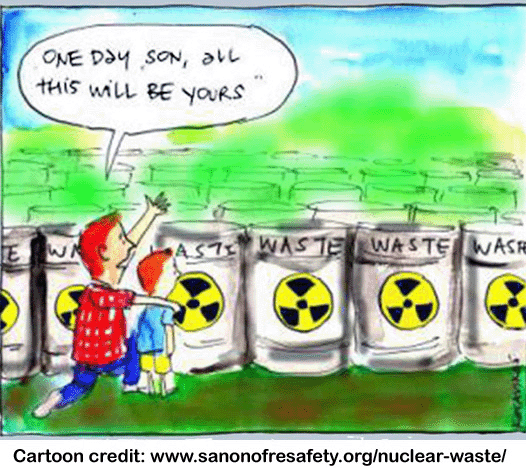
But there is another type of waste even more expensive than the construction costs of nuclear power stations and one that the public will be paying for way into the far future: the storage of toxic high-level radioactive wastes. The public is seldom told that these will be stored on site until at least the middle of the next century, partly to cool down before they can be moved. But moved to where? There is currently no national repository in sight for new build reactors like Sizewell C and there may never be.
Blackwater Against New Nuclear Group (BANNG) 10 June, 25, https://www.banng.info/news/press-releases/10-june-2025/
The Blackwater Against New Nuclear Group (BANNG) agrees with Stop Sizewell C that the proposed new Sizewell C nuclear power station is ‘HS2 Mark 2’. But the public is seldom told about another, much more expensive – and dangerous – waste arising from new nuclear development: toxic high-level radioactive wastes.
The Government has announced that £14BN of public money will be spent over the next four years on the construction of Sizewell C (SZC) new nuclear power station in Suffolk. The amount of taxpayers’ money to be expended at the end of that period is not mentioned, nor is the actual levy to be placed on energy bills to pay for the construction.
The belief of Secretary of State for Net Zero, Ed Miliband, that SZC will be built in a decade flies in the face of the large body of evidence that shows construction of new nuclear power stations runs well over time and over budget. Hinkley Point C (HPC), on which Sizewell C is based, was estimated to cost £16BN in 2012 and to be cooking the Christmas turkey in 2017. Current estimates are £46BN, with operations starting in 2031 (at the earliest).
But there is another type of waste even more expensive than the construction costs of nuclear power stations and one that the public will be paying for way into the far future: the storage of toxic high-level radioactive wastes. The public is seldom told that these will be stored on site until at least the middle of the next century, partly to cool down before they can be moved. But moved to where? There is currently no national repository in sight for new build reactors like Sizewell C and there may never be.
The £14BN package will also cover the construction of Rolls Royce Small Modular Reactors (SMRs) and the Bradwell site, unfortunately, remains a remote possibility for these. But SMRs have the same problems as major new nuclear stations. And don’t be fooled they will be anything but small!
Varrie Blowers, Secretary of BANNG, says: ‘Building one or more SMRs at Bradwell is inconceivable. The site will be wiped out by Climate Change. It is far too remote with no good grid connections. Above all the Blackwater communities and Councils are as resolutely opposed today as they have been for many years.
“As far as public finances are concerned, nuclear power stations, large or small, are not just for life, but forever.”
1 This Month


31st January – Challenging the War Machine – a DECLASSIFIED UK SUMMIT



Website of the Week
Now until to February 10, 2026 Radioactive waste storage in France: the debate is finally open! How to participate?
-
Archives
- January 2026 (220)
- December 2025 (358)
- November 2025 (359)
- October 2025 (377)
- September 2025 (258)
- August 2025 (319)
- July 2025 (230)
- June 2025 (348)
- May 2025 (261)
- April 2025 (305)
- March 2025 (319)
- February 2025 (234)
-
Categories
- 1
- 1 NUCLEAR ISSUES
- business and costs
- climate change
- culture and arts
- ENERGY
- environment
- health
- history
- indigenous issues
- Legal
- marketing of nuclear
- media
- opposition to nuclear
- PERSONAL STORIES
- politics
- politics international
- Religion and ethics
- safety
- secrets,lies and civil liberties
- spinbuster
- technology
- Uranium
- wastes
- weapons and war
- Women
- 2 WORLD
- ACTION
- AFRICA
- Atrocities
- AUSTRALIA
- Christina's notes
- Christina's themes
- culture and arts
- Events
- Fuk 2022
- Fuk 2023
- Fukushima 2017
- Fukushima 2018
- fukushima 2019
- Fukushima 2020
- Fukushima 2021
- general
- global warming
- Humour (God we need it)
- Nuclear
- RARE EARTHS
- Reference
- resources – print
- Resources -audiovicual
- Weekly Newsletter
- World
- World Nuclear
- YouTube
-
RSS
Entries RSS
Comments RSS
 nuclear-news