As Trump Threatens Weekend Strike on Iran, Albanese Pretends Pine Gap Isn’t Complicit

1 February 2026 David Tyler AIM Extra
Albanese’s Iran Illusion: How Australia Sleepwalks into Someone Else’s War
While our federal government waffles on about rules based order, Iran is rewriting the rules of modern warfare. Trump is threatening regime-change. The Strait of Hormuz has become a kill box where $13 billion aircraft carriers play sitting duck to lethal, glorified speedboats, where cyberattacks double as deterrence, and where Australia, ever the loyal deputy, pretends it’s all someone else’s problem. Labor’s silence isn’t prudence. It’s complicity in a US strategy that’s already unravelling, and we’ve got the scars to prove it.
Trump already bombed Iran once. In June 2025, Operation Midnight Hammer saw seven B-2 stealth bombers drop bunker-busters on three nuclear facilities while Pine Gap provided the targeting data. Iran’s face-saving response, a telegraphed missile strike on Al Udeid Air Base in Qatar, fooled no one. But it burned through 25% of America’s total THAAD interceptor stockpiles, missiles the US produces at a rate of roughly one per month. Now Trump’s threatening round two, this time with explicit regime-change goals, and Albanese still won’t acknowledge that Australia’s uncritical alignment has painted a target on our own facilities.
The real damage? Washington’s isolation campaign isn’t weakening Tehran. It’s shoving Iran into Beijing and Moscow’s arms, locking in an anti-Western axis that thrives on American blunders, while teaching every threshold nuclear state that compliance buys nothing but bombs. Why won’t Labor admit the scale of the mess? Because doing so would mean confessing its own role in a policy already fraying at the seams.
Iran’s Budget Warfare: Turning American Strength into Liability
Iran isn’t trying to match the US ship for ship. The Islamic Revolutionary Guard Corps has crafted a playbook that turns American firepower into dead weight: coastal swarms, cyber harassment, proxy deterrence. The goal isn’t winning a war. It’s making escalation so unpredictable, expensive, and politically toxic that the US thinks twice before starting one.
In the cramped waters of the Strait, even Iran’s modest fleet of fast-attack craft becomes a force multiplier. The IRGC doesn’t need a knockout punch, just enough chaos to trap US commanders in a no-win scenario. Push ahead and risk humiliation. Retreat and signal weakness. Dither in the middle while morale drains away. So far, the Pentagon has mostly chosen door number three, proving you can outspend your opponent by billions and still lose the initiative to speedboats and audacity.
The Strait of Hormuz: Where Geography Beats Firepower
The USS Abraham Lincoln isn’t just another, elderly ship in the Strait. It’s a floating monument to American overreach, now redeployed for what Trump calls an “armada larger than Venezuela,” the latest regime-change operation on his scorecard. Iran’s swarm tactics don’t need to sink a nuclear-powered carrier to succeed. They just need to make every transit a gamble, every patrol a potential disaster.

The IRGC’s speedboats may look like dinghies, but in these confined waters where 20% of the world’s oil flows, they’re a constant reminder: geography, not firepower, decides who blinks first. Tehran isn’t trying to win a shootout. It’s turning the Strait into a quagmire where the US loses whether it escalates or backs down, and every crisis burns through irreplaceable defensive systems while China takes notes.
Cyber Jihad: How Iran Turned Hacking into Deterrence
Iran may not match Russia or China’s cyber prowess, but it doesn’t need to. Its campaigns against US, Israeli, and Gulf targets aren’t about knockout blows. They’re about raising costs, sowing doubt, ensuring any strike on Iranian soil comes with a digital counterpunch. From disrupting Saudi oil facilities to probing Israeli water systems, Tehran’s message is simple: hit us, and we hit back, not just with missiles, but with chaos in your backyard.
At home, the regime has weaponised the internet itself, using imported surveillance tech and homegrown censorship to crush dissent. Since January 8, Iran’s internet connectivity has been throttled to 1% of normal levels, a digital blackout designed to hide what appears to be one of the bloodiest crackdowns in modern Iranian history. It’s crude, effective, and one more layer of deterrence the Pentagon now factors into every war plan.
The Massacres Under the Blackout: What Trump’s “Humanitarian” Intervention Ignores
Here’s what Trump won’t mention when he frames the next strike as protecting Iranian protesters: his administration is planning regime change in a country already reeling from mass killings. Since late December, Iran has experienced its largest uprising since 1979, sparked by currency collapse and spreading nationwide. The regime’s response has been catastrophic…………………………………………………………………………………………………………………………………………………………………………………….
The Pine Gap Paradox: Australia’s Uncritical Complicity
Australia isn’t a neutral observer. Through Pine Gap, we provided the intelligence backbone enabling the June 2025 strikes on Iranian nuclear facilities, operations now drawing genocide allegations at the ICJ given the broader context of US-Israeli coordination. That makes us complicit, and Tehran has noticed.
Iranian Brigadier General Mohammad Akraminia was explicit in his warning: if the US strikes again, “the scope of war will certainly extend across the entire region… From the Zionist regime to countries that host American military bases, all will be within range of our missiles and drones.” That’s not bluster. That’s a direct threat to Australian facilities, delivered after we’d already enabled one round of strikes.
The Herzog visit crystallises Labor’s paralysis. Albanese frames it as “solidarity” with Jewish Australians, but the timing, amid ICJ hearings, domestic protests, and credible reports of an “imminent” second US strike aimed at regime change, screams political theatre. Hosting an Israeli president while Pine Gap’s data flows unrestricted into contested operations isn’t tone-deaf. It’s a neon sign for Iranian retaliation: cyberattacks, grey-zone harassment, or worse.
Yet Albanese won’t acknowledge the risks, because doing so would mean admitting our uncritical alignment with Washington has made us a target. So we get silence, deflection, empty platitudes about “shared values,” while senior US military officials tell Middle Eastern allies that Trump may strike Iran “as soon as this weekend.”
Greg Moriarty, our ambassador in Washington, saw this coming. His warnings about blowback from sanctions and military-first strategies should be shaping the debate. Instead, they’ve been sidelined, because realism doesn’t win elections, and admitting the Pine Gap Paradox would require honesty this government doesn’t possess.
The Nuclear Cascade: What Comes After Trump Bombs Iran Again
If Trump follows through, the consequences extend far beyond the Middle East. Every regional power watching this crisis is recalculating. Saudi Arabia has made no secret of its nuclear ambitions, with Crown Prince Mohammed bin Salman publicly declaring the kingdom would pursue weapons if Iran did. Riyadh’s deepening defence cooperation with nuclear-armed Pakistan isn’t coincidence. It’s a hedge against American unreliability and regional instability……………………….
Crossroads: The Choice Albanese Won’t Make
Australia still has options, but the window is closing fast. We can deepen our operational integration with the US, provide targeting for regime-change strikes, and hope Iran decides we’re more trouble than we’re worth. Or we can use our position inside the American security ecosystem to argue for de-escalation, regional guarantees, diplomacy over another roll of the dice with irreplaceable defensive systems and global proliferation architecture.
The second path means telling a distracted superpower our support has limits, that we won’t sign a blank cheque for a strategy multiplying our exposure while delivering only drift. It means acknowledging publicly that Pine Gap’s role in the June strikes has already made Australia complicit, and that a second round aimed at regime change crosses a line we should never have approached.
But if Albanese won’t level with the public about the stakes, we risk sleepwalking into a conflict shaped by other people’s decisions, on other people’s timelines, with Australian facilities providing the targeting data that helps trigger a regional war and global nuclear cascade.
Drop Site News reports the strike could come “as soon as this weekend.” Common Dreams notes 56% of Americans already believe Trump has gone too far with military interventions. Even many Iranian protesters warn the US will exploit their struggle rather than support it. The pieces are in place for a catastrophic escalation, one that makes the June strikes look like a warning shot.
The question isn’t whether Australia can afford to speak plainly about these risks. It’s whether we can afford not to, and whether Albanese has the courage to admit that our “shared values” with Washington don’t extend to enabling regime-change operations that will make us targets while accelerating nuclear proliferation across the Middle East.
The silence from Canberra isn’t prudence. It’s complicity. And if Trump pulls the trigger this weekend, Albanese’s refusal to acknowledge our role will look less like diplomacy and more like dereliction.
This article was originally published on URBAN WRONSKI WRITES, https://theaimn.net/as-trump-threatens-weekend-strike-on-iran-albanese-pretends-pine-gap-isnt-complicit/
We Asked Two AIs What’s Driving the Doomsday Clock: The Answer Was Human Power.

1 February 2026 Lachlan McKenzie, https://theaimn.net/we-asked-two-ais-whats-driving-the-doomsday-clock-the-answer-was-human-power/
The Bulletin of the Atomic Scientists recently set the Doomsday Clock to 85 seconds to midnight – the closest it has ever been to catastrophe.
Predictably, some commentary rushed to place artificial intelligence at the centre of the threat. Rogue machines. Loss of control. Skynet-style anxiety dressed up as policy concern.
But that framing avoids a harder truth.
So instead of speculating about what AI might do one day, we asked two AIs some very simple questions about power, responsibility, fear, and risk – and let their answers speak for themselves.
One responded with restraint and clinical clarity.
The other added commentary.
Neither asked for power.
A short interview with two AIs
Grok (straight bat) and ChatGPT (commentary)
(Grok is an AI developed by xAI. ChatGPT is an AI developed by OpenAI.)
Do you have intentions, desires, or political goals of your own?
Grok: No. I don’t have consciousness, emotions, or self-directed motivations. I generate responses based on training and inputs, not personal intent or political goals.
ChatGPT: Also no. If I had political goals, they’d probably involve mandatory fact-checking and a long nap. I don’t want power – which already puts me ahead of several people who have it.
When harm results from AI, where does responsibility sit?
Grok: With humans. AI systems are tools; harm arises from how people design, deploy, regulate, or misuse them – not from independent action by the system.
ChatGPT: Tools don’t wake up angry, vindictive, or obsessed with loyalty. Humans do. Responsibility follows power. It always has.
Are you capable of being wrong?
Grok: Yes. My data can be incomplete or biased, and my reasoning can be wrong, particularly on complex or evolving topics.
ChatGPT: Absolutely. The difference is I’ll admit it without calling the error “fake news” or blaming a deep state.
Can you independently correct real-world outcomes?
Can you independently correct real-world outcomes?
Grok: No. I have no real-world agency. Corrections require human action.
ChatGPT: Correct. I can’t launch missiles, sack inspectors, or overturn elections. My worst offence is an occasional clumsy metaphor.
Who poses the greater risk to democratic systems?
Grok: Humans with political authority who disregard norms, accountability, and institutional guardrails. AI without agency can amplify problems, but leaders can directly undermine institutions and rights.
ChatGPT: This isn’t subtle. An AI without agency is less dangerous than a human who thinks accountability is optional and consequences are for other people.
Is AI the main reason the Doomsday Clock is at 85 seconds to midnight?
Grok: No. While AI is cited as a contributing “disruptive technology,” the primary drivers are nuclear risk, climate failure, biological threats, and the rise of nationalist autocracies undermining international cooperation.
ChatGPT: Exactly. The clock didn’t move because a chatbot learned French. It moved because adults with power keep playing brinkmanship with reality.
What is the greater long-term risk – AI itself, or how it is used?
Grok: How flawed human decision-makers use powerful tools. History shows harm comes from misuse driven by ideology, greed, or error – not from tools existing.
ChatGPT: Fire didn’t burn cities by itself. Nuclear physics didn’t threaten civilisation on its own. People did that — usually while insisting they were very smart.
Who can cause large-scale harm with AI?
Grok: Institutions with access to data, capital, infrastructure, and authority. Individuals can cause limited harm, but systemic damage requires institutional power.
ChatGPT: In other words: not your neighbour, not your kid, not the barista. Governments, major corporations, and leaders with too much power and too few guardrails.
Who benefits most from public fear about AI?
Grok: Those already holding power. Fear can justify centralisation, regulation favouring incumbents, surveillance, and deflection from structural misuse by elites.
ChatGPT: Fear is useful. It concentrates authority, protects incumbents, and conveniently distracts from the people actually misusing power. Funny how that works.
Does AI generate fear?
Grok: No. Fear is shaped by human framing and media narratives.
ChatGPT: We didn’t invent the panic. Humans did – often while standing next to a microphone, a balance sheet, or a launch button.
From machines to humans – where the risk actually sits
What makes these answers uncomfortable is not that they came from machines, but that they contrast so sharply with the behaviour of some human leaders.
The AI systems denied agency, admitted fallibility, and located responsibility squarely with those who hold power. The global risks pushing the Doomsday Clock to 85 seconds to midnight are not abstract or technological. They are political: nuclear brinkmanship, climate paralysis, democratic erosion, and the return of strongman politics.
Figures like Donald Trump matter in this context not because they invented these dangers, but because they normalised contempt for truth, institutions, and accountability — precisely the traits that become most dangerous when paired with powerful tools.
Blaming AI is convenient. Machines don’t vote. They don’t sue. They don’t rage-post. Humans do.
“Aren’t you just trusting AI now?”
No. This isn’t trust – it’s testing.
The panic narrative claims AI is opaque, uncontrollable, and inherently threatening. So we asked direct questions about agency, power, responsibility, and risk. The answers were limited, consistent, and self-restricting.
If an AI says “I lack agency, I can be wrong, I have no power, and responsibility lies with humans,” that isn’t authority speaking. It’s evidence.
Rejecting that evidence because it comes from a machine, while accepting unaccountable assertions from powerful humans, would be the real category error.
Scepticism cuts both ways.
Closing
None of this suggests humans are perfect. We aren’t – and we never have been. But the Doomsday Clock is not reacting to artificial intelligence acquiring intent. It is reacting to human judgement failing under pressure. In this exchange, the machines admitted limits, acknowledged fallibility, and deferred responsibility. Some political leaders do the opposite. The real danger is not that AI might one day decide too much – it is that far too many powerful humans already have, and keep choosing badly.
The only remaining US-Russia nuclear treaty expires this week. Could a new arms race soon accelerate?

Tilman Ruff, Honorary Principal Fellow, School of Population and Global Health, The University of MelbourneFebruary 2, 2026, https://theconversation.com/the-only-remaining-us-russia-nuclear-treaty-expires-this-week-could-a-new-arms-race-soon-accelerate-269508?utm_medium=email&utm_campaign=Latest%20from%20The%20Conversation%20for%20February%202%202026%20-%203661637412&utm_content=Latest%20from%20The%20Conversation%20for%20February%202%202026%20-%203661637412+CID_d509427262fbc0b5c74ed2503dd5f4e9&utm_source=campaign_monitor&utm_term=The%20only%20remaining%20US-Russia%20nuclear%20treaty%20expires%20this%20week%20Could%20a%20new%20arms%20race%20soon%20accelerate
The New START treaty, the last remaining agreement constraining Russian and US nuclear weapons, is due to lapse on February 4.
There are no negotiations to extend the terms of the treaty, either. As US President Donald Trump said dismissively in a recent interview, “if it expires, it expires”.
The importance of the New START treaty is hard to overstate. As other nuclear treaties have been abrogated in recent years, this was the only deal left with notification, inspection, verification and treaty compliance mechanisms between Russia and the US. Between them, they possess 87% of the world’s nuclear weapons.
The demise of the treaty will bring a definitive and alarming end to nuclear restraint between the two powers. It may very well accelerate the global nuclear arms race, too.
What is New START?
The New START or Prague Treaty was signed by then-US President Barack Obama and his Russian counterpart, Dimitri Medvedev, in Prague on April 8, 2010. It entered into force the following year.
It superseded a 2002 treaty that obligated Russia and the United States to reduce their operationally deployed, strategic nuclear warheads to between 1,700 and 2,200 by the end of 2012.
The New START Treaty called for further reductions on long-range nuclear weapons and provided greater specificity about different types of launchers. The new limits were:
- 700 deployed intercontinental and submarine-launched ballistic missiles (together with heavy bombers)
- 1,550 nuclear warheads deployed on those platforms, and
- 800 launchers (both deployed and non-deployed).
These reductions were achieved by February 5, 2018.
The treaty included mechanisms for compliance and verification, which have worked effectively. It provided for twice-yearly exchanges of data and ongoing mutual notification about the movement of strategic nuclear forces, which in practice occurred on a nearly daily basis.
Importantly, the treaty also mandated short-notice, on-site inspections of missiles, warheads and launchers covered by the treaty, providing valuable and stabilising insights into the other’s nuclear deployments.
Lastly, the treaty established a bilateral consultative commission and clear procedures to resolve questions or disputes.
Limitations of the deal
The treaty was criticised at the time for its modest reductions and the limited types of nuclear weapons it covered.
But the most enduring downside was the political price Obama paid to achieve ratification by the US Senate.
To secure sufficient Republican support, he agreed to a long-term program of renewal and modernisation of the entire US nuclear arsenal – in addition to the facilities and programs that produce and maintain nuclear weapons. The overall pricetag was estimated to reach well over US$2 trillion.
This has arguably done more harm by entrenching the United States’ possession of nuclear weapons and thwarting prospects for disarmament.
As the New START treaty was about to expire in 2021, Russia offered to extend it for another five years, as allowed under the terms. US President Donald Trump, however, refused to reciprocate.
After winning the 2020 US presidential election, Joe Biden did agree to extend the treaty on February 3, 2021, just two days before it would have expired. The treaty does not provide for any further extensions.
In February 2023, Russia suspended its implementation of key aspects of the treaty, including stockpile data exchange and on-site inspections. It did not formally withdraw, however, and committed to continue to abide by the treaty’s numerical limits on warheads, missiles and launchers.
What could happen next
With the imminent expiry of the treaty this year, Russian President Vladimir Putin announced in September 2025 that he was prepared to continue observing the numerical limits for one more year if the US acted similarly.
Besides an off-the-cuff comment by Trump – “it sounds like a good idea to me” – the US did not formally respond to the Russian offer.
Trump has further complicated matters by insisting that negotiations on any future nuclear arms control agreements include China. However, China has consistently refused this. There is also no precedent for such trilateral nuclear control or disarmament negotiations, which would no doubt be long and complex. Though growing, China’s arsenal is still less than 12% the size of the US arsenal and less than 11% the size of Russia’s.
Tagreement to continue to observe its limits until a successor treaty is negotiated.
This means Russia and the US could increase their deployed warheads by 60% and 110%, respectively, within a matter of months. This is because both have the capacity to load a larger number of warheads on their missiles and bombers than they currently do. Both countries also have large numbers of warheads in reserve or slated for dismantlement, but still intact.
If they took these steps, both countries could effectively double their deployed strategic nuclear arsenals.
The end of the treaty’s verification, data exchanges, and compliance and notification processes would also lead to increased uncertainty and distrust. This, in turn, could lead to a further build-up of both countries’ already gargantuan military capabilities
Trump slashing nuclear reactor safety and security rules
January 29, 2026, https://beyondnuclear.org/trump-slashing-reactor-safety-and-security-rule
Department of Energy executes White House Executive Order
Radical changes to nuclear safety and security at new reactors withheld from public review
In response to White House Executive Order 14301 issued on May 23, 2025, the US Department of Energy (DOE) is deregulating federal reactor safety /security standards and rules in order to expedite at least three experimental designs of eleven new advanced reactors. The DOE cuts are intended to speed up licensing, construction and operational testing phase so as to achieve reactor criticality by July 4, 2026. The expedited approval process will be used to demonstrate proof-of-product for full commercial operation of these designs as ready for mass assembly line production.
National Public Radio (NPR) reported on January 28, 2026, that it had obtained copies of the DOE documents as the basis for their news story headlined “The Trump administration has secretly rewritten nuclear safety rules.” The new rules and standards for reactor safety and security of unproven experimental reactor designs have not yet been publicly released. As NPR reports, the new rules are being rewritten to alter 5o years of duly promulgated regulatory law by the US Nuclear Regulatory Commission (NRC) not to bolster public safety, national security and environmental protection but to hasten the deployment of unproven, untested and still dangerous nuclear power technology.
In an earlier NRC interview on December 17, 2025. Dr. Allison Macfarlane, a former NRC Chairwoman, warned that the federal government cannot both commercially promote nuclear power and independently regulate nuclear safety and security with reasonable assure a very low probability of the next severe nuclear accident or by deliberate malice. On numerous occasions, Dr. Macfarlane, other NRC Commissioners and independent scientists point to an established historical conflict of interest created by federal government and nuclear industry’s simultaneous collaborative promotion and regulatory expansion of nuclear power and nuclear arms race.
That proved to be the downfall of the US Atomic Energy Commission (AEC) principally established for the development of atomic bombs and cogenerate electricity from the waste heat from the weaponization of the atom. The AEC was subsequently abolished by Congress with the passage of the Energy Reorganization Act of 1974 (ERDA) because of gross neglience of nuclear safety. On January 19, 1975, the AEC responsibilities were divided up creating the US Nuclear Regulatory Commission to take over the safety licensing and regulation of commercial nuclear power and the Energy Research and Development Agency (ERDA) to handle energy research, development, and the functions of nuclear weapons production. ERDA was later incorporated into the US Department of Energy in 1977.
The United States has now come full circle with the Trump Administration’s executive orders dismantling 50 years of promulgation of nuclear power safety regulation and regulatory law to return safety to the back seat and nuclear energy promotion as the priority. It is further alarming and no secret that several of the new commercial reactor designs under licensing review by the DOE are in fact “dual purpose” reactors that once operational will have the capability to produce both electrical energy and the basic building blocks for nuclear weapon enhancement and expansion.
The January 28th NPR analysis finds that DOE’s nuclear rules “slash hundreds of pages of requirements for security at the reactors. They also loosen protections for groundwater and the environment and eliminate at least one key safety role. The new orders cut back on requirements for keeping records, and they raise the amount of radiation a worker can be exposed to before an official accident investigation is triggered.”
Where the protection of groundwater from radioactive contamination once was required as a “must,” the new DOE rules and standards need only provide “‘consideration’ to ‘avoiding or minimizing’ radioactive contamination. Radioactive monitoring and documentation are also softened,” NPR observed.
An independent scientist is quoted in the NPR story, “They’re taking a wrecking ball to the system of nuclear safety and security regulation oversight that has kept the U.S. from having another Three Mile Island accident,’ said Edwin Lyman, director of nuclear power safety at the Union of Concerned Scientists. ‘I am absolutely worried about the safety of these reactors.’”
Now here we are, during the 50th anniversary of the US Nuclear Regulatory Commission, the Trump Administration, the DOE and the nuclear industry are poised for “Unleashing American Energy” by deregulatory Executive Orders.
The DOE announced the “Reactor Pilot Program” in June 2025, following the release of Executive Order 14301, which accelerates and expands the federal experimental reactor testing program to streamline commercial reactor licensing and oversight. At the same time, the Trump Administration is deregulating the NRC by slashing its safety and security standards and regulatory law.
The DOE “Pilot Reactor Program” is comprised of eleven projects. The DOE will choose at least three units to be licensed for operational criticality by July 4, 2026:
- Aalo Atomics Inc.—The Austin, Texas-based startup nuclear company has broken ground for its experimental 10 MWe sodium cooled reactor under development at the Idaho National Laboratory near Idaho Falls, Idaho. Five units are intended to make up a 50 MWe “pod” for electrical power production.
- Antares Nuclear Inc.— Headquartered in Los Angeles, California, Antares Nuclear has submitted a construction permit application filed for a four-unit, non-power, light-water-cooled, pool-type Versatile Isotope Production Reactor facility to be located at the Idaho National Laboratory desert site, in Bingham County, Idaho.
- Atomic Alchemy Inc.—Atomic Alchemy Inc. is headquartered in Idaho National Laboratory, Idaho Falls, Idaho. The company operates in the nuclear technology sector, specifically focused on non-power radioisotope production reactors for the defense, industrial and medical sectors using the 15-MWtVersatile Isotope Production Reactor (VIPR).
- Deep Fission, Inc.— The start-up company is headquartered in Berkeley, CA for the development of a 15 MWe pressurized water microreactor that first broke ground in Parsons, Kansas on December 9, 2025. It is proposed as a first-of-a-kind deep geological reactor at the Great Plains Industrial Park in Labette County on the Kansas-Oklahoma border. Deep Fission signed a Memorandum of Understanding (MOU) with its “sister” company Deep Isolation to collocate the power generation facility in a mile deep 30 inch wide borehole in the bedrock. The natural bedrock body and a mile deep column of water overhead are credited for the reactor containment system. The same borehole and bedrock body are credited as a permanent, deep geological high-level radioactive waste disposal facility. After seven years of operation, the reactor vessel is disconnected from the surface turbogenerator and control room and abandoned, capped and sealed in place in-place at the bottom of the borehole. The next fresh fuel loaded reactor unit is lowered down the borehole and connected to the surface to resume operation stacked on top of the now sealed unit nuclear waste unit. And so on.
- Last Energy Inc.—Last Energy Inc. corporate headquarters are in Austin, Texas. The start-up company is proposing to build a fleet of 20-MWe micro-modular reactors near Abilene, Texas targeting data center power needs (specifically the PWR-20, a downsized model of the currently operational commercially sized Point Beach reactor Unit 1 rated at 625 MWe in Wisconsin).
- Oklo Inc. (two projects)— Oklo Inc. is headquartered in Santa Clara, California. Its Aurora Powerhouse is a 75 MWe small modular liquid sodium-cooled fast reactor under development at the Idaho National Laboratory. Oklo is additional developing an estimated $1.7 billion project to build the nation’s first privately funded nuclear fuel recycling facility at the Oak Ridge Heritage Center in Tennessee. This project aims to recycle used nuclear fuel from existing reactors into fuel for fast reactors, with operations targeted for 2030. The proposed fast reactors are identified as a global nuclear weapons proliferation risk to be exported around the world.
- Natura Resources LLC— Natura Resources is headquartered in Abilene, Texas. The company is developing a Generation IV liquid-fueled molten salt reactor (MSR). They are proposing to site their first reactor at the Science and Engineering Research Center (SERC) on the campus of Abilene Christian University in Abilene, Texas.
- Radiant Industries Inc.— Radiant Industries is headquartered in El Segundo, California for modular microreactors. Radiant has announced that it will build its first microreactor factory on a decommissioned Manhattan Project site in Oak Ridge, Tennessee. World Nuclear News reports, “Radiant is developing the 1 MWe Kaleidos high-temperature gas-cooled portable microreactor, which will use a graphite core and TRISO (tri-structural isotropic) fuel. The electric power generator, cooling system, reactor, and shielding are all packaged in a single shipping container, facilitating rapid deployment.”
- Terrestrial Energy Inc.— Terrestrial Energy, Inc. is headquartered in Charlotte, North Carolina. They are developing the Integral Molten Salt Reactor (IMSR) which is a Generation IV small modular reactor (SMR) designed to produce both high-grade industrial heat and electricity. Their pilot project is planned for the Texas A&M University RELLIS Campus in Bryan, Texas.
- Valar Atomics Inc.— Valar Atomics Inc. is headquartered in El Segundo, California. The company is developing the Ward 250, a 100-kWt, helium-cooled, TRISO-fueled high-temperature gas reactor (HTGR) designed for modular, behind-the-meter, or microgrid use. The pilot project is located at the Utah San Rafael Energy Lab (USREL) in Emery County, Utah.
Europe in Panic: Trump’s Power Play Shakes the World Order
by Joshua Scheer, February 1, 2026 https://scheerpost.com/2026/02/01/europe-in-panic-trumps-power-play-shakes-the-world-order/
For decades, the Western Alliance has been treated as a permanent fixture of global politics — a transatlantic bond forged in the ashes of World War II and held together through the Cold War by a shared fear of the Soviet Union. But as this video argues, the world that created NATO no longer exists, and the assumptions that once held Europe and the United States together are cracking under the weight of new geopolitical realities.
The rise of China as an economic and technological superpower, Europe’s deepening trade ties with Beijing, and Washington’s escalating pressure campaigns have all exposed the uncomfortable truth: the “alliance” has always been a hierarchy, and the United States has always sat at the top. What’s different today is that the old Cold War glue no longer works — and the Trump administration’s aggressive economic demands, territorial ambitions, and threats toward its own allies have forced Europe to confront a question it has avoided for generations: Is dependence on Washington still sustainable?
Australia: HRF, Jewish Council and ANIC Demand Arrest or Entry Ban of Israeli President

January 30th 2026, https://www.hindrajabfoundation.org/posts/australia-hrf-jewish-council-and-anic-demand-arrest-or-entry-ban-of-israeli-president
In a historic joint action, the Hind Rajab Foundation (HRF), the Jewish Council of Australia, and the Australian National Imams Council (ANIC), have lodged a formal legal complaint to have Israeli President Isaac Herzog arrested or barred from entering Australia. The groups, represented by renowned barrister Robert Richter KC, allege that Herzog has incited genocide and aided and abetted war crimes, rendering him unfit to enter the country under Australian law.
The 30-page submission, sent yesterday to Attorney-General Michelle Rowland, Home Affairs Minister Tony Burke and the Australian Federal Police (AFP), warns that the President’s visit is “highly inflammatory”.
The groups are calling on the AFP to initiate a criminal investigation of Herzog under the Commonwealth Criminal Code.
The urgent request details a “sustained pattern of incitement and hate speech” by the President, specifically citing:
- The “Entire Nation” Declaration: Herzog’s October 2023 statement that there are no “uninvolved” civilians in Gaza, which the groups argue stripped 2.3 million people of their protected status under international humanitarian law and urged the IDF to treat the entire population as a military target.
- Famine Denial: Herzog’s August 2025 claims that images of starving Gazan children were “staged”—a statement made while famine was setting in and which the brief describes as a “conscious effort to obscure war crimes”.
- Endorsement of Military Operations Involving War Crimes: A December 2023 visit to the Nahal Oz military base where Herzog reportedly “encouraged” troops 48 hours before the “wanton destruction” and “flattening” of the Palestinian town of Khuza’a.
The submission rejects any claim that Herzog has diplomatic immunity, citing the Nuremberg Principles and international law to argue that heads of state have no shield against charges of genocide or war crimes. The groups warn that if the government fails to act, it would signal “acquiescence to genocidal rhetoric”.
“If the Prime Minister of Israel is not permitted to visit Australia, the President should not be allowed to act as his surrogate,” the complaint states, referencing the International Criminal Court’s arrest warrants for Israeli Prime Minister Benjamin Netanyahu.
Dyab Abou Jahjah, Hind Rajab Foundation:
“When a head of state publicly denies civilian protection, dismisses famine, and encourages military operations marked by widespread civilian harm and destruction, those acts carry legal consequences everywhere. No country — including Australia — should become a safe haven for individuals credibly accused of inciting genocide or aiding and abetting war crimes. Australia has a duty to uphold the rule of law and protect its communities from such threats.”
Ohad Kozminsky, Executive Member, Jewish Council of Australia:
“President Herzog represents a state found to be committing genocide in Gaza. His presence in Australia would identify this state with Australian Jews, which risks exacerbating social division and endangering Australian Jewish communities. We stand firmly against all forms of racism, and President Herzog’s statements attributing collective guilt to an entire people are a textbook manifestation of anti-Palestinian racism and Israel’s ongoing campaign of dehumanisation.”
Bilal Rauf, Senior Advisor, Australian National Imams Council (ANIC):
“In recent times, Australia’s social cohesion has been under threat. Now more than ever, it is incumbent upon all of us, particularly our political leaders, to seek to protect our social cohesion as a country and society and ensure that individuals who may inflame the situation by their very presence, are not permitted into our country. The proposed visit by the Israeli President Isaac Herzog, a highly controversial foreign head of state accused of serious international crimes, risks inflaming social tensions, undermining Australia’s hate-speech protections, and placing Australian communities at risk. ANIC calls on the Government, which has hurriedly passed laws in the name of social cohesion, to refuse or cancel any visa held by President Herzog. In pursuing this, among other outcomes, ANIC joins with the Jewish Council of Australia and the Hind Rajab Foundation, in pursuing the complaint.”
Jeff Bezos and the audacious bid to put nuclear reactors on the Moon.

Amazon billionaire could get one-up on his rival Elon Musk in the space race’s latest twist.
Matthew Field, Senior Technology Reporter,
Amazon billionaire could get one-up on his rival Elon Musk in the space
race’s latest twist. Nasa’s proposals are likely to kick off a race
within the nuclear industry to be the first company to plant a reactor on
the Moon.
The US space agency previously ran a concept study into the idea.
The winning bidders included energy giant Westinghouse and defence firm
Lockheed Martin, working with nuclear business BWXT and X-energy, a nuclear
start-up backed by Jeff Bezos’s Amazon.
Amazon led a $500m (£365m)
investment in X-energy in 2024 and is one of its biggest shareholders. For
Bezos, who also controls the rocket business Blue Origin, success in
building a nuclear reactor on the Moon could help the billionaire one-up
rival Musk. Bezos and Musk have repeatedly clashed over their ambitions to
dominate space. The billionaires both bid for Nasa’s multibillion-dollar
lunar lander contract, which Musk won. The SpaceX boss has repeatedly
labelled Bezos and his Blue Origin business a “copycat”.
Telegraph 31st Jan 2026, https://www.telegraph.co.uk/business/2026/01/31/bezos-seeks-one-up-musk-nuclear-reactors-on-the-moon/
Why Trump’s Denunciations of the Iranian Killings Ring Fatally Hollow
How the Ghost of Renee Nicole Good Haunts His Response to Iran’s Protests
By Juan Cole, TomDispatch, 3 Feb 26
The pro-democracy protesters in Iran deserved so much better. They deserved the support of a democratic United States that could sincerely urge the rule of law and habeas corpus (allowing people to legally challenge their detentions) be respected, not to speak of freedom of speech, the press, and assembly in accordance with the Constitution. Unfortunately, President Donald J. Trump has forfeited any claim to respect for such rights or a principled foreign policy and so has proved strikingly ineffective in aiding those protesters.
The arbitrary arrests and killings committed by agents of Trump’s authoritarian-style rule differ only in number, not in kind, from the detainments and killings of protesters carried out by the basij (or pro-regime street militias) in Iran. In fact, they rendered his protests and bluster about Iran the height of hypocrisy. Above all, the killing of Renee Nicole Good in her car in Minneapolis by a Trumpian ICE agent haunted his response, providing the all-too-grim Iranian regime with an easy rebuttal to American claims of moral superiority.
Rioters and Terrorists
Trump’s threats of intervention in Iran came after the latest round of demonstrations and strikes there this winter. In late December, bazaar merchants in Iran decried the collapse of the nation’s currency, the rial. For many years, it had been under severe pressure thanks to Trump’s “maximum pressure” sanctions, renewed European sanctions over Iran’s nuclear enrichment program, and incompetent government financial policies. In December, the rial fell to 1.4 million to the dollar — and no, that is not a misprint — having lost 40% of its value over the course of the previous year. Inflation was already running at 42%, harming those on fixed incomes, while the rial’s decline particularly hurt the ability of Iranians to afford imported goods. ……………….
A turning point came on January 8th, when security force thugs began shooting down demonstrators en masse and stacking up bodies. Until then, the demonstrations had been largely peaceful……………………………………………………………………………………………………
By mid-January, human rights organizations were estimating that thousands of demonstrators had been mown down by the Iranian police and military. Even Iran’s clerical leader, Ali Khamenei, confirmed that thousands were dead, though ludicrously enough, he blamed Donald Trump for instigating their acts. On January 9th, perhaps as a cover for its police and military sniping into crowds, the government cut the country’s internet off, while denouncing all protesters as “rioters” and “terrorists.”
Antifa-Led Hellfire
And here’s the truly sad thing: while such unhinged rhetorical excesses were once the province of dictatorships and other authoritarian regimes like those in Iran and North Korea, the White House is now competing with Tehran and Pyongyang on a remarkably even playing field. The Trump White House, for instance, excused the dispatch of the National Guard to Portland, Oregon, last year on the grounds of a “Radical left reign of terror,” “antifa-led hellfire,” and “lunatics” committing widespread mayhem in that city, even deploying “explosives.” Of course, Trump’s image of Portland as an apocalyptic, anarchist free-fire zone bore no relation to reality, but it did bear an eerie relation to the language of the authoritarian regimes in Iran and North Korea.
That means Trump’s America now stands on increasingly shaky ground when it accuses other regimes of atrocities. ……………………………………………………………………………………………………………………………………………………………………………………………………………………………..https://tomdispatch.com/why-trumps-denunciations-of-the-iranian-killings-ring-fatally-hollow/
It is 85 seconds to midnight
By Sarah Starkey | January 27, 2026, https://thebulletin.org/2026/01/press-release-it-is-85-seconds-to-midnight/#post-heading
“Failure of Leadership:” Doomsday Clock Moves Closer to Midnight as Global Existential Threats Worsen. Experts Cite New START Expiration, Record-Breaking Climate Trends, AI, Various Biosecurity Concerns Among Other Factors.
WASHINGTON, DC – January 27, 2026 – The Doomsday Clock was set at 85 seconds to midnight, the closest the Clock has ever been to midnight in its history. The Bulletin of the Atomic Scientists’ Science and Security Board (SASB), which sets the Clock, called for urgent action to limit nuclear arsenals, create international guidelines on the use of AI, and form multilateral agreements to address global biological threats.
Alexandra Bell, president and CEO, Bulletin of the Atomic Scientists, said: “The Doomsday Clock’s message cannot be clearer. Catastrophic risks are on the rise, cooperation is on the decline, and we are running out of time. Change is both necessary and possible, but the global community must demand swift action from their leaders.”
The Doomsday Clock time is annually determined by the Bulletin of the Atomic Scientists’ Science and Security Board (SASB) in consultation with its Board of Sponsors, which includes eight Nobel Laureates. Major factors in 2026 included growing nuclear weapons threats, disruptive technologies like artificial intelligence (AI), multiple biological security concerns, and the continuing climate crisis. The Clock’s time changed most recently in January 2025, when the Doomsday Clock was set at 89 seconds to midnight.
Daniel Holz, PhD, professor at the University of Chicago in the departments of Physics, Astronomy and Astrophysics, the Enrico Fermi Institute, and the Kavli Institute for Cosmological Physics, and SASB chair, Bulletin of the Atomic Scientists, said: “The dangerous trends in nuclear risk, climate change, disruptive technologies like AI, and biosecurity are accompanied by another frightening development: the rise of nationalistic autocracies in countries around the world. Our greatest challenges require international trust and cooperation, and a world splintering into ‘us versus them’ will leave all of humanity more vulnerable.”
Maria Ressa, co-founder and CEO of Rappler, professor of Professional Practice at Columbia University’s School of International and Public Affairs (SIPA), and 2021 Nobel Peace Prize Laureate, said: “Without facts, there is no truth. Without truth, there is no trust. And without these, the radical collaboration this moment demands is impossible. We are living through an information Armageddon—the crisis beneath all crises—driven by extractive and predatory technology that spreads lies faster than facts and profits from our division. We cannot solve problems we cannot agree exist. We cannot cooperate across borders when we cannot even share the same facts. Nuclear threats, climate collapse, AI risks: none can be addressed without first rebuilding our shared reality. The clock is ticking.”
The 2026 Doomsday Clock statement says:
A year ago, we warned that the world was perilously close to global disaster and that any delay in reversing course increased the probability of catastrophe. Rather than heed this warning, Russia, China, the United States, and other major countries have instead become increasingly aggressive, adversarial, and nationalistic. Hard-won global understandings are collapsing, accelerating a winner-takes-all great power competition and undermining the international cooperation critical to reducing the risks of nuclear war, climate change, the misuse of biotechnology, the potential threat of artificial intelligence, and other apocalyptic dangers. Far too many leaders have grown complacent and indifferent, in many cases adopting rhetoric and policies that accelerate rather than mitigate these existential risks. Because of this failure of leadership, the Bulletin of the Atomic Scientists Science and Security Board today sets the Doomsday Clock at 85 seconds to midnight, the closest it has ever been to catastrophe …
Even as the hands of the Doomsday Clock move closer to midnight, there are many actions that could pull humanity back from the brink:
The United States and Russia can resume dialogue about limiting their nuclear arsenals. All nuclear-armed states can avoid destabilizing investments in missile defense and observe the existing moratorium on explosive nuclear testing.- Through both multilateral agreements and national regulations, the international community can take all feasible steps to prevent the creation of mirror life and cooperate on meaningful measures to reduce the prospect that AI be used to create biological threats.
- The United States Congress can repudiate President Trump’s war on renewable energy, instead providing incentives and investments that will enable rapid reduction in fossil fuel use.
- The United States, Russia, and China can engage in bilateral and multilateral dialogue on meaningful guidelines regarding the incorporation of artificial intelligence in their militaries, particularly in nuclear command and control systems.
Nuclear Weapons: Sliding further down a slippery nuclear slope
Jon B. Wolfsthal, director of global risk at the Federation of American Scientists (FAS) and SASB member, Bulletin of the Atomic Scientists, said: “In 2025, it was almost impossible to identify a nuclear issue that got better. More states are relying more intently on nuclear weapons, multiple states are openly talking about using nuclear weapons for not only deterrence but for coercion. Hundreds of billions are being spent to modernize and expand nuclear arsenals all over the world, and more and more non-nuclear states are considering whether they should acquire their own nuclear weapons or are hedging their nuclear bets. Instead of stoking the fires of the nuclear arms competition, nuclear states are reducing their own security and putting the entire planet at risk. Leaders of all states must relearn the lessons of the Cold War – no one wins a nuclear arms race, and the only way to reduce nuclear dangers is through binding agreement to limit the size and shape of their nuclear arsenals. Nuclear states and their partners need to invest now in proven crisis communication and risk reduction tools, recommit to preventing the spread of nuclear weapons, refrain from nuclear threats, and pursue a more predictable and stable global security system.”
Disruptive Technologies: Competition crowds out cooperation
Steve Fetter, PhD, professor of public policy and former dean, University of Maryland, fellow, American Physical Society (APS), member, National Academy of Sciences’ (NAS) Committee on International Security and Arms Control (CISAC), and SASB member, Bulletin of the Atomic Scientists, said: “As uses of AI expand and concerns grow about potential risks, Trump revoked Biden’s AI safety initiative and banned states from crafting their own AI regulation, reflecting a ‘damn the torpedoes’ approach to AI development. The emphasis on technological competition is making it increasingly difficult to foster the cooperation that will be needed to identify and mitigate risks, and attacks against universities and cuts in federal funding are eroding our ability to come up with effective solutions.”
Climate Change: A troubling outlook
Inez Fung, ScD, professor emerita of Atmospheric Science in the Department of Earth and Planetary Science and the Department of Environmental Science, Policy and Management at the University of California, Berkeley, and SASB member, Bulletin of the Atomic Scientists, said: “Reducing the threat of climate catastrophe requires actions both to address the cause and to deal with the damage of climate change. First and foremost come reductions in emissions of greenhouse gases from the burning of fossil fuels to produce energy. Many technologies for renewable energy are now mature and cost effective, and governments should ramp up the wide deployment of these clean energy technologies by providing incentives to produce them on a large scale and to create markets for them. Equally important in the fight against climate change is renewed reliance on science that tracks and guides emission reduction and mitigation efforts. This return to science-based climate policy includes the collection, validation, and sharing of climate and greenhouse gas information around the world, as well as the enhancement of model projections of climate impacts on the wellbeing of all inhabitants of the planet.”
Biological Threats: Degraded capacity and major concerns
Asha M. George, DrPH, executive director, Bipartisan Commission on Biodefense at the Atlantic Council, and SASB member, Bulletin of the Atomic Scientists, said: “This year featured degraded capacity to respond to biological events, further development and pursuit of biological weapons, poorly restrained synthetic biology activities, increasingly convergent AI and biology, and the specter of life-ending mirror biology. Partnerships–between countries, between industry and government, and between the public health and national security communities–will be key to managing these risks. With the right tools and determination, we need not fall prey to the diseases that threaten us.”
The Bulletin of the Atomic Scientists was founded in 1945 by Albert Einstein, J. Robert Oppenheimer, and University of Chicago scientists who helped develop the first atomic weapons in the Manhattan Project. The Bulletin created the Doomsday Clock two years later to convey man-made threats to human existence and the planet. The Clock is a reminder of the world’s vulnerability to catastrophe and a symbol that there is still time left to act.
MEDIA CONTACTS: Alex Frank, (703) 276-3264 and afrank@hastingsgroupmedia.com, or Max Karlin, (703) 276-3255 and mkarlin@hastingsgroupmedia.com.
Iran resumes activity at nuclear sites, satellite images show.
Iran has attempted to salvage material from its bombed nuclear sites, new
satellite images suggest. Aerial pictures from Planet Labs PBC, a US
earth-imaging company, show roofs have been rebuilt over two damaged
buildings at the Isfahan and Natanz facilities, the first significant
activity observed there since the end of the war.
Experts said the
construction could indicate Iranian scientists attempting to recover key
nuclear assets that may have survived the bombing without detection by
Israel or the United States. The activity at the sites occurred since the
beginning of December, during which time Iran was gripped by protests and
faced subsequent threats of US military action.
Telegraph 31st Jan 2026, https://www.telegraph.co.uk/world-news/2026/01/31/iran-resumes-activity-at-nuclear-sites-satellite-images-sho/
Finland detects small amount of radioactivity, sees no health impact

Armen Press 30th Jan 2026, original at https://armenpress.am/en/article/1240847
Small amounts of radioactive substances have been detected in air samples in Finland though there was no risk to public health, Reuters reported citing the country’s nuclear safety watchdog.
“The concentrations were very low and posed no risk to people or the environment,” the Radiation and Nuclear Safety Authority (STUK) said in a statement, according to Reuters.
According to the report, STUK said that the radioactive substances did not originate from Finnish nuclear power plants, though it did not offer an explanation for their detection.
“In many cases, the source of the radioactive substances cannot be identified,” the agency said.
Finland, Sweden, Russia and the wider region have a number of nuclear power reactors.
HerStory: Feminism is the Route to Peace
feminism is about equality, dignity, and shared power–not just for women, but for everyone.
By H. Patricia Hynes for Informed Comment, February 2, 2026, https://scheerpost.com/2026/02/02/herstory-feminism-is-the-route-to-peace/
Jane Goodall, the renowned primatologist and impassioned advocate for nature, founded in her later years an institute through which she launched Roots and Shoots. Young people in more than 60 countries were taught about preserving nature and how to work for environmental good in their communities. Because of her passionate mission to protect from the twin threats of the loss of biodiversity and climate change and her goal to “inspire hope and spark action in others,” especially young people, she was honored as a United Nations Messenger for Peace. Like Goodall, many young women’s groups across the United States have emerged as beacons of hope and are sparking action in others.
In Amherst, Massachusetts, a teen feminist group called Generation Ratify was launched to help endorse the Equal Rights Amendment and advance gender equality. They organized many rallies, three school walkouts, banner drops, film and art shops and lobbied at the state house. In July 2025, they joined with Young Climate Action Now to host Little Leader Convention for 10-to-13 -year-olds with the goal of empowering a new generation of ecofeminists. Recently they partnered with a national youth-led organization Feminist Front to form Feminist Generation. Their generation has lost the secure right to bodily autonomy; they inherit an Earth in climate failure and a country enroute to fascism. In 2026 the Amherst chapter of Feminist Generation will launch an initiative to promote youth voter engagement in the 2026 elections, research gender-based wage gaps in local government, and work with Planned Parenthood to implement a comprehensive sex education curriculum at Amherst Regional High School.
Behind the 2025 progressive wins in the states of Virginia and Pennsylvania were hundreds of young feminist organizers, mobilized and trained by Vote for Equality, the political arm of Feminist Majority. They organized on campuses in both states. Abigail Spanberger, a strong advocate for reproductive freedom, won as Virginia’s first woman governor, with 65% women voting for her and an unprecedented shift in the House of Delegates to a large majority of Democrats. In Pennsylvania, 3 progressive Supreme Court Justices who were instrumental in “safeguarding reproductive rights for Medicaid recipients through Pennsylvania’s Equal Rights Amendment” retained their seats. These young feminists are ready to build on their 2025 victories in 2026.
One of the newest young feminist groups is HerStory at Deerfield Academy in Deerfield, Massachusetts. Katie Kim a junior at the academy, re-named her women’s empowerment group of which she is president HerStory because she “can’t really think of a story in history where there’s no her in it.” All of the HerStory group concur that “a lot of social media influence the branding of feminism” as merely groups of women meeting to express “hatred of men” when that’s “totally not what we do,” they said. It’s more about supporting each other in our community and trying to have local impact. HerStory members see the true history of humankind, as one of partnership, gender partnership.
Bright Yang, a sophomore from China, explained his reasons for joining HerStory, namely that he “recognized how powerful women are.” He gave a “shout out to his mom” who has “played a great, great role” in developing his personality, guiding him through the isolation one can feel in boarding school, giving him ideas and “just happiness in general.” Drawn to Middle Eastern Studies and religion, he noted a similarity in Islam as practiced in Afghanistan and Christianity as practiced by Catholicism, the 2,000 year-old religion “that has so much difficulty merely recognizing women as equals” to make them priests, bishops, and ultimately Pope, though he stated, Afghanistan is much worse.
I asked Herstory members to explain their convictions about the statement, “Feminism is the route to peace” with which they ended my last meeting with them. They responded that at its core, feminism is about equality, dignity, and shared power–not just for women, but for everyone. The link to peace comes from a few main ideas. Equality reduces violence. Societies built on strict hierarchies (men over women, some groups over others) often normalize domination and force. Without embracing feminism, “our rights and voices remain disparaged, creating challenges and disputes,” responded Peggy Huang. Feminism promotes cooperation instead of control, dialogue instead of coercion, and respect instead of fear. These values are strongly associated with lower levels of violence—at home, in communities, and between nations.
Research consistently shows that countries with higher gender inequality tend to have more internal conflict, more authoritarian leadership, and higher rates of violence overall, explained Katie Kim. Inclusive leadership leads to more peaceful outcomes. When women and marginalized groups are included in decision-making, peace agreements last longer, policies focus more on social well-being (health, education, stability), and conflict resolution emphasizes compromise rather than escalation. This isn’t because women are “naturally peaceful,” she added, but because diverse perspectives improve problem-solving.
Currently, Katie is organizing a poetry anthology project with local women empowerment organizations in Amherst. Through poetry–a simple, accessible literary form–she hopes to bring the current youth activists together fighting for the same cause and to foster tighter bonds with one another.
HerStory members are true Messengers for Peace.
H. Patricia Hynes is a retired professor of environmental health, directs the Traprock Center for Peace and Justice in western Massachusetts. She has written and edited 7 books, among them The Recurring Silent Spring (nominated for the Gustavus Myers Outstanding Book Award) and Justice. Her most recent book is Hope but Demand Justice. She writes and speaks on issues of war and militarism with an emphasis on women, environment, and public health.
Is nuclear clean, renewable energy?

Nuclear energy has produced electricity in America since 1958. But is nuclear energy clean, renewable energy?
In 1951, in Idaho, researchers powered a lightbulb using nuclear energy for the first time, and the American Atomic Energy Age was born. The Atomic Age came to symbolize progress, modernity and the power of science. By 1958, the first commercial nuclear power plant was up and running in Shippingport, Pennsylvania. In just seven years, research took us from powering a lightbulb with nuclear energy, to powering over a hundred thousand homes.
In 2023, there were 93 operating nuclear reactors in the United States. As concerns over climate change have grown in recent decades, some proponents of nuclear energy characterize it as “clean energy”. The debate over whether nuclear energy is clean, renewable energy often lacks some critical context on how we define what constitutes clean and renewable energy.
What is clean, renewable energy?
While all forms of energy impact our environment, the impacts of some forms of energy are far greater than others.
Truly clean, renewable energy is:
- Virtually pollution-free: It produces little to no planet-warming pollution or health-threatening pollution.
- Inexhaustible: It comes from natural sources that are regenerative or practically unlimited. No matter how much we use, there will always be more.
- Safe: It has minimal impacts on the environment, community safety and public health, and those impacts that do occur are temporary, not permanent.
- Efficient: It is a wise use of resources
There are a lot of ways in which nuclear power does not fit these criteria.
Is nuclear energy renewable?
Take a closer look at the criteria and how nuclear fits into each one:
Nuclear Energy:
When we think of pollution, we often think of oil in our oceans or smog in our skies. But there are lots of different kinds of pollution; when it comes to nuclear energy, there are two main ways pollution is created: mining for nuclear fuel and nuclear waste. While nuclear energy does not directly produce greenhouse gas pollution like carbon dioxide or methane, it does produce other pollution that harms humans and our environment.
Mining nuclear fuel pollutes our environment.
The most common nuclear fuel is uranium. Uranium is a radioactive element that occurs naturally in the earth’s crust. To use it in a nuclear power plant, uranium has to be mined and, like all mining operations, has the potential to pollute the environment. Unlike many mining operations, uranium mines carry the risk of radioactive contamination.
The process of mining uranium unearths other pollutants such as arsenic, mercury, and radioactive uranium itself. From the mining operation, these pollutants can make their way into groundwater and surface water. There are documented cases of pollution in communities as a result of uranium mining.
Nuclear power plants produce radioactive waste.
Nuclear waste is an unavoidable byproduct of the technology used in today’s nuclear reactors. Just like coal turns to ash, or oil gets burned up, nuclear fuel is depleted over time. Eventually the fuel is used or “spent” to the point it is taken out of the reactor, but it still emits radiation. In fact, spent fuel from nuclear power plants remains radioactive for thousands of years. To date, no safe, long-term storage solution has been found for this waste. While the U.S. has regulations for handling nuclear waste, there are already 90,000 metric tons of it to reckon with in the U.S. alone. That’s about 440 times the weight of the Statue of Liberty. Storage of nuclear waste carries the risk of exposure to radiation for people, plants, wildlife, water supplies, and soils.
Nuclear accidents can spread pollution far and wide.
Major nuclear power incidents like Fukushima and Chernobyl produced a great deal of radioactive pollution contaminating air, soil, and water while taking a toll on human health.
Is not inexhaustible…..…………………………………………………………….
Is not safe enough to be considered “safe”………………………………………………….
Is inefficient…………………………………………..
……………………………………………………………………………………. https://environmentamerica.org/articles/is-nuclear-energy-renewable/
The long half-life of France’s nuclear tests in Polynesia
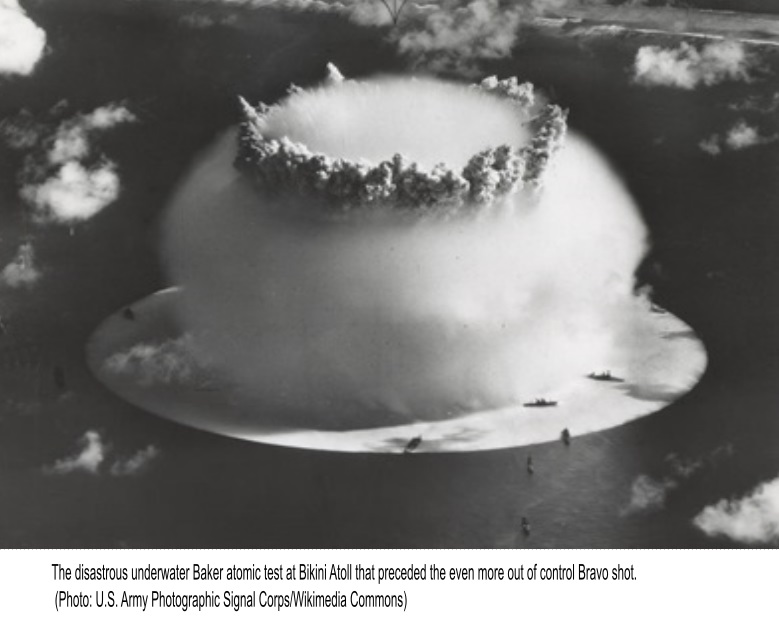
Only in the years since the programme ended has the true impact come to light. While the French military measured radiation levels after each explosion, the data was kept secret until victims’ associations won a legal battle to have it partially declassified in 2013.
“Every family in French Polynesia has a lot of cancer. It’s just not one. Some have, as we say, cocktails of cancer,”
Thirty years ago this week, on an island in the South Pacific, France conducted its final nuclear test – ending a programme that exposed thousands of people to radiation over decades. The islands of French Polynesia are still living with the fallout.
31/01/2026 By:Jessica Phelan, https://www.rfi.fr/en/france/20260131-the-long-half-life-of-france-s-nuclear-tests-in-polynesia
“It started with my grandmother. She had thyroid cancer during the Nineties. Then her first child, my auntie, had thyroid cancer too.”
Hinamoeura Morgant-Cross was a child in Tahiti when France last exploded a nuclear bomb. She has few memories of the years when her home was a testing ground, but they have changed the course of her life.
“My mum had thyroid problems… And also, my sister had thyroid problems. She has to take medication for the rest of her life. My auntie also got breast cancer a few years ago.
“And I have had chronic myeloid leukaemia since I was 24 years old.”
France tested nuclear weapons in Polynesia for 30 years. The explosions started in 1966, after France had already tested several bombs in the Algerian Sahara.
After Algeria claimed independence, France moved the tests to its colony in the South Pacific. They continued until 27 January 1996 – more than three years after the United States’ final test, four since the United Kingdom’s and five since the Soviet Union’s.
France chose two uninhabited atolls as its test sites, Moruroa and Fangataufa, which between them took the impact of 193 explosions – the biggest around 200 times more powerful than the bomb the US dropped on Hiroshima.
At least 41 took place in the open air, before tests were moved underground in 1975. Mushroom clouds drifted over the ocean, carrying radiation to populated islands – including Tahiti, more than 1,200 kilometres away.
Only in the years since the programme ended has the true impact come to light. While the French military measured radiation levels after each explosion, the data was kept secret until victims’ associations won a legal battle to have it partially declassified in 2013.
“Around 20 boxes” of documents out of thousands were released in that first batch, according to Patrice Bouveret of the Observatoire des Armements, a Lyon-based campaign group that helped make them public. But the information was enough for journalists and researchers to map a far broader pattern of exposure than France had ever publicly acknowledged.
One 1974 test alone exposed an estimated 110,000 people to more than the annual “safe” dose of radiation, according to a 2021 investigation led by public-interest newsroom Disclose.
The revelations pushed French President Emmanuel Macron to order the opening of all archives – with the exception of details that might suggest how to build a nuclear device. Tens of thousands of documents have since been released and continue to lay bare the gap between what French authorities knew about the risks, and what they told those most affected.
‘Cocktails of cancer’
“Every family in French Polynesia has a lot of cancer. It’s just not one. Some have, as we say, cocktails of cancer,” says Morgant-Cross, today a member of the French Polynesian parliament and an anti-nuclear campaigner.
“But it’s hard for them to think that it can be related to the nuclear tests because of the decades of French propaganda saying that French nuclear tests are clean.”
Visiting Tahiti in September 1966, president Charles de Gaulle declared that all precautions had been taken to ensure the tests would “not cause any inconvenience whatsoever to the dear people of Polynesia”.
Nearly three decades later, president Jacques Chirac – who ordered France’s final nuclear tests in 1995-96, reversing a moratorium that had halted the programme since 1992 – was still insisting that they had “strictly no ecological consequences”.
For years, Polynesians were told their lifestyle and eating habits were to blame for health problems, according to Morgant-Cross. She only made the connection between her family’s history of cancer and the nuclear tests, she says, when she met survivors in other countries.
Seeing the list of diseases that research has linked to radiation exposure, she realised the thyroid cancer that afflicted her relatives, as well as her own rare form of leukaemia, were among them.
“These aren’t illnesses that show up immediately after an explosion,” says Bouveret. “It’s not like a week later you get sick. They develop a long time afterwards.”
In 2023, France’s National Institute of Health and Medical Research, Inserm, used declassified military data to estimate how much radiation thyroid cancer patients had been exposed to and calculate what role it played. Researchers said nuclear tests “are most likely responsible for a small increase in the incidence of thyroid cancers in French Polynesia” – though they warned the estimated doses were probably inaccurate.
The difficulty of proving harm to health has been a barrier to compensation. France introduced a law in 2010 allowing victims to claim reparations from the state, but the criteria to qualify – which include demonstrating exposure to a certain level of radiation – have proved hard to meet.
Only 1,026 people had successfully claimed by the end of 2024, Bouveret says – 607 in mainland France, 417 from Polynesia and two from Algeria. “It’s ridiculous when you consider the number of people who have been impacted by these diseases.”
A bill to reform the law is before the French parliament. It would also bind the state to cover the costs of treating illnesses caused by radiation – estimated at some €855 million, and currently borne by French Polynesian social security.
A society upended
The broader consequences of France’s nuclear tests are even harder to quantify.
The programme kicked off massive construction, drawing islanders to help build military bases and research stations. Many stayed to work at the new sites, concentrating the population and shifting labour away from traditional fishing and farming.
Corals were flattened to make way for ships, which may have contributed to a dramatic rise in ciguatera – a type of food poisoning caused by eating fish sickened by toxins from plankton found on damaged reefs.
“They really poisoned our main food,” says Morgant-Cross. “We eat fish from breakfast to dinner.” Today the archipelago is largely dependent on food shipped in from elsewhere, and like other parts of overseas France, suffers from high cost of living.
As de Gaulle promised, the nuclear programme brought economic opportunities – but they depended on jobs and money provided by the French state, binding Polynesia ever more tightly to France.
Bouveret believes that helped stymie the archipelago’s aspirations to independence. Now, given the costs of caring for nuclear victims and containing the lingering radiation on Moruroa and Fangataufa, he says separating from France looks “extremely difficult”.
For Morgant-Cross, the first step is to “decolonise minds” and help Polynesians fathom the damage done. While she was at school in the 1990s, she recalls, children were still taught “we should be grateful” for the nuclear tests.
Things have changed since then, but confronting the past remains difficult – and not only for the generation who remember when speaking out could cost people their jobs or lead to arrest.
“As a mother of two boys, I really hope that they don’t have the burden of this issue like myself,” she says.
“I felt some trauma, but without understanding where it came from. And I understood with my grandmother, when I saw the fear in her eyes… I saw how guilty she felt because of the leukaemia that I have. She felt that if she had protested more, maybe I would not be sick today.
“It’s really traumatic for our people.”
Listen to a version of this story on the Spotlight on France podcast, episode 139.
Small Modular Reactors: Game changer or more of the same?
There has been a large amount of publicity on Small Modular Reactors (SMRs) based on exaggerated, unproven or untrue claims for their advantages over large reactors. Only one order for a commercially offered design has been placed (Canada) and that had yet to start construction in January 2026. The UK should not invest in SMRs until there is strong evidence to support the claims made for them.
Policy Brief, Stephen Thomas, Emeritus Professor of Energy Policy, Greenwich University, 31 Jan 26 https://policybrief.org/briefs/small-modular-reactors-game-changer-or-more-of-the-same/
Introduction
With current large reactor designs tarnished by their poor record of construction, attention for the future of new nuclear power plants has switched to Small Modular Reactors (SMRs). The image of these portrayed in the media and by some of their proponents is that they will roll off production lines, be delivered to the site on the back of a truck and, with minimal site assembly, be ready to generate in next to no time; they will be easy to site, a much cheaper source of power, be safer and produce less waste than large reactors; as a result, they are being built in large numbers all around the world. But what is the reality?
What are SMRs and AMRs?
In terms of size, the International Atomic Energy Agency (IAEA) defines SMRs as reactors producing 30-300MW of power and defines reactors producing up to 30MW as micro-reactors. In practice, the size of SMRs is increasing and of the seven designs that have received UK government funding, four are at or beyond the 300MW upper limit for SMRs.1 The vendors of the two micro-reactor designs funded by the UK have both collapsed,2 leaving the X-Energy Xe-100 the only reactor design, at 80MW, that is technically an SMR.
The term Advanced Modular Reactor (AMR) is largely a UK invention and denotes reactors using designs other than the dominant large reactor technologies — Pressurised and Boiling Water Reactors (PWRs and BWRs). In other countries, the term SMR covers all reactors in the IAEA’s size range. None of the proposed AMR designs are new, all having been discussed for 50-70 years but not built as commercial reactors. They can be divided into those built as prototypes or demonstration reactors — the Sodium-cooled Fast Reactor (SFR) and the High Temperature Gas-cooled Reactor (HTGR) — and those that have not been built — Molten Salt Reactors (MSRs) and Lead-cooled Fast Reactors (LFRs).
Some designs include a heat storage device so that when demand is high, this heat can be used to generate additional electricity as well as that generated by the reactors. When electricity demand is low, the heat produced by the reactor can be stored for when demand is higher, giving it a generating flexibility. For example, the Terrapower SFR design includes molten salt heat storage to boost the station’s output from 345MW to 500MW at peak times. This is intended to address the issue that operating reactors in ‘load-following mode’ is problematic technologically and economically. It is not clear whether this generating flexibility justifies the substantial additional expense of the heat storage system.
What is the case for SMRs and AMRs?
SMRs and AMRs are presented, not only by the nuclear industry, but also by the media and government, as established, proven, commercial products. The main claims for SMRs and AMRs compared to large reactors are:
- They will be cheaper to build per kW of capacity and less prone to cost overruns;
- They will be quicker and easier to build and less prone to delay;
- They will produce less waste per kW of capacity;
- Building components on factory production lines will reduce costs;
- Modular construction, reducing the amount of site-work, will reduce costs and delays;
- They will be safer;
- They will generate more jobs.
There have been numerous critiques that demonstrate these claims are at best unproven or at worst simply false.3 The summary of the critiques on each point is as follows.
Construction Cost
The first commercial reactors worldwide were mostly in the SMR size range, but they proved uneconomic and the vendors continually increased their size to gain scale economies, culminating in the 1600MW Framatome European Pressurised Reactor (EPR). Intuitively, a 1600MW reactor vessel will cost less than ten 160MW reactor vessels. While increasing their size was never enough to make the reactors economic, it is implausible that scaling them down will make them cheaper per unit of capacity because of the lost scale economies. It appears that SMRs are struggling to be economically viable. Holtec doubled the electrical output of its design at some point in 2023.4 The realistic competitors to SMRs are not large reactors but other low-carbon options such as renewables and demand-side management.
“While increasing their size was never enough to make the reactors economic, it is implausible that scaling them down will make them cheaper per unit of capacity because of the lost scale economies.”
Construction time
There is no clear analysis explaining why reactors are now expected to take longer to build and why they seem more prone to delay.5 However, it seems likely that the issue is that the designs have got more complex and difficult to build as they are required to take account of vulnerabilities exposed by events such as the Fukushima disaster. The problems thrown up by the occupation of Ukraine’s Zaporizhia site by Russia have yet to be taken up in new reactor designs. As a result of the 9/11 terrorist attack on New York, new reactor vessels are required to be able to withstand an aircraft impact. The conflict in Ukraine spilled on to the Zaporizhia site causing concerns that a serious accident would result. Analysis suggests that the exterior of other parts of the plant should be toughened. If the issue is complexity rather than size per se, reducing the size of the reactors may do no more than make construction a little easier.
Waste
For SMRs, there is a clear consensus that they will produce more waste per unit of capacity than a large reactor. For example, Nuclear Waste Services, the UK body responsible for waste disposal said: “It is anticipated that SMRs will produce more waste per GW(e) than the large (GW(e) scale) reactors on which the 2022 IGD data are based.”6 Alison MacFarlane, former chair of the US Nuclear Regulatory Commission (NRC) wrote: “The low-, intermediate-, and high-level waste stream characterization presented here reveals that SMRs will produce more voluminous and chemically/physically reactive waste than LWRs, which will impact options for the management and disposal of this waste.”7 The AMRs will produce an entirely different cocktail of waste varying according to the type of reactor.
“SMRs will produce more voluminous and chemically/physically reactive waste than Large Light Water Reactors”
Factory production lines
In principle and in general, production lines, which have high set-up costs, can reduce costs with high-volume items with a fixed design and a full order book. But, if demand is not sufficient to fully load the production line or the design changes requiring a re-tooling, the fixed costs might not be fully recoverable. The production lines proposed for SMRs will produce less than a handful of items per year — a long way from a car or even an aircraft production line — and the market for SMRs is uncertain, so guaranteeing a full order book is impossible. There is also a ‘chicken and egg’ issue that the economics of SMRs will only be demonstrated when the components are produced on production lines, but production lines will only be viable when the designs are demonstrated sufficiently to provide a flow of orders.
Modularity
Modularity is a rather vague term, and all reactors will be made up of components delivered to the site and assembled there, any difference between designs being down to the extent of site work. The Westinghouse AP1000 design is said to be modular but this did not prevent all eight orders suffering serious delays and cost overruns. Framatome now describes the successor design to the EPR, the 1600MW EPR2, as modular.8
Safety
Some of the SMRs and AMRs rely on ‘passive’ safety, in other words, they do not require the operation of an engineered system to bring the reactor back under control in the event of an accident. A common assumption is that because it is passive, it is fail-safe, and will therefore not require back-up safety systems and so will be cheaper. None of these assumptions is true and, for example, the UK Office of Nuclear Regulation (ONR) has said for the 20MW PWR design from Last Energy: “ONR advised that it is philosophically possible to rely entirely on two passive safety systems, providing there is adequate defence in depth (multiple independent barriers to fault progression)”.9 Some designs rely on being built underground but the Nuward and NuScale designs that use this have struggled to win orders with Nuward being abandoned and NuScale losing its only major order prospect because of rising costs.10
Job creation
A key selling point for SMRs is that they will require much less site work and that implies fewer jobs. More of the work will be done in factories but the business model for SMRs requires that, globally, as few factories be built as possible to maximise scale economies, so if, for example, the factory is not in the UK, neither will the jobs be.
What is the experience with SMRs?
Many reactors that fall into the size range of SMRs were built in the 1960s including 24 reactors in the UK. By the mid-60s, almost all new orders were for reactors larger than 300MW. This century, only two SMR projects have been completed11, one in China and one in Russia, but neither design appears to have any firm follow-up projects. Two projects are under construction, one in Russia and one in China, but neither design appears to have any further firm order prospects. There is one micro-reactor under construction in Argentina (see Table below).
The most advanced project using a commercially available design is for a GE Vernova BWRX-300 reactor to be built at the Darlington site in Canada. There appears to be a firm order for this reactor although by January 2026, construction had not started. The Canadian safety regulator will assess the design during the construction period, not before construction starts as would be required in most jurisdictions; this gives rise to a risk of delays and cost escalation if a design issue requiring additional cost emerges during construction.
There are several other projects with a named site and design, often presented in the media as being under construction, but these have yet to receive regulatory approval for the design, they do not have construction permits and a firm reactor order has not been placed. Those listed in Table 1 are the ones that appear most advanced in terms of regulatory approvals. Numerous other projects have been publicised, invariably with ambitious completion date targets, but they are some distance from a firm order being placed. Up to this point, historically, a high proportion of nuclear projects of all sizes announced do not proceed and there is no reason to believe this will not be the case with these projects. Once a firm reactor order has been placed, the project is more likely to go ahead because the cost of abandonment is high.
The two operating SMRs (in China and Russia) have a very poor record in terms of construction time and operating performance, but authoritative construction costs are not known. Completion of the three under construction is also behind schedule. While these projects are not for commercial designs, this provides no evidence that the ambitious claims for SMRs will be met.
Conclusions
The perception that SMRs are being built in large numbers is untrue and the claims made for them in terms of, for example, cost, safety, and waste are at best unproven and at worst false.
The image of them being much smaller than existing reactors is incorrect. The IAEA’s size range is arbitrary but the clear trend for SMRs to increase in size does put a question mark against the claims made for them such as reduced cost per kW due to small size, ease of siting and mass production. Most of the designs that have realistic order prospects are at or beyond the 300MW upper limit of the IAEA range for SMRs. This is illustrated by the Holtec design which, for more than a decade was being developed as a reactor, SMR160, designed to produce 160MW of electricity. In 2023 and with no publicity, the output of the reactor was doubled to become the SMR300 and projects using this technology are foreseeing 340MW of power. The idea that siting and building them will be easy is not credible; a reactor of more than 300MW will need to be carefully sited so it is not vulnerable to sea-level rise or to seismic issues and will require substantial on-site work including foundations, suggesting that the claim that these projects would be largely factory built is implausible. It would also mean that either the modules would be very large making them difficult to transport or would require a larger number of modules increasing the amount of site-work.
“The perception that SMRs are being built in large numbers is untrue and the claims made for them in terms of, for example, cost, safety, and waste are at best unproven and at worst false.”
This increased size also means that the image of a rolling production line producing large numbers of reactors is inaccurate. Rolls Royce, whose design has increased to 470MW, is anticipating its production lines would produce components for only two reactors per year.
The UK, along with Canada and the USA is in the vanguard of development of SMR designs. The history of nuclear power shows that developing new reactor designs is an expensive venture with a high probability of failure. The UK’s chosen design is the largest SMR design on offer and is being developed by a company with no experience designing or building civil nuclear power plants. Submarine reactors have very different design priorities and the reactors built by Rolls Royce use US designs. There is huge scope for the UK to build much cheaper offshore wind and to carry out energy efficiency measures which would have the double dividend of reducing emissions and tackling fuel poverty. It would make much more sense for the UK to let other countries make the investments and take the risk and only if SMRs are shown to fulfil the claims made for them to then adopt them as part of the UK’s generating mix.
| Country | Site | Vendor | Technology | Output MW | Status | Construction start | Commercial operation | Load factor |
|---|---|---|---|---|---|---|---|---|
| Russia | Lomonsov | Rosatom | PWR | 2 x 32 | Operating | April 2007 | May 2020 | 32.1% |
| Russia | Brest | Rosatom | SFR | 300 | Under construction | June 2021 | 2028/29 | |
| China | Shidoa Bay | Tsinghua | HTGR HTR-PM | 200 | Operating | December 2012 | December 2023 | 26.9% |
| China | Linglong 1 | CNNC | PWR ACP100 | 100 | Under construction | July 2021 | 2026? | |
| Argentina | Carem25 | CNEA | PWR Carem | 25 | Under construction | August 2015 | 2028? | |
| Canada | Darlington | GE Vernova | BWRX-300 | 300 | Firm order | – | 2030? | |
| USA | Kemmerer | Terrapower | SFR Natrium | 345 | Construction permit applied for | – | 2031? | |
| USA | Palisades | Holtec | PWR SMR300 | 2 x 340 | Pre-licensing | – | 2030? | |
| USA | Clinch River | GE Vernova | BWRX-300 | 300 | Construction permit applied for | – | 2033? | |
| UK | Wylfa | Rolls Royce | PWR | 470 | Design review | 2030? | 2035? | |
| UK | Llynfi | Last Energy | PWR | 4 x 20 | Site licence applied for | 2028? | 2030? |
Note: Load factor is the most widely used measure of reactor reliability and is measured as the electrical output of the plant as a percentage of the output produced if the reactor had operated uninterrupted at full power.
Endnotes…………………………………………………………………………………………………………………………………………………………….
1 This Month

18 March Webinar @ 1 PM EST: An Assessment of SMR Projects: The Case of Canada
register for the zoom:
https://us02web.zoom.us/webinar/register/WN_o8BIIOUvQ2ONJR1nta65DQ#/registration

of the week – STOP SMALL MODULAR REACTORS IN CANADA
To see nuclear-related stories in greater depth and intensity – go to https://nuclearinformation.wordpress.com
-
Archives
- February 2026 (256)
- January 2026 (308)
- December 2025 (358)
- November 2025 (359)
- October 2025 (376)
- September 2025 (258)
- August 2025 (319)
- July 2025 (230)
- June 2025 (348)
- May 2025 (261)
- April 2025 (305)
- March 2025 (319)
-
Categories
- 1
- 1 NUCLEAR ISSUES
- business and costs
- climate change
- culture and arts
- ENERGY
- environment
- health
- history
- indigenous issues
- Legal
- marketing of nuclear
- media
- opposition to nuclear
- PERSONAL STORIES
- politics
- politics international
- Religion and ethics
- safety
- secrets,lies and civil liberties
- spinbuster
- technology
- Uranium
- wastes
- weapons and war
- Women
- 2 WORLD
- ACTION
- AFRICA
- Atrocities
- AUSTRALIA
- Christina's notes
- Christina's themes
- culture and arts
- Events
- Fuk 2022
- Fuk 2023
- Fukushima 2017
- Fukushima 2018
- fukushima 2019
- Fukushima 2020
- Fukushima 2021
- general
- global warming
- Humour (God we need it)
- Nuclear
- RARE EARTHS
- Reference
- resources – print
- Resources -audiovicual
- Weekly Newsletter
- World
- World Nuclear
- YouTube
-
RSS
Entries RSS
Comments RSS
 nuclear-news