Miliband’s Nuclear Quango Chief In Line for £200,000 for Working Three Days a Week

Guido Fawkes 4th Aug 2025, https://order-order.com/2025/08/04/milibands-nuclear-quango-chief-in-line-for-200000-for-working-three-days-a-week/
Great British Energy – Nuclear (not to be confused with the inexplicably separate quango Great British Energy) is searching for a new chairman. ‘GBE-N’, as it is known in the ever growing domain of government bodies poking around in the energy industry, is in charge of delivering small modular reactors (SMRs) in the UK, among other things. That programme has been ongoing since at least 2015…
Now Red Ed is looking for a new head for the organisation – and a live job advert shows a cool salary of more than £203,268 per annum for just three days a week. Meltdown for taxpayers…
The government is banking on deploying SMRs in the 2030s. The new chair will oversee that target with a “more agile, programmatic and faster delivery approach than has been achieved previously”. That won’t be hard, because currently zero SMRs have been delivered. It’s such a civil service priority it’s a three day a week role…
Los Alamos National Laboratory (LANL) Expands Nuclear Bomb Production, Rejects Cleanup, Still Plans to Release Tritium.
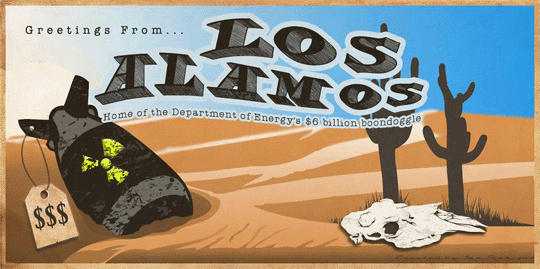
| Lab officials have released plans to “defer” cleanup of one of the older radioactive dumps |
| Overarching above all is LANL’s vast expansionof its nuclear weapons programs |
August 3, 2025, https://nukewatch.org/lanl-expands-bomb-production-while-planning-tritium-releases-and-rejecting-cleanup/
Santa Fe, NM – Eighty years after the first radioactive waste was buried at the Los Alamos National Laboratory (LANL), Lab officials have released plans to “defer” cleanup of one of the older radioactive dumps. Material Disposal Area C (“Area C”) is an 11.8-acre site that was active from 1948 to 1974. It contains metals, hazardous constituents, and radioactively and chemically contaminated materials in six unlined disposal pits and 108 shafts. The total waste and fill in the pits and shafts are estimated at 198,104 cubic meters. Area C also has a serious gas plume of industrial solvents. Given the amount of long-lived plutonium wastes that are likely to be in Area C, leaving it buried 25 feet deep in a landfill rated for only 1,000 years is not acceptable.
On June 18, 2025, the Department of Energy (DOE) sent the New Mexico Environment Department (NMED) a letter outlining its plans to “defer corrective action” (i.e. cleanup) at Area C. It stated that the dump “is associated with active Facility operations and will be deferred from further corrective action under [NMED’s] Consent Order [governing cleanup] until MDA C is no longer associated with active Facility operations.”
DOE’s letter does not state why it wants the change or what “active Facility operations” are. However, that is not difficult to guess as Area C is within a few hundred yards of PF-4, LANL’s main plutonium facility that is gearing up for the expanded production of plutonium pit bomb cores. As co-plaintiff, Nuclear Watch New Mexico legally forced the National Nuclear Security Administration (NNSA) to undertake a nationwide programmatic environmental impact statement for pit production, which the agency chose to give a fifty year time horizon. In combination this means that DOE and LANL are seeking to indefinitely postpone cleanup while expanding nuclear weapons production on into the future.
Fortunately, NMED has responded that it “will utilize to the fullest extent all statutory and legal authority necessary to enforce the requirements of the 2016 CO [Consent Order] in order to ensure that New Mexicans receive effective cleanup of legacy contamination at LANL in a timely manner.”
The Environment Department went on to say:
“DOE continues to respond to the regulatory direction provided by NMED in ways that do not reflect any good faith efforts to be accountable for cleanup of the legacy waste at Los Alamos National Laboratory and, in fact, are directly contradictory to the assertations previously made by DOE. As you may recall, during the substantial negotiation process in 2023-24 for revision of the Consent Order, DOE repeatedly reiterated its desire to work collaboratively and effectively with NMED. This recent example of an improper, unilateral deferral contrary to the terms of the Consent Order, along with the bad-faith withdrawal of the CME [Corrective Measures Evaluation to initiate cleanup] Report, contradict such assertions and reassurances from DOE.”
At the same time DOE and LANL are still seeking to intentionally release up to 30,000 curies of tritium, which has been highly controversial. Tritium is a radioactive isotope of hydrogen that can be easily absorbed by the body as tritiated water. Instead of complying with a NMED order to organize an independent expert panel and a public meeting on the subject, they have invoked a dispute resolution process under the Consent Order. This is the kind of forum in which taxpayer supported lawyers from DOE and LANL can try to run circles around NMED’s limited staff and resources.
Overarching above all is LANL’s vast expansion of its nuclear weapons programs. A full billion dollars is being added in FY 2026 (which begins this October 1), making 84% of LANL’s $6 billion dollar annual budget directly tied to nuclear weapons. This increase is primarily for:
1) New-design nuclear weapons that can’t be tested because of the international testing moratorium; or, conversely, could prompt the U.S. to resume testing, with serious global proliferation consequences; and
2) Expanded plutonium pit bomb core production for these new-design nuclear weapons. This is ill-conceived because no future production is to maintain the existing stockpile. Independent experts have found that pits last at least a century and at least 15,000 existing pits are already in storage.
In contrast, cleanup and nonproliferation programs are being cut by 5%, non-weapons science by 50%, and renewables energies research completely eliminated.
Scott Kovac, Research Director of Nuclear Watch New Mexico commented, “LANL and DOE once again treat New Mexico as their nuclear colony with their radioactive releases, obstruction of cleanup and expansion of nuclear weapons programs. The day will come when this is no longer tolerated in the Land of Enchantment.”
Sources:
June 2016, State of New Mexico Environment Department, Compliance Order on Consent U.S. Department of Energy – Los Alamos National Laboratory (Modified September 2024)
June 18, 2025 Letter from DOE to NMED, Deferment of Corrective Action Activities for Solid Waste Management Unit 50-009 at Material Disposal Area C under the 2016 Compliance Order on Consent
July 2, 2025 Letter from NMED to DOE, Response, Deferment of Corrective Action Activities for Solid Waste Management Unit 50-009 at Material Disposal Area C
July 9, 2025, LANL and NNSA to NMED, Response to June 9, 2025 Letter, Temporary Authorization Los Alamos National Laboratory Hazardous Waste Facility Permit
Department of Energy FY 2026 Congressional Budget Request, Laboratory Table
A NASA Nuclear Reactor On The Moon? Bold Proposal Is Unfeasible By 2030– Here’s Why.
There are already many complications in this proposal,
which has not been officially released yet. The Trump administration
proposed a budget that would devastate NASA’s multiple science programs,
and while it asked for more funding for human spaceflight in the short
term, it would cancel the Space Launch System and Orion Spacecraft, making
NASA exclusively reliant on private companies to get to the Moon. As yet,
we don’t have one of those that won’t stop exploding.
IFL Science 5th Aug 2025, https://www.iflscience.com/a-nasa-nuclear-reactor-on-the-moon-bold-proposal-is-unfeasible-by-2030-heres-why-80289
When the Press Becomes the Enemy: The Erosion of Media Independence in Trump’s America
6 August 2025 Michael Taylor, https://theaimn.net/when-the-press-becomes-the-enemy-the-erosion-of-media-independence-in-trumps-america/
A free and independent press is one of democracy’s last lines of defense. It’s where power is questioned, facts are verified, and the public gains its understanding of the world. But under President Trump’s leadership – particularly in his second term – the media has been steadily undermined, attacked, and manipulated into submission.
From the earliest days of his political rise, Trump branded the press “the enemy of the people.” At the time, it sounded like theatre – one of his many outrageous slogans designed to rile up the crowd. But over time, it became policy. Journalists were banned from briefings. Reporters were publicly harassed at rallies. Entire news organisations were delegitimised as “fake news” unless they offered praise. What started as rhetoric turned into a campaign of disinformation and intimidation.
This erosion of media independence has happened in two key ways: by silencing critical voices, and by co-opting sympathetic ones.
Independent journalists now work under constant threat. Legal pressure, license challenges, defamation suits, and even surveillance have become tools to muzzle dissent. Whistleblowers are prosecuted, not protected. Major networks once known for tough questions now pull their punches – or are simply locked out.
At the same time, pro-Trump media outlets have risen in influence, often indistinguishable from state-run propaganda. Whether it’s Fox News personalities given cabinet positions, or social media influencers granted White House access in exchange for loyalty, the lines between journalism and political theatre have blurred.
These outlets don’t challenge power – they amplify it. They repeat Trump’s talking points uncritically, flood the zone with outrage and distraction, and vilify any journalist who dares to question the narrative. The result is an information landscape where truth becomes tribal, and lies travel faster than facts.
Why does this matter? Because a democracy without a free press cannot stay democratic for long. When citizens no longer trust what they see or hear – when news becomes just another weapon of the powerful – then accountability dies, and corruption thrives.
Some journalists continue to fight. They fact-check, investigate, and shine light where it’s needed most. But their space is shrinking, and their safety increasingly uncertain. In many ways, the press has not just been pushed to the sidelines – it’s been made part of the battlefield.
History teaches us that authoritarian regimes always start by silencing the press. What’s unfolding in America is no exception. We may still have newspapers, networks, and headlines – but when truth itself is up for debate, freedom is already slipping through our fingers.
Threat of Nuclear War Is Rising, But Scientists Say the Public Can Change That

Jon Letman , Truthout, August 4, 2025, https://truthout.org/articles/threat-of-nuclear-war-is-rising-but-scientists-say-the-public-can-change-that/?utm_source=Truthout&utm_campaign=52c13be8d1-EMAIL_CAMPAIGN_2025_08_04_09_03&utm_medium=email&utm_term=0_bbb541a1db-52c13be8d1-650192793
Eighty years after two U.S. atomic bombs killed between 110,000 to 210,000 people in Hiroshima and Nagasaki, Japan, public awareness of nuclear risks has fallen to new lows, said Laura Grego, senior scientist and research director with the Union of Concerned Scientists.
“I think people don’t know how terrible nuclear war would be,” Grego told Truthout on July 16 — 80 years to the day since the first-ever atomic detonation in New Mexico. The Trinity test was conducted just three weeks before the U.S. dropped two atomic bombs on Japan.
Brian Schmidt, an American-Australian astrophysicist who received the Nobel Prize for physics in 2011, pointed out that many of today’s nuclear weapons are far more destructive than the bombs used in the horrific Hiroshima and Nagasaki bombings. In contemporary arsenals, a single bomb can contain as much destructive power as was unleashed in all of World War II
Currently, the world’s nine nuclear-armed nations are estimated to possess the destructive equivalent of 146,500 Hiroshima-sized bombs, many of which are ready to launch on short notice.
Schmidt told Truthout that even a “small” nuclear weapon could precipitate the use of a gigaton’s worth of nuclear arsenal being used, causing the collapse of civilization.
“I think the public needs to be focused on asking our respective governments to lower the risk of nuclear war,” he said.
Nuclear Spending Is Rising as Arms Treaties Are Abandoned
Today, nuclear weapons spending is rising, nuclear-armed nations are modernizing and upgrading their weapons, and China is rapidly expanding its arsenal. Currently, the U.S. has seven modernization programs underway, is building two new nuclear weapons facilities, and replacing its entire intercontinental ballistic missile force with a new system that is 81 percent over budget. The U.S., which spends more on nuclear weapons than the other eight nations combined, is forecast to spend an average of $95 billion per year over the next decade, according to the Congressional Budget Office.
In contemporary arsenals, a single bomb can contain as much destructive power as was unleashed in all of World War II.
In recent years, nuclear threats have become increasingly common while diplomacy and dialogue are overshadowed by mistrust, conflict, and war. As reliance on nuclear weapons grows, there are fears of a new arms race and possible return to nuclear explosive testing. This comes as critical arms treaties have been abandoned or face an uncertain future.
In 2001, George W. Bush announced the U.S. would withdraw from the Anti-Ballistic Missile Treaty, and under Donald Trump, the U.S. has rejected or withdrawn from the Intermediate-Range Nuclear Forces Treaty, the Open Skies Treaty, the (conventional) Arms Trade Treaty, and the 2015 Iran nuclear deal. The last remaining nuclear arms control agreement between the U.S. and Russia, the New START Treaty, will end in February 2026 unless it is renegotiated or replaced soon.
After World War II, the U.S., followed by the Soviet Union, invested heavily in developing nuclear weapons, with the U.K., France, China, and later Israel, India, Pakistan, and North Korea building their own bombs. In the mid-1980s, global nuclear arsenals peaked at just over 70,000 warheads. Arms control treaties and diplomacy succeeded in reducing those numbers to roughly 12,200 today, nearly 90 percent of which are possessed by Russia and the United States.
While some argue that nuclear deterrence provides safety and security, many in the arms control and scientific communities believe that the threat of nuclear war has never been higher. In the first six months of 2025, five nuclear-armed countries (Russia, India, Pakistan, Israel, and the United States) have engaged in military hostilities or outright war, increasing the risk of nuclear war by accident, miscommunication, or design.
Warnings and Solutions
Last month, on the Trinity test anniversary, an assembly of more than a dozen Nobel Prize laureates and some 60 nuclear experts gathered for three days of discussions at the University of Chicago to come up with practical, actionable steps that can be taken now to reduce the risk of nuclear war.
The world’s nine nuclear-armed nations are estimated to possess the destructive equivalent of 146,500 Hiroshima-sized bombs.
In a press conference, the group presented a two-page declaration for the prevention of nuclear war signed by 127 Nobel laureates representing six disciplines and at least 44 nuclear experts. Among their recommendations was a call for every nation to publicly recommit to all nonproliferation and disarmament objectives and obligations, to reiterate commitment to the nuclear explosive test moratorium, and for Russia and the U.S. to enter into immediate arms control negotiations. They also called on scientists, academics, civil society, and communities of faith to “create the necessary pressure on global leaders to implement nuclear risk reduction measures.”
Speaking at the university, Cardinal Silvano Maria Tomasi, an adviser to Pope Leo XIV said, “The Trinity explosion taught us what we are capable of destroying. The task before us now is to rediscover what we are capable of preserving and building.”
The choice of venues was intentional as the University of Chicago was where key steps in the Manhattan Project were achieved, where the Bulletin of the Atomic Scientists was founded, and where the symbolic Doomsday Clock was created to communicate threats to humanity and the world. Today, the clock is set at 89 seconds to midnight — the closest it has ever been to global catastrophe.
Headed in the Wrong Direction
Alexandra Bell, president and CEO of the Bulletin of the Atomic Scientists, points out that the Chicago assembly wasn’t the first time Nobel laureates have called for leaders to rein in nuclear dangers. But now, after decades of “slow, tedious, difficult progress” to create restraints to prevent a nuclear catastrophe, the world has reached a reckoning point: “Those [structures] are crumbling and we seem to be heading in the wrong direction,” she says.
Although we have the diplomatic and political tools as well as the historical background to reduce risks, Bell says today’s leaders lack the necessary ambition and will. This raises the question: Will our luck hold out?
“The odds are not in our favor,” she says.
The last remaining nuclear arms control agreement between the U.S. and Russia, the New START Treaty, will end in February 2026 unless it is renegotiated or replaced soon.
Yet even in the face of nuclear peril, she understands why people seem more concerned about the price of eggs. In addition to so many other concerns, Bell says, people still need to care about nuclear war because the threat has never gone away. She insists that ordinary people do have a role to play and can have an impact by pressuring elected officials or simply starting a conversation with each other.
“This affects all of us,” says Bell. “And if we get the nuclear problem wrong, nothing else matters.”
More Weapons, More Risks
In a time of growing geopolitical tension and instability, when international norms are under stress, competition between nuclear weapon states means greater nuclear risks, says Mallory Stewart, executive vice president at the Council on Strategic Risks.
Stewart told Truthout that it’s important to dispel the perception that nuclear risk reduction is an esoteric, political issue only for experts, and bring an end to public complacency: “It would be nice if the public felt some agency to say, ‘It’s not as simple as arms racing. It’s not as simple as might makes right. There is a deeper threat to humanity.’”
“The Trinity explosion taught us what we are capable of destroying. The task before us now is to rediscover what we are capable of preserving and building.”
“Growing reliance on nuclear weapons and modernization or more weapons will just lead to more weapons and modernization on the other side,” Stewart says.
Understanding and Engagement
James McKeon, a program officer for nuclear security at the Carnegie Corporation of New York, encourages people to educate themselves about arms control, nonproliferation, or the basics of nuclear technology. “It’s no more complicated than any other scientific topic,” he says, pointing to resources that clearly explain the science, history, and policies of nuclear issues.
McKeon says we need new ways for artists, writers, and creative individuals to think about nuclear policy. An engaged citizenry, he says, is more likely to reach out to elected officials and understand that the risk of nuclear weapons hasn’t gone away and is compounded by new technologies.
Robert Latiff is a retired major general in the Air Force who teaches weapons ethics and how new technology impacts the laws of armed conflict at Notre Dame University. “There is absolutely no ethical argument for nuclear weapons,” he says. He prefers not to call them “weapons” because they can’t be used to fight a war. “They’re more devices of terror than they are weapons,” he says. “Fight a war with nuclear weapons and what do you have left?”
Latiff points to George H. W. Bush’s 1991 Presidential Nuclear Initiatives which took unilateral action to remove U.S. tactical nuclear weapons from Europe and South Korea. He says that with moral courage, a U.S. president could again have a huge impact on nuclear policy.
Climate of Fear
Wole Soyinka, a Nigerian playwright and recipient of the 1986 Nobel Prize for literature, also came to Chicago to grapple with how to reduce nuclear risks. “We do have an enhanced climate of fear right now,” he told Truthout.
This affects all of us. And if we get the nuclear problem wrong, nothing else matters.
“It isn’t only global warming that we are witnessing. There’s a certain heating up of, shall we say, human and social relationships and national interaction,” says Soyinka. He describes a “disturbing escalation of violence” and a “kind of demonic sweep of leadership” in which politicians blithely declare, “if necessary, I will use an atom bomb,” and display what he calls “boastful, arrogant, hubristic body language” and terms like “little rocket man” and “obliterating unilaterally.”
Since 2009, the African continent has been designated a nuclear-weapon-free zone under the Treaty of Pelindaba. Africa is often left out of the nuclear conversation, but it was in the colonized Algerian Sahara that France conducted 17 nuclear weapons tests in the 1960s over the protests of African nations.
“If there is an atomic war in Ukraine, even Africa would be affected. We probably see that reflected more and more in the literary arts as well as the graphic arts,” Soyinka says. “Many people still believe that political leaders are people of common sense and that has never happened. My imagination has gone over and beyond that, and I wake up sometimes wondering what will be the next global conflagration.”
Uprooting the Nuclear Order
Laura Grego from the Union of Concerned Scientists warns that when the U.S. military makes war plans, it doesn’t include the full spectrum of what would happen in a nuclear war, saying, “I think they don’t want to know the answer because it’s terrible.”
Grego told Truthout that military expectations for nuclear war can be found in National Academies reports, which she believes likely undercount the long-term effects of radioactive fallout, possibly by as much as a factor of 10. Nuclear winter, major disruptions to agriculture, and mass starvation are long-term consequences of nuclear war that are usually not counted by military planners, Grego says. “We’re running risks that we don’t fully understand.”
We’re a democracy and our responsibility is to make sure our policies align with our democratic values, with our hopes for the world, hopes for a long-term future for our children that is healthy, secure, and sustainable.”
The Nobel declaration calls on all nations to increase investment and cooperative research on the environmental, social, military, and economic impacts of nuclear conflict, and to support a UN Independent Scientific Panel on the Effects of Nuclear War.
Grego is also concerned about the expanding role of nuclear weapons. “Russia has recently changed their nuclear policy to say that they’re meant to deter nuclear powers that are helping a non-nuclear adversary,” she says, adding that the role of nuclear weapons should be reduced and that by investing heavily in modernization, we are disincentivizing the reduction of nuclear weapons. Investing in nuclear weapons, she says, indicates we expect them to be around for another 80 years.
“We need to find a way to wean ourselves off the reliance of [nuclear weapons],” Grego says, noting that the leader of a major nuclear-armed country could transform the world by eliminating nuclear weapons with a verified plan and encouraging others to join them. Doing so, however, would surely mean facing powerful, determined opponents who are invested in maintaining the status quo. Grego hopes global leaders will demonstrate a commitment to political courage over simply seeking unilateral security advantages.
In her interactions with members of Congress, Grego says they report almost never hearing their constituents bring up nuclear weapons. It’s not enough for the public to be scared or angry at how we’ve organized our security, she says. “We do need to further engage. We’re a democracy and our responsibility is to make sure our policies align with our democratic values, with our hopes for the world, hopes for a long-term future for our children that is healthy, secure, and sustainable.”
CORRECTION: This article was updated on August 4, 2025, to reflect that 127 Nobel laureates and at least 44 nuclear experts signed a two-page declaration for the prevention of nuclear war.
Julian Assange Joins Historic Anti-Genocide March Across Sydney’s Harbour Bridge
By Joe Lauria, Consortium News, 3 August 25, https://consortiumnews.com/2025/08/03/assange-joins-historic-anti-genocide-march-across-sydneys-harbour-bridge/
Julian Assange joined at least 90,000 and as many as 300,000 people who marched across Australia’s most famous bridge on Sunday to protest Israel’s genocide in Gaza.
Wikileaks founder Julian Assange, his wife Stella and brother Gabriel Shipton joined Australian journalist Mary Kostakidis and, according to police estimates, 90,000 other people, but according to organizers as many as 300,000, to march across Sydney’s Harbour Bridge on Sunday to demand an end to Israel’s genocide in Gaza.
The Sydney Morning Herald reported:
“At least 90,000 pro-Palestine protesters walked across Sydney Harbour Bridge and into history through the pelting rain, as a larger crowd than expected used the landmark as a symbol, bringing the city to a standstill and leading police to sound the alarm of a potential crowd crush.
In the face of the sheer size of the protest against the Israeli government’s actions in Gaza, which organisers say drew between 200,000 and 300,000 people, police were forced to ditch plans for the march to end at North Sydney and redirected the crowd. … The last major march across the bridge was 25 years ago, when 250,000 people marched in support of reconciliation [with Indigenous Australians.]”
Kostakidis is in court accused of racial hatred by the Zionist Federation of Australia for her social media reporting and commentary critical of the Israeli government’s genocide in Gaza.
[Consortium News was on the bridge and will be providing a full video report.].
The New South Wales premiere and police both tried to stop the march from happening by making protestors liable to arrest for blocking traffic. It took a Supreme Court ruling on Saturday to let it go ahead. About four times as many people turned up than organizers had expected — even in a driving winter rain — because of the concerted effort to stop it, an organizer told The Sydney Morning Herald.
The paper quoted Palestine Action Group organiser Josh Lees as saying said the march was “’even bigger than we dreamt of’ after people travelled from across the country to attend. He called the event a ‘monumental and historic’ success. ‘Today was just a huge display of democracy,’ he said.”
The massive turnout shows the revulsion a good number of Australians feel for Israel’s ongoing slaughter and for their government’s complicity. “Netanyahu/Albanese you can’t hide. Stop supporting genocide,” the protestors chanted.
Police were not prepared for the outpouring of outrage. The Herald said:
“NSW Police acting deputy commissioner Peter McKenna said the march came ‘very close’ to a ‘catastrophic situation’ and that officers had been forced to make a snap decision to turn tens of thousands around to avoid a crowd crush as people exited for North Sydney. McKenna said part of the problem was the organisers’ application to march stated that 10,000 people were likely to attend, not the 90,000 people the police estimated turned up.”
Tepco wraps up latest round of treated water release in Fukushima
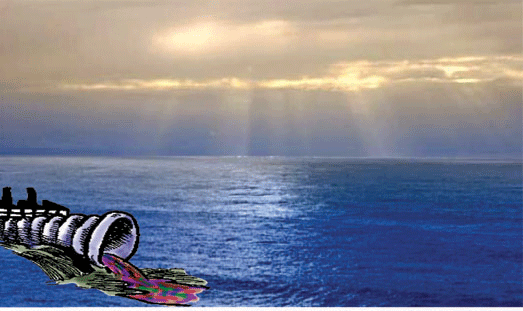
Tokyo Electric Power Company Holdings said Sunday that it has completed
the second round of its fiscal 2025 release of treated water into the ocean
from the Fukushima No. 1 nuclear power plant.
The discharge of the water, containing radioactive tritium, was suspended due to a tsunami caused by a major earthquake near Russia’s Kamchatka Peninsula last week, but there
were no problems with the facilities involved in the operation. In the
second round, which began on July 14, Tepco diluted 7,800 tons of treated
water with large amounts of seawater before releasing it about 1 kilometer
off the coast of Fukushima Prefecture through an undersea tunnel. In the
current fiscal year through next March, a total of 54,600 tons will be
released into the sea in seven rounds, at the same pace as the previous
year.
Japan Times 3rd Aug 2025, https://www.japantimes.co.jp/news/2025/08/03/japan/tepco-2nd-round-treated-water-release/
Sizewell C to give jobs to hundreds of ex-offenders
Hundreds of ex-offenders will be hired to work on the construction of the
Sizewell C nuclear power station as part of a drive to generate broader
social and economic benefits from big public infrastructure projects.
Sizewell C, which was given the final go-ahead last month, is already
working with local prisons in Suffolk to design training courses in
welding, construction, engineering and hospitality that are aimed at
equipping inmates with the skills needed to work on the plant.
The Observer 3rd Aug 2025, https://observer.co.uk/news/national/article/a-second-chance-sizewell-c-to-give-jobs-to-hundreds-of-ex-offenders
Jeremy Corbyn: Nuclear Disarmament Now

By Jeremy Corbyn, https://tribunemag.co.uk/2025/08/jeremy-corbyn-remembering-hiroshima/
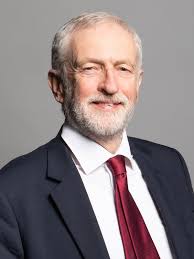
On the 80th anniversary of Hiroshima Day, Jeremy Corbyn continues the call for nuclear disarmament and world peace in a speech at the World Conference Against Atomic and Hydrogen Bombs. We publish his remarks, edited for length and clarity, here.
Fujio Torikoshi was 14 years old when the atomic bomb was dropped on Hiroshima, 80 years ago today. He was eating breakfast with his mother when he heard a rumbling and stepped outside into the front garden. All he could see was a black dot in the sky, when it suddenly burst outwards to fill the sky with a blinding white light. He recalls his last memory of being lifted off the ground by a hot gust of wind. He was more than two kilometres away from the blast, but he could still feel a burning sensation all over his body. That’s when he passed out on his front porch.
Eventually, he woke up in hospital. He was told by the doctors he wouldn’t live past 20. He lived to be 86 years old and died in 2018. In one of his last interviews, he said: ‘All I can do is pray — earnestly, relentlessly — for world peace.’
This week, we remember every single person who was killed by an indefensible act of inhumanity, both on Hiroshima and Nagasaki. We also remember the hundreds of thousands of survivors like Fujio — known as the hibakusha. They are the ones who endured the horror of what was left behind. They are the ones who have been campaigning to ensure the horrors of Hiroshima never happen again.
Me and the CND
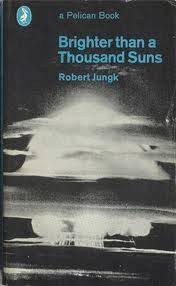
When I was at school, we had a book club where we could choose a book for class. We chose Brighter Than A Thousand Suns, which told the story of Hiroshima. It had a huge impact on me. Before that book, I didn’t know what a nuclear explosion was. I didn’t know the destruction it could cause. It was that book that taught me that nuclear weapons have one purpose and one purpose only: to cause death and destruction on a colossal scale.
When I was 14, in the 1960s, I joined the Campaign for Nuclear Disarmament (CND), after following and being frightened by the Cuban Missile Crisis. My first ever demonstration of any sort was with CND, and I have been a campaigner against nuclear weapons ever since. It was at CND where I met Bruce Kent, a leading figure in CND in the 1980s. It was Bruce who said, ‘I want to be optimistic because I don’t think man is intrinsically violent.’ He inspired in us a belief that peace was not just preferable, but possible.
I’ve gotten a lot of flak over the years for daring to say that I would not wish to use a nuclear bomb on human beings. For having the audacity to say that killing millions of people would make the world a safer place. For those who are in any doubt over my position: I’m not interested in bombs. I’m interested in peace.
We also should not forget the impacts of nuclear testing, which began at the end of the Second World War. These programs caused widespread radioactive contamination and generational harm to the people of the Pacific region. It is estimated that more than two million people have died from cancer as a result of these nuclear test explosions.
Joseph Rotblat was a Polish physicist who worked on the Manhattan Project, before becoming a fierce critic of nuclear weaponry. I want to share two things he said. One, ‘There is no direct evidence that nuclear weapons prevented a world war.’ Two, ‘Above all remember your humanity.’
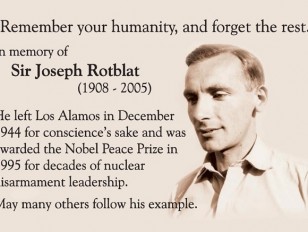
I grew up in a period where people were fearful of the possibility of global nuclear war. There was a realisation of just how dangerous nuclear weapons are.
Since then, several countries have taken steps that have lessened nuclear tensions in certain places. The most dramatic example was when post-apartheid South Africa, led by President Mandela, announced that it would no longer develop any nuclear weapons and would completely disarm.
That in turn brought about a nuclear weapons-free continent of Africa, also known as the ‘Pelindaba Treaty’, which came into force on 15 July 2009. Those events were followed by nuclear weapons-free zones for the whole of Latin America and for central Asia.
These treaties showed that it is possible to get countries to agree in mutual co-operation, mutual disarmament, and mutual peace. We must continue to push for a renewed adherence to the Treaty on the Prohibition of Nuclear Weapons, which bans the development, production, possession, use, or threat of use of nuclear weapons.
The Only Path Forward Is Peace
In 2023, UN Secretary-General António Guterres addressed the General Assembly and announced that the symbolic Doomsday Clock — which measures humanity’s proximity to self-destruction — had moved to 90 seconds to midnight. (It has since moved to 89 seconds to midnight.) Declaring that humanity was perilously close to catastrophe, Guterres named three perilous challenges: extreme poverty, an accelerating climate crisis, and nuclear war.
Today, the global stockpile of nuclear weapons is accelerating as international relations are deteriorating. After a period of gradual decline that followed the end of the Cold War, the number of operational nuclear weapons has risen again; there are now said to be more than 12,000 warheads around the world. Ninety percent of these weapons are owned by Russia and the United States alone.
It’s been more than three years since Russia launched its invasion of Ukraine. I want to take a moment to reflect on the hundreds of thousands of lives that have been lost in this ghastly war.
I also want to pay tribute to the thousands of peace campaigners in Russia who opposed this invasion, and have continued to call for a ceasefire. I also want to thank those global figures who have called for de-escalation and diplomacy. That includes the UN Secretary-General, global leaders such as President Lula, President Ramaphosa, and, of course, the late Pope Francis. Three years on, and hundreds of thousands of deaths later, I renew these calls for peace.
The longer the fighting goes on, the more lives will be lost and the greater risk of nuclear escalation. Those who fuel escalation must know that in the event of a nuclear war, nobody wins.
Meanwhile, we have all watched with absolute horror at what is happening in Gaza. Over the past 21 months, human beings have endured a level of horror and inhumanity that should haunt us forever. Entire families wiped out. Limbs strewn across the street. Mothers screaming for their children torn to pieces. Doctors performing amputations without anaesthesia. Home by home, hospital by hospital, generation by generation.
We have not been witnessing a war. We have been witnessing a genocide, livestreamed before the entire world. We must remember that our governments could have stopped this genocide. Instead, they allowed Israel to act with impunity, igniting a much wider war between Israel, the United States, and Iran — and putting the world on the brink of a nuclear conflict in the process.
I echo the call made by the UN Secretary-General: ‘There is no military solution. The only path forward is diplomacy. The only hope is peace.’
A great achievement was the nuclear non-proliferation treaty, signed in 1970. The five declared nuclear weapons states — Britain, France, the Soviet Union, the USA, and China — agreed to ensure that there was no proliferation of their weaponry and to take steps towards their own eventual nuclear disarmament.
Hiroshima’s fading legacy: the race to secure survivors’ memories amid a new era of nuclear brinkmanship.

Eighty years on from the destruction of the city, registered survivors of the blast – known as hibakusha – have fallen below 100,000
Justin McCurry in Hiroshima, Tue 5 Aug 2025 , https://www.theguardian.com/world/2025/aug/05/hiroshima-atomic-bomb-80-year-anniversary-survivors
The fires were still burning, and the dead lay where they had fallen, when a 10-year-old Yoshiko Niiyama entered Hiroshima, two days after it was destroyed by an American atomic bomb.
“I remember that the air was filled with smoke and there were bodies everywhere … and it was so hot,” Niiyama says in an interview at her home in the Hiroshima suburbs. “The faces of the survivors were so badly disfigured that I didn’t want to look at them. But I had to.”
Niiyama and her eldest sister had rushed to the city to search for their father, Mitsugi, who worked in a bank located just 1km from the hypocentre. They had been evacuated to a neighbourhood just outside the city, but knew something dreadful had happened in Hiroshima when they saw trucks passing their temporary home carrying badly burned victims.
As Hiroshima prepares to mark 80 years since the city was destroyed in the world’s first nuclear attack, the 90-year-old is one of a small number of hibakusha – survivors of the atomic bombings – still able to recall the horrors they witnessed after their home was reduced to rubble in an instant.
At 8:15am on 6 August, the Enola Gay, a US B-29 bomber, dropped a nuclear bomb on the city. “Little Boy” detonated about 600 metres from the ground, with a force equivalent to 15,000 tonnes of TNT. Between 60,000 and 80,000 people were killed instantly, with the death toll rising to 140,000 by the end of the year as victims succumbed to burns and illnesses caused by acute exposure to radiation.
Three days later, the Americans dropped a plutonium bomb on Nagasaki, killing 74,000. And on 15 August, a demoralised Japan surrendered, bringing an end to the second world war.
Niiyama, one of four sisters, never found her father or his remains, which were likely incinerated along with those of his colleagues. “My father was tall, so for a long time whenever I saw a tall man from behind, I would run up to him thinking it might be him,” she says. “But it never was.”
With the number of people who survived the bombing and witnessed its immediate aftermath dwindling by the year, it is being left to younger people to continue to communicate the horrors inflicted on Hiroshima and Nagasaki.
For decades Niiyama, who is a registered hibakusha, said nothing of the trauma she had suffered as a schoolgirl, not even to members of her own family. “I didn’t want to remember what had happened,” she says. “And many hibakusha stayed quiet as they knew they might face discrimination, like not being able to marry or find a job. There were rumours that children born to hibakusha would be deformed.”
It was only when her granddaughter, Kyoko Niiyama, then a high school student, asked her about her wartime experiences that Niiyama broke her silence.
“When my children are older, they’ll naturally ask about what happened to their grandmother,” says the younger Niiyama, 35, a reporter for a local newspaper and the mother of two young children. “It would be such a shame if I wasn’t able to tell them … that’s why I decided to ask my grandmother about the bomb.”
She is one of a growing number of people in Hiroshima and Nagasaki studying to become “family successors” – a local government initiative that certifies the descendants of first-generation hibakusha to record and pass on the experiences of the only people on earth to have lived through nuclear warfare.
“Now that the anniversary is approaching, I can talk to her again,” Kyoko says. “This is a really precious time for our family.”
‘I don’t want to think about that day’
Last year, survivors of the Hiroshima and Nagasaki attacks won recognition for their campaign to rid the world of nuclear weapons when Nihon Hidankyo – a nationwide network of hibakusha – was awarded the Nobel peace prize.
But survivors face a race against time to ensure that their message lives on in a world that is edging closer to a new age of nuclear brinkmanship.
The world’s nine nuclear states are spending billions of dollars on modernising, and in some cases expanding, their arsenals. The Russian president, Vladimir Putin, has refused to rule out the use of tactical nuclear weapons in his war against Ukraine, and last week a veiled nuclear threat by the country’s former leader, Dmitry Medvedev, prompted Donald Trump – who had earlier compared US strikes on Iran’s nuclear facilities to the Hiroshima and Nagasaki attacks – to claim that he had moved two nuclear submarines closer to the region. North Korea’s development of nuclear weapons continues unchecked.
“The hibakusha have spent their lifetimes courageously telling their stories again and again, essentially reliving their childhood traumas – to make sure the world learns the reality of what nuclear weapons actually do to people and why they must be abolished, so that no one else goes through what they have suffered,” says Melissa Parke, executive director of the International Campaign to Abolish Nuclear Weapons.
“These brave hibakusha deserve to have their decades of campaigning vindicated and to witness the elimination of nuclear weapons in their lifetimes. This would provide some nuclear justice.”
The number of registered survivors of both attacks fell to just below 100,000 this year, according to the health ministry, compared with more than 372,000 in 1981. Their average age is 86. Just one of the 78 people confirmed to have been within 500 metres of the hypocentre of the blast in Hiroshima is still alive – an 89-year-old man.
On the eve of the anniversary, the ministry said it would no longer conduct a survey every 10 years to assess the living conditions and health of hibakusha, saying it wanted to “lessen the burden” on ageing survivors.
Niiyama, who struggles to walk, will watch Wednesday’s ceremony at home and pause to remember her father, whose memory is represented by a teacup he used that was retrieved from the devastation.
“I don’t like the month of August,” she says. “I have nightmares around the anniversary. I don’t want to think about that day, but I can’t forget it. But I’m glad I still remember that I’m a hibakusha.”
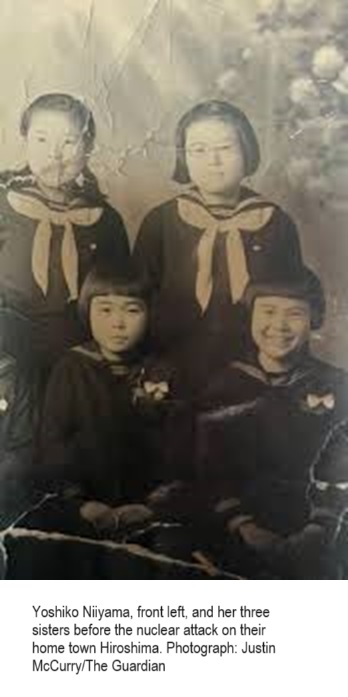
Niiyama, who struggles to walk, will watch Wednesday’s ceremony at home and pause to remember her father, whose memory is represented by a teacup he used that was retrieved from the devastation.
“I don’t like the month of August,” she says. “I have nightmares around the anniversary. I don’t want to think about that day, but I can’t forget it. But I’m glad I still remember that I’m a hibakusha.”
Trump and Zelensky, two cornered rats with no way out of Ukraine catastrophe
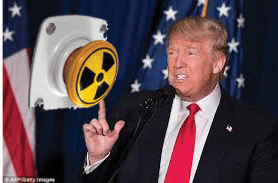

Walt Zlotow, West Suburban Peace Coalition, Glen Ellyn IL, 5 Aug 25
Ukraine’s military is being systematically obliterated on the battlefield. US President Trump knows this. Ukraine President Zelensky does as well.
Yet, both are pretending the war can be won on terms favorable to the US and Ukraine. Trump is threatening secondary sanctions on nations buying Russian oil if Russia doesn’t end the war by August 8. Zelensky applauds this threat. Trump is also selling additional weapons to NATO allies to give to Ukraine’s lost cause.
Neither of Trump’s actions will have any effect on Ukraine’s impending battlefield defeat. Trump gets the ‘rat’ designation because he broke his campaign pledge to end the war by withdrawing US support and forcing Ukraine to negotiate the war’s end. But since that signals defeat of the US proxy war to weaken Russia, he clearly has decided it’s better to keep the war going rather than suffer a humiliating defeat. That merely ensures Ukraine’s near complete destruction as a functioning state.
Zelensky earned his ‘rat’ designation when he bailed out of ending the war in April 2022. He was on the cusp of a negotiated settlement with Russia that would have ended Ukraine’s effort to join NATO and guaranteed regional independence for Russian cultured Ukrainians in Donbas. For Ukraine it would have mean no lost territory and no massive casualties or infrastructure destruction. That is classic diplomacy achieving win-win.
But the rat Zelensky caved to US/UK pressure to dump that deal because Zelensky believed US/UK lies he could win simply with continued Western weapons. That, along with Trump’s refusal to end the war after promising to end it, has put Ukraine into a death spiral.
So with no way to win on the battlefield, our cornered rats are risking nuclear war every day this catastrophe continues. Zelensky keeps begging for long range NATO missies to attack deep into Russia. While that has no strategic value, it has value in provoking a Russian nuclear response, something to which Zelensky remains oblivious.
The nuclear risk Trump has embarked upon is even more reckless. He responded to a harmless Russian social media comment about a potential US/Russia nuclear confrontation, by sending two Ohio Class nuclear submarines toward Russian waters. Just as provocative and reckless, Trump’s sent B61-12 nuclear gravity bombs to the UK. These are offensive weapons having nothing do with will standard NATO defensive weaponry. They are the first delivery of these offensive weapons to the UK since removing them in 2008.
To Trump, reckless action is an appropriate response to relatively harmless words. Particularly since Trump is he world champ at using social media to threaten, browbeat friends and foes alike.
It’s not just the beleaguered people of Ukraine whose lives are threatened by the two cornered rats with no sane, safe way out of the lost war in Ukraine. It is all of us.
Trump’s Nuclear Energy Overhaul Sparks Alarms Over Safety.

Oil Price, By Felicity Bradstock – Aug 03, 2025
- Trump has announced plans to quadruple U.S. nuclear power by 2050, pushing for rapid approval of new reactors and slashing regulatory barriers.
- Experts warn that undermining the independent Nuclear Regulatory Commission could erode essential safety standards and risk public backlash.
- Critics argue the slow growth of U.S. nuclear energy stems from high costs, not overregulation, citing costly delays at projects like Plant Vogtle.
The President of the United States, Donald Trump, is betting big on nuclear power and aims to fast-track projects to prepare for the massive increase in electricity demand over the next decade. However, experts fear that his plans to accelerate project development could compromise safety standards, particularly as the independent U.S. Nuclear Regulatory Commission comes under threat.
In May, the Trump administration announced a target to deploy 300 GW of net new nuclear capacity by 2050 to quadruple domestic nuclear power, as well as to begin construction on 10 large reactors by 2030 and expand domestic nuclear fuel production. Trump signed three executive orders to support these aims: Reform of the Nuclear Regulatory Commission; Deployment of Advanced Nuclear Reactor Technologies for National Security; and Reforming Nuclear Reactor Testing at the Department of Energy.
Trump’s orders establish arbitrary deadlines for decisions on construction permits and operating licenses, even for new designs that have not yet been assessed; demand a review of all NRC regulations within 18 months; and allow for the construction of nuclear reactors on federal lands without NRC review.
While deploying more nuclear power could help the U.S. respond to the rising domestic electricity demand, there are widespread concerns that President Trump’s rapid approval of new nuclear projects threatens to weaken the independent Nuclear Regulatory Commission (NRC), which assesses projects for health and safety and ensures reactors operate securely. The objective of Trump’s executive orders is to reduce regulations and accelerate the approval of nuclear plants by overhauling the NRC…………………………………………..
………………. Weakening the powers of the independent NRC to give greater control to the government’s Department of Energy and Defence undermines the stringent safety standards that were previously enforced for the development and running of nuclear plants. At worst, this could lead to another nuclear disaster, which could jeopardise the health, or even lives, of people across the U.S. https://oilprice.com/Energy/Energy-General/Trumps-Nuclear-Energy-Overhaul-Sparks-Alarms-Over-Safety.html
Hiroshima anniversary: mayor says Ukraine and Middle East crises show world ignoring nuclear ‘tragedies
Justin McCurry , Guardian, 6 Aug 25
On 80th anniversary of atomic bombing, Kazumi Matsui urges younger people to recognise ‘inhumane’ consequences of nuclear weapons as a deterrent.
The mayor of Hiroshima has led calls for the world’s most powerful countries to abandon nuclear deterrence, at a ceremony to mark 80 years since the city was destroyed by an American atomic bomb.
As residents, survivors and representatives from 120 countries gathered at the city’s peace memorial park on Wednesday morning, Kazumi Matsui warned that the conflicts in Ukraine and the Middle East had contributed to a growing acceptance of nuclear weapons.
“These developments flagrantly disregard the lessons the international community should have learned from the tragedies of history,” he said in his peace declaration, against the backdrop of the A-bomb dome – one of the few buildings that survived the attack eight decades ago.
“They threaten to topple the peace-building frameworks so many have worked so hard to construct,” he added, before urging younger people to recognise that acceptance of the nuclear option could cause “utterly inhumane” consequences for their future.
Despite the global turmoil, he said, “we, the people, must never give up. Instead, we must work even harder to build civil society consensus that nuclear weapons must be abolished for a genuinely peaceful world.”
As applause rang out, white doves were released into the sky, while an eternal “flame of peace” burned in front of a cenotaph dedicated to victims of the world’s first nuclear attack.
The ceremony is seen as the last opportunity for significant numbers of ageing hibakusha – survivors of the atomic bombings of Hiroshima and Nagasaki – to pass on first-hand warnings of the horror of nuclear warfare.
Just under 100,000 survivors are still alive, according to recent data from the health ministry, with an average age of just over 86………………………………………………………………………………………………………….
Successive Japanese governments have faced criticism for refusing to ratify a 2021 treaty to ban the possession and use of nuclear weapons. Dozens of countries have signed the treaty, but they do not include any of the recognised nuclear powers or countries, including Japan, that are dependent on the US nuclear umbrella.
After laying a wreath in front of the cenotaph, the prime minister, Shigeru Ishiba, did not mention the treaty but said it was Japan’s “mission” as the only country to have been attacked by nuclear weapons to lead global efforts towards disarmament.
The UN secretary general, António Guterres, said in a statement that “the very weapons that brought such devastation to Hiroshima and Nagasaki are once again being treated as tools of coercion”. Guterres added, however, that Nihon Hidankyo’s Nobel prize was cause for hope, adding that “countries must draw strength from the resilience of Hiroshima and from the wisdom of the hibakusha”. https://www.theguardian.com/world/2025/aug/06/hiroshima-mayor-ukraine-middle-east-nuclear-history-atomic-bombing-80th-anniversary
Dare To Hope
Caitlin Johnstone, Aug 04, 2025, https://www.caitlinjohnst.one/p/dare-to-hope?utm_source=post-email-title&publication_id=82124&post_id=170050544&utm_campaign=email-post-title&isFreemail=true&r=1ise1&triedRedirect=true&utm_medium=email
At least 100,000 Australians, including WikiLeaks founder Julian Assange, marched for Gaza across the Sydney Harbour Bridge in the pouring rain at a demonstration on Sunday.
It wasn’t that long ago when I sincerely wondered if we’d ever see Assange’s face again, let alone in public, let alone in Sydney, let alone heading up what had to be one of the largest pro-Palestine rallies ever held in Australia. Dare to be encouraged. The light is breaking through.
The western political/media class is fuming with outrage about images of Israeli hostages who are severely emaciated, which just says so much about how dehumanized Palestinians are in western society. Everyone stop caring about hundreds of thousands of starving Palestinians, it turns out two Israeli hostages are starving in the same way for the same reason.
Israel’s Foreign Ministry has announced that in order to improve “public diplomacy” efforts the term “hasbara” will no longer be used, because people have come to associate it with lies and propaganda.
The Times of Israel reports:
“Long referred to as hasbara, a term used to denote both public relations and propaganda that has been freighted with negative baggage in recent years, the ministry now brands its approach as toda’a — which translates to ‘awareness’ or ‘consciousness’ — an apparent shift toward broader, more proactive messaging.
That “negative baggage” would of course be public disgust at the nonstop deluge of lies that Israel and its apologists have been spouting for two years to justify an act of genocide. Westerners have grown increasingly aware that Israel and its defenders have a special word for their practice of manipulating public narratives about their beloved apartheid state, so they’re changing the word.
Simply stopping the genocide is not considered as an option. Simply ceasing to lie is not considered as an option. They’re just changing the word they use for their lies about their genocide.
One of the reasons Israel’s supporters love to hurl antisemitism accusations at its critics is because it’s a claim that can be made without any evidence whatsoever. It’s not an accusation based on facts, it’s an assertion about someone’s private thoughts and feelings, which are invisible. Support for Israel doesn’t lend itself to arguments based on facts, logic and morality, so they rely heavily on aggressive claims about what’s happening inside other people’s heads which cannot be proved or disproved.
It’s entirely unfalsifiable. I cannot prove that my opposition to an active genocide is not in fact due to an obsessive hatred of a small Abrahamic religion. I cannot unscrew the top of my head and show everyone that I actually just think it’s bad to rain military explosives on top of a giant concentration camp full of children, and am not in fact motivated by a strange medieval urge to persecute Jewish people. So an Israel supporter can freely hurl accusations about what’s going on in my head that I am powerless to disprove.
It’s been a fairly effective weapon over the years. Campus protests have been stomped out, freedom of expression has been crushed, entire political campaigns have been killed dead, all because it’s been normalized to make evidence-free claims about someone’s private thoughts and feelings toward Jews if they suggest that Palestinians deserve human rights.
A Harvard professor of Jewish studies named Shaul Magid recently shared the following anecdote:
“I once asked someone I casually know, an ardent Zionist, ‘what could Israel do that would cause you not to support it?’. He was silent for a moment before looking at me and said, ‘Nothing.’”
This is horrifying, but facts in evidence indicate that it’s also a very common position among Zionists. If you’re still supporting Israel at this point, there’s probably nothing it could do to lose your support.
-
Archives
- February 2026 (211)
- January 2026 (308)
- December 2025 (358)
- November 2025 (359)
- October 2025 (376)
- September 2025 (258)
- August 2025 (319)
- July 2025 (230)
- June 2025 (348)
- May 2025 (261)
- April 2025 (305)
- March 2025 (319)
-
Categories
- 1
- 1 NUCLEAR ISSUES
- business and costs
- climate change
- culture and arts
- ENERGY
- environment
- health
- history
- indigenous issues
- Legal
- marketing of nuclear
- media
- opposition to nuclear
- PERSONAL STORIES
- politics
- politics international
- Religion and ethics
- safety
- secrets,lies and civil liberties
- spinbuster
- technology
- Uranium
- wastes
- weapons and war
- Women
- 2 WORLD
- ACTION
- AFRICA
- Atrocities
- AUSTRALIA
- Christina's notes
- Christina's themes
- culture and arts
- Events
- Fuk 2022
- Fuk 2023
- Fukushima 2017
- Fukushima 2018
- fukushima 2019
- Fukushima 2020
- Fukushima 2021
- general
- global warming
- Humour (God we need it)
- Nuclear
- RARE EARTHS
- Reference
- resources – print
- Resources -audiovicual
- Weekly Newsletter
- World
- World Nuclear
- YouTube
-
RSS
Entries RSS
Comments RSS
 nuclear-news