What Greenland’s Ancient Past Reveals about Its Fragile Future

The collapse of the world’s second-largest ice sheet would drown cities
worldwide. Is that ice more vulnerable than we know?
Last year, Scientific American chief multimedia editor Jeffery DelViscio spent a month on the
Greenland ice sheet, reporting on the work of scientists taking ice and
rock cores from the Northeast Greenland Ice Stream (NEGIS) and the bedrock
underneath. This massive flow of ice drains ice into the ocean, and its
melt has been speeding up in the past decade.
Bedrock samples under ice
from an area in northwest Greenland indicate it was ice-free as recently as
about 7,000 years ago when global temperatures were only a few degrees
warmer than they are now. The sheet won’t melt all at once, of course,
but scientists are increasingly concerned by signs of accelerating
ice-sheet retreat. A recent report showed that it has been losing mass
every year for the past 27 years. Another study found that nearly every
Greenlandic glacier has thinned or retreated in the past few decades.
The NEGIS itself has extensively sped up and thinned over the past decade. If
the entire Greenland ice sheet melted, global sea levels would rise by
about 24 feet, inundating coastal cities, farmland and homes. “I have,
for the first time ever in my career, datasets that take my sleep away at
night,” says Joerg Schaefer, GreenDrill’s co-principal investigator.
“They are so direct and tell me this ice sheet is in so much trouble.”
Scientific American 17th June 2025, https://www.scientificamerican.com/article/greenlands-ice-sheet-collapse-could-be-closer-than-we-think/
Tepco plans to move spent nuclear fuel from Fukushima to Mutsu facility
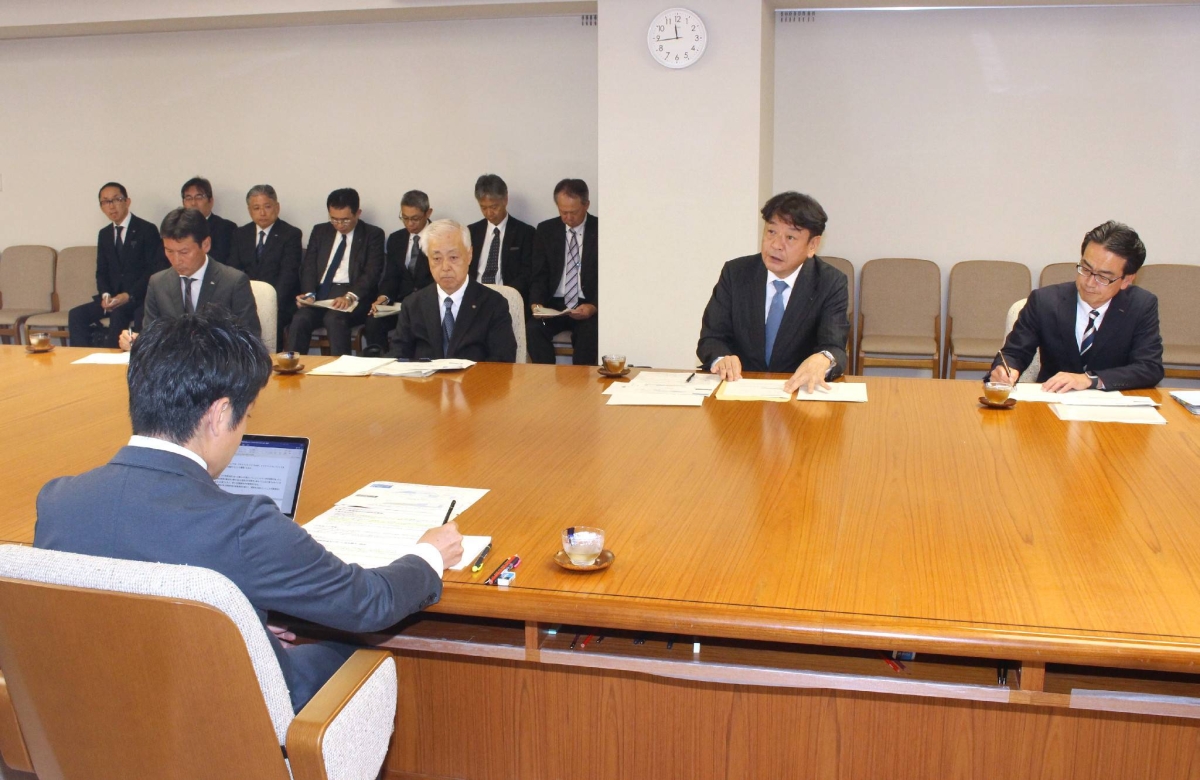
Tokyo Electric Power Company Holdings (Tepco) suggested Monday that it
plans to transfer spent nuclear fuel from its Fukushima No. 1 nuclear power
plant to an interim storage facility in the city of Mutsu in Aomori
Prefecture. The plan was included in a medium- to long-term program for the
facility, presented to Aomori Gov. Soichiro Miyashita by Tepco President
Tomoaki Kobayakawa at a meeting in the Aomori Prefectural Government office
the same day.
Spent nuclear fuel stored at the plant’s No. 5 and No. 6
reactors, a joint storage pool and the Fukushima No. 2 plant at the time of
the March 2011 nuclear meltdown at the No. 1 plant is set to be transferred
to the Mutsu facility.
Japan Times 8th July 2025, https://www.japantimes.co.jp/news/2025/07/08/japan/tepco-move-mutsu/
New nuclear power plant in Switzerland not before 2050
The possible construction of new nuclear power plants in Switzerland, as currently
discussed, depends on many factors. Even if the ban on new construction
were lifted, there would still be numerous other political, technological,
economic, and social uncertainties, as the Energy Commission of the Swiss
Academies of Arts and Sciences outlines in a new report.
Even if the ban on
new construction is lifted, commissioning a new nuclear power plant is
unlikely before approximately 2050. Before connecting to the power grid,
various political, administrative, and economic decisions must be made.
Several referendums and even appeals are expected. The majorities are
uncertain from today’s perspective and could change due to individual
events such as Fukushima.
Swiss Academies of Arts and Sciences 1st July 2025, https://akademien-schweiz.ch/news/neues-kernkraftwerk-in-der-schweiz-fruehestens-2050
Nuclear comeback? Japan’s plans to restart reactors hit resistance over radioactive waste
The Japanese government wants to turn its nuclear power
stations back on – but some local residents and Indigenous Ainu people
don’t want nuclear waste stored near them. Fourteen years after the
Fukushima disaster, Japan is restarting its nuclear reactors – and two
wind-blown near-deserted fishing villages on the northern island of
Hokkaido could be the destination for all their radioactive waste. But,
while some residents of Suttsu and Kamoenai welcome the government money
that volunteering to store the waste will bring, others are fiercely
opposed due to fears that the nuclear waste will contaminate their land and
water. The controversy could delay Japan’s goals to use carbon-free
nuclear energy to replace electricity generation from expensive imported
fossil fuels and cut greenhouse gas emissions on the way to net zero by
2050.
Climate Home News 6th July 2025, https://www.climatechangenews.com/2025/07/06/nuclear-comeback-japans-plans-to-restart-reactors-hit-resistance-over-radioactive-waste/
Patrick Lawrence: Trump Dead-Ends Putin
By Patrick Lawrence / Consortium News, https://scheerpost.com/2025/07/08/patrick-lawrence-trump-dead-ends-putin/
Presidents Donald Trump and Vladimir Putin have spoken by telephone numerous times since the former reassumed office seven months ago. Not much appears to have been accomplished by way of these exchanges, some of which have been lengthy, according to the accounts Washington and Moscow have provided afterward.
No progress toward a durable settlement to end the war in Ukraine. Talk and desultory diplomatic contacts with a view to repairing the profligate damage successive American administrations have done to U.S.–Russian relations, but no substantive advances. O.K., it is what it is, as we say. But there was something singularly conclusive about the telephone conversation the U.S. and Russian leaders had last Thursday.
I detect that a dead end has been reached.
Trump was trying once again to get Putin to agree to an “immediate and unconditional ceasefire” in Ukraine — “the quick end to the military action,” as Yuri Ushakov, the Kremlin’s senior foreign policy adviser, put it. Putin was trying once again to explain that the time has come to structure an enduring settlement by addressing — the Kremlin’s favored phrase these days — the “root causes” of the conflict.
Maybe it is the barrage of drones and missiles with which the Russians bombarded Kiev and other Ukrainian cities within a few hours of the Trump–Putin exchange that prompts me to think the two leaders or their diplomats are unlikely ever to get anywhere on the telephone or at the mahogany table.
The Ukrainians, for what their word is worth, counted 539 drones and 11 missiles, including a hard-to-intercept, high-velocity (Mach 10 hypersonic) projectile called the Kinzhal.
This was the largest aerial attack so far in the war, by the Ukrainians’ reckoning, and it left Kiev smoldering last Friday morning. It is hard to avoid concluding the Kremlin had a point to make after the failure of the phone call.
Trump Has Nothing to Propose
Or maybe it is Trump’s remarks after the call that makes me think a diplomatic settlement seems simply beyond reach — this at least until the Ukrainian military is decisively smashed, and very possibly not even then.
“I was very unhappy with my call with President Putin,” Trump told reporters aboard Air Force One afterward. “I didn’t make any progress with him at all. He wants to go all the way, just keep killing people, it’s no good.”
You cannot be surprised at this current state of affairs. Trump made no progress with the Russian leader because he has nothing to propose that would make progress possible. Social media messages demanding a ceasefire, replete with capital letters and exclamation points, do not count and do not work as statecraft; they betoken nothing so much as Trump’s — read, the West’s — un-seriousness.
The fundamental problem here is that Kiev and its sponsors are unable to accept defeat. I concluded more than a year ago that Ukraine and its Western powers had lost the war — “effectively lost,” I thought for a time, but then I dropped “effectively.”
For a good long time now what we’ve watched is nothing more than postwar gore. If you have lost a war but cannot admit you have lost because the West must never lose anything, you are down to the old game of pretend. And so long as the U.S. and its European clients insist that they deserve any consequential say in the terms of negotiation — as if they can assert the authority of a victor — it amounts to the pointlessness of pretending.
It is as if the Germans, if you do not mind the comparison, insisted they set the terms of surrender in May 1945, or had a say in the settlement concluded at Versailles in 1919.
When a settlement is finally reached it will not be termed a surrender — you can count on this — but this is what it will come to. And Russia, to turn this question another way, will have a responsibility to avoid turning a finally achieved peace into another Versailles disaster — where the victors planted the seeds for a renewal of conflict — by asking too much.
I am confident Moscow will hold to its currently expressed demands, which I consider eminently just and not at all excessive: A new security architecture in Europe; no NATO membership for a neutral Ukraine that must be demilitarized and de-Nazified; and recognition of the four oblasts that voted to join Russia.
Ressentiment
But I am not confident Ukraine and the neo–Nazis who control the military and the civilian administration — yes, both — will ever accept any kind of coexistence with the Russian Federation. The hatred is too visceral, too irrational, too atavistic, too pathological. This is why de–Nazification was and remains a Russian objective.
The neo–Nazi beast, never far below the surface in post–1945 Ukraine, was sprung into the open air with the U.S.–cultivated coup in 2014. Washington and its clients in Kiev needed the neo–Nazis, especially but not only the armed militias, because they could be relied upon to fight the Russians with the sort of visceral animus the occasion required.
I do not know what a de–Nazification operation would look like, given the phenomenon’s above-noted characteristics, but something will have to be done to rid the Ukrainian consciousness of this deformity.
What we will see in Ukraine otherwise will prove an horrific case of ressentiment — enduring and poisonous. Ressentiment is a term the Germans, Friedrich Nietzsche among them, borrowed from the French in the 19th century because they had no term for the phenomenon.
It denotes the hostility and anger within a group arising from a shared sense of inferiority in the face of another — this other becoming a kind of scapegoat for a society’s frustrations and complexes.
Max Scheler, the 19th and early 20th century phenomenologist, explored all this in Ressentiment, a brief but pithy book he published in 1912 (in English, Marquette Univ. Press, 1994). As Scheler explained in interesting detail, a socially accepted set of values arises from this complex of feelings.
What we will see in Ukraine otherwise will prove an horrific case of ressentiment — enduring and poisonous. Ressentiment is a term the Germans, Friedrich Nietzsche among them, borrowed from the French in the 19th century because they had no term for the phenomenon.
It denotes the hostility and anger within a group arising from a shared sense of inferiority in the face of another — this other becoming a kind of scapegoat for a society’s frustrations and complexes.
Max Scheler, the 19th and early 20th century phenomenologist, explored all this in Ressentiment, a brief but pithy book he published in 1912 (in English, Marquette Univ. Press, 1994). As Scheler explained in interesting detail, a socially accepted set of values arises from this complex of feelings.
Ressentiment is a potentially dangerous sentiment when it animates a society that feels itself wounded over a sustained period of time. We need look no further than the extreme Russophobia evident today among some segments of the Ukrainian population for a case in point.
Against this historical and social backdrop, I do not see the Ukrainians as capable of reaching a settlement to end the war that has already torn apart the nation and its people. I do not see that they can achieve peace, either with others or among themselves, because they do not know peace and they are not capable of it.
A Rockface of History
But I see another reason peace in Ukraine will prove elusive, if not impossible, even as the Russians achieve it on the battlefield. (And I tend toward the latter probability.) This judgment arises when we put the Ukraine crisis in a larger, global context.
I think of Ukraine as resembling the rock face in a mine, or a front line in a global conflict: It is where the non–West is most urgently chiseling a new world order into being. It is a site of insistence, let us say. And it is where the West proposes to stop this world-historical turn of history’s wheel — a turn that simply cannot be stopped.
Think of Putin’s demands. Apart from de–Nazification — an objective that, to me, reflects considerable insight on Moscow’s part — there are the more encompassing “root causes.” I gather Putin used this phrase yet again in his call with Trump. [See: Rooting Out the Root Causes in Ukraine]
Putin, Sergei Lavrov, his foreign minister, and other senior Russian officials have been clear on this point at least since Moscow sent those two draft treaties Westward in December 2021 as the proposed basis of negotiations that would lead to an encompassing new security structure between Russia and the West.
This framework would relieve the decades of tension along Russia’s western flank and Europe’s east and would be of benefit to both sides. This was and remains Moscow’s intent. Settlements that address the concerns of all sides, as against one side’s at the expense of another, is the very essence of sound statecraft.
But any such settlement would stand as an expression of parity between West and non–West. As I have argued severally over the years, parity between these two spheres is a 21st century imperative. There will be no world order without it — only more of the disorder the Western powers call, altogether absurdly, “the rules-based order.”
But it is precisely even the thought of parity that the United States and its trans–Atlantic allies refuse to accept. It would bring to an end the half-millennium of dominance the West cannot release from its grasp even as it will eventually have to do so.
“It is no good,” Trump said after his latest telephone talk with Putin. No, and I do not see how it can be. Trump has nothing to offer the Russians that would amount to a serious address of what is genuinely at issue between America and Russia — between the West and non–West.
I leave it to readers to conclude where this leaves the Ukraine conflict and the larger question of Russo–American relations. It is, once again, what it is — or what it is at the moment.
In another column I will revisit this question of parity as it applies in West Asia.
Corrosion-hit Civaux most modulated 1.5 GW French unit – study
French utility EDF’s Civaux 2 unit, where EDF recently detected fresh
stress corrosion, was the most modulated of France’s four 1.5 GW nuclear
reactors last year, according to a study by analytics firm Kpler requested
by Montel.
Montel News 3rd July 2025, https://montelnews.com/news/b24ca2fd-a322-4b72-9fc1-de737f3e9fe0/corrosion-hit-civaux-2-most-modulated-1-5-gw-french-unit-study
France and Switzerland shut down nuclear power plants amid scorching heatwave

By Euronews, 02/07/2025, https://www.euronews.com/2025/07/02/france-and-switzerland-shut-down-nuclear-power-plants-amid-scorching-heatwave
To cool down, nuclear power plants pump water from local rivers or the sea, which they then release back into water bodies at a higher temperature. However, this process can threaten local biodiversity if water is released which is too hot.
Due to a scorching heatwave which has spread across Europe in recent days, a number of nuclear power plants in Switzerland and France have been forced to either reduce activity or shut down completely as extreme temperatures have prevented sites from relying on water from local rivers.
To cool down, nuclear power plants pump water from local rivers or the sea, which they then release back into water bodies at a higher temperature.
However, Europe’s ongoing heatwave means that the water pumped by nuclear sites is already very hot, impacting the ability of nuclear plants to use it to cool down. On top of this, nuclear sites run the risk of posing a dangerous threat to local biodiversity, by releasing water which is too hot into rivers and seas.
In light of the heat, Axpo – which operates the Beznau nuclear power plant in Switzerland – said it had shut down one of its reactors on Tuesday, adding that a second reactor was operating at limited capacity.
“Due to the high river water temperatures, Axpo has been increasingly reducing the output of the two reactor units at the Beznau nuclear power plant for days and reduced it to 50 per cent on Sunday,” said the operator.
The Beznau nuclear power plant’s reactors are located directly on the River Aare, where temperatures have reached 25 degrees Celsius in recent days, leading Axpo to curtail its activities to prevent “excessive warming of the already warm water” which could strain local biodiversity.
Although Switzerland has decided to phase out nuclear power by 2033, existing plants are able to continue to operate as long as they are safe.
Meanwhile, on Monday French electricity company EDF shut down the Golfech nuclear power plant, located in the southern department of Tarn-et-Garonne, amid extreme heat warnings in the region and concerns that the local river could heat up to 28 degrees, even without the inflow of heated cooling water.
France has a total of 57 active nuclear reactors in 18 power plants. According to EDF, the country obtains around 65% of its electricity from nuclear energy, which the government considers to be environmentally friendly.
Output has also been reduced at other sites, including at the Blayais nuclear power plant in western France, as well as the Bugey nuclear power plant in southern France, which could also be shut down, drawing their cooling water from the Gironde and Rhône rivers.
Although the production of nuclear power has had to be curtailed in light of extreme heat, the impact on France’s energy grid remains limited, despite the fact that more electricity is being used to cool buildings and run air conditioning systems.
Speaking to broadcaster FranceInfo, French grid operator RTE ensured that “all the nuclear power sites which are running are able to cover the needs of the French population. France produces more electricity than it consumes, as it currently exports electricity to neighbouring countries.”
The Trumpanyahu Administration
Caitlin Johnstone, Jul 01, 2025, https://www.caitlinjohnst.one/p/the-trumpanyahu-administration?utm_source=post-email-title&publication_id=82124&post_id=167261479&utm_campaign=email-post-title&isFreemail=true&r=1ise1&triedRedirect=true&utm_medium=email
Honestly at this point they should just get Netanyahu his own room in the White House and a desk in the Oval Office.
The prime minister of Israel is taking his third trip to the White House in the five months since Trump has been back in office. I have immediate blood family members who I love with all my heart and visit less often than this.
This comes as the Trump administration revokes the US visas of British punk rap duo Bob Vylan ahead of a US tour for chanting “Death, death to the IDF” at a concert in the UK. Trump’s sycophantic supporters who spent years complaining that their free speech rights were under assault appear fine with their government deciding what words Americans are allowed to hear in their own country.
This also comes as Trump actively intervenes in the Israeli judicial system to prevent Netanyahu’s corruption trial from moving forward.
The president has repeatedly taken to social media to demand that Israel abandon its corruption case against the prime minister, at one point even implying that the US could cut off arms supplies if his trial isn’t canceled.
“The United States of America spends Billions of Dollar a year, far more than on any other Nation, protecting and supporting Israel,” Trump said. “We are not going to stand for this. We just had a Great Victory with Prime Minister Bibi Netanyahu at the helm — And this greatly tarnishes our Victory. LET BIBI GO, HE’S GOT A BIG JOB TO DO!”
It’s so revealing what the US government is and is not willing to threaten conditioning military supplies on, and what it’s willing to interfere in Israel’s affairs to accomplish.
Ever since the Gaza holocaust began we’ve been hearing lines like “Israel is a sovereign country” and “Israel is a sovereign state that makes its own decisions” when reporters ask why the White House doesn’t leverage arms shipments to demand more humanitarian treatment for civilians in the Gaza Strip. But the president of the United States is willing to leverage those same arms shipments to directly interfere in Israeli legal proceedings which have nothing to do with the US government in order to get Netanyahu out of trouble.
And it would appear that the president’s intervention has been successful; Netanyahu’s corruption trial has since been postponed.
When it comes to committing genocide using American weapons funded by American taxpayers, Israel is a sovereign state upon which the US can exert zero leverage or control. When it comes to meddling in the corruption trial of a man who is wanted for war crimes by the International Criminal Court, the White House pulls no punches in protecting its favorite genocide monster.
There is no meaningful separation between the US and Israeli governments. They’re two member states in the undeclared empire that sprawls across the entire western world, and Trump and Netanyahu are two of the most depraved and most consequential managers of this empire today.
They are thick as thieves. They are partners in crime.
Call it the Trumpanyahu administration.
US Approves $510 Million Arms Deal for Israel
The deal is for more than 7,000 JDAM kits, which turn bombs into precision-guided weapons
by Dave DeCamp | Jun 30, 2025, https://news.antiwar.com/2025/06/30/us-approves-510-million-arms-deal-for-israel/
The Trump administration has approved a new arms deal for Israel that will provide the country with $510 million worth of Joint Direct Attack Munitions (JDAMS), kits that turn bombs into precision-guided weapons, as the US continues to provide military aid to support the genocidal war in Gaza.
According to the Pentagon’s Defense Security Cooperation Agency (DSCA), the State Department notified Congress of the sale of 3,845 JDAMS for 2,000-pound BLU-109 bombs and 3,280 JDAMS for 500-pound MK 82 bombs. The deal also includes US “government and contractor engineering, logistics, and technical support services; and other related elements of logistics and program support.”
The DSCA said Boeing is the principal contractor for the deal. The notification of the potential deal begins a time period when US lawmakers could potentially block the sale, but there’s little opposition to US military support for Israel within Congress, despite the many war crimes the US is implicated in by providing Israel with weapons.
Fragments of bombs with US-provided JDAM kits have been found at the scene of Israeli airstrikes in Gaza that have massacred many civilians. In 2023, Human Rights Watch said it identified JDAM fragments that were found in two airstrikes on homes in central Gaza that killed 43 civilians, including 19 children, and 14 women.
It’s unclear at this point how the deal will be financed, but many arms sales to Israel are funded by US military aid, and US assistance to Israel has significantly increased since October 7, 2023. According to the Israeli newspaper Haaretz, in that time, US funding has covered an estimated 70% of Israel’s war-related military spending.
Operation Midnight Hammer: Were Iran’s Nuclear Facilities Damaged?

After mulling over the attacks over the course of a week, Grossi revisited the matter. The attacks on the facilities had caused severe though “not total” damage. “Frankly speaking, one cannot claim that everything has disappeared and there is nothing there.” Tehran could “in a matter of months” have “a few cascades of centrifuges spinning and producing enriched uranium.” Iran still had the “industrial and technological” means to recommence the process.
1 July 2025 Dr Binoy Kampmark, https://theaimn.net/operation-midnight-hammer-were-irans-nuclear-facilities-damaged/
The aftermath of Operation Midnight Hammer, a strike by the US Air Force on three nuclear facilities in Iran authorised by President Donald Trump on June 22, was raucous and triumphant. But that depended on what company you were keeping. The mission involved the bombing of the Fordow Fuel Enrichment Plant, the uranium-enrichment facility at Natanz, and the uranium-conversion facility in Isfahan. The Israeli Air Force had already attacked the last two facilities, sparing Fordow for the singular weaponry available for the USAF.
The Fordow site was of particular interest, located some eighty to a hundred metres underground and cocooned by protective concrete. For its purported destruction, B-2 Spirit stealth bombers were used to drop GBU-57 Massive Ordnance Penetrator “bunker buster” bombs. All in all, approximately 75 precision guided weapons were used in the operation, along with 125 aircraft and a guided missile submarine.
Trump was never going to be anything other than optimistic about the result. “Monumental Damage was done to all Nuclear sites in Iran, as shown by satellite images,” he blustered. “Obliteration is an accurate term!”
At the Pentagon press conference following the attack, Defense Secretary Pete Hegseth bubbled with enthusiasm. “The order we received from our commander in chief was focused, it was powerful, and it was clear. We devastated the Iranian nuclear program.” The US Chairman of the Joint Chiefs of Staff Air Force Gen. Dan Caine was confident that the facilities had been subjected to severe punishment. “Initial battle damage assessments indicate that all three sites sustained extremely severe damage and destruction.” Adding to Caine’s remarks, Hegseth stated that, “The battle damage assessment is ongoing, but our initial assessment, as the Chairman said, is that all of our precision munitions struck where we wanted them to strike and had the desired effect.”
Resort to satellite imagery was always going to take place, and Maxar Technologies willingly supplied the material. “A layer of grey-blue ash caused by the airstrikes [on Fordow] is seen across a large swathe of the area,” the company noted in a statement. “Additionally, several of the tunnel entrances that lead into the underground facility are blocked with dirt following the airstrikes.”
The director of the Central Intelligence Agency, John Ratcliffe, also added his voice to the merry chorus that the damage had been significant. “CIA can confirm that a body of credible intelligence indicates Iran’s Nuclear Program has been severely damaged by the recent, targeted airstrikes.” The assessment included “new intelligence from a historically reliable and accurate source/method that several key Iranian nuclear facilities were destroyed and would have to be rebuilt over the course of years.”
Israeli sources were also quick to stroke Trump’s already outsized ego. The Israel Atomic Energy Commission opined that the strikes, combined with Israel’s own efforts, had “set back Iran’s ability to develop nuclear weapons by many years.” IDF Chief of Staff Lt. Gen. Eyal Zamir’s view was that the damage to the nuclear program was sufficient to have “set it back by years, I repeat, years.”
The chief of the increasingly discredited International Atomic Energy Agency, Rafael Grossi, flirted with some initial speculation, but was mindful of necessary caveats. In a statement to an emergency meeting of the IAEA’s 35-nation Board of Governors, he warned that, “At this time, no one, including the IAEA, is in a position to have fully assessed the underground damage at Fordow.” Cue the speculation: “Given the explosive payload utilised and extreme(ly) vibration-sensitive nature of centrifuges, very significant damage is expected to have occurred.”
This was a parade begging to be rained on. CNN and The New York Times supplied it. Referring to preliminary classified findings in a Defense Intelligence Agency assessment running for five pages, the paper reported that the bombing of the three sites had “set back the country’s nuclear program by only a few months.” The entrances to two of the facilities had been sealed off by the strikes but were not successful in precipitating a collapse of the underground buildings. Sceptical expertise murmured through the report: to destroy the facility at Fordow would require “waves of airstrikes, with days or even weeks of pounding the same spots.”
Then came the issue of the nuclear material in question, which Iran still retained control over. The fate of over 400 kg of uranium that had been enriched up to 60% of purity is unclear, as are the number of surviving or hidden centrifuges. Iran had already informed the IAEA on June 13 that “special measures” would be taken to protect nuclear materials and equipment under IAEA safeguards, a feature provided under the Non-Proliferation Treaty. Any transfer of nuclear material from a safeguarded facility to another location, however, would have to be declared to the agency, something bound to be increasingly unlikely given the proposed suspension of cooperation with the IAEA by Iran’s parliament.
After mulling over the attacks over the course of a week, Grossi revisited the matter. The attacks on the facilities had caused severe though “not total” damage. “Frankly speaking, one cannot claim that everything has disappeared and there is nothing there.” Tehran could “in a matter of months” have “a few cascades of centrifuges spinning and producing enriched uranium.” Iran still had the “industrial and technological” means to recommence the process.
Efforts to question the effacing thoroughness of Operation Midnight Hammer did not sit well with the Trump administration. White House spokeswoman Karoline Leavitt worked herself into a state on any cautionary reporting, treating it as a libellous blemish. “The leaking of this alleged report is a clear attempt to demean President Trump and discredit the brave fighter pilots who conducted a perfectly executed mission to obliterate Iran’s nuclear program,” she fumed in a statement. “Everyone knows what happens when you drop 14 30,000-pound bombs perfectly on their targets.”
Slippery slope to nuclear proliferation

Letter David Lowry:
In your leader “The war that should have been
avoided” (FT View, June 14), you rightly identify the roots of the
present Israel-Iran crisis as the “flawed decision in 2018 [by President
Donald Trump] to withdraw the US unilaterally” from the so-called JCPOA
agreement that corralled Iran’s atomic ambitions.
Iran has been a signatory to the 191-member Treaty on the Non-Proliferation of Nuclear
Weapons since it was open to signature in 1968. This treaty, applying
international safeguards, controls the nuclear activities of its signatory
states.
Israel, however — which is believed to have as many as 200
nuclear weapons — has always refused to sign the NPT.
Now steps have been
taken in the Iranian parliament to withdraw Iran from membership of the
NPT. Many in power in Iran feel Israel is being rewarded by the
international community for staying outside the NPT regime.
Indeed, the final communiqué of the G7 in Canada on June 17 criticised Iran, which had
been attacked by Israel; while Israel, the G7 asserted, had the right to
defend itself. Iran, which has no nuclear weapons, was warned it cannot
have any. Israel, which has nuclear WMDs, was praised! By taking unilateral
military action against Iran and successfully encouraging the US to do the
same, Israel undermined the credibility of the international community’s
law-based order. This is a very slippery slope.
FT 2nd July 2025, https://www.ft.com/content/23d01c69-68d4-4217-a184-3ae1b5d272f1
Iran’s Conversion of Uranium Hexafluoride to Uranium Metal Not a Bottleneck to an Iranian Nuclear Weapon

As I have previously written, Iran’s sizable stockpile of 60% enriched
uranium has very likely survived both Israeli and American bombing
attacks.
Even if only a very small fraction of Iran’s centrifuge
enrichment capacity has survived, Iran will be able to produce the 90%
enriched uranium desired for nuclear weapons in less than a month once
electric power is restored to the enrichment centrifuges. Iran’s ability
to produce 90% enriched uranium means that these bombing attacks have not
eliminated the threat of an Iranian nuclear weapon.
However, Secretary of State, Marco Rubio, has argued that even if that is the case, the bombing destroyed Iran’s facility in Esfahan that would convert the uranium
hexafluoride used in the enrichment process into uranium metal which is the
form used in nuclear weapons.
Rubio has claimed that the Iranian nuclear
program has been set back by “years.” However, the conversion process
from hexafluoride to metal is fairly simple. Due to criticality concerns,
Iran could only process small batches of around four kilograms of 90%
enriched uranium at a time. Therefore, the conversion facility would use
only laboratory scale equipment.
Even if Iran needed to start from scratch
to build a new metal production facility, Iran can have this facility ready
by the time it has restored its enrichment capacity and produced 90%
enriched uranium.
NPEC 30th June 2025, https://nebula.wsimg.com/5cb30d7e699d6da2b9f43d95c7bea48c?AccessKeyId=40C80D0B51471CD86975&disposition=0&alloworigin=1
EDF shuts down Golftech nuclear plant due to high river temperature
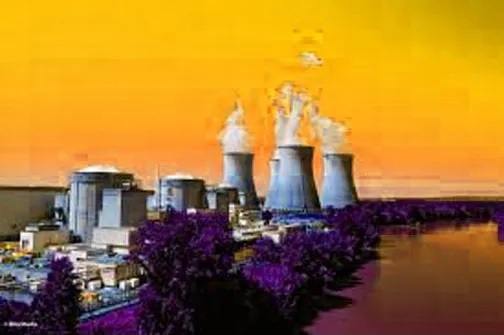
French utility EDF said it shut down the No. 1 reactor at the Golftech
nuclear power plant in southwestern France late on Sunday, ahead of an
anticipated rise in the temperature of the Garonne river that supplies the
plant’s cooling water.
Reuters 30th June 2025, https://www.reuters.com/business/energy/edf-shuts-down-golftech-nuclear-plant-due-high-river-temperature-2025-06-30/
“More nuclear-powered weapons testing coming up in the Arctic”.
Russia is spending vast sums of money on the war against Ukraine, but nevertheless continues its expensive nuclear weapons development program. “We can expect more weapon testing this summer and fall,” says Barents Observer Editor Thomas Nilsen.
Atle Staalesen, 3 July 2025,https://www.thebarentsobserver.com/security/more-nuclearpowered-weapons-testing-coming-up-in-the-arctic/432549
In the studio is Thomas Nilsen, Editor of the Barents Observer and expert on nuclear weapons in the Arctic. In the podcast, Thomas explains how Russia is making big efforts on the development of nuclear-powered weapons, including the Burevestnik cruise missile and the Poseidon underwater drone. He also outlines Russia’s ongoing activities at the nuclear test sites in Novaya Zemlya and the continued construction of nuclear submarines.
Nilsen says that Ukraine’s recent Operation Spider Web was a game-changing attack which ultimately could make Russia move parts of its nuclear weapons from the Air Force to the Navy.
He argues that the nuclear weapon powers should return to the table to negotiate arms reduction and arms control treaties. Nevertheless, he believes that there is no immanent danger of Russia actually using nuclear weapons. It is more about the Kremlin trying to scare the world, he says.
“The fear of nuclear weapons is a weapon in itself.”
Over several years, you have written stories about the Kola Peninsula and the situation in the region. And you have used satellite maps that shows how Russia is developing its nuclear arsenals in the north. How is Russia developing nuclear weapons in the region?
Well, what we see on satellite images is that there has been a quite extensive rebuilding of the facilities at the northern test site at Novaya Zemlya over the last two, maybe three year period.
The northern test site is the active one. It’s where Russia conducted underground nuclear testings up to 1990. But we don’t know exactly what is happening on the ground. We see the buildings. This could be also a renewing of the quite run-down Soviet facilities that they had. In a kind of the same way as we have seen at other military sites in the Russian Arctic, where the Soviet buildings at Severnaya Zemlya, Franz Josef Land and so on, has been abandoned and they have built new buildings. So it is an area quite close to the Matochin Strait. It’s called the Severnaya base, the northern base, where a lot of new buildings has appeared over the last few years.
Do you think there is a possibility that Russia will resume actual testing in Novaya Zemlya?
Well, the northern test site at Novaya Zemlya is the only place where Russia actually can conduct full-scale nuclear tests if they want. And they are capable of it. They do have tunnels that are made ready. So it is actually a political question. And two years ago, Vladimir Putin withdrew Russia from the comprehensive test ban treaty in the way that they un-ratified it. That is a political sign. It is maybe not as dramatic as it sounds. It doesn’t mean that Russia will make nuclear tests at Novaya Zemlya, but they are in a way showing the United States that they are ready to do so if needed. And this comprehensive test ban treaty that were signed back in 1996 was actually never ratified by the United States itself. So in many ways, Russia is now on the same level as the United States that they have not ratified it. And by that, they can conduct nuclear weapon tests at Novaya Zemlya if needed.
Russia has all the time since the breakup of the Soviet Union maintained a few tunnels and another test site. And in two of those tunnels, we know that they are conducting so-called subcritical tests, which is using a small portion of either uranium or plutonium and test it with conventional explosives. And then they simulate a nuclear test. This is done both for maintaining the safety of existing nuclear weapons, but also we can presume that it’s some kind of new development of computer technologies and the warheads capabilities and so on. This test site is maybe two, three kilometers from the Severnaya main settlement on the northern test site. But what is most interesting is that they are also maintaining a couple of other tunnels that we believe are designed for real nuclear weapon tests. And there has been activities at these tunnels over the last few years. We saw it also last spring and last summer.
If Vladimir Putin decides to escalate the situation, conducting nuclear tests could be one way of showing such political disagreements with the United States. But historically, Russia has not been the country that have pushed the trigger first. So I think it is unlikely, but we can no longer exclude it.
Novaya Zemlya is important for Russia. And we know that the weapons designers of Rosatom are in the process of developing new weapons. Tell us a bit about this.
Yes, that is also a special location at Novaya Zemlya. It’s a test site called Pankovo, where we have seen on satellite images over the last few years that they have expanded the activities up there, especially after 2020. The Pankovo test site is a place where they are launching the so-called Burevestnik missile, or by NATO, named the Skyfall. This is a cruise missile that is powered by a small nuclear reactor. It has a scramjet to push it up in the air, and when it is airborne, they start the reactor. And according to Russian weapon designers and according to Vladimir Putin himself, when he is talking or bragging about this weapon, this cruise missile, the Burevestnik, has unlimited range. And it is also possible to navigate it midair, meaning that it can potentially avoid anti-missile systems. This weapon is kind of interesting to follow because it’s not deployed yet, but they are doing tests. And with a small nuclear reactor up in the air, it also has some releases of radioactivity that goes directly out behind the cruise missile as it is flying.
Very little is known about how successful these tests are. We know that a couple of them have crashed in the Barents Sea. They have been lifted from the seabed and brought safely ashore again. But it is very interesting to follow the Pankovo nuclear test site. That is one of several cruise missile test sites where we believe parts or the entire combat of the Burevestnik missile is tested. Another place that we have seen, and we published articles on that in the Barents Observer, is the Nenoksa site on the coast to the White Sea. And we quite recently published brand new photos, satellite photos, that show that it has been really a lot of construction work at that site modernised over the last two years.
So let’s stick a little bit with this Nenoksa test site, which is located very close to Arkhangelsk in the Russian north. And you’ve written, as you said, a story about this, and it can be read by everyone on the Barents Observer. So tell us what is special about this Nenoksa testing site.
Nenoksa made big headlines worldwide back in July 2019. Or it was actually early August 2019, when during work of recovering one of the missiles that were launched from that area, the radioactive component of the missile exploded. And it led to a release of radioactivity. So isotopes were blowing towards the city of Severodvinsk, which is some 30 kilometres to the east of Nenoksa. And it was not very high levels, but it lasted for about half an hour, with several isotopes measured in the town of Severodvinsk. And we learned after a few days that five of the experts in the Rosatom Development Division of the Burevestnik missile and the reactor were killed of radioactive sicknesses in that explosion. So it is a very serious area. And the big difference here between Nenoksa and Pankovo site on the Novaya Zemlya is that Nenoksa is close to densely populated areas. Severodvinsk with more than 200,000 inhabitants, and not far away is also the city of Arkhangelsk with 300,000 people. So there is actually more than half a million people living in an area where Russia conducts testing of reactor-powered weapons that both have experienced accidents and are releasing radioactivity as they are testing it. And these new satellite images are a sign that Russia plans to resume the Burevestnik testing at Nenoksa, and that is worrying. First of all for the population of northern Russia, but also for Russia’s neighbors in the north, Finland and us in Norway.
Nuclear-powered cruise missile is indeed a scary thought, but there are also other weapons under development. And you have also written a story about the Poseidon, which is an underwater drone capable of carrying nuclear weapons. Tell us about the Poseidon, please.
The Poseidon is a weapon we know much less about than the Burevestnik, quite naturally because it’s tested and developed for underwater warfare. But it’s also one of the weapons that were bragged about by Vladimir Putin when he showed Russia’s plans for new nuclear weapon delivery systems in his annual speech to the public a few years ago.
The Poseidon in basic is also powered by a small nuclear reactor that is giving it a quite long range. We don’t know how long, but potentially this drone that is more than 20 meters long and can navigate across the Atlantic. So it’s an intercontinental underwater weapon. And the idea with the weapon is to dive deeper than normal submarines can sail, which means also that it’s much more difficult for the enemy, in this case NATO, to stop the weapon as it is launched. So it is a deterrence weapon for Russia. In case Russia is taken out in a nuclear war, they will always have this weapon to retaliate on Europe or the United States.
The weapon is carried by a submarine that is called Belgorod. It is a redesigned former Oscar-class submarine, and this submarine brings the torpedo or underwater drone, the Poseidon, out in open water from where it is launched. We don’t know where this is happening. We see that the submarine is sailing out of Severodvinsk. We can see that on social media channels and photos and videos that are published in this town. But we know it’s sailing north. If the testing takes place in the White Sea area, the areas where other weapons are tested, submarine weapons are tested, or if it takes place in the eastern part of the Barents Sea or even in the more shallow southern part of the Kara Sea. We don’t know. But we know that they are testing it, and they haven’t yet deployed the weapon. They have developed a special class of submarines that one day will carry this weapon. It’s called the Khabarovsk submarines.
They started building them back in 2014, according to Russian sources. But these submarines are not yet put on the water, and they are not even rolled out of the ship hulls at the Sevmash yard in Severodvinsk. So we don’t know how far they have come in developing the Poseidon nuclear drone, but they are working on it, and that is a concern. It’s a kind of both a concern, of course, because it’s a very terrifying weapon, but it is also a concern because it will cause releases of radioactivity to the marine environment during development and testing.
Talking about submarines, which is indeed a very important part of Russian armed forces, and they are based – many of them at least – in the Kola Peninsula, not so many kilometers away from where we are sitting here today. But Russia is spending tremendous resources now on the war in Ukraine. Does really Russia have the capacity to follow up Vladimir Putin’s ambitions to build more nuclear submarines?
This is a key question when analyzing Russia’s military structures nowadays, and the short answer is yes, they are giving priority to building new submarines and new surface warships. But to focus on the submarines, they have the new fourth-generation submarines, both of the multipurpose class, the Yasen class, and the strategic submarines, the ballistic missile submarines of the Borey-A class. And, well, they are delayed according to the original plans, but they are rolling out approximately one of each every year, one Borey-A class ballistic missile submarine and one Yasen class submarines. And these are tremendously expensive weapons. They are high-tech technology, and they are kind of the best submarines that Soviet Union and Russia have ever built. They are sailing quietly, and they are armed with what we could call post-Soviet developed cruise missiles and ballistic missiles. The Borey class with the Bulava missiles, and the Yasen class with the Kalibr missile, the Tsirkon missile, and probably the Tsirkon missile is the one we should keep a special eye on because this is a missile that in case it is needed can be armed with a nuclear warhead. And it is also a missile that has a very long range. And the worrying part here is that this missile, when it has been tested, it has been launched from sea, flying over land and hitting targets in the sea. So the Yasen class nuclear-powered submarines actually have weapons that can be launched from Russia’s home waters in the Barents Sea and flying over northern Scandinavia and hitting targets in the North Atlantic, mainly the northern part of the Norwegian Sea. And that is Russia’s planning for expanding a kind of the buffer zone in case they need to protect the ballistic missile submarines. And for now, there are three Yasen class submarines based with the Northern Fleet, all of them in Zapadnaya Litsa, which is 65 kilometers from the border with Norway on the coast to the Barents Sea. And Russia has two Borei-A class submarines with the Northern Fleet based in Gadzhievo. And those are, of course, the ones that really are armed with nuclear warheads, four to six warheads on each of the 16 missiles in each of those submarines.
Can we expect testing of these weapons this summer, this fall? It’s quite expensive as well to do testing, isn’t it?
Testing is expensive, but it is highly needed. And Russia, like most other navies, before commissioning a warship, either it’s a submarine or a surface warship, they have to prove that the weapon systems on board actually work. And both for the latest Borei-A class submarine, the K555 Knyaz-Pozharsky, and for the latest Yasen class submarine, the Arkhangelsk, they need to conduct more testing of the weapons. The Borei-A class, we believed it was out over the last year and trying to test the Bulava, but we haven’t seen any actual reports of successful testings. And before transferring this vessel from the naval yard in Sevmash, Severodvinsk, to the Northern Fleet where it’s going to be based, they need to do a test. And this test, I’m pretty sure, will come during summer or autumn 2025. For the Yasen class submarine, Putin has been bragging about the options of launching a Tsirkon missile, that this submarine is specially designed to carry the Tsirkon missile. And when the chief, the dictator himself, says that it works, well, then the Navy and the weapon designers have to prove that it actually does. So we will see also tests of the Tsirkon missile in the near future in our northern maritime areas, either that is the White Sea or the Barents Sea.
So we see that Russia is building new submarines, building more submarines able to carry nuclear weapons. Does that mean that we will see more also nuclear weapons deployed in the Russian Navy and also in the Russian North?
We don’t know. There are different scenarios here. First of all, it is important to underline that although there hasn’t been any inspections by the United States to see if Russia fulfills the limits, the maximum limits that are set in the new START treaty on the amount of nuclear weapons on ballistic missile submarines, all intelligence reports that we see in Europe and in the United States tells that Russia is not basing more nuclear weapons than those 1,750 warheads that are in the triad, that’s not only submarines, it’s also the Air Force and on silo-based ballistic missiles. So we don’t think that Russia has more weapons than the limits in the START agreement. But on the other side, and this is the big question we don’t have insight to, that is how many tactical nuclear weapons are on storage at the naval bases in the Russian North and how many tactical nuclear weapons are potentially already on board the multipurpose submarines of the Yasen class. We know that they can carry it, but we don’t know actually if they are armed when they are on board or if they at all are placed on board the ships or if they are just at the naval bases in storages ready to be placed on board. And this is one of the big problems with the new START treaty is that it does not cover tactical nuclear weapon, it only focuses on the ballistic missile submarines and the strategic nuclear weapons.
The START treaty obviously is important both for Russia and for the United States. It expires, as you said, next year. But what about other countries? What is their role in this picture?
Nuclear weapons are making headlines worldwide nowadays. We were a bit scared when we saw the news about India and Pakistan and the near war situation up in Kashmir that could have triggered a war between two nuclear weapon states. Luckily, it did not. But one of the main points for the United States when they are now talking about the new START treaty and an option to prolong it or to renew it or to replace it with another treaty on strategic nuclear weapons.
And here the United States has a very good point, is that this is a bilateral treaty between Russia and the United States. And the United States says that they need to include China in this treaty as well. And up till quite recently, China was a nuclear weapon power state, but it did not have that many warheads, maybe only two, three hundred warheads, which is comparable with what the United Kingdom and France have. It’s a scary many, but it’s not on the same level as Russia and the United States. But in recent years, Beijing has expanded its nuclear arsenal and is building new silos and also the number of nuclear warheads is increasing. So China is a country to take a closer look at. And if there should be a new arms treaty regulating the number of warheads in each country, it is a very good idea to also include China into this treaty. But so far that has not happened.
I think the main focus now will be to maybe expand the time horizon for the existing START treaty, maybe with one year, maybe with two years, until a new, more global posture on arms reduction treaties can be signed. Meanwhile, nuclear weapons are also in discussions in Europe. It was up and at debate on the NATO summit in Hague last week. And the United Kingdom has announced that they will buy F-35 fighter jets that are capable of carrying tactical nuclear weapons. We know that France is very relying on their ballistic missile submarines and so on. So I think really it is important to bring back the nuclear weapon powers to the table, just like it was in the end of the Cold War, you know, when Mikhail Gorbachev and Ronald Reagan met in 1986 in Reykjavik and so on. Because the worst case scenario now is that in February next year, we don’t have one single arms reduction treaty or arms control treaty that limits the number of nuclear weapons in the world, except, of course, the non-proliferation agreement. But that one is also challenged by countries like Iran, North Korea, etc.
Talking about Russia, it’s not getting easier to follow developments in the country. How do we actually manage to keep an eye on what Russia is doing with its weapons, with its nuclear weapons, with the submarines? How can we get a glimpse at least of what’s going on?
I think based on the experiences we in the Barents Observer and we as journalists have, I think it is very important to not only focus on what Russia says, but to keep a very close eye on what Russia does. And in the north, we saw it in February 2022, when the full scale invasion of Ukraine happened. It was very quiet on the strategical nuclear forces in the Russian north. They did not deploy more ballistic missile submarines to the sea and also at the storage that they have five, six of in the Kola Peninsula area or Murmansk region. It was also very, very quiet. And this is important because we are today facing a political situation in the Kremlin where the Kremlin itself is not loudly talking about its nuclear weapon arsenal. But there are proxy players like Dmitry Medvedev, the Security Council, and not least to talk about the propaganda people in different Russian TV channels that are loudly talking about using nuclear weapons. Either it is tactical nuclear weapons against some Ukrainian cities or maybe if the situation escalates that they want to use it against Europe. But this is, of course, not in Russia’s interest at all because they know that they should not trigger the first use of nuclear weapons. So it’s rhetorics. Meanwhile, we in the media will focus on what we see actually is happening. And on that side, it is nothing deeply to worry about currently.
We have talked about a lot already, but are there any other things with regard to Russia’s nuclear capabilities in the north that we should keep an eye on?
Absolutely, absolutely. And the Ukrainian spectacular attack against the Olenya Air Base on the Kola Peninsula on June 1st, and not only the Olenya Air Base, but several air bases in Russia. Here in the north it is important also to remember that the Olenya is not only an air base that is home to strategic bombers flying and launching cruise missiles against Ukraine. It is also a very important air base for Russia’s nuclear deterrence. It’s the northernmost air base they have with strategical bombers that can carry nuclear weapons in case of an escalating conflict between east and west. And this is actually first time in the world history that it has been such a massive attack and destroying strategical bombers on an air base that is important for the nuclear deterrence of the United States and Russia. So I think we can expect that there will be changes in regards to how many nuclear weapons Russia have available for the air force, the strategic bombers, and maybe that it will be an increased number of nuclear weapons on the Navy instead. That means in the north, submarines. But this remains to be seen. But absolutely, the Ukrainian drone attacks on Russia’s air forces and the bases is changing the game in many ways. One of Russia’s largest storages, central storages for nuclear weapons warheads are in the mountains not far from the Olenya Air Base. And those are the weapons that Russia might deploy if they want to escalate the situation and bring it out to the naval bases and maybe even put it on submarines that are sailing the Barents Sea. So keeping an eye on what happens in the Russian north is key to understanding Russia’s nuclear weapon thinking and doing.
These are lots of scary stuff. Do people in Europe, in the Nordic region have reason to be afraid?
I don’t think so. I think that we should keep calm. I think that the biggest threat by nuclear weapons as we see it right now is actually the scaring of people with it. Russia always having people that are making statements that, oh, if you cross the red line now, we will trigger nuclear weapons and so on. And the fear of nuclear weapons is a weapon in itself. But the use of nuclear weapon, I think, is very unrealistic and it’s suicide for any nation that tries to use it.
Iran cuts ties with UN nuclear watchdog after US and Israeli strikes

Iran’s suspension of co-operation with the IAEA follows its accusations the agency sided with Western countries and provided a justification for Israel’s airstrikes last month.
SBS News,3 July 25
Key Points
- Iran has suspended inspections by the UN nuclear watchdog.
- New legislation requires top security clearance for all access to Iranian nuclear sites by the agency.
- It comes after Iran accused the agency of providing a pretext for Israeli and US strikes on its nuclear sites.
Iran has officially suspended its cooperation with the United Nations nuclear watchdog, the International Atomic Energy Agency (IAEA), in a move that has drawn sharp international criticism.
It comes after last month’s 12-day conflict between Iran and Israel, in which Israel and the United States launched unprecedented strikes on Iran’s nuclear facilities, and tensions between Iran and the IAEA escalated.
Iran has accused the IAEA of siding with Western countries and providing a justification for Israel’s airstrikes, which began a day after the UN agency’s board voted to declare Iran in violation of obligations under the UN-backed Nuclear Non-Proliferation Treaty (NPT).
………. On 25 June, a day after a ceasefire took hold, Iran’s parliament voted overwhelmingly to suspend co-operation with the Vienna-based IAEA.
Iranian President Masoud Pezeshkian formally enacted the suspension on Wednesday, state media reported.
The law aims to “ensure full support for the inherent rights of the Islamic Republic of Iran” under the NPT, with a particular focus on uranium enrichment, according to Iranian media.
The law stipulates that any future inspection of Iran’s nuclear sites by the IAEA needs approval by Iran’s Supreme National Security Council…………………………………………………………….
Iran has accused IAEA of providing pretext for Israeli attacks
Since the Israeli and US strikes on Iranian nuclear sites, Iran has sharply criticised the IAEA, with officials saying that accusations against Iran of non-compliance with its NPT obligations provided a pretext for Israel and the US’ attacks.
Senior Iranian official Ali Mozaffari accused the IAEA chief of “preparing the groundwork” for Israel’s raids and called for him to be held accountable, citing “deceptive actions and fraudulent reporting”. https://www.sbs.com.au/news/article/iran-cuts-ties-with-un-nuclear-watchdog-us-israeli-strikes/r5j9kqdve
1 This Month


31st January – Challenging the War Machine – a DECLASSIFIED UK SUMMIT



Website of the Week
Now until to February 10, 2026 Radioactive waste storage in France: the debate is finally open! How to participate?
-
Archives
- January 2026 (211)
- December 2025 (358)
- November 2025 (359)
- October 2025 (377)
- September 2025 (258)
- August 2025 (319)
- July 2025 (230)
- June 2025 (348)
- May 2025 (261)
- April 2025 (305)
- March 2025 (319)
- February 2025 (234)
-
Categories
- 1
- 1 NUCLEAR ISSUES
- business and costs
- climate change
- culture and arts
- ENERGY
- environment
- health
- history
- indigenous issues
- Legal
- marketing of nuclear
- media
- opposition to nuclear
- PERSONAL STORIES
- politics
- politics international
- Religion and ethics
- safety
- secrets,lies and civil liberties
- spinbuster
- technology
- Uranium
- wastes
- weapons and war
- Women
- 2 WORLD
- ACTION
- AFRICA
- Atrocities
- AUSTRALIA
- Christina's notes
- Christina's themes
- culture and arts
- Events
- Fuk 2022
- Fuk 2023
- Fukushima 2017
- Fukushima 2018
- fukushima 2019
- Fukushima 2020
- Fukushima 2021
- general
- global warming
- Humour (God we need it)
- Nuclear
- RARE EARTHS
- Reference
- resources – print
- Resources -audiovicual
- Weekly Newsletter
- World
- World Nuclear
- YouTube
-
RSS
Entries RSS
Comments RSS
 nuclear-news