This week’s so-called public meeting about the proposed venting of radioactive tritium into the air from Los Alamos National Laboratory (LANL) showed once again how LANL silences communities while fast-tracking nuclear weapons projects.
In-person attendees were allowed three minutes to speak. Over 100 online participants—including many land-based community members who were not able to travel to the meeting in Los Alamos for health, distance or work reasons—were blindsided to find they were barred from giving verbal comments and limited to submitting just one emailed question. LANL gave no prior notice of this change.
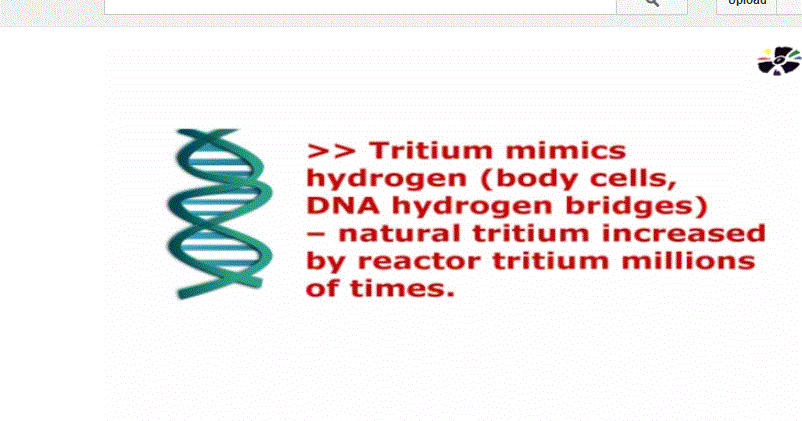
The stakes could not be higher. Tritium —used in nuclear weapons development — is a radioactive gas that travels quickly through air, water, soil, and food. It can cause cancer, genetic damage, and health impacts across generations. LANL insists venting is the only safe path forward—but their own “independent” technical review – one of four requirements ordered by the New Mexico Environment Department before it would review LANL’s request – exposed that claim as problematic.
The plan aims to enlarge an Israeli settlement by building thousands of new apartments in the West Bank. Critics say this would essentially split the Palestinian territory and make any two-state solution untenable.
The plan calls for development in an open tract of land east of Jerusalem, known as E1. Israel’s government would build nearly 3,500 new apartments to enlarge the Israeli settlement of Maale Adumim, which lies next to E1.
“I am pleased to announce that just a short while ago, the civil administration approved the planning for the construction of the E1 neighborhood,” the mayor of Maale Adumim, Guy Yifrach, said in a statement.
West Bank settlements complicate peace process
Plans for new Israeli settlements in the West Bank have been widely condemned and are considered illegal under international law. The UN and Palestinian rights groups have warned that the plan would essentially divide the Palestinian territory and make any two-state solution untenable.
The plans apply to an area of only 12 square kilometers (4.6 square miles). Due to its location, however, the expansion would make it impossible to ever create a contiguous Palestinian state with east Jerusalem as its capital.
Aviv Tatarsky, a researcher at the Ir Amim organization, which opposes Israel’s expansion of West Bank settlements, told DW last week that the plan would make a Palestinian state “not possible.”
“It breaks up the West Bank into a northern part and the southern part,” he said.
Speaking during a visit to Indonesia, German Foreign Minister Johann Wadephul said Wednesday that “such plans, if implemented, would be contrary to international law and would make a two-state solution impossible.”
Last week, the German Foreign Ministry called on the Israeli government to “stop settlement construction,” adding that Germany would “only recognize changes to the borders of June 4, 1967, that have been agreed upon by the parties to the conflict.”
“The settlement construction violates international law and relevant UN Security Council resolutions,” the spokesperson added. “It complicates a negotiated two-state solution and an end to the Israeli occupation of the West Bank, as demanded by the International Court of Justice.”
Israel far-right backs settlement plan
Israeli far-right Finance Minister Bezalel Smotrich, who announced the plan last week, said Wednesday the approval was “historic,” and framed it as a rebuke of Western countries like France and the UK, who recently announced plans to recognize a Palestinian state in September.
“The Palestinian state is being erased from the table not with slogans but with actions,” Smotrich said on Wednesday.
Smotrich’s office had previously said in a statement that the settlements were “burying the idea of a Palestinian state.”
Israel has criticized countries pledging to recognize a Palestinian state, calling such recognition a “reward for Hamas” following the October 7, 2023, terror attacks.
Wesley Rahn Editor and reporter focusing on geopolitics
While a lot of the nuclear public relations relates to nuclear as a sort of savior of climate change, unfortunately, the reverse is true,’ says expert Paul Dorfman
Operations of nuclear plants are being strained by warming rivers, storm surges and rising sea levels,
ISTANBUL
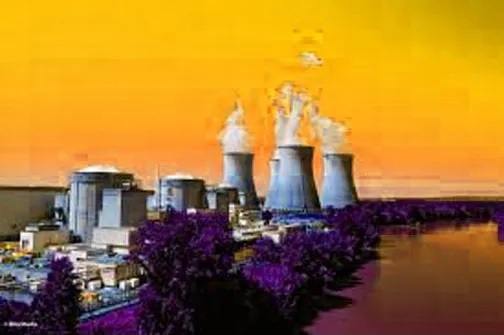
As the summer sun scorches Europe, the effects of a warming planet are becoming increasingly tangible – and while nuclear energy is often touted as part of the solution, it too is buckling under the heat.
“While a lot of the nuclear public relations relates to nuclear as a sort of savior of climate change, unfortunately, the reverse is true,” Paul Dorfman, chair of the Nuclear Consulting Group and a senior academic at the University of Sussex, told Anadolu. “Nuclear will be a significant and early climate casualty.”
This year, several European plants have reduced output or shut down altogether – not due to technical faults, but because the rivers that cool them are either too shallow or too hot.
France, where nuclear accounts for around 65% of electricity, has been particularly affected, with nearly all of its 18 nuclear sites reporting capacity reductions this summer.
Cooling crisis: Rivers too warm for reactors
Europe hosts around 166 operable nuclear reactors with a combined capacity of nearly 149 gigawatts (GW), approximately one-third of the global total.
France leads with 57 reactors, followed by the UK with nine. Other major operators include Spain, Sweden, Finland, Switzerland and Belgium, with smaller but strategic fleets in the Czech Republic, Hungary and Slovakia.
Most were designed decades ago without climate resilience in mind, and rely heavily on water – often drawn from nearby rivers – to cool the systems that produce electricity.
After absorbing heat from the reactor, this water is typically returned to the environment. But when river levels drop or water temperatures rise too high, the cooling process becomes less effective, and in some cases, dangerous.
“If that … superheated water is discharged back to the rivers, basically it kills the river ecology,” said Dorfman. “So, there are regulatory temperature thresholds – and France has breached those numbers.”
He explained that inland reactors are already suffering due to “low flow and heating” in rivers such as the Rhone and the Loire, two of the country’s most crucial cooling sources.
While France may be the worst hit, the same situation played out in several countries this summer.
In Switzerland, at the Beznau plant on the Aare River, one reactor was halted entirely and the other reduced to 50% capacity. Other inland reactors across Central Europe, including those in countries like the Czech Republic, Hungary and Slovakia, face similar vulnerabilities.
Europe especially vulnerable
The issue is compounded by projections that Europe’s extreme heat events will only intensify in the coming decades.
According to the European Environment Agency, Europe is the fastest-warming continent in the world, with temperatures rising at roughly twice the global average rate.
Recently, the UK Met Office said that scorching temperatures are becoming the new normal, along with more frequent extreme events like drought, flash flooding and storms.
“We know what will happen in the next 10 to 20 years. We know that inland rivers will suffer. This is absolutely going to happen,” Dorfman said.
He added that even coastal plants are not safe from climate volatility.
“Coastal reactors will be increasingly subject to climate-driven storm surge flooding,” Dorfman warned. “We know that sea level rise, glacier melt, and storm surges will increasingly threaten nuclear sites. This is not speculative. It’s already happening.”
The majority of nuclear power plants were constructed long before climate change was evident. Now, he said, “they’re at greater risk.”
Demand soars, output drops
Europe’s energy dilemma is further complicated by surging electricity demand during heat waves, driven largely by air conditioning. Just as power is needed most, nuclear output often declines.
According to a new report by energy think tank Ember, the June-July 2025 heat wave caused electricity demand to surge by 14% in Spain, 9% in France and 6% in Germany. Peak demand was even higher.
The current energy model is showing its limits during temperature extremes, said Pawel Czyzak, Ember’s interim Europe Program director.
“Any thermal power plant draws water from a lake, river or the sea to cool its systems, like a car engine. But if the river is already hot, then it can’t cool efficiently,” he told Anadolu. “If you have a week of 35C (95F)-plus, rivers warm up, and you have issues with the cooling systems.”
The result, Czyzak explained, is that nuclear output is often scaled back.
“Normally that’s okay in summer, but during a heat wave, demand grows – and that causes a lot of stress for the power system.”
He explained that France is particularly vulnerable since it relies on nuclear for the bulk of its energy. “If nuclear goes down … then you don’t really have anything else to switch on,” he said.
Turning to renewables
But there are signs of a shift. According to Ember, solar power accounted for 22% of the EU’s electricity generation in July, narrowly surpassing output from the bloc’s nuclear power plants.
Combined generation from natural gas and coal fell short of both solar and nuclear. Meanwhile, electricity produced from wind and hydropower sources exceeded that of all fossil fuels combined.
“We know that 94.2% of all new worldwide electricity capacity last year was renewables,” Dorfman said.
“Nuclear takes 13 to 17 years to build, and that’s much too late for our climate needs,” he added.
He argues that renewables, paired with energy efficiency measures and grid innovations like battery storage and improved interconnectors, can help build a more resilient power system.
“It’s looking like a significant investment in renewables of all kinds – and in energy efficiency – is urgently needed,” said Dorfman.
Czyzak added that solar power is a particularly strong ally during heat waves.
“This year, pretty much every year, we’re seeing more solar power deployed and record generation volumes,” he added.
Still, he acknowledges the transition will not happen overnight. “I think maybe the next five years are a bit difficult, and then it will get better,” he said. “Generally, the countries that don’t have very flexible and diversified power systems are at most risk.”
Part of Zelensky’s motive for wearing a suit Monday to the White House has become clearer with fresh reporting in the Financial Times, which reviewed a document showing Ukraine will promise to buy $100 billion of American weapons financed by Europe in a bid to obtain robust US security guarantees.
Additionally, “Under the proposals, Kyiv and Washington would also strike a $50bn deal to produce drones with Ukrainian companies that have pioneered the technology since Russia’s full-scale invasion in 2022,” the report continues. Ukraine pitched its plan during the Monday White House summit, which also involved seven EU leaders – and the $100BN arms deal became part of the key talking points pushed by the European allies.
This is an effort by design meant to ensure Ukraine can procure what it wants – and that its war efforts can still be funded uninterrupted – while still ultimately appeasing Trump. “We’re not giving anything. We’re selling weapons,” Trump had said Monday in response to a reporter’s question on the matter.
It remains very obvious that Europe’s demands of keeping up huge pressure on Russia, including through sanctions, are intended to stymie any US-backed deal seen as too favorable to Moscow. The FT report comments on this as follows:
The document details how Ukraine intends to make a counter-pitch to the US after Trump appeared to align himself with Russia’s position for ending the war following his meeting with President Vladimir Putin in Alaska last week.
It reiterates Ukraine’s call for a ceasefire that Trump had espoused but then dropped after his Putin meeting in favor of the pursuit of a comprehensive peace settlement.
Geopolitical analyst and commentator Glenn Diesen has pointed out, however, that Kiev is essentially attempting to create leverage out of nothing.
“Europe will spend $100 billion it does not have, to buy weapons from America that it does not have, to arm soldiers that Ukraine now lacks,” he wrote, explaining further: “This is to confront Russia, which for 30 years warned it would respond to NATO militarizing its borders.”
Diesen followed by doing something that Washington policy-makers refuse to do, and that is look at the big picture of how we got here [emphasis ZH]:
There was no threat to Ukraine before 2014, as only a tiny minority of Ukrainians wanted to join NATO, and Russia laid no claim to any of Ukraine’s territory. Western governments then supported a coup to pull Ukraine into NATO’s orbit – something that CIA Directors, Ambassadors, and Western state leaders had warned would instigate a security competition and likely trigger a war.
Russia predictably reacted fiercely. Ever since then, the only acceptable narrative has been that Russia wants to restore the Soviet Union and that Putin is Hitler. Any dissent is labelled as “disinformation”, “propaganda”, “hybrid warfare”, or even treason.
The war has now been lost, and the Americans are pulling away from it, asking the Europeans to absorb the consequences. How do the Europeans respond? By doubling down on this madness, which will destroy Ukraine, our economies, and our relevance in the world – and possibly trigger a nuclear war. – What is the strategy? More of the same? The best thing for Ukraine is to remove it from the frontlines of the geopolitical struggle over where to draw the new dividing lines in Europe: End the war, rebuild Ukraine, and replace expansionist military blocs with the principle of indivisible security.
This week, as negotiations proceed and Europe keeps up its drive to pile more and more pressure on Putin, the big question will be whether the Western side can indeed understand that it has lost the proxy war.
Many immense hurdles remain, and one could also point out there are too many cooks in the kitchen (judging by the over a half-dozen European leaders present in the Oval yesterday), making things all the more unnecessarily complicated – and that’s probably by design.
Glenn Greenwald agrees with this bleak assessment of Europe’s role in thwarting peace… DC foreign policy elites now know that Ukraine cannot win, but they would rather continue fueling a fruitless and deadly war than admit they were wrong and delusional about Ukraine’s prospects against Russia.
Why waste money on an unproven, enormously expensive, extremely toxic nuclear power plant, with no place in the nation accepting the eventual radioactive waste, in a spot with hundreds of thousands of neighbors and 100 million visiting passengers a year?
Airport shelves $1.5 million study of “modular” nuclear power after local district uproar.
If you have a snazzy new idea for miniature nuclear power plants in the middle of Denver International Airport that could be forced to store their spent nuclear waste onsite for centuries, maybe check with the neighbors first?
Denver’s mayor and airport chief touted a whiz-bang, $1.5 million exploratory study of small, “modular” nuclear power plants buried underground somewhere on DIA property to fuel decades of economic and passenger growth. The rah-rah news conference happened to be on a Wednesday that was also the 80th anniversary of the nuclear bombing of Hiroshima.
By that Friday, the study was back on the shelf, not to be revisited until city and airport officials completed some of the explaining they needed to do for local city council members and residents, who said they’d never been consulted on the (big) (radioactive) idea.
“I’m proud to say that community advocacy still works, but you really have to be within the community,” said City Council member Stacie Gilmore, whose northeast District 11 includes DIA. “People are paying attention, and they don’t trust the airport, and they don’t trust this administration, unfortunately.”
Gilmore said her constituents’ objections and questions were the same as those of reporters and environmental justice advocates who queried DIA chief Phil Washington and Mayor Mike Johnston at the Aug. 6 news conference launching the study: Why waste money on an unproven, enormously expensive, extremely toxic nuclear power plant, with no place in the nation accepting the eventual radioactive waste, in a spot with hundreds of thousands of neighbors and 100 million visiting passengers a year?
Especially at a time when Johnston is having to fire hundreds of current Denver city employees to make up for a major budget deficit? The airport can argue its funding for the study comes from airline and other fees, not city tax money, but still, opponents said … the optics?
“The optics are really crazy,” Gilmore said Tuesday. The date of the nuclear-curious news conference did not escape the notice of Gilmore, who has family members with parents who were in Japan when the first A-bomb dropped. “And it was just tone deaf to anything about the community, or the close proximity to Rocky Mountain Arsenal National Wildlife Refuge and its Superfund site,” Gilmore said. …………………………………………………………………………
Clean energy advocates said that none of the new generation of small modular reactors are actually plugged in and working yet, and that only a small handful of new nuclear power units have been approved nationwide since the 1970s. Cost overruns are the norm with nuclear, they add, and all existing nuclear power plants in the U.S. must store their highly radioactive spent nuclear fuel onsite because no federal repository has been opened. ………………………………… https://coloradosun.com/2025/08/20/dia-nuclear-power-study-shelved/
About 60,000 Israeli reservists will receive call-up orders that the Israeli military will issue tomorrow as it’s preparing for a major offensive on Gaza City, The Times of Israel reported on Tuesday.
The report said that reservists will have two weeks before they need to report for duty and that not all of them will take part in the offensive on Gaza City since some will replace IDF troops deployed in other areas of Gaza.
The Israeli military’s plans to take over Gaza City involve the ethnic cleansing of over 1 million Palestinian civilians from the area. Since civilians are expected to remain in the city after evacuation orders, the IDF is prepared to use artillery strikes as its means of forcibly moving them, according to Haaretz.
While the IDF hasn’t yet launched its ground offensive, it has ramped up strikes on Gaza City in recent weeks with a focus on the eastern Zeitoun neighborhood. Thousands of Palestinians have already fled the area, and an investigation from Al Jazeera found that many of the Israeli attacks were hitting displacement shelters.
Once the city is taken over, the IDF plans to spend more than a year destroying it, similar to how it made the northern cities of Beit Hanoun, Beit Lahia, and Jabalia uninhabitable. The IDF will demolish homes in Gaza City under the guise of “dismantling Hamas infrastructure,” but Israeli Prime Minister Benjamin Netanyahu has previously told a Knesset committee that the IDF’s destruction of homes would force Palestinians to leave Gaza altogether.
The idea of the Gaza City offensive is to force all the Palestinians to the south, and from there, Israel will pressure them to leave Gaza, but it remains unclear where they could go. Israel has reportedly been in talks with several countries on taking in a large number of Palestinian refugees, but so far, none have publicly committed to the idea.
THE SNP have demanded urgent answers in a letter to the Ministry of Defence (MoD) after the UK Government confirmed a serious nuclear incident took place at Faslane earlier this year. Figures released to The Herald last week revealed that a Category A event – the most serious category – took place between January 1 and April 22 this year.
The MoD have since claimed it posed no risk to the public. It came a week after it was also forced to admit that Loch Long, which is next to the UK’s nuclear bomb store at Coulport, is now contaminated with radioactive tritium following years of infrastructure decay. Bill Kidd, a longtime campaigner against nuclear weapons and SNP MSP (below), has condemned these revelations as a “damning indictment of Westminster’s disregard for Scotland’s safety and environment” and said it was proof that nuclear weapons are “dangerous, immoral, and completely incompatible with the values of the people of Scotland”.
It’s so revealing how Israelis keep begging Trump to end the killing in Gaza, because they understand that the US president has the power to force Israel to stop. It seems like Israelis understand this far better than Americans do.
Six former Israeli hostages and the widow of a slain hostage have released a video pleading with President Trump in English to support a comprehensive deal to make peace in Gaza so that the remaining hostages can be freed.
“You have the power to make history, to be the president of peace, the one who ended the war, ended the suffering, and brought every hostage home, including my little brother,” implores one of the hostages.
“President Trump, please act now before it’s too late for them, too,” pleads the widow.
This is not the first time Israelis have begged Trump to force an end to the slaughter. Earlier this month more than 600 former senior Israeli security officials from Mossad and Shin Bet sent Trump a letter urging him to compel Netanyahu to make peace in Gaza. They did this because they understand something that many Americans do not: that the US president has always had the power to end the Gaza holocaust.
It’s crazy how many times I’ve encountered Americans telling me that this is “Israel’s war” and there’s nothing the president can do to end it. It was mostly Democrats doing this back when Biden was president and I was slamming Genocide Joe for continuing this mass atrocity, and now that Trump is in office it’s his supporters who show up in my comments section white knighting for the president.
“It’s not our war and we should stay out of it,” they sometimes claim, mistakenly thinking that critics of the US-backed genocide are asking for some kind of US intervention.
But the call isn’t for the US to intervene, it’s for the US to stop intervening. To end the US interventionism that has been underway for two years. The Gaza holocaust can be ended by the US simply ceasing to add wood to the fire.
Israeli military insiders have been saying again and again that the onslaught in Gaza would not be possible without US support.
A senior Israeli air force official told Haaretz last year that “without the Americans’ supply of weapons to the Israel Defense Forces, especially the air force, Israel would have had a hard time sustaining its war for more than a few months.”
In November 2023 retired Israeli Major General Yitzhak Brick told Jewish News Syndicate that, “All of our missiles, the ammunition, the precision-guided bombs, all the airplanes and bombs, it’s all from the US. The minute they turn off the tap, you can’t keep fighting. You have no capability. … Everyone understands that we can’t fight this war without the United States. Period.”
“The entire Israel Air Force relies completely on American aircraft: fighter planes, transport planes, refueler planes and helicopters. All of Israel’s air power is based on the American commitment to defend Israel. We have no other reliable source for essential supplies of equipment, munitions and advanced weapons that Israel cannot manufacture on its own. In recent months, hundreds of American transport planes have landed at IAF bases carrying thousands of tons of advanced, vital military equipment and munitions.”
The Israelis clearly understand that they’ve been entirely dependent on the US for the IDF’s acts of butchery in Gaza this entire time, and they clearly understand that the US president has the ability to turn off the tap whenever he wants.
And now they are begging the president to do so with increasing urgency, because it’s been made clear to them that their own government isn’t going to stop until it is forced to stop. They can’t stop the gunman, so they’re turning to the man who’s feeding him the ammo.
It would be good if Americans understood this as well. Trump is committing genocide in Gaza, just as surely as Netanyahu is, and he could end it at any time. The fact that he still has not chosen to do so makes him one of the most evil people on earth.
The 80th anniversary of the harrowing Hiroshima and Nagasaki bombings in 1945 was earlier this month. As you know, since then the spread of nuclear weapons has largely occurred under the guise of ‘peaceful use’ reactors and uranium, for which Canada has been deeply complicit.
Despite this, Canada is now helping to underwrite the development of a new wave of reactors intended for domestic use and export. All will produce plutonium, embed proliferation risks (such as India’s use of a Candu to build its first bomb in 1974), and magnify the dangers of a global ‘plutonium economy’ which advocates are shamelessly promoting as a solution to the climate crisis.
Below is a link to a historical essay which will be a new chapter of “Atomic Accomplice”. I hope it will serve as a warning against such reckless pending public policy. It documents the secret, virtually unreported atomic weapons linkages between Canada and Israel during several decades – in which both countries mutually courted catastrophe while pursuing global reactor sales or atomic weaponry.
This essay contains much alarming (but accurate) material. The pending risks of vastly increased plutonium use warrant circulating. The 80th anniversary of the harrowing Hiroshima and Nagasaki bombings in 1945 was earlier this month. As you know, since then the spread of nuclear weapons has largely occurred under the guise of ‘peaceful use’ reactors and uranium, for which Canada has been deeply complicit.
Despite this, Canada is now helping to underwrite the development of a new wave of reactors intended for domestic use and export. All will produce plutonium, embed proliferation risks (such as India’s use of a Candu to build its first bomb in 1974), and magnify the dangers of a global ‘plutonium economy’ which advocates are shamelessly promoting as a solution to the climate crisis.
Attached is a historical essay which will be a new chapter of “Atomic Accomplice”. I hope it will serve as a warning against such reckless pending public policy. It documents the secret, virtually unreported atomic weapons linkages between Canada and Israel during several decades – in which both countries mutually courted catastrophe while pursuing global reactor sales or atomic weaponry.
Deaths from short-term exposure to fine particulates spewed by forest fires underestimated by 93%
Ajit Niranjan, Guardian, 19 Aug 25
Choking smoke spewed by wildfires is far more dangerous than previously thought, a new study has found, with death tolls from short-term exposure to fine particulates underestimated by 93%.
Researchers found that 535 people in Europe died on average each year between 2004 and 2022 as a result of breathing in the tiny toxic particles known as PM2.5 that are released when wildfires rage.
Under standard methods, which assume PM2.5 from wildfires is as deadly as from other sources, such as traffic, they would have expected just 38 deaths a year.
The study comes as wildfires ravage southern Europe, and new data from EU fire monitors shows that 895,000 hectares (2.2m acres) have burned so far in 2025, breaking records for this time of year. They have pumped out more than twice the amount of PM2.5 that wildfires have generated on average by this point in the year over the last two decades.
“Previously, people assumed the same toxicity for wildfire particles and all particles,” said Prof Cathryn Tonne, an environmental epidemiologist at the Barcelona Institute for Global Health (ISGlobal) and co-author of the study.
“Our paper shows evidence that – although it happens less often – the health impact for the same amount of particles is stronger for wildfire particles,” she added.
Dirty air is one of the biggest threats to human health, and research suggests wildfires are a significant contributor to the vast death toll. In December, a study attributed 1.53 million deaths around the world each year to short-term and long-term exposure to air pollution from wildfires.
The ISGlobal researchers, who looked only at the smoke’s short-term effects, for which the evidence base is stronger, combined daily mortality records from 32 European countries with estimates of PM2.5 pollution from 2004 to 2022.
South Korea’s state-run nuclear power firm has been banned from bidding for new power plant projects in North America and Europe over an intellectual property (IP) dispute, the Seoul-based Yonhap News reported on Tuesday.
Korea Hydro & Nuclear Power (KHNP) faces the IP dispute under its agreement with the US energy firm Westinghouse, signed in January, according to industry sources.
The sources mentioned that the KHNP cannot sign for new nuclear power plant deals in North America and the UK, Japan, Ukraine, and EU nations, excluding the Czech Republic.
The agreement was signed after Westinghouse accused the KHNP of infringing on its IP, claiming that the plant designs of the South Korean company utilize its licensed technology.
The deal had cleared a major obstacle for the KHNP-led Korean consortium to finalize a 26 trillion won ($18.7 billion) contract in June to build two nuclear power units in the Czech Republic.
The report came as the KHNP President Whang Joo-ho confirmed on Tuesday that the company had closed operations in Poland.
“After the new Polish administration took office … the country decided to drop the state-owned enterprise projects (in the nuclear power sector),” Whang said.
Poland became the fourth European country where the KHNP confirmed its business closure, following Sweden, Slovenia, and the Netherlands.
it is something Trump understands but Ukraine, the Europeans and the hawks in Washington simply refuse to accept: However long the fighting may drag pointlessly on, Ukraine is the vanquished in this war; Russia the victor.
No Western leader, if you have not noticed, has ever called for an end to the war. None among them has ever mentioned a peace accord for the simple reason the Western powers do not want peace with Russia.
Zelensky’s intent as he made plans to see Trump Monday was to persuade him to pull him back from the frightening idea of a peace agreement
SCHEERPOST, Patrick Lawrence: August 19, 2025,
No, the Trump–Putin summit at a joint-forces military base in Anchorage last Friday did not produce an agreement on a ceasefire in Ukraine. President Trump made no reference to “severe consequences” if Vladimir Putin did not consent to such an accord. Nothing was said about new sanctions against Russia and nothing about sanctions against nations that trade with Russia. Trump appears not to have mentioned those nuclear-armed submarines he ordered to “appropriate regions” a couple of weeks ago, and Putin seems not to have asked about them.
No, there was no such talk at Joint Base Elmendorf–Richardson. After not quite three hours behind closed doors with the Russian president, Trump departed Anchorage ahead of schedule, dropping the thought that he and Putin might linger so that Volodymyr Zelensky, president of the autocratic Ukrainian regime, could join them for further talks.
How yesterday, how swiftly passé all that early coverage proves but three days after Trump returned to Washington and Putin to Moscow. As of follow-on talks at the White House Monday with Zelensky and a swarm of European leaders, Trump seems to have rendered a ceasefire utterly beside the point in favor of an agreement he is fashioning with Putin that, if it comes to be — and we must stay with “if” for now — will prove stunningly concrete. Trump is after an enduring peace now — this as a subset of a new era in U.S.–Russian relations. Pull this off and he will improve his place in the history texts by magnitudes.
We do not know, and may never know, precisely what the two leaders said to one another behind closed doors as their interpreters and their foreign ministers, Sergei Lavrov and Marco Rubio, sat beside them. But it did not take long for Trump to start unpacking the plan he and Putin began to fashion during their talks. In post-summit interviews and social media posts, and in his encounters with Zelensky and his European sponsors at the White House Monday, Trump has made it plain as rain that an awful lot of something was discussed at a summit where nothing was reported to get done.
Within hours of the summit, Trump said in an interview with Fox News that he and Putin were near an agreement on an exchange of territories between Russia and Ukraine and that there would be security guarantees for the latter after the cessation of hostilities. “There are points that we negotiated and those points that we largely have agreed on,” Trump told Sean Hannity.
There is no telling how close or far Washington, Moscow, Kiev and (to the extent they matter) the Europeans may be from a comprehensive settlement. “Largely” covers an infinitude of near misses and failures, and Donald Trump is, after all, Donald Trump. But I read in this quick pencil-sketch a suggestion of the give-and-take dynamic between Trump and Putin: Russia will get some of the land it has fought for these past three years, which, if you look at a map, amounts to a security guarantee against the aggressions of viscerally Russophobic Ukrainians; the United States and the Western powers will cease arming the Kiev regime — another kind of guarantee. The Ukrainians will give up land but get security guarantees of their own.
Does this strike you as an unbalanced proposition? It should. Implicit in it is something Trump understands but Ukraine, the Europeans and the hawks in Washington simply refuse to accept: However long the fighting may drag pointlessly on, Ukraine is the vanquished in this war; Russia the victor.
We have had a slow roll of revelations since the Fox News interview. Reuters reported a day after the summit that Trump told Zelensky during a post-summit telephone call that it was time to “make a deal” with Moscow, which must include ceding some land to Russian sovereignty. “Russia is a very big power, and you’re not,” Trump reportedly told the Ukrainian president. Reuters said it reflected Putin’s demand in Anchorage that the Kiev regime recognize Russian sovereignty over all of the Donbas, the eastern regions of Ukraine that Russia formally annexed in September 2022 and parts of which, but not all, are under Russian military control.
Later Saturday came the big one, or a big one, as the post-summit situation is nothing if not kinetic. “It was determined by all,” Trump declared on his Truth Social platform, “that the best way to end the horrific war between Russia and Ukraine is to go directly to a Peace Agreement, which would end the war, and not a mere Ceasefire Agreement, which oftentimes do not hold up.”
“A mere ceasefire.” Wow. So much for that. A peace agreement instead of a ceasefire, cap “P” and cap “A,” if you please. Wow times 10. This is a major, major departure from the demands long advanced by all of the Western powers and Ukraine — an implicit rejection, this is to say, of the prevalent anti–Russian orthodoxy. No Western leader, if you have not noticed, has ever called for an end to the war. None among them has ever mentioned a peace accord for the simple reason the Western powers do not want peace with Russia. It is with this statement, then, that Trump signaled his determination to chart new territory.
Zelensky’s intent as he made plans to see Trump Monday was to persuade him to pull him back from the frightening idea of a peace agreement and reinvest in the demand for a ceasefire. This was also what the crew from across the Atlantic had in mind. Kier Starmer, Emmanuel Macron, Friedrich Merz: The British, French and German leaders were there. So were Mark Rutte, the NATO sec-gen, and Ursula von der Leyen, the president of the European Commission. Hawks all, this crowd. They arrived, as news reports indicated, in a state somewhere between alarm and panic.
Trump appears to have heard these people out on the ceasefire question, as was to be expected. But there is no indication that the thought went much beyond hypothetical notions of what might be discussed in an also hypothetical summit between Zelensky and Putin. And there is every indication Trump holds to his early post-summit disclosures, of which there is now more yet-to-be-confirmed detail, notably in the land-for-guarantees line and what Trump has meant in his mentions of “land swaps.”………………………………………………………………
…………………………………………………….. The “centrist” leadership in Washington and the European capitals has refused to listen to Moscow for many years now; the media that publish the bulletins of these trans–Atlantic elites routinely make the case that anything Putin says is by definition the opposite of true and that listening to the Russians on any topic is beyond all the fence posts, irretrievably out-of-bounds. It is hard to overstate the magnitude of Trump’s transgression against this background.
Trump’s second sin is his evident embrace of reality. And reality, like listening, has also been off-limits for the centrist elites and those clerking for them in media on both sides of the Atlantic. This has been so at last since the U.S.–cultivated coup that brought the current regime of crooks and neo–Nazis to power 11 years ago. Those dwelling in the Kingdom of Pretend have carried on for months as if the Kiev regime can set the terms for any kind of settlement and Moscow will have no choice but to accept them. “Ukraine is also determined not to let Russia set the terms and structure of future peace talks,” The Times reported from Kiev in a pre-summit curtain raiser.
Not to let Russia…?
……………………………………………….. To say Trump aligned with Putin, or got played or otherwise capitulated, is another way, a simpleton’s or cynic’s way, of denying or veiling reality. In my read, Trump listened to Putin’s case and has concluded, Yes, he is right. This is the ultimate reality long at issue and long unsayable. Trump has done no less and no more than speak this truth at last. The rest is rubbish.
Let us sin along with Trump, then, if we haven’t already. Let us all look past the mountain ranges of propaganda, cognitive warfare, perception management and what have you and say what Trump is now saying: It is time to acknowledge forthrightly that Putin is right about the war and its causes, about the Biden regime’s purposeful provocations, about the larger questions of which it is merely a subset and about how most sensibly to negotiate a lasting settlement in the borderlands between Europe and Russia and altogether between West and East. https://scheerpost.com/2025/08/19/patrick-lawrence-that-big-beautiful-summit-in-alaska/
“It was determined by all that the best way to end the horrific war between Russia and Ukraine is to go directly to a Peace Agreement, which would end the war, and not a mere Ceasefire Agreement, which often times do not hold up.”
The Dwarfs had to slink away. Will they, at long last, tell Zelensky they cannot back up their rhetoric with the needed arms and financial support?
I shall not make the de-rigueur disclaimer lest anyone infer that I think President Donald Trump is Snow White. Nor do I feel a need to assure readers that I am not “in Putin’s pocket.” In the tradition of a “current intelligence” analyst, I shall simply “call ‘em like I see ‘em.” And there are lots of dots to put together.
It has been clear since the Alaska summit that Trump and Russian President Vladimir Putin have come to an overall agreement on Ukraine and that it is now being fleshed out in plain sight. And both are acutely aware of the many forces wishing to sabotage moves toward a negotiated settlement.
They have agreed to call it “Biden’s war” and then to conduct themselves as though they have bigger fish to fry – first and foremost improving U.S.-Russia relations.
Why have so many observers been unable to grasp the significance of this key sentence in the first paragraph of the readout from the Aug. 6 Putin-Witkoff meeting – the meeting that set these hopeful events in train?
“Once again, it was noted that Russia-US relations could be placed on a totally different, mutually beneficial footing, which would be in stark contrast with the way these relations have evolved in recent years.” (Emphasis added.)
(Pardon the pedantry, but it is not widely known that the Kremlin’s Russian-to-English translator erred in using the subjunctive could. The word in the Russian readout is stronger; it means can – the indicative, not the subjunctive mood.) This is, well, indicative.
The shared, overriding objective to improve bilateral ties came through clearly both at the summit on Friday and at the “March of the Gnomes” on Monday when seven European leaders arrived at the White House to back Volodymyr Zelensky (no offense to garden gnomes – or dwarfs).
Enroute Alaska
On Air Force One, Trump told Fox’s Bret Baier, “I won’t be happy if I walk away without some form of a ceasefire.” Nyet, was Putin’s answer.
Perhaps the president thought he could work his persuasive powers on Putin one-on-one and change his mind. More likely, Trump knew his gambit had zero prospect of success, and merely wanted to be able to tell the foot-draggers later that he had thrown one last Hail Mary pass, but in vain.
Just a few hours later Trump wrote on truthsocial:
“It was determined by all that the best way to end the horrific war between Russia and Ukraine is to go directly to a Peace Agreement, which would end the war, and not a mere Ceasefire Agreement, which often times do not hold up.”
The New York Times and other media were quick to point out that Trump was “siding with Putin.”
Maps … and Charts
While Putin used the Alaska summit to make clear Russia’s core interests on Ukraine and to argue that he had no option other than to invade, it is a safe bet that he also showed Trump a map depicting the “order of battle;” that is, the disposition of forces along the contact line and in reserve.
This morning Trump hinted that Russia should be allowed to hold onto the territory it has occupied in Ukraine, a concept so far anathema to Zelensky and most of the European leaders.
THE Map
“The Ukrainian soldiers were brave as hell because it’s fighting a force that’s much, much bigger and clearly much more powerful,” Trump said of the Russian military … “And you know, it’s not like they’ve stopped. If you, I assume you’ve all seen the map, you know, a big chunk of territory is taken, and that territory has been taken.
“Now they’re talking about Donbas. But Donbas, right now, as you know, is 79 percent owned and controlled by Russia,” Trump added. “So they understand that.”
Zelensky and the Seven Dwarfs
The Dwarfs had to slink away. Will they, at long last, tell Zelensky they cannot back up their rhetoric with the needed arms and financial support? It will take a while, but in the end they will have to do so.
The end is near.
Ray McGovern works with Tell the Word, a publishing arm of the ecumenical Church of the Saviour in inner-city Washington. His 27 years as a C.I.A. analyst included leading the Soviet Foreign Policy Branch and conducting the morning briefings of the President’s Daily Brief. In retirement he co-founded Veteran Intelligence Professionals for Sanity (VIPS).
Electricite de France SA will likely cut nuclear power production in northern parts of the country this week because of forecast shallow waters on the Meuse River.
Low flows may affect output from the Chooz plant located near the Belgian border starting Friday, according to a company statement.
“The Meuse is quite far north for this sort of restriction, so it’s notable for that reason,” said William Peck, senior power analyst at Energy Aspects Ltd. “But given the weather forecasts and the time of year, I don’t think we’ll see a major ongoing issue or much additional upside risk from it.”
The country’s atomic power plants have been disrupted recently amid weather-related pressures. A heat wave forced several reactors to curb output because the river water used to cool them became too warm.
In addition, four reactors were shut down after a swarm of jellyfish clogged the filter drums. Their growing numbers can be linked to climate change.





 nuclear-news