On the contrary, we need renewable energy and natural intelligence, writes Stéphane Lhomme
The current boom in artificial intelligence is accompanied by a massive increase in energy and water consumption, and, according to what we are told, this phenomenon is only just beginning and will grow exponentially.
However, far from taking measures to stop or at least slow down this phenomenon, industrial and political leaders are instead competing with announcements and decisions to support it. As a result, various countries, including France, are trying to attract data centers by promising their owners, mainly the famous GAFAM (Google, Amazon, Facebook, Apple, Microsoft), to provide them with cheap and, above all, “green” electricity.
France is offering its nuclear power because, as everyone knows, nuclear power is “clean”… if we are willing to forget the devastation caused by uranium mines, the massive radioactive, chemical, and thermal discharges from power plants into rivers and oceans, radioactive waste, and the occasional contamination of an entire country or continent (during disasters such as Fukushima and Chernobyl).
During the World Nuclear Energy Exhibition (WNE) held in Paris from November 4 to 6, 2025, the vast majority of the media reported the countless announcements about a supposed “return to favor of nuclear power,” which, however, is just as illusory as the “great return of nuclear power” announced in the early 2000s – already accompanied by much fanfare at the time – by the same media outlets and sometimes the same journalists, who are taking advantage of the general amnesia of our “information” societies.
Despite the efforts of the high priestess of nuclear power at the time, Ms. Lauvergeon, revered by most of the media (always the same ones!) before leading her company Areva into bankruptcy (we are still waiting for the investigations that have been ongoing for 15 years to result in a trial), there was no “great comeback.”
Producing 17.1% of the world’s electricity in 2001, nuclear power has since seen its share steadily decline to below 10% in 2020 and below 9% in 2024 (8.97% to be exact). A veritable collapse as a “return to favor.” But we would have to believe that this time, buoyed by GAFAM and their unlimited checkbooks, the nuclear industry will truly experience a golden age (or rather a plutonium age). Let’s take a look at some of the thunderous announcements made in recent months.
Last June, Google announced that it would be relying on nuclear fusion to power its data centers! Let’s just remember that for 70 years, the major nuclear powers have failed completely in this endeavor, even when they joined forces in the Iter project in Cadarache (Bouches-du-Rhône). If nuclear fusion really is what powers Google, then this search engine is bound to shut down quickly!
In fact, last October, Google fell back on a plan B: restarting the Duane Arnold nuclear power plant in Iowa, which had been shut down since 2020. Never one to be late in relaying the nuclear industry’s announcements, AFP produced a dispatch reminding readers that this was the third project of its kind.
Indeed, the restart of the Palisades nuclear power plant in Michigan has been announced for 2023. But almost no one mentioned the official report of October 2024 revealing that the reactor, which had been shut down for several years, was severely affected by corrosion.
In reality, it is highly likely that this plant will never restart, nor will the Duane Arnold or Three Mile Island plants: in the latter case, the plan is to restart reactor 1, which was shut down in 2019, and not reactor 2 (whose core melted during a serious accident in 1979), as reported by the media, which we will charitably describe as inattentive.
Another avenue for the supposed “return to favor of nuclear power” and its ability to fuel the insane consumption of AI is that of the famous SMRs, small modular reactors, which are of course touted as being “safe, easy to build, and inexpensive.” So all we had to do was think of it.
However, the 127 SMR projects identified worldwide by the OECD’s Nuclear Energy Agency, far from making this idea a reality, show instead a total lack of focus: many start-ups are chasing subsidies generously granted by politicians who are ignorant and, above all, terrified of being seen as dinosaurs who have missed the boat on renewal.
The SMR bubble is about to burst. In France, the main start-ups (Naarea, Newcléo, Jimmy, etc.) are in serious difficulty or have already suspended payments, and EDF’s Nuward project has been postponed indefinitely. In the US, the only project that had made any progress, NuScale, has already closed down.
After initially announcing the construction of new nuclear reactors (large or SMRs), then falling back on restarting shut-down reactors, GAFAM companies are now cautiously turning to existing facilities. In the US, for example, gas-fired power plants are being called upon. In addition, Meta (Facebook) has signed an agreement to purchase the output of the Clinton nuclear power plant (Illinois), a plant that is currently in operation: this is safer than relying on virtual or shut-down plants!
It is already clear that, wherever data centers are built, GAFAM will monopolize electricity production to the detriment of the population. This situation, which one might have thought was the stuff of science fiction, is already a reality in the US, for example in Virginia, Georgia, and Arizona, where the population is deprived of water, which is monopolized for cooling the numerous data centers built in these states, which attracted them by exempting them from taxes (again to the detriment of the population).
The same is true, for example, in Chile and already, or soon, in all countries that have had the bad idea of welcoming these famous data centers. Selfishly, we can only hope that, despite the grandstanding of the showman Macron, France will fail to attract data centers. It will then be the “winners” of this absurd race who will fall victim to GAFAM, and thus there will be electricity and water left for the needs of the French population. It should also be noted that various countries are beginning to take measures to slow down or suspend the installation of data centers.
Unfortunately, it is to be feared that nothing and no one will put a stop to the madness of AI and its senseless consumption of electricity (not to mention the “mining” of bitcoins and other cryptocurrencies, an activity that also consumes a tremendous amount of energy and water).
However, contrary to what is claimed in the numerous articles mentioned above, nuclear power will not be able to meet this demand: as demonstrated by the failures of large reactors—EPR (France) and AP1000 (USA)—as well as SMRs, the construction of nuclear power plants is far too uncertain, slow, and costly.
Moreover, according to the International Energy Agency, since 2020, 90% of new electricity generation capacity worldwide has been renewable, which is much cheaper than nuclear power and, above all, can be brought online very quickly. AI will therefore not save nuclear power; quite the contrary: once they have finished with their absurd announcements, even the GAFAM companies will turn away from it and choose realistic options. That said, while it is of course much better for electricity to be renewable rather than nuclear, one wonders where the progress will be if it is monopolized to power AI rather than meet the needs of the population.
On this subject, there is still time to cancel the senseless EPR reactor projects (even renamed EPR2 to make them seem like an improvement), which EDF is proving incapable of building and operating, and to devote the available money to realistic, decentralized energy efficiency and renewable energy projects that are supported by and for the population: Natural intelligence and renewables rather than artificial “intelligence” and nuclear power.
No mentally healthy person wants to rule the world.
Nobody with a functioning conscience and a working empathy center in their brain is interested in becoming a billionaire.
We are ruled by the most dysfunctional members of our species. The most wounded, neurotic and sociopathic among us. The least wise, caring and insightful.
What drives a person to claw their way to the top of a wildly sick society and become a lord of the dystopia?
What compels someone to amass obscene amounts of wealth in a world where so many have far too little?
What causes someone to ascend to political leadership of a power structure that’s built for the purpose of robbing and oppressing the most underprivileged populations on earth?
Nothing wholesome, to be sure. That impulse is never coming from anywhere good.
The worst among us are striving to prevail in this dystopia by riding the tides of its ugliest inclinations, while the best among us are striving to dismantle the dystopia and replace it with something kind and equitable. This causes the worst of us to be elevated to the top and the best of us to be smacked down to the bottom.
Under our current system the easiest way to set yourself on a trajectory from millionaire to billionaire to trillionaire is to exploit workers, crush your competition, plunder the available resources of the global south, externalize the costs of industry onto society and the ecosystem, bribe the government to advance your corporate interests via lobbying and campaign donations, contract with the most murderous military and intelligence agencies in the world, and psychologically manipulate the public into consuming products and services they don’t need.
Who is going to be most successful in this endeavor? The very worst people alive. People whose hearts and minds are so stunted and dysfunctional that they see other human beings as tools for their own personal enrichment, to be used up and discarded like juice boxes or condoms.
These are the people who are touching the most lives on this planet. These are the people whose decisions affect the most of us.
Michael Parenti has passed away after a luminous life advancing powerful ideas and insights about the abusive dynamics of human civilization and how best to address them. He did not die a wealthy man. The mainstream papers did not report on his departure from our world. Only a relatively small percentage of the population is aware he ever lived.
But everyone knows who Elon Musk is. Everyone knows who Jeff Bezos is. Who Bill Gates is.
The best of us live and die in relative obscurity, generally being subjected to scorn and derision from the ruling establishment the entire time. The worst of us become plutocratic demigods.
It’s an uphill battle. You spend your life swimming against the current of dystopia, and you are not handsomely rewarded for your efforts. You’ll get deplatformed, censored and smeared. You might even get shot by government agents for standing up for the disempowered. And you’ll definitely never be a billionaire.
But it’s absolutely worth it, and you should do it. Fighting for truth and justice in a civilization made of injustice and deceit is the only way to live. It’s the only way to feel satisfied with your efforts during this life. The only way to be sure that when you are on your deathbed you can look back and know you spent your time here in a right and admirable way.
It costs a lot to fight for a healthy world. But it costs a lot more not to.
Today in the US, Trumpism favours war.com, fuelling and justifying risky investments ==> investments take the State hostage ==> the State secures many contracts and in turn the contracts produce infrastructure ==> infrastructure such as megaservers, clouds, low-altitude satellites, cable networks, etc., become indispensable to the population and generate large profits ==> profits finance more risky investments…and so on, to the detriment of State Sovereignty and in favour of the Digital Oligarchy.
Today I am providing my English translation of an article by Glauco Benigni, originally in Italian and published first on ItaliaNelFuturo.com on Wednesday 3rd December 2025 and then on ComeDonChisciotte.org on Sunday 7th December 2025
Over the last 30 years, a fifth Caste has been added to the four dominant Castes that have been handed down through history, namely Brahmins, Merchants, Warriors and Scribes: the Caste of Digital Tycoons. Many of them are former executives involved in the various processes that took place at the end of the 1990s in the “forge” of PayPal. They are “affectionately” known as the PayPal Mafia. Now fifty-year-old billionaires, these former Silicon Valley youngsters grew up in the cyber world, combining the skills of the previous castes and conquering important parts of Nasdaq, every social network, artificial intelligence and e-commerce. What’s more, they have a monopoly in the West on the collection and processing of big data.
Today, each of them is a mix of Brahmin, Merchant and Scribe. For some time now, they have also been revealing themselves as Warriors, both because they build and manage the weapons of Cognitive Warfare and because they have put their knowledge and best practices at the service of the Armed Men (Pentagon, Intelligence, Private Security), in many cases eliminating the distance between the client (the Warrior State) and the contract manager and, as we shall see, officially taking on prestigious positions in the institutions to which they provided services and consultancy.
The leading representatives of this new Caste are: Peter Thiel and Alex Karp, founders in 2003 of Palantir (a technology company specialising in big data analysis and artificial intelligence). The two are known as “the architects” of the new system; Elon Musk, now known as “the voice of the techno-populist right”; Davide Sacchi, known as “the techno-currency czar”, and Marc Andreessen, the ideologue of acceleration. To these must be added J.D. Vance, US Vice-President (according to gossip columns: Peter Thiel’s boyfriend) and Donald Trump Jr., son of the current occupant of the White House. Of course, Bill Gates, Jeff Bezos and Mark Zuckerberg are also closely linked to the Circus of Wonders we have described. This is undoubtedly a “fine little team”, whose financial strength (turnover and stock market capitalisation) amounts to several trillion US dollars. In other words, more than the 2024 national GDPs of countries such as the UK, Germany or France.
Trump has surrounded himself with them in the hope – not even a secret one – that they can anaesthetise many of the fractures and pains still caused by the Deep State. How? Mainly by exercising remote control over antagonists and cognitive warfare: sophisticated activities that you can engage in if you have computing power and networks, megaservers, microchip production and the cloud at your disposal. In essence, Trump’s choices are consolidating the new powers of the third millennium, namely the Webcracy that I describe at length in my book of the same name.
The new Caste has made its way into the White House, NASA, the Pentagon and the intelligence agencies, and is taking the helm of change in the US, first thanks to the cuts made by Elon Musk’s DOGE programme and now thanks to funding diverted to the digital bosses and taken away from the old Fordist world figures who have ended up in the shadows.
At the end of July 2025, in the labyrinthine corridors of the Pentagon, the US Army calmly signed away a piece of its sovereignty. A ten-billion-dollar contract with Palantir Technologies – one of the largest contracts in the history of the Department of Defence – was presented to the public and promoted in the business world as a step towards “efficiency”. The contract consolidated seventy-five previous procurement agreements into a single mutual commitment. This new relationship is considered a fundamental strategic step, thanks to which military functions are conferred on a private company. So far, there would be little to be surprised about if its founder, Peter Thiel, did not go on television to declare the Truth as seen from his privileged observatory: “freedom and democracy are no longer compatible”.
Translated: “You are all being monitored 24/7 without your knowledge, and we use your Big Data to guide your choices and make you like robots”. Honestly, Westerners living in NATO territories should not sleep peacefully after hearing these words: in addition to the spectre of war looming over us, we are now being told to forget the dream of freedom and to go along with the new aggressive and belligerent technological tyranny.
A nice little s****y programme, which goes hand in hand with the implied statement to the peoples already involved in the delirium of conflict: “Stop shooting each other or we won’t sell you any more weapons”.
We are therefore witnessing an increasingly authoritarian technology that tends towards dictatorship. In this scenario, US Vice President J.D. Vance, supported in his election campaign with $15 million from Peter Thiel, has become the face of techno-right governance. Behind him, his financier and boyfriend has firmly established himself in the techno-military heart of the state.
Waving the flag of “patriotic technology”, this new bloc is building the infrastructure of control: clouds, artificial intelligence, financial positioning, drones, satellites, an integrated system that Americans call the authoritarian Stack1. A faster, more ideological and almost completely privatised form of governance: a regime in which the boards of digital corporations, rather than public law, set the rules.
Some US media outlets describe Webcracy as a large lobby that operates with powers similar to those of the state: it writes or omits rules as its interests change, wins contracts and exports its model to Europe, where it poses a direct challenge to what remains of the Old Continent’s democratic governance. A governance so fragile and sick that it is unable to react. So let’s clarify one thing: Silicon Valley is no longer building search engines, social networks and apps, it is building a new empire. Or at least it is trying with all its might. Which is no small thing…………………………………………………………………………………
Guys… the die is cast! War tout court, war.com, has become the engine of development for NATO countries and is leading us towards privatised military sovereignty. Unlike the old authoritarianism built on fear and force, this new system governs through algorithms, the anarchic proliferation of financial capital and the ownership of networks that carry digital signals (web, telephones, TV, etc.).
Today in the US, Trumpism favours war.com, fuelling and justifying risky investments ==> investments take the State hostage ==> the State secures many contracts and in turn the contracts produce infrastructure ==> infrastructure such as megaservers, clouds, low-altitude satellites, cable networks, etc., become indispensable to the population and generate large profits ==> profits finance more risky investments…and so on, to the detriment of State Sovereignty and in favour of the Digital Oligarchy.
Let’s see which venture capital firms are currently active in the scenario described above:
Founders Fund, Thiel’s $17 billion flagship company, took Anduril from a valuation of $1 billion to $30.5 billion. It was the first institutional investor in Palantir and SpaceX, which are Thiel and Musk’s respective “crown jewels”. Palantir’s quarterly revenue now exceeds $1 billion, up 53% thanks to government contracts.
1789 Capital was founded by Thiel’s confidants and recently acquired by Donald Trump Jr. ……………………………………
The five domains of privatised sovereignty
Critical State infrastructure is being privatised in five sectors – data, defence, space, energy and money – the foundations of contemporary power. These domains constitute the architecture of privatised sovereignty: a technological regime in which power manifests itself through algorithms, laws, infrastructure, platforms and automated procedures…………………………………………………………………………………………………………………………………………………….
A normal, healthy person would look at Australia’s lack of free speech protections and say “Hmm, Australian leaders should be extremely resistant to new laws and policies which restrict speech then, because it would be very easy for those restrictions to become abusive.”
Australian leaders look at our lack of free speech protections and say “See? This means we get to take away your right to protest genocide!”
Nowhere is this more clearly exemplified than the repeated statements from New South Wales premier Chris Minns saying it’s fine to silence Australians because we don’t have free speech rights.
Over and over again Minns has defended his promotion of authoritarian speech crackdowns in his state by claiming it’s okay to stomp out dissident speech of Australians because Australians don’t have the same speech protections as Americans, saying “we don’t have the same free speech rules that they have in the United States and I make no apologies for that” and similar statements in recent weeks.
To be clear, Minns is being repulsively tyrannical when he says this, but factually speaking he isn’t wrong.
As Joe Lauria wrote for Consortium News following the passage of Australia’s frightening new “hate speech” bill:
“Unlike the United States, Australia has no Bill of Rights in its Constitution protecting freedom of speech, assembly and other rights. Much as Israel would want it, a law such as this adopted in Australia would still be difficult to pass in the U.S. on paper, despite the Israel Lobby’s hold over the U.S. Congress.”
If Australians had the same speech protections that they have in the United States, we could appeal tyrannical new laws on First Amendment grounds. Because we have no such protections, it is much harder to oppose authoritarian speech restrictions once they are in place.
“Australia is now the only democratic nation in the world without a national bill of rights. Some comprehensive form of legal protection for basic rights is otherwise seen as an essential check and balance in democratic governance around the world. Indeed, I can find no example of a democratic nation that has gained a new Constitution or legal system in recent decades that has not included some form of a bill of rights, nor am I aware of any such nation that has done away with a bill of rights once it has been put in place.”
It has been clearly and conclusively established that this system does not work. State and federal governments are working frenetically to shred the right of Australians to oppose the actions of the state of Israel, with their assault on our civil rights disguised as an effort to fight “antisemitism” in our country and help Jewish Australians feel more safe. The fact that this happens to advance the information interests of the western power alliance, we are told, is purely coincidental.
The evidence is in and the case is closed. The Australian system does not work. We need a national bill of rights, and we need free speech to be enshrined in our constitution.
In the meantime, we need to be aggressively opposed to laws and policies which assault our freedom of speech. We need to be more aggressive in our opposition than Americans would be, because we have fewer safeguards against tyrannical abuses.
It’s so disgusting how these freaks are telling us right to our faces “Yeah well you guys don’t have any rights, so I’m going to silence you and oppress you and I make no apologies about that.”
That kind of arrogant, abusive authoritarianism deserves nothing but ferocious defiance.
Refusal to join will be an act of national self-respect. The UN-based international order, however flawed, should be repaired through law and cooperation, not replaced by a gilded caricature.
The so-called “Board of Peace” being created by President Donald Trump is profoundly degrading to the pursuit of peace and to any nation that would lend it legitimacy. This is a trojan horse to dismantle the United Nations. It should be refused outright by every nation invited to join.
In its Charter, the Board of Peace (BoP) claims to be an “international organization that seeks to promote stability, restore dependable and lawful governance, and secure enduring peace in areas affected or threatened by conflict.” If this sounds familiar, it should, because this is the mandate of the United Nations. Created in the aftermath of World War II, the UN has as its central mission the maintenance of international peace and security.
It is no secret that Trump holds open contempt for international law and the United Nations. He said so himself during his September 2025 speech at the General Assembly, and has recently withdrawn from 31 UN entities. Following a long tradition of US foreign policy, he has consistently violated international law, including the bombing of seven countries in the past year, none of which were authorized by the Security Council and none of which was undertaken in lawful self-defense under the Charter (Iran, Iraq, Nigeria, Somalia, Syria, Yemen, and Venezuela). He is now claiming Greenland, with brazen and open hostility towards the US allies in Europe.
So, what about this Board of Peace?
It is, to put it simply, a pledge of allegiance to Trump, who seeks the role of world chairman and the world’s ultimate arbiter. The BoP will have as its Executive Board none other than Trump’s political donors, family members, and courtiers. The leaders of nations that sign up will get to rub shoulders with, and take orders from, Marco Rubio, Steve Witkoff, Jared Kushner and Tony Blair. Hedge Fund owner and Republican Party mega-donor Marc Rowan also gets to play. More to the point, any decisions taken by the BoP will be subject to Trump’s approval.
If the charade of representatives isn’t enough, nations will have to pay $1 billion for a “permanent seat” on the Board. Any nation that participates should know what it is “buying.” It is certainly not buying peace or a solution for the Palestinian people (as the money supposedly goes to Gaza’s reconstruction). It is buying ostensible access to Trump for as long as it serves his interests. It is buying an illusion of momentary influence in a system where Trump’s rules are enforced by personal whim.
The proposal is absurd not least because it purports to “solve” a problem that already has an 80-year-old global solution. The United Nations exists precisely to prevent the personalization of war and peace. It was designed after the wreckage of two world wars to global base peace on collective rules and international law. The UN’s authority, rightly, derives from the UN Charter ratified by 193 member states (including the US, as ratified by the US Senate in July 1945) and grounded in international law. If the US doesn’t want to abide by the Charter, the UN General Assembly should suspend the US credentials, as it once did with ApartheidSouth Africa.
Trump’s “Board of Peace” is a blatant repudiation of the United Nations. Trump has made that explicit, recently declaring that the Board of Peace “might” indeed replace the United Nations. This statement alone should end the conversation for any serious national leader. Participation after such a declaration is a conscious decision to subordinate one’s country to Trump’s personalized global authority. It is to accept, in advance, that peace is no longer governed by the UN Charter, but by Trump.
Still, some nations, desperate to get on the right side of the US, may take the bait. They should remember the wise words of President John F. Kennedy in his inaugural address “ those who foolishly sought power by riding the back of the tiger ended up inside.”
The record shows that loyalty to Trump is never enough to salve his ego. Just look at the long parade of Trump’s former allies, advisers, and appointees who were humiliated, discarded, and attacked by him the moment they ceased to be useful to him.
For any nation, participation on the Board of Peace would be strategically foolish. Joining this body will create long-lasting reputational damage. Long after Trump himself is no longer President, a past association with this travesty will be a mark of poor judgment. It will remain as sad evidence that, at a critical moment, a national political system mistook a vanity project for statesmanship, squandering $1 billion of funds in the process.
Ultimately, refusal to join the “Board of Peace” will be an act of national self-respect. Peace is a global public good. The UN-based international order, however flawed, should be repaired through law and cooperation, not replaced by a gilded caricature. Any nation that values international law, and the respect for the United Nations, should decline immediately to be associated with this travesty of international law.
Nuclear weapons testing has affected every single human on the planet, causing at least four million premature deaths from cancer and other diseases over time, according to a new report delving into the deadly legacy.
More than 2,400 nuclear devices were detonated in tests conducted worldwide between 1945 and 2017.
Of the nine countries known to possess nuclear weapons — Russia, the United States, China, France, the United Kingdom, Pakistan, India, Israel and North Korea — only Pyongyang has conducted nuclear tests since the 1990s.
But a new report from the Norwegian People’s Aid (NPA) humanitarian organisation, provided exclusively to AFP, details how the effects of past tests are still being felt worldwide.
“They poisoned us,” Hinamoeura Cross, a 37-year-old Tahitian parliamentarian who was aged seven when France detonated its last nuclear explosion near her home in French Polynesia in 1996.
Seventeen years later, she was diagnosed with leukaemia, in a family where her grandmother, mother and aunt already suffered from thyroid cancer.
The explosions are known to have caused enduring and widespread harm to human health, societies and ecosystems.
But the NPA report details over 304 pages how an ongoing culture of secrecy, along with lacking international engagement and a dearth of data, have left many affected communities scrambling for answers.
“Past nuclear testing continues to kill today,” said NPA chief Raymond Johansen, voicing hope the report would “strengthen the resolve to prevent nuclear weapons from ever being tested or used again”.
– ‘Very dangerous’ –
The issue has gained fresh relevance after US President Donald Trump’s suggestion last November that Washington could resume nuclear testing, accusing Russia and China of already doing so — charges they rejected.
“This is very, very, very dangerous,” warned Ivana Hughes, a Columbia University chemistry lecturer and head of the Nuclear Age Peace Foundation, who contributed to the NPA report.
“The nuclear testing period shows us that the consequences are extremely long-lasting and very serious,” she told AFP.
The heaviest burden of past tests has fallen on communities living near test sites, today located in 15 different countries, including many former colonies of nuclear-armed states.
Survivors there continue to face elevated rates of illness, congenital anomalies and trauma.
The impact is also felt globally.
“Every person alive today carries radioactive isotopes from atmospheric testing in their bones,” report co-author and University of South Carolina anthropology professor Magdalena Stawkowski told AFP.
– Millions of early deaths –
Hundreds of thousands of people around the globe are known to have already died from illnesses linked to past nuclear test detonations, the report highlighted.
It pointed to strong scientific evidence connecting radiation exposure to DNA damage, cancer, cardiovascular disease and genetic effects, even at low doses.
“The risks that radiation poses are really much greater than previously thought,” report co-author Tilman Ruff told AFP.
The atmospheric tests alone, which were conducted up to 1980, are expected over time to cause at least two million excess cancer deaths, he said.
And “the same number of additional early deaths (are expected) from heart attacks and strokes”, said Ruff, a Melbourne University public health fellow and co-founder of the International Campaign to Abolish Nuclear Weapons, which won the 2017 Nobel Peace Prize.
Ionising radiation, or particles that can snap DNA bonds in cells and turn them cancerous, is “intensely biologically harmful”, he said.
“There is no level below which there are no effects”.
The risks are not uniform, with foetuses and young children most affected, and girls and women 52-percent more susceptible to the cancer-inducing effects of radiation than boys and men.
Culture of secrecy –
The NPA report documented a persistent culture of secrecy among states that had tested nuclear weapons.
In Kiribati, for instance, studies by Britain and the United States on health and environmental impacts remain classified, preventing victims from learning what was done to them.
And in Algeria, the precise sites where France buried radioactive waste after its tests there remain undisclosed, the report said.
None of the nuclear-armed states has ever apologised for the tests, and even in cases where they eventually acknowledged damage, the report said compensation schemes have tended to “function more to limit liability than to help victims in good faith”.
Local communities, meanwhile, frequently lack adequate healthcare and health screening, as well as basic risk education — leaving people unaware of the dangers or how to protect themselves.
“The harm is underestimated, it’s under-communicated, and it’s under-addressed,” Stawkowski said.
– ‘Guinea pigs’ –
When Cross was diagnosed with leukaemia aged 24, she did not immediately blame the nuclear explosions in French Polynesia decades earlier.
“France’s propaganda was very powerful,” she told AFP, adding that in school she had only learned about the tests’ positive economic impact for France’s South Pacific islands and atolls.
She was later “shocked” to discover that rather than a handful of harmless “tests”, France conducted 193 explosions in French Polynesia between 1966 and 1996.
The biggest was around 200 times more powerful than the bomb the United States dropped on Hiroshima in 1945.
“These weren’t just tests. They were real bombs,” she said, charging that her people had been treated as “guinea pigs” for decades.
– ‘Trauma’ –
Other communities near test sites have also borne a heavy burden.
Hughes pointed to the impact of the United States’ 15-megaton Bravo test at Bikini Atoll in the Marshall Islands on March 1, 1954 — “equivalent to 1,000 Hiroshima bombs — an absolute monstrosity”.
It vaporised one island and exposed thousands nearby to radioactive fallout.
Rongelap, about 120 kilometres (75 miles) from Bikini, saw “vaporised coral atoll mixed in with radioactive isotopes falling onto the island from the sky, with the children thinking it was snow”, Hughes said.
The report criticised the “minimal” international response to the problem.
It especially highlighted the nuclear-armed states’ responsibility to scale up efforts to assess needs, assist victims and clean up contaminated environments.
“We want to understand what happened to us,” Cross said.
You circumscribe everything demand that we prove We exist, that We use the land that was always ours, that We have a right to our ancestral lands.
And now it is We who ask: By what right are You here?
it is worth noting that Danish and other Nordic diplomats have disputed Trump’s claims of Russian and Chinese warships operating ‘around Greenland’, for which Trump has offered no public evidence.
China’s anticipated investment in Greenland does not pose a military threat, nor is it something that the United States, Canada, or indeed Denmark should be concerned with. This should be a discussion and debate within Greenland.
The US has set its sights on Greenland due to its mineral wealth and strategic location. But its people – the Kalaallit – are an afterthought in Washington’s machinations.
Every few years, the centre of the imperialist Global North – the United States – forgets its manners.
It is one thing to be rude to Iran or Venezuela, but it is another thing entirely to be rude to Denmark. The North Atlantic has not experienced internecine acrimony since – perhaps – Adolf Hitler turned on Poland in 1939. But to be fair to the United States, it has not coveted Denmark itself. Washington has licked its sticky fingers and placed them upon Greenland.
Denmark began its colonisation of Greenland 305 years ago, in 1721. Constitutional scholars will say that the formal colonial status ended in 1953 when Greenland was incorporated into the Kingdom of Denmark and that Greenland gained a further measure of autonomy in 2009 when the Act on Greenland Self-Government was passed – but let’s be frank, it remains a colony.
For context, Greenland (over 2 million square kilometres) is fifty times larger than Denmark. For comparison, if placed over the United States, it would almost stretch from Florida to California. If it were an independent country, it would be the twelfth largest in the world by area. Of course, the Arctic country has a very small population of around 57,700 (roughly equivalent to the population of Hoboken, New Jersey).
In Washington’s imagination, Greenland appears not as a homeland, but as a location – a place on a map or a signature on a radar screen. The words used to talk about it belong to the grammar of possession: purchase, control, seize. This is the language of domination – one imperialist power (United States) wanting to seize the land of a colonial power (Denmark).
But Greenland is not a prize.
The Inuit of Greenland call their country Kalaallit Nunaat: ‘Land of the Kalaallit’ (Greenlanders). When Trump and his allies speak of Greenland, they never speak of the people: the Kalaallit. Instead, Trump speaks of the strategic importance of the island and about what the US government sees as the perils of its Chinese and Russian capture (never mind that neither China nor Russia have made any claims over the territory). Greenland is always a place that someone else must hold, but not the Kalaallit. For people like Trump, or indeed for generations of Danish prime ministers (despite soft statements about the path to self-determination), the Kalaallit have no role as political subjects.
Greenland grew in strategic and economic importance to Denmark after the 1794 discovery of cryolite, a key mineral used in the production of aluminium. This extractive focus continued after the 1956 discovery of uranium and rare earth elements in Kuannersuit (Kvanefjeld) in southern Greenland. In 1941, Denmark’s envoy in Washington, Henrik Kauffmann, signed an agreement that allowed the US to establish bases and stations in Greenland. In 1943, the US placed a weather station at Thule (Dundas) known as Bluie West 6, and in 1946 it added a small airstrip. After the Second World War, Denmark was an early entrant to the US effort to build a military bloc against the Soviet Union. In fact, it was a founder of the North Atlantic Treaty Organisation (1949) and then signed the Defence of Greenland Agreement (1951) that allowed the US to build the Thule Air Base under the codename Operation Blue Jay (now Pituffik Space Base).
The base became useful not only as a place to watch the USSR, but also for missile warning, missile defence, and space surveillance – a strategic foothold that has grown more consequential as Greenland’s uranium and rare earth deposits have become central to the global contest for critical minerals.
As Greenland’s ice sheets have melted in recent decades due to the climate catastrophe, the country’s deep geology has become easier to survey and to mine. Feasibility studies and drilling in the early to mid-2010s (especially 2011–2015) showed that the land was teeming with graphite, lithium, rare earth elements, and uranium. As the United States imposed its New Cold War on China, it had to seek new sources for rare earths given China’s dominance of rare-earth refining and downstream magnet production. The island became not only a source of minerals or a geographical location for power projection, but also a critical node in the US-led supply-chain security architecture.
In August 2010, long before Canadian Prime Minister Mark Carney’s trip to China in mid-January 2026, the Canadian government released a report with an interesting title: Statement on Canada’s Arctic Foreign Policy: Exercising Sovereignty and Promoting Canada’s Northern Strategy Abroad. On the surface, the report is rather bland, making many pronouncements about how Canada respects the Indigenous peoples of the Arctic and how its intentions are entirely liberal and noble. That posture is difficult to square with the reality that major mining projects across the Canadian Arctic have repeatedly sparked Inuit concerns about impacts on wildlife and Inuit harvesting and that regulators have at times recommended against expansions, as in the case of Baffinland’s Mary River iron mine.
In fact, Canada is home to the world’s largest hub for mining finance (TSX and TSX Venture Exchange list more than half of the world’s publicly traded mining companies), which has been sniffing around the Arctic for decades in search of energy and minerals. The 2010 report does mention Canada’s ‘Northern energy and natural resource potential’ and that the government is ‘investing significantly in mapping the energy and mineral potential of the North’. But there is no mention of the large Canadian private mining companies that would benefit not only from Greenland’s mineral potential (for instance, Amaroq Minerals, which already owns the Nalunaq gold mine in South Greenland) but also from Canada’s Arctic region (for instance, Agnico Eagle Mines, Barrick Mining Company, Canada Rare Earth Corporation, and Trilogy Metals). What is significant about the report is that if it is put into operation, it would sharpen the long-running Canada-US dispute over Arctic navigation, particularly in the Northwest Passage, which Canada treats as internal waters and the US approaches as an international strait.
Canada is an ‘Arctic power’, the report says. There are seven other countries that have an Arctic foothold: Denmark, Finland, Iceland (through Grimsey), Norway, Russia, Sweden, and the United States (through Alaska). They are members of the Arctic Council, which was set up by Canada in 1996 to deal with environmental pollution in the Arctic and to create space for Indigenous organisations in the region to put forward their views. However, the Arctic Council has largely been paralysed since Russia’s invasion of Ukraine in 2022, when member countries paused normal cooperation with Russia and later resumed only limited project-level work that does not involve Russian participation, even though Russia holds roughly half of the Arctic coastline.
With consensus required, this has narrowed the council’s role from a venue that could broker pan-Arctic coordination and even negotiate binding agreements to one largely confined to technical working-group projects and assessments. Canada’s claim to being an ‘Arctic power’ comes with bravado but lacks substance. Will it really prevent the US from using its sea lanes, and can it exercise a form of capitalist sovereignty for its mining companies in the Arctic region?
In 2020, before the council paused cooperation with Russia, the North Atlantic Treaty Organisation (NATO) had already called upon its members to ‘set [their] sights on the high north’ (as NATO’s think tank, the Atlantic Council, noted in a report). After 2022, NATO developed a ‘high north’ strategy that can be best appreciated in its 2025 parliamentary reportRenavigating the Unfrozen Arctic. The report identifies what it sees as the primary threat to NATO countries: China and Russia. One of them (Russia) is a major Arctic power, and the other (China) has two scientific stations in the north (Yellow River Station in Svalbard, Norway, which has been there since 2003 studying atmospheric and environmental science, and the China-Iceland Arctic Science Observatory in Kárhóll, Iceland, which has been there since 2018 studying Earth-system and environmental science). China has also indicated that the Arctic waters would be ideal for a Polar Silk Road, a trade corridor that would link China to Europe. But there is no Chinese military footprint in the region as of now.
On 9 January 2026, Trump said that he does not want China or Russia to get a foothold in Greenland. It is true that representatives of Chinese companies have been to Greenland and signed non-binding memorandums of understanding (MOUs), but it is equally true that none of them have gone forward. Trump fears that some of these MOUs might eventually turn into projects that could see Chinese companies on Greenland’s soil. However, since EU investment is so low in Greenland (around $34.9 million per year), and since US (around $130.1 million per year) and Canadian investment ($549.3 million per year) is higher but still lower than an anticipated Chinese investment (at least $1.162 billion), it is credible to fear the Chinese businesses. At the same time, it is worth noting that Danish and other Nordic diplomats have disputed Trump’s claims of Russian and Chinese warships operating ‘around Greenland’, for which Trump has offered no public evidence.
China’s anticipated investment in Greenland does not pose a military threat, nor is it something that the United States, Canada, or indeed Denmark should be concerned with. This should be a discussion and debate within Greenland.
Greenland is not for sale. It is not a military platform or a mineral reserve waiting to be extracted. It is a society, alive with memory and aspiration. The Global South knows this story well – a story of plunder in the name of progress, of military bases in the name of security, of the suffering and starvation of the people who call this land their home.
Land does not dream of being owned. People dream of being free.
Ask Aqqaluk Lynge, a Kalaallit poet, politician, and defender of Inuit rights who wrote in his poem ‘A Life of Respect’:
On maps of the country We must draw points and lines to show we have been here – and are here today, here where the foxes run and birds nest and the fish spawn.
You circumscribe everything demand that we prove We exist, that We use the land that was always ours, that We have a right to our ancestral lands.
And now it is We who ask: By what right are You here?
Japan is shifting its energy policy to redevelop its nuclear energy capacity, aiming for 20 percent of its power from nuclear energy by 2040 to support climate goals.
The world’s largest nuclear facility, the Kashiwazaki-Kariwa plant, is preparing to restart operations, which marks a major step in the government’s nuclear deployment plans despite significant public opposition and safety concerns.
Public confidence in the nuclear sector has been harmed by the 2011 Fukushima disaster and further damaged by recent news of a utility, Chubu Electric Power, fabricating seismic risk data.
Alongside plans to establish a strong renewable energy sector, Japan aims to redevelop its nuclear energy capacity to boost its power and support its climate goals. However, with memories of the Fukushima nuclear disaster still fresh, many in Japan are worried about the risks involved with developing the country’s nuclear capacity. Nevertheless, the government has big plans for a new nuclear era, commencing with the restarting of the world’s biggest nuclear facility…………………………………………………………..
The Fukushima accident prompted a widespread distrust of nuclear power in Japan for more than a decade. However, in February 2025, Japan’s Economy, Trade and Industry Ministry published a draft revision of the national basic energy plan, in which the statement on moving away from nuclear power has been removed. Later that month, the Cabinet approved the revised Seventh Strategic Energy Plan, which stated the aim of producing 20 percent of power from nuclear energy by 2040. This marked a significant shift in Japan’s approach to nuclear power.
Before 2011, Japan had 54 reactors that provided around 30 percent of the country’s electricity. At present, just 14 of 33 operable reactors are producing power, while efforts to restart others have been thwarted due to public opposition.
Japan is home to the world’s largest nuclear facility, the 8.2 GW Kashiwazaki-Kariwa plant, which covers 4.2 km2 of land in Niigata prefecture, 220km north-west of Tokyo. The facility was developed in 2012, but it has yet to come online, as, following the Fukushima disaster, the poor public perception of safety in the nuclear sector led the government to shut down several nuclear reactors.
Kashiwazaki-Kariwa is operated by Tokyo Electric Power (Tepco), the same utility that managed Fukushima. Tepco aimed to restart one of the seven reactors at Kashiwazaki on 19th January, but was forced to delay the restart as an alarm malfunctioned during a test of equipment, although the company expects to bring it online within the next few days. The restarting of reactor No. 6 will increase Tokyo’s electricity supply by around 2 percent, as well as mark a major step forward in the government’s plans to deploy more nuclear power in the coming years.
However, many in Japan are still wary about the risks involved with nuclear power projects. Many of those living with proximity to Kashiwazaki-Kariwa are worried about the potential for another Fukushima-scale event, which could lead up to 420,000 residents to be evacuated from across a 30 km radius…………………..
public confidence in nuclear power companies in nuclear power companies has been further harmed due to recent news of a firm fabricating data. It was found that Chubu Electric Power, a utility in central Japan, fabricated seismic risk data during a regulatory review, ahead of a possible restart of two reactors at its idle Hamaoka plant. In response, Japan’s Nuclear Regulation Authority (NRA) scrapped the safety screening at the plant, which is located on the coast, around 200 km west of Tokyo, in an area prone to Nankai Trough megaquakes. The NRA is now considering inspecting Chubu’s headquarters.
NATO’s civilian head, Mark Rutte, the former Dutch prime minister and abject flunky, appeased Trump at Davos by offering more NATO defenses deployed to Greenland. Rutte, who previously referred to Trump as “daddy”, made the “deal” in private with Trump. No details have been made public nor even shared among other NATO members. How’s that for contempt of underlings?
Since the end of World War Two, the United States paid lip service to global law and order along with its European allies. Under Trump, there is no longer any pretense of lip service. It’s outright imperialist power for naked domination. At one point in his rambling Davos speech, Trump declared such might-is-right land grabbing as normal.
Russia and China, among others, have repeatedly declared the paramount need to abide by international law and the principles of the UN Charter. U.S. imperialist power has no such respect. Trump has openly said so.
Under Trump, the European appeasers are inviting disaster as they indulge his bogeyman games over Greenland.
The old saying that a week is a long time in politics is especially true under the U.S. Presidency of Donald Trump, given his propensity for unhinged bombast, zig-zags, U-turns, vendettas, and theatrics.
So, last week, he was threatening to take over the Danish Arctic territory of Greenland by military force, if needed. Trump was also gearing up to launch an unprecedented trade war against European states that, with pipsqueak temerity, dared to support Denmark, a move that would have cratered the eight-decade-old transatlantic Western alliance.
This week, in a 70-minute rant at the World Economic Forum in Davos, Switzerland, Trump, seemingly magnanimously, announced that he was not going to deploy military power to subordinate European NATO “allies”. But he insisted that Greenland must be annexed under U.S. control.
In a telling quip, he said: “I don’t have to use force.” Trump is right on that score. There is no need for military coercion because the European “allies” have been exposed as a bunch of dithering vassals who were pathetically clutching their pearls for the past week out of fear and angst that Uncle Sam was slapping them.
However, when vassals appease, they only end up being abused. The American Don may have softened his contemptuous rhetoric at Davos, but there is little doubt that the expansionist ambitions to grab Greenland will be pursued, and the Europeans will be, in time, further degraded in their submission to the American overlord.
Oddly enough, for a president who boasts about flexing military muscle for imperialist aims, Trump couched his takeover of Greenland as a matter of “national security.” He is claiming that the United States needs to take control of the “big, beautiful piece of ice” to defend it from Russia and China.
He lied that it wasn’t because of Greenland’s vast mineral resources, including oil and rare-earth metals. Trump was claiming that the U.S. is the only NATO member strong enough to keep Russia and China from gaining a foothold. Beijing slammed Trump’s claims as baseless.
In an insulting and absurd remark, he likened Russia and China to how Nazi Germany tried to take Greenland from Denmark during the Second World War, and it was the U.S. that prevented that.
Only a few days before, Trump contradicted himself (not hard for him) by posting a comment deriding how Russia and China are used as “bogeymen”, that is, as false enemies.
Another anomaly was seen with Trump inviting Russia and China to join his dubious Global Board of Peace initiative, which he unveiled with much corny fanfare in Davos. Enemies for peace?
In other words, on Greenland, Trump is cynically playing the Russia and China threat as a pretext for blatantly violating the sovereignty of an ally.
Not that Denmark deserves sympathy. It is questionable how it retains any territorial right to a distant Arctic island whose people have consistently demanded independence from Copenhagen’s colonialist control.
NATO’s civilian head, Mark Rutte, the former Dutch prime minister and abject flunky, appeased Trump at Davos by offering more NATO defenses deployed to Greenland. Rutte, who previously referred to Trump as “daddy”, made the “deal” in private with Trump. No details have been made public nor even shared among other NATO members. How’s that for contempt of underlings?
Trump hailed the so-called framework agreement as a “great deal” for the United States and Europe without sharing the details. It’s believed to permit the installation of Trump’s futuristic Golden Dome missile defense system. If that goes ahead, it will heighten strategic tensions with Russia by militarizing the Arctic, not bring peace or stability. Denmark is reportedly wary that its sovereignty is being sold out in a grubby behind-closed-doors private takeover.
Hence, the transatlantic storm may have subsided somewhat for now, but the damage and mistrust that have shattered the alliance are not going to be repaired. It will only get worse because of the thug-vassal relationship unravelling.
The Canadian Prime Minister, Mark Carney, in his speech at Davos, made a shocking admission when he said that the “fiction of rules-based order” between the U.S. and its Western allies is dead.
Trump may have been appeased and placated for a while. But it’s like keeping a predator at bay by throwing pieces of meat at it. Sooner or later, the minions will be on the menu.
Only last week, Denmark and the other European states were dismissing Trump’s outlandish claims about defending the free world from Russia and China by taking control of Greenland. They knew it was a brazen land grab. Now, however, Rutte, the European NATO chief, is saying that NATO must accede to Trump’s demands to protect Greenland from the alleged threat from Russia and China.
After saying there is no such threat, now the Europeans will indulge Trump’s fantasy about Greenland, just to restrain him from overtly abusing them.
The trouble for the European and other Western allies of the United States is that they have consorted with decades of American violations of international law. They have played along with the charade of using Russia and China as enemies of convenience. This has hollowed out any claim of upholding international order and norms.
The U.S. and Europe have played the bogeyman card with regard to Ukraine. The Europeans supported Trump’s aggression against Venezuela and Iran, and they have been complicit in the U.S.-backed genocide in Gaza.
This week, while French President Emmanuel Macron was admonishing Trump to respect international order concerning Greenland, he ordered French troops to seize a Russian-linked oil tanker in neutral maritime waters. The latter act of piracy on the high seas was probably an effort by France to demonstrate its loyalty to Washington’s policy of hijacking Russian cargo ships.
Since the end of World War Two, the United States paid lip service to global law and order along with its European allies. Under Trump, there is no longer any pretense of lip service. It’s outright imperialist power for naked domination. At one point in his rambling Davos speech, Trump declared such might-is-right land grabbing as normal.
During the past eight decades of charade and lip service, the U.S. needed the Europeans as a facade of multilateralism for its stealth imperialism. Washington indulged the Europeans, Canadians, and others as “allies”. In reality, they were always vassals.
Now, in the latest historical phase of returning to flagrant imperialism and brazen power, the United States has no use for the pretense of allies. They can be slapped around for the lackeys they are. And we are seeing that with brutality.
Ironically, the European powers have a historic tendency for appeasement. The British and French appeased Nazi Germany in the 1930s with disastrous results. Today, the Europeans are appeasing the United States in its every criminal demand. That is only emboldening the U.S. to expand its outright abuse of international law, or, in other words, its descent into barbarism.
This is not merely about Trump as a maverick megalomaniac. He is but a symptom of the U.S. global empire in desperation mode to maintain its waning power as a new multipolar world potentially emerges. U.S. hegemonic ambitions are untenable, but in a desperate bid to assert itself, the world is being turned upside down and intimidated into submission.
Russia and China, among others, have repeatedly declared the paramount need to abide by international law and the principles of the UN Charter. U.S. imperialist power has no such respect. Trump has openly said so.
Total domination is the only acceptable end for U.S. imperialism. Russia and China should not have any illusion about it, even if, in the short term, Trump wants to make an expedient withdrawal deal in Ukraine, or if he invites them to join his “Bored of Peace” boondoggle.
History shows us that rampant imperialist violence ends in disaster. Under Trump, the European appeasers are inviting disaster as they indulge his bogeyman games over Greenland.
With Project 2025 in full effect, Chris Hedges explains that Trump is neither necessary nor a real player. The “death grip” on our society is already in full force—this goes beyond Trump, threatening to destroy the very fabric of our existing ways of resisting it.
The very idea of elections being free, fair, or even occurring at all is now in question. Far more alarming than Trump’s musings about canceling the midterms was what the president told the New York Times in another Oval Office interview. he admitted that he “regretted not ordering the National Guard to seize voting machines in swing states after his loss in the 2020 election.”
One of the central tenets of Project 2025 will be a direct assault on election officials. The Brennan Center warns that Project 2025 “threatens to reverse progress made over the last four years by stripping crucial federal resources from election officials and weaponizing the Department of Justice against officials who make decisions the administration disagrees with.”
With many Americans—and the other useful idiots in the Democratic Party—counting on elections to save us, we are living in a perilous moment that demands action, not hope. Chris Hedges warns that the U.S. has entered an age of authoritarian consolidation, where meaningful resistance must be rebuilt from the ground up. In a fractured society marked by economic precarity, surveillance, and the hollowing out of collective power, traditional movements have been systematically dismantled, leaving dissenters vulnerable. True resistance, Hedges insists, requires disciplined, long-term organizing—starting from zero—because corporate and state power is more entrenched and repressive than ever.
Another crucial step is supporting all independent media, because the New York Times and other media monopolies are not serving our interests. Real resistance requires amplifying voices outside the corporate mainstream.
In a sweeping and unsparing conversation with Glenn Diesen, economist and longtime geopolitical analyst Jeffrey Sachs dissects the accelerating rupture between Europe and the United States — a crisis triggered not by Russia or China, but by Washington’s own imperial overreach. Speaking with Glenn, Sachs argues that Europe is finally confronting the consequences of “riding on the back of a predator,” a metaphor he borrows from President Kennedy’s 1961 warning that those who try to ride the tiger often end up inside it.
A Crisis Europe Helped Create
Sachs traces Europe’s current panic — triggered by Trump’s threats toward Greenland and open hostility toward NATO — to decades of European complicity in U.S. militarism. For years, he argues, European leaders “said not a word” as Washington toppled governments, invaded sovereign states, and shredded international law from Iraq to Libya to Syria.
One of Sachs’ most pointed observations captures the hypocrisy now on display:
“When the United States said, ‘We want Greenland,’ suddenly Europe rediscovered international law.”
The same governments that lectured Iran about “restraint” after being bombed, or applauded the kidnapping of Venezuela’s president, now find themselves shocked that the empire they enabled is turning its gaze toward them.
The End of the ‘Rules‑Based Order’
One of the most striking developments Sachs highlights is Canadian Prime Minister Mark Carney’s admission in Davos that the so‑called “rules‑based international order” was never neutral — it was a Western privilege system. With the world shifting toward multipolarity, even U.S. allies are reassessing their dependence on Washington.
Carney’s outreach to China, Sachs notes, signals a geopolitical realignment that Europe has been too timid — or too captured — to attempt.
NATO’s Identity Crisis
The interview exposes a NATO leadership class that continues to praise U.S. power even as Trump openly calls the alliance America’s “enemy from within.” European leaders like Mark Rutte, Sachs argues, have responded with “pathetic” deference, hoping to appease Washington rather than assert independent interests.
Meanwhile, the EU’s political imagination has shrunk to a single unifying principle: Russophobia. Sachs calls this a catastrophic strategic error:
“Europe has no diplomacy with Russia, no diplomacy with the United States — basically no diplomacy at all.”
Germany’s Pivotal Role — and Repeated Failures
Sachs lays particular responsibility at Germany’s feet. From violating its reunification assurances on NATO expansion, to abandoning the 2014 Yanukovych agreement, to failing to enforce the Minsk II settlement, Berlin repeatedly chose alignment with Washington over European stability.
Yet Sachs insists the path to peace still runs through Berlin — joined by France, Italy, and the Central European states already calling for diplomacy.
Economic Warfare as Regime Change
One of the most explosive moments in the interview comes when Sachs quotes U.S. Treasury Secretary Scott Bessant openly bragging about collapsing Iran’s economy:
“This is economic statecraft… their economy collapsed… and this is why the people took to the streets.”
For Sachs, this is not policy — it is gangsterism. And Europe’s silence in the face of such actions has only emboldened Washington.
Despite Sachs bleak assessment, in the end there is room for conditional optimism: Europe could still reclaim sovereignty, pursue diplomacy, and avoid becoming collateral damage in America’s imperial decline. But doing so requires courage — something in short supply among current European elites.
As for the National Defense Strategy, it concludes in climactic fashion by declaring that the US must maintain capability to “conduct devastating strikes and operations against targets anywhere in the world.” As if that’s just the most obvious imperative of responsible statecraft that anyone could possibly fathom.
As for the National Defense Strategy, it concludes in climactic fashion by declaring that the US must maintain capability to “conduct devastating strikes and operations against targets anywhere in the world.” As if that’s just the most obvious imperative of responsible statecraft that anyone could possibly fathom.
The new 2026 “National Defense Strategy,” released yesterday, contains a lot of airy rhetoric about finally transitioning to “hardnosed realism,” and away from the misbegotten “grandiose strategies” of yesteryear, wherein the US had foolishly set out to “solve all the world’s problems.” More tangibly, however, the document doesn’t call for a single discernible reduction to America’s comically-large global military footprint. In fact, it calls for expanding that footprint, rather dramatically.
Among these expansions will be for the US to “erect” new military installations in close proximity to China. Per the jargon of NatSec Speak, this means establishing “strong denial defense” in the “First Island Chain” — which may sound like a modestly-sized region to the unschooled reader, but actually encompasses Japan, the Philippines, Taiwan, and perhaps a smattering of other places like Vietnam and Malaysia, depending on what the cockamamie Grand Strategists decide to theorize and war-game next.
There will also be unspecified measures to “guarantee US military and commercial access” to what is now described as the “key terrain” of Greenland and Panama. On top of “deepening” US military involvement in the Middle East, so as to “enable integration between Israel and our Arabian Gulf partners.”
The document gestures vaguely at Europe needing to take more responsibility for its own defense, but then talks about US-directed efforts to “expand transatlantic defense” with Europe, and affirms the “vital” role of the US in leading NATO — including to counter “Russian threats to the US Homeland.” No specific adjustments in force posture re: Europe are identified.
Iran is back as an urgent threat, as it’s allegedly in the process of “reconstituting its conventional military forces,” and is again seeking to obtain a nuclear weapon. Even though its nuclear facilities were supposedly “obliterated” last June. Naturally, confronting Iran will require the US to “further empower” Israel — what more “empowerment” could they possibly be given at this point? — in recognition of our profound “shared interests” with this “model ally.”
Even in Africa, the document says the US must “empower allies and partners” to prevent Islamic terrorists from establishing “safe havens” — apparently anywhere throughout that vast continent — and the US is itself prepared to strike where deemed necessary. As we already saw with the random bombing of Nigeria last month. (Whatever happened with that? Did we eliminate the Terrorists?)
The document also calls for accelerating US military-industrial production to levels not seen since the Second World War. Yet another devastating blow to the “military-industrial complex.”
It lambasts ill-fated “regime change” expeditions of the past, but heralds the most recent foray into Venezuela, which was legally designated by the Trump DOJ as an explicit “regime change” operation.
“Nation-building” is predictably derided — mere weeks after Trump unilaterally declared himself the new ruler of Venezuela, the economy and governmental structures of which he now wants to personally “rebuild.” This open-ended endeavor could last “much longer” than people think, he says. That’ll be in addition to his other signature “nation-building” initiative — making good on his landmark pledge to “take over” Gaza, which was widely dismissed as outlandish when he first announced it last February. But then by October, there he was, bestowing himself with ultimate governing authority over Gaza. Jared Kushner just rolled out their innovative new “master plan” for nation-building the hell out of that place — complete with cool little diagrams showing how each quadrant of land will be granularly organized. The deal has apparently been sealed for Gaza as a newly-established US military protectorate: an American General was just named Commander of the “International Stabilization Force,” putting him in charge of “security operations” across the territory. A fun new dialect of Arabic might have to be invented for all the American-originated euphemisms.
As for the National Defense Strategy, it concludes in climactic fashion by declaring that the US must maintain capability to “conduct devastating strikes and operations against targets anywhere in the world.” As if that’s just the most obvious imperative of responsible statecraft that anyone could possibly fathom.
Sooooo…. there’s your historic pivot from “grandiose adventures” abroad — which the self-congratulatory document writers hold themselves out as repudiating — and toward a glorious restoration of “practical, hardnosed realism.” Of course, trying to translate the predilections of Trump into some grand strategic treatise is a pretty pointless exercise to begin with — but the intellectual warfighter Pete Hegseth and his underlings evidently felt they should at least give it a whirl. So they “fucked around and found out,” as Pete loves to smugly bluster, and out plopped whatever this is.
True “realism” would necessitate swiftly discarding the document as little more than a collection of meaningless pablum and cliches — just like the differently-named, but weirdly redundant “National Security Strategy” produced in November 2025. Among other silly items, that cousin document contains the assertion that “the days in which the Middle East dominated American foreign policy in both long-term planning and day-to-day execution are thankfully over.” And further, when it comes to changing sub-optimal systems of government in that neck of the woods, “we should encourage and applaud reform when and where it emerges organically, without trying to impose it from without.”
Then within a matter of weeks, right on cue, Trump was boisterously posting that he was “locked and loaded,” and ready to attack Iran again — this time ostensibly in defense of the besieged Iranian protesters. He also announced it’s time for the imposition of “new leadership,” i.e. removal of the Ayatollah. “Freedom” and “human rights” have even been resurrected as viable pretexts for punitive US action. Currently, large-scale US military assets are reassembling in the region.
To comprehend these bewildering developments, perhaps we’ll have to wait in suspense for a revised edition of some supplemental “strategy” document. Which we can then all download together in PDF format, and earnestly ponder, perhaps with coffee and donuts, like a book club brooding over Moby Dick.
Back in some version of “realist” reality, these “strategy” documents are really only notable insofar as they give some morbid insight into how presidential subordinates are required to haphazardly “ideologize” whatever their superior is doing at any given time. A well-worn heuristic would be much simpler, and more instructive: “America First” is still whatever he says it is.
The Trump administration’s unclassified summary of the National Defense Strategy (notably, they can’t call it a National “War” Strategy, by statute) is here (PDF). It released on a Friday evening, after 5 p.m.. My understanding is that the classified version has been complete for about a couple months now and this unclassified summary was going through reframing after the release of last month’s much-discussed National Security Strategy. Anyway, it’s here now, so let’s talk about it.
Much ink will be spilled elsewhere on what this document tells us about the United States’ defense priorities as the Trump administration continues to take a sledgehammer to longstanding principles of U.S. grand strategy. I want to focus on how nuclear policy-minded readers should approach this document.
If you haven’t heard, this administration is not planning on publishing a Nuclear Posture Review, which is not currently required by law, unlike the NDS. The 2026 NDS itself has very little to say on nuclear weapons. Page 17 contains this bullet, which sums up nearly the totality of what this document has to say about U.S. nuclear forces and policy:
“Modernise and adapt U.S forces: The United States requires a strong, secure and effective nuclear arsenal adapted to the nation’s overall and defense strategies. We will modernise and adapt our nuclear forces accordingly with focussed attention on deterrence and escalation management amidst the changing global nuclear landscape. The United State should never – will never- be left vulnerable to nuclear blackmail.”
Note the lack of any mention of the role of U.S. nuclear weapons or declaratory policy. Insofar as the role of U.S. nuclear forces is discussed, it is done so in a single sentence on page 3: “We will maintain a robust and modern nuclear deterrent capable of addressing the strategic threats to our country…”
There’s also no nod to allies here, either. In many of my conversations in Europe and Asia over the last year, there’s been quite a bit of interest in what the Trump NDS would have to say about alliances and extended deterrence. Silence, I suppose, is not the worst outcome, especially given the spotlighting of active U.S. hostility toward European allies in the last few weeks amid the Greenland imbroglio. Some allies took solace in the fact that the NSS did include a sentence on nuclear weapons that did allude to some role in their defense: “We want the world’s most robust, credible, and modern nuclear deterrent, plus next-generation missile defenses—including a Golden Dome for the American homeland—to protect the American people, American assets overseas, and American allies” (emphasis added, NSS, pp. 3).
Close allied readers of the NDS, however, might find that the document does appear to have something to say about how the United States views their security interests. Page 8 of the NDS observes that what makes the Trump administration’s strategy “fundamentally different from the grandiose strategies” of the past is that this document is apparently tethered to “Americans’ practical interests.” The document continues:
‘It does not conflate Americans’ interests with those of the rest of the world—that a threat to a person halfway around the world is the same as to an American.”
Part of the very premise of extended deterrence is that the United States would treat threats to allied persons (and nations) halfway around the world the same as those to the U.S. homeland. This, naturally, has been a very difficult premise to render credible—hence much of the history of our alliance management efforts over the last seven-ish decades.
It doesn’t seem far-fetched to me that allies will be willing to believe what the Trump administration is telling them here. There’s actually much in this NDS that I find doesn’t correspond all that well to the president’s views of the world (for starters, I don’t think Trump knows what the first island chain is). This bit, however, does correspond to much of what we know about how this president reasons about allies. Here you have the United States, I think, stating rather openly that, actually, it would not be willing to trade “Paris for New York,” as De Gaulle once famously asked of Kennedy. As I’ve written elsewhere, the ripple effects of this will likely be severe.
So, there’s that on extended deterrence.
Through the rest of the document, there’s very little on nuclear matters. There’s considerable attention on Iran’s program, with the expected commitment to denying Tehran the bomb (this also got a lot of attention in the NSS). North Korea is acknowledged as a country “increasingly capable of threatening to the U.S. Homeland” with its nuclear forces (a view that’s hardly controversial now in the United States). Very little else; even China’s historic nuclear build-up is not discussed head on in any detail.
It’s probably the case that the classified NDS has more to say on some of these questions, but that doesn’t excuse the lack of attention to nuclear matters in the unclassified version. Insofar as this document communicates U.S. priorities, it suggests an administration deeply uninterested in nuclear matters and aloof, at best, toward allies.
n American attack on Iran would not be a limited military operation, a punitive strike, or a calibrated act of deterrence.
It would represent a strategic rupture, a point at which accumulated American power begins converting itself into cascading liabilities. This is not a moral argument, nor is it a humanitarian one, it is more like a balance-sheet assessment of empire.
The question is not whether the United States can strike Iran. It can, and we’ve seen it. In June 2025, American warplanes joined Israel’s twelve-day campaign against Iranian nuclear facilities. Tehran struck back at a U.S. base in Qatar. The damage was extensive on both sides.
The question is what the United States loses the moment it does so again, and this time, without a ceasefire to stop the bleeding.
What follows is not ideology, but an autopsy written before the patient is declared dead.
The Liquidation of ‘FOB Israel’
For decades, Washington has not treated Israel merely as an ally, but as a Forward Operating Base, an unsinkable aircraft carrier, an intelligence nerve center, and the technological anchor of U.S. power projection in the Middle East.
A war with Iran inverts this logic.
Iran’s response would not be symbolic or theatrical. It would be functional. Through what Tehran describes as the Unity of Arenas, a coordinated strategy of simultaneous pressure across multiple fronts, retaliation would be applied with a singular objective: rendering Israel operationally unreliable as a base.
This doctrine is not a myth. It was first operationalized in 2021 during the Saif al-Quds war, when a joint command structure coordinated operations between Hamas, Hezbollah, and other Iranian-aligned groups. The concept matured through 2023 and 2024, expanding the geography of confrontation to encircle Israel from Gaza, Lebanon, Syria, Iraq, and Yemen.
If airports are disrupted, ports degraded, and civilian life in Israel’s economic and technological core placed under persistent stress, the asset ceases to function as an anchor. The United States would no longer project power from Israel, it would divert power into Israel merely to keep it viable.
At the moment of maximum strategic need, Washington loses its most valuable regional platform.
And then the anchor chain is cut.
The Trap of Strategic Overstretch
The U.S. military is built for dominance through speed, precision, and overwhelming force. Iran is built for endurance.
It will not fight where the United States is strongest. It will fight in time, depth, and dispersion, and force escalation without resolution.
The June 2025 strikes exposed this dynamic. Iran acknowledged extensive damage to its nuclear infrastructure. But within months, Foreign Minister Abbas Araghchi was claiming that Iran had “reconstructed everything that was damaged.” Whether true or not, the statement illustrated Iran’s strategy: absorb the blow, reconstitute, and wait.
Once engaged, Washington faces a structural dilemma: it cannot disengage without reputational collapse, yet it cannot remain without accelerating exhaustion. Every escalation deepens commitment. Every deployment degrades readiness. Every month consumes forces needed elsewhere.
The U.S. military currently maintains approximately 50,000 troops across bases in the Middle East. The USS Abraham Lincoln carrier strike group has just been diverted from the South China Sea, the very theater where America’s strategic future will be decided, and is now steaming toward the Gulf.
Iran seeks defeat by entropy—the slow erosion of capacity through overuse.
This is how empires bleed.
Economic Hemorrhage
A war with Iran would not be financed through shared sacrifice. It would be financed through monetary expansion and debt.
The consequences are predictable: inflationary pressure, rising energy costs, and the diversion of capital away from domestic resilience. Infrastructure, innovation, and social cohesion would erode as resources are consumed by a conflict offering no strategic return.
The Strait of Hormuz remains the world’s most critical energy chokepoint. Roughly one-fifth of global oil consumption passes through its narrow waters. Iran has long threatened to mine or close the strait in the event of war, and this threat grows more credible as conflict intensifies.
Tehran could also target energy infrastructure across Gulf states: pipelines, terminals, refineries. The resulting supply disruptions would send shockwaves through global markets, punishing American allies in Europe and Asia far more than the United States itself.
The empire would stabilize its periphery by hollowing out its core. History is unforgiving to systems that consume their own interior to preserve external dominance.
The China Dividend
The greatest beneficiary of a U.S.–Iran war would not be Iran. It would be China.
While Washington’s strategic nervous system is absorbed by escalation management in the Middle East, Beijing gains freedom of maneuver. The Indo-Pacific becomes secondary. Influence expands. Partnerships deepen. American deterrence thins.
This calculus is openly acknowledged in Beijing. As one prominent Chinese scholar at Renmin University recently observed: “Washington’s deeper involvement in the Middle East is favorable to Beijing, reducing Washington’s ability to place focused attention and pressure on China.”
The arithmetic is brutal. If the United States deploys two carrier strike groups off the coast of Iran, and it can only maintain three on station globally at any given time, that leaves one for the entire Pacific theater. Taiwan. The Philippines. Japan. All left with diminished coverage.
Every missile expended in the Gulf is one unavailable in East Asia. Every carrier tied down is one removed from Pacific balance.
In a zero-sum system, China collects the dividend without firing a shot.
Unconventional Retaliation
Perhaps the most underestimated consequence of attacking Iran is retaliation by actors who are not Iranian at all.
A U.S. strike would not be perceived globally as a bilateral conflict. It would be read as a hegemonic act and a signal that force remains Washington’s primary language. This perception would activate a diffuse ecosystem of anti-hegemony actors: ideological extremists, decentralized cells, and radicalized individuals scattered across continents.
They require no coordination, no command structure, and no attribution. The danger is not scale, but diffusion. American embassies, corporations, logistics nodes, and symbolic targets would face persistent, low-intensity pressure worldwide. Deterrence fails when the enemy is not a state but an environment.
This is the empire’s nightmare: a world where American presence itself becomes the trigger.
The Collapse of Credibility
Power ultimately rests on belief.
If the United States initiates a war it cannot conclude, fails to secure trade routes, exports inflation to allies, and generates instability rather than order, confidence erodes. Allies will hedge, partners will diversify, and rivals will start to probe.
The June 2025 campaign was supposed to demonstrate resolve. Instead, it demonstrated limitations. Six months later, western-backed protests have erupted across all 31 Iranian provinces, and the regime still stands. The strikes did not produce regime change. They did not eliminate the nuclear program. They did not deter reconstruction.
If the most powerful navy in history cannot impose decisive control over critical chokepoints, if it cannot translate kinetic superiority into political outcomes, the myth dissolves.
The emperor is revealed, not as weak, but overextended.
The Self-Inflicted Defeat
The final assessment is brutally simple. The greatest threat to American power is not Iran’s missile program. It is the American decision to attack it.
By doing so, the United States would neutralize its forward base, exhaust its military, hollow out its economy, accelerate China’s rise, and globalize resistance to its presence.
Empires do not collapse only when defeated. They collapse when they choose wars that consume them faster than their rivals.
In the case of Iran, this would not be miscalculation, it would be strategic suicide.
As the Trump administration proceeds with the military-police occupation of Minnesota in the face of mass resistance, and wages war all over the world, the majority of Democrats have joined with Republicans to pass a record military spending bill.
On Thursday, the House passed the combined defense and consolidated spending bills (H.R. 7148) by a vote of 341-88, with 149 Democrats voting yes and only 64 voting no. A separate bill funding the Department of Homeland Security and Immigration and Customs Enforcement (H.R. 7147) passed 220-207, with seven Democrats crossing the aisle to vote yes.
Republicans made no secret of what Democrats were voting for. After the vote Thursday, Representative Tom Cole, chairman of the House Appropriations Committee, declared the legislation would “champion American military power, ensuring that our brave warfighters have the tools, weapon systems and capabilities to meet any foe anywhere in the world at any time.” He summarized the bill’s purpose in three words: “America First, Fully Funded.”
Representative Ken Calvert, chairman of the Defense Subcommittee, said the bill “protects the administration’s ‘America first’ defense agenda.”
The House Appropriations Committee issued a statement hailing the “Republican-led funding that puts America First. These bills advance President Trump’s agenda.”
Despite Republicans openly proclaiming that the legislation would fund Trump’s fascistic agenda, nearly two-thirds of House Democrats voted in favor of the defense and consolidated spending bill.
An “opposition” party that votes this way is not in opposition, but an active collaborator. The Democratic Party is an instrument of the same ruling class that stands behind Trump.
The total defense appropriations amount to $839 billion, some $8.4 billion above what even Trump requested. The bill funds $27.2 billion for 17 warships, including a Columbia-class nuclear ballistic missile submarine and two Virginia-class fast attack submarines. It allocates $7.6 billion for 47 F-35 stealth fighters, $3 billion for the Air Force’s sixth-generation F-47 fighter, $1.9 billion for the B-21 Raider stealth bomber, and $4.5 billion for hypersonic weapons systems. The legislation fully funds the ongoing “modernization” of the nuclear triad—the B-21, the Columbia-class submarine, and the Sentinel intercontinental ballistic missile.
The Department of Homeland Security receives $64.4 billion, with approximately $10 billion earmarked for ICE. While the vote totals differed between the two bills, the fundamental intention is the same: the Democratic Party is systematically enabling the Trump administration’s assault on democratic rights and its preparations for global war.
The seven Democrats who voted for the DHS funding bill—Don Davis, Henry Cuellar, Laura Gillen, Marie Gluesenkamp Perez, Vicente Gonzalez, Jared Golden and Tom Suozzi—voted to fund the military occupation of Minnesota currently terrorizing immigrant communities. More than 2,000 ICE officers have been deployed across the state. Earlier this month, Renée Nicole Good, a 37-year-old Minneapolis woman and US citizen, was shot dead by a federal immigration agent. A 5-year-old boy was detained by ICE officers. On Wednesday, whistleblowers leaked an internal ICE memo authorizing agents to enter homes without judicial warrants.
The passage of the military spending bill comes after the Trump administration invaded Venezuela, overthrew the Maduro government and seized the country’s oil resources as part of Washington’s drive to consolidate its grip over Latin America in preparation for confrontation with China.
On Friday, US President Donald Trump announced that a “massive American fleet” is heading toward Iran, “just in case.” The USS Abraham Lincoln carrier group has reportedly been redeployed from the South China Sea to the Middle East. This follows Trump’s bombing of Iranian nuclear facilities last year.
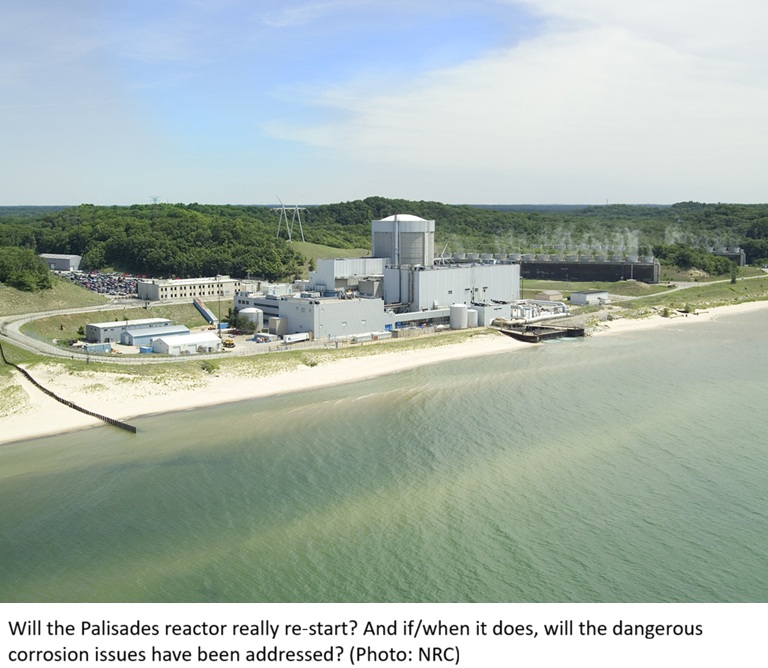


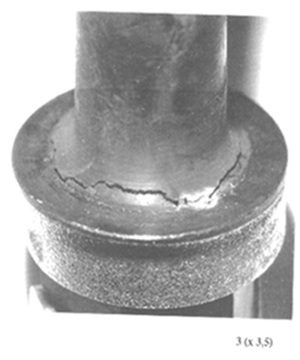
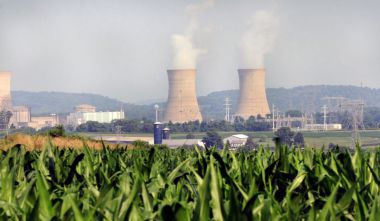



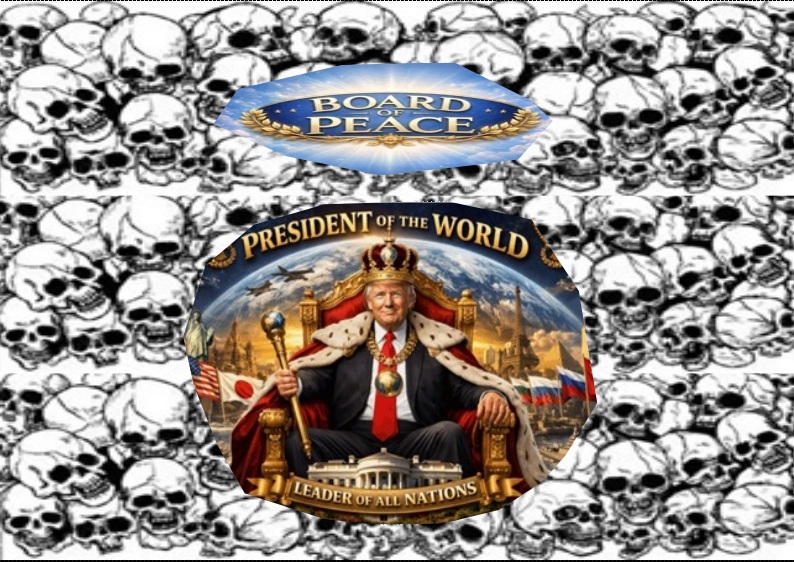
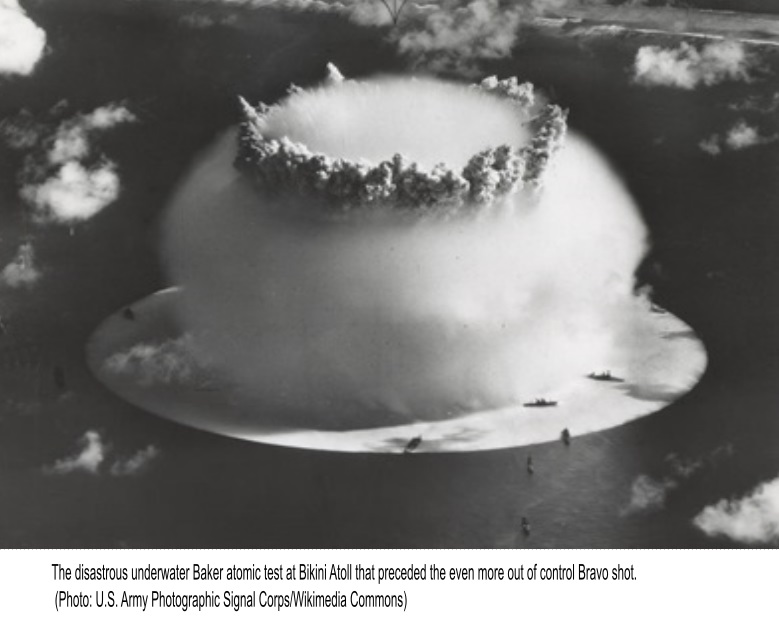
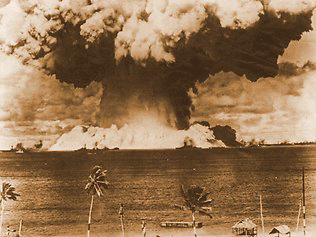


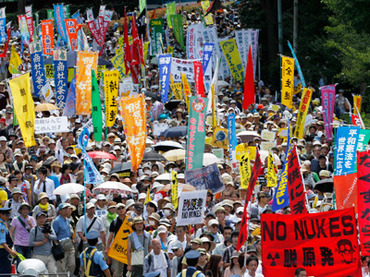



 nuclear-news