“They want to impose a whole nuclear world on us without asking our opinion”: activists fight against the Orano nuclear fuel pools project.

by Lucas Hobe, 07/20/2025 , https://france3-regions.franceinfo.fr/normandie/manche/on-veut-nous-imposer-tout-un-monde-nucleaire-sans-demander-notre-avis-des-militants-luttent-contre-le-projet-des-piscines-d-orano-3190563.html
Nearly a thousand people marched on Saturday, July 19, 2025, in Vauville (Manche) to protest against the Aval du Futur project at the Orano La Hague site, which plans to install three new nuclear fuel storage pools.
” FukushiManche, no thanks! “, ” Stop Downstream of the Future ” could be read this Saturday, July 19, 2025 on placards held during the march organized in Vauville (Manche) against the project for new nuclear pools .
Monitored by law enforcement, the 1,000 people present marched to the beach, expressing their anger at the “world’s largest industrial project,” namely the expansion of the Orano site at La Hague to store spent nuclear fuel.
” It’s a project that’s pretty crazy,” laments Gilles, an activist . “We’ve been told for 40 years that scientists will find solutions for waste. And in the end, we haven’t found any solutions. La Manche is a department that’s already heavily nuclearized, so we’re fed up with these malfunctioning power plants and these high-voltage lines that disfigure the landscape .”
“Nuclear power can cause disasters”
Participants in the Vauville demonstration, which was part of the Haro anti-nuclear festival, are concerned about the future of the English Channel coastline if new 6,500-ton swimming pools and nuclear power plants are built. They are also concerned about their safety and health, given the potential for problems at these types of high-risk sites.
We see with the Flamanville EPR that it took years to build, there are still problems, and it cost us a lot of money. Nuclear power can cause disasters. We saw it at Fukushima and Chernobyl. – Gregory , Anti-nuclear activist opposed to the Aval du Futur project on the Orano site
Activists believe that the issue of the new nuclear pools at La Hague ”
is part of a larger picture. They’re still trying to sell us nuclear power as the energy of the future. They want to impose a whole nuclear world on us without asking our opinion. It’s scary. It’s important to fight against it .”
” We’ve taken up this Norman legend of the little fairies of La Hague who defend themselves when someone offends their land. We’re out in force, determined to show our anger, ” concludes the co-organizer of the anti-nuclear Haro festival.
2027, the calendar date for new factories
Announced in October 2024, the “Downstream of the Future” program has been launched. However, the exact timeline remains to be determined. According to Orano, more clarity should become available within two years, in the summer of 2027.
” The current plants are designed to last until 2040 ,” says Nicolas Ferrand, a specialist in nuclear waste reprocessing
. “We’re seeing if we can extend them beyond that, until 2050, 2055, 2060. By the end of 2026, we’ll have their lifespan and based on that, we’ll be able to schedule the commissioning of the new plants .”
Remembering the radical anti-nuclear Greenham Women’s Peace Camp

Huck Mag 18th July 2025, https://www.huckmag.com/article/anti-nuclear-greenham-womens-peace-camp-life-fence-janine-wiedel
Life at the Fence — In the early ’80s, a women’s only camp at an RAF site in Berkshire was formed to protest the threat of nuclear arms. Janine Wiedel’s new photobook revisits its anti-establishment setup and people.
Coming of age in the shadow of the 1962 Cuban Missile Crisis, Janine Wiedel remembers the “duck and cover drills” of her childhood years, where students hid under school desks, head in hands, practicing quiet surrender to nuclear Armageddon.
By the ’80s, Wiedel was living and working as a photographer, documenting working-class life in the UK. With Ronald Reagan in the White House, Cold War tensions reached a fevered pitch. Across the pond, Margaret Thatcher, Reagan’s “comrade-in-arms”, welcomed the NATO bequest of 96 US-manufactured, nuclear “cruise missiles”, which were to begin arriving at RAF Greenham Common in 1983.
As NATO and the USSR ran up their arsenals, a grassroots resistance movement sprouted in Greenham, in the English county of Berkshire, taking the shape of a “women’s only” peace camp in 1982. Despite evictions, fences, and spies organised to bring them down, the resistance stayed the course until the American forces packed up their weapons and went home following the collapse of the Soviet Union in 1991.
Their struggle made headlines, with even the Soviet premier Mikhail Gorbachev paying homage to the ‘Greenham women and the peace movement of Europe’ at the signing of the 1987 Intermediate-range Nuclear Forces (INF) Treaty. But those initial media reports, Wiedel remembers, were ultimately disparaging of the women, so she decided to visit the camp for herself in 1983.
“I was fascinated by the community that had evolved as a result of it being ‘all women’ – there were no leaders,” Wiedel says. “The women built homes out of wood they collected, and they lit and tended the fires. They attended and spoke at conferences. They represented themselves in court when they were arrested. Everyone had an equal voice. Confidence grew. The actions were spontaneous and flexible; the authorities and police never knew what they would do next.”
The lesson became clear: don’t stop until the job is done. Now, Wiedel revisits this historic chapter of protest history with Life at the Fence: Greenham Women’s Peace Camp 1983 – 84 (Image & Reality). Through transportive imagery and interviews conducted at the time, the book brings together Wiedel’s masterful reportage as she takes us through the camps, which were built along the nine-mile perimeter of the RAF base, while paratroopers perched in lookout towers, binoculars in hand. Against the backdrop of gnarly barbed wire, the women sorted themselves out among different camp sites, each named for a different colour of the rainbow. It was a world of striking contrasts.
Drawn to women who had given up everything to live in primitive, volatile conditions, Wiedel listened to the women, recording their testimonies, songs, and remembrances which she weaves alongside documentary, portraits, landscape, still life, and reportage of non-violent direct actions.
“At the time, as a ‘women only’ protest, it was subjected to every form of abuse and ridicule by the media,” says Wiedel. “Its presence at the base also became an embarrassment to the Thatcher government. The women, however, managed to remain at the base for 19 years. Everyone I spoke with said it had transformed their lives.”
Life at the Fence: Greenham Women’s Peace Camp 1983 – 84 by Janine Wiedel is published by Image & Reality.
Northern Ontario residents oppose plan to dump radioactive material near drinking water source.
By Angela Gemmill, July 15, 2025, https://www.ctvnews.ca/northern-ontario/article/northern-ont-residents-oppose-plan-to-dump-radioactive-material-near-drinking-water-source/
Residents in Nairn and Hyman and surrounding communities met Monday to discuss concerns about a plan by the province to transfer radioactive material into the area.
Concerns were first raised last summer after a local municipal councillor noticed newer back roads and inquired about the upgrades.
That’s when the township discovered that the Ministry of Transportation and the Ministry of Mines were planning to move 18,000 cubic metres of niobium radioactive materials from Nipissing First Nation to the tailings area at Agnew Lake.
Agnew Lake is 27 kilometres from the township’s drinking water.
“We felt we really hadn’t been consulted,” Nairn and Hyman Mayor Amy Mazey told the crowd.
“We were told the ‘naturally occurring radioactive material’ was just like gravel.”
Last September, the municipality asked the province for more specific information about the project, which was scheduled to begin this summer.
“This is not ‘NORM ‘–naturally occurring radioactive material,” Mazey said.
“It contains hazardous heavy metals — uranium, niobium, radium 226, cadmium, arsenic, selenium, silver and manganese.”
In April, both ministries provided the township with a massive report filled with technical and scientific details. So the township hired environmental consultants Hutchinson Environmental Sciences Ltd. to interpret the report — and determine what science was missing.
That information was presented to residents on Monday, who were then asked for feedback and suggestions on what to do next.
Mazey said there are eight studies missing from the report.
“The two most important are a cumulative risk assessment — what’s going to happen when you put uranium tailings on top and niobium tailings together,” she said.
What will happen? And also a drainage study — so where is the water going to go, how is it going to leech? All of those things that were outlined that should have been done already, we just haven’t seen them.”
Township CAO Belinda Ketchabaw said what it boils down to is that the province wants to put radioactive materials in a lake that’s already struggling.
“(Agnew Lake) site is already in crisis, and they want to bring in more radioactive material to ‘fix’ the site,” Ketchabaw said.
“It doesn’t really add up to me. When the science isn’t there, there’s no trust. We need to trust what is best for our community.”
Safe outcome
Ketchabaw said they’ve learned that some of the niobium material will be taken to a Clean Harbors facility near Sarnia, made for hazardous waste.
She said it raises the question that if the material is hazardous enough to be sent to this facility, shouldn’t it all be sent there?
“Let’s just bring it all there and have a safe outcome for everyone,” Ketchabaw said.
Furthering distrust, Mazey said the two ministries often give the community contradictory information.
“It just raises a lot of red flags,” she said.
“I hope that the Ontario government listens to the residents and takes us seriously that this isn’t an easy fix … Just because this is the most convenient solution for the province, it doesn’t mean that it’s the best solution.”
Margaret Lafromboise, who lives close to the Spanish River, said she’s concerned about having “an unsafe radioactive site increased in volume.”
“I think the most constructive and practical thing to do would be to see if the municipality could get financial help to hire a lawyer and initiate an injunction to stop the action immediately,” Lafromboise said.
“As a society, as a province, we are not taking good enough care of our environment, the water and I don’t believe our current government is willing to take the action that is required.”
Representatives from the provincial ministries were not invited to Monday’s town hall.
Greenham Common women urge new generation to ‘rise up’ against nuclear threat
Those who set up protest camp in 1980s hope its spirit can be revived to oppose UK’s plan to buy nuclear-carrying jets
Alexandra Topping, https://www.theguardian.com/uk-news/2025/jun/27/greenham-common-women-urge-new-generation-rise-up-nuclear-threat
In August 1981, 36 people, mainly women, walked from Wales to RAF Greenham Common in Berkshire to protest against the storing of US cruise missiles in the UK. They were alarmed about the imminent threat the weapons posed for themselves and for their children, they later said.
More than 40 years on, the prospect of American nuclear weapons stationed on British soil has returned with urgent focus. And for some of the women who were at the Greenham Common women’s peace camp, it is time for dissenting UK citizens to rise up again.
In the wake of the UK government’s announcement this week that it plans to significantly expand its nuclear arsenal by buying a squadron of American fighter jets capable of carrying US tactical warheads, key figures at Greenham hope a new generation of campaigners will take up the baton.
Ann Pettitt, now 78, devised the original idea for a march that led to the formation of the camp. At its height, more than 70,000 women were there and it became the biggest female-led protest since women’s suffrage. It was, as Pettitt says, “actually successful” in managing to hugely raise awareness of the presence of US nuclear warheads in the UK – the last of which left RAF Lakenheath in 2008. The camp went on after the Greenham Common missiles had gone in 1991 and the base was closed in 1992. The remaining campaigners left Greenham Common after exactly 19 years.
Pettitt said this week’s news had left her “disillusioned” but she was hopeful that a younger generation would protest. “It certainly calls for protest, because it’s so stupid,” she said. “Nuclear weapons are like the emperor’s new clothes, they can’t be used and if they are they backfire because of radiation spreads and they target civilians. We should simply not have them.”
The decision to buy 12 F-35A jets, which are capable of carrying conventional arms and also the US B61-12 gravity bomb, a variant of which has more than three times the explosive power of the Hiroshima bomb, has energised the anti-nuclear movement, said Sophie Bolt, the general secretary of the Campaign for Nuclear Disarmament.
The group has organised a protest on Saturday at RAF Marham in Norfolk, and Bolt said Greenham women – many of whom are in their 70s – still form the “backbone” of the resistance.
“These are women who have got a huge history and totally understand how high the stakes are,” she said. “Their determination, creativity and strategic thinking is just really incredible. They are a massive inspiration and so enriching to the campaign.”
One of those women, Angie Zelter, 74, went on to found the civil disobedience campaign Snowball and the anti-nuclear weapons group Trident Ploughshares. In 2019, aged 68, she was found guilty of a minor public order offence for protesting with Extinction Rebellion. “We had a saying, ‘carry Greenham home’, and from the moment I was there that’s what I’ve done,” she said.
But Zelter said it was also time for a new generation of Greenham women. “I think we need a new women’s movement, but I think actually we need everybody to rise up, quite frankly. All we can do as elders is support younger activists and give advice, solidarity and support.”
There was no time for squabbles in despondency, she added. “I hope it is a moment of mass realisation when we come together now and say, look, enough is enough … It is a moment of hope that people will realise that they’ve got to come together and protest loud and clearly.”
Pettitt said those not ready to man the barricades could still join the struggle – by the simple act of writing a letter to MPs to protest about the “outrageous” decision to buy the jets without parliamentary debate. “The way to get it discussed in parliament is to write your MP a letter,” she said. “Parliament is still very archaic … the humble letter is part of that kind of archaic functioning that is surprisingly effective.”
Another original walker, Sue Lent, now 73 and a councillor on Cardiff council, said the general public had lost sight of the anti-nuclear movement, but she hoped that a silver lining from the news this week was that younger and older activists would start “joining the dots”.
“1981 is a long time ago,” she said. “But hopefully the spirit still lives on and can be revived.”
It’s good to talk: US-UK anti-nuclear alliance forged from film discussion
The NFLAs were delighted to partner with film makers and producers from
the United States in promoting the documentary film ‘SOS – The San
Onofre Syndrome: Nuclear Power’s Legacy’ and by participating in a
discussion last week of the issues raised. NFLA Secretary Richard Outram
joined US filmmakers James Heddle, Mary Beth Brangan and Morgan Peterson
for the discussion on Wednesday 11 June. UK participants were invited to
watch the documentary film before the event and then contribute their
questions and comments. Attendees included academics and activists from
several of the established campaigns opposed to nuclear power in the UK,
and their knowledge and experience helped make the discussion more
engaging.
NFLA 19th June 2025 https://www.nuclearpolicy.info/news/its-good-to-talk-us-uk-anti-nuclear-alliance-forged-from-film-discussion/
NFLAs welcome new group opposed to nuke waste dump in South Copeland

Hot on the heels of the victory in Lincolnshire, the UK/Ireland Nuclear
Free Local Authorities have welcomed the formation of a new ‘Anti GDF
Community Group’ in opposition to a Geological Disposal Facility (GDF) on
land near Millom and Haverigg in West Cumbria.
The GDF would be the final
repository for Britain’s inventory of legacy and future high-level
radioactive waste. Nuclear Waste Services has declared its interest in land
surrounding His Majesty’s Prison Haverigg and Bank Head Estate West of
Haverigg as the potential location for a future surface site for this
facility. This site is designated the Area of Focus in the South Copeland
GDF Search Area.
Following a meeting held by Whicham Parish Council on
Wednesday, at which a resolution was carried unanimously calling on NWS to
withdraw this area from consideration, a statement was issued by the new
group. There is also now a new private Facebook group for impacted
residents to join and a group logo.
The ‘Anti GDF Community Group’ will
aim to support and seek support from both Whicham and Millom Council in
their respective rejections of the area of focus and try to ensure that NWS
and Cumberland Council abide by the NWS statement “that express consent
must be given by those living alongside a GDF” Presently the group is
formed by a small committee and is seeking members to support the group
objective of removal from the process of the Kirksanton/Haverigg site. The
group will aim to support those who have and are being severely impacted
now and seek to demonstrate the flawed process and the contempt our
communities have been shown within that process.
NFLA 9th June 2025, https://www.nuclearpolicy.info/news/nflas-welcome-new-group-opposed-to-nuke-waste-dump-in-south-copeland/
Cumbrians receive postal call to back nuke dump democracy petition

NFLA 9th June 2025, https://www.change.org/p/massive-mine-shafts-and-nuclear-dump-for-cumbria-coast-tell-cumberland-council-vote-now
Residents of Millom, Seascale and Gosforth have just received a flyer from campaign group Radiation Free Lakeland calling on them to back a petition which asks Cumberland Councillors to host a debate followed by a vote about their engagement with the siting process for a Geological Disposal Facility in West Cumbria.
The GDF would be the eventual repository for Britain’s high-level radioactive waste which would be placed in tunnels beneath the seabed. A site in East Lincolnshire was also under consideration as a possible site. With the withdrawal of Lincolnshire County Council from the process last week, only sites in Mid and South Copeland in West Cumbria remain in contention and then only because Cumberland Council remains engaged in the process.
Bizarrely Cumberland Council only became involved in the process by default. The new authority on replacing Copeland District Council chose to accept unquestionably that Council’s decision to participate in the GDF process, even though the decision to participate had been taken by only four Copeland Councillors. There has never been any debate or vote amongst Cumberland Councillors about whether they should have accepted this obligation or still wish to continue with the process.
The petition calls on Cumberland Council to convene a belated special meeting of the Full Council where Councillors can debate and then vote on whether to continue to remain engaged or remain represented on the Mid and South Copeland GDF Community Partnerships. If Councillors say no, then the process would end, and NWS would withdraw. The NFLAs is happy to support Radiation Free Lakeland in urging all Cumbrians to sign it.
Here are links to the petition:
www.change.org/CumbriaNuclearDump https://www.change.org/p/massive-mine-shafts-and-nuclear-dump-for-cumbria-coast-tell-cumberland-council-vote-now
Today is World Ocean Day – Protect the Lake District Coast and Irish Sea from an Unprecedented Atomic Experiment
On By mariannewildart,
https://mariannewildart.wordpress.com/2025/06/08/today-is-world-ocean-day-protect-the-lake-district-coast-and-irish-sea-from-an-unprecedented-atomic-experiment/
This World Ocean Day Do Something Amazing and Sign and Share the Petition to Protect The Lake District Coast from a Giant Atomic Heat Sink. There are 1,753 signatures – lets make it tens of thousands! This plan is going forward on the say so of just four councillors in Cumberland (the West of Cumbria, UK). The Petition is calling for a FULL debate and FULL vote by the whole Cumberland Council on whether to continue in partnership with the developer Nuclear Waste Services to deliver a “geological disposal facility” aka an up to 50km square, wholly experimental, sub-sea nuclear dump for HOT nuclear wastes. Note the developer NWS is a Government owned limited liability company.
Group protest against Sizewell C ahead of Spending Review
Campaigners gathered to further protest against Sizewell C just days
before the conclusion of the Spending Review. Supporters of Stop Sizewell C
and Together Against Sizewell C (TASC) met for an ‘Outrage’ rally at
Sizewell Beach on Saturday, June 7. The weekend rally also paid tribute to
former TASC chair and campaigner Pete Wilkinson who died in January of this
year. His daughters Emily and Amy spoke at the protest and tied yellow
ribbons onto the fence. The protest came ahead of the conclusion of the
Spending Review on Wednesday, June 11 where it is believed the government
will set out its plans for future investment in Sizewell C.
East Anglian Daily Times 8th June 2025,
https://www.eadt.co.uk/news/25222586.group-protest-sizewell-c-ahead-spending-review/
Protesters raise environmental fears as wait continues for Sizewell C funding announcement
ITV 8 June 2025
Hundreds of people voiced their concerns over the multi-billion pound Sizewell C nuclear power station on the Suffolk coastline ahead of an expected announcement from the Government.
The rally on Sizewell Beach on Saturday, organised by Stop Sizewell C and Together Against Sizewell C, included speeches from campaigners against the major project including Greenpeace members, and musical performances.
The peaceful protest ended with the 300-strong crowd walking to the Sizewell complex and tying ribbons with messages, emphasising people’s concerns, to the gates.
Plans for Sizewell C were given the go ahead by the then Chancellor in November 2022 but the funding is yet to be approved by the Government, although an announcement on the project is expected in Labour’s Spending Review on Wednesday 11 June.
Construction has already started for the nuclear site and surrounding infrastructure on the Suffolk coast which will sit next to the Sizewell B plant, and has already been given £250m in local funding……………….
many people fear the environmental impact of Sizewell C and believe it will destroy the area.
Jenny Kirtley, from Together Against Sizewell C, said: “You’ve only got to look around the area and see the devastation that’s happened. I’ve been fighting this for 12 years. We knew it would be bad, but we didn’t know it would be so devastating. A whole area is changing before our very eyes and it’s heartbreaking.
“There are a huge mountains of earth everywhere and of course the wildlife is suffering. The deers don’t know where to go. They’re rambling around everywhere. The birds are leaving their nests.
“It’s all very well saying it’s going to create thousands of jobs but who’s going to work in the supermarkets, the care homes, the restaurants? This is a small area.
“We’ve got 6,000 people living around here so where are people going to live? We know rents are going sky-high so it’s going to get worse. It’s going to be a real problem.”
Alison Downes, from Stop Sizewell C, also believed the project would be a waste of tax-payers money and said there were better options to provide renewable energy.
She said: “We’ve always had people behind us in the local area. I think a lot of new people have woken up and seen the destruction that’s been caused by the project. They are now feeling the same sense of outrage that we do.
“Sizewell C is too slow, risky and expensive to be the solution to our climate emergency. This is the wrong type of reactor. It’s in the wrong place on an eroding coastline so we are here to express our outrage about Sizewell C.”
The outrage rally, which was the third of it’s kind, was also a tribute to Pete Wilkinson – a former chairman of campaign group, Together Against Sizewell C, who died in January 2025
His daughters Emily and Amy Wilkinson were at the event and spoke about their father.
Emily Wilkinson, 29, said: “Dad was such a fantastic human being. He was a passionate and courageous man who spent his entire life fighting whatever he saw is wrong. That’s what drove him in life. He saw the beauty in the planet and fought for it every single time.”…………………………………………………………….. https://www.itv.com/news/anglia/2025-06-07/protesters-take-to-suffolk-beach-against-sizewell-c-plans
Stop Sizewell C carries out bold projection on Sizewell B dome a week before the Spending Review, highlighting alternatives for Sizewell C’s £40 billion cost.

Stop Sizewell C tonight projected a series of messages to the Prime Minister onto Sizewell B’s dome, stating that the £40 billion Sizewell C project is a Nuclear Waste of Money. [1] The messages urge him to make alternative choices for spending taxpayers’ money on ways to generate cheaper electricity and to reduce household bills.
In one week, on 11 June, the Chancellor is expected to set out taxpayers’ commitment to Sizewell C at the conclusion of the Spending Review. Sizewell C has already swallowed £6.4 billion of taxpayers’ money [2] and the entire project is bogging down the government balance sheet. The two-year equity raise process remains ongoing with an uncertain outcome, meaning the much-delayed Final Investment Decision is unlikely before next month at the earliest. The Financial Times says this could take place at an Anglo French Summit between 8-10 July. [3]
Alison Downes of Stop Sizewell C said: “Every pound sunk into risky, expensive Sizewell C is a pound lost to alternative energy sources and critical social funding that the voting public cares deeply about. It’s not too late to redirect money to offshore wind, or warm homes – creating thousands of jobs – or to restoring the most unpopular and unjust cuts. Sizewell C, given the terrible track record of Hinkley Point C, would be £40 billion badly spent.”
Stop Sizewell C 4th June 2025,
https://docs.google.com/document/d/1IugTc5hAy7N9SlPrdvbfevH5USEfIsjJKw-jIDoo74c/edit?tab=t.0
It’s over! Anti-nuke dump campaigners in East Lincolnshire celebrate victory
The UK/Ireland Nuclear Free Local Authorities are delighted to share in
the celebrations of East Lincolnshire residents and their elected members
as Nuclear Waste Services announces that it shall now take the ‘immediate
steps needed to close the Community Partnership and the communities of
Withern and Theddlethorpe, and Mablethorpe will leave the GDF (Geological
Disposal Facility) siting process’.
The announcement came hot on the
heels of the decision this morning by the Lincolnshire County Council
Executive to withdraw its support from the GDF process.
NFLA 3rd June 2025, https://www.nuclearpolicy.info/news/its-over-anti-nuke-dump-campaigners-in-east-lincolnshire-celebrate-victory/
Scots aren’t having our voices heard – nuclear is one such case study
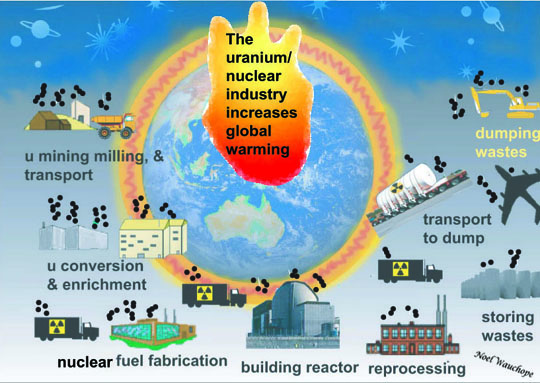
English Labour are pushing for more nuclear because they’re funded by the industry. The industry expects a return.
Leah Gunn Barrett, The National 1st June 2025, https://www.thenational.scot/politics/25205426.scots-arent-voices-heard—nuclear-one-case-study/
ON May 1, a public meeting was held in Dunbar. It was attended by 28 people, mostly retired workers from the nearby Torness nuclear power plant.
It was organised by Britain Remade, a lobby group headed by former Tory spad Sam Richards. He described Britain Remade as a “cross-party campaigning group” that believes in economic growth and building infrastructure.
Britain Remade’s campaign, “New Scottish Nuclear Power”, aims to reverse Scotland’s ban on new nuclear power.
Also present were councillor Norman Hampshire, the leader of East Lothian Council (ELC) and chair of the planning committee, and Labour MSP for South Scotland Martin Whitfield.
Sellafield is the site of Europe’s worst nuclear accident – the 1957 Windscale fire, that led to the atmospheric dispersion of radioactive materials throughout England, Wales and northern Europe. Sellafield has been a nuclear waste dump since 1959 and has been called Europe’s most toxic nuclear site, a “bottomless pit of hell, money and despair”. It’s a reason Scotland has been dubbed the “cancer capital of the world”.
That’s a hell of a track record.
Richards blamed high electricity bills on the UK’s failure to build more nuclear plants, claiming nuclear was the reason France had lower bills. Wrong. Nuclear power has never been economic. It requires government subsidies and there’s no solution for radioactive waste disposal. French energy bills are lower because France didn’t privatise its energy and thus retained the ability to cap costs. The French government owns 100% of Électricité de France (EDF), which runs the Torness plant and the UK’s four other operating nuclear plants.
EDF should be showing far more concern about the safety of its UK plants. The Torness reactor has 46 cracks in its core which the ONR (Office for Nuclear Regulation) said could lead to a reactor meltdown and the release of radiation into the environment. EDF has extended the life of the plant to 2030.
Britain Remade’s goal is to get the ban on nuclear lifted and to use the Torness site for new nuclear plants.
Whitfield trotted out two pro-nuclear talking points, both of which are easily refuted:
1. Nuclear power doesn’t increase CO2.
Not so. There are carbon emissions from mining, transporting and processing uranium, from constructing power plants and from transporting radioactive waste to places like Sellafield. By contrast, renewable energy doesn’t increase CO2, there’s no mining required or toxic waste to dispose of, and Scotland is bursting with renewables.
2. Nuclear power creates skilled jobs for life.
The renewables industry also creates skilled jobs for life without shortening it – in engineering, project management, data analysis and renewable energy technologies – and doesn’t endanger the health of workers or the local community.
Councillor Hampshire, who worked at Torness, said that although he “had to support renewables”, nuclear is needed for baseload power, which is the minimum power level on the grid.
Wrong again. Baseload power can be provided by any mix of generators, including variable wind and solar, if constant backup sources like tidal are provided. Furthermore, nuclear can’t be easily switched off, so when it’s present on the grid, much cheaper renewables are limited, which raises costs to the consumer.
Nonetheless, councillor Hampshire said he was lobbying hard for more nuclear power. He wants two Rolls-Royce SMRs (Small Modular Reactors) at the Torness site, claiming they’re cheaper and quicker to build and said that many SNP MSPs support him.
I wrote about SMRs in February, showing they are more expensive than and just as dangerous as large nuclear reactors; will generate more radioactive waste and will turn communities into de facto long-term nuclear waste disposal sites.
Only two SMRs are operating in the world – in Russia and China. Both are performing at less than 30% capacity and have been plagued by cost and time overruns. According to the World Nuclear Industry Status Report, these problems “make it even less likely that SMRs will become commercialised.”
Despite these facts, councillor Hampshire vows to include SMRs in the next ELC Local Development Plan. We were told that a lot of work is going on behind the scenes to ensure Torness remains an active nuclear site – with the UK having to import energy, otherwise.
During the Q&A, Whitfield was asked what it would take to change Scotland’s position. He replied “a change of government” and questioned whether Scotland has the authority to ban nuclear power since energy policy is reserved to the UK. It does because the Scotland Act 1998 devolves planning to Scotland.
Nevertheless, Whitfield said this could and would be tested through the courts, although he later clarified there were no definite plans to mount a legal challenge to Scotland’s authority to ban new nuclear power.
English Labour are pushing for more nuclear because they’re funded by the industry. The industry expects a return.
Nuclear power is another issue crying out for direct democracy, where the Scottish people – not special interests who are in bed with the politicians – have the power to decide via a referendum whether they want it or not. There are many other issues, local and national, over which the Scottish people have no control – pylons in the Highlands, corporate tax haven “freeports”, the closures of Ardrossan Harbour and Grangemouth, the Loch Lomond Flamingo Land development, to name just a few.
If we’re to stop special interests always crushing the interests of the people, we must demand our international human rights. That’s why Respect Scottish Sovereignty (RSS) is urging as many as possible to sign PE2135, to enact the Direct Democracy/Self-Determination Covenant (ICCPR) into Scots law.
Protest against Chalk River nuclear waste disposal project
It’s a choice between defending life and water or protecting the nuclear industry.
Pierre Chapdelaine de Montvalon, Radio-Canada, Espaces Autochtones, May 26, 2025-https://ici.radio-canada.ca/espaces-autochtones/2167618/chalk-river-kebaowek-dechet-nucleaire
Opposition to the proposed Chalk River nuclear waste disposal site continues unabated. A coalition of Aboriginal leaders and elected officials met Monday morning in Montreal to denounce the proposed Near Surface Disposal Facility (NSDF) on the Ontario side of the Ottawa River.
For nearly 10 years, the community of Kebaowek, in Témiscamingue, has been fiercely opposed to the construction of such a site, and is leading a court battle against the organization responsible for the project, Canadian Nuclear Laboratories (CNL).
At a press conference, First Nation Chief Lance Haymond reiterated his community’s fears about the risks of water contamination and the effects on biodiversity of such a project, which he said would not respect First Nations’ rights.
Several speakers added their voices to call on the governments of Quebec and Canada to reject the project.
For the new Chief of the Assembly of First Nations Quebec-Labrador, Francis Verreault-Paul, such a project is a threat to our waters, our rights, our cultures and our traditional ways of life.
“Where is the free, prior and informed consent of First Nations, which is at the heart of the United Nations Declaration on the Rights of Indigenous Peoples?” he asked at a press conference.
It’s a choice between defending life and water or protecting the nuclear industry.
The Quebec government challenged
Manon Massé, Aboriginal Affairs spokesperson for the Québec solidaire party, took advantage of the press conference to directly challenge Quebec Premier François Legault, Environment Minister Benoit Charette and Ian Lafrenière, Minister responsible for relations with First Nations and Inuit.
“What do you mean, these people should not react against such a project? It’s immoral and inhuman to allow Quebecers to be put at risk like this.”
At the time of publication, the office of the Minister of the Environment had not responded to our questions.
“It makes no sense for such a project to be so close to such an important water resource,” added Rébecca Pétrin, Director of Eau secours. “Why aren’t our governments opposed to this?”
A Long Term Project
The proposed near-surface waste management facility is a project launched in 2016 by Canadian Nuclear Laboratories, a private-sector consortium [of multinational corporations] responsible for managing federal nuclear sites.
The corporation’s proposed site would house low-level radioactive waste from the Chalk River Laboratories site, Canada’s largest nuclear science research complex, and other Canadian sites.
This waste includes contaminated soil and discarded items such as mops, protective clothing and rags that have been slightly contaminated.
LNC claims in its documentation that the project poses no contamination risk to the river.
“The NSDF is designed to protect the Ottawa River, not harm it. Drinking water downstream is not at risk,” states the LNC reference document.
The organization also assures us that radioactivity at the site will return to naturally occurring levels in a hundred years, and that the site will be monitored for hundreds of years.
Preventing long-term contamination
The president of the Canadian Coalition for Nuclear Responsibility, Gordon Edwards, insisted at the press conference that such waste should not be stored near any watercourse, and feared long-term contamination.
[14 of the 31 radioactive waste materials to be stored in the NSDF have half-lives of more than 100,000 years, and 22 of them have half-lives of more than 5,000 years.]
The octogenarian activist cited the example of a disused salt mine in Germany, which had been used as a dump for low-level nuclear waste.
After 20 years, radioactive pollutants began to seep into the environment and contaminate the ground water, despite all the precautions taken.
“Instead of pretending that this is not a problem, or that it’s a problem that has been solved, we need to consider that we have an intergenerational responsibility. We shouldn’t be thinking of simply abandoning this waste permanently. I don’t think we have sufficient scientific knowledge to do that,” he explains in an interview.
In early 2024, the Chalk River site was found to be discharging toxic wastewater.
A project challenged in court
In 2024, the Canadian Nuclear Safety Commission (CNSC) announced that it was giving the green light to construction of the NSDF.
This decision was successfully challenged in court by the Kebaowek Algonquin community.The Federal Court first ruled in favor of the Kebaowek on the government’s failure to obtain free, prior and informed consent in the case, which runs counter to the United Nations Declaration on the Rights of Indigenous Peoples (UNDRIP), adopted and codified by Ottawa in 2021.
“We never gave our consent to the project, and we were never consulted,” said Chief Lance Haymond.
Canadian Nuclear Laboratories has appealed the court’s decision, but has also initiated a consultation process with the First Nation.
“It’s difficult to talk to CNL representatives about the parameters of a consultation process, when on the other hand, their lawyers are fighting us in court,” lamented Lance Haymond in an interview.
“The government can’t talk about reconciliation while appealing court decisions.”
– Lance Haymond, Chief of Kebaowek First Nation
In writing, the Canadian Nuclear Safety Commission (CNSC) states that it is committed to working with Kebaowek First Nation and CNL to implement the court’s directive in a transparent and judicious manner. “We are working with the Kebaowek First Nation and the CNL to develop a collaborative consultation process consistent with the court’s directive.”
The Federal Court also recognized that the Canadian Nuclear Laboratories had not sufficiently examined other options for the location of the nuclear waste dump. [This is required by law because of several species at risk that have been identified by Kebaowek.] CNL has also appealed the decision.
A third lawsuit by citizens’ groups and scientists opposed to the project was dismissed by the Federal Court.
Nine other Anishnabeg Algonquin communities support Kebaowek’s fight against the development of the NSDF, as do dozens of Quebec municipalities.
Pikwakanagan, an Anishnabe community on the other side of the Ottawa River in Ontario, supports the project.
Coalition urges Carney to drop nuclear from energy plan

by Abdul Matin Sarfraz, National Observer, May 23, 2025
A coalition of First Nations, physicians and environmental organizations is ramping up pressure on Prime Minister Mark Carney to drop nuclear energy from his “energy superpower” strategy, warning it comes with high costs, long delays and long-term risks.
In an open letter, dozens of organizations urge the federal government to halt funding for nuclear development and instead prioritize renewables, energy efficiency and storage. The letter warns that new nuclear projects are likely to increase electricity costs while delaying meaningful climate action.
“We are concerned that you may be unduly influenced by the nuclear and fossil industry lobbies,” reads the letter.
During the federal election campaign, Carney pledged to make Canada “the world’s leading energy superpower,” focusing on clean and conventional energy. His platform promised faster project approvals and a national clean electricity grid, among other energy promises. The coalition sent their letter in an effort to ensure Carney does not invest more significantly in nuclear energy, as he prepares to set his government’s agenda and ministers’ mandates.
While Carney’s plan doesn’t mention nuclear energy, he praised it during the first leaders’ debate and referenced two companies in the sector he previously worked with at Brookfield Asset Management…………………………………………..
In an open letter, dozens of organizations urge the federal government to halt funding for nuclear development and instead prioritize renewables, energy efficiency and storage.
The federal government — through the Canada Infrastructure Bank — has committed $970 million in low-cost financing to Ontario’s Darlington New Nuclear Project, which aims to build Canada’s first grid-scale small modular reactor.
The federal government also invested millions in Moltex Clean Energy, a New Brunswick-based company developing a technology called Waste to Stable Salt, which aims to recycle nuclear waste into new energy.
Jean-Pierre Finet, spokesperson for le Regroupement des organismes environnementaux en énergie, one of the organizations that signed the open letter, said he worries about the long-term future of any nuclear plants built today without a plan for their waste.
“We object to our federal taxpayer dollars being spent on developing more nuclear reactors that could be abandoned in place, ultimately transforming communities into radioactively contaminated sites and nuclear waste dumps that will require more federal dollars to clean up,” Finet said.
Gordon Edwards, president of the Canadian Coalition for Nuclear Responsibility and a longtime nuclear critic, says the federal government is backing the slowest and most expensive energy option on the table.
“In a climate emergency, you have to invest in things that are faster and cheaper,” Edwards said. “Canada hasn’t built new reactors in decades. There’s no practical experience left, and what’s being proposed now is largely speculative.”
“We’re very concerned about a misappropriation of public money and investment in what we see as a losing strategy,” Edwards said, stressing that the coalition is not asking private companies to stop building plants — but rather asking the federal government to stop subsidizing them.
International concerns echo at home
Much of the current controversy focuses on Ontario’s Darlington New Nuclear Project, as growing skepticism around the cost of small modular reactors mirrors global concerns.
In the US, two nuclear reactors in South Carolina were abandoned after $12.5 billion (CAD) had already been spent, triggering the bankruptcy of Westinghouse Nuclear — now owned by Canadian firms Brookfield and Cameco. Meanwhile, two completed Vogtle reactors in Georgia came in at $48 billion, more than double the original $19-billion estimate, making them among the most expensive infrastructure projects in US history.
In the UK and Europe, new nuclear power project efforts are facing delays, budget overruns, or outright cancellations.
………………………………ome energy experts say the small modular reactor path is out of sync with climate timelines and economic realities. “Nuclear is a very high-cost and high-risk option,” said Mark Winfield, professor at York University and co-chair of its Sustainable Energy Initiative. “These subsidies divert resources from much less costly and lower-risk options for decarbonizing energy systems. The focus on nuclear can delay more substantive climate action.”
Winfield calls small modular reactors “a distraction and likely a dead end,” warning that the technology carries catastrophic accident, safety, security and weapons proliferation risks not found in any other form of energy production.
Winfield said Canada lacks a significant comparative advantage in energy production beyond its legacy hydro assets, and remains a relatively high-cost fossil fuel producer.
“There is no reason to believe that we would be better at other energy production technologies (nuclear, renewables) than anyone else,” Winfield added in an email. ome energy experts say the small modular reactor path is out of sync with climate timelines and economic realities. “Nuclear is a very high-cost and high-risk option,” said Mark Winfield, professor at York University and co-chair of its Sustainable Energy Initiative. “These subsidies divert resources from much less costly and lower-risk options for decarbonizing energy systems. The focus on nuclear can delay more substantive climate action.”
Winfield calls small modular reactors “a distraction and likely a dead end,” warning that the technology carries catastrophic accident, safety, security and weapons proliferation risks not found in any other form of energy production.
Winfield said Canada lacks a significant comparative advantage in energy production beyond its legacy hydro assets, and remains a relatively high-cost fossil fuel producer.
“There is no reason to believe that we would be better at other energy production technologies (nuclear, renewables) than anyone else,” Winfield added in an email.ome energy experts say the small modular reactor path is out of sync with climate timelines and economic realities. “Nuclear is a very high-cost and high-risk option,” said Mark Winfield, professor at York University and co-chair of its Sustainable Energy Initiative. “These subsidies divert resources from much less costly and lower-risk options for decarbonizing energy systems. The focus on nuclear can delay more substantive climate action.”
Winfield calls small modular reactors “a distraction and likely a dead end,” warning that the technology carries catastrophic accident, safety, security and weapons proliferation risks not found in any other form of energy production.
Winfield said Canada lacks a significant comparative advantage in energy production beyond its legacy hydro assets, and remains a relatively high-cost fossil fuel producer.
“There is no reason to believe that we would be better at other energy production technologies (nuclear, renewables) than anyone else,” Winfield added in an email.ome energy experts say the small modular reactor path is out of sync with climate timelines and economic realities. “Nuclear is a very high-cost and high-risk option,” said Mark Winfield, professor at York University and co-chair of its Sustainable Energy Initiative. “These subsidies divert resources from much less costly and lower-risk options for decarbonizing energy systems. The focus on nuclear can delay more substantive climate action.”
Winfield calls small modular reactors “a distraction and likely a dead end,” warning that the technology carries catastrophic accident, safety, security and weapons proliferation risks not found in any other form of energy production.
Winfield said Canada lacks a significant comparative advantage in energy production beyond its legacy hydro assets, and remains a relatively high-cost fossil fuel producer.
“There is no reason to believe that we would be better at other energy production technologies (nuclear, renewables) than anyone else,” Winfield added in an email.ome energy experts say the small modular reactor path is out of sync with climate timelines and economic realities. “Nuclear is a very high-cost and high-risk option,” said Mark Winfield, professor at York University and co-chair of its Sustainable Energy Initiative. “These subsidies divert resources from much less costly and lower-risk options for decarbonizing energy systems. The focus on nuclear can delay more substantive climate action.”
Winfield calls small modular reactors “a distraction and likely a dead end,” warning that the technology carries catastrophic accident, safety, security and weapons proliferation risks not found in any other form of energy production.
Winfield said Canada lacks a significant comparative advantage in energy production beyond its legacy hydro assets, and remains a relatively high-cost fossil fuel producer.
“There is no reason to believe that we would be better at other energy production technologies (nuclear, renewables) than anyone else,” Winfield added in an email. https://www.nationalobserver.com/2025/05/23/news/civil-society-first-nations-groups-carney-nuclear-energy-plan?nih=cCuxV9ZjIGLlEj3vVOQpRJBIfmNu0W4xzKEBn8bDrx8&utm_source=National+Observer&utm_campaign=d2c908330f-EMAIL_CAMPAIGN_2025_05_23_02_10&utm_medium=email&utm_term=0_cacd0f141f-d2c908330f-277064766
1 This Month
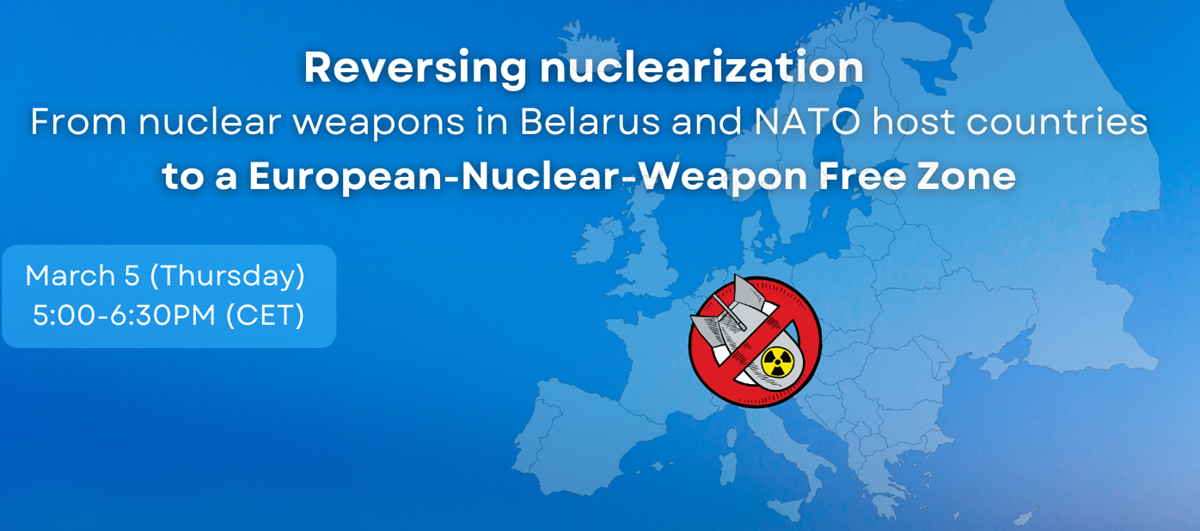
5 March -Online – Reversing nuclearization:
From nuclear weapons in Belarus and NATO host countries to a European-Nuclear-Weapon Free Zone
11am-12:30pm Eastern Time USA / 5pm-6:30pm CET

of the week – Advocating for a
nuclear free beach – https://www.samuellawrencefoundation.org/
The Samuel Lawrence Foundation advocates for a Nuclear Waste Free Beach at San Onofre, join us and take action!

10 March A LIVE WEBINAR THE REAL EFFECTS OF NUCLEAR POWER
What the Industry Isn’t Telling Us
1:00 PM Mountain, 2 pm Central, 3 pm Eastern. Live on the Keepers of the Water Facebook page

18 March Webinar @ 1 PM EST: An Assessment of SMR Projects: The Case of Canada
register for the zoom:
https://us02web.zoom.us/webinar/register/WN_o8BIIOUvQ2ONJR1nta65DQ#/registration

of the week – STOP SMALL MODULAR REACTORS IN CANADA
To see nuclear-related stories in greater depth and intensity – go to https://nuclearinformation.wordpress.com
-
Archives
- March 2026 (38)
- February 2026 (268)
- January 2026 (308)
- December 2025 (358)
- November 2025 (359)
- October 2025 (376)
- September 2025 (258)
- August 2025 (319)
- July 2025 (230)
- June 2025 (348)
- May 2025 (261)
- April 2025 (305)
-
Categories
- 1
- 1 NUCLEAR ISSUES
- business and costs
- climate change
- culture and arts
- ENERGY
- environment
- health
- history
- indigenous issues
- Legal
- marketing of nuclear
- media
- opposition to nuclear
- PERSONAL STORIES
- politics
- politics international
- Religion and ethics
- safety
- secrets,lies and civil liberties
- spinbuster
- technology
- Uranium
- wastes
- weapons and war
- Women
- 2 WORLD
- ACTION
- AFRICA
- Atrocities
- AUSTRALIA
- Christina's notes
- Christina's themes
- culture and arts
- Events
- Fuk 2022
- Fuk 2023
- Fukushima 2017
- Fukushima 2018
- fukushima 2019
- Fukushima 2020
- Fukushima 2021
- general
- global warming
- Humour (God we need it)
- Nuclear
- RARE EARTHS
- Reference
- resources – print
- Resources -audiovicual
- Weekly Newsletter
- World
- World Nuclear
- YouTube
-
RSS
Entries RSS
Comments RSS
 nuclear-news