U.S. Congress members call on Trudeau to stop nuclear waste dumping near Great Lakes
|
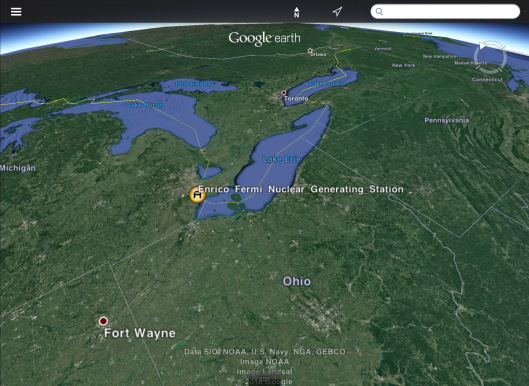
Upton, Dingell, Kildee and Mitchell Appeal to Trudeau: No Nuclear Waste In the Great Lakes Basin, https://whtc.com/news/articles/2019/dec/10/upton-dingell-kildee-and-mitchell-appel-to-trudeau-no-nuclear-waste-in-the-great-lakes-basin/965368/ When U.S. Representatives Fred Upton and Debbie Dingell joined with a handful of other House members last Friday, Dec. 6, 2019, to decry plans by Canadian officials to put a nuclear waste storage site in the Great Lakes basin, they were hoping to shame Canadian Prime Minister Justin Trudeau into some kind of protective action.
Tuesday, December 10, 2019 But something else happened, Upton explained.
“We’ve got other members now, on a bipartisan basis, coming to us saying, ‘Hey, we want to sign that same letter,'” he said. “So we’re going to be doing another letter, a little bit later this week, that’ll have broader appeal. Because we were sort of under the gun when we learned the news late Friday afternoon.” Upton and Dingell joined two other Michigan representatives, Paul Mitchell and Dan Kildee in signing a letter appealing to Trudeau to oppose any nuclear waste storage plans near the Great Lakes. The complete text of last week’s letter: Dear Prime Minister Trudeau: We write to you out of deep concern regarding reports that Canada is moving closer to selecting a permanent national repository for harmful nuclear waste along the shores of the Great Lakes. Allowing a permanent nuclear waste storage facility anywhere near the Great Lakes basin, for any amount of time, is a risk we cannot afford to take. The recent reporting also has us greatly concerned that the highest levels of radioactive waste would ultimately be stored at the proposed site. We know that there are other Members of Congress representing districts in the Great Lakes basin who are most concerned by this development and will certainly be joining with us in the days ahead. This is a grave concern. These waters have long united us—they should not divide us. In November, the Energy and Commerce Committee favorably advanced H.R. 2699, the Nuclear Waste Policy Amendments Act of 2019, to the House for final consideration and it included an important bipartisan amendment that expresses the Sense of Congress that the governments of the United States and Canada should not allow permanent or long-term storage of spent nuclear fuel or other radioactive waste near the Great Lakes. This amendment was unanimously supported and adopted. We stand in strong opposition to any decision by the Canadian government to select or consider a permanent national repository for nuclear waste storage anywhere near the Great Lakes. This is a treasured natural resource each of our countries share and we urge you to stand with us to protect these waters for future generations. Thank you for your consideration of this important request and we look forward to a timely response. |
Indigenous opposition grows against proposal for grand nuclear waste dump in New Mexico
 Some fear the “interim” storage facility could become a de facto permanent storage facility
transport of high-level radioactive waste across the state  could also lead to potentially dangerous nuclear releases, leaving impacted communities responsible for emergency responses.
 the proposal fits into a wider pattern of negligence and environmental racism on behalf of the federal government towards one of the United States’ poorest majority-minority states.
|
Nuclear Colonialism: Indigenous opposition grows against proposal for nation’s largest nuclear storage facility in NM Political Report By Kendra Chamberlain 14 Nov 19, A proposal for New Mexico to house one of the world’s largest nuclear waste storage facilities has drawn opposition from nearly every indigenous nation in the state. Nuclear Issues Study Group co-founder and Diné organizer Leona Morgan told state legislators last week the project, if approved, would perpetuate a legacy of nuclear colonialism against New Mexico’s indigenous communities and people of color.Holtec International, a private company specializing in spent nuclear fuel storage and management, applied for a license from the federal Nuclear Regulatory Commission to construct and operate the facility in southeastern New Mexico. The proposal, which has been in the works since 2011, would see high-level waste generated at nuclear power plants across the country transported to New Mexico for storage at the proposed facility along the Lea-Eddy county line between Hobbs and Carlsbad. Continue reading |
One small nation shows how to be nuclear- free and climate friendly – theme for November 19

Citizen Advocacy: The Achievements of New Zealand`s Peace Activism, Asia Pacific Journal Pinar Temocin and Noriyuki Kawano, October 1, 2019 Volume 17 | Issue 19 | Number 2Abstract
Aotearoa New Zealand provides an important example of successful citizen activism in the form of anti-nuclear peace advocacy. The collective efforts by peace actors over several decades resulted in the successful demand for a nuclear-free nation. This paper highlights the widespread participation and political support that facilitated the process and assesses its achievements.
Introduction New Zealand, a small and isolated country, is a rare example of a nation achieving nuclear-free status. The peace-seeking nation unified around an anti-war narrative, and moved from activism based on public awareness and engagement to the passage of laws that eliminated nuclear weapons through a number of stages: from the first generation of movements against the atomic bomb after 1945 to the response to French nuclear testing in the late 60`s to US and UK nuclear warship visits in the 70`s and the early 80`s. As part of this shift, the US-led military alliance with Australia and New Zealand (ANZUS) was redefined by New Zealanders from a guarantee of security to a threat that posed a security dilemma. As this essay shows, social consciousness and activism was ultimately successful in bringing fundamental change. The Labor Party, in particular, played a critical role in translating strong public participation on the part of a broad section of the population into a significant policy outcome: `the creation of a peaceful and nuclear-free nation`.
This mobilization involved persistent and substantial public pressure over decades. Public pressure to change the nation’s foreign policy also included opposition to involvement in the United States-led coalition in the Korean and Vietnam wars. As these wars came to an end, the matter of nuclear testing became a hot-button election issue forcing each political party to adopt a policy on nuclear weapons. The anti-nuclear argument was placed within a broader moral vision. New Zealand peace advocates problematized the threatening conditions and demanded a solution under the narratives of a `democratic, egalitarian, decolonized, independent, non-violent, non-militarist nation which is intrinsically based on `a peaceful nation`. A peaceful nation for them required a nuclear-free approach in its domestic and foreign policies. To achieve this, they organized actively, coordinated professionally, sustained effective campaigns, and engaged in the policy-formation and shaping process.
Since the end of the 60s, successful protest movements have established new modes of political participation in advanced democracies.1 In some democratic societies including New Zealand, social movements have benefitted from tolerant political structures. Their success depends further on specific configurations of resources, trustworthy institutional arrangements, and historical precedents for social mobilization that facilitate the development of protest movements.2
Strong democracies are conducive to positive engagements and interactions between citizen and the state. The strengthening of practices of participation, responsiveness to a majority, and the development of inclusive and cohesive societies are powerful components of the democratic decision-making process. Therefore, citizen participation in governance with a responsive, open, and tolerant state can produce positive effects based on popular consensus……https://apjjf.org/2019/19/Temocin.html
 New Zealand passes historic zero carbon bill with near unanimous bipartisan support – The New Zealand parliament has passed landmark legislation that enshrines the country’s commitment to the Paris Agreement into law, and will see the country achieve zero net carbon dioxide emissions by 2050 ….. https://reneweconomy.com.au/new-zealand-passes-historic-zero-carbon-bill-with-near-unanimous-bipartisan-support-33500/
Over 60 organisations across the nation oppose USA’s bailout of the nuclear industry
 Groups oppose “massive new subsidy” for nuclear industry in tax extenders, https://foe.org/news/groups-oppose-massive-new-subsidy-nuclear-industry-tax-extenders/. October 30, 2019 WASHINGTON, D.C. – A coalition of over 60 local, state and national environmental groups today voiced their disapproval of a proposed bailout of the nation’s nuclear power industry.In a letter sent to the House Ways and Means and Senate Finance Committees, the groups called on Congressional tax writers to oppose an industry-backed proposal to subsidize existing reactors with a new 30 percent tax credit. Specifically, the letter urges that this tax credit be excluded from a potential extenders package expected this Fall.
A recent analysis indicates that the nuclear industry proposal would cost the treasury $23 billion in lost revenue. Separately, the indirect cost to ratepayers would be $33 billion over 20 years, as regular consumers shoulder the burden of aging, uneconomic reactors.
“Sticking taxpayers with an astronomical bill to bailout the failing nuclear industry is simply unconscionable,” said Lukas Ross, senior policy analyst at Friends of the Earth. “Nuclear power doesn’t deserve another subsidy. This dirty tax credit has no place in a clean energy package.”
“We have a chance right now to expand and extend tax incentives for clean renewable energy like wind and solar and even more nascent industries like energy storage, offshore wind, and electric vehicles,” said Matthew Davis, the League of Conservation Voters’ legislative director. “The nuclear industry already gets billions in subsidies, and has for decades, and we cannot take our eyes off the ball of advancing renewable energy for a 100% clean energy future.”
“Taxpayer subsidies for nuclear power make as much sense as trying to revive the whale-oil industry,” said Grant Smith, senior energy policy advisor at the Environmental Working group. “After six decades of throwing hundreds of billions of dollars at a fundamentally flawed and dangerous technology, we should have learned our lesson. Instead, the government should be investing in clean, safe, money-saving renewable energy.”
“Creating a new subsidy for old nuclear reactors is wasteful and counterproductive,” said Tim Judson, executive director of the Nuclear Information and Resource Service. “Wind and solar are now the most cost-effective electricity sources, yet nuclear power has only gotten more and more expensive over the decades. It’s time to stop shoveling taxpayer dollars into a nuclear pit, and put our money to work building the clean, safe, healthy energy economy this country needs.”
The national signers include: Friends of the Earth, National Resources Defense Council, Sierra Club, League of Conservation Voters, Clean Water Action, Food and Water Watch Action, Environmental Working Group, Greenpeace, Center for Biological Diversity, Environment America and Nuclear Information and Resource Service.
Contacts: Patrick Davis, Friends of the Earth, (202) 222-0744, pdavis@foe.org
Nuclear waste storage? There’s no real money in it for Wyoming.
 Kessler: Nuclear waste storage provides no benefit for Wyoming, https://trib.com/opinion/columns/kessler-nuclear-waste-storage-provides-no-benefit-for-wyoming/article_4267cc9f-a2f8-54e5-a2d6-7ebe2fe9f9eb.html, Nov 2, 2019
There’s no doubt that Wyoming needs to find new revenue sources to fund our schools and state budget, but storing nuclear waste is not the answer. It’s a far-fetched proposal riddled with legal roadblocks. And even if we ignore those roadblocks — along with the many safety and political risks of storing high-level radioactive waste — there’s no real money in it for Wyoming.
For starters, the Nuclear Waste Policy Act, which regulates the storage of spent fuel rods from commercial nuclear reactors, makes available just $5 million per year to states willing to host a “monitored retrievable storage” facility during the construction phase. Once such a facility starts accepting the waste, that amount increases to just $10 million per year. This is a far cry from the $1 billion per year proponents claim Wyoming would see.
That’s assuming such a facility can even legally be constructed. The act also prohibits building a temporary facility until a permanent disposal repository, such as the one proposed for Yucca Mountain in Nevada, starts construction. But licensing work on Yucca Mountain has stalled; Congress hasn’t authorized any funding for it in recent years.
To build a storage facility in Wyoming, we’d have to get Congress to change the law in our favor and give us 100 times the amount of cash authorized in the act. That’s not likely. In the last three years, more than a dozen bills have been introduced in Congress to amend the Nuclear Waste Policy Act and address this topic. They’ve all failed. Nuclear utilities are likely the biggest opponents: Fees collected for the act’s Nuclear Waste Fund are predominantly meant to fund a permanent disposal solution — not something temporary.
But assume we could actually convince Congress to change the law to allow a monitored retrievable storage site here. Then what? Chances are we’d be stuck with those spent fuel rods for good. That’s because there are no legal, political or financial mechanisms to ensure that, once accepted, high-level radioactive waste would ever be removed. Wyoming would likely become the new Yucca Mountain – not a place to hold nuclear waste temporarily, but a de facto permanent disposal site.
The proposal also ignores serious transportation safety concerns. At no time in our nation’s history would so much high-level radioactive waste be on our roads and rails — and traveling such great distances. So far, the federal government has failed to adopt the enhanced transportation safeguards suggested by the Western Governors’ Association, the bipartisan Blue Ribbon Commission on American’s Nuclear Future, the National Academy of Sciences and the Nevada Agency for Nuclear Projects. There is much work to be done ahead of any attempt to safely ship spent fuel rods across the country. As a recent government report concluded: “The transportation of large amounts of spent fuel to an interim storage or permanent disposal location is inherently complex and the planning and implementation may take decades to accomplish.”
“Can we trust the federal government or the assurance of negotiation to protect our citizens’ interests? To do so would disregard the geographical voting power in Congress and 100 years of history and experience… Are we willing to ignore the experience history would provide us for the siren song of promised economic benefits and a policy that is clearly a moving target? As Governor, I am not.”
In Wyoming, we need a vision for our future that embraces the assets that truly make us a place where people want to live, move to and do business: our strong public schools, workforce, wildlife, open spaces, livable communities, agricultural legacy and outdoor way of life. This is what makes Wyoming the envy of many other places. Instead of jeopardizing our heritage and tarnishing our state’s image, we need to protect and build upon these assets. Storing nuclear waste invites regulatory, political, safety and economic diversification risks — while providing Wyoming no real benefits. We urge the Legislature to reject spending any more time or resources on such a misguided idea.
French activists broke into nuclear plant, demonstrating the risk of terrorism
 Greenpeace 28th Oct 2019, In the early hours of 12 October 2017, eight people sneaked inside the grounds of the Cattenom nuclear plant in northern France. Without much difficulty, they reached the foot of a spent fuel pool – where the still highly radioactive fuel rods are stored after use.
It was a scenario Greenpeace France had been warning about since 2001 through numerous reports, letters and speeches. France’s aging fleet of reactors is poorly protected, and not designed to withstand big impacts, such as an explosion set off by terrorists.
A loss of water from the spent fuel pools – protected by walls only 30cm thick – could lead to a massive release of radioactivity. Fortunately, the eight intruders turned out to be peaceful activists from Greenpeace France; they set off some fireworks to demonstrate their presence and then allowed themselves to be led away.
The ease with which they had penetrated alarmed the government of Luxembourg, which lies just north of Cattenom. It also finally spurred the French authorities into action; a parliamentary investigation into nuclear safety
was announced the following month. It’s a textbook example of the role of
non-violent direct action (NVDA) in a democracy, much like the recent
climate strikes.
When the authorities are sleeping at the wheel, and not
responding to polite arguments, citizen action is needed to wake them up.
In this case, it did. A happy end? Unfortunately not.
In a classic case of shooting the messenger, prosecutors have pressed for stiff penalties. In February 2018, a court in Thionville sentenced the ‘Cattenom nine’ – the eight activists and a Greenpeace France employee. It imposed a 2-month jail sentence on two of the individuals, and suspended sentences on the
rest. It also ordered Greenpeace France to pay €50,000 to the power
company, EDF as ‘moral damages’.
Restriction of defence arguments in the trial of Catholic peace activists
 Convicted Anti-Nuclear Activists Speak Out: “Pentagon Has Brainwashed People” https://truthout.org/articles/convicted-anti-nuclear-activists-speak-out-pentagon-has-brainwashed-people/?eType=EmailBlastContent&eId=177551ee-b430-44b8-afe2-cbe78a6a6b09 Marjorie Cohn, Truthout, 28 Oct 19,
The seven Catholic peace activists who were convicted on October 24 for their symbolic protest against nuclear weapons at the Kings Bay Naval Base are now facing a two-to-three-month wait to hear their prison sentences. They could face more than 20 years in prison.
“We understand the efficiency of the State is a formidable force, and we ourselves are not surprised with the guilty verdict on all counts,” Hennessy told Truthout. “In a time of withdrawing from nuclear treaties and promoting violence in foreign policy, we are left to wonder what the future may hold for the world.”
Facing a Jury Without Opinions on Nuclear Risks
 The jury that convicted the Kings Bay Plowshares 7 activists was self-avowedly apathetic about the risks posed to humanity by nuclear weapons, and the judge and prosecution worked together to prevent the defendants from sharing information or arguments to raise jurors’ consciousness on the issue.
Sam Husseini, communications director at the Institute for Public Accuracy, a progressive nonprofit organization, attended the three-day trial. “It was a subtly but insidiously controlled courtroom with the judge and prosecution working hand in glove,” Husseini told Truthout. “The defendants were allowed to speak about their religious beliefs and to some degree how they relate to nuclear weapons. But it was all presented as subjective, and expert testimony on international law, and justification and necessity of urgent action were excluded.”
The defendants, who said they were following the command of the biblical prophet Isaiah to “beat swords into plowshares,” were denied the right to present the defenses of necessity, which allows one to commit a crime in order to avoid a greater harm. They were also denied the right to discuss the Religious Freedom Restoration Act, which “ensures that interests in religious freedom are protected.” Thus, they were limited to their own testimony about their subjective motivations for their acts.
“Defendants were allowed to briefly discuss their moral objections to nuclear weapons but were cut off quickly. No outside evidence or testimony was allowed,” defense attorney Bill Quigley told Truthout.
Husseini added: “The manner that the judge allowed the case to be made did not make it clear that the house was indeed on fire — or even that there was a house. The reality of the nuclear weapons, the threat they pose, and certainly their illegality, were not objectively communicated” to the jury.
Speaking with Truthout in an exclusive email interview, defendant Patrick O’Neill shared an anecdote that further highlights the degree to which the jury reflected the widespread ignorance about nuclear risks that exists in the U.S. now.
“When Judge Lisa Wood asked the entire jury pool: ‘Do any of you have a strong opinion about nuclear weapons — pro or con, would you raise your hand?’ Of 73 people, not one raised a hand,” O’Neill told Truthout. “That is an indication that people living in the throes of the nuclear age, at 2 minutes to midnight on the Doomsday Clock, have come to see [weapons of mass destruction] as inconsequential — nuclear weapons on hair-trigger alert 24/7 is now a ‘normal’ part of people’s lives.”
O’Neill added, “The Pentagon has brainwashed people to just trust a government that is imperiling the earth and risking the end of life as we know. That’s why we went to Kings Bay — to hopefully wake people up.”
(2) that she sincerely believed and reasonably acted to prevent imminent harm. The Bulletin of Atomic Scientists says the world is closer to nuclear devastation than ever before. President Trump repeatedly declared that “all options are on the table” and threatened North Korea with “fire and fury like the world has never seen.”
(3) that she reasonably believed her action could help to avoid that harm. “Only by symbolically disarming these nuclear weapons is there any hope for real disarmament.”
(4) that she reasonably believed there were no legal alternatives to breaking the law. “Defendants have each spoken, written, prayed, petitioned, and lobbied for nuclear disarmament and peace for decades. These actions are the only ones left which might make a difference.”
Quigley’s brief cited the 2018 Nuclear Posture Review, which would allow the United States to use nuclear weapons in response to a non-nuclear attack. The Doomsday Clock, maintained by the Bulletin of Atomic Scientists, continues to stand at 2 minutes to midnight. The U.S. refuses to join the majority of the nations of the world in ratifying the Treaty on the Prohibition of Nuclear Weapons. Trump withdrew the U.S. from the Iran nuclear deal, and he may well pull out of the New START Treaty as well, “which would leave nuclear weapons free from all controls” Quigley wrote.
Refusal to Allow Expert Testimony on Illegality of Nuclear Weapons“Tellingly,” Quigley wrote, “the Magistrate granted the Government the right to preclude the jury from hearing evidence about nuclear weapons without never once discussing or even acknowledging the uncontested lethality of nuclear weapons.”
Moreover, the judge denied the defense motion to present the expert testimony of Professor Francis Boyle about the illegality of nuclear weapons under both international and U.S. law.
Refusal to Allow Religious Freedom Restoration Act DefenseThe judge also denied the defense motion to argue that the prosecution violated their rights to religious exercise protected by the Religious Freedom Restoration Act (RFRA). Although the judge concluded that the defendants had established the prima facie elements of a RFRA defense, the government demonstrated a compelling interest in prosecuting the defendants for their actions at Kings Bay, citing the safety of individuals on the base, the security of the assets there, and the smooth operation of the base.
The judge also denied the defense motion to argue that the prosecution violated their rights to religious exercise protected by the Religious Freedom Restoration Act (RFRA). Although the judge concluded that the defendants had established the prima facie elements of a RFRA defense, the government demonstrated a compelling interest in prosecuting the defendants for their actions at Kings Bay, citing the safety of individuals on the base, the security of the assets there, and the smooth operation of the base.
Reactions to the Verdict
The Kings Bay Plowshares 7 are asking people to sign a worldwide petition urgently requesting that the charges against them be dropped.
Peace activist and retired Col. Ann Wright summed up the irony of the prosecution of the Kings Bay Plowshares 7, writing on Facebook, “The US nuclear weapons are so poorly protected that the 7 were able to get into the more secure area! They should be rewarded for pointing out how poorly guarded the weapons are instead of being on trial!!!”
“I don’t see [what I did] that’s the crime,” defendant Liz McAlister said on Democracy Now! “I think the crime is the weapons. The crime is the money spent on the weapons. The crime is the money taken from the real needs in our country and in our world to spend it on these weapons of mass destruction. And we need to stop that. And that’s the message that I want to continue to stand behind.”
Meanwhile, defense attorney Quigley told Truthout that he thinks the verdict will “make convictions easier and defenses harder” in the future.
“If the jury would have heard the facts about the nuclear bombs headquartered at Kings Bay — with 3,800 times the destructive power of Hiroshima and the real possibility of ending all life on the planet — they would probably have come to a different decision about the legality of what these courageous people did,” he said.
Jury finds Catholic anti nuclear activists guilty on all charges
The seven defendants, known together as the Kings Bay Plowshares 7, are Elizabeth McAlister, 79; Jesuit Fr. Stephen Kelly, 70; Martha Hennessy, 64; Patrick O’Neill, 63; Clare Grady, 60; Mark Colville, 58; and Carmen Trotta, 57. Five of the seven — all but Hennessy and McAlister — represented themselves.
Bill Quigley, who represented McAlister and is a law professor at Loyola University New Orleans, said in a statement outside the courthouse that it was an “honor to be with these seven brave, courageous, faithful people.”
“They have told the truth despite the cost. They have taken their actions despite the risks. And they still have more consequences to go in their efforts to try and save all of our lives, and the lives of all of our children and grandchildren, and the lives of everybody around the world,” Quigley said.
The group was arrested in the early morning hours of April 5, 2018, on Kings Bay Naval Base where they broke in to perform a non-violent protest known as a “plowshares action,” taking its name from a verse in the book of Isaiah that says “nations will beat swords into plowshares.” The protest included symbolically hammering on statues of nuclear missiles, pouring human blood around the base and hanging banners with messages denouncing nuclear weapons.
In August 2019, a federal judge denied the activists’ request to dismiss charges under the Religious Freedom Restoration Act
During the trial, O’Neill told the jury that a dramatic protest was necessary to alert the world to the dangers of nuclear weapons.
Evidence presented by the prosecution suggested the protestors did a total of around $30,000 worth of damage to government property.
Following the verdict, the defendants remained positive and continued to pronounce their message of peace as they gathered with friends and family at a press conference outside the courthouse. They thanked their supporters, told stories, sang hymns and even danced around the sidewalk to profess their continued belief in their mission.
“It’s been an incredible experience and it’s not over yet,” said Hennessy. “The efficiency of the state can never be underestimated yet we proceed in humility. The weapons are still there, the treaties are being knocked down one after the next, but we are called to keep trying and we will do this together. We have no other choice.”
Judge Lisa Godbey Wood, who tried the case, ruled Oct. 18 that the defendants would not be allowed to bring in expert witnesses to speak to the dangers of nuclear weapons or the motivations of the defendants.
owever, following the verdict, O’Neill expressed gratitude that he and his co-defendants were able to testify about their beliefs concerning the immorality of nuclear weapons.
“I think collectively we said what needed to be said,” O’Neill said.
With the exception of Kelly — who remains in custody for outstanding charges in another state — all defendants were allowed to leave the courthouse on bond while they await their sentencing hearing.
Multiple defendants, all of whom are white, connected their case to issues with the criminal justice system and mass incarceration.
“The Pentagon has many installations and we just walked out of one of them,” said Colville. “It’s a place where they weaponize the law and they wield it mostly against the poor. … Once in a while people of privilege like us get a taste of it, and when we do, we should hear the word ‘guilty’ as a blessing on us because it gives us an opportunity to stand with people who hear ‘guilty’ all the time, every day.”
After the verdict was announced, Wood told the defendants they have 14 days to file a motion for a new trial, acquittal or any other motion they see fit.
[Jesse Remedios is an NCR Bertelesen intern. His email address is jremedios@ncronline.org.]
Seven Peace Activists Found Guilty of “Conspiracy” for Anti-Nuclear Protest
 Seven Peace Activists Found Guilty of “Conspiracy” for Anti-Nuclear Protest, https://truthout.org/video/seven-peace-activists-found-guilty-of-conspiracy-for-anti-nuclear-protest/, BY Amy Goodman, Democracy Now!, October 25, 2019
In Georgia, a federal grand jury on Thursday found seven Catholic peace activists guilty on three felony counts and a misdemeanor charge for breaking into the Kings Bay Naval Submarine Base on April 4, 2018. The activists, known as the Kings Bay Plowshares 7, entered the base armed with hammers, crime scene tape, baby bottles containing their own blood, and an indictment charging the U.S. government with crimes against peace. The base is home to at least six nuclear ballistic missile submarines, each of which carries 20 Trident thermonuclear weapons.
AMY GOODMAN: The activists will be sentenced within the next 90 days. They face more than 20 years in prison. This is Plowshares activist Martha Hennessy.
Protestors against Sizewell nuclear project get their message out, despite EDF’s blocking tactics
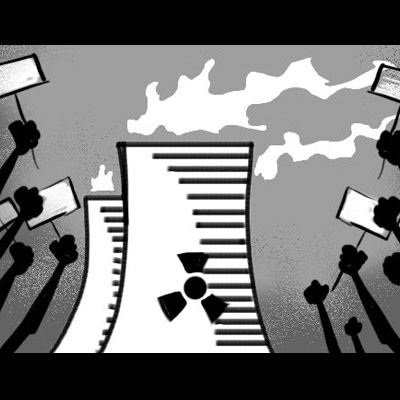
 East Anglian Daily Times 27th Oct 2019, A protest planned to take place in Pillbox Field, Sizewell, on October 26, was thwarted when EDF arranged for metal barriers and security staff to occupy an access road to the site. Undaunted but remaining peaceful, the protest was moved to a new location, Sizewell beach car park, where the activists erected marquees and carried out their planned truth-tellingexercises and people’s assembly.
XR protestor Victoria Proctor said:
“There’s been lots and lots of groups in the past few years that have been
working so hard to bring attention to what’s being planned along the coast.
“We’re trying to get the truth out there for people so they realise what is
under threat.
https://www.eadt.co.uk/news/extinction-rebellion-xr-protest-edf-sizewell-1-6343148
20 sovereign nations in New Mexico and Texas oppose nuclear facility near Carlsbad
Native American Pueblo leaders oppose nuclear facility near Carlsbad, Hobbs, https://www.oilandgas360.com/native-american-pueblo-leaders-oppose-nuclear-facility-near-carlsbad-hobbs-2/ in Press by— 360 Feed Wire
Oct. 24– Oct. 24–A group of Native American leaders opposed a plan to temporarily store nuclear waste at proposed facilities in southeast New Mexico and West Texas before a permanent repository is available.
The All Pueblo Council of Governors, which represents 20 sovereign nations in New Mexico and Texas held a meeting on Thursday where members affirmed their opposition to the projects, read a Monday news release from the group.
Concerns with the transportation of spent nuclear fuel rods drove the group’s opposition to two proposed consolidated interim storage (CIS) sites, one near the border of Eddy and Lea counties in New Mexico and another in Andrews, Texas. Continue reading
Too small for the monstrosity’: Anti-nuclear campaigners to take Sizewell C opposition to public meeting
|
Too small for the monstrosity’: Anti-nuclear campaigners to take Sizewell C opposition to public meeting https://www.eadt.co.uk/news/nuclear-free-local-authorities-meeting-colchester-essex-october-2019-1-6341230
Anti-nuclear campaigners are to voice their “real concern” over the planned building of new nuclear power stations – including at Sizewell C – during a public meeting. EDF Energy has said that building new nuclear reactors across the country, including in Suffolk, is crucial to meeting the country’s future ends – with Sizewell B station director Paul Morton recently saying: “The lights won’t stay on without it.” But that has caused controversy in Suffolk for years, with opponents questioning its environmental benefits while raising fears that building a massive new nuclear power station could have on the area of outstanding natural beauty at Sizewell. The Nuclear Free Local Authorities (NFLA) English Forum is now holding a public meeting at the Firstsite Gallery in Colchester on Saturday, October 26 in association with groups such as Together Against Sizewell C (TASC). NFLA steering committee chairman David Blackburn said it would allow “councillors and the concerned public to understand the real concerns in building new nuclear reactors”. Pete Wilkinson, of Together Against Sizewell C, called the planned Suffolk location “an eroding coastal site, bequeathing future generations an inequitable and intolerable radioactive waste legacy”. He also said it was “a site too small for the monstrosity it is required to contain, hemmed in by precious areas of outstanding natural beauty in a remote, inaccessible and tranquil area”. He added that Sizewell C would be “an unnecessary behemoth” that “electricity bill payers are being asked to subsidise”. EDF Energy was approached for comment. |
|
|
Kings Bay Plowshares 7 face criminal charges and long jail senetences
|
Taking Next Steps Toward Nuclear Abolition. https://truthout.org/articles/taking-next-steps-toward-nuclear-abolition/, BY Kathy Kelly, Voices for Creative Nonviolence, October 21, 2019 My friend Marianne Goldscheider, who is 87, suffered a broken hip in July, 2018 and then, in June 2019, it happened again. When she broke her hip the first time, she was running, with her son, on a football field. After the second break, when she fell in her kitchen, she was in so much pain that she recalls her only desire as she was placed on a stretcher: “I just wanted ‘the right pill.’” Marianne says her Catholic friends, who live nearby in the New York Catholic Worker community, persuaded her not to give up. They’ve long admired her tenacity, and over the years many have learned from her history as a survivor of the Nazi regime who was forced to flee Germany. Recalling her entry to the United States, Marianne jokes she may have been one of the only displaced persons who arrived in the United States carrying her skis. Yet she also carried deep anxieties, the “angst,” she says, of her generation. She still wonders about German people in the military and the aristocracy who knew where Hitler was headed and, yet, didn’t try to stop him. “When and how,” she wonders, “do human beings get beyond all reasoning?”
Marianne is deeply disturbed by the extraordinary danger of maintaining nuclear weapons arsenals and believes such weapons threaten planetary survival. She worries that, similar to the 1930s, citizens of countries possessing nuclear weapons sleepwalk toward utter disaster. On April 4, 2018, several of Marianne’s close friends from the New York Catholic Worker community became part of the Kings Bay Plowshares 7 by entering the U.S. Navy Nuclear Submarine base in King’s Bay, GA and performing a traditional Plowshares action. Guided by lines from Scripture urging people to “beat their swords into plowshares and their spears into pruning hooks,” they prayed, reflected and then symbolically disarmed the Trident nuclear submarine site. The Kings Bay is home port to six nuclear armed Trident ballistic missile submarines with the combined explosive power of over 1825 Hiroshima bombs. One of the banners they hung read “The Ultimate Logic of Trident is Omnicide.” Referring to this sign, Daniel Ellsberg, who leaked the Pentagon Papers in 1971, said the banner “is exactly right.” In an October 18 endorsement, he called their actions “necessary to avert a much greater evil.” In late September, the Catholic Bishops of Canada, alarmed over the increasing danger nuclear weapons pose, urged the Government of Canada to sign the Treaty on the Prohibition of Nuclear Weapons, adopted at the UN in 2017. The Canadian bishops issued their statement on September 26, the United Nations International Day for the Total Elimination of Nuclear Weapons. In it, they note the Vatican has already signed and ratified the Treaty. “The ashes of World War I and the centenary of its armistice,” wrote Pope Francis, “should teach us that future acts of aggression are not deterred by the law of fear, but rather by the power of calm reason that encourages dialogue and mutual understanding as a means of resolving differences.” The seven defendants, in everyday life, practice nonviolence while serving people who are often the least cared for in our society. Like Marianne, I have known each defendant for close to four decades. They have risked their lives, safety and health in numerous actions of civil disobedience. When imprisoned, they write and speak of the cruel abuse of human beings and the racist, primitive nature of the United States prison-industrial complex. They’ve also chosen to visit or live in war zones, providing witness on behalf of people trapped under bombardment. They live simply, share resources and strive to help build a better world. Nevertheless, beginning Monday, they will face serious criminal charges and potentially harsh sentences for their action at Kings Bay. Marianne anxiously awaits their trial. “Why,” she asks, “isn’t there more coverage?” One of the defendants, Rev. Steve Kelly, SJ, a Jesuit priest, referred to himself in a recent letter as “a tenuous voice in the wilderness.” He further explained that he is among the wilderness of the incarcerated, “two and a quarter million folks comprising the human warehouses in the empire.” Steve has been imprisoned in the Glynn County jail since April 4, 2018. His letter continues:
Late in the afternoon of October 18, Judge Woods issued her long-awaited orders regarding testimony allowed in court. She will not allow testimony about the illegality of nuclear weapons, the necessity of civil disobedience, or individual motivations and personal faith. Fortunately, the many dozens of people filling the Brunswick, GA courtroom on October 21 will help communicate the essential evidence that won’t be shared within the court. In alternative settings, such as over meals, during a Festival of Hope, and as part of a Citizens Tribunal, they’ll discuss and eventually share reasons that motivated our friends to perform the Kings Bay Plowshares 7 action. A recent op-ed in The New York Times suggests the Kings Bay Plowshares 7 message is entering public discourse. The defendants have clarified that the U.S. nuclear weapon arsenal robs resources desperately needed for food, shelter, health care and education. The New York Times notes if we could reach a total nuclear weapons ban, we could save roughly $43 billion each year on weapons, delivery systems and upgrades. “That’s roughly the same amount we’ve allocated in federal hurricane aid for Puerto Rico.” Marianne laments the way in which nuclear weapons are revered as a modern idol deserving of great sacrifice. She is rightfully wary of social and cultural developments that consider such reverence normal. She and I commiserate about recovering from hip fractures, (I’ve been on the mend for the past month), but we both know that Steve Kelly’s invitation deserves our greatest attention. Tiny postcards are the only means of correspondence allowed to or from the Glynn County jail. On one of these, Steve wrote a message to a large gathering in New York celebrating the Kings Bay Plowshares 7 action. “I am encouraged by your presence,” he wrote, “to ask that this small effort of ours not be the last word in nuclear abolition.” |
|
Facing a nasty pro nuclear campaign, Ohio’s anti nuclear group hope for a federal court decision to delay nuclear bailout
Anti-nuclear bailout group fails to make deadline for referendum https://www.cincinnati.com/story/news/politics/elections/2019/10/21/anti-nuclear-bailout-effort-miss-deadline-submit-signatures/4052255002/ Jessie Balmert, Cincinnati Enquirer Oct. 21, 2019 COLUMBUS – Opponents of Ohio’s $1 billion bailout of two nuclear plants say they didn’t gather enough signatures to block the law by the Monday deadline.
Their only hope: a federal court decision that could give them more time to collect signatures.
Ohioans Against Corporate Bailouts spokesman Gene Pierce wouldn’t say how many signatures the group collected, but it wasn’t enough to put the issue before voters in November 2020.
Ballot groups often collect more than the required number in anticipation of some being tossed out because of duplicates, illegible signatures and other problems.
That means House Bill 6 will take effect at midnight. The law imposes a new fee of 85 cents per month for residential customers on Ohioans’ electric bills starting in 2021.
Those fees are expected to raise about $150 million a year for FirstEnergy Solutions’ plants – money the company says it needs to keep the doors open. Another $20 million from those fees will pay for solar energy companies.
The runup to Monday’s deadline has been one of the nastiest campaigns in recent Ohio history. The nuclear plants’ owner, FirstEnergy Solutions, and its allies deployed a variety of tactics to block the referendum from making the ballot ranging from anti-Chinese advertisements to petition signature blockers.
“Nuclear bailout supporters of House Bill 6 have stooped to unprecedented and deceitful depths to stop Ohioans from exercising their constitutional rights to put a bailout question on the ballot for voters to decide,” Pierce said in a news release.
Ohioans Against Corporate Bailouts had to submit at least 265,774 valid signatures from at least 44 of Ohio’s 88 counties to put the bill to a vote next year. The group failed to submit those signatures by Monday’s deadline.
The group has asked a federal court judge for more time to collect signatures because initial steps in the process, such as collecting 1,000 valid signatures and having ballot language approved as accurate, ate into its 90-day window.
A hearing on that request is set for Tuesday afternoon. U.S. District Court Judge Edmund Sargus will make a decision after hearing arguments from both sides.
On Monday, Ohioans for Energy Security submitted signatures to Rep. Jamie Callender, R-Concord Township, calling for a ban on foreign control of the state’s energy grid. Callender said he hopes to put that issue before voters.
“That’s kind of scary that someone who didn’t like America, who didn’t like our way of life could cause a lot of damage and a lot of havoc by randomly shutting down a plant that they had controlling interest in,” Callender said. “It could bring the grid down.”
The operators of Ohio’s electric grid say they are “vigilant” about the grid’s security. The federal government can block projects if foreign investment poses a national security risk.
For example, President Trump has halted two foreign acquisitions, citing national security concerns, since 2017: Lattice Semiconductor Corporation by a Chinese investment firm and telecom company Qualcomm by Singapore-based Broadcom.
Columbus bureau chief Jackie Borchardt contributed reporting.
Determined opposition to nuclear expansion in India’s iconic tiger reserve
|
Karnataka activists may approach court to oppose Kaiga nuclear plant expansion
Earlier, a Tata Memorial Trust report had said the nuclear plant, was responsible for increasing cancer cases in the region. The News Minute, Soumya Chatterjee, Saturday, October 19, 2019 Environmental activists are determined to oppose the expansion of the Kaiga Atomic Power Station in the buffer zone of the Kali Tiger Reserve in Uttara Kannada district of Karnataka. Currently, the plant has four units. The Nuclear Power Corporation Ltd. has proposed a fifth and a sixth unit, the proposal for which has cleared all environmental regulatory hurdles from both the state and union governments recently. Activists argue that expanding the Kaiga plant will result in the loss of 54 hectares of pristine forests in the fragile Western Ghats near the Kali Tiger Reserve. They also question the practicality of setting up more nuclear power plant units or replacing it with other safer and cheaper power generating options like solar and wind energy. Incidentally, the Karnataka High Court also recently ordered an interim stay on further felling of trees by the National Highway Authority of India for the expansion of NH4A (Belagavi-Goa), after it learnt that the authorities had violated the Forest Protection Act. Encouraged by this, activists opposing the new units in the Kaiga plant are planning to approach the court, if other means of protest do not work. A threat to eco-sensitive area “When the whole world is shifting away from nuclear power and looking for eco-friendly sources like solar and water, why do we want to create problems like Fukushima (Japan) with already four dams created in the upper course of the Kali river? Why do we want to destruct forests further when climate change is already impacting us?” asks Joseph Hoover, a former member of State Wildlife Board and founder of United Conservation Movement. “It is not necessary as the state is power surplus and will primarily help other states. There is also the issue of increased cancer cases in the area because of the plant,” he added. A Tata Memorial Centre report in 2010 had said there was a spurt in cases of cancer over the past two decades in Kaiga. Experts insist that this is because of radioactive pollution caused by the nuclear power plant. Advocate Prince Isaac, who represented the United Conservation Movement, which was one of the petitioners in the NH4A case, said, “This area is classified as eco-sensitive area-1, according to a specific order from November 2013 under Section 5 of the Environmental Protection Act by the Union Ministry of Forest, Environment and Climate Change. By the same order, no developmental work (construction involving space more than 20,000 sq metres) can take place in this zone.” Pointing out that the government is breaking its own law, he added, “Other than this, for projects in sensitive areas, there is a legal mandate to carry a biological impact assessment as there are rare species that are endemic to the area. That has not been undertaken here.”…… https://www.thenewsminute.com/article/karnataka-activists-may-approach-court-oppose-kaiga-nuclear-plant-expansion-110831 |
|
1 This Month
Chernobyl: The Lost Tapes – A good documentary on Chernobyl on SBS available On Demand for the next 3 weeks– https://www.sbs.com.au/ondemand/tv-program/chernobyl-the-lost-tapes/2352741955560

of the week–London Campaign for Nuclear Disarmament

Tell the Ukrainian Government to Drop Prosecution of Peace Activist Yurii Sheliazhenko
To see nuclear-related stories in greater depth and intensity – go to https://nuclearinformation.wordpress.com
-
Archives
- April 2026 (126)
- March 2026 (251)
- February 2026 (268)
- January 2026 (308)
- December 2025 (358)
- November 2025 (359)
- October 2025 (376)
- September 2025 (257)
- August 2025 (319)
- July 2025 (230)
- June 2025 (348)
- May 2025 (261)
-
Categories
- 1
- 1 NUCLEAR ISSUES
- business and costs
- climate change
- culture and arts
- ENERGY
- environment
- health
- history
- indigenous issues
- Legal
- marketing of nuclear
- media
- opposition to nuclear
- PERSONAL STORIES
- politics
- politics international
- Religion and ethics
- safety
- secrets,lies and civil liberties
- spinbuster
- technology
- Uranium
- wastes
- weapons and war
- Women
- 2 WORLD
- ACTION
- AFRICA
- Atrocities
- AUSTRALIA
- Christina's notes
- Christina's themes
- culture and arts
- Events
- Fuk 2022
- Fuk 2023
- Fukushima 2017
- Fukushima 2018
- fukushima 2019
- Fukushima 2020
- Fukushima 2021
- general
- global warming
- Humour (God we need it)
- Nuclear
- RARE EARTHS
- Reference
- resources – print
- Resources -audiovicual
- Weekly Newsletter
- World
- World Nuclear
- YouTube
-
RSS
Entries RSS
Comments RSS
 nuclear-news