Activist groups to rally against plutonium disposal project at Waste Isolation Pilot Plant

Adrian HeddenCarlsbad Current-Argus 23 Feb 22, A plan to dilute weapons-grade plutonium and then dispose of it at the Waste Isolation Pilot Plant, an underground repository for low-level nuclear waste near Carlsbad, drew concerns from around New Mexico amid fears transporting this stream of waste could risk public safety.
The U.S. Department of Energy announced in 2020 a plan that would ship the plutonium from the Pantex Plant near Amarillo, Texas to Los Alamos National Laboratory where it would be chemically diluted.
The waste would then head to the DOE’s Savannah River Site in South Carolina for packaging before the final shipment to WIPP in southeast New Mexico.
This would mean the 34 metric tons of the waste on the way to its final resting place at the WIPP site could pass through New Mexico three times.
Cynthia Weehler, co-chair of Santa Fe-based activist group 285 All said this creates an unacceptable risk for local communities in New Mexico and 11 states she said the waste would travel through.
285 All advocates for issues throughout New Mexico, focusing on U.S. Highway 285 which stretches from the mountains in northern New Mexico down into the high desert and oilfields of the southeast region, crossing into West Texas.
That’s why Weehler and a consortium of groups critical of WIPP and nuclear activities in New Mexico planned to deliver a petition to New Mexico Gov. Michelle Lujan Grisham next week, asking the state’s highest government leader to oppose the plutonium project.
“Unless New Mexico says NO to WIPP expansion, other disposal locations will not be developed, and WIPP will always be the only dump site, which is not fair. New Mexico never agreed to bear the burden of being the only site,” read a portion of the petition.
Weehler said the petition has about 1,140 signatures as of Monday and is being distributed in the Santa Fe area and to communities along the transportation routes.
The petition will be delivered to the State Capitol at 11:30 a.m., March 1 during a press conference on the east side of the Roundhouse.
“We don’t expect an accident to happen every week or every community, but when you increase the time and the shipments, we just see this as an inevitability over the time frame,” Weehler said. “It’s going to be a huge increase in shipments and it’s going to last almost this whole century.”
Weehler said Lujan Grisham should cite the legal agreement between the State and DOE that defines WIPP’s mission: to dispose of low-level transuranic (TRU) waste at the site near Carlsbad, streams she said were pre-determined by the agreement and should not be expanded.
If the DOE’s plutonium plan moves forward, Weehler said it would amount to an “expansion” of WIPP both in its mission and the volume of waste it would accept.
“The waste would be plutonium-contaminated material, contaminated during the production of nuclear weapons,” Weehler said. “This is something different (than TRU waste).”
WIPP officials said this was not the case……………………………..
The plutonium would be “down blended” meaning its level of radioactivity would be lowered so that the waste would qualify as TRU waste and could be disposed of at WIPP without adjusting federal policy.
“In order for it qualify, they’re having to dilute it. They’re having to adulterate it,” Weehler said. “This will never be acceptable. For them to say that is just unbelievable to me.” ……….. https://www.currentargus.com/story/news/local/2022/02/23/wipp-activist-groups-rally-against-plutonium-disposal-project/6878583001/
The case for Saving the Severn Estuary from the dumping of radioactive wastes
A grave threat to the oceans and the wellbeing of our communities could be
averted with your support for the Save The Severn Estuary Judicial Review
Case Fund – how? Just by quickly copying, pasting and sharing the
information below amongst your networks so that as many people are aware of
the impending danger as possible and have the opportunity to put their
opposition into practice.
Energy giants EDF dumped contaminated mud in the
Severn near Cardiff in 2018; now, rebuffed in Wales, they were given a
licence to dump at Portishead. The legal action is to stop them resuming
dumping in April. This should be stage-1 in the battle to end EDF’s licence
for mass slaughter of fish sucked in the river of seawater for cooling
purposes.
Save The Severn is a science-led independent coalition who have
assembled a case and engaged leading environmental lawyers to challenge
MMO’s licence. We obtained Court permission to proceed in December and have
a hearing scheduled for 8-10 March in the High Court. EDF are supporting
MMO while we have some assistance from the Conservation and Fisheries
authority.
The Severn Estuary has the highest conservation status, recently
becoming a Marine Protection Area where damaging operations are ended. The
Welsh Marine Plan accepts this but not England’s Marine Management
Organisation (MMO. Some of the Hinkley mud dumped at Cardiff and Portishead
smothered the seabed ecology, while most dispersed around the Estuary.
Increased radioactivity was detected up the coast and not only near Cardiff
following the 2018 dumping. EDF are choosing not to protect marine life for
their own profits, and they need to be stopped. We have three weeks to save
the Severn Estuary, with the Court Case hearing on 8 March 2022. Save The
Severn fundraising page here:
https://www.crowdjustice.com/case/save-the-severn-estuary/
Save the Severn (accessed) 18th Feb 2022
MPs and groups oppose hearings to license Canada’s first permanent radioactive waste dump.
 | |||
MPs and groups oppose hearings to license Canada’s first permanent radioactive waste dump
MPs and groups oppose hearings to license Canada’s first permanent radioactive waste dump, https://concernedcitizens.net/2022/02/16/mps-and-groups-oppose-hearings-to-license-canadas-first-permanent-radioactive-waste-dump/ OTTAWA, February 16, 2022 – Members of Parliament and 50 environmental and citizen groups are opposed to the Canadian Nuclear Safety Commission (CNSC)’s forthcoming hearings to license Canada’s first permanent “disposal” facility for radioactive waste.
A statement calling for suspension of the hearings is signed by three MPs: Laurel Collins, NDP environment critic; Elizabeth May, Parliamentary Leader of the Green Party of Canada; and Monique Pauzé, environment spokesperson for the Bloc Québécois.
Union signatories of the statement include Canadian Union of Public Employees (CUPE) – Québec, Fédération des travailleurs et des travailleuses du Québec (FTQ) and the Unifor Québec Health, Safety and Environment Committee Unifor.
Other signatories include Friends of the Earth, Canadian Association of Physicians for the Environment, Ralliement contre la pollution radioactive, National Council of Women of Canada, Ontario Clean Air Alliance, and Quebec’s Front commun pour la transition énergétique. Ottawa Valley groups include Concerned Citizens of Renfrew County and Area, Old Fort William Cottagers’ Association, Action Climat Outaouais, and Pontiac Environmental Protection, among others.
On January 31, the Kebaowek First Nation asked that the hearings be halted until a consultation framework between them and the CNSC is in place. The hearings are for authorization to build a “Near Surface Disposal Facility” for nuclear waste at Chalk River, Ontario, on unceded Algonquin Anishinaabeg lands alongside the Ottawa River.
The CNSC staff report recommends licensing the construction of the mound for 1 million cubic metres of radioactive and toxic wastes accumulated by the federal government since 1945. The CNSC has scheduled licensing hearings on February 22 and May 31. No separate environmental assessment hearing is scheduled.
The proposed facility would be an aboveground mound a kilometre from the Ottawa River, upstream from Ottawa and Montréal. 140 municipalities have opposed the project and fear contamination of drinking water and the watershed.
In 2017, the CNSC received 400 submissions responding to its environmental impact statement, the overwhelming majority of them opposed to the plan.
Bradwell nuclear project -dead in the water? – partly due to work of BANNG (Blackwater Against New Nuclear Group).
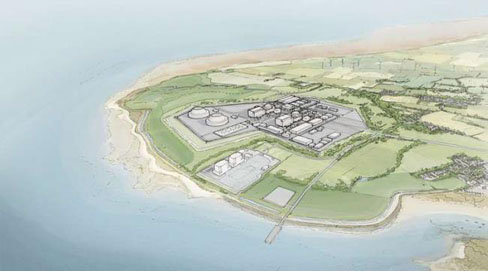
There are reasons to be cheerful. One is the long pause and retreat
confirmed by the developer who does not expect to submit an application
‘for several years yet’.
Another is the general feeling that the Chinese project is now dead in the water.
Yet another is the persistent failing of an industry that is too costly, too dangerous and too slow.
And, it must be said, BANNG’s unrelenting campaign over fourteen years, together with the support of local councils and communities, has demonstrated that the Bradwell site, far from being ‘potentially suitable’, is inappropriate, unsustainable and unacceptable.
It is clear that CGN has doubts about the viability of the Bradwell site in an era of Climate Change. It is likely it has hung on until it gains UK regulatory approval for its reactors. Gaining that coveted passport may be the signal for CGN to quit Bradwell and try its luck elsewhere.
BANNG 14th Feb 2022
Super Furry Animals call out alleged nuclear mud dumping at Hinkley Power Station
Super Furry Animals have called on the Marine Management Organisation
(MMO) to revoke the licence granted to EDF – which they claim has
resulted in nuclear mud dumping in the Severn Estuary. In 2018, a group of
activists took EDF to court to stop 300,000 tonnes of alleged nuclear mud
from a Somerset power station being disposed of just outside Cardiff. Now,
the Welsh indie veterans have picked up the cause again.
NME 15th Feb 2022
Opposition to Holtec dumping nuclear waste into Cape Cod Bay
Preventing nuclear wastewater dumping, MV Times, By Eunki Seonwoo, February 16, 2022 The Aquinnah select board was in favor of Mara Duncan’s request for a non-binding ballot question. Duncan’s ballot question was for Holtec International, owner of the Pilgrim Nuclear Power Plant in Plymouth, decommissioned in 2019, not to discharge nuclear waste into Cape Cod Bay.
Federal leaders from Massachusetts — Senators Edward Markey and Elizabeth Warren, as well as U.S. Reps. Seth Moulton and Bill Keating — have expressed opposition to Holtec dumping nuclear wastewater into the bay in a letter they wrote in January.
When evaluating the proper method of disposal, Holtec must consider the public’s concerns surrounding and perception of the release of irradiated material into Cape Cod, especially when viable alternatives are available,” the letter reads.
Duncan told the board a number of groups, such as Physicians for Social Responsibility and the fishing industry, are against the dumping. Holtec has other disposal methods. “It is their cheapest option, obviously. It is very easy to open up just open the [lid] and let it spill,” Duncan said. …………….. https://www.mvtimes.com/2022/02/16/preventing-nuclear-wastewater-dumping/
USA does not have to march into war with Russia over Ukraine. It can choose to keep to the Minsk-Normandy process

The current crisis should be a wake-up call to all involved that the Minsk-Normandy process remains the only viable framework for a peaceful resolution in Ukraine. It deserves full international support, including from U.S. Members of Congress, especially in light of broken promises on NATO expansion, the U.S. role in the 2014 coup, and now the panic over fears of a Russian invasion that Ukrainian officials say are overblown.
Memo to Congress: Diplomacy for Ukraine Is Spelled M-I-N-S-K
Ukrainians of all ethnicities deserve genuine support to resolve their differences and find a way to live together in one country—or to separate peacefully.
https://portside.org/2022-02-08/memo-congress-diplomacy-ukraine-spelled-m-i-n-s-k Medea Benjamin, Nicolas J.S. Davies COMMON DREAMS
While the Biden administration is sending more troops and weapons to inflame the Ukraine conflict and Congress is pouring more fuel on the fire, the American people are on a totally different track.
A December 2021 poll found that a plurality of Americans in both political parties prefer to resolve differences over Ukraine through diplomacy. Another December poll found that a plurality of Americans (48 percent) would oppose going to war with Russia should it invade Ukraine, with only 27 percent favoring U.S. military involvement.
The conservative Koch Institute, which commissioned that poll, concluded that “the United States has no vital interests at stake in Ukraine and continuing to take actions that increase the risk of a confrontation with nuclear-armed Russia is therefore not necessary for our security. After more than two decades of endless war abroad, it is not surprising there is wariness among the American people for yet another war that wouldn’t make us safer or more prosperous.”
The most anti-war popular voice on the right is Fox News host Tucker Carlson, who has been lashing out against the hawks in both parties, as have other anti-interventionist libertarians.
On the left, the anti-war sentiment was in full force on February 5, when over 75 protests took place from Maine to Alaska. The protesters, including union activists, environmentalists, healthcare workers and students, denounced pouring even more money into the military when we have so many burning needs at home.
You would think Congress would be echoing the public sentiment that a war with Russia is not in our national interest. Instead, taking our nation to war and supporting the gargantuan military budget seem to be the only issues that both parties agree on.
Most Republicans in Congress are criticizing Biden for not being tough enough (or for focusing on Russia instead of China) and most Democrats are afraid to oppose a Democratic president or be smeared as Putin apologists (remember, Democrats spent four years under Trump demonizing Russia).
Both parties have bills calling for draconian sanctions on Russia and expedited “lethal aid” to Ukraine. The Republicans are advocating for $450 million in new military shipments; the Democrats are one-upping them with a price tag of $500 million.
Progressive Caucus leaders Pramila Jayapal and Barbara Lee have called for negotiations and de-escalation. But others in the Caucus–such as Reps. David Cicilline and Andy Levin–are co-sponsors of the dreadful anti-Russia bill, and Speaker Pelosi is fast-tracking the bill to expedite weapons shipments to Ukraine.
But sending more weapons and imposing heavy-handed sanctions can only ratchet up the resurgent U.S. Cold War on Russia, with all its attendant costs to American society: lavish military spending displacing desperately needed social spending; geopolitical divisions undermining international cooperation for a better future; and, not least, increased risks of a nuclear war that could end life on Earth as we know it.
For those looking for real solutions, we have good news.
Negotiations regarding Ukraine are not limited to President Biden and Secretary Blinken’s failed efforts to browbeat the Russians. There is another already existing diplomatic track for peace in Ukraine, a well-established process called the Minsk Protocol, led by France and Germany and supervised by the Organization for Security and Cooperation in Europe (OSCE).
The civil war in Eastern Ukraine broke out in early 2014, after the people of Donetsk and Luhansk provinces unilaterally declared independence from Ukraine as the Donetsk (DPR) and Luhansk (LPR) People’s Republics, in response to the U.S.-backed coup in Kiev in February 2014. The post-coup government formed new “National Guard” units to assault the breakaway region, but the separatists fought back and held their territory, with some covert support from Russia. Diplomatic efforts were launched to resolve the conflict.
The original Minsk Protocol was signed by the “Trilateral Contact Group on Ukraine” (Russia, Ukraine and the OSCE) in September 2014. It reduced the violence, but failed to end the war. France, Germany, Russia and Ukraine also held a meeting in Normandy in June 2014 and this group became known as the “Normandy Contact Group” or the “Normandy Format.”
All these parties continued to meet and negotiate, together with the leaders of the self-declared Donetsk (DPR) and Luhansk (LPR) People’s Republics in Eastern Ukraine, and they eventually signed the Minsk II agreement on February 12, 2015. The terms were similar to the original Minsk Protocol, but more detailed and with more buy-in from the DPR and LPR.
The Minsk II agreement was unanimously approved by the U.N. Security Council in Resolution 2202 on February 17, 2015. The United States voted in favor of the resolution, and 57 Americans are currently serving as ceasefire monitors with the OSCE in Ukraine.
The key elements of the 2015 Minsk II Agreement were:
- an immediate bilateral ceasefire between Ukrainian government forces and DPR and LPR forces;
- the withdrawal of heavy weapons from a 30-kilometer-wide buffer zone along the line of control between government and separatist forces;
- elections in the secessionist Donetsk (DPR) and Luhansk (LPR) People’s Republics, to be monitored by the OSCE; and
- constitutional reforms to grant greater autonomy to the separatist-held areas within a reunified but less centralized Ukraine.
The ceasefire and buffer zone have held well enough for seven years to prevent a return to full-scale civil war, but organizing elections in Donbas that both sides will recognize has proved more difficult.
Continue readingFrance is exploring new ways to dispose of radioactive materials but public opposition is as fierce as ever

“There may be a price [communities] are willing to accept in order to stomach the waste and its risks, but we don’t know what that price is yet,” … “If it’s high enough, it will ultimately add to the cost of disposal.” Local authorities have poured millions of euros of subsidies and compensation into the area to support the project
The nuclear power dilemma: where to put the lethal waste
France is exploring new ways to dispose of radioactive materials but public opposition is as fierce as ever, Ft.com Anna Gross in Chooz and Sarah White in Bure 6 FEB 22,
”………………….Resistance is fissile Cigeo has attracted the same kind of vocal opposition found at other potential burial sites. And, as a result Bure, a village of fewer than 100 inhabitants, has become a battleground where protesters have regularly clashed with police over the future of the site. Demonstrators have set up a “house of resistance” in Bure that has become a magnet for anti-nuclear protesters around the country. The former barn is equipped with a projection room, mattresses to welcome guests and a cosy communal kitchen.
Campaigners say the Bure site has become representative of a broader cause. “Beyond the waste, it’s nuclear production above all else that worries us,” says a 29-year-old jurist who gave his name as Antoine, one of a handful of campaigners manning the fort on a snowy February morning. “It’s a supposedly low carbon source of energy, but you’ve got to build the reactors . . . it is such a dangerous and destructive solution.” Yet the state holds that the undeniable risks of nuclear energy are outweighed by its potential benefits as a cost-effective way of cutting CO2 emissions. According to a report last year from French grid operator RTE, France’s cheapest way to reach carbon neutrality by 2050 would involve building 14 new reactors. Under the scenarios RTE presented, if France built no new nuclear reactors and relied exclusively on expanding renewables and extending the lifespan of existing nuclear, this would cost €10bn more per year than other options including new reactors, with the cost of decommissioning factored into the final bill.
But that may not factor in the costs of convincing French citizens to host such facilities in their backyards. Bure resident Anne-Marie Henn, a retiree, says the project has forced her and her artist husband Jacques to give up on their dream of creating a painting atelier in an annex to their home. “We’d like to leave, but our house isn’t worth anything any more,” she says. Ed Lyman, senior global security scientist with the Union of Concerned Scientists, who has spent decades researching nuclear power safety, says the science behind burying waste is robust, and the dangers of corrosion or leakage minimal. But there remain real risks for the public, he says, such as accidents happening when materials are transported to the site.
“There may be a price [communities] are willing to accept in order to stomach the waste and its risks, but we don’t know what that price is yet,” he adds. “If it’s high enough, it will ultimately add to the cost of disposal.” Local authorities have poured millions of euros of subsidies and compensation into the area to support the project and residents. In Bure, that has translated into snazzy lampposts lining every street alongside the barns and stone houses; households have also got fibre optic internet connections and sanitation networks have been improved. “We’ve got to deal with this crap,” Henn says. “At the very least we can benefit a bit from [subsidies].”
But the concerns of many communities go way beyond immediate dangers to more existential questions: how can we ensure that not just our children and grandchildren, but people living thousands of years in the future have the knowledge and understanding to handle it responsibly? And how can we be sure that the storage containers we have developed now will stand the test of time? “What we’ll be getting here is the really dangerous core of the waste,” Henn says, adding that it was “the generations to come” that worried her.
Andra, the French state agency responsible for nuclear waste management, is considering ways to warn future generations of what lies below Bure — perhaps by inscribing microscopic information on a hard disk of sapphire, designed to withstand erosion, should the site be forgotten. “Even if we lose our collective memory, the storage site will be safe,” says spokesperson Audrey Guillemenet. If these kinds of innovations fail to impress French lawmakers and the site does not win approval, that leaves the government with a problem that goes far beyond the billions spent on construction. “Some 50 per cent of the [nuclear] waste destined to come here eventually already exists,” says Guillemenet. Forget the next generation of power plants; the decades-old materials Gannaz and his predecessors have removed from Chooz A are a problem that needs a solution. If it is not Bure, then what is it? https://www.ft.com/content/246dad82-c107-4886-9be2-e3b3c4c4f315?segmentid=acee4131-99c2-09d3-a635-873e61754ec6
After the hibakusha: the future of Japan’s anti-nuclear movement

After the hibakusha: the future of Japan’s anti-nuclear movement https://www3.nhk.or.jp/nhkworld/en/news/backstories/1870/
Yoshida Mayu, NHK World Correspondent, 31 Jan 22, Activists calling for the abolition of nuclear weapons have long relied on the powerful testimonies of atomic bomb survivors, or hibakusha, to grow their movement. But with ever fewer people to offer that testimony, both the hibakusha and activists know those days are running out. NHK World’s Yoshida Mayu speaks to different generations who have a common goal: a world without nuclear weapons.
Hellish memories
Oka Nobuko was in Nagasaki on August 9, 1945, the day the US dropped an atomic bomb on the city. For most of her life, she avoided talking about her experiences as the memories were too painful.
Last year she finally broke her silence to deliver a speech at the annual ceremony commemorating the date of the bombing.
“When I stood up, I was immediately knocked down and I lost consciousness,” she recounted. “When I woke up, I didn’t know where I was. Pieces of shattered glass were lodged in my body.”
Oka was a 16-year-old nursing student at the time and helped treat other victims at a first aid center.
“No treatment was possible in a lot of these cases,” she said. “There was flesh dangling from exposed bone. Some people jumped off buildings to kill themselves because they couldn’t endure the pain any longer.”
She described the scenes as “hellish” and said she suffered severe headaches every time the memories returned. For this reason, she always avoided going to the area where the first aid center was located.
Time to speak
In a letter to a close friend three years ago, Oka wrote of her worries that her memories and those of other hibakusha would soon be gone.
“The hibakusha are getting older and someday all of us will be gone,” she wrote.
Estimates put the number of living hibakusha at around 127,000, with an average age of 83.This sense that time was running out is what motivated Oka to finally share her story last August.
“We, the hibakusha, will continue to share our experiences and call for the abolition of nuclear weapons. We will fight for peace.”
Last November, three months after giving her speech, Oka died at the age of 93.
Inspiring other hibakusha Fukuda Hakaru, a 90-year-old Nagasaki hibakusha, says hearing Oka speak inspired him to share his own story. He wrote her a letter, saying how much her courage had moved him.
Fukuda had gone to the first aid center Oka was working at to get medicine for his father, who was severely injured in the blast.
“I can still hear the screams of the patients,” he says. “Doctors and nurses were running around to help them. It was a painful sight. It is very hard for me to talk about what I saw. The medical workers were the ones who saw up close the inhumanity of the atomic bombs.”
Fukuda was 14 at the time. He did not suffer any serious injuries, but his father, who was working close to ground zero, died a month later.”I’ll never forget how I felt. I had to pick up his remains after the cremation, but I have no idea how I managed. The world needs to know that this is the kind of pain that an atomic bomb causes. It cannot be allowed to happen again.”
Fukuda says he long felt he had a duty to share his story but avoided doing so because he was worried about the anti-hibakusha discrimination he and his family might face.
Many survivors and their families have had to deal with prejudice and discrimination over the years. Initially, little was known about the effects of radiation exposure, and some people incorrectly regarded it as contagious. The social stigma was especially serious when it came to marriage or work.
“The hibakusha continue to suffer today,” says Fukuda. “That’s yet another reason why we need to make sure this never happens again.”
Preserving Oka’s message
In December, a group of university students from Nagasaki hosted a virtual conference about the experiences of the hibakusha, speaking to high school classes about the stories they had heard from survivors.
One of these students was Kaji Misato, who spent a lot of time with Oka during her final days.
“Oka was with her mother and brother at the time of the bombing,” Kaji said at the event. “As she stood up, she realized she was covered in blood.”Kaji spoke to Oka four times last year and recorded five hours of conversation. She said it was an eye-opening experience.
“The atomic bombing always felt like something in the past,” Kaji says. “But after hearing her story, I started to feel a greater sense of attachment. She told us the war had robbed her of her youth and she wanted peace so the same thing didn’t happen with the youth of today.”Every year on August 9, a siren rings out across the city at 11:02 AM, the exact time the atomic bomb exploded. Residents stop what they are doing to observe a minute of silence. But when Kaji visited the city center last year, she was shocked to see how few people were actually paying their respects.
About a month later, Oka was diagnosed with terminal cancer. Kaji met with her shortly after.
“She told me she was worried that once all the hibakusha are gone, their memories would fade as well,” Kaji says.
She took her words to heart and decided to share what she told her with people even younger. The high school students who attended the virtual session said it was an insightful experience.”Her vivid memories made me feel the horror of the atomic bomb,” said one student.
“We cannot take peace for granted,” said another. “We have to take care of the people who are close to us.”
This year promises to be a crucial one for the abolition movement. State parties to the UN nuclear weapons ban treaty are planning to hold their first meeting to try to agree on specific actions. In the meantime, young campaigners like Kaji are ensuring that the stories from those who witnessed the horrors of 1945 are documented and heard.
Sizewell C nuclear plant will have catastrophic effects on nature, and the Minsmere nature reserve.

RSPB officials have expressed dismay at the government’s decision to back the potential Sizewell C nuclear plant with £100million of funding. The proposed twin reactor development would be built next to Sizewell B, close to the RSPB Minsmere nature reserve. The RSPB and the Suffolk Wildlife Trust have long been opposed to the development because they say it will lead to a large loss of habitat for animals and could see millions of dead fish pumped into the sea each year. EDF has always maintained that the power station would help biodiversity by helping to tackle climate change. A spokesperson for the RSPB said: “The RSPB is shocked to hear that the government will be investing £100million of tax payer’s money in Sizewell C before a decision has been made to build it. The government claim to want to be a world leader in their response to the nature crisis. That’s a great ambition, but it is utterly incompatible with throwing £100m at a development that could have catastrophic impacts on nature. East Anglian Daily Times 27th Jan 2022 https://www.eadt.co.uk/news/business/suffolk-groups-react-to-sizewell-c-100m-8649412 |
Call to stop the unfair Vogtle nuclear construction surcharge

Now they want US to pay for THEIR mistakes, botched work & do-overs, delays, and retesting. NO…THEY SHOULD PAY!
REPEAL THE UNFAIR VOGTLE CONSTRUCTION SURCHARGE
5 Repeal Reasons Below
It is simply wrong and disgraceful for the state of Georgia to continue to have
elderly, schools, food banks, mom & pop restaurants, churches, tire stores, car repair shops, households, gas stations, doctors offices, renters, dentists, synagogues, beauty parlors, dry cleaners, shoe stores, insurance offices, meals-on-wheels, homeless shelters, colleges and universities, Salvation Army stores, drug stores, police stations, nursing homes, car washes, pet stores, fast-food restaurants, veterinarian offices, county governments, small manufacturing businesses, hospitals, recycling centers, animal shelters, hardware stores, grocery stores, YMCA & YWCA, bookstores, healthfood stores, consignment stores, rehab centers, phone stores, barbershops, grocery stores, warehouses, franchise businesses, clothing stores…
all paying month after month an extra surcharge amount on their Georgia Power electric bill to finance, without compensation, someone else’s years overdue for-profit venture.
The nuclear finance surcharge law was for construction, not for costly, continuing re-dos, re-testing, and delays after delays.
The surcharge is clearly failing to benefit customers, as the 2009 legislature was led to believe.
STOP The Surcharge Fee On Georgia Power Customers’ Electric Bills
Repeal the Unfair 2009 Nuclear Energy Finance Act
1. The original controversial nuclear finance act of 2009 anticipated that Georgians would pay a surcharge for five years. However, Georgia Power has collected the nuclear tax for SIX YEARS LONGER than anticipated with no end in sight.
2. The original finance act DID NOT anticipate making people pay for expensive construction mistakes, costly delays, and expensive do-overs.
3. The company testifies that construction is 99% complete. Most of the current work is fixing mistakes and do-over work. Customers should not keep paying surcharges if the project is so near completion as claimed, yet so late.
4. Extensive ITAAC testing (Nuclear Regulatory Commission: Inspections, Tests, Analyses, and Acceptance Criteria) is far from complete. Numerous problems found by testing will push startup much later than the present startup claim of late 2022, and thus continue the surcharges even longer. Note: NRC reports that, of the 399 tests, about 150, or 38% remain to be done. All tests must be complete before fuel is loaded.
5. The surcharge unfairly burdens the small and medium size residential and commercial customers, including schools, elderly, non-profit services, while it unfairly gives a pass to very large customers. These very large customers get to use rates that avoid much of the surcharge. (See Reference 1)
Surcharges started on Georgia Power bills in 2011
In 2019, they hit a high of 10.76 %
In 2020, they were 9.46 % (The NCCR-10 rate)
In 2021, they are 9.46 %
In January, 2022, they will be 3.81 % (The NCCR-11)
Background For Repealing the 2009 Georgia Nuclear Energy Financing Act:
The nuclear surcharge finances the new power plant Vogtle “Vortex” 3 & 4 nuclear reactors. The surcharge is money given to a private for-profit endeavor.
The surcharge takes money from Georgia electric power customers, and there is nothing in return.
The average Georgia residential customer has already paid over $ 850.00 in Vogtle surcharges. So far, Georgia Power has collected over $ 3.6 Billion from Georgians via this nuclear tax!
The nuclear finance surcharge goes on and on, month after month, years longer than proposed. This was not intended by legislators, more than half of whom have retired, when they enacted the 2009 Georgia Nuclear Energy Financing law.
The surcharge began when Vogtle nuclear construction started in 2011 and went to a high of 10.76% in 2019. Under the current law, the nuclear surcharge will stay on Georgians’ power bills until the reactor is operating and selling electricity. Ongoing massive construction delays and cost overruns make that date uncertain………… http://stopvogtlesurcharge.org/
Anglesey does not need nuclear energy – Nuclear Free Local Authorities (NFLA)
Anglesey does not need nuclear energy, says Welsh NFLA chair https://www.northwaleschronicle.co.uk/news/19853825.anglesey-not-need-nuclear-energy-says-welsh-nfla-chair/
By Matthew Chandler @chandler98_ 17 Jan 22, Report THE chair of the Welsh Forum of Nuclear Free Local Authorities (NFLA) has countered the recent suggestion by Isle of Anglesey County Council’s leader that nuclear energy is needed ‘now more than ever’.
Councillor Llinos Medi, made this claim to Guto Harri on S4C’s current affairs series, Y Byd yn ei Le.
Responding, the chair of the NFLA Welsh Forum, Councillor Ernie Galsworthy, said: “The council leader seems unaware of the reality that is nuclear power and unaware of her own party’s (Plaid Cymru’s) position on the subject.
“Nuclear energy projects are notorious for being delivered years late, being delivered massively over budget, and on occasions – as we have seen at Wylfa in the recent past – being delivered not at all.
“If the council leader really does want to keep the lights on for her electors then it is pointless looking to nuclear energy to deliver the goods.
“The small modular reactors that Councillor Medi talks of are reliant upon designs that are not yet proven and will not be operational until the mid-2030s at the earliest, and we need to tackle energy insecurity and climate change now.
“They would also be delivered at a massive cost to the Welsh taxpayer as everyone will face a ‘nuclear tax’ on their electricity bills to fund it, thanks to the Conservative Government’s Nuclear Energy (Financing) Bill.”
The NFLA is clear on its own position: Wales should move away from nuclear and make a commitment to powering the nation using 100 per cent renewables.
Councillor Galsworthy added: “The Scottish Government has set itself a target of meeting 100 per cent of their nation’s energy needs through renewables alone, and they are now up to 96 per cent, and the Welsh Government should look to do the same.
“Our nation is blessed with natural resources that can, and should, be utilised to meet our current and future energy needs.
“I would urge Councillor Medi not to become another Atomic Kitten. Wales does not ‘need’ nuclear and we do not have to ‘have’ it.
Solar, tidal, wind and hydro-electric power projects can all be delivered now using proven technology far more quickly and at much less cost than nuclear, and without the dangers associated with nuclear power or the need to store safely the resultant radioactive waste.
“Anglesey as the ‘energy island’ could be at the forefront of that renewables’ revolution bringing the many jobs, far more than nuclear, for that island community that would result.
“If Councillor Medi wishes to have a ‘conversation’ about bringing that vision to the island, the Welsh NFLA will be happy to have it.”
Norway Activists Protest After Docking Of US Nuclear Submarine In Tromso: Reports
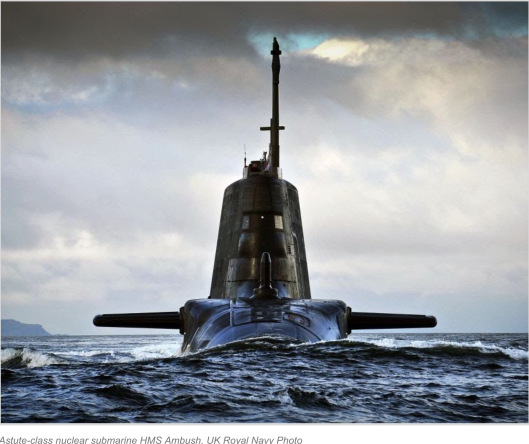
Norway Activists Protest After Docking Of US Nuclear Submarine In Tromso: Reports, https://www.republicworld.com/world-news/us-news/norway-activists-protest-after-docking-of-us-nuclear-submarine-in-tromso-reports-articleshow.html
Protest intensified in Norway as an American nuclear submarine has docked in Tromso– a city in northern Norway, news agency Sputnik reported.
By Ajeet Kumar 12 Jan 22, Protest intensified in Norway as an American nuclear submarine has docked in Tromso, a city in northern Norway. According to a report by news agency Sputnik, the US nuclear submarine was docked on January 11, the second time in a year. The media report said that the submarine was loaded with arms and missiles and tasked with patrolling the northern waters. As the news of an American submarine docked in Tromso hit headlines of several national media outlets, hundreds of protesters marched towards the guarded gates of the Tonsnes harbour. The protestors termed the recent move of America “a destructive game between superpowers.”
US nuclear submarine arrival in Norway sparks strong reactions
Hakon Elvenes, who represents the protestors, asserted the United States should not dock its submarine in Norway and added the act has a long “symbolic effect”. “This represents a dangerous mix of military and civilian purposes. It is a mixture that may be in conflict with international law, and which hasn’t been assessed well enough by the Norwegian authorities,” Sputnik quoted Elvenes as saying to the national broadcaster NRK. “There is always a risk that something can happen to any nuclear reactor, we have plenty of examples of that. And if something happens first, the consequences will be great,” added Hakon Elvenes.
Tension between two countries soar
Meanwhile, Alberta Tennoe Bekkhus, who represent, the youth wing of the Reds Party argued that the recent action by the US will contribute to unnecessary provocations and further conflict. “The fact that we invite American forces in the way we do makes us more insecure. It contributes to unnecessary provocations and further conflict,” Sputnik quoted Bekkrus as saying. “The way NATO is doing now, I believe it makes the world more insecure. This puts Norway in a more dangerous situation,” she added.
It is worth mentioning that the tension between US and Scandinavian countries has soared in the past few years due to action taken by the US Naval forces. Earlier in November last year, US Defense Secretary Lloyd Austin met with Norway’s new Defense Minister, Odd Roger Enoksen, in his first visit to the US since taking the position. According to AP, both said the commitment to NATO and the challenges posed by Russia would be topics high on the agenda during their meeting. The duo also discussed the recent activities of the US Navy in northern Norway and added the matter would be solved with discussions.
To Avert ‘Global Nuclear Holocaust,’ US Groups Demand Abolition of ICBMs
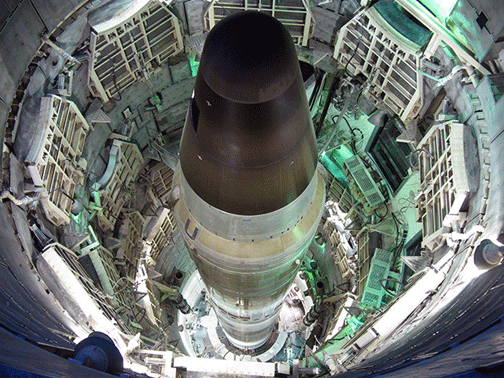
To Avert ‘Global Nuclear Holocaust,’ US Groups Demand Abolition of ICBMs https://www.commondreams.org/news/2022/01/12/avert-global-nuclear-holocaust-us-groups-demand-abolition-icbmsWhistleblower Daniel Ellsberg says no other immediate action would go further “to reduce the real risk of a false alarm in a crisis causing the near-extinction of humanity.”
JAKE JOHNSON More than 60 U.S. organizations issued a joint statement Wednesday calling for the total elimination of the country’s land-based nuclear missiles, warning that the weapons are both an enormous waste of money and—most crucially—an existential threat to humankind.
Organized by the advocacy groups RootsAction and Just Foreign Policy, the statement argues that intercontinental ballistic missiles (ICBMs) are “uniquely dangerous, greatly increasing the chances that a false alarm or miscalculation will result in nuclear war.”
“There is no more important step the United States could take to reduce the chances of a global nuclear holocaust than to eliminate its ICBMs,” continues the statement, which was signed by Beyond the Bomb, Global Zero, Justice Democrats, CodePink, and dozens of other anti-war groups.
“Everything is at stake,” the groups warn. “Nuclear weapons could destroy civilization and inflict catastrophic damage on the world’s ecosystems with ‘nuclear winter,’ inducing mass starvation while virtually ending agriculture. That is the overarching context for the need to shut down the 400 ICBMs now in underground silos that are scattered across five states—Colorado, Montana, Nebraska, North Dakota, and Wyoming.”
The statement comes just two weeks after President Joe Biden signed into law a sprawling military policy bill that allocates billions of dollars to research, development, and missile procurement for the Ground-Based Strategic Deterrent (GBSD) program, an initiative that is expected to replace the current Minuteman III ICBMs in the coming years.
Ahead of the $778 billion legislation’s passage, some progressive lawmakers—most prominently Rep. Ro Khanna (D-Calif.) and Sen. Ed Markey (D-Mass.)—called for a pause in GBSD development, a demand that went unheeded.
Daniel Ellsberg, the legendary whistleblower and longtime proponent of nuclear disarmament, told Common Dreams in an email that “most of the so-called ‘defense’ budget is legislative pork.”
“But some of it—in particular, the maintenance and proposed replacement to the current ICBM program—is toxic pork,” he added. “It’s not just unnecessary, it’s positively dangerous, to our own security and that of the rest of the world.”
Before leaking the Pentagon Papers to the press in 1971, Ellsberg specialized in nuclear weapons and operational planning for a possible nuclear war during his time as a consultant to the Defense Department, an experience he recounts in his 2017 book The Doomsday Machine: Confessions of a Nuclear War Planner.
“We should have gotten rid of our silo-based ICBMs no less than half a century ago, when they had become totally vulnerable to attack,” Ellsberg told Common Dreams. “Ever since then, deterrence of a nuclear attack should have been based solely on our invulnerable submarine-launched missile force, which is itself far larger than that function requires or should permit.”
Echoing the anti-war coalition’s fear that a potential “false alarm” could spark nuclear catastrophe, Ellsberg noted that “the survival in wartime of hundreds of land-based missiles depends on their being launched, irrevocably (unlike bombers), on electronic and infrared warning before attacking missiles might arrive.”
“Such a warning, however convincing, may be false; and that has actually happened, more times than our public has ever become aware,” he said. “No other strategic weapons besides ground-based ICBMs challenge a national leader to decide, absurdly within minutes, whether ‘to use them or lose them.’ They should not exist.”
“No other specific, concrete American action would go so far immediately to reduce the real risk of a false alarm in a crisis causing the near-extinction of humanity,” Ellsberg concluded.
In a statement, RootsAction national director Norman Solomon lamented that recent public discussion surrounding U.S. nuclear weapons policy “has been almost entirely limited to the narrow question of whether to build a new ICBM system or stick with the existing Minuteman III missiles for decades longer.”
“That’s like arguing over whether to refurbish the deck chairs on the nuclear Titanic,” said Solomon. “Both options retain the same unique dangers of nuclear war that ICBMs involve. It’s time to really widen the ICBM debate, and this joint statement from U.S. organizations is a vital step in that direction.”
Protesters call for abolition of nuclear weapons
Protesters call for abolition of nuclear weapons, https://www3.nhk.or.jp/nhkworld/en/news/20220102_02/ Protesters in the Japanese city of Nagasaki took part in a sit-in on New Year’s Day and called for the abolition of nuclear weapons. A sit-in is held in the city every year on January 1. Nagasaki was hit by an atomic bomb during World War Two.
More than 60 people participated in the protest in the city’s Peace Park on Saturday.
The protesters observed a moment of silence at 11:02 a.m. The atomic bomb exploded in Nagasaki at that time on August 9, 1945. The participants held up pieces of paper with the word “peace” written on them in Japanese.
Atomic bomb survivor Tanaka Yasujiro said 2022 will be an important year. He said he wants non-nuclear countries to surround nuclear states, so that the number of nuclear warheads can be reduced.
The states, which signed the UN treaty that bans nuclear weapons, are scheduled to meet for the first time in March 2022.
The Review Conference of the Treaty on the Non-Proliferation of Nuclear Weapons may be held in August.
Parties to the NPT meet every five years to review the accord. A meeting was scheduled to take place in January. But the participants agreed to postpone it for the fourth time, due to the coronavirus pandemic. Various options are now being considered. A gathering in August is a possibility.
1 This Month

To see nuclear-related stories in greater depth and intensity – go to https://nuclearinformation.wordpress.com
-
Archives
- September 2026 (194)
- August 2026 (330)
- July 2026 (355)
- June 2026 (287)
- May 2026 (306)
- April 2026 (356)
- March 2026 (251)
- February 2026 (267)
- January 2026 (308)
- December 2025 (358)
- November 2025 (359)
- October 2025 (375)
-
Categories
- 1
- 1 NUCLEAR ISSUES
- business and costs
- climate change
- culture and arts
- ENERGY
- environment
- health
- history
- indigenous issues
- Legal
- marketing of nuclear
- media
- opposition to nuclear
- PERSONAL STORIES
- politics
- politics international
- Religion and ethics
- safety
- secrets,lies and civil liberties
- spinbuster
- technology
- Uranium
- wastes
- weapons and war
- Women
- 2 WORLD
- ACTION
- AFRICA
- Atrocities
- AUSTRALIA
- Christina's notes
- Christina's themes
- culture and arts
- Events
- Fuk 2022
- Fuk 2023
- Fukushima 2017
- Fukushima 2018
- fukushima 2019
- Fukushima 2020
- Fukushima 2021
- general
- global warming
- Humour (God we need it)
- Nuclear
- RARE EARTHS
- Reference
- resources – print
- Resources -audiovicual
- Weekly Newsletter
- World
- World Nuclear
- YouTube
-
RSS
Entries RSS
Comments RSS
 nuclear-news