No Drones Over Gaza Or Anywhere!
Direct action at Holloman AFB in New Mexico
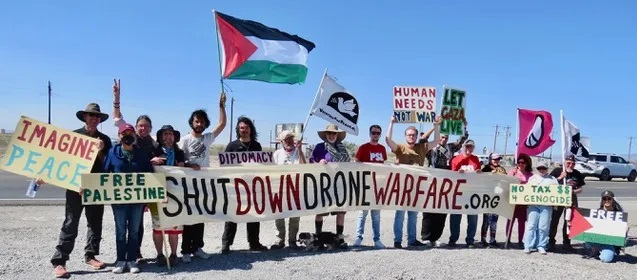
LISA SAVAGE, APR 28, 2024.Went to the Bridge – Substack
Dozens converged at for a week of nonviolent resistance to the illegal drone training program at Holloman Air Force Base, including several students and teachers from New Mexico State University (NMSU), Las Cruces. Many of their signs noted opposition to the role of drones in Israel’s ongoing genocide in Gaza.
On April 24, business at the drone training program was interrupted at two main gates by a nonviolent blockade during morning commute hour. After five activists blockaded the less used West Gate for about 20 min, they ended their blockade after the one minute police warning. Some then joined others at the Main gate and continued the interruption of criminal activity at the base. Ultimately six were arrested: Denise Sellers (San Diego), John Reese (High Rolls / Mtn. Park, NM), Natasha Robinson (Berkeley, CA), Toby Blomé (El Cerrito, CA), Virginia Hauflaire (Phoenix, AZ), and Ray Cage (Tucson, AZ). No warning was given at the 2nd gate and arrests occurred.
Arrestees were held at the police station and told that they would be be taken to the Otero County Detention Center to be processed and held over night. But after a few hours arrestees were taken directly to court, arraigned, and released at about 1pm.
Participant Scott Thompson of Alamogordo said, “Our government primarily serves an elite class that profits from wars and is unconcerned with the suffering we inflict on other humans. It is the duty of every good citizen to look beyond the headlines and understand the inhumane waste of resources making unconstitutional wars on others. Via public outreach and thoughtful actions we hope to get the attention of the misinformed.”
New local allies joined the Holloman campaign for its week of actions. …………………………………………
The secrecy of the drone program keeps it from the public eye. “Drone strikes” are rarely mentioned in the media or by the military, and the term “Air Strikes” provides convenient “shelter” from public scrutiny. Our week of action uncovers the secrecy and educates the local community, as well as the base employees! Equally important: The inhumane US drone program causes deep moral injury to our military personnel themselves. We offer alternatives and support to the new recruits and other employees, via signs, banners and leaflets that offer resources for GI support. https://went2thebridge.substack.com/p/no-drones-over-gaza-or-anywhere?utm_source=post-email-title&publication_id=1580975&post_id=144108116&utm_campaign=email-post-title&isFreemail=true&r=c9zhh&triedRedirect=true&utm_medium=email
Seasoned Clams back – anti-nuclear alliance of the 1970’s revived
Not-so-happy Clams open to new anti-nuclear challenge
Beyond Nuclear, By Arnie Alpert 21 Apr 24
When a nuclear reactor at Three Mile Island in Pennsylvania went from a technological miracle to a pile of radioactive rubble in a matter of moments in 1979, the Portsmouth, New Hampshire office of the Clamshell Alliance became a hive of activity. I was working there at the time, fielding calls from activists and journalists from around the world. Everyone wanted our opinion since — over the previous few years — our nonviolent demonstrations to prevent the construction of the Seabrook nuclear power plant put us at the forefront of a growing social movement.
From the arrests of 18 New Hampshire residents in our first act of civil disobedience in 1976 to more than 1,400 arrests the following spring to a permitted rally that drew some 18,000 protesters in 1978, the Clamshell Alliance touched off a grassroots anti-nuclear rebellion that brought the “No Nukes” message to communities across the country and into the popular culture.
With that groundwork in place, Three Mile Island took our message to the next level. The idea that “nuclear power is a bad way to generate electricity” soon became accepted knowledge across the United States. Everyone from Wall Street tycoons to congressional staffers to ordinary voters now understood that the nuclear industry’s promise of safe, clean and affordable power was a fraud.
Unfortunately, in recent years this understanding has slowly eroded, as the industry has worked to tout its product as the answer to climate catastrophe. With the Biden administration now sinking billions into nuclear energy — and Congress on the verge of passing legislation to ease regulatory precautions on new reactors — the nuclear fraudsters are aiming for a comeback.
……………………………………………………….“seasoned Clams,” as we jokingly call ourselves, have been holding regular meetings over Zoom — and occasionally in person — to strategize on how to bring our anti-nuclear message to younger generations, as well as fellow boomers, for whom Three Mile Island has become a faded memory. We ultimately want to refute the nuclear industry’s claims that it has solved the problems posed by the old reactors.
In a statement on our new website, we assert: “A tsunami of nuclear power propaganda is sweeping the globe.” According to Gunter, this propaganda is backed by a multi-billion-dollar nuclear promotion campaign funded by taxpayers via the Biden administration’s Department of Energy. “They even have a plan to convert coal-fired power plants to nuclear generation,” he said.
Billions of dollars in nuclear subsidies were loaded into Biden’s infrastructure bill, with billions more in the Inflation Reduction Act. Meanwhile, the Atomic Energy Advancement Act — which sailed through the U.S. House 365-36 last month — extends nuclear subsidies further by continuing the $16.6 billion cap on liability from nuclear accidents for the next 40 years.
……………………………… As the new Clamshell website maintains, new nukes are not needed to avert a climate crisis. “Far better options are being built much faster than nuclear power plants, at a fraction of the cost and without the grave hazards. They include solar, wind, geothermal, hydro, efficiency and conservation.”……………………………………………………………………………..more https://beyondnuclearinternational.org/2024/04/21/seasoned-clams-back-on-the-menu/
Survey by East Lindsay District Councillor and Guardians of the East Coast (GOTEC) say ‘85% don’t want nuclear dump’

A new survey by a Theddlethorpe campaign group has shown that after years of the campaign, public opinion remains the same – it’s still a ‘no’ to a nuclear waste dump.
Lincolnshire World, By The Newsroom, 16th Apr 2024,
Travis Hesketh, East Lindsey District Councillor for the Withern and Theddlethorpe Ward, joined forces with the Guardians of the East Coast to host public consultation events during March to gather public opinion on Nuclear Waste Services plans to store nuclear waste at Theddlethorpe Gas Terminal.
As well as asking residents of Theddlethorpe and Sutton on Sea in person and online, village hall events were also held in Carlton, Reston, Mablethorpe, Maltby le Marsh, and Withern.
The results showed that of the 1,008 registered votes, 85 percent of respondents did not want the GDF – the same result found in 2022’s survey – while 7.7 percent were undecided, and the remaining 7.7 percent were for a GDF.
In a statement within the results, Ken Smith, chairman of the GOTEC, said: “After a three year project, the view of the community remains the same – this community does not want a GDF. It is not a willing community.
“There is no change of opinion taking place despite NWS lobbying. It is reasonable therefore to conclude that there is no prospect of gaining community support for the GDF.”………………………………………………….. https://www.lincolnshireworld.com/news/environment/survey-by-eldc-councillor-and-gotec-say-85-dont-want-nuclear-dump-4592761
Sizewell C Nuclear : too destructive, too costly, too late
The Article, by IAN LINDEN, 14 Apr 24
Joan Girling grew up near the Suffolk coast, with its little terns, barn owls, harebells, ladies bedstraw, sedums, blue butterflies and acid grassland. There was no nuclear power station. “It was perfect, a nature lover’s paradise,” she told me.
In 1959, Joan’s father, faced with compulsory purchase, was forced to sell off a corner of their front garden, with its large pond full of water lilies and wildlife. It was to make way for workers’ traffic to the site of Sizewell A, a nuclear power station. Sizewell A is today a great, ugly, Stalinist-looking excrescence looming above the seashore. Her grandmother, who lived next door, watched as they filled in the pond. “The worst part was to hear my Grandma crying. I remember it as if it was yesterday.”
In the late 1980s it all happened again: Sizewell B. This time Joan moved house with her family to escape construction traffic. From 1993-2005 she served on Suffolk County Council. Fifteen years ago, Joan Girling became a founding and deeply dedicated member of Community against Nuclear Expansion, later renamed Together Against Sizewell C (TASC).
The human and environmental costs ought not be underestimated. The disruption and destruction accompanying years of building accounts for the level and persistence of local protest. Stop Sizewell C, originally a parish of Theberton and Eastbridge action group, alongside the local Friends of the Earth, joined TASC in a long-running legal campaign. Crowdfunding helped finance three rounds of court action seeking judicial review of the Sizewell C project. The last one challenged the Business Secretary (then Kwasi Kwarteng) over his 2022 Development Consent Order giving the green light to start construction. Kwateng rejected the Planning Inspectorate’s conclusion (part of the process required by the 2008 Planning Act) that in the absence of an assessed, permanent, potable water supply for the project, “the case for the grant of development consent is not yet made”. Sizewell C will be forced to use a desalination plant during construction. The Court of Appeal found for the Government in December 2023.
The construction of Sizewell C means heavy truck traffic. New roads, a large park and ride facility, as well as a railway branch line, will have a major impact over a large area. Much of it is designated by Natural England — sponsored, incidentally, by the Department of Environment, Food and Rural Affairs (DEFRA) — as a Suffolk Coast and Heaths National Landscape (formerly Area of Outstanding Natural Beauty). A small bite comes out of reed beds and marsh land, designated a Site of Special Scientific Interest. The new reactors will lie right next to Minsmere, a popular RSPB reserve where the drain-pipe boom of the bittern can be heard. Building Sizewell C will blight tourism for two decades, though it will boost other aspects of the local economy. But before dismissing protest as Nimbyism, it is as well to evaluate what lies in the backyard………………………………………………………………………….. more https://www.thearticle.com/sizewell-c-too-destructive-too-costly-too-late
Tax day and war resistance
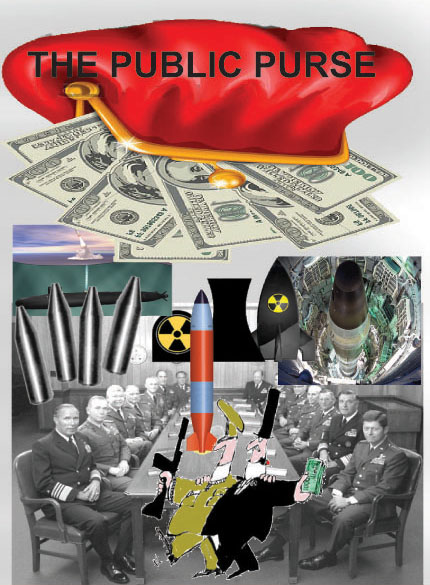
For U.S. citizens, the well-known waste and fraud of the Pentagon should be one outrage. The Pentagon remains the only federal department to never pass a required federal audit. The Pentagon cannot account for 63% of the tax money it receives. That’s our money. Gone. Unaccounted for. Lining the pockets of weapons manufacturers.
by beyondnuclearinternational, By Brad Wolf, https://beyondnuclearinternational.org/2024/04/14/tax-day-and-war-resistance/
What can we learn from Philip Berrigan’s quest for peace?
It is April 15 and we can reflect on the life and work of Philip Berrigan and undertake our own ministry of risk for peace—to ease the suffering, to restore human dignity, and to challenge our doomed policy of warmaking.
Each year Americans forfeit a sizable slice of their income to the United States Treasury to fund the government. Tax Day is dreaded. No one likes surrendering their hard-earned cash. But rather than a resigned shrug, Americans should look closely at what they are getting for their money when it comes to government services and policy.
In fiscal year 2023, the Pentagon received $858 billion for the preparation of war. This doesn’t include hidden costs for intelligence services, veterans’ benefits, Homeland Security, or the Department of Energy, which oversees the nation’s nuclear arsenal. All totaled, over $1 trillion a year is allotted for warmaking. By comparison, the 2023 budget for the U.S. Department of State, this nation’s department tasked with making peace across the globe, was a relatively miniscule $63 billion.
One way to register resistance to this profligate spending on warmaking is that of renowned peace activist and then Catholic priest Philip Berrigan. During the Vietnam War, Phil initiated the destruction of U.S. military draft files in Baltimore and Catonsville, Maryland, to save the lives of both Vietnamese and Americans, actions for which he received lengthy prison sentences.
These draft file actions by Phil initiated a new form of resistance to the Vietnam War, since no copies were kept of the draft files. Hundreds of similar actions followed at draft board offices across the country with hundreds of thousands of draft files destroyed, all stopping young men from being conscripted to kill or be killed.

In 1980, Phil initiated the Plowshares movement—which continues to this day—as he and others entered the General Electric nuclear weapons facility in King of Prussia, Pennsylvania, pouring blood on weapons blueprints and symbolically hammering on the nosecones of missiles, “Beating swords into plowshares.” A Christian metaphor indeed, but a universal message. Since that first action, there have been over 70 Plowshares actions around the world.
Phil strongly objected to the notion that U.S. citizens should fund needless death and destruction abroad through their taxes, or possibly fund their own destruction by nuclear war. He repeated nonviolent actions time and again, serving a total of 11 years in prison to stop the slaughter of innocents and protest the use of U.S. tax dollars for arms proliferation, nuclear warmaking, and endless wars of choice.
For U.S. citizens, the well-known waste and fraud of the Pentagon should be one outrage. The Pentagon remains the only federal department to never pass a required federal audit. The Pentagon cannot account for 63% of the tax money it receives. That’s our money. Gone. Unaccounted for. Lining the pockets of weapons manufacturers.
But the more pressing concern with these war dollars is their use to initiate wars of choice, often against impoverished countries, because those countries have natural resources beneath the soil that the U.S seems to think belong to them. The cruel joke is, “How dare they put their country over our oil.” And so, we take it. With extreme violence and death.
The U.S. currently has soldiers in northern Syria where massive quantities of oil is extracted for Western fossil fuel companies. The war in Iraq was for oil. We are building new bases in Somalia where oil fields have been found. These wars for corporate profit have gone on for over a century. As decorated war hero Smedley Butler said in the 1930s about his many years in the U.S. military, “I was a racketeer, a gangster for capitalism… Looking back on it, I might have given Al Capone a few hints.”
Whether it be gold, fruit, rubber, or sugar in Latin America; oil in the Middle East; or rare earth minerals in Africa, the U.S. taxpayer has long funded the corporate theft of natural resources from Indigenous lands for the benefit of U.S corporations and their wealthy shareholders. Innocents in foreign lands die as a result, while U.S. taxpayers struggle to pay mortgages, rent, healthcare bills, and food costs.
According to Brown University’s Costs of War Project, the United States spent some $8 trillion in the last 23 years for the Wars on Terror. Four-and-a-half to 4.7 million people in foreign lands died because of those wars, most of them innocent civilians. Mothers and fathers and children.
And so, as this Tax Day approaches, perhaps we can reflect on the life and work of Philip Berrigan and undertake our own ministry of risk for peace in whatever form that may take, to ease the suffering, to restore human dignity, to challenge our doomed policy of warmaking. Only in this way can we reconcile ourselves with justice and democracy. Only in this way can we save ourselves, our country, and perhaps the world.
As Phil said, “These blind leading the blind have done more than threaten us with doomsday scenarios. They have, with a devilish ingenuity, convinced us that we ought to pay, through taxes, for our own destruction.”
Non-proliferation experts urge US to not support nuclear fuel project

By Thomson Reuters, Apr 4, 2024 , By Timothy Gardner, https://wtvbam.com/2024/04/04/non-proliferation-experts-urge-us-to-not-support-nuclear-fuel-project/
WASHINGTON (Reuters) – Nuclear proliferation experts who served under four U.S. presidents told President Joe Biden and his administration on Thursday that a pilot project to recycle spent nuclear fuel would violate U.S. nuclear security policy.
SHINE Technologies and Orano signed a memorandum of understanding in February to develop a U.S. plant to recycle, or reprocess, nuclear waste. It would have a capacity of 100 tonnes a year beginning in the early 2030s.
The project would violate a policy signed by Biden in March, 2023 that says civil nuclear research and development should focus on approaches that “avoid producing and accumulating weapons-usable nuclear material,” the experts said in a letter to the president.
“If such a facility were constructed in the United States, it would legitimize the building of reprocessing plants in other countries, thereby increasing risks of proliferation and nuclear terrorism,” they said.
Many non-proliferation advocates oppose reprocessing, saying its supply chain could be a target for militants seeking to seize materials for use in a crude nuclear bomb.
France and other countries have reprocessed nuclear waste by breaking it down into uranium and plutonium and reusing it to make new reactor fuel. A U.S. supply chain would likely be far longer than in those countries, non-proliferation experts say.
Former President Gerald Ford halted reprocessing in 1976, citing proliferation concerns. Former President Ronald Reagan lifted a moratorium in 1981, but high costs have prevented plants from opening.
The White House’s national security council and the National Nuclear Security Administration did not immediately respond to requests for comment.
A SHINE spokesperson said its technology improves global safety and that “responsible recycling of spent fuel is the only known way to actually eliminate plutonium that has already been generated in fission reactors.”
An Orano USA spokesperson said: “It’s a blending of our expertise to develop a process that is sensitive and addresses non-proliferation concerns, but also gleans this viable commercial material.”
The letter was signed by 11 former U.S. officials including Thomas Countryman, who served under President Barack Obama, Robert Einhorn, who served under President Bill Clinton, Robert Galluci, who served under President George H.W. Bush, and Jessica Matthews, who served under former President Jimmy Carter.
The Biden administration believes nuclear energy to be critical in the fight against climate change. But the waste is kept in storage in pools and then thick casks at nuclear plants across the country as there is no permanent place to put it. The Advanced Research Projects Agency-Energy, or ARPA-E, said in 2022, it is funding a dozen projects to reprocess the waste, with $38 million
Past anti-nuclear activists speak out against current plans

Ryck Thill (Télé) adapted for RTL Today| 05.04.2024 https://today.rtl.lu/news/luxembourg/a/2184141.html
In the concluding segment of this mini-series, Luxembourg’s initial wave of anti-nuclear advocates reflect on contemporary nuclear energy proposals.
Presently, ten EU member states are engaged in discussions regarding the expansion of nuclear energy, with plans underway for new reactors or ongoing construction. Apart from France, the Netherlands, and Sweden, Eastern European nations are predominantly spearheading this push towards nuclear technology, viewing it as a potential environmentally friendly alternative to fossil fuels or a transitional solution.
However, physicist Claude Wehenkel voices apprehension over what he perceives as a resurgence of nuclear energy, particularly in light of recent announcements by French President Macron regarding the development of small, simpler, and more cost-effective reactors. Wehenkel raises concerns about the implications of scaling back nuclear power stations, emphasising unresolved issues surrounding waste treatment and storage.
Théid Faber, former president of the Ecological Movement, echoes these sentiments, noting that the proposed new type 4 nuclear reactors fail to address key challenges related to waste disposal and safety. Faber emphasises that the proliferation of smaller reactors may heighten risks compared to a smaller number of larger reactors. He argues that nuclear energy remains as problematic today as it was half a century ago.
Faber further critiques the economic inefficiency of nuclear energy, highlighting its dependence on state and EU interventions. Additionally, he points to contemporary concerns regarding the use of cooling water, especially amidst escalating climate change threats. Faber contends that longstanding arguments against nuclear energy remain as valid today as they were in the past.
Nuclear fusion: Elusive technology faces scepticism
Since the 1950s, nuclear fusion has been touted as a potential game-changer, yet doubts persist about its viability on an industrial scale.
Claude Wehenkel dismisses nuclear fusion as “entirely unsuitable” for large-scale implementation, citing decades of substantial investment without any real progress.
Roger Spautz of Greenpeace shares a similar sentiment, highlighting the extensive research and funding poured into nuclear fusion with little tangible outcome. Spautz predicts that significant advancements in fusion energy production are unlikely within the foreseeable future, casting doubts on its potential as a widespread energy source.
Recent controversial remarks by Prime Minister Luc Frieden sparked criticism, particularly regarding his stance on nuclear energy policies beyond Luxembourg’s borders. Ben Fayot, former president of the Luxembourg Socialist Workers’ Party (LSAP), expresses concern over Frieden’s assertion that Luxembourg should remain indifferent to nuclear developments elsewhere. Fayot finds such remarks “appalling” and questions the Prime Minister’s dismissive attitude towards regional energy dynamics.
Following public backlash, Prime Minister Frieden clarified Luxembourg’s commitment to renewable energy initiatives. But as long as nuclear energy remains an issue in neighbouring countries, the controversial technology is certain to remain a pertinent issue for the inhabitants of the Grand Duchy as well.
45 years after Three Mile Island, we need a ‘No Nukes’ comeback
“A tsunami of nuclear power propaganda is sweeping the globe.” According to Gunter, this propaganda is backed by a multi-billion-dollar nuclear promotion campaign funded by taxpayers via the Biden administration’s Department of Energy. “
Billions of dollars in nuclear subsidies were loaded into Biden’s infrastructure bill, with billions more in the Inflation Reduction Act.
As Biden sinks billions into nuclear energy, members of the historic Clamshell Alliance are reuniting to spark a new wave of anti-nuke resistance.
Arnie Alpert , WAGING NON VIOLENCE, March 25, 2024
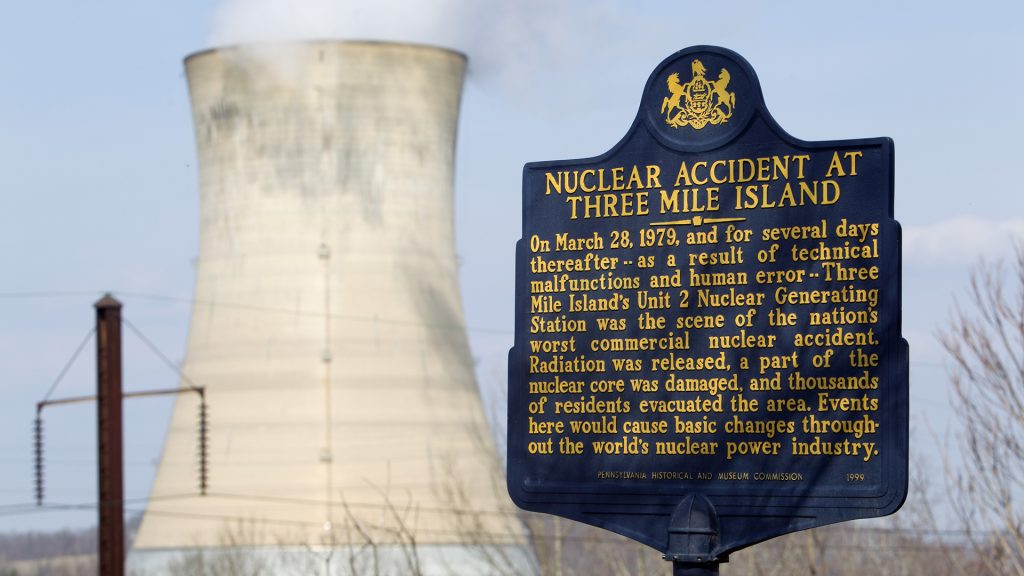
When a nuclear reactor at Three Mile Island in Pennsylvania went from a technological miracle to a pile of radioactive rubble in a matter of moments in 1979, the Portsmouth, New Hampshire office of the Clamshell Alliance became a hive of activity. I was working there at the time, fielding calls from activists and journalists from around the world. Everyone wanted our opinion since — over the previous few years — our nonviolent demonstrations to prevent the construction of the Seabrook nuclear power plant put us at the forefront of a growing social movement.
From the arrests of 18 New Hampshire residents in our first act of civil disobedience in 1976 to more than 1,400 arrests the following spring to a permitted rally that drew some 18,000 protesters in 1978, the Clamshell Alliance touched off a grassroots anti-nuclear rebellion that brought the “No Nukes” message to communities across the country and into the popular culture.
With that groundwork in place, Three Mile Island took our message to the next level. The idea that “nuclear power is a bad way to generate electricity” soon became accepted knowledge across the United States. Everyone from Wall Street tycoons to congressional staffers to ordinary voters now understood that the nuclear industry’s promise of safe, clean and affordable power was a fraud.
Unfortunately, in recent years this understanding has slowly eroded, as the industry has worked to tout its product as the answer to climate catastrophe. With the Biden administration now sinking billions into nuclear energy — and Congress on the verge of passing legislation to ease regulatory precautions on new reactors — the nuclear fraudsters are aiming for a comeback.
Whether they call it a ‘nuclear renaissance’ or a ‘nuclear enlightenment,’ nukes aren’t the answer to the climate crisis,” said Paul Gunter, who was one of the first 18 Clamshell members arrested at Seabrook in 1976.
Now the co-director of Beyond Nuclear, a nonprofit advocacy group based in Takoma Park, Maryland, Gunter says “Nukes are just too expensive, take too long to build and feature too many pathways to catastrophic accidents.” What’s more, as he maintains, their continued use — along with building costly new reactors — make climate change worse and the world less safe.
With this in mind, “seasoned Clams,” as we jokingly call ourselves, have been holding regular meetings over Zoom — and occasionally in person — to strategize on how to bring our anti-nuclear message to younger generations, as well as fellow boomers, for whom Three Mile Island has become a faded memory. We ultimately want to refute the nuclear industry’s claims that it has solved the problems posed by the old reactors.
In a statement on our new website, we assert: “A tsunami of nuclear power propaganda is sweeping the globe.” According to Gunter, this propaganda is backed by a multi-billion-dollar nuclear promotion campaign funded by taxpayers via the Biden administration’s Department of Energy. “They even have a plan to convert coal-fired power plants to nuclear generation,” he said.
Billions of dollars in nuclear subsidies were loaded into Biden’s infrastructure bill, with billions more in the Inflation Reduction Act. Meanwhile, the Atomic Energy Advancement Act — which sailed through the U.S. House 365-36 last month — extends nuclear subsidies further by continuing the $16.6 billion cap on liability from nuclear accidents for the next 40 years.
“The still unrealized total damage costs of a severe nuclear accident, as evidenced by ongoing nuclear catastrophes at Fukushima (13 year ago) and Chernobyl (38 years ago), are already running into the hundreds of billions of dollars,” Gunter said, adding that Congress didn’t even hold a public hearing on the liability cap extension.
As the new Clamshell website maintains, new nukes are not needed to avert a climate crisis. “Far better options are being built much faster than nuclear power plants, at a fraction of the cost and without the grave hazards. They include solar, wind, geothermal, hydro, efficiency and conservation.”………………………………………………………….. https://wagingnonviolence.org/2024/03/three-mile-island-45th-anniversary-no-nukes-comeback-clamshell-alliance/
April 29 – May 2 Free public events during Not-the-Nuclear-Lobby Week in Ottawa

https://stop-smrs.weebly.com/not-nuclear.html
Monday, April 29, 6:30 PM (pay what you can)
Film Screening Radioactive – The Women of Three Mile Island
Tuesday, April 30, 7 PM (free)
Workshop reading of the play The Children
Wednesday, May 1, 7 PM (free)
Community Forum: Canada’s Nuclear Future – Renaissance or Relic?
The First Annual Plutonium Trail Caravan is on Saturday April 6th – Join Us!
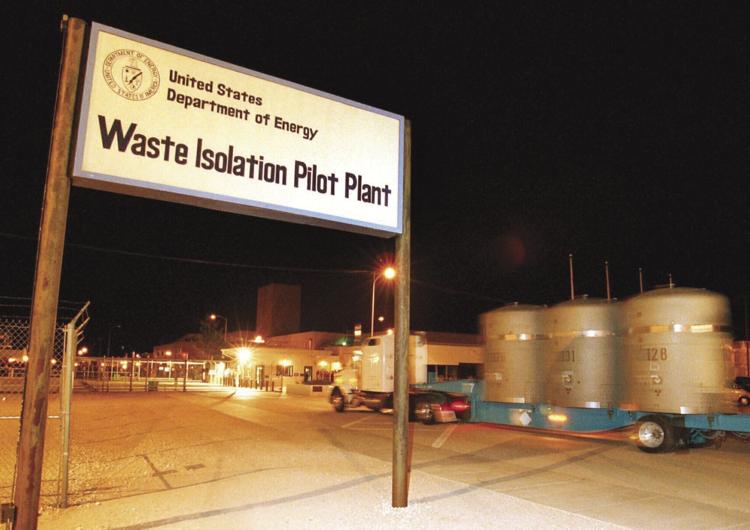
March 29th, 2024, https://nuclearactive.org/
Did you know that the Waste Isolation Pilot Plant (WIPP) was supposed to complete its 25-year waste disposal mission and begin closing on Tuesday, March 26th? You may know about it because WIPP officials had a party. https://www.rdrnews.com/news/state/new-mexico-regulators-worry-about-us-plans-to-ship-radioactive-waste-back-from-texas/article_00e04fb6-ed72-5ec6-aabb-cc35a01d12f0.html
But for those living downwind and downstream of Los Alamos National Laboratory (LANL) and along the WIPP transportation routes, the risk of the federal Department of Energy (DOE) operations at both facilities will continue to threaten us, and if DOE has its way, for decades to come.
DOE, which owns both facilities, is not planning to close either site. LANL is to continue to generate plutonium-contaminated wastes by fabricating the triggers, or pits, for new nuclear weapons. DOE hopes to leave some of that waste at LANL forever. Some waste would be shipped to WIPP, a journey of 315 miles, for disposal.
Rather than closing WIPP, DOE has no plans for any other repository, so the world’s only operating deep underground facility would also operate forever.
But many New Mexicans oppose “Forever WIPP.” https://stopforeverwipp.org/
On Saturday, April 6th, the first annual Plutonium Trail Caravan will travel along the WIPP transportation route. It will begin at Camel Rock and end with a press conference at the Lamy Train Station. The purpose is to highlight some of the dangers of WIPP and waste transportation and encourage people to join in the effort to Stop Forever WIPP.
The caravan will have literature about WIPP and items for sale. The participants can answer questions about present and future activities. More information is available at https://stopforeverwipp.org/
The caravan will gather at 9:30 am at the Camel Rock geologic formation on the frontage road to U.S. 84/285 in Tesuque for a blessing, a safety briefing, and a group photo.
There will be four stops along the WIPP waste transportation route– in the Tesuque Village, the Solano Shopping Center in Santa Fe, the intersection of Airport Road and the 599 By-pass around Santa Fe, and the Agora Shopping Center in El Dorado.
After the four stops, a press conference will be held at the Lamy Train Station at 3:15 pm. Speakers include Hank Hughes, Santa Fe County Commission Chair; Myrriah Gómez, author of Nuclear Nuevo México; Destiny Ray, of Youth United for Climate Crisis Action, or YUCCA; and Ashley Schannauer, an activist and concerned citizen. They will speak about their concerns and suggest ideas for working together to oppose Forever WIPP. Please join us!
Scotland’s National Party attacks £200m extra for nuclear deterrent and industry
By Kathleen Nutt, 25 Mar 24
The SNP have criticised an announcement by Prime Minister to commit a further £200m on strengthening the nuclear deterrent and boosting the nuclear industry saying the money would be better spent on improving the NHS or alleviating the cost of living crisis for households.
Martin Docherty-Hughes MP, the party’s defence spokesman, condemned the plans to “waste another £200 million” on nuclear and accused the Conservatives and Labour, which backed the plans, of focusing on “the wrong priorities”.
“Westminster has already wasted billions of taxpayer’s money on nuclear weapons and expensive nuclear energy. It is grotesque to throw another £200million down the drain when the Tories and Labour Party both claim there is no money to improve our NHS, to help families with the cost of living or to properly invest in our green energy future.
“This money would be much better spent on a raft of other priorities – not least investing in the green energy gold rush, which would ensure Scotland, with its wealth of renewable energy potential, can be a green energy powerhouse of the 21st century.
“And while the UK government wastes millions of pounds misfiring Trident missiles at Defence Secretary Grant Shapps, the urgent priority is more money for conventional defence and for our armed forces, who are underpaid and under-resourced.
“With both Rishi Sunak and Keir Starmer focused on the wrong priorities – it is only the SNP standing up for Scotland’s interests and Scotland’s values.”……………………………………………………………………………………………… https://www.heraldscotland.com/news/24208207.snp-attack-200m-extra-nuclear-deterrent-industry/
Hundreds of groups for climate action reject nuclear power at Brussels Summit

Today, more than 600 civil society groups across the globe working on
climate action, including 130 from Canada launched a declaration in
Brussels, Belgium, stating that nuclear power expansion is not a solution
to the climate crisis. The groups declare: “We are living in a climate
emergency.
Time is precious, and too many governments are wasting it with
nuclear energy fairy tales. What we demand is a just transition towards a
safe, renewable and affordable energy system that secures jobs and protects
life on our planet.” The groups made their declaration public today at
the pro-nuclear Summit in Brussels where countries are meeting to bolster
the industry’s claim that investing in new nuclear plants must be a
priority to save the climate.
The International Atomic Energy Agency
(IAEA), whose principle mandate is to promote nuclear expansion, is
co-hosting the event, along with Belgium, which ironically passed a law in
2003 –still on the books –to phase out nuclear power completely.
Canadian Coalition for Nuclear Responsibility 21st March 2024
World Water Day Prompts Submission to Parliamentary Committee on Risks of NWMO’s Nuclear Waste Project to Water
Thunder Bay – A Northern Ontario alliance concerned about a risky project to transport and bury nuclear fuel waste has chosen World Water Day to submit their brief to a parliamentary committee studying freshwater.
We the Nuclear Free North submitted the ten-page brief to the Standing Committee on Environment and Sustainable Development today, outlining the set of risks the Nuclear Waste Management Organization (NWMO) project poses to the lakes, rivers and groundwater of Northern Ontario. The Committee is carrying out a comprehensive study of the role of the federal government in protecting and managing Canada’s freshwater resources in Canada.
The opposition group points to the risks during transportation, processing and burial of the highly radioactive nuclear fuel waste, including from operations at the site of the proposed deep geological repository.
“The NWMO plan is still largely theoretical, but according to their own limited descriptions of the operating period, it is evident that freshwater in the area of the site will be impacted”, explained Wendy O’Connor, one of the report authors.
“Water used for washing down the nuclear waste transportation packages will become contaminated with radionuclides. According to the NWMO’s published details, that water will be sent to a settling pond and then released to natural water bodies in the vicinity of the site, as will the contaminated water that will be pumped from the underground repository”, said O’Connor.
“Despite assurances from the nuclear industry, it remains entirely possible that the nuclear waste itself, deposited underground, will contaminate the deep groundwater in the near or long term – contamination that will eventually reach surface water in the vast watershed”.
The NWMO’s candidate site in Northwestern Ontario is located half-way between Ignace and Dryden. Because it is at the height of land for the Wabigoon and the Turtle River systems, there are concerns about releases to the downstream communities, including Rainy River and Lake of the Woods. The group notes that if and when the radioactive releases occur from the deep geological repository there will be no means to reverse the impacts.
World Water Day, held on 22 March every year since 1993, is an annual United Nations Observance focusing on the importance of freshwater.
“It’s ironic that the UN theme for World Water Day in 2024 is “Water for Peace”, given the level of division and conflict that the NWMO’s proposal has brought to our region”, commented Kathleen Skead, a member of Anishinaabe of Wauzhushk Onigum Nation, one of several downstream Treaty 3 communities.
“Hopefully people will pause today and recognize that water is life and the NWMO’s promise of money is not worth the risk. Water is vital for all forms of life.”
The brief is posted HERE.
| We the Nuclear Free North is an alliance of people and groups opposing a Deep Geological Repository for nuclear waste in Northern Ontario. We oppose the transport, burial and abandonment of this radioactive waste in our northern watersheds. |
Our alliance is honoured to have received the name Tataganobin: looking far ahead into the future. Learn more about who we are, and the origin and meaning of this name.
Groups demand broader consent for nuclear waste storage
A petition demands that Ottawa require the Nuclear Waste Management Organization to get consent from other communities, including those along the transportation route.
Gary Rinne, 22 Mar 24 https://www.tbnewswatch.com/local-news/groups-demand-broader-consent-for-nuclear-waste-storage-8471189.
THUNDER BAY — An alliance of Northern Ontario citizen groups wants the federal government to ensure an underground storage site for used nuclear fuel isn’t built without the consent of all impacted communities.
We The Nuclear Free North has launched an online petition asking Ottawa to require the Nuclear Waste Management Organization to demonstrate it has the permission not just of its designated “host community” but also of residents and communities in the region, along the transportation route, and downstream of the proposed repository.
NWMO has narrowed its search to the Ignace area in Northwestern Ontario and South Bruce in Southwestern Ontario, and plans to announce its preferred site before the end of this year.
In a news release Wednesday, North Bay-based Northwatch spokesperson Brennain Lloyd said NWMO has repeatedly stated it will only proceed with “an informed and willing host,” and argued that “the communities along the transportation route are ‘hosts’ to the same risks as Ignace,” but are shut out of the selection process.
“Residents living closer to the site and downstream live with the short-term and long-term risks of nuclear contamination but are not being asked if they are willing,” he added.
The alliance is also wary about five members of Ignace council having the ultimate power to decide if NWMO can label the community as an agreeable host.
“Now is the time for all of us to speak up,” said Dodie LeGassick, nuclear lead for Thunder Bay-based Environment North. “The federal government must intervene to bring some fairness and facts into the siting process. That’s what this petition is all about.”
The petition will be open to all residents of Canada until May 3.
Among other things, it notes that the federal government has affirmed the UN Declaration on the Rights of Indigenous Peoples, which requires that no hazardous materials shall be stored on the territories of Indigenous peoples without their free, prior and informed consent.
1 This Month

of the week – Shut Down Drone Warfare!


Tell the Ukrainian Government to Drop Prosecution of Peace Activist Yurii Sheliazhenko

Petition to revoke the licensing of the Near Surface Nuclear Disposal Facility (NSDF) at Chalk River. https://www.ourcommons.ca/petitions/en/Petition/Details?Petition=e-7247
To see nuclear-related stories in greater depth and intensity – go to https://nuclearinformation.wordpress.com
-
Archives
- April 2026 (91)
- March 2026 (251)
- February 2026 (268)
- January 2026 (308)
- December 2025 (358)
- November 2025 (359)
- October 2025 (376)
- September 2025 (257)
- August 2025 (319)
- July 2025 (230)
- June 2025 (348)
- May 2025 (261)
-
Categories
- 1
- 1 NUCLEAR ISSUES
- business and costs
- climate change
- culture and arts
- ENERGY
- environment
- health
- history
- indigenous issues
- Legal
- marketing of nuclear
- media
- opposition to nuclear
- PERSONAL STORIES
- politics
- politics international
- Religion and ethics
- safety
- secrets,lies and civil liberties
- spinbuster
- technology
- Uranium
- wastes
- weapons and war
- Women
- 2 WORLD
- ACTION
- AFRICA
- Atrocities
- AUSTRALIA
- Christina's notes
- Christina's themes
- culture and arts
- Events
- Fuk 2022
- Fuk 2023
- Fukushima 2017
- Fukushima 2018
- fukushima 2019
- Fukushima 2020
- Fukushima 2021
- general
- global warming
- Humour (God we need it)
- Nuclear
- RARE EARTHS
- Reference
- resources – print
- Resources -audiovicual
- Weekly Newsletter
- World
- World Nuclear
- YouTube
-
RSS
Entries RSS
Comments RSS
 nuclear-news