Australian government’s brazen duplicity concerning Julian Assange
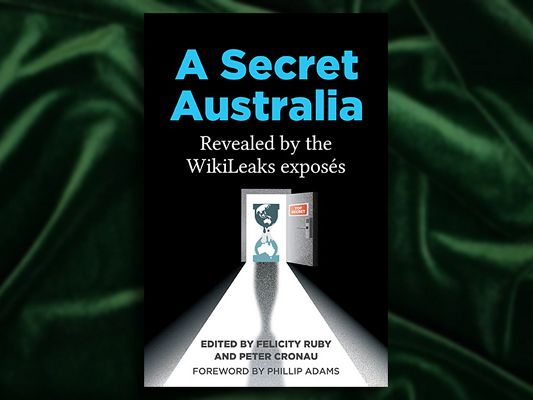
What Assange and WikiLeaks said about Australia, https://www.smh.com.au/culture/books/what-assange-and-wikileaks-said-about-australia-20210129-p56xyo.html, By Jessie Tu, February 4, 2021 He has been called “truth-telling hero”, “evil and perverted traitor”, “heroic, trickster, mythical – reviled”. Robert Manne called him the “most consequential Australian of the present time”. The new US President has called him a “high-tech terrorist”.
The protean narratives of Julian Assange, who will be 50 in July, have been brewing since 2010, when his website published “The Afghan War Diaries”, “Iraq War Logs” and “Collateral Murder”, a video showing the US military killing two Reuters employees in Iraq.
December marked 10 years since Assange has been “arbitrarily detained” in Britain, according to Felicity Ruby and Peter Cronau in their introduction to A Secret Australia – a collection of 18 essays that survey the impact WikiLeaks has had on Australia’s media landscape and the consequences of our government’s attraction towards America’s intelligence and military empire.
The potpourri of authors and thinkers includes Julian Burnside, Antony Loewenstein, Scott Ludlam and Helen Razer, who critique “the powers opposed to openness and transparency” and examine the evidence, “not the likelihoods, the probabilities, the suspicions, and assumptions” around the “subversive, technology-based publishing house”.
WikiLeaks invented a “pioneering model of journalism” – one that embodied the “contemporary spirit of resistance to imperial power”, says Richard Tanter, from the school of political and social sciences at the University of Melbourne. It brought renewed debates on free speech, digital encryption and questions around the management and protection of whistleblowers who risk their lives to expose covert, deceitful actions by governments.
The documents exposed the “brazen duplicity” of the Australian government towards its citizens and presented “off-stage alliance management conversations”, Tanter writes. They invited the layperson into the green room of the performance that is politics and international diplomacy.
WikiLeaks unmasked reports that showed governments recommending media strategies to deceive the public, demonstrating their unethically utilitarian approach to international diplomacy and governance and “enlightened the public on the dark corners of wars”, writes journalist and author Antony Loewenstein.
Assange is still in a cell at London’s Belmarsh Prison, facing an appeal by the United States in its bid to extradite him to face charges for the 2010 publications. He is continuing to be “denied adequate medical care” and “denied emergency bail in light of the COVID-19″, says Lissa Johnson, a clinical psychologist and writer for New Matilda – one of the few Australian publications that have paid genuine attention to the WikiLeaks saga.
In Australia, there’s been a “striking absence of a solid debate on WikiLeaks in the mainstream public discourse”, according to Benedetta Brevini, a journalist and media activist who insists that our concerning “lack of a thorough and sustained debate” is incomprehensible. Loewenstein calls Australia’s lack of journalistic solidarity with Assange “deeply shameful”. He says we have an “anodyne media environment” – perhaps not unsurprising, considering our highly concentrated media market, one of the most severe in the world.
The most useful essay is Rundle’s take on the historical basis for WikiLeaks. He surveys the swirling currents of Australian history that led to its founding, identifying WikiLeaks as a continuation of political activist Albert Langer’s resistance to capital.
“We need a whole new organisation of how recent Australian history is told,” Rundle concludes, seconding Lissa Johnson’s opinion that we demand citizens who “cut across the acquiescence and consent, remove the deadbolt on the torture chamber door, turn down the music and expose what is going on inside”. This collection of polemics, though at times repetitive, takes us closer to a future where these demands no longer seem beyond reality.
Eds., Felicity Ruby & Peter Cronau, Monash University Publishing, $29.95
Isle of Man Wakes Up to What is Planned – SUB SEA NUCLEAR DUMP — Keep Cumbrian Coal in the Hole

At last there is some Grrrrr over the plan to dump heat generating nuclear waste under the Irish Sea – so far the plan appears to be to looking in all seriousness at having above surface nuclear sprawl at Ghyll Scuar quarry ( on the edge of Millom Deer Park ) with the drift tunnels shunting planetary destroying nuclear wastes under the Marine Conservation Zone outwards towards the Isle of Man. Whats not to like? EVERYTHING!
Good on the Isle of Man Examiner for this headline and write up. To read the article in full (for £1) go to the Isle of Man Examiner
Isle of Man Wakes Up to What is Planned – SUB SEA NUCLEAR DUMP — Keep Cumbrian Coal in the Hole
The media’s false concept of “balance”
|
Even After January 6, Some Media Can’t Kick Their Addiction to False Balance, Fair,
JULIE HOLLAR 18 Jan, 21, In the wake of the unprecedented events of January 6, many in corporate media—on both the editorial and reporting sides—have displayed a new and refreshing ability to apply accurate labels to people and their behaviors (“sedition,” “incitement,” “white nationalists,” etc.) and to apportion blame based on reality, not a wished-for fantasy of balance.
That false concept of balance, which FAIR has criticized for years (e.g., 9/30/04, 9/17/20), is finally coming under greater scrutiny. As Washington Post media critic Margaret Sullivan (1/17/21) recently wrote: “When one side consistently engages in bad-faith falsehoods, it’s downright destructive to give them equal time.” Considering that Trump has few allies left within the establishment—even many big businesses have publicly turned against him—perhaps it’s easier for journalists to cast off their commitment to false balance. But it’s far from inevitable. ……..https://fair.org/home/even-after-january-6-some-media-cant-kick-their-addiction-to-false-balance/ |
|
|
”Small Modular Reactors”’- governments are being sucked in by the ”billionaires’ nuclear club”

SNC-Lavalin Scandal-ridden SNC-Lavalin is playing a major role in the push for SMRs.
Terrestrial Energy….. Terrestrial Energy’s advisory board includes Dr. Ernest Moniz, the former US Secretary of the Dept. of Energy (2013-2017) who provided more than $12 billion in loan guarantees to the nuclear industry. Moniz has been a key advisor to the Biden-Harris transition team, which has come out in favour of SMRs.
The “billionaires’ nuclear club” …“As long as Bill Gates is wasting his own money or that of other billionaires, it is not so much of an issue. The problem is that he is lobbying hard for government investment.”
Going after the public purse
Bill Gates was apparently very busy during the 2015 Paris climate talks. He also went on stage during the talks to announce a collaboration among 24 countries and the EU on something called Mission Innovation – an attempt to “accelerate global clean energy innovation” and “increase government support” for the technologies.
Gates’ PR tactic is effective: provide a bit of capital to create an SMR “bandwagon,” with governments fearing their economies would be left behind unless they massively fund such innovations.
governments “are being suckers. Because if Wall Street and the banks will not finance this, why should it be the role of the government to engage in venture capitalism of this kind?”
It will take a Herculean effort from the public to defeat this NICE Future, but along with the Assembly of First Nations, three political parties – the NDP, the Bloc Quebecois, and the Green Party – have now come out against SMRs.
|
Mini-Nukes, Big Bucks: The Interests Behind the SMR Push https://watershedsentinel.ca/articles/mini-nukes-big-bucks-the-money-behind-small-modular-reactors/
It’s remarkable that only five years ago, the National Energy Board predicted: “No new nuclear units are anticipated to be built in any province” by 2040.So what happened? The answer involves looking at some of the key influencers at work behind the scenes, lobbying for government funding for SMRs. |
Donald Trump the Worst President in the History of the United States

Anna Thurlow, 9 Jan 21, Donald Trump Has Been the Worst President in the History of the United StatesBy Eve ottenburg and Karl Grossman
“For those who concluded from the Covid-19 debacle that Trump simply wasn’t up to the job, it looks unlikely, to say the least, that his China legacy will be anything other than catastrophic. U.S. and Chinese economies are intertwined and, as we’ve already seen, decoupling hurts lots of Americans, starting with farmers. Trump’s executive order on December 28, prohibiting investments in firms reportedly controlled by the Chinese military does little besides ratchet up tensions. Hostilities between the two navies in the South China Sea could explode into regional war at any time. And how that war would be prevented from becoming nuclear is a very well-kept secret. But the geniuses in the Pentagon aren’t concerned. They believe in their new generation of small, “smart” nuclear weapons and “winnable” nuclear wars, as does Trump, the president who arguably has done more to promote nuclear war than perhaps any predecessor since mankind first split the atom.
Donald Trump has been the worst president in the history of the United States.”
Eve ottenburg
The attack by his supporters on the Capitol was a capstone of his presidency — lawless, an attack on democracy, a U.S. counterpart of the rise of Nazism in Germany in the 1930s.
It was a horror representative of his tenure.
Thank heavens and thanks to successful and hard political work, he will in days be out of office. And there must be criminal prosecutions on the state and local levels as well the federal level, which he’ll likely try to wrangle out of with a pardon.
There must be consequences to his horrendous term in office.
“An American Tragedy” was the title of a piece by David Remnick, editor of The New Yorker magazine, right after Election Day 2016. “The election of Donald Trump,” Remnick wrote, “is nothing less than a tragedy for the American republic, a tragedy for the Constitution, and a triumph for the forces, at home and abroad, of nativism, authoritarianism, misogyny, and racism.” There would be “miseries to come”– and there have been.
Remnick warned against an “attempt to normalize” the election of Trump. “Trump is vulgarity unbounded, a knowledge-free national leader”, “a twisted caricature of every rotten reflex of the radical right…a flim-flam man” with “disdain for democratic norms.”
The attack on the Capitol by the Trumpsters was an attempt at a coup to undo a presidential election in which a record number of voters came out to dump Trump and elect Joe Biden.
It was an act of insurrection incited by Trump.
As he tweeted to followers on December 20th — “Big protest in DC on January 6th. Be there, will be wild!”
Yes, and indeed it was wild.
And then, in a speech in front of The White House on Wednesday, addressing his backers who had arrived, said: “We’re going to walk down Pennsylvania Avenue…and we’re going to the Capitol.” He added: “You have to be strong.”
His call was preceded by his lawyer, Rudy Giuliani, proclaiming “let’s have trial by combat.”
Giuliani, who took an oath to be an attorney and adhere to rule of law, represented Trump in many courts in challenges to his election defeat with claims that judges found totally untrue–but Giuliani opted instead, in violation of that oath, for “trial by combat.”
Remnick warned about an “attempt to normalize” Trump, but so much of media have engaged in “both sides-ing” the situation, as Julie Hollar of Fairness and Accuracy in Reporting has written.
When a person tells an out-and-out lie, there is no journalistic obligation to “balance” a story with a falsehood
And Trump, The Washington Post report has recorded, has uttered more than 20,000 falsehoods in his term in office.
And then there have been the Trump disinformation machines led by Fox -about which Nazi propagandist Joseph Goebbels would smile.
But this is far more than a media problem.
Trump tapped into a vein of racism and other poisons in the United States.
He soon will be out of The White House but Trumpism, so horribly, will still be here.
“You have to summon an act of will, a certain energy and imagination, to replace truth with the authority of a con man like Trump,” George Packer wrote in the current issue of The Atlantic.
Trump’s “barrage of falsehoods — as many as 50 daily in the last fevered months of the 2020 campaign — complemented his unconcealed brutality,” writes Packer.
“Two events in Trump’s last year in office broke the spell of his sinister perversion of the truth,” he says: COVID-19 and a free election.
“The beginning of the end of Trump’s presidency arrived on March 11, 2020, when he addressed the nation for the first time on the subject of the pandemic and showed himself to be completely out of his depth. The virus was a fact that Trump couldn’t lie into oblivion or forge into a political weapon — it was too personal and frightening, too real. As hundreds of Americans died and the administration flailed between fantasy, partisan incitement, and criminal negligence, a crucial number of Americans realized that Trump’s lies could get someone they love killed,” says Packer.
He continues: “The second event came on November 3”– the election.
And that is what Trump and his followers who attacked the Capitol sought to undo. And, on the same day, Trump enablers in Congress were trying to undo it by having the votes of the Electoral College denied.
“The election didn’t end his lies — nothing will…But we learned that we still want democracy. This, too, is the legacy of Donald Trump,” Packer concluded.
Yes, most Americans still want democracy, but the history of authoritarian takeovers shows that a relatively small group of fanatics can beat the majority.
And we still are left with those toxic issues that Trump capitalized on.
Another component here is the enabling of Trump by all those Republicans.
Margaret Sullivan wrote a piece earlier this week in The Washington Post, headed “We must stop calling Trump’s enablers ‘conservative.’ They are the radical right.”
She wrote: “These days the true radicals are the enablers of President Trump’s ongoing attempted coup: the media bloviators on Fox News, One America and Newsmax who parrot his lies about election fraud; and the members of Congress who plan to object on Wednesday to what should be a pro forma step of approving the electoral college results, so that President-elect Joe Biden can take office peacefully on Jan. 20.
“But instead of being called what they are, these media and political figures get a mild label: conservative. Instead of calling out the truth, it normalizes; it softens the dangerous edges,” she continued. “It makes it seem, well, not so bad. Conservative, after all, describes politics devoted to free enterprise and traditional ideas. But that’s simply false. Sean Hannity is not conservative. Sen. Josh Hawley of Missouri and Sen. Tommy Tuberville of Alabama are not conservative. Nor are the other 10 (at last count) Senators who plan to object” to the Electoral College vote.
She notes Tim Alberta wrote on Politico that “‘There is nothing conservative about subverting democracy.’ He suggests ‘far right’ as an alternative descriptor. Not bad. But I’d take it a step further, because it’s important to be precise. I’d call them members of the radical right.
“Members of the radical right won’t like this, of course. They soak in the word ‘conservative” like a warm bath.”
“On Jan. 20, we can still presume Trump will be gone from the White House,” she writes. “But his enablers and the movement that fostered him, and that he built up, will remain. That’s troubling. We should take one small but symbolic step toward repairing the damage by using the right words to describe it. It would be a start.”
Journalist Carl Bernstein, of Watergate fame, says Trump “will be in our history books as a dark, dark stain unlike any president of the United States.” And he investigated Nixon.
How the marketing of American weapons determines U.S. foreign policy on China
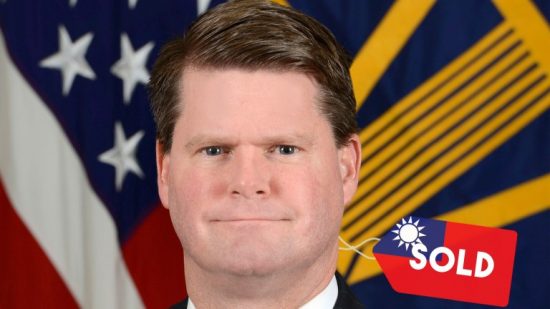
Key Pentagon Official Turned China Policy Over to Arms Industry & Taiwan Supporters October 28, 2020, The triumph of  corporate and foreign interests over one of the most consequential decisions regarding China is likely to bedevil U.S. foreign policy for
  years to come, writes Gareth Porter. https://consortiumnews.com/2020/10/28/key-pentagon-official-turned-china-policy-over-to-arms-industry-taiwan-supporters/ By Gareth Porter
The Grayzone
When the United States finalized a set of seven arms sales packages to Taiwan in August, including 66 upgraded F-16 fighter planes and longer-range air-to-ground missiles that could hit sensitive targets on mainland China, it shifted U.S. policy sharply toward a much more aggressive stance on the geo-strategic island at the heart of military tensions between the United States and China.
Branded “Fortress Taiwan” by the Pentagon, the ambitious arms deal was engineered by Randall Schriver, a veteran pro-Taiwan activist and anti-China hardliner whose think tank had been financed by America’s biggest arms contractors and by the Taiwan government itself.
Since assuming the post of assistant secretary of defense for Asian and Pacific security affairs in early 2018, Schriver has focused primarily on granting his major arms company patrons the vaunted arms deals they had sought for years.
The arms sales Schriver has overseen represent the most dangerous U.S. escalation against China in years. The weapons systems will give Taiwan the capability to strike Chinese military and civilian targets far inland, thus emboldening those determined to push for independence from China.
Although no U.S. administration has committed to defending Taiwan since Washington normalized relations with China, the Pentagon is developing the weapons systems and military strategy it would need for a full-scale war. If a conflict breaks out, Taiwan is likely to be at its center.
Returning Favors
Schriver is a longtime advocate of massive, highly provocative arms sales to Taiwan who has advanced the demand that the territory be treated more like a sovereign, independent state. His lobbying has been propelled by financial support from major arms contractors and Taiwan through two institutional bases: a consulting business and a “think tank” that also led the charge for arms sales to U.S. allies in East Asia.
The first of these outfits was a consulting firm called Armitage International, which Schriver founded in 2005 with Richard Armitage, a senior Pentagon and State Department official in the Reagan and George W. Bush administrations.
Schriver had served as Armitage’s chief of staff in the State Department and then as deputy sssistant secretary of state for East Asian and Pacific affairs. (Armitage, a lifelong Republican, recently released a video endorsement of Joseph Biden for president).
As a partner in Armitage International, Schriver was paid consulting fees by two major arms contractors — Boeing and Raytheon — both of which hoped to obtain arms sales to Taiwan and other East Asian allies to compensate for declining profits from Pentagon contracts.
Schriver started a second national-security venture in 2008 as president and CEO of a new lobbying front called The Project 2049 Institute, where Armitage served as chairman of the board. The name of the new institution referred to the date by which some anti-China hawks believed China intended to achieve global domination.
From its inception, The Project 2049 Institute focused primarily on U.S. military cooperation with Northeast Asian allies — and Taiwan in particular — with an emphasis on selling them more and better U.S. arms.
Schriver, known as the Taiwan government’s main ally in Washington, became the key interlocutor for major U.S. arms makers looking to cash in potential markets in Taiwan. He was able to solicit financial support for the institute from Lockheed Martin, General Atomics, BAE and Raytheon, according to Project 2049’s internet site, which provides no figures on the amounts given by each prior to 2017.
Equally important, however, is The Project 2049 Institute’s heavy dependence on grants from the government of Taiwan. The most recent annual report of the institute shows that more than a third of its funding in 2017 came either directly from the Taiwan government or a quasi-official organization representing its national security institutions.
Project 2049 received a total of $280,000 from the Taiwan Ministry of Defense and Taiwan’s unofficial diplomatic office in Washington (TECRO) as well as $60,000 from the “Prospect Foundation,” whose officers are all former top national-security officials of Taiwan. In 2017, another $252,000 in support for Schriver’s institute came from the State Department, at a time when it was taking an especially aggressive public anti-China line.
By creating a non-profit “think tank,” Schriver and Armitage had found a way to skirt rules aimed at minimizing conflicts of interest in the executive branch.
The Executive Order 13770 issued by President Donald Trump in early 2017 that was supposed to tighten restrictions on conflicts of interest barred Schriver from participation for a period of two years “in any particular matter that is directly and substantially related to my former employer or former clients….”
However, the financial support for Project 2049 from Boeing, Lockheed-Martin, General Atomics, Northrop Grumman and Raytheon, and from Taiwanese official and quasi-official bodies were considered as outside that prohibition, because they were not technically “clients.”
Big Wins for Supporters
Brought into the Pentagon at the beginning 2018 to push China policy toward a more confrontational stance, Schriver spent 2018 and the first half of 2019 moving proposals for several major arms sales to Taiwan — including the new F-16s and the air-to-ground missiles capable of hitting sensitive targets in China — through inter-agency consultations.
He secured White House approval for the arms packages and Congress was informally notified in August 2019, however, Congress was not notified of the decision until August 2020. That was because Trump was engaged in serious trade negotiations with China and wanted to avoid unnecessary provocation to Beijing.
Lockheed Martin was the biggest corporate winner in the huge and expensive suite of arms sales to Taiwan. It reaped the largest single package of the series: a 10-year, $8 billion deal for which it was the “principal contractor” to provide 66 of its own F-16 fighters to Taiwan, along with the accompanying engines, radars and other electronic warfare equipment.
The seven major arms sales packages included big wins for other corporate supporters as well: Boeing’s AGM-84E Standoff Land Attack Missile (SLAM), which could be fired by the F-16s and hit sensitive military and even economic targets in China’s Nanjing region, and sea-surveillance drones from General Atomics.
In February 2020, shortly after Schriver left the Pentagon, the Taiwanese President Tsai Ing-wen received the lobbyist in her office in Taipei and publicly thanked him for having “facilitated the sale of F-16V fighter jets to Taiwan and attached great importance to the role and status of Taiwan in the Indo-Pacific region.” It was an extraordinary expression of a foreign government’s gratitude for a U.S. official’s service to its interests.
Having delivered the goods for the big military contractors and the Taiwan government, Schriver returned to The Project 2049 Institute, replacing Armitage as chairman of the board.
Neocon Vision
The arms sales to Taiwan represented a signal victory for those who still hoping to reverse the official U.S. acceptance the People’s Republic of China as the legitimate government of all of China.
Ever since the 1982 U.S.-China Joint Communique, in which the United States vowed that it had “no intention of interfering in China’s internal affairs or pursuing a policy of “two China’s” or “one China, one Taiwan,” anti-China hardliners who opposed that concession have insisted on making the 1979 Taiwan Relations Act, which called for the United States to sell Taiwan such arms “as may be necessary to enable Taiwan to maintain a sufficient self-defense capability” as keystone of U.S. Taiwan policy.
The neoconservative Project for a New American Century (PNAC) led by William Kristol and Robert Kagan wanted to go even further; it pushed for the United States to restore its early Cold War commitment to defend Taiwan from any Chinese military assault.
Thus a 1999 PNAC statement called on the United States to “declare unambiguously that it will come to Taiwan’s defense in the event of an attack or a blockade against Taiwan, including against the offshore islands of Matsu and Kinmen.”
After leaving the World Bank in 2008 amidst a scandal involving his girlfriend, Paul Wolfowitz – the author of that 1999 statement on East Asia – turned his attention to protecting Taiwan.
Despite the absence of any business interest he was known to have in Taiwan, Wolfowitz was chairman of the board of the U.S.-Taiwan Business Council from 2008 to 2018. The Project 2049 Institute was a key member of the council, along with all the major arms companies hoping to make sales to Taiwan.
During the first days of Wolfowitz’s chairmanship, the U.S.-China Business Council published a lengthy study warning of a deteriorating air power balance between China and Taiwan. The study was obviously written under the auspices of one or more of the major arms companies who were members, but it was attributed only to “the Council’s membership” and to “several outside experts” whom it did not name.
The study criticized both the George W. Bush and Obama administrations for refusing to provide the latest F-16 models to Taiwan, warning that U.S. forces would be forced to defend the island directly if the jets were not immediately supplied. It also called for providing Taiwan with land-attack cruise missiles capable of hitting some of the most sensitive military and civilian targets in the Nanjing province that lay opposite Taiwan.
The delicacy of the political-diplomatic situation regarding Taiwan’s status, and the reality of China’s ability to reunify the country if it chooses to do so has deterred every administration since George H.W. Bush sold 150 F-16 fighter jets to Taiwan. That was, until Shriver’s provocative “Fortress Taiwan” sale went through.
The triumph of corporate and foreign interests in determining one of the most consequential U.S. decisions regarding China is likely to bedevil U.S. policy for years to come. At a moment when the Pentagon is pushing a rearmament program based mainly on preparation for war with China, an influential former official backed by arms industry and Taiwanese money has helped set the stage for a potentially catastrophic confrontation.
Gareth Porter is an independent investigative journalist who has covered national security policy since 2005 and was the recipient of Gellhorn Prize for Journalism in 2012. His most recent book is The CIA Insider’s Guide to the Iran Crisis, co-authored with John Kiriakou, just published in February.
This article is from The Grayzone
In USA’s economic and health crisis – nuclear weapons spending is booming
Roughly 50,000 Americans are now involved in making nuclear warheads at eight principal sites stretching from California to South Carolina. And the three principal U.S. nuclear weapons laboratories — located in Los Alamos and Albuquerque, N.M., and Livermore, Calif. — have said they are adding thousands of new workers at a time when the overall federal workforce is shrinking.
“the insane idea that after a pandemic and dealing with climate change and in an economic crisis in which people are struggling with massive inequality that we are going to spend this much money modernizing every last piece of our nuclear infrastructure — that would be a failure, a failure of policy and a failure of imagination.”
But major defense contractors and their employees — including many of those making nuclear weapons or running the national laboratories where they are designed — have long influenced budget choices by helping to finance elections of the members of Congress who approve spending for that work. The industry’s donations in the current election cycle to members of the House and Senate Armed Services committees alone had reached $9.4 million as of mid-October; of that amount, the two chairmen took in a total of at least $802,000, according to the Center for Responsive Politics, a nonpartisan research group. These tallies don’t include separate donations by lawyers or lobbyists.
|
While the country has been preoccupied with the COVID-19 pandemic, economic decline and the election, President Trump’s administration quietly and steadily steered America’s nuclear weapons industry to its largest expansion since the end of the Cold War, increasing spending on such arms by billions of dollars with bipartisan congressional support.
President-elect Joe Biden may embrace other priorities as he confronts the pandemic, tries to steer the country out of a recession, and is pressured to address social programs neglected under the Trump administration, as well as a ballooning deficit created by the 2017 Trump tax cuts and COVID-19 stimulus spending. But the creation of a larger and more modern nuclear warhead complex of factories, laboratories and related businesses is already playing out around the country, despite slowdowns in other federal projects due to the pandemic Four factories in Texas, South Carolina, Tennessee and New Mexico dedicated to producing warheads are being modernized. Four existing warheads are being substantially rebuilt with modern parts, on top of another such upgrade — costing $3.5 billion — that was completed last year. This pace compares with an average modernization of one type of warhead at a time during the Obama administration. “Over the next five years, the [nuclear weapons-related] costs start going up dramatically,” Continue reading |

USA government resists paying compensation to nuclear workers made ill by ionising radiation
the labor department ignored overwhelming evidence that her husband became sick from working at SRS
the system has become hard to navigate, with the government often fighting tooth-and-nail against the workers they were supposed to help
More than 2,200 workers had spent five years or more going through the exhaustive claims process, according to McClatchy’s 2015 “Irradiated’’ series. Some workers who filed for benefits died while awaiting decisions from the government, McClatchy found.
 Death and despair. How the feds refused to help a nuclear worker’s family in SC, The State,
 BY SAMMY FRETWELL, December18, 2020 Every time Jerry Bolen came home from a construction job at the local nuclear weapons complex, he took off his dusty coveralls before stepping into the house he shared with his wife and children.
It was a precaution against tracking hazardous, radioactive materials into the family’s home in rural Barnwell County, says his widow, recalling how she would gingerly place the contaminated garment into the washing machine.
But while the effort protected the couple’s three kids, Jerry Bolen suffered. The long days he spent working at the Savannah River Site, exposed to chemicals and radiation, eventually killed him, his widow says.
Now, an exasperated Carolyn Bolen has sued the U.S. Department of Labor following a 13-year battle with the government over whether the family should receive compensation for the cancer that took Jerry Bolen’s life in 2006.
Her story is a familiar one. Many people who worked at SRS have complained for years that a federal compensation program for sick workers and their families is a bureaucratic morass that takes too long to maneuver and often doesn’t provide the benefits they were promised.
In Carolyn Bolen’s case, however, she was turned down so many times for benefits through the federal program that she exhausted all her appeals, prompting the federal lawsuit, she and her lawyers say.
The Nov. 20 suit against the labor department is among a handful of cases in South Carolina by ex-SRS workers and their families who were denied benefits in recent years through the federal compensation program, said Bolen’s lawyers, who specialize in helping sick workers.
Bolen’s attorneys said the labor department ignored overwhelming evidence that her husband became sick from working at SRS. They are seeking $275,000, the maximum she can get under the program. Other suits are expected as more workers or their loved ones are turned down by the government, said attorneys Warren Johnson and Josh Fester.
The federal government launched the compensation program two decades ago after conceding that employment at nuclear weapons sites likely made some of the workers ill. It was designed to help former employees who got sick working in U.S. nuclear sites during the Cold War.
To receive compensation, workers or their families must show that radiation on the site was as likely as not to have caused cancer or a handful of other ailments. Or, in some cases, they must show that people worked on the site during times when records of exposure are difficult to find.
The nuclear compensation program provides benefits to sick workers, but in some cases, covers their families after the person has passed away, such as with Bolen.
Unfortunately, the system has become hard to navigate, with the government often fighting tooth-and-nail against the workers they were supposed to help, Johnson said. Taking legal action to force federal compensation shouldn’t be necessary, said Johnson and Fester, whose law practice has represented sick SRS workers for years.
“This was supposed to be a way to make up for, or show our gratitude to these patriotic workers,’’ Johnson said of the compensation program. “They gave their health for our sake for the Cold War. We can at least offset the burden, by giving financial security, knowing they aren’t leaving a burden on their wives and children.’’………..
In 2015, the labor department told The State and the McClatchy Co. the program had approved more than 40 percent of the claims made by nuclear workers and their families, far more than the 25 percent the government anticipated when the program launched in 2001. The labor department said Friday the approval rate nationally is now more than 50 percent.
Even so, many claims don’t get approved and the wait for answers can be time-consuming. More than 2,200 workers had spent five years or more going through the exhaustive claims process, according to McClatchy’s 2015 “Irradiated’’ series. Some workers who filed for benefits died while awaiting decisions from the government, McClatchy found.
Earlier this month, a federal panel considered a proposal, advocated by Johnson, that could make it easier for thousands of workers and their families to receive benefits. But the board put off a decision until next year…………
he never complained about the long hours or said much about hazardous conditions at the site. That was important to the federal government because, during the Cold War, much of the work on the Savannah River Site needed to be kept confidential, family members say.
Tim Bolen, his son, said he never knew his father worked at SRS until just a few weeks before his death. But Carolyn Bolen did.
She remembers the days her husband came home with his coveralls coated in “white stuff’’ that she says came from the Savannah River Site. Bolen never knew what the material was, but she was always wary of the potential danger. And her husband occasionally offered clues that the white material came from SRS, she said……….
The site, a 310-square-mile complex, contains an array of nuclear production areas with some of the most toxic substances in the world.
Among them is a tank farm, which houses nuclear waste deadly enough to rapidly kill a person directly exposed to it. Carolyn Bolen’s lawsuit says her husband worked for a while in the tank farm area and another section where radioactive material is used.
The Savannah River Site, located near the Georgia border outside Aiken, was part of the national effort to produce atomic weapons between World War II and the early 1990s. Nationally, the effort employed some 600,000 people, according to the U.S. Government Accountability Office……
After working periodically at SRS through the years, Jerry Bolen began to feel an uncomfortable sensation in the late 1990s that he couldn’t shake.
Something was wrong with his bladder. During trips to the bathroom, bloody urine flowed into the toilet and a sharp sting caused him to gasp. The pain was so bad, at times, that Carolyn Bolen could hear her husband’s cries throughout the house.
“He just screamed for mercy,’’ she said.
The discomfort sent him to a doctor, where the family learned the man who had faithfully kept a roof over their heads and food on the table was gravely ill. He had bladder and prostate cancer…….
In August 2006, Jerry “Little Mac’’ Bolen died at the age of 60, leaving his wife and family wondering how the once robust man could slip from their world. It didn’t seem right that a man so young and energetic had become so sick, family members say. …….
MISSING RECORDS
Jerry Bolen’s time at SRS, and his devotion to his family, haven’t impressed federal officials who have considered whether his family is eligible for benefits through the labor department’s sick worker compensation program. They’re skeptical an award to his widow is warranted, saying they need more evidence.
An obstacle some workers face is gaining access to records that could show there is at least a 50 percent chance radiation caused cancer they developed after working at the Savannah River Site, a complex developed in the early 1950s.
Many records either can’t be located, are inaccurate or don’t exist, meaning workers can’t prove how many days they worked on site, or the amount of radioactive material they might have been exposed to.
That’s a particular concern for subcontractors like Bolen, who did not work directly for the government or for the major contractors hired by the U.S. Department of Energy to run the site. Subcontractors often were local construction companies brought in to do specific jobs.
Johnson and Fester said records of subcontractors often are harder to find than those for energy department workers.
In Bolen’s case, the labor department turned down the family’s claim for benefits because “the submitted documentation does not establish covered SRS employment for the employee,’’ according to the federal lawsuit Carolyn Bolen filed. In declining comment on the Bolen case, a Department of Labor spokeswoman said Friday that claims can be turned down for a variety of reasons…..
Bolen’s lawsuit, however, said the labor department simply dismissed credible evidence that would prove the case. Jerry Bolen, for instance, worked with acquaintances or for his brothers’ construction businesses in the late 1960s, 1970s and 1980s, according to five affidavits filed in Carolyn Bolen’s federal lawsuit last month.
Those affidavits, provided by family and friends who worked with Jerry Bolen, were combined with SRS identification badges issued in his name, and records of radiation doses the family ran across in his belongings. Some material was unearthed and provided to the government after the labor department had initially denied requests for compensation.
Despite the evidence, the Department of Labor ruled against the Bolen family’s request for reconsideration this past summer. Her case had been turned down at least three times before 2020.
“The department simply ignored additional evidence that Mr. Bolen was present at the site before 1968 and after Jan. 24, 1969,’’ the lawsuit said. “Mrs. Bolen’s request for reconsideration further asserts the department misapplied the law in determining covered employment by holding Mrs. Bolen to an impossible burden of proof.’’
While the Bolens have been turned down repeatedly in seeking compensation, Johnson and Fester are hoping the lawsuit will succeed. Fester said one of the five other cases the firm has filed resulted in a verdict that would have required payment to a sick worker. But the worker died before benefits were dispersed.
In the meantime, Fester and Johnson are pushing the federal government to approve a proposal that could open up benefits to thousands of people who worked at the Savannah River Site.
Under federal law, the government can acknowledge that it is too difficult to find records during certain years that would prove a person’s case for compensation for radiation-related cancer. As a result, the government can declare periods of years free of the need to provide records showing that a person likely got cancer from working at SRS.
The government already has done that for the time from 1953 to fall 1972. Some ex-workers at SRS, who were employed there for at least 250 days between these times, are eligible for benefits without producing extensive documentation about exposure to radioactive materials.
Now, a federal advisory board is considering whether to extend that to cover up to 1990 for some types of workers at SRS. It’s clear that Jerry Bolen worked well above 250 days between 1972 and 1990 at the site, so it’s possible his family could gain compensation if the time period is expanded to 1990, Johnson and Fester said.
A decision, under consideration for years, could be rendered as early as February if the federal advisory board recommends expanding the period. Such a decision ultimately would be made by the U.S. Department of Health and Human Services, the labor department said Friday.
Carolyn Bolen said a favorable decision — and her lawsuit — would mean a lot to many people who need help after they or their loved ones got sick at SRS.
“There are a lot of poor people in this world, and they don’t have the money like the president or the people in the White House,’’ she said. “I ain’t just talking about myself. There are people with needs.’’
This story has been updated with information provided Friday Dec. 18, 2020 by the U.S. Department of Labor. https://www.thestate.com/news/local/environment/article247828620.html
The cover-up of workers’ illnesss in radioactively polluted clean-up of Kingston coal ash spill
A Legacy of Contamination, How the Kingston coal ash spill unearthed a nuclear nightmare, Grist By Austyn Gaffney on Dec 15, 2020 This story was published in partnership with the Daily Yonder.
………………………………….The apparent mixing of fossil fuel and nuclear waste streams underscores the long relationship between the Kingston and Oak Ridge facilities………… .
 ……….In 2017, a former chemist named Dan Nichols stumbled upon a news story that revealed the existence of the additional health problems TVA feared. High levels of uranium had been measured in the urine of a former cleanup worker named Craig Wilkinson. Like Thacker, Wilkinson had worked the night shift. After dredges piped the coal ash back onshore, Wilkinson used heavy equipment to scoop, flip, and dry the wet ash along the Ball Field.
Although Wilkinson worked at the Kingston site for less than a year, he quickly developed health issues, including chronic sinus infections and breathing problems that eventually led to a double-lung transplant. Frustrated by his sudden decline in health, Wilkinson shelled out over $1,000 for a toxicology test because he wanted to know what occupational hazards might be lingering in his body.
After reading Wilkinson’s story, Nichols sat stunned. Though he was not associated with the spill, he’d been unable to shake his obsession with the Kingston disaster. Nichols had worked as a Memphis-based field chemist for a wastewater technology company, and he was used to studying lab reports on industrial water supplies and samples. For years he’d been trying to solve a mystery that no one else seemed to be aware of: why Kingston regulators deleted and then altered a state-sanctioned report showing extremely high levels of radiation at the cleanup site.
Roughly a month after the spill, Nichols read a Duke University press release stating that ash samples collected at Kingston by a team led by Vengosh, the geochemist, showed radium levels well above those typically found in coal ash. Nichols knew that the state environmental regulator, the Tennessee Department for Environment and Conservation, or TDEC, was also testing soil and ash samples at the site. After seeing Vengosh’s high radium readings, he wondered if TDEC’s report would also show high levels of either radium or uranium. (Radium is a decay element of uranium.) Later that spring, Nichols visited TDEC’s website and discovered the test results.
“I opened it up and went to uranium, and it was just off the charts,” Nichols recalled. In a 2020 affidavit, Nichols reported that these levels were “extremely high so as to be alarming.” At least 27 soil and ash samples were collected from at least 20 different sites surrounding Kingston beginning January 6, 2009. The levels ranged from 84 parts per million (ppm) to 2,000 ppm. The average level was over 500 ppm, as much as 50 times the typical uranium content found in coal ash.
The next morning, when Nichols slumped back into his computer chair and refreshed TDEC’s website, he saw that the report had been changed. The high uranium readings had plummeted. Now the average uranium levels in the ash were 2.88 ppm, a tenth of the typical uranium content found in coal ash and illogically, below levels naturally occurring in soil. Luckily, Nichols had downloaded the unaltered report the night before.
A month later, Nichols sent the two lab reports to one of the attorneys representing Tennessee residents affected by the spill in a lawsuit they’d brought against TVA. According to Nichols, the lawyers weren’t interested. Nevertheless, Nichols was determined to find more proof of the unusually high levels of on-site radiation. In between cutting hay and spraying weeds on his family farm, he spent years poring over information online about TVA, coal ash, and uranium before he stumbled across Wilkinson’s story.
Back in 2014, Wilkinson’s urine tested for unusually high levels of both mercury and uranium. The mercury is more easily explained: The most common cause of mercury contamination, according to the EPA, is coal-fired power plant emissions, which account for 44 percent of all man-made mercury pollution. The 2008 spill released 29 times the mercury reported at the Kingston site for the entire decade before it, and TVA documents show high levels of additional legacy mercury were present in the Clinch River and could have migrated into the Emory. Today, Wilkinson has symptoms attributable to methylmercury poisoning including blurry vision, fatigue, a hearing impairment, memory loss, and loss of coordination that caused him to fall out of the machines he operated until retiring on disability in 2015.
But most shocking to Nichols was the high level of uranium in Wilkinson’s body — it was 10 times the U.S. average, and identical to the median levels that one study found in workers exposed to the substance. Prolonged occupational exposure to uranium is strongly linked to chronic kidney disease, which Wilkinson suffers from. Because Wilkinson’s toxicology results were taken four years after he left Kingston, they likely show lower uranium levels than what he and other cleanup workers initially had.
Wilkinson’s results left no doubt in Nichols’ mind that the original uranium readings he’d saved were significant. A reporter for the Knoxville News-Sentinel, Jamie Satterfield, contacted him after the report he saved showed up in court proceedings. Satterfield published a story about the altered uranium readings in May of this year.
In response to her story, TDEC told the News-Sentinel that its updated uranium readings, which plummeted by 98 percent, were due to a change in the sampling method used for the tests. (Satterfield also reported that radium levels had been lowered between the initial TDEC report Nichols downloaded and the updated one; the department attributed this to a “data entry error.”) In an email response to Grist and the Daily Yonder, a TDEC spokesperson elaborated that the sampling lab, which was neither staffed nor supervised by TDEC, “discovered there were interferences in the analysis of soil and ash samples for uranium” and subsequently changed the method of analysis from one EPA-approved protocol to another. The new results were then published without public notice of the alteration.
“Changing lab reports is a very serious thing,” Nichols said. “But I can assure you data entry errors don’t cause a man to test for unusually high levels of uranium. That’s [TDEC’s] big problem.”
Unbeknownst to Nichols, Russell Johnson, the district attorney with jurisdiction over Roane County, where Kingston is located, had informed TDEC’s commissioner in 2017 that he was beginning a criminal probe into the Kingston cleanup. “I am deeply concerned with the apparent intentional conduct of the cleanup contractors and their supervisors, actions that took place in Roane County, conduct that may indeed have caused serious bodily injury or possibly even death to a number of people,” Johnson wrote in a letter to TDEC.
In concert with the Tennessee Bureau of Investigation, Johnson began investigating whether TVA or its contractors “suppressed information” as part of the coverup alleged in the 2013 worker lawsuit against Jacobs. They now have Nichols’ evidence as well. But despite this ongoing investigation, it’s unclear if workers will ever learn for certain whether or not they were exposed to dangerous substances besides the coal ash itself. (Bob Edwards, an assistant district attorney working under Johnson, told Grist and the Daily Yonder that the district attorney’s office could not comment on a pending investigation.)………………….https://grist.org/justice/tva-kingston-coal-ash-spill-nuclear/
The power of influence in writing on nuclear issues, – impressive storytelling in Lesley Blume’s “Fallout”
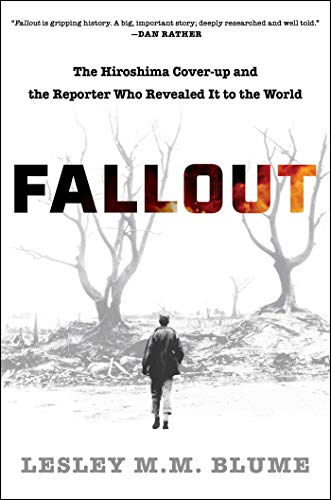 We’re in a storytelling crisis”: Advice for writing on nuclear issues, from the author of “Fallout” Bulletin of the Atomic Scientists, By Sara Z. Kutchesfahani | December 16, 2020 Storytelling is an important tool to change public perception. Recent research has shown that people are ready for nuclear weapons to enter the storytelling space, as long as these new stories are told in less intimidating ways and feature nuclear weapons in the background—rather than the forefront—of a story. Very few publications in the national security space provide a forum for storytelling, with the notable exception being the online publication Inkstick.
How can nuclear policy experts become better storytellers? I thought Lesley M. M. Blume would have some prescient advice. Her new book powerfully shows how one courageous American reporter unraveled one of the deadliest cover-ups of the 20th century—the true effects of the atomic bomb—potentially saving millions of lives. Fallout tells the incredible story of how New Yorker journalist John Hersey of Hiroshima fame was able to go to the Japanese city in the aftermath of the bombing and interview six survivors.
Even before the Japanese surrendered in 1945, the US government and military had begun a secret propaganda and information-suppression campaign to hide the devastating nature of nuclear weapons. The cover-up intensified as Allied occupation forces closed Hiroshima and Nagasaki to Allied reporters, preventing leaks about the horrific long-term effects of radiation that would kill thousands during the months after the blast. For nearly a year, the cover-up worked—until John Hersey got into Hiroshima and managed to report the truth to the world.
As Hersey and his editors prepared his article for publication, they kept the story secret—even from most of their New Yorker colleagues. When the magazine published “Hiroshima” in August 1946 as a single issue, it became an instant global sensation, and it changed the US public’s perception of the dropping of the bombs virtually overnight from that of pride to that of visceral repulsion and existential fear. Hersey’s story brought home, for millions across the United States and around the world, the true implications of the then-new atomic age.
On December 10, I interviewed Lesley about her brilliant book. We talked about how the publication of Hiroshima changed the US public’s perception of the bombs, the lessons learned, and how nuclear experts can become better storytellers. The transcript is below. [on original].
2020. Blume’s book Fallout, published in August 2020, documents the Hiroshima cover-up and how a reporter – John Hersey – revealed it to the world. …………
Lesley M. M. Blume: There was the “before” Hersey’s Hiroshima, and then there was the “after” Hersey’s Hiroshima. Before Hersey’s book came out, the atomic bomb had been largely painted by the US government and military essentially as a conventional mega weapon. It was quickly becoming an accepted part of our conventional arsenal, even a tenable cost-saving weapon—it costs a lot less money to lob a nuke at somebody than it does to move troops into an area to wage combat—and, as such, there was a widespread acceptance of and enthusiasm about the weapon between August 1945 and August 1946. The bomb was normalized, in the public’s estimation, with surprising rapidity. [US President] Harry Truman himself referred to the bomb as just a “bigger piece of artillery.”
After Hersey’s Hiroshima comes out, readers—and not just American readers, but readers around the world—are seeing what these then-experimental weapons indeed do to human beings, not just at the moment of detonation, but in the hours, days, weeks, months, and years to come. This is because Hersey was able to document the first part of the long tail of nuclear weapons, namely that they are the weapon that continues to kill indefinitely after detonation.
The book immediately affected American attitudes: the vast majority of polled Americans in August 1945 were thrilled about the bombs because, they were told, the bombings had saved both American and Japanese lives, hastened the end of the war, and avoided a land invasion. Not only that, but they also viewed it as pure vengeance. When President Truman made his announcement about the Hiroshima bombing, he said that the Japanese had been repaid manyfold for Pearl Harbor. Many people agreed with him then, and they agree with him now; people are still passionate about the payback element of it………..
Lesley M. M. Blume: As I’ve been doing publicity for Fallout this fall since the book came out on August 4, I’ve been pretty shocked by an increased complacency toward the nuclear landscape, which the Bulletin of the Atomic Scientists has deemed the most perilous ever. I‘ve been shocked by how, here we are in the most perilous nuclear landscape in 75 years, how the nuclear threat is not on most people’s minds. And it certainly wasn’t a significant election issue by any stretch of the imagination. Whenever you would see these write ups about where the candidates stood on 10 or 12 issues such as trade with China, the pandemic, or climate change, the nuclear landscape was never one of them. The younger my interviewers were, the less concerned they were, and that’s because it hasn’t been a part of their psyche of what’s surrounding them—and not just because we’ve been dealing with other urgent existential threats like the pandemic and climate change………
And as the pandemic worsens, this issue is getting less and less attention. Fallout came out in the United Kingdom a few weeks ago, and there was no bandwidth for op-eds about staring down the nuclear threat. Nor was there much of an appetite among US editors for an op-ed advocating that the nuclear landscape be a bigger election issue—even among publications that gave Fallout considerable launch coverage.
As vaccines start to roll in, and it’s the beginning of the end for the pandemic, we need to be anticipating the moment when the news landscape opens up enough for us to leap in and start to drive home the urgency of this threat. The nuclear challenges that still face us have never been resolved in 75 years—even during historical moments when world leaders put their all into creating de-escalation mechanisms, when whole populations were completely immersed in the dangers of the nuclear threat. We are now far from eras of peak awareness like the 1950s, 1960s, and 1980s, and we need to work really, really hard to create an increased awareness as soon as possible. Because with the pandemic, there’s a vaccine; with climate change, we can work to dial it back. But nuclear disaster on a global scale? There’s no coming back from that. As Albert Einstein said, “I know not with what weapons World War III will be fought, but World War IV will be fought with sticks and stones.” https://thebulletin.org/2020/12/were-in-a-storytelling-crisis-advice-for-writing-on-nuclear-issues-from-the-author-of-fallout/
Google headline news on “Nuclear” – articles are strongly pro nuclear, and for “Small Modular Reactors”, even more so
 Today Google headline articles on “nuclear”total 96. As usual, most were pro nuclear articles, many reading like straight out handouts frm the industry. However, unusually this week, the pro nuclear stories tended to cover both large and small nuclar reactors, suggesting the promotion of both types. This is a trend that contrasts with the earlier propaganda of small reactors as the preferable option.
If you tap in “Small Modular Reactors” into Google News Search, today you get 98 headlines. It is interesting that the nuclear lobby prefers to promote these new nuclear fantasy gimmicks by leaving out that word “nuclear”. They know they’re up against the public’s perception of nuclear as something dirty, dangerous and connected to weapons of mass destruction. The public is right, and it will be a marathon public relations battle to overcome that truth.
Anyway, of these 98 articles, 86 were clearly promotional. It must be easier for journalists to just regurgitate slick nuclear industry propaganda,- rather than to do your own research on costs, safety, wastes, carbon emissions in the total set-up and fuel chain, and of course, to research the facts on climate effect.
The remaining 12 articles were either critical of, or dubious about, the viability of small nuclear reactors.
Going back to the “nuclear ” headline news, 68 of the 96 articles concerned “peaceful” nuclear power. And of those 68 articles, 47 were clearly pro nuclear. These pro nuclear articles included 28 that read like industry promotions, with confident sounding predictions about energy security, climate action, reducing costs and so on.
Popular pro nuclear topics were of course climate action, financial benefits, nuclear fusion, hydrogen and space travel. Also mentioned – the role of women, nuclear medicine and human rights benefits (!!) There was little mention of managing nuclear wastes, with just one article wxpressing confidence about this.
There were 8 clearly anti nuclear articles – focussing on costs, politics and radioactive wastes.
There were 13 articles that were “neutral”, with factual information, mainly on politics, and avoiding opinions. These included several on the subject of the assassination of a Iranian nuclear expert.
Articles on nuclear weapons.
Of the 28 stories on nuclear weapons, 14 were opposed, aiming towards arms control, or nuclear disarmament . 9 were factual information, without opinions. 5 were factual discussions, yet pro nuclear in expressing the “need” for nuclear weapons, and some with national pride in them.
Today’s Google headlines on nuclear issues – weapons and Iran dominate the stories.
 30 Nov 20, Todays news headlines – 92 articles on nuclear issues.
41 of these concerned nuclear weapons and issues around international diplomacy, and the upcoming Treaty on the Prohibition of Nuclear Weapons.
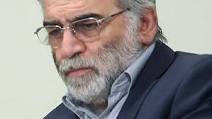
By far the most often mentioned topic was the assassination of Iran’s top nuclear weapons expert, Mohsen Fakhrizadeh ( pictured at left).
In general, articles about nuclear weapons tend to be factual accounts of national policies and weapons development. There are also articles with strong opposition to nuclear arms and testing.
Articles on so-called non military nuclear issues. Most (29) of these have been in support of, or promoting nuclear power. During the past week there has been a plethora of articles enthusing over small nuclear reactors (SMRs) . Today, of the 19 articles advocating new nuclear power, 9 were focussed on small nuclear reactors. Other pro nuclear themes were – reassurance that radiation is not such a worry, space research, fusion, hydrogen, and nuclear as climate solution.
Anti-nuclear articles (18) argued against new nuclear power, especially small reactrors, on grounds of costs, wastes, safety , climate uselessness, comparison with renewables.
4 “neutral” articles just set out information on decommissioning reactors, UK policy,health issues.
The Australian government”s intimidation of whistleblowers – the torture of Julian Assange
Torture of Julian Assange by Australian governments sends powerful message to whistleblowers, Michael West Media by Lissa Johnson | Nov 26, 2020
Australia has used a range of torture techniques against Julian Assange, writes Dr Lissa Johnson. Governments have isolated and demonised him; flatly rejected evidence of ill-treatment; refused to respond to specific allegations; and divested themselves of any responsibility. Leaders can’t, or won’t, accept the difference between psychological torture and ‘a legal matter’.
Julian Assange has set a number of firsts for Australia, including:
- The first Walkley award winner whose journalism has attracted a possible 175 years in US prison.
- The first journalist to be prosecuted as a spy by the US government, under its 1917 Espionage Act.
- The first citizen of an ostensibly democratic state (Australia) whom a UN official has found to be the target of a campaign of collective persecution and mobbing by other so-called democratic states.
As the UN Rapporteur on Torture, Nils Melzer, observed:
In 20 years of work with victims of war, violence and political persecution I have never seen a group of democratic states ganging up to deliberately isolate, demonise and abuse a single individual for such a long time and with so little regard for human dignity and the rule of law.
As part of this mobbing and collective persecution, Assange is the first Australian journalist to be tortured for journalism in the UK.
On 9 May 2019, Professor Melzer visited Assange in Belmarsh prison, accompanied by two medical experts specialising in the assessment and documentation of torture. On 31 May, Melzer reported that they had found Assange to be suffering all symptoms typical of prolonged exposure to psychological torture.
On 1 November 2019, Melzer warned that, unless the UK government urgently changed course, it may soon end up costing his life.
What torture?
Julian Assange is being held in ‘Britain’s Guantanamo’, Belmarsh prison, a high-security facility designed for those charged with terrorism, murder and other violent offences. He has been held in solitary confinement for 22 to 23 hours a day.
He knows that US-aligned security contractors have written in emails that he will make a nice bride in prison, and needs his head dunked in a full toilet bowl at Gitmo. He knows he is headed for life in US supermax prisons, where prisoners are held in perpetual solitary and chains.
‘If this man gets extradited to the United States, he will be tortured until the day he dies’, Profesor Melzer has cautioned.
To heighten the torment, Assange has been prevented from preparing his defence against extradition in violation of his human rights as a defendant.
He has been granted negligible access to his lawyers and is prevented from researching his own defence. The only purpose is to render him helpless, intensifying his trauma.
A Message from the Australian Government
Assange’s experience sets an example to anyone thinking of airing the dirty secrets of those in power: the genuinely dirty secrets, such as wantonly slaughtering and torturing innocent people and covering it up.
Like all public torture, it sends a message to onlookers: this could happen to you.
And the message from the Australian government to any Australian journalists looking on? You’re on your own.
The US government is seeking to retrospectively apply its own Espionage Act to non-US citizens in foreign lands, while simultaneously withholding the free speech protections of its Constitution. The upshot would be that non-US citizens, and non-US journalists, would be vulnerable to prosecution wherever they may be, whenever the United States saw fit.
Should a host country oblige, that journalist’s only hope would be the protection of their own government. And the message from the Australian government? Not a chance.
A climate of consent
But can the government do anything to stop the torture of Assange in the UK? Or are its hands tied?
Australia ratified the Convention Against Torture in 1989. It therefore has a positive duty to take ‘effective legislative, administrative, judicial and other measures to prevent acts of torture’ of its citizens. According to the Federal Attorney-General’s website, however, that duty applies to ‘territories within Australia’s jurisdiction’.
So who is responsible for protecting Australian citizens from torture overseas?
Australian officials can raise concerns with their overseas counterparts when they are concerned about gross violations of citizens’ rights as happened in the cases of Melinda Taylor, James Ricketson, David Hicks and Peter Greste.
They could also make a submission to the Committee against Torture that a state is ‘not fulfilling its obligations under this Convention’.
n Assange’s case, however, the government has opted for ‘consent and acquiescence’ under Article 1 of the convention. Consent and acquiescence is listed alongside inflicting and instigating torture as part of the very definition of torture.
‘Standard’ fare
DFAT representatives say repeatedly that Assange’s treatment In the UK is perfectly normal. ‘Standard’. ‘No different’ from the treatment of other UK prisoners. Routine, in other words. Nothing to see here.
When reminded that Assange had been handcuffed 11 times, stripped naked twice and moved between five holding cells after the first day of his extradition hearing, a DFAT representative described this as ‘standard prison to court and court to prison procedure’.
What the official failed to explain is that treatment is only ‘standard’ and normal for prisoners charged with terrorism or other violent offences.
It is not remotely normal for journalists with no criminal history, and no history or risk of violence, to be detained under the most punitive conditions that UK law enforcement has to offer.
As an exercise in “consent and acquiescence” DFAT representatives performed their duties well.
Sanitising, normalising language minimises and trivialises abuse………….
‘Not our responsibility’ has been the Australian government’s refrain. Australian government officials ‘don’t provide running commentaries on legal matters before the courts in other parts of the world’, asserted the Foreign Minister.
Australia is ‘not a party to the legal proceedings in the United Kingdom’, stressed a DFAT official when asked why Australia had not intervened in Assange’s case during Senate Estimates. ‘We have no standing in the legal matter that is currently before the courts.’
Perhaps the Australian government doesn’t understand the seriousness of the abuses taking place in the UK. Perhaps ministers and their advisors are unaware of the difference between psychological torture and a ‘legal matter’. Psychological torture is, after all, not commonly well understood.
It is possible that the Australian government merely fails to grasp the gravity of ignoring Professor Melzer’s warnings. However, when the group Doctors for Assange wrote to the Australian government in December 2019, they detailed the medical and psychological basis of their concerns for Assange’s life and health…………..
New normal in Australia?
Assange is not the first person in Australia to be subjected to torture and other cruel, inhuman or degrading treatment. Australia’s abuse of asylum seekers and refugees has been found to violate the Convention Against Torture. Aboriginal Australians, among the most incarcerated groups on earth, have been dying in custody, buried under acquiescent consent, for decades, and historically for hundreds of years.
The Human Rights Measurement Index 2019 has given Australia a 5.5 out of 10 rating for ‘freedom from torture’, noting, ‘Torture is a serious problem in Australia … a large range of people [are] at particular risk of torture or ill-treatment, with Aboriginal people and Torres Strait Islanders at the top of the list’…….
Through sending a message to journalists worldwide by torturing Assange, the abusive licence deployed against other persecuted groups is being expanded to take in journalism. The targeting of journalists around the world matters because journalists cut across the acquiescence and consent, remove the deadbolt on the torture chamber door, turn down the music, and expose what is going on inside. Every persecuted and abused group or person needs them, to break the cycle of violence by breaking the silence.
We do torture here. It is our problem. In Julian Assange’s case, the biggest problem appears to be that torturing journalists is becoming the new normal in Australia.
This edited extract is reproduced from A Secret Australia: Revealed by the WikiLeaks Exposés, edited by Felicity Ruby and Peter Cronau, Monash University Publishing, December 2020. https://www.michaelwest.com.au/torture-of-julian-assange-by-australian-governments-sends-powerful-message-to-whistleblowers/
New comic book investigates the dilemma about France’s nuclear wastes
Mediapart 26th Nov 2020, What to do with nuclear waste? Bury them. Or ? Where the population is reluctant to dispute. For example, in Meuse. But how to convince the last recalcitrant? By watering the municipalities with subsidies. What if they resist? There remains repression. This mind-boggling story is that of a new comic book investigative book: One hundred thousand years.
Extradition hearing of Julian Assange – defence witnesses destroy myths, demonstrate his integrity
 Julian Assange: Three myths destroyed by defence witness statements, Independent Australia, By Sara Chessa | 19 November 2020
Witness statements towards the journalistic integrity of Julian Assange have been heard in court, debunking various myths in the process. Sara Chessa reports from the UK.
THE EXTRADITION HEARING of Julian Assange closed last month in London’s Central Criminal Court, the world-famous “Old Bailey”. We will have to wait until 4 January next year for the decision of the Judge. However, the Court heard impressive and authoritative witness statements highlighting the importance of Assange’s journalistic work and years of smear campaigns carried out by those states which were embarrassed by the way WikiLeaks disclosures made civil society aware of war crimes and the reality of the public interest.
Reconstructing the events starting from these accounts means getting out of the chronic opinionism of our time and taking the first fundamental step to return to the concrete facts. Therefore, while we wait for Judge Vanessa Baraitser to announce her decision, let’s go through the main myths that have been debunked by the witness statements heard at the Old Bailey.
Debunked myth one: On the redaction of the classified documents
|
The subtle game of the prosecution has been to deny that the charges against Mr Assange are about the disclosure of information that the public had the right to know, such as the Collateral Murder video. They have rather claimed to have identified WikiLeaks fault in the failure to redact the secret papers in deleting names of people who gave information to the American military and intelligence services whose life could have been in danger after the release. However, several WikiLeaks media partners were heard in Court testifying that strenuous steps had been taken by Wikileaks to redact any names before the release of documents. John Goetz, the German journalist who collaborated with WikiLeaks on their reporting about the U.S. military Afghan and Iraq War logs before publication, testified under oath that the redaction initiative put in place by Assange was “robust” and had involved a huge investment by WikiLeaks, both financially and in human resources. The Court also heard from one of the most celebrated whistleblowers in history, former U.S. Marines officer Daniel Ellsberg, best known for leaking to the New York Times in 1970 the huge tranche of U.S. Government documents on the Vietnam War – the “Pentagon Papers” – showing that the American Government had lied to the public from the very beginning of the conflict. Ellsberg told the packed court that Assange’s approach was the exact opposite of that of a reckless publication. He also explained that the U.S. Government could have prevented sensitive names from being released merely by revealing those that raised concerns, so they could be redacted. They didn’t do this, Ellsberg suggested, so to leave open the possibility of future prosecution……….. Debunked myth two: On the Trump supporters desperately believing he was going to save AssangeIf before September hearings we could have said that only a complete ignorance of the case had led people to think of U.S. President Donald Trump as a “hope” for Assange, now, after listening to the witness statements, we have a complete dossier of facts proving how harshly the incumbent U.S. President is fighting against WikiLeaks and investigative journalism. ……….. Moreover, the naïve vision of Trump as Assange’s saviour does not match with the witness statement of Mark Feldstein, Professor in the Journalism Department of the University of Maryland. He told the Court that the Trump Administration wanted a “head on a spike” to discourage future leaks. Feldstein explained that in 2010 and 2011, the Obama Administration wanted to prosecute WikiLeaks. However, the Justice Department stated that this would have been unconstitutional and would have set a precedent that could lead to many other journalists being prosecuted, as Assange’s conduct was “too similar” to that of journalists in hundreds of different newspapers. However, the Trump Administration decided to prosecute him anyway, leveraging the attempt by Assange to access classified documents. “It can’t be right that the only way journalists can get information is anonymously by post,” Feldstein said, concluding by highlighting that the nature of the accusation showed that the Trump Administration had journalism firmly in its sights. Debunked myth three: On the fact that Assange prosecution will only destroy his lifeKey witnesses have been clear: Assange’s conviction would criminalise all journalists. Trevor Timm, the founder of the Freedom of the Press Foundation, told the court that there have been numerous attempts by the U.S. Government to use espionage charges against journalists and none have ever succeeded. His qualified opinion is that this prosecution would mean that any journalist in possession of confidential information could be arrested. As he explained, if the charges against Assange were applied in 1970, the journalists who revealed the Watergate scandal under the Richard Nixon Administration – Bob Woodward and Carl Bernstein – could have been thrown in jail under this standard. Reconnecting the issue to the present, he said that if asking a source for classified information is espionage, then the secure “dropbox” systems used by more than 80 publications worldwide to encourage whistleblowers to send them information would also be illegal, since they “solicit classified information” — one of the charges against Assange. Despite this, we are still waiting for a massive reaction from journalists. Of course, the International Federation of Journalists has taken action and the UK National Union of Journalists is finally organising to do the same. However, a lot of work still needs to be done to explain the impact that a decision to extradite Assange would have on the freedom of the press to inform the public, so the people could truly assess the action of their rulers.https://independentaustralia.net/life/life-display/julian-assange-three-myths-destroyed-by-defence-witness-statements,14531
|
|
|
1 This Month
19 February – VIRTUAL EVENT-Decision Time: AI and Our Nuclear Arsenal
12:45 p.m. Central / 1:45 p.m. Eastern
To see nuclear-related stories in greater depth and intensity – go to https://nuclearinformation.wordpress.com
-
Archives
- February 2026 (161)
- January 2026 (308)
- December 2025 (358)
- November 2025 (359)
- October 2025 (376)
- September 2025 (258)
- August 2025 (319)
- July 2025 (230)
- June 2025 (348)
- May 2025 (261)
- April 2025 (305)
- March 2025 (319)
-
Categories
- 1
- 1 NUCLEAR ISSUES
- business and costs
- climate change
- culture and arts
- ENERGY
- environment
- health
- history
- indigenous issues
- Legal
- marketing of nuclear
- media
- opposition to nuclear
- PERSONAL STORIES
- politics
- politics international
- Religion and ethics
- safety
- secrets,lies and civil liberties
- spinbuster
- technology
- Uranium
- wastes
- weapons and war
- Women
- 2 WORLD
- ACTION
- AFRICA
- Atrocities
- AUSTRALIA
- Christina's notes
- Christina's themes
- culture and arts
- Events
- Fuk 2022
- Fuk 2023
- Fukushima 2017
- Fukushima 2018
- fukushima 2019
- Fukushima 2020
- Fukushima 2021
- general
- global warming
- Humour (God we need it)
- Nuclear
- RARE EARTHS
- Reference
- resources – print
- Resources -audiovicual
- Weekly Newsletter
- World
- World Nuclear
- YouTube
-
RSS
Entries RSS
Comments RSS
 nuclear-news