New York Times Not Much Concerned About Israel’s Mass Murder of Journalists
HARRY ZEHNER, 1 May 24 https://fair.org/home/nyt-not-much-concerned-about-israels-mass-murder-of-journalists/
A devoted New York Times reader might get the impression that the paper cares deeply about protecting journalists from those who seek to suppress the press.
After all, the Times runs sympathetic features on journalists like Evan Gershkovich, a Wall Street Journal reporter who was detained by Russia over a year ago. The paper (6/3/22) has written stingingly of Russia’s “clamp down on war criticism,” including in a recent editorial (3/22/24) headlined “Jailed in Putin’s Russia for Speaking the Truth.”
It has castigated China for its “draconian” attacks on the press in Hong Kong (6/23/21). The Times has similarly criticized Venezuela for an “expanding crackdown on press freedom” (3/6/19) and Iran for a “campaign of intimidation” against journalists (4/26/16).
Times publisher A.G. Sulzberger, in his keynote address at the 2023 World Press Freedom Day, spoke forcefully:
All over the world, independent journalists and press freedoms are under attack. Without journalists to provide news and information that people can depend on, I fear we will continue to see the unraveling of civic bonds, the erosion of democratic norms and the weakening of the trust—in institutions and in each other—that is so essential to the global order.
‘Targeting of journalists’
Yet since October 7—as Israel has killed more journalists, in a shorter period of time, than any country in modern history—the Times has minimized when not ignoring this mass murder. Conservative estimates from the Committee to Protect Journalists (CPJ) estimate that 95 journalists have been killed in the Israel/Gaza conflict since October 7, all but two being Palestinian and Lebanese journalists killed by Israeli Defense Forces (IDF). Other estimates, like those from the Palestinian Journalists Syndicate (4/4/24), place the number closer to 130. All told, Israel has killed about one out every 10 journalists in Gaza, a staggering toll.
(Two Israeli journalists were killed by Hamas on October 7, according to CPJ, and none have been killed since. Other tallies include two other Israeli journalists who were killed as part of the audience at the Supernova music festival on October 7.)
CPJ (12/31/23) wrote in December that it was “particularly concerned about an apparent pattern of targeting of journalists and their families by the Israeli military.” It noted that, in at least two instances, “journalists reported receiving threats from Israeli officials and IDF officers before their family members were killed.” This accusation has been echoed by groups like Doctors Without Borders. Israel has demonstrably targeted reporters, like Issam Abdallah, the Reuters journalist who was murdered on October 13 (Human Rights Watch, 3/29/24).
In a May 2023 report, CPJ (5/9/23) found that the IDF had killed 20 journalists since 2000. None of the killers faced accountability from the Israeli government, despite the incidents being generally well-documented. Despite its demonstration that Israel’s military has targeted—and murdered—journalists in the past, important context like this report is generally absent from the Times. (The CPJ report was mentioned at the very end of one Times article—12/7/23.)
We used the New York Times API and archive to create a database of every Times news article that included the keyword “Gaza” written between October 7, 2023, and April 7, 2024 (the first six months of the war). We then checked that database for headlines, subheads and leads which included the words (singular or plural) “journalist,” “media worker,” “news worker,” “reporter” or “photojournalist.” Opinion articles, briefings and video content were excluded from the search.
Failing to name the killer
We found that the Times wrote just nine articles focused on Israel’s killing of specific journalists, and just two which examined the phenomenon as a whole.
Of the nine headlines which directly noted that journalists have been killed, only two headlines—in six months!—named Israel as responsible for the deaths. Both of these headlines (11/21/23, 12/7/23) presented Israel’s responsibility as an accusation, not a fact.
Some headlines (e.g., 11/3/23) simply said that a journalist had been killed, without naming the perpetrator. Others blamed “the war” (e.g., 10/13/23).
During this same six-month period, the Times wrote the same number of articles (nine) on Evan Gershkovitch and Alsu Kurmasheva, two US journalists being held on trumped-up espionage charges by Russia.
From October 7 until April 7, the Times wrote 43 stories that mentioned either the overall journalist death toll or the deaths of specific journalists. As noted, 11 of these articles (26%) either focused on the death of a specific journalist or on the whole phenomenon. But in the vast majority of these articles, 32 out of 43 (74%), the killing of journalists was mentioned in passing, or only to add context, often towards the end of a report.
Many of these articles (e.g., 10/25/23, 11/3/23, 11/21/23, 12/15/23) contained a boilerplate paragraph like this one from November 4:
The war continues to take a heavy toll on those gathering the news. The Committee to Protect Journalists said that more news media workers have been killed in the Israel/Hamas war than in any other conflict in the area since it started tracking the data in 1992. As of Friday, 36 news workers—31 Palestinians, four Israelis and one Lebanese—have been killed since Hamas attacked Israel on October 7, the group said.
Saying that “the war” was taking a heavy toll, and listing the number of journalists “killed in the Israel/Hamas war,” the Times‘ standard language on the death toll for reporters omits that the vast majority have been killed by Israel. It does note, however, that these deaths occurred “since Hamas attacked Israel,” suggesting that Hamas was directly or indirectly to blame.
It took a month for the Times to write a single article (11/10/23) focused on what had become “the deadliest month for journalists in at least three decades.” This November article, published on page 8 of the print edition, and apparently not even deserving of its own web page—named “the war” as the killer, managing for its entire ten paragraphs to avoid saying that Israel had killed anyone.
Again, the writing subtly implied that Hamas was to blame for Israel’s war crimes (emphasis added):
At least 40 journalists and other media workers have been killed in the Israel/Hamas war since October 7, when Hamas launched a surprise attack on Israel, making the past month the deadliest for journalists in at least three decades, according to the Committee to Protect Journalists.
There was no mention of Israel’s long pattern of targeting journalists.
Obscuring responsibility
It took until January 30, nearly four months and at least 85 dead journalists into the war, for the New York Times to address this mass murder in any kind of comprehensive manner. This article—“The War the World Can’t See”—aligned with the Times practice of obscuring and qualifying Israeli responsibility for its destruction of Gaza. Neither the headline, the subhead nor the lead named Israel as responsible for reporters’ killings. Israel’s responsibility for the deaths of scores of reporters appeared almost incidental.
The lead positioned the mass death of journalists and the accompanying communications blackout as tragic consequences of “the war”:
o many people outside Gaza, the war flashes by as a doomscroll of headlines and casualty tolls and photos of screaming children, the bloody shreds of somebody else’s anguish.
But the true scale of death and destruction is impossible to grasp, the details hazy and shrouded by internet and cellphone blackouts that obstruct communication, restrictions barring international journalists and the extreme, often life-threatening challenges of reporting as a local journalist from Gaza.
Remarkably, we have to wait until the 11th paragraph for the Times to acknowledge that Israel is responsible for all of the journalists’ deaths in Gaza. Palestinian accusations that Israel is intentionally targeting journalists were juxtaposed, in classic Times fashion, with a quote from the Israeli military: Israel “has never and will never deliberately target journalists,” spokesperson Nir Dinar said, and the suggestion that Israel was deliberately preventing the world from seeing what it was doing in Gaza was a “blood libel.”
This rebuttal was presented without the context that, as discussed earlier, Israel has for decades been accused by human rights groups and other media organizations of intentionally targeting journalists. The article leaves the reader with the general impression that a terrible tragedy—not a campaign of mass murder—is unfolding.
This review of six months of the New York Times’ coverage exposes a remarkable selective interest in threats to journalism. Despite Sulzberger’s lofty rhetoric, the Times seems to only care about the “worldwide assault on journalists and journalism” when those journalists are fighting repression in enemy states.
The Vow from Hiroshima film is coming on PBS, this month

Gender and Radiation Impact Project 1 May 24, The Vow from Hiroshima film is coming on PBS, this month—You can use this tool, to network, teach and lobby about the nuclear ban treaty (TPNW) that brings HOPE when hope is so needed…
Following the introduction on this video, you will hear Setsuko telling her own story
Setsuko Thurlow survived the atomic bomb attack on her city of Hiroshima, August 6, 1945 and on that day vowed to rid the world of nuclear weapons that killed her friends and family. The Vow from Hiroshima is her story.
Thurlow gave her adult life, to this day, campaigning for the end of nuclear weapons. This film is a biography of a great woman, a civil rights leader, and also the story of the Treaty she helped imagine and bring into the world, the UN Treaty on the Prohibition of Nuclear Weapons. You are invited to join Thurlow in this quest by letting others know they can see this film on PBS, starting this month. The biggest reason anyone should watch this film is if they need to have hope renewed.
They can check their local listings here.
In 2017 Thurlow received the Nobel Peace Prize with ICAN for work to create the new Treaty on the Prohibition of Nuclear Weapons (TPNW). The Treaty continues to garner participation from nations of the world with 93 signatories, and of these, 70 have ratified (as of today May 1, 2024).
The VOW FROM HIROSHIMA tells these intertwined stories of the woman and the world in beautiful detail. It was made by two women who have had significant personal connections with Thurlow. Producer, Mitchie Takeuchi and Director, Susan Strickler did a masterful job creating a 55 minute version of their original feature film for the PBS audience.
This film is an amazing tool to educate yourself, and then share that with others—we all need hope—and Setsuko’s story and the story of the Treaty are brimming with it.
MORE INFO IS HERE: https://www.thevowfromhiroshima.com/
New Book – The Scientists Who Alerted Us to the Dangers of Radiation.
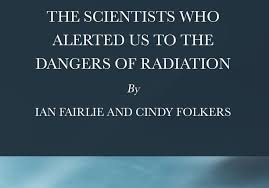
Jim Green, 2 May 24, A new book on radiation risks recently published by The Ethics Press International “The Scientists Who Alerted us to Radiation’s Dangers”. The book was written by myself and a US campaigner Cindy Folkers.
Recent epidemiology evidence clearly shows that radiation risks have increased and that previous denials on radiation risks by successive governments and their nuclear establishment on both sides of the Atlantic were and are wrong. Radiation is considerably more dangerous than official reports indicate, both in terms of the numerical magnitudes of cancer risks, and also in terms of new diseases, apart from cancer, ow shown to be radiogenic.
This is an up-to-date reference book for academics on the dangers and risks of radiation and radioactivity. The book also serves to help journalists and students counter the misrepresentations, incorrect assertions, wrong assumptions, and untruths about radiation risks often disseminated by the nuclear (power and weapons) establishments on both sides of the Atlantic. All scientific statements are backed by evidence via hundreds of references, 14 Appendices, 6 Annexes, a glossary and an extensive bibliography.
At present the book is only available in hardback from the Ethics Press. This is expensive but a 33% discount is available at
In addition, a paperback (~£30) version will be available in November 2024.https://www.amazon.co.uk/Scientists-Who-Alerted-Dangers-Radiation/dp/1804414468
In the meantime, the book’s first three chapters may be sampled at
Acknowledging the Horrors of Gaza—Without Wanting to End Them
GREGORY SHUPAK, FAIR, 26 Apr 24
The International Court of Justice in January found it “plausible” that Israel is committing genocide in Gaza. The next month, in a lawsuit aimed at ending US military support for Israel, a federal court in California ruled that Israel’s actions in the Strip “plausibly” amount to genocide (Guardian, 2/1/24). Shortly thereafter, Michael Fakhri (Guardian, 2/27/24), the UN special rapporteur on the right to food, said of Israeli actions:
There is no reason to intentionally block the passage of humanitarian aid or intentionally obliterate small-scale fishing vessels, greenhouses and orchards in Gaza—other than to deny people access to food….
Intentionally depriving people of food is clearly a war crime. Israel has announced its intention to destroy the Palestinian people, in whole or in part, simply for being Palestinian. In my view as a UN human rights expert, this is now a situation of genocide. This means the state of Israel in its entirety is culpable and should be held accountable—not just individuals or this government or that person.
In March, UN Special Rapporteur on the Occupied Palestinian Territories Francesca Albanese released a report concluding “that there are reasonable grounds to believe that the threshold indicating Israel’s commission of genocide is met.” During its campaign in Gaza, Israel’s “military has been heavily reliant on imported aircraft, guided bombs and missiles,” and 69% of Israel’s arms imports between 2019 and 2023 have come from the US (BBC, 4/5/24).
In this context, corporate media, which have long been strong supporters of both the Israeli colonization of Palestine and the US imperial violence undergirding it, face a dilemma. At this stage, corporate media cannot simply conceal the daily horrors that are unfolding, particularly as much of their audience is exposed to it whenever they open a social media app. So media’s challenge is to frame the “plausible” genocide in a way that will not undermine long-term US/Israeli domination of Palestine. In this context, many corporate media analysts acknowledge the grave harm done to the Palestinians in Gaza—without also saying that it must end.
A Washington Post editorial (3/30/24), for example, lamented how “hunger threatens Gaza’s civilians, who, through displacement, disease and death, have already paid a horrible price.” (“Israel is forcing hunger on Gaza with US support” would be better, but I digress.) Subsequently, the paper noted that “objective conditions for the 2 million or so people in Gaza, most displaced from ruined homes, are horrendous.”
The editors’ prescription in “the short run” was “a six-week truce with Hamas, during which the militants would release at least some of their hostages and relief supplies could flow into Gaza more safely.” At that point, Palestinians can resume paying that “horrible price” in “horrendous” conditions, such as having “the biggest cohort of pediatric amputees in history” (New Yorker, 3/21/24).
‘The weapons it needs
Columnist David French likewise wrote in the New York Times (4/7/24) that “the terrible civilian toll and looming famine in Gaza are a human tragedy that should grieve us all,” but endorsed “giving Israel the weapons it needs to prevail against Hamas.” He favorably compared the Biden’s administration’s lavishing Israel with weapons to Donald’s Trump’s remark that Israel has “got to finish what they started, and they’ve got to finish it fast, and we have to get on with life.” French said:
…………… “Israel,” French asserted, “possesses both the legal right and moral obligation to its people to end Hamas’s rule and destroy its effectiveness as a fighting force.” French’s argument was that the US should keep arming Israel, but ensure that more aid reaches Palestinians in Gaza. The absurdity of this position is that Israel’s use of that “military aid” is what causes “the terrible civilian toll and looming famine in Gaza.”
At the time French was writing, at least 27 Palestinians in Gaza had already starved to death, 23 of them children (Al Jazeera, 3/27/24). As the Integrated Food Security Phase Classification System, a hunger-monitoring coalition of multinational and nongovernmental organizations, noted in December:
The cessation of hostilities and the restoration of humanitarian space to deliver…multi-sectoral assistance and restore services are essential first steps in eliminating any risk of famine.
Commenting on the report, famine expert Alex de Waal (Guardian, 3/21/24) said that
Israel has had ample warning of what will happen if it continues its campaign of destroying everything necessary to sustain life. The IPC’s Famine Review Committee report on 21 December authoritatively warned of starvation if Israel did not cease destruction and failed to allow humanitarian aid at scale.
………………………………..A Los Angeles Times editorial (4/9/24) expressed concern for “the level of death and destruction in Gaza” and wrote that, in a February news conference, “Biden was particularly critical—appropriately so—of the inability of humanitarian relief workers to get food and water to Gaza’s 2.3 million people, many of whom face famine.” The piece went on to call for “hostage releases and a lasting ceasefire.”
Yet the article’s penultimate paragraph read: “It is Hamas that keeps the war going by continuing to hold the hostages it brutally kidnapped in its October attack.”
…………………………………..the reality was exactly the opposite of what the LA Times said: The Israeli/US side wanted to take a short break from slaughtering Palestinians, whereas the Palestinian side was insisting on the “lasting ceasefire” that the paper claimed to favor. Whatever the editors purport to want, regurgitating anti-Palestinian propaganda that essentially blames Palestinians for their own genocide, rather than the US/Israeli perpetrators, is hardly an effective way to contribute to ending the killing.
I’ve cited four authoritative sources either saying that Israel is committing genocide, or that there are reasonable grounds for interpreting the evidence that way. Yet none of the opinion articles I’ve analyzed here contained the word “genocide,” even as each one suggested that it was worried about the well-being of Palestinians in Gaza. If corporate media were serious about that, they would accurately name what the US and Israel are doing. Instead, US media outlets are pretending that a genocide isn’t happening and, when the war on Gaza eventually ends, this approach will make it easier to act as if one hadn’t taken place, and as if the US and Israel have a right to rule Palestine. https://fair.org/home/acknowledging-the-horrors-of-gaza-without-wanting-to-end-them/
Cruelty of Language — The New York Times’ Leaked Gaza Memo
The Intercept reporting on this issue matters greatly. Aside from the leaked memos, the dishonesty of language used by the New York Times – compassionate towards Israel and indifferent to Palestinian suffering – leaves no doubts that the NYT, like other US mainstream media, continues to stand firmly on Tel Aviv’s side.
By Ramzy Baroud, April 18, 2024, https://znetwork.org/znetarticle/cruelty-of-language-leaked-ny-times-memo-reveals-moral-depravity-of-us-media/—
The New York Times coverage of the Israeli carnage in Gaza, like that of other mainstream US media, is a disgrace to journalism.
This assertion should not surprise anyone. US media is driven neither by facts nor morality, but by agendas, calculating and power-hungry. The humanity of 120 thousand dead and wounded Palestinians because of the Israeli genocide in Gaza is simply not part of that agenda.
In a report – based on a leaked memo from the New York Times – the Intercept found out that the so-called US newspaper of record has been feeding its journalists with frequently updated ‘guidelines’ on what words to use, or not use, when describing the horrific Israeli mass slaughter in the Gaza Strip, starting on October 7.
In fact, most of the words used in the paragraph above would not be fit to print in the NYT, according to its ‘guidelines’.
Shockingly, internationally recognized terms and phrases such as ‘genocide’, ‘occupied territory’, ‘ethnic cleansing’ and even ‘refugee camps’, were on the newspaper’s rejection list.
It gets even more cruel. “Words like ‘slaughter’, ‘massacre’ and ‘carnage’ often convey more emotion than information. Think hard before using them in our own voice,” according to the memo, leaked and verified by the Intercept and other independent media.
Though such language control is, according to the NYT, aimed at fairness for ‘all sides’, their application was almost entirely one-sided. For example, a previous Intercept report showed that the American newspaper had, between October 7 and November 14, mentioned the word ‘massacre’ 53 times when it referred to Israelis being killed by Palestinians and only once in reference to Palestinians being killed by Israel.
By that date, thousands of Palestinians had perished, the vast majority of whom were women and children, and most of them were killed inside their own homes, in hospitals, schools or United Nations shelters. Though the Palestinian death toll was often questioned by US government and media, it was later generally accepted as accurate, but with a caveat: attributing the source of the Palestinian number to the “Hamas-run Ministry of Health in Gaza”. That phrasing is, of course, enough to undermine the accuracy of the statistics compiled by healthcare professionals, who had the misfortune of producing such tallies many times in the past.
The Israeli numbers were rarely questioned, if ever, although Israel’s own media later revealed that many Israelis who were supposedly killed by Hamas died in ‘friendly fire’, as in at the hands of the Israeli army.
And even though a large percentage of Israelis killed during the Al-Aqsa Flood Operation on October 7 were active, off-duty or military reserve, terms such as ‘massacre’ and ‘slaughter’ were still used in abundance. Little mention was made of the fact that those ‘slaughtered’ by Hamas were, in fact, directly involved in the Israeli siege and previous massacres in Gaza.
Speaking of ‘slaughter’, the term, according to the Intercept, was used to describe those allegedly killed by Palestinian fighters vs those killed by Israel at a ratio of 22 to 1.
I write ‘allegedly’, as the Israeli military and government, unlike the Palestinian Ministry of Health, are yet to allow for independent verification of the numbers they produced, altered and reproduced, once again.
The Palestinian figures are now accepted even by the US government. When asked, on February 29, about how many women and children had been killed in Gaza, US Defense Secretary Lloyd Austin said: “It’s over 25,000”, going even beyond the number provided by the Palestinian Health Ministry at the time.
However, even if the Israeli numbers are to be examined and fully substantiated by truly independent sources, the coverage of the New York Times of the Gaza war continues to point to the non-existing credibility of mainstream American media, regardless of its agendas and ideologies. This generalization can be justified on the basis that NYT is, oddly enough, still relatively fairer than others.
According to this double standard, occupied, oppressed and routinely slaughtered Palestinians are depicted with the language fit for Israel; while a racist, apartheid and murderous entity like Israel is treated as a victim and, despite the Gaza genocide, is, somehow, still in a state of ‘self-defense’.
The New York Times shamelessly and constantly blows its own horn of being an oasis of credibility, balance, accuracy, objectivity and professionalism. Yet, for them, occupied Palestinians are still the villain: the party doing the vast majority of the slaughtering and the massacring.
The same slanted logic applies to the US government, whose daily political discourse on democracy, human rights, fairness and peace continues to intersect with its brazen support of the murder of Palestinians, through dumb bombs, bunker busters and billions of dollars’ worth of other weapons and munitions.
The Intercept reporting on this issue matters greatly. Aside from the leaked memos, the dishonesty of language used by the New York Times – compassionate towards Israel and indifferent to Palestinian suffering – leaves no doubts that the NYT, like other US mainstream media, continues to stand firmly on Tel Aviv’s side.
As Gaza continues to resist the injustice of the Israeli military occupation and war, the rest of us, concerned about truth, accuracy in reporting and justice for all, should also challenge this model of poor, biased journalism.
We do so when we create our own professional, alternative sources of information, where we use proper language, which expresses the painful reality in war-torn Gaza.
Indeed, what is taking place in Gaza is genocide, a horrific slaughter and daily massacres against innocent peoples, whose only crime is that they are resisting a violent military occupation and a vile apartheid regime.
And, if it happens that these indisputable facts generate an ’emotional’ response, then it is a good thing; maybe real action to end the Israeli carnage of Palestinians would follow. The question remains: why would the New York Times editors find this objectionable?
New York Time’s War on Words: Avoid ‘Palestine,’ ‘Genocide,’ ‘Ethnic Cleansing’
JIM NAURECKAS, APRIL 18, 2024, https://fair.org/home/action-alert-nyts-war-on-words-avoid-palestine-genocide-ethnic-cleansing/
A New York Times staffer told the Intercept (4/15/24) that the paper was “basically taking the occupation out of the coverage, which is the actual core of the conflict.”
New York Times editors issued a memo to staffers that warned against the use of “inflammatory language and incendiary accusations on all sides”—but the instructions offered by the memo, which was leaked to the Intercept (4/15/24), seemed designed to dampen criticism of Israel’s actions in Gaza and to reinforce the Israeli narrative of the conflict.
Among the terms the memo tells Times reporters to avoid: “Palestine” (“except in very rare cases”), “occupied territories” (say “Gaza, the West Bank, etc.”) and “refugee camps” (“refer to them as neighborhoods, or areas”).
These are all standard terms: “Palestine” is the name of a state recognized by the United Nations and 140 of its 193 members. The “occupied territories” are the way Gaza and the West Bank are referred to by the UN as well as the United States. “Refugee camps” are what they are called by the UN agency that administers the eight camps in Gaza.
The memo discourages the use of the terms “genocide” (“We should…set a high bar for allowing others to use it as an accusation”) and “ethnic cleansing” (“another historically charged term”).
Genocide is defined by the Genocide Convention as certain “acts committed with intent to destroy, in whole or in part, a national, ethnical, racial or religious group, as such.” These acts include “killing members of the group” and “deliberately inflicting on the group conditions of life calculated to bring about its physical destruction in whole or in part.” The International Court of Justice ruled in January that it was “plausible” that Israel was in violation of the Genocide Convention (NPR, 1/26/24). A US federal judge has likewise held that “the current treatment of the Palestinians in the Gaza Strip by the Israeli military may plausibly constitute a genocide in violation of international law” (Guardian, 2/1/24).
“Ethnic cleansing” does not have a legal definition, but surely the Israeli military campaign that has displaced 85% of Gaza’s population, while Israeli Prime Minister Benjamin Netanyahu promises he is “working on” the “voluntary emigration” of that population (Mondoweiss, 12/28/23), qualifies under any reasonable standard.
In contrast to its take on “genocide” and “ethnic cleansing,” the memo contends that “it is accurate to use ‘terrorism’ and ‘terrorist’ in describing the attacks of October 7″; the words “fighters” or “militants,” however, are discouraged for participants in those attacks. This is the opposite of the approach taken by outlets like AP (X, formerly Twitter, 1/7/21) and the BBC (10/11/23); John Simpson, world affairs editor for the latter, calls “terrorism” a “loaded word, which people use about an outfit they disapprove of morally.”
Also on the Times‘ list of approved language: “the deadliest attack on Israel in decades.” Reporters are apparently not offered any superlatives to use to describe the Israeli assault on Gaza, such as “among the deadliest and most destructive in history” (AP, 12/21/23), or the most “rapid deterioration into widespread starvation” (Oxfam, 3/18/24), or “the biggest cohort of pediatric amputees in history” (New Yorker, 3/21/24).
“Our goal is to provide clear, accurate information, and heated language can often obscure rather than clarify the fact,” says the memo, written by Times standards editor Susan Wessling and international editor Philip Pan, along with their deputies. “Words like ‘slaughter,’ ‘massacre’ and ‘carnage’ often convey more emotion than information. Think hard before using them in our own voice.” The memo asks, “Can we articulate why we are applying those words to one particular situation and not another?”
As FAIR noted in a new study (4/17/24), the Times does apply “heated language” in a decidedly lopsided manner. When Times articles used the word “brutal” to describe a party in the Gaza conflict, 73% of the time it was used to characterize Palestinians. An analysis by the Intercept (1/9/24) of Gaza crisis coverage in the Times (as well as the Washington Post and Wall Street Journal) found that
highly emotive terms for the killing of civilians like “slaughter,” “massacre” and “horrific” were reserved almost exclusively for Israelis who were killed by Palestinians, rather than the other way around.
“Horrific” was used by reporters and editors nine times as often to describe the killing of Israelis rather than Palestinians; “slaughter” described Israelis deaths 60 times more than Palestinian deaths, and “massacre” more than 60 times.
ACTION:
Please ask the New York Times to revise its guidance on coverage of the Gaza crisis so that it is no longer banning standard descriptions and placing the most accurate characterizations of Israeli actions off limits.
CONTACT:
Letters: letters@nytimes.com
Readers Center: Feedback
CNN Finally Tells The Truth About The Flour Massacre After Previously Shilling For Israel
CAITLIN JOHNSTONE, APR 10, 2024, https://www.caitlinjohnst.one/p/cnn-finally-tells-the-truth-about?utm_source=post-email-title&publication_id=82124&post_id=143447638&utm_campaign=email-post-title&isFreemail=true&r=1ise1&triedRedirect=true&utm_medium=email
CNN has a new report out showing that (surprise!) Israel lied about the Flour Massacre in which IDF troops fired machine guns into a crowd of starving Gazans waiting for food this past February, killing over a hundred people. CNN found that Israel’s timeline and version of events doesn’t line up with video footage, witness testimony, and forensic evidence.
Which of course was obvious from the beginning to anyone who isn’t deeply invested in pretending Israel ever tells the truth about these things. Within hours of the massacre Euro-Med Human Rights Monitor had a preliminary report up saying that video, audio and material evidence shows that the IDF had been firing into the crowd in contradiction of Israel’s claims that the injuries and deaths sustained on the scene were mostly due to Gazans trampling on each other in a mad rush upon the convoy of aid trucks. Now here’s CNN, a month and a half later, telling us essentially the same thing.
This is the same CNN who at the time reported on the Flour Massacre in ways that advanced Israel’s information interests with headlines completely exonerating Israel of any wrongdoing like “At least 100 killed and 700 injured in chaotic incident” and “Carnage at Gaza food aid site amid Israeli gunfire”. CNN also repeatedly refers to the killings as “food aid deaths”, as though it’s the food aid that killed them and not the military of a very specific state power.
I don’t know if there’s a word for when a government does something evil and then churns out a bunch of easily disprovable lies with the understanding that by the time those lies are debunked public attention will have moved on from the controversy, but there should be. Over and over again we’ve seen the Israeli regime do just enough lying to dampen the initial burst of attention and outrage and get people doubting themselves, only to discover far too late that it was all a bunch of crap after the initial crime has been forgotten.
This is exactly what happened with Israel’s initial assault on al-Shifa Hospital back in November, when Israel was cranking out propaganda claiming the hospital was being used as a command center for Hamas. Not until the end of December did The Washington Post show up to acknowledge the abundantly obvious fact that there was no evidence for Israel’s claims, which independent outlets like Consortium News had been reporting since mid-November. Now al-Shifa Hospital — the largest hospital in Gaza — has been completely destroyed.
Back in October Israel and its apologists were shrieking with outrage that anyone would dare suggest that Israel would ever attack a hospital at all, saturating the media with bogus evidence that it falsely claimed proved its innocence. Since that time Israel has launched hundreds of attacks on Gaza’s healthcare services and has destroyed most of its healthcare system.
It’s a weaponization of the adage “A lie gets halfway around the world before the truth even puts its boots on.” They know all they have to do is lie really hard for a week or two, and then when the truth inevitably surfaces it won’t matter, because the truth will never be able to have the impact their lies had when it mattered.
It’s so obnoxious how even after all this time Israel is still given the benefit of the doubt on such claims by the western political-media class until they’re debunked weeks or months later, long after the outcry over the incident has been muted and neutered by Israeli lies. If a state power is preventing journalists and human rights groups from investigating the facts on the ground in a given area, then it is not legitimate to give their claims about what happens in that area weighted consideration when their track record and all the facts in evidence say they’re probably lying.
The fact that the western press keep giving Israel the benefit of the doubt whenever reports like this emerge after they’ve been caught in so very many lies means the western press are just as culpable for the circulation of Israeli lies as Israel itself. In journalism you’re taught that if someone says it’s raining and someone else says it’s dry, your job isn’t to quote them both and treat both claims as equal, your job is to go look out the window and see which is true. The fact that the imperial media take so long to drag their asses to the window serves nobody but Israel and the globe-spanning empire of which it is a part.
‘Oppenheimer’ finally opens in Japan, the only nation to experience horror of nuclear war
By Chris Lau and Moeri Karasawa, CNN, Mon April 1, 2024
Japanese moviegoers finally got the chance to see “Oppenheimer” this weekend, eight months after the biopic’s worldwide release, following concerns over how it might be received in the only country to directly experience the horror of nuclear weapons.
The Oscar-winning blockbuster by British-American director Christopher Nolan was one of 2023’s most successful films and its joint release on the same weekend as “Barbie” created a global movie spectacle dubbed “Barbenheimer.”
But that framing left many Japanese people feeling uncomfortable — as did the painful content of a movie that centers on the devastating technology unleashed by J. Robert Oppenheimer and his team of scientists.
Some in Japan felt that the unofficial “Barbenheimer” marketing campaign trivialized the 1945 nuclear attacks on Hiroshima and Nagasaki, and studio Universal Pictures opted not to include the country in its global release rollout last July.
The three-hour biopic has broken several records since its release last year, becoming the highest-grossing movie set during World War II, according to Universal.
In Japan, it ranked fourth at the box office following its release Friday, according to industry tracker Kogyo Tsushinsha, raking in 379 million yen ($2.5 million) in its first three days.
As part of its promotional campaign, Universal sought the views of atomic bomb survivor Tomonaga Masao, who is the president of a Nagasaki-based “hibakusha” group — the name survivors call themselves. In quotes published on the movie’s official Japanese website, Masao said could feel the titular character’s struggle in the latter part of the film, when Oppenheimer begins to push back against the nuclear arms race that emerges after the war.
“This is… connected to the fundamental problem of the world today, where a nuclear-free world is becoming more and more distant,” he is quoted as saying
“Here we sense Nolan’s hidden message of pursuing the responsibility of politicians,” he added.
Former Hiroshima Mayor Hiraoka Takashi is meanwhile quoted saying that he saw “a man full of contradictions,” whose scientific work was weaponized by the state and whose warning against downplaying the threat of nuclear war was later ignored by those same authorities.
“The atmosphere of those days still fills our world today,” he said, adding: “I would like to watch it again and think about what a nation that believes in nuclear deterrence is”
……………………………………………………………………………………
Rishu Kanemoto, a 19-year-old student, saw the film on Friday.
“Hiroshima and Nagasaki, where the atomic bombs were dropped, are certainly the victims,” he told Reuters.
But he also expressed sympathy for Oppenheimer.
“I think even though the inventor is one of the perpetrators, he’s also the victim caught up in the war,” he added. https://edition.cnn.com/2024/04/01/style/japan-oppenheimer-release-nuclear-intl-hnk/index.html
Einstein’s vision for peace

By Lawrence S. Wittner https://beyondnuclearinternational.org/2024/03/31/einsteins-vision-for-peace/
Aghast at the use of nuclear weapons, he threw himself into efforts to prevent worldwide nuclear annihilation
Although the popular new Netflix film, Einstein and the Bomb, purports to tell the story of the great physicist’s relationship to nuclear weapons, it ignores his vital role in rallying the world against nuclear catastrophe.
Aghast at the use of nuclear weapons in August 1945 to obliterate the cities of Hiroshima and Nagasaki, Einstein threw himself into efforts to prevent worldwide nuclear annihilation. In September, responding to a letter from Robert Hutchins, Chancellor of the University of Chicago, about nuclear weapons, Einstein contended that, “as long as nations demand unrestricted sovereignty, we shall undoubtedly be faced with still bigger wars, fought with bigger and technologically more advanced weapons.” Thus, “the most important task of intellectuals is to make this clear to the general public and to emphasize over and over again the need to establish a well-organized world government.”
Four days later, he made the same point to an interviewer, insisting that “the only salvation for civilization and the human race lies in the creation of a world government, with security of nations founded upon law.”
Determined to prevent nuclear war, Einstein repeatedly hammered away at the need to replace international anarchy with a federation of nations operating under international law. In October 1945, together with other prominent Americans (among them Senator J. William Fulbright, Supreme Court Justice Owen Roberts, and novelist Thomas Mann), Einstein called for a “Federal Constitution of the World.”
That November, he returned to this theme in an interview published in the Atlantic Monthly. “The release of atomic energy has not created a new problem,” he said. “It has merely made more urgent the necessity of solving an existing one. . . . As long as there are sovereign nations possessing great power, war is inevitable.” And war, sooner or later, would become nuclear war.
Given Einstein’s fame and his well-publicized efforts to avert a nuclear holocaust, in May 1946 he became chair of the newly-formed Emergency Committee of Atomic Scientists, a fundraising and policymaking arm for the atomic scientists’ movement. In the Committee’s first fund appeal, Einstein warned that “the unleashed power of the atom has changed everything save our modes of thinking, and thus we drift toward unparalleled catastrophe.”
Even so, despite the fact that Einstein, like most members of the early atomic scientists’ movement, saw world government as the best recipe for survival in the nuclear age, there seemed good reason to consider shorter-range objectives. After all, the Cold War was emerging and nations were beginning to formulate nuclear policies. An early Atomic Scientists of Chicago statement, prepared by Eugene Rabinowitch, editor of the Bulletin of the Atomic Scientists, underscored practical considerations.
“Since world government is unlikely to be achieved within the short time available before the atomic armaments race will lead to an acute danger of armed conflict,” it noted, “the establishment of international controls must be considered as a problem of immediate urgency.” Consequently, the movement increasingly worked in support of specific nuclear arms control and disarmament measures.
In the context of the heightening Cold War, however, taking even limited steps forward proved impossible. The Russian government sharply rejected the Baruch Plan for international control of atomic energy and, instead, developed its own atomic arsenal. In turn, U.S. President Harry Truman, in February 1950, announced his decision to develop a hydrogen bomb―a weapon a thousand times as powerful as its predecessor.
Naturally, the atomic scientists were deeply disturbed by this lurch toward disaster. Appearing on television, Einstein called once more for the creation of a “supra-national” government as the only “way out of the impasse.” Until then, he declared, “annihilation beckons.”
Despite the dashing of his hopes for postwar action to end the nuclear menace, Einstein lent his support over the following years to peace, nuclear disarmament, and world government projects.
The most important of these ventures occurred in 1955, when Bertrand Russell, like Einstein, a proponent of world federation, conceived the idea of issuing a public statement by a small group of the world’s most eminent scientists about the existential peril nuclear weapons brought to modern war. Asked by Russell for his support, Einstein was delighted to sign the statement and did so in one of his last actions before his death that April.
In July, Russell presented the statement to a large meeting in London, packed with representatives of the mass communications media. In the shadow of the Bomb, it read, “we have to learn to think in a new way. . . . Shall we . . . choose death because we cannot forget our quarrels? We appeal as human beings to human beings: Remember your humanity, and forget the rest.”
This Russell-Einstein Manifesto, as it became known, helped trigger a remarkable worldwide uprising against nuclear weapons in the late 1950s and early 1960s, culminating in the world’s first significant nuclear arms control measures. Furthermore, in later years, it inspired legions of activists and world leaders. Among them was the Soviet Union’s Mikhail Gorbachev, whose “new thinking,” modeled on the Manifesto, brought a dramatic end to the Cold War and fostered substantial nuclear disarmament.
The Manifesto thus provided an appropriate conclusion to Einstein’s unremitting campaign to save the world from nuclear destruction.
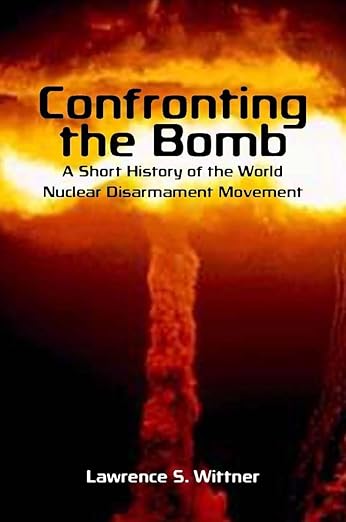
Lawrence S. Wittner is Professor of History Emeritus at SUNY/Albany and the author of Confronting the Bomb (Stanford University Press).
An interview with Annie Jacobsen, author of ‘Nuclear War: A Scenario’

By Michael Mechanic | April 1, 2024
Nuclear war is a topic few care to think about. We sometimes call it unthinkable. But we need to think carefully, and to talk—particularly with high-ranking foreign officials whose motives we may have reason to distrust, just as they distrust ours—about how we can collectively avoid launching a weapon that would end our civilization.
Pulitzer Prize finalist Annie Jacobsen’s timely new book, Nuclear War: A Scenario, is a lightning-fast read intended to put the nuclear threat squarely back on everyone’s radar. Her narrative thread, as the title suggests, is a fact-based (though thankfully fictional) scenario that shows how a nuclear launch can escalate into World War III at dizzying speed.
Jacobsen tees up her cinematic approach with chapters describing how we got here, including a discussion of America’s Single Integrated Operational Plan (SIOP) for General Nuclear War—which was devised in the 1960s and, as Jacobsen details in this book excerpt published today by Mother Jones, was more or less a recipe for the end of the world.
Because that’s nuclear war: One bad assumption, one shot, one retaliation, and it’s unstoppable.
Your book is frightful. What made you want to write in such detail how a nuclear war could unfold?
As a national security reporter, I have written six previous books on military and intelligence programs—CIA, Pentagon, DARPA—all designed to prevent nuclear World War III. During the Trump administration, amid the “fire and fury” rhetoric, I was watching STRATCOM commanders and deputy commanders speak freely on C-SPAN about the dangers therein. I began to wonder, My god, what would happen if deterrence failed? I began to interview people during COVID, when people had more time on their hands for someone like me—and that began the terrifying process of learning that nuclear war is, in essence, a sequence of events, and that once it starts it almost certainly will not stop.
………………………………………………………………………………………………………………… One thing that really struck me is the unbelievable speed at which nuclear war is waged.
Gen. Robert Kehler, the former commander of STRATCOM, said to me that the world could end in the next couple of hours. It took me a minute to ask my next question, because coming from someone in that position of authority—the most significant role in the entire nuclear apparatus—that really blew my mind.
Ditto goes for an interview I did with President Barack Obama’s FEMA chief, Craig Fugate. Of course, FEMA is the agency in charge of what’s called population protection planning for American citizens in the event of hurricanes, floods, earthquakes. Fugate told me that after a nuclear war, there wouldn’t be any population protection planning because everyone would be dead.
Help is not coming.………………….
I learned from your book that FEMA plays a unique role in the event of a nuclear attack, and it’s not what one might expect.
That’s right. In the ’50s and ’60s, the US position was that a nuclear war could be fought and won. That is no longer the official position. But plans were put in place for the continuity of government programs—the idea that the government must continue functioning no matter what. That is also a fantasy.
To hear from former Secretary of Defense Bill Perry about the madness and mayhem and anarchy that would follow, in his mind, in the event of a nuclear war, you really get the sense that civilization will fail. I believe one of the reasons so many of these sources went on the record for me is because they know that this is the truth. And they know it is up to the people to change the trajectory of where we’re headed. I mean, my god, look at the saber-rattling going on as we do this interview…………………………………………………………………………………………………………………………………………………………………………………………………………………………….
“Launch on warning” puts extraordinary pressure on a president. The one in your scenario is pretty clueless. He hasn’t ever rehearsed. Nobody told him he’d have just six minutes to choose from a Denny’s breakfast menu of existential options in response to what may or may not be an incoming nuke. It’s hard to believe the Pentagon doesn’t put every new president through a series of war games.
I was just as surprised as you are. But that’s coming from multiple secretaries of defense and national security advisers—people in a position to advise the president on a nuclear counterattack. The best summation came from Leon Panetta, who explained that as White House chief of staff he was witness to the fact that the president is primarily concerned with domestic issues—like his popularity. I asked Panetta how clued in he was when he was the CIA director, and he said almost not at all, because the CIA is about intelligence, not nuclear operations………………………………………………………………………………………………………………….
Your book busts some common myths, for instance the belief that the US could shoot down an incoming nuclear missile. We really can’t defend against nuclear weapons, can we?
We can’t. That is pure fantasy. During the final fact-checking incantations, I had the book read by a lieutenant general who ran these scenarios for NORAD. I was almost hoping someone would say, Annie, you should take this part out of the book, because we have a secret Iron Dome that you can’t report on. No. The truth is that the United States relies upon 44 interceptor missiles to stop any incoming missiles. Russia alone has 1,674 nuclear warheads in “ready to launch” position. Adding to that, according to congressional reports, the interceptors are only approximately 50 percent effective.
Under the best of circumstances.………………………………………………………………..
Oppenheimer: Monaghan man, Daniel A. McGovern, who captured nuclear devastation
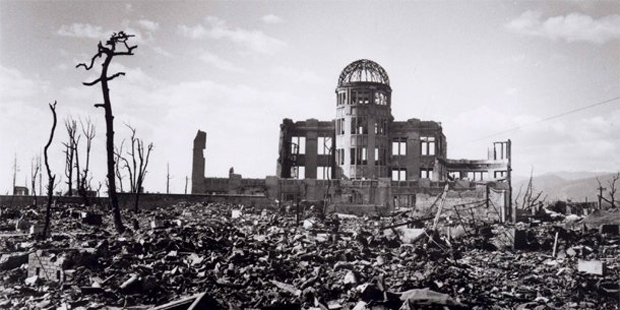
By Adam Mandeville, BBC News NI 31 Mar 24
The success of the film Oppenheimer has shone a spotlight once more on the bombings of Hiroshima and Nagasaki.
However, the story of one Monaghan man involved in the aftermath appears to have been forgotten.
Just one month after the bombings, Lt Col Daniel A. McGovern was the first person sent by the US to document the damage.
A member of the US Airforce, he was a specialist cameraman trained to document bombs and their aftermath.
In one scene in the Academy Award winning Oppenheimer film, the titular character played by Irish man Cillian Murphy looks in horror at footage of the aftermath of the bombing.
But these images may not have survived for others to see if it were not for one man from Carrickmacross.
McGovern’s biographer said the story is one of most amazing he has ever heard.
“McGovern’s story is better, in my opinion, than Oppenheimer’s,” he said.
In total, Col McGovern’s team collected over 125,000ft of colour and black and white footage – though much of this was classified.
When he returned from Japan, Col McGovern made secret copies of the footage to ensure it would be saved from US government censorship.
He took these from the Pentagon, storing one set at an air force motion picture depository in Dayton, Ohio, and kept the other himself.
In 1967, a US Congressional committee, that included Robert Kennedy, asked to see the atomic bomb footage.
The material had been declassified but no one could find the originals.
Col McGovern directed the authorities to his copies.
In 1970, the general public got its first glimpse of some of the footage as it was incorporated into a film called Hiroshima Nagasaki – August 1945.
McGovern’s huge risk to secretly keep copies of his footage ensured that the committee had access to crucial documents.
Joseph McCabe spent 20 years working on a biography of Col McGovern, called Rebels to Reels: A Biography of Combat Cameraman Daniel A. McGovern USAF.
He said Col McGovern could have been shot for treason after making copies of the classified footage, but did so to save it for future generations…………………………………………………..
Mr McCabe suggested the footage watched by J Robert Oppenheimer would have been captured by McGovern.
Historian Dr Tom Thorpe said without the footage captured by McGovern, films such as Oppenheimer may never have been made.
“McGovern’s actions to save the footage ensured that it remained available for future generations,” he said.
“[McGovern’s] contributions indirectly influenced the availability of such archival material for films like Oppenheimer.”
He added that the images are “immensely important to our understanding of history”.
…………………………………………………………………….. In the latter half of the 20th Century, Col McGovern would continue to work for the US military and government, photographing various bomb tests, including those of Wernher Von Braun, co-developer of the V2 rocket.
He was also asked to help gather footage in and around Roswell, New Mexico following the now famous Roswell incident.
Col Daniel A McGovern passed away in California in 2005.
In 2022, 100 years after the McGovern family left for the US, his family returned to Carrickmacross to witness the unveiling of a commemorative plaque, dedicated to the man who photographed one of the most infamous events of the 20th Century. https://www.bbc.com/news/uk-northern-ireland-68656372
‘My jaw dropped’: Annie Jacobsen on her scenario for nuclear war

in such circumstances the president is likely to be subject to “jamming”, a chorus of military voices urging he or she follows protocols which lead inexorably towards a retaliatory launch.
“My jaw dropped at so much of what I learned, which was not classified but had just been removed or rather sanitised from the public discourse,” she said. “I found myself constantly surprised by the insanity of what I learned, coupled with the fact that it’s all there for the public to know.”
in such circumstances the president is likely to be subject to “jamming”, a chorus of military voices urging he or she follows protocols which lead inexorably towards a retaliatory launch.
The author’s new book posits an all-too-possible catastrophe, destruction assured by human frailty as much as by technology
Julian Borger, Sun 31 Mar 2024 https://www.theguardian.com/books/2024/mar/31/annie-jacobsen-nuclear-war-scenario—
Annie Jacobsen was a high school student in 1983, when ABC television broadcast the film The Day After, about the horrors of nuclear war. She never forgot the experience. More than 100 million Americans watched and were terrified too. One of them lived in the White House. According to his biographer and his own memoirs, it helped turn Ronald Reagan into a nuclear disarmer in his second term.
Not long after, the world’s stockpile of nuclear warheads peaked and began to decline rapidly, from 70,000 to just over 12,000 currently, according to the Federation of American Scientists.
That is still enough however to reduce the Earth to a radioactive desert, with some warheads left over to make it glow. Meanwhile, the global situation is arguably the most dangerous since the Cuban missile crisis, the Russian invasion of Ukraine grinding on mercilessly and China contemplating following Moscow’s example by making a grab for Taiwan.
The danger of nuclear war is as immediate as ever but it has faded from public discourse, which is why Jacobsen, now a journalist and author, felt driven to write her new book, Nuclear War: A Scenario.
“For decades, people were under the assumption that the nuclear threat ended when the Berlin Wall went down,” Jacobsen said, before suggesting another reason the existential threat of nuclear weapons has been filtered out of mainstream discourse – it has been turned into a technical debate.
“Nuclear weapons and the whole nomenclature around them have been so rarefied it’s been reserved as a subject for those in the know,” she said.
In her book, Jacobsen seeks to break through jargon and details in order to tell a terrifying story in a devastatingly straightforward way. The spoiler alert is that it doesn’t end well.
As the book promises on the cover, it presents a single scenario for a nuclear war, set in the present day. North Korea, perhaps convinced it is about to be attacked, launches a surprise missile strike against the US, leading Washington to respond with a salvo of 50 Minuteman III intercontinental ballistic missiles (ICBMs). These are aimed at North Korea’s weapons sites and command centres, but in order to reach their intended targets the missiles have to fly over Russia, because they do not have the range to use any other route.
All too aware of the danger of miscalculation, the US president tries to get hold of his Russian counterpart. But the two men and the countries they run are not getting on, and he fails. Making things even worse, Russia’s dodgy satellite early warning system, Tundra, has exaggerated the scale of the US salvo, and from his Siberian bunker, the Russian president (Vladimir Putin in all but name) orders an all-out nuclear attack on the US.
The scenario is based on known facts concerning the world’s nuclear arsenals, systems and doctrine. Those facts are all in the public domain, but Jacobsen believes society has tuned them out, despite (or perhaps because of) how shocking they are.
Jacobsen was stunned to find out that an ICBM strike against North Korea would have to go over Russia, and that Russia’s early warning system is beset with glitches, an especially worrying fact when combined with the knowledge that both the US and Russia have part of their nuclear arsenals ready to launch at a few minutes’ notice. Both also have an option in their nuclear doctrine to “launch on warning”, without waiting for the first incoming warhead to land.
A US president would have a few minutes to make a decision if American early warning systems signaled an incoming attack. In those few minutes, he or she would have to process an urgent, complex and inevitably incomplete stream of information and advice from top defence officials. Jacobsen points out that in such circumstances the president is likely to be subject to “jamming”, a chorus of military voices urging he or she follows protocols which lead inexorably towards a retaliatory launch.
“My jaw dropped at so much of what I learned, which was not classified but had just been removed or rather sanitised from the public discourse,” she said. “I found myself constantly surprised by the insanity of what I learned, coupled with the fact that it’s all there for the public to know.”
Ultimately, only presidents can make the decision and once it is made, no one has the authority to block it. It is called sole authority, and it is almost certainly the most frightening fact in the world today. It means a handful of men each have the power to end the world in a few minutes, without having to consult anyone.
It is not a group anyone would choose to have that responsibility, including as it does the likes of Putin and Kim Jong-un. In Washington it is a choice this year between Joe Biden and Donald Trump. They all bring a lot of human frailty, anger, fear and paranoia to a potential decision that could end the planet.
You would want to have a commander-in-chief who is of sound mind, who is fully in control of his mental capacity, who is not volatile, who is not subject to anger,” Jacobsen said, referring to this year’s presidential election.
“These are significant character qualities that should be thought about when people vote for president, for the simple reason that the president has sole authority to launch nuclear weapons.”
- Nuclear War: A Scenario is published in the US by Dutton
Establishment Papers Fell Short in Coverage of Genocide Charges

the two most widely circulating newspapers in the US ………In the lead-up to the hearing (12/29/23–1/10/24), the New York Times only published three articles focused on the case (1/8/24, 1/9/24, 1/10/24), while another Times piece (1/10/24) included a brief mention of the genocide charges.
the two most widely circulating newspapers in the US cannot say the same. In the lead-up to the hearing (12/29/23–1/10/24), the New York Times only published three articles focused on the case (1/8/24, 1/9/24, 1/10/24), while another Times piece (1/10/24) included a brief mention of the genocide charges.
South Africa on December 29 presented a historic case to the International Court of Justice (ICJ)—the highest court in the world. In an 84-page lawsuit, South Africa asserted that Israel’s deadly military campaign in Gaza—following the October 7 Hamas attacks, which killed 1,200 Israelis and foreigners—constitutes genocide. So far, more than 30,000 Palestinians in Gaza have been slaughtered, while over 71,000 have been injured in Israeli attacks.
Establishment media in the US were slow to cover South Africa’s “epochal intervention” in the ICJ—initially providing the public with thin to no reporting on the case. While the quantity of coverage did eventually increase, it skewed pro-Israel, even after the court in January found it “plausible” that Israel is committing genocide in Gaza, and ordered Tel Aviv to comply with international law.
Thin early coverage
FAIR used the Nexis news database and WSJ.com to identify every article discussing the genocide case published in the print editions of the New York Times and Wall Street Journal for one month, from the announcement of the case on December 29 through January 28, two days after the ICJ’s preliminary ruling.
Under international law, genocide is one of the gravest charges that can be brought against a state. Since its 1948 ratification by the UN, the Convention on the Prevention and Punishment of the Crime of Genocide has only been presented to the ICJ on a handful of occasions, and the historic nature of the complaint was not lost on its applicant: “South Africa is acutely aware of the particular weight of responsibility in initiating proceedings against Israel for violations of the Genocide Convention.”
Unfortunately, the two most widely circulating newspapers in the US cannot say the same. In the lead-up to the hearing (12/29/23–1/10/24), the New York Times only published three articles focused on the case (1/8/24, 1/9/24, 1/10/24), while another Times piece (1/10/24) included a brief mention of the genocide charges.
The Wall Street Journal ran no pieces focused on the charges prior to the hearing. The Journal‘s only mention of the genocide case in the pre-trial period came in a broader article about the war (12/29/23), which included six paragraphs about South Africa’s application. The paper did not reference the case again until the trial began.
‘Without any basis in fact’
During the two-day hearing, each paper ran two articles about it in their print editions. Each published an overview of the case (New York Times, 1/11/24; Wall Street Journal, 1/11/24). For their second piece, the New York Times (1/11/24) looked at both Israeli and Palestinian reactions, while the Journal (1/12/24) focused only on Israeli reactions; the one Palestinian it quoted was identified as an Israeli citizen…………………………………………………………….
Uneven sourcing………………………………………………..
Unchallenged Israeli talking points………………………………………………….
Unscrutinized statements……………………………………………….
With no scrutiny of Israeli officials’ statements, US news becomes little more than a bullhorn for government propaganda.
It’s Journalistic Malpractice To Say Gazans Are Starving Without Saying Israel Is Starving Them
CAITLIN JOHNSTONE, MAR 19, 2024, https://www.caitlinjohnst.one/p/its-journalistic-malpractice-to-say?utm_source=post-email-title&publication_id=82124&post_id=142753938&utm_campaign=email-post-title&isFreemail=true&r=1ise1&triedRedirect=true&utm_medium=email
The mass media are printing some amazingly depraved headlines about a new UN-backed report on starvation in Gaza from the Integrated Food Security Phase Classification, who says half the enclave’s population is now at the highest-possible threat level for starvation.
The mass media are printing some amazingly depraved headlines about a new UN-backed report on starvation in Gaza from the Integrated Food Security Phase Classification, who says half the enclave’s population is now at the highest-possible threat level for starvation.
At a time when only 20 percent of news readers ever make it past the headline of a given story, this is an extremely destructive and propagandistic act of journalistic malpractice. The editors of The New York Times know exactly what they’re doing packaging a story about Israel’s deliberate starvation of Palestinian civilians like it’s a troubling prediction about the weather.
Contrast the New York Times’ headline with that of Al Jazeera’s report on the same story: “Gaza headed towards famine amid Israeli aid curbs: What to know”. That’s the normal way to present a story about a deliberately inflicted famine upon an imperiled population. If a population was being deliberately starved by siege warfare from a nation like Russia, China or Iran, we may be absolutely certain that the name of that nation would appear in the headline.
But because the western media exist to generate propaganda and not to report the news, we get headlines like “Gaza faces famine during Ramadan, the holy month of fasting” from the BBC, and “Famine in northern Gaza is imminent as more than 1 million people face ‘catastrophic’ levels of hunger, new report warns” from CNN, and “Famine imminent in northern Gaza, says UN-backed report” from Reuters, and “‘Catastrophic levels of hunger’ in Gaza mean famine is imminent, says aid coalition” from The Guardian.
We saw this with Saudi Arabia’s US-backed starvation of Yemen as well. When the mass media talked about Yemen at all (usually they just ignored it), editors consistently obfuscated the fact that this was a population being deliberately starved by a cruel blockade and the deliberate targeting of food infrastructure. The fact that it was being made possible by the United States was almost never mentioned.
This is a very good example of how western propaganda works, by the way. The mainstream western press don’t generally make up whole-cloth lies (though they will uncritically print claims made by western government agencies who have an extensive history of lying); what they do is rely on half-truths, distortions and lies by omission to give their audiences a wildly slanted picture of what’s going on in the world. By always going out of their way to tell you an enemy of the US-centralized empire is committing an atrocity the millisecond it looks like they might be, while being furtive and obfuscatory about the crimes of the US and its allies, they give their audience a skewed understanding of who is and is not committing the real evils in our world.
This doesn’t typically happen as a result of any grand monolithic conspiracy; it’s mostly just the natural consequence of having all the major news platforms controlled by wealthy and powerful people who each have a vested interest in manufacturing consent for the status quo upon which their wealth and power are premised. The oligarchs control the media, and they hire the executives who run the media, and the executives hire the editors who write the headlines and guide the reporters to report a certain way, and this gives rise to a system where everyone working for the outlet conducts themselves in a way that just so happens to suit the powerful people on top.
Then before you know it you’ve got editors at The New York Times — a paper that’s been published by the same family for over a century — packaging a story about starvation caused by an Israeli siege to look like it’s a story about an innocent crop failure. Odds are nobody told them to do that; they just learned over the years that that’s how you rise to the top in an outlet like The New York Times.
TODAY. Nuclear power and the ignorance of journalists – it’s almost criminal.

I’d like to believe that it is just ignorance – the way journalists complacently regurgitate the lying propaganda vomited forth by the nuclear industry.
And to be fair – I really do think that it is the result of journalists’ ignorance, rather than a cynical “knowing which side is their bread buttered on” – (where the money is)
Why are journalists SO IGNORANT ABOUT THE NUCLEAR INDUSTRY?
I think it goes back to the industry’s traditional and very effective ploy :
– “only nuclear engineers can really understand it“
This meant that any discussion or reporting would have to be enshrined in technical jargon, impenetrable to the normal person. The nuclear lobby made sure of this, although the facts and various aspects could well be discussed in normal language. Nuclear experts could have chosen to make it clearly – for example Albert Einstein did – “Nuclear power is one hell of a way to boil water.”
This ploy has worked well over the decades, causing journalists to be wary about possibly saying something inaccurate or silly. Their safest course has indeed been to just regurgitate the industry’s handouts, including the approving comments by politicians etc (who are supported by the industry, and who themselves know little about it)
Even today, it is rare to find nuclear matters clearly explained to the “lay person”
You do find articles on the costs of nuclear, the opponents of it, – but not much on how it works, what the wastes actually are, and so on.

It was refreshing today, to find an article from France, explaining “fast breeder reactors” – reprocessing, as in Bill Gates’ much touted new Natrium reactor plan . That article was written by a journalist who has taken the trouble to do his research.
The nuclear lobby still prefers to do its media spin via articles handed out in their own obscurantist language. You don’t need to be a nuclear engineer or physicist to do your research. But it takes time and trouble and asking the hard questions.
Journalists are either too lazy or too bought to do this. Easier to regurgitate.

But with nuclear war an ever more looming possibility, it is definitely time for journalists to woke up and do their homework on the industry whose reason for existence is nuclear weapons.
1 This Month
To see nuclear-related stories in greater depth and intensity – go to https://nuclearinformation.wordpress.com/
12 February – Webinar The Big Push: New Nuclear Projects in Canada

Thursday, February 12, 7 pm Eastern | 2nd of 4 sessions in the 2026 Nuclear Waste Online webinar series
Join a webinar on the push for new nuclear generation in Canada. Go to Northwatch.org to register or use the registration link https://us02web.zoom.us/webinar/register/WN_ZfWOf1GITqSRIZX8CB-A9w
-
Archives
- February 2026 (127)
- January 2026 (308)
- December 2025 (358)
- November 2025 (359)
- October 2025 (376)
- September 2025 (258)
- August 2025 (319)
- July 2025 (230)
- June 2025 (348)
- May 2025 (261)
- April 2025 (305)
- March 2025 (319)
-
Categories
- 1
- 1 NUCLEAR ISSUES
- business and costs
- climate change
- culture and arts
- ENERGY
- environment
- health
- history
- indigenous issues
- Legal
- marketing of nuclear
- media
- opposition to nuclear
- PERSONAL STORIES
- politics
- politics international
- Religion and ethics
- safety
- secrets,lies and civil liberties
- spinbuster
- technology
- Uranium
- wastes
- weapons and war
- Women
- 2 WORLD
- ACTION
- AFRICA
- Atrocities
- AUSTRALIA
- Christina's notes
- Christina's themes
- culture and arts
- Events
- Fuk 2022
- Fuk 2023
- Fukushima 2017
- Fukushima 2018
- fukushima 2019
- Fukushima 2020
- Fukushima 2021
- general
- global warming
- Humour (God we need it)
- Nuclear
- RARE EARTHS
- Reference
- resources – print
- Resources -audiovicual
- Weekly Newsletter
- World
- World Nuclear
- YouTube
-
RSS
Entries RSS
Comments RSS
 nuclear-news