Legal fight Sept 23-30 to save Utah water from Green River Nuclear Project

Our case “HEAL Utah et al v. Blue Castle Holdings et al,” will be tried in the 7th District Court in Price, from Sept. 23-30. This is more than just a nuclear power case. It is also a public airing of whether Western officials should endorse virtually any speculative use of our precious water. It’s a chance to ask a judge to seriously consider the growing impacts of climate change, as study after study suggests the Colorado River basin will lose anywhere from 8 to 35 percent of its water as snowpack recedes and drought intensifies.
And, yes, in the wake of Fukushima, it’s a chance to ask whether siting nuclear reactors upstream from the rivers that supply water to 30 million Americans is a wise choice.
 Fight the Green River nuclear reactors project in Utah, High Country News, Matt Pacenza | Sep 12, 2013 Drive south from Price, Utah for about an hour until Route 6 intersects with I-70. On your right, toward the west, the stunning San Rafael Reef rises. And on the left, the eastern Book Cliffs rise.
And, just there, to the east of Route 6, if the energy development company, Blue Castle Holdings, and Utah state water officials have their way, you’ll soon see an industrial park dominated by the Mountain West’s first commercial nuclear reactors: the so-called “Green River nuclear” project.
Later this month, at a courthouse in Price, a Utah state judge will hear a bid from more than a dozen environmental groups, businesses and citizens to overturn a decision approving the transfer of Green River water to cool the proposed reactors. This trial is likely the last and best chance to stop the project before it moves to the industry-friendly Nuclear Regulatory Commission. Continue reading
Ashurst Australia responds to article criticising it
27 August 2013
Dear Ms Wauchope
Thank you for giving me ths opportunity to respond to the article which you have posted on your websites. I trust that you will post this letter with equal prominence. Fairfax is no longer publishing it, has accepted that I and Ashurst acted ethically and competently at all times, and has withdrawn and apologised for the suggestions in the article to the contrary.
Your article contains a number of errors and says anumber of false and damaging things about me. In particular, when I sent you the letter on 10th December 2012, I had no way of knowing who you were, as we were sending it to you as a domain name registrant. Your site appeared to be published by an organisation. Further, I at all times acted in accordance wit proper legal practise, and my professional obligations to my client.
I hope that you will rethink your decision to continue to publish incorrect and harmful allegations about me.
Kind regards
Ashurst lawyer
Editor’s note: I don’t understand why Fairfax withdrew the article from their online publication, as I thought that the article was true. I understand that the journalist who wrote that article stands by the story and has not accepted the claims made by Ashurst. I am posting below , the article in question, published earlier on this website.
Lawsuit alleges Nuclear Regulatory Commission cover-up
NRC sued over documents related to Oconee Nuclear Greenville online.com , 30 Aug 13 A n advocacy group for public employees is suing federal nuclear regulators over documents they say are unlawfully withheld — documents they say would prove Duke Energy and the government have been covering up concern over what would happen to Oconee Nuclear Station should the Jocassee Dam ever fail.
The lawsuit has been filed in the U.S. District Court for the District of Columbia by Public Employees for Environmental Responsibility against the U.S. Nuclear Regulatory Commission……..
The suit alleges that the NRC has improperly cited the Freedom of Information Act to withhold internal communications that show just how concerned NRC engineers have been over Oconee’s plans for fending off floodwaters unleashed in the unlikely event of a dam failure.
The suit involves FOI requests for 11 records the group filed.
The group alleges that the NRC refused to release some records, released edited versions of others and did so citing concerns over security that the agency couldn’t prove.
Last fall, two NRC whistle-blowers publicly challenged their agency’s secrecy behind two decades worth of concerns. …… http://www.greenvilleonline.com/article/20130830/NEWS/308300066/NRC-sued-over-documents-related-Oconee-Nuclear
Legal complications surround the issue of Yucca nuclear waste dump proposal
 As the court concedes, this leaves open a number of future questions: What will the Energy Department do next, as it continues to attempt to abandon its Yucca application? What if the NRC’s remaining $11 million fund runs out, and Congress fails to appropriate any more money? Furthermore, the NRC might decide to comply with its decision deadline by simply rejecting the Energy Department’s application
The D.C. Circuit Goes Nuclear AUG 23, 2013 • BY ADAM J. WHITE To write about the D.C. Circuit this week is to join a much broader discussion about the court’s role in American law and policy…….In a case titled In re Aiken County, the court took the extraordinary step of ordering the Nuclear Regulatory Commission to continue reviewing the Energy Department’s proposal for a federal nuclear waste repository at Yucca Mountain, Nevada.
I say “extraordinary” not because the court overstepped its bounds, but because the case presents truly rare questions of the D.C. Circuit’s role at the intersection of congressional power, executive duty, agency discretion, and judicial responsibility.
Bradley Manning: 35 years’ gaol for revealing atrocities
Bradley Manning Uncovered U.S. Torture, Abuse, Soldiers Laughing As They Killed Innocent Civilians Huffington Post : 08/21/2013 . — Army Pfc. Bradley Manning, the intelligence analyst convicted of making public thousands of secret documents, was sentenced Wednesday to 35 years in prison. But the files Manning sent to the website WikiLeaks remain on the Internet for anyone to read, and their impact on the world may be debated for as long as he remains in prison.
“Manning was under the impression that his leaked information was going to really change how the world views the wars in Afghanistan and Iraq, and future wars actually,” Navy Capt. David Moulton, a forensic psychiatrist testifying in Manning’s defense, told the military court on July 14.
“It was his opinion that if through crowd sourcing that enough analysis was done on these documents, which he felt to be very important, that it would lead to greater good, that society as a whole would come to the conclusion that the wars weren’t worth it, that really no wars are worth it.”
Here are some of the documents and revelations Manning leaked to the world from the small, sensitive, compartmented information facility in Iraq where he worked as an intelligence analyst from 2009 to 2010…… http://www.huffingtonpost.com/2013/08/21/bradley-manning-leaks_n_3788126.html?utm_hp_ref=tw
Slovakian Court Rules that Greenpeace can inspect Enel’s Nuclear Building Project
Enel Nuclear Building Permit Violated Law, Slovak Court Says http://www.bloomberg.com/news/2013-08-21/enel-nuclear-building-permit-violated-law-slovak-court-says.html By Radoslav Tomek – Aug 21, 2013 Slovakia’s nuclear watchdog violated the law when it issued a building permit for Enel SpA (ENEL)’s 3.7 billion-euro ($5 billion) nuclear project because Greenpeace wasn’t allowed to comment, the Supreme Court ruled.
The Italian utility’s local unit, Slovenske Elektrarne AS, in 2009 began building two new reactors at the Mochovce nuclear power plant after receiving a permit by the Office for Nuclear Supervision. The high court asked the regulator to repeat the proceeding and include Greenpeace, according to the June 27 ruling posted on the office’s website today.
“We wanted to know more about the project, but we were not allowed,” Juraj Rizman, the head of Greenpeace Slovak office, said by phone from the capital Bratislava. “This isn’t a dispute about nuclear energy as such, it’s a dispute about respecting the law and citizens’ right to have a say.” The construction is already facing delays and cost overruns, which Slovenske has attributed to tougher safety standards after the Fukushima nuclear accident. Enel plans to boost generation capacity in the country, which is seeking to regain self-sufficiency in power production following the shutdown of Soviet-era reactors.
The office will restart the proceeding and allow Greenpeace to inspect all documents, Dagmar Zemanova, the spokesman for the regulator, said. The ruling, which can’t be appealed, doesn’t imply work on the project must be halted immediately, she said.
The ruling doesn’t revoke the permit and works on the site can continue, an Enel company spokesperson said.
2 workers sue Department of Energy over radiation exposure
Radiation-exposed workers demand release of nuke plant accident video http://rt.com/usa/radiation-exposed-workers-suit-687/ August 19, 2013 Two workers have filed a lawsuit against the Department of Energy for failing to comply with the Freedom of Information Act by refusing to hand over a video of an incident in which 16 men, including the two plaintiffs, were exposed to radiation.
Brian Simmons and Ralph Stanton, two operators from the Idaho National Laboratory (INL) in Boise, are trying to force the agency to release the video through a lawsuit filed in federal court. Continue reading
USA’s Nuclear Regulatory Commission allows nuclear plant to run after its license expires
 Indian Point nuclear plant can operate after license expires in September, regulators say,http://www.dailyfreeman.com/articles/2013/08/19/news/doc5212d0d93b28c839747942.txt August 19, 2013 WHITE PLAINS, N.Y. (AP) — Federal regulators have ruled, as expected, that a nuclear power reactor in the New York City suburbs can keep running after its license expires next month.
The Nuclear Regulatory Commission said Monday that Indian Point 2 in Buchanan can operate while its license renewal application is being reviewed.
That could be more than a year, given the controversy involved. New York state and environmental groups are opposing a new 20-year license.
NRC regulations allow continued operation if a plant applies for a new license five years before expiration. Indian Point’s owners applied in 2007.
Plants also must show they’ve taken any steps necessary to assure safe operation during the review.
The plant is 35 miles from Manhattan. Another reactor there, Indian Point 3, has a license that expires in 2015.
Tokyo nuclear company withdraws libel suit against freelance writer
 NUCLEAR INDUSTRY BUSINESSMAN WITHDRAWS LIBEL SUIT AGAINST FREELANCER http://en.rsf.org/japan-nuclear-industry-businessman-16-08-2013,45056.html REPORTERS WITHOUT BORDERS WELCOMES THE DECISION BY SHIRO SHIRAKAWA, THE HEAD OF THE NUCLEAR security systems company New Tech, to withdraw a libel suit against freelance journalist Minoru Tanaka. A Tokyo court has accepted the withdrawal, announced on 12 August.
“This libel suit was an attempt by an influential member of Japan’s nuclear industrial complex, known as the ‘nuclear village,’ to harass and intimidate Tanaka into silence and self-censorship,” Reporters Without Borders said.
“We are pleased that it did not work but we continue to be concerned for other journalists who try to cover the sensitive issue of Japan’s nuclear industry. There are still too many cases of reporters being pressured or censored when they try to provide information about the Fukushima disaster and its aftermath.
“The damages award Tanaka was facing if found guilty of libelling Shirakawa was clearly out of all proportion. We urge the courts to reject such ‘gag suits’ or ‘SLAPPs’ if they continue to be filed, and to propose proportionate alternatives such as the publication of a response.”
Shirakawa sued Tanaka, 52, over a December 2011 article for the weekly Shukan Kinyobiheadlined “The last big fixer, Shiro Shirakawa, gets his share of the TEPCO nuclear cake” – TEPCO being the owner of the Fukushima-Daiichi nuclear plant that suffered meltdowns after a tsunami in March 2011.
Using information in the public domain, the article accused Shirakawa of making a lot of money by acting as an intermediary between TEPCO, construction companies, politicians such as the leading parliamentarian Kamei Shizuka, and even clandestine organizations.
Ever since the Fukushima-Daiichi disaster, freelance journalists who cover the nuclear industry have had their access to information restricted and have, for example, been prevented from covering anti-nuclear demonstrations.
Reporters Without Borders issued several press releases condemning the judicial harassment of Tanaka, who was sued for 67 million yen (600,000 euros) in damages.
Court rules that NRC must review Yucca nuclear waste plan
Court Keeps Yucca Mountain in Play http://online.wsj.com/article/SB10001424127887323446404579011122577985720.html WSJ, TENNILLE TRACY and KEITH JOHNSON, 13 Aug 13 WASHINGTON—A federal court on Tuesday directed the Obama administration to revive consideration of the Yucca Mountain nuclear-waste project in Nevada, breathing new life into a long-running controversy over a final resting place for the country’s roughly 70,000 metric tons of spent commercial nuclear fuel.
The ruling by the U.S. Court of Appeals for the District of Columbia Circuit said the Nuclear Regulatory Commission was “simply flouting the law” by refusing to take up a Yucca Mountain license application roughly five years after it was submitted by the Bush administration.
The Obama administration has attempted to abandon the project, in part because it wants local support for any nuclear-waste repository and Yucca Mountain faces opposition in Nevada.
The appeals court, citing a 1982 law directing the NRC to complete reviews within three years of an application, said “the president and federal agencies may not ignore statutory mandates or prohibitions merely because of policy disagreements.”
The ruling doesn’t guarantee that Yucca Mountain, about 100 miles northwest of Las Vegas, will move forward. Rather, it applies pressure on Congress to finally decide the project’s fate since it controls its funding. Continue reading
Public Service Board may find Vermont nuclear plant “not in the public good”
the ruling affirmed that the Public Service Board has a say in the future of the plant, based on whether the plant’s operation is in the public’s interest.
the court’s decision clearly leaves the Public Service Board with authority over the plant.
“There’s a valid basis for the Public Service Board to find it’s not in the public good to operate the plant,”
Vermont Yankee focus shifts to Public Service Board after appeal court ruling, Burlington Free Press, 14 Aug 13 Appeals court: Legislature overstepped authority regarding Vermont Yankee All eyes are on a state Public Service Board decision expected later this year after a federal appeals court rejected the Legislature’s efforts to shut down the Vermont Yankee nuclear power plant.
Although the state tried to argue otherwise, the court ruled Wednesday that legislators were overwhelmingly concerned with nuclear safety as they sought to close the Vernon plant when its license expired in 2012. States have no authority over nuclear safety, which is regulated by the federal government.
“We conclude that Vermont lawmakers have undertaken a sustained effort to shut down Vermont Yankee based on this impermissible reason,” a three-judge panel of the 2nd U.S. Circuit Court of Appeals stated in its decision. “We have considered the legislative history … and found that it contains innumerable expressions of concern for radiological safety from Vermont legislators and regulators.”
The 53-page ruling, which affirmed a 2012 decision from Judge J. Garvan Murtha at U.S. District Court in Brattleboro, dealt another blow to the state’s effort to have a say in the fate of Vermont Yankee……. Continue reading
Court rules against Vermont State’s attempt to close nuclear plant
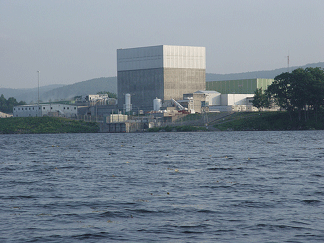 Court: Vt. Can’t Use Law to Close Nuclear Plant abc news, MONTPELIER, Vt. August 14, 2013 (AP)By DAVE GRAM Associated Press Vermont’s attempts to close its lone nuclear power plant were deceptive and misleading, a federal appeals court ruled Wednesday in largely upholding a lower-court ruling against the state.
State legislators passed laws in 2005, 2006 and 2008 making it harder for the Vermont Yankee plant to win permission to operate for another 20 years. They were concerned about the plant’s safety but tried to hide that because they were aware that nuclear safety is the sole province of the U.S. government under federal law, a three-judge panel of the 2nd U.S. Circuit Court of Appeals wrote.
There was “obvious coaching of Vermont legislators to avoid explicit statements about nuclear safety,” the court wrote.
A state board is expected to rule this year on whether allow the plant to continue operating, but the laws passed last decade injected the Legislature into the state’s decision-making process. They require that lawmakers vote to approve the plant’s continued operation.
Plant owner New Orleans-based Entergy Corp. has argued in court that the state has no say over whether to keep the plant open and points to the federal Nuclear Regulatory Commission’s decision to extend the plant’s license to operate in 2011…….
Vermont Attorney General William Sorrell called the ruling disappointing. He said the state could ask the full appeals court to reconsider the three-judge panel’s decision, or, more likely, appeal the decision directly to the U.S. Supreme Court.
Sandra Levine of the Conservation Law Foundation, one of several New England-based groups seeking the plant’s closure, called the decision “a disappointing failure to allow Vermont a stronger say in regulating this tired old plant on the banks of the Connecticut River.” http://abcnews.go.com/US/wireStory/court-vt-law-close-nuclear-plant-19957625
Petition to NRC – Pilgrim Nuclear plant can’t afford safety costs
 “In recent months, an escalating number of equipment failures, especially related to Fitzpatrick’s condenser have made the plant unreliable and have unduly put the public at risk,” Jessica Azulay, of the Alliance for a Green Economy, said. “We believe the dire financial situation at Fitzpatrick is an underlying cause.
PILGRIM STATION: Can Entergy afford Pilgrim Petition says ‘no’By Frank Mand Wicked Local Plymouth
Aug 14, 2013 PLYMOUTH —
The Nuclear Regulatory Commission has accepted for review a petition alleging that Pilgrim-owner Entergy no longer meets the NRC’s minimum financial standards for safely operating nuclear power plants.
The petition groups Pilgrim with two other Entergy-owned plants, Vermont Yankee and the James A. Fitzpatrick facility in upstate New York.
The four petitioners – Citizens Awareness Network, Alliance for a Green Economy, Vermont Citizens Awareness Network and Duxbury-based Pilgrim Watch – were denied their request for an immediate shutdown of the reactors, but the NRC is allowing their petition to move to the next step in the review process. Continue reading
Duke Energy cancels nuclear power projects, agreement includes payout to customers
Duke Energy Settlement with Consumer Advocates Affects Nuclear, Coal Plants POWERnews, 7 Aug 13, A revised settlement agreement reached between Duke Energy Florida, the Office of Public Counsel, and other consumer advocates addresses cost recovery issues related to a retired nuclear reactor, a proposed nuclear project, and two coal units.
Duke will also terminate the engineering, procurement, and construction (EPC) agreement for the cancelled Levy nuclear project. And it will write off $295 million associated with Crystal River 3 and $65 million related to the wholesale allocation of investments in the Levy nuclear plant.
Under terms of the mediator’s proposal, customers and the Crystal River 3 joint owners will receive $835 million in insurance proceeds—the largest claim payout in the history of NEIL.
Duke Energy also definitively cancelled a 2008-proposed plan to built two 1,100-MW reactors in Levy County, Fla…….http://www.powermag.com/POWERnews/Duke-Energy-Settlement-with-Consumer-Advocates-Affects-Nuclear-Coal-Plants_5829.html
Africa, a future nuclear insurance “gravy train”
Posted by nuclear-news.net
Date 5 August 2013
by Arclight2011part2
On Nuclear-news.net we have covered many stories concerning Africa and the Nuclear aspirations of this dark continent. I say dark because at night it is the only continent not lit up by street lighting and advertisements.
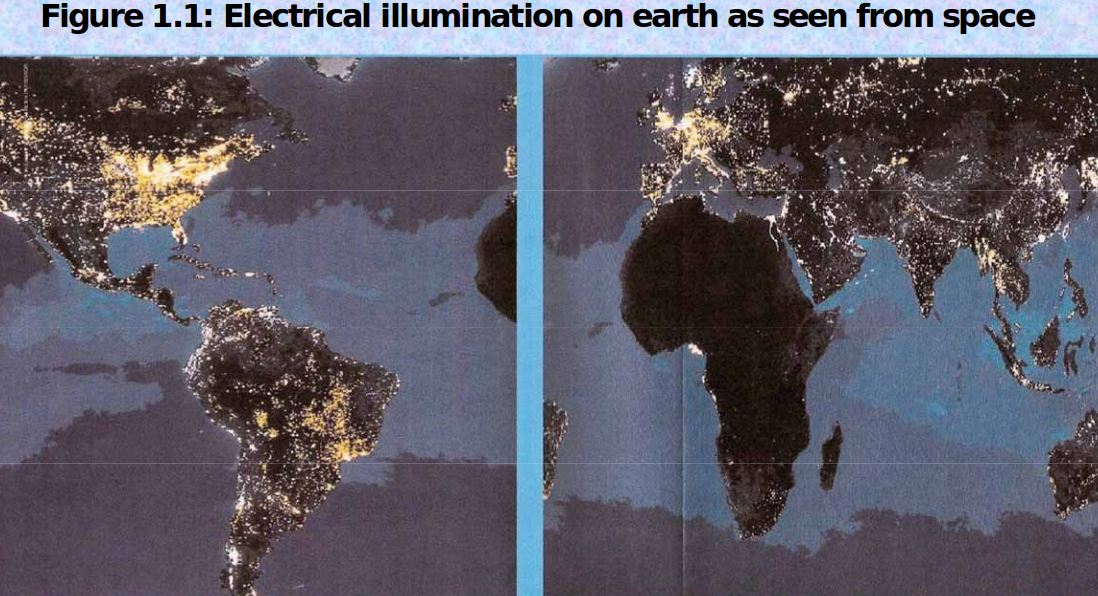
From the corporations point of view this is a new continent to develop using western choices of energy that that includes nuclear power options.
The IAEA is even going to approve a nuclear reactor in Ghana, that is one of the few earthquake zones in NW Africa (information on link)
https://nuclear-news.net/2013/07/04/ghana-lines-up-for-nuclear-cash-hand-outs/
And here is an example of how the Nuclear/mining industries have contaminated large areas of Africa and in these articles ;
But nuclear materials are already proliferate over Africa in the form of food irradiation processes, medical and industrial uses to name but a few. And many wonder of the security implications of this.
Of course the nuclear industry is bigger than just the technology.
There are Insurance, financial services, military and security corporations connected to having nuclear power and a lot of money can be made by these organisations.
https://nuclear-news.net/2013/05/09/the-naked-truth-about-nuclear-accident-insurance/
https://nuclear-news.net/2010/09/30/how-tax-payer-money-funds-the-nuclear-industrys-expansion/
The IAEA has been helping to develop nuclear technology in Africa and sets the ground for these corporations to step in. The IAEA works with the big nuclear powers in a bid to solve the waste crisis with the MOX fuel system.
Selling hundreds of reactors to light up the African night, running off the waste products of the domestic, medical and military uses of nuclear materials from the west. Even as western energy companies such as EDF are being forced to invest in wind and solar energy due to financial and environmental concerns;
https://nuclear-news.net/2013/08/02/nuclear-company-switching-to-renewable-energy-in-usa/
https://nuclear-news.net/2010/12/27/off-grid-small-scale-solar-energy-in-huts-in-africa/
The Insurance companies do well on these deals as there is a cap on the amount that needs to be paid out to victims of the nuclear fuel cycle. To give an example of this payment system at work, the British Nuclear Test Veterans got around £6,000-$12,000 per head for their radiation induced damages (including genetic damage to future off spring) Link to the BNTV report to be found here ;
https://nuclear-news.net/2013/07/22/british-nuclear-test-veterans-silenced/
The affected Japanese from Fukushima expect to receive under £3000 or-$6000 per head in a country that is more expensive to live in than th UK and has higher cost implications for future health problems.
However the children and pregnant women will get under £5000 or $10,000 as they are likely to develop thyroid problems including cancer and have miscarriages etc.
It is interesting to note the similarity in the payments to those victims affected in the UK and Japan. I have seen no quotes for Miyagi prefecture so far though;
https://nuclear-news.net/2013/06/04/compensation-for-fukushima-evacuees-radiation-anxiety/
In fact, the Insurance liability caps system are not welcome everywhere and it is a point of contention that the insurance companies want to limit the costs to them, so that the nuclear financial and insurance “gravy train” is not interrupted.
Here is an example of dissension against the western corporate nuclear insurance/finance industry;
1 This Month



26 September – International Day for the Total Elimination of Nuclear Weapons


PLEASE OPPOSE HR 8255 AND S.3639 – bills would accelerate satellite deployment, with no environmental review or safeguards – https://ncstd5li.quorum.us/campaign/169331/
To see nuclear-related stories in greater depth and intensity – go to https://nuclearinformation.wordpress.com
-
Archives
- September 2026 (228)
- August 2026 (330)
- July 2026 (355)
- June 2026 (287)
- May 2026 (306)
- April 2026 (356)
- March 2026 (251)
- February 2026 (267)
- January 2026 (308)
- December 2025 (358)
- November 2025 (359)
- October 2025 (375)
-
Categories
- 1
- 1 NUCLEAR ISSUES
- business and costs
- climate change
- culture and arts
- ENERGY
- environment
- health
- history
- indigenous issues
- Legal
- marketing of nuclear
- media
- opposition to nuclear
- PERSONAL STORIES
- politics
- politics international
- Religion and ethics
- safety
- secrets,lies and civil liberties
- spinbuster
- technology
- Uranium
- wastes
- weapons and war
- Women
- 2 WORLD
- ACTION
- AFRICA
- Atrocities
- AUSTRALIA
- Christina's notes
- Christina's themes
- culture and arts
- Events
- Fuk 2022
- Fuk 2023
- Fukushima 2017
- Fukushima 2018
- fukushima 2019
- Fukushima 2020
- Fukushima 2021
- general
- global warming
- Humour (God we need it)
- Nuclear
- RARE EARTHS
- Reference
- resources – print
- Resources -audiovicual
- Weekly Newsletter
- World
- World Nuclear
- YouTube
-
RSS
Entries RSS
Comments RSS
 nuclear-news