Uncompetitive nuclear industry is rigging regulations and “spinning” media in order to survive
 Killing the Competition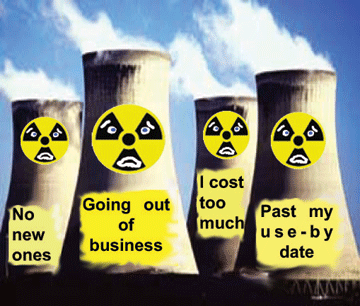
Exelon and Entergy see sustainable energy solutions—renewable energy, efficiency, conservation, etc.—as a long-term threat to
their profits. This is not because of excessive regulations or safety requirements on nuclear power: the industry has not had to implement a single safety upgrade due to the Fukushima meltdowns and faces less regulatory enforcement than it did twenty years ago. The closure of a record number of reactors since 2013 has exposed fundamental economic problems facing the industry, and a growing number of nuclear plants simply cannot compete with modern, efficient, cost-effective
energy resources.
Nuclear industry muscling in on USA’s climate standards
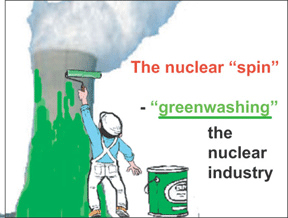 Killing the Competition The Nuclear Power Agenda to Block Climate Action, Stop Renewable Energy, and Subsidize Old Reactors, Report by Nuclear Information and Resource Center (NIRS) Sept 14
Legal action against Fukushima Prefecture and Japan’s government

 Fukushima families sue prefecture, government for radiation exposure during meltdown crisis Japan Times 1 Sept 14 FUKUSHIMA – A group of parents and children who were residing in Fukushima Prefecture when the nuclear disaster unfolded in March 2011 is suing the central and prefectural governments for failing to take sufficient steps to protect children from radiation exposure during the crisis.
The 88 plaintiffs are demanding ¥100,000 each in compensation, according to the lawsuit filed Friday at the Fukushima District Court.
In a written complaint, they said the central and prefectural governments failed to promptly release accurate data on airborne radiation levels after the nuclear crisis, neglecting their duty to prevent residential radiation exposure as much as possible, and exposing children to radiation……http://www.japantimes.co.jp/news/2014/08/30/national/fukushima-families-sue-prefecture-government-for-radiation-exposure-during-meltdown-crisis/#.VAVeS9ddUnk
A legal precedent, as TEPCO us ruled liable for a Fukushima suicide
In a first, Japanese court rules that nuclear plant operator is liable for suicide WP, By Anna Fifield and Yuki Oda August 26 at 6:07 AM TOKYO — A court in Fukushima has ruled that Tokyo Electric Power Co., the Japanese nuclear power plant operator, can be held responsible for the suicide of a woman who became depressed after the 2011 disaster.
The court ordered Tepco to pay $470,000 to Mikio Watanabe and his children after his 58-year-old wife, Hamako, killed herself a few months after the nuclear meltdown in the wake of the earthquake and tsunami forced them out of their home and destroyed their livelihoods.
The ruling was the first time that the struggling utility has been found liable for a suicide resulting from the accident, and it could galvanize others seeking redress from the company…….
The family’s attorney declared the verdict a “complete victory.”
“This ruling is significant as the precedent of a case caused by the nuclear power plant accident,” Tsuguo Hirota said. “Today’s verdict will greatly influence future lawsuits.”……..http://www.washingtonpost.com/world/in-a-first-japanese-court-rules-that-nuclear-plant-operator-is-liable-for-suicide/2014/08/26/bc43af62-6c30-4e70-8e22-ffe1895727c1_story.html
New lawsuit over US sailors’ exposure to Fukushima radiation
US sailors prepare for fresh legal challenge over Fukushima radiation, Guardian, 21 Aug 14 $1bn lawsuit accuses Tepco of failing to avoid the accident and of lying about radiation levels that have caused health problems to themselves and their families stationed in Japan
The first time it occurred to James Jackson that there could be lasting damage from his US Navy service during Japan’s tsunami and nuclear disaster came when his eldest son, Darius, was diagnosed with leukaemia.
Darius, now 15, spent a month in hospital in early 2013, soon after his diagnosis. “I thought I was going to have to bury him,” Jackson recalled. The teenager who aspired to play college basketball now has a catheter in his chest and is too frail to run the length of the court.
Jackson, a navy information technologist, was stationed with his family at Yokosuka, Japan, when an earthquake and tsunami knocked out the cooling systems at the Fukushima nuclear plant in March 2011, causing a triple meltdown.
He acknowledges he can’t know for sure why Darius got leukaemia – but Jackson remains convinced there is a connection to the radiation escape from the Fukushima disaster and he blames the Japanese electric company, Tepco.
On 25 August, a district court judge in San Diego will decide whether the Jacksons – and around 110 other US navy sailors and marines – can proceed with a $1bn lawsuit that accuses Tepco of failing to avoid the accident and of lying about the levels of radiation from the stricken reactors, putting US personnel at risk.
“I don’t think the navy or the United States government would have let us stay there in the region. They would have gotten us out of there probably within the first 48, or 72 hours if they knew then what they know now,” Jackson said. “The issue is that we have this large company, this large enterprise, feeding the Japanese government and the rest of the world bad information. They could have come to the forefront and said: ‘hey we need help’, instead of trying to put a blanket over it.”
Some 77,000 US navy sailors and marines took part in the huge relief effort after Japan’s cascading disasters, called Operation Tomodachi, or friend.
The 110 sailors suing Tepco represent only a small fraction of that number, and the lawsuit does not have the support of the US navy establishment……..
The lawsuit alleges a number of the sailors and their children suffered thyroid and other cancers, leukaemia, birth defects, and a variety of medical conditions including infertility after they were exposed to dangerous levels of radiation. Some of the sailors were also diagnosed with post-traumatic stress disorder (PTSD). One of the sailors named in the lawsuit, helicopter mechanic Theodor Holcomb, who served on the USS Reagan aircraft carrier, died of a rare cancer on 24 April. The lawsuit seeks $1bn for a medical monitoring and treatment fund.
The case is one of a number of lawsuits brought against Tepco in US and Japanese courts after the accident on 11 March 2011…….
A judicial panel in Japan on 31 July said three former Tepco executives should face criminal charges for the disaster, finding they overlooked the risk of an earthquake or tsunami, and failed to take adequate measures to prevent an accident…….http://www.theguardian.com/environment/2014/aug/20/us-navy-sailors-legal-challenge-fukushima-radiation-tepco
Chem-Nuclear ordered by Court to protect groundwater from radiation
 Court urges Chem-Nuclear safety The Augusta Chronicle, By Sarita Chourey Morris News Service Thursday, July 31, 2014 COLUMBIA — The South Carolina Court of Appeals is ordering Chem-Nuclear to better protect the groundwater from contamination at the Barnwell County’s low-level radioactive waste disposal site. Under the order, the site operator and the S.C. Department of Health and Environmental Control have 90 days to turn in a plan to reach compliance.
The Sierra Club, represented by the South Carolina Environmental Law Project, had not asked for Chem-Nuclear’s license to be revoked, but rather that it improve waste-handling procedures at the 235-acre site near the town of Snelling.
In its ruling Wednesday, the three-person court said DHEC had not enforced the law on several parts of the regulation, and that the Administrative Law Court was wrong when it found Chem-Nuclear to be in compliance.
In one part of Wednesday’s decision, the court said the trenches at the site have no system to collect liquids that have drained or percolated through radioactive materials.
“DHEC and Chem-Nuclear argue Chem-Nuclear is justified in not having a … collection system due to ‘concerns regarding the radioactive exposure to workers handling and processing (it),’” wrote the court. “We fail to see how the danger of radioactive contamination to workers actually justifies releasing it into the groundwater without testing and remediation. Rather, it seems the danger to health and safety requires testing and remediation.”………
Tritium results from the manufacture of nuclear power, and is found in radioactive waste generated by nuclear power plants.
In 1999 a nearby church property was contaminated by radioactive material due to Chem-Nuclear’s disposal practice of pumping contaminated water out of a trench into lined ponds. ……. http://chronicle.augusta.com/latest-news/2014-07-31/court-urges-chem-nuclear-safety?v=1406837686
A legal precedent, as Japanese town sues government, in opposition to nuclear power
Abe’s nuclear renaissance ignores stiff opposition BY JEFF KINGSTON SPECIAL TO THE JAPAN TIMES 28 June 14 “……….Are the potential dangers of hosting a reactor an acceptable risk given the alternative of economic decline and depopulation? Many communities in remote coastal areas where Japan’s fleet of reactors are sited are grappling with this calculus. Until now the Aomori Prefecture fishing port of Oma has been famous for its bluefin tuna catches, but that is changing due to the town’s decision to host a nuclear power plant.
Just across the Tsugaru Strait from Oma, the city of Hakodate, Hokkaido, filed a lawsuit earlier this year against the central government and the utility to block construction of the Oma mixed-oxide fuel (MOX) reactor. This is the first lawsuit in Japan of its kind in which a local government is the plaintiff seeking an injunction against building a nuclear plant. The two towns are separated by about 23 km of water, meaning that part of Hakodate, which has a population of 275,000, falls within the newly extended 30-km evacuation zone. The mayor of Hakodate complains that he is being asked to prepare an evacuation plan without adequate information and asserts that the lessons of Fukushima are being ignored as government support for nuclear energy does not include adequate assistance for disaster management, outsourcing it to local communities that lack sufficient capacity.
The possibility of legal entanglements casts a shadow over Abe’s nuclear renaissance as local governments and citizens groups mount challenges that could delay restarts and new plant construction. Indeed, in May 2014, the Fukui district court ruled against Kansai Electric Power Co. (Kepco) in a lawsuit filed by citizens who oppose the restart of the utility’s Oi reactors. The judge rejected Kepco’s claims that the reactors could be operated safely and asserted that the intrinsic dangers of nuclear reactors combined with the unpredictability of earthquakes endanger the fundamental constitutional rights of citizens.
This establishes a precedent that could influence 16 similar cases in the judicial pipeline, but Kepco is appealing the ruling and Abe’s spokesperson shrugged it off, insisting that it would have no influence on safety evaluations. His aplomb is understandable as Japan’s higher courts are reliably submissive in nuclear energy lawsuits.
Maybe this is why the government rules out a national referendum on nuclear energy because citizens are not so predictably compliant and oppose the vested interests Abe represents.http://www.japantimes.co.jp/opinion/2014/06/28/commentary/abes-nuclear-renaissance-ignores-stiff-opposition/#.U7HUBpRdUnk
In legal case against TEPCO, one young sailor already dead
Navy sailor suing over Fukushima exposure dies from rare cancer near heart — TV: Navy lieutenant retires, says he’s unable to use leg muscles due to Fukushima radiation and confined to wheelchair — Both in mid-30s (VIDEOS) http://enenews.com/navy-sailor-suing-for-exposure-to-fukushima-contamination-dies-of-rare-form-of-cancer-near-heart-tv-navy-lieutenant-with-no-use-of-his-leg-muscles-forced-to-retire-blames-fukushima-radiation?utm_source=feedburner&utm_medium=email&utm_campaign=Feed%3A+ENENews+%28Energy+News%29
Tweets from Dr. Yuri Hiranuma, June 11, 2014: First death of a USS Ronald Reagan sailor hit by radiation from Fukushima Daiichi while on Operation Tomodachi. Theodore Holcomb, a former USS Ronald Reagan aviation mechanic during Operation Tomodachi, died of synovial sarcomaon April 26, 2014. Holcomb was a plaintiff in the lawsuit against TEPCO. He began experiencing “breathing difficulty, pain in right shoulder, and excessive heart rate while still in service. He was diagnosed with synovial sarcoma next to his heart, causing lung and heart issues, in late 2011. Holcomb was 38 years old and a father of a five-year-old girl.
Nuclear Hotseat, June 11, 2014 (at 1:30 in): First death of a USS Ronald Reagan sailor hit by radiation from Fukushima Daiichi while on the humanitarian aid Operation Tomodachi. Information just released today by the legal team representing the USS Reagan sailors in their billion dollar lawsuit against TEPCO. >> Listen to the full Nuclear Hotseat program here
WUSA, June 9, 2014: [Navy Lt. Steve] Simmons served on the USS Ronald Reagan during the March 2011 meltdown […] eight months later, he started feeling sick. Now, Simmons is confined to a wheelchair, with no use of his leg muscles. The 36-year-old blames radiation, but says no one will agree. Today marked his bittersweet retirement from the Navy. […] months after he returned from the humanitarian effort at Fukushima, he blacked out one day while driving. Then, he started experiencing high fevers. His health deteriorated to the point that he his now confined to a wheelchair. He blames radiation exposure at Fukushima. […] The Department of Defense says radiation levels were safe, and were the equivalent to less than a month’s exposure to the same natural radiation you pick up from being near rocks, soil and the sun. Steve does not buy that, “How do you take a ship and place it into a nuclear plume for five plus hours, how do you suck up nuclear contaminated waste into the water filtration system and think for one minute that there’s no health risk to anybody on board.” […] more than 70 sailors from the Reagan […] are now experiencing medical issues >> Watch the WUSA broadcast here
Australian government’s plan for nuclear waste dump on Aboriginal land is scrapped!
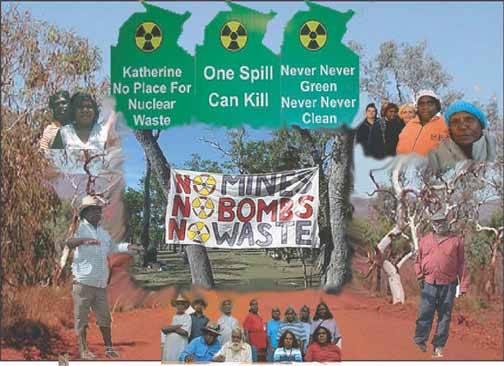
 Natalie Wasley, Beyond Nuclear Initiative, 19 June 14 Some fantastic news today- the Commonwealth Government has committed not to pursue plans for a national radioactive waste dump at Muckaty, 120km north of Tennant Creek in the Northern Territory!
Lawyers from Maurice Blackburn Social Justice Practice have just announced the exciting development in Melbourne and a delegation of Muckaty Traditional Owners travelled to Alice Springs for a press conference that has just concluded.
The announcement comes mid-way through the Federal Court trial examining the process under which the nomination of Muckaty was made by the Northern Land Council and accepted by the Commonwealth Government in 2007.
Two weeks of the trial were completed with hearings in Melbourne, Tennant Creek and on country at Muckaty outstation. The Northern Land Council and Commonwealth Government have agreed to settle with the Applicants by committing not to act on the proposal or nomination, so the hearings scheduled for Darwin (June 23-July 4) have been cancelled.
A blog of the court proceedings is online at www.beyondnuclearinitiative.com/blog and photos posted atwww.beyondnuclearinitiative.com/photos
This campaign has followed the successful campaign by the Kupi Piti Kungka Tjuta to stop a nuclear dump in SA and been built from the ground up in Tennant Creek with help from supporters across the NT. Over the last 7 years, the community has marched in Tennant Creek every year, hosted trade union delegations, written songs and poems, made films and toured photo exhibitions. People have travelled tirelessly around the country to build awareness and support, having conversations over cups of tea in regional areas and walking the corridors of Canberra Parliament House to lobby Ministers.
The community used the May 25 rally and media attention on the federal court proceedings to reiterate they would continue campaigning until the dump was stopped- including blocking the road if needed.
So the deadly news is now public – please tell everyone that together we dumped the Muckaty plan! Traditional Owners and the broader community in Tennant Creek are very excited and relieved and looking forward to a big celebration in the coming few weeks.
We will then set about collating photos, footage and other materials from the campaign, so stay tuned for the call out to copy and/or send these to the Arid Lands Environment Centre for archiving.
There is a lot more to say but we are still all a bit shocked and processing the news so will send more updates and reflections in the coming week.
Media release from today is attached.
I was asked to finish this note with a huge thanks to everyone who has been part of this campaign and supported the Muckaty mob to be heard- every action, letter, conversation, trip to Tennant, fundraising gig and movie night has helped bring about this victory!!
Muckaty will be nuclear free!
Legal case against UK’s Nuclear Decommissioning Authority
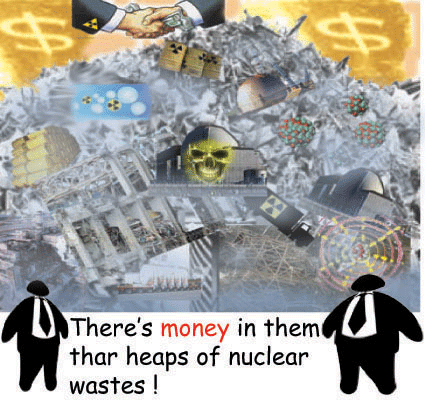 UK nuclear body faces £200m damages claim from Energy Solutions. Ft.com By Gill Plimmer 15 June 14,Britain’s Nuclear Decommissioning Authority is facing a £200m damages claim from one of the bidders who lost out on a £7bn deal to clean up Britain’s oldest nuclear power plants.
Energy Solutions, a Salt Lake City-based company, filed a High Court writ last week after losing the 14-year contract to engineering company Babcock and Texas-based Fluor. The deal is one of the largest and most sensitive government contracts ever put out to tender.
The Nuclear Decommissioning Authority, the government-funded body responsible for Britain’s state-owned nuclear sites, started the competition two years ago and work is expected to start by Babcock in September.
But Energy Solutions, which has been managing the nuclear sites for the past 14 years, has alleged in documents filed to the High Court last week that the NDA’s point scoring system is flawed and that it didn’t follow its own procedures. It competed for the contract in partnership with the US company Bechtel but is taking legal action alone……..http://www.ft.com/cms/s/0/d7394394-f483-11e3-a143-00144feabdc0.html#axzz34qaWV0UC
Fukushima radiation has killed one sailor from USS Ronald Reagan, with rare cancer
 First Sailor from USS Ronald Reagan dies from radiation from FUKUSHIMA http://investmentwatchblog.com/first-sailor-from-uss-ronald-reagan-dies-from-radiation-from-fukushima/#TpACD1zIVugkBWMs.99 June 12th, 2014 1st death in USS Reagan case; rare cancer takes 38 yr old Tomodachi samaritan. RIP Theodore Holcomb
Information just released today by the legal team representing the USS Reagan sailors in their billion dollar lawsuit against TEPCO.
http://www.nuclearhotseat.com/1964/
The Ronald Reagan spent a couple months at sea after being dosed off with radiation, trying to clean itself up; then, according to a lawyer for the sailors claiming injury, it was decontaminated at port in Washington State for another year and a half before returning to service.
Nuclear company sued over radiation exposure to workers
Lawsuit filed against E. Idaho nuclear contractor June 12, 2014 San Francisco Chronicle, IDAHO FALLS, Idaho (AP) — A lawsuit has been filed involving a 2011 accident at an eastern Idaho nuclear facility that exposed 16 workers to plutonium. Jodi Stanton, the wife of an exposed worker, filed the lawsuit in federal court Tuesday, the Post Register reported (http://www.postregister.com/node/56654). She contends the couple’s home might have been contaminated with radioactivity because the company withheld information or offered false information about her husband’s medical condition following the accident.
The lawsuit targets Battelle Energy Alliance, the company contracted by the government to operate the Idaho National Laboratory. It seeks an undisclosed amount in damages………
The accident happened in a building that once housed a nuclear reactor. Workers had been taking plutonium fuel out of storage when they came upon radioactive materials held in two containers, each marked with a label stating the containers were damaged.
After talking to supervisors, workers removed the wrapping on one of the containers and a radioactive black powder spilled out. The workers had on lab coats and some had gloves, but none had respiratory gear or other protective clothing, according to a report released in 2013 by the Department of Energy. http://www.sfchronicle.com/business/energy/article/Lawsuit-filed-against-E-Idaho-nuclear-contractor-5548176.php
Legal case continues over Australian govt’s plan to dump nuclear waste on Aboriginal land
Indigenous land owners accuse lawyer of manipulating nuclear waste storage report June 4, 2014 – Jane Lee Legal Affairs Reporter for The Age A lawyer who was key to the Howard government’s plan to store nuclear waste on indigenous land has been accused of manipulating the legal process required to ensure its approval.
Traditional owners from four indigenous clans are challenging the Ngapa clan’s 2007 nomination of Muckaty Station for the dump site in the Federal Court in Melbourne. The owners, including Aboriginal elders, argue they did not consent to the nomination, were not consulted on the agreement reached and were misled on the government’s proposal for the nuclear storage site.
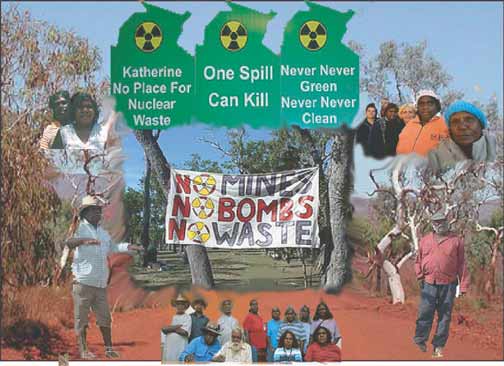
Ron Levy was then the chief legal counsel for the Northern Land Council, which was set up to help indigenous people in the Northern Territory acquire and manage traditional lands. Mr Levy will be called as a witness later in the five-week case before Justice Anthony North.
Ron Merkel, QC, for the traditional owers, told the court on Thursday that Mr Levy “personally edited” anthropologists’ views in a Council report which concluded that only the Ngapa Lauder clan owned the site. Mr Levy also wrote a new section in the final report, reflecting his view that the Land Commissioner could depart from judges’ previous decisions on land claims, “if relevant material was before the commissioner.”
Mr Merkel said that he did this “(so) that the Lauder Ngupas would be recognised by the Northern Land Council as the only traditional owners of the site so their consent could be secured.” The site nomination could then “jump a hurdle” of having to consult in more detail about about the plan with other clans, he said………..
Mr Merkel told the court on Tuesday that Mr Levy, who controlled the consultation process, also failed to tell the full Northern Land Council or traditional owners about the only up-front $200,000 payment given to traditional owners for the site nomination or the terms of their agreement.
But he later told the federal goverrnment that he had all traditional owners’ full consent.
Mr Merkel said there was no explanation for this “unless … Mr Levy had a plan from the outset about how to achieve the end result and he did”. http://www.smh.com.au/federal-politics/political-news/indigenous-land-owners-accuse-lawyer-of-manipulating-nuclear-waste-storage-report-20140604-39jk8.html#ixzz33nhZjp26.
In Australian Federal Court, Aborigines continue the fight against radioactive waste dumping on their land
Nuclear waste dump on Aboriginal land invalid, court told The West Australian, 3 June 14. Sydney (AFP) – The earmarking of a remote Australian outback area as a nuclear waste dump was invalid because officials failed to contact all traditional Aboriginal landowners affected, a court heard Monday.Muckaty Station in the Northern Territory was nominated in early 2007 as a site to store low and intermediate radioactive waste under a deal negotiated with the Aboriginal Ngapa clan.
While Australia does not use nuclear power, it needs a site to store waste, including processed fuel rods from the country’s only nuclear reactor at Lucas Heights, on the outskirts of Sydney,…..Opponents have fought against the dump for years, with a trial starting in the Federal Court in Melbourne Monday alleging Muckaty’s nomination was invalid due to a failure of the government and the land council to obtain the consent of all Aboriginal owners.
“What we’re here to say is ‘no more’ and that this process was so legally flawed that it is invalid,” Ron Merkel, who is representing traditional owners, told the court.
“The opposition is in no small part based on a spiritual affiliation to the land and that radioactive waste will poison the land,” he said in comments cited by Australian Associated Press.
The court was told the consent of all groups with a claim to the land was required for the facility to go ahead, but some Aboriginals whose country was affected have never had a chance to voice their concerns until now……..Speaking to reporters, Kylie Sambo, of the Warlmanpa people, said the idea of a waste facility on the land, which is in the centre of the country, was “poison”.
“We don’t want it to spoil our country because we love our land and we’ve been there for centuries,” she said. “My uncle once told me, ‘You may think you own the land, but in fact the land owns us’.”
The Australian Conservation Foundation said the case raised questions about the country’s management of long-lived radioactive waste.
“Australia has never has an independent assessment of how best to manage radioactive waste; now we urgently need one,” campaigner Dave Sweeney said.
The case is set to run for five weeks. https://au.news.yahoo.com/thewest/world/a/24084083/nuclear-waste-dump-on-aboriginal-land-invalid-court-told/
Settlement reached between Vancouver Province and uranium company
 Vancouver’s Boss Power closes on $30-million settlement with province over uranium ban By Tyler Orton http://www.biv.com/article/20140602/BIV0108/140609993/vancouvers-boss-power-closes-on-30-million-settlement-with-province Mon Jun 2, 2014 A Vancouver-based resource company has closed on a $30-million settlement with the B.C. government, officially putting to bed a nearly six-year-old lawsuit.
The province imposed a halt on all uranium exploration and development in April 2008. Boss Power Corp. (TSX.V: BPU) filed suit later in the year claiming the B.C. government expropriated the company’s interest in its Blizzard uranium property near Kelowna when it imposed a “no registration reserve” under the Mineral Tenure Act.
The reserve allowed the government to ensure no future claims included the rights to uranium, however, Boss Power argued the property was registered before this ban went into effect.
Boss Power and Victoria settled for $30 million in 2011 before the case went to court.
The final amended settlement will divide the settlement up between other parties with interests in the property.
About 80% of the settlement will be held in a trust until Boss Power is reorganized into two different corporations, an arrangement expected to be approved in August.
1 This Month

of the week – Shut Down Drone Warfare!


Tell the Ukrainian Government to Drop Prosecution of Peace Activist Yurii Sheliazhenko

Petition to revoke the licensing of the Near Surface Nuclear Disposal Facility (NSDF) at Chalk River. https://www.ourcommons.ca/petitions/en/Petition/Details?Petition=e-7247
To see nuclear-related stories in greater depth and intensity – go to https://nuclearinformation.wordpress.com
-
Archives
- March 2026 (237)
- February 2026 (268)
- January 2026 (308)
- December 2025 (358)
- November 2025 (359)
- October 2025 (376)
- September 2025 (257)
- August 2025 (319)
- July 2025 (230)
- June 2025 (348)
- May 2025 (261)
- April 2025 (305)
-
Categories
- 1
- 1 NUCLEAR ISSUES
- business and costs
- climate change
- culture and arts
- ENERGY
- environment
- health
- history
- indigenous issues
- Legal
- marketing of nuclear
- media
- opposition to nuclear
- PERSONAL STORIES
- politics
- politics international
- Religion and ethics
- safety
- secrets,lies and civil liberties
- spinbuster
- technology
- Uranium
- wastes
- weapons and war
- Women
- 2 WORLD
- ACTION
- AFRICA
- Atrocities
- AUSTRALIA
- Christina's notes
- Christina's themes
- culture and arts
- Events
- Fuk 2022
- Fuk 2023
- Fukushima 2017
- Fukushima 2018
- fukushima 2019
- Fukushima 2020
- Fukushima 2021
- general
- global warming
- Humour (God we need it)
- Nuclear
- RARE EARTHS
- Reference
- resources – print
- Resources -audiovicual
- Weekly Newsletter
- World
- World Nuclear
- YouTube
-
RSS
Entries RSS
Comments RSS
 nuclear-news