Court rules to keep injunction on restart of Takahama nuclear reactors

 Japan court upholds nuclear power plant injunction Phys Org News, 20 May 15 A Japanese court upheld an injunction banning the restart of two nuclear reactors, a report said Tuesday, in a blow to the government’s ambitions to return to atomic power generation.Fukui District Court in central Japan dismissed Kansai Electric Power’s motion for a stay on an earlier decision to temporarily bar the restart of the No. 3 and No. 4 reactors at plant in Takahama, Kyodo News said.
The decision made Monday comes as the government and Japan’s powerful utility companies work to get reactors back online, more than four years after the disaster at Fukushima……..
Issuing the injunction on the restart, the Fukui court earlier said the safety of the reactors at Takahama had not been proved, despite a green light from industry watchdog the Nuclear Regulation Authority (NRA), whose guidelines, the court said, were “too loose” and “lacking in rationality”.http://phys.org/news/2015-05-japan-court-nuclear-power-injunction.html#jCp
Immediate release ordered for Sister Megan Rice and her compatriots
 Anti-nuclear activist nun Megan Rice to be freed from prison Convictions for the 85-year-old Catholic nun and two fellow activists who vandalized a uranium facility were overturned, Aljazeera
The order came a week after the 6th U.S. Circuit Court of Appeals in Cincinnati overturned the 2013 sabotage convictions of Sister Megan Rice, 66-year-old Michael Walli, and 59-year-old Greg Boertje-Obed, and ordered resentencing on their remaining conviction for injuring government property. The activists have spent two years in prison, and the court said they likely already have served more time than they will receive for the lesser charge.
On Thursday, their attorneys petitioned the court for an emergency release, saying that resentencing would take weeks if normal court procedures were followed. Prosecutors on Friday afternoon responded that they would not oppose the release, if certain conditions were met………..http://america.aljazeera.com/articles/2015/5/16/megan-rice-anti-nuclear-nun-activist-to-be-freed.html
10,000 lawsuits against TEPCO, operator of Fukushima nuclear power plant
 Fukushima n-plant operator faces 10,000 lawsuits http://www.newkerala.com/news/2015/fullnews-54069.html Tokyo, May 6 Nearly 10,000 people have filed lawsuits against the operator of the Fukushima nuclear plant, following the 2011 accident at the plant, according to data released by a group of Japanese lawyers. Currently 9,992 people, among them home-owners unable to return to houses near the plant because of high radiation levels, have filed 25 joint lawsuits against Tokyo Electric Power (TEPCO) in 20 different courts, Efe news agency cited the group as telling Asahi newspaper on Wednesday.
Since then thousands of people, including 900 more so far in 2015, have filed new lawsuits or joined existing ones.
The plaintiffs are dissatisfied with the government’s financial compensation scheme, launched after an earthquake and tsunami on March 11, 2011, triggered the nuclear accident.
Under the compensation scheme, TEPCO has been paying compensation to people who had to abandon their homes and to business owners in the affected region for the losses suffered because of the accident.
However, the plaintiffs claim the payments are insufficient and are asking for TEPCO to pay an additional indemnity until radiation levels around the plant return to the levels of prior to the accident.
They are also claiming financial compensation for the destruction of their communities. Most are also seeking compensation under Japan’s rehabilitation law. Fukushima is the world’s worst nuclear accident since Chernobyl, Ukraine, in 1986, forced the evacuation of thousands of people from the area and seriously affected agriculture, fisheries and local livestock.
Court clears anti nuclear nun of sabotage conviction
 Nun’s sabotage conviction for nuclear facility break-in overturned by court http://www.theguardian.com/us-news/2015/may/08/nun-sister-megan-rice-nuclear-facility-tennessee-sabotage-overturned Second ruling, for injuring government property, upheld after Sister Megan Rice and two fellow activists broke into Tennessee uranium storage facility in 2012 An appeals court has overturned the sabotage convictions of an 85-year-old nun and two fellow peace activists who broke into a facility storing much of this country’s bomb-grade uranium and painted slogans and splashed blood on the walls.
In a 2-1 opinion issued on Friday, a panel of the sixth US circuit court of appeals overturned the most serious conviction against Sister Megan Rice, 66-year-old Michael Walli and 59-year-old Greg Boertje-Obed. The court upheld a conviction for injuring government property.
On 28 July 2012, the activists cut through several fences at the Y-12 national security complex in Oak Ridge to reach the uranium storage bunker. Once there, they hung banners, prayed and hammered on the outside wall of the bunker to symbolize a Bible passage that refers to the end of war: “They will beat their swords into ploughshares.”
At issue was whether the nonviolent protest injured national security. The majority opinion of the appeals court found that it did not. “If a defendant blew up a building used to manufacture components for nuclear weapons … the government surely could demonstrate an adverse effect on the nation’s ability to attack or defend … But vague platitudes about a facility’s ‘crucial role in the national defense’ are not enough to convict a defendant of sabotage,” the opinion says.
Rice is serving a sentence of just under three years. Walli and Boertje-Obed are each serving sentences of just over five years.
Defendant’s attorney Bill Quigley said he hopes they will be re-sentenced to time served and released from prison.
The US attorney’s office for the eastern district of Tennessee did not immediately comment on the ruling Friday.
FUKUSHIMA BREAKING NEWS; on V DAY SISTER MEGAN RICE, GREG AND MICHAEL. convictions over turned
Environment groups threaten threaten Palisades, NRC with lawsuit”
(NPR at Western Michigan University), an environmental coalition, including Beyond Nuclear, is intervening against regulatory rollbacks at Entergy Nuclear’s Palisades atomic reactor on the Lake Michigan shore in southwest Michigan.
Thiele interviewed Beyond Nuclear’s Kevin Kamps (a native of Kalamazoo — just 35 miles downwind of Palisades — who serves on the board of directors of Don’t Waste MI), as well as the coalition’s attorney, Terry Lodge. At the top of the story, Bette Pierman of Benton Harbor, chairwoman of Michigan Safe Energy Future (MSEF)–Shoreline Chapter, is heard presenting during a panel discussion. The interviews took place at a fund- and awareness-raising event held at the Old Dog Tavern on April 19th in downtown Kalamazoo. Music performed by the “Duffield-Caron Project, with Friends” can be heard in the background of the interviews.
The intervention focuses on the risk of pressurized thermal shock (PTS). Palisades has the worst neutron radiation embrittled reactor pressure vessel (RPV) of any nuclear power plant in the U.S. Like a hot glass under cold water (and a ton of pressure per square inch!), PTS could fracture Palisades’ RPV, causing a loss of coolant accident, core meltdown, and catastrophic radioactivity release.
Arnie Gundersen, Chief Engineer at Fairewinds Energy Education, and the expert witness for Beyond Nuclear and the coaltion at Palisades, has produced a humorous short video about this serious subject, entitled “Nuclear Crack Down?”
Environmental groups join Havasupai Tribe in appealing against uranium mine decision
 Arizona Uranium Mine Decision Appealed by Plaintiffs Phoenix New Times, By Miriam Wasser May 1 2015 A coalition of environmental groups is joining the in appealing a U.S. District Court decision last month that Energy Fuels Inc. can resume uranium mining atCanyon Mine in Northern Arizona.The groups had filed a preliminary injunction in March 2013 to stop the company from completing construction of the mine and extracting uranium, and argued in favor of a new environmental impact statement.
Katie Davis, with the Center for Biological Diversity, one of the groups appealing the decision, expects the coalition will have more detailed briefings that lay out specifics of their legal argument sometime in the next few months.
Illegal drug use by USA missile launch officers?
2 nuke launch officers face illegal drug charges, The Big Story By ROBERT BURNS Apr. 24, 2015 WASHINGTON (AP) — Two more Air Force nuclear missile launch officers have been charged with illegal drug use in cases stemming from an investigation that led to the disclosure last year of a separate exam-cheating scandal, the Air Force said Friday.
1st Lt. Michael Alonso and 1st Lt. Lantz Balthazar, both members of the 12th Missile Squadron at the 341st Missile Wing at Malmstrom Air Force Base in Montana, face hearings to determine whether they will be court-martialed. One of their fellow missile officers who was a target of the same investigation pleaded guilty to illegal drug use in January and was kicked out of the Air Force.
The Malmstrom missile wing operates 150 of the Air Force’s 450 Minuteman 3 intercontinental ballistic missiles, or ICBMs. Launch officers are trained to operate ICBMs that are armed with nuclear warheads and are on constant alert for possible launch…….http://bigstory.ap.org/article/78cf6875e9264111886b65f1c77e5061/2-nuke-launch-officers-face-illegal-drug-charges
Japan’s nuclear legal battles drag on – putting nuclear restart in doubt
Nuclear power in Japan Legal fallout Court cases frustrate efforts to restart Japan’s nuclear plants, Economists Apr 25th 2015 | NIIGATA “……….the seven reactors at the Kashiwazaki-Kariwa complex sit idle, along with the rest of Japan’s nuclear-power facilities. Four years after meltdown at the Fukushima Dai-ichi power plant, all Japan’s 48 usable reactors are the focus of safety concerns. An industry that once produced nearly a third of Japan’s electricity remains paralysed……..confidence in restarting the reactors may be misplaced. Every one of them is the subject of a lawsuit by locals trying to stop them from being fired up again. The government and the energy utilities will continue to argue that although they cannot completely rule out another accident, they have made nuclear power as safe as possible. By rejecting that argument, the Fukui court has set a precedent other courts may follow, says Mutsuyoshi Nishimura, a former climate-change negotiator.
Kansai Electric has challenged the Fukui ruling. Experts say the company will very likely get a higher court to overturn it. But the longer legal tussles drag on, the older the reactors become, putting their eventual operation in doubt. The Nuclear Regulation Authority (NRA), Japan’s new watchdog, is reviewing about 20 reactors for compliance with its regulations. Luc Oursel, the late chief executive of Areva, a French nuclear giant, predicted in 2013 that two-thirds of Japan’s plants would eventually restart. Few believe that now.
For Tokyo Electric Power (TEPCO), the operator of the ruined Fukushima plant, these issues are a matter of life and death. Kashiwazaki-Kariwa is its only remaining viable nuclear facility. The company says it loses ¥100 billion ($835m) per reactor every year that the reactors are down. The plant’s chief, Tadayuki Yokomura, says that TEPCO has poured $2 billion into reinforcing the facility against earthquakes and tsunamis. There is, he insists, no reason why all seven reactors cannot be restarted. The problem is that he has yet to convince the public of that. http://www.economist.com/news/asia/21649557-court-cases-frustrate-efforts-restart-japans-nuclear-plants-legal-fallout
Court in south-west Japan rejects a residents’ injunction against restarting 2 nuclear power plants
Japan moves nearer to restarting nuclear reactors after court gives go-ahead, Guardian, Justin McCurry in Tokyo, 22 Apr 15 Court in south-west Japan rejects a residents’ injunction against resuming operations at the Sendai power plant apan’s plans to return to nuclear power generation more than four years after the triple meltdown at Fukushima received a boost on Wednesday after a court approved the restart of two nuclear reactors.
The Kagoshima district court in south-west Japan rejected a residents’ injunction against restarting two reactors at the Sendai nuclear power plant, bringing the country a step closer to operating a nuclear reactor for the first time since September 2013.
The ruling comes a week after another court sided with concerned residents in a separate case by temporarily blocking the planned restart of two reactors at the Takahama plant on the Japan Sea coast, citing safety concerns.
Hiroyuki Kawai, head lawyer for the plaintiffs, described Wednesday’s ruling as “extremely regrettable”.
He added: “We will not give in, we will continue fighting. We will not let our emotions be swayed by any short-term results and we will fight until we get rid of all nuclear reactors in Japan.”……
Wednesday’s court decision leaves Kyushu Electric Power, the operator of Sendai nuclear power plant, with just one more regulatory obstacle to overcome before it can restart the two reactors, possibly as early as June.
Regulators have said they are “very close” to completing their review of the Sendai reactors’ safety regime.
Once the licensing procedures are complete, the two reactors, which were commissioned in the 1980s, would have to pass a final operational safety inspection before being switched back on, the NRA commissioner, Toyoshi Fuketa, said.
“We need to have a period for inspection and this is the first experience for Kyushu and for us,” he said. “It will take a certain time … it’s quite difficult to say.”
In the latest lawsuit, residents had argued that Kepco and regulators had underestimated the risk posed to the Sendai plant by nearby volcanoes, and that evacuation plans in the event of a Fukushima-type disaster were insufficient.
The plaintiffs said the “ability to predict eruptions is known to be inadequate”, adding there were “no grounds for Kepco’s assertion that the probability of a [volcanic] eruption is low”………
Kansai Electric Power, which serves the huge city of Osaka, faces legal challenges against four of its 11 reactors, and has said it would decommission two reactors.
Tokyo Electric Power, the operators of the ruined Fukushima Daiichi, is hoping to persuade local authorities to approve the restart of Kashiwazaki Kariwa, the world’s biggest nuclear power plant.
Chubu Electric Power, meanwhile, was forced to close its Hamaoka plant in May 2011 owing to its proximity to offshore tectonic plates. The plant is in a region that experts say is at risk of being struck by a powerful earthquake. http://www.theguardian.com/world/2015/apr/22/japan-moves-nearer-to-restarting-nuclear-reactors-after-court-gives-go-ahead
Japanese court to rule on injunction to block restart of 2 nuclear reactors
Japan nuclear ruling to show whether legal fight emboldened By Reuters | 21 Apr, 2015,KAGOSHIMA (JAPAN): A Japanese court will rule on Wednesday on an injunction to block the restart of two more nuclear reactors, a decision that could determine whether a legal drive by citizens to prevent the reopening of the sector on safety grounds will gather steam.
A court order preventing Kyushu Electric Power Co from operating Sendai would risk tying up the industry in legal battles for months or years.
Last week’s ruling “certainly sets a precedent and it will cause some of the other governors and other courts to think twice” about nuclear, said Michael Jones, Senior Analyst at consultancy Wood Mackenzie,
Local residents who submitted a suit against the restart of the restart of the Sendai reactors argue the utility and regulator has underestimated the risk of nearby volcanoes and operational plans lack credible evacuation measures. …….
Should the injunction request be rejected, as many expect, Japan’s biggest utilities still face the possibility of being forced to mothball their reactors amid mounting legal challenges, Jones said.
“It is not totally unreasonable to think that, to imagine, that the three largest utilities, Tepco, Chubu and Kans .. http://economictimes.indiatimes.com/articleshow/47004245.cms?utm_source=contentofinterest&utm_medium=text&utm_campaign=cppst
530 Minamisoma residents sue government over hot spot delisting
530 Minamisoma residents sue government over hot spot delisting KYODOSome 530 residents of a city near the Fukushima No. 1 nuclear plant filed a lawsuit Friday demanding that the central government revoke a decision to remove their districts from a list of radiation hot spots, ending their entitlement to handouts… (registered readers only) http://www.japantimes.co.jp/news/2015/04/17/national/crime-legal/530-minamisoma-residents-sue-government-hot-spot-delisting/#.VTQwstKqpHw
Cameco uranium company a “great corporate citizen”? Actually NO!
Don’t call Cameco a “great corporate citizen,” group says BY JASON WARICK, THE STAR PHOENIX APRIL 17, 2015 Governments should not describe Cameco as a “great corporate citizen” while suing the company over a $1.5 billion tax debt, a lobby group says.
“One questions whether governments should promote companies who so flagrantly violate Canadian tax law,” said Dennis Howlett, executive director of Canadians for Tax Fairness………
Howlett noted Cameco is in court for allegedly avoiding payment of $1.5 billion in federal and provincial taxes by funnelling business through a Swiss subsidiary. The IRS in the United States also alleges the mining company owes it more than $30 million. Cameco is disputing the allegations.
Howlett said he wonders what deterrent there is for companies to dodge their taxes if governments continue to praise them. He said it sends all the wrong signals, noting the issue is particularly serious because of the massive amounts involved.
“It is very much a concern,” he said.
Speaking to reporters at the Saskatchewan legislature on Thursday, Wall said he’s been “watching very carefully” as the tax case develops…….. http://www.thestarphoenix.com/news/call+Cameco+great+corporate+citizen+group+says/10982294/story.html
Japan court says NO to restart of two nuclear reactors
Japan court blocks restarting of two nuclear reactors Tokyo (AFP) – A Japanese court on Tuesday issued a landmark injunction against the restarting of two atomic reactors, after the country’s nuclear watchdog had given the green light to switch them back on.
The district court in the central prefecture of Fukui made the temporary order in response to a bid by local residents to halt the restart of the No. 3 and No. 4 reactors at the Takahama nuclear power plant, a court official said……..”the safety of the reactors hasn’t been secured”, the court ruled, saying the watchdog’s new standards were “lacking rationality”, according to public broadcaster NHK.
The reactors could be damaged by an earthquake even smaller than that envisaged in the safety standards, the court said……..
Two other reactors at Takahama also remain offline.
Greenpeace hailed the court decision, saying it “could have a nationwide ripple effect on similar pending injunction cases — threatening to derail the Japanese government?s nuclear reactor plans”.
A separate court ruling on the restart of two other reactors in southern Japan is expected later this month.
– ‘Warning from the court’ – Hiroshi Miyano, a nuclear expert and visiting professor at Hosei University in Tokyo, said the court decision would affect the timing of future reactor restarts.
“This can be seen as a warning from the court, which told the (plant) operator that it has to better explain its resumption plans,” Miyano said……..
But Japan has seen a groundswell of public opposition to the technology since Fukushima, where reactors went into meltdown after a tsunami swamped their cooling systems — setting off the worst atomic disaster since Chernobyl in 1986.
Japan’s entire stable of nuclear power stations was gradually switched off following the disaster, while tens of thousands of people were evacuated due to concerns about radiation exposure.
Many are still unable to return to their homes and scientists have warned that some areas around the plant may remain uninhabitable for decades or more.https://au.news.yahoo.com/world/a/27100653/japan-court-blocks-restarting-of-two-nuclear-reactors/
- AFP
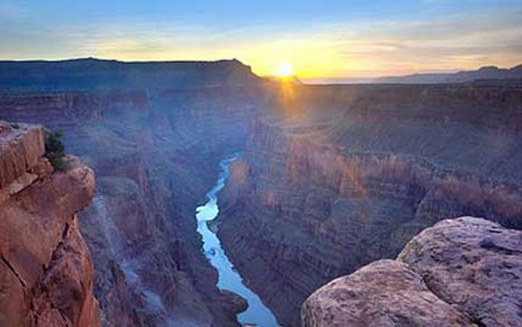
Federal Judge OKs Uranium Mining Next to Grand Canyon National Park
 http://www.biologicaldiversity.org/news/press_releases/2015/uranium-mining-04-08-2015.html
Decision Allows Mining Without Tribal Consultation or Update Decades-old Environmental Review
PHOENIX, Ariz.— U.S. District Court Judge David Campbell denied a request to halt new uranium mining at the Canyon uranium mine, located only six miles from Grand Canyon National Park’s South Rim. The Havasupai tribe and a coalition of conservation groups had challenged the U.S. Forest Service’s decision to allow Energy Fuels Inc. to reopen the mine without initiating or completing formal tribal consultations and without updating an obsolete federal environmental review dating to 1986. At stake are tribal cultural values, wildlife and endangered species, and the risk of toxic uranium mining waste contaminating the aquifers and streams that sustain the Grand Canyon and Colorado River.
“We are very disappointed with the ruling by Judge Campbell in the Canyon Mine case,” said Havasupai Chairman Rex Tilousi. “We believe that the National Historic Preservation Act requires the Forest Service to consult with us and the other affiliated tribes before they let the mining company damage Red Butte, one of our most sacred traditional cultural properties. The Havasupai Tribal Council will meet this week to talk about appealing this ruling.” Continue reading
New legal case: sick USA sailors against Tokyo Electric Power
 U.S. Sailors Sick From Fukushima Radiation File New Suit Against Tokyo Electric Power, EcoWatch Harvey Wasserman | February 9, 2014 Citing a wide range of ailments from leukemia to blindness to birth defects, 79 American veterans of 2011’s earthquake/tsunami relief Operation Tomadachi (“Friendship”) have filed a new $1 billion class action lawsuit against Tokyo Electric Power.
The suit includes an infant born with a genetic condition to a sailor who served on the USS Ronald Reagan as radiation poured over it during the Fukushima melt-downs, and an American teenager living near the stricken site. It has also been left open for “up to 70,000 U.S. citizens [who were] potentially affected by the radiation and will be able to join the class action suit.”
The re-filing comes as Tepco admits that it has underestimated certain radiation readings by a factor of five. And as eight more thyroid cancers have surfaced among children in the downwind region. Two new earthquakes have also struck near the Fukushima site.
The amended action was filed in federal court in San Diego on Feb. 6, which would have been Reagan’s 103rd birthday. It says Tepco failed to disclose that the $4.3 billion nuclear-powered aircraft carrier was being heavily dosed from three melt-downs and four explosions at the Fukushima site. The Reagan was as close as a mile offshore as the stricken reactors poured deadly clouds of radiation into the air and ocean beginning the day after the earthquake and tsunami. It also sailed through nuclear plumes for more than five hours while about 100 miles offshore. The USS Reagan (CVN-76) is 1,092 feet long and was commissioned on July 12, 2003. The flight deck covers 4.5 acres, carries 5,500 sailors and more than 80 aircraft.
Reagan crew members reported that in the middle of a snowstorm, a cloud of warm air enveloped them with a “metallic taste.” The reports parallel those from airmen who dropped the Bomb on Hiroshima, and from central Pennsylvanians downwind from Three Mile Island. Crew members drank and bathed in desalinated sea water that was heavily irradiated from Fukushima’s fallout.
As a group, the sailors comprise an especially young, healthy cross-section of people. Some also served on the amphibious assault ship Essex, missile cruiser Cowpens and several others.
The plaintiffs’ ailments parallel those of downwinders irradiated at Hiroshima/Nagasaki (1945), during atmospheric Bomb tests (1946-1963), and from the radiation releases at Three Mile Island (1979) and Chernobyl (1986). Among them are reproductive problems and “illnesses such as Leukemia, ulcers, gall bladder removals, brain cancer, testicular cancer, dysfunctional uterine bleeding, thyroid illnesses, stomach ailments and a host of other complaints unusual in such young adults.”
One 22-year-old sailor declared to the court that “Upon my return from Operation Tomodachi, I began losing my eyesight. I lost all vision in my left eye and most vision in my right eye. I am unable to read street signs and am no longer able to drive. Prior to Operation Tomodachi, I had 2/20 eyesight, wore no glasses and had no corrective surgery.” Additionally, he said, “I know of no family members who have had leukemia.”
Plaintiff “Baby A.G.” was born to a Reagan crew member on Oct. 15, 2011—seven months after the crew members exposure—with multiple birth defects.
The suit asks for at least $1 billion to “advance and pay all costs and expenses for each of the Plaintiffs for medical examination, medical monitoring and treatment by physicians,” as well as for more general damages……..
Filed on Dec. 12, 2012, the initial suit involved just eight plaintiffs. It was amended to bring the total to 51.
That action was thrown out at the end of 2013 by federal Judge Janis S. Sammartino on jurisdictional grounds.
A January deadline for re-filing this second amended complaint was delayed as additional plaintiffs kept coming forward. Attorneys Paul Garner and Charles Bonner say still more are being processed.
The suit charges Tepco lied to the public—including Japan’s then Prime Minister Naoto Kan—about the accident’s radioactive impacts. Kan says Unit One melted within five hours of the earthquake, before U.S. fleet arrived. Such news is unwelcome to an industry with scores more reactors in earthquake zones worldwide.
The Plaintiffs say Tepco negligently leveled a natural seawall to cut water pumping expenses. The ensuing tsunami then poured over the site’s unprotected power supply, forcing desperate workers to scavenge car batteries from a nearby parking lot to fire up critical gauges. Tepco belatedly dispatched 11 power supply trucks that were immediately stuck in traffic.
Similar reports of fatal cost-cutting, mismanagement and the use and abuse of untrained personnel run throughout the 65-page complaint.
Attorney Bonner will explain much of it on the Solartopia Radio show at 5 p.m. EST on Tuesday, Feb. 11.
Some 4,000 supporters have signed petitions at nukefree.org, moveon.org, Avaaz and elsewhere.
Feb. 11—like the eleventh day of every month—will be a worldwide fast day for those supporting the victims of Fukushima’s deepening disaster.
The future of the U.S. Seventh Fleet, the nuclear power industry and a growing group young sailors tragically afflicted by Fukushima’s secret fallout will be hanging in the balance.
Visit EcoWatch’s FUKUSHIMA page for more related news on this topic. Harvey Wasserman edits www.nukefree.org, where petitions calling for the repeal of Japan’s State Secrets Act and a global takeover at Fukushima are linked. He is author of SOLARTOPIA! Our Green-Powered Earth. http://ecowatch.com/2014/02/09/u-s-sailors-fukushima-radiation/
1 This Month

of the week – Shut Down Drone Warfare!


Tell the Ukrainian Government to Drop Prosecution of Peace Activist Yurii Sheliazhenko

Petition to revoke the licensing of the Near Surface Nuclear Disposal Facility (NSDF) at Chalk River. https://www.ourcommons.ca/petitions/en/Petition/Details?Petition=e-7247
To see nuclear-related stories in greater depth and intensity – go to https://nuclearinformation.wordpress.com
-
Archives
- March 2026 (237)
- February 2026 (268)
- January 2026 (308)
- December 2025 (358)
- November 2025 (359)
- October 2025 (376)
- September 2025 (257)
- August 2025 (319)
- July 2025 (230)
- June 2025 (348)
- May 2025 (261)
- April 2025 (305)
-
Categories
- 1
- 1 NUCLEAR ISSUES
- business and costs
- climate change
- culture and arts
- ENERGY
- environment
- health
- history
- indigenous issues
- Legal
- marketing of nuclear
- media
- opposition to nuclear
- PERSONAL STORIES
- politics
- politics international
- Religion and ethics
- safety
- secrets,lies and civil liberties
- spinbuster
- technology
- Uranium
- wastes
- weapons and war
- Women
- 2 WORLD
- ACTION
- AFRICA
- Atrocities
- AUSTRALIA
- Christina's notes
- Christina's themes
- culture and arts
- Events
- Fuk 2022
- Fuk 2023
- Fukushima 2017
- Fukushima 2018
- fukushima 2019
- Fukushima 2020
- Fukushima 2021
- general
- global warming
- Humour (God we need it)
- Nuclear
- RARE EARTHS
- Reference
- resources – print
- Resources -audiovicual
- Weekly Newsletter
- World
- World Nuclear
- YouTube
-
RSS
Entries RSS
Comments RSS
 nuclear-news