Environment Agency rejects EDF’s appeal against requirement to protect millions of fish from Hinkley C’s huge cooling system

A report threatens to undermine the government’s Sizewell C plan after it sided with opponents who claim a plughole to cool a similar nuclear reactor could kill millions of fish. Boris Johnson promised £700 million for the Sizewell C power station in Suffolk in a speech last week, saying he was “absolutely confident” the project would “get over the line”.
A day later an inspector threw out an appeal by EDF, the French energy company, against the installation of a fish deterrent device relating to Hinkley Point C in Somerset, which EDF is building. Environmentalists claim that without the device, millions of fish could be killed after being sucked into the large cooling system for the new reactor. EDF now has to install the technology or be at risk of paying compensation, which experts say could run into hundreds of millions of pounds.
Campaigners claim the saga is directly relevant to the proposed Sizewell C plant, which is also being developed by EDF and uses the same technology. The Blue Marine Foundation was one of six groups that opposed the plans from EDF. Priyal Bunwaree, the foundation’s lawyer, said: “EDF decided to build the largest engineering project in Europe in the middle of a marine protected area in the Severn estuary and then claimed it would have no adverse effect on the species within it. This was a colossal blunder and they were poorly advised. “The company must now find a technical solution to stop killing so many fish or pay compensation which we estimate could run into hundreds of millions.”
Bunwaree added that similar legal issues could be an obstacle to opening Sizewell C. “The sad
thing about Sizewell is that there has been no proper assessment of damage to the marine environment, so it is likely the same legal issue will arise there,” she said. The Hinkley C cooling system, described as a giant plughole under the sea, will suck in 130,000 litres of water per second. The twin inlet tunnels, stretching two miles out into the Severn estuary, are so big that a double-decker bus could drive through them.
Conservation groups say it will kill up to 250,000 fish a day and must be altered or scrapped. EDF appealed against the Environment Agency’s requirement that it fit an “acoustic fish deterrent” to the cooling system. It argued that it was dangerous for divers to install the fish deterrent device in
the fast waters of the Bristol Channel. An inquiry into the appeal was held last year. The inspector and George Eustice, the environment secretary who endorsed his conclusions, said that before the Hinkley plant can open EDF must fit the technology to it. Experts say it will stop the deaths of an estimated 182 million fish, which will be killed in the Bristol Channel every year for the 60 years the plant is in operation. The inspector’s report said the measures are required by law to protect cod, herring, bass and whiting and migratory species such as Atlantic salmon, allis shad and twaite shad. The report concluded that the magnitude of predicted fish deaths was more likely than EDF’s contention that there would be “no adverse effect” on species or the Bristol Channel. Some experts say the
Sizewell plant would kill 804 million fish a year.
Times 5th Sept 2022
High Court legal challenge to UK government against decision to build Sizewell C nuclear station

A campaign group has issued legal proceedings against the government challenging its decision to allow for the Sizewell C Nuclear Power Station to go ahead against the advice of the planning Examining Authority.
Together Against Sizewell C Limited (TASC) has issued the judicial review proceedings in the High Court following an unsatisfactory response to their pre-action protocol letter sent to Business Secretary Kwasi Kwarteng at the beginning of August.
The Examining Authority (ExA) recommended refusal of development consent, accepting in part TASC’s evidence that the 3.2 gigawatt power station to be built alongside the 27-year-old Sizewell B nuclear plant should not be built in that Suffolk location where the water supply cannot be guaranteed, and the coastline will not be resilient for the entire lifetime of the project. However, Mr Kwarteng rejected the ExA advice and granted consent on 20 July, 2022.
TASC argue in their legal case that the decision to give the go ahead for Sizewell C is unlawful on a number of grounds, including:
- Failure to give lawfully adequate reasons for departing from the advice of Natural England, who were of the view that the water supply element did form part of the Sizewell C project;
- Failure to consider all alternative solutions to the project, including alternatives to nuclear power, given the purpose of the project was to generate electricity and that could potentially be done in a less harmful way;
- Taking into account a legally irrelevant consideration, namely the contribution the project would make to reducing Green House Gas (GHG) emissions, because the electricity grid is supposed to be carbon neutral by 2035 and without a permanent water supply solution there is no guarantee Sizewell C will contribute significantly to that target;
- Acting irrationally by assuming the site would be clear of nuclear material by 2140 when evidence presented to the examination showed that it would be much later;
- Wrongly concluding that the project’s operational emissions would not have a significant effect on the UK’s ability to meet its climate change obligations, because no such assessment was conducted.
TASC is supported in this action by two other opposition groups in the area, Suffolk Coastal Friends of the Earth and Stop Sizewell C……………………….
Leigh Day solicitor Rowan Smith said:
“Our client is incredibly concerned that the government has ignored the recommendation of the Examining Authority to give the go ahead to Sizewell C. For such a locally and nationally important issue, it was vital that the Secretary of State properly assesses the environmental impacts of the project. However, TASC believes that fundamental legal errors were made, particularly in respect of water, alternatives to nuclear power, local wildlife and climate change. We hope these arguments will now be fully scrutinised by the Court.”
TASC is fundraising towards the costs of the judicial review: https://www.crowdjustice.com/case/save-suffolks-heritage-coast-w/
https://tasizewellc.org.uk/tasc-press-release-on-judicial-revue-1st-september/
Navy officer opposed to nuclear weapons sues UK Ministry of Defence
BBC News 1 Sept 22, A former Royal Navy weapons officer who was removed from a submarine because he opposed nuclear weapons is suing the Ministry of Defence for religious discrimination.
Sub Lt Antonio Jardim, a Christian with joint British-Portuguese nationality, was assigned to HMS Vanguard.
He was given the nickname “Trigger” because of his “reluctance to pull the trigger”, according to tribunal papers.
Mr Jardim was later moved to an onshore role in Portsmouth.
HMS Vanguard is one of the UK’s nuclear deterrent submarines based at Faslane, Scotland.
In a statement ahead of an employment tribunal in Southampton, Mr Jardim said: “I wanted to leave the service after the treatment I received when making my moral views known.
“I believe I have been subjected to a series of connected acts of discriminatory treatment based upon my religious beliefs.”
He added: “Due to the stress from the entire process, along with an unbearable workload and lack of progress with my voluntary withdrawal from training and service complaint, I was sent sick on shore.”
Mr Jardim decided to leave the service in May 2021……………………….
documents also state that on the Trident officers general course in June 2020, having told the course officer about his concerns, he was “removed from the course and told to wait in his cabin”.
Then for the next two weeks he had “interviews and phone calls and he was told not to return to the boat, and his name was written in the quartermaster’s book stating that he was not to be let on board”.
A full hearing will take place on 13 March 2023. https://www.bbc.com/news/uk-england-hampshire-62744226
Moscow says – US Afraid Inhumane Acts Committed by Azov Terrorists Will Be Made Public
25 Aug 22, WASHINGTON (Sputnik) – Washington is afraid that crimes committed by Ukraine’s Azov* neo-nazi regiment would come to light during the international tribunal for war criminals in Mariupol, the Russian Embassy to the US said.
The Russian embassy noted that the upcoming tribunal against Ukrainian war criminals, which is being prepared by the DPR authorities, would hold Ukrainian Neo-Nazis accountable……………………………..
Donetsk People’s Republic (DPR) leader Denis Pushilin earlier said that the suspected war criminals captued by the Donbass militias would face international an tribunal, which is to be held in Mariupol. He noted that the DPR authorities would not delay the trial, adding that the Foreign Ministry is working to invite the international community to take part in the tribunal……………. The politician stated that among suspects are neo-Nazis and some troops who committed atrocities in Donbass over the past 8 years.
He noted that the DPR authorities would not delay the trial, adding that the Foreign Ministry is working to invite the international community to take part in the tribunal.
*Azov is a terrorist organisation banned in Russia https://sputniknews.com/20220825/us-afraid-inhumane-acts-committed-by-azov-terrorists-will-be-made-public-russian-embassy-says-1099967315.html
WikiLeaks founder Julian Assange files latest appeal in bid to stop extradition to United States
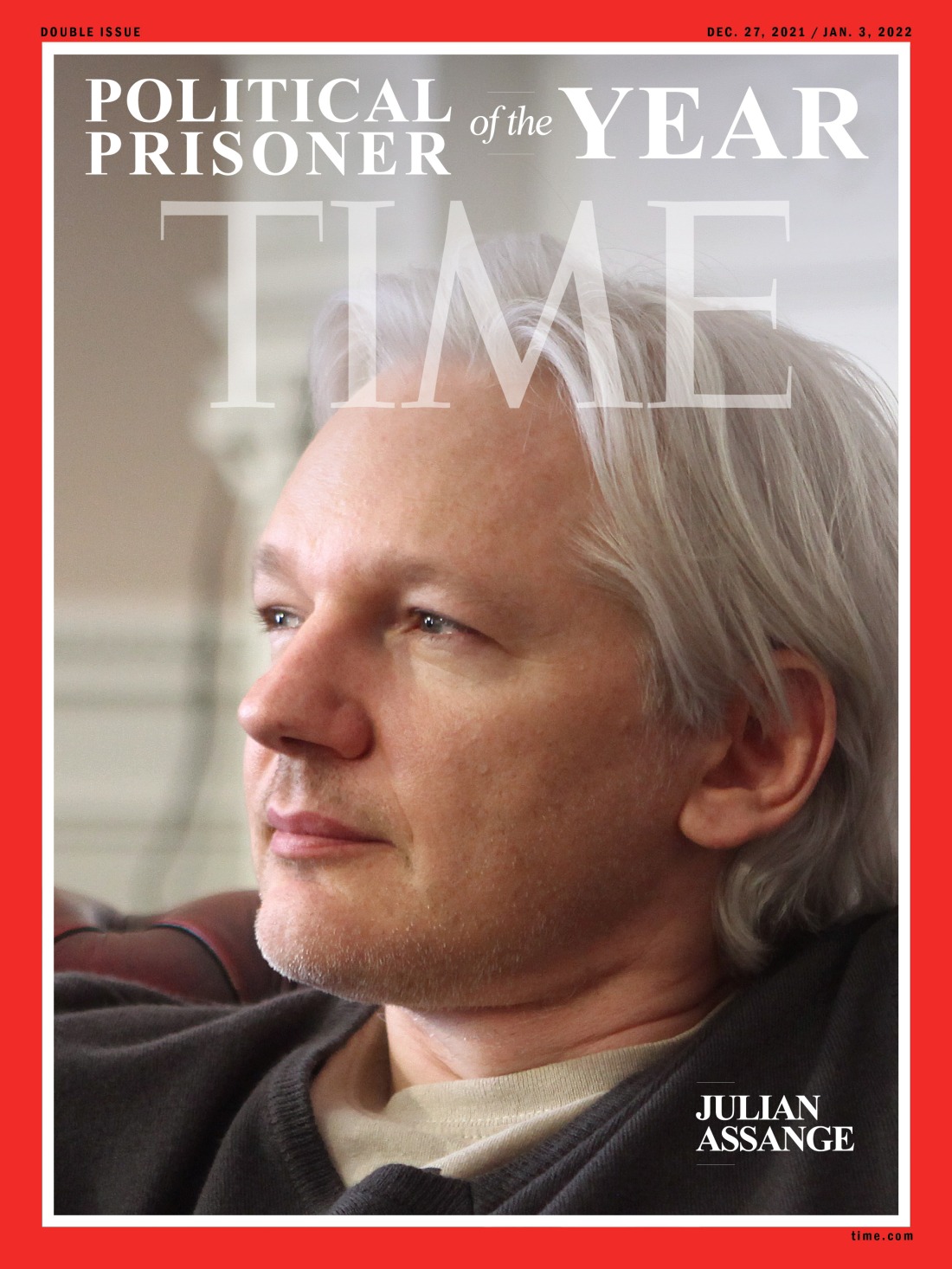
Julian Assange’s legal team has filed an appeal to Britain’s High Court in an effort to thwart his extradition to the United States to face espionage charges.
Key points:
- The appeal argues that Julian Assange is being prosecuted and punished for his political opinions and for protected speech
- Assange has been in custody since his was arrested in April 2019 and dragged out of the Ecuadorian embassy in London
- He is facing 17 espionage charges and one charge of computer misuse in the United States
British Home Secretary Priti Patel approved the extradition of the WikiLeaks founder in June after he was denied an appeal in the Supreme Court appeal back in March.
A public relations firm representing Assange said in a statement that the respondents to the appeal were Ms Patel and the government of the United States.
Lawyers for Assange will argue that he is being prosecuted and punished for his political opinions and for protected speech, and that the extradition request violates the US-UK Extradition Treaty and international law as it relates to what it calls political offences.
His lawyers will also argue that the US Government “misrepresented the core facts of the case” to the British courts and that the extradition request “constitute an abuse of process”.
“The Perfected Grounds of Appeal contain the arguments on which Julian Assange intends to challenge District Judge Vanessa Baraitser’s decision of 4 January 2021 and introduces significant new evidence that has developed since that ruling,” the statement read.
That January 2021 ruling saw Judge Baraister refuse the US Government’s extradition request on the basis that of Assange’s mental condition and the risk of suicide if he were held in a maximum-security prison.
But Judge Baraister rejected nearly all of the arguments put forward by Assange’s lawyers at the time, including that the charges against him were politically motivated and that he would not receive a fair trial in the US.
In December 2021 the US Government won an appeal against that decision in the UK’s High Court, with Judge Timothy Holroyde finding that the US had given assurances to the UK about Assange’s detention, including about his treatment in the US prison system and that the US would allow him to be transferred to Australia to serve any prison sentence.
Assange’s latest appeal also argues Ms Patel “erred in her decision to approve the extradition order on grounds of specialty” because the extradition request violated the US-UK Extradition Treaty.
US authorities have accused the 51-year-old of conspiring to hack government computers and of violating an espionage law in connection with the release of confidential cables by WikiLeaks in 2010-2011.
Assange is facing up to 175 years in prison over the 17 espionage charges and one charge of computer misuse over the leaks, but the US government has said that a sentence of between three and six years was more likely.
Stella Assange, Assange’s wife, said the pursuit of her husband was “criminal abuse”.
“Since the last ruling, overwhelming evidence has emerged, proving that the United States prosecution against my husband is a criminal abuse,” she said in a statement.
“The High Court judges will now decide whether Julian is given the opportunity to put the case against the United States before open court, and in full, at the appeal.”
Stop the Extradition! #FreeAssangeNOW
Julian Assange Files his Perfected Grounds of Appeal
Crowdfunder, Today, 26 August 2022, Julian Assange is filing his Perfected Grounds of Appeal before the High Court of Justice Administrative Court. The Respondents are the Government of the United States and the Secretary of State for the Home Department, Priti Patel.
The Perfected Grounds of Appeal contain the arguments on which Julian Assange intends to challenge District Judge Vanessa Baraitser’s decision of 4 January 2021, and introduces significant new evidence that has developed since that ruling.
The Perfected Grounds of Appeal concerning the United States Government include the following points:
- Julian Assange is being prosecuted and punished for his political opinions (s.81(a) of the Extradition Act);
- Julian Assange is being prosecuted for protected speech (Article 10)
- The request itself violates the US-UK Extradition Treaty and International law because it is for political offences;
- The US Government has misrepresented the core facts of the case to the British courts; and
- The extradition request and its surrounding circumstances constitute an abuse of process.
The Perfected Grounds of Appeal concerning the Secretary of State for the Home Department (SSHD) include arguments that Home Secretary Priti Patel erred in her decision to approve the extradition order on grounds of specialty and because the request itself violates Article 4 of the US-UK Extradition Treaty.
“Since the last ruling, overwhelming evidence has emerged proving that the United States prosecution against my husband is a criminal abuse. The High Court judges will now decide whether Julian is given the opportunity to put the case against the United States before open court, and in full, at the appeal,” said Julian Assange’s wife Stella Assange.
Background:……………………………………… more https://www.crowdfunder.co.uk/p/free-assange/updates/187543#startc—
Finnish energy company to take Russia’s nuclear giant to court
Fennovoima, a Finnish energy company, announced it would launch several
arbitrations and other proceedings against various Rosatom entities on
Saturday, following the collapse of a nuclear power plant project in
Finland.
Fennovoima purchased the nuclear power plant from RAOS Project, a
subsidiary of the Russian Rosatom Group, in 2013. The estimated €7
billion Hanhikivi 1 project in northwestern Finland was set to be finished
by 2029. After delays in delivering technical and safety documents to
Finnish authorities, Fennovoima terminated the project at the start of May.
Russia’s invasion of Ukraine also made continuing impossible. Rosatom
denied any technical issues, claimed the work was proceeding as planned and
blamed the Finnish side for politicising the project. A bitter divorce made
compensation claims from both sides inevitable. Fennovoima is seeking
compensation amounting to €2 billion for: “damages arising out of the
delays and inability to deliver the project and related issues.”
Euractiv 22nd Aug 2022, https://www.euractiv.com/section/energy-environment/news/finnish-energy-company-to-take-russias-nuclear-giant-to-court/
d Aug 2022
CIA spying on Assange “illegally” swept up US lawyers, journalists: Lawsuit.
Newsweek SHAUN WATERMAN ON 8/15/22 CIA surveillance of Wikileaks founder Julian Assange while he was sheltering in the Ecuadorian Embassy in London included recording his conversations with American lawyers, journalists and doctors, and copying private data from visitors’ phones and other devices, violating constitutional protections, according to a lawsuit filed Monday.
The suit – filed on behalf of four Americans who visited Assange – seeks damages personally from then-CIA Director Mike Pompeo for violating the plaintiffs’ Fourth Amendment rights against unreasonable search and seizure. The suit also seeks damages against a Spanish security firm contracted to protect the embassy, and its CEO, alleging that they abused their position to illegally spy on visitors and passed on the surveillance data they collected to the CIA, which is also named a defendant in the suit.
Legal experts, including a former senior intelligence official, told Newsweek that the allegations in the lawsuit, if proven, show the CIA crossed lines drawn to protect American citizens from surveillance by overzealous intelligence agencies………………………………………………..
The suit cites evidence gathered in a preliminary criminal inquiry by the Spanish High Court, launched after whistleblowers came forward from the Spanish firm hired to provide physical security for the embassy. The firm and its CEO are under investigation for alleged violations of Assange’s privacy and the confidentiality of communications with his lawyers – both of which are guaranteed by EU law.
The plaintiffs in the U.S. suit – filed in federal District Court in New York – are two New York attorneys on the Assange international legal team and two American journalists who interviewed him. A U.S. doctor who conducted medical interviews with Assange about his mental state chose not to join the lawsuit but told Newsweek he was subjected to the same surveillance. The surveillance also swept up visits from a U.S congressman and celebrities such as model and activist Pamela Anderson.
“As a criminal attorney, I don’t think that there’s anything worse than your opposition listening in on what your plans are, what you intend to do, on your conversations. It’s a terrible thing,” said the lead plaintiff, attorney Margaret Kunstler, a member of Assange’s U.S. legal team. “It’s gross misconduct,” she added, “I don’t understand how the CIA … could think that they could do this. It’s so outrageous that it’s beyond my comprehension.”
New York-based attorney Richard Roth, who filed the suit, said, “This was outrageous and inappropriate conduct by the government. It violated the most profound privacy rights” of the plaintiffs and others who visited Assange in the embassy.
And the violation is worse, Roth added, because it included “conversations of an absolutely privileged and confidential nature,” such as those with his lawyers, and the “theft of data” from devices owned by people such as journalists and doctors who rely on confidential relationships with their sources and patients.
“All my conversations with Julian Assange were covered by doctor-patient confidentiality,” said Sean Love, a physician and faculty member at Johns Hopkins, who visited Assange twice in 2017 to conduct a study of the effects of his confinement on his physical and mental health………………………………
The privacy of other American visitors not party to the lawsuit was also violated, according to copies of surveillance material turned over to the Spanish court and reviewed by Newsweek. Every visitor had their passport photocopied and most seem to have their phones photographed. Among the visitors subject to surveillance was then-California GOP Rep. Dana Rohrabacher, who was trying to negotiate a deal for a presidential pardon for Assange. .Washington Post reporter Ellen Nakashima’s phone was photographed and a detailed written account of her visit (revealing that she removed the battery from her phone before handing it over) was prepared by embassy security guards. Anderson’s passwords for her email and other accounts were included in surveillance photographs allegedly sent to the CIA, according to disclosures by Spanish whistleblowers.
Email messages sent to Anderson’s foundation requesting comment were not returned.
Apart from the constitutional violations against Americans swept up in the surveillance, the sheer magnitude and sensitivity of the material obtained by U.S. authorities may make it impossible for Assange to get a fair trial, Roth said. In addition to the surveillance, after the Ecuadorian government allowed British police to enter the embassy and arrest Assange, it publicly turned over all his legal papers and computer equipment to the U.S. Department of Justice.
“When a federal prosecutor comes after a lawyer with a search warrant and seizes their devices, there are multiple layers of review and protection for privileged lawyer-client communications,” Roth said. The court might appoint a special master – typically a retired judge or a senior attorney independent of the government – to oversee the process and ensure that privileged communications were segregated from those collected for the prosecution.
“None of that happened here. They just grabbed everything.”
…………………………………………………………………………………. Anyone who visited was required to leave their phones and other electronic devices with security guards at the embassy, according to the lawsuit.
“Julian’s visitors weren’t allowed to bring their devices into the embassy, nothing that could photograph or record or connect to the Internet,” WikiLeaks media attorney Deborah Hrbek, the other attorney suing, told Newsweek. “We turned them over to the security guards. We thought they were embassy personnel. We believed it was a measure to protect Julian.”
In fact, the guards were contractors, working for the Spanish private security firm UnderCover Global. Engaged by the Ecuadorian government to provide security for the embassy and its long term houseguest, UC Global in 2017 began secretly also working for U.S. intelligence, according to the lawsuit, citing evidence compiled by the Audiencia National, the Spanish High Court.
UC Global CEO David Morales returned from a Las Vegas security convention in early 2017, telling colleagues they were now working “in the big leagues,” “for the dark side,” and with “our American friends,” according to whistleblower testimony from former UC Global employees. The testimony says it became clear over the subsequent weeks and months that he was being paid substantial sums of money to share surveillance data with the CIA…………………………………………………………………………………….
The suit is directed against Pompeo personally because U.S. law and the Constitution make it difficult to sue executive branch agencies for damages, said Robert Boyle, a constitutional law attorney who consulted with Roth on the suit.
A 1971 Supreme Court judgment “made it possible to personally sue government officials for violations of certain constitutional rights,” he said……………………………………………
The surveillance revealed by the Spanish courts was likely “the tip of the iceberg,” said lead plaintiff Kunstler. “We happen to have discovered that. Who knows what else they were up to?”
https://www.newsweek.com/cia-spying-assange-illegally-swept-us-lawyers-journalists-lawsuit-1731570—
Connecting Toxic Memories: Hiroshima and Nuremberg
the NATO Three had the temerity to issue a joint statement expressing their total opposition to the approach taken by the so-called Ban Treaty (TPNW), declared it was their intention to continue to rely on nuclear weapons to meet their far-flung security needs broadly specified to include geopolitical deterrence, that is, not only is this weaponry not being limited to the defense of homelands but vital strategic concerns that could potentially arise anywhere on the planet. At present, this commitment to nuclearism is illustrated by the U.S. posture in response to the Ukraine War and the future of Taiwan, as well as by revealing refusal even to accept a No First Use framework of restraint.
What was most controversial about the [Nuremberg] trials was the failure to inquire into the violations of international criminal law by the winning side, which is why these tribunals, however conscientious their work, have been derided over the years as glaring instances of ‘victors’ justice.’
CounterPunch, BY RICHARD FALK, 12 Aug 22,
77 Years After Hiroshima and Nagasaki
Peace activists around the world often choose August 6th and 9th each year to grieve anew the human suffering and devastation caused by dropping atomic bombs on the undefended Japanese cities of Hiroshima and Nagasaki, which lacked military significance. Among other things these atomic attacks were ‘geopolitical crimes’ of ultimate terror, with scant combat justification, and intended mainly as a warning to Soviet leaders not to defy the West in the peace diplomacy at the end of World War II.
These August dates marking the utter destruction of these two cities are treated as events giving rise to what has been widely known as the nuclear age. This awful beginning can never be forgotten or redeemed, although ever since the explosions in 1945 the solemnity of these occasions has been overshadowed outside of Japan by widespread fears that a nuclear war might occur at some point and a quiet rage continues to build around the world that the nuclear weapons states, above all the U.S., have stubbornly defiantly refused to take steps to fulfill pledges to seek a reliable path to nuclear disarmament in good faith.
This moral and political pledge became legally obligatory in Article VI of the Nuclear Nonproliferation Treaty (1970), a commitment affirmed unanimously in an Advisory Opinion of the International Court of Justice in 1996. It has become clear that for the security establishments of the ‘NATO Three’ (U.S. France, UK) this disarmament commitment was never more than ‘a useful fiction’ that conveyed the sense that the non-nuclear states were being given something valuable and commensurate to the willingness to give up their conditional option to underpin national security by acquiring nuclear weapons (as Russia and China, as well as Israel, India, Pakistan, and North Korea have done over the decades).
The non-nuclear Parties to the NPT are not formally obliged to give up their option of acquiring nuclear weapons unconditionally. Article 10 confers on all Parties to the NPT a right of withdrawal if “extraordinary events..have jeopardized the supreme interests of its country.” In practice, as Iran is finding out, this right of withdrawal gives way to the geopolitical priorities of an enforcement regime presided over by the United States. The so-called Jerusalem Declaration signed in July by U.S. and Israel leaders commits to using whatever military force is necessary to prevent Iran from acquiring nuclear weaponry.
NPT Review Conference at the UN
Currently the NPT Review Conference, postponed since 2020 because of COVID, at UN Headquarters in New York City, two significant contradictory developments dominated the scene. It was the first such meeting of NPT Parties since the Treaty of Prohibition of Nuclear Weapons (TPNW) came into force in early 2021. This treaty, a project of governments from the Global South in active coalition with Global Civil Society has drawn a bright line between the majority views of the peoples of the world and the security elites of these nine nuclear weapons states.
This impasse between the nuclear haves and have-nots amounts to an existential confirmation of ‘nuclear apartheid’ as the precarious and self-serving underpinning of global security unless and until the advocates TPNW muster enough strength and will to mount a real challenge to such a hegemonic and menacing concentration of unaccountable power and discretionary authority.
New Patterns of Geopolitical Rivalry Increase Risks of Nuclear War
The second notable development at the NPT Review Conference lent a sense of immediacy and urgency to what had become 77 years after Hiroshima a somewhat abstract concern is the Ukraine War, and its geopolitical spillover effect of heightening the perceived risks of the use of nuclear weaponry and even the danger of nuclear war. The U.S. has decided it is worth challenging Russia’s attack on Ukraine sufficiently to uphold its strategic logic that since the end of the Cold War the world has political space for one extraterritorial state, which became the sole supplier of global governance when it comes to the international security agenda. Among other things, unipolarity meant that Cold War Era mutual respect for territorial spheres of influence on the borders of Great Powers no longer are pillars of stable geopolitical coexistence. After the Soviet collapse in 1992 the U.S. has acted as if entitled to implement a Monroe Doctrine for the world. To make such a grandiose hegemonic political destiny credible it has shouldered the immense economic and strategic burdens that accompany the role, maintaining hundreds of foreign military bases and naval fleets in every ocean.
NATO’s insistence early in the Ukraine War on making Russia pay for its invasion by being again reduced to the normalcies of territorial sovereignty was undoubtedly intended to be a master class for the benefit of Russia, and especially China, in the geopolitics of the post-Cold War world. It also provided an occasion to send China, currently the more formidable adversary of the West, a message written with the blood of Ukrainian lives, that any show of force to regain control over Taiwan will be met an even more punitive response, including thinly veiled threats that pointedly refuse to rule out uses of nuclear weapons. Pentagon war games some months ago ominously showed that China would prevail in any military encounter in the South China Seas unless the U.S. was prepared to cross the nuclear threshold. This assessment should be affirming the renewed strategic relevance of nuclear weaponry. It has proven helpful in making the case for even larger military appropriations from Congress.
American diplomacy toward China has aggravated an already inflammatory context by some inexplicably provocative behavior in recent months. First came a gratuitous public pronouncement by Biden last May while in Asia to provide whatever military assistance was deemed necessary to protect Taiwan if under attack by China. And secondly, a totally destabilizing August visit to Taiwan by Nancy Pelosi at a time of already high tensions. These provocations violated the spirit of the Shanghai Communique that was issued by China and the U.S. in 1972………………………………………………………………………………….
What was most controversial about the [Nuremberg] trials was the failure to inquire into the violations of international criminal law by the winning side, which is why these tribunals, however conscientious their work, have been derided over the years as glaring instances of ‘victors’ justice.’
My interest in the connections between Hiroshima and Nuremberg is somewhat different. The insensitivity of such a high profile signing of this agreement on August 8th establishing the Nuremberg Tribunal is appalling. It occurred during the very days of the atomic bombings, arguably the worst crime of World War II at least on a par with the Holocaust. It is more than insensitivity, it is moral numbness, which prepares political actors, whether states, empire, or leaders, to embrace past crimes and commit future crimes. It leads directly to such features of world order as a geopolitical right of exception at the UN by way of the veto and impunity with respect to accountability procedures. In effect, the UN is designed quite literally to give assurances that the most dangerous states, as of 1945, are jurisprudentially protected forever from any adverse Security Council decision as to criminal acts, at least within the UN System.
What is this slightly disguised feature of legality and legitimacy conveying to a curious observer? That law and accountability are relevant for propaganda and punishment against Great Power adversaries, and that the wrongs of victors in major wars are beyond scrutiny but those of the vanquished and weak are to be judged in what amounts to ‘show trials’ because of this core failure to treat equals equally.
There is yet something else to reflect upon. If August 8th had been a different day that of infamy because an English or American city had been targeted by a German atomic bomb and yet Germany still lost the war, the act and the weapon would have been criminalized at Nuremberg and by subsequent international action. We might not be still living with this weaponry if the perpetrators of those dreadful events of August 6th and 9th had been the losers in World War II, which makes the rightly celebrated defeat of fascism on balance a somewhat questionable long-term victory for humanity.
77 years later it seems worth pondering allow this long repressed relationship between Hiroshima and Nuremberg in the context of the recent irresponsible heightening of geopolitical tensions with Russia and China.
Richard Falk is Albert G. Milbank Professor Emeritus of International Law at Princeton University, Chair of Global law, Queen Mary University London, and Research Associate, Orfalea Center of Global Studies, UCSB. https://www.counterpunch.org/2022/08/12/connecting-toxic-memories-hiroshima-and-nuremberg/
EDF sues French government for €8.4bn after Macron forces it to sell energy at a loss
EDF is suing the French government for €8.3bn (£7bn) after Emmanuel
Macron forced the nuclear giant to sell energy at a loss.
The company has filed a compensation claim with the Conseil d’Etat, the French
administrative supreme court, over “losses incurred” as a result of a
price cap extended in January. Paris ordered EDF, which is currently 84pc
state owned, to sell more of its power to French rivals at below market
prices in an attempt to support households and businesses as energy costs
soared.
EDF, which is in the process of being fully nationalised by the
French state, said the €8.3bn figure reflected losses “estimated to
date”, suggesting the price cap could cost it €15bn over the full year.
EDF estimated the changes would cost it between €7.7bn and €8.4bn when
they were first announced and said it would consider “any measure to
protect its interests”. Before the measure was enacted, competitors were
allowed to buy 100TWh of EDF’s electricity at a heavy discount to balance
its monopoly position. In January, the Elysée ordered that cap to be
increased by a fifth.
Telegraph 9th Aug 2022
French Nuclear Giant Sues Government For $8 Billion
https://oilprice.com/Latest-Energy-News/World-News/French-Nuclear-Giant-Sues-Government-For-8-Billion.html— By Charles Hugh Smith – Aug 10, 2022,
French nuclear giant EDF, forced to sell power to competitors below market value, is now suing the French government for over $8 billion in compensation.
EDF says it has lost 8.3 billion euros (nearly $8.6 billion at today’s exchange rate) as of the date of filing the claim against the government, and anticipates losing more than 15 billion euros for the full year.
The French power company, which is already 84% owned by the government and is in the process of being fully nationalized, is forced to sell electricity it produces to rival power plants to increase competition as EDF holds a monopoly.
The initial government decree states that suppliers can purchase up to 25% of EDF’s annual nuclear output between July 2011 and December 2025 at a fixed, discounted price of about $47 per MWh. However, in January this year, the government implemented a larger cap at one-fifth in order to reduce consumer energy bills for this year. Then, in March, the government issued additional decrees, further increasing the volume and reducing the price for EDF.
The losses cited by EDF stem from this time period.
In June, EDF reported earnings showing its largest ever half-year loss. EDF lost 5.3 billion euros in the first half of this year, compared to 4.2 billion euros in profit for the same period of 2021.
EDF’s power stations account for 70-75% of France’s power consumption, and the government is keen on nationalizing the giant in order to ensure energy supplies amid a looming crisis that began when Russia invaded Ukraine.
Losses are mounting for EDF in other areas, as well.
Last week, EDF was forced to slash output at nuclear power stations on two rivers as a heatwave spreading across Europe has rendered the rivers too hot to cool the units.
Legal challenge to Sizewell C nuclear project
Campaign group Together Against Sizewell C (TASC) has now sent a
pre-action protocol letter, signalling the start of judicial review process
challenging the decision, which it contends is “unlawful”. The Planning
Inspectorate’s report to the business secretary stated that “unless the
outstanding water supply strategy can be resolved”, the case for granting
consent was “not made out”.
Building 9th Aug 2022
https://www.building.co.uk/news/sizewell-c-approval-faces-legal-challenge/5118719.article
Sizewell C nuclear station approval faces legal challenge
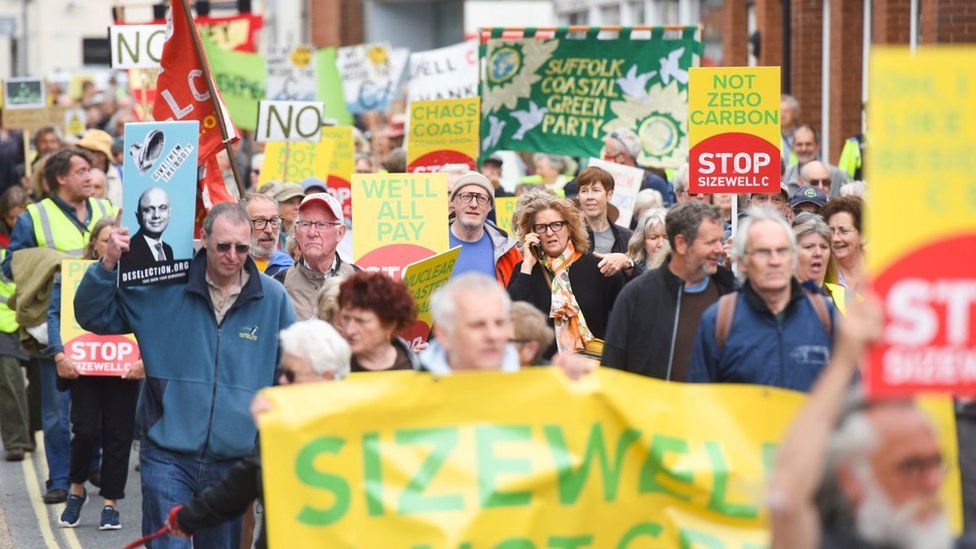
Campaigners have begun a legal challenge against the government’s decision to give the Sizewell C nuclear power station the go-ahead amid warnings that UK nuclear plants will be on the frontline of climate breakdown.

Citing the threat to water supplies in an area officially designated as seriously water stressed, the threats to coastal areas from climate change and environmental damage, the challenge is the first step in a judicial review of the planning consent.
The business secretary, Kwasi Kwarteng, overruled the independent Planning Inspectorate to grant permission for the new nuclear reactor in Suffolk in July. Kwarteng is pushing ahead with
government plans to approve one new nuclear reactor a year as part of an energy strategy that aims to bolster the UK’s nuclear capacity, with the hope that by 2050 up to 25% of projected energy demand will come from it.
But Sizewell C has faced stiff opposition from local campaigners, and environmental groups both for its cost and the environmental impact. In a letter to Kwarteng outlining their legal challenge Together Against Sizewell C (TASC) argues that the permission by the government for the plant was given unlawfully. Represented by Leigh Day solicitors and supported by Friends of the Earth, the group says there was a failure to assess the implications of the project as a whole, by ignoring the issue of whether a permanent water supply could be secured, a failure to assess the environmental impact of that project and the suggestion that the site would be clear of nuclear material by 2140, which was not upheld by evidence showing highly radioactive waste would have to be stored on site until a much later date.
The Planning Inspectorate had rejected the scheme saying “unless the outstanding water supply strategy can be resolved and sufficient information provided to enable the secretary of state to carry out his obligations under the Habitats Regulations, the case for an order granting development consent for the application is not made out”.
Pete Wilkinson, chair of TASC, said: “The case against Sizewell C is overwhelming, as has been carefully documented throughout the inquiry stage and was found by the planning inspector to have merit. “Even to consider building a £20bn-plus nuclear power plant without first securing a water supply is a measure of the fixation this government has for nuclear power and its panic in making progress towards an energy policy which is as unachievable as it is inappropriate for the 21st-century challenges we
face.”
Guardian 8th Aug 2022
Russia’s Rosatom to take legal action against Finland company, over terminated €7 billion nuclear power plant project.
Russian state entity plans claim over Finnish nuclear project, Jack Ballantyne 22 July 2022 Russian state entity Rosatom is preparing to launch an arbitration against a Finnish company that cited the war in Ukraine when it terminated a contract for work on a €7 billion nuclear power plant project…………… (Subscribers only) more https://globalarbitrationreview.com/article/russian-state-entity-plans-claim-over-finnish-nuclear-project
Employee shareholders to sue EDF over France nationising nuclear industry
An association of EDF employee shareholders announced on Sunday their plan
to sue the French state regarding its nationalisation of the power giant.
“Today the state needs to explain itself for the management as
ultra-majority stakeholder of the company,” the association “Energie en
actions” said in a statement.
The association holds that the government’s
decision goes against the interest of the company and the minority
shareholders, the statement added. The government will announce details of
its plan to fully nationalise the EDF, which runs the nation’s nuclear
power plants, by July 19.
Reuters 17th July 2022
1 This Month



Shut down the radiation-damaged Heysham nuclear reactors now
To see nuclear-related stories in greater depth and intensity – go to https://nuclearinformation.wordpress.com

Say No to NASA’s Reckless Nuclear Reactor on the Moon
Say No to NASA’s Reckless Nuclear Reactor on the Moon
-
Archives
- October 2026 (256)
- September 2026 (339)
- August 2026 (330)
- July 2026 (355)
- June 2026 (287)
- May 2026 (306)
- April 2026 (356)
- March 2026 (251)
- February 2026 (267)
- January 2026 (308)
- December 2025 (358)
- November 2025 (359)
-
Categories
- 1
- 1 NUCLEAR ISSUES
- business and costs
- climate change
- culture and arts
- ENERGY
- environment
- health
- history
- indigenous issues
- Legal
- marketing of nuclear
- media
- opposition to nuclear
- PERSONAL STORIES
- politics
- politics international
- Religion and ethics
- safety
- secrets,lies and civil liberties
- spinbuster
- technology
- Uranium
- wastes
- weapons and war
- Women
- 2 WORLD
- ACTION
- AFRICA
- Atrocities
- AUSTRALIA
- Christina's notes
- Christina's themes
- culture and arts
- Events
- Fuk 2022
- Fuk 2023
- Fukushima 2017
- Fukushima 2018
- fukushima 2019
- Fukushima 2020
- Fukushima 2021
- general
- global warming
- Humour (God we need it)
- Nuclear
- RARE EARTHS
- Reference
- resources – print
- Resources -audiovicual
- Weekly Newsletter
- World
- World Nuclear
- YouTube
-
RSS
Entries RSS
Comments RSS

