ICC Targets Finance Minister Bezalel Smotrich For War Crimes— He Responds by Promising More War Crimes

The most revealing line is not the threat. It’s “I am not a submissive Jew.” As if international law, human rights, or accountability are somehow acts of submission. No. What’s really being rejected here is the idea that powerful states and powerful men should ever face consequences.
May 20, 2026 , https://scheerpost.com/2026/05/20/icc-targets-smotrich-for-war-crimes-he-responds-by-promising-more-war-crimes/
Israel’s far-right Finance Minister Bezalel Smotrich appears to have found the perfect way to answer a reported ICC arrest warrant request for war crimes: announce more war crimes.
According to Common Dreams, Smotrich said the ICC prosecutor had secretly sought a warrant tied to the forced expulsion of Palestinians in the occupied West Bank. His response was not denial, restraint, or even the usual public-relations fog. It was escalation. Smotrich vowed to “respond with war” and immediately announced an order to evacuate Khan al-Ahmar, a Palestinian Bedouin village that has long stood in the path of Israel’s settlement expansion project.
That is the whole sickness laid bare. A minister accused of helping drive illegal displacement answers the accusation by promising another displacement. The alleged crime becomes the policy. The warrant becomes a campaign slogan. The occupation no longer even bothers to disguise itself as security — it declares land theft openly, wraps it in state power, and dares the world to do something about it.
Smotrich reportedly bragged about helping create more than 100 new settlements and 160 farming outposts, while the U.N. has reported tens of thousands of Palestinians forcibly displaced in the West Bank over the past year. Khan al-Ahmar is not just one village. It is part of the larger E1 project, designed to sever Palestinian territory and bury any viable future Palestinian state.
He also goes further the Bibi with Smotrich calling “for the permanent conquest of Gaza and re-establishment of Jewish settlements there that Israel abandoned in 2005, notions that Netanyahu has rejected. He has also worked to expand Jewish settlements in the West Bank, calling it part of Jews’ “biblical and eternal homeland”.”
So when Smotrich says the ICC’s move is a “declaration of war,” he is telling the truth in reverse. The war has been underway for decades — against Palestinian land, homes, movement, memory and existence. The difference now is that Israeli leaders are saying the quiet part into a microphone.
Saying “As a sovereign and independent state, we will not accept hypocritical dictates from biased bodies that consistently stand against the state of Israel, against our biblical, historical, and legal rights in our homeland, and against our right and duty to self-defence and security.”
Of course, a truly sovereign state would not require endless military, diplomatic, and financial protection from the far larger United States — its current partner in war crimes, occupation, and settler-colonial expansion. Israel speaks the language of “independence” while relying on billions in U.S. weapons, vetoes at the United Nations, and political cover from Washington to continue policies the rest of the world increasingly recognizes as violations of international law.
Smotrich added this on X.com “Issuing arrest warrants against the Prime Minister is a declaration of war. Issuing arrest warrants against the Defense Minister and against the Finance Minister is a declaration of war. And in the face of a declaration of war, we will respond with war. I am not a submissive Jew. No. The Palestinian Authority started a war, and it will receive war. From today, every economic or other target within my authority to strike — whether as Finance Minister or as a minister in the Defense Ministry — will be attacked. Not with words or gimmicks, but with actions. And I announce here and now the first target that will be attacked: immediately after my remarks, we will sign an order for the evacuation of Khan al-Ahmar. I promise all of you — this is only the beginning.”
So let’s get this straight
The International Criminal Court reportedly investigates you for the forced expulsion of Palestinians and your response is to publicly threaten more expulsions, more punishment, and more collective retaliation against an occupied population.
That is not “self-defense.” That is an open confession of how power works under occupation.
Smotrich calls arrest warrants a “declaration of war,” but for Palestinians in the West Bank the war has never stopped. Homes demolished. Villages erased. Land seized. Settlers armed and protected while entire communities are pushed off their land in full view of the world.
And now Khan al-Ahmar becomes a political trophy — a village of human beings treated like a revenge target because international law dared to speak your name.
The most revealing line is not the threat. It’s “I am not a submissive Jew.” As if international law, human rights, or accountability are somehow acts of submission. No. What’s really being rejected here is the idea that powerful states and powerful men should ever face consequences.
Imagine any other government official on Earth responding to a possible war crimes warrant by announcing another forced evacuation at a podium. The headlines would never end. The sanctions would already be in place. But when it comes to Israel’s far-right leadership, the world’s political class still treats open extremism as diplomacy.
This isn’t strength. It’s the language of impunity — the language of a government so certain it will never be stopped that it now broadcasts its intentions openly.
The ICC should make the warrants public. Governments should sanction the officials, funders and institutions enabling this machinery. Because when a state official responds to a war-crimes allegation by announcing another forced eviction, the issue is no longer whether international law is being violated. The issue is whether international law still means anything at all.
Did Trump Just Create a Political Slush Fund With Taxpayer Money?

May 21, 2026 , ScheerPost Staff
What began as a lawsuit over leaked tax returns is now morphing into something far bigger — and far more dangerous. In this chilling breakdown, the so-called $1.776 billion “1776 Fund” is exposed not as a normal legal settlement, but as a potentially unprecedented expansion of executive power dressed up in patriotic branding and constitutional smoke screens. Using a lawsuit that many legal experts considered weak from the start, the Trump administration has created a massive compensation fund administered by political appointees and aimed at people claiming they were victims of “government weaponization” — including figures tied to January 6.
But beneath the red-white-and-blue symbolism lies a far deeper question: can a president effectively sue his own government, settle with himself, and then redirect billions in public funds toward a political constituency without Congress? This analysis tears apart the legal architecture behind the arrangement, exposing how the lines between settlement, appropriation, and political patronage may be collapsing in real time. Whether courts intervene or not, one thing is already clear: another constitutional guardrail may have just been smashed in plain sight.
Transcript. The $1.776 Billion Question
Something happened this week that deserves a closer look — because the legal and constitutional structure behind it is unlike anything we’ve really seen before.
On Monday, the Department of Justice announced the creation of a $1.776 billion fund. The fund was created through the settlement of a lawsuit filed by Donald Trump against the Internal Revenue Service over the leak of his tax returns in 2019. Trump originally sought $10 billion in damages. Under the settlement, Trump receives no money directly. Instead, the money goes into a fund administered by a five-member commission appointed by the Attorney General — who, of course, serves under Trump.
The stated purpose of the fund is to compensate people who claim they were victims of what the administration calls “government weaponization.”
Now pause there for a second.
Because once you start looking at the structure of this arrangement the way a constitutional lawyer would, the questions become impossible to ignore.
The President of the United States sued an agency that reports to the President of the United States.
The IRS operates under the Treasury Department. The Treasury Secretary serves at the pleasure of the president. The Department of Justice defended the IRS in court. The Attorney General also serves at the pleasure of the president.
So Trump was effectively suing his own executive branch.
The judge overseeing the case noticed the problem immediately. She openly questioned how a legitimate adversarial settlement could exist when both sides ultimately answered to the same authority. In her words, the president appeared to be “negotiating with himself.”
That matters because settlements in American law are supposed to emerge from opposing interests. That adversarial structure is the entire foundation of how courts evaluate fairness and legitimacy.
But here, that structure barely existed.
And then there’s the lawsuit itself.
The leak of Trump’s tax returns happened between 2018 and 2020. The leaker, IRS contractor Charles Littlejohn, was prosecuted, pleaded guilty, and sentenced to prison. Legal experts widely questioned whether the federal government could even be held liable for damages caused by a contractor acting criminally outside his authority.
There were also major statute of limitations issues.
In other words: the case itself appeared weak.
Yet somehow it produced a $1.776 billion settlement…………………………………………………………………………………………………………………………………………………………………………………
Part 2 The 1776 Immunity Scheme
What began as a supposedly simple $1.776 billion “anti-weaponization” settlement is now revealing itself as something far more dangerous — an unprecedented attempt to shield Donald Trump, his family, and his sprawling business empire from future federal scrutiny. Newly released settlement documents suggest the deal goes far beyond symbolic politics or compensation funds. Buried inside the legal language is what critics are calling a procedural blueprint for “practical immunity” — an effort to use administrative settlement powers to create protections that resemble a pardon without actually invoking the constitutional pardon process.
The implications stretch well beyond Trump himself. According to the analysis, the settlement attempts to extend protections across multiple federal agencies, family members, trusts, subsidiaries, and affiliated companies — creating what amounts to a new legal pathway for politically connected networks to escape accountability through executive power and settlement mechanics. Whether courts ultimately uphold or narrow these protections remains uncertain. But the precedent may already be set: a sitting administration testing how far executive authority can stretch before the constitutional guardrails finally snap.
The $1.776 Billion Question, Part Two: What the Settlement Document Actually Says
Edited Transcript:
I want to come back to the settlement I analyzed earlier when I produced the first piece on the anti-weaponization fund…………………………………………………………………………………………………………………………………………………… https://scheerpost.com/2026/05/21/did-trump-just-create-a-political-slush-fund-with-taxpayer-money/
Mirrors of Greed: Elon Musk, OpenAI and the Tech Brat Battle

19 May 2026 Dr Binoy Kampmark , https://theaimn.net/mirrors-of-greed-elon-musk-openai-and-the-tech-brat-battle/

They are a disagreeable bunch, with disagreeable ideas to match. The querulous brats behind the drive for technological servility and plugged in stupidity were always going to scrap over which dystopian vision they most prefer. Elon Musk thought he was onto something hounding OpenAI and its current CEO Sam Altman for supposedly betraying one of those visions. In his $150 billion legal action, Musk alleged that Altman and OpenAI president Greg Brockman deceived him into investing in the company in its initial stages when salad green altruism was modish and humanity mattered. The litigation was a prong in a broader strategy to unseat Altman from OpenAI, sabotage the company’s $852 billion restructuring into a public benefit corporation and direct $134 billion to OpenAI’s non-profit foundation.
The deception centred on maintaining OpenAI as a non-profit entity and pursuing artificial intelligence (AI) ventures in ways beneficial to humanity. (When the tech brats have a stab at humour, they go in hard.) According to Musk, OpenAI had effectively stolen a charity. (Between 2015 and 2017, he had personally put $44 million into OpenAI, funds, he argues, that were essentially misappropriated when the company sloughed its non-profit skin.) In an introductory overview of the company from December 2015, the company badges itself a “non-profit artificial intelligence research company” with the object of advancing “digital intelligence in a way that is most likely to benefit humanity as a whole, unconstrained by a need to generate financial return. Since our research is free from financial obligations, we can better focus on a positive human impact.”
How things change. On May 18, a mere two hours was needed for a nine-jury member in Oakland, California to unanimously find against Musk, basing their decision on that most technical of grounds: the statute of limitations. This left two civil claims – breach of charitable trust and unjust enrichment – untested. Having left OpenAI’s board in 2018, Musk dithered till February 2024 to file suit. Musk claimed to have only discovered the company’s abandonment of its non-profit mission in 2022, when Microsoft showed its interest with an investment of $10 billion. OpenAI’s legal team argued that the pertinent events – the creation of a for-profit subsidiary in 2019 for instance and Microsoft’s initial injection of $1 billion that same year, were already matters of common knowledge. Time on the statute of limitations was running well before 2022. US District Judge Yvonne Gonzalez Rogers of the Northern District of California saw no reason to question the jury’s conclusion. “There’s substantial amount of evidence to support the jury’s finding, which is why I was prepared to dismiss on the spot.”
The trial was impressively ugly and amounted to an insult to the stout intelligence of the public whose welfare both parties claim to be protecting. The legal representatives from both sides jousted over respective views on AI and the credibility of the disputants. Musk’s lawyer, Steven Molo, pressed jurors to consider that several witnesses, including former OpenAI chief scientist Ilya Sutskever, doubted Altman’s candour, going so far as to find him mendacious. Altman had also conceded under cross-examination that he “told the occasional lie”. “Sam Altman’s credibility is directly at issue,” Molo crowed. “If you don’t believe him, they cannot win.”
OpenAI, Musk accusingly asserted, had wrongfully attempted to enrich investors and insiders at the expense of the non-profit. Along the way, it had failed to make AI safety a matter central to its operations. Microsoft, he further argued, had always known that OpenAI cared more about money than altruism. A personal journal entry penned by Brockman in November 2017 was also instructive, baldly revealing that OpenAI could not assert fidelity to its non-profit status if it intended becoming a benefit corporation months later. So it came to pass that Altman, Brockman and OpenAI were accused of the very same temptations, frailties and indifference to safety that could be found in Musk’s own conduct.
On the issue of safety and welfare, Musk’s own xAI, acquired by space and rocket company SpaceX, also part of the South African’s fiefdom of misrule, has drawn the attention of the European Commission and UK watchdog Ofcom over Grok, a product that has been used to create sexualised images. The combine arising from xAI and SpaceX could lead to an initial public offering that would surpass OpenAI in size, which sinks the scurrilous suggestion of altruism. Provided things go smoothly, the world’s first trillionaire might arise.
OpenAI was hardly going to leave Musk’s feeling of tech purity unchallenged. It was he, not OpenAI, who saw the shimmering dollar signs. Going back to 2017, he had floated the idea of a for-profit subsidiary with one caveat: he would have exclusive control. Failing this, he left the board in a huff. OpenAI’s attorney William Savitt suggested that Musk, having failed to “get his way at OpenAI,” filed his lawsuit only after establishing his own competing AI company in 2023. But most saliently, he waited too long to claim breaches of the founding agreement regarding the building of safe artificial intelligence for the benefit of humanity. “Mr Musk may have the Midas touch in some areas, but not in AI,” claimed Savitt.
OpenAI’s predatory reflexes will be boosted by the decision. The non-profit status in this field has been found wanting, and the scramble for profits given much encouragement in this most unprincipled of frontiers. “The decision is likely to reassure investors and the broader AI sector,” opines Sarah Kreps of the Tech Policy Institute at Cornell University, “because it avoids a potentially chaotic outcome that could have challenged OpenAI’s commercial structure, Microsoft partnership, and future fund-raising plans.”
This was by no means the first time Musk had taken to throwing a brief of anger against OpenAI. In March 2024, showing that intelligence can be authentically artificial, he filed a lawsuit citing a contract violation of a contract that did not exist. Using the misguided legal offices of Irell & Manella – the same firm that erroneously claimed on behalf of PETA that a monkey could hold copyright – Musk pursued what Techdirt’s Mike Masnick appropriately called a “vibes based” action. “Elon doesn’t have a contract with OpenAI which the company could have breached. And that’s kinda a problem in a breach of contract lawsuit.” This insuperable logic led Musk to abandon the lawsuit in June that year.
For Musk, the wells of indignation run deep. This is a man in the habit of losing or settling claims, be it with former Twitter executives and employees of the social platform now known as X, losing to investors in that same company for misleading public statements made during his untidy, often chaotic takeover, or having his lawsuit promptly dismissed against advertisers that exited that troubled platform. While such behaviour should draw scorn, those drawing benefit from his litigious pathologies – lawyers, in the main – can only be grateful. “In a lot of ways, he is just another businessperson asserting his rights,” says a credulous Shubha Ghosh, lawyer and law academic at Syracuse University. “I don’t think he’s abusing the legal system. Whether he uses it effectively, I’m not sure.” Wrong, certainly, on the first count.
ICC Issues Arrest Warrants For Five Additional Senior Israeli Officials
The Hague-based court previously issued warrants for the arrest of Israeli Prime Minister Benjamin Netanyahu and former War Minister Yoav Gallant
By News Desk, The Cradle., MAY 17, 2026 https://thecradle.co/articles/icc-issues-secret-arrest-warrants-for-five-additional-senior-israeli-officials-report
The International Criminal Court (ICC) has issued secret arrest warrants for three Israeli politicians and two military officials, Haaretz reported on 17 May, citing diplomatic sources.
The International Criminal Court (ICC) has issued secret arrest warrants for three Israeli politicians and two military officials, Haaretz reported on 17 May, citing diplomatic sources.
The timing of their issuance is unknown. The ICC has often issued arrest warrants in secret, publicly announcing them only later to enable a possible arrest of the suspect.
Israel’s Foreign Affairs Ministry and State Attorney’s Office do not respond immediately to requests for comment.
The Hague-based court issued arrest warrants against Prime Minister Benjamin Netanyahu and former War Minister Yoav Gallant in November 2024.
The timing of their issuance is unknown. The ICC has often issued arrest warrants in secret, publicly announcing them only later to enable a possible arrest of the suspect.
Israel’s Foreign Affairs Ministry and State Attorney’s Office do not respond immediately to requests for comment.
The Hague-based court issued arrest warrants against Prime Minister Benjamin Netanyahu and former War Minister Yoav Gallant in November 2024.
ICC prosecutor Karim Khan requested that ICC judges issue the arrest warrants in May 2024, alleging that Netanyahu and Gallant were responsible for war crimes committed by the Israeli military in Gaza.
Netanyahu and Gallant bear criminal responsibility for the war crime of starvation as a method of warfare and the crimes against humanity of murder, persecution, and other inhumane acts, according to the ICC prosecutor.
In response to the issuance of the arrest warrants, the US and Israel carried out a campaign to pressure the ICC to prevent and cancel the arrest warrants issued against the Israeli leaders, Le Monde reported in August 2025.
The campaign, which targeted the ICC chief prosecutor Khan, began in March 2024 after he announced his intention to seek the indictment of Netanyahu and Gallant.
In response, the Israeli prime minister launched a campaign to use “all means” to stop the prosecutor with the help of his allies in London, Washington, and Berlin.
At the end of April 2024, a staff member at the ICC accused Khan of sexual assault.
A source speaking to Le Monde said the allegations were part of an effort to “get rid of the prosecutor” and “hijack the process” of arrest warrants.
In October 2024, while the judges were still determining whether to issue the arrest warrants, a mysterious account named “ICC Leaks” appeared on the social network site X.
The account publicized the allegations of sexual assault made against Karim Khan internally at the ICC the previous May.
The ICC finally issued arrest warrants for Netanyahu and Gallant on 21 November 2024.
In February 2025, Chief Prosecutor Khan was placed under sanctions by the US.
Netanyahu applauded the move, calling the court “anti-Semitic and corrupt.”
Khan continued to work on two other indictments against Israeli Minister of National Security Itamar Ben Gvir and Israeli Minister of Finance Bezalel Smotrich.
However, Khan has been on temporary leave since 16 May 2025, pending the outcome of the investigation into the sexual misconduct allegations, which he strenuously denies.
During its genocide in Gaza, Israel has killed more than 72,000 Palestinians, the majority women and children, while destroying most of the strip.
Jewish settlers insist they will colonize Gaza, as they are colonizing the occupied West Bank.
“We are here on the way to new Jewish communities in Gaza,” settler leader Daniella Weiss stated in an interview at the border of the strip in late April.
“The 2 million or whatever number of Arabs, Gazans, who live here will not live in Gaza,” Weiss added. “It can take a week, it can take maybe a few months. They will not live here.”
‘Effort to Stifle and Intimidate’: Trump DOJ Subpoenas News Outlets Over Iran War Coverage
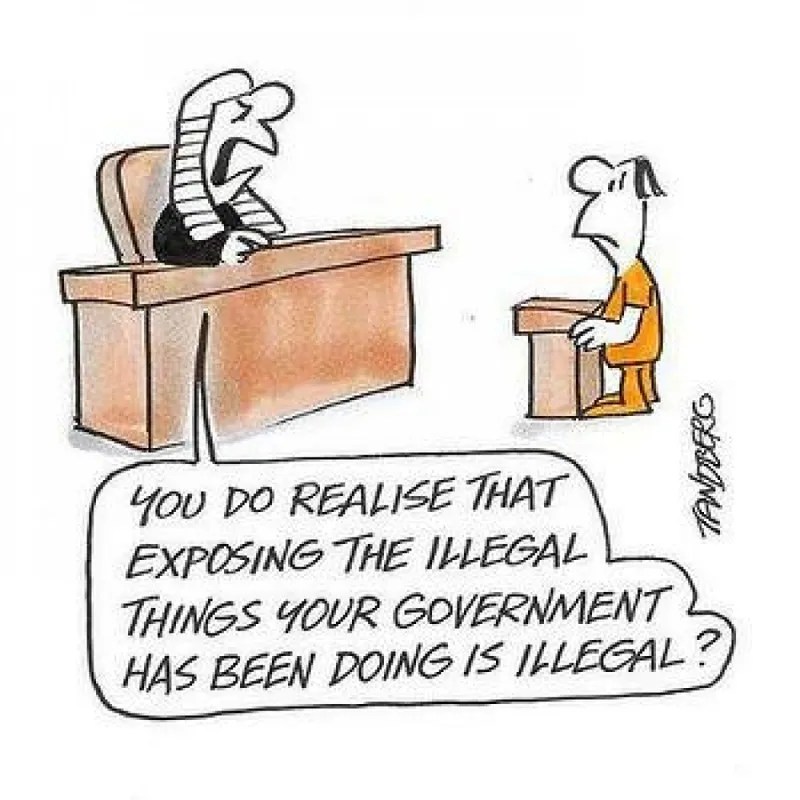
Trump has said media outlets who circulate what he baselessly calls “false information” should be charged with treason.
By Jake Johnson , CommonDreams, May 12, 2026, https://www.commondreams.org/news/effort-to-stifle-and-intimidate-trump-doj-subpoenas-news-outlets-over-iran-war-coverage
“The government’s subpoenas to The Wall Street Journal and our reporters represent an attack on constitutionally protected newsgathering,” said the newspaper’s publisher.
The US Justice Department has reportedly subpoenaed The Wall Street Journal and other news outlets at the urging of President Donald Trump, who has complained incessantly about coverage of his illegal and disastrous Iran war.
The Journal reported Monday that it received grand jury subpoenas dated March 4 for records of its journalists as Trump pushed the Justice Department—now led by his former personal attorney, Todd Blanche—to investigate war-related leaks. “Blanche vowed to secure subpoenas specifically targeting the records of reporters who have worked on sensitive national security stories,” the Journal reported, citing an unnamed administration official.
During one meeting, the Journal reported, “Trump passed a stack of news articles he and other senior officials thought threatened national security to Blanche with a sticky note on it that said ‘treason.’”
Trump and other top administration officials, including Pentagon Secretary Pete Hegseth, have publicly voiced outrage over the US media’s Iran war coverage and threatened reporters who publish classified information—a common journalistic practice.
In April, Trump said he would work to imprison journalists involved in reporting on a US fighter jet shot down in Iran and subsequent efforts to rescue the warplane’s crew. The previous month, Trump floated “charges for treason” against journalists he accused of circulating “false information” about the Iran war.
Ashok Sinha, the chief communications officer of Dow Jones, the Journal’s publisher, said in a statement that “the government’s subpoenas to The Wall Street Journal and our reporters represent an attack on constitutionally protected newsgathering.”
“We will vigorously oppose this effort to stifle and intimidate essential reporting,” said Sinha.
The subpoena targeting Journal reporters pertained to “a February 23 article that reported that Gen. Dan Caine, the chairman of the Joint Chiefs of Staff, and others at the Pentagon warned the president about the risks of an extended military campaign against Iran,” the newspaper reported Monday.
“Other news outlets, including Axios and the Washington Post, published similar stories that day,” the Journal added. “Trump launched the war five days later, on February 28.”
CNN reported Monday that “in addition to The Journal, other news outlets have also received subpoenas in recent months.”
“But some of the news organizations have chosen not to comment on the matter for the time being,” CNN added.
Scott Stedman, an investigative journalist with The Newsground, accused the leaders of targeted outlets of “cowardice” for not speaking out against the Trump administration’s brazen assault on press freedom.
“The president uses the DOJ to target your news organization with subpoenas because he wants to out your sources and you don’t even have the guts to say anything,” Stedman wrote. “Grow a fucking spine!”
Are Trump’s nuclear plans illegal?
“Fifty years ago, the Atomic Energy Commission was abolished because they became too much of a promoter and lost the confidence of Congress and the public over safety,” said Paul Gunter, director of the reactor oversight project at Beyond Nuclear. “The NRC was established to provide a regulator that prioritizes safety and is obligated not to take shortcuts for a production agenda. Instead, half a century later, we are on the same dangerous collision course, casting aside the NRC in favor of the DOE, which doesn’t have the experience or the staff to get the industry in line with safety and security. This capitulation to the Trump agenda could lead to the NRC being abolished altogether, because nobody will have confidence in them.”
May 11, 2026, https://beyondnuclear.org/are-trumps-nuclear-plans-illegal/
13 organizations, including Beyond Nuclear and Nuclear Information & Resource Service, have filed comments to the US Nuclear Regulatory Commission, suggesting Trump’s nuclear “orders” may violate long-standing legislation
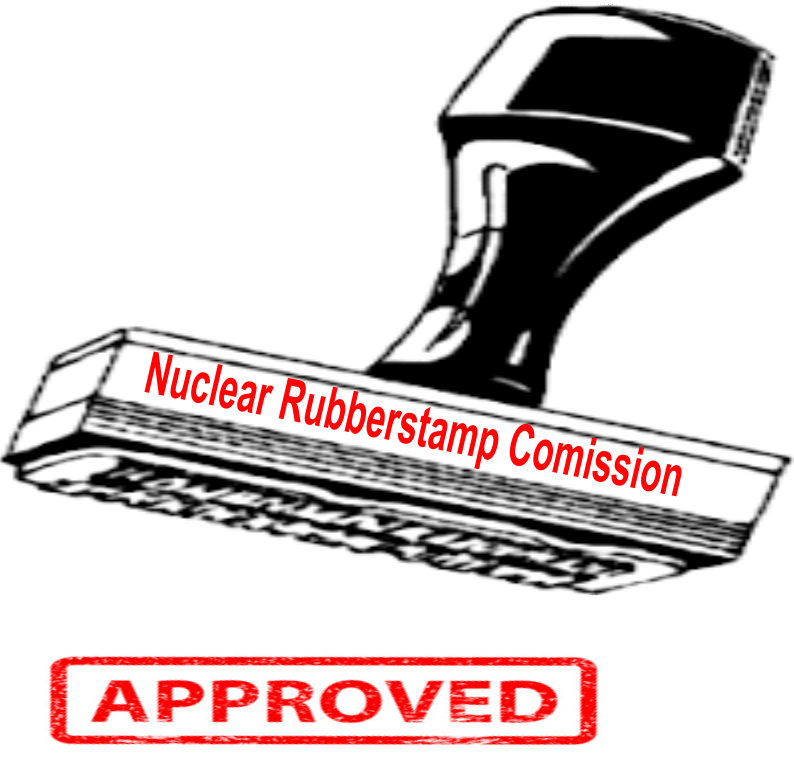
The so-called “Rubber-Stamp Rule”, an effort by the Trump administration to “Make America Nuclear Again”, violates key components of the Atomic Energy Act (AEA) and Energy Reorganization Act, according to comments filed this week by 13 organizations including the Nuclear Information and Resource Service (NIRS) and Beyond Nuclear. The Nuclear Regulatory Commission’s (NRC) proposed rule will allow reactor designs that the Department of Energy (DOE) and Department of Defense (DOD) have approved to bypass required safety reviews by the NRC.
In a separate comment filing in March, 11 state attorneys general concurred with the organizations’ findings that the Department of Energy ‘s new policy to exclude “pilot reactors” from both NRC licensing and environmental reviews violates existing law. In that case, the Department of Energy announced, in violation of federal law, that it would exempt previously untested reactors that it approves to be built and operated from any review of their environmental impacts.
“Along with the DOE’s environmental ‘free pass’ policy, the whole ‘expedited licensing’ regime the administration is attempting to set up appears to be illegal,” said Tim Judson, executive director of NIRS and co-author of comments filed to the NRC. “The White House is trying to create a ‘regulatory tunnel’ around NRC’s safety regulations. That would mean DOE’s biases and obviously false assumptions about the safety of nuclear power plants become the new normal, exposing the public to unacceptable dangers to our health and safety.”
The NRC’s proposed regulation would allow companies that want to build a nuclear reactor of the same design as one DOE has previously approved to merely submit documentation of that approval and claim that the previously built reactor “is safe.” Such companies would likely never have to go through a detailed safety review by NRC to build and operate such reactors. In 1974, Congress amended the Atomic Energy Act to prohibit such a scheme.
“Fifty years ago, the Atomic Energy Commission was abolished because they became too much of a promoter and lost the confidence of Congress and the public over safety,” said Paul Gunter, director of the reactor oversight project at Beyond Nuclear. “The NRC was established to provide a regulator that prioritizes safety and is obligated not to take shortcuts for a production agenda. Instead, half a century later, we are on the same dangerous collision course, casting aside the NRC in favor of the DOE, which doesn’t have the experience or the staff to get the industry in line with safety and security. This capitulation to the Trump agenda could lead to the NRC being abolished altogether, because nobody will have confidence in them.”
The groups also told NRC that it cannot simply “rubber-stamp” reactors that the military builds, either. “And while the law allows the DOD to build its own nuclear reactors,” said Tim Judson of NIRS, “it does not allow the NRC to skip safety reviews for civilian nuclear plants just because they use the same designs. The military routinely exposes its personnel to dangers that civilians are supposed to be protected from.”
“In its eagerness to short-circuit reactor safeguards, the Trump administration is once again doing what it does best – demonstrating a complete disregard for the law,” said Linda Pentz Gunter, executive director of Beyond Nuclear. “But nuclear technology is too inherently dangerous to operate as an outlaw. Ignoring those dangers will put millions of Americans at risk of another catastrophic nuclear accident.”
- NIRS, BN, et al comments on NRC Proposed Rule — https://www.nirs.org/wp-content/uploads/2026/05/DocketID_NRC-2025-1503_Comments_-BeyondNuclear-NIRS-etal.pdf
- Comments on DOE Categorical Exclusion Policy — https://www.nirs.org/wp-content/uploads/2026/03/2026.03.04-NIRS-et-al-Comments-re-DOE-categorical-exclusion-for-advanced-nuclear-reactors.pdf
The Second Global Sumud Flotilla: Israeli Piracy and Abduction on the High Seas
6 May 2026 Dr Binoy Kampmark, https://theaimn.net/the-second-global-sumud-flotilla-israeli-piracy-and-abduction-on-the-high-seas/
They have become adept flouters of international law. When doing so, they justify such violations with streaky, anaemic interpretations of self-defence and security. The Global Sumud Flotilla’s encore effort to break the Gaza blockade, which has been in place with varying forms of severity since 2007, did have one meritorious claim. After vanishing under a news cycle saturated with the Iran War, the blockade of the Strait of Hormuz and a global energy crisis, the unpardonably miserable plight of Gazans did make a return to the media stage.
The state of catastrophic misery for those on the Gaza Strip is something the Israeli authorities refuse to ameliorate. Despite the illusory ceasefire that commenced on October 9, 2025, Israel maintains an asphyxiating role over the narrow territory, much of which it has subjected to occupation. Since then, it continues to permit an excruciatingly limited number of supplies to a largely displaced population. On April 10, the United Nations Human Rights Chief Volker Türk made remarks about the ongoing nature of the killings and depredations by Israeli forces. Till that point, 738 Palestinians had been killed since the ceasefire had come into effect. “For the past 10 days, the Palestinians are still being killed and injured in what is left of their homes, shelters and tents of displaced families, on the streets, in vehicles, at a medical facility and a classroom.” Humanitarian personnel and journalists also continue to feature in the casualty lists.
The purpose of the Global Sumud Flotilla, as with its mission in September 2025, was to “not only break Israel’s illegal siege and deliver life-saving humanitarian aid, but also to establish a sustained civilian presence.” Participants include doctors, nurses, eco-builders, war crimes investigators, civilian protectors (unarmed) and a miscellany of others. With missionary zeal, those involved intend to “begin rebuilding healthcare systems and basic infrastructure destroyed over the past two years” even under fire from Israeli forces.
On March 27, the Palestinian NGOs Network (PNGO) released a statement commending those involved in the Freedom Flotillas, praising the efforts of the organisers “of the new Global Sumud Flotilla, which is set to depart soon.” The group acknowledged the need to escalate and strengthen “solidarity efforts with the Palestinian people” in the wake of such distractions offered by the “ongoing war in the Gulf region and the Israeli-American aggression.” Following a symbolic launch in Barcelona on April 12, the flotilla, made up of 58 vessels, set out.
On April 30, the flotilla, still in international waters off Greece, was intercepted by Israeli forces. Al Jazeera reported that the majority of 175 activists captured were taken to Crete, with Saif Abu Keshek from Spain and Brazilian Thiago Ávila proving worthy of being taken to Israel for questioning. According to Israel’s Foreign Ministry, both are affiliated with the Popular Conference for Palestinians Abroad (PCPA), a group they regard as clandestinely affiliated with Hamas.
The interception troubled Amnesty International’s Senior Director for Research, Policy, and Campaigns, Erika Guevara Rosas. “The Israeli navy crossing hundreds of miles just to ensure civilian boats carrying food, baby formula, and medical supplies don’t make it to Palestinians reveals the lengths Israel is prepared to go in order to maintain its cruel and unlawful 19-year-long blockade of the occupied Gaza Strip.”
The conduct of the IDF did not go unremarked in a number of capitals. The Foreign Ministries of Spain, Türkiye, Brazil, Jordan, Pakistan, Malaysia, Bangladesh, Colombia, Maldives, South Africa and Libya issued a joint statement condemning “in strongest terms the Israeli assault” on the flotilla, “a peaceful civilian humanitarian initiative aimed at drawing the attention of the international community to the humanitarian catastrophe in Gaza.”
The World Federation of Trade Unions expressed the firm view that the act had been one of piracy, involving the sabotage and destruction of boats, the assault and attack of activists and the abandonment of some of their number at sea “with no means of reaching land.” The WTFU also took issue with the illegal detention of Abu Keshek, a member of the World Federation and a trade unionist of the Catalan union IAC.
On May 3, the state attorney presented a list of offences to the Ashkelon Magistrates’ Court including “assisting the enemy during wartime” and “membership in and providing services to a terrorist organisation.” Spain’s Foreign Ministry unequivocally rejects the claims, insisting on Abu Keshek’s immediate release.
On May 5, the Court granted the state’s request to prolong the detention of Abu Keshek and Ávila being held at Shikma Prison till May 10. Their conditions feature total isolation, sleep deprivation through using high-intensity lighting in cold cells for 24-hour spells, and blindfolds when moved outside their quarters, including when medically inspected. Both have furnished testimony to the Israeli-based human rights group Adalah, which is acting on their behalf, noting “severe physical abuse amounting to torture.” The detainees are also undertaking a hunger strike, having only consumed water since April 30.
Adalah reasons that such a decision amounted “to judicial validation of the state’s lawlessness.” The six-day extension had also been granted “without imposing any limitations or judicial constraints on the interrogation period.” An appeal is being mustered by the group, which argues that an abduction undertaken over 1,000 kilometres from Gaza of non-Israeli citizens excludes the application of Israeli domestic law.
In drumming up such publicity, the question of effectuality arises. At what point does citizenry activism, decked out and decorated by high profile activists, win through? Do participants become, after a time, victims of their own futile publicity, their actions easily dismissed as stunts lost in the cul-de-sac of ineffective virtue? Figures such as the Swedish activist Greta Thunberg, who was on her second flotilla outing, can be easy fodder for the establishment machine, portrayed as privileged in grievance, cunningly exploited by the unscrupulous. This is certainly a line pursued by Israeli propaganda.
That line, however, has failed to neutralise the symbolic freight borne by the flotilla. Israel’s attempts to stifle the focus on Gaza has not worked, though the authorities were careful, unlike their previous violent outing of piracy and abduction, not to detain Thunberg longer than was needed. Low lying fruit, more easily bruised by faulty accusations of aiding a terrorist adversary, was preferred. It is an approach that is fast unravelling.
Israeli Attack on Flotilla Violated the UN Convention on the Law of the Sea
James Marc Leas. May 02, 2026, https://cancelf35.substack.com/p/israeli-attack-on-flotilla-violated
On Thursday, April 29, Israeli military forces illegally attacked vessels of the Global Samud Flotilla (GSF) while they were sailing on the high seas. Israeli commandos unlawfully seized 21 boats and abducted 177 flotilla participants, according to Nicole Schellekens, a Belgian GSF land-support person.
On May 1, the BBC reported that Israel released all but two of the detained participants in Greece. Thiago Avila and Said Abu Keshek remain in Israeli custody, and Israel has stated that it is transporting them to its territory.
Schellekens passed on a report that 34 of the abductees were physically abused by Israeli commandos while protecting the two men. The 34 were hospitalized, and 4 of them remain in the hospital at Heraklion on the Island of Crete. See the video by Elly Van Reusel, a medical doctor on “Magic,” one of the 22 seized boats.
The GSF condemned Israel’s actions as an act of piracy and called for the immediate release those still held by Israel.
The flotilla was engaged in a legal and peaceful mission aimed at breaking the internationally condemned Israeli siege of Gaza—a siege that imposes collective punishment on Gaza’s civilian population. The mission seeks to end Israel’s illegal policy of starvation, a policy that stunts the physical and cognitive development of children.
The flotilla was necessary only because, after destroying farms and fishing boats, Israel restricted or closed all land routes for aid into Gaza, and governments worldwide have so far failed to use their legal and political powers to force an end to the illegal siege.
The U.S. government has gone further than any other nation in collaborating with Israel’s illegal assault on Gaza’s civilians—the US provides the funds, bombs, F-35 jets, and bulldozers, along with the diplomatic cover that grants the Israeli government impunity.
US states have done little. Rather than adopt human rights promoting purchasing and investment legislation, Vermont has gone so far as to train its Air National Guard with 115-decibel F-35 jets low over one of the state’s most densely populated cities, where political and military leaders knew the flights would cause suffering to working-class and ethnic minority children. This location was deliberately selected to prepare the unit to target civilians. It was foreseeable that the Trump Administration would call the Vermont F-35 unit up, first to bomb in Venezuela, and now poised to resume their bombing in Iran.
The Israeli Assault on the Flotilla Violated International Law
Although Israel is not a party to the United Nations Convention on the Law of the Sea (UNCLOS), the core provisions of the treaty are recognized as customary international law and are legally binding on all countries.
• Article 92 grants a vessel’s flag state exclusive jurisdiction, effectively making the vessel sovereign territory of that country. By boarding the flotilla’s vessels without permission, abducting passengers, and seizing the boats, Israeli commandos violated the sovereignty of each of the flag states.
• Article 87 guarantees freedom of navigation on the high seas. Freedom revoked by Israeli commandos.
• Article 110 specifically prohibits warship personnel from boarding a foreign ship on the high seas except under narrowly defined circumstances—none of which applied in this case.
• Article 88 reserves the high seas for peaceful purposes.
• Article 301 requires states to refrain from any threat or use of force against the territorial integrity or political independence of any state. Which includes the vessels of any state.
Israel violated all of these provisions.
nforcement of the UN Convention on the Law of the Sea
Previous violations of the law of the sea have led to enforcement actions, including:
• Ordering the prompt release of vessels
• Awarding compensation
• Banning the perpetrator from accessing ports
• Freezing the perpetrator’s assets
• Restricting trade with the perpetrator
• Banning the transfer of military goods to the perpetrator
• Establishing a tribunal to investigate and prosecute those responsible
Enforcement Action Is Needed Now
Similar enforcement actions must be taken in response to Israel’s gross violations of the Law of the Sea. If flag states fail to act, they effectively grant impunity to the Israeli perpetrators, invite further violations, and they encourage even more extreme illegal actions by Israel.
Demand that your government officials take enforcement action now.
Iranian Group Submits Evidence of US-Israeli War Crimes to International Criminal Court.
“All cases of attacks on civilians are being legally pursued based on the Geneva Conventions,” said the head of the Iranian Red Crescent Society.
Jake Johnson, Apr 26, 2026, https://www.commondreams.org/news/iran-us-war-crimes
The head of the Iranian Red Crescent Society said Saturday that his organization has submitted evidence of US-Israeli war crimes to the International Criminal Court and other global bodies, seeking accountability for massive attacks on civilian infrastructure and other violations.
“The ICC prosecutor announced that the documents provided by the IRCS are accepted as official evidence,” said Pir-Hossein Koulivand, the head of the Iranian Red Crescent Society. “All cases of attacks on civilians are being legally pursued based on the Geneva Conventions.”
The IRCS estimates that US and Israeli airstrikes have destroyed more than 132,000 civilian structures throughout Iran, including hospitals, apartment buildings, universities, research facilities, and bridges. US President Donald Trump has repeatedly threatened to destroy all of Iran’s bridges and power plants if the country’s leadership does not succumb to his administration’s demands in negotiations to end the war.
Luis Moreno Ocampo, the founding chief prosecutor of the ICC, said earlier this month that Trump could be indicted if he follows through on his threats.
“My suggestion: You read the indictment of the Russians, change the name, and it is very similar,” said Ocampo, referring to ICC arrest warrants issued against senior Russian officials in 2024 for alleged war crimes in Ukraine.
In a series of social media posts on Saturday, the IRCS provided video footage and photographic evidence of what the group described as war crimes committed by the US and Israeli militaries.
“Among the most bitter war crimes of America and Israel in Iran is the attack on the home of 19-month-old Helma in Tabriz, in which four members of her family were martyred,” the IRCS wrote Saturday. “The only survivor of this family is Helma.”
The ICC is tasked with investigating and prosecuting individuals for war crimes, crimes against humanity, and other grave violations of international law. Iran is not currently a party to the Rome Statute, which established the ICC—so the court does not have jurisdiction over war crimes committed on Iranian territory.
Human rights organizations and advocates have implored Iran to grant the ICC jurisdiction to pursue justice for war crimes committed during the illegal US-Israeli assault that began on February 28. On the first day of the war, the US bombed an elementary school in southern Iran.
“From the killing of over 150 students and teachers to strikes on hospitals full of newborns, every day more and more evidence emerges pointing to the commission of grave war crimes in Iran since the start of the war,” said Omar Shakir, executive director of DAWN. “Victims deserve justice. The mechanisms exist, and the US has no veto over them.”
Kenneth Roth, former executive director of Human Rights Watch, wrote earlier this month that “the Iranian government could join the court now and grant it retroactive jurisdiction, similar to what Ukraine did to allow prosecution of Russian war crimes.”
Last month, the IRCS formally requested that the ICC initiate “an investigation into war crimes arising from attacks by the United States of America and the Israeli regime against civilian objects.”
“According to field reports from relief workers, operational documentation, and data recorded by the Iranian Red Crescent Society, a wide range of residential areas, medical facilities, schools, humanitarian facilities, vital urban infrastructure, and public places were directly or indiscriminately targeted during the recent military attacks,” the group wrote in a letter to the ICC’s top prosecutor.
Plaintiffs Tour the Savannah River Site’s Plutonium “Pit” Bomb Core Plant -Most Expensive Building in U.S. History is Key to New Nuclear Arms Race
Tom Clements, Director, SRS Watch, Jay Coghlan, Nuclear Watch NM, Shelby Cohen, Comms Manager, SC Env. Law Project, 23 April 26, https://nukewatch.org/wp-content/uploads/2026/04/Plaintiffs-Tour-the-Savannah-River-Sites-Plutonium-Pit-Bomb-Core-Plant.pdf
Columbia, SC – On April 21, plaintiffs Savannah River Site Watch, Nuclear Watch New Mexico and Tri-Valley CAREs toured the plutonium “pit” bomb core production plant at the National Nuclear Security Administration’s (NNSA’s) Savannah River Site (SRS) near Aiken, South Carolina. They were accompanied by their attorney from the South Carolina Environmental Law Project and a science consultant from the Union of Concerned Scientists.
Plutonium pits are the core components of all U.S. nuclear weapons. The NNSA is seeking to expand production to at least 30 plutonium pits per year at the Los Alamos National Laboratory (LANL) in New Mexico and at least 50 pits per year at SRS, which has never previously produced pits. NNSA pushed forward with the project without required public review, in violation of the National Environmental Policy Act (NEPA).
Plaintiffs sued in federal court in Columbia, SC and won, requiring the NNSA to complete a nationwide programmatic environmental impact statement (PEIS), with public hearings to be held this May (listed below). The court-approved settlement agreement also required an inspection of the Savannah River Plutonium Processing Facility by plaintiffs to ensure that no production begins before the completion of the final PEIS and simultaneous Record of Decision, which NNSA now says is expected in early 2027. NNSA officials also informed plaintiffs that 90% design and “rebaselined” costs will not be completed until September 2026, which means that once again Congress will be appropriating taxpayers’ money without knowing full costs.
The SRS pit plant will be the most expensive buildings ever built in the USA, with a current NNSA estimate of up to $30 billion even before all total costs are known (includes at least $5 billion in sunk costs for SRS’ failed MOX Fuel Fabrication Facility being “repurposed” to pit production). The agency’s recent budget request for FY 2027 (pp 17-19) reveals an 87% jump in combined pit production funding for LANL and SRS, averaging $5 billion for each of the next six years.
Despite the staggering costs, the independent Government Accountability Office (GAO) has repeatedly found that NNSA has no credible cost estimates. In fact, the NNSA and its parent Department of Energy (DOE) have been on the GAO’s High Risk List for project mismanagement and waste of taxpayers’ dollars since 1991. In August 2025 the DOE Deputy Secretary ordered a “special assessment” of the troubled program completed by mid-December. Despite repeated Freedom of Information Act and congressional requests, DOE has yet to publicly release it. Finally, NNSA’s FY 2025 Performance Evaluation Report for SRS specifically notes that the managing contractor underperformed in project execution of the Savannah River Plutonium Processing Facility, likely adding yet more delays and costs.
NNSA released the Draft Pit Production PEIS on April 10, 2026. It declares that:
“NNSA missions are conducted fully consistent with current treaty obligations. The SSMP [Stockpile Stewardship and Management Plan] is fully consistent with and supports the U.S. commitment to the NPT [NonProliferation Treaty].” (Volume I, p. 1-5)
Article VI of the U.S. constitution enshrines international treaties as the “supreme Law of the Land.” The 1970 NonProliferation Treaty required the nuclear weapons powers to “to pursue negotiations in good faith on effective measures relating to cessation of the nuclear arms race at an early date and to nuclear disarmament…” After more than a half-century that has never even begun. The next NPT Review Conference, held every five years, is scheduled to begin April 27 at the United Nations. It is widely expected to fail for the third time over fifteen years to make any progress whatsoever toward nuclear disarmament. To the contrary, expanded plutonium pit production is key to the U.S.’ $2 trillion “modernization” program to keep nuclear weapons forever.
The draft PEIS also declares:
“Over time, the materials that make up the pit change in ways that reduce the pit’s functionality… Building the manufacturing capacity to produce at least 80 ppy [pits per year] before the end of the decade is essential to maintaining a reliable nuclear deterrence. Many of the aging pits will have to be replaced with new ones in the coming years to maintain a safe and reliable nuclear stockpile and deterrence.” (Volume I, p. 1-3.)
NNSA completely omits that in 2006 independent experts concluded that plutonium pits have reliable lifetimes of at least 85 to 100 years, with no stated expiration date (the average age of pits is now around 43 years). Despite congressional directives, NNSA has yet to release a fully updated pit life study since then. In fact, no future pit production is scheduled to maintain the safety and reliability of the existing stockpile. Instead it is all for new-design nuclear weapons that could prompt a return to testing.
Tom Clements, SRS Watch Director, commented:
NNSA completely omits that in 2006 independent experts concluded that plutonium pits have reliable lifetimes of at least 85 to 100 years, with no stated expiration date (the average age of pits is now around 43 years). Despite congressional directives, NNSA has yet to release a fully updated pit life study since then. In fact, no future pit production is scheduled to maintain the safety and reliability of the existing stockpile. Instead it is all for new-design nuclear weapons that could prompt a return to testing.
Tom Clements, SRS Watch Director, commented:
“This PEIS process, pursuant to the National Environmental Policy Act, gives the public the power to be engaged in democratic decision-making processes and voice their concerns on nuclear weapons projects – ones that historically have been cloaked in secrecy. This particular public comment period is crucial. Because of the current administration’s dismantling of NEPA regulations, this could be the last nuclear weapons project that the public has the opportunity to adequately scrutinize.”
Dylan Spaulding, a physicist with the Union of Concerned Scientists, observed:
“The scope and pace of pit production are frequently justified due to concerns about plutonium aging, but pits in the existing stockpile should not require replacement for decades. Newly produced pits are to furnish new types of weapons, not to maintain the ones we have. Plutonium aging is simply not a credible motivation for a rushed pit production program at this time.”
Jay Coghlan, Director of Nuclear Watch New Mexico, commented:
“It’s ironic that plutonium pit production’s exorbitant costs could lower national security instead of enhancing it. New untested designs could lower confidence in the existing, tested stockpile. Or these new-designs could prompt the U.S. to return to testing, after which other nuclear weapons powers would surely follow. It’s time to end the cover up of the NNSA’s deeply troubled pit production program and to expose everything from its runaway costs to its role in a new nuclear arms race that endangers us all.”
In closing, Attorney Ben Cunningham, commented:
“South Carolina Environmental Law Project lawyers fought for years in federal court to win this programmatic environmental impact statement – a significant victory for public participation and transparency. Now, South Carolinians have a voice in this legally required environmental and public safety review that the federal agency must take into account before deciding whether our state is used to produce nuclear weapon components along with their inevitable radioactive wastes. If you care about the future of our land, water and safety, please submit your comments on the programmatic environmental impact statement before the July 16 deadline.”
The Draft PEIS was released by NNSA on April 10, 2026 with a 90-day public comment period. Comments can be submitted by email to PitPEIS@nnsa.doe.gov until July 16. Please include the document number “DOE/EIS-0573” in the subject line. For more please see https://www.energy.gov/nepa/articles/doeeis-0573-draft-environmental-impact-statement-april-2026
Five required public hearings:
All hearings with the exception of the Washington, DC, hearing are scheduled for 5:00-5:30pm Open House Poster Session, 5:30-8:00pm Formal Public Hearing, in their respective time zones.
North Augusta, South Carolina: Tuesday, May 5, 2026, North Augusta Community Center, 495 Brookside Dr, North Augusta, SC 29841, Virtual: https://bit.ly/PitPEIS5May, Meeting ID: 267 103 716 263 892, Passcode: Wb2RJ9zA, Join by Phone: 571-429-4592, Phone conference ID: 297 381 326#
Kansas City, Missouri: Thursday, May 7, 2026, Hillcrest Community Center, Community Room, 10401 Hillcrest Road, Kansas City, MO 64134, No virtual meeting option.
Livermore, California: Tuesday, May 12, 2026, Garré Vineyard & Winery, Santa Rosa Room, 7986 Tesla Road, Livermore, CA 9455, no virtual meeting option.
Santa Fe, New Mexico: Thursday, May 14, 2026, Santa Fe Farmers Market Institute, 1607 Paseo de Peralta, Santa Fe, NM 87501, Virtual: https://bit.ly/PitPEIS14May, Meeting ID: 278 752 885 654 34, Passcode: W9Bt96vN, Join by Phone: 719-283-1404, Phone conference ID: 311 183 140#
Washington, DC: Wednesday, May 20, 2026, 2:00-2:30pm Open House Poster Session, 2:30-5:00pm Formal Public Hearing, Eastern Standard Time, Southwest Library, Large Meeting Room, 900 Wesley Pl, SW, Washington, DC 20024, no virtual meeting option.
The collapse of multilateral law and the confusion of the battlefields
Thierry Meyssan, Voltairenet.org, Tue, 14 Apr 2026, https://www.sott.net/article/505787-The-collapse-of-multilateral-law-and-the-confusion-of-the-battlefields
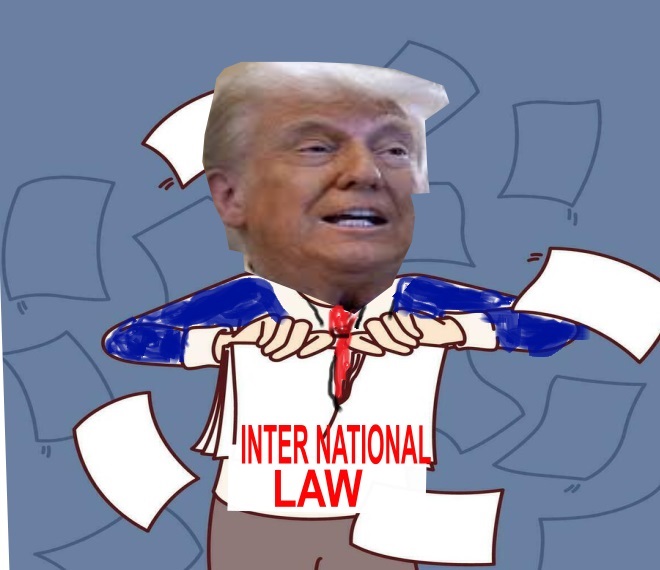
The United States behaved like barbarians during the Israeli war against Iran. Its president, Donald Trump, claimed responsibility for attacking civilians, even though just a month earlier he had asserted his desire to liberate them. He went so far as to threaten to eradicate Iranian civilization, despite his ambition to receive the Nobel Peace Prize.
By acting in this way, Washington not only violated the UN Charter, but also forced some of its allies to discover that it was not their protector, but rather, that it was dragging them into a war they had not chosen.
The President of the United States of America, Donald Trump, initially stated that “the total destruction of areas and the certain death of groups of people which, until now, had not been considered as possible targets” were being “seriously considered” (S/2026/141). He then publicly and explicitly threatened to annihilate Iranian civilization on April 7, 2026 [ 1 ] , in violation of Article 2.4 of the Charter of the United Nations.
In doing so, the President of the United States has placed himself outside of civilization. If there is one basic principle of international law, since the Hague Conference of 1899, it is that signatory states must not behave like barbarians.
He did not carry out his threat, but with unprecedented violence, deliberately destroyed civilian targets:
He began by participating in the assassination of the spiritual leader of millions of Shiites, Ayatollah Ali Khamenei (S/2026/109). Then, he destroyed the Azadi and Besat sports complexes, the Azadegan water park, the Shahidan Esmaeili Stadium, and the Shahid Eskandarloo Sports Hall in Tehran (UN S/2026/130).
Next, he attacked the Minab Primary School. He then went on to attack Red Crescent buildings, the Gandi, Motahari, and Khatam hospitals in Tehran, and the Abouzar Hospital in Ahvaz (S/2026/111). It bombed several fuel storage facilities in Tehran, releasing large quantities of hydrocarbons into the atmosphere, including sulfur and nitrogen oxides, causing acid rain, the deaths of many survivors of the Iran-Iraq War gas attacks, and massive fires (S/2026/149).
It bombed cultural sites, such as the Qajar dynasty palace, the Golestan (S/2026/180). And, probably due to confusion, it bombed UNESCO and WHO offices (S/2026/269) and even the Pasteur Institute of Iran (S/2026/279).
His violence knew no bounds, and while claiming to be fighting against an atomic threat — we have explained at length that there has been no Iranian military atomic program since 1988 — he bombed the Bushehr civilian nuclear power plant four times, risking the destruction of the cooling system and the spread of radiation throughout the region’s waters.
People in the Middle East no longer believe that the United Nations protects them and that the United States can bring them peace [ 2 ] .
The people of the Gulf, who had accepted US military bases on their soil for their protection, learned the hard way that they had been deceived. Their American hosts used their land to wage war against Persian civilization, turning them into targets for Iran’s legitimate resistance.
The confusion that has developed over the past five weeks has shown that multilateralism can conflict with international law. To protect themselves, the Gulf States have issued numerous multilateral declarations: to the Gulf Cooperation Council [ 3 ] , the Arab League [ 4 ] , and the International Maritime Organization [ 5 ] . They have finally discovered that international law is against them: they are jointly responsible for the US aggression perpetrated from their territory.
This confusion reached its peak with the adoption, with two abstentions, of Security Council Resolution 2817, which, on March 11, 2026, disregarded General Assembly Resolution 3314, adopted unanimously and without a vote on December 14, 1974.
It is clear that the UN, as we know it, will have to be profoundly reformed or dissolved [ 6 ] .
The confusion now centers on the Strait of Hormuz. Let’s leave aside the period of the war during which Iran barred ships from the strait to those of the powers aggressing against it (Israel, the United States, and the United Kingdom), as well as to those of the countries that allowed them to use their territory to carry out their aggression (Germany and Italy, Jordan, and the Gulf States).
In the West, there is a consensus that no one can dictate their law in the strait during peacetime.However, this is not so simple:the waters of the Strait of Hormuz are Omani and Iranian territorial waters,not international waters. Given the depth of the strait, passage is generally more common on the Omani side than on the Iranian side.
The two countries can legitimately consult with each other and request a toll, as is the case in the Suez and Panama Canals, even though this is a natural strait [ 7 ] . However, they cannot prevent global traffic from passing, “innocently,” through their waters, especially since they control access to the Persian Gulf. Except that oil tankers represent a real danger with their highly polluting cargoes in the event of a shipwreck.
The Suez Canal is a significant example: in 1956, the British and French empires, militarily supported by the colonial state of Israel, attempted to seize control of the Suez Canal, which Egyptian President Gamal Abdel Nasser had just nationalized. This operation was a fiasco. It marked the end of both colonial empires and revealed the Franco-British alliance with Israel — an alliance that would be broken by Charles de Gaulle during the Six-Day War.
The Strait of Hormuz crisis could, in turn, mark the end of American ambitions in the “rest of the world.”
Another question arises: if Oman and Iran are allowed to collect a toll, how can we ensure that its amount will not be prohibitive and in what currency will it be paid? On this subject, Iran has considered that it be payable in yuan, while the United States, attached to the supremacy of the dollar, would like it to be in dollars or, failing that, in Trump coin ($Trump), the cryptocurrency of the US presidential family and the Emirati royal family, Al-Zayed [ 8 ] .
If the price were not set in dollars, oil companies would prepare to abandon that currency. However, the US dollar is no longer based on the US economy, but on its role in the global hydrocarbon market. This shift would therefore represent a continuation of the war against the “Great Satan.”
On April 12, President Trump posted a message on X:
“From this moment forward, the United States Navy, the finest in the world, will begin the process of BLOCKING all vessels attempting to enter or exit the Strait of Hormuz. At some point, we will achieve this principle of ‘ALL SHALL BE ALLOWED IN WHEN ALL SHALL BE ALLOWED OUT,’ but Iran has not allowed this to happen by simply saying, ‘There may be a mine somewhere,’ which no one but them knows about. This is GLOBAL RACKETEERING, and the leaders of countries, especially the United States of America, will never be extorted. I have also directed our Navy to search, in international waters, and prohibit all vessels that have paid a toll to Iran. None of those who have paid an illegal toll will have safe passage on the high seas.” [ 9 ]
Not knowing what to do, Donald Trump himself blocked the Strait of Hormuz, even though the Anglo-Saxons have been enshrining freedom of movement and trade since 1837 — so much for the dogma of “free trade”! But it’s true that the Jacksonians aren’t globalists. No matter: Donald Trump already betrayed his voters by launching this war a month and a half ago. Today, he’s betraying his predecessors. We are witnessing the suicide of the United States.
References:……………………………………………………………………………………………………………………………………………………………….
International law or foreign military bases: a choice must be made
This is the great discovery of this war:international law provides that attacked states can take action against their aggressor not only on their own territory, but also against military bases that participate in the aggression from abroad, and finally against third-party states that host these bases [ 6 ] . Never before, since the creation of the United Nations, had an attacked state attacked its aggressor(s) on the territory of a third-party state. The whole world had forgotten this response, particularly effective in the era of economic globalization [ 7 ] .
Thierry Meyssan, Voltairenet.org, Tue, 07 Apr 2026, https://www.sott.net/article/505638-International-law-or-foreign-military-bases-a-choice-must-be-made
The war waged by Israel, the United States, and the United Kingdom against Iran has called into question international law. Even the Security Council had forgotten its own definition of aggression. It ruled against itself. There has never been a precedent for this situation. All UN member states must now choose between international law and the alliance system devised by the United States.
The Israeli-American-British war [ 1 ] against Iran profoundly impacted the United Nations and revolutionized the way international law was approached. Until then, everyone believed that this law was based solely on respect for one’s signature and the right of peoples to self-determination. However, over time, everyone had also become accustomed to the idea that Israel and the United States would never be considered outside the law.
Although he invoked “collective self-defense” by Israel, this point was swept aside by the astonishing candor of US President Donald Trump, who stated that Iran did not threaten his country [ 2 ] . Until now, Washington had lied shamelessly to maintain the illusion that it respected international law. We remember the lies of George W. Bush and Barack Obama regarding the 9/11 attacks, Iraqi weapons of mass destruction, the Libyan and Syrian massacres, and the wars that followed.
Benjamin Netanyahu simply resorted to his thirty-year-old rhetoric about “the head of the octopus” — that is, Iran — to explain his influence. He could think of nothing better than to refer to Iranian slogans: “Death to the Zionist entity!” and “Death to the United States!” implying that Iran wanted to kill all Israelis and all Americans. However, chanting “Death to the Zionist entity!” has never meant hoping for the death of the State of Israel and its people, but simply challenging the self-proclamation of this state, without the approval of the United Nations, and contrary to the initial plan for a binational state. As for the cry of “Death to the United States!”, it signifies that Iran is challenging the legitimacy of a state founded on the massacre of millions of indigenous people and the enslavement of millions of Black Africans.
One might have expected every UN member to declare this war illegal, an “aggression” as defined by the Charter. Not so! No one said it — except North Korea — though they all thought it. While this attitude is understandable, given the military might of the United States — each member preferring to avoid acknowledging this truth — it is clear that this collective cowardice will have consequences.
The most important point lies elsewhere: not only does this war constitute, in itself, an “aggression” and call into question the signatures of Tel Aviv and Washington, but it is being waged in a “barbaric” manner, in the sense defined by the Hague Conference (1899).Benjamin Netanyahu has openly admitted to assassinating, one by one, all the religious, military, and political leaders of the man he considers his enemy. These are crimes that Donald Trump has also repeated and endorsed.
Until now, Westerners considered assassinating leaders immoral and counterproductive. Israel and the United States are perfectly aware that it is counterproductive, but don’t care whether it’s moral or not [ 3 ] . For seventy-eight years, Israel has assassinated Palestinian leaders. It has orphaned this people and has no choice but to attack them if it no longer has anyone to negotiate with.
In the process, Israel razed the home of the Supreme Leader of the Revolution, Ayatollah Ali Khamenei, and assassinated him. This is exactly as if it had bombed the Vatican and assassinated Pope Leo XIV because he — and all his predecessors — opposed the creation of a Jewish Empire, to use the expression of Vladimir Ze’ev Jabotinsky (1880-1940), even if he accepted that Israel and Palestine should be a refuge for Jews from all over the world, to use the expression of Theodor Herzl (1860-1904).
It should therefore come as no surprise that terrorist movements are forming today, such as Harakat Ashab al-Yamin al-Islamia (HAYI) (Islamic Movement of the Right-Hand People), which are planting bombs in Belgium, the Netherlands, the United Kingdom, and perhaps France. Those Shiites who have accepted the Velayat-e faqih (Islamic jurist doctrine) feel compelled to avenge their spiritual master.
As if that weren’t enough, Benjamin Netanyahu and Donald Trump are now targeting Iranian civilians [ 4 ] whom they were calling on yesterday to “overthrow their regime” (sic). Alas! The Iranians, who were not convinced by Western propaganda that the Revolutionary Guards had massacred 40,000 of their compatriots, joined the Revolutionary Guards en masse to keep the aggressors at bay.
These cruel operations began with the bombing of Tehran’s hydrocarbon stocks, which released “sulfur and nitrogen oxides”, causing acid rain [ 5 ] .
Everyone, having clearly understood that Benjamin Netanyahu and Donald Trump are carrying out an illegal “aggression” against Iran and behaving like barbarians, assassinating leaders and deliberately targeting civilians, could realize that Iran was fully responding to the treatment it was receiving.
This is the great discovery of this war:international law provides that attacked states can take action against their aggressor not only on their own territory, but also against military bases that participate in the aggression from abroad, and finally against third-party states that host these bases [ 6 ] . Never before, since the creation of the United Nations, had an attacked state attacked its aggressor(s) on the territory of a third-party state. The whole world had forgotten this response, particularly effective in the era of economic globalization [ 7 ] .
The members of the Security Council themselves had forgotten the “definition of aggression,” adopted unanimously without a vote on December 14, 1974. So much so that, on March 11, 2026, they adopted Resolution 2817, which “condemns in the strongest terms the unacceptable attacks perpetrated by the Islamic Republic of Iran” against the six Gulf States and Jordan. Without immediately realizing it, they voted on a text contrary to all their signatures and therefore to international law.
Saudi Arabia, Bahrain, the United Arab Emirates, Jordan, Kuwait, Oman, and Qatar were thrust into this war against their will. These seven states — like the Security Council — initially reacted without understanding. They filed a complaint with the Security Council. Then, through a series of letters, they were forced to admit that Iran was within its rights and that the Council had overlooked this. They all signed United Nations General Assembly Resolution 3314(XXIX) (December 14, 1974). Their protests became less vehement, more vague. All had agreed to host US military bases to ensure their security, and all found themselves trapped by the presence of these bases.
There are several ways to react to this contradiction, either by declaring international law inappropriate, but who will protect them in the future? Or by declaring that the United States is doing whatever it wants and putting them in danger, but how can they free themselves from their precious patron?
At the time of writing, more than 80 letters have been exchanged at the Security Council, but none of these seven states has resolved this dilemma: international law or foreign military bases. A choice must be made.
No more able than the others to reconcile the irreconcilable, the Sultanate of Oman, for its part, “invites the Security Council to exercise its responsibilities by carrying out a comprehensive and impartial assessment of the root causes of this crisis so that these can be addressed at the root and not just on the surface.” [ 8 ] .
References:………………………………………………………………………………………………………………
NuScale Power Corporation Class Action Reminder – Robbins LLP Encourages SMR Stockholders to Contact the Firm for Information About Their Rights
Business Wire Apr 4, 2026, https://www.morningstar.com/news/business-wire/20260403532096/nuscale-power-corporation-class-action-reminder-robbins-llp-encourages-smr-stockholders-to-contact-the-firm-for-information-about-their-rights
NuScale Power Corporation Class Action Reminder – Robbins LLP Encourages SMR Stockholders to Contact the Firm for Information About Their Rights
Robbins LLP reminds stockholders that a class action was filed on behalf of all investors who purchased or otherwise acquired NuScale Power Corporation (NYSE: SMR) Class A shares between May 13, 2025 and November 6, 2025. NuScale is a nuclear technology company focused on scalable, modular reactors.
For more information, submit a form, email attorney Aaron Dumas, Jr., or give us a call at (800) 350-6003.
What is the class period? May 13, 2025 – November 6, 2025
What are the allegations? Robbins LLP is Investigating Allegations that NuScale Power Corporation (SMR) Mislead Investors Regarding its Business Prospects
According to the complaint, NuScale’s core technology, the NuScale Power Module (“NPM”), is a small modular nuclear reactor designed to generate energy within a broader power plant. Prior to the start of the class period, NuScale entered into a global commercialization partnership with ENTRA1 Energy LLC (“ENTRA1”). Defendants claimed that this critical partnership would allow the Company to take its NPM technology from development to deployment, enabling NuScale’s NPMs to serve as meaningful, revenue-generating components in power plants. During the class period, defendants emphasized ENTRA1’s purported wide-ranging capabilities and deep experience in power plant development in their communications with investors. However, during its entire operating history ENTRA1 had never built, financed, or operated any significant project, let alone one in the highly technical and difficult field of nuclear power generation.
On November 6, 2025, NuScale surprised investors by revealing that the Company’s general and administrative expenses had ballooned more than 3,000% to $519 million during its third fiscal quarter, up from $17 million in the prior year period, due largely to NuScale’s payment of $495 million to ENTRA1 for its TVA agreement. As a result, NuScale’s quarterly net loss skyrocketed to $532 million, up from $46 million in the prior year period. On this news, the price of NuScale Class A shares declined more than 12% over a two-day trading period, from approximately $32 per share on November 6, 2025 to approximately $28 per share on November 10, 2025. The price of NuScale Class A stock continued to fall in subsequent days, dropping to a low of just $17 per share by November 21, 2025 – more than 70% below the class period high of more than $57 per share.
Plaintiff alleges that defendants failed to disclose that: (i) ENTRA1 had never built, financed, or operated any significant projects – let alone projects in the highly technical and complicated field of nuclear power generation – during its entire operating history; (ii) NuScale had entrusted its commercialization, distribution, and deployment of its NPMs and hundreds of millions of dollars of NuScale capital to an entity that lacked any significant prior experience owning, financing, or operating nuclear energy generation facilities; (iii) the purported experience and qualifications attributed to ENTRA1 by defendants during the class period in fact referred to the purported experience and qualifications of the principals of the Habboush Group, a distinct entity without significant experience in the field of nuclear power generation; and (iv) as a result, NuScale’s commercialization strategy was exposed to material, undisclosed risks of failure, delays, regulatory challenges, or other negative setbacks.
What can shareholders do now? You may be eligible to participate in the class action against NuScale Power Corporation. Shareholders who wish to serve as lead plaintiff for the class must submit their papers to the court by April 20, 2026. The lead plaintiff is a representative party who acts on behalf of other class members in directing the litigation. You do not have to participate in the case to be eligible for a recovery. If you choose to take no action, you can remain an absent class member. For more information, click here.
NuScale’s ENTRA1 “Veterans” Had Zero Nuclear Projects — Investors Lost 70%: Levi & Korsinsky, LLP
Promise vs. Reality: The NuScale Power ENTRA1 Partnership Performance Gap
March 30, 2026 Source: Levi & Korsinsky, LLP
NEW YORK, March 30, 2026 (GLOBE NEWSWIRE) — “Companies that make specific promises to investors about future performance have an obligation to disclose known risks to those projections. The contrast between what NuScale told the market about ENTRA1 and what analysts independently confirmed raises substantial questions about the accuracy of those representations,” stated Joseph E. Levi, Esq., managing partner of Levi & Korsinsky, LLP.
A securities class action has been filed on behalf of purchasers of NuScale Power Corporation (NYSE: SMR) stock between May 13, 2025 and November 6, 2025. …..
NuScale shares fell from a Class Period high above $57 to just $17, a decline exceeding 70%, after the gap between defendants’ representations and reality came to light. The lead plaintiff deadline is April 20, 2026.
The Promise
Throughout the Class Period, the Company portrayed ENTRA1 Energy LLC as a formidable commercialization engine for its small modular reactor technology. Official press materials and SEC filings described ENTRA1 as:
- An “independent global energy production platform”
- A “one-stop-shop” and “single hub” for financing, development, execution, and management of nuclear power plants
- An entity “led by an executive team of energy, infrastructure, and finance sector veterans”
- A partner with “experience in delivering large-scale power infrastructure”
- A “developer” of power plants that would “own and operate” energy facilities
- An entity whose experience was “exactly what is required” to commercialize NuScale’s reactors
The Reality
After NuScale disclosed a $495 million payment to ENTRA1 and analysts pressed for details on the November 6, 2025 earnings call, a starkly different picture emerged, the lawsuit contends:
- ENTRA1 had never built, financed, or operated any significant project during its entire operating history
- Independent analyst research identified just 3 employees and 1 investor at ENTRA1
- The “experience” defendants referenced belonged to principals of a separate entity, not ENTRA1 itself
- ENTRA1 would not actually build power plants but instead “coordinate projects” and “bring in partners”
- Guggenheim Securities described ENTRA1 as “a 3-year old company that has never built, financed or operated anything”
- ENTRA1 appeared to be organized primarily to support a single individual
The Numbers: Promised vs. Actual
What Was Promised | What Was Revealed
- “Independent global energy production platform” | Entity with 3 employees, no completed projects
- “Experience in delivering large-scale power infrastructure” | Experience belonged to principals of a different entity
- ENTRA1 “develops, finances, owns and operates” plants | ENTRA1 would “coordinate projects” and “bring in partners”
A “differentiator” justifying exclusive global rights | Analysts found “no information regarding the company’s history, management team, size or capitalization”- $35M-$55M per NPM contribution payments to a proven partner | $495 million paid to an untested entity, with potential obligations exceeding $3 billion
What the Lawsuit Alleges About the Gap
The action asserts that defendants knew or recklessly disregarded that their representations about ENTRA1 were materially false and misleading. By attributing the experience of a separate entity’s principals to ENTRA1 itself, and by describing ENTRA1 as a developer and operator when it lacked any track record, defendants allegedly created an artificial perception of commercialization readiness that inflated NuScale’s stock price……………………………………………………………….. https://www.globenewswire.com/news-release/2026/03/30/3264986/0/en/NuScale-s-ENTRA1-Veterans-Had-Zero-Nuclear-Projects-Investors-Lost-70-Levi-Korsinsky-LLP.html
Legal challenge against nuclear site plan rejected
BBC 2nd April 2026,
https://www.bbc.co.uk/news/articles/cy01wkgw2z8o
A judge has thrown out a legal challenge against a plan to extract water at the UK’s largest nuclear site.
Sellafield, in Cumbria, was given permission last May by the Environment Agency (EA) to extract water from its site, as part of the process to build a new radioactive waste storage facility.
Campaigners for Lakes Against Nuclear Dump (LAND) submitted a legal challenge against this, amid fears for the impact on nearby rivers. A high court judge said there was “no credible evidence” to allow the challenge to go ahead.
A Sellafield spokesman said the outcome would allow it to focus on its “mission to deal with the hazards on our site safely and sustainably”.
The licence granted to Sellafield would allow the company to extract up to 77,077,224 gallons (350,400 cubic metres) of water a year until 2031.
The EA previously said it had considered all the potential impacts on the environment before giving permission.
Marianne Birkby, who submitted the challenge for LAND, said the group disagreed with the decision and would be looking to lodge an appeal.
It argued the environmental impacts of the licence had not been properly assessed and feared contaminated water would end up in the rivers Calder and Ehen.
“We feel we must challenge the Environment Agency’s continual rubberstamping of Sellafield’s wish lists,” Birkby said.
Sellafield said removing water from a construction site was standard practice when preparing land for a building project.
A spokesman said: “This water will not be discharged to the rivers Calder or Ehen. It is pumped to on-site storage tanks for testing prior to being discharged direct to sea.”
1 This Month
23-25 October – on Zoom – World BEYOND War’s annual global conferenc


Shut down the radiation-damaged Heysham nuclear reactors now
To see nuclear-related stories in greater depth and intensity – go to https://nuclearinformation.wordpress.com

Say No to NASA’s Reckless Nuclear Reactor on the Moon
Say No to NASA’s Reckless Nuclear Reactor on the Moon

-
Archives
- October 2026 (209)
- September 2026 (339)
- August 2026 (330)
- July 2026 (355)
- June 2026 (287)
- May 2026 (306)
- April 2026 (356)
- March 2026 (251)
- February 2026 (267)
- January 2026 (308)
- December 2025 (358)
- November 2025 (359)
-
Categories
- 1
- 1 NUCLEAR ISSUES
- business and costs
- climate change
- culture and arts
- ENERGY
- environment
- health
- history
- indigenous issues
- Legal
- marketing of nuclear
- media
- opposition to nuclear
- PERSONAL STORIES
- politics
- politics international
- Religion and ethics
- safety
- secrets,lies and civil liberties
- spinbuster
- technology
- Uranium
- wastes
- weapons and war
- Women
- 2 WORLD
- ACTION
- AFRICA
- Atrocities
- AUSTRALIA
- Christina's notes
- Christina's themes
- culture and arts
- Events
- Fuk 2022
- Fuk 2023
- Fukushima 2017
- Fukushima 2018
- fukushima 2019
- Fukushima 2020
- Fukushima 2021
- general
- global warming
- Humour (God we need it)
- Nuclear
- RARE EARTHS
- Reference
- resources – print
- Resources -audiovicual
- Weekly Newsletter
- World
- World Nuclear
- YouTube
-
RSS
Entries RSS
Comments RSS

