Chris Hedges: Julian Assange’s Final Appeal
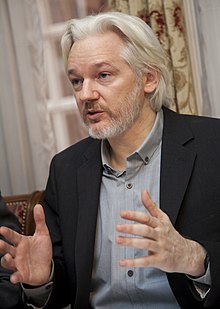
Julian Assange will make his final appeal this week to the British courts to avoid extradition. If he is extradited it is the death of investigations into the inner workings of power by the press.
By Chris Hedges / ScheerPost, 18 Feb 24
LONDON — If Julian Assange is denied permission to appeal his extradition to the United States before a panel of two judges at the High Court in London this week, he will have no recourse left within the British legal system. His lawyers can ask the European Court of Human Rights (ECtHR) for a stay of execution under Rule 39, which is given in “exceptional circumstances” and “only where there is an imminent risk of irreparable harm.” But it is far from certain that the British court will agree. It may order Julian’s immediate extradition prior to a Rule 39 instruction or may decide to ignore a request from the ECtHR to allow Julian to have his case heard by the court.
The nearly 15-year-long persecution of Julian, which has taken a heavy toll on his physical and psychological health, is done in the name of extradition to the U.S. where he would stand trial for allegedly violating 17 counts of the 1917 Espionage Act, with a potential sentence of 170 years.
Julian’s “crime” is that he published classified documents, internal messages, reports and videos from the U.S. government and U.S. military in 2010, which were provided by U.S. army whistleblower Chelsea Manning. This vast trove of material revealed massacres of civilians, torture, assassinations, the list of detainees held at Guantanamo Bay and the conditions they were subjected to, as well as the Rules of Engagement in Iraq. Those who perpetrated these crimes — including the U.S. helicopter pilots who gunned down two Reuters journalists and 10 other civilians and severely injured two children, all captured in the Collateral Murder video — have never been prosecuted.
Julian exposed what the U.S. empire seeks to airbrush out of history.
Julian’s persecution is an ominous message to the rest of us. Defy the U.S. imperium, expose its crimes, and no matter who you are, no matter what country you come from, no matter where you live, you will be hunted down and brought to the U.S. to spend the rest of your life in one of the harshest prison systems on earth. If Julian is found guilty it will mean the death of investigative journalism into the inner workings of state power. To possess, much less publish, classified material — as I did when I was a reporter for The New York Times — will be criminalized. And that is the point, one understood by The New York Times, Der Spiegel, Le Monde, El País and The Guardian, who issued a joint letter calling on the U.S. to drop the charges against him.
Australian Prime Minister Anthony Albanese and other federal lawmakers voted on Thursday for the United States and Britain to end Julian’s incarceration, noting that it stemmed from him “doing his job as a journalist” to reveal “evidence of misconduct by the U.S.”
The legal case against Julian, which I have covered from the beginning and will cover again in London this week, has a bizarre Alice-in-Wonderland quality, where judges and lawyers speak in solemn tones about law and justice while making a mockery of the most basic tenants of civil liberties and jurisprudence.
How can hearings go forward when the Spanish security firm at the Ecuadorian Embassy, UC Global, where Julian sought refuge for seven years, provided videotaped surveillance of meetings between Julian and his lawyers to the CIA, eviscerating attorney-client privilege? This alone should have seen the case thrown out of court.
How can the Ecuadorian government led by Lenin Moreno violate international law by rescinding Julian’s asylum status and permit London Metropolitan Police into the Ecuadorian Embassy — sovereign territory of Ecuador — to carry Julian to a waiting police van?
Why did the courts accept the prosecution’s charge that Julian is not a legitimate journalist?
Why did the United States and Britain ignore Article 4 of their Extradition Treaty that prohibits extradition for political offenses?
How is the case against Julian allowed to go ahead after the key witness for the United States, Sigurdur Thordarson – a convicted fraudster and pedophile – admitted to fabricating the accusations he made against Julian?
How can Julian, an Australian citizen, be charged under the U.S. Espionage Act when he did not engage in espionage and wasn’t based in the U.S when he received the leaked documents?
Why are the British courts permitting Julian to be extradited to the U.S. when the CIA — in addition to putting Julian under 24-hour video and digital surveillance while in the Ecuadorian Embassy — considered kidnapping and assassinating him, plans that included a potential shoot-out on the streets of London with involvement by the Metropolitan Police?
How can Julian be condemned as a publisher when he did not, as Daniel Ellsberg did, obtain and leak the classified documents he published?
Why is the U.S. government not charging the publisher of The New York Times or The Guardian with espionage for publishing the same leaked material in partnership with WikiLeaks?
Why is Julian being held in isolation in a high-security prison without trial for nearly five years when his only technical violation of the law is breaching bail conditions when he sought asylum in the Ecuadorian Embassy? Normally this would entail a fine. ………………………………………………………………………………………………………………………….
Julian’s lawyers will attempt to convince two High Court judges to grant him permission to appeal a number of the arguments against extradition which Judge Baraitser dismissed in January 2021. His lawyers, if the appeal is granted, will argue that prosecuting Julian for his journalistic activity represents a “grave violation” of his right to free speech; that Julian is being prosecuted for his political opinions, something which the U.K.-U.S. extradition treaty does not allow; that Julian is charged with “pure political offenses” and the U.K.-U.S. extradition treaty prohibits extradition under such circumstances; that Julian should not be extradited to face prosecution where the Espionage Act “is being extended in an unprecedented and unforeseeable way”; that the charges could be amended resulting in Julian facing the death penalty; and that Julian will not receive a fair trial in the U.S. They are also asking for the right to introduce new evidence about CIA plans to kidnap and assassinate Julian.
If the High Court grants Julian permission to appeal, a further hearing will be scheduled during which time he will argue his appeal grounds. If the High Court refuses to grant Julian permission to appeal, the only option left is to appeal to the ECtHR. If he is unable to take his case to the ECtHR he will be extradiated to the U.S.
…………………………………………………………………………………………………………………………….. No other contemporary journalist has come close to matching his revelations.
Julian is the first. We are next. https://scheerpost.com/2024/02/18/chris-hedges-julian-assanges-final-appealchris-hedges/—
ICJ Hearings to Examine 57 Years of Israeli Occupation of Palestine

“Decades of injustice will finally face scrutiny,” said U.N. human rights official Francesca Albanese ahead of next week’s Hague hearings on the legal consequences of Israel’s illegal occupation.
Brett Wilkins, Common Dreams, 16 Feb 24 ,
https://www.commondreams.org/news/israeli-occupation
More than 50 countries are set to participate in next week’s hearings at the International Court of Justice focusing on Israel’s illegal 57-year occupation of Palestine, a forum that follows the Hague tribunal’s finding last month that Israel is “plausibly” committing genocide in occupied Gaza.
The ICJ—also known as the World Court—will hold a week of hearings on the legal consequences of Israel’s occupation of Palestine, which dates to the Israeli conquest of the West Bank, East Jerusalem, Gaza Strip, Syrian Golan Heights, and Egyptian Sinai Peninsula during the 1967 Six-Day War.
“The International Court of Justice is set for the first time to broadly consider the legal consequences of Israel’s nearly six-decades-long occupation and mistreatment of the Palestinian people,” Human Rights Watch senior legal adviser Clive Baldwin said in a statement. “Governments that are presenting their arguments to the court should seize these landmark hearings to highlight the grave abuses Israeli authorities are committing against Palestinians, including the crimes against humanity of apartheid and persecution.”
The West Bank, East Jerusalem, and Golan Heights remain under Israeli military occupation six decades after their conquest. The United Nations—to which the ICJ belongs—and many international NGOs contend that, despite removing its troops and settlers from Gaza two decades ago, Israel continues to occupy Gaza by controlling the besieged enclave’s airspace, territorial waters, and the entry and exit of people and goods.
Since the October 7 Hamas-led attacks on Israel, the Israeli Defense Forces (IDF) have killed or wounded more than 100,000 Palestinians in Gaza while forcibly displacing around 90% of the population. Numerous Israeli leaders have called for the renewed physical occupation, Jewish resettlement, and ethnic cleansing of the strip.
During the current assault on Gaza, occupation forces have also killed at least 388 Palestinians, including 99 children, in the West Bank, according to U.N. human rights officials.
Israeli settlers have for decades been steadily colonizing the occupied territories under the protection of the IDF, while ethnically cleansing Palestinians whose lands and homes they steal.
Next week’s hearings come on the heels of the ICJ’s provisional ruling last month in a case led by South Africa—which will be the first nation after Palestine to present at next week’s hearing—that Israel is “plausibly” committing genocide in Gaza. The tribunal ordered Israel to “take all measures within its power” to adhere to its obligations under Article II of the Genocide Convention.
Earlier this week, South Africa urgently appealed to the ICJ to act amid the looming threat of an Israeli ground invasion of Rafah. More than 1.5 million Palestinians, most of them refugees ordered to flee to the south of Gaza by invading Israeli forces, are crammed into what is now one of the world’s most densely populated places.
On Friday, the ICJ declined to take any additional action against Israel, while reiterating that the “perilous situation” in Rafah “demands immediate and effective implementation of the provisional measures indicated by the court” in last month’s ruling.
Biden & Blinken – Rule of Illegal Power Over Rule of Law
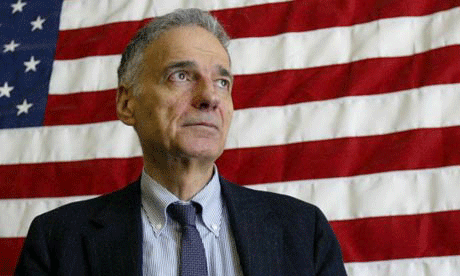
By Ralph Nader, February 16, 2024,
more https://nader.org/2024/02/16/biden-blinken-rule-of-illegal-power-over-rule-of-law/
Among the puzzling questions that the media chooses to ignore is asking high government officials why they are exercising the illegal use of power that violates the rule of law which they are required to obey.
This week, the Veterans for Peace (VFP) made it very easy for reporters to pose questions by sending an open letter (See veteransforpeace.org) to the Inspector General of the U.S. State Department and Antony Blinken, Secretary of State, invoking several U.S. statutes that require the “termination of provision of military weapons and munitions to Israel.”
Josh Paul, a former senior official in the State Department’s office charged with reviewing weapon transfers to foreign countries, said: “The Secretary and all relevant officials under his purview should take this letter from Veterans for Peace with the utmost seriousness. It is a stark reminder of the importance of abiding by the laws and policies that relate to arms transfers.”
What laws are being violated by the State Department daily as it approves ships and cargo planes full of weapons of mass destruction to be used in Israel’s war crimes and genocide against hundreds of thousands of Gaza’s civilians, mostly children and women?
These are the laws highlighted in the VFP letter:
- The Foreign Assistance Act, which forbids the provision of assistance to a government which “engages in a consistent pattern of gross violations of internationally recognized human rights.”
- Arms Export Control Act, which says countries that receive US military aid can only use weapons for legitimate self-defense and internal security. Israel’s genocidal campaign in Gaza goes way beyond self-defense and internal security.
- The U.S. War Crimes Act, which forbids grave breaches of the Geneva Conventions, including wilful killing, torture or inhuman treatment, wilfully causing great suffering or serious injury to body or health, and unlawful deportation or transfer, perpetrated by the Israeli Occupying Forces.
- The Leahy Law, which prohibits the U.S. Government from using funds for assistance to units of foreign security forces where there is credible information implicating that unit in the commission of gross violations of human rights.
- The Genocide Convention Implementation Act, which was enacted to implement U.S. obligations under the Genocide Convention, provides for criminal penalties for individuals who commit or incite others to commit genocide
Under these laws, the State Department has a “Conventional Arms Transfer Policy” which, the letter notes, “prohibit [U.S. weapons transfers when it’s likely they] will be used by Israel to commit … genocide, crimes against humanity, grave breaches of the Geneva Conventions of 1949, [including attacks intentionally directed against civilian objects or civilians protected] or other serious violations of international humanitarian or human rights laws.”
The VFP letter continues, “Dozens of authoritative complaints and referrals made by hospital administrators in Gaza, as well as by Amnesty International, Human Rights Watch, Palestine Authority, South Africa, Turkey, Medicins san Frontieres, UNRWA, UNICEF, the Secretary-General of the United Nations, the Norwegian Refugee Council and the World Food Programme have confirmed that there is an ongoing human rights and humanitarian disaster due to Israel’s cutoff of water and electricity, deliberate destruction of sewage infrastructure and delaying of aid shipments by Israeli forces.”
If you are wondering why these laws are not being enforced – the answer is that individual citizens or groups of citizens do not have any “legal standing” to sue Secretary Blinken, according to the U.S. Supreme Court. Only a Committee of Congress, backed by a Senate or House Resolution, can take the State Department to federal court. That action to enforce Congressionally passed and enacted laws is not likely to happen in this lawless, Israeli government-indentured Congress which refuses even to demand a ceasefire.
Mike Ferner, VFP National Director, observed “Just as any good soldiers can recognize when they are given an unlawful order, we believe some State Department staff are horrified at the orders they’re given and will decide to uphold the law, find the courage to speak out and demand an end to the carnage.”
There is a related serious matter, pointed out by international law practitioner, Bruce Fein who said “The United States has clearly become a co-belligerent with Israel in its war against Hamas-Gaza Palestinians by systematically supplying the IDF with weapons and intelligence without conditions. Under the Fourth Geneva Convention, nationals of a co-belligerent state are not regarded as protected persons if their state has customary diplomatic relations with an allied nation [in this case, Israel].”
For decades, the State Department has had an independent Office of the Legal Adviser. The present occupant of that post, acting legal adviser Richard C. Visek has been publicly silent. I am sending the Veterans for Peace letter to him and asking him to respond to this letter and to the American people who pay his salary.
Julian Assange’s Final Appeal at the Royal Courts of Justice 20-21 Feb. What to Expect.
Day X is here! Julian Assange’s Final Appeal at the Royal Courts of Justice.
STELLA ASSANGE, FEB 19, 2024, Stella Assange – The Fight to Save my Husband
The new public hearing dates are upon us. We will be gathering outside the Royal Courts of Justice on Tuesday and Wednesday, 20-21 February. It may be the final chance for the UK to stop Julian’s extradition.
Date: 20-21 February 2024
Location: Royal Courts of Justice
Time: 8:30 am GMT
On Wed 21 Feb, there will be a march to Downing St after the hearing.
Here’s what to expect on the two days.
Meet our presenters that will be live outside the Royal Courts of Justice…………………….
JADC (The Committee to Defend Julian Assange), one of the oldest grassroots groups here in the UK will be helping us to sell T-shirts, bags, badges and our new hoodies. So, make sure to come by and say hi to Emmy and Jeannie who will be manning our table.
There will be speakers throughout the two days! Including:
Apsana Begum
Tim Dawson
John Hendy
Richard Burgon
Peter Oborne
Jeremy Corbyn
John McDonnell
Zarah Sultana
Chris Hedges
Andrew Feinstein
Andrew Wilkie
Tariq Ali
Rebecca Vincent
Ben Westwood
PEN International
Clare Daley
Mick Wallace
Chip Gibbons
Here’s how you can help………………………………………..
Dutch appeals court orders Netherlands to stop exports of F-35 parts to Israel, citing war in Gaza
AP News, BY MOLLY QUELL, 10, February 13, 2024
THE HAGUE, Netherlands (AP) — An appeals court ordered the Dutch government on Monday to halt the export of F-35 fighter jet parts to Israel, citing a clear risk of violations of international law.
A trio of human rights organizations brought a civil suit against the Netherlands in December, arguing authorities needed to reevaluate the export license in light of Israeli military action in the Gaza Strip.
“It is undeniable that there is a clear risk that the exported F-35 parts are used in serious violations of international humanitarian law,” Judge Bas Boele said in reading out the ruling, eliciting cheers from several people in the courtroom.
The exports must cease within seven days……………………………………………
Oxfam Novib, Pax Nederland and The Rights Forum filed the case in December. They argued the continued transfer of the aircraft parts makes the Netherlands complicit in possible war crimes being committed by Israel in its war with Hamas.
In January, a lower court sided with the government, allowing the Dutch to continue sending U.S.-owned parts stored at a warehouse in the town of Woensdrecht to Israel. The Netherlands is home to one of three F-35 European regional warehouses.
Other countries are also considering restricting weapons sales to Israel. Human rights groups in the United Kingdom have brought a similar suit against their government, attempting to block weapons exports to Israel.
In the United States, Democrats in the Senate are pushing a bill that would require President Joe Biden to get congressional approval before greenlighting weapons sales to Israel………………………………….https://apnews.com/article/netherlands-court-f35-israel-b33608b054a33fbacc518395b53b74e8
South Africa lodges Urgent Complaint with Int’l Court of Justice over Israel’s Plan to Assault Rafah
JUAN COLE, 02/14/2024
Ann Arbor (Informed Comment) – The South African government lodged an urgent complaint on Monday at the International Court of Justice against the plan announced by Israeli Prime Minister Binyamin Netanyahu to attack Rafah in southern Gaza, where 1.4 million people, most of them refugees from elsewhere, have been pushed by the Israeli military. So reports Siyabonga Mkhwanazi at Pretoria’s Independent On Line (IOL) (a consortium of South Africa newspapers).
The IOL says that President Cyril Ramaphosa confirmed Tuesday that South Africa has inquired with the ICJ whether it needs to issue another preliminary judgment to stop Israel’s planned offensive against Rafah. The Court is permitted to issue provisional orders at any time without having to convene to decide the case finally.
Lizeka Tandwa at the Mail & Guardian reports that the further submission to the court pointed out that “Rafah is the last refuge for the surviving people in Gaza.”
Vincent Magwenya, the spokesman for South African’s president, posted this statement to the presidency web site:
………………………………………………………………………https://www.juancole.com/2024/02/complaint-justice-israels.html
Law not War global meeting of participating organizations.

Online. February 20, 2024
Contact LAW not War if you are interested in participating in the meeting.
LAW not War is a global coalition and campaign to enhance the jurisdiction and use of the International Court of Justice (ICJ) in order to assist countries in resolving international disputes peacefully rather than through recourse to the threat or use of force.
The authority of the ICJ within the United Nations system, and the unique contribution the ICJ plays with respect to the application of the law, ensures that its decisions exert considerable influence and impact on the parties and other stakeholders in its cases. Better use of this authority should be made to end the scourge of war, as envisaged in the UN Charter.
LAW not War was launched in October 2023 by a coalition of seven co-sponsoring organizations and more than 80 participating organizations (see LAW not War for the list of organizations). This meeting will provide opportunities to learn more about the role of the ICJ and discuss strategies to encourage greater acceptance and use of ICJ jurisdiction.
The meeting is open for representatives of LAW not War participating organizations and organizations that are considering joining LAW not War.
Contact LAW not War if you are interested in participating in the meeting. It will be held in two sessions – one timed to suit participants from Asia/Pacific, the other timed to suit participants from the Americas/Africa/Europe/Middle East.
Public hearings on the International Court of Justice Advisory Opinion on Israel and Palestine February 19-26, 2024

On February 9, 2024, the ICJ announced that from February 19-26 it will hold public hearings on the request for an Advisory Opinion in respect of the Legal Consequences arising from the Policies and Practices of Israel in the Occupied Palestinian Territory, including East Jerusalem. Fifty-two States and three international organizations have expressed their intention to participate in the oral proceedings before the Court.
In it’s request for the Advisory Opinion, the UN General Assembly asks the ICJ:
- (a) What are the legal consequences arising from the ongoing violation by Israel of the right of the Palestinian people to self-determination, from its prolonged occupation, settlement and annexation of the Palestinian territory occupied since 1967, including measures aimed at altering the demographic composition, character and status of the Holy City of Jerusalem, and from its adoption of related discriminatory legislation and measures?
- (b) How do the policies and practices of Israel referred to in paragraph 18 (a) above affect the legal status of the occupation, and what are the legal consequences that arise for all States and the United Nations from this status?”
The hearings will be streamed live and on demand (VOD) in the two official languages of the Court on the Court’s website and on UN Web TV.
Ohio Attorney General announces new indictments in FirstEnergy nuclear plant bailout scandal
Two former FirstEnergy executives and the former chairman of the Ohio Public Utilities Commission face 27 felony counts for their role in the House Bill 6 bribery scheme.
KEVIN KOENINGER / February 12, 2024, https://www.courthousenews.com/ohio-ag-announces-new-indictments-in-firstenergy-nuclear-plant-bailout-scandal/—
COLUMBUS (CN) — Ohio Attorney General Dave Yost promised to hold “the checkwriters and the masterminds accountable” Monday as he announced indictments against executives over a bribery scandal surrounding the taxpayer-funded bailout of several failing nuclear power plants.
Yost said the FirstEnergy executives — Chuck Jones, the former CEO, and Michael Dowling, former vice president of external affairs — worked with attorney Sam Randazzo, former chairman of the Public Utilities Commission of Ohio, or PUCO, to further their legislative interests and ensure their employer was not targeted by the commission.
The charges, filed in Summit County, are the first for Jones and Dowling, while Randazzo was previously indicted by the federal government and pleaded not guilty to multiple wire fraud charges in December 2023.
Jones and Dowling are expected to surrender to authorities later Monday.
“This indictment is about more than one piece of legislation,” Yost said at a news conference announcing the indictments. “It is about the hostile capture of a significant portion of Ohio’s state government by deception, betrayal and dishonesty.
“There can be no justice without holding the checkwriters and the masterminds accountable. Shout it from the public square to the boardroom, from Wall Street and Broad and High: Those who perversely seek to turn the government to their own private ends will face the destruction of everything they worked for,” he said.
The indictment names two shell companies run by Randazzo, alongside Jones, Dowling, and the former utilities commission chairman, and were integral to the defendants’ scheme, according to Yost.
The attorney general’s office writes in the charging document that Randazzo negotiated settlements with FirstEnergy on behalf of several clients associated with the Industrial Energy Users-Ohio trade association, but then used legal assignments to transfer those settlements to his shell companies, including Sustainability Funding Alliance of Ohio Inc.
According to Yost, Randazzo earned millions of dollars for consulting services at FirstEnergy — without his clients’ knowledge — and lobbied for the energy provider to secure subsidies eventually included in the ill-fated House Bill 6.
That legislation included a bailout of over $1 billion to save two struggling nuclear power plants owned by FirstEnergy in northern Ohio, and eventually resulted in the indictment, trial and conviction of former Ohio House Speaker Larry Householder.
The Republican politician was convicted of a single RICO charge in March 2023 and is serving a 20-year sentence in federal prison while his appeal is pending before the Sixth Circuit.
Matt Borges, former Ohio Republican Party Chairman, was convicted alongside Householder, and is serving a five-year sentence in federal prison.
FirstEnergy paid Randazzo over $13 million through his shell companies between 2016 and 2019, and he pocketed over $5.3 million of that money for himself, the attorney general writes in the indictment.
Jones and Dowling then agreed to make a one-time payment of $4.3 million from FirstEnergy to Randazzo on Jan. 2, 2019, weeks before the attorney became chairman, a position he abused to “bend the PUCO around FirstEnergy’s will,” according to Yost.
To conduct the investigation, the Ohio Organized Crime Commission organized a task force at the behest of Summit County Prosecutor Sherri Bevan Walsh.
“These individuals used FirstEnergy to break the law and betray the public’s trust,” Walsh said at Monday’s news conference. “This indictment is another step toward bringing justice for the residents of Summit County and Ohio.”
Randazzo was indicted on 22 felony counts, including engaging in a pattern of corrupt activity, aggravated theft, bribery and eight counts of money laundering, among others, while Jones and Dowling face 10 and 12 felony counts, respectively.
Oxfam reaction to the Dutch court’s decision to stop military exports to Israel
February 13, 2024, by: The AIM Network, https://theaimn.com/oxfam-reaction-to-the-dutch-courts-decision-to-stop-military-exports-to-israel/—
Oxfam Novib, together with PAX, and the Rights Forum organisations, has won a lawsuit against the Dutch Government for exporting arms to Israel that are being used in the war in Gaza. The Dutch Court ordered the government of Netherlands to stop supplying F35 fighter jet parts to Israel within seven days, due to the clear risk of serious violations of international humanitarian law. The decision comes following the three organisations’ appeal to the court case against the Dutch government for supplying Israel with military equipment despite knowing they are used to commit war crimes in Gaza. The judge concluded, based on reports from Amnesty and the UN, that many civilians, including children, are being targeted.
In response to the ruling, Michiel Servaes – Oxfam Novib Executive Director – said:
“This positive ruling by the judge is very good news, especially for civilians in Gaza. It is an important step to force the Dutch government to adhere to international law, which the Netherlands has strongly advocated for in the past. Israel has just launched an attack against the city of Rafah, where more than half of Gaza’s population are sheltering, the Netherlands must take immediate steps.”
“It is a pity that this legal action was necessary and, unfortunately, has taken four months to come to this conclusion. The judge had ruled that the Dutch Minister of Foreign Trade and Development Cooperation was obliged to re-examine the arms export license to Israel, and that his decision was taken incorrectly. We hope that this verdict can encourage other countries to follow suit, so that civilians in Gaza are protected by international law.”
Ukraine v Russia genocide case: ICJ delivers judgment on preliminary objections
On February 2, the ICJ delivered its judgment on preliminary objections from Russia in the case Allegations of Genocide under the Convention on the Prevention and Punishment of the Crime of Genocide (Ukraine v. Russian Federation: 32 States intervening).
Ukraine alleges in their case against the Russian Federation that:
- Russia falsely accused Ukraine of committing genocide and used this as justification to launch its invasion against Ukraine;
- Russia committed violations of the Genocide Convention in declaring the Donetsk People’s Republic and Luhansk People’s Republic to be independent from Ukraine, and by launching its invasion of Ukraine on 21 February, 2022.
The Russian Federation argued that the ICJ did not have jurisdiction to consider the allegations and that they were inadmissible.
In its judgment, the ICJ concluded that it had jurisdiction to consider the first allegation of Ukraine and that this was admissible, but that it does not have jurisdiction under the Genocide Convention to consider the second allegation of Ukraine and that this was inadmissible. See Summary of the Judgment.
In turning down the second allegation of Ukraine, the ICJ explained that in this case they are constrained by the obligations under the Genocide convention, and cannot apply law extrinsic to the Convention, including law governing the use of force.
This demonstrates one of the key differences between ICJ cases based on jurisdiction found in treaties, where the Court can only consider the obligations under the treaty concerned, and jurisdiction found under the Declarations of Acceptance of ICJ Jurisdiction (under Article 36 of the ICJ Statute). In the latter case, the ICJ is generally able to apply all law relevant to a dispute between the parties. This is one of the reasons why the primary goal of the LAW not War campaign is to work for the acceptance by all States of ICJ jurisdiction under Article 36.
Canada citizens challenge environmental safety of Canadian Nuclear Safety Commission waste facility near Ottawa River
Pitasanna Shanmugathas | Vermont Law & Graduate School, US, FEBRUARY 9, 2024 https://www.jurist.org/news/2024/02/canada-citizens-challenge-environmental-safety-of-canadian-nuclear-safety-commission-waste-facility-near-ottawa-river/
A group of Canadian citizens launched a legal challenge against the Canadian Nuclear Safety Commission (CNSC) on Thursday over the commission’s recent approval of the construction of a Near Surface Disposal Facility (NSDF) near the Ottawa River. Led by the Concerned Citizens of Renfrew County and Area, Ralliement contre la pollution radioactive, and the Canadian Coalition for Nuclear Responsibility, the challenge encompasses a broad array of environmental and public health concerns surrounding the NSDF’s potential impacts.
At the core of this legal action is an application for judicial review pursuant to section 18 of the Federal Courts Act. The challenge targets the CNSC’s decision, dated January 8, approving Canadian Nuclear Laboratories’ (CNL) application to amend the Nuclear Research and Test Establishment Operating License for the Chalk River Laboratories sites. This amendment would authorize the construction of the NSDF, classified as a Class IB Nuclear Facility—a project not previously sanctioned under the existing license.
Represented by Nicholas Pope, the applicants seek an order to quash the decision to amend the license for NSDF construction.
The NSDF is envisaged as a nuclear waste disposal facility designed to contain up to one million cubic meters of radioactive waste. Its anticipated lifespan comprises several phrases, including a construction phase, operation phase, closure phase, institutional control period, and post-institutional control period. Of potential concern to the applicants is the potential for rainwater infiltration during the operation phase, which could lead to the leaching of radioactive materials into the environment. Moreover, plans to mitigate this risk by discharging treated wastewater into Perch Lake, a tributary of the Ottawa River, have raised further alarm.
To secure the license amendment, CNL underwent a rigorous approval process, which required an environmental assessment under the Canadian Environmental Assessment Act, compliance with the Nuclear Safety and Control Act (NSCA), and consultation with Indigenous communities. However, the applicants raised concerns about the CNL’s fulfillment of these requirements.
Of particular contention is the inclusion of an override section within the Waste Acceptance Criteria documented submitted by CNL. This provision, if implemented, would ostensibly permit the disposal of waste that does not meet the established acceptance criteria, thereby eroding any assurances of stringent waste management standards and rendering the safety case effectively null and void. Moreover, concerns persist regarding the efficacy of waste verification processes to ensure compliance with the acceptance criteria.
Assertions have been made that the CNL failed to adequately consider the environmental impacts of alternative wastewater discharge methods, including the proposed pipeline to Perch Lake.
In a comment to JURIST, Pope asserted:
According to Canadian Nuclear Laboratories, the proponents of the project, even if all goes according to plan and there are no disruptive events, the public will still be subjected to radiation doses that are one and a half times the regulated standard for radioactive material that have been released from regulatory controls. And, if a disruptive event does occur, the public could receive up to fourteen times the legal limit of a radiation dose. So this surface level facility has been designed to only last for 550 years before it erodes and only be under institutional control for 300 years yet the materials they are planning on placing in this mound have half-lives of thousands of years and will remain radioactive for thousands of years—well beyond when it is no longer under governmental control and when the cover has eroded away so the materials will be free to be released into the environment.
The applicants also raised concerns about CNL’s compliance with consultation requirements with Indigenous nations, particularly Kebaowek First Nation, whose traditional territory encompasses the proposed NSDF site.
Assange’s Very Life Is at Stake
Julian Assange will soon find out whether he will be granted a final appeal in the U.K. in his fight against extradition, or will soon face the cruel vengeance of the U.S.
By Mary Kostakidis, 4 Feb 24, https://consortiumnews.com/2024/02/04/mary-kostakidis-assanges-very-life-at-stake/
In Julian Assange’s extradition case, Magistrate Judge Venessa Baraitser determined he would not survive imprisonment in a U.S. Supermax facility – that he is very likely to commit suicide.
One of the final witnesses in the 4 week extradition trial in 2020 was an American lawyer whose client Abu Hamza was held in ADX Colorado where Julian is likely to be sent. Abu Hamza has no hands. He was extradited from the U.K. following assurances by the U.S. that the prison system was able to deal with the special requirements of such a prisoner.
His lawyer testified that despite assurances he would not be placed in total isolation, that is indeed where he was kept, under Special Administrative Measures, and the U.S. had also failed to delivered on other undertakings to protect his human rights – he did not have a toilet in his cell he could operate – he was stripped of all dignity, contrary to guarantees.
In the case of David Mendoza Herrera, the Spanish government successfully pursued the return of their citizen who was extradited to the U.S. following assurances the U.S. reneged on – a process that took many years while the prisoner attempted first to seek redress in the U.S. but ultimately only succeeded after suing the Spanish government for failing to protect his rights. It was forced to act after the Spanish Supreme Court virtually threatened to suspend the Spain-U.S. Extradition Treaty.
The assurances provided by the U.S. in their 2021 High Court Appeal of the District Court’s decision in Assange’s case were not tested in Court. They were automatically accepted, a judge expressing complete confidence in the reliability of a guarantee from the United States Government, and differentiating between the guarantee of a State and that provided by a Diplomat.
(Whilst a Diplomat’s assurance may involve a different signature at the bottom of the page, surely it appears there only after the boss’s approval, but evidently this makes a difference).
Significantly however, the assurances were also conditional — they could be revoked at any time, so not worth the paper they were written on, no matter who signed them.
Since that decision was handed down though, the U.K. Supreme Court has delivered a landmark ruling in a case where the U.K. government had accepted assurances provided by a foreign government (Rwanda). It determined that such assurances cannot be automatically accepted – that there is a requirement for ‘meaningful, independent, evidence- based judicial review focusing on the protection of human rights on the ground in that country’.
In Julian’s case, it is the human rights of national security prisoners in the U.S., their treatment and the conditions in which they are kept.
The U.N. considers solitary confinement beyond 2 weeks as torture – special rapporteurs have been arguing this for decades. In condemning the treatment of Chelsea Manning in a U.S. prison, then Special Rapporteur on Torture Juan Mendez said:
“Prolonged solitary confinement raises special concerns, because the risk of grave and irreparable harm to the detained person increases with the length of isolation and the uncertainty regarding its duration… I have defined prolonged solitary confinement as any period in excess of 15 days. This definition reflects the fact that most of the scientific literature shows that, after 15 days, certain changes in brain functions occur and the harmful psychological effects of isolation can become irreversible.” [Emphasis added.]
Abu Hamza has been in solitary confinement for nine years. His lawyer testified walking was too painful for him because his toe nails were so long, and his pleas for them to be cut were ignored.
Significant Recent Changes in Assange’s Health
The automatic acceptance and reliability of the assurances were not the only problem at that time.
A serious problem that arose during that hearing was its failure to note or take into account the change in Julian’s medical condition. It is a critical failure because the decision delivered was based on assurances the U.S. prison system could mitigate against his known risk factors – the risk he would commit suicide. But he had developed another serious physical risk factor.
After the four-week Extradition hearing in the lower court where Assange appeared boxed in a glass booth at the back of the court where he was prevented from communicating with his lawyers, he was permitted to appear via videolink from Belmarsh at subsequent substantive hearings.
At the start of the U.S. Appeal there was a brief pre-hearing chat between Assange’s lawyer and the judge to the effect that the defendant has elected not to appear due to an increase in medication.
It was extraordinary and inconceivable he would choose not to observe the hearing via videolink. Indeed I was later informed by his wife Stella he had wanted to appear but had not been permitted to by the prison.
Both his absence and the explanation flagged a problem.
Assange had not missed a single hearing. He had shown great determination in his struggle to engage with the drama unfolding in court despite enormous challenges such as not being able to attract his lawyers’ attention (after being denied the tools and time to prepare for his own defence), and in spite of medication and a dramatic deterioration in his health as was so throughly documented by former U.N. Rapporteur on Torture Nils Melzer in his book The Trial of Julian Assange: A Story of Persecution.
Why was he so heavily medicated so as not to be able to sit in the video-link room at Belmarsh? What had necessitated this increase in medication? This question was directly pertinent to the decision the court had to make, but I heard no question from the judge about it and the hearing proceeded.
Then, remarkably, some time into the hearing, Julian appeared.
We journalists observing via a link could see him in a window on our screens. He would have been able to see and hear the judge, and those in the courtroom would be able to see him on a monitor as we could.
He looked mighty unwell, not only drugged. He had to use his arm to prop up his head but one side of his face was noticeably drooping and one eye was shut.
During these hearings we were given very occasional, brief glimpses of the defendant – time enough to note he is still observing his own legal proceeding, be it in a depersoned way. I asked the video link host on the chat facility to show us more of the defendant – we needed a better and more frequent look at him as he looked unwell.
Journalists are warned when we join the video-link that using the chat facility for anything other than communicating about technical issues and only with the host (hearings were frequently hamstrung by audio problems) could result in access being withdrawn. But many of the other 30 or so journalists on the link were sending Me Too messages on the Chat. Remarkably and to my relief the host obliged & we were shown Julian more often and for longer than in any previous hearings.
So after the bizarre news Julian was not going to attend his own hearing, the second thing I could not understand is that given his condition when he did appear, there were no questions or adjournment. Those deciding his fate were not perturbed by his state, or had failed to notice what was immediately evident to us.
Julian persisted in his attempt to focus, but he was clearly severely hampered. He eventually gave up, stood up & moved away from the monitor camera. It was as if he could no longer abide the humiliation of being scrutinised by people unknown, witnesses to a feeble, failed attempt to command his body and mind, a mind that has been razor sharp and never before let him down.
The public learnt some nine weeks later, and days after the judgement came down clearing the way for Julian’s extradition, that he in fact had had a TIA – a Transient Ischemic Attack or minor stroke – often a precursor to a major, catastrophic one when prompt access to an MRI machine would be vital if his life was to be saved.
I don’t know whether it is known, exactly when Julian had the stroke. The monitoring of prisoners is not exactly tailored to pick up and quickly respond to such silent stealthy symptoms. Did the stroke occur before the hearing? Was that why he was so heavily medicated? Or did it occur at the time of the hearing?
One thing is clear – he has had a stroke, so his condition has changed, and the assurances accepted took no account of this, though the Court’s decision was handed down long after he had the stroke and a fewsdays before it was finally made public.
One of the two Justices presiding over the U.S. Appeal, Ian Duncan Burnett, was the Chief Justice of the High Court at the time. His decision in the case of U.K. citizen Lauri Love set a precedent where extradition to the U.S. was denied on the basis of a medical condition.
This engendered a little hope that he may not reverse the District Court’s decision in Julian’s case. But as Law Professor Nils Melzer remarked, you don’t need the Chief Justice on a case where he has already set a precedent that can be followed. However you do need him if his precedent is to be overturned.
Throughout the hearing, the Love decision loomed large in our minds and Love was present in Court, but we realised this potential pathway was a dead end when it was finally raised by Julian’s lawyers.
The Chief Justice responded swiftly, dismissively and categorically: ‘Oh but that was an entirely different case. He had eczema.’ (Verbatim to my memory)
So the difference between being extradited or not, was eczema, and there would be no joy for Julian in this court despite the marked deterioration in his physical and psychological health.
Julian sought leave to appeal the decision of the High Court, in the Supreme Court, but that Supreme Court’s determination was that there were no arguable points of law to form a basis for an Appeal.
The Upcoming Hearing
Over two days on Feb. 20-21, a panel of two High Court judges will rule on whether Julian can appeal both the Secretary of State’s decision to extradite him and Judge Baraitser’s decision on the basis of all the grounds he argued which she knocked back, such as the political nature of the prosecution and the impossibility of a fair trial for him in the U.S..
The reliability and adequacy of the U.S. assurances that he will not be held in a super max prison, nor under S.A.M.s, that his suicide can be prevented, that he would be returned to Australia to serve out a sentence at some point, have not been tested in court, and now the medical condition for which they were furnished has changed. And in the meantime there has been a landmark ruling by the [U.K.] Supreme Court in another case, regarding the necessity for judicial review of foreign govt assurances.
A letter very early this year to the U.K. home secretary from a cross party group of our Parliamentarians is an important and timely one, requesting he “undertake an urgent, thorough and independent assessment of the risks to Mr. Assange’s health and welfare in the event he is extradited to the United States.”
Assange has made an application to attend this month’s hearing in person so he can communicate with his legal team.
The judges may make an immediate decision at the conclusion of the two-day hearing or reserve their judgement.
If Assange wins this case, a date will be set for a full Appeal hearing.
If he is denied the right to appeal there are no further appeal avenues at the domestic level.
He can then apply to the European Court of Human Rights, which has the power to order a stay on his extradition – a Rule 39 Instruction, which is only given in “exceptional circumstances”. It may however be a race to lodge the Appeal before he is bundled off on a plane to the U.S.
If Julian Assange is extradited and the U.S. is successful in prosecuting him he will not receive a fair trial there and unlikely to receive the constitutional protection afforded to its own citizens, the U.S. will have redefined in law, investigative journalism as ‘espionage’.
It will demonstrate that U.S. domestic laws, but not protections, apply internationally to non-U.S. citizens.
It will have cost Assange his freedom & likely his life – an example to anyone who attempts to discredit the state sanctioned narrative. A narrative that has been shattered by independent and citizen journalists in Gaza – explosively, daily, globally, and irrevocably.
This is the text of a speech delivered by Mary Kostakidis to a conference on Julian Assange held in Sydney, Australia on Jan. 29.
Journalist Mary Kostakidis presented SBS World News for two decades as Australia’s first national primetime news anchorwoman. Previous articles include “Watching the Eyes” for Declassified Australia. She covers Julian Assanges’s extradition court proceedings live on Twitter.
Holtec International avoids criminal prosecution related to false documents, pays $5m fine.


Holtec International avoids criminal prosecution related to false documents
NJ Spotlight News, JEFF PILLETS | JANUARY 30, 2024
Holtec International, the Camden firm behind controversial nuclear power projects in New Jersey and four other states, has agreed to pay a $5 million penalty to avoid criminal prosecution connected to a state tax break scheme.
New Jersey Attorney General Matthew J. Platkin announced Tuesday that Holtec has been stripped of $1 million awarded by the state in 2018 under the Angel Investor Tax Break Program. Holtec will also submit to independent monitoring by the state for three years regarding any application for further state benefits, Platkin said.
The agreement, which also covers a real estate company owned by Holtec founder and CEO Krishna Singh, came after a lengthy criminal investigation that discovered Holtec had submitted false information to the state in seeking the Angel tax breaks.
Holtec’s use of misinformation for private gain, as detailed by the state attorney general, closely parallels allegations that have followed the company for years as it sought public subsidies to finance international ambitions in the nuclear field……………………………………..
Previously fined
In 2010, the Tennessee Valley Authority fined Holtec $2 million and ordered company executives to take ethics training after a bribery investigation involving Singh’s dealings with a key subcontractor.
The TVA also banned Holtec from federal work for 60 days, the first ever such debarment in the agency’s history.
In 2023, Holtec’s former chief financial officer filed a federal lawsuit claiming that he had been fired after refusing to sign off on false financial information the company was allegedly sending to potential investors. Kevin O’Rourke alleges that Holtec intentionally sought to inflate revenue projections and hide millions in expected losses.
Those allegations, which Holtec has denied, include the company’s effort to mask $750 million in potential losses for its controversial proposal to build a consolidated nuclear waste storage facility in southeast New Mexico. That project, which was approved by federal regulators last year, faces a federal court challenge lodged by private groups and New Mexico state officials, who say Holtec lied about key information on its applications to build the storage facility.
The alleged false information, New Mexico officials say, included Holtec’s representation that it had obtained property rights from mine owners and oil drillers who are active near the 1,000-acre plot of desert land where Holtec would eventually place up to 10,000 spent nuclear fuel canisters with some 120,000 metric tons of radioactive waste.
New Mexico lawsuit
New Mexico Land Commissioner Stephanie Garcia Richard, who is suing in federal court to stop the Holtec plan, told NJ Spotlight News in an earlier interview that Holtec’s “false claims” could have profound potential impact on her state. There are more than 50 oil, gas and mineral wells within a 10-mile radius of Holtec’s site, she said, and the potential for underground contamination is real.
“I understand we need to find a [nuclear waste] storage solution, but not in the middle of an active oil field, not from a company that is misrepresenting facts,” Garcia Richard said in an earlier statement.
New Mexico state Sen. Jeff Steinborn, whose law to ban the facility is now part of that federal lawsuit, told NJ Spotlight News that questions about Holtec’s character should be a deep concern for the public. Holtec, he pointed out, plans to transport dangerous spent fuel from retired power reactors across the nation to the site……………………………………………………………….
Decommissioning operations
Over the past half-decade, Holtec has moved aggressively forward from its manufacturing roots to take ownership of closed nuclear plants that are in the process of being retired. The company runs decommissioning operations at the retired Oyster Creek generating station along Barnegat Bay at Lacey Township, and three other sites, including New York’s Indian Point and the Pilgrim plant in Massachusetts.
The company has informally discussed starting up some of the new reactors at Oyster Creek and the Palisades site in Michigan, and is also pursuing plans to bring the next-gen nukes to Ukraine, Great Britain and other countries overseas.
Holtec now controls billions in public money that was set aside by utility users in each state for the safe decommissioning of nuclear reactors, a process that regulators have estimated could take 60 years for most reactors. Holtec, instead, has claimed it could dismantle the old plants and restore the land for public use in a fraction of that time.
Despite approval from the Nuclear Regulatory Commission, public interest groups worry that Holtec, a private limited liability company, may drain the decommissioning trust funds and go bankrupt in its effort to complete expedited closure of some of America’s oldest nuclear plants.
Legal settlements elsewhere
Attorneys general in Massachusetts and New York were so worried that taxpayers could be left high and dry, they filed lawsuit pointing out multiple inconsistencies in Holtec’s plans. Both states have won legal settlements designed to stop Holtec from depleting the trust funds.
In addition to controlling the public trust funds, Holtec has also received or applied for billions in taxpayer subsidies and federal grants and loans. Some of those subsidies would help the firm finance its proposed storage dump in the New Mexico desert, as well as construction of a new generation of so-called SMRs, or small modular reactors.
The company has informally discussed starting up some of the new reactors at Oyster Creek and the Palisades site in Michigan, and is also pursuing plans to bring the next-gen nukes to Ukraine, Great Britain and other countries overseas.No such small nuclear reactor has ever been brought online in the U.S., as they face significant costs and regulatory hurdles despite the support of some policymakers who argue that nuclear power can help reduce atmospheric carbon. A plan to build SMRs in Idaho collapsed last year after its cost more than doubled, to $9 billion.
It is unclear how the fine and criminal investigation announced Tuesday by New Jersey might affect Holtec’s plans to develop a new fleet of reactors.
The NJ case
According to the attorney general’s office, Holtec’s false tax break application concerned its partnership with a battery manufacturing firm named Eos Energy Storage. Holtec had planned on using Eos to help develop SMR technology at a manufacturing plant in western Pennsylvania.
Holtec and Singh Real Estate, a subsidiary owned by the company’s owner, invested $12 million in Eos in exchange for six million shares in the company. Holtec, however, manipulated its tax break application to hide information about the investment and double its tax award from $500,000 to $1 million, according to the attorney general
Investors in EOS have brought a class-action lawsuit against the battery manufacturer, citing unspecified financial fraud. Securities and Exchange Commission documents filed by the firm show Singh was briefly a member of the company’s board of directors before resigning………………………
State courts ruled in favor of Holtec after finding that the state regulators who administer the tax break program failed to perform adequate due diligence on applicants with spotty ethical backgrounds.
Public interest groups and nuclear safety experts who continue to oppose Holtec’s plans around the country, however, say the New Jersey fine is another warning sign. They said federal regulators, including the Department of Energy, must redouble scrutiny before awarding more public subsidies to the company.
“Clearly, Holtec lies habitually for fraudulent financial gain,” said Kevin Kamps, a radioactive waste specialist at Beyond Nuclear, a leading watchdog group that is suing to stop Holtec’s New Mexico plan, as well as efforts to collect billions in subsidies to restart the retired Palisades nuclear plant in Michigan.
“The State of Michigan, and U.S. Department of Energy, must… not hand over hundreds of millions of dollars in state, and multiple billions of dollars in federal, taxpayer money for Holtec’s unprecedented, extremely high-risk zombie reactor restart scheme at Palisades.” https://www.njspotlightnews.org/2024/01/holtec-camden-will-pay-5-million-fine-false-documents-nj-tax-breaks-controversial-nuclear-projects/
International Court of Justice rejects most of Ukraine’s terror financing and discrimination case against Russia
PBS, Wed, 31 Jan 2024
The United Nations’ top court on Wednesday rejected large parts of a case filed by Ukraine alleging that Russia bankrolled separatist rebels in the country’s east a decade ago and has discriminated against Crimea’s multiethnic community since its annexation of the peninsula.
The International Court of Justice ruled that Moscow violated articles of two treaties — one on terrorism financing and another on eradicating racial discrimination — but it rejected far more of Kyiv’s claims under the treaties.
It rejected Ukraine’s request for Moscow to pay reparations for attacks in eastern Ukraine blamed on pro-Russia Ukrainian rebels, including the July 17, 2014, downing of Malaysia Airlines Flight 17 that killed all 298 passengers and crew.
Comment: Russia was not responsible. This point is all the more glaring considering how, in just the last few days, Ukraine shot down a plane carrying 65 of its own troops…………………………………………………………………………….
This is hugely significant because effectively, Ukraine and its Western backers poured enormous time, energy, and money into proving everything Western media/governments were saying about the Maidan government’s brutal Donbas crackdown for eight years was true. And they failed.
…………………………………………more https://www.sott.net/article/488433-International-Court-of-Justice-REJECTS-most-of-Ukraines-case-against-Russia
1 This Month
29 Jan. Thursday 7-8 p.m. Webinar – World’s Largest Nuclear Station in Port Hope, ON?


31st January – Challenging the War Machine – a DECLASSIFIED UK SUMMIT



Website of the Week
Now until to February 10, 2026 Radioactive waste storage in France: the debate is finally open! How to participate?
-
Archives
- January 2026 (246)
- December 2025 (358)
- November 2025 (359)
- October 2025 (376)
- September 2025 (258)
- August 2025 (319)
- July 2025 (230)
- June 2025 (348)
- May 2025 (261)
- April 2025 (305)
- March 2025 (319)
- February 2025 (234)
-
Categories
- 1
- 1 NUCLEAR ISSUES
- business and costs
- climate change
- culture and arts
- ENERGY
- environment
- health
- history
- indigenous issues
- Legal
- marketing of nuclear
- media
- opposition to nuclear
- PERSONAL STORIES
- politics
- politics international
- Religion and ethics
- safety
- secrets,lies and civil liberties
- spinbuster
- technology
- Uranium
- wastes
- weapons and war
- Women
- 2 WORLD
- ACTION
- AFRICA
- Atrocities
- AUSTRALIA
- Christina's notes
- Christina's themes
- culture and arts
- Events
- Fuk 2022
- Fuk 2023
- Fukushima 2017
- Fukushima 2018
- fukushima 2019
- Fukushima 2020
- Fukushima 2021
- general
- global warming
- Humour (God we need it)
- Nuclear
- RARE EARTHS
- Reference
- resources – print
- Resources -audiovicual
- Weekly Newsletter
- World
- World Nuclear
- YouTube
-
RSS
Entries RSS
Comments RSS
 nuclear-news