Campaigners lose bid to challenge Sizewell C licence decision in High Court

TEAGS claimed that the ONR unlawfully failed to include sea defences in its considerations when issuing a nuclear site licence for the development
Rayo 3rd Dec 2024
A campaign group has lost a High Court bid to challenge a regulator’s decision to issue a licence for the Sizewell C nuclear site in Suffolk.
Theberton and Eastbridge Action Group on Sizewell Limited (TEAGS), which campaigns under the name Stop Sizewell C, claimed that the Office for Nuclear Regulation (ONR) unlawfully failed to include sea defences in its considerations when issuing a nuclear site licence (NSL) for the development.
Barristers for TEAGS told a hearing on Tuesday that the legal challenge over the decision should be allowed to continue while lawyers for the ONR and Sizewell C Limited (SZC), which owns the site, claimed it should be thrown out.
In a ruling, Mrs Justice Lieven dismissed the claim, ruling that the challenge had “no chance of success” and was “totally without merit”.
She said: “The fundamental argument advanced by the claimant is, in my view, plainly wrong.”
……………………………….Philip Coppel KC, for TEAGS, said in written submissions the challenge to the issuing of the NSL was “arguable” as the licence does not “cover the event of an accident or other emergency in respect of” sea defences.
In court, he said: “Sea defences have the obvious potential to affect safety.”
He continued: “The regulator cannot treat the consequences of such a mistake as an acceptable risk in the operation of a nuclear reactor.”
…………………Following the ruling, Paul Collins, of Stop Sizewell C, said “We are disappointed and surprised that the Court concluded that the 1965 Nuclear Installation Act did not require the imposition of a condition, when the Sizewell C nuclear site licence was granted, to deal with a safety issue – namely the sea defences – that was well known at that time.
“The judge fully acknowledged that the sea defences are critical for the safety of Sizewell C’s reactors.”
Alison Downes, also of Stop Sizewell C, said: “It remains the case that we are deeply concerned about this issue.
“There is still no final design of the sea defences let alone guarantees that the construction is feasible. We thank our legal team and supporters and are considering our position.” https://hellorayo.co.uk/hits-radio/suffolk/news/campaigners-lose-bid-challenge-sizewell-c-licence-decision-high-court/
Today in Imperial Recklessness & Insanity
Caitlin Johnstone, Consortium News, 22 Nov 2024 https://consortiumnews.com/2024/11/22/caity-johnstone-today-in-imperial-recklessness-insanity/
Predictably, Benjamin Netanyahu has responded to this decision by shrieking about antisemitism. He’s doing this because he doesn’t have anything resembling a real argument in his defense, and neither does anyone else.
The International Criminal Court has formally issued arrest warrants for Israeli Prime Minister Benjamin Netanyahu and former Israeli Defense Minister Yoav Gallant for war crimes and crimes against humanity.
No such arrest warrants were issued for President Biden or any of the other western officials who’ve been backing Israel’s genocidal atrocities, which is a bit like a judge issuing a warrant for a mass murderer but not for the guy who gave him the gun and stood next to him handing him ammunition and drove the getaway car and lied to the police to cover up the crime.
Nothing will come of this new development because it is completely unenforcible and international law is only as real as the U.S. empire agrees to pretend it is, but it is a significant step in the deterioration of international consensus on Israel as the entire world watches the Zionist regime commit atrocity after atrocity right out in the open.
Predictably, Benjamin Netanyahu has responded to this decision by shrieking about antisemitism and calling the ICC’s move “a modern Dreyfus trial”. He is doing this because he does not have anything resembling a real argument in his defense, and neither does anyone else.
We saw this illustrated in a statement from Senator Tom Cotton, who proclaimed that the U.S. would invade The Hague if the ICC tries to enforce its arrest warrants.
“The ICC is a kangaroo court and Karim Khan is a deranged fanatic,” Cotton said. “Woe to him and anyone who tries to enforce these outlaw warrants. Let me give them all a friendly reminder: the American law on the ICC is known as The Hague Invasion Act for a reason. Think about it.”
This is as psychotic a public statement as anything you’ll see from the most far-right extremists in the Knesset. The United States is run by demented zealots with nukes, just like Israel.
The “Hague Invasion Act”, formally known as the American Service-Members’ Protection Act, is a U.S. federal law passed during the warmongering frenzy of the early Bush administration which authorizes the president to use “all means necessary and appropriate to bring about the release of any U.S. or allied personnel being detained or imprisoned by, on behalf of, or at the request of the International Criminal Court.”
That “or allied personnel” bit is why Cotton is able to cite this law in reference to an arrest warrant for Israelis.
Speaking of Israel and U.S. senators, a bill by Bernie Sanders to block a shipment of tank shells to Israel was just killed in the Senate by a vote of 18 to 79.
Sanders framed the bill as an effort to restrict “the sale of offensive arms to Israel”, making a distinction from “defensive” arms like the Iron Dome, which is absurd and obfuscatory to begin with.
All arms to Israel are offensive rather than defensive in nature, in that they are all used to help Israel murder people without experiencing the deterrence they would receive from a retaliatory response.
There’s a reason body armor is regulated in a way that’s similar to firearms; it’s because someone who wants to commit a violent crime can wear a bulletproof vest while doing so to ensure that they can perpetrate the crime without being stopped by police.
That’s exactly how Israel uses its so-called “defensive” weaponry.
And speaking of progressive US lawmakers taking feeble stands on Israel, congresswoman Alexandria Ocasio-Cortez has come under fire for voting to support House Resolution 1449, a bill which purports to simply denounce antisemitism but in reality promotes the false conflation of antisemitic hate speech with speech that is critical of Israel.
Progressive congresswoman Ilhan Omar, who voted against the bill, said in a statement that she did so because “the bill endorses the harmful definition of IHRA that dangerously conflates legitimate criticism of Israel to antisemitism and further harms our ability to address antisemitism.”
Everywhere you look it’s powerful criminals getting away with far too much while the people who are supposed to be resisting them do far too little.
This happens as Russia hits Ukraine with a new type of hypersonic missile, which Putin went out of his way to mention could easily have been equipped with a nuclear warhead. This attack was a warning to Ukraine for using long-range missiles supplied by the U.S. and U.K. to strike targets inside Russia, and occurs as Moscow revises its nuclear doctrine lowering the threshold for when nuclear weapons may be used.
This is unsustainable. It cannot continue. One way or the other, all this madness is going to come to an end.
What Project 2025 Would Do to the Environment – and How We Will Respond

The policy playbook from the Heritage Foundation would strip away our rights to clean air, clean water, and a healthy planet.
By Earthjustice November 12, 2024, https://earthjustice.org/article/what-project-2025-would-do-to-the-environment-and-how-we-will-respond
When Donald Trump takes office for the second time in January, we expect his administration to dramatically dismantle environmental protections. We see the shape of what’s coming not just from battling his first administration, but because of the blueprint laid out in Project 2025.
Project 2025 is 900 pages, and 150 of them are about how to destroy the environment. This deregulatory agenda, written by former Trump government officials and Heritage Foundation staff, would strip away our rights to clean air, clean water, and a healthy planet.
Earthjustice is built for moments like this. We’re the legal arm of the environmental movement, with more than 200 attorneys wielding the power of the law to defend the planet and its people. We filed more lawsuits on behalf of clients against the last Trump administration to protect the environment than any other organization – and we won 85% of our cases.
We’ve shown that we can take on the Trump administration’s worst ideas and win.
We’ve studied the proposed tactics in Project 2025, including undermining government staff who are charged with safeguarding health and environmental protections. We are prepared to defend the environment and communities from what comes next, no matter how long it takes. Here are some of the Project 2025 recommendations we’re most concerned about:
Taking a hatchet to bedrock environmental laws
What Project 2025 says:
- Gut the Endangered Species Act (ESA): Project 2025 would rewrite the most successful legal tool we have for protecting wildlife in ways that would harm imperiled species. It specifically calls for removing protections from gray wolves and Yellowstone grizzlies.
- No need for national monuments: Another proposal would repeal the Antiquities Act, which would strip the president of the ability to protect priceless public lands and waters as national monuments.
- Weaken the Clean Air Act: Project 2025 would nix the part of the law that requires the Environmental Protection Agency (EPA) to set health-based air quality standards.
- Less say for communities in environmental decisions: The plan would undermine key portions of the National Environmental Policy Act (NEPA), which ensures you have a voice in major projects built near you.
Why we’re prepared:
- Defending endangered species: The Trump administration went after both Yellowstone grizzlies and the Endangered Species Act itself. Both times, Earthjustice went straight to court. One of our cases spared the grizzlies from planned trophy hunts, and the Biden administration subsequently reversed some damaging changes to the ESA.
- Defending national monuments: When the Trump administration gutted Bears Ears and Grand Staircase-Escalante National Monuments in Utah, Earthjustice immediately sued. Protections for the monuments have now been restored. We also helped defend the monuments from a later legal challenge by the state of Utah that attacked the Antiquities Act itself.
- Defending NEPA: This summer, when 21 state attorneys-general sued to block important updates to NEPA, we intervened to fight back. The updates will ensure that critical infrastructure needed for the clean energy transition is built quickly and equitably and is resilient to climate change.
More mining and fossil fuel development on public lands
What Project 2025 says:
- Prioritize oil and gas: Project 2025 tells the agencies that manage federal lands and waters to maximize corporate oil and gas extraction. It calls for approving more pipelines like Keystone XL and Dakota Access.
- Willow? Make it bigger: The agenda explicitly aims to expand the Willow Project, which is already the largest proposed oil and gas undertaking on U.S. public lands.
- Target iconic landscapes: The project also calls for drilling in Alaska’s Arctic National Wildlife Refuge and mining in Minnesota’s Boundary Waters wilderness, among other irreplaceable natural treasure
Why we’re prepared:
- Fighting on all fronts: Under the Trump administration, Earthjustice challenged an aggressive extractive agenda at every turn. Our victories included winning protections for 128 million acres of ocean and hundreds of thousands of acres of sage-grouse habitat threatened by oil and gas development.
- We’ve defended many of the places Project 2025 targets:
- We have been defending the Arctic National Wildlife Refuge from fossil fuel development since the 1980s, and we celebrated last year when the government canceled a set of illegal oil leases
- Our litigation and advocacy has helped secure a 20-year mining ban in the Boundary Waters.
- Currently, we are fighting the Willow Project in court.
- Undermining science and the regulation of toxic chemicals
- What Project 2025 says:
- Trust the chemical companies: Project 2025 tells the EPA to be more open to industry science and to stop funding major research into toxic chemical exposure.
- Make it harder to regulate chemicals: The plan calls for the EPA to meet an absurdly high standard of proof that a chemical is hazardous before deciding to regulate it. This would give chemical companies greater freedom to put toxic substances into our air, water, and products.
- Forever chemicals are fine: Project 2025 would walk back the determination that PFAS — the “forever chemicals” linked to reproductive harms, developmental delays, and increased risk of cancer — are a hazardous substance.
Why we’re prepared:
- Fighting for the full use of the law: The government has the authority to protect us from harmful chemicals under a critical law called the Toxic Substances Control Act, or TSCA. Earthjustice is fighting to force the Biden administration to use this law more effectively.
- Pushing for transparency: When the Trump administration EPA understated the risks of deadly chemicals, Earthjustice sued under TSCA.
- Taking on PFAS: Earthjustice has fought for an array of protections against PFAS. We have helped protect communities from PFAS incineration, defended the public’s right to know about PFAS releases, pushed for stronger state laws regulating PFAS in water, and more.
Ending government efforts to address the climate crisis
What Project 2025 says:
- The plan’s authors are climate skeptics: The document refers pointedly to “the perceived threat of climate change.”
- Climate solutions? Don’t need ‘em: Project 2025 calls for undoing many of the clean energy investments in the Inflation Reduction Act, the largest climate solutions bill in history. It also supports Congressional efforts to repeal the law entirely.
- Shut down climate research: The plan would get rid of more than a dozen government offices and agencies that study climate change.
Why we’re prepared:
- Confronting government with climate reality: We have fought every administration in recent decades to include climate change impacts in various decisions. Earlier this century, we joined in a suit that became a landmark Supreme Court ruling, Massachusetts v. EPA, which found that carbon emissions are air pollutants and consequently the EPA must set limits on such pollution. We will defend the necessity to combat climate change — but further delays will hurt us all. An analysis from Energy Innovation found that enacting Project 2025 would increase carbon emissions by 2.7 billion tons by 2030 — equivalent to the annual emissions of India. These policies would cost households $32 billion in higher energy costs, result in 1.7 million lost jobs, and decrease the U.S. GDP $320 billion per year by 2030.
- Fighting for science: Earthjustice has previously defended the critical role of scientific experts within the government. In 2020, we won a lawsuit challenging the Trump administration’s illegal decision to remove independent science advisors from the EPA.
Eliminating environmental justice programs
What Project 2025 says:
- Environmental justice is not the government’s problem: Project 2025 questions whether the government should address the ways that communities of color and low-income communities are disproportionately exposed to dangerous pollution.
- Get rid of staff who work on these issues: The plan calls for disbanding offices with the Department of Justice and the EPA that focus on environmental justice.
Why we’re prepared:
- An environmental justice first: In 2021, after years of pushing by Earthjustice and our partners, the Justice Department opened its first-ever environmental justice investigation, looking into whether an Alabama county was managing sewage in a way that disproportionately harmed Black communities.
- Raising our voice: We helped advocate for billions of dollars of funding from the Inflation Reduction Act to go to the communities that need it most.
What You Can Do
- Take action: Join Earthjustice to fight back against Project 2025
International Criminal Court issues arrest warrants for Netanyahu, Gallant
They’re being accused of crimes against humanity and war crimes

Aaron Sobczak, Nov 21, 2024, https://responsiblestatecraft.org/netanyahu-war-crimes/
On Thursday the International Court of Justice (ICC) issued warrants for the arrest of Israeli Prime Minister Benjamin Netanyahu and former Israeli Defense Minister Yoav Gallant, as well as a member of Hamas leadership.
The warrants for Netanyahu and Gallant were for charges of crimes against humanity and war crimes. The court unanimously agreed that the prime minister and former defense minister “each bear criminal responsibility for the following crimes as co-perpetrators for committing the acts jointly with others: the war crime of starvation as a method of warfare; and the crimes against humanity of murder, persecution, and other inhumane acts.”
“The Chamber considered that there are reasonable grounds to believe that both individuals intentionally and knowingly deprived the civilian population in Gaza of objects indispensable to their survival, including food, water, and medicine and medical supplies, as well as fuel and electricity, from at least 8 October 2023 to 20 May 2024,” the court detailed in its allegations.
The ICC also charged Hamas leader Ibrahim Al-Masri for mass killings during the Oct. 7, 2023, attacks on Israel, including rape and hostage taking.
A plan suggested by former IDF general, Giora Eiland, called for the explicit emptying out of northern Gaza and the labeling of all remaining civilians as military targets, as well as the purposeful blockage of humanitarian aid. Netanyahu reportedly did not agree to the plan, but evidence points to aspects of the plan being enacted.
“The ICC decision shows once more how out of sync Biden’s Gaza policy is with both American and international law,” says the Quincy Institute’s Executive Vice President Trita Parsi. “Biden has sacrificed America’s international standing to arm and protect leaders who the international courts have deemed to be war criminals.”
The ICC’s move comes just one day after unprecedented votes in the U.S. Senate to end the sale of certain offensive weapons to Israel. The measures ultimately failed, with the White House telling senators that they would be supporting Iran and Hamas should they vote to curb weapons sales to Israel.
Because of the ICC warrants, Netanyahu or Gallant could be arrested upon entering a nation that has recognized the ICC and its rulings. However, Israel is among dozens of other countries, including the United States, that do not recognize the court’s jurisdiction.
After warrants were requested in October, Israel reacted by challenging the jurisdiction of the ICC in the matter, but that challenge has been rejected. “Israel’s reaction — that no other democracy has been treated this way by the ICC — is indicative of how perverted certain approaches to international law have become,” said Parsi. “Israel essentially argues that because it defines itself as a democracy, it should be above the law. That war-crimes, apartheid, and genocide are ok as long as the perpetrator identifies as democratic. This approach — creating different sets of laws and standards for different countries — is a recipe for global instability and a threat to American security.”
Regulators update guidance on contamination of ground and water on nuclear licensed sites
by Practical Law Environment 18 Nov 24
The Office for Nuclear Regulation (ONR), Environment Agency (EA), Natural
Resources Wales (NRW) and Scottish Environment Protection Agency (SEPA)
published updated guidance on expectations on the prevention and management
of radioactive and non-radioactive contamination of the ground and water on
nuclear licensed sites, on 14 November 2024.
Practical Law 18th Nov 2024
https://uk.practicallaw.thomsonreuters.com/Document/I8b889a97a5a011efb5eab7c3554138a0/View/FullText.html
Pilgrim Worker Claims He Was Poisoned by Radiation

Adam Snyder’s lawsuit says Holtec knew of danger and withheld facts
By Christine Legere Nov 16, 2024, https://provincetownindependent.org/featured/2024/11/16/pilgrim-worker-claims-he-was-poisoned-by-radiation/?fbclid=IwY2xjawGo1QpleHRuA2FlbQIxMQABHWShU5dHZhyKJptDuy4JZpZN9jdHmZc-esBuN4ZA6V8bJ02NZeQ-CWEfnw_aem_o8Hlm0YsDqphDpYEcT3x5g
PLYMOUTH — A 41-year-old worker assigned to the decommissioning of the Pilgrim Nuclear Power Station for several months in 2021 claims he was poisoned by radiation and that Holtec Pilgrim, the plant’s owner, misled workers about safety. He has sued the company for injuries caused by “the release of radioactive, hazardous, and toxic substances.”
Adam Snyder, a resident of Ohio, was employed by William Industrial Services, a company subcontracted by Holtec to work at a handful of nuclear plants the company is decommissioning. According to court documents, Snyder’s job was to remove fuel rods during the decommissioning process.
In an amended complaint filed on Nov. 8 in the U.S. District Court, he claims Holtec knew about the unsafe working conditions.
The complaint was initially filed in Plymouth Superior Court in early September. It was moved to federal court at Holtec’s request. Holtec had also filed a motion to dismiss the complaint, saying it lacked details and had not been filed under the provisions of the Price Anderson Act. That law ensures that there is a substantial pool of money available for those who suffer damage from a nuclear incident.
Snyder’s attorney, Andrew Abraham of Keches Law Group in Milton, provided more details in an amended complaint filed in federal court and in his opposition to Holtec’s motion to dismiss. On Nov. 14, the judge allowed the amended complaint and denied Holtec’s motion, saying it was within the rights of the plaintiff to amend the complaint.
Abraham filed the action under the Atomic Energy Act and the Price Anderson Act, federal laws that regulate commerce in the nuclear industry. The named defendants are Holtec Pilgrim LLC, the subsidiary of Holtec International that owns the plant, and several related limited liability companies formed by Holtec. Snyder has requested a jury trial.
The court documents include inspection reports done at Pilgrim starting in 2020, shortly after Holtec bought the shuttered plant and began decommissioning it. “Throughout decommissioning of this facility, [Holtec] has caused the release of radioactive, hazardous and toxic substances into the jobsite,” Snyder states in the filing.
Snyder’s Claims
Snyder was assigned to Pilgrim from May to December 2021. He states in the court filing that Holtec knew of the unsafe conditions caused by elevated radiation levels at the site but withheld information from those working at the plant. Snyder claims his Holtec supervisor, Leon Johnson, “assured him the jobsite was safe to work at without protective gear or a ventilator and that the site had been tested for radioactive materials.”
Snyder claims he was exposed to nuclear radiation and was poisoned, causing “serious sickness.” During the last several weeks of his assignment at Pilgrim, he started to experience nausea, fatigue, and lack of stamina. Those symptoms grew worse in the six to eight weeks after he left the site, causing chronic nausea and vomiting.
In 2022, he learned of inspections done by the Nuclear Regulatory Commission at Pilgrim, citing violations by Holtec related to improper monitoring and radioactive contamination in the same areas where he had worked.
In March 2023, doctors at WVU Medicine Wheeling Hospital told him that too much time had passed since exposure to put him on medicines for that condition. He was told to get his lymph nodes and blood tested annually. He was prescribed Ondansetron HCL, which he still must take daily for nausea. The medicine is prescribed to patients undergoing cancer treatments including chemotherapy and radiation.
Without the medication, Snyder is too sick to leave his house. In his opposition to Holtec’s motion to dismiss the complaint, attorney Abraham notes that one of Snyder’s co-workers also developed symptoms at about the same time as Snyder and had part of his tongue and esophagus surgically removed.
The experience at Pilgrim “ended my nuclear career,” said Snyder in a recent phone interview. His lawsuit seeks $393,000 for lost wages and medical expenses.
Snyder said he filed the complaint to shine a light on Holtec’s practices. “If it was $5 million or their boardroom going to jail,” he said, he would choose the latter. “What has gone on at that plant is the worst of the worst. All the money in the world doesn’t matter if you’re in a hospice bed.”
Lack of Monitoring
An NRC inspection report, released in late 2022, described a violation that occurred between Aug. 12 and Aug. 24, 2020, four months before Snyder’s arrival at Pilgrim. Holtec did not perform radiation or surface contamination surveys or take radiological air samples in the 23-foot elevation of the dry well where workers were unbolting and removing control-rod drives from the underside of the reactor vessel, which they then removed from the drywell.
The area was posted as an area of high radiation and high contamination, and workers located under the vessel wore plastic air-fed suits to provide protection from water, radioactive contamination, and potential airborne radioactivity. Support workers wore powered air-purifying respirators.
As a result of Holtec’s failure to perform the surveys, six workers received unplanned intakes of radioactive material, according to the inspection report.
Attorney Abraham included in the complaint an NRC inspection report from 2022, shortly after Snyder had left Pilgrim, that described violations related to failures to properly survey radiological conditions in areas where workers were present. In January of that year, a month after Snyder had finished working at the Pilgrim plant, a radiation protection technician performed a survey at the nine-foot elevation of the drywell and posted it as a “high contamination area.”
On April 7, 2022, a survey found three new areas “of loose surface contamination” at the nine-foot elevation of the work area that warranted radiological posting. Despite those readings, Holtec workers failed to conduct surveys of those areas. The 9-foot elevation was therefore inaccessible to the NRC inspector.
In a review of documents related to monitoring, the inspector found that a stop-work should have been executed based on the radiation levels found in areas on elevation 9, yet no such order was made. The NRC documented the violation as a Level IV, of low safety significance, because Holtec entered the deficiency into its corrective action program.
In an inspection done earlier this year and reported by the Independent, a series of mistakes had been made that had resulted in one worker getting an internal dose of 132 millirem and a 43-millirem external dose when surveying the underside of the head of the reactor vessel on April 2. The annual dose limit for the public is 100 millirems per year total, although workers in the nuclear power industry have a considerably higher annual dose limit of 5,000 millirem.
The judge has not yet scheduled any hearings in Snyder’s suit.
Imprisoned ex-Ohio House Speaker Larry Householder to ask Donald Trump for clemency, campaign attorney says
By Jeremy Pelzer, cleveland.com, COLUMBUS, Nov. 11, 2024,
Ex-Ohio House Speaker Larry Householder, who’s serving a 20-year prison sentence for overseeing the largest bribery scandal in Ohio history, is preparing to ask President-elect Donald Trump for clemency, according to his campaign’s attorney.
Householder, a Perry County Republican, is planning to submit an official pardon application to the U.S. Justice Department at some point closer to Trump’s inauguration on Jan. 20, 2025, according to the attorney, Scott Pullins.
“We will also be working to build support and communicate with the President and his team,” Pullins stated in a message. Pullins is not a member of Householder’s criminal defense team; rather, he’s advised Householder about legal and political matters over the years and represented him in some state elections cases.
Mark Marein, one of Trump’s criminal defense attorneys, declined comment.
U.S. presidents have the power to offer two kinds of executive clemency for federal crimes: a presidential pardon, and commuting a prison sentence. Either would result in Householder being immediately released from prison……………………………………………………………………….
Last year, Householder was convicted by a federal jury of leading a scheme to use $60 million in bribes from FirstEnergy to help pass and maintain House Bill 6, a 2019 energy law that offered the Akron-based utility a windfall of financial perks – headlined by a $1 billion-plus bailout of two Ohio nuclear power plants owned at the time by a company subsidiary.
……………………………………….. Even if Trump grants a presidential pardon for his federal conviction, Householder could still remain behind bars if he’s convicted of pending state-level charges filed against him last March claiming he lied on state ethics disclosure forms and illegally used campaign funds to pay criminal defense fees from his federal trial.
While Householder was prosecuted at trial by the office of U.S. Attorney Kenneth Parker, an appointee of Democratic President Joe Biden, the House Bill 6 corruption investigation was launched under Parker’s predecessor, Trump appointee David DeVillers………………………………………….. more https://www.cleveland.com/news/2024/11/larry-householder-imprisoned-ex-ohio-house-speaker-to-ask-donald-trump-for-clemency-campaign-attorney-says.html?outputType=amp&fbclid=IwY2xjawGjYXRleHRuA2FlbQIxMQABHVnzOLnrs4RtAZadAmLBy1ftyo-ntH8VLFbM5eb32xO1e2i2iaCHrnYdmQ_aem_C0GQArV6rnh_v9JKVSeyGQ
The death of Karen Silkwood—and the plutonium economy

The vision first created during World War II—and fostered with tens of billions of dollars of public funds—to establish nuclear power plants fueled by plutonium started to take on a nightmarish quality.
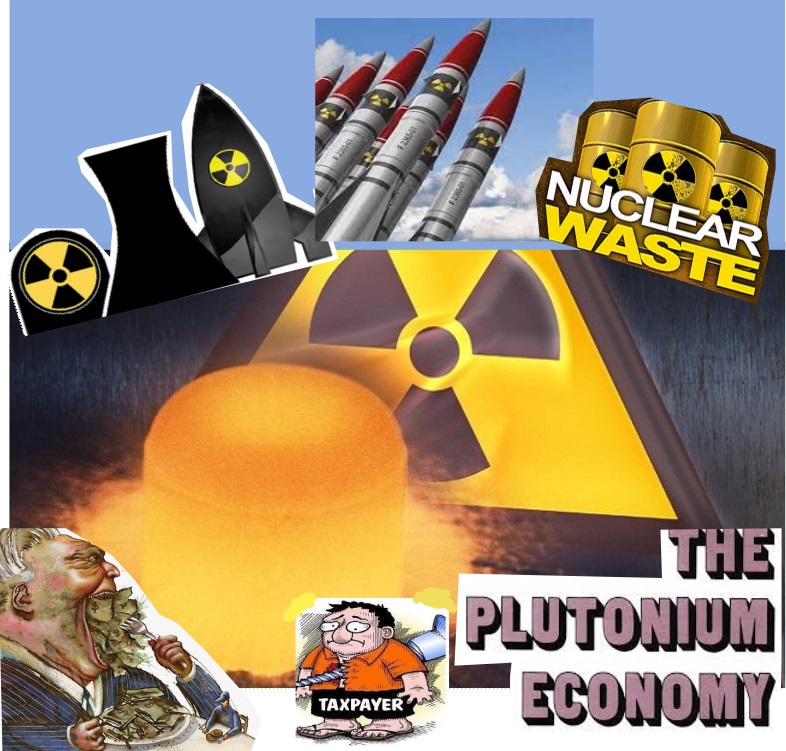
Within the next 10 years following the Indian nuclear explosion and Karen Silkwood’s death, the US Congress pulled the plug on the Liquid Metal Fast Breeder Reactor project, ending the Atomic Energy Commission’s vision of a plutonium economy, and the Supreme Court provided a little bit of justice for Karen’s parents and children, upholding a jury decision that for the first time cast aside the legal shield of the federal government protecting the nuclear industry.
Bulletin, By Robert Alvarez | November 8, 2024
On the evening of November 13, 1974—that is, 50 years ago—Karen Silkwood was driving to a meeting with a New York Times reporter and an official of the Oil, Chemical and Atomic Workers (OCAW) union. Her car flew off the road and hit a culvert on a lonely highway in western Oklahoma, killing her instantly. Karen was a union activist working as a technician at a plutonium fuel fabrication plant in Cimarron, Oklahoma owned by the Kerr-McGee Corp.
Several days before her death, Silkwood’s apartment was purposefully contaminated with highly toxic plutonium—which she had no access to—from the nuclear plant where she worked. Because of her activism, the company had put her and her roommates under constant surveillance. Documents about problems at the plant that two witnesses had seen before Silkwood’s fateful drive were missing. An independent investigation found evidence that her car was run off the road—contradicting official conclusions.
Karen became a whistleblower in large part because Kerr-McGee never bothered to tell workers that microscopic amounts of plutonium in the body can cause cancer. Karen became alarmed after dozens of workers, many fresh out of high school, had breathed in microscopic specks of plutonium and were required to undergo a risky procedure (chelation) to flush the radioactive contaminant from their bodies. It’s a procedure that can, even if successful in removing contaminants from the body, harm the kidneys.
Between 1970 and 1975, two metric tons of weapons-usable plutonium were shipped by truck from the Hanford nuclear production complex in Washington state to the Kerr-McGee plant in Oklahoma, where the plutonium was to be mixed with uranium and placed into 19,000 stainless steel fuel rods. At the time of Karen’s death, the Atomic Energy Commission found that about 40 pounds of plutonium had gone missing—enough to fuel several atomic bombs.
Since then, numerous books, articles, documentaries, and a critically acclaimed Hollywood motion picture have focused on the circumstances surrounding Silkwood’s death. My late wife and I were engaged in efforts for nearly a decade to achieve justice for her parents and children; those efforts were chronicled in some detail in Howard Kohn’s 1981 book, Who Killed Karen Silkwood? Was this an unfortunate accident, or was Karen Silkwood run off the road and killed to stop her from revealing dark secrets? After more than 40 years, the definitive answers to these questions remain unavailable.
The beginnings of the Silkwood saga. Karen Silkwood’s death heralded an end of America’s romance with the atom as a source of limitless cheap energy. There was no doubt on the part of the AEC, then the dominant force behind US energy policy, that commercial nuclear power would expand so rapidly and widely that by the end of the 20th century, the world would exhaust its supplies of uranium. If nuclear power was to thrive thereafter, according to AEC doctrine, a new generation of reactors fueled by plutonium extracted from spent nuclear fuel would have to be built. This new generation of so-called “breeder” reactors held the promise of producing vast amounts of cheap electricity while producing up to 30 percent more plutonium than they consumed. It turned out that the AEC’s nuclear power growth projection was off by an order of magnitude. Even today, world uranium supplies remain more than sufficient to fuel existing and reasonably contemplated commercial power plants.
Were it not for my wife, Kitty Tucker, and our friend, Sara Nelson, the death of Karen Silkwood would have been erased from public memory, like a sand painting blown away by the wind. I am proud to have played a supporting role, working with Karen’s parents and congressional staff, raising funds, reviewing technical documents, helping with the news media, cooking a lot of meals, and recruiting expert witnesses for the trial of a lawsuit over Silkwood’s death that would unfold in the spring of 1979.
Working with little and often no financial resources but a lot of grit, Kitty and Sara organized a national campaign that led to a congressional investigation revealing that Karen’s concerns over nuclear safety at the Kerr-McGee plant were more than justified. The congressional investigation exposed an FBI informant with a long history of spying on US citizens and revealed that enough plutonium to create several nuclear weapons was missing from the plant. These findings set the stage for a lawsuit organized on behalf of Karen’s parents and children.
The nine-week trial before a federal court jury in Oklahoma City resulted in a landmark jury decision that held Kerr-McGee liable for contaminating Silkwood and her home and awarded her estate a multimillion-dollar verdict. But the path to that verdict was long and uncertain and often disorganized and contentious, a David-and-Goliath story that ran from a near-commune of a house in a leafy portion of the District of Columbia through a variety of congressional offices and investigators and into the pages of Rolling Stone magazine. Along the way, a lot of young and idealistic lawyers and activists—led by Kitty and Sara—worked, mostly for free, to make sure Karen Silkwood’s death was not brushed under a bureaucratic rug and forgotten. I feel lucky to have been one of them.
………………………………………………………………………………………………………………………………………………………………… Kitty’s dogged research found that Silkwood was justified in being outspoken in her struggle to stop constant plutonium leaks and worker exposures at the Cimarron, Okla. Kerr-McGee plant. She and several other co-workers suffered from repeated plutonium exposures while on the job. Between 1971 and 1975, in fact, contamination reports show that at least 76 workers were exposed to plutonium at the Cimarron plant,[1] some more than once.[2] About a third of the exposed workers inhaled enough plutonium to require emergency treatment with experimental chelating drugs to help flush the radioactive metal out of the body. By comparison, during that same period, less than one percent of 3,324 employees at the Energy Department’s Rocky Flats nuclear weapons plant in Colorado[3]—which processed tens of tons of plutonium per year and became notorious for its poor plutonium-handling practices—required this extreme emergency measure.[4]
Kerr-McGee’s role in the plutonium economy. Long a leader of domestic uranium mining for US nuclear weapons, Kerr-McGee was among the first corporations to get in on the ground floor of the US government’s push to establish a plutonium fuel economy. The Atomic Energy Commission’s vision for such an energy economy was outlined in 1970 by its chairman, Glenn Seaborg, who discovered plutonium 30 years earlier. By the end of the 20th century, Seaborg estimated, an enormous expansion of nuclear power plants would have all but exhausted world uranium reserves, and new US reactors would require 1,750 tons of plutonium. This would be more than 66 times the amount of this deadly nuclear explosive in today’s worldwide nuclear weapon stockpiles.[5]
Kerr-McGee came in with a low bid to design and operate one of two of the first privately owned plutonium fuel plants that would handle tons of this fissile material. The Kerr-McGee facility was engineered to extract plutonium nitrate liquid from spent nuclear fuel generated at Hanford’s material production reactor and sent by guarded trucks to the Cimarron, Oklahoma plant. Once there it underwent 14 complex processing steps. The first blended liquid plutonium with uranium. The blended material was then sent to a furnace where it was dried into a powdered oxide. The powder was then heated, compressed, and ground into pellets. The pellets were then placed into stainless-steel rods, after which the ends of the rods were welded shut. All told, some 19,000 of these fuel rods were shipped back to Hanford, where they were used in experiments at the Fast Flux Test Facility (FFTF) and another research reactor. These reactor experiments were aimed at the development of the first large-scale liquid metal fast breeder reactor (LMFBR), to be built along the Clinch River near the government’s Oak Ridge nuclear site in eastern Tennessee.
It turned out that Kerr-McGee cut corners at the expense of the health and safety of its workers from the outset of its operation. The company squeezed in as much equipment as possible into its facility, a space about half the size of a typical high-school gymnasium, leading to spills that were often difficult to clean up. Miles of pipes in the cramped workplace were so close together and poorly routed that they would not fully drain, creating excessive radiation levels[6] in the plant.
Cramped piping also made it difficult to account for the plutonium carried through them, which was classified by the government as a Category I strategic special nuclear material—that is, material that “in specified forms and quantities, can be used to construct an improvised nuclear device capable of producing a nuclear explosion.”[7]
Gloveboxes—the laboratory workstations with gloves in their transparent walls, so workers could manipulate plutonium without coming into direct contact with it—became a major source of contamination because the type installed by Kerr-McGee used plastic seals that US weapons plants had long known could degrade and leak. Also, there were few contained connections between gloveboxes, so workers had to transfer radioactive materials in the open, creating greater risks of contamination. The ventilation systems did not permit rooms in the facility to be isolated from one another to minimize the spread of contamination when it occurred. Even the plant’s radiation air filters were configured in a way that made them difficult to replace.[8]
As substandard facilities led to contamination, Kerr-McGee failed to inform workers that plutonium can cause cancer. Managers often claimed that it was harmless. “There has been no lung cancer caused by plutonium exposure,” William Utnage, the plant designer, told employees. “From human experience to date, we have nothing to worry about.” Based on numerous animal studies, the Atomic Energy Commission considered plutonium to be a potent carcinogen.
Read more: The death of Karen Silkwood—and the plutonium economyTurnover was high at the Kerr-McGee Cimarron plutonium plant, with an average of 90 people out of the plant’s total workforce of 150 quitting each year.[9] AEC inspections found that the company could not keep accurate track of radiation doses, making it difficult if not impossible to know the frequency and severity of exposures. Given the need to constantly replace three out of five workers every year, many people were hired fresh out of high school, provided minimal training, and sent on the line to operate a high-hazard nuclear facility.
After being repeatedly exposed to plutonium at the plant that required often painful scrubbing of her skin, Karen Silkwood began documenting dangerous practices at the plant, including the doctoring of X-rays of fuel rod welds by a technician who used a felt-tip pen to hide defects shown in the X-rays.
Days before she died in the car crash, plutonium contamination was found in the home that Silkwood shared with her boyfriend, Drew Stephens, and roommate, Sheri Ellis. The highest concentrations were in lunch meat in her refrigerator and on the toilet seat. Karen, Drew, and Sheri were soon flown to Los Alamos Laboratory, where it was determined that Karen had sustained a significant dose of plutonium in her lungs. Subsequent laboratory analyses concluded that the plutonium in her home came from a batch at the plant to which she did not have access. These revelations all happened within the few days before her fatal drive that night of November 13, 1974.
Congress takes interest. In a way. Just five months before Karen Silkwood’s death, India conducted its first nuclear weapon test; it involved a bomb fueled with plutonium extracted from spent fuel produced by Canadian nuclear reactors. Growing concern in the US Congress about the thought of plutonium circulating in world commerce focused attention on the missing plutonium from the Kerr-McGee plant where Silkwood had worked. Although the amount of the unaccounted-for material was less than a tenth of a percent of the 2.2 tons handled at the plant, it was enough to fuel as many as four nuclear weapons. The Silkwood case also led to greater congressional scrutiny of how the government accounted for and safeguarded its stocks of nuclear materials.
…………………..In the spring of 1975, with our infant daughter Amber in a stroller, my wife Kitty and Sara Nelson met with Tony Mazzochi, legislative director of the Oil Chemical and Atomic Workers (OCAW), and his union colleague Steve Wodka. Both had worked closely with Karen Silkwood in support of efforts to prevent Kerr-McGee from decertifying the union and to strengthen worker safety. The night Silkwood died, Wodka was in a hotel room waiting with New York Times reporter David Burnham for Karen to show up. Shortly after that meeting, Kitty and Sara were recruiting a legal team, led by Daniel Sheehan, to take this case into federal court, on behalf of Karen’s parents.
……….. As I began my work at EPC, one of my first tasks was to serve as a representative on Capitol Hill for Bill and Meryl Silkwood, Karen’s parents. Deeply upset by the suspicious death of their daughter, they approached us in the late fall of 1975 seeking help………………………….. Among the initial appointments I set up for them on Capitol Hill was one in the high-security offices of the Joint Committee on Atomic Energy on a top floor of the US Capitol, accessed by a special elevator. After we went over numerous safety concerns about the Kerr-McGee plant, we were given a polite but frosty response by the committee’s staff director, who curtly advised Bill to go back home and write a letter to his congressman.
The response came as no surprise. Kerr-McGee founder Robert S. Kerr held sway over atomic energy matters as a US senator from the late 1940s until he died in 1963. In 1948, the year Robert Kerr was elected to the U.S. Senate, Kerr-McGee became the first oil company to take advantage of the uranium boom, opening mines on the Navajo reservation to take advantage of the US government’s lucrative price guarantees. By 1954, the company dominated the US uranium market.
By the summer of 1975, Kitty and Sara had collected 8,500 signatures from NOW members and others petitioning Sen. Abraham Ribikoff, chair of the US Senate Committee on Governmental Affairs, to launch an investigation into the circumstances surrounding Karen Silkwood’s death.
On the anniversary of Silkwood’s death—November 13, 1975—during a congressional recess, several NOW members pressed Ribikoff in his home state of Connecticut. Six days later, Ribikoff and his Senate colleague Lee Metcalf of Montana met with a large delegation including Karen’s parents, Kitty, Sara, newly elected NOW President Eli Smeal, religious advocates, and me. Also joining the meeting were Peter Stockton, on loan from Michigan Congressman John Dingell’s staff, and Win Turner. Ribicoff quickly agreed to an investigation and passed the baton to Senator Metcalf……………………………………
In addition to raising serious questions about the investigation of the accident that killed Silkwood, Newman and Stockton revealed that 40 pounds of plutonium was missing and unaccounted for at the Kerr McGee plant. The AEC failed to successfully black out this discrepancy from the document Newman obtained under the Freedom of Information Act. Twenty years later, after the Cimarron plant was dismantled, only 20.2 pounds were recovered from its pipes, leaving enough missing plutonium to fuel two Nagasaki-type atomic bombs.
Turner and Stockton now had a congressional green light to press the Energy Research and Development Administration, the Nuclear Regulatory Commission and especially the FBI for their investigative documents covering the Silkwood case…………………………
………………………….. By this time, pressures were mounting for Turner and Stockton to back off investigating Silkwood’s death. Republican staff on the Governmental Affairs Committee blocked travel funds needed to interview key officials. Turner had to prevail on a less-than-enthusiastic Senator Metcalf to intervene. Eventually, Stockton prevailed on Dingell to pay for his trip to Nashville to try to gain greater cooperation from Srouji.
Shortly thereafter, Metcalf dropped the investigation into Silkwood’s death,[10] but Dingell picked up the ball, thanks in large part to his trust in Stockton, and held two public hearings that showed the disturbing lack of safety working at the plant.
………………………………………..Under the threat of being held in contempt of Congress, Srouji turned over documents she claimed to have obtained from the FBI. The documents indicated that the FBI’s investigation of events surrounding Silkwood’s death was superficial. Most conspicuous by its absence was any documented effort by Olson and the FBI to address the AEC’s concern that Kerr McGee could not account for about 40 pounds of plutonium.[12]
The Silkwood lawsuit begins. By the fall of 1976, congressional investigations had run their course, leaving Karen’s parents only with the option of going to court. ………………………………………..
The complaint had three basic components: Kerr McGee was liable under state law for the contamination of Karen Silkwood in her home; Kerr McGee violated Silkwood’s civil rights to travel on the highway; and finally Kerr McGee conspired to violate Silkwood’s civil rights. It turned out that the contamination of Karen’s home with plutonium from the plant became the anchor for the lawsuit………………………………………………………………………………………………………..
Bill Paul, Kerr McGee’s lead attorney and former president of the Oklahoma Bar Association, seemed determined to stop the case from going to trial by proving we were “outside agitators” in a conspiracy, supposedly run by Ralph Nader and the Communist Party, to stop nuclear power in the United States……………………………………………………… Through the efforts of investigative reporter Howard Kohn and his wife and assistant Diana, Rolling Stone made the Silkwood case a major investigative focus and played an important role in raising funds for the lawsuit.[15]
………………………………………………………………………….As trial approached, Danny and his investigators tried to shine a light on efforts by Kerr-McGee to spy and intimidate Silkwood, possibly to the point of running her off the road, and the FBI’s efforts to conceal Kerr McGee’s wrongdoings. Even though Danny and his colleagues found a considerable amount of evidence to back these claims, the federal judge on the case, Frank Thies, ruled that conspiracies to violate Karen Silkwood’s civil rights were not covered by the law. This left the legal liability against Kerr McGee for contaminating Silkwood in her home as the only issue to be argued in court.
………………………………………………………………………..Kitty and I moved out to Oklahoma City and watched the 47-day trial unfold as Gerry Spence masterfully took apart Kerr-McGee’s defense. Bill Paul, Kerr’s McGee’s lead attorney, had not faced a seasoned court roombrawler like Gerry Spence before. From the outset, Spence, with his large-brimmed cowboy hat sitting on the table and cattle rancher demeanor, and his co-counsel, the much shorter, frizzy-haired Arthur Angel, created a “David vs Goliath” atmosphere. Ranged against them were a half dozen defense attorneys in three-piece suits who immediately became known as the “men in grey.”
After 43 witnesses gave testimony, the case went to the jury, and on May 18, 1979, the jury rendered its verdict. Bill and Merle Silkwood sat beside Kitty and our 4-year-old daughter, Amber. Dean McGee, the president and co-founder of the Kerr-McGee Corp., and leaders of the Oklahoma State Legislature were also present to hear the jury find Kerr McGee liable for $505,000 in actual damages and $10 million in punitive damages. On January 11, 1984, the US Supreme Court upheld the jury’s verdict, but allowed Kerr-McGee to contest the punitive damages in another trial. Not wanting to go through another lengthy trial Karn’s family agreed to a $1.38 million setlement.
Even so, the lawsuit set an important precedent that federal regulation of nuclear safety did not shield nuclear facilities from being held accountable under state tort laws.
The end of the plutonium economy. A highly eventful year followed Karen’s death; those events would impact the future of nuclear energy around the world.
In May 1974, India shocked the world by detonating a nuclear weapon underground in the remote desert region of Rajasthan. Called the “Smiling Buddha,” the weapon was fueled by plutonium produced in a reactor provided by Canada that used heavy water supplied by the United States from the Savannah River Plant, a nuclear weapons material production facility in South Carolina. India extracted the plutonium from spent reactor fuel at a reprocessing plant built with the assistance of the United States and France. The Indian weapons experts who designed Smiling Buddha were trained by the Soviet Union.
India declared its weapon test a “peaceful nuclear explosion.” Between 1961 and 1975, the United States and the Soviet Union set off 35 and 124 “peaceful” nuclear detonations, respectively, in a quest to dig channels, recover minerals, excavate tunnels for highways, store oil and gas, and build dams. Undeterred by the radiological problems peaceful nuclear explosions would cause, the United States actively promoted their use, which made sure that other countries would follow, as an integral part of the “peaceful” uses of nuclear power allowed under the 1970 Nuclear Non-Proliferation Treaty.
In 1976, then-President Gerald Ford responded, suspending reprocessing of spent nuclear fuel to recover plutonium in the United States. The next year, President Jimmy Carter converted the suspension into a ban, issuing a strong international policy statement against establishing plutonium as fuel in global commerce. As the US government continued to refuse to support reprocessing of nuclear fuel, US utilities with nuclear power plants opted to support underground disposal of spent fuel.
The vision first created during World War II—and fostered with tens of billions of dollars of public funds—to establish nuclear power plants fueled by plutonium started to take on a nightmarish quality. Within the next 10 years following the Indian nuclear explosion and Karen Silkwood’s death, the US Congress pulled the plug on the Liquid Metal Fast Breeder Reactor project, ending the Atomic Energy Commission’s vision of a plutonium economy, and the Supreme Court provided a little bit of justice for Karen’s parents and children, upholding a jury decision that for the first time cast aside the legal shield of the federal government protecting the nuclear industry.
Eventually, Kerr-McGee’s destructive practices caught up with it. In April 2014, after fraudulently trying to avoid paying for the cleanup of the massive environmental damage it had wrought throughout the United States, Kerr-McGee entered into a $5.5 billion settlement with the US Justice Department. Kerr-McGee is now a bankrupt legacy of the atomic age, a relic of a plutonium economy that never came to be in the United States.
Notes…………………………………………………………………………………. more https://thebulletin.org/2024/11/the-death-of-karen-silkwood-and-the-plutonium-economy/
South Africa Files 750 Pages of ‘Overwhelming’ Evidence in ICJ Genocide Case Against Israel

“The glaring genocide in Gaza is there for all who are not blinded by prejudice to see.”
By Brett Wilkins / Common Dreams, 30 Oct 24
South Africa filed 750 pages of “overwhelming” proof that Israel is committing genocide in Gaza to the International Court of Justice in The Hague, Netherlands on Monday, the deadline for submitting final evidence in the ongoing trial.
South African Ambassador to the Netherlands Vusi Madonsela delivered the legal document—known as a memorial—to the ICJ headquarters in the Dutch city. Under the court’s rules, the contents of the memorial cannot be made public at this time.
According to a statement from the office of South African President Cyril Ramaphosa, the memorial is a “comprehensive presentation of the overwhelming evidence of genocide in Gaza.”
The office said the document “contains evidence which shows how the government of Israel has violated the Genocide Convention by promoting the destruction of Palestinians living in Gaza, physically killing them with an assortment of destructive weapons, depriving them access to humanitarian assistance, causing conditions of life which are aimed at their physical destruction, and ignoring and defying several provisional measures of the International Court of Justice, and using starvation as a weapon of war and to further Israel’s aims to depopulate Gaza through mass death and forced displacement of Palestinians.”
South Africa filed 750 pages of “overwhelming” proof that Israel is committing genocide in Gaza to the International Court of Justice in The Hague, Netherlands on Monday, the deadline for submitting final evidence in the ongoing trial.
South African Ambassador to the Netherlands Vusi Madonsela delivered the legal document—known as a memorial—to the ICJ headquarters in the Dutch city. Under the court’s rules, the contents of the memorial cannot be made public at this time.
According to a statement from the office of South African President Cyril Ramaphosa, the memorial is a “comprehensive presentation of the overwhelming evidence of genocide in Gaza.”
The office said the document “contains evidence which shows how the government of Israel has violated the Genocide Convention by promoting the destruction of Palestinians living in Gaza, physically killing them with an assortment of destructive weapons, depriving them access to humanitarian assistance, causing conditions of life which are aimed at their physical destruction, and ignoring and defying several provisional measures of the International Court of Justice, and using starvation as a weapon of war and to further Israel’s aims to depopulate Gaza through mass death and forced displacement of Palestinians.”
“The evidence will show that undergirding Israel’s genocidal acts is the special intent to commit genocide, a failure by Israel to prevent incitement to genocide, to prevent genocide itself, and its failure to punish those inciting and committing acts of genocide,” Ramaphosa’s office added.
South Africa’s filing comes amid Israel’s ongoing 387-day assault on Gaza, which according to Palestinian and international agencies has killed at least 43,020 people—most of them women and children. At least 101,110 others have been wounded and over 10,000 Gazans are missing and believed dead and buried beneath the rubble of hundreds of thousands of bombed homes and other structures. Millions more Palestinians have been forcibly displaced, starved, or sickened by Israel’s invasion and “complete siege” of Gaza.
The filing also comes one week after senior members of Israeli Prime Minister Benjamin Netanyahu’s far-right Cabinet and national lawmakers spoke at a conference advocating the ethnic cleansing and recolonization of Gaza.
Ramaphosa’s office lamented that “Israel has been granted unprecedented impunity to breach international law and norms for as long as the United Nations Charter has been in existence.”………………………………………………………………https://www.commondreams.org/news/south-africa-icj-genocide-israel
UK Snubs Council of Europe Over Assange Inquiry

Politicians across Europe want Britain to investigate why the WikiLeaks founder spent five years in jail.
MARK CURTIS, 25 October 2024, https://www.declassifieduk.org/uk-snubs-council-of-europe-over-assange-inquiry/
Britain’s Home Office is making a “grave mistake” by ignoring a call from the Council of Europe to review its treatment of Julian Assange, the WikiLeaks founder’s wife has warned.
The Council’s parliamentary assembly, of which the UK is a member, passed a resolution earlier this month designating Assange as a “political prisoner”.
Assange endured five years in Belmarsh maximum security prison in London before being released in June, and flying to his native Australia. The UK government had incarcerated him while the US pursued extradition proceedings in the British courts.
His treatment has outraged the Council of Europe, which was created in the aftermath of World War Two with strong backing from Winston Churchill.
Its resolution urged the UK authorities to conduct a review “with a view to establishing whether he [Assange] has been exposed to torture or inhuman or degrading treatment or punishment, pursuant to their international obligations”.
It found the UK authorities “failed to effectively protect Mr Assange’s freedom of expression and right to liberty, exposing him to lengthy detention in a high-security prison despite the political nature of the most severe charges against him.”
Declassified asked Britain’s Home Office what its response was to the Council of Europe’s call.
The government department deflected the question, replying: “The longstanding extradition request for Julian Assange has been resolved. As is standard practice, all extradition requests are considered on an individual basis by our independent courts and in accordance with UK law.”
The demands of the parliamentary assembly are not binding on European governments but they are “obliged to respond”.
‘Cover-up’
Stella Assange, Julian’s wife, told Declassified the Home Office is making a “grave mistake” in refusing to heed the Council of Europe’s call.
She said: “We know that the Crown Prosecution Service has disappeared key documents relating to Julian’s imprisonment and refused to provide information, first to a journalist, and now to the court, that might shed a light on the political side of Julian’s persecution in the UK.
“It is one thing for rogue elements in the CPS to collude with foreign governments to persecute a publisher and attempt to cover their tracks. It is quite another for the UK government to stonewall in this manner in the wake of an independent report by the Council of Europe and a vote by the overwhelming majority of the chamber calling on the UK to carry out an investigation.”
She added: “The UK government is effectively partaking in the cover-up, in a way that only a guilty party would.”
‘Psychological torture’
Assange’s detention in maximum security Belmarsh was “out of proportion in relation to his alleged offence”, the Council of Europe’s resolution found.
It recalled the findings of the then United Nations special rapporteur on torture, Nils Melzer, that Assange had been exposed to “progressively severe forms of cruel, inhuman or degrading treatment or punishment, the cumulative effects of which can only be described as psychological torture”.
Melzer’s report, produced in 2019 while Assange had secured asylum in the Ecuadorian embassy in London, called on UK officials to be investigated for possible “criminal conduct” in their treatment of Assange. It was never reported in the UK national media.
The Council of Europe found that the UK authorities “appear to have ignored” Melzer’s findings.
Its resolution was passed with 88 in favour, 13 against and 20 abstentions. All four UK members of the parliamentary assembly voted against, including Lord Richard Keen, a Conservative peer, who expressed a dissenting opinion.
Keen argued that it was “legally incorrect” to find that Assange had been detained unlawfully, as he had violated bail conditions before and was considered a flight risk.
Keen also rejected the accusation of torture against the UK, saying that Assange’s “regrettable psychological state” identified by Melzer was due to Assange’s “self-imposed lengthy isolation in the Ecuadorian embassy in London and cannot be blamed on the UK authorities.”
‘Chilling effect’
The Council of Europe concluded that the treatment of Assange “creates a dangerous chilling effect and a climate of self-censorship affecting all journalists, publishers and others reporting matters essential for the functioning of a democratic society”.
It added: “It severely undermines the role of the press and the protection of journalists and whistle-blowers around the world.”
The resolution also noted that the Council was “alarmed” by reports that the US Central Intelligence Agency had covertly surveyed Assange while he was in the Ecuadorian embassy in London and was allegedly developing plans to poison or even assassinate him on UK soil.
Rebecca Vincent, campaigns director at Reporters Without Borders, told us that Julian Assange’s sentencing by UK courts to 50 weeks in prison for breaking bail was “disproportionate”.
She added: “His subsequent prolonged detention in a high-security prison with no charges against him in the UK, held purely on remand, constituted a gross violation of his rights.”
Vincent said: “We faced unusual restrictions from UK authorities in trying to do our jobs advocating in this case, including extreme difficulties securing consistent access to monitor extradition proceedings against Assange in UK courts, and access to visit him in Belmarsh prison. These aspects all merit a serious independent review.”
Fighting for More Evidence of Assange’s Political Prosecution

Italian journalist Stefania Maurizi has been in court trying to get some missing emails — or data about them — that could further expose the political motivation behind the prosecution of the WikiLeaks publisher.
Joe Lauria and Mohamed Elmaazi / Consortium News, October 23, 2024
A tribunal in Britain is set to decide whether to order the government’s Crown Prosecution Service (CPS) to prove it deleted emails that may have covered up more evidence of a politically motivated prosecution of Julian Assange.
The three judges heard arguments on Sept. 24 in the nearly decade-long freedom of information saga regarding the emails that top British prosecutors say were deleted.
They involved an exchange with Sweden during a Swedish prosecutor’s attempt, beginning in 2010, to extradite the WikiLeaks publisher from Britain. ……………………………………………………….
It was only when the U.S. realized it would lose on appeal after a four-year extradition battle that the Department of Justice cut a plea deal with Assange who was released on June 24 and returned to his native Australia.
Assange had been charged in the United States under the Espionage Act for possessing and publishing defense information, which revealed evidence of U.S. war crimes.
Britain took an active role in Assange’s prosecution. Its Crown Prosecution Service sought to stop Sweden from going to the embassy to question him.
Seeking to learn more about Britain’s role against Assange, Italian investigative journalist Stefania Maurizi first made a Freedom of Information Act (FOIA) request in 2015 for all emails between the British and Swedish governments concerning Assange.
Some of the emails she obtained showed political motivation on the part of the lead British prosecutor, Paul Close. One email Maurizi obtained from the Swedish Prosecution Authority (SPA) revealed that Close appeared to be pressuring Swedish prosecutors to continue seeking Assange’s extradition instead of dropping the case or questioning him at the Ecuadorian embassy, where Assange had been granted asylum………………………….
After Maurizi noticed a sizeable gap in the emails released to her she filed another FIOA seeking to obtain the missing emails.
The CPS first claimed that it had destroyed the emails. It said that when Close retired, his account along with his emails, were automatically destroyed.
But Maurizi did not buy it. She asked the court at the hearing last month to order the CPS to turn over “metadata” — data about data, such as file creation and modification dates, email sender and recipient addresses, timestamps, email routing information, keywords, and subject lines — proving the emails really were deleted and when.
“We have NO certainty whatsoever” that the emails were destroyed, Maurizi wrote in a message to Consortium News. Maurizi is in court because she believes the allegedly deleted emails could provide additional evidence of a politically motivated prosecution of Assange.
……………………………………………‘When, How & Why’ Were the Emails Deleted?
Maurizi, who travelled to London from Rome to attend the Sept. 24 hearing at the First-Tier Tribunal (General Regulatory Chamber), is challenging the ongoing failure of the CPS to respond adequately to her December 2019 FOIA about the missing emails.
………………………………………………………………….Maurizi is betting the tribunal will agree with her that metadata is clearly information that can be requested under the Act and which can clearly be provided with little difficulty. If she succeeds, future FOIA requests will also be able to demand metadata if and when an individual thinks it may be useful.
Hillary, who was called to testify for the CPS, freely admitted to the tribunal that she could easily provide the metadata Maurizi requested and that she would be happy to do so, as long as any information which identified individuals is redacted.
The tribunal will also consider whether to “order the CPS to carry out a proper, full search for information held” as to “when, how and why?” the thousands of emails were allegedly deleted while Assange’s Swedish extradition case was still very much active.
No date has yet been set for the announcement of the tribunal’s decision. https://consortiumnews.com/2024/10/23/fighting-for-more-evidence-of-assanges-political-prosecution/
Plutonium just had a bad day in court

In a major decision whose consequences are still being assessed, a federal judge declared that plutonium pit production — one ingredient in the U.S. government’s $1.5 trillion nuclear weapons expansion — has to be performed in accordance with the nation’s strongest environmental law
SEARCHLIGHT NEW MEXICO, by Alicia Inez Guzmán, October 17, 2024
Most Americans don’t seem aware of it, but the United States is plunging into a new nuclear arms race. At the same time that China is ramping up its arsenal of nuclear weapons, Russia has become increasingly bellicose. After a long period of relative dormancy, the U.S. has embarked on its own monumental project to modernize everything in its arsenal — from bomb triggers to warheads to missile systems — at a cost, altogether, of at least $1.5 trillion.
Los Alamos National Laboratory plays a vital role as one of two sites set to manufacture plutonium “pits,” the main explosive element in every thermonuclear warhead. But as a recent court ruling makes clear, the rush to revive weapons production has pushed environmental considerations — from nuclear waste and increases in vehicular traffic to contamination of local waterways, air and vegetation — to the wayside.
That just changed dramatically. On Sept. 30, United States District Judge Mary Geiger Lewis of South Carolina ruled that the federal government violated the National Environmental Policy Act — the “Magna Carta” of federal environmental law — when it formulated and began to proceed with plans to produce plutonium pits at LANL and the Savannah River Site, in Aiken, South Carolina.
“[T]he Court is unconvinced Defendants took a hard look at the combined effects of environmental impacts of their two-site strategy,” Lewis wrote of the Department of Energy (DOE) and the National Nuclear Security Administration (NNSA), which together oversee America’s nuclear weapons stockpile.
The ruling was momentous for the anti-nuclear community. But it was also mystifying, because Judge Lewis didn’t provide a roadmap for how to move forward with this extraordinarily complicated policy dispute. Rather than bringing pit production to a halt — which plaintiffs argued for in their original complaint, filed in 2021 — the judge instead ordered the parties to reach some sort of “middle ground” among themselves and submit a joint proposal by Oct. 25. What that will consist of is anybody’s guess. The judge was clear on one point, though — she’ll be keeping a close eye on the matter by maintaining jurisdiction over the case. Injunctive relief, she added, could still be in the cards.
NEPA’s rules require that agencies take a “hard look” at potential environmental impacts. NEPA does not, however, dictate what decision should be made once those impacts are identified.
Previous impact statements have spelled out a vast array of potential hazards for nuclear facilities. These have included an “inadvertent criticality event,” which happens when nuclear material produces a chain reaction and a pulse of potentially fatal radioactivity. Another risk is fire igniting inside a glovebox — the sealed enclosure where radioactive materials like plutonium are handled — and then resisting suppression, leading to widespread contamination. Other possibilities: a natural gas explosion at vulnerable nuclear sites or a wildfire on LANL’s sprawling campus, which is bounded on all sides by the towns of Los Alamos and White Rock, the Pueblo of San Ildefonso, the Santa Fe National Forest and Bandelier National Monument.
“Perhaps more significantly,” Judge Lewis stated, those impact statements “provide a springboard for public comment,” a kind of mechanism for citizens to express criticism and concern and, in some cases, identify a project’s blindspots — risks to people and places that have not been properly taken into account.
An announcement from the DOE the following day was telling, if not defiant: The first plutonium pit manufactured as part of this modernization program was ready to be deployed into the stockpile. That pit — made at LANL but the product of multiple facilities across the nation’s nuclear weapons complex — is intended for a new warhead, which will be strapped into a new intercontinental ballistic missile called the Sentinel. The Sentinel program, at $140 billion, is one of the costliest in the history of the U.S. Air Force……………………………………………………………………….
Now, almost 40 years later, the court found that the agencies charged with reviving the nuclear weapons complex have not properly evaluated the perils that could come with turning out plutonium pits at two different sites, thousands of miles apart. For the plaintiffs in this case — which include Nuclear Watch New Mexico, Savannah River Site Watch, Tri-Valley Communities Against a Radioactive Environment and the Gullah/Geechee Sea Island Coalition — Lewis’s decision to intervene is a milestone.
“We’ve had a pretty significant victory here on the environmental front,” said Tom Clements, the director of Savannah River Site Watch. “Nonprofit public interest groups are able to hold the U.S. Department of Energy accountable.”
………………………………………………………………………………………………….. For LANL, which sits on the kind of forested land typical of the Pajarito Plateau, wildfire is a major risk. …………………………………………………..
A “parade of horribles”
The array of sites that play some role in this latest phase of pit production goes well beyond LANL and SRS, and includes existing facilities in Amarillo, Texas; Kansas City, Missouri; and Livermore, California. Hypothetically, if the feds ever produce the kind of environmental impact statement plaintiffs demand, it could potentially cover this entire constellation, requiring public hearings at each location and in Washington, D.C………………………………………… more https://searchlightnm.org/federal-judge-ruling-plutonium-pits-environmental-impact/?utm_source=Searchlight+New+Mexico&utm_campaign=ae33d0dc0a-10%2F15%2F2024+%E2%80%93+Plutonium&utm_medium=email&utm_term=0_8e05fb0467-ae33d0dc0a-395610620&mc_cid=ae33d0dc0a&mc_eid=a70296a261
Environmental groups challenge the nuclear industry’s portrayal of its energy as “clean” and “non-emitting,” citing health risks and long-term radioactive waste

By James Murray, October 16, 2024,
https://www.netnewsledger.com/2024/10/16/environmental-groups-challenge-the-nuclear-industrys-portrayal-of-its-energy-as-clean-and-non-emitting-citing-health-risks-and-long-term-radioactive-waste/
Competition Bureau Asked to Investigate Misleading Nuclear Energy Claims in Canada
Ottawa, 16 October 2024 – Seven Canadian environmental advocates have filed a formal complaint with the Competition Bureau, urging it to investigate the Canadian Nuclear Association (CNA) and its members for promoting nuclear energy as “clean” and “non-emitting.”
This latest action, under Section 9 of the Competition Act, calls for the Bureau to address what the complainants argue are false and misleading claims about nuclear energy.
“Legislation against greenwashing should spur the Bureau to act on the misuse of terms like ‘clean’ and ‘non-emitting.’ These claims are misleading and repeated by uninformed officials,” said Dr. Ole Hendrickson.
“Nuclear reactors emit carcinogenic substances and produce dangerous radioactive waste—hardly ‘clean’ by any reasonable definition,” added J.P. Unger, a science writer and policy analyst. “The industry’s survival depends on misleading the public and securing subsidies.”
The complaint highlights the continuous emission of carcinogenic gases and the production of long-lived radioactive waste by nuclear reactors, which pose significant health risks to current and future generations. According to the applicants, the CNA’s portrayal of nuclear energy as clean misleads the public, especially given the severe environmental impact of its waste.
The group points out that these claims have unfairly bolstered nuclear energy’s image, positioning it to secure public funding intended for genuinely clean energy projects. They also criticize nuclear industry campaigns, such as educational initiatives targeted at schools, for perpetuating these misconceptions.
This action follows an earlier complaint filed in February, which was dismissed by the Competition Bureau. At the time, the Bureau deemed CNA’s statements to be political rather than promotional. However, the new complaint emphasizes that the CNA’s messaging aims to sway public opinion and secure financial benefits by falsely categorizing nuclear energy as environmentally friendly.
“Israel must be expelled from the United Nations”
International legal expert Fabio Marcelli makes the case that, following the attack on UN peacekeepers, the conditions are ripe for a UN General Assembly vote on Israel’s expulsion from the latter
Thomas Fazi, Oct 13, 2024, https://www.thomasfazi.com/p/israel-must-be-expelled-from-the—
Israel must be expelled from the United Nations: the conditions are ripe
by Fabio Marcelli, international legal expert, research director of the Institute for International Legal Studies of the Italian National Research Council and member of the International Association of Democratic Lawyers
Originally published in Italian on the website of Il Fatto Quotidiano.
The deliberate and criminal attack on the Italian Sassari Brigade and other UNIFIL (United Nations Interim Force in Lebanon) international contingents marks a new and unprecedented stage in Netanyahu’s efforts to devastate the neighbouring peoples of Israel, threaten global peace, and lead his own country to self-destruction, which now seems closer than ever.
[Italian Defense] Minister Crosetto’s condemnation of the attack as a war crime is commendable, as is his commitment that UNIFIL will not yield to blackmail or threats and will continue to carry out its mission. His assertion that Italy does not take orders from Israel is also notable.
However, it is crucial to closely monitor the fulfilment of this commitment, especially given the contradictory stance of the Meloni government, which has consistently supported Israel’s crimes. This contradiction becomes even more apparent when Western-supplied weapons, including a significant contribution from Italy’s military-industrial complex, are used against Italian forces. Unfortunately, Crosetto’s position seems unlikely to bring about meaningful consequences, especially given the silence from other Italian leaders, such as prime minister Giorgia Meloni and president Sergio Mattarella — a silence that must be harshly criticised considering the severity of the affront to Italy and the dangers to global peace.
UNIFIL must remain on the ground and, indeed, should be strengthened and equipped with appropriate equipment and weapons to effectively respond to any potential Israeli aggression. Similarly, steps should be taken to establish a comparable military protection force in Gaza and the West Bank to ensure the safety of the Palestinian people, who have paid a huge price in blood and continue to pay it every day in terms of civilians killed, mutilated and subjected to starvation, thirst and lack of medical supplies, denied by the genocidal occupation.
At the core of the expanding conflict, which now poses a serious threat to global peace, lies the persistent violation of the Palestinian people’s right to self-determination. This ongoing crisis stems from over fifty years of impunity granted to Israeli governments that have continually defied international law and the UN — and are now brutally attacking the organisation, declaring Secretary-General Guterres persona non grata and bombing his peacekeeping forces, including the cream of the Italian Armed Forces.
Given such sustained and repeated criminal behaviour, there are grounds for Israel’s expulsion from the United Nations. According to Article 6 of the UN Charter, “a Member of the United Nations which has persistently violated the Principles contained in the present Charter may be expelled from the Organization by the General Assembly upon the recommendation of the Security Council”.
However, it is clear that Western states in the Security Council, particularly the United States — complicit in Netanyahu’s criminal actions — will use their veto power to block such a proposal, once again obstructing the proper functioning of the international organisation and the enforcement of international law. Nonetheless, it would be equally important for the UN General Assembly to vote on such a resolution, giving free expression to the condemnation of Israel that now comes from the vast majority of the world’s countries as well as from international public opinion.
Such a declaration of principle should be followed by the imposition of sanctions under Article 41 and, if these measures prove insufficient, it could lead to multilateral military action under Article 42. This would complete the procedural steps outlined in Chapter VII of the Charter to end threats to international peace and security.
The adoption of these measures by the General Assembly and by a large number of states represents a necessary response to the grave threat to world peace posed by the criminal policies of the Netanyahu government, determined to provoke a nuclear conflict to avoid legal accountability, as well as by the equally criminal complicity of Western nations, led by the United States, today headed by a president who is a shadow of himself and therefore the shadow of a shadow.
Moreover, there are significant precedents in international law since World War II, such as the “Uniting for Peace” resolution adopted by the General Assembly when the Security Council failed to act. Such measures must now be considered in the face of the current danger to international peace.
Are DOE and NNSA Complying with the National Environmental Policy Act?

The Court found the DOE’s plan had fundamentally changed from the one site plan to its two site plan. DOE did not consider alternatives while moving forward and spending tens of billions of taxpayers’ dollars. The Court found that the plaintiffs had standing to challenge DOE’s two-site plan.
October 10th, 2024, https://nuclearactive.org/
On Monday, September 30th, United States District Court Judge Mary Geiger Lewis ruled that the Department of Energy (DOE) and its National Nuclear Security Administration (NNSA) violated the National Environmental Policy Act (NEPA) because the federal agencies failed to take a “hard look” at the alternatives to fabricate plutonium pits, or the triggers, for nuclear weapons at two of its sites. Los Alamos National Laboratory (LANL) was created to design and fabricate the atomic bombs used during World War II. The Savannah River Site in South Carolina has never fabricated pits for nuclear weapons.
In the late 2000s, DOE released for public review and comment its Complex Transformation Supplemental Programmatic Environmental Impact Statement stating that pit production would take place exclusively at LANL. https://www.energy.gov/nepa/doeeis-0236-s4-complex-transformation-supplemental-programmatic-environmental-impact-statement
Yet in 2019 DOE expanded its proposal to improve the resiliency, flexibility and redundance of the nuclear security enterprise to also fabricate plutonium pits at the Savannah River Site in South Carolina. DOE failed to prepare a new NEPA document for public review and comment detailing how the two sites would interact to fabricate up to 80 plutonium pits per year.
A coalition of non-governmental organizations challenged DOE’s action in the United States District Court of South Carolina. The plaintiffs are the Gullah/Geechee Sea Island Coalition https://gullahgeecheenation.com/gullahgeechee-sea-island-coalition/ , Nuclear Watch New Mexico https://nukewatch.org/home/ , Savannah River Site Watch https://srswatch.org/ , and Tri-Valley Communities Against a Radioactive Environment, or Tri-Valley CARES https://trivalleycares.org/ , and individual Tom Clements. They are represented by Ben Cunningham of the South Carolina Environmental Law Project https://www.scelp.org/ .
The Court found the DOE’s plan had fundamentally changed from the one site plan to its two site plan. DOE did not consider alternatives while moving forward and spending tens of billions of taxpayers’ dollars. The Court found that the plaintiffs had standing to challenge DOE’s two-site plan.
Cunningham said, “This is a significant victory that will ensure NEPA’s goal of public participation is satisfied. Public scrutiny is especially important because the activities at issue here, by their very nature, result in the production of dangerous weapons and extensive amounts of toxic and radioactive waste. I hope the public will seize the upcoming opportunity to review and comment on the federal agencies’ assessment.”
The Court ordered the parties to confer and present the Court with a joint proposal about appropriate remedies to resolve the case, including “Plaintiffs’ request for injunctive relief.” The proposal is due to the Court on Friday, October 25th.
To access the Court documents, go to: https://nukewatch.org/wp-content/uploads/2024/10/Court-Rules-U.S.-Nuclear-Weapons-Production-Plan-Violates-Federal-Law.pdf
1 This Month


4 August – WEBINAR – Hiroshima & Nagasaki: Nuclear Bombs Never Again
Tuesday, Aug. 4 at 5 pm PT / 8 pm ET.
Aug 5, 2026 10:00 AM in Australia/Melbourne
Join the Nuclear Bombs Never Again webinar on August 4th at 5pm Pacific Time / 8pm Eastern Time / 9am Japan Standard Time.
Cross generational voices at the intersection of Japan-Korea-US policy and militarization will share their lived experiences, nuclear impacts in these contexts, anti-war strategies, and actions you can take to advocate for a world with Nuclear Bombs Never Again. This 75-minute event is co-hosted by WILPF US and Korea Peace Now.

22,000+ miles voyaging for nuclear disarmament
and a radiation-free environment https://vfpgoldenruleproject.org/
To see nuclear-related stories in greater depth and intensity – go to https://nuclearinformation.wordpress.com
-
Archives
- July 2026 (251)
- June 2026 (287)
- May 2026 (306)
- April 2026 (356)
- March 2026 (251)
- February 2026 (267)
- January 2026 (308)
- December 2025 (358)
- November 2025 (359)
- October 2025 (375)
- September 2025 (257)
- August 2025 (319)
-
Categories
- 1
- 1 NUCLEAR ISSUES
- business and costs
- climate change
- culture and arts
- ENERGY
- environment
- health
- history
- indigenous issues
- Legal
- marketing of nuclear
- media
- opposition to nuclear
- PERSONAL STORIES
- politics
- politics international
- Religion and ethics
- safety
- secrets,lies and civil liberties
- spinbuster
- technology
- Uranium
- wastes
- weapons and war
- Women
- 2 WORLD
- ACTION
- AFRICA
- Atrocities
- AUSTRALIA
- Christina's notes
- Christina's themes
- culture and arts
- Events
- Fuk 2022
- Fuk 2023
- Fukushima 2017
- Fukushima 2018
- fukushima 2019
- Fukushima 2020
- Fukushima 2021
- general
- global warming
- Humour (God we need it)
- Nuclear
- RARE EARTHS
- Reference
- resources – print
- Resources -audiovicual
- Weekly Newsletter
- World
- World Nuclear
- YouTube
-
RSS
Entries RSS
Comments RSS
 nuclear-news