Environmental problems, and legal holdup for Russia’s $20 billion nuclear power project in Turkey
Russia’s $20 billion nuclear power project located in Mersin on Turkey’s Mediterranean coast has long come under fire over safety and environmental concerns, including claims of large cracks in the concrete foundations due to loose and unstable ground in the area.
Officials broke ground on the Akkuyu power plant in 2018, which is set to be Turkey’s first nuclear power station and is due to come online in 2023 – the 100th anniversary of the Republic of Turkey.
But engineers and workers began ringing alarm bells over a potential nuclear disaster soon after its inception, and a group of NGOs filed a lawsuit with a Turkish court demanding for construction to be halted…….
A Turkish court in the southern province of Mersin ruled on Friday to accept a request by the NGOs for relevant ministries and the National Security Council (MGK) to be able to intervene in the project, Cumhuriyet newspaper reported.
The court said the case would be reported to the MGK, which has no obligation to intervene in construction, but may now choose to do so. Lawyers involved in the case hd also said that the Russian power power plant could pose a national security threat to Turkey.
The court also gave the green light to a request by the NGOs for the involvement of a number of Turkish ministries in the case, including the Health Ministry, the Treasury and Finance Ministry, as well as the Food, Agriculture and Livestock Ministry.
How this latest development will play out in the ambitious Russian-Turkish joint-venture remains to be seen. But it arrives at a time of ongoing tensions between Ankara and Moscow over Idlib province in northwest Syria, where the two countries back opposing sides……https://ahvalnews.com/nuclear-energy/turkeys-russian-nuclear-power-project-hits-legal-hurdle
Covid-19 pandemic being used to prevent proper public consultation on Bradwell nuclear project
 Ecologist 17th June 2020, Bradwell B, a proposed nuclear power plant, appears to be moving forward to its construction phase during the Covid-19 pandemic without proper public consultation.
China General Nuclear Power Group (CGN), a Chinese state-owned energy corporation, and Électricité de France (EDF), are seeking to build a new nuclear power plant in Bradwell-on-Sea, opposite Blackwater Estuary Natural Nature Reserve on the Essex coast. A statement released by JAN (Japanese Against Nuclear) UK stated: “The companies cancelled two-thirds of the planned public consultation events due to the Covid-19 pandemic. But the pandemic should not be used to avoid the legal requirement of public engagement.
Massachusetts officials have dropped a lawsuit against Holtec over $1B Nuclear cleanup
 Holtec Settles Legal Battle with Massachusetts Over $1B Nuclear Plant Cleanup, ENR, 19 June 20, Massachusetts officials have dropped a lawsuit against Holtec International, now site owner and intended cleanup manager of the closed Pilgrim Nuclear Plant near Plymouth that allows the $1.13 billion-decontamination and decommissioning of the 670-MW site to move forward to be completed in 2027.
The state also dropped its challenge to the U.S. Nuclear Regulatory Commission’s transfer of the site operating license from Entergy Nuclear to Holtec.
Under the agreement reached June 16, Holtec will set aside $193 million of the plant’s decommission trust fund to pay for cost increases, project delays and possible hidden contamination.
Once cleanup is competed, $38.8 million will be set aside to cover the cost to transport spent nuclear fuel stored at the site to out-of-state storage. ….. https://www.enr.com/articles/49588-holtec-settles-legal-battle-with-massachusetts-over-1b-nuclear-plant-cleanup
South Carolina Electric and Gas lawyers and executives could face gaol for fraud
 SCE&G LAWYERS MAY BE CHARGED IN NUCLEAR FRAUD, https://www.lexingtonchronicle.com/news/sceg-lawyers-may-be-charged-nuclear-fraud More utility executives may face prison time, too
By Jerry Bellune
JerryBellune@yahoo.com
Former SC Electric & Gas executive Steve Byrne may have company.
His plea agreement on fraud charges reveals that other executives and lawyers for SCANA, the owner of SCE&G, are at risk of being charged,.
Federal officials believe a conspiracy of executives and their lawyers hid a $9 billion nuclear failure from state officials, investors and the public for years.
An official federal document filed in US District Court in Columbia revealed:
• Byrne and unidentified “others” orchestrated a cover-up of costly errors at the nuclear construction site.
• They “deceived regulators and customers to maintain financing for the project and to financially benefit SCANA” and themselves.
• “As construction problems mounted, costs rose and schedules slipped,” Byrne and others hid the truth.
For the rest of what the federal documents reveal, see Thursday’s Lexington County Chronicle.
South African activists threaten to sue over nuclear plan
 South African activists threaten to sue over nuclear plan JOHANNESBURG, June 11 (Reuters) – South African activists have written to the energy minister threatening to take legal action if he moves to build new nuclear power plants without proper consultation.The letter to Gwede Mantashe from Earthlife Africa Johannesburg and the Southern African Faith Communities’ Environment Institute (SAFCEI) comes after energy officials said last month they planned to procure 2,500 megawatts (MW) of new nuclear capacity by 2024. South African activists threaten to sue over nuclear plan JOHANNESBURG, June 11 (Reuters) – South African activists have written to the energy minister threatening to take legal action if he moves to build new nuclear power plants without proper consultation.The letter to Gwede Mantashe from Earthlife Africa Johannesburg and the Southern African Faith Communities’ Environment Institute (SAFCEI) comes after energy officials said last month they planned to procure 2,500 megawatts (MW) of new nuclear capacity by 2024.
The activists said they would go to court if Mantashe tried to procure nuclear power, or seek information about it from vendors, without following proper regulatory processes and seeking public input. Three years ago, the same groups succeeded in persuading a court to block a nuclear power agreement with Russia, signed under then-president Jacob Zuma……. https://www.reuters.com/article/safrica-nuclear/update-1-south-african-activists-threaten-to-sue-over-nuclear-plan-idUSL8N2DO5SN |
|
Legal challenge to “Interim” storage of nuclear wastes, before permanent disposal determined
 Holtec’s interim nuclear waste application challenged in court, BY THERESA DAVIS / JOURNAL STAFF WRITER, AlbuquerquebJournal, June 6th, 2020
Holtec International’s proposed nuclear waste interim storage facility in southeast New Mexico faces a new legal challenge.
Anti-nuclear group Beyond Nuclear filed a petition for review Thursday in the U.S. Court of Appeals for the District of Columbia Circuit. The group asks for review of the U.S. Nuclear Regulatory Commission’s rejection of their petitions.
The group alleges that the NRC cannot issue Holtec a license because the company’s application includes a provision that the U.S. Department of Energy may be the owner of the facility’s nuclear waste. The group says approval would violate the Nuclear Waste Policy Act.
That law prevents the government from taking ownership of nuclear waste from private utilities before a permanent repository is in operation. The government has yet to open such a site.
“The reason that provision is in the NWPA is to protect a state like New Mexico from being forced to store this waste before a permanent repository is opened,” said Kevin Kamps, a radioactive waste specialist with Beyond Nuclear. “(Holtec has) now added a clause that includes ‘and/or nuclear utilities’ in the list of potential customers. That was good enough for the NRC, apparently.”
Beyond Nuclear presented its petition to NRC’s Atomic Safety and Licensing Board. In April, the NRC upheld that board’s dismissal of the petition.
An April 23 NRC order says Holtec “hopes Congress will change the (NWPA) law to allow DOE to enter into temporary storage contracts with Holtec.”………
The petition alleges that the NRC is also violating the Administrative Procedure Act.
“Agencies have to work with what Congress gave (them),” said Mindy Goldstein, an attorney for Beyond Nuclear and the director of the Turner Environmental Law Clinic at the Emory University School of Law. “We feel NRC is stepping around that requirement. Congress has said that DOE can’t own this waste.”
The proposed facility would store spent nuclear fuel in 500 canisters on a 1,000-acre site between Carlsbad and Hobbs. The full project could store 10,000
New Luxembourg law allows claims over nuclear accidents
|
New Luxembourg law allows claims over nuclear accidents, Liability law passed with eyes on nearby Cattenom power plant, which reported more than 40 low-level incidents in 2018, CORDULA SCHNUER, 26.05.2020 Lawmakers passed a new law on Tuesday allowing residents to seek damages for nuclear power accidents, two weeks after the government launched a campaign against nuclear waste storage near its border.Fifty-six out of 60 parliament members voted in favour of the law that will allow victims of a nuclear accident living in Luxembourg up to 30 years to claim damages in one of the Grand Duchy’s courts. …. (subscribers only) https://luxtimes.lu/luxembourg/40796-new-luxembourg-law-allows-claims-over-nuclear-accidents
|
|
Beyond Nuclear opposes Holtec nuclear waste plan: the Nuclear Regulatory Commission is not above the law
 Group Plans To Fight Effort To Build Nuclear Waste Dump In New Mexico https://www.krwg.org/post/group-plans-fight-effort-build-nuclear-waste-dump-new-mexico
Beyond Nuclear has challenged the NRC’s authority to approve Holtec’s license application because it contemplates that the U.S. Department of Energy (DOE) may become the owner of the irradiated reactor fuel. The federal Nuclear Waste Policy Act (NWPA) prohibits federal ownership of spent fuel, however, unless and until a federal repository for permanent disposal is operating.
The NRC Commissioners acknowledged that Federal law prohibits federally-sponsored storage of irradiated reactor fuel unless and until a repository for permanent disposal is in operation. Nevertheless the NRC threw out Beyond Nuclear’s legal challenge to the project on the ground that Holtec could be depended on not to implement the unlawful provision if the license were granted.
The Commissioners’ decision affirms an earlier ruling by the NRC’s Atomic Safety and Licensing Board that the storage facility may be licensed despite the illegal license terms contemplating federal ownership of the irradiated fuel. The Licensing Board accepted arguments by Holtec and the NRC’s technical staff that the license containing illegal provisions could be approved as long as it also contained a provision that would allow private ownership of the spent fuel.
Mindy Goldstein, a lawyer for Beyond Nuclear, stated, “the NRC’s decision flagrantly violates the federal Administrative Procedure Act (APA), which prohibits an agency from acting contrary to the law as issued by Congress and signed by the President.” Goldstein also stated that “the Commission lacks a legal or logical basis for its rationale that the illegal provisions could be ignored in favor of other provisions that are legal, or that an illegal license could be issued in ‘hopes’ that the law might change in the future. The APA gives the NRC no excuse to ignore the mandates of federal law.”
Diane Curran, also a lawyer for Beyond Nuclear, said the group will pursue a federal court appeal of the NRC decision. “Our claim is simple,” she declared. “The NRC is not above the law.”
Kevin Kamps, radioactive waste specialist for Beyond Nuclear, called the federal Nuclear Waste Policy Act “the public’s best protection against an interim storage facility becoming a de facto permanent, national radioactive waste dump at the surface of the Earth.” According to Kamps, “Congress knew, in passing the NWPA, that the only safe long-term strategy for care of irradiated reactor fuel is to place it in a permanent repository for deep geologic isolation.
Congress acted wisely in refusing to allow nuclear reactor licensees to transfer ownership of their irradiated reactor fuel to the DOE until a repository was up and running. The carefully crafted Nuclear Waste Policy Act thus protects a state like New Mexico from being railroaded by the powerful nuclear industry, its friends in the federal government, and other states looking to off-load their mountain of forever deadly high-level radioactive waste.”
Kamps added: “A deep geologic repository for permanent disposal should meet a long list of stringent criteria. These include legality, environmental justice, consent-based siting, scientific suitability, mitigation of transport risks, regional equity, intergenerational equity, and non-proliferation, including a ban on reprocessing. This is why a coalition of more than a thousand environmental, environmental justice, and public interest organizations, representing all 50 states, have opposed the Yucca Mountain dump targeted at Western Shoshone Indian land in Nevada for 33 years.”
“On behalf of our members and supporters in New Mexico, and across the country along the road, rail, and waterway routes in most states, that would be used to haul the high risk, high-level radioactive waste out West, we will appeal the NRC Commissioners’ bad ruling to the federal court,” Kamps added.
Beyond Nuclear is a 501(c)(3) nonprofit membership organization. Beyond Nuclear aims to educate and activate the public about the connections between nuclear power and nuclear weapons and the need to abolish both to safeguard our future. Beyond Nuclear advocates for an energy future that is sustainable, benign and democratic. The Beyond Nuclear team works with diverse partners and allies to provide the public, government officials, and the media with the critical information necessary to move humanity toward a world beyond nuclear. Beyond Nuclear: 7304 Carroll Avenue, #182, Takoma Park, MD 20912. Info@beyondnuclear.org. www.beyondnuclear.org.
Marshall islanders continue their fight for nuclear justice
Fight for nuclear justice continues in the Marshall Islands https://www.rnz.co.nz/international/pacific-news/410871/fight-for-nuclear-justice-continues-in-the-marshall-islands 3 March 2020
The fight for nuclear justice continues in the Marshall Islands where people have been gathering to call for the US to atone for its legacy of testing.The country marked National Nuclear Victims Remembrance Day on Monday, the 64th anniversary of the Castle Bravo hydrogen bomb test that exposed thousands of people to downwind effects.At a ceremony in the capital, Majuro, a tribute was paid to 22 living survivors from the communities affected by the nuclear testing.
This comes as the Marshall Islands and the United States have begun preliminary talks on a new agreement to address the legacy of testing.
The compact of free association, which guarantees relations and funding for the Marshalls from the US, expires in two years.
Last year, it was revealed the US withheld information about nuclear waste it left behind when the Marshalls gained independence, and the extent of the tests it carried out.
Washington previously said there would be no replacement compact. But the chair of the Marshall Islands Nuclear Commission, Rhea Moss-Christian, said nuclear issues were a key, ongoing aspect of negotiations.
“Well we are coming up on renegotiating the economic provisions of the compact, and we’ve had some initial discussions with the US officials.
“So yes internally we are working on our strategy and pulling together all the key issues to include in those negotiations, including the nuclear legacy.”
Ms Moss-Christian, who said formal talks should start later in the year, vowed that the fight for nuclear justice for Marshall Islanders would continue.
“Really it comes down to compensation for loss of land. It’s about health care for those who might be having medical issues,” she said.
“It’s about livelihoods and how much their lifestyles were forced to change when they were moved from their land. These are just a few examples.”
Meanwhile, an essay competition for high schoolers was held as part of Monday’s commemoration programme.
The winner was a senior at Marshall Islands High School on Majuro, Rosie Ammontha, who wrote:
“They had the choice to test those bombs, we didn’t. They had the choice to be truthful about the consequences that awaited us, we didn’t. They had the choice not to endanger innocent lives, we didn’t. They had the choice to help protect our oceans and environment, we didn’t. At the end of the day, nuclear justice means righting what was wronged.”
Algeria and French Polynesia suffer from France’s 30 years of nuclear bomb testing
But Jean-Claude Hervieux has other memories. He joined the French testing efforts in Algeria as an electrician. He remembers a nuclear test in 1962 that did not go according to plan.
Radioactive dust and rock escaped from underground. Hervieux and others observing the testing ran for shelter. Two French ministers were among them. The group washed themselves in a military housing area to decontaminate.
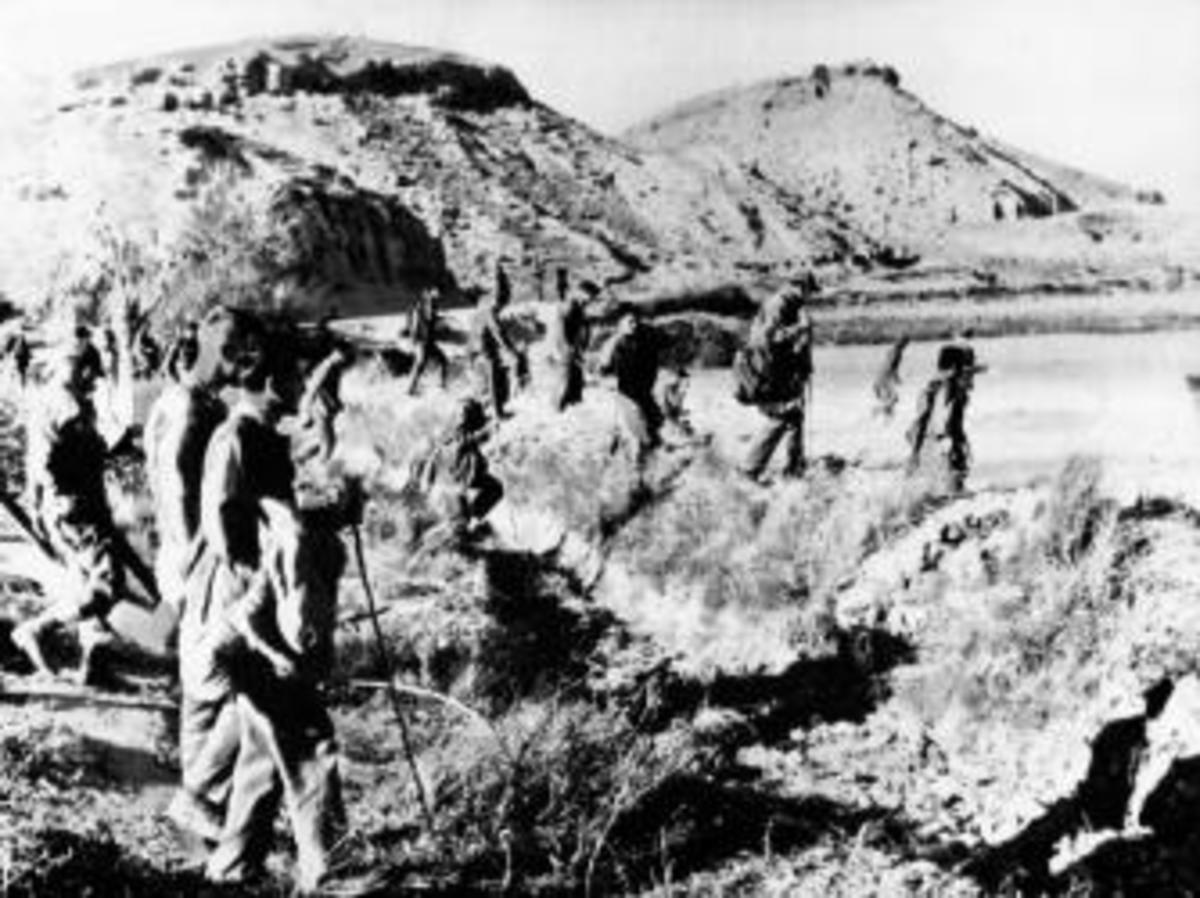
France held more than 200 nuclear tests until a later president, Jacques Chirac, ended testing in 1996. Most tests took place in French Polynesia. But 17 took place in Algeria between 1960 and 1966, ending four years after Algeria’s independence from France.
Brahim Oumansour is a North Africa expert at the French Institute of International Relations in Paris. He said, “It’s part of the whole issue of decolonization and Algerians in general asking for recognition of colonization crimes.” He added that official recognition and financial compensation for the Algerian tests could cost millions of dollars.
Hervieux spent 10 years working on nuclear test areas in Algeria and later French Polynesia. Now 80 and living in France’s Lyon area, he says he is physically fine. But he used to receive some questionable radioactive testing results from the French government……
France’s nuclear compensation commission, CIVEN, said more than 1,600 claims have been filed under a 2010 French law that finally recognized health problems related to the testing.
Only about one-third have met the requirements needed to receive financial benefits. The requirements include about 24 possible radiation-related cancers. Almost all the claims came from France and French Polynesia. Of the 51 claims from Algeria, only one has been compensated…. https://learningenglish.voanews.com/a/questions-remain-as-france-marks-60-years-since-nuclear-tests-/5287541.html
Plutonium-affected U.S. airmen, cancers, deaths, and a new legal ruling
The Palomares disaster occurred on Jan. 17, 1966, when an American B-52 bomber on a Cold War patrol exploded during a midair refueling accident, sending four hydrogen bombs hurtling toward the ground. They were not armed, so there was no nuclear detonation, but the conventional explosives in two of the bombs blew up on impact, scattering pulverized plutonium over a patchwork of farm fields and stucco houses.
Plutonium is extremely toxic, but it often acts slowly. The alpha-particle radiation it gives off travels only a few inches and would not penetrate skin. But inhaled plutonium dust can lodge in the lungs and steadily irradiate surrounding tissue, gradually inflicting damage that can cause cancer and other ailments, sometimes decades later. A single microgram absorbed in the body is enough to be harmful; according to declassified Atomic Energy Commission reports, the bombs that blew apart at Palomares contained more than 3 billion micrograms.
|
For Many Who Cleaned Up a Nuclear Mess, a Key Ruling Comes Too Late
Air Force veterans who dealt with a Cold War-era atomic accident in Spain won the right to sue collectively for health benefits — but not before many had lost battles with cancer. https://www.nytimes.com/2020/02/11/us/palomares-air-force-nuclear.html By Dave Philipps SPRINGFIELD, Mo. — On Christmas Eve, Victor Skaar mailed a stack of letters to Air Force veterans he had served with in Palomares, Spain, scrawling a simple headline at the top of each one: “Great News!” Mr. Skaar, a retired chief master sergeant, was one of 1,600 troops scrambled by the Air Force in 1966 to clean up a classified nuclear disaster by collecting debris and shoveling up plutonium-laced soil. Many were later stricken with cancer and other ailments, and tried without success to get the federal government to take responsibility and pay for their medical care. He wanted to spread the word about an encouraging development: A lawsuit he had filed against the Department of Veterans Affairs had been certified as a class action, meaning that there was finally a chance to set the plutonium case straight, not just for him but for everyone who was there. But his letters soon began trickling back to him: Undeliverable. No forwarding address. One brought a reply from a widow. Each one in his mailbox made his heart sink. “For many of them, it’s too late,” he said of his comrades. “They’re gone.” As one of the first cases ever granted class-action status by the Court of Appeals for Veterans Claims, the Skaar lawsuit represents a major step forward for veterans with long-term health issues linked to toxic exposure in the service.
|
Six legal arguments against the extradition of Julian Assange to America
 Six legal arguments show why the US extradition of Julian Assange should be denied https://www.thecanary.co/uk/analysis/2020/01/25/six-legal-arguments-show-why-the-us-extradition-of-julian-assange-should-be-denied/ Tom Coburg 25th January 2020 The first of two articles examining Julian Assange’s upcoming extradition trial.
There are at least six legal reasons why the extradition request by the US against WikiLeaks founder Julian Assange should be dismissed by the UK courts. The main extradition hearing is scheduled to commence 24 February 2020, with district judge Vanessa Baraitser presiding. The evidence to support Assange is compelling.
1. Client-lawyer confidentiality breached
2. The initial charge is flawed
1. Client-lawyer confidentiality breached
3. Initial charge relies on co-operation from Manning
4. Additional charges raised by the US are political
5. US legal precedent argues that Assange’s work is protected by the US Constitution
6. Threats of violence against Assange mean he’s unable to receive a fair trial
1. Client-lawyer confidentiality breached Continue reading
Japanese High Court rules against nuclear reactor restart
Japan court halts nuclear reactor restart citing volcano, earthquake risks, Channel News Asia. 17 Jan 2020
TOKYO: A Japanese nuclear reactor near a fault line must remain shut because of the risk of its being struck by earthquakes and volcanic eruptions, a high court ordered on Friday (Jan 17).
All nuclear power stations were shut down after the 2011 Fukushima nuclear accident following a catastrophic tsunami, and many remain closed.
The Japanese public has turned against atomic power, despite Prime Minister Shinzo Abe insisting the nation needs nuclear plants to power the world’s third-largest economy, and the court decision was a boost for the country’s anti-nuclear movement.
The move by the Hiroshima High Court reversed a lower court decision in March that would have allowed the reactor at the Ikata nuclear plant in western Japan to resume operations.
The plant’s operator, Shikoku Electric Power, wanted to resume work at the reactor, which had been halted for routine inspections, and said it will appeal the high court’s ruling.
The case was originally lodged by residents of a neighbouring region who complained the utility failed to properly evaluate the risks posed by a local volcano and seismic faultlines……… https://www.channelnewsasia.com/news/asia/japan-court-halts-ikata-nuclear-reactor-restart-volcano-quake-12274482
Israel’s High Court rejects Vanunu’s bid to leave Israel
|
Nuclear whistleblower Vanunu denied permission to leave Israel High court rejects petition from man who revealed country’s nuclear secrets in 1986, Irish Times, Mark Weiss in Jerusalem , 16 Dec 19 Israel’s high court has rejected a petition from Mordechai Vanunu, the man who revealed the country’s nuclear secrets to the world in 1986, to be permitted to leave the country. The justices ruled that based on the material shown them, Mr Vanunu possessed secret and sensitive information that he had not revealed and that if he did, this would be dangerous for state security. They also ruled that they had been persuaded that the nuclear whistleblower wished to reveal his information. At the same time, they urged the state to continue to try to find ways to ease Mr Vanunu’s conditions in Israel. For years Mr Vanunu has demanded that Israel rescind his citizenship and allow him to leave the country. Mr Vanunu, a low-level technician at Israel’s Dimona nuclear plant, first hit the headlines in 1986 when he leaked details with photographs he took surreptitiously to the British Sunday Times. The revelations marked the first concrete proof that Israel had the capacity to manufacture nuclear bombs. Nuclear ambiguity’Israel maintains a policy of “nuclear ambiguity”, neither confirming nor denying foreign reports of its nuclear potential. It has refused to sign the nuclear Non-Proliferation Treaty or to allow international surveillance of its Dimona plant in the southern Negev desert. Partly based on the secrets Mr Vanunu revealed, foreign experts have concluded that Israel is the world’s sixth-largest nuclear power……… In 2004 he completed an 18-year sentence, most of which was spent in solitary confinement. However, strict conditions were attached to his release, including a ban on leaving the country, a ban on entering the Palestinian territories and a ban on meeting foreign journalists. Since his release, Mr Vanunu has twice served jail terms after convictions for parole violations. |
|
|
Ohio: the nuclear industry’s violent assault on democracy

Ohio’s GOP secretary of state has now asked the Ohio Supreme Court NOT to provide a federal judge with answers about key procedural questions surrounding the state’s referendum process.
The short-term issue is about a billion-dollar bailout for two nuke reactors and two coal burners.
Long-term it asks whether targeted violence perpetrated by paid thugs will now define our election process. And whether the public referendum will remain a workable part of our democracy.
The battle starts with House Bill 6, the now-infamous billion-dollar nuke bailout approved by the corrupt, gerrymandered Ohio legislature in late July.
HB6 forces all Ohio ratepayers to subsidize two crumbling nukes on Lake Erie, along with two decrepit coal burners, one of them in Indiana. It helps underwrite ten small solar farms, but undercuts much larger subsidies for other wind and solar facilities.
The Perry reactor east of Cleveland, and Davis-Besse near Toledo, are among the world’s most dangerous, decrepit reactors. Both were set to shut because they cannot compete with wind and solar, as well as fracked gas.
But Akron-based FirstEnergy spent millions to “persuade” the legislature to hand them a billion dollars to keep their uncompetitive, uninsured and essentially unregulated reactors on line.
When the bailout passed, a statewide group called Ohioans Against Corporate Bailouts turned in a petition for a repeal referendum on the 2020 ballot. The law allows 90 days for referendum sponsors to gather signatures to get on the ballot. In this case 265,711 would be required.
Ohio’s Attorney General David Yost sat on the request for 19 days, then rejected it. OACB filed a second application, which the AG sat on for another 19 days before approving it.
That left the petitioners just 52 days to gather signatures.
But signature gatherers were immediately attacked with violent threats and bribery offers. In the field, they (and potential signatories) were physically assaulted by “blockers” hired by the nuclear industry. Sworn testimony about these attacks was filmed at a public gathering in Columbus and can be seen here:
https://freepress.org/article/free-press-second-saturday-petition-blockers-threaten-our-democracy
Bailout opponents then went to federal court to ask that the 38 days consumed by the AG be restored to the petition campaign, which came up short at the 90-day deadline. A federal judge asked for guidance from the Ohio Supreme Court and submitted five questions for the Justices to answer.
And here things have leapt to another level. Frank LaRose, the Ohio Secretary of State, has now asked the Ohio Supreme Court NOT to respond to the federal judge’s queries.
In other words: the Republican attorney general killed nearly half the allotted signature gathering time for the repeal of this bailout. A federal judge has asked to hear from the state Supreme Court. And now Ohio’s Republican secretary of state has asked that Court NOT to comply, in a direct attempt to prevent Ohioans from voting on whether they’re to be forced to pay a billion dollar subsidy for two lethal, money losing atomic reactors.
This shocking combination of overt threats, bribery and outright physical violence, combined with judicial stall tactics by elected Ohio officials, breaks new ground in the assault on democracy itself in the American heartland.
The issue cuts to the core of the 2020 election. Donald Trump has met personally with at least one principal lobbyist for FirstEnergy, the prime beneficiary of the bailout. At least one of his associates lobbied at least five legislators in its behalf.
But a statewide referendum for repeal could be catastrophic for the GOP. Polls show more than 60% of Ohioans opposed. That includes much of the normally corporate statewide media. Many big industrial organizations have joined the fossil fuel industry here in fighting it.
If the referendum does get on the 2020 ballot, it will clearly energize a strong progressive voter turnout. Outraged ratepayers could very easily make the difference in a closely divided swing state. So for Trump and his minions, killing a vote on this billion-dollar rip-off is vital.
Their assault must be seen as part of a larger attack on democracy itself. The right to referendum has been established in numerous states for a century or more. That physical violence, choreographed bribery and official legal manipulation would now be used to kill it bodes badly for our future.
From the rise in violent white supremacist bigotry, to unaccountable police murders, to Charlottesville, to the recent attack on Code Pink’s Medea Benjamin to the concerted Republican assault on paper ballots and fair, inclusive voting practices, it’s clear the GOP intends to gut democracy in 2020 and beyond.
This all-out utility and official attack on the referendum process in Ohio has put a billion-dollar price tag on two nukes capable of doing trillions in damage to human health and the eco-systems of the Great Lakes region.
But it also signals a broader war against both democracy and truth, one we must all take very, very seriously.
—————-
Attorney Bob Fitrakis, Ph.D., is publisher of the Columbus Free Press. He’s co-author
1 This Month
10 March A LIVE WEBINAR THE REAL EFFECTS OF NUCLEAR POWER
What the Industry Isn’t Telling Us
1:00 PM Mountain, 2 pm Central, 3 pm Eastern. Live on the Keepers of the Water Facebook page



18 March Webinar @ 1 PM EST: An Assessment of SMR Projects: The Case of Canada
register for the zoom:
https://us02web.zoom.us/webinar/register/WN_o8BIIOUvQ2ONJR1nta65DQ#/registration


of the week – STOP SMALL MODULAR REACTORS IN CANADA
To see nuclear-related stories in greater depth and intensity – go to https://nuclearinformation.wordpress.com
-
Archives
- March 2026 (109)
- February 2026 (268)
- January 2026 (308)
- December 2025 (358)
- November 2025 (359)
- October 2025 (376)
- September 2025 (258)
- August 2025 (319)
- July 2025 (230)
- June 2025 (348)
- May 2025 (261)
- April 2025 (305)
-
Categories
- 1
- 1 NUCLEAR ISSUES
- business and costs
- climate change
- culture and arts
- ENERGY
- environment
- health
- history
- indigenous issues
- Legal
- marketing of nuclear
- media
- opposition to nuclear
- PERSONAL STORIES
- politics
- politics international
- Religion and ethics
- safety
- secrets,lies and civil liberties
- spinbuster
- technology
- Uranium
- wastes
- weapons and war
- Women
- 2 WORLD
- ACTION
- AFRICA
- Atrocities
- AUSTRALIA
- Christina's notes
- Christina's themes
- culture and arts
- Events
- Fuk 2022
- Fuk 2023
- Fukushima 2017
- Fukushima 2018
- fukushima 2019
- Fukushima 2020
- Fukushima 2021
- general
- global warming
- Humour (God we need it)
- Nuclear
- RARE EARTHS
- Reference
- resources – print
- Resources -audiovicual
- Weekly Newsletter
- World
- World Nuclear
- YouTube
-
RSS
Entries RSS
Comments RSS
 nuclear-news