March 28 – anniversary of Three Mile Island nuclear disaster and the lies about “no-one died”
Too little information clouds real impact of TMI, https://beyondnuclearinternational.org/2018/03/25/too-little-information-clouds-real-impact-of-tmi/ By Beyond Nuclear staff
The disaster at Unit 2 of the Three Mile Island (TMI) nuclear power plant near Harrisburg, Pennsylvania, began on March 28, 1979. Today, 39 years later, the reality, of what really happened, and how many people it harmed, remains cloaked in mystery and misinformation. Unlike the popular catchphrase, TMI is a story of too little information.
What happened?
The two unit Three Mile Island nuclear power plant sits on an island in the middle of the Susquehanna River, just ten miles southeast of Harrisburg, Pennsylvania. TMI Unit 2 was running at full power, but had been commercially operational for just 88 days when, at 4 A.M. on Wednesday, March 28, 1979, it experienced either a mechanical or electrical failure that caused the turbine-generator and the nuclear reactor to automatically shut down.
The pressure and temperature in the reactor began to increase, but when a relief valve on top of the reactor’s primary coolant pressurizer stuck open, malfunctioning instrumentation indicated that the valve had shut. While cooling water emptied out of the reactor, operators mistakenly reduced the amount of cooling water flowing into the core, leading to the partial meltdown.
Workers deliberately and repeatedly vented radioactive gas over several days to relieve pressure and save the containment structure. Then came fears of a hydrogen explosion. But by April 1, when President Jimmy Carter arrived at the site, that crisis had been averted, and by April 27 the now destroyed reactor was put into “cold shutdown.” TMI-2 was finished. But its deadly legacy was to last decades.
How much radiation got out?
Within hours of the beginning of the nuclear disaster, onsite radiation monitors went off the scale because radiation levels exceeded their measurement capacity. There were only a few offsite radiation monitors operating that day. Subsequent examination of human blood, and of anomalies in animals and plants, suggest that significant levels of radiation were released.
In the days following the TMI meltdown, hundreds of local residents reported the same acute radiation exposure symptoms as victims of the Hiroshima and Nagasaki bombings — nausea and vomiting, severe fatigue, diarrhea, hair loss and graying, and a radiation-induced reddening of the skin. For example, Marie Holowka, a dairy farmer near TMI, recalled as she left the milkhouse that morning that, outside, “it was so blue, I couldn’t see ten feet ahead of myself.” There was a “copper taste” in the air. She was later treated for thyroid problems. Given the absence of monitors and the paucity of evidence, the only real radiation meters were the people of Three Mile Island.
“No one died:” The biggest lie
Given that exposure to ionizing radiation is medically understood to cause diseases like cancer which can be fatal, there is no way to definitively state that “no one died at TMI” or later developed cancers. The opposite is far more likely to be true.
Estimates can be complicated by the long latency period for illnesses caused by exposure to radiation. Sometimes exposed populations move away and cannot be tracked. Nevertheless, long after a catastrophic radiation release, disease can still manifest, both from the initial radiation exposure and from slow environmental poisoning, as the radionuclides released by the disaster are ingested or inhaled for many generations.
The only independent study that looked at the aftermath of TMI was conducted by the late Dr. Stephen Wing and his team at the University of North Carolina, Chapel Hill. They looked at radiation-specific markers in residents’ blood, called biomarkers, to assess dose rather than relying solely on industry measured (or mis-measured as the case was) radiation emissions. The team concluded that lung cancer and leukemia rates were two to 10 times higher downwind of the Three Mile Island reactor than upwind.
Harm to animals and plants
After the radiation release from Three Mile Island, a number of plants exhibited strange mutations including extra large leaves (gigantism), double-headed blossoms and other anomalies. These plant anomalies were documented over decades by Mary Osborn, a local resident who conducted meticulous plant research and is a founder of Three Mile Island Alert. (Her deformed rose is pictured at the top of this story.)
Robert Weber, a Mechanicsburg veterinarian, reported a 10% increase in stillbirths, and a marked increase in the need for Cesarean Sections among sheep, goats and pigs in 1979, 1980, and 1981 in a 15-mile area around the TMI site. Dr. Weber also reported significant increases in the cancer rate among animals with shorter life spans such as dogs and cats. These findings are consistent with research around Chernobyl.
Evacuation failure
During the licensing phase of the construction and operation of TMI, a nuclear disaster was considered unthinkable. Consequently, emergency plans were practically non-existent when TMI began its meltdown. Emergency planning officials were repeatedly misinformed by TMI owner, Metropolitan Edison, on the disaster’s progression, and kept in the dark about the need for public protective actions in the early days at TMI.
On March 30, Pennsylvania Governor Richard Thornburgh finally “advised” that pregnant women and pre-school age children voluntarily evacuate a five-mile perimeter around TMI, an anticipated target population of 3,500 people. Instead, approximately 200,000 people spontaneously evacuated from a 25-mile perimeter.
TMI demonstrated that managing human responses during a nuclear catastrophe is not realistic and provokes unique human behavior not comparable to any other hazard.
Competing loyalties between work duty and personal family caused a significant number of staffing problems for various emergency response roles. As the crisis intensified, more emergency workers reported late or not at all.
Doctors, nurses and technicians in hospitals beyond the five-mile perimeter and out to 25 miles, spontaneously evacuated emergency rooms and their patients. Pennsylvania National Guard, nuclear power plant workers, school teachers and bus drivers assigned to accompany their students, abandoned their roles for family obligations. A similar response could be expected in the same situation today.
You can find our full investigation — The Truth About Three Mile Island — on our website. It is free to download and reprint.
Death of Arthur Holly Compton, of the Manhattan Project
Paul Waldon Fight To Stop Nuclear Waste Dump In Flinders Ranges SA, 15 Mar 18 Today the 15th of March is another red letter day in the nuclear arena with the 56th anniversary of the death of Arthur Holly Compton, surprisingly (very surprisingly) the only one of the “Big Four” with the Manhattan project who did NOT die of cancer due to his reported time exposed to radioactivity.
However the other three Robert J Oppenheimer, Ernest Orlando Lawrence, and Enrico Fermi went to their graves, victims of cancer fueled by their exposure to radiation in a nuclear industry despite all precautions taken. The commonality of nuclear death doesn’t discriminate between engineers, scientists, physicists and the grunts at the front line, though its the grunts that fall short of compensation, acknowledgement, or appreciation of their service.
We have all heard of the death of Marie Curie, physicist and her lead lined coffin and radioactive grave site, Harry K Daghnian Jr, and Louis Slotin who both died of acute radiation sickness from exposure while serving on the Manhattan project, the death of Los Alamos chemical operator Cecil Kelley, and seven engineering crew aboard the K-19 sub from radioactive exposure, only to name but a few, however the nuclear industry spends time and money debunking the rights of people afflicted by hard to prove nuclear contamination in this dangerous industry. Nuclear fueled brigandage of the planet does NOT have a conscience. https://www.facebook.com/groups/344452605899556/

A forgotten nuclear disaster? 1985 Russian submarine accident
In 1985, a Russian Submarine Created an Atomic Disaster. The Radiation Lingers to This Day. Kyle Mizokami, 27 Feb 18,
According to Nuclear Risks, the accident scene was heavily contaminated with radioactivity. Gamma ray radiation was not particularly bad; at an exposure rate of five millisieverts per hour, it was the equivalent of getting a chest CT scan every hour. However, the explosion also released 259 petabecquerels of radioactive particles, including twenty-nine gigabecquerels of iodine-131, a known cause of cancer. This bode very badly for the emergency cleanup crews, especially firefighters who needed to get close to the explosion site, and the nearby village of Shkotovo-22. Forty-nine members of the cleanup crew displayed symptoms of radiation sickness, ten of them displaying acute symptoms.
In 1985, a Soviet submarine undergoing a delicate refueling procedure experienced a freak accident that killed ten naval personnel. The fuel involved was not diesel, but nuclear, and the resulting environmental disaster contaminated the area with dangerous, lasting radiation. The incident, which remained secret until after the demise of the USSR itself, was one of many nuclear accidents the Soviet Navy experienced during the Cold War.
The Soviet Union’s nuclear war planners had a difficult time targeting the United States. While the United States virtually encircled the enormous socialist country with nuclear missiles in countries such as Turkey and Japan, the Western Hemisphere offered no refuge for Soviet deployments in-kind.
One solution was the early development of nuclear cruise missile submarines. These submarines, known as the Echo I and Echo II classes, were equipped with six and eight P-5 “Pyatyorka” nuclear land attack cruise missiles, respectively. Nicknamed “Shaddock” by NATO, the P-5 was a subsonic missile with a range of 310 miles and 200- or 350-kiloton nuclear warhead. The P-5 had a circular error probable of 1.86 miles, meaning half of the missiles aimed at a target would land within that distance, while the other half would land farther away.
The missiles were stored in large horizontal silos along the deck of the submarine. In order to launch a P-5 missile, the submarine would surface, deploy and activate a tracking radar, then feed guidance information to the missile while it flew at high altitude. The system was imperfect—the command link was vulnerable to jamming, and the submarine needed to remain on the surface, helpless against patrol aircraft and ships, until the missile reached the target. Eventually the P-5 missiles were withdrawn and the P-5 missile was replaced with the P-6, a similar weapon but one with its own radar seeker for attacking U.S. aircraft carriers.
The introduction of the P-6 gave the Echo II a new lease on life. ……
On August 10, the submarine was in the process of being refueled. Reportedly, the reactor lid—complete with new nuclear fuel rods—was lifted as part of the process. A beam was placed over the lid to prevent it from being lifted any higher, but incompetent handling apparently resulted in the rods being lifted too high into the air. (One account has a wave generated by a passing motor torpedo boat rocking the submarine in its berth, also raising the rods too high.) This resulted in the starboard reactor achieving critical mass, followed by a chain reaction and explosion.
The explosion blew out the reactor’s twelve-ton lid—and fuel rods—and ruptured the pressure hull. The reactor core was destroyed, and eight officers and two enlisted men standing nearby were killed instantly. A the blast threw debris was thrown into the air, and a plume of fallout 650 meters wide by 3.5 kilometers long traveled downwind on the Dunay Peninsula. More debris and the isotope Cobalt-60 was thrown overboard and onto the nearby docks.
According to Nuclear Risks, the accident scene was heavily contaminated with radioactivity. Gamma ray radiation was not particularly bad; at an exposure rate of five millisieverts per hour, it was the equivalent of getting a chest CT scan every hour. However, the explosion also released 259 petabecquerels of radioactive particles, including twenty-nine gigabecquerels of iodine-131, a known cause of cancer. This bode very badly for the emergency cleanup crews, especially firefighters who needed to get close to the explosion site, and the nearby village of Shkotovo-22. Forty-nine members of the cleanup crew displayed symptoms of radiation sickness, ten of them displaying acute symptoms. …….
Britain’s Campaign for Nuclear Disarmament has achieved much, and going strong today
 60 years ago, the Campaign for Nuclear Disarmament was founded. Here’s what we’ve achieved over the decades
Our core objective of UK nuclear disarmament remains as yet unfulfilled. But it is clear in retrospect how CND’s campaigning – and that of its international partners – has affected government policy and decision-making The Independent, UK, Kate Hudson @CNDuk 17 Feb 18, “………From its origins in local anti-testing groups – largely run by women concerned about hugely increased levels of radioactive strontium-90 in their children’s milk – CND burst onto the political scene 17 February 1958. Attempts to move Labour to an anti-nuclear position had failed in 1957, leading intellectuals and campaigners to take matters into their own hands, calling for a mass movement to defeat Britain’s bomb. The result was a meeting of thousands of people at Central Hall in Westminster, London, filled to overflowing………
The context of CND’s campaigns has changed continually: from the Cuban missile crisis to the war on Vietnam; from the height of the Cold War to détente; from the “evil empire” of Ronald Reagan to the end of the Cold War; from the aggression of Bush and Blair through to the great dangers presented by Trump and his plans for “usable” nuclear weapons.
Because the aftermath of a real nuclear war is unthinkable, we’ve largely refused to think about it.
 The inevitable nuclear war, The Indiana Gazette, John M. Crisp, Feb 13, 2018
Dwight D Eisenhower was the granddaddy of hard-core nuclearism in the world tday
 Ken, Eisenhower was the grandaddy of hard-core
  nuclearism in the world today. He was the grandaddy of the military-industrial complex, in spite of the propaganda, put out.
The US started with 1000 nuclear waepons, when he came in. Ended with 22,000, when he came out. He did the most open air, nuclear-bomb testing.
He set the fateful course for using inefficient, deadly nuclear reactors to generate energy. He had a cabinet of millionaires. He set the human race on the path of it’s own destruction. A true evil monky general, as Dr Caldicott says, if there ever was one. http://therealnews.com/t2/story:20753:Undoing-the-New-Deal%3A–Eisenhower-Builds-an-Arsenal-of-Nuclear-Weapons-and-a-Cabinet-of-Millionair
History of rare earths processing disaster in Malaysia
A factory processing radioactive materials in Perak gave the people living nearby leukemia.
Bukit Merah’s rare earth metal processing site cleanup had been the largest radiation cleanup so far in the world’s rare earth industry. Dr. Yoshihiko Wada’s report revealed that Mitsubishi Chemical came up with ARE in Bukit Merah after being one of the main companies that caused severe asthma in Nagoya, Japan. Also, 100% of the rare earth products processed in Bukit Merah were exported back to Japan, so it’s not like we gained anything but money from the venture, which puts forth the question of whether it’s worth endangering the lives of local residents for rare earth metals.
30 YEARS AGO, A HUGE RADIOACTIVE INCIDENT HAPPENED IN PERAK. AND THEY’RE STILL CLEANING IT UP https://cilisos.my/30-years-ago-a-huge-radioactive-incident-happened-in-perak-heres-the-story-behind-it/ 21 Jan 2018,
Earlier this year, Lynas Corporation had been popping up in the news again. For those of who have no idea who or what Lynas is, a few years back there had been a hullabaloo when Lynas set up a rare-earth processing plant in Gebeng, Kuantan, called the Lynas Advanced Materials Plant (LAMP). But what’s the big deal with that?
Well, in very simple words, concerns about radioactive waste. Continue reading
USA jet -with 4 nuclear bombs on board – crashed in Greenland 50 years ago
Director of the Health Physics and Radiation Protection Graduate Program and Associate Professor of Radiation Medicine, Georgetown University January 18, 2018 Fifty years ago, on Jan. 21, 1968, the Cold War grew significantly colder. It was on this day that an American B-52G Stratofortress bomber, carrying four nuclear bombs, crashed onto the sea ice of Wolstenholme Fjord in the northwest corner of Greenland, one of the coldest places on Earth. Greenland is part of the Kingdom of Denmark, and the Danes were not pleased.
The radioactivity was released because the nuclear warheads had been compromised. The impact from the crash and the subsequent fire had broken open the weapons and released their radioactive contents, but luckily, there was no nuclear detonation.
To be specific, HOBO 28’s nuclear weapons were actually hydrogen bombs. As I explain in my book, “Strange Glow: The Story of Radiation,” a hydrogen bomb (or H-bomb) is a second-generation type of nuclear weapon that is much more powerful than the two atomic bombsdropped on Hiroshima and Nagasaki. Those two bombs were “fission” bombs – bombs that get their energy from the splitting (fission) of very large atoms (such as uranium and plutonium) into smaller atoms.
In contrast, HOBO 28’s bombs were fusion bombs – bombs that get their energy from the union (fusion) of the very small nuclei of hydrogen atoms. Each of the four Mark 28 F1 hydrogen bombs that HOBO 28 carried were nearly 100 times more powerful than the bomb dropped on Hiroshima (1,400 kilotons versus 15 kilotons).
Fusion bombs release so much more energy than fission bombs that it’s hard to comprehend. For example, if a fission bomb like Hiroshima’s were dropped on the Capitol building in Washington, D.C., it’s likely that the White House (about 1.5 miles away) would suffer little direct damage. In contrast, if just one of the Mark 28 F1 hydrogen bombs were dropped on the Capitol building, it would destroy the White House as well as everything else in Washington, D.C. (a destructive radius of about 7.5 miles). It is for this reason that North Korea’s recent claim of achieving hydrogen bomb capabilities is so very worrisome.
Nuclear Explosion Power Comparison
After the crash, the United States and Denmark had very different ideas about how to deal with HOBO 28’s wreckage and radioactivity. The U.S. wanted to just let the bomber wreckage sink into the fjord and remain there, but Denmark wouldn’t allow that. Denmark wanted all the wreckage gathered up immediately and moved, along with all of the radioactively contaminated ice, to the United States. Since the fate of the Thule Air Base hung in the balance, the U.S. agreed to Denmark’s demands……… https://theconversation.com/50-years-ago-a-us-military-jet-crashed-in-greenland-with-4-nuclear-bombs-on-board-87155
North Korean people have good reason to hate the American government
Why Do North Koreans Hate The American Government, http://www.ronpaullibertyreport.com/archives/why-do-north-koreans-hate-the-american-government, By Liberty Report Staff,5 May 2017
Could it (maybe) be that the North Koreans hate the American government’s foreign policy?
The Intercept has provided some startling facts about America’s terrible unconstitutional entry into a foreign Civil War on the other side of the globe in 1950:
How many Americans, for example, are aware of the fact that U.S. planes dropped on the Korean peninsula more bombs — 635,000 tons — and napalm — 32,557 tons — than during the entire Pacific campaign against the Japanese during World War II?
How many Americans know that “over a period of three years or so,” to quote Air Force Gen. Curtis LeMay, head of the Strategic Air Command during the Korean War, “we killed off … 20 percent of the population”?
Twenty. Percent. For a point of comparison, the Nazis exterminated 20 percent of Poland’s pre-World War II population. According to LeMay, “We went over there and fought the war and eventually burned down every town in North Korea.”
Every. Town. More than 3 million civilians are believed to have been killed in the fighting, the vast majority of them in the north.
How many Americans are familiar with the statements of Secretary of State Dean Rusk or Supreme Court Justice William O. Douglas? Rusk, who was a State Department official in charge of Far Eastern affairs during the Korean War, would later admit that the United States bombed “every brick that was standing on top of another, everything that moved.” American pilots, he noted, “were just bombing the heck out of North Korea.”
Douglas visited Korea in the summer of 1952 and was stunned by the “misery, disease, pain and suffering, starvation” that had been “compounded” by air strikes. U.S. warplanes, having run out of military targets, had bombed farms, dams, factories, and hospitals. “I had seen the war-battered cities of Europe,” the Supreme Court justice confessed, “but I had not seen devastation until I had seen Korea.”
How many Americans have ever come across Gen. Douglas MacArthur’s unhinged plan to win the war against North Korea in just 10 days? MacArthur, who led the United Nations Command during the conflict, wanted to drop “between 30 and 50 atomic bombs … strung across the neck of Manchuria” that would have “spread behind us … a belt of radioactive cobalt.”
Read the whole thing at The Intercept.
Remembering the radium girls – pioneers in radiation safety awareness
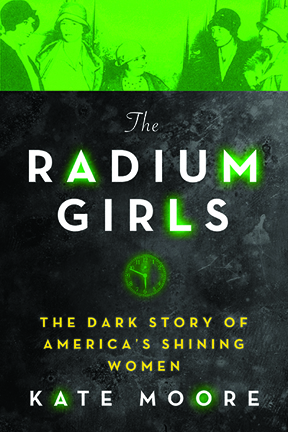 The legacy of the Radium Girls lives on through the ripples that their deaths created in labor law and our scientific understanding of the effects of radioactivity.
A miracle cure
A slow killer
Not all that glitters
Radium jaw
An enduring legacy


Linus Pauling another great critic of nuclear weapons, winner of Nobel Peace Prize 1962
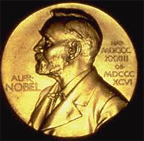 the life of Linus Pauling
QUOTE:
Pauling was one of the founders of molecular biology in the true sense of the term. For these achievements he was awarded the 1954 Nobel Prize in chemistry.
But Pauling was famous not only in the world of science. In the second half of his life he devoted his time and energy mainly to questions of health and the necessity to eliminate the possibility of war in the nuclear age. His active opposition to nuclear testing brought him political persecution in his own country, but he was finally influential in bringing about the 1963 international treaty banning atmospheric tests. With the award of the 1962 Nobel Peace Prize, Pauling became the first person to win two unshared Nobel Prizes (Marie Curie won one and shared another with her husband).
QUOTE:
In March 1954, following the Bikini Atoll explosion of a “dirty” thermonuclear superbomb, Pauling was in the news again when he began to call attention to the worldwide danger of radioactive fallout in the atmosphere. In the summer his renewed application for a passport was again turned down, but in November, when his Nobel Prize was announced, the State Department found itself in a public relations dilemma.
The fuss created by Pauling’s absence in London in 1952 would be nothing compared with the international outcry that could be imagined if Pauling were refused permission to travel to attend the Nobel Prize ceremony. So Pauling went to Stockholm, where he was a tremendous success, and followed this by visits to Israel, India, Thailand, and Japan. Everywhere—outside his own country—he was welcomed with enthusiasm, not only for his scientific accomplishments but even more for his political stance.
In the United States, too, the public was becoming increasingly concerned about radioactive fallout, not only from American tests but also from ever more powerful Soviet nuclear explosions. Increasing levels of strontium 90 and carbon 14 made newspaper headlines. Pauling claimed that the increased level of radioactive isotopes in the atmosphere was a danger not only to the living but also to future generations.
The spokesmen on the Atomic Energy Commission countered that, although radiation might be harmful, it was not harmful in the doses produced by the tests and that Pauling vastly exaggerated the dangers. In fact, all the estimates were tentative at best, but since the Atomic Energy Commission was responsible both for developing nuclear weapons and for monitoring the associated health hazards, its estimates were probably no more objective that those who demanded a stop to the tests. Andrei Sakharov (1990) estimated that every one-megaton test cost about 10,000 human lives…..
In 1960 the Senate Internal Security Subcommittee (SISS) headed by Senator Thomas Dodd issued a subpoena to Pauling to answer questions about Communist infiltration of the campaign against nuclear testing. At Pauling’s request the hearings were open and they soon turned into a public relations fiasco for Dodd and the SISS. This was partly because the members of the SISS had not done their homework and partly because it gave Pauling the excuse to lecture them about elementary civic rights and duties: “The circulation of petitions is an important part of our democratic process. If it is abolished or inhibited, it would be a step towards a police state.”
By this time public opinion was mostly on Pauling’s side, but the whole affair must have been experienced by him as an emotional strain—and a tremendous waste of his time and energy…..The treaty went into effect on October 10 and the following day Pauling was awarded the Nobel Peace Prize for 1962….. ”
http://www.nasonline.org/…/bi…/memoir-pdfs/pauling-linus.pdf1962
Authorities always knew that nuclear fallout shelters would not work
 Nuclear Fallout Shelters Were Never Going to Work, History // OCTOBER 16, 2017 “…….[IN 1961] the federal government was devising a way for 50 million Americans to survive a nuclear war by scurrying to the nearest basement. The National Fallout Shelter Survey and Marking Program had begun……….
With North Korea’s intercontinental ballistic missiles, or ICBMs, pointed west and President Trump’s atomic sabre-rattling, fears of nuclear war have crept slowly back into the public consciousness. If the headlines rekindle some of the old unease about air-raid sirens and mushroom clouds, they’re also an occasion to consider a singular relic of the period that, oddly enough, never left us—the fallout-shelter sign.
Dented and faded now, the Kennedy-era signs still cling to the sides of buildings across the country. “They’re an enduring symbol of the Cold War,” says popular-culture historian Bill Geerhart, who since 1999 has maintained CONELRAD.com, a meticulous chronicling of the duck-and-cover era. “They outlasted everything, including the Berlin Wall. They’re tangible artifacts of that era.” And though their original purpose has vanished, the signs still have much to say. They are the products of an ill-conceived program, designed to appease a population with little faith in that program even working.
Kennedy was privately skeptical about the value of a public shelter program……. While fallout shelters would do nothing to safeguard people from an actual bomb, they would, in the words of JFK’s civil-defense chief Steuart L. Pittman, give “our presently unprotected population some form of protection.”……..
In fact, the untenability of the shelters was public knowledge before they had even opened. A November 1961 story on the front page of The Washington Post bemoaned that most of the designated shelters would be little more than “cold, unpleasant cellar space, with bad ventilation and even worse sanitation.”
Conditions were a serious problem, but location was a bigger one. Two-thirds of the fallout shelters in the U.S. were in “risk areas”—neighborhoods so close to strike targets that they’d likely never survive an attack in the first place. In New York, for example, most of the government shelters could be found in Manhattan and Brooklyn—despite the fact that a 20-megaton hydrogen bomb detonated over Midtown would leave a crater 20 stories deep and drive a firestorm all the way to the center of Long Island. Even out there, Life magazine said, occupants of a fallout shelter “might be barbequed.”……..
Anyone who read the newspapers understood not just that an inbound ICBM would leave them only 15 minutes, if that long, to get to a fallout shelter—but also that few structures in the city would survive a strike anyway. …….
Looking back on the civil-defense program in 1976, The New York Times observed: “the only reminders of fallout shelters [now] are the yellow-and-black signs placed outside buildings.”
That’s where thousands remain to this day—eerie reminders of a tense past that, as recent headlines remind us, feels unwantedly familiar. “They couldn’t have come up with a more ominous symbol,” reflected Eric Green, keeper of the Civil Defense Museum website, whose personal collection of fallout-shelter artifacts includes over 140 signs. “That’s the most ominous looking sign—the black and yellow and those triangles. It looked like exactly what it meant: This is the end.” http://www.history.com/news/nuclear-fallout-shelters-were-never-going-to-work
Are the remains of an experimental reactor buried on the Niagara Falls storage site?
A wide range of radioactive material was dumped cavalierly on site during the Second World War and the decades that followed: plutonium, uranium, thorium, cesium, polonium, strontium, and other dangerous materials. On site today, buried with that steel ball, is what is assumed to be irradiated graphite and almost 4,000 tons of radioactive radium-226, the largest repository in the western hemisphere, representing a staggering quantity of radiation.
—isotopes of plutonium, uranium, cesium, polonium, and other elements that are produced only inside nuclear reactors and by nuclear explosions—
It was known as the Radiological Warfare, or RW, program, and under its auspices scientists studied what materials could best be weaponized, what health consequences they would have on an enemy,
 The Bomb That Fell On Niagara: The Sphere Artvoice Weekly Edition » Issue v7n39 (09/24/2008), by Geoff Kelly & Louis Ricciuti
Are the remains of an experimental reactor buried on the Niagara Falls storage site?
This is going to seem complicated and take a long way to get where it’s going. So here’s the gist, right upfront: Possibly, in Lewiston, are buried the remnants of an experimental nuclear reactor dating from the 1940s. This reactor would have been part of a secret program to weaponize poisonous materials—a program with roots in the study of poison gases in the First World War and whose culmination is found today in the use of depleted uranium munitions around the world.
Sure, it sounds like a plot inspired by Dr. Strangelove. But read on.
Amid the radioactive slurry and scrap interred in the 10-acre interim containment facility at the Niagara Falls Storage Site in Lewiston is a curiosity: a hollow industrial steel ball, 38 feet in diameter.
You won’t find that house-sized steel ball on any waste materials manifest, at least not on any manifest released to the public by the US Army Corp of Engineers, which is the site’s caretaker, or the US Department of Energy, which owns the site and the hazardous waste buried there.
The ball exists in aerial photographs taken of the site in the mid 1940s, however, and it appears to have been rediscovered in a 2002 electric resistivity underground imaging study performed by defense contracting giant SAIC.
In those aerial photos, the ball sits some distance from the main cluster of buildings; the nearest structure is a concrete silo, which eventually became a receptacle for high-energy radium wastes, a legacy of local industry’s central role in the Manhattan Project and the Atomic Energy Commission, which produced the first atomic bombs.
The Army Corps say there is no documentary record of the ball having been removed from the site. And the 2002 electric imaging scans suggest that a steel sphere, 38 feet in diameter, just like the one in the photos, is buried about a quarter mile from the ball’s original location, on the developed portion of a vast, former federal reservation called the Lake Ontario Ordnance Works. The LOOW came online officially in 1942, a 7,500-acre facility cobbled together from farm fields by the Department of War. Its initial use, according to the site’s official history, was a TNT factory. That factory closed, however, after nine months, at the height of the Second World War. The factory and all its infrastructure—miles of massive pipes, a water and power grid sufficient to sustain a city of 100,000 people, dozens of industrial buildings—were declared surplus.
The LOOW’s actual uses have been a mystery, whose plots and subplots have been revealed slowly and grudgingly by an unforthcoming federal government. ……..
Various sectors of the vast compound became dumping grounds for toxic radiological and chemical waste produced in Niagara Falls factories, as well as laboratories and reactors nationwide, working first on the atom bomb project and later on other Atomic Energy Commission and defense- and intelligence-related projects. A wide range of radioactive material was dumped cavalierly on site during the Second World War and the decades that followed: plutonium, uranium, thorium, cesium, polonium, strontium, and other dangerous materials. On site today, buried with that steel ball, is what is assumed to be irradiated graphite and almost 4,000 tons of radioactive radium-226, the largest repository in the western hemisphere, representing a staggering quantity of radiation.
Beginning in 1980, these wastes—originally dumped in open pools, seeping out of corroded barrels, or just piled on open ground—were consolidated by the DOE into a temporary containment structure on the 119-acre Niagara Falls Storage Site.
The existence on the LOOW of particularly exotic transuranics (that is, above uranium on the periodic table) and fission materials—isotopes of plutonium, uranium, cesium, polonium, and other elements that are produced only inside nuclear reactors and by nuclear explosions—has begged an explanation for decades. The Army Corps says that these transuranics and fission materials arrived at the LOOW with waste from the Navy’s Knolls Atomic Power Laboratory near Schenectady. But the waste from Knolls doesn’t explain all the transuranics and fission materials found on the LOOW, according to some experts, and it doesn’t explain how widespread and how much.
That steel sphere buried among this collection of radiological waste suggests another, simpler explanation: Could that steel ball—a Hortonsphere, named for the inventor of the process of its fabrication—been a component in an early model of an experimental ball-and-pile reactor? One in which exotic materials were created or irradiated, all in the service of a federal weapons program that sought to find new and lethal applications of the materials created in Niagara Falls for the Manhattan Project and beyond?
“I’d have to say yes,” says Tedd Weyman, of the Uranium Medical Research Centre, based in Toronto.
Occam’s Razor
Weyman is a physicist and his group, UMRC, studies the effects of uranium, transuranium elements, and radionuclides produced by the process of uranium decay and fission. UMRC is especially interested in the health effects of depleted uranium, whether it enters the environment as a result of munitions use or as waste.
Weyman examined the aerial photographs of the ball and silo, the list of transuranics and fission materials found on site, and the electric imaging scan that seemed to show that same ball from the photos buried alongside radioactive waste. He reviewed documents that describe the history of the LOOW site and of Niagara Falls industry over the past 60 or so years: the metals and chemicals and devices created in nearby factories, the experimental programs undertaken by defense and intelligence agencies beginning in the 1940s. He considered the size of the Hortonsphere, which he said is consistent with a ball reactor, and its placement in relation to the silo, which is consistent with the pile in a ball and pile reactor—that is, the source of the reactor’s “fuel” and critical reactions.
Weyman then listened to the explanations the Army Corps offered for the ball and the transuranics and fission products: that the ball was used to store anhydrous ammonia used in making TNT and the transuranics and fission products came from Knolls. He concluded that an on-site reactor was a far simpler explanation.
“They’re fission products,” Weyman says of the residues found on site…..
On the subject of the history of the LOOW site and the environmental dangers it poses, the Army Corps has been less than reliable when discussing the documentary evidence. In 2000, for example, when offered evidence that plutonium-tainted waste from medical experiments conducted at the University of Rochester had been buried on the LOOW site, the Corps denied such evidence existed. Eventually, they allowed both that the evidence existed and that the plutonium-tainted waste had been found on site…….
Occam’s Razor is the principle that the simplest explanation is most often the correct one. There’s that anomaly, exactly the diameter of the ball in question, which is exactly the size and manufacture of a ball reactor vessel. It is interred alongside radioactive waste. It originally sat near a silo, which once stored radioactive waste; a 1944 photo of the site looks like a photo of a ball and pile reactor of that era. And there are transuranics and fission materials buried nearby, as well as irradiated graphite, whose nature, quantity, and location aren’t completely explained by the Knolls hypothesis.
“If it quacks, is it not a duck?” Weyman says. “It’s quacking pretty loud.”……….
It was known as the Radiological Warfare, or RW, program, and under its auspices scientists studied what materials could best be weaponized, what health consequences they would have on an enemy, how best to deliver and disperse radioactive materials to a battle zone, and how much to use. This research was more secretive, but here too the expertise of local industries proved valuable. In a brochure from the postwar era, Bell Aircraft (later Bell Aerospace) bragged of its research in area weapons: that is, devices that disperse materials across a battlefield. Niagara Sprayer (a.k.a. FMC, the Middleport company that manufactured Agent Orange) created specialized compounds and nozzles for spraying agricultural metals, powders, and insecticides.
And over at the LOOW site, there was a mammoth federal reserve on which exotic radioactive wastes were accumulating.
Bob Nichols, the San Francisco-based writer who came to the same conculsion as Weyman about the ball buried on the NFSS, specializes in the history of this second track of research. He draws a straight line that connects the radiological warfare program to American research into poison gases, such as mustard gas and chlorine gas (both of which were produced in Niagara County), during the First World War; that line passes through the Manhattan Project along the way, and continues to the present-day use of depleted uranium munitions, which release a cloud of poisonous ceramicized uranium particles as a form of gas when they vaporize on impact.
Nichols explains that the first track—the building of more and better nuclear weapons—created vast stores of radiological waste materials. “The question back then was what on earth to do with it,” he said………
Whatever took place on the former LOOW site in the first decades of the Cold War may have evolved and—like so many local industries—moved away. But its legacy is in the dirt, air, and water. It’s interred under that clay cap. It’s in the region’s higher-than-expected rates of cancer, diabetes, and other illnesses. History should matter to the Corps as much as it matters to those who live in its aftermath.
For more documents and photographs related to the article, visit AV Daily at Artvoice.com. http://artvoice.com/issues/v7n39/the_sphere.html
Urals nuclear disaster 1957
On 29 September 1957 at 16 o’clock on the territory of the chemical plant “Mayak”, which was in the closed city of Chelyabinsk-40 (now Ozersk), was the first in the USSR radiation accident — an explosion of capacity to store radioactive waste. The catastrophe was called the Kyshtym accident — the name closest to Chelyabinsk-40 by city.
The blast occurred in containers, of a capacity of 300 m? because of the failure of the cooling system. In the tank contained a total of about 80 m? highly radioactive nuclear waste. At the time of construction in 1950-ies the strength of the structure is not in doubt. She was in the pit, in a concrete shirt thickness meter.
Cover the container weighed 560 tons, over it was laid a two-meter layer of earth. However, even this failed to contain the explosion.
According to another, unofficial version, the accident occurred due to human error of the plant that in the tank-evaporator with hot plutonium nitrate solution by mistake added a solution of plutonium oxalate. The oxidation of oxalate nitrate allocating a large amount of energy, leading to overheating and explosion of the tank.
During the explosion in the atmosphere were about 20 million curies of radioactive substances, some of which rose to a height of up to two miles, and formed an aerosol cloud.
Over the next 11-12 hours of radioactive fallout on the territory with a length of 300-350 km on northeast from the explosion.
In the area of radioactive contamination got 23 thousand km2 with a population of 270 thousand people in 217 settlements of the Chelyabinsk, Sverdlovsk and Tyumen regions. During the liquidation of consequences of the accident were required to relocate 23 villages with a population of 10-12 thousand a man, all the buildings, property and livestock were destroyed.
Liquidators were hundreds of thousands of soldiers and civilians
Only in the first ten days the number of deaths from radiation have gone on hundreds, during the works in varying degrees, suffered 250 thousand liquidators.
According to the international scale of nuclear testing accident was estimated at six points. For comparison, the seventh level, the maximum was rated accidents at Chernobyl and Fukushima-1.
To avoid scattering of radiation by government decision was established the sanitary-protective zone in which economic activity was banned. In 1968 this territory was formed of the Eastern Ural state reserve.
It is forbidden to visit — the level of radioactivity is still too dangerous for humans.
October 6, 1957 in the newspaper “Chelyabinsk worker” appeared devoted to his note, in which, however, about the accident not a word was said:
On Sunday night… many residents of Chelyabinsk watched the special glow of a starry sky. It’s pretty rare in our latitudes, the glow had all the signs of the Aurora. Intense red, time moves to slightly pink and light blue glow first covered a large part of the South-Western and North-Eastern surface of the firmament. About 11 o’clock it was possible to observe in the North-Western direction… In the sky appeared a relatively large colored area and the quiet lanes that had at the last stage of lights North-South direction. The study of the nature of the Aurora, has begun Lomonosov continues in our days. Modern science has confirmed the basic idea of the University, that the Aurora occurs in the upper layers of the atmosphere by electrical discharges of the Aurora…… can be observed in the future at the latitudes of the southern Urals”.
Kyshtym accident has long been a state secret. For the first time openly about her was said in a shot at the turn of the 1980s and 1990s, the film Director and biologist Elena Sakanyan, dedicated to the fate of Soviet genetics and biologist Nikolai Timofeev-Ressovsky.
The films were shown on television only after Sakanyan directly asked about the show to Boris Yeltsin.
But in the foreign press leaked the information in April 1958. For the first time about the accident said one of the Copenhagen Newspapers. Subsequently, information about the accident appeared in the report of the National laboratory, USA, biologist Zhores Medvedev dedicated incident book entitled “Nuclear disaster in the Urals”, published in the US, an analysis of the causes of the accident and its causes held by a group of American scientists from the atomic center at oak ridge.
“About the explosion at the “Mayak” for long periods of time, the public knew almost nothing. Later, for some reason, the accident was replicated in the media as the “Kyshtym accident”.
In Kyshtym on this occasion, even recently, was the obelisk, although the city to this event is irrelevant.
And the East-Ural radioactive trail, formed after 1957, did not affect Cistema and its residents,” — said in an interview in 2009, one of its liquidators.
Only the “Lighthouse” there were more than 30 incidents of radioactive emissions and human victims.
1 This Month

of the week – Shut Down Drone Warfare!


Tell the Ukrainian Government to Drop Prosecution of Peace Activist Yurii Sheliazhenko

Petition to revoke the licensing of the Near Surface Nuclear Disposal Facility (NSDF) at Chalk River. https://www.ourcommons.ca/petitions/en/Petition/Details?Petition=e-7247
To see nuclear-related stories in greater depth and intensity – go to https://nuclearinformation.wordpress.com
-
Archives
- April 2026 (114)
- March 2026 (251)
- February 2026 (268)
- January 2026 (308)
- December 2025 (358)
- November 2025 (359)
- October 2025 (376)
- September 2025 (257)
- August 2025 (319)
- July 2025 (230)
- June 2025 (348)
- May 2025 (261)
-
Categories
- 1
- 1 NUCLEAR ISSUES
- business and costs
- climate change
- culture and arts
- ENERGY
- environment
- health
- history
- indigenous issues
- Legal
- marketing of nuclear
- media
- opposition to nuclear
- PERSONAL STORIES
- politics
- politics international
- Religion and ethics
- safety
- secrets,lies and civil liberties
- spinbuster
- technology
- Uranium
- wastes
- weapons and war
- Women
- 2 WORLD
- ACTION
- AFRICA
- Atrocities
- AUSTRALIA
- Christina's notes
- Christina's themes
- culture and arts
- Events
- Fuk 2022
- Fuk 2023
- Fukushima 2017
- Fukushima 2018
- fukushima 2019
- Fukushima 2020
- Fukushima 2021
- general
- global warming
- Humour (God we need it)
- Nuclear
- RARE EARTHS
- Reference
- resources – print
- Resources -audiovicual
- Weekly Newsletter
- World
- World Nuclear
- YouTube
-
RSS
Entries RSS
Comments RSS
 nuclear-news