Untrue: claims that the nuclear bombing of Hiroshima and Nagasaki ended World War 2
 Did the Atomic Bomb End the Pacific War?
The use of the atomic weapon must be seen as a continuation and a start: the  nuclear continuation of the conventional terror bombing of Japanese civilians, and the start of a new “cold war.” Portside, August 2, 2020 Paul Ham
Many historians and most lay people still
believe the atomic destruction of Hiroshima and Nagasaki ended the Pacific War.
They claim with varying intensity that the Japanese regime surrendered unconditionally in response to the nuclear attack; that the bomb saved a million or more Amercian servicemen; that Hiroshima and Nagasaki were chosen chiefly for their value as military targets; and that the use of the weapon was, according to a post-war propaganda campaign aimed at soothing American consciences, ‘our least abhorrent choice’.
The trouble is, not one of these claims is true.
That such denial of the facts has been allowed to persist for 75 years, that so many people believe this ‘revisionist’ line – revisionist because it was concocted after the war as a post-facto justification for the bomb – demonstrates the power of a government-sponsored rewrite of history over the minds of academics, journalists, citizens and presidents.
The uranium bomb dropped on Hiroshima, code-named ‘Little Boy’, landed on the city center, exploding above the main hospital and wiping out dozens of schools, killing 75,000 people, including tens of thousands of school children.
‘Fat Man’, the plutonium bomb used on Nagasaki, incinerated the largest Catholic community in Japan, obliterating the country’s biggest cathedral along with a residential district packed with schools and hospitals. Its missed its original target, the city center.
Zealous apologists for the bomb will have started picking holes: Hiroshima held troops? Yes, a few enfeebled battalions. Hiroshima had military factories? Most were on the outskirts of town, well clear of the bomb. Continue reading
Uranprojekt -The Nazi Nuclear Program
|
Uranprojekt -The Nazi Nuclear Program , Heritage Daily, 17 Nov 20,
Uranprojekt, also known informally as the Uranverein (meaning Uranium Club) was a secret German project, to research and develop atomic weapons and energy during the Second World War.Prior to the outbreak of hostilities, Germany was at the forefront of nuclear fission, with the discovery of the first nuclear fission of heavy elements by Otto Hahn (referred to as the father of nuclear chemistry), and his assistant Fritz Strassmann from the Kaiser Wilhelm Institute in 1938. This was shortly followed by Lise Meitner, an Austrian-Swedish physicist who theorised, and then proved in 1939 that the uranium nucleus had been split, giving the name “fission”. In light of the recent discoveries, Germany was encouraged by a paper submitted by experimental physicist Wilhelm Hanle, which proposed the use of uranium fission in a reactor. This led to a small team being tasked to study the potential military applications of nuclear energy. The Germans then established a new research project on the 1st September 1939 (the same day generally considered to be the start of WW2 with the invasion of Poland by Germany), under the auspices of the Wehrmacht’s Heereswaffenamt (HWA), the German Army Weapons Agency responsible for researching weaponry, ammunition, and equipment. The USA also became aware of the German program that same year, when Albert Einstein wrote to President Roosevelt, warning of the German threat in creating a “nuclear chain reaction in a large mass of uranium, by which vast amounts of power and large quantities of new radium-like elements would be generated.” It was quickly realised by the HWA that the project would be unable to make a decisive contribution to ending the war in the near term, so authority was placed under the Reichsforschungsrat (RFR, Reich Research Council), maintaining its kriegswichtig (war importance) designation. The project was then expanded into three main areas of research, the Uranmaschine to investigate creating a nuclear reactor, the production of uranium and heavy water, and the separation of uranium isotopes. Research struggled with the German invasion of the Soviet Union in 1941 (Operation Barbarossa), as the majority of Germany‘s scientific minds were turned to focus on developing other new technologies that could have a more immediate impact on the war effort (namely rocket technology and jet aircraft). The project also suffered from a drained talent pool. Many top German scientists and nuclear physicists (some of which were Jewish or with Jewish heritage) had fled the country, and there was a lack of understanding and investment from the regime in the pure scientific application of the research (in comparison, the Manhattan Project consumed some $2 billion (1945) in government funds, compared to a mere 8 million reichsmarks $2 million (1945) on the Uranprojekt). This resulted in the Germans never achieving a successful chain reaction, nor did they manage to develop a method of enriching uranium (having never seriously considered plutonium as a viable substitute). In 1942, a conference was initiated by Albert Speer as head of the “Reich Ministry for Armament and Ammunition” (RMBM: Reichsministerium für Bewaffnung und Munition) to discuss the continuation of research, and the prospects for developing nuclear weapons……. https://www.heritagedaily.com/2020/11/uranprojekt-the-nazi-nuclear-program/136152 |
|
The USA devised an apocalyptic nuclear weapon – the Supersonic Low Altitude Missile or SLAM
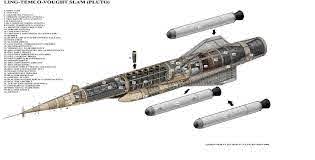
PROJECT PLUTO: THE CRAZIEST NUCLEAR WEAPON IN HISTORY SOFREP, by Sandboxx 15 Nov 20, “…………. Although the destructive force of the atom bombs dropped on Hiroshima and Nagasaki had been so monstrous that they changed the geopolitical landscape of the world forever, both the U.S. and Soviet Union immediately set about developing newer, even more powerful thermonuclear weapons. Other programs sought new and dynamic delivery methods for these powerful nukes, ranging from ballistic missiles to unguided bombs.Project Pluto and the SLAM Missile
One such effort under the supervision of the U.S. Air Force was a weapon dubbed the Supersonic Low Altitude Missile or SLAM (not to be mistaken for the later AGM-84E Standoff Land Attack Missile). The SLAM missile program was to utilize a ramjet nuclear propulsion system being developed under the name Project Pluto. Today, Russia is developing the 9M730 Burevestnik, or Skyfall missile, to leverage the same nuclear propulsion concept.
As Russian President Vladimir Putin recently pointed out, nuclear propulsion offers practically endless range, and estimates at the time suggested the American SLAM Missile would likely fly for 113,000 miles or more before its fuel was expended. Based on those figures, the missile could fly around the entire globe at the equator at least four and a half times without breaking a sweat.
The unshielded nuclear reactor powering the missile would practically rain radiation onto the ground as it flew, offering the first of at least three separate means of destruction the SLAM missile provided. In order to more effectively leverage the unending range of the nuclear ramjet, the SLAM missile was designed to literally drop hydrogen bombs on targets as it flew. Finally, with its bevy of bombs expended, the SLAM missile would fly itself into one final target, detonating its own thermonuclear warhead as it did. That final strike could feasibly be days or even weeks after the missile was first launched.
Over time, the SLAM missile came to be known as Pluto to many who worked on it, due to the missile’s development through the project with the same name.
The onboard nuclear reactor produced more than 500-megawatts of power and operated at a scorching 2,500 degrees — hot enough to compromise the structural integrity of metal alloys designed specifically to withstand high amounts of heat. Ultimately, the decision was made to forgo metal internal parts in favor of specially developed ceramics sourced from the Coors Porcelain Company, based in Colorado.
The downside to ramjet propulsion is that it can only function when traveling at high speeds. In order to reach those speeds, the SLAM would be carried aloft and accelerated by rocket boosters until the missile was moving fast enough for the nuclear ramjet to engage. Once the nuclear ramjet system was operating, the missile could remain aloft practically indefinitely, which would allow it to engage multiple targets and even avoid intercept.
The nuclear-powered ramjet was so loud that the missile’s designers theorized that the shock wave of the missile flying overhead on its own would likely kill anyone in its path, and if not, the gamma and neutron radiation from the unshielded reactor sputtering fission fragments out the back probably would. While this effectively made the missile’s engine a weapon in its own right, it also made flying the SLAM over friendly territory impossible.
While the doctrine of Mutually Assured Destruction has since made the launch of just one nuclear weapon the start of a cascade that could feasibly end life on Earth as we know it, Project Pluto’s SLAM Missile was practically apocalyptic in its own right. The nuclear powerplant that would grant the missile effectively unlimited range would also potentially kill anyone it passed over, but the real destructive power of the SLAM missile came from its payload.
Unlike most cruise missiles, which are designed with a propulsion system meant to carry a warhead to its target, Project Pluto’s SLAM carried not only a nuclear warhead, but 16 additional hydrogen bombs that it could drop along its path to the final target. Some even suggested flying the missile in a zig-zagging course across the Soviet Union, irradiating massive swaths of territory and delivering it’s 16 hydrogen bombs to different targets around the country.
Doing so would not only offer the ability to engage multiple targets, but would almost certainly also leave the Soviet populace in a state of terror. A low-flying missile spewing radiation as it passed over towns, shattering windows and deafening bystanders as it delivered nuclear hellfire to targets spanning the massive Soviet Union, would likely have far-reaching effects on morale.
How Do You Test an Apocalyptic Weapon?
Project Pluto’s nuclear propulsion system made testing the platform a difficult enterprise. Once the nuclear reactor onboard was engaged, it would continue to function until it hit its target or expended all of its fuel. Any territory the weapon passed over during flight would be exposed to dangerous levels of radiation, limiting the ways and the places in which the weapon’s engine could even be tested.
On May 14, 1961, engineers powered up the Project Pluto propulsion system on a train car for just a few seconds, and a week later a second test saw the system run for a full five minutes. The engine produced 513 megawatts of power, which equated to around 35,000 pounds of thrust — 6,000 pounds more than an F-16’s Pratt & Whitney F100-PW-229 afterburning turbofan engine with its afterburner engaged.
However, those engine tests were the only large scale tests Project Pluto would ultimately see, in part, because a fully assembled SLAM missile would irradiate so much territory that it was difficult to imagine any safe way of actually testing it.
A weapon That’s Too Destructive to Use
Ultimately, Project Pluto and its SLAM missile were canceled before ever leaving the ground. The cancellation came for a litany of reasons, including the development of intercontinental ballistic missiles and the introduction of global strike heavy payload bombers like the B-52 Stratofortress. There were, however, some other considerations that led to the program’s downfall.
Because the SLAM would irradiate, destroy, or deafen anyone and anything it flew over, the missile could not be launched from U.S. soil or be allowed to fly over any territory other than its target nation. That meant the missile could really only be used from just over the Soviet border, whereas ICBMs could be launched from the American midwest and reach their targets in the Soviet Union without trouble.
There was also a pressing concern that developing such a terrible weapon would likely motivate the Soviet Union to respond in kind. Each time the United States unveiled a new weapon or strategic capability, the Soviet Union saw to it that they could match and deter that development. As a result, it stood to reason that America’s nuclear-spewing apocalypse missile would prompt the Soviets to build their own if one entered into service.
Project Pluto and its SLAM missile program were canceled on July 1, 1964 https://sofrep.com/news/project-pluto-the-craziest-nuclear-weapon-in-history/
The tragic nuclear history of the Democratic Republic of the Congo
Six Million dead, The Congo Holocaust has its origins in minerals plunder and colonialism https://wordpress.com/read/feeds/72759838/posts/3011373848, By Linda Pentz Gunter, 8 Nov 20,
When you’ve lost family members to the Nazi death camps, it’s a pain that never goes away. Six of my relatives were killed there, four more shot in Polish ghettos and at Forlì. They died long before I was born and were people I never knew. But we have their photographs. Their pain stares out from those images, a perpetual ache.
But what use is endless mourning if no lessons are learned? The most important one surely is that no such Holocaust must ever be allowed to happen again? And yet it has. To almost universal silence. No one speaks of today’s six million dead. They lie beneath the mineral-rich soil of the Democratic Republic of Congo (DRC), invisible and unmourned by the world beyond their country’s borders.
“The Holocaust continues in DRC with the complicity of the international community,” Rodrigue Muganwa Lubulu wrote to me in an email exchange. “Women and girls are raped every day and the dead are counted by tens each day.” He is the program director for CRISPAL Afrique and gave a zoom talk recently hosted by ICAN Germany.
The tragedy of the DRC, the second largest country in Africa, began with the discovery in 1915 of the Shinkolobwe uranium deposit, the richest ever discovered at the time. Its plunder, from 1921 until its closure in 2004, “has been a curse for the powerless community” around the mine, said Lubulu, “because not only have they been forced to abandon their lands, houses and fields in favor of uranium mining, but also all the men were forced to dig out those extremely radioactive materials without protective equipment.”
The cancers and other illnesses that killed those uranium workers are still harming the community today, Lubulu says, even though the mine is now shut down.
The DRC was first colonized by Belgium in 1908 and known as the Belgian Congo until it gained independence in 1960. (It was known as Zaire between 1971 and 1997.) It rapidly became a country of great interest, especially to the United State and the then Soviet Union, engaged in a growing Cold War arms race. Then, as now, the country promised riches to its White pillagers. In the Eastern part of the country, wrote Armin Rosen, in a June 26, 2013 article in The Atlantic, “just feet beneath the surface of the earth are enough minerals to keep the global technology and defense industries humming.”
But during World War II, the uranium mined from Shinkolobwe went to the American Manhattan Project. “More than 70 percent of the uranium in the Hiroshima bomb came from Shinkolobwe,” says Lubulu, whose organization is holding workshops and other events in an effort to persuade the government of the DNC to ratify the Treaty on the Prohibition of Nuclear Weapons (TPNW).
He is haunted by what might have been if the “ore of death” as he calls uranium, had instead been left where it belongs; in the ground. “Without the uranium of Shinkolobwe, the 5th of August 1945 would have been a perfect and productive day in Hiroshima,” he said during his ICAN presentation.
This is supported by a recollection from the Manhattan Project’s Colonel Ken Nichols, who wrote: “Without Sengier’s foresight in stockpiling ore in the United States and aboveground in Africa, we simply would not have had the amounts of uranium needed to justify building the large separation plants and the plutonium reactors.” Edgar Sengier was the then director of Union Minière du Haut Katanga, and had stockpiled 1,200 tonnes of uranium ore in a warehouse in New York. This ore and an additional 3,000 tonnes of ore stored above-ground at the mine was purchased by Nichols for use in the Manhattan Project.
That connection between his homeland and Hiroshima, and the haunting reminders of its outcome so movingly expressed by Japan’s Hibakusha, as the atomic bomb survivors are known, is what spurs Lubulu and CRISPAL to urge on the ratification and implementation of the TPNW.
“You cannot separate nuclear weapons from uranium,” Lubulu said. “Once you have one, you get the other. Once you dig it out, it becomes a monster and you can’t control it anymore.”
Tragically, that monster could be unleashed again at Shinkolobwe. Both France and China are interested in mineral rights there. CRISPAL needs to move fast to educate people about these renewed dangers. But they face dangers of their own in doing so.
Since 1997, when internal and cross-border strife took hold in the DRC, at least six million people have died. Trying to leaflet or hold meetings in such communities, especially if it is in opposition to uranium mining, is fraught with danger. No one involved has forgotten the brutal treatment of Congolese anti-uranium mining activist, Golden Misabiko, who was arrested, imprisoned twice, poisoned by his own government in an apparent, and mercifully unsuccessful, assassination attempt, separated from his family and forced into exile.
Despite this, Lubulu believes that, above all, love will find a way. “There is no door that enough love cannot open,” he said in concluding his presentation. Hopefully, the rest of the world will start sending some love in Congo’s direction.
315 nuclear bombs and ongoing suffering: the shameful history of nuclear testing in Australia and the Pacific
315 nuclear bombs and ongoing suffering: the shameful history of nuclear testing in Australia and the Pacific, https://theconversation.com/315-nuclear-bombs-and-ongoing-suffering-the-shameful-history-of-nuclear-testing-in-australia-and-the-pacific-148909, Tilman Ruff, Associate Professor, Education and Learning Unit, Nossal Institute for Global Health, School of Population and Global Health, University of Melbourne, Dimity Hawkins, PhD Candidate, Swinburne University of Technology
November 3, 2020 The Treaty on the Prohibition of Nuclear Weapons received its 50th ratification on October 24, and will therefore come into force in January 2021. A historic development, this new international law will ban the possession, development, testing, use and threat of use of nuclear weapons.Unfortunately the nuclear powers — the United Kingdom, France, the United States, Russia, China, Israel, India, Pakistan and North Korea — haven’t signed on to the treaty. As such, they are not immediately obliged to help victims and remediate contaminated environments, but others party to the treaty do have these obligations. The shifting norms around this will hopefully put ongoing pressure on nuclear testing countries to open records and to cooperate with accountability measures.
For the people of the Pacific region, particularly those who bore the brunt of nuclear weapons testing during the 20th century, it will bring a new opportunity for their voices to be heard on the long-term costs of nuclear violence. The treaty is the first to enshrine enduring commitments to addressing their needs.
From 1946, around 315 nuclear tests were carried out in the Pacific by the US, Britain and France. These nations’ largest ever nuclear tests took place on colonised lands and oceans, from Australia to the Marshall Islands, Kiribati to French Polynesia.
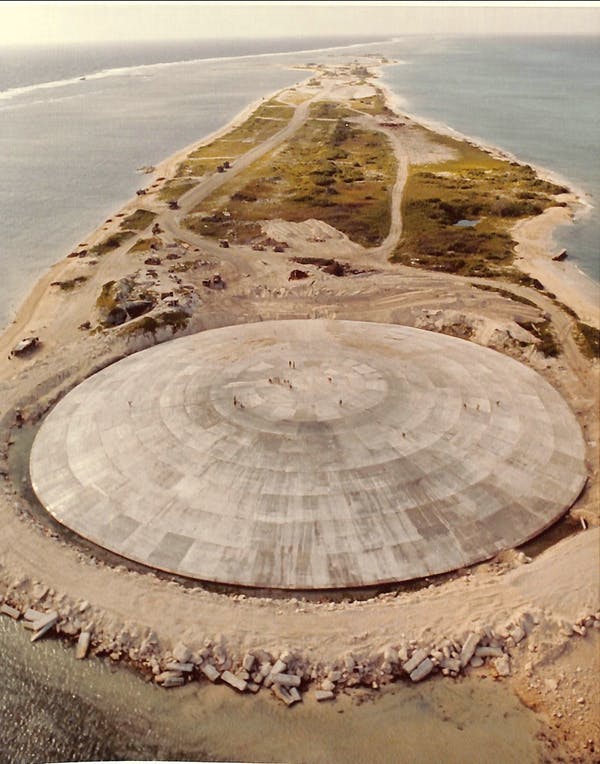
The impacts of these tests are still being felt today.
All nuclear tests cause harm
Studies of nuclear test workers and exposed nearby communities around the world consistently show adverse health effects, especially increased risks of cancer.
The total number of global cancer deaths as a result of atmospheric nuclear test explosions has been estimated at between 2 million and 2.4 million, even though these studies used radiation risk estimates that are now dated and likely underestimated the risk.
The number of additional non-fatal cancer cases caused by test explosions is similar. As confirmed in a large recent study of nuclear industry workers in France, the UK and US, the numbers of radiation-related deaths due to other diseases, such as heart attacks and strokes, is also likely to be similar.
Britain conducted 12 nuclear test explosions in Australia between 1952 and 1957, and hundreds of minor trials of radioactive and toxic materials for bomb development up to 1963. These caused untold health problems for local Aboriginal people who were at the highest risk of radiation. Many of them were not properly evacuated, and some were not informed at all.
We may never know the full impact of these explosions because in many cases, as the Royal Commission report on British Nuclear Tests in Australia found in 1985: “the resources allocated for Aboriginal welfare and safety were ludicrous, amounting to nothing more than a token gesture”. But we can listen to the survivors.
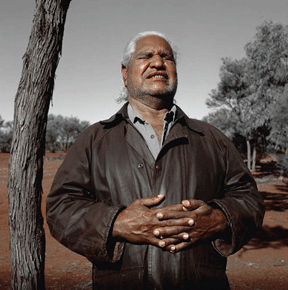 The late Yami Lester directly experienced the impacts of nuclear weapons. A Yankunytjatjara elder from South Australia, Yami was a child when the British tested at Emu Field in October 1953. He recalled the “Black Mist” after the bomb blast:
It wasn’t long after that a black smoke came through. A strange black smoke, it was shiny and oily. A few hours later we all got crook, every one of us. We were all vomiting; we had diarrhoea, skin rashes and sore eyes. I had really sore eyes. They were so sore I couldn’t open them for two or three weeks. Some of the older people, they died. They were too weak to survive all the sickness. The closest clinic was 400 miles away.
His daughter, Karina Lester, is an ambassador for the International Campaign to Abolish Nuclear Weapons in Australia, and continues to be driven by her family’s experience. She writes:
For decades now my family have campaigned and spoken up against the harms of nuclear weapons because of their firsthand experience of the British nuclear tests […] Many Aboriginal people suffered from the British nuclear tests that took place in the 1950s and 1960s and many are still suffering from the impacts today.
More than 16,000 Australian workers were also exposed. A key government-funded study belatedly followed these veterans over an 18-year period from 1982. Despite the difficulties of conducting a study decades later with incomplete data, it found they had 23% higher rates of cancer and 18% more deaths from cancers than the general population.
An additional health impact in Pacific island countries is the toxic disease “ciguatera”, caused by certain microscopic plankton at the base of the marine food chain, which thrive on damaged coral. Their toxins concentrate up the food chain, especially in fish, and cause illness and occasional deaths in people who eat them. In the Marshall Islands, Kiritimati and French Polynesia, outbreaks of the disease among locals have been associated with coral damage caused by nuclear test explosions and the extensive military and shipping infrastructure supporting them.
Pacific survivors of nuclear testing haven’t been focused solely on addressing their own considerable needs for justice and care; they’ve been powerful advocates that no one should suffer as they have ever again, and have worked tirelessly for the eradication of nuclear weapons. It’s no surprise independent Pacific island nations are strong supporters of the new treaty, accounting for ten of the first 50 ratifications.
Negligence and little accountability
Some nations that have undertaken nuclear tests have provided some care and compensation for their nuclear test workers; only the US has made some provisions for people exposed, though only for mainland US residents downwind of the Nevada Test Site. No testing nation has extended any such arrangement beyond its own shores to the colonised and minority peoples it put in harm’s way. Nor has any testing nation made fully publicly available its records of the history, conduct and effects of its nuclear tests on exposed populations and the environment.
These nations have also been negligent by quickly abandoning former test sites. There has been inadequate clean-up and little or none of the long-term environmental monitoring needed to detect radioactive leakage from underground test sites into groundwater, soil and air. One example among many is the Runit concrete dome in the Marshall Islands, which holds nuclear waste from US testing in the 1940s and 50s. It’s increasingly inundated by rising sea levels, and is leaking radioactive material.
The treaty provides a light in a dark time. It contains the only internationally agreed framework for all nations to verifiably eliminate nuclear weapons.
It’s our fervent hope the treaty will mark the increasingly urgent beginning of the end of nuclear weapons. It is our determined expectation that our country will step up. Australia has not yet ratified the treaty, but the bitter legacy of nuclear testing across our country and region should spur us to join this new global effort.
Cuban missile crisis -a reminder that nuclear war could so easily still happen
Yes, nuclear war could still happen https://thehill.com/opinion/white-house/523951-yes-nuclear-war-could-still-happen, BY JOHN DALE GROVER, — 11/02/20 The recent anniversary of the Cuban Missile Crisis should be a reminder to American citizens and policymakers that nuclear war is not impossible. For 13 days from Oct. 16, 1962, to Oct. 28, 1962, America and the Soviet Union nearly killed each other in a nuclear war. Today, the passing of that anniversary should warn us that through a crisis that spirals out of control, sheer accident, or miscommunication, Washington could still find itself in a nuclear exchange with Moscow, Beijing, or Pyongyang.
Today, relations with China are strained and tensions with North Korea — though on an uneasy pause — will likely resume sooner rather than later. America’s relationship with Russia is also contentious and only one arms control treaty remains in place between Washington and Moscow. The 2011 New Strategic Arms Reduction Treaty (New START) is set to expire in February 2021, but last-minute negotiations are underway to extend that treaty for another year.
Kennedy considered many options, including bombing the missile sites or invading Cuba, but thankfully decided against military action. Instead, he ordered a “quarantine” of Cuba. While America enforced its de-facto blockade, negotiations commenced, and a secret agreement was made: Moscow would remove its nuclear missiles from Cuba if Washington removed its Jupiter missiles from Turkey. However, Washington kept its end of the deal quiet to make it look as if Moscow had backed down — a decision which has incorrectly given the impression to later generations of policymakers that hard power is all that matters when facing a crisis.
The Cuban Missile Crisis nearly spiraled into a nuclear war as accidents, errors, and miscommunication was commonplace. For example, the CIA incorrectly estimated that only around 12,000 Soviet troops were in Cuba. In reality, there were over 40,000 and if any of them had died, Moscow would surely have retaliated.
Kennedy considered many options, including bombing the missile sites or invading Cuba, but thankfully decided against military action. Instead, he ordered a “quarantine” of Cuba. While America enforced its de-facto blockade, negotiations commenced, and a secret agreement was made: Moscow would remove its nuclear missiles from Cuba if Washington removed its Jupiter missiles from Turkey. However, Washington kept its end of the deal quiet to make it look as if Moscow had backed down — a decision which has incorrectly given the impression to later generations of policymakers that hard power is all that matters when facing a crisis.
The list goes on. Shortly after being ordered to Defcon 2, General Thomas Powers, commander of America’s nuclear bombers and intercontinental ballistic missiles (ICBMs) dangerously broadcast some of his orders without code and out in the open. America also conducted a routine ICBM test even though such a move may have looked like an attack.
A guard at Duluth Air Base mistook a bear for a saboteur and pulled an alarm, which accidentally rang the nuclear attack warning at Volks Field in Wisconsin. The nuclear-armed fighter jets nearly took off but were halted by an officer who drove onto the runway with his lights flashing.
There were also not one — but two — simultaneous U-2 spy plane incidents. One American spy plane accidentally got lost over the Soviet Union for at least an hour and a half, while another U-2 over Cuba was actually shot down by Russian troops that acted unilaterally without authorization from Moscow.
A USA Senator reflects on the anniversary of the Cuban missile crisis
|
Sam Nunn on Cold War & nuclear weapons, Technique, Hope Williams on November 2, 2020 2020 marks the 75th anniversary of the end of World Word II and the start of the Cold War, a conflict that shaped former United States Senator Sam Nunn’s time while serving in Congress, as well as his work afterwards with the Nuclear Threat Initiative.On Oct. 14, Nunn discussed how nuclear weapons still pose a threat to the world today in a talk with the Georgia Historical Society.
Nunn, who was born in Macon, Georgia, attended Tech, Emory University and Emory Law School. He then served in the U.S. Coast Guard and Georgia House of Representatives before being elected in 1972 to the U.S. Senate. One of his earliest experiences with the intersection of foreign policy and nuclear war was the Cuban Missile Crisis in October 1962, during which he was attending a NATO Conference with the Armed Services Committee in Europe. “We were actually briefed by the Air Force with photographs and all the classified information, sort of every step of the way once the Cuban Missile Crisis broke out,” said Nunn. “… We were at Wiesbaden Air Force Base, which was sort of the head of the U.S. Air Force Europe, on the night where it really looked like we were going to war.” That night, Nunn sat next to the top Air Force General in Europe during dinner. “He had a whole big computer back [with] him with all sorts of communication equipment,” said Nunn. “During the course of the dinner, he told me that he had about 20 to 30 seconds, once he got the signal, to basically turn loose his aircraft to go after the Soviet Union, because we thought we were going to war.” This experience shaped his view of nuclear war. “That brought home a sense of reality to me about the dangers of nuclear war that had an effect on the rest of my life,” said Nunn. “… It brought home to me two things: how close we came to war and how much subjective judgment was involved in the [John F.] Kennedy decisions and the [Nikita] Khrushchev decisions to avoid war and second, how little warning time we had.” Nunn points out that during the 1960s, leaders had more decision time because planes flew much slower. “Having very little decision time in a moment of great crisis is extremely dangerous for the world and that’s, to me, one of the prime goals we should have today, which is to give both U.S. and Russian leaders more time so that we do not move into a nuclear war by blunder,” said Nunn. New technology adds additional danger. “When you introduce cyber and possible interference in command and control and warning systems, I still very much worry about compressed decision time,” said Nunn. “And if I had my way today, and I’ve told President Obama this, I’ve told President Trump this and I’ve told President Putin this, that if I had my way, the leaders would call in their military and say ‘Look, we have a mutual existential interest to give each other more warning time.’”………. Relating decisions about the usage of nuclear weapons to presidential politics, Nunn served under six presidents during his terms as a Senator: Presidents Richard Nixon, Gerald Ford, Jimmy Carter, Ronald Reagan, George H.W. Bush and Bill Clinton. As commander-in-chief, presidents have the sole authority to authorize the use of nuclear weapons. “It is a moral question, but every military commander is charged with the responsibility of carrying out orders from the commander-in-chief,” said Nunn. “But those orders have to be moral orders, and how do you determine that?”……. In conclusion, Nunn reiterates there is currently less of a chance of premeditated nuclear attacks than there was during the Cold War, but with a more compressed decision time for leaders, there is a higher risk of a mistake. “We’ve got a lot of work to do so that our children and grandchildren can live in a world that does not have the perils of nuclear, biological and climate change, all of those things hanging over us,” said Nunn. “So it’s very hard under these circumstances to get out to the voters, to get seen.”…….. In conclusion, Nunn reiterates there is currently less of a chance of premeditated nuclear attacks than there was during the Cold War, but with a more compressed decision time for leaders, there is a higher risk of a mistake. “We’ve got a lot of work to do so that our children and grandchildren can live in a world that does not have the perils of nuclear, biological and climate change, all of those things hanging over us,” said Nunn. “So it’s very hard under these circumstances to get out to the voters, to get seen.”…… https://nique.net/life/2020/11/02/sam-nunn-on-cold-war-nuclear-weapons/ |
|
Now climate change, rising seas, swamping Kiribati and the Marshall Islands, victims of nuclear racism
Losing paradise, Atomic racism decimated Kiribati and the Marshall Islands; now climate change is sinking them, Beyond Nuclear https://wordpress.com/read/feeds/72759838/posts/2998141589–1 Nov 20, This is an extract from the Don’t Bank on the Bomb Scotland report “Nuclear Weapons, the Climate and Our Environment”.
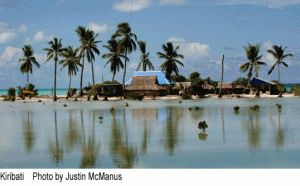 Kiribati. In 1954, the government of Winston Churchill decided that the UK needed to develop a hydrogen bomb (a more sophisticated and destructive type of nuclear weapon). The US and Russia had already developed an H-bomb and Churchill argued that the UK “could not expect to maintain our influence as a world power unless we possessed the most up-to-date nuclear weapons”.
The governments of Australia and New Zealand refused to allow a hydrogen bomb test to be conducted on their territories so the British government searched for an alternative site. Kiritimati Island and Malden Island in the British Gilbert and Ellice Islands Colony in the central Pacific Ocean (now the Republic of Kiribati) were chosen. Nine nuclear weapons tests – including the first hydrogen bomb tests – were carried out there as part of “Operation Grapple” between 1957 and 1958.
Military personnel from the UK, New Zealand and Fiji (then a British colony) and Gilbertese labourers were brought in to work on the operation. Many of the service personnel were ordered to witness the tests in the open, on beaches or on the decks of ships, and were simply told to turn their backs and shut their eyes when the bombs were detonated. There is evidence that Fijian forces were given more dangerous tasks than their British counterparts, putting them at greater risk from radiation exposure. The local Gilbertese were relocated and evacuated to British naval vessels during some of the tests but many were exposed to fallout, along with naval personnel and soldiers.
After Grapple X, the UK’s first megaton hydrogen bomb test in November 1957, dead fish washed ashore and “birds were observed to have their feathers burnt off, to the extent that they could not fly”. The larger Grapple Y test in 1958 spread fallout over Kiritimati Island and destroyed large areas of vegetation.
Despite evidence that military personnel and local people suffered serious health problems as a result of the tests, including blindness, cancers, leukaemia and reproductive difficulties, the British government has consistently denied that they were exposed to dangerous levels of radiation and has resisted claims for compensation.
Like the Marshall Islands, the low-lying Republic of Kiribati is now bearing the brunt of the effects of climate change. Salt water washed in on king tides has contaminated the islands’ scarce freshwater resources. Pits that are used to grow taro plants have been ruined and the healthy subsistence lifestyle of local people is under threat.
It is predicted that rising sea levels will further impact freshwater resources and reduce the amount of agricultural land, while storm damage and erosion will increase. Much of the land will ultimately be submerged. In anticipation of the need to relocate its entire population, the government of Kiribati bought 20km2 of land on Fiji in 2014.
The UK is set to spend £3.4 billion a year on Trident nuclear weapons system between 2019 and 2070. If Trident were scrapped, a portion of the savings could be provide to the Republic of Kiribati in the form of climate finance (see section 1.2.1). Scrapping Trident would also allow money and skills to be redirected towards measures aimed at drastically cutting the UK’s carbon emissions (see section 1.2.2) – action that Pacific island nations are urgently demanding.
The Marshall Islands. The most devasting incident of radioactive contamination took place 8,000 km from the US mainland during the Castle Bravo test in 1954. The US detonated the largest nuclear weapon in its history at Bikini Atoll in the Marshall Islands, causing fallout to spread over an area of more than 11,000km. Residents of nearby atolls, Rongelap and Utirik, were exposed to high levels of radiation, suffering burns, radiation sickness, skin lesions and hair loss as a result.

Castle Bravo was just one of 67 nuclear weapons tests conducted by the US in the Marshall Islands between 1946 and 1958. Forty years after the tests, the cervical cancer mortality rate for women of the Marshall Islands was found to be 60 times greater than the rate for women in the US mainland, while breast and lung cancer rates were five and three times greater respectively. High rates of infant mortality have also been found in the Marshall Islands and a legacy of birth defects and infertility has been documented. Many Marshallese were relocated by the US to make way for the testing.
Some were moved to Rongelap Atoll and relocated yet again after the fallout from Castle Bravo left the area uninhabitable.
Rongelap Atoll was resettled in 1957 after the US government declared that the area was safe. However, many of those who returned developed serious health conditions and the entire population was evacuated by Greenpeace in 1984. An attempt to resettle Bikini Atoll was similarly abandoned in 1978 after it became clear that the area was still unsafe for human habitation.
A 2019 peer-reviewed study found levels of the radioactive isotope caesium-137 in fruits taken from some parts of Bikini and Rongelap to be significantly higher than levels recorded at the sites of the world’s worst nuclear accidents, Chernobyl and Fukushima.
Compounding the injustice of nuclear weapons testing, the Republic of the Marshall Islands is now on the frontline of the climate emergency. The government declared a national climate crisis in 2019, citing the nation’s extreme vulnerability to rising sea levels and the “implications for the security, human rights and wellbeing of the Marshallese people”.
At Runit Island, one of 40 islands in the Enewetak Atoll, rising sea levels are threatening to release radioactive materials into an already contaminated lagoon. In the late 1970s, the US army dumped 90,000 cubic metres of radioactive waste, including plutonium, into a nuclear blast crater and covered it with a concrete cap. Radioactive materials are leaking out of the crater and cracks have appeared on the concrete cap. Encroaching salt water caused by rising sea levels could collapse the structure altogether. The Marshallese government has asked the US for help to prevent an environmental catastrophe but the US maintains that the dome is the Marshall Islands’ responsibility. Hilda Heine, then President of the Republic of the Marshall Islands, said of the dome in 2019: “We don’t want it. We didn’t build it. The garbage inside is not ours. It’s theirs.”
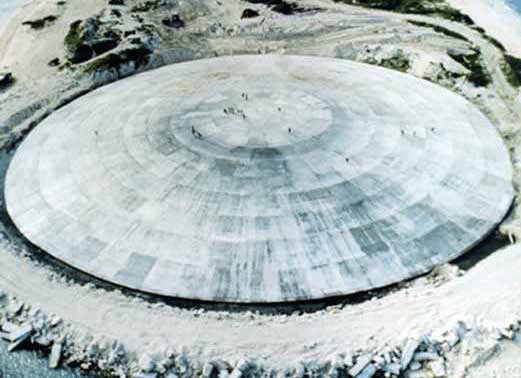
The Runit Island dome offers a stark illustration of the ways in which the injustices of nuclear weapons testing and climate change overlap. Marshall Islanders were left with the toxic legacy of nuclear weapons testing conducted on their territory by another state. The country is now being forced to deal with the effects of a climate crisis that they did not create, including the erosion of the Runit dome.
The nations that contributed most to the crisis are failing to cut their emissions quickly enough to limit further global heating, leaving the Marshallese at the mercy of droughts, cyclones and rising seas. A recent study found that if current rates of greenhouse gas emissions are maintained, the Marshall Islands will be flooded with sea water annually from 2050. The resulting damage to infrastructure and contamination of freshwater supplies will render the islands uninhabitable.
If the US scrapped its nuclear weapons programme, it could give a portion of the billions of dollars that would be saved to the Republic of the Marshall Islands to help the country mitigate and adapt to climate disruption (see section 1.2.1 on international climate finance). The US could also use the freed-up funds to invest in its own Just Transition away from a fossil-fuel powered economy. Read the full report.
Hitler’s quest for nuclear weapons
WW2: Hitler’s true nuclear capacity exposed in secret sabotage mission that ‘saved world’
WORLD WAR 2 saw the Allies cooperate to fight Adolf Hitler’s Nazi Germany but jaw-dropping documents reveal just how close he came to using nuclear weapons. Express UK By CALLUM HOARE Oct 21, 2020 The German nuclear weapons programme was an unsuccessful scientific effort to research and develop atomic weapons during World War 2. It went through several phases but was ultimately “frozen at the laboratory level” with historians and scholars alike generally agreeing it failed on all fronts. With that, Hitler is thought to have focused more on his revolutionary V1 and V2 rockets, but he came terrifyingly close to arming them with nuclear warheads, according to declassified papers unearthed by writer and filmmaker Damien Lewis.
“The greatest fear was that the Nazis had mastered the technology to fit a nuclear or radiological charge to the V2s, in which case there would be no defence possible.
“Churchill ordered aerial surveys to forewarn of such attacks – dry-run rehearsals to prepare for such an ordeal, and for frontline doctors to be briefed on the symptoms of radiation poisoning.
Such fears were very real. Following German physicist Otto Hahn splitting the atom in December 1938, the Allies believed the Germans to be two years ahead in the race to build the atom bomb.”
In May 1940, German forces struck a further blow in the race for nuclear supremacy after seizing Olen, Belgium, where the largest remaining stock of European uranium was located.
British intelligence reports on Operation Peppermint found by Mr Lewis revealed fears from London.
One read: “Since the fall of Belgium, much of the largest stock of uranium has been available [to Germany] from the refinery.”
According to Mr Lewis, its destination was the AuerGesellschaft refinery, at Oranienburg, Germany.
Allied research suggested it would require 20,000 workers, half a million watts of electricity and $150million (£114million) in expenditure to build the world’s first atom bomb.
Hitler, who now controlled most of western Europe, could demand such resources.
And, in concentration camps, he had access to millions of workers.
According to Mr Lewis, its destination was the AuerGesellschaft refinery, at Oranienburg, Germany.
Allied research suggested it would require 20,000 workers, half a million watts of electricity and $150million (£114million) in expenditure to build the world’s first atom bomb.
Hitler, who now controlled most of western Europe, could demand such resources.
And, in concentration camps, he had access to millions of workers.
“Details of Operation Peppermint and the measures taken to prepare for a Nazi nuclear strike were revealed in papers that I unearthed from the National Archives.
“This came as a great surprise to me, for I was unaware that the Allied wartime leaders viewed Nazi Germany’s nuclear programme as such a real and present threat.”
However, a top secret heroic mission would lead to a breakthrough……..
Hunting Hitler’s Nukes: The Secret Race to Stop the Nazi Bomb’ is published by Quercus and available to buy here. https://www.express.co.uk/news/world/1350513/world-war-2-hitler-nuclear-capacity-secret-winston-churchill-operation-peppermint-spt
A history of nuclear weapons accidents
 THE NUCLEAR TREATY dividing the World, Byline Times, Stephen Colegrave, 21 October 2020 “……… A History Of Near Accidents It is easy to be sympathetic with their position when the number of near nuclear weapons accidents are considered.
In early 2009, two nuclear submarines, the French Le Triomphant and British Vanguard, both carrying nuclear weapons, crashed into each other deep in the Atlantic. Fortunately, they were not going fast enough to cause much damage.
Two years earlier, the American Air Force lost six nuclear armed cruise missiles for 36 hours when, unknown to anyone, they were fitted to a B-52 bomber and flown completely unauthorised to a base in Louisiana, left unguarded on the runway until anyone worked out what had happened.
In 2000, the Danish newspaper Jyllands-Posten reported that classified documents obtained by a group of former workers at the Thule airbase suggest that one of four hydrogen bombs on a B-52 bomber that crashed there in 1968 was never found.
There are many instances of false alarms and nuclear bombs nearly being launched. One of the most dangerous of these was stopped by little-known hero Lieutenant Colonel Petrov who, in 1983, probably really did save the world. When he was alerted by an early warning system that five nuclear missiles by America were coming towards the Soviet Union, instead of immediately raising the alarm to his superiors who would have ordered retaliation, he instinctively decided that, if there was an attack, more than five missiles would have been launched and rightly decided that the system was faulty.
These incidents seem to have done nothing to dent the UK and America’s insistence that nuclear weapons safeguard and guarantee peace. The old Cold War politics of nuclear deterrents can seemingly do nothing to deter democratic interference on social media or the global impact of COVID-19. Like scary but lumbering dinosaurs, our trident submarines roam the ocean’s depths with enormous fire power – just one missile can kill more than 10 million people – while Russian President Vladimir Putin interferes with democratic elections in the West for less than the price of a non-nuclear fighter jet.https://bylinetimes.com/2020/10/21/the-nuclear-treaty-dividing-the-world/
60 years since nuclear war very nearly happened
Nearly 60 years ago this week, we were one argument away from nuclear war, Lessons from the Cuban Missile Crisis remain important, yet Americans largely ignore foreign policy. Deseret News, By Arthur Cyr, Columnist Oct 20, 2020 The Cuban Missile Crisis occurred more than a half century ago, but the lessons remain important. Nuclear arms control talks between Moscow and Washington have derailed, and UN arms embargo of Iran has ended.
Current dangers of fatal military miscalculation may equal the height of the Cold War. In the United States, our military presence in the Mideast fuels fitful debate but not sustained discussion of serious strategic risks involved.
During Oct. 22-28, 1962, the Cuba crisis dominated world attention, as Washington and Moscow sparred on the edge of thermonuclear war. Lessons include difficulty of securing accurate intelligence and the unpredictability of events.
On Oct. 14, 1962, U.S. reconnaissance photos revealed the Soviet Union was placing offensive nuclear missiles in Cuba, despite contrary assurances. On Oct. 16, after thorough review and analysis, National Security Adviser McGeorge Bundy informed President John F. Kennedy……….
The initial pressure for military attack dissipated. Kennedy deftly delayed intense pressures for war, while avoiding angry confrontation.
Lessons of the crisis include the importance of disciplined objective intelligence analysis, and communicating with opponents. Then and now, U.S. presidential leadership is essential.
Today, U.S. troops are in the Mideast close to forces from Russia, Iran, Israel, Syria, Turkey and various armed insurgent groups. Yet Americans remain preoccupied with domestic concerns and largely ignore foreign policy.
Cuban Missile Crisis lessons remain important, ignored at great peril.
Arthur I. Cyr is Clausen Distinguished Professor at Carthage College and author of “After the Cold War.” Contact acyr@carthage.edu https://www.deseret.com/opinion/2020/10/20/21525956/cold-war-cuban-missile-crisis-jfk-nuclear-weapons
Ionising radiation – the tragedy of the ”radium girls”.

They weren’t just making paints, they were doing the painting, too. According to NPR, US Radium hired scores of girls and young women — as young as just 11-years-old — to paint watch dials with the glow-in-the-dark, radium-based paint. As if just working with the paint wasn’t bad enough, they were also encouraged to put the brush between their lips and twirl it into a point. It was the best way to get truly precise numbers and brush strokes, but with each lick of the brush, they were swallowing radium.
the human body isn’t great at telling the difference between radium and calcium. Radium gets absorbed into the bones just like calcium does, and when that happens, the rot starts.
Writer and historian Kate Moore documented the cases of the Radium Girls (via The Spectator) and found that there were a whole host of symptoms. Some started suffering from chronic exhaustion. For many, it started with their teeth — one by one, those teeth would start to decay and rot. When they were removed, their gums wouldn’t heal. In some cases, the jaw would just simply disintegrate at the dentist’s touch. Bad breath was common. Skin became so delicate that the slightest touch would tear open wounds. Ulcers formed for some, and those that were pregnant bore stillborn babies.
THE RADIUM GIRLS HAD TO BE BURIED IN LEAD-LINED COFFINS
The Radium Girls weren’t just sick, they were very literally radioactive. Mollie Maggia was exhumed in 1927, in the hopes that her bones would give still-living Radium Girls the evidence they needed to win in court. According to Popular Science, her coffin was lifted out of the ground, and her body? It glowed. That wasn’t entirely surprising, considering her bones were found to be highly radioactive — and considering radium’s half-life is 1,600 years, they’re not going to stop glowing any time soon.
Eventually, 16 separate sites around Ottawa would be classified as Superfund sites.
NPR Illinois says that many have been cleaned up, but as of 2018, there was at least one site — a 17-acre plot of land on the Fox River — that still remained a highly radioactive and terrifying legacy of the Radium Girls.
THE MESSED UP TRUTH ABOUT THE RADIUM GIRLS https://www.grunge.com/181092/the-messed-up-truth-about-the-radium-girls/ BY DEBRA KELLY/DEC. JULY 14, 2020
History is filled with episodes that prove mankind is just sort of making everything up as it goes. There’s no shortage of things that can kill us or do horrible, terrible things to our soft and squishy bodies, and every time we think we know about them all, it turns out there’s something else lurking around the corner.
And sometimes, it’s disguised as something awesome. Need proof? Look no further than the Radium Girls.
Yes, that radium. Today, the Royal Society of Chemistry says there’s really only one use for radium — targeted cancer treatments, because it’s so good at killing cells. It was first discovered in 1898 by Marie and Pierre Curie, after they extracted a single milligram from ten tons of a uranium ore called pitchblende. And it was pretty darn cool. It glowed, and seriously, how exciting is that? Unfortunately, it was also deadly — as the so-called Radium Girls would find out.
In 1951, Winston Churchill suggested dropping nuclear bombs on Russia
 BOMBS AWAY Winston Churchill suggested dropping nuclear bombs on Russia in 1951.The Sun, Abe Hawken
The then leader of the opposition is said to have wanted his war strategy to involve using nuclear strikes to bomb Russia and China into submission.
He thought the best way to end the conflict was to give Russia an “ultimatum” and if they refused, he would threaten 20 to 30 cities with atom bombs.
Churchill then wanted to warn Russia it was “imperative” the civilian population of each named city was “immediately evacuated”.
He was convinced Russia would refuse their terms so he discussed plans to bomb “one of the targets, and if necessary, additional ones”.
Churchill hoped that by the third attack the Kremlin would eventually meet their terms.
The bombshell plans have come to light in a memorandum written by the New York Times general manager Julius Ochs Adler, according to The Times.
In it, he describes a conversation the pair had during lunch at Churchill’s home in Kent on Sunday, April 29, 1951……….
Richard Toye, head of history of the University of Exeter, found the note in papers belonging to the New York Times Company.
He said Churchill recommended a threat like this in 1949 when the Soviet Union did not have nuclear weapons.
However, he added that it was a revelation he was still contemplating a similar threat two years later.
He told The Times: “One can question his judgment at this point.”…………https://www.thesun.co.uk/news/uknews/12621015/winston-churchill-nuclear-bombs-russia/
Central Asia’s toxic nuclear legacy
 According to Kyrgyz official data, the gamma radiation on tailings pit surfaces are within 17-60 mR/hr; however, in the damaged areas, radiation levels reach 400-500 mR/hr. An exposure to 100 mSv a year (a millisievert, mSv, is equal to 100 milliroentgens, mR) or 10,000 mR is the point where an increase in cancer is clearly evident. At 400-500 mR/hr this would be achieved in 20-25 hours, or just one day. Radionuclides and heavy metals from these tailing pits and dumps are seeping into the surface and groundwater, polluting water and farmland and increasing the risk of cancer for local people.
Birth anomalies are an additional indicator of environmental radioactive contamination. A study by the Institute of Medical Problems showed that the incidence of birth defects in Mailuu-Suu was three times higher than in the country’s second largest city of Osh. Studies have correlated birth defects to the distance of the parents’ residences from radioactive waste sites. Polluted water is the major factor causing the development of congenital malformations, according to research by the Institute of Medical Problems.
Mailuu-Suu: Cleaning up Central Asia’s toxic uranium legacy https://www.thethirdpole.net/2020/09/02/mailuu-suu-cleaning-up-central-asias-toxic-uranium-legacy/
Countries must set aside territorial disputes and work together to clean up radioactive waste seeping into rivers and farmland in the Ferghana Valley – causing an environmental and health catastrophe for people living in the region Janyl Madykova, September 2, 2020 Political tensions between countries in Central Asia have intensified since the collapse of the Soviet Union. Along with border conflicts and water disputes, problems have arisen from residual radioactive waste located in the Kyrgyz town of Mailuu-Suu in the Ferghana Valley, which has caused widespread pollution of river and farmland, and led to major impacts on the health and economy of people in Kyrgyzstan and Uzbekistan.
Industrial-scale uranium mining began in Mailuu-Suu during the Soviet era in 1946 and lasted until 1968. Uranium ore from Europe and China was also processed in Mailuu-Suu during this time.
As a result, the small town of 24,000 people is now surrounded by about 3 million cubic metres of uranium waste left in 23 tailings pits and 13 dumps. These sites have contaminated the Mailuu-Suu river, a major tributary of the Syr Darya which flows through Kyrgyzstan and into Uzbekistan, carrying radioactive waste into the densely populated Ferghana Valley.
The biggest problem is that earthquakes, landslides and heavy rainfall events have intensified in recent years, destroying uranium tailing storage sites along the river and mountain slopes, contaminating surrounding areas. A number of international organisations have worked to prevent further disasters in Mailuu-Suu. The World Bank has allocated more than USD 11 million to clean up uranium tailings. The European Commission launched an initiative in 2015 to remediate the most dangerous sites in Kyrgyzstan, Tajikistan and Uzbekistan.
However, the pollution remains, and Central Asian countries must cooperate to prevent further environmental disasters in the Ferghana Valley, as well as mitigate economic damage and resolve political issues.
A town built on radioactive waste
According to the state surveys there are 92 radioactive and toxic storage facilities across Kyrgyzstan today. The most dangerous of these are the Mailuu-Suu uranium sites, because of numerous hazards threatening the tailing pits. Were these tailing pits destabilised, they would have potentially catastrophic environmental consequences for Kyrgyzstan and the neighbouring countries of Uzbekistan and Kazakhstan, with the radioactive waste contaminating the river as well as the soil and irrigated farmland surrounding it.
Uranium was first discovered in the region in 1933, and within 20 years 10,000 tonnes of uranium oxide was extracted in Mailuu-Suu. Residual radioactive waste in southern Kyrgyzstan currently poses a major environmental threat to the densely populated parts of the Ferghana Valley, home to about 14 million people.
Landslides are the major risk. There are more than 200 landslide-prone locations around Mailuu-Suu. There was little such threat in the 1940s, but landslide activity has intensified since 1954 due to increased rainfall. Landslides in Mailuu-Suu occurred several times in 1988, 1992 and 2002, damaging infrastructure and altering water flow. The most dangerous landslide is Koi-Tash, which happened in 2017 and could block the riverbed and spread radioactive contamination down the river.
The 1950s saw one of the most salient examples of the danger posed by vulnerable waste dumps. In April 1958, as a result of rainfall and high seismic activity, an alluvial dam collapsed into tailings pit #7 in Mailuu-Suu, pushing more than 400,000 cubic metres of radioactive waste into the Mailuu-Suu river, which then spread 30-40 km downstream in irrigated farmland in Uzbekistan. The effects of this disaster have lasted to this day, with the radioactive contamination of the river and surrounding soil and vegetation causing major health problems and fatalities. Such disasters also heighten tensions between the regional states. Continue reading
Racism in nuclear bomb testing, bombing of Japanese people, and nuclear waste dumping

Langston Hughes voiced the opinion that until racial injustice on home ground in the United States ceases, “it is going to be very hard for some Americans not to think the easiest way to settle the problems of Asia is simply dropping an atom bomb on colored heads there.”[25] While his statement was made in 1953, near the eighth anniversary of the Hiroshima and Nagasaki bombings, it remains equally relevant today, as we approach the 75th anniversary
Memorial Days: the racial underpinnings of the Hiroshima and Nagasaki bombings , Bulletin of the Atomic Scientists, Elaine Scarry, Elaine Scarry is the author of Thermonuclear Monarchy: Choosing between Democracy and Doom and The Body in Pain: the Making and Unmaking of the World. She is Cabot Profess… By Elaine Scarry, August 3, 2020
This past Memorial Day, a Minneapolis police officer knelt on the throat of an African-American, George Floyd, for 8 minutes and 46 seconds. Seventy-five years ago, an American pilot dropped an atomic bomb on the civilian population of Hiroshima. Worlds apart in time, space, and scale, the two events share three key features. Each was an act of state violence. Each was an act carried out against a defenseless opponent. Each was an act of naked racism. ……….
Self-defense was not an option for any one of the 300,000 civilian inhabitants of the city of Hiroshima, nor for any one of the 250,000 civilians in Nagasaki three days later. We know from John Hersey’s classic Hiroshima that as day dawned on that August morning, the city was full of courageous undertakings meant to increase the town’s collective capacity for self-defense against conventional warfare, such as the clearing of fire lanes by hundreds of young school girls, many of whom would instantly vanish in the 6,000° C temperature of the initial flash, and others of whom, more distant from the center, would retain their lives but lose their faces.[2] The bombing of Hiroshima and Nagasaki initiated an era in which—for the first time on Earth and now continuing for seven and a half decades—humankind collectively and summarily lost the right self-defense. No one on Earth—or almost no one on Earth[3]—has the means to outlive a blast that is four times the heat of the sun or withstand the hurricane winds and raging fires that follow………
Centuries of political philosophers have asked, “What kind of political arrangements will create a noble and generous people?” Surely such arrangements cannot be ones where a handful of men control the means for destroying at will everyone on Earth from whom the means of self-defense have been eliminated……..
When Americans first learned that the people of Hiroshima and Nagasaki had been collectively vaporized in less time than it takes for the heart to beat, many cheered. But not all. Black poet Langston Hughes at once recognized the moral depravity of executing 100,000 people and discerned racism as the phenomenon that had licensed the depravity: “How come we did not try them [atomic bombs] on Germany… . They just did not want to use them on white folks.”[4] Although the building of the weapon was completed only after Germany surrendered on May 7, 1945, Japan had been designated the target on September 18, 1944, and training for the mission had already been initiated in that same month.[5] Black journalist George Schuyler wrote: “The atom bomb puts the Anglo-Saxons definitely on top where they will remain for decades”; the country, in its “racial arrogance,” has “achieved the supreme triumph of being able to slaughter whole cities at a time.”[6]
Still within the first year (and still before John Hersey had begun to awaken Americans to the horrible aversiveness of the injuries), novelist and anthropologist Zora Neale Hurston denounced the US president as a “butcher” and scorned the public’s silent compliance, asking, “Is it that we are so devoted to a ‘good Massa’ that we feel we ought not to even protest such crimes?”[7] Silence—whether practiced by whites or people of color—was, she saw, a cowardly act of moral enslavement to a white supremacist. Continue reading
1 This Month

of the week – Shut Down Drone Warfare!


Tell the Ukrainian Government to Drop Prosecution of Peace Activist Yurii Sheliazhenko

Petition to revoke the licensing of the Near Surface Nuclear Disposal Facility (NSDF) at Chalk River. https://www.ourcommons.ca/petitions/en/Petition/Details?Petition=e-7247
To see nuclear-related stories in greater depth and intensity – go to https://nuclearinformation.wordpress.com
-
Archives
- April 2026 (68)
- March 2026 (251)
- February 2026 (268)
- January 2026 (308)
- December 2025 (358)
- November 2025 (359)
- October 2025 (376)
- September 2025 (257)
- August 2025 (319)
- July 2025 (230)
- June 2025 (348)
- May 2025 (261)
-
Categories
- 1
- 1 NUCLEAR ISSUES
- business and costs
- climate change
- culture and arts
- ENERGY
- environment
- health
- history
- indigenous issues
- Legal
- marketing of nuclear
- media
- opposition to nuclear
- PERSONAL STORIES
- politics
- politics international
- Religion and ethics
- safety
- secrets,lies and civil liberties
- spinbuster
- technology
- Uranium
- wastes
- weapons and war
- Women
- 2 WORLD
- ACTION
- AFRICA
- Atrocities
- AUSTRALIA
- Christina's notes
- Christina's themes
- culture and arts
- Events
- Fuk 2022
- Fuk 2023
- Fukushima 2017
- Fukushima 2018
- fukushima 2019
- Fukushima 2020
- Fukushima 2021
- general
- global warming
- Humour (God we need it)
- Nuclear
- RARE EARTHS
- Reference
- resources – print
- Resources -audiovicual
- Weekly Newsletter
- World
- World Nuclear
- YouTube
-
RSS
Entries RSS
Comments RSS
 nuclear-news