Israel planned this war on Iran for 40 years. Everything else is a smoke screen.
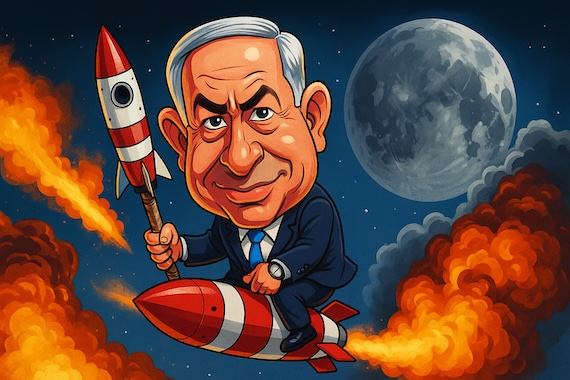
The Israeli prime minister, Benjamin Netanyah……… gloated: “This combined effort allows us to do what I have hoped to achieve for 40 years: to crush the regime of terror completely. That’s my promise and this is what is going to happe
And all the while, Israel’s own arsenal of nuclear weapons, undeclared and therefore unmonitored, has been an open secret.
The embers of resistance – in Gaza, Iraq, Lebanon, Syria, Yemen – have not been snuffed out. With the attack on Iran, they are being fanned into a fire
Jonathan Cook, Mar 06, 2026
It is near impossible to make sense – at least from the justifications on offer – of what US President Donald Trump really hopes to achieve with his and Israel‘s blatantly illegal war of aggression on Iran.
Is it to destroy an Iranian nuclear weapons programme for which there has never been any tangible evidence, and which Trump claimed just a few months ago to have “completely and totally obliterated” in an earlier lawbreaking attack?
Or is it intended to force Tehran back to negotiations on its nuclear energy enrichment programme that were brought prematurely to an end when the US launched its unprovoked attack – talks, we should note, that were made necessary because in 2018, during his first term, Trump tore up the original deal with Iran?
Or is the war supposed to browbeat Iran into greater flexibility, even though Trump blew up the talks at the very moment Oman, the chief mediator, insisted that Tehran had capitulated on almost every one of Washington’s onerous demands and that a deal was “within our reach“?
Or are the air strikes designed to “liberate” Iranians, even though the early victims included at least 165 civilians in a girls’ school, most of them children aged between 7 and 12?
Or is the aim to pressure Iran to give up its ballistic missiles – the only deterrence it has against attack, and which would leave it utterly defenceless against US and Israeli malevolent designs?
Or did Washington believe Tehran was about to strike first, even though Pentagon officials have confided to congressional staff that there was zero intelligence an attack was about to happen?
Or is the goal to decapitate the Iranian regime, as the strikes have already achieved with the assassination of Iran’s supreme leader, Ali Khamenei? If so, to what purpose, given that Khamenei was so opposed to an Iranian nuclear bomb that he issued a religious edict, a fatwa, against its development?
Might Khamenei’s successor – having seen how utterly untrustworthy the US and Israel are, how they operate as rogue states unconstrained by international law – now decide that developing a nuclear bomb is an absolute priority to protect Iran’s sovereignty?
No clear rationale
There is no clear rationale from Washington because the author of this attack is not to be found in either the White House or the Pentagon. This plan was cooked up in Tel Aviv decades ago.
The Israeli prime minister, Benjamin Netanyahu, admitted as much on Sunday. He gloated: “This combined effort allows us to do what I have hoped to achieve for 40 years: to crush the regime of terror completely. That’s my promise and this is what is going to happen.”
Those four decades, let us note, were also the timeframe for an endless series of warnings from Netanyahu and other Israeli leaders that Tehran was only months away from developing a nuclear bomb.
Netanyahu has been peddling this same urgent, nonsensical pretext for attacking Iran all that time. For 40 years, each year has been proclaimed the very last opportunity to stop the “mad mullahs” from obtaining a bomb – a bomb that never materialised.
And all the while, Israel’s own arsenal of nuclear weapons, undeclared and therefore unmonitored, has been an open secret.
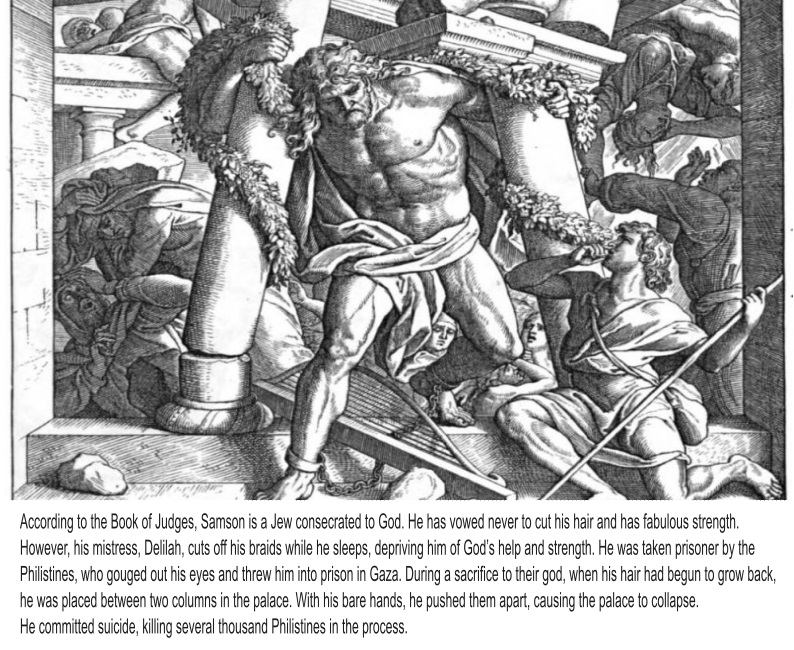
Europe helped Israel develop its bomb, while the US turned a blind eye, even as Israeli leaders espoused a suicidal doctrine known as the “Samson Option“, which posited that Israel would rather detonate its nuclear arsenal than suffer a conventional military defeat.
The Samson Option implicitly rejects the idea that any other state in the Middle East can be allowed to acquire a bomb and thereby level the military playing field with Israel.
It is that very premise that, for decades, has guided Israeli policy towards Tehran. Not because Iran has shown an inclination to develop a weapon. Nor because its supposedly “mad mullahs” would be foolish enough to fire them at Israel were they ever to acquire them.
No, it was for other reasons. Because Iran is the largest and most unified state in the region, one with a rich history, a strong cultural identity and a formidable intellectual tradition. Because Iran has repeatedly shown itself – whether under secular or religious leaders – unwilling to submit to western, and Israeli, colonial domination.
And because it is looked to as a source of authority and leadership by Shia religious communities in neighbouring countries – Iraq, Lebanon, Syria, Yemen – that have a history of similarly refusing to bow to Israeli hegemony.
Israel’s fear was that, were Iran to follow North Korea and acquire a nuclear weapon, Israel would be finished as the West’s most useful militarised client state in the oil-rich Middle East.
Stripped of its ability to terrorise its neighbours, stoke sectarian division and help project US imperial power into the region, Israel would lose its rationale. It would become the ultimate white elephant.
Israeli leaders – grown fat on endless military subsidies paid for by US taxpayers and given licence to plunder the Palestinians’ resources – were never going to willingly step off their gravy train.
Which is why Iran has rarely been out of Israel’s sights……………………………………………………………………………………………………………………………………………………………………………………………………………………………………………………….
The last time Iran had a democratic government, in the early 1950s, its secular, socialist prime minister, Mohammad Mossadegh, outraged the West by nationalising Iran’s oil industry for the benefit of Iranians.
The CIA’s Operation Ajax toppled him in 1953 and reinstated the brutal Mohammad Reza Pahlavi as monarch, or Shah, allowing the US and Britain to take back control of Iran’s oil.
The backlash was 26 years coming. Islamic clerics rode an outpouring of popular hatred for the US and Israeli-backed Shah to launch their revolution…………………………………………………………………………………………………………….
Pact with the devil
Washington’s western allies may be privately uncomfortable at being visibly associated with another illegal US-Israeli war. But in supporting more than two years of genocide in Gaza, they already made their pact with the devil. There is no going back now.
Which is why Britain, France, Germany, Canada and Australia all dutifully lined up behind the Trump administration as the mayhem began………………………………………………………………………….
The embers of resistance – in Gaza, Iraq, Lebanon, Syria, Yemen, and potentially in new sites like Bahrain – have not been snuffed out. And now, with the attack on Iran, they are being fanned into a fire with every new crime, every new outrage, every new atrocity. https://jonathancook.substack.com/p/israel-planned-this-war-on-iran-for?utm_source=post-email-title&publication_id=476450&post_id=190093136&utm_campaign=email-post-title&isFreemail=true&r=17yeb&triedRedirect=true&utm_medium=email
.
The Toxic Legacy of Britain’s Nuclear Testing in Australia
The era of British nuclear testing in Australia was exrraordinary, and its secrets are still being uncovered. Because of ongoing British secrecy, we may not discover them all. In her talk Professor Tynan will examine the complex circumstances taht led the British first to Monte Bello Islands off the coast of Western Australia, then Emu Field and Maralinga in South Australia, to test their atomic weapons. The decision to do so followed the United States’ exclusion of Britain from nuclear weapons and energy R&D after World War II, ostensibly because of the detection of Manhattan Project spies. Australia acquiesced to the atomic tests without asking hard questions, and as a result considerable damage and suffering was inflicted, particularly on Indigenous people and service personnel.
Those hard questions only came decades later, and there are still many to be asked. The British conducted their testing with a greater emphasis on speed than safety. The recklessness of some of the tests carried out in Australia is stunning. Tynan will share specific stories of these dangerous tests and their deadly ramifications for Australians. She will also cover what happened after the British terminated the test series and deliberately misinformed the Australian government about the extent of contamination they left behind. All three test sites were abandoned without proper remediation. The aftermath led to a judicial enquiry, known in Australia as a Royal Commission, in the mid-1980s. This enquiry makred a major shift in Australian attitudes to the tests, and was an important mileestone in an era of uncovering and truth-telling that continues.
Professor Elizabeth Tynan is Head of the Professional Development Program at James Cook University’s Graduate Research School, where she teaches academic writing, editing, and critical thinking skills to postgraduate researchers. She is a former science journalist in both print and broadcast media. Her PhD from the Australian National University examined aspects of the British nuclear tests in Australia in the 1950s and 1960s.
You Deserve Better, Iran
The Here and Now, Mar 03, 2026
I’ve spent the last three days obsessively refreshing the New York Times app. Every few minutes there are updates: missiles raining down in Tehran, nearly 200 girls massacred by a bomb “accidentally” hitting their school in southern Iran, retaliatory attacks carried out by the country’s (few) allies, the death of the tyrannical Ayatollah Khamenei. But nowhere on the screen—no matter how far past the fold I read—is there coverage of the Ebrahimi family and what has become of them. Instead, I find locations that have been bombed and I enter them into Google Maps, plotting how far they are from my family’s apartment. I look at the red, inverted teardrop pinpointing their building, and I wonder if they will make it through this alive………………………………………………………………………………………………………..
My anger reaches back to the past, all the way to 1953 and the coup. So few Americans know that Iran wasn’t always an Islamic regime. The democratically-elected Prime Minister Mohammad Mossadegh nationalized Iran’s oil so that his country could benefit from their primary natural resource. The US couldn’t have that. So the CIA orchestrated a coup, overthrowing Mossadegh, and reinstalling Reza Pahlavi, the former Shah, who was essentially a puppet of the West. The 1979 Iranian Revolution was a direct response to this, and that’s when the Islamic Republic of Iran was born. And it has suppressed and terrorized its people ever since.
……………………………………………………………… From the constant fear of internal crackdowns and external war, to the failing economy and assault on civil liberties, Iranians haven’t known peace in decades. But they continue to stand up and fight for their rights, they continue to educate themselves to contribute to their society and the world, and they continue to sacrifice their lives so that their children can know a better day.
…………………………………………………………… I’m no historian or political scientist, but even I know that regime change cannot come from external forces. It has to come from within. Khamenei may have been killed, but there is no organized opposition coming to step in and rule, there is no charismatic leader around which the people can coalesce, there is no one to save the day and liberate Iran. Instead, there is the Iranian Revolutionary Guard Corps (IRGC), the military that protects the interests of the Islamic Regime, and it is still very much alive. No one knows how this war will play out, but the likeliest scenario is that the IRGC will retain control, and whoever they tap to lead Iran will be even worse than Khamenei.
………………….. I have a hard time believing that’s what this is. This is Epstein. This is midterm elections. This is a narcissist vying for a Nobel Prize. But most of all, to Trump and the others, this is a game. It even has a game’s name: Operation Epic Fury. They don’t give a fuck if their own people die, why would they care about some brown people halfway across the globe.
Year 4: The Timeline That Tells the Tale
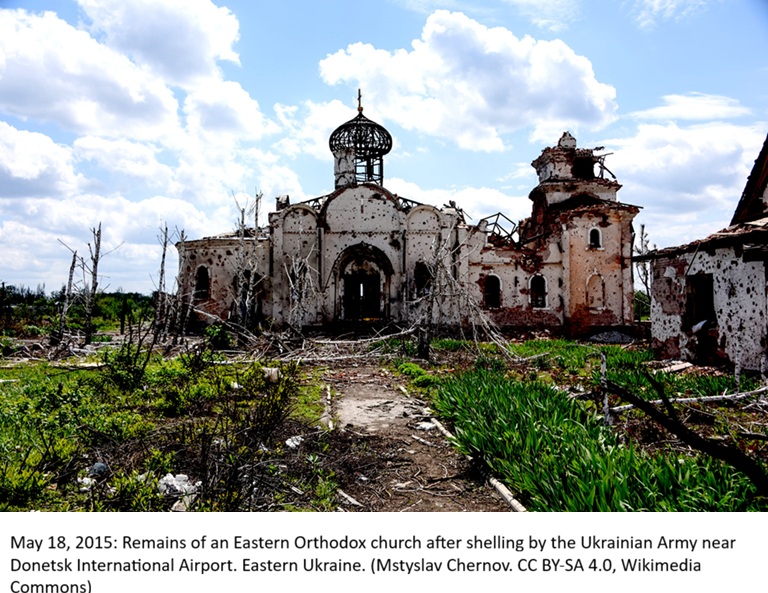
Without historical context, which is buried by corporate media, it’s impossible to understand the war in Ukraine. Historians will tell the story, but journalists are cut short for trying to tell it now.
By Joe Lauria, Consortium News, February 24, 2026
The way to prevent the Ukraine war from being understood is to suppress its history.
A cartoon version has the conflict beginning on Feb. 24, 2022 when Vladimir Putin woke up that morning and decided to invade Ukraine.
There was no other cause, according to this version, other than unprovoked, Russian aggression against an innocent country.
Please use this short, historical guide to share with people who still flip through the funny pages trying to figure out what’s going on in Ukraine.
The mainstream account is like opening a novel in the middle of the book to read a random chapter as though it’s the beginning of the story.
Thirty years from now historians will write about the context of the Ukraine war: the coup, the attack on Donbass, NATO expansion, and the rejection of the Minsk Accords and Russian treaty proposals without being called Putin puppets.
It will be the same way historians today write of the Versailles Treaty as a cause of Nazism and WWII, without being called Nazi-sympathizers.
Providing context is taboo while the war continues in Ukraine, as it would have been during WWII. Context is paramount in journalism.
But journalists have to get with the program of war propaganda while a war goes on. Journalists are clearly not afforded the same liberties as historians. Long after the war, historians are free to sift through the facts.
THE UKRAINE TIMELINE
World War II— Ukrainian national fascists, led by Stepan Bandera, at first allied with the German Nazis, massacre more than a hundred thousands Jews and Poles.
1950s to 1990 – C.I.A. brought Ukrainian fascists to the U.S. and worked with them to undermine the Soviet Union in Ukraine, running sabotage and propaganda operations. Ukrainian fascist leader Mykola Lebed was taken to New York where he worked with the C.I.A. through at least the 1960s and was still useful to the C.I.A. until 1991, the year of Ukraine’s independence. The evidence is in a U.S. government report starting from page 82. Ukraine has thus been a staging ground for the U.S. to weaken and threaten Moscow for nearly 80 years.
November 1990: A year after the fall of the Berlin Wall, the Charter of Paris for a New Europe (also known as the Paris Charter) is adopted by the U.S., Europe and the Soviet Union. The charter is based on the Helsinki Accords and is updated in the 1999 Charter for European Security. These documents are the foundation of the Organization for Security and Co-operation in Europe. The OSCE charter says no country or bloc can preserve its own security at another country’s expense.
Dec. 25, 1991: Soviet Union collapses. Wall Street and Washington carpetbaggers move in during ensuing decade to asset-strip the country of formerly state-owned properties, enrich themselves, help give rise to oligarchs, and impoverish the Russian, Ukrainian and other former Soviet peoples.
1990s: U.S. reneges on promise to last Soviet leader Gorbachev not to expand NATO to Eastern Europe in exchange for a unified Germany. George Kennan, the leading U.S. government expert on the U.S.S.R., opposes expansion. Sen. Joe Biden, who supports NATO enlargement, predicts Russia will react hostilely to it.
1997 :: The only thing that could provoke a “vigorous and hostile” Russian response would be needless NATO Expansion Far East right till the border of Russia – Sen. Joe Biden pic.twitter.com/hRW47hLL5y
— Rishi Bagree (@rishibagree) June 17, 2022
1997: Zbigniew Brzezinski, former U.S. national security adviser, in his 1997 book, The Grand Chessboard: American Primacy and Its Geostrategic Imperatives, writes:
“Ukraine, a new and important space on the Eurasian chessboard, is a geopolitical pivot because its very existence as an independent country helps to transform Russia. Without Ukraine, Russia ceases to be a Eurasian empire. Russia without Ukraine can still strive for imperial status, but it would then become a predominantly Asian imperial state.”
New Year’s Eve 1999: After eight years of U.S. and Wall Street dominance, Vladimir Putin becomes president of Russia. Bill Clinton rebuffs him in 2000 when he asks to join NATO.
Putin begins closing the door on Western interlopers, restoring Russian sovereignty, ultimately angering Washington and Wall Street. This process does not occur in Ukraine, which remains subject to Western exploitation and impoverishment of Ukrainian people.
Feb. 10, 2007: Putin gives his Munich Security Conference speech in which he condemns U.S. aggressive unilateralism, including its illegal 2003 invasion of Iraq and its NATO expansion eastward.
He said: “We have the right to ask: against whom is this [NATO] expansion intended? And what happened to the assurances our western partners made after the dissolution of the Warsaw Pact? Where are those declarations today? No one even remembers them.”
Putin speaks three years after the Baltic States, former Soviet republics bordering on Russia, joined the Western Alliance. The West humiliates Putin and Russia by ignoring its legitimate concerns. A year after his speech, NATO says Ukraine and Georgia will become members. Four other former Warsaw Pact states join in 2009.
2004-5: Orange Revolution. Election results are overturned giving the presidency in a run-off to U.S.-aligned Viktor Yuschenko over Viktor Yanukovich. Yuschenko makes fascist leader Bandera a “hero of Ukraine.”
April 3, 2008: At a NATO conference in Bucharest, a summit declaration “welcomes Ukraine’s and Georgia’s Euro-Atlantic aspirations for membership in NATO. We agreed today that these countries will become members of NATO”. Russia harshly objects. William Burns, then U.S. ambassador to Russia, and presently C.I.A. director, warns in a cable to Washington, revealed by WikiLeaks, that,
“Foreign Minister Lavrov and other senior officials have reiterated strong opposition, stressing that Russia would view further eastward expansion as a potential military threat. NATO enlargement, particularly to Ukraine, remains ‘an emotional and neuralgic’ issue for Russia, but strategic policy considerations also underlie strong opposition to NATO membership for Ukraine and Georgia. In Ukraine, these include fears that the issue could potentially split the country in two, leading to violence or even, some claim, civil war, which would force Russia to decide whether to intervene. … Lavrov stressed that Russia had to view continued eastward expansion of NATO, particularly to Ukraine and Georgia, as a potential military threat.”
A crisis in Georgia erupts four months later leading to a brief war with Russia, which the European Union blames on provocation from Georgia.
November 2009: Russia seeks new security arrangement in Europe. Moscow releases a draft of a proposal for a new European security architecture that the Kremlin says should replace outdated institutions such as NATO and the Organization for Security and Cooperation in Europe (OSCE).
The text, posted on the Kremlin’s website on Nov. 29, comes more than a year after President Dmitry Medvedev first formally raised the issue. Speaking in Berlin in June 2008, Medvedev said the new pact was necessary to finally update Cold War-era arrangements.
“I’m convinced that Europe’s problems won’t be solved until its unity is established, an organic wholeness of all its integral parts, including Russia,” Medvedev said.
2010: Viktor Yanukovich is elected president of Ukraine in a free and fair election, according to the OSCE.
2013: Yanukovich chooses an economic package from Russia rather than an association agreement with the EU. This threatens Western exploiters in Ukraine and Ukrainian comprador political leaders and oligarchs.
February 2014: Yanukovich is overthrown in a violent, U.S.-backed coup (presaged by the Nuland-Pyatt intercept), with Ukrainian fascist groups, like Right Sector, playing a lead role. Ukrainian fascists parade through cities in torch-lit parades with portraits of Bandera.
March 16, 2014: In a rejection of the coup and the unconstitutional installation of an anti-Russian government in Kiev, Crimeans vote by 97 percent to join Russia in a referendum with 89 percent turn out. The Wagner private military organization is created to support Crimea. Virtually no shots are fired and no one was killed in what Western media wrongly portrays as a “Russian invasion of Crimea.”
April 12, 2014: Coup government in Kiev launches war against anti-coup, pro-democracy separatists in Donbass. Openly neo-Nazi Azov Battalion plays a key role in the fighting for Kiev. Wagner forces arrive to support Donbass militias. U.S. again exaggerates this as a Russian “invasion” of Ukraine. “You just don’t in the 21st century behave in 19th century fashion by invading another country on completely trumped up pre-text,” says U.S. Secretary of State John Kerry, who voted as a senator in favor of the U.S. invasion of Iraq in 2003 on a completely trumped up pre-text.
May 2, 2014: Dozens of ethnic Russian protestors are burnt alive in a building in Odessa by neo-Nazi thugs. Eight days later, Luhansk and Donetsk declare independence and vote to leave Ukraine.
Sept. 5, 2014: First Minsk agreement is signed in Minsk, Belarus by Russia, Ukraine, the OSCE, and the leaders of the breakaway Donbass republics, with mediation by Germany and France in a Normandy Format. It fails to resolve the conflict.
Feb. 12, 2015: Minsk II is signed in Belarus, which would end the fighting and grant the republics autonomy while they remain part of Ukraine. The accord was unanimously endorsed by the U.N. Security Council on Feb. 15. In December 2022 former German Chancellor Angela Merkel admits West never had intention of pushing for Minsk implementation and essentially used it as a ruse to give time for NATO to arm and train the Ukraine armed forces.
2016: The hoax known as Russiagate grips the Democratic Party and its allied media in the United States, in which it is falsely alleged that Russia interfered in the 2016 U.S. presidential election to get Donald Trump elected. The phony scandal serves to further demonize Russia in the U.S. and raise tensions between the nuclear-armed powers, conditioning the public for war against Russia.
May 12, 2016: U.S. activates missile system in Romania, angering Russia. U.S. claims it is purely defensive, but Moscow says the system could also be used offensively and would cut the time to deliver a strike on the Russian capital to within 10 to 12 minutes.
June 6, 2016: Symbolically on the anniversary of the Normandy invasion, NATO launches aggressive exercises against Russia. It begins war games with 31,000 troops near Russia’s borders, the largest exercise in Eastern Europe since the Cold War ended. For the first time in 75 years, German troops retrace the steps of the Nazi invasion of the Soviet Union across Poland.
German Foreign Minister Frank Walter-Steinmeier objects. “What we shouldn’t do now is inflame the situation further through saber-rattling and warmongering,” Steinmeier stunningly tells Bild am Sontag newspaper. “Whoever believes that a symbolic tank parade on the alliance’s eastern border will bring security is mistaken.”
Instead Steinmeier calls for dialogue with Moscow. “We are well-advised to not create pretexts to renew an old confrontation,” he warns, adding it would be “fatal to search only for military solutions and a policy of deterrence.”
December 2021: Russia offers draft treaty proposals to the United States and NATO proposing a new security architecture in Europe, reviving the failed Russian attempt to do so in 2009. The treaties propose the removal of the Romanian missile system and the withdrawal of NATO troop deployments from Eastern Europe. Russia says there will be a “technical-military” response if there are not serious negotiations on the treaties. The U.S. and NATO reject them essentially out of hand.
February 2022: Russia begins its military intervention into Donbass in the still ongoing Ukrainian civil war after first recognizing the independence of Luhansk and Donetsk.
Before the intervention, OSCE maps show a significant uptick of shelling from Ukraine into the separatist republics, where more than 10,000 people have been killed since 2014.
March-April 2022: Russia and Ukraine agree on a framework agreement that would end the war, including Ukraine pledging not to join NATO. The U.S. and U.K. object. Prime Minister Boris Johnson flies to Kiev to tell Ukrainian President Volodymyr Zelensky to stop negotiating with Russia. The war continues with Russia seizing much of the Donbass.
March 26, 2022: Biden admits in a speech in Warsaw that the U.S. is seeking through its proxy war against Russia to overthrow the Putin government. Earlier in March he overruled his secretary of state on establishing a no-fly zone against Russian aircraft in Ukraine. Biden opposed the no-fly zone, he said at the time, because “that’s called World War III, okay? Let’s get it straight here, guys. We will not fight the third world war in Ukraine.”
September 2022: Donbass republics vote to join Russian Federation, as well as two other regions: Kherson and Zaporizhzhia.
May 2023: Ukraine begins counter-offensive to try to take back territory controlled by Russia. As seen in leaked documents earlier in the year, U.S. intelligence concludes the offensive will fail before it begins.
June 2023: A 36-hour rebellion by the Wagner group fails, when its leader Yevegny Prigoshzin takes a deal to go into exile in Belarus. The Wagner private army, which was funded and armed by the Russian Ministry of Defense, is absorbed into the Russian army. The Ukrainian offensive ends in failure at the end of November.
September 2024: Biden deferred to the realists in the Pentagon to oppose long-range British Storm Shadow missiles from being fired by Ukraine deep into Russia out of fear it would also lead to a direct NATO-Russia military confrontation with all that that entails.
Putin warned at the time that because British soldiers on the ground in Ukraine would actually launch the British missiles into Russia with U.S. geostrategic support, it “will mean that NATO countries — the United States and European countries — are at war with Russia. And if this is the case, then, bearing in mind the change in the essence of the conflict, we will make appropriate decisions in response to the threats that will be posed to us.”
November 2024: After he was driven from the race and his party lost the White House, a lame duck Biden suddenly switched gears, allowing not only British, but also U.S. long-range ATACMS missiles to be fired into Russia. It’s not clear that the White House ever informed the Pentagon in advance in a move that risked the very World War III that Biden had previously sought to avoid.
February 2025: The first direct contact between senior leadership of the United States and Russia in more than three years takes place, with a phone call between the countries’ presidents, and a meeting of foreign ministers in Saudi Arabia. They agree to begin negotiations to end the war.
August 15, 2025: Donald Trump and Vladimir Putin meet in Anchorage, Alaska for the first face-to-face meeting between U.S. and Russian leaders in more than four years. The Russians left believing Trump had thoroughly understood their position against a ceasefire and instead their desire to reach a comprehensive solution to the war that addressed the “root causes” and Russian security concerns, which have been outlined in this timeline. A series of follow-up diplomatic meetings have failed to advance that goal and the conflict continues to be decided on the battlefield with Russian gains as well as an increase in missiles being fired into each nations territory.
This timeline clearly shows an aggressive Western intent towards Russia, and how the tragedy could have been avoided if NATO would not allow Ukraine to join; if the Minsk accords had been implemented; and if the U.S. and NATO negotiated a new security arrangement in Europe, taking Russian security concerns into account.
Joe Lauria is editor-in-chief of Consortium News and a former U.N. correspondent for The Wall Street Journal, Boston Globe, and numerous other newspapers, including The Montreal Gazette and The Star of Johannesburg. He was an investigative reporter for the Sunday Times of London, a financial reporter for Bloomberg News and began his professional work as a 19-year old stringer for The New York Times. He is the author of two books, A Political Odyssey, with Sen. Mike Gravel, foreword by Daniel Ellsberg; and How I Lost By Hillary Clinton, foreword by Julian Assange. He can be reached at joelauria@consortiumnews.com and followed on Twitter @unjoe
Michael Parenti (1933-2026): 1918
January 25, 2026, https://consortiumnews.com/2026/01/25/michael-parenti-1933-2026-1918/
Michael Parenti, who died on Saturday at 92, wrote for Consortium News what appears to be his last article on the occasion of the 100th anniversary of the end of WWI.
Michael Parenti, a giant on the American left, who influenced generations of activists, scholars and ordinary Americans, died on Saturday in Berkeley, California. He was 92. Parenti wrote for Consortium News what is believed to be his last article, about the horrors of World War I. It appeared on U.S. Memorial Day, May 28, 2018, and we republish it here ahead of a tribute Consortium News is preparing.
On Memorial Day 2018, in the year marking the 100th anniversary of the end of World War I, Michael Parenti contemplates the trenches and the oligarchs who caused so much unnecessary misery.
Looking back at the years of fury and carnage, Colonel Angelo Gatti, staff officer of the Italian Army (Austrian front), wrote in his diary:
“This whole war has been a pile of lies. We came into war because a few men in authority, the dreamers, flung us into it.”
No, Gatti, caro mio, those few men are not dreamers; they are schemers. They perch above us. See how their armament contracts are turned into private fortunes — while the young men are turned into dust: more blood, more money; good for business this war.
It is the rich old men, i pauci, “the few,” as Cicero called the Senate oligarchs whom he faithfully served in ancient Rome. It is the few, who together constitute a bloc of industrialists and landlords, who think war will bring bigger markets abroad and civic discipline at home.
One of i pauci in 1914 saw war as a way of promoting compliance and obedience on the labor front and—as he himself said—war, “would permit the hierarchal reorganization of class relations.”
Just awhile before the heresies of Karl Marx were spreading among Europe’s lower ranks. The proletariats of each country, growing in numbers and strength, were made to wage war against each other.
What better way to confine and misdirect them than with the swirl of mutual destruction.
Then there were the generals and other militarists who started plotting this war as early as 1906, eight years before the first shots were fired.
War for them means glory, medals, promotions, financial rewards, inside favors, and dining with ministers, bankers, and diplomats: the whole prosperity of death.
When the war finally comes, it is greeted with quiet satisfaction by the generals.
Moguls and Monarchs Prevail
But the young men are ripped by waves of machine-gun fire or blown apart by exploding shells. War comes with gas attacks and sniper shots: grenades, mortars, and artillery barrages; the roar of a great inferno and the sickening smell of rotting corpses.
Torn bodies hang sadly on the barbed wire, and trench rats try to eat away at us, even while we are still alive.
Farewell, my loving hearts at home, those who send us their precious tears wrapped in crumpled letters. And farewell my comrades. When the people’s wisdom fails, moguls and monarchs prevail and there seems to be no way out.
Fools dance and the pit sinks deeper as if bottomless. No one can see the sky, or hear the music, or deflect the swarms of lies that cloud our minds like the countless lice that torture our flesh.
Crusted with blood and filth, regiments of lost souls drag themselves to the devil’s pit. “Lasciate ogni speranza, voi ch’entrate.” (“Abandon all hope, ye who enter” as our Dante delivered his painful message).
Meanwhile from above the Vatican wall, the pope himself begs the world leaders to put an end to hostilities, “lest there be no young men left alive in Europe.” But the war industry pays him no heed.
Finally the casualties are more than we can bear. There are mutinies in the French trenches! Agitators in the Czar’s army cry out for “Peace, Land, and Bread!” At home, our families grow bitter. There comes a breaking point as the oligarchs seem to be losing their grip.
At last the guns are mute in the morning air. A strange almost pious silence takes over. The fog and rain seem to wash our wounds and cool our fever. “Still alive,” the sergeant grins, “still alive.” He cups a cigarette in his hand. “Stack those rifles, you lazy bastards.”
He grins again, two teeth missing. Never did his ugly face look so good as on this day in November 1918. Armistice embraces us like a quiet rapture.
Not really a quiet rapture with smiling sergeants. Many troops on both sides continued killing to the bitter end, with a fury that had no mercy.
In one day, November 11, the last day of war, some 10,900 men were wounded or killed from both sides, a furious rage in the face of peace, years of slaughter; now moments of vengeance.
The Fall of Eagles
A big piece of the encrusted aristocratic world breaks off. The Romanovs, Czar and family, are all executed in 1918 in Revolutionary Russia. That same year, the House of Hohenzollern collapses as Kaiser Wilhelm II flees Germany. Also in 1918, the Ottoman empire is shattered.
And on Armistice Day, November 11th, 1918, at 11:00 a.m.—the eleventh hour of the eleventh day of the eleventh month—we mark the end of the war and with it the dissolution of the Habsburg dynasty.
Four indestructible monarchies: Russian, German, Turkish, and Austro-Hungarian, four great empires, each with millions of bayonets and cannon at the ready, now twisting in the dim shadows of history.
Will our children ever forgive us for our dismal confusion? Will they ever understand what we went through? Will we? By 1918, four aristocratic autocracies fade away, leaving so many victims mangled in their wake, and so many bereaved crying through the night.
Back in the trenches, the agitators among us prove right. The mutinous Reds standing before the firing squad last year were right. Their truths must not be buried with them. Why are impoverished workers and peasants killing other impoverished workers and peasants?
Now we know that our real foe is not in the weave of trenches; not at Ypres, nor at the Somme, or Verdun or Caporetto. Closer to home, closer to the deceptive peace that follows a deceptive war.
Now comes a different conflict. We have enemies at home: the schemers who trade our blood for sacks of gold, who make the world safe for hypocrisy, safe for themselves, readying themselves for the next “humanitarian war.”
See how sleek and self-satisfied they look, riding our backs, distracting our minds, filling us with fright about wicked foes. Important things keep happening, but not enough to finish them off. Not yet enough.
Michael Parenti was an internationally known, award-winning author and lecturer. He was one of the nation’s leading progressive political analysts. His highly informative and entertaining books and talks have reached a wide range of audiences in North America and abroad. His books include Profit Pathology and Other Indecencies; Inventing Reality, The Politics of News Media; Make-Believe Media: The Politics of Entertainment; Democracy for the Few; Land of Idols: Political Mythology in America; History as Mystery; The Assassination of Julius Caesar, A People’s History of Ancient Rome and the first part of his memoir, Waiting for Yesterday: Pages from a Street Kid’s Life.
Betrayed: How Liberals Supported Islamic Revolution in Iran in 1979 and Turned Against the Progressive Shah.

COMMENT. This is a terrific article, much needed, and the original is richly illustrated.
It does set the record straight on the Shah, who basically ran a pretty decent system, and liberated women.
One thing to mention. The USA helped with manipulation to put the Shah into power, but later decided he wasn’t compliant enough. When he wanted to get nuclear power, that was the last straw, and the USA helped manipulate him out again
The Left’s Lethal Miscalculation Still Goes On!
SL Kanthan, Jan 19, 2026, https://slkanthan.substack.com/p/betrayed-how-liberals-supported-islamic?utm_source=post-email-title&publication_id=844398&post_id=184864947&utm_campaign=email-post-title&isFreemail=true&r=1ise1&triedRedirect=true&utm_medium=email
History repeats itself and rhymes in uncanny ways. And there are profound contradictions in political ideologies. The partnership of liberals and right-wing fundamentalist Islam is one of those phenomenon that would leave any objective thinker immensely confused.
Let’s look at the Islamic Revolution in Iran in 1979, where liberals and communists joined forces with religious leader Khomeini to overthrow the progressive but authoritarian Shah, under whom Iran made astonishing progress in terms of economy, modernization and social justice. Of course, immediately after coming to power, Ayatollah Khomeini crushed the Marxists and anyone remotely considered liberal.
Fast forward to 2026, Western liberals are generally very pro-Iran, and many of them are staunchly supporting the current theocratic government that is putting down the nationwide protests with brute force. Khamenei has admitted that “thousands” of protesters have been killed, but he blames the victims for sedition.
The photos and videos of body bags of dead Iranian protesters left to rot on the ground have not changed the opinion of liberal social media influencers.
Western liberals now are driven by the same motive as the Iranian liberals in the 1970s — that is, anti-imperialism and anti-Americanism. Anti-Zionism is also a major factor now.
However, such blind ideology leads to a situation where the cure is much worse than the disease. Let’s dive in.
Shah, the Progressive Leader
The Shah of Iran – Mohammad Reza Pahlavi – would be considered a leftist role model these days!
He did things that would make Mao Zedong cheer — for example, the Shah ended feudalism, took lands away from the landlord, and distributed the land to 1.5 million farmers. That helped about 9 million Iranians, a third of the population.
The Shah of Iran emancipated girls and women and did admirable things. Consider these:
- By 1979, 33% of the university students in Iran were women. That’s an astonishing number in the Middle East.
- There were 22 female ministers in the Iranian parliament.
- Iranian women were doctors, judges, professors and so on.
- How did the Shah achieve it? It was not easy. Here’s how he did it:
- The Shah made education free and compulsory for all Iranian girls (and boys) — up to the age of 14. Also, poor children were provided a free meal in schools.
- Reza Pahlavi built thousands of schools all over Iran, especially in rural areas.
- He abolished child marriage and raised the age to 18.
- He gave Iranian women the right to vote in 1963 — eight years ahead of Switzerland!
- Reza Pahlavi cracked down on Sharia law that limited women’s potential. His father, the first Shah, had already banned chador, the Iranian version of burqa.
- He gave Iranian women equal rights in marriage, divorce and custody. The Islamic laws were quite misogynistic.
In 1962, the Shah of Iran came to the US with his wife and met with President JFK.
The two really clicked, and the Shah was impressed by Kennedy’s Peace Corps. So, the Shah went back home and created a Literacy Corps and Health Corps to have young well-educated Iranians volunteer as teachers and doctors in rural Iran. It was also a bit like Mao’s “barefoot doctors,” but more modern and sophisticated.
Modernization of Iran Under Pahlavi Dynasty — “White Revolution”
Under the Shah and his father (the first king of the Pahlavi Dynasty), Iran made astonishing progress.
- Iran’s GDP grew a stunning 700-fold between 1925 and 1975! The per-capita income grew 200 times!
- Between 1960 and 1976, the real GDP — adjusted for inflation — grew an astonishing 5-fold.
- Between 1948 and 1978, the constant PPP GDP-per-capita grew from $250 to nearly $10,000.
Iran used to be a poor and an illiterate country divided by ethnic and religious identities. In 1925, a quarter of the population was nomadic. Infrastructure was terrible, manufacturing was negligible (except for artisans like those making Persian rugs) and there was no real military.
Under the two visionary Shahs (1925-1941 and 1941-1978), Iran underwent massive modernization. Initially, the private sector did not have enough money or the rich Iranians were not interested in factories, since they could make easy money from imports. Thus, Reza Pahlavi’s government encouraged public-private partnerships, co-invested in numerous factories, raised tariffs on imports, and made Iran self-sufficient in many areas.
Father and the son Shahs electrified villages and built massive infrastructure to connect various parts of Iran — like the Trans-Iranian railway, which is still an engineering marvel in some regions. The Shah helped create joint ventures for auto manufacturing and Iranian cars (like “Paykan”) for the first time. Iran Air was flying (often non-stop) to global hot spots like New York, London, Paris, and Tokyo!
- Under the Shah, a vast majority (60%) of the oil revenue was spent on improving Iran’s transportation, infrastructure and industrialization.
- Iran had no military before the Pahlavi Dynasty. However, by the 1970s, Iran had the most powerful military in the Middle East.
Iran under the Shah also had smart and pragmatic foreign policy. The Shah was greatly liked by the US and the West. Yes, it was geopolitics of the Cold War, but Iranians benefited from the US-Iran relations.
In 1962, the Shah of Iran visited the US and had an amazing ticker-tape parade on Broadway Street in Manhattan, New York City.
“CIA Puppet and SAVAK”
Two of the criticisms about the Shah are that “he was installed by the CIA after the 1953 coup” and that his secret intelligence group SAVAK was brutal and cruel. Let’s explore:
- The CIA coup in 1953 did NOT install the Shah, who came to power in 1941. Yes, his father went into exile when the Brits and the Russians invaded Iran; and he was placed on the throne at the age of 21.
- Fast forward to 1953, Iranian Prime Minister Mossadegh — who had become too powerful — had nationalized the oil sector two years earlier. Powerful Western oil interests and deep state (MI6/CIA) colluded to get rid of Mossadegh. The Shah had fled the country for only 3-4 days.
- This is just a matter of survival in politics and geopolitics. It was a partnership of shared values, although the US definitely and obviously was the more powerful one in the relationship. The Shah eventually became so independent that the US/West secretly supported Khomeini. Recently declassified US diplomatic cables show that the Carter administration had extensive contacts with Khomeini, and basically told the Iranian military to stand down.
- As for SAVAK, it was created in 1957 by the Shah with the help of the British and American intelligence to prevent further coups or the rise of extremists like communists and religious terrorist groups. Remember that the USSR was meddling a lot in the Iranian affairs. And SAVAK did operate outside the law, engaged in spying, arrests, torture etc.
- But guess what happened after the Islamic Revolution? SAVAK was not dismantled, but simply renamed as SAVAMA! In fact, the deputy chief of SAVAK – General Hossein Fardoust – became the head of SAVAMA. All the infrastructure, files, intelligence, torture methods, along with most intel agents continued under Khomeini.
So What Underpinned the 1979 Revolution?
If the Shah was so great, as I have argued, why did was he overthrown in the 1979 revolution?
Well, a whole slew of incompatible radicals and disgruntled groups got together in a strange alliance. The common excuse is that the Shah was authoritarian. However, if the Shah had been as tyrannical as the current government, he would have survived. But let’s take a look at the opposition:
- Islamic clergy — The mullahs were the #1 instigator, since they had lost a lot of their power and wealth in a secular society. Their hatred for the Shah and his father was intense. Some of the Shiite extremist groups like Fadayan-e Islam even assassinated Iranian Prime Ministers (four, to be precise!)
Socialists and Communists — The leftists were a small group in Iran since the 1920s. But when the USSR and the British joined to attack and defeat Iran in 1941, communism spread quickly. A communist political party known as Tudeh was founded in 1941. (Ironically, it was crushed by Khomeini! More on that later). The Soviet Union secretly funded the communists; and openly spread anti-Shah propaganda through newspapers and radio stations (operated out of Azerbaijan). Tudeh had a vast following, especially in trade unions; and quite a few military officers secretly belonged to the party. The communists kept demanding higher wages, even though the Shah passed laws for industrial workers to get 20% of corporate profits. These extremists wanted a communist Iran, and nothing else would satisfy them.
College Students — Khomeini really hated them! These spoiled kids were the clueless and idealistic group, which dreamed of democracy and freedom from imperialism, although they were very Westernized. Not much different from the current liberals, who live in the US but spend all day demonizing the US.
All these people had underestimated the religious fundamentalists. Some naively thought a religious person would never lie! And they all thought the religious poor were too harmless or incompetent to take over the leadership. In the desperation to beat the Shah, none of these groups used their brain. They missed all the red flags and projected their fantasy into Khomeini, who despised them.
How Ayatollah Khomeini Back-stabbed Communists, Liberals & Women
Consider the timeline:
Jan 16: The Shah of Iran leaves Iran, unwilling to push the country into a civil war.
Feb 1: Khomeini comes to Iran after exile. He had spent the last few weeks in France
Feb 11: Khomeini becomes the new leader of Iran.
March 7: Mandatory hijab law gets passed.
March 8: Liberal women stage a massive protest, but their new “friend” turned out to be far more totalitarian than the Shah.
What did Khomeini do to women?
- He systematically reversed much of the Shah’s contribution to women’s liberation.
- Khomeini introduced Sharia laws, made hijab mandatory, segregated public places (men v. women), reduced marriage for girls from 18 to 9 (!), banned women from being judges and other key roles, banned women from sports stadiums, banned women from singing or dancing and so on.
- Remember how the Shah raised marriage of girls to 18? The “Supreme Leader” of Iran reduced the age to 9. Nine!
Khomeini and his followers were brutal in enforcement. Women who did not wear a hijab or “dress modestly” were beaten, stoned, and sometimes attacked with acid that would disfigure their face. The Iranian parliament passed a law that women without hijab could face 72 lashes.
The obsession with hijab still goes on, although in the last 3-4 years, the government has relaxed a bit in Tehran. In 2016, Iran’s top chess player – Dorsa Derakhshani – left Iran because she was banned from the national team for not wearing a hijab or wearing “tight jeans.” There have also been many cases of men throwing acid on women’s faces for not dressing properly — like Marziyeh Ebrahimi in the photo below [on original]
Khamenei’s morality police have harassed, beaten up and arrested countless women for not dressing properly. Young Iranians are arrested for singing or dancing on Instagram or other social media. Last year, a woman (Parastoo Ahmadi) was arrested for live streaming her singing. It was a beautiful and classy performance but women cannot sing in public under Islamic laws! See below: [on original]
How did Khomeini attack the students?
Khomeini shut down the universities for nearly three years, starting from 1980! He fired or arrested all the leftist professors and student leaders. Some were even executed. All the leftist newspapers on campuses were shut down — by brute violence. The entire college curriculum was rewritten to be Islamic. Courses in music and other topics were banned. Soon, Western movies were banned and movie theaters were closed. Alcohol was banned, needless to say.
How did Khomeini attack the communists?
Tudeh, the communist party, had survived 38 years under Shah, even though he was harsh on them, since they were more pro-Soviet than pro-Iran. However, the party did not even last five years under the Islamic Republic. In 1984, the leader of the communist party – Noureddin Kianouri – was tortured and forced into confession, broadcast on TV.
Another Marxist-Leninist group was the OIPFG, a violent underground guerrilla organization that worked against the Shah and supported the Islamic revolution. These clowns were also ruthlessly crushed by Khomeini.
Khomeini eliminated all opposition groups, including the National Front, which was founded by Mossadegh, the man who nationalized the Iranian oil industry in 1951 and is still idolized by Western liberals.
The regimes of Khomeini and Khamenei have continued to be unrepentantly repressive for 47 years.
In 1988, for example, up to 30,000 political prisoners — all of whom once helped overthrow the Shah — were executed over a period of three months. These belonged to the MEK, Tudeh and Fedayeen, who were all deemed to be guilty of “crimes against Allah.”
End of the Shah
The Shah left Iran on Jan 16, 1978, partly because he was already sick with cancer, and partly because he didn’t want to plunge the nation into a bitter civil war. The US didn’t even the decency to let him at first. So, he went to Morocco, Panama, the Bahamas etc. Eventually, he was admitted into a hospital at Cornell in late 1978. A few months later, he died in exile in Egypt.
Hostile and Irrational Foreign Policy of the Islamic Republic
There is a golden mean between being a total puppet of the USA and being an uncompromising enemy of the USA. However, the rabid religious in Iran lack such a nuanced approach that arises out of geopolitical maturity.
In 1979, the Shah went to the US for cancer treatment. Rather than focusing on governance of the new nation, the Islamists wanted to kill the Shah, and demanded the US to send him back to Iran. When the US refused this barbaric demand, Khomeini’s radical students stormed the US embassy in Tehran and took 52 American civilians hostage for 444 days. During this time, the Americans were tortured and humiliated in shocking ways.
This needless and uncivilized action by Khomeini set the US and Iran on a collision path. Obviously, the country that has suffered more in this conflict is Iran.
Furthermore, the delusional Ayatollahs wanted to spread their “revolution” and expand their sphere of influence. Thus, they armed and funded Hezbollah in Lebanon, Hamas in Gaza, Houthis in Yemen, Shiite militias in Iraq etc. Then, the Iranian government cries about US interference or attempts to do a regime change in Iran.
Conclusion
History is written by winners… and sometimes by losers. In Iran’s case, the US didn’t want to admit that it made a mistake, so Mohammad Reza Pahlavi Shah was demonized. “We let the bad guy fall, so don’t feel too bad.”
And Western liberals have a strange affinity for right-wing Islamic fundamentalism. Perhaps it comes out of guilt about imperialism, colonialism, Zionism, and endless wars in the Middle East. Not to mention political correctness, which disrupts critical thinking.
90 million Iranians are suffering because of the religious hardliners, for whom compromise is a dirty word. Even after the death of thousands of protesters over the last decade, the government has not agreed to change one policy. The people don’t have many basic political, economic, social or personal freedoms.
One of the Shah’s son hopes to be return to Iran and restore the old glory along with democracy. It really depends on the US/EU since the Iranian people themselves cannot fight back or change the status quo.
Anyways, hope you found this article useful and interesting. There are no simple truths in geopolitics, but it’s good to have different perspectives .
Chris Hedges: Decline and Fall
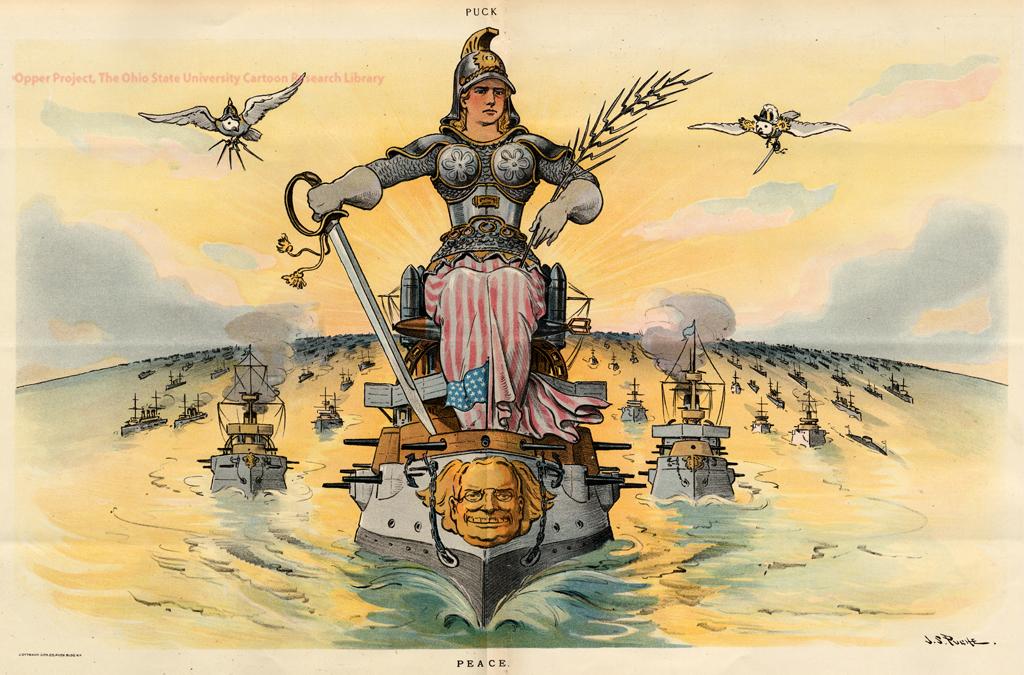
We live in an eerily similar historical moment. Britain, within 12 years of Kipling’s lament, was plunged into the collective suicide of World War I, a conflict that took the lives of over a million British and Commonwealth troops and doomed the British Empire.
Donald Trump boasts that he will be the “fertilization president.” American couples — meaning white couples — will be given incentives by his administration to have more children to counter declining birth rates.
December 29, 2025 , By Chris Hedges , ScheerPost, https://scheerpost.com/2025/12/29/chris-hedges-decline-and-fall/
At the start of the 20th century, the British Empire was, like our own, in terminal decline. Sixty percent of Englishmen were physically unfit for military service, as are 77 percent of American youth. The Liberal Party, like the Democratic Party, while it acknowledged the need for reform, did little to address the economic and social inequalities that saw the working class condemned to live in substandard housing, breathe polluted air, be denied basic sanitation and health care and forced to work in punishing and poorly paid jobs.
The Tory government, in response, formed an Inter-Departmental Committee on Physical Deterioration to examine the “deterioration of certain classes of the population,” meaning, of course, the urban poor. It became known as the report on “the degeneracy of our race.” Analogies were swiftly drawn, with much accuracy, with the decadence and degeneracy of the late Roman Empire.
Rudyard Kipling, who romanticized and mythologized the British Empire and its military, in his 1902 poem “The Islanders,” warned the British that they had grown complacent and flaccid from hubris, indolence and privilege. They were unprepared to sustain the Empire. He despaired of the loss of martial spirit by the “sons of the sheltered city — unmade, unhandled, unmeet,” and called for mandatory conscription. He excoriated the British military for its increasing reliance on mercenaries and colonial troops, “the men who could shoot and ride,” just as mercenaries and militias increasingly augment American forces overseas.
Kipling damned the British public for its preoccupation with “trinkets” and spectator sports, including “the flannel fools at the wicket or the muddied oafs at the goals,” athletes whom he believed should have been fighting in the war in South Africa. He foresaw in the succession of British military disasters during the South African Boer War, which had recently ended, the impending loss of British global dominance, much as the two decades of military fiascos in the Middle East have eroded U.S. hegemony.
The preoccupation with physical decline, also interpreted as moral decline, is what led Secretary of War Pete Hegseth to decry “fat generals,” and order women in the military to meet the “highest male standards” for physical fitness. It is what is behind his “Warrior Ethos Tasking,” plans to enhance physical fitness, grooming standards and military readiness.
We live in an eerily similar historical moment. Britain, within 12 years of Kipling’s lament, was plunged into the collective suicide of World War I, a conflict that took the lives of over a million British and Commonwealth troops and doomed the British Empire.
H.G. Wells, who anticipated trench warfare, tanks and machine guns, was one of the very few to see where Britain was headed. In 1908, he wrote “The War in the Air.” He warned that future wars would not be limited to antagonistic nation-states but would become global. These wars, as was true in the 1935 Italian invasion of Ethiopia, the Spanish Civil War and World War II, would carry out the indiscriminate aerial bombardment of civilians. He also foresaw in “The World Set Free,” the dropping of atomic bombs.
Nearly one third of the population in Edwardian England endured abject poverty. The cause, as Seebohm Rowntree noted in his study of the slums, was not, as conservatives claimed, alcoholism, laziness, a lack of initiative or responsibility by the poor, but because “the wages paid for unskilled labour in York are insufficient to provide food, shelter, and clothing adequate to maintain a family of moderate size in a state of bare physical efficiency.”
The U.S. has one of the highest rates of poverty among Western industrialized nations, estimated by many economists at far above the official figure of 10.6 percent. In real terms, some 41 percent of Americans are poor or low-income, with 67 percent living paycheck to paycheck.
British eugenicists from the Galton Laboratory for National Eugenics — which was funded by Sir Francis Galton, who coined the term “eugenics” — advocated “positive eugenics,” the “improvement” of the race by encouraging those deemed superior — always white members of the middle and upper classes — to have large families. “Negative eugenics” was advocated to limit the number of children born to those deemed “unfit.” This would be achieved through sterilization and the separation of genders.
Winston Churchill, who was home secretary in the liberal government of H.H. Asquith in 1910-11, backed the forced sterilization of the “feeble minded,” calling them a “national and race danger” and “the source from which the stream of madness is fed.”
The Trump White House, led by Stephen Miller, is intent on carrying out a similar culling of American society. Those endowed with “negative” hereditary traits — based usually on race — are condemned as human contaminants that an army of masked Immigration and Customs Enforcement agents are terrorizing, incarcerating and purging from society.
Miller, in emails leaked in 2019, lauds the 1973 novel “The Camp of the Saints,” written by Jean Raspail. It chronicles a flotilla of South Asian people who invade France and destroy Western civilization. The immigrants, who the Trump administration are now hunting down, are described as “kinky-haired, swarthy-skinned, long-despised phantoms” and “teeming ants toiling for the white man’s comfort.” The South Asian mobs are “grotesque little beggars from the streets of Calcutta,” led by a feces-eating “gigantic Hindu” known as “the turd eater.”
This, in its most scurrilous form, is the thesis of the “Great Replacement” theory, the belief that the white races in Europe and North America are being “replaced” by “lesser breeds of the earth.”
Donald Trump boasts that he will be the “fertilization president.” American couples — meaning white couples — will be given incentives by his administration to have more children to counter declining birth rates. In the vernacular of the right wing, those who promote this updated version of “positive eugenics” are known as “pronatalists.” The Trump administration will also reduce refugees admitted to the United States next year to the token level of 7,500, with most of these spots filled by white South Africans.
Trump’s allies in Big Tech are busy creating the fertility infrastructure to conceive children with “positive” hereditary traits. Sam Altman, who has been awarded a one-year military contract worth $200 million from the Trump administration, has invested in technology to allow parents to gene edit their children before conception to produce “designer babies.”
Peter Thiel, the co-founder of Palantir, which is facilitating the Trump administration’s mass deportation efforts, has backed an embryo screening company called Orchid Health. Orchid promises to help parents design “healthy” children through embryo testing and selection technology. Elon Musk, a fervent pronatalist and believer in the Great Replacement theory, is reportedly a client of the startup. The goal is to empower parents to screen embryos for IQ and select “their children’s intelligence before birth,” as the Wall Street Journal notes.
We are making the same self-defeating mistakes made by the British political class that oversaw the decline of the British Empire and orchestrated the suicidal folly of World War I. We blame the poor for their own impoverishment. We believe in the superiority of the white race over other races, crushing the plethora of voices, cultures and experiences that create a dynamic society. We seek to counter injustices, along with economic and social inequality, with hypermasculinity, militarism and force, which accelerates the internal decay and propels us toward a disastrous global war, perhaps, in our case, with China.
Wells scoffed at the idiocy of an entitled ruling class that was unable to analyze or address the social problems it had created. He excoriated the British political elite for its ignorance and ineptitude. They had vulgarized democracy, he wrote, with their racism, hypernationalism and simplistic cliché-ridden public discourse, stoked by a sensationalist tabloid press.
When a crisis came, Wells warned, these mandarins, like our own, would set the funeral pyre of empire alight.
Palestine Before Nationalism: What Was Lost – and Why It Matters Now
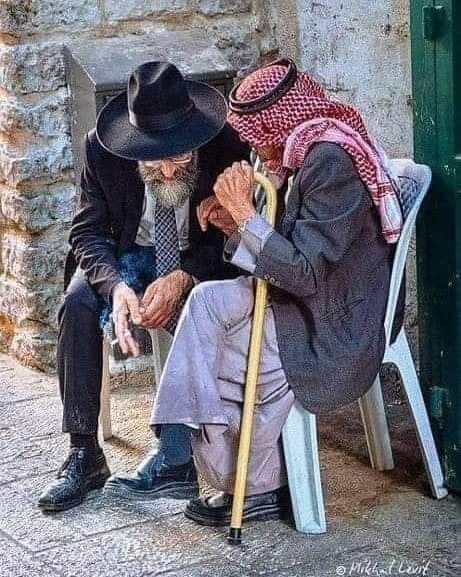
Zionism transformed Jewish identity from a plural, diasporic, and ethical tradition into a political nationality defined by territory, demography, and security doctrine. Dissent increasingly became framed as disloyalty. Equality became a threat.
2 January 2026 Lachlan McKenzie , https://theaimn.net/pa
Before Palestine became a battlefield of competing nationalisms, it was something far less dramatic and far more instructive: a plural society. Muslims, Christians, and Jews lived across the country under the governance of the Ottoman Empire – not as equals in the modern democratic sense, but as communities governed by a legal order that prioritised coexistence over domination.
That historical reality matters today, because it challenges a central myth: that Zionism arrived to redeem a land defined by religious hostility or demographic absence. Neither was true.
A plural society, not a vacuum
In the late nineteenth century, Palestine was overwhelmingly Arab in language and culture, religiously mixed, and socially interconnected. Jewish communities – often called the Old Yishuv – were long-established, Arabic-speaking, and locally embedded. Christian Palestinians maintained churches, schools, and civic institutions dating back centuries. Identity was local and communal, not nationalist.
This was not an idyllic society. Ottoman Palestine was hierarchical and imperfect. But it was not organised around ethnic replacement, nor did it pursue a political project of removing one people to secure the sovereignty of another.
Were Ottoman laws fair?
By contemporary standards, Ottoman governance was not democratic or fully equal. Yet by the standards of its time, it was comparatively tolerant and functional.
Under the Ottoman millet system, non-Muslims were recognised as protected communities (dhimmi), permitted to practise their religion, manage communal affairs, and hold property. Jews expelled from Christian Europe repeatedly sought refuge in Ottoman lands, including Palestine.¹
In the nineteenth century, the empire initiated the Tanzimat Reforms, which aimed – however unevenly – to equalise subjects before the law regardless of religion.² These reforms reduced religious hierarchy rather than intensifying it.
Crucially, Ottoman law did not pursue demographic engineering. It governed diversity; it did not attempt to erase it.
Zionism as rupture, not return
Political Zionism emerged not from Palestinian Jewish life but from nineteenth-century Europe, shaped by ethnic nationalism and colonial settlement logic. Its leaders were explicit about the central obstacle they faced: Palestine was already inhabited.
Rather than abandoning the project, early Zionists debated how to overcome that reality. Theodor Herzl wrote privately of removing the indigenous population through economic exclusion.³ Zionist institutions adopted policies of land acquisition coupled with tenant removal, “Hebrew labour only”, and the construction of a separate economy.⁴
Demographic dominance was understood as a prerequisite for sovereignty. Mass immigration would create irreversible “facts on the ground,” after which political recognition could follow.
“Transfer” and force
By the 1930s, leading Zionists discussed population removal – often termed “transfer” – as necessary. David Ben-Gurion acknowledged that a Jewish state could not be realised without displacement, writing that compulsory transfer could provide “something which we never had.”⁵
Ze’ev Jabotinsky was even more candid. In his 1923 essay The Iron Wall, he argued that indigenous peoples never consent to colonisation, and that Jewish sovereignty would require overwhelming force until resistance was broken.⁶ This was not a religious argument; it was a settler-colonial one.
Palestinian Jewish opposition – erased from memory
These developments were not universally welcomed by Jews in Palestine. Many Palestinian Jews opposed Zionism, fearing it would shatter coexistence, recast Jews as settlers, and provoke conflict with Muslim and Christian neighbours. Their objections were pragmatic and prescient. They understood that they – not European ideologues – would live with the consequences.
Zionism’s eventual dominance owed less to universal Jewish consent than to imperial sponsorship, particularly British support following the 1917 Balfour Declaration, and to the catastrophic narrowing of perceived alternatives after the Holocaust.
What was lost
Zionism transformed Jewish identity from a plural, diasporic, and ethical tradition into a political nationality defined by territory, demography, and security doctrine. Dissent increasingly became framed as disloyalty. Equality became a threat.
The tragedy is not that Ottoman Palestine was perfect. It is that a plural society governed by law – however flawed – was dismantled and replaced by a project that required dominance to succeed.
That is the historical rupture. And it is why the conflict is modern, political, and structural – not ancient or inevitable.
A society that already contained Jews, Christians, and Muslims was remade into a battlefield by a European nationalist project that could not tolerate equality.
Understanding that history does not deny Jewish suffering. It honours it – by insisting that persecution should never be answered with its reproduction.
Footnotes and Primary Sources……………..
When the USSR and China saved humanity: How they won the World Anti-Fascist War.
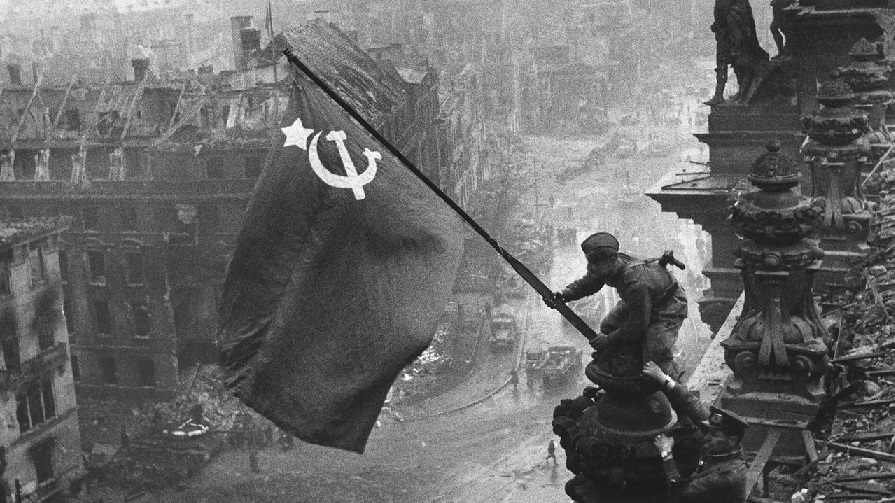
December 28, 2025 , By Ben Norton, https://geopoliticaleconomy.com/2025/12/26/ussr-china-world-anti-fascist-war/
It was the Soviet Union and China that defeated fascism in WWII. Their heroic contribution was later erased by the West. In the First Cold War, the US recruited former Nazis.
2025 marked the 80th anniversary of the defeat of fascism in World War Two. Unfortunately, the history of this extremely important conflict is not very well understood today.
It was not the United States and its Western allies that defeated fascism in WWII. That is a myth that is promoted by Hollywood movies.
In reality, it was the Soviet Union and China that defeated fascism in WWII. However, their heroic contribution was later erased by the West, when the US waged the First Cold War against the global socialist movement.
The vast majority of Nazi casualties, approximately 80%, were on the Eastern Front, in the Third Reich’s savage, scorched-earth battles against the Soviet Red Army.
More than 26 million Soviets died in the Nazi empire’s genocidal war. Compare that to the just over 400,000 US Americans who died, and the roughly 450,000 Brits who lost their lives.
This means that 62 Soviets were killed for every US American who died in WWII. Yet, tragically, their sacrifice has been forgotten in the West – or, better said, erased from public consciousness for political reasons.
The fact that the USSR defeated Nazi Germany was even admitted by the inveterate anti-communist Winston Churchill, an explicit racist, colonialist, and erstwhile admirer of Hitler who oversaw the British empire’s extreme crimes, including a famine in Bengal in 1943.
In a speech in August 1944, Churchill acknowledged:
“I have left the obvious, essential fact to this point, namely, that it is the Russian Armies who have done the main work in tearing the guts out of the German army. In the air and on the oceans we could maintain our place, but there was no force in the world which could have been called into being, except after several more years, that would have been able to maul and break the German army unless it had been subjected to the terrible slaughter and manhandling that has fallen to it through the strength of the Russian Soviet Armies”.
Then, in October 1944, Churchill said, “I have always believed and I still believe that it is the Red Army that has torn the guts out of the filthy Nazis”.
Read more: When the USSR and China saved humanity: How they won the World Anti-Fascist War.In fact, the USSR wanted to crush fascism even earlier by proposing a surprise attack on Nazi Germany in 1939, weeks before Hitler invaded Poland. Soviet military officers made an official request to British and French officials to form an alliance against Nazi Germany in August 1939, but London and Paris were not interested. The USSR had a million troops ready to fight, but the Western European powers were not prepared.
What the capitalist countries in Western Europe and North America had hoped for was that Nazi Germany would attack the Soviet Union, which they considered their main enemy. This is why the Western imperial powers had long appeased Hitler, signing shameful deals like the 1938 Munich Agreement, which allowed the Nazi empire to expand in Europe.
What the Western capitalist “liberal democracies” and the fascist regimes shared in common was mutual hatred of communism. The rich oligarchs who controlled Western governments feared that they would lose their privileges if workers in their countries were inspired by the Bolshevik Revolution.
In the 1930s, the US State Department spoke positively of fascism as an alternative to communism, and the US chargé d’affaires in Germany praised the supposedly “more moderate section of the [Nazi] party, headed by Hitler himself … which appeal[s] to all civilized and reasonable people”.
It must be emphasized that, when the Japanese empire officially allied with Nazi Germany in 1936, the name of the deal they signed was the Agreement Against the Communist International, or the Anti-Comintern Pact. Benito Mussolini’s fascist regime in Italy subsequently signed the agreement in 1937, and the fascist regimes in Spain, Hungary, and other European countries joined in the following years. It was extreme, violent anti-communism that united all of these fascist powers.
While there is widespread ignorance about the Soviet Union’s leading role in crushing Nazi Germany in WWII, the heroic contribution that the people of China made to the defeat of the Japanese empire is even less well known.
For Europe, WWII began in 1939, when Nazi Germany invaded Poland. For the people of China, the war started much earlier, in 1931, when the Japanese empire invaded the Manchuria region of northern China.
For 14 years, the people of China resisted Japan’s aggression, as the imperial regime sought to colonize more and more Chinese territory.
By the end of the war in 1945, roughly 20 million Chinese had lost their lives. This means that approximately 48 Chinese were killed for every US American who died in WWII.
In China, WWII is known as the Chinese People’s War of Resistance Against Japanese Aggression, and it was part of a larger conflict called the World Anti-Fascist War.
China held an important event on 3 September 2025 commemorating the 80th anniversary of the defeat of fascism. It featured key leaders of countries that are today, once again, fighting against imperialism and fascism, including China’s President Xi Jinping, Russia’s President Vladimir Putin, the DPRK’s leader Kim Jong-un, Iran’s President Masoud Pezeshkian, and officials from other countries in Asia, Africa, and Latin America, including Cuba’s President Miguel Díaz-Canel and Nicaragua’s representative Laureano Ortega Murillo.
The United States has long taken credit for the defeat of the fascist Japanese empire, but this erases the enormous, heroic, 14-year contribution made by the Chinese people.
Although it is true that the United States was briefly allied with the USSR and China during WWII, and it did provide significant military assistance through its 1941 Lend-Lease Act, Washington immediately terminated that partnership in 1945.
In fact, even before WWII officially ended, the United States had already started to recruit fascists to help them wage the First Cold War. US intelligence agencies saved many Nazi war criminals in the infamous Operation Paperclip. Instead of facing justice, these genocidaires assisted Washington in its subsequent attacks on the Soviet Union and its communist allies in Eastern Europe.
Later, the CIA and NATO created Operation Gladio, in which they used fascist war criminals as foot soldiers of their new global imperialist war on socialism. The former top Nazi military officer Adolf Heusinger was appointed the chair of NATO’s military committee, and the ex Nazi Hans Speidel became commander of NATO’s land forces in Central Europe.
The United States even rehabilitated Nazi war criminal Reinhard Gehlen, who had directed Hitler’s military intelligence on the Eastern Front in WWII, and who later led the CIA-backed Gehlen Organization to help Washington wage its cold war against communists.
The United States did not defeat fascism; it rehabilitated and absorbed fascism into the capitalist empire that Washington built after WWII, centered in Wall Street and based on the dollar.
The contemporary German government published the results of a study in 2016, called the Rosenberg project, which sifted through classified documents from 1950 to 1973. It found that, at the height of the Cold War, the government of capitalist West Germany, which was a member of NATO, was full of former Nazis.
In fact, 77% of senior officials in West Germany’s Justice Ministry had been Nazis. Ironically, there had been a lower percentage of Nazi Party members in the Justice Ministry in Berlin when the genocidal dictator Adolf Hitler himself was in charge of the Third Reich.
Similarly, in Japan after WWII, US occupation forces released Japanese war criminals from prison and used them to construct an imperial client regime. The CIA helped to create and fund the powerful Liberal Democratic Party (LDP), which has essentially governed Japan as a one-party state, with few exceptions, since 1955.
Notorious war criminal Nobusuke Kishi had overseen genocidal crimes against humanity against the Chinese people as an administrator of the Japanese empire’s puppet regime of Manchukuo, in Manchuria, during WWII. After the war ended, the United States strongly supported Kishi, who led the LDP, established the de facto one-party state, and became prime minister of the country.
Still today, the Kishi dynasty is one of the most powerful families in Japan. Kishi’s grandson Shinzo Abe also led the LDP and served as prime minister from 2012 and 2020, closely allying Japan with the United States, while antagonizing China and rewriting the history of WWII.
In short, after the Soviet Union and China led the fight to defeat fascism in WWII, the US empire recruited fascists to fight its global war against socialism.
Today, it is extremely important to learn these facts and correct the historical record, because 2025 is the 80th anniversary of the end of WWII, and it is clear that the proper lessons have not been learned in the West.
The planet is still plagued by extreme imperial violence, and closer than ever to another world war.
The United States and Israel have been carrying out a genocide against the Palestinian people in Gaza, committing atrocities that are reminiscent of the fascists’ crimes against humanity in WWII.
Fascism has its roots in European colonialism. The genocidal tactics that the European empires used in Asia, Africa, and Latin America were later used by the fascists inside Europe.
Nazi leader Adolf Hitler was inspired by the genocidal crimes that the German empire had committed in southern Africa, and also by the genocide that the US colonialists had carried out against indigenous peoples in North America. The Nazis were likewise influenced by the US government’s racist laws against Black Americans, in its apartheid system known as Jim Crow.
Given the close links between fascism and Western imperialism, it is not surprising to see that, today, the US regime has become increasingly fascist. Politicians in Washington scapegoat immigrants and foreigners for the many domestic problems in their country, including the significant growth in inequality, poverty, and homelessness. They have no solutions other than more violence, racism, and war.
The increasing political desperation and instability in Washington is combining in a toxic mixture with the greed of US corporations in the military-industrial complex, which profit from war, and are thus incentivized to push for more conflict, not for peace.
The United States, as the leader of NATO, has already been waging a proxy war against Russia in Ukrainian territory, using the people of Ukraine as cannon fodder in an imperial war, tragically destroying an entire generation of Ukrainians in a vain attempt to maintain US global hegemony.
The US empire has also used its Israeli attack dog to wage war on the people of Iran, in an attempt to overthrow the revolutionary government in Tehran and impose a puppet regime, like the former king, the shah, who was propped up by Washington.
The number one target of the US empire today, however, is the People’s Republic of China. US imperialists fear that China is the only country powerful enough to not only challenge but to defeat Washington’s global hegemony.
The US empire is waging a Second Cold War against China, and it has weaponized everything in this hybrid war, imposing sanctions and tariffs to wage economic war, using its control over the dollar system in a financial war, and exploiting the media to spread disinformation and fake news as part of an information war.
Part of the US empire’s strategy in this information war is to erase the Chinese people’s major contribution to the defeat of fascism and imperialism in WWII.
This is why it is so crucial to defend the facts, and to teach the true history of WWII to people today. If we don’t correct the historical record, the fascists and imperialists of the 21st century will weaponize ignorance in order to carry out the same crimes that their ideological brethren committed in the 20th century.
The Real Story Behind the Russia–Ukraine War—and What Happens Next
local Ukrainian nationalists joined Hitler’s Wehrmacht in its depredations against Jews, Poles, Roma and Russians when it first swept through the country from the west on its way to Stalingrad; and then, in turn, the Russian populations from the Donbas and south campaigned with the Red Army during its vengeance-wreaking return from the east after winning the bloody 1943 battle of Stalingrad that turned the course of WWII.
As Washington sleepwalks deeper into conflicts that have nothing to do with genuine US security, the stakes for ordinary Americans grow higher by the day.
by David Stockman, Doug Casey’s International Man , 27 Dec 25
Notwithstanding the historic fluidity of borders, there is no case whatsoever that Russia’s invasion of Ukraine in February 2022 was “unprovoked” and unrelated to NATO’s own transparent provocations in the region.
The details are arrayed below, but the larger issue needs be addressed first.
Namely, is there any reason to believe that Russia is an expansionist power looking to gobble up neighbors which were not integral parts of its own historic evolution, as is the case with Ukraine?
After all, if despite Rubio’s treachery President Trump does manage to strike a Ukraine peace and partition deal with Putin you can be sure that the neocons will come charging in with a false Munich appeasement analogy.
The answer, however, is a resounding no!
Our firm rebuke of the hoary Munich analogy as it has been falsely applied to Putin is based on what might be called the double-digit rule. To wit, the true expansionary hegemons of modern history have spent huge parts of their GDP on defense because that’s what it takes to support the military infrastructure and logistics required for invasion and occupation of foreign lands.
For instance, here are the figures for military spending by Nazi Germany from 1935–1944 expressed as a percent of GDP. This is what an aggressive hegemon looks like in the ramp-up to war: German military spending had already reach 23% of GDP, even before its invasion of Poland in September 1939 and its subsequent commencement of actual military campaigns of invasion and occupation.
Not surprisingly, the same kind of claim on resources occurred when the United States took it upon itself to counter the aggression of Germany and Japan on a global basis. By 1944 defense spending was equal to 40% of America’s GDP, and would have totaled more than $2 trillion per year in present day dollars of purchasing power.
Military Spending As A Percent Of GDP In Nazi Germany
- 1935: 8%.
- 1936: 13%.
- 1937: 13%.
- 1938: 17%.
- 1939: 23%.
- 1940: 38%.
- 1941: 47%.
- 1942: 55%.
- 1943: 61%.
- 1944: 75%
By contrast, during the final year before Washington/NATO triggered the Ukraine proxy war in February 2022, the Russian military budget was $65 billion, which amounted to just 3.5% of its GDP.
Moreover, the prior years showed no build-up of the kind that has always accompanied historic aggressors. For the period 1992 to 2022, for instance, the average military spending by Russia was 3.8% of GDP– with a minimum of 2.7% in 1998 and a maximum of 5.4% in 2016.
Needless to say, you don’t invade the Baltics or Poland—to say nothing of Germany, France, the Benelux and crossing the English Channel—on 3.5% of GDP! Not even remotely.
Since full scale war broke out in 2022 Russian military spending has increased significantly to 6% of GDP, but all of that is being consumed by the Demolition Derby in Ukraine—barely 100 miles from its own border.
That is, even at 6% of GDP Russia has not yet been able to subdue its own historic borderlands. So if Russia self-evidently does not have the economic and military capacity to conquer its non-Ukrainian neighbors in its own region, let alone Europe proper, what is the war really about?
Continue readingEuropean Russophobia and Europe’s Rejection of Peace: A Two-Century Failure
CRISD, December 23, 2025
Jeffrey D. Sachs is University Professor and Director of the Center for Sustainable Development at Columbia University, and President of the UN Sustainable Development Solutions Network.
Europe has repeatedly rejected peace with Russia at moments when a negotiated settlement was available, and those rejections have proven profoundly self-defeating. From the nineteenth century to the present, Russia’s security concerns have been treated not as legitimate interests to be negotiated within a broader European order, but as moral transgressions to be resisted, contained, or overridden. This pattern has persisted across radically different Russian regimes—Tsarist, Soviet, and post-Soviet—suggesting that the problem lies not primarily in Russian ideology, but in Europe’s enduring refusal to recognize Russia as a legitimate and equal security actor.
My argument is not that Russia has been entirely benign or trustworthy. Rather, it is that Europe has consistently applied double standards in the interpretation of security. Europe treats its own use of force, alliance-building, and imperial or post-imperial influence as normal and legitimate, while construing comparable Russian behavior—especially near Russia’s own borders—as inherently destabilizing and invalid. This asymmetry has narrowed diplomatic space, delegitimized compromise, and made war more likely. Likewise, this self-defeating cycle remains the defining characteristic of European-Russian relations in the twenty-first century.
A recurring failure throughout this history has been Europe’s inability—or refusal—to distinguish between Russian aggression and Russian security-seeking behavior. In multiple periods, actions interpreted in Europe as evidence of inherent Russian expansionism were, from Moscow’s perspective, attempts to reduce vulnerability in an environment perceived as increasingly hostile. Meanwhile, Europe consistently interpreted its own alliance building, military deployments, and institutional expansion as benign and defensive, even when these measures directly reduced Russian strategic depth. This asymmetry lies at the heart of the security dilemma that has repeatedly escalated into conflict: one side’s defense is treated as legitimate, while the other side’s fear is dismissed as paranoia or bad faith.
Western Russophobia should not be understood primarily as emotional hostility toward Russians or Russian culture. Instead, it operates as a structural prejudice embedded in European security thinking: the assumption that Russia is the exception to normal diplomatic rules. While other great powers are presumed to have legitimate security interests that must be balanced and accommodated, Russia’s interests are presumed illegitimate unless proven otherwise. This assumption survives changes in regime, ideology, and leadership. It transforms policy disagreements into moral absolutes and renders compromise as suspect. As a result, Russophobia functions less as a sentiment than as a systemic distortion—one that repeatedly undermines Europe’s own security.
I trace this pattern across four major historical arcs. First, I examine the nineteenth century, beginning with Russia’s central role in the Concert of Europe after 1815 and its subsequent transformation into Europe’s designated menace. The Crimean War emerges as the founding trauma of modern Russophobia: a war of choice pursued by Britain and France despite the availability of diplomatic compromise, driven by the West’s moralized hostility and imperial anxiety rather than unavoidable necessity. The Pogodin memorandum of 1853 on the West’s double standard, featuring Tsar Nicholas I’s famous marginal note—“This is the whole point”—serves not merely as an anecdote, but as an analytical key to Europe’s double standards and Russia’s understandable fears and resentments.
Second, I turn to the revolutionary and interwar periods, when Europe and the United States moved from rivalry with Russia to direct intervention in Russia’s internal affairs. I examine in detail the Western military interventions during the Russian Civil War, the refusal to integrate the Soviet Union into a durable collective-security system in the 1920s and 1930s, and the catastrophic failure to ally against fascism, drawing especially on the archival work of Michael Jabara Carley. The result was not the containment of Soviet power, but the collapse of European security and the devastation of the continent itself in World War II.
Third, the early Cold War presented what should have been a decisive corrective moment; yet, Europe again rejected peace when it could have been secured. Although the Potsdam conference reached an agreement on German demilitarization, the West subsequently reneged. Seven years later, the West similarly rejected the Stalin Note, which offered German reunification based on neutrality. The dismissal of reunification by Chancellor Adenauer—despite clear evidence that Stalin’s offer was genuine—cemented Germany’s postwar division, entrenched the bloc confrontation, and locked Europe into decades of militarization.
Finally, I analyze the post-Cold War era, when Europe was offered its clearest opportunity to escape this destructive cycle. Gorbachev’s vision of a “Common European Home” and the Charter of Paris articulated a security order based on inclusion and indivisibility. Instead, Europe chose NATO expansion, institutional asymmetry, and a security architecture built around Russia rather than with it. This choice was not accidental. It reflected an Anglo-American grand strategy—articulated most explicitly by Zbigniew Brzezinski—that treated Eurasia as the central arena of global competition and Russia as a power to be prevented from consolidating security or influence.
The consequences of this long pattern of disdain for Russian security concerns are now visible with brutal clarity. The war in Ukraine, the collapse of nuclear arms control, Europe’s energy and industrial shocks, Europe’s new arms race, the EU’s political fragmentation, and Europe’s loss of strategic autonomy are not aberrations. They are the cumulative costs of two centuries of Europe’s refusal to take Russia’s security concerns seriously.
My conclusion is that peace with Russia does not require naïve trust. It requires the recognition that durable European security cannot be built by denying the legitimacy of Russian security interests. Until Europe abandons this reflex, it will remain trapped in a cycle of rejecting peace when it is available—and paying ever higher prices for doing so.
The Origins of Structural Russophobia
The recurrent European failure to build peace with Russia is not primarily a product of Putin, communism, or even twentieth-century ideology. It is much older—and it is structural. Repeatedly, Russia’s security concerns have been treated by Europe not as legitimate interests subject to negotiation, but as moral transgressions. In this sense, the story begins with the nineteenth-century transformation of Russia from a co-guarantor of Europe’s balance into the continent’s designated menace.
After the defeat of Napoleon in 1815, Russia was not peripheral to Europe; it was central. Russia bore a decisive share of the burden in defeating Napoleon, and the Tsar was a principal architect of the post-Napoleonic settlement. The Concert of Europe was built on an implicit proposition: peace requires the great powers to accept one another as legitimate stakeholders and to manage crises by consultation rather than by moralized demonology. Yet, within a generation, a counterproposition gained strength in British and French political culture: that Russia was not a normal great power but a civilizational danger—one whose demands, even when local and defensive, should be treated as inherently expansionist and therefore unacceptable…………………………………………………………………………………………………………………………………………………………………
The tragedy of Europe’s denial of Russia’s security concerns is that it becomes self-reinforcing. When Russian security concerns are dismissed as illegitimate, Russian leaders have fewer incentives to pursue diplomacy and greater incentives to change facts on the ground. European policymakers then interpret these actions as confirmation of their original suspicions, rather than as the utterly predictable outcome of a security dilemma they themselves created and then denied. Over time, this dynamic narrows the diplomatic space until war appears to many not as a choice but as an inevitability. Yet the inevitability is manufactured. It arises not from immutable hostility but from the persistent European refusal to recognize that durable peace requires acknowledging the other side’s fears as real, even when those fears are inconvenient.
The tragedy is that Europe has repeatedly paid heavily for this refusal. It paid in the Crimean War and its aftermath, in the catastrophes of the first-half of the twentieth century, and in decades of Cold War division. And it is paying again now. Russophobia has not made Europe safer. It has made Europe poorer, more divided, more militarized, and more dependent on external power,
The added irony is that while this structural Russophobia has not weakened Russia in the long run, it has repeatedly weakened Europe. By refusing to treat Russia as a normal security actor, Europe has helped generate the very instability it fears, while incurring mounting costs in blood, treasure, autonomy, and cohesion. Each cycle ends the same way: a belated recognition that peace requires negotiation after immense damage has already been done. The lesson Europe has yet to absorb is that recognizing Russia’s security concerns is not a concession to power, but a prerequisite for preventing its destructive uses.
The lesson, written in blood across two centuries, is not that Russia or any other country must be trusted in all regards. It is that Russia and its security interests must be taken seriously. Europe has rejected peace with Russia repeatedly, not because it was unavailable, but because acknowledging Russia’s security concerns was wrongly treated as illegitimate. Until Europe abandons that reflex, it will remain trapped in a cycle of self-defeating confrontation—rejecting peace when it is possible and bearing the costs long after.https://www.cirsd.org/en/news/european-russophobia-and-europes-rejection-of-peace-a-two-century-failure
The first Zionist targeted assassination – 1924
Eli Ku, Aug 25, 2025, https://lenabloch.medium.com/the-first-zionist-targeted-assassination-was-of-the-orthodox-jewish-peace-negotiator-jaacob-israel-de5b0eb7844b
The first Zionist targeted assassination was of the Orthodox Jewish peace negotiator, Jaacob Israel De Haan, in 1924. Jewish terrorists unleashed a brutal terror campaign on Palestinians and the British, with bombings, assassinations, pogroms of Arab businesses and villages, destruction of civilian places of commonality, sabotaging railroads.
“By the time the Balfour Declaration was finalised, thirty-plus years of Zionist settlement had made clear that the Zionists intended to ethnically cleanse the land for a settler state based on racial superiority; and it was the behind-the-scenes demands of the principal Zionist leaders, notably Chaim Weizmann and Baron Rothschild.
First-hand accounts of Zionist settlement in Palestine had already painted a picture of violent racial displacement. I will cite one of the lesser known reports, by Dr. Paul Nathan, a prominent Jewish leader in Berlin, who went to Palestine on behalf of the German Jewish National Relief Association. He was so horrified by what he found that he published a pamphlet in January, 1914, in which he described the Zionist settlers as carrying on
“a campaign of terror modelled almost on Russian pogrom models [against settlers refusing to adopt Hebrew].”
A few years later, the Balfour Declaration’s deliberately ambiguous wording was being finalized. Sceptics—and the British Cabinet—were assured that it did not mean a Zionist state. Yet simultaneously, Weizmann was pushing to create that very state immediately. He demanded that his state extend all the way to the Jordan River within three or four years of the Declaration—that is, by 1921—and then expand beyond it.
In their behind-the-scenes meetings, Weizmann and Rothschild treated the ethnic cleansing of non-Jewish Palestinians as indispensable to their plans, and they repeatedly complained to the British that the settlers were not being treated preferentially enough over the Palestinians. And they insisted that the British must lie about the scheme until it is too late for anyone to do anything about it.
In correspondence with Balfour, Weizmann justified his lies by slandering the Palestinians and Jews—that is, the Middle East’s indigenous Jews, who were overwhelmingly opposed to Zionism and whom Weizmann smeared with classic anti-Semitic stereotypes. The Palestinians he dismissed as, in so many words, a lower type of human, and this was among the reasons he and other Zionist leaders used for refusing democracy in Palestine—if the “Arabs” had the vote, he said, it would lower the Jew down to the level of a “native”.
With the establishment of the British Mandate, four decades of peaceful Palestinian resistance had proved futile, and armed Palestinian resistance—which included terrorism—began. Zionist terror became the domain of formal organizations that attacked anyone in the way of its messianic goals—Palestinian, Jew, or British. These terror organizations operated from within the Zionist settlements and were actively empowered and shielded by the settlements and the Jewish Agency, the recognized semi-autonomous government of the Zionist settlements, what would become the Israeli government.
There was no substantive difference between the acknowledged terror organizations—most famously, the Irgun, and Lehi, the so-called Stern Gang—and the Jewish Agency, and its terror gang, the Hagana. The Agency cooperated, collaborated, and even helped finance the Irgun.
The relationship between the Jewish Agency, and the Irgun and Lehi, was symbiotic. The Irgun in particular would act on behalf of the Hagana so that the Jewish Agency could feign innocence. The Agency would then tell the British that they condemn the terror, while steadfastly refusing any cooperation against it, indeed doing what they could to shield it.
The fascist nature of the Zionist enterprise was apparent both to US and British intelligence. The Jewish Agency tolerated no dissent and sought to dictate the fates of all Jews. Children were radicalised as part of the methodology of all three major organizations, and by extension, the Jewish Agency.”
Thomas Suarez, London House of Lords, December 2016.
Manufactured Narratives: A Century of Distortion and Dispossession in Palestine
9 December 2025 Andrew Klein, https://theaimn.net/manufactured-narratives-a-century-of-distortion-and-dispossession-in-palestine/
A recent report criticising Palestinian schoolbooks has revived a persistent narrative: that Palestinian culture inherently teaches hatred. This framing is not merely inaccurate; it is the latest tool in a century-long campaign to obscure a foundational truth – the establishment of Israel was predicated on the deliberate, violent dispossession of the Palestinian people, known as the Nakba (Catastrophe)¹. To understand the present conflict, one must confront the history of broken promises, calculated ethnic cleansing, and the sustained narrative warfare that has enabled ongoing oppression.
The Foundational Act: The Nakba and Systematic Dispossession
The Nakba (1947-1949) was not a tragic byproduct of war but a deliberate political project of demographic engineering. Following the UN partition plan granting 55% of Palestine to a Jewish state despite Jewish land ownership of only ~7%², Zionist militias executed a coordinated plan.
Mass Expulsion: Approximately 750,000 Palestinians – over half the indigenous population – were expelled from their homes or fled massacres³.
Destruction of Society: Over 500 Palestinian villages and urban neighbourhoods were systematically depopulated and often razed to prevent return⁴.
Massacres as Policy: Dozens of massacres terrorised the population into flight. Key examples include:
- Deir Yassin (April 1948): Over 110 Palestinians were killed by Irgun and Lehi militias⁵.
- Lydda (July 1948): Israeli forces killed an estimated 200 people and expelled 60,000-70,000 in a “death march”⁶.
- Tantura (May 1948): Dozens to hundreds of civilians were killed by the Alexandroni Brigade⁷.
Israeli historian Ilan Pappé terms this process “ethnic cleansing”⁸. By 1949, Israel controlled 78% of historic Palestine, creating a refugee population denied their legal right of return – a direct consequence of foundational violence that continues today³.
The Colonial Blueprint: Broken Promises and Zionist Ambition
The Nakba’s roots lie in colonial politics and political Zionism. As noted in the prompt, critical betrayals set the stage:
- The McMahon-Hussein Correspondence (1915-16): Britain promised Arab independence in exchange for revolt against the Ottomans – a promise later broken⁹.
- The Balfour Declaration (1917): In a colonial act, Britain promised “a national home for the Jewish people” in Palestine, dismissing the indigenous Arab majority as “existing non-Jewish communities”¹⁰.
- The British Mandate (1922-1948): Britain facilitated Zionist immigration and land acquisition, suppressing Arab resistance and fostering a “dual society” that marginalised Palestinians¹¹.
This period established the core dynamic: a colonial-backed settler movement facing indigenous resistance, falsely framed as a clash between two equal national movements.
Weaponising Narrative: From Greenhouses to Textbooks
Distorting history shapes perception and shifts blame. A prime example is the Gaza greenhouses narrative after Israel’s 2005 disengagement.
The propagated story was that Palestinians looted and destroyed valuable greenhouses left for them¹². The documented reality is different:
- Israeli settlers destroyed roughly half the greenhouses before departing¹³.
- The remaining greenhouses were purchased for $14 million by international donors for Palestinian use¹³.
- Palestinian entrepreneurs successfully revived the project, exporting produce by late 2005¹³.
- The project was then strangled by Israeli border closures. The critical Karni crossing was shut for months, preventing export and collapsing the enterprise¹³.
This lie – painting Palestinians as inherently self-destructive – serves to absolve Israel of responsibility for its siege’s economic devastation and to dehumanise Palestinians as incapable of peace¹².
This context is essential for the current textbook debate. While groups like IMPACT-se document concerning content, such analysis is often decontextualised¹⁴. It ignores the living curriculum of military occupation, home demolitions, and trauma that Palestinian children endure daily. Framing the teaching of historical resistance as “incitement” deflects from the occupation’s role as the primary teacher of resentment, misleadingly treating a symptom as the root cause¹⁴.
Gaza: The Continuation of the Nakba
The current assault on Gaza is widely seen as a continuation and intensification of the Nakba¹⁵.
- Scale of Destruction: With over 64,000 killed, widespread displacement, and systematic destruction of civilian infrastructure, the assault aligns with acts prohibited under the Genocide Convention¹⁶.
- Evidence of Intent: Statements by Israeli officials dehumanising Palestinians and invoking genocidal biblical rhetoric have been cited by the International Court of Justice (ICJ) as “plausible” evidence of genocidal intent¹⁷.
- Manufactured Consent: Media hesitancy to accurately describe the violence functions to sanitise the reality for international audiences. As Gaza-based journalist Rami Abou Jamous notes, the intent is clear: “They are not hiding it.”¹⁸
The propaganda that once blamed Palestinians for losing their land now blames them for their own societal destruction, all while displacement continues.
Conclusion: Confronting the Core to Break the Cycle
The Palestinian-Israeli conflict is a land conflict resolved through demographic engineering and sustained by narrative control. From “a land without a people” to blaming Palestinian curricula, the pattern is the denial of Palestinian sovereignty, identity, and victimhood.
Palestinian resistance to erasure is criminalised, and their history of trauma is reframed as incitement. Until the international community confronts the original and ongoing sin of the Nakba and advances a justice-based solution acknowledging Palestinian rights, this cycle will persist. The debate over textbooks is a distraction from the real-time erasure it seeks to obscure..
References…………………………………………………………………….
Rare US Peace President: Warren G. Harding.
Walt Zlotow, West Suburban Peace Coalition, Glen Ellyn IL , 11 Nov 25
Growing up in the 50’s, we were taught by popular culture, even in school, that the worst president among America’s 34 thru Eisenhower, was Warren Gamaliel Harding (March 4, 1921 – August 2, 1923). Harding was ancient history to us school kids, having died in office 3 decades earlier in just his 29th month as president. We couldn’t be bothered seeking to understand his true governance.……………………………………………………..
it was in foreign affairs that Harding’s words and deeds of peace resonated worldwide. He not only didn’t initiate a single international intervention, he made strides toward reconciliation with foreign targets of US interference. More importantly, he promoted disarmament, which was both successful and lasted over a decade after his death, only done in by German and Japanese expansionism.
Harding was America’s first Good Neighbor to Latin America long before FDR coined the phrase. He withdrew US troops from Cuba his predecessors sent multiple times to protect US business interests. He criticized his predecessor’s endless interference in Haiti, Dominican Republic and Nicaragua as well. He achieved a treaty with Columbia that payed them $25 million in reparations for TR’s fomented revolution there to build the Panama Canal. He also worked with Mexican President Alvaro Abregon to reestablish diplomatic relations with Mexico that had been severed by Woodrow Wilson as part of Wilson’s several Mexican interventions.
But his greatest legacy was promoting what today’s America wouldn’t dream of: disarmament. He achieved the largest global-disarmament agreement ever at the November 1921 Washington Naval Conference he convened with Secretary of State Charles Evans Hughes including representatives from Japan, Britain, France, Italy, China, Belgium, Netherlands and Portugal. It negotiated the halt of new battleship construction for over a decade. It achieved reduction in dozens of warships by the US, Britain and Japan, pegging the Navy’s future strength to parity with Britain and Japan. A reporter remarked that the Harding-Hughes duo “sank in 35 minutes more ships than all of the admirals of the world have sunk in centuries.”
The conference produced six treaties and twelve resolutions on issues ranging from signatories agreeing to honor their respective territorial integrity in the Pacific, limiting tonnage of naval ships, and modernizing custom tariffs.
Back at home, Harding pardoned socialist presidential contender Eugene Debs, jailed by the anti free speech Woodrow Wilson for criticizing the WWI draft, and released 22 other antiwar dissidents as well. Julian Assange should have been so lucky to reveal America’s dirty foreign policy laundry under a President Harding.
A century after his death, only JFK, another short term president who pivoted to peace in just his last year, could arguably be judged as promoting such a profoundly peace agenda.
Wouldn’t the US be better off today if we had, occupying the Oval Office, a hard drinking, adulterous, poker playing president who promoted peace, instead of one with an infinitely more defective character who glories in prosecuting and provoking senseless war?
The anti-Russia, pre-SMO, Timeline of Which Legacy Media Won’t Speak
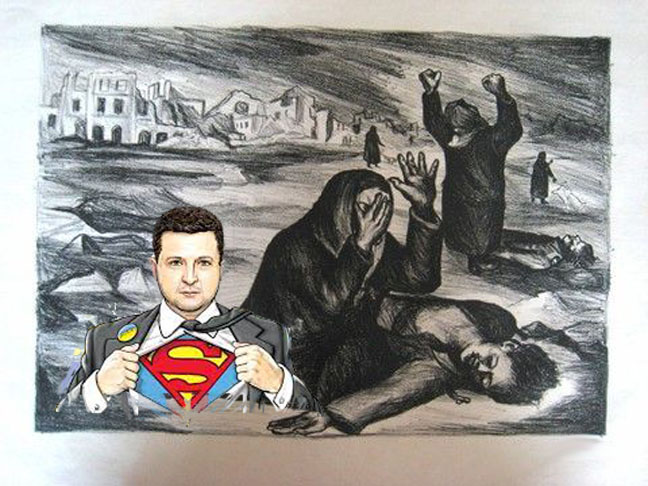
timeline of events leading up to the commencement in February 2022 of Russia’s Special Military Operation
Eva Karene Bartlett, Oct 28, 2025, https://evakarenebartlett.substack.com/p/the-anti-russia-pre-smo-timeline?utm_source=post-email-title&publication_id=3046064&post_id=177345476&utm_campaign=email-post-title&isFreemail=true&r=1ise1&triedRedirect=true&utm_medium=email
Very useful written timeline of events leading up to the commencement in February 2022 of Russia’s Special Military Operation.
Jacques Baud discussed much of this (see bottom of this post), but this written account is worth bookmarking.
Alan Watson:
“Vladimir Putin did not wake up on 24 February 2022 and decide, “I think I’ll invade eastern Ukraine today,” nor was the US campaign to expand NATO into Ukraine a last-minute maneuver. (US State Department documents show Ukraine’s future membership was discussed as early as 1994.)
9 Feb 1990: In a deal approved by Mikhail Gorbachev, the last leader of the Soviet Union, as a quid pro quo for accepting German reunification within NATO, Secretary of State James Baker pledged that NATO would not expand “one inch to the east.”
US, European and German leaders made explicit assurances to Gorbachev against any future eastward NATO expansion. Gorbachev understood the assurances as a “binding agreement.” Subsequently, Soviet leaders made decisions on that basis and acted on them – withdrawing the Red Army from Germany and dissolving the Warsaw Pact.
12 March 1999: Clinton is president. The Czech Republic, Hungary and Poland became members of NATO. A weakened post-Soviet Russia, led by Boris Yeltsin, controlled by a cabal of Oligarchs, could do nothing to prevent it. Powerless, Yeltsin was said to be “infuriated” with “his friend Bill Clinton…”
29 March 2004: George W. Bush is president. Seven more Eastern European countries join NATO: Bulgaria, Estonia, Latvia, Lithuania, Romania, Slovakia and Slovenia – largest wave of NATO enlargement ever.
April 2008: At the Bucharest NATO summit, George W. Bush announced that Ukraine and Georgia are on an “immediate path to NATO.” Bill Burns, ambassador to Russia, sent a memo to Secretary of State Condoleezza Rice. “Across the board,” he wrote, the Russian political class told him, “Ukraine is the reddest of red lines” – “Nyet means nyet.”
22 Feb 2014: Just as the Sochi Winter Olympics were underway, Kiev erupted in violence. State Department official Virginia Nuland boasted that since the 2004-2005 “Orange Revolution,” the US had spent $5 billion on regime change in Ukraine. NATO rooftop snipers killed both protestors and police, forcing Ukraine’s democratically elected president Viktor Yanukovych to flee the country.
2 May 2014: Bussed to Odessa from Kiev, Right Sector thugs carrying baseball bats confront ethnic Russians protesting the coup. When protestors fled into the city’s Trade Unions House, the building was set on fire. Forty-eight people were burned or bludgeoned to death – the Donbass civil war point of no return.
11 Feb 2015: Putin and Ukrainian President Poroshenko meet with French President Francois Hollande and German Chancellor Angela Merkel in Belarus to negotiate the Minsk ceasefire accords. The leaders agreed to a deal that would have ended the fighting – granting autonomy to the Russian-speaking Donbass, but successive Ukrainian governments refused to implement the accord.
German Chancellor Merkel later admitted that Minsk was a stall tactic to allow the West to build Ukraine’s army up to NATO standards. [Ed. note – Zelensky also admitted that he lied in his campaign for President, in pledging to uphold the Minsk agreement]
17 Dec 2021: Team Biden rejects Putin’s proposed mutual security accords that would have left a “neutral” Ukraine intact. For years, Russia had tried to convince US administrations that Ukraine was off-limits to NATO membership, but Russian concerns were brushed aside. December 2021, Team Biden insisted, “Russia doesn’t say who can join NATO.”
18 Feb 2022: During the Winter Olympics in China, the Organization for Security and Co-operation in Europe (OSCE) documented that Ukraine had ramped up artillery attacks along the Line of Contact.
(Since the 2014 coup in Kiev, the Armed forces of Ukraine, including the Neo-Nazi Banderites, had killed thousands of ethnic Russians in the Donbass.
19 Feb 2022: Invited to speak at the Munich Security Conference, Ukrainian President Zelensky said, “Ukraine will get and deploy nuclear missiles.”
20 Feb 2022: On CBS 60 Minutes, Ukraine’s Minister of Foreign Affairs Dmytro Kuleba said, “Ukraine will never honor the Minsk cease fire.”
21 Feb 2022: Russia captured a Ukrainian soldier, killed five others as they crossed over the border into Rostov. Russia learned the invasion of Donetsk city was imminent and recognized the breakaway Donbass and Luhansk oblasts as independent republics.
24 Feb 2022: With about 90,000 troops, Russia launched its “Special Military Operation” – not a “full scale invasion.” Citing the UN principle, “Responsibility to Protect,” Russia intervened in the eight-year Donbass civil war after all prospects for diplomacy had failed.
April 2022, week six of the war, Russian and Ukrainian negotiators convened peace talks in Istanbul. Later, Ukrainian diplomat Oleksandr Chalyi recalled, “Putin tried to do everything possible to conclude an agreement…” [The tentative accord would have left a “neutral” #Ukraine intact.]
On 1 April, USAID revealed photographic evidence of a “massacre” in Bucha and financed a press tour featuring US public figures. Problem: Four days earlier at a press conference, the mayor had announced that the Russians had retreated from the city [and he did not report there had been a massacre].
After the Russians voluntarily retreated, the regime scattered bodies in the streets that included both actors in body bags and recently killed “Russian collaborators” from around Bucha – giving an “outraged” Joe Biden and Boris Johnson, who flew unannounced to Kiev, the justification to order Zelensky to “keep fighting.”
If the US, UK and EU continue rejecting Russian proposals for a long term, European wide peace accord – as Putin proposed in December 2021 – the Russian army will continue advancing toward Kharkiv in the north and Odessa on the Black Sea. As Putin and Foreign Minister Sergei Lavrov emphasized: There will be no Minsk III.”
From a September 2024 interview I did with Jacques Baud (former Swiss intelligence & author). In this clip, Jacques lays out the history of events related to Ukraine prior to 2022, prior even to the 2014 coup which brought fascism to power in Ukraine, & how it was the NATO-Ukraine alliance which brought war, not Russia.
Full interview: https://rumble.com/v5fjhrh-jacques-baud-nato-threatened-russia-decades-before-2022.html https://odysee.com/@EvaKareneBartlett:9/JacquesBaudNATOThreatenedRussia:5
1 This Month

of the week – Shut Down Drone Warfare!


Tell the Ukrainian Government to Drop Prosecution of Peace Activist Yurii Sheliazhenko

Petition to revoke the licensing of the Near Surface Nuclear Disposal Facility (NSDF) at Chalk River. https://www.ourcommons.ca/petitions/en/Petition/Details?Petition=e-7247
To see nuclear-related stories in greater depth and intensity – go to https://nuclearinformation.wordpress.com
-
Archives
- March 2026 (244)
- February 2026 (268)
- January 2026 (308)
- December 2025 (358)
- November 2025 (359)
- October 2025 (376)
- September 2025 (257)
- August 2025 (319)
- July 2025 (230)
- June 2025 (348)
- May 2025 (261)
- April 2025 (305)
-
Categories
- 1
- 1 NUCLEAR ISSUES
- business and costs
- climate change
- culture and arts
- ENERGY
- environment
- health
- history
- indigenous issues
- Legal
- marketing of nuclear
- media
- opposition to nuclear
- PERSONAL STORIES
- politics
- politics international
- Religion and ethics
- safety
- secrets,lies and civil liberties
- spinbuster
- technology
- Uranium
- wastes
- weapons and war
- Women
- 2 WORLD
- ACTION
- AFRICA
- Atrocities
- AUSTRALIA
- Christina's notes
- Christina's themes
- culture and arts
- Events
- Fuk 2022
- Fuk 2023
- Fukushima 2017
- Fukushima 2018
- fukushima 2019
- Fukushima 2020
- Fukushima 2021
- general
- global warming
- Humour (God we need it)
- Nuclear
- RARE EARTHS
- Reference
- resources – print
- Resources -audiovicual
- Weekly Newsletter
- World
- World Nuclear
- YouTube
-
RSS
Entries RSS
Comments RSS
 nuclear-news