My Six Mentors, by Mary Olson, Gender and Radiation Impact Project, 1 January 20121
…in these atomic times…
[September, 2020] I was born in 1958—full-on Cold War… my family lived upwind of the Nevada nuclear weapons test site in California and even there air quality was the reason my parents gave when they moved our family back to the Midwest… I was in kindergarten in a tiny town in Illinois during the Cuban Missile Crisis, when a bomb drill caused me to become aware of nuclear annihilation at that age. I opted out: that very night I got sick and stayed chronically ill dropping out of kindergarten and was mostly homeschooled for the next 12 years. I am fortunate that my brilliant parents were my teachers and I learned a lot on that journey. When I emerged well enough to go college and work, I learned even more from amazing women. These six, my MENTORS:
Diana Bellamy, MFA
At Reed College I majored in Biology—focused on evolution, and History of Science. As a Junior I fulfilled an arts requirement by taking a theater course, for the first time. Professor Diana Bellamy was a working actor, and in her Introduction to Acting class I discovered that embodiment of an experience is something that others can see and recognize, and at times, experience with the actor. My ability was spotted by Bellamy. She invited—urged me–to change my major and come to the Theater Department, even so late in my coursework. I was shocked into an evaluation of my own priorities and goals.
The following summer was a deep-dive into determining whether to stay the course in my original science major, or jump. The process of discernment, largely via discussions with my father, brought me to a deep understanding of WHY I was studying science: I knew that society’s decisions and actions would be, more and more, made in the worlds of research and technology, and I also knew that ordinary people do not speak those languages. I wanted to become fluent enough in that world to be able to help translate for those who are affected, but outside that bubble. Eventually, ten years out, I attained that role…and have stayed with it.
Diana’s recognition of my ability to project experience challenged me to find the reason I would stay in Biology besides a more stable work-life. It was an empowerment for me to find how to use my gift as a communicator. I bow to her every time I take the stage to speak to 10’s or to 1000’s of people, and help them experience the vital importance of what I am there to say. …………
Sharon Barry, CPA
As I left research behind at age 25, I needed stability, clean air and water, and a different kind of stress as I rebuilt my health. In 1986 I got a job running the retreat, conference center, and camp in Michigan where my parents had been summer staff when I was a toddler—and I had attended camp. Circle Pines Center is both legendary, and unknown. I created, and served on a Management Team for five years and built a strong tool-box of non-profit organizational skills. That portfolio includes business management and administration. It was my dear friend and mentor, Sharon who helped me learn. Our relationship was not easy—but Sharon stood by me as she taught me the craft, and helped with the art by serving on the Finance Committee of the Board. We rebuilt the Center which had been in tough shape…to its strongest financial footing in decades. Sharon went on to win her own CPA and has been part of my financial life ever since as my accountant. I am not wealthy, but I am also deeply committed to accountability. Sharon taught me, and continues to support me in this. It is her strength I pull on to get through my own tough times. THANK YOU!
Judith Johnsrud, PhD
I met Judy in 1990 at the Backyard Eco Conference in Michigan. I left my submersion job at Circle Pines and drove to the gathering, expressly to hear Johnsrud speak about radioactivity in the environment. I had been recovering from my radiation exposure, and learning about new proposals from the federal government to deregulate a large share of the radioactive waste generated in the processing of uranium for nuclear fuel, and the operation of nuclear reactors for energy and nuclear weapons materials production. The Below Regulatory Concern Policy would put metals, building materials, soil and many other materials that were measurably radioactive into unregulated county landfills and also allow recycle into consumer products, with no warning or label. The deregulation is what I wanted to talk to her about. It seemed to me that what happened in the lab with a tiny plastic petri dish might happen in a Walmart to someone who never knew what had happened since radioactivity is invisible, has no smell or taste…
When I got to the conference, event organizers were looking for a volunteer to drive Judy across the state to the airport near Detroit. I immediately volunteered—it was a 5 hour drive and that gave us plenty of time to get to know each other. Judy remained my friend, my confidant and my teacher for the next 20 years as I moved into working at the national and global level for the peaceful end of the nuclear era—ending the production of more nuclear waste and better protection for our living systems from the waste we already have made. Nuclear Information and Resource Service (NIRS) was founded by a small group, including Judy Johnsrud. I was hired in 1991 as Staff Biologist and Radioactive Waste Specialist, and Judy was always there—and in the first decade, we were often the only women in the room. Judy died in 2014; I retired from NIRS, five years later, in 2019.
Joanna Macy
The paths of Joanna Macy and I have crossed and re-crossed—I first met her work in her first book, ‘Despair and Personal Power in the Nuclear Age,’ published in 1983, before my radiation accident…I actually met her in-person, briefly at that time because of her leadership in the Buddhist Peace Fellowship… and our paths crossed again, briefly, when she and her husband Fran introduced me to their concept of Nuclear Guardianship. It was not until a younger friend and protégé of mine convinced me to attend a short-course at Schumacher College in Devon England (1998) led by both Fran and Joanna that I got to know her…a little. It was a two-week session rooted in community work that formed the later book, ‘Coming Back to Life’ (1998). I include Joanna here, as a Mentor, even though we have spent little time together, because when I open my mouth to speak, it is most often her influence I hear. The basic insight that we are all one is a foundation for me—and she brings that insight to the nuclear work. I honor her, and in doing so, I hear echoes of her in me…… https://www.genderandradiation.org/blog/2020/12/31/my-six-mentors
According to Kyrgyz official data, the gamma radiation on tailings pit surfaces are within 17-60 mR/hr; however, in the damaged areas, radiation levels reach 400-500 mR/hr. An exposure to 100 mSv a year (a millisievert, mSv, is equal to 100 milliroentgens, mR) or 10,000 mR is the point where an increase in cancer is clearly evident. At 400-500 mR/hr this would be achieved in 20-25 hours, or just one day. Radionuclides and heavy metals from these tailing pits and dumps are seeping into the surface and groundwater, polluting water and farmland and increasing the risk of cancer for local people.
Birth anomalies are an additional indicator of environmental radioactive contamination. A study by the Institute of Medical Problems showed that the incidence of birth defects in Mailuu-Suu was three times higher than in the country’s second largest city of Osh. Studies have correlated birth defects to the distance of the parents’ residences from radioactive waste sites. Polluted water is the major factor causing the development of congenital malformations, according to research by the Institute of Medical Problems.
Countries must set aside territorial disputes and work together to clean up radioactive waste seeping into rivers and farmland in the Ferghana Valley – causing an environmental and health catastrophe for people living in the region Janyl Madykova, September 2, 2020 Political tensions between countries in Central Asia have intensified since the collapse of the Soviet Union. Along with border conflicts and water disputes, problems have arisen from residual radioactive waste located in the Kyrgyz town of Mailuu-Suu in the Ferghana Valley, which has caused widespread pollution of river and farmland, and led to major impacts on the health and economy of people in Kyrgyzstan and Uzbekistan.
Industrial-scale uranium mining began in Mailuu-Suu during the Soviet era in 1946 and lasted until 1968. Uranium ore from Europe and China was also processed in Mailuu-Suu during this time.
As a result, the small town of 24,000 people is now surrounded by about 3 million cubic metres of uranium waste left in 23 tailings pits and 13 dumps. These sites have contaminated the Mailuu-Suu river, a major tributary of the Syr Darya which flows through Kyrgyzstan and into Uzbekistan, carrying radioactive waste into the densely populated Ferghana Valley.
The biggest problem is that earthquakes, landslides and heavy rainfall events have intensified in recent years, destroying uranium tailing storage sites along the river and mountain slopes, contaminating surrounding areas. A number of international organisations have worked to prevent further disasters in Mailuu-Suu. The World Bank has allocated more than USD 11 million to clean up uranium tailings. The European Commission launched an initiative in 2015 to remediate the most dangerous sites in Kyrgyzstan, Tajikistan and Uzbekistan.
However, the pollution remains, and Central Asian countries must cooperate to prevent further environmental disasters in the Ferghana Valley, as well as mitigate economic damage and resolve political issues.
A town built on radioactive waste
According to the state surveys there are 92 radioactive and toxic storage facilities across Kyrgyzstan today. The most dangerous of these are the Mailuu-Suu uranium sites, because of numerous hazards threatening the tailing pits. Were these tailing pits destabilised, they would have potentially catastrophic environmental consequences for Kyrgyzstan and the neighbouring countries of Uzbekistan and Kazakhstan, with the radioactive waste contaminating the river as well as the soil and irrigated farmland surrounding it.
Uranium was first discovered in the region in 1933, and within 20 years 10,000 tonnes of uranium oxide was extracted in Mailuu-Suu. Residual radioactive waste in southern Kyrgyzstan currently poses a major environmental threat to the densely populated parts of the Ferghana Valley, home to about 14 million people.
Landslides are the major risk. There are more than 200 landslide-prone locations around Mailuu-Suu. There was little such threat in the 1940s, but landslide activity has intensified since 1954 due to increased rainfall. Landslides in Mailuu-Suu occurred several times in 1988, 1992 and 2002, damaging infrastructure and altering water flow. The most dangerous landslide is Koi-Tash, which happened in 2017 and could block the riverbed and spread radioactive contamination down the river.
The 1950s saw one of the most salient examples of the danger posed by vulnerable waste dumps. In April 1958, as a result of rainfall and high seismic activity, an alluvial dam collapsed into tailings pit #7 in Mailuu-Suu, pushing more than 400,000 cubic metres of radioactive waste into the Mailuu-Suu river, which then spread 30-40 km downstream in irrigated farmland in Uzbekistan. The effects of this disaster have lasted to this day, with the radioactive contamination of the river and surrounding soil and vegetation causing major health problems and fatalities. Such disasters also heighten tensions between the regional states. Continue reading →
US official: Research finds uranium in Navajo women, babies, https://apnews.com/334124280ace4b36beb6b8d58c328ae3?fbclid=IwAR2UqarRiUTIPwnRCA_DGkjKuahfFO4T_l9iFrXxb1P8qL5AnmrTc1m61W8By MARY HUDETZ, October 8, 2019, ALBUQUERQUE, N.M. (AP) — About a quarter of Navajo women and some infants who were part of a federally funded study on uranium exposure had high levels of the radioactive metal in their systems, decades after mining for Cold War weaponry ended on their reservation, a U.S. health official Monday.
The early findings from the University of New Mexico study were shared during a congressional field hearing in Albuquerque. Dr. Loretta Christensen — the chief medical officer on the Navajo Nation for Indian Health Service, a partner in the research — said 781 women were screened during an initial phase of the study that ended last year.
Among them, 26% had concentrations of uranium that exceeded levels found in the highest 5% of the U.S. population, and newborns with equally high concentrations continued to be exposed to uranium during their first year, she said.
The research is continuing as authorities work to clear uranium mining sites across the Navajo Nation.
“It forces us to own up to the known detriments associated with a nuclear-forward society,” said U.S. Rep. Deb Haaland, who is an enrolled member of Laguna Pueblo, a tribe whose jurisdiction lies west of Albuquerque.
The hearing held in Albuquerque by U.S. Sen. Tom Udall, Haaland and U.S. Rep. Ben Ray Lujan, all Democrats from New Mexico, sought to underscore the atomic age’s impact on Native American communities.
The three are pushing for legislation that would expand radiation compensation to residents in their state, including post-1971 uranium workers and residents who lived downwind from the Trinity Test site in southern New Mexico.
The state’s history has long been intertwined with the development of the nation’s nuclear arsenal, from uranium mining and the first atomic blast to the Manhattan project conducted through work in the once-secret city of Los Alamos. The federal Radiation Exposure Compensation Act, however, only covers parts of Nevada, Arizona and Utah that are downwind from a different nuclear test site.
During the hearing, Haaland said one of her own family members had lost his hearing because of radiation exposure. At Laguna Pueblo, home to her tribe, the Jackpile-Paguate Mine was once among the world’s largest open-pit uranium mines. It closed several decades ago, but cleanup has yet to be completed.
“They need funds,” Haaland said. “They job was not completed.”
David Gray, a deputy regional administrator for the U.S. Environmental Protection Agency, said the mine illustrates uranium mining and milling’s lingering effects on Indian Country.
On the Navajo Nation, he said, the EPA has identified more than 200 abandoned uranium mines where it wants to complete investigation and clean up under an upcoming five-year plan, using settlements and other agreements to pay for the work that has taken decades.
Udall, who chaired the hearing, acknowledged federal officials had shown progress but that the pace of cleanup has proven frustrating for some community members.
“They feel an urgency,” Udall said. “They feel that things need to happen today.”
In her testimony, Christensen described how Navajo residents in the past had used milling waste in home construction, resulting in contaminated walls and floors.
From the end of World War II to the mid-1980s, millions of tons of uranium ore were extracted from the Navajo Nation, leaving gray streaks across the desert landscape, as well as a legacy of disease and death.
While no large-scale studies have connected cancer to radiation exposure from uranium waste, many have been blamed it for cancer and other illnesses.
By the late 1970s, when the mines began closing around the reservation, miners were dying of lung cancer, emphysema or other radiation-related ailments.
“The government is so unjust with us,” said Leslie Begay, a former uranium miner who lives in Window Rock, an Arizona town that sits near the New Mexico border and serves as the Navajo Nation capital. “The government doesn’t recognize that we built their freedom.”
Begay, who said he has lung problems, attended the hearing with an oxygen tank in tow. The hearing held in the Southwest was especially meaningful for him after traveling in the past to Washington to advocate for himself and others, he said.
Associated Press reporter Felicia Fonseca in Flagstaff, Arizona, contributed to this report.
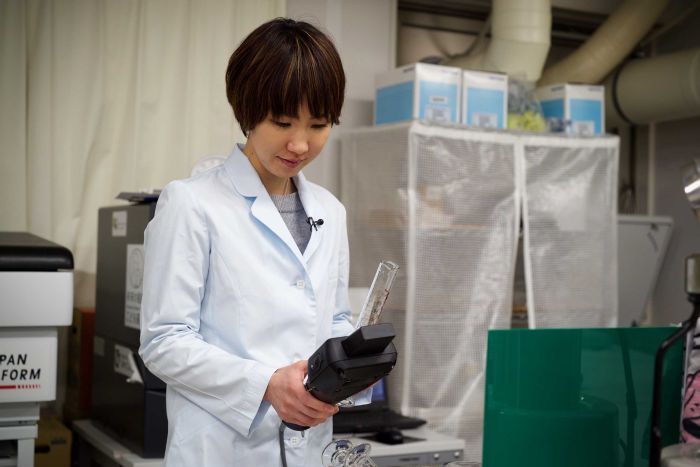
By North Asia correspondent Jake Sturmer and Yumi Asada in Fukushima nside a laboratory in Fukushima, Japan, the whirr of sophisticated equipment clicks, beeps and buzzes as women in lab coats move from station to station.
Key points:
Mothers in Fukushima set up a radiation testing lab because they didn’t trust government results
The women test food, water and soil and keep the public informed about radiation levels
A major earthquake and tsunami caused a nuclear accident at the Fukushima power plant in 2011
They are testing everything — rice, vacuum cleaner dust, seafood, moss and soil — for toxic levels of radiation.
But these lab workers are not typical scientists.
They are ordinary mums who have built an extraordinary clinic.
“Our purpose is to protect children’s health and future,” says lab director Kaori Suzuki.
In March 2011, nuclear reactors catastrophically melted down at the Fukushima Daiichi plant, following an earthquake and tsunami.
Driven by a desperate need to keep their children safe, a group of mothers began testing food and water in the prefecture.
The women, who had no scientific background, built the lab from the ground up, learning everything on the job.
The lab is named Tarachine, a Japanese word which means “beautiful mother”.
“As mothers, we had to find out what we can feed our children and if the water was safe,” Ms Suzuki says.
“We had no choice but to measure the radiation and that’s why we started Tarachine.”
After the nuclear accident, Fukushima residents waited for radiation experts to arrive to help.
“No experts who knew about measuring radiation came to us. It was chaos,” she says.
In the days following the meltdown, a single decision by the Japanese Government triggered major distrust in official information which persists to this day.
The Government failed to quickly disclose the direction in which radioactive materials was drifting from the power plant.
Poor internal communications caused the delay, but the result was that thousands fled in the direction that radioactive materials were flying.
Former trade minister Banri Kaieda, who oversaw energy policy at the time, has said that he felt a “sense of shame” about the lack of disclosure.
But Kaori Suzuki said she still finds it difficult to trust the government.
“They lied and looked down on us, and a result, deceived the people,” Ms Suzuki says.
“So it’s hard for the people who experienced that to trust them.”
She and the other mothers who work part-time at the clinic feel great responsibility to protect the children of Fukushima.
But it hasn’t always been easy.
When they set up the lab, they relied on donated equipment, , and none of them had experience in radiation testing. There was nobody who could teach us and just the machines arrived,” Ms Suzuki says.
“At the time, the analysing software and the software with the machine was in English, so that made it even harder to understand.
“In the initial stage we struggled with English and started by listening to the explanation from the manufacturer. We finally got some Japanese software once we got started with using the machines.”
Radiation experts from top universities gave the mothers’ training, and their equipment is now among the most sophisticated in the country.
Food safety is still an issue
The Fukushima plant has now been stabilised and radiation has come down to levels considered safe in most areas.
But contamination of food from Japan remains a hotly contested issue.
Australia was one of the first countries to lift import restrictions on Japanese food imports after the disaster.
But more than 20 countries and trading blocs have kept their import ban or restrictions on Japanese fisheries and agricultural products.
At the clinic in Fukushima, Kaori Suzuki said she accepted that decision.
“It doesn’t mean it’s right or wrong. I feel that’s just the decision they have made for now,” she says.
Most results in their lab are comparatively low, but the mothers say it is important there is transparency so that people know what their children are consuming.
Fukushima’s children closely monitored after meltdown
Noriko Tanaka is one of many mothers in the region who felt that government officials were completely unprepared for the unfolding disaster.
She was three months pregnant with her son Haru when the disaster struck.
Ms Tanaka lived in Iwaki City, about 50 kilometres south of the power plant.
Amid an unfolding nuclear crisis, she panicked that the radioactive iodine released from the meltdown would harm her unborn child.
She fled on the night of the disaster.
When she returned home 10 days later, the fear of contamination from the invisible, odourless radioactive material weighed deeply on her mind.
“I wish I was able to breastfeed the baby,” she says.
“[Radioactive] caesium was detected in domestic powdered milk, so I had to buy powdered milk made overseas to feed him.”
Ms Tanaka now has two children —seven-year-old Haru and three-year-old Megu. She regularly takes them in for thyroid checks which are arranged free-of-charge by the mothers’ clinic.
Radiation exposure is a proven risk factor for thyroid cancer, but experts say it’s too early to tell what impact the nuclear meltdown will have on the children of Fukushima.
Noriko Tanaka is nervous as Haru’s thyroid is checked.
“In the last examination, the doctor said Haru had a lot of cysts, so I was very worried,” she says.
However this time, Haru’s results are better and he earns a high-five from Dr Yoshihiro Noso.
He said there was nothing to worry about, so I feel relieved after taking the test,” Ms Tanaka says.
“The doctor told me that the number of cysts will increase and decrease as he grows up.”
Doctor Noso has operated on only one child from Fukushima, but it is too early to tell if the number of thyroid cancers is increasing because of the meltdown.
“There isn’t a way to distinguish between cancers that were caused naturally and those by the accident,” he says.Dr Noso says his biggest concern is for children who were under five years old when the accident happened.The risk is particularly high for girls.
Even if I say there is nothing to worry medically, each mother is still worried,” he says.
“They feel this sense of responsibility because they let them play outside and drink the water. If they had proper knowledge of radiation, they would not have done that,” he said.
Mums and doctors fear for future of Fukushima’s children
After the Chernobyl nuclear disaster of 1986, the incidence of thyroid cancers increased suddenly after five years….
“In the case of Chernobyl, the thyroid cancer rate increased for about 10 years. It’s been eight years since the disaster and I would like to continue examinations for another two years.” …….
“Some children who evacuated from Fukushima living in other prefectures are being bullied [so badly that they] can’t go to school,” Noriko Tanaka said.
“The radiation level is low in the area we live in and it’s about the same as Tokyo, but we will be treated the same as the people who live in high-level radiation areas.”
Noriko is particularly worried for little Megu because of prejudice against the children of Fukushima.
“For girls, there are concerns about marriage and having children because of the possibility of genetic issues.”
Age and Sex Bias in Radiation Research—and How to Overcome It http://jnm.snmjournals.org/content/60/4/466.full, 1 Apr 19, Britta Langen, Department of Radiation Physics, Institute of Clinical Sciences, Sahlgrenska Cancer Center, Sahlgrenska Academy, University of Gothenburg, Gothenburg, Sweden
For correspondence or reprints contact: Britta Langen, Department of Radiation Physics, University of Gothenburg, Sahlgrenska University Hospital, Gula stråket 2B, SE-413 45 Gothenburg, Sweden. E-mail: britta.langen@gu.se
Basic research is the driving force behind medical progress. As successful as this relation has been, an intrinsic dilemma persists to this day: each study design frames reality—yet the conclusions seek general validity. This dilemma crystallizes into major bias when conclusions are based on selected groups that do not represent the reality of biologic diversity. Ironically, while striving for a future of highly personalized treatments, we have overlooked the obvious features that make an individual, stratify a cohort, and influence outcome: age and sex.
A current example of this issue are molecular biomarkers that may bring the next quantum leap in clinical practice. Biomarkers such as transcripts, proteins, or metabolites can easily be sampled from blood, quantified, and used for biologic dosimetry, risk estimation for postradiation therapy diseases, or screening in radiation hazard events. Still, most studies that use novel “omics” or “next-gen” methods for screening harbor pitfalls similar to previous methodologies and neglect age and sex as important factors. This can compromise the sensitivity, specificity, and accuracy of biomarkers, leading to erroneous diagnosis and treatment planning.
Sex bias in biomedical research is not a new revelation (1). Surprisingly, it stems not only from the use of single-sex cohorts but also from omitting sex as a factor altogether. Although other fields, such as neuroscience research, have started to tackle this issue (2), it remains largely unaddressed and underrepresented in radiation biology and related medical fields. For instance, sex-specific radiation sensitivity is known in principle yet is rarely considered in study designs beyond this particular research question. The bias in our knowledge base becomes even more worrisome when considering the nonlinearity of age between humans and mice (3). Do we relate age according to sexual maturity, onset of senescence, or total life span? It is reasonable to assume that the answer is, “depending on the research question and biologic endpoint.” However, this issue is usually neglected altogether and the age of the animal is chosen for purely practical reasons. Recently, research on age and sex bias has shown that radiation responses can differ largely between male and female mice, as well as between adolescent and adult specimens (4). If only one group had been used in the proteomic screening for blood-based biomarkers, the conclusions on dose–response would differ and poorly represent radiobiologic effects for other sex and age groups. Most importantly: if neglected, the bias would remain unknown and create large uncertainties that ultimately lead to avoidable risks for patients in radiotherapy and nuclear medicine.
It will be difficult to update our knowledge base to consider these basic factors systematically; in the end, a large body of evidence will still include age and sex biases. Nevertheless, the sooner we start taking action to overcome age and sex bias in our field, the less will misleading information contaminate the knowledge base. Each of us can partake in this effort according to our opportunities. For example, researchers can plan studies with male and female cohorts, principal investigators can establish such cohorts as the group standard, and manuscripts and grant applications can address these possible biases and highlight measures on how to control them. Reviewers can identify age and sex bias and consider it a methodologic limitation, and editors can establish submission forms that require disclosure of age and sex as preclinical study parameters. Lecturers can inform about these potential biases in research and raise students’ awareness when working with source material. Finally, students and PhD candidates can take initiative and, if presented with biased data or methodologies, address age and sex as important factors.
Undoubtedly, using both male and female cohorts and different age groups in research is resource-intensive. It is paramount that funding agencies support these efforts by rewarding points for rigorous research designs that consider age and sex as essential factors. Some large international funding agencies have already started to include dedicated sections on the age and sex dimension in grant applications, but this change needs to be consistent across all funding bodies on the national and regional levels.
By committing to a higher methodologic standard, we can reduce critical bias in our field and in radiation research as a whole. Ultimately, our effort will increase the quality of diagnosis and treatment and improve the odds for therapeutic success for every patient.
Radiation for dummies, Space Daily, by Staff Writers, Paris (ESA) Jan 28, 2019Meet Helga and Zohar, the dummies destined for a pioneering lunar flyby to help protect space travelers from cosmic rays and energetic solar storms.
These two female phantoms will occupy the passenger seats during Orion’s first mission around the Moon, going further than any human has flown before.
Fitted with more than 5600 sensors, the pair will measure the amount of radiation astronauts could be exposed to in future missions with unprecedented precision.
The flight test will take place during NASA’s Exploration Mission-1, an uncrewed trip to the vicinity of the Moon and back to Earth.
Radiation poses a major health risk to people in space. Astronauts on the International Space Station receive doses 250 higher than on Earth. Away from Earth’s magnetic field and into interplanetary space, the impact on the human body could be much higher – up to 700 times more.
Two sources of radiation are of concern: galactic cosmic radiation and virulent solar particle events. This radiation could increase the crew’s risk of cancer and become a limiting factor in missions to the Moon and Mars.
Helga and Zohar The two phantoms simulate adult female torsos. Both Helga and Zohar are made up of 38 slices of tissue-equivalent plastics that mimic the varying density of bones, soft tissue and lungs. Similar dummies are used in hospitals to quantify the right dose of radiation for cancer therapies.
“We chose female phantoms because the number of women astronauts is increasing, and also because the female body is typically more vulnerable to radiation,” explains Thomas Berger, lead scientist of the Matroshka AstroRad Radiation Experiment (MARE) at the German Aerospace Center, DLR.
Sensors have been fitted in the most radiation-sensitive areas of the body – lungs, stomach, uterus and bone marrow. While thousands of passive dosimeters will record the radiation dose from launch until return to Earth, a set of 16 active detectors will map the radiation dose both on the phantoms’ skin and internal organs during flight.
Study: Atomic bomb radiation raised teens’ risk of breast cancer http://www.asahi.com/ajw/articles/AJ201810270001.html, By SONOKO MIYAZAKI/ Staff Writer October 27, 2018 Women from Hiroshima and Nagasaki who had their first periods around the time of the atomic bombs are at an increased risk of developing breast cancer, a study has found.The findings by researchers from Japan and the United States were released by the Radiation Effects Research Foundation (RERF) on Oct. 15, and published in the U.S. academic journal Radiation Research in the same month.
Past studies have revealed patients have a higher risk of breast cancer when they start menstruating earlier or receive doses of radiation in their early years.
Alina V. Brenner, a senior scientist at RERF, said the correlation between onset of menstruation and radiation exposure ages and the radiation-derived risk suggests breast tissue is more sensitive to radiation around the emergence of secondary sexual characteristics.
In the latest study, RERF tracked 120,000 hibakusha atomic bomb survivors and non-hibakusha, and analyzed radiation doses received and the ages of women suffering from breast cancer when they had their first period.
The results showed a 70-year-old woman who first menstruated at the age of 15 and was affected by radiation at 30 has twice as high risk of breast cancer as radiation-free individuals, while the risk for a 70-year-old female survivor who had both a radiation dose and her first period at 15 is 2.4 times higher than non-hibakusha.
Working as a flight crewmember can put a pregnancy at risk, particularly during the first trimester, notes the National Institute for Occupational Safety and Health (NIOSH). NIOSH points to three hazards that could imperil a pregnancy—circadian rhythm disruption (jet lag) or shiftwork, physical job demands, and cosmic ionizing radiation.
While pregnant workers in many occupations do shiftwork and heavy lifting, exposure to high levels of cosmic ionizing radiation is probably an occupational hazard that is unique to flight crews. The problem for pregnant flight attendants is that it cannot be avoided while flying.
What Is It?
Cosmic ionizing radiation comes from outer space with a very small amount reaching the earth. At flight altitudes, passengers and crewmembers are exposed to higher levels on every flight. The World Health Organization says that ionizing radiation causes cancer as well as reproductive problems, but NIOSH believes the issue warrants additional study.
“We don’t know what causes most health problems that could be linked to radiation, including some forms of cancer and reproductive health issues like miscarriage and birth defects,” states NIOSH. “If you are exposed to cosmic ionizing radiation and have these health problems, we can’t tell if it was caused by your work conditions or something else. We don’t know what levels of cosmic radiation are safe for every person.”
Unsafe Levels
Despite these reservations, NIOSH does not dismiss the risk. For example, one NIOSH study found that exposure to 0.36 millisievert (mSv) or more of cosmic radiation in the first trimester may be linked to an increased risk of miscarriage. If this estimated is accurate, the risk to flight crewmembers is high. The National Council on Radiation Protection and Measurements report that aircrew have the largest average annual effective dose (3.07 mSv) of all U.S. radiation-exposed workers. Other estimates of annual aircrew cosmic radiation exposure range from 0.2 to 5 mSv per year.
There are no official radiation dose limits for aircrew in the United States; however, there are national and international guidelines. For example, the International Commission on Radiological Protection (ICRP) recommends a dose limit of 20 mSv/year averaged over 5 years for radiation workers and 1 mSv/year for the public. For pregnant radiation workers, the ICRP recommends a dose limit of 1 mSv throughout pregnancy. The National Council on Radiation Protection and Measurements has a 0.5 mSv recommended monthly radiation limit during pregnancy.
Solar Particle Events
Flying through a solar particle event doesn’t happen often; pilots fly through about 6 solar particle events in an average 28-year career. Still, a pregnant crewmember who flies through a solar particle event can receive more radiation than is recommended during pregnancy by national and international agencies. Also, avoiding exposure to solar particle events is difficult because they often happen with little warning. One helpful resource is the National Aeronautics and Space Administration’s (NASA) Nowcast of Atmospheric Ionizing Radiation System ((NAIRAS), which was developed to report potentially harmful flight radiation levels to flight crews and passengers.
Recommendations
NIOSH says it recognizes that controlling one’s flight crew responsibilities to reduce exposure to high-altitude radiation is not a simple solution and one that can be constrained by job seniority, lifestyle, and personal issues. However, there are several actions pregnant crewmembers can consider:
Try to reduce time working on very long flights, flights at high latitudes, or flights over the poles. Calculate usual cosmic radiation exposures. The Federal Aviation Administration has developed a tool to estimate the effective dose from galactic cosmic radiation (not solar particle events) for a flight (https://www.faa.gov/data_research/research/med_humanfacs/aeromedical/radiobiology/cari6).
If pregnant or planning a pregnancy, consider work exposures, including cosmic radiation. If pregnant and aware of an ongoing solar particle event when scheduled to fly, consider trip-trading or other rescheduling actions if possible.
More than 60 studies have shown increases of childhood leukemia around nuclear facilities worldwide. Despite this finding, there has never been independent analysis in the US examining connections between childhood cancer and nuclear facilities. The US Nuclear Regulatory Commission (NRC) had tasked the National Academy of Sciences (NAS) to conduct such a study, but then withdrew funding, claiming publicly that it would be too expensive.
n fact, documents obtained through the Freedom of Information Act (FOIA) process reveal that NRC employees had already determined the study would show no impact. Internal emails indicate that staff was presupposing a conclusion for which they had no evidence, demonstrated by statements like “even if you found something that looked like a relationship [between cancer and radiation], you wouldn’t know what to attribute it to,” and “[m]ost people realize that all the evidence shows you’re not going to find anything.” The evidence, however, had not yet been fully collected and examined.
Not protective and unaccountable
While the NRC claims it protects public health, its radiation exposure standards fail to account fully for:
impacts on the placenta
impacts on fetal blood forming cells
impacts on fetal and embryonic organs
estrogenic impacts
disproportionate impacts on women
genetic impacts past the second generation
cumulative damage of repeated radiation exposure
NRC exposure data and modeling is designed to demonstrate compliance with the NRC’s regulations but not to assess health impacts. The NRC has already stated numerous times that it believes low doses of radiation, the kind NRC claims its licensees are allowed to release, pose risks so low that health impacts may not be discernible. We don’t know if NRC’s claims of no discernible or attributable public health impact from nuclear power are actually true since no one has ever looked properly.
Studies in other countries show association between nuclear facilities and childhood cancer. However, given the demonstrable bias of the US NRC toward low doses having no health impact, it is essential that a US study go forward under the auspices of outside, independent experts, in order to examine what is happening in the US.
Ground-breaking study plans were threat to current health assumptions
Under the original and now canceled study, the NRC had tasked the NAS to use the most advanced methods in order to update the study the NRC currently uses to claim its reactors are safe. That study, published in 1990, had several shortcomings including the way the authors define and examine disease, assumptions about doses, location of cases, and who is examined.
The NAS was considering two study designs, one examining specifically children. This study type, dubbed by one expert as a case-control nested in a cohort, is very similar in basic design to studies conducted in France and Germany, which show increases in childhood leukemia around nuclear power facilities.
The NRC scuttled the NAS study in 2015, dubiously claiming it would have cost too much and taken too long. Upon examination, however, it is clear that the NAS study would have challenged the fundamentals of the NRC’s health assessment regime.
To date, most radiation studies have routinely suffered from a host of improper methodologies, making it impossible to discern health impacts. The NAS was considering using new ways of examining the issue by implementing a more detailed, more thorough, publicly shared research protocol. The protocol included:
Making the study process and underlying assumptions public while the study was being conducted
Allowing public comment during the study process
Standardizing raw health data and making it available to researchers and the public
Standardizing and verifying pollutant data
Integrating independently collected pollutant and meteorological data
Examining and redoing the current health models
Tailoring health studies to local conditions
Creating new health models, specifically for the radionuclide carbon
14, which concentrates in fetal tissue more than maternal tissue.
This detailed and accessible protocol could have opened the NRC’s regulatory regime to exhaustive scrutiny, revealing just how inadequate it is for examining health impacts in the first place, never mind protecting public health. Further, with such careful research, NRC could have feared that the NAS study would point to an association between environmental radiation and cancer, as other studies have, although FOIA documents consisting mostly of internal emails did not specifically demonstrate this fear.
Moribund study could be revived, made better
While the NAS child study design and protocol had much to recommend it, it is unclear whether it would have been free of all of the flaws that have historically plagued radiation health assessments. At the point of study cancellation, independent experts still had concerns.
Historically, industry and radiation regulators have insisted that a causal link must be absolutely established between radiation and disease. For protection of the public, however, experts claim the standard should be a lower bar of association with disease. If this study moves forward under the NAS, it needs to relinquish concepts and methods that favor causation.
To date, researchers have started radiation health studies by presuming that there will be no impact because doses are too low — a contention that, in reality, remains scientifically unproven. Many studies reveal the opposite. Any new such research needs to ensure that the basis for health assessments is a focus on health outcomes, not dose models that are fraught with uncertainties.
While NRC licensees attempt to monitor environmental contamination, the NRC has never incorporated biological monitoring, which might prove useful after spike releases from various facility outages. There are several techniques that have been used in other health studies, which a revived cancer study could weave into any child or adult health assessment.
A truly independent and scientifically robust study would attempt to address these issues in addition to using the other enlightened protocols the NAS was considering. With the public process and protocol review suggested by the NAS for this now moribund study, perhaps these remaining shortcomings would finally have been addressed as well. The NRC made sure that did not happen. However, according to Ourania Kosti, NAS researcher coordinating the study, the NAS has left the door open to completing it. “I think it is important to update the findings of the 1990 study using better methodologies and information,” Kosti said. “This is the reason the Academies agreed to carry out the update. The Academies remain willing to do the study, if asked to.”
Cindy Folkers is the radiation and health specialist at Beyond Nuclear.
John Urquhart 19th July 2018 Miscarriages and their causes are rarely discussed in public but for many women they are an unfortunate fact of life. To be more precise; for every 10,000 pregnancies, an estimated 3,000 end with a miscarriage. Very few people know that a significant proportion of these miscarriages is due to chromosome aberrations in the foetus, particularly Down Syndrome.
Boué examined 1,500 foetuses that had naturally aborted. He found that 38% had Down Syndrome. So on that basis, for every 10,000 pregnancies, 1,114 miscarriages occur due to a Down Syndrome condition in the foetus. On the other hand, the actual number of children born with Down Syndrome is less than 10 in 10,000.
Even allowing for therapeutic abortions, this implies that 99% of all foetuses with Down Syndrome are eliminated before reaching full term. A very comprehensive quality control system that must have developed over thousands of years through natural selection.
The very high number of foetuses that start with Down Syndrome would suggest there is some omnipresent environmental factor to which humans are very sensitive.
The Down Syndrome condition, along with other chromosome aberrations, together account for 50% of all natural miscarriages. The aberrations arise when genes on the chromosomes translocate and this is a form of genomic instability. We now know that one source of such instability is radiation. Could natural background radiation be a major cause of the Down Syndrome condition?
We know that radiation levels can vary significantly at times. Gamma monitoring by the independent Argus Network over the last thirty years reveals that, under certain conditions, washout of radionuclides occurs which significantly increases radiation levels. A dramatic illustration of this phenomenon occurred several years ago when workers outside the Berkeley nuclear power station were caught in a rainstorm outside the plant and subsequently triggered radiation monitors on their way in! It was found that their clothes were covered with short-lived, naturally-occurring radionuclides including alpha and beta particles, which when breathed in, can penetrate deep into the body.
So, is natural background radiation a major source of miscarriages in women? Hardly any research has been done in this area, particularly as miscarriages are not a notifiable condition and records are hardly ever kept. So, it is necessary to concentrate purely on the relationship between radiation and Down Syndrome.
In 1972, Eva Alberman reported research findings which showed that exposure to x-rays of mothers to be increased the likelihood of giving birth to a Down Syndrome child, but only at least six years after exposure.
What happened when all mothers to be in Britain were exposed to an unexpected bout of radiation from the Chernobyl nuclear accident in early May 1986? Three large radioactive plumes from the accident swept south to north over the country and where they were intercepted by rain showers, significant amounts of radioactive debris were deposited. One such area was Wales, which it is generally agreed, had significantly higher levels of fallout.
official figures for Down Syndrome comparing England and Wales between 1983 and 2004. In exactly six years after the Chernobyl nuclear accident, Down Syndrome levels in Wales, which previously had matched those in England, increased by about 45% over their English counterparts. This six-year delay effect exactly mirrors the findings of Eva Alberman.
What about other parts of Europe? In “Welcome to Geordiestan” there are detailed facts and discussions of the health impact of the Chernobyl nuclear accident (see details below).
The annual birth defect rates in Belarus, which was heavily contaminated by fallout from Chernobyl: in the most contaminated area, there was a significant jump in birth defects in 1987 and 1988, which could have been caused by exposure of male sperm to radioactive fallout. Levels then return almost to normal but in Belarus as a whole, six years after the Chernobyl nuclear accident the birth defect rate rose to four times the rate before the accident and continued to climb. The impact on the offspring due to parental exposure could be at least ten times higher via women than via men. Once again, there appears to be a six-year effect. These figures cover not only children born with Down Syndrome but all types of birth defects. One of the possible effects of genomic instability is to generate extramutated genes which interact with existing recessive deleterious genes thus bumping up the rate of birth defects.
Clearly, there are many unresolved questions about the impact of radiation on the human female egg but the results from Wales and Belarus suggest that, not only very low levels of man-made radiation may have an effect, but that its genetic consequences are much higher in women than in men.
Yet in the absence of any kind of research into the impact of Chernobyl and other low level radiation sources, the British government has recently announced their goal of increasing the percentage of women working in the nuclear industry to 40%. Could this have the effect of importing a genetic trojan horse into the British nation? Animal studies conducted before and after the Chernobyl nuclear accident show transgenerational effects due to radiation. Ryabokon et al. (2006) showed that, in colonies of bank voles, these effects not only persisted but increased over twenty-two generations.
Genomic instability does not stop at one generation. So women of child-bearing age should seriously consider whether to work in the nuclear industry. Not only for their own sake, but for the sake of their descendants.
Welcome to Geordiestan Published by zencity 2018 ISBN: 978-1-5272-2499-5 UK: £8.99 Now available from bookshops and libraries. For further information email zencity@environment.org.uk
Chennai: Brain tumour has emerged as a type of cancer that affects a large population of youngsters mostly due to exposure to ionizing radiation.
Though a large number of brain tumours can be non-cancerous, the prevalence of brain tumour of both types is rising in the country. On World Brain Tumour Day, medicos discuss various factors associated with brain tumour.
Unnecessary growth of cells within a part of brain can lead to tumours namely, malignant and benign tumours. The incidence of brain tumour has been growing and statistics on childhood cancer reveal that brain tumour is commonest in girls and even in both sexes in adults in the country, though the data may vary for different states.
“Every year 40,000 to 50,000 people are diagnosed with brain tumour. There are 120 different types of brain tumour and they exhibit different symptoms. People who have been exposed to ionizing radiation for longer periods have an increased risk of brain tumour, especially among the youngsters,” said Dr Suresh Kumar, consultant neurologist, Fortis Malar.
After the central government introduced National Cancer Control Programme, various programmes have been launched to screen and diagnose brain tumour at an early stage, and a significant part of it emphasizes on providing palliative care in end stage.
“Genetic factors are also responsible for the incidence of brain tumours, and high dosage of X-rays is also dangerous and can be a risk factor for brain tumour. Some common symptoms are seizures, headaches, blurred vision, vomiting in morning, while the patient can also have difficulty in walking, speaking and sensation,” said senior neurologist N Dinesh.
Medicos usually suggest surgery, radiotherapy, chemotherapy, steroids and anti-seizure medication as few common treatments. However, the treatment can be individualistic based on the type, location, and stage of the tumour.
Ionizing radiation can cause cells to turn cancerous, Pakistan Observer Islamabad : It is well established that exposure to ionizing radiation can result in mutations or other genetic damage that cause cells to turn cancerous.
Now a new study led by researchers with the U.S. Department of Energy’s Lawrence Berkeley National Laboratory (Berkeley Lab) has revealed another way in which radiation can promote cancer development.
Working with cultures of human breast cells, the researchers discovered that radiation exposure can alter the environment surrounding the cells so that future cells are more likely to become cancerous.
“Our work shows that radiation can change the microenvironment of breast cells, and this in turn can allow the growth of abnormal cells with a long-lived phenotype that has a much greater potential to be cancerous,” says Paul Yaswen, a cell biologist and breast cancer research specialist with Berkeley Lab’s Life Sciences Division.
A cell’s phenotype is its full complement of observable physical or biochemical characteristics. Different cells can have phenotypes that look dramatically different or exhibit radically different behaviour even though their genetic makeup (genotype) is identical.
Signals from outside the cell can alter a cell’s phenotype by regulating (or de-regulating) the cell’s use of its genes. Studies have shown that if a cell develops a pre-cancerous phenotype, it can pass on these “epigenetic” changes to its daughters, just as it can pass on genetic mutations.
“Many in the cancer research community, especially radiobiologists, have been slow to acknowledge and incorporate in their work the idea that cells in human tissues are not independent entities, but are highly communicative with each other and with their microenvironment,” Yaswen says. “We provide new evidence that potential cancer agents and their effects must be evaluated at a systems level.”
Yaswen is the corresponding author of a paper describing this study that appears in the on-line journal Breast Cancer Research. Co-authoring the paper were Rituparna Mukhopadhyay, Sylvain Costes, Alexey Bazarov, William Hines and Mary Helen Barcellos-Hoff.
“The work we did was performed with non-lethal but fairly substantial doses of radiation, unlike what a woman would be exposed to during a routine mammogram,” says Yaswen, who is also a member of the Bay Area Breast Cancer and the Environment Research Center. “However, the levels of radiation involved in other procedures, such as CT scans or radiotherapy, do start to approach the levels used in our experiments and could represent sources of concern.”……….
This study was jointly funded the National Institute of Environmental Health Sciences (NIEHS), and the National Cancer Institute (NCI), NIH, through the Bay Area Breast Cancer and the Environment Center, and by the NASA Specialized Center of Research. https://pakobserver.net/ionizing-radiation-can-cause-cells-to-turn-cancerous-5/
Today is International Women’s Day “a time to reflect on progress made, to call for change and to celebrate acts of courage and determination by ordinary women who have played an extraordinary role in the history of their countries and communities.”
There are many such women in the anti-nuclear movement. For example..
Mary Olson is the Founder of the Gender and Radiation Impact Project and is clear her life’s mission is to bring to light the disproportionate impact of radiation on girls and women. Over her long career, Olson has studied radiation health consequences with some of the leading radiation researchers of the 20 th Century including Rosalie Bertell, Alice Stewart, Helen Caldicott and Wing, and was featured in the educational film “ The Ultimate Wish: Ending the Nuclear Age” Through her work as a staff biologist and policy analyst at Nuclear Information and Resource Service , she has worked for decades to improve public policy on highly radioactive spent nuclear fuel and plutonium
Below is an excellent fact sheet from the Nuclear Information and Resource Service
little girls (age 0 — 5 years) are twice as likely to
suffer harm from radiation (defined in BEIR VII
as cancer) as little boys in the same age group. iii
In October 2011, NIRS published a briefing paper
Atomic Radiation is More Harmful to Women iv
containing more details about these findings. The
numbers in the BEIR VII tables are the source of
this new information. Gender difference is not
discussed in the report text.
Not every dose of radiation results in detectable
harm–cells have repair
mechanisms. However,
every exposure carries the potential for harm; and
that potential is tied to age of exposure and
gender.
Radiation Exposure Standards Based on Adult
Male Body
While we cannot see or
otherwise detect radiation with
our senses, we can see its
damage….
When the first regulations were made, it was because
soldiers and scientists in the U.S. (virtually all
male to begin with) were working on building
nuclear weapons. The first standards were
“allowable” limits for exposing these men to a
known hazard.
Radiation Levels v Dose
Geiger counters and other devices can detect
levels of radiation and concentrations of
radioactivity. It is much more difficult to say how much of that energy has impacted a living body (dose). Dose is calculated based on body size, weight, distance from the source and assumptions about biological impact. Gender is not factored in a typical determination of a dose. Historically the “dose receptors” were male, and were of a small age range. It is somewhat understandable that the “Reference Man”v was based on a “Standard Man”–a guy of a certain height, weight and age. Clearly such assumptions are no longer valid when there is such a striking gender difference– 40% to 100% greater likelihood of cancer or cancer death (depending on the age) for females, compared to males.vi
Not Only Cancer
Radiation harm includes not only cancer and leukemia, but reduced immunity, reduced fertility, increases in other diseases including heart disease, birth defects including heart defects, other mutations (both heritable and not). When damage is catastrophic to a developing embryo, spontaneous abortion or miscarriage of a pregnancy may result.vii
Gender Mechanism Not Yet Described
Perhaps the reason that the National Academy of Sciences does not discuss the fact that gender has such a large impact on outcome of exposure to radiation is that the causal mechanism is not yet described.
Dr. Rosalie Bertell, one of the icons of research and education on radiation health effects, suggests that one basis may be that the female body has a higher percentage of reproductive tissue than the male body. Dr. Bertell points to
studies showing reproductive organs and tissues are more sensitive to radiation. Nonetheless, Dr. Bertell is clear: “While research is clearly needed, we should PROTECT FIRST.”
Ignoring Gender Results in More Harm
The NAS BEIR VII findings show that males of all ages are more resistant to radiation exposure than females, and also that all children are more vulnerable than adults. The only radiation standard certain to protect everyone is zero. Given the fact that there is no safe dose of radiation, it is an appropriate goal. Any additional exposure above unavoidable naturally occurring radiation should include full disclosure and concurrence of the individual. It is time to adopt non-radioactive practices for making energy, peace, security and healing.
03/10/2012 Mary Olson, NIRS Southeast maryo@nirs.org / 828-252-8409
i See http://www.nirs.org/radiation/
ii BEIR VII, Table 12D‐3 page 312, National Academy Press (Washington, DC) 2006.
iii BEIR VII page 311, Table 12‐D 1.
iv NIRS: Atomic Radiation is More Harmful to Women http://www.nirs.org/radiation/radhealth/radiationwomen.p df
vICRP Publication 23: Reference Man: Anatomical, Physiological and Metabolic Characteristics, 1st Edition
vi IEER: The use of Reference Man in Radiation Protection Standards and Guidance with Recommendations for Change http://www.ieer.org/reports/referenceman.pdf
vii Non‐cancer health effects are documented in classic works of John Gofman, for instance Radiation and Human Health (Random House 1982) and digital documents available: http://www.ratical.org/radiation/overviews.html#CNR and Dr. Rosalie Bertell’s classic work No Immediate Danger, Summer Town Books, 1986.
The legacy of the Radium Girls lives on through the ripples that their deaths created in labor law and our scientific understanding of the effects of radioactivity.
“Almost everything we know about radiation inside the human body, we owe to them,”
Radium Girls: The dark times of luminous watches
Jacopo Prisco, CNN 20th December 2017 A century ago, glow-in-the-dark watches were an irresistible novelty. The dials, covered in a special luminous paint, shone all the time and didn’t require charging in sunlight. It looked like magic.
One of the first factories to produce these watches opened in New Jersey in 1916. It hired about 70 women, the first of thousands to be employed in many such factories in the United States. It was a well-paid, glamorous job.
For the delicate task of applying the paint to the tiny dials, the women were instructed to point the brushes with their lips. But the paint made the watches glow because it contained radium, a radioactive element discovered less than 20 years earlier, its properties not yet fully understood. The women were ingesting it with nearly every brushstroke.
They became known as the “Radium Girls.”.
A miracle cure
Radium was discovered by Nobel laureate Marie Curie and her husband Pierre in 1898. It was quickly put to use as a cancer treatment.
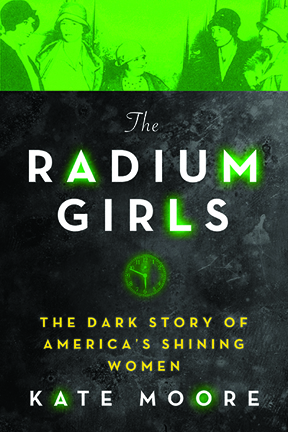
“Because it was successful, it somehow became an all-powerful health tonic, taken in the same way as we take vitamins today — people were fascinated with its power,” said Kate Moore, author of “The Radium Girls,” in a phone interview………
A slow killer
When ingested, radium is particularly dangerous: “Chemically, it behaves very much like calcium,” said Jorgensen. “Since the body uses calcium to make bone, ingested radium is mistaken for calcium and gets incorporated into bone. So the major health risk of ingesting radium is radiation-induced bone necrosis and bone cancers. How soon they develop depends upon the dose, but at the very high doses that the Radium Girls were exposed to, just a few years.”
The luminous paint, which worked by converting the radiation into light through a fluorescent chemical, was one of the most successful radium-based products. By putting the brushes in their mouths, the Radium Girls were especially at risk — so why did they do it? “Because it was the easiest way to get a fine point on the brush, to paint on numbers as small as a single millimeter in width,” said Moore.
But the girls didn’t embrace this technique blindly. “The first thing they asked was (whether) the paint was harmful, but the managers said it was safe, which was the obvious answer for a manager of a company whose very existence depended on radium paint.”
Not all that glitters
When the luminous watches grew fashionable in the early 1920s, the world was already becoming aware of the risks of radioactivity. But radiation poisoning isn’t immediate, so years went by before any of the workers developed symptoms…….
Radium jaw
In the early 1920s, some of the Radium Girls started developing symptoms like fatigue and toothaches. The first death occurred in 1922, when 22-year-old Mollie Maggia died after reportedly enduring a year of pain. Although her death certificate erroneously stated that she died of syphilis, she was actually suffering from a condition called “radium jaw.” Her entire lower jawbone had become so brittle that her doctor removed it by simply lifting it out. “The radium was destroying the bone and literally drilling holes in the women’s jaws while they were still alive,” said Moore.
Yet it would take another two years before the company that owned the factory, the United States Radium Corporation, took any action at all, through an independent investigation commissioned mostly to investigate the declining business rather than the health of the workers.
In 1925 Grace Fryer, one of the workers from the original New Jersey plant, decided to sue, but she would spend two years searching for a lawyer willing to help her. She finally filed her case in 1927 along with four fellow workers, and made front-page news around the world.
The case, settled in the women’s favor in 1928, became a milestone of occupational hazard law. By this time, the dangers of radium were in full view, the lip-pointing technique was discontinued and the workers were being given protective gear. More women sued, and the radium companies appealed several times, but in 1939 the Supreme Court rejected the last appeal.
The survivors received compensation, and death certificates would start reporting the correct cause of death. The year before, the Food and Drug Administration banned the deceptive packaging of radium-based products. Radium paint itself was eventually phased out and has not been used in watches since 1968.
It’s hard to calculate how many women suffered health problems due to the ingestion of radium, but the certainly number in the thousands, according to Moore. Some of the effects would only be felt much later in life through various forms of cancer. With a half-life of 1,600 years, once the radium was inside the women’s bodies, it was there for good.
The legacy of the Radium Girls lives on through the ripples that their deaths created in labor law and our scientific understanding of the effects of radioactivity. “In the 1950s, during the Cold War, many agreed voluntarily to be studied by scientists, even with intrusive examinations because they had been exposed for prolonged periods of time,” said Moore.
While women are leading the resistance, the halls of power in D.C. and states across the country lag pathetically behind. We saw this perhaps most vividly when Trump gathered an all-male group of politicians at the White House to discuss his efforts to gut women’s health care. In a single photograph, the gross underrepresentation of women’s voices in government and on issues directly impacting their lives was crystal clear.
And it was exactly that photograph — and the utterly out-of-sync gender dynamics it laid bare — that stuck in our minds this month as we sat in a hearing of the Senate Foreign Relations Committee on Trump’s unrestrained power to wage nuclear war. A committee with a 20:1 male-to-female ratio heard testimony from three men on whether one man should have total, unchecked power to start a nuclear war and blow up the planet. This is a system that, as Senator Ed Markey (D-MA) said, “boggles the rational mind.”
Apparently, the Senate has a one-woman limit when it comes to foreign policy.
To read the full article at Teen Vogue, https://www.teenvogue.com/story/women-leaders-arent-making-enough-foreign-policy-decisions-and-its-a-problem






 nuclear-news