Middle-aged women ‘most at risk of cancer’ from nuclear power plants
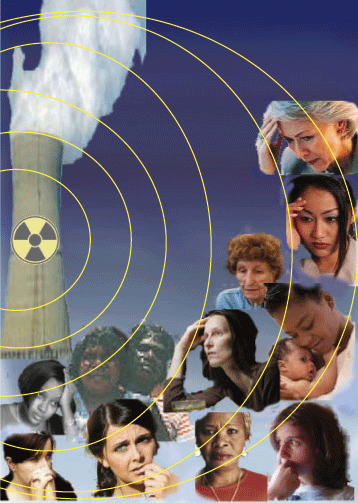
2.1 per cent of cancers in women aged 55-64 attributable to living near a plant, research shows
Sarah Knapton,Telegraph, Science Editor, 23 February 2026
Middle-aged women are the most at risk from living near power plants, a study suggests.
Researchers at Harvard University found that US counties closer to nuclear plants had higher cancer death rates than those farther away, even after accounting for socioeconomic, environmental and health factors.
The team estimated that 2.1 per cent of cancers in women aged 55-64 were “attributable” to living near a plant, the highest of all age groups and genders.
Similarly, 2 per cent of cancers in men aged 65-74 were linked to nuclear plants, the highest age range for males.
Younger people aged 35-44 had the lowest risk, with proximity to nuclear plants accounting for 0.4 per cent of cancers in females and 0.6 per cent in males.
Radiation fears
“Our study suggests that living near a nuclear power plant may carry a measurable cancer risk – one that lessens with distance,” said Dr Petros Koutrakis, the senior author and professor of environmental health and human habitation at Harvard TH Chan School of Public Health.
“We recommend that more studies be done that address the issue of nuclear power plants and health impacts, particularly at a time when nuclear power is being promoted as a clean solution to climate change.”
Last year, Harvard discovered that people living near the Mallinckrodt Chemical Works in Missouri, which processed uranium for the first atomic bomb, had a far higher chance of developing most cancers than those living farther away.
There have been ongoing fears that radiation from power stations can cause cancer, with some evidence showing clusters of leukaemia and non-Hodgkin lymphoma near Sellafield in Cumbria, and Dounreay, on the north coast of Scotland.
The Committee on Medical Aspects of Radiation in the Environment was set up in 1985 to investigate.
Although it confirmed the raised rates, it also found that other nearby villages did not show similar increases as might be expected if the plants were to blame.
Investigators theorised that an influx of workers moving to Seascale and Thurso to work in the nuclear industry might have exposed residents to new infections, causing a rise in childhood cancer rates…………………………………………………………… https://www.telegraph.co.uk/news/2026/02/23/middle-aged-women-most-at-risk-of-cancer-from-nuclear-power/
Gender and radiation: New report shows girls most at-risk group

December 4, 2024,
https://beyondnuclear.org/gender-and-radiation-new-report-shows-girls-most-at-risk-group/
A new United Nations Institute for Disarmament Research (UNIDIR) report by Amanda M. Nichols — Postdoctoral Researcher, University of California, Santa Barbara and Mary Olson — Founder, Gender and Radiation Impact Project entitled Gender and Ionizing Radiation: Towards a New Research Agenda Addressing Disproportionate Harm examines recent research correlating harm from exposure to ionizing radiation and biological sex. The following is the executive summary:
“The detonation of a nuclear weapon in a populated area would cause devastating harm: it can kill thousands of people instantly, whether through the explosion itself, or through the intense heat and high levels of radiation. The mid- and long-term consequences from radiation exposure are less well understood, in part because they manifest differently for male and female survivors.
Robust evidence of differentiated health impacts emerged in 2006, when the US National Academy of Sciences published Biological Effects of Ionizing Radiation VII which reported 60 years of data from the Life Span Study of atomic bomb survivors of Hiroshima and Nagasaki.
Nearly 20 years after the publication of that report, this report speaks to the extent to which new evidence has been published regarding the correlation between harm from exposure to ionizing radiation and biological sex.
This report concludes the following:
The post-2006 radiation research reviewed in this report provides clear evidence that radiation causes more cancer, heart disease, and stroke in women compared to men.

Several studies present evidence that supports the hypothesis that a higher percentage of reproductive tissue in the female body could be one contributing factor to the greater rate of harm from radiation exposure in females compared to males.
In addition to biological sex, some studies suggest that age at time of exposure may be an important factor in assessing radiation outcomes.
Girls (ages 0–5 years) are the most at risk post-birth lifecycle stage for developing cancer and non-cancer related health consequences over the course of the lifetime from exposure to ionizing radiation.
These findings are important for discussions about nuclear non-proliferation and disarmament, given that sex-specific and gendered impacts of nuclear weapons are a prominent topic during the meetings of the Nuclear Non-Proliferation Treaty and the Treaty on the Prohibition of Nuclear Weapons.
More research is needed, however, that takes seriously the ways that age and intergenerational impacts inform discussions about radiological harm. This report concludes with an outline of a future research agenda and suggests research questions applicable across a number of disciplines and lines of inquiry.
Gender and Ionizing Radiation: Towards a New Research Agenda Addressing Disproportionate Harm
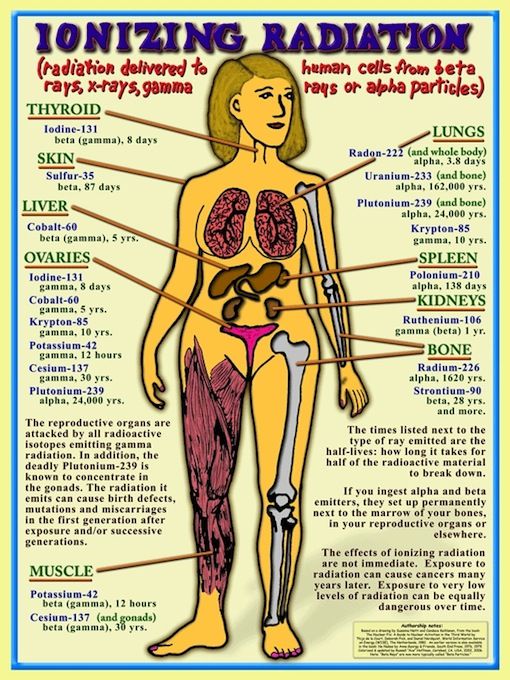
20 November 2024 by Amanda Nichols and Mary Olsen.
Key takeaway: in2011 Mary Olson made a finding in data published by the US National Academy of Science (NAS) in 2006 that radiation exposure is more harmful to females
compared to males.
The new report confirms the finding in an additional 40+
peer-reviewed papers published after 2006.
The detonation of a nuclear weapon in a populated area would cause devastating harm. It can kill thousands of people instantly, whether through the explosion itself or
through the intense heat and high levels of radiation.
The mid- and long-term consequences from radiation exposure are less well understood, in
part because they manifest differently for male and female survivors. This
report provides an overview of recent research on the correlation between
harm from exposure to ionizing radiation and biological sex. Additionally,
it proposes questions for a future research agenda covering gender,
radiation impacts and radiological protection standards.
UNIDIR 20th Nov 2024,
https://unidir.org/publication/gender-and-ionizing-radiation-towards-a-new-research-agenda-addressing-disproportionate-harm/
Campaign for Nuclear Disarmament Bypasses Gender Parity

“If there is one takeaway from Christopher Nolan’s recent film “Oppenheimer,” it is that the nuclear field has been male-dominated from the very start,”
participants in nuclear negotiations perceive that the field has rewarded characteristics, expertise and experiences that are more commonly associated with men, such as toughness, seriousness, risk-taking and military-training.
Such negotiations would be enhanced, and have more possibility for success, if they broadened the ‘diplomatic tool-box’ to also include ‘feminine’ approaches of flexibility, compromise, multi-faceted problem solving, compassion and human interaction (focusing on the people involved and not just the topics),
InDepthNews, By Thalif Deen https://indepthnews.net/campaign-for-nuclear-disarmament-bypasses-gender-parity/
UNITED NATIONS. 6 August 2023 (IDN) — The United Nations has been a vociferous and longstanding advocate of gender empowerment in its political, social and economic agenda characterized by 17 Sustainable Development Goals (SDGs), including poverty and hunger eradication, quality education, human rights and climate change.
In her 23 July presentation, titled Gender inclusivity and approaches to enhance the NPT Review Process, Vanessa Lanteigne, a Rotary Peace Fellow and representative of Parliamentarians for Nuclear Non-Proliferation and Disarmament (PNND), pointed out that in 2019, 76% of heads of delegations to the NPT were men, and that since 2000, all of the Presidents/Chairs of the NPT Prep-Coms have been male and only one President of an NPT Review Conference has been a woman.
She proposed that NPT institute targets for gender inclusion in State Parties’ delegations, with sanctions for imbalanced delegations similar to those applied by Inter-Parliamentary Union for its assemblies.
Lanteigne also noted that a fully-realized gender equality requires that issues, views, and approaches relating to characteristics associated with masculinity and femininity are both fully represented in security frameworks.
She cited the assessment by Ireland in its working paper Gender in the Non-Proliferation Treaty that the NPT Review process has traditionally taken a ‘one -dimensional security approach to addressing nuclear weapons, in terms of the issues which are prioritised’.
She proposed that the NPT establish a subsidiary body to explore nuclear non-proliferation, risk-reduction and disarmament issues in a broader security framework of common and human security incorporating gender, peace, diplomacy, conflict resolution and international law.
Jackie Cabasso, Executive Director at Western States Legal Foundation, told IDN it is completely obvious that women and gender non-conforming people are grossly under-represented in the NPT process.
“And it’s a matter of common sense that people of all genders should be equal partners in making decisions as consequential as the future of nuclear weapons”, she said.
It is also possible that establishing policies like the Inter-Parliamentary Union’s targets for gender balance in States Parties’ delegations to the NPT—enforced, if necessary, by voting sanctions, could help lead the way to improvements in gender equity in delegations’ home countries, said Cabasso, who co-founded the Abolition 2000 Global Network to Eliminate Nuclear Weapons.
However, when talking about how to challenge the seemingly intractable centrality of nuclear threats as an instrument of global domination, she argued, having equal participation in the discussion by all genders will not solve the problem.
“What is needed is a fundamental transformation in the mindset, values, and practices of the institutions that continue to place the construct of “national security” above the increasingly pressing need for universal “human security,” declared Cabasso.
Shampa Biswas, Judge & Mrs. Timothy A. Paul Chair of Political Science and Professor of Politics at Whitman College, Washington told IDN “It is appalling that we are still talking about gender parity in 2023!”.
“If there is one takeaway from Christopher Nolan’s recent film “Oppenheimer,” it is that the nuclear field has been male-dominated from the very start,” she pointed out.
However, although many fields have made great strides toward gender inclusivity, the nuclear policy-making field still remains woefully behind, said Biswas, is an international relations theorist specializing in postcolonial theory and nuclear politics.
“If we are serious about nuclear disarmament, it is imperative that we diversify the field in substantial ways to include voices that can draw attention to the dangers of nuclear weapons from a variety of perspectives and help redefine the meaning of security away from its masculinist, militarist connotations”.
Women’s voices, she said, are critical to that endeavor.
“I support the idea of instituting targets for more gender-inclusive delegations but wish there was a way to do this via incentives rather than penalties,” declared Biswas.
In her 23 July presentation on further strengthening the review process of the Non-Proliferation Treaty (NPT), Lanteigne said the NPT Review process would be enriched, strengthened and made more effective by elevating gender inclusivity and approaches because we could then access a full range of security approaches to our global challenges.
Gender inclusivity and approaches mean firstly that different sexes (male, female and nondeterminate) are included equitably in decision-making processes and leadership positions within the security sector.
And secondly, that diverse gender perspectives, issues and approaches to peace and security are meaningfully incorporated in order to utilize a more diverse, comprehensive and holistic security framework. Integrating these two principles that will support Security Council Resolution 1325 on Women, Peace and Security, which, “stressed the importance of ‘equal participation and full involvement’ of women and the need to increase [women’s] role in decision-making with regard to conflict prevention and resolution”.
Meanwhile, Sustainable Development Goal 5 focuses on gender equality and empowerment of women and girls.
There are indicators that state parties are not only aware and willing to work towards gender equity and inclusion but are actively referencing and promoting it on their own.
At the 2019 PrepCom more than 20 statements were made on behalf of over 60 State Parties addressing the importance of gender perspectives to the NPT, Lanteigne said.
Three papers were submitted directly related to nuclear issues and gender, and eight working papers included references to the links.
Reviewing policies to support equal access to participation is important because it is correlated with improved organizational efficiency and innovative capacity by including more diverse expertise resulting in creative solutions and sustainable developments.
But a gender-inclusive approach should be supplemented by gender-diverse analyses as well. Gender equality requires that issues, views, and approaches relating to characteristics associated with masculinity and femininity are both fully represented in security frameworks.
Research reports that participants in nuclear negotiations perceive that the field has rewarded characteristics, expertise and experiences that are more commonly associated with men, such as toughness, seriousness, risk-taking and military-training.
Such negotiations would be enhanced, and have more possibility for success, if they broadened the ‘diplomatic tool-box’ to also include ‘feminine’ approaches of flexibility, compromise, multi-faceted problem solving, compassion and human interaction (focusing on the people involved and not just the topics), she argued.
An example of a gender-inclusive approach which could hold lessons for the NPT Review Process comes from the Inter-Parliamentary Union Gender Partnership Group which was instituted to ensure that gender-diverse perspectives were incorporated and that the inclusion of women was not just a numerical representation but holistic in terms of representing security approaches more often associated with women.
Other examples of gender-inclusive principles and approaches can be found in the feminist foreign policies adopted by Canada, Germany, Ireland and Sweden among others.
These political steps forward, though, remain at risk of being rolled back like in the case of Sweden by succeeding governments highlighting the need to institutionalize the importance of gender in international organizations and procedures.
“We propose that the NPT establishes a subsidiary body to explore nuclear non-proliferation, risk reduction and disarmament issues in a broader security framework of common and human security incorporating gender, peace, diplomacy, conflict resolution and international law.”
“This broader framework of common and human security will be beneficial to giving gender-diverse perspectives opportunities to participate in conflict resolution and security fields to ensure that inclusivity is fully and substantively implemented and symbolic tokenism is avoided.” [IDN-InDepthNews]
Energy Northwest nuclear plant failed to properly measure workers’ radioactive exposure, report says
KPVI, Annette Cary Tri-City Herald, Jun 7, 2023
Energy Northwest failed to correctly measure the exposure of workers who inhaled or ingested radioactive material during an incident at the Northwest’s only commercial nuclear power plant, said the Nuclear Regulatory Commission.
On the night shift during the spring refueling and maintenance outage two years ago, some workers received unexpected and significant exposure to radiation, according to the initial report by the NRC.
The NRC issued a “white finding” last week and said it is considering issuing a second white finding after workers were exposed to radiation May 28, 2021, at Energy Northwest’s Columbia Generating Station nuclear power plant, according to documents made public Monday.
A white finding, the second lowest on NRC’s four-step color scale, has low to moderate safety significance and can lead to an additional NRC inspection to make sure issues have been corrected.
The notice of the first white finding was for three violations in the incident — failure to the control the concentration of radiation material in the air, failure to control the activities in a high radiation area and failure to survey areas to evaluate the extent of radiation levels.
But while investigating the incident at the plant near Richland, Wash., the NRC also began questioning whether Energy Northwest correctly measured the internal radioactive exposure of the workers…………………………………………………………………….
Radiation readings ‘off-scale high’
The updated NRC information says that as the two pipefitters left the heat exchanger room, they were frisked by radiation protection staff “and the instrument readings went off-scale high.”
They were then escorted to personnel contamination monitors, which alarmed, indicating there was radioactive material on or in the workers.
After multiple showers and scans on the personnel contamination monitors, Energy Northwest confirmed they had internal uptakes.
The two workers were sent to initiate the whole-body count process, with initial counts confirming they had inhaled or ingested cobalt 58 and cobalt 60 radionuclides.
However, there was indication from checking the pipe that was cut that plutonium 239 and plutonium 240 contamination was possible in the incident, but that information was not used to assess workers.
Energy Northwest’s procedures for internal dose assessment were incomplete, failed to provide clear directions and did not fully address all radionuclides that could have contaminated the workers, according to the NRC report.
Dose is a measure of the amount of radiation absorbed that accounts for the type of radiation and its effects on particular organs.
The two pipefitters had their urine tested only once and no fecal samples were collected.
“In conclusion, not only did the licensee (Energy Northwest) fail to implement the most appropriate sampling methods to detect the level of hard-to-detect radionuclides from the intake, including alpha emitters, but they did not take any additional samples to suitably establish trends and elimination rates of these radionuclides,” according to the most recent NRC inspection report.
Energy Northwest also failed to effectively take air samples in the workers’ breathing space during the incident, the NRC said.
Not only were procedures inadequate, but Energy Northwest did not have the equipment or personnel available to address the level of contamination and assess the dose within workers bodies, according to the NRC report………………… https://www.kpvi.com/news/national_news/nw-nuclear-plant-failed-to-properly-measure-workers-radioactive-exposure-report-says/article_820def90-c6b4-581a-a989-708339c2c32e.html
Female health care workers need better protection from radiation, doctors say

Finnish study showed that breast cancer rates were 1.7 times higher than expected among radiologists, surgeons and cardiologists when compared to female physicians who don’t work with radiation.
Finnish study showed that breast cancer rates were 1.7 times higher than expected among radiologists, surgeons and cardiologists when compared to female physicians who don’t work with radiation.
London — A group of physicians is calling on health care employers to provide female workers who are exposed to on-the-job radiation with added protections to minimize their risk of breast cancer.
In an editorial recently published in the journal BMJ, the physicians point out that ionizing radiation is a known human carcinogen, and breast tissue is highly sensitive to radiation. “As such, there are concerns that regular exposure to ionizing radiation during image guided procedures may be linked to a higher risk of breast cancer in female health care workers.”
Although measuring occupational radiation-induced breast cancer risk is a challenge, examining the available evidence and improving personal protective equipment options can help reduce that risk for the rising number of female workers entering X-ray and imaging occupations.
PPE such as lead gowns that are used to shield the body from radiation leave the area close to the armpit exposed, the physicians write, and that area is a common site of breast cancer.
A small Finnish study showed that breast cancer rates were 1.7 times higher than expected among radiologists, surgeons and cardiologists when compared to female physicians who don’t work with radiation.
The London-based Society of Radiographers’ Ionising Radiation Regulations 2017 state that radiation levels delivered to all health care workers should be “as low as reasonably achievable.” Actions include reducing the duration of exposure, increasing distance from the source and shielding all workers with effective PPE.
Additional protection, including capped sleeves and axillary protection wings that can be worn under standard medical gowns, would protect the upper outer quadrant of the breast. Female health care workers should consider adopting this extra layer of protection, the European Society for Vascular Surgery says in its 2023 Clinical Practice Guidelines on Radiation Safety.
“Providing appropriate protection is a legal requirement of an employer, who has a duty of care to all workers exposed to radiation,” the editorial states. “The female breast appears to be particularly vulnerable and it is therefore important employers invest in protective equipment that enhances the safety of all their staff.”
Inadequate Protection: Current Radiation PPE is Failing to Shield Female Healthcare Workers
SciTechDaily By BMJ APRIL 22, 2023
Adequate protection cannot be guaranteed by standard personal protective equipment for breast tissue; employers should invest in protective gear that ensures the safety of all employees.
In an article published recently in The BMJ, doctors advocate for improved ionizing radiation protection for women in healthcare who are regularly exposed to radiation through X-rays and other imaging procedures, in order to reduce their risk of developing breast cancer.
Due to the high sensitivity of breast tissue to radiation and the fact that ionizing radiation is a well-established human carcinogen, there are apprehensions that frequent exposure to ionizing radiation during image-guided procedures could increase the likelihood of female healthcare workers developing breast cancer.
Personal protective equipment (PPE) such as lead gowns are used to shield the body from harmful radiation during these procedures. But studies have shown that current radiation PPE provides inadequate protection to breast tissue as it leaves the area close to the armpit (known as the upper outer quadrant and axilla — the most common site of breast cancer) exposed.
“Providing adequate breast covering PPE could therefore reduce radiation exposure and potentially help prevent breast cancer in female healthcare workers,” write Isobel Pilkington and colleagues.
They acknowledge that measuring the risk of occupational radiation-induced breast cancer in women working in healthcare is challenging, but as the number of female trainees entering these specialties increases, they say “it is essential that the available evidence is considered and equipment provision improved to minimize this risk.”
They point to observational evidence suggesting an increase in breast cancer risk among female US orthopedic surgeons compared with an age-matched female population, and to a small Finnish study showing breast cancer at 1.7 times the expected rate in radiologists, surgeons, and cardiologists compared with female physicians not working with radiation.
In a study using artificial female torsos to measure radiation exposure, researchers found inadequate upper outer quadrant protection and no statistically significant reduction in dose when standard PPE was compared with a torso without PPE………………………………….
Reference: “Protecting female healthworkers from ionising radiation at work” by Isobel Pilkington, Hannah Sevenoaks, Emily James and Deborah Eastwood, 12 April 2023, The BMJ.
DOI: 10.1136/bmj-2023-075406
The voices of the victims

The right to avoid exposure is “a fundamental right to protect human life”
The voices of the victims — Beyond Nuclear International
Firsthand accounts from Fukushima survivors and others afflicted by the nuclear sector
From Nos Voisins Lontains 3.11 (Our Faraway Neighbors 3.11)
Where are the voices of nuclear victims? It is becoming increasingly difficult to hear them. In denial of the harmful consequences of atomic plants, there is an attempt, for example, to downplay and minimize the damage caused by nuclear accidents and more generally the nuclear risk, limiting it merely to the number of deaths.
But there is a far wider web of suffering, especially because nuclear power accidents often do not cause instant, headline-grabbing deaths, but later ones, after a long latency period. This makes them harder to quantify and more easily dismissed.
In the context of the revival of nuclear power in France and Japan, it seems important to return to the field and listen to the voices of the victims. To that end, Nos Voisins Lontains 3.11 has created a new YouTube Channel — Voix des victimes du nucléaire (Voices of the nuclear victims).
In this series, the NGO Nos Voisins Lointains 3.11 (Our Faraway Neighbours 3.11) proposes to broadcast their voices with English subtitles. We are not presenting only the voices of the Fukushima nuclear accident victims, but also more widely the words of the victims of all nuclear uses, military or civil.
We hope that the courage and perseverance of these people will allow the warning voices of so many Cassandras to be heard far and wide, piercing the curse of the powerful nuclear industry and the political powers that support it.
The first video message is from Akiko Morimatsu. You can watch her testimony below. The transcript of her remarks follows.
My name is Akiko MORIMATSU.
The Great East Japan Earthquake of March 11, 2011 was followed by the TEPCO Fukushima Daiichi nuclear accident. What happened to us, the residents of Fukushima? What damage did the people living near the plant suffer? I would like to tell you about it in a concrete way.
On March 11, 2011, I was living in Koriyama, a town in Fukushima Prefecture, located about 60 km from the Fukushima Daiichi plant. There were four of us. Me, my husband and two children. A 5-month-old girl and a 3-year-old boy.
First of all, I would like to tell you that when a nuclear accident occurs, regardless of our age or sex, whether we are for or against nuclear power, we are all confronted with the problem of exposure to radioactivity. Radiation is invisible and colourless. There is no pain or tingling on the skin. And there is the issue of low-dose radiation exposure. At a great distance, you are exposed to low doses of radiation. Besides the fact that radiation cannot be perceived by the senses, people do not die instantly.
In this context, we, living 60km from the plant, lost our home in the Great Earthquake, and then after this natural disaster, we suffered a man-made disaster: the nuclear accident.
Of course, we did not hear the explosions at the nuclear power plant, nor did we see the damaged plant buildings directly. We only learned about the accident through the news on TV. Apart from that, there was no way to know that an accident with explosions took place. There was no way of knowing the exact situation of the Fukushima Daiichi plant, nor how much radiation we would be exposed to.
First of all, I would like to tell you that when a nuclear accident occurs, regardless of our age or sex, whether we are for or against nuclear power, we are all confronted with the problem of exposure to radioactivity. Radiation is invisible and colourless. There is no pain or tingling on the skin. And there is the issue of low-dose radiation exposure. At a great distance, you are exposed to low doses of radiation. Besides the fact that radiation cannot be perceived by the senses, people do not die instantly.
In this context, we, living 60km from the plant, lost our home in the Great Earthquake, and then after this natural disaster, we suffered a man-made disaster: the nuclear accident.
Of course, we did not hear the explosions at the nuclear power plant, nor did we see the damaged plant buildings directly. We only learned about the accident through the news on TV. Apart from that, there was no way to know that an accident with explosions took place. There was no way of knowing the exact situation of the Fukushima Daiichi plant, nor how much radiation we would be exposed to. . We didn’t know how much radiation we had to endure, because neither the state authorities nor the operator TEPCO provided accurate information. We, the people living near the plant, had to make many decisions in this ignorance.
I’m going to tell you about the most difficult thing I have had to do in the last 12 years since the accident. After the explosions at the nuclear power plant, we were well aware of the explosions… But we, who were 60 km away from the plant, were not evacuated by force. Apart from the evacuation order, there was also a confinement order. Gradually, within a radius of 2 km, then 3 km around the nuclear power plant, the population was forcibly evacuated. The circular mandatory evacuation zone gradually expanded. And from 20 to 30 km from the power plant, there was the order to stay indoors. That was the order given by the government. But we, 60 km away, did not receive the confinement order. We were not evacuated either. We were left on our own without any protection.
In this situation, I learned from the TV that the tap water, the drinking water, was contaminated. The first information I got was about the tap water in Kanamachi in Tokyo. They had found radioactive substances in the water. It was on a television program.
The Kanamachi water treatment plant was 200 km from the Fukushima Daiichi plant. We were only 60 km from the plant. Within the 200 km radius, the radioactivity increased, and with the rain radioactive substances contaminated the drinking water. Since the tap water at 200 km from the plant was contaminated, the water at 60 km had to be contaminated without any doubt. So, we learned about the radioactive contamination of our drinking water from the TV news.
Up to that point, it was known that radioactive material had been dispersed, but at 60km, there were no orders to evacuate or to stay indoors. There were repeated statements from the Prime Minister’s Office that there would be no immediate impact on health. The issue of exposure was indeed on our minds. But when I found out that the water in Tokyo was contaminated, and that the water in Fukushima was also contaminated, I realised that I was unknowingly drinking radioactive water. But even after learning this fact, I had to continue drinking the water. And so did my two children, aged 5 months and 3 years. My 5-month-old daughter was clinging to life through breast milk from a mother who was drinking contaminated water.
We also heard on the news that there had been a huge radioactive fallout in and around Fukushima, that shipments of leafy vegetables had been suspended, that farmers were going to lose their livelihoods, and that there had been suicides of desperate farmers. They had lost all hope in the future of their profession. All this we heard on TV.
So, we learned that there really was radioactive contamination. I learned that the farmers had milked the cows, but since shipping was no longer possible, they had to dump the milk in the fields.
As a nursing mother in Fukushima, I thought that we were also mammals like the cows. We humans were also exposed to high doses of radioactivity in the air, and we had to drink tap water, knowing that it was polluted.
I heard about the biological concentration. Milk was even more radioactive than water. That’s why the milk had to be thrown away. Yet I was drinking radioactive water, I was breastfeeding my 5-month-old daughter, and my milk concentrated the radioactivity.
didn’t want to be exposed to radiation myself, and of course I didn’t want my five-month-old child to be exposed to radiation. But we were totally denied the right to choose to refuse exposure. Above all, a baby can’t say she doesn’t want to drink breast milk because it is contaminated. My three-year-old son brought me a glass when he was thirsty, saying “mummy, give me a glass of water”. Knowing that the tap water was contaminated, I was obliged to give him this water.
This is my experience.
The will to avoid exposure, the right to avoid exposure, are fundamental rights to protect life. Their violation is the most serious of all the damages caused by the nuclear accident. I think this issue should be at the heart of the nuclear debate.
I am not the only one who gave poisoned water to our children. Many people living in the area affected by the nuclear disaster had the same experience.
In order to avoid repeating these experiences and to improve the radioprotection policy, I would like you all to think together about the real damage caused by a nuclear accident, starting with whether you can drink radio-contaminated water. I think that this would naturally lead to a certain conclusion.
The most serious damage I suffered from the nuclear accident was that I was subjected to radiation exposure that was not chosen and was avoidable.
This is the most serious damage to which I would strongly like to draw your attention.
Headline photo of Akiko Morimatsu and her son in Geneva at the UN courtesy of Nos Voisins Lontains 3.11.
Radioactive releases from the nuclear power sector and implications for child health.
Notes here provided by:
Simon J Daigle, B.Sc., M.Sc., M.Sc(A)
Industrial / Occupational Hygienist, Climatologist,
Environmental Sciences Expert (Air Quality tropospheric Ozone),
Epidemiologist, Citizen scientist
Montreal, Quebec, Canada.
This BMJ article articulated extremely well the challenges of women’s health, pregnancy and radioactive exposures and includes nuclear power and related industries (nuclear waste). The facts below were known for decades and true to this very day and I quote:
“exposure standards in the USA remain based on a Reference Man—a model that does not fully account for sex and age differences.”
“Early in the nuclear weapons era, a ‘permissible dose’ was more aptly recognised as an ‘acceptable injury limit,’ but that language has since been sanitised. Permissible does not mean safe.”
“As noted by the EPA, this gives radiation a ‘privileged pollutant’ status”
The facts above are not only astonishing, in which the general public may either be oblivious or uninformed, but in 2023, these facts remain true and yet the nuclear industry remain “willfully blind” and disingenuous about the real radiation risks, especially to the most vulnerable groups in our population.
British Medical Journal – Paediatrics (Open Access).
A reputable journal! A recent article in the British Medical Journal – Paediatrics (Oct 2022).
Open access to all. A reputable journal!
Radioactive releases from the nuclear power sector and implications for child health (October 2022).
Link: https://bmjpaedsopen.bmj.com/content/6/1/e001326
Selected excerpts:
“Children, women and particularly pregnant women living near nuclear production facilities appear to be at disproportionately higher risk of harm from exposure to these releases. Children in poorer often Non-White and Indigenous communities with fewer resources and reduced access to healthcare are even more vulnerable—an impact compounded by discrimination, socioeconomic and cultural factors.”
“Nevertheless, pregnancy, children and women are under protected by current regulatory standards that are based on ‘allowable’ or ‘permissible’ doses for a ‘Reference Man’.”
“Early in the nuclear weapons era, a ‘permissible dose’ was more aptly recognised as an ‘acceptable injury limit,’ but that language has since been sanitised. Permissible does not mean safe. Reference Man is defined as ‘…a nuclear industry worker 20–30 years of age, [who] weighs 70kg (154 pounds), is 170cm (67 inches) tall…is a Caucasian and is a Western European or North American in habitat and custom’.”
“However, many studies are unable to link these adverse outcomes to radioactivity because the studies’ authors tend to use several faulty assumptions:
- ‘doses will be too low to create an effect’—a beginning assumption ensuring poor hypothesis formation and study design. Therefore, when an effect is found, radioactivity has been predetermined not to have an association with the effect. This exclusion often leads to an inability to find an alternate associated disease agent;
‘small negative findings matter’—In fact, what matters are positive findings or very large negative findings;- ‘statistical non-significance means a lack of association between radiation exposure and disease’ — a usage a number of scientists in various disciplines now call ‘ludicrous’;
- ‘potential bias or confounding factors are reasons to dismiss low dose studies’—In fact, when assessing low dose impacts, researchers should take care not to dismiss studies with these issues and researchers should minimise use of quality score ranking.
“Consequently, we examine and reference studies even if they contain such faulty assumptions because they still indicate increases in certain diseases, such as some leukaemias, known to be caused by radiation exposure. Additionally, few alternative explanations were offered in the conclusions of these studies, meaning radiation exposure might still have been the cause.”
“Current U.S. regulations allow a radiation dose to the public (100 mrem per year) which poses a lifetime cancer risk to the Reference Man model of 1 person in 143. This is despite the EPA’s acceptable risk range for lifetime cancer risk from toxics being 1 person in 1million to 1 person in 10000. As noted by the EPA, this gives radiation a ‘privileged pollutant’ status. Additionally, biokinetic models for radioisotopes are not sex-specific. A male model is still used for females. The models are also not fully age-dependent. Radiation damage models also fail to account for a whole host of childhood and pregnancy damage.”
Highlights (Conclusion)
- Despite the numerous observations globally, linking radiation exposures to increased risks for children, pregnant and non-pregnant women and the well-demonstrated sensitivity to other toxicants during these life stages, exposure standards in the USA remain based on a Reference Man—a model that does not fully account for sex and age differences.
- In addition, faulty research assumptions, unique exposure pathways, systemic inequities and legacy exposures to both heavy metals and radioactivity from mining wastes add to the risks for women and children, especially those in underserved communities.
- Socioeconomic factors that drive higher deprivation of services in non-homogenous low-income communities of colour also put non-White children at higher risk of negative health outcomes when exposed to radioactive releases, than their White counterparts.
- A first and essential step is to acknowledge the connection between radiation, heavy metal and chemical exposures from industries and the negative health impacts observed among children, so that early diagnosis and treatment can be provided.
- Measures should then be taken to protect communities from further exposures, including a prompt phaseout of nuclear power and its supporting industries.
Studies are also urgently needed where there are none, and the findings of independent doctors, scientists and laboratories should be given equal attention and credence as those conducted by industry or government-controlled bodies, whose vested and policy interests could compromise both their methodologies and conclusions.- Finally, in the face of uncertainty, particularly at lower and chronic radiation doses, precaution is paramount.
Notes:
Funding: The authors have not declared a specific grant for this research from any funding agency in the public, commercial or not-for-profit sectors.
Competing interests: None declared.
Patient consent for publication: Not applicable.
Ethics approval: Not applicable.
Provenance and peer review: Commissioned; externally peer reviewed
Marie Curie’s Belongings Will Be Radioactive For Another 1,500 Years
By BARBARA TASCH, BUSINESS INSIDER, https://www.sciencealert.com/these-personal-effects-of-marie-curie-will-be-radioactive-for-another-1-500-years?fbclid=IwAR2mz5r9iMmKfNoIYm1ddsmsoLUqMZn7a84pCdZYKp5aYi1TWup0Tl0vkN4 21 Aug 2015
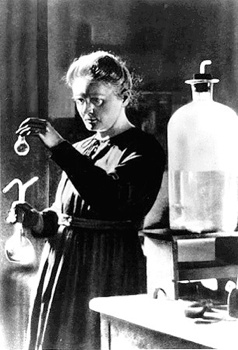
Marie Curie, known as the ‘mother of modern physics’, died from aplastic anaemia, a rare condition linked to high levels of exposure to her famed discoveries, the radioactive elements polonium and radium.
Curie, the first and only woman to win a Nobel Prize in two different fields (physics and chemistry), furthered the research of French physicist Henri Becquerel, who in 1896 discovered that the element uranium emits rays.
Alongside her French physicist husband, Pierre Curie, the brilliant scientific pair discovered a new radioactive element in 1898. The duo named the element polonium, after Poland, Marie’s native country.
Still, after more than 100 years, much of Curie’s personal effects including her clothes, furniture, cookbooks, and laboratory notes are still radioactive, author Bill Bryson writes in his book, A Short History of Nearly Everything.
Regarded as national and scientific treasures, Curie’s laboratory notebooks are stored in lead-lined boxes at France’s Bibliotheque National in Paris. Wellcome Library
While the library grants access to visitors to view Curie’s manuscripts, all guests are expected to sign a liability waiver and wear protective gear as the items are contaminated with radium 226, which has a half life of about 1,600 years, according to Christian Science Monitor.
Her body is also radioactive and was therefore placed in a coffin lined with nearly an inch of lead.
The Curie’s are buried in France’s Panthéon, a mausoleum in Paris which contains the remains of distinguished French citizens – like philosophers Rousseau and Voltaire.
NASA Is Sending Artificial Female Bodies to the Moon to Study Radiation Risks.

Gizmodo, Passant Rabie, May 3, 22, Helga and Zohar are headed for a trip around the Moon on an important mission, measuring radiation risks for female astronauts for the first time.
The inanimate pair are manikins modelled after the body of an adult woman. For the Artemis 1 mission, in which an uncrewed Orion capsule will travel to the Moon and back, one of the manikins will be outfitted with a newly developed radiation protection vest. Helga and Zohar, as they’re called, won’t be alone, as they’ll be joined by a third manikin that will collect data about flight accelerations and vibrations. Artemis 1 is scheduled to blast off later this year.
The Artemis program aims to return humans to the Moon for the first time in over 50 years, but this time the space agency has vowed to land the first woman on the dusty lunar surface.
Women appear to be at a greater risk of suffering from the harmful effects of space radiation, so they have different radiation boundary levels than their male colleagues. Studies of radiation exposure for men and women indicate a higher chance of women developing cancer, while other research has found that space radiation is likely to affect female reproductive health…………………………………. https://www.gizmodo.com.au/2022/05/nasa-is-sending-artificial-female-bodies-to-the-moon-to-study-radiation-risks/
Impact of the pandemic – women, and people of colour now losing their jobs in the area of Nuclear Policy

Tested by Crisis: The Impact of COVID-19 on the Nuclear Policy Community
Has the pandemic jeopardized growth in the nuclear policy community? The short answer: it has. The National Interest, by Alexandra B. Hall, 24 Oct 21, The COVID-19 pandemic has clearly had drastic effects on the workforce and, in particular, on women and people who identify as Black, Indigenous, or People of Color (BIPOC) in the workforce. For the past year and a half, studies have shown that many of these effects are not going to be simple to reverse and will in fact have generational effects on many communities……….
The report’s findings show stark differences across gender identities in how the pandemic has impacted the lives—both personal and professional—of those working in nuclear policy. One of the core findings Brosnan points to is that “among women who had their work hours reduced due to the pandemic, eighty-six percent of reductions were attributed to an increased burden of care work, and that was true for zero percent of men.”
The burden upon caregivers only increased during the pandemic as childcare or eldercare facilities shut down. They found this burden impacted caregivers across all age groups, including ‘late career’ women executives.
Not only were women in the field finding themselves faced with a choice of staying in their job or finding something with more flexible work hours, but many were also simply pushed out of the field. One respondent noted that in an organization where layoffs occurred “everyone up to this month who left was a woman or person of color.” Survey respondents who identified as BIPOC reported they were “almost twenty percent more likely to have experienced financial hardship due to the pandemic than their non BIPOC peers,” Cater adds………… https://nationalinterest.org/blog/buzz/tested-crisis-impact-covid-19-nuclear-policy-community-195480
NASA pretending that space radiation is sort of OK for women, but it’s not
New NASA radiation standards for astronauts seen as leveling field for women, Science, By Anil OzaJun. 29, 2021
A blue-ribbon panel has endorsed NASA’s plans to revise its standard for exposing astronauts to radiation in a way that would allow women to spend more time in space.
A report by the U.S. National Academies of Sciences, Engineering, and Medicine released on 24 June encourages NASA to proceed with its plans to adopt a new standard that limits all astronauts to 600 millisieverts of radiation over their career. The current limit is the amount of radiation that correlates with a 3% increase in the risk of dying from a cancer caused by radiation exposure—a standard that favored men and older astronauts whose cancer risk from radiation was lower. The proposed standard would limit all astronauts to the allowable dosage for a 35-year-old woman.
The changes are in line with current data and puts women on an equal footing, says Hedvig Hricak, a radiologist at Memorial Sloan Kettering Cancer Center and chair of the committee that wrote the report. “There’s no evidence for significant gender difference in the radiation exposure, and associated risk of cancer,” she says.
The new standard comes as NASA gears up for renewed exploration of the Moon and, eventually, a mission to Mars. The change should remove gender from the list of factors used to decide who gets chosen for those missions, says Paul Locke, an environmental health expert at Johns Hopkins University who was not on the committee. “Women will not be penalized because they are, under the old model, at higher risk,” he says.
Whereas some experts lauded NASA’s intentions, others worry the proposal ignores the complexities and uncertainties of deep space travel. “I think they’ve pulled together the best data they have. But again, I think, more research is going to be needed,” says Albert Fornace, a radiobiologist at Georgetown University. With so few people having traveled beyond low-Earth orbit, most of the data for setting radiation exposure limits in space come from survivors of the atomic bombs in Japan and studies of people, like uranium miners, who work in conditions with high exposure to radiation. The long lead time for voyages to Mars also gives scientists time to develop ways to shield astronauts from higher levels of radiation, Fornace adds.
Francis Cucinotta, a biophysicist at the University of Nevada, Las Vegas, doesn’t agree with the report’s backing of a single dosage level. Instead, the former chief scientist for NASA’s radiation program thinks equity should come in the form of equal risk rather than equal dosages of radiation.
“[It] sounds like they’re just going to ignore the science and try to make it comfortable for everybody,” Cucinotta says, arguing that age, sex, and race affect an individual’s risk of developing cancer and should be factors when determining the amount of time astronauts can spend in space. “When they’re selected to be astronauts, there’s a lot of things where it’s not equal—it’s based on performance capability. But they’re not applying that model here.”
Cucinotta would stick with the 3% increase in the risk of dying of cancer. For a Mars mission, which is expected to expose astronauts to 1000 millisieverts, he proposes raising that maximum risk to 5% after conducting research on countermeasures and weighing genetic markers that lower an astronaut’s risk of developing cancer……….. https://www.sciencemag.org/news/2021/06/new-nasa-radiation-standards-astronauts-seen-leveling-field-women
Continued use of nuclear energy brings pollution, cancers and birth defects
 A growing body of evidence supports a grim reality: that living in radioactively contaminated areas over multiple years results in harmful health impacts, particularly during pregnancy.
This is borne out in a recent study by Anton V. Korsakov, Emilia V. Geger, Dmitry G. Lagerev, Leonid I. Pugach and Timothy A. Mousseau, that shows a higher frequency of birth defects amongst people living in Chernobyl-contaminated areas (as opposed to those living in areas considered uncontaminated) in the Bryansk region of Russia.
Because the industry and governments are pushing to spend more money on new nuclear reactors — or to keep the old ones running longer — they have been forced to come up with a deadly workaround to surmount the strongest argument against nuclear power: its potential for catastrophic accidents.
Even the nuclear industry and the governments willing to do its bidding understand that you cannot really clean up after a nuclear catastrophe. For example, in Japan, where the March 2011 nuclear disaster has left lands radioactively contaminated potentially indefinitely, there is an attempt to mandate that people return to live in these areas by claiming there are no “discernible” health impacts from doing so.
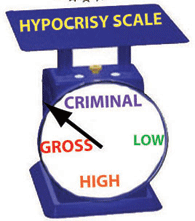 Bodies that are supposed to protect health and regulate the nuclear industry, including the U.S. Environmental Protection Agency, the International Commission on Radiological Protection and Nuclear Regulatory Commission are raising recommended public exposure limits, considering halting evacuations from radiation releases, and encouraging people to live on, and eat from, contaminated land.
The public justification for continued nuclear energy use is, ostensibly, to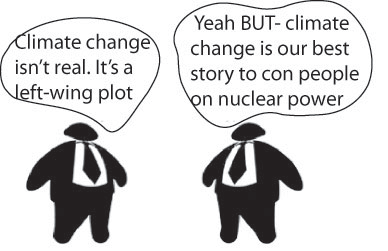 address the climate crisis. The reality is more likely a desperate last-ditch effort by the nuclear industry to remain relevant, while in some countries the nuclear energy agenda remains inextricably linked to nuclear weapon programs.
Forcing people to live on and consume produce grown from radioactively contaminated land is contrary to scientific evidence indicating that these practices harm humans and all animals, especially over the long-term. By the time these health impacts are unearthed, decades later, the false narratives of “harmless low radiation doses” and “no discernible impact” have solidified, covering up the painful reality that should be a touchstone informing our debate over nuclear power.
The recent joint study, whose implementation, says Korsakov, would not have happened without the support and efforts of co-author Mousseau, found that birth defects like polydactyly (having more than five fingers or toes), and multiple congenital malformations (including those that are appearing for the first time — called de novo), were “significantly higher… in newborns in regions with elevated radioactive, chemical and combined contamination.”
Uniquely, Korsakov also examines areas contaminated by both Chernobyl radioactivity and industrial chemicals. Multiple congenital malformations (MCM) were much higher in areas of combined contamination, indicating an additive and potentially synergistic effect between pollutants for these birth defects.
Congenital malformations (CM) are thought to originate in the first trimester of pregnancy and represent a main cause of global disease burden. They are considered “indicators of adverse factors in the environment,” including radioactive pollution, and can afflict numerous organs (heart, brain, lungs, bones, intestines) with physical abnormalities and metabolic disorders. Counted among these are clubfoot, hernias, heart and neural tube defects, cleft palate and lip, and Down syndrome.

CMs are the leading cause of infant mortality in many developed nations, accounting for 20% of U.S. infant deaths. For those living past infancy, the effects can be lifelong. While a number of CMs are obvious early in life, some may not be identified until later, even into adulthood. Countries of low- and middle-income are affected disproportionately.
In the Bryansk region of Russia, birth defects were examined over the 18-year period from 2000-2017. For areas contaminated with radiation alone, dose estimations from Chernobyl radiation (released from the 1986 nuclear catastrophe) ranged from 0.6 mSv to 2.1 mSv per year, while in areas contaminated with radiation and chemicals, dose ranges were 1.2 to 2.0 mSv per year.
As the Bryansk study authors point out, “[n]early all types of hereditary defects can be found at doses as low a [sic] 1–10 mSv indicating that current radiation risk models are inadequate for low dose environments.”
In comparison, Japan and the U.S. maintain that there is little risk to resettling or inhabiting areas contaminated by nuclear catastrophe where estimated doses would range from 5-20 mSv/year. Yet harm was found among Bryansk populations exposed to doses far lower than the much higher ones proclaimed “livable” by nuclear proponents.
One explanation for the disconnect between the expected and actual health effects is an underestimate of the impact of ingesting or inhaling manmade radioactive isotopes, particularly beta emitters, a large source of exposure following radiation releases from nuclear power catastrophes.
A number of these isotopes mimic nutrients that our bodies need such as calcium (radiostrontium) and potassium (radiocesium), so our body doesn’t know to avoid them. Of course, nuclear proponents recognize that economic recovery of polluted places will be difficult without being able to grow, sell and consume food that might be contaminated with isotopes that give off this radiation,.
Korsakov et al. point to yet another explanation for the disconnect — the assumption that dose reconstruction models properly fit all realistic exposures. When experts estimate doses they often do so without adequate knowledge of local culture and habits. Therefore, they fail to capture variations in exposure pathways, creating enormous errors in dose reconstruction. As a starting point, radiation science would be better served by directly measuring contamination levels where people actually live, play, breathe and eat.
But it seems dose models also fail to adequately represent the damage done to fetuses and neonates, not least because damage can be random (stochastic) making it difficult to predict. Stochastic health impacts include cancer and other genetic damage, and may be severe even at low doses. During pregnancy, one hit from radiation could damage or destroy cells meant to form entire organs, making accounting for stochastic impacts during fetal development extremely important — especially as fetal tissue collects some radionuclides in greater amounts than maternal tissue.
Health impacts in the Bryansk region could be a result both of direct radiation exposure during pregnancy and of cumulative impact over a “series of generations (genetic load)” raising the specter of heritability of genetic damage. Past studies have indicated that radiation damage can be heritable — passing from parents to offspring; that living in environments of elevated natural background radiation will increase mutations and disease; that the ability to withstand radiation doses appears to diminish as continually-exposed generations progress; and that doses from catastrophic releases should be accounted for across generations, not just in the generation initially exposed.
These currently sparse, yet growing data, support long-held conclusions that humans do not differ significantly from every other animal and plant — they, too, suffer heritable damage from radiation.
The Korsakov study projects that overall, multiple congenital malformations will increase in the next few years in the contaminated regions. Increases in birth defects are occurring despite access to free in-depth medical exams for pregnant women residing in areas of higher contamination and, if warranted, pregnancy termination. Such access has apparently greatly decreased the number of stilbirths in the region, as did a similar program at the end of the 1990s in Belarus, the country which bore the brunt of radioactive Chernobyl contamination. But even with such programs, overall birth defects have increased in the contaminated areas in Russia.
So not only is it unhealthy to live in radiologically-contaminated areas, attempts at mitigating the effects, particularly those on pregnancy, have limited impact. Encouraging, or worse yet, forcing people to live in contaminated areas and eat contaminated food, is foolishly cruel (particularly to people of reproductive age who may face wrenching decisions about wanted pregnancies) and not in the interest of public health.
Meanwhile, the continued use of nuclear energy that has forced us into this Faustian bargain in the name of mitigating climate change, is both unnecessary and downright harmful.
Mary Olson pays tribute to Rosalie Bertell, the great explainer of radiation impacts on health.
My Six Mentors, by Mary Olson, Gender and Radiation Impact Project, 1 January 20121
 “……………. Rosalie Bertell, PhD
It was Rosalie who most let me know that I am able to contribute original work towards the day that People, to decide not to split atoms any more. Human beings began splitting atoms in Chicago, in 1942. Rosalie, a PhD in mathematics and member of the Order of Gray Nuns, knew more than anyone else I have worked with, that all of it—every last nuclear license, and radioactive emission, all the waste and all the bombs and all the money congress gives to nuclear activities are choices. People made, and continue to make these decisions…and we can change our mind.
Rosalie studied radiation impacts and was committed to service on behalf of future generations. She won the Right Livelihood award for her work with communities impacted by nuclear industry. Often called the “alternative Peace Prize” – she was one of the first women to be honored. As a laureate, she was encouraged to find and mentor students. Rosalie hoped that I, and my coworker Diane D’Arrigo would go to graduate school and she could be our mentor. We decided since we were already in our 50’s to simply study with her, informally. We traveled, 5 or 6 times to the Mother House where she resided and she generously met with us in the last two years of her life. She was always small in stature, but at that point her back was bent and she barely came up to my chest, but still had the intensity of a wolverine!
It was Rosalie Bertell who helped me tackle one of the biggest challenges I have faced. After a public talk on radioactive waste policy that I gave during this time, a woman asked me if radiation was more harmful to women, to her, compared to a man. Even though I had studied and known many of the top independent radiation researchers, including Bertell, I had never heard that biological sex could be a factor for harm—other than in reproduction (pregnancy)—but that is more about the embryo and fetus than the woman. I told her that I was sorry, I did not know and would get back to her. In fact, I forgot.
Two years later, when nuclear reactors exploded in Japan at a site called Fukushima Daiichi, I remembered that question and knew it urgently needed an answer. I was unaware that Dr Arjun Makhijani and a team had written on sex differences in radiation harm in 2006 (see www.ieer.org ) and also did not turn that up as I searched for any information on differences between males and females. My findings, five years later are an independent confirmation of the IEER work.
Since I found nothing on a basic google dive, I called Rosalie, who was at that point nearing the end of her life, to ask if she had studied biological sex. She had not, and the one report she pointed me to was out of print. It was my second call, a week later, that prompted her to tell me that I would have to look at the data myself.
I had no idea that the National Academy of Science (NAS) had published tables with 60 years of data on cancers and cancer deaths among the survivors of Hiroshima and Nagasaki. Rosalie told me to find out for myself. I was shocked. I had stopped any formal study of math in the 6th grade…she was a mathematician—I asked her to do it, and she reminded me that she was dying. I protested again. It was her next words that pushed me. Rosalie said, “The data is divided by males and females so you can look at this question—and if there is a difference, it will be a simple pattern. It is good you do not have more math because if there is a difference, you will find it and not make it more complicated than it is.” She said to get a few pencils, a sharpener, an eraser and lots of paper, and go to it. I did.
The result was my first paper on the topic, “Atomic Radiation is More Harmful to Women,” (October 2011) published to the web in time for Rosalie to congratulate me. Three years later the paper was the basis for my invitation to speak at the global Vienna Conference on the Humanitarian Consequences of Nuclear Weapons. Three years later as the new Treaty on the Prohibition of Nuclear Weapons was in the work, I founded the Gender and Radiation Impact Project. Rosalie is the one who put rocket fuel in my determination to help. If the world decides to base radiation protection on Refence Little Girl—make every regulation in terms of protecting females who are infants—five years old, future generations have a chance. Rosalie is the one who modeled for me that it is possible to reach for the best possible outcome, and, indeed, we have an obligation to do so………..…… https://www.genderandradiation.org/blog/2020/12/31/my-six-mentors
1 This Month


18 March Webinar @ 1 PM EST: An Assessment of SMR Projects: The Case of Canada
register for the zoom:
https://us02web.zoom.us/webinar/register/WN_o8BIIOUvQ2ONJR1nta65DQ#/registration


of the week – STOP SMALL MODULAR REACTORS IN CANADA
To see nuclear-related stories in greater depth and intensity – go to https://nuclearinformation.wordpress.com
-
Archives
- March 2026 (141)
- February 2026 (268)
- January 2026 (308)
- December 2025 (358)
- November 2025 (359)
- October 2025 (376)
- September 2025 (258)
- August 2025 (319)
- July 2025 (230)
- June 2025 (348)
- May 2025 (261)
- April 2025 (305)
-
Categories
- 1
- 1 NUCLEAR ISSUES
- business and costs
- climate change
- culture and arts
- ENERGY
- environment
- health
- history
- indigenous issues
- Legal
- marketing of nuclear
- media
- opposition to nuclear
- PERSONAL STORIES
- politics
- politics international
- Religion and ethics
- safety
- secrets,lies and civil liberties
- spinbuster
- technology
- Uranium
- wastes
- weapons and war
- Women
- 2 WORLD
- ACTION
- AFRICA
- Atrocities
- AUSTRALIA
- Christina's notes
- Christina's themes
- culture and arts
- Events
- Fuk 2022
- Fuk 2023
- Fukushima 2017
- Fukushima 2018
- fukushima 2019
- Fukushima 2020
- Fukushima 2021
- general
- global warming
- Humour (God we need it)
- Nuclear
- RARE EARTHS
- Reference
- resources – print
- Resources -audiovicual
- Weekly Newsletter
- World
- World Nuclear
- YouTube
-
RSS
Entries RSS
Comments RSS
 nuclear-news