Large Multinational Study Shows Link Between CT Radiation Exposure and Brain Cancer in Children and Young Adults

https://www.diagnosticimaging.com/view/clinical-histories-in-radiology-could-they-get-worse-
December 9, 2022, Jeff Hall
In a new study based on five- to six-year follow-up data from over 650,000 children and young adults who had at least one computed tomography (CT) exam prior to the age of 22, researchers found a “strong dose-response relationship” between increased CT radiation exposure and brain cancer.
Increased cumulative exposure to radiation from computed tomography (CT) exams led to elevated risks for developing gliomas and other forms of brain cancer in children and young adults, according to the findings of a large multinational study of data from over 650,000 patients.
In the study, recently published in the Lancet Oncology, researchers reviewed pooled data from nine European countries and a total of 658,752 patients. All study participants had at least one CT exam prior to the age of 22 with no prior cancer or benign brain tumor, according to the study. Examining follow-up data at a median of 5.6 years, the study authors noted 165 brain cancers (including 121 gliomas). They also found that the overall mean cumulative brain radiation dose, lagged by five years, was 47.4 mGy for the study cohort in comparison to a mean cumulative brain radiation dose of 76.0 mGy for those with brain cancer.
“First results of (the study) after a median follow-up of 5.6 years show a strong dose-response relationship between the brain radiation dose and the relative risk of all brain cancers combined and glioma separately; a finding that remains consistent for doses substantially lower than 100 mGy,” wrote lead study author Michael Hauptmann, Ph.D., a professor of Biometry and Registry Research at the Brandenburg Medical School Theodor-Fontane in Neuruppin, Germany, and colleagues.
For head and neck CT exams, the researchers noted a “significant positive association” between the cumulative number of these procedures and elevated brain cancer risk. Employing linear dose-response modelling, the researchers found a 1.27 excess relative risk (ERR) per 100 mGy of brain radiation dosing for all brain cancers, a 1.1 ERR for gliomas and a 2.13 ERR for brain cancers excluding gliomas, according to the study.
Hauptmann and colleagues acknowledged that the risk estimates in the study translate to one out of 10,000 children experiencing a radiation-induced brain cancer five to 15 years after a head CT exam. However, the researchers also emphasized appropriate caution, pointing out annual estimates of pediatric head CT exams surpassing one million in the European Union and five million in the United States.
“These figures emphasize the need to adhere to the basic radiological protection principles in medicine, namely justification (procedures are appropriate and comply with guidelines) and optimization (doses are as low as reasonably achievable),” added Hauptmann and colleagues.
Study limitations included the potential for confounding indications with the study authors noting the inclusion of studies with some patients having congenital syndromes that may be predisposing factors for brain tumor development. However, Hauptmann and colleagues noted that exclusion of those patients and adjustments for those conditions saw no significant effect on the assessment of ERR.
The study authors also noted a lack of information on other imaging, such as nuclear medicine studies and X-rays, that may have been performed in the study population. However, they suggested the contribution of radiation dosing from these exams “is probably minor” in comparison to higher frequencies and dosing seen with pediatric head CT exams.
Missouri Community and Its Children Grappling With Exposure to Nuclear Waste
In the 2022 report, BCDC took 32 soil, dust, and plant samples throughout the school buildings and campus. Using x-ray to analyze the samples BCDC found more than 22 times more lead-210 than the estimated exposure levels for the average US elementary school in the Jana Elementary playground alone. There were also more than 12 times the lead-210 expected exposure in the topsoil of the basketball courts alone.
Radioactive isotopes of polonium-210, radium-266, thorium-230, and other toxicants were also found in the library, kitchen, ventilation system, classroom surfaces, surface soil and even soil as far as six feet below the surface.
https://blog.ucsusa.org/chanese-forte/missouri-community-and-its-children-grappling-with-exposure-to-nuclear-waste/ Chanese Forte, December 8, 2022
The families, students, and school officials in Florissant, Missouri have been living a modern nightmare for the past several weeks, learning that Jana Elementary school and the surrounding region has high levels of radiation, a problem caused decades ago by the production of nuclear weapons
Radiation exposure can damage the DNA in cells leading to a host of health problems including cancer and auto-immune disorders. What’s more troubling is that the Centers for Disease Control reports that children and young adults, especially girls and women, are more sensitive to the effects of radiation.
Jana Elementary school has 400 students and a predominantly (82.9%) Black student body. Unfortunately, the United States has a long history of environmental racism which results in harming Black, Indigenous and Brown communities much more in the process of creating and maintaining nuclear weapons.
When science cannot agree, the community suffers
The suburban school north of St. Louis, Missouri, was thought to be safe for students based on research completed in 2000 by the Army Corps of Engineers (USACE).
Specifically, USACE has been in the Coldwater Creek region for the last 20 years attempting to remediate radioactive waste associated with the creek (which does not include Jana Elementary).
Toward the start of the 2022 semester, as part of an ongoing lawsuit in the region the Boston Chemical Data Corp (BCDC), an environmental consulting group, reported the elementary school as having radioactive waste levels far above the estimated national levels.
These radioactive waste exposures—like lead-210—are associated with decreased cognition, brain defects, thyroid disease, and cancer, and can accumulate in the body over time.
Following the BCDC report, all Jana Elementary students were sent home for the rest of the semester in hopes their homes were less toxic.
By the Thanksgiving holiday break, the USACE returned to test inside and on the playground of the school and found no radiation on the campus, news which many community members and organizers unsurprisingly expressed as suspicious.
The School Board then hired SCI Engineering, a private engineering firm, to sample Jana Elementary who came to a similar conclusion as USACE.
Now returning to classes from Thanksgiving break, many wary students joined classes at new schools in the area per the school board’s decision related to BCDC’s radiation exposure assessment. Many parents also expressed to National Public Radio they felt left out of discussions for decisions being made.
How did radioactive waste end up in Florissant, MO?
The region near Jana Elementary was first contaminated by the US Department of Energy’s decision to make St. Louis one of the processing sites for uranium during the Manhattan Engineering District project. These nuclear weapons were built through World War II and originally stored at the St. Louis Lambert International Airport.
Unfortunately, the waste was later illegally dumped in 1973 at the West Lake Landfill in Bridgeton, MO, which lies about 10 miles Southwest of Jana Elementary. The West Lake Landfill is located near the Mallinckrodt Chemical Works Company which regularly floods, causing these harmful chemicals to be carried away by nearby water ways like Coldwater Creek.
Coldwater Creek runs for 19 miles throughout the area and flows directly into the Missouri River. Jana Elementary, just North of St. Louis, is bordered by the creek on two sides but has to date not been included in any clean-up efforts by the US Army Corps of Engineers (USACE).
US Army Corps of Engineers initially didn’t sample inside or outside of Jana Elementary
Prior to the Boston Chem Data Corp 2022 report, the USACE did not take any samples within 300 feet of the school building in their 2017 assessment. According to BCDC’s report, this doesn’t follow US Agency for Toxic Substances Disease Registry (ATSDR) standards for radioactive sampling.
In fact, it ignores the conclusion ATSDR made that most exposures in the region will be indoors and just outdoors of buildings.
Indoor samples from creek-facing homes in the same neighborhood as Jana Elementary had similar radioactive waste both indoors and outdoors. ATSDR also noted in a 2019 report that radioactive wastes are routinely moved from Coldwater Creek into homes due to flooding. The region floods frequently which is only increasing due to climate change in the region.
New radioactive sampling methods used to understand student exposure
In the 2022 report, BCDC took 32 soil, dust, and plant samples throughout the school buildings and campus. Using x-ray to analyze the samples BCDC found more than 22 times more lead-210 than the estimated exposure levels for the average US elementary school in the Jana Elementary playground alone. There were also more than 12 times the lead-210 expected exposure in the topsoil of the basketball courts alone.
Radioactive isotopes of polonium-210, radium-266, thorium-230, and other toxicants were also found in the library, kitchen, ventilation system, classroom surfaces, surface soil and even soil as far as six feet below the surface.
Marco Kaltofen, an environmental engineer who is leading the BCDC team, collected roughly 1,000 samples from across the region as a part of law suit efforts. There are several businesses and homes also indicated as exposed in the lawsuit as well.
Overall, Kaltofen suggests that BCDC’s unprecedented x-ray method better picks up the microscopic radioactive materials. However, he also asserts both studies are essentially saying the same thing, which is of course confusing for many community members.
Community organizers fight for testing and clean-up
Just Moms STL activist Dawn Chapman has worked tirelessly since 2014 to get the federal government to test for radioactive material in more regions where the creek floods.
The co-founder of Just Moms STL, Karen Nickel, also attended Jana Elementary School and has reported currently living with several autoimmune disorders. She uses her experience and love of the area to battle these exposure injustices.
In a 2017 Nation Public Radio report, Ms. Chapman says,
“They [The US Government] fought us for years. Finally, they [tested] parks that had flooded, and found [radioactive waste]. They started testing some backyards and found it. We pushed for Jana Elementary, because it is the closest school to the creek.” Just Moms STL activist, Dawn Chapman
We reached out to Just Moms STL to understand what the next steps are. Just Moms STL Recommends:
- The sites in St. Louis should be expeditiously cleaned up.
Unfortunately, Jana Elementary School is not the only place to be concerned about near St. Louis.- Since remediation of nuclear weapons waste in the area has already taken decades, many of these students will likely age out of Jana Elementary School before there is full remediation of radioactive waste in the St. Louis area.
While there is guidance on defining “safe” or acceptable radioactive exposure levels as it relates to human health, scientists also calculate “expected” levels from the Earth naturally (like radon in sediment).
Unacceptable levels are frequently defined as radiation exposure above natural levels by communities.
- However, legally the Army Corps is allowed to leave some radioactive residue above naturally occurring levels, and Just Moms STL would like this to no longer be the case.
- Residents near nuclear weapon processing sites like the St. Louis area should be included in federal radiation compensation programs, such as the Radiation Exposure Compensation Act (RECA). UCS also suggests consideration of St. Louis in the Energy Employees Occupational Illness Program Act (EEOICPA), and other forms of compensation as well.
Expanding radiation compensation programs is complicated because the list of communities that want to be included who currently qualify is long. Moreover, Just Moms STL says the RECA program needs to be expanded to include processing sites like St. Louis, which has previously only applied to nuclear testing exposure sites and uranium workers, or EEOICPA, which has only covered nuclear site workers, but not surrounding communities.
There are currently two bills being proposed to the House and Senate to extend and strengthen RECA. Just Moms STL is working to get Missouri elected officials to help sponsor and carry RECA as well. And your representatives may also be interested in supporting adjustments to RECA or the EEOICPA.
What are the risks and treatment if nuclear power plant radioactivity is released?
Russia’s war renews nuclear disaster fears. What to know about the dangers of radiation., Trevor Hughes, USA TODAY 8 Dec 22
“…………………………………………………. A leak from Zaporizhzhia nuclear power plant is among the highest risk, experts told USA TODAY, because Russia has deliberately targeted the area. Zaporizhzhia is Europe’s largest nuclear power station and has been under Russian control since shortly after the invasion.
The U.N. International Atomic Energy Agency is trying to establish a safety zone around the plant because while nuclear power plants are built to withstand many natural disasters, few are designed to survive direct military attacks, said Edwin Lyman, a nuclear expert with the Union of Concerned Scientists. An attack on the plant could potentially release intense radiation in a small area and weaker radioactive particles over a wider area.
“The fact that Russia would want to seize that plant, it’s not surprising,” said Lyman. “I think it’s sort of inevitable. And it’s something the industry never wanted to think about.”
The Chernobyl Nuclear Power Plant, which is also in Ukraine, is not considered a serious potential source of radiation leakage, in part because its 1986 meltdown led to its shutdown and removal of its nuclear fuel system. However, the Health Physics Society says there could be small, localized releases of radioactive material if the area is disturbed.
Chernobyl disaster:A look at the what happened, 30 years later
What happened following the Chernobyl meltdown could be the same as for Zaporizhzhia: A relatively small number of plant operators exposed to intense radiation, and then broader contamination carried in the wind and water absorbed into the land and animals. Nuclear power plants are designed to avoid the kind of explosion created by a nuclear bomb.
According to the CDC, exposure to Acute Radiation Syndrome only happens to people exposed to intense radiation, generally in a very short period of time. That could be someone working in a nuclear power plant during a meltdown, or someone near the site of nuclear weapon’s detonation.
For these people, specialized treatments to protect their bone marrow and stomach lining — vomiting and nausea are common signs of ARS — are available but not widely distributed, according to the U.S. Nuclear Regulatory Commission.
For the public, authorities often have stockpiles of potassium iodide pills, especially in areas close to nuclear power plants. The iodide pills help prevent the thyroid gland from absorbing radiation, which could lead to tumors, but do not treat other kinds of radiation exposure, according to the CDC.
Authorities typically maintain stockpiles of the pills but don’t give them out unless there’s a confirmed release, and even then, they are typically given to people 40 and younger because they are most at risk for developing thyroid problems later in life.
For people who are near a reactor accident but not immediately harmed, the CDC recommends they get or stay inside to avoid any potentially radioactive dust or smoke, remove and bag up any potentially contaminated clothing, and then shower to remove any particles on exposed skin and hair.
A nuclear risk ‘nightmare’? After seizing Chernobyl, Russian troops exposed themselves to radiation
What are the risks and treatment for a dirty bomb?
Federal officials say a “dirty bomb” would typically be created by taking conventional explosives and adding in radioactive materials that would be dispersed by the explosion. It wouldn’t cause as big of an explosion as a nuclear weapon — nor release the same kind of intense radioactivity — but would potentially disperse radioactive particles over a large area, potentially causing panic and evacuations.
Protection for exposure to a dirty bomb is similar to that of a reactor incident: Get or stay inside, get rid of potentially contaminated clothing, and then shower.
Potassium iodide pills would likely not be recommended for that kind of radiation exposure, the CDC says, but a treatment based on a drug called Prussian blue could be used.
Radiogardase, the brand name, was approved by the FDA in 2003 to help treat cesium or thallium exposure. Those radioactive substances are often used in medical treatments for cancer, but federal officials say they could also be used in a dirty bomb because they are more widely available. The federal government maintains a stockpile of Prussian blue and other drugs to treat radioactivity exposure.
What are the risks and treatment for a nuclear weapon?
A nuclear explosion is the worst combination of all: an intense blast of radioactivity followed by the fallout of radioactive particles that would contaminate the air, water and ground, along with animals and other food sources.
The same advice follows for people near an explosion but not harmed: get inside, get rid of contaminated clothing, and shower. The U.S. government stockpiles would also come into play.
Lyman, the nuclear expert, said the key question is whether those treatments can be effectively distributed following a nuclear attack on the United States.
“If you had a large nuclear weapon detonated, and you had hundreds of thousands of people affected, you’d need to treat them in a day,” he said. “Having the drugs is one thing. Having a plan to actually use them is another. I wouldn’t count on those interventions. Prevention is where you have to put most of your effort.” https://www.usatoday.com/story/news/health/2022/12/08/nuclear-disaster-russian-war-explained/8092631001/—
Protecting kids from electromagnetic radiation in school and at home

EWG Nov 22
EWG’s big picture recommendations for wireless devices
- Default to airplane mode.
- Increase distance from devices.
- Turn off when not in use.
- Used wired devices if possible.
Children are almost constantly exposed to wireless [electromagnetic] radiation, starting as early as the first weeks of life. As they get older, that exposure grows every day, thanks to the widespread use of smartphones, laptops and other wireless devices in the classroom and at home.
Wireless devices radiate radiofrequency electromagnetic fields. Research has raised concerns about the health risks of exposure to this radiation, including harm to the nervous and reproductive systems, and higher risk of cancer. Cell phone radiation was classified a “possible carcinogen” in 2011 by the International Agency for Research on Cancer, part of the World Health Organization. The agency said human epidemiological studies showed a link between higher risk of a type of malignant brain cancer and cell phone use.
At home
Parents and caregivers can exert more control over their kids’ wireless radiation exposure at home than at school, and have more latitude to try new ways of using devices.
Getting started
To begin, inventory your home’s electronic devices. ………………………………………….
At night
- Strongly encourage your child not to sleep near their wireless gadgets. If this isn’t possible – and let’s face it, with teenagers, you may not succeed at wresting the phone or tablet away – try to convince them to place it away from their head instead of under a pillow.
- Even better, keep electronics out of bedrooms as much as possible, or at least away from beds. This includes TV screens and audio speakers.
- Use an old-fashioned electric or battery alarm clock that doesn’t connect to Wi-Fi. And get one for your children if they claim to need their cell phone so they can get up in the morning.
- Move beds away from utility meters or large appliances, which also emit radiation, even if they’re on the other side of a wall.
……………………. Studying, playing and communicating
- Experts recommend starting a child’s cell phone use as late as practical, considering the family and educational context and needs of each child. The younger kids are, the more vulnerable their bodies are to potentially harmful effects of wireless radiation exposure.
At school……………………………….
For more information
To find additional resources, advocacy guidance, tip sheets and other useful suggestions, consult the websites of one of these organizations:
- The Environmental Health Trust’s “Wi-Fi in Schools Toolkit” offers a wealth of resources, including fact sheets and tip sheets, background on the science of EMF exposure, and guidance for parents, teachers and schools. It also has more than a dozen downloadable and printable posters on exposure and sleep, children’s development, and the effects of EMF exposure on breast cancer risk and male reproductive health.
- An Environmental Health in Nursing textbook downloadable chapter on EMF, courtesy of the Alliance of Nurses for Healthy Environments, contains useful information, like a detailed explanation of the health impacts of EMF exposure, advocate organizations’ tip sheets, and other valuable resources.
- The American Academy of Pediatrics issued recommendations about EMF exposure.
- The Massachusetts Breast Cancer Coalition offers a downloadable backgrounder for students and educators on “Cell Phones, Wireless and Your Health,” which includes suggested activities to use in the classroom and as homework. It includes a list of additional websites you may choose to consult. https://www.ewg.org/news-insights/news/2022/11/protecting-kids-wireless-radiation-school-and-home
Closed Dounreay nuclear site records its highest number of radioactive particles in nearly two decades
. Fifteen radioactive particles have been discovered at a
nuclear site in Scotland that is currently being decommissioned, marking
the highest reported number in nearly two decades.
The particles contained niobium 94, which has a half life of 20,300 years, Americium-241, which has
a half life of 432.2 years, caesium 137, which has a half life of 30 years,
and cobalt 60, which has a half life of around 5.3 years. Eleven of the
finds were categorised as “significant”, which is the highest hazard
level used.
ENDS 9th Nov 2022
Councillor wants to know why there has been an increase in radioactive particles found on Dounreay foreshore.
A Caithness councillor wants to know
why there has been an increase in the number of radioactive particles found
on the foreshore at Dounreay this year. Struan Mackie, a Thurso and
Northwest Caithness Highland councillor and chairman of the Dounreay
Stakeholder Group (DSG), made the call after 15 irradiated particles were
discovered on the foreshore area between February and March. It is
understood to be the highest number since 17 were found in 1996.
Mr Mackie
said: “We wish to ascertain why there has been an increase in particle
detections and whether this was preventable. “Regular public updates are
provided to the Dounreay Stakeholder Group through our Site Restoration
sub-group, and it is of the utmost importance that these matters are dealt
with in a robust but transparent manner.”
Dounreay confirmed there has been
an increase in the number of particles found on the foreshore. A
spokeswoman said: “We closely monitor the environment around the site and
have seen an increase in particles found on the Dounreay foreshore this
year. “The foreshore is not used by the general public. We are looking at
wind and wave data to see if we can pinpoint a trend, and will report our
findings when they are complete. Safety is our number one priority and we
continue to monitor the foreshore on a regular basis.
John O’Groat Journal 4th Nov 2022
Studies on nuclear radiation’s impact on people necessary: BRIN
https://en.antaranews.com/news/258613/studies-on-nuclear-radiations-impact-on-people-necessary-brin 4 Nov 22, Jakarta (ANTARA) – Environmental and health studies on the impact of radiation exposure on people living in areas of high natural radiation, such as Mamuju, West Sulawesi, are necessary, the National Research and Innovation Agency (BRIN) has said.
A researcher from BRIN’s Research Center for Metrology Safety Technology and Nuclear Quality, Eka Djatnika Nugraha, said that in some places in Indonesia, such as Mamuju, people have been exposed to natural radiation that is several times higher than the global average at around 2.4 millisieverts per year.
“This situation may pose a health risk to the public due to chronic external and internal exposure,” Nugraha said in a statement received on Friday.
Mamuju is an area of high natural background radiation due to the high concentration of uranium and thorium in the rocks and soil, he observed.
Thus, studies on the health of people living in such areas could serve as a potential source of information about the effects of chronic low-dose exposure, he added.
In order to obtain scientific evidence on the effects of chronic low-dose radiation exposure on health, it is necessary to conduct a comprehensive environmental assessment of the exposure situation in areas of high natural radiation, he elaborated.
Meanwhile, head of BRIN’s Nuclear Energy Research Organization, Rohadi Awaludin, said that it is important to know and understand the safety and protection measures against nuclear radiation technology, especially for everyone involved or in contact with it.
“Nuclear radiation technology, including ionization, has been used and applied to various aspects, including industry and health, food, and others. This technology is the answer to the problems we have, but there are also risks that (one) must be (aware of) from this technology,” he added.
Carbon-14: Another underestimated danger from nuclear power reactors
https://beyondnuclear.org/carbon-14-another-underestimated-danger-from-nuclear-power-reactors/ 1 Nov 22,
There are a number of radionuclides released from nuclear energy facilities. This paper highlights carbon-14 for a number of reasons:
- Carbon-14 is radioactive and is released into air as methane and carbon dioxide.
- Before 2010, carbon-14 releases from nuclear reactors were virtually ignored in the United States. Today only estimates are required and only under certain restrictive circumstances.
- There is no good accounting of releases to date, so its impact on our health, our children’s health, and that of our environment remains unknown, yet environmental measurement is possible, but can be challenging under certain conditions.
- Carbon-14 has a half-life of over 5700 years and the element carbon is a basic building block for life on earth. Therefore, “it constitutes a potential health hazard, whose additional production by anthropogenic sources of today will result in an increased radiation exposure to many future generations.”
- Like tritium, it can collect in the tissues of the fetus at twice the concentration of the tissues in the mother, pointing to its disproportionate impact on the most vulnerable human lifecycle: the developing child.
Dounreay nuclear plant radiation scare over high numbers of ‘harmful’ radioactive particles.

Highest number of nuclear particles found in 26
years and ‘they may pose risk’. A public health warning has been issued
after harmful radioactive particles were discovered to have leaked out in
the area surrounding Dounreay nuclear plant, in Caithness. Fragments of
irradiated nuclear fuel have been detected at the shoreline near the power
plant and nuclear testing facility, with experts from independent Dounreay
Particles Advisory Group saying they “pose a realistic potential to cause
harm to members of the public”.
The radioactive material is said to be the
at the highest levels almost three decades – with 73 per cent of the
particles found deemed “significant”, according to a report. A survey found
15 particles on the shoreline, the most since 1996 when 17 were found, The
Daily Mail reported.
It comes after research suggested the leaks occurred
sometime between 1958 and 1984. In response to ongoing concerns, Dounreay
Site Restoration Ltd, which is in charge of the plant’s clean-up, said it
was closely monitoring the situation.
It comes as Shaun Burnie of
Greenpeace Asia, a nuclear specialist who formerly worked at Dounreay, also
warns of the risk to public health. He said: “The scale of the radiological
hazard from the Dounreay particles is enormous, with hundreds of thousands
and more highly radioactive nuclear fuel particles on the sea bed.
Express 29th Oct 2022
Young girls up to 10 times more vulnerable to ionizing radiation, especially girls up to 5 years old.
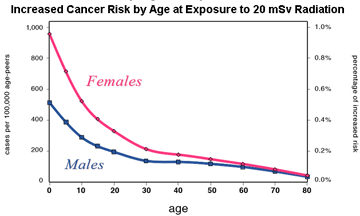
Nuclear Radiation Risk Impacts One Group Far More Than Any Other. Young girls could be up to 10 times more vulnerable to nuclear radiation thanother members of society, with girls aged up to five twice as likely to develop cancer as boys of the same age.
Understanding the risk posed by radiation exposure has been catapulted into public consciousness since
February, when Russia invaded Ukraine. Talk of nuclear war has simmered ever since, with rhetoric ramping up on October 6 when President Joe Biden warned of “Armageddon,” despite the U.S. having no new intelligence that Russian President Vladimir Putin was planning a nuclear strike.
Today, the U.S. Nuclear Regulatory Commission bases its evaluations of the impact of ionizing radiation on the public, and thus its decisions on nuclear licensing and regulation, on a subset of data which describes the “Reference Man.”
The Reference Man, as defined by the International Commission on Radiological Protection, is 20 to 30 years old, weighs 154 pounds, is 5 foot and 6 inches tall, and is Caucasian with a Western European or North American lifestyle. This one-size-fits-all approach describes only a small subset of society.
Newsweek 10th Oct 2022
https://www.newsweek.com/newsweek-com-nuclear-radiation-risk-impacts-one-group-more-other-1750413
MSN 10th Oct 2022
Crops growing 30 miles outside of Chernobyl are still contaminated with dangerous levels of strontium .
https://www.washingtonpost.com/politics/2022/04/20/does-russia-sell-nearly-1-billion-uranium-us-year/ 7 Oct 22, Crops grown near Chernobyl are still contaminated, more than three decades after the worst nuclear disaster in history.
Almost half the grain analyzed by scientists in Ivankiv, about 30 miles from the power plant, showed levels of strontium 90 far above recommended levels.
It was also present at unsafe levels in firewood and wood ash used to fertilize crops.
The Ukrainian government stopped testing goods for strontium 90 in 2013.
A radioactive isotope, it collects in the teeth, bones and marrow like calcium, and can cause numerous kinds of cancer.
Black pigmentation in Chernobyl’s Eastern Tree Frogs

Chernobyl is spawning MUTANT frogs: Bizarre black amphibians are spotted near the nuclear plant – 36 years after its catastrophic meltdown
- Eastern tree frogs are meant to have bright green skin
- But scientists working near Chernobyl have found many with black skin
- They think the dark skin may have helped them to survive the exclusion zone
https://www.dailymail.co.uk/sciencetech/article-11290735/Chernobyl-spawning-MUTANT-frogs-Bizarre-black-amphibians-spotted-near-nuclear-plant.html By SHIVALI BEST FOR MAILONLINE and MICHAEL HAVIS, 7 October 2022
Mutant black frogs are spawning near the Chernobyl power plant, 36 years after its catastrophic meltdown unleashed one of the worst nuclear disasters in history.
Eastern tree frogs are meant to have bright green skin but scientists working near Chernobyl have found many with darker or black pigmentation.
In 1986, the site in northern Ukraine – then under Soviet rule – witnessed the largest release of radioactive material into the environment in human history.
Now scientists think the mutated frogs’ darker skin may have helped them survive in the exclusion zone, which today restricts access to 1,0000 sq miles around ground zero.
Germán Orizaola, a researcher at Spain’s University of Oviedo, who co-authored the new study, said: ‘We become aware of these frogs the very first night we worked in Chernobyl.
‘We were looking for this species near the damaged power plant and we detected many frogs that were just black.
‘We know that melanin is responsible for dark or black colouration in many organisms, including frogs.
‘At the same time, we know that melanin protects from the damage caused by different types of radiation, from UV to ionizing radiation – the kind at Chernobyl.’
For their study, Dr Orizaola and his co-author, Pablo Burraco, collected more than 200 male frogs from 12 different breeding ponds with different levels of radiation.
They found that frogs within the exclusion zone were much darker than those from outside it.
And though there was no correlation between the darkest frogs and the most irradiated places today, there was a correlation with the worst-affected places from the time of the accident.
In other words, the darker frogs had stood a better chance of survival when disaster struck in 1986, making them more numerous today.
Dr Orizaola said: ‘With this species it’s possible to find, under normal circumstances, a small percentage of frogs with unusual colouration.
US intel wants to improve low-dose radiation detection
IARPA unleashes TEI-REX to better track nuclear sources, more
https://www.theregister.com/2022/09/30/iarpa_radiation_monitoring_research/, Brandon Vigliarolo, 30 Sep 2022 ,
The research arm of US intelligence has begun investigating methods for spotting low doses of ionizing radiation to better protect American service personnel and provide evidence of nuclear technology use.
The Intelligence Advanced Research Projects Activity (IARPA) announced the start of Targeted Evaluation of Ionizing Radiation Exposure (TEI-REX) on Friday, which will look for non-invasive methods of determining radiation exposure in low doses through samples including hair, skin, sweat, and saliva.
In its technical explanation [PDF] of the program, IARPA said current methods of collecting biodosimetry data, which looks at the effects of radiation on human or animal tissue, have a number of issues: it can require invasive samples, such as blood; multiple collections are often required; there’s a time limit for getting an accurate reading; the markers used to calculate doses are transient; and there’s a wide standard deviation of dose calculations for low-dose exposure.
“Today’s technology mostly assesses exposure to high doses of radioactive materials by looking at multiple samples that often have limited accuracy for only a few days,” said program manager Dr Michael Patterson.
Most radiation tests that require blood to be drawn rely on examining chromosomal damage, which IARPA said is unnecessary because recent research “demonstrated that biomarkers associated with ionizing radiation exposure can be detected across numerous biological targets including proteins, peptides, metabolites, and lipids.”
TEI-REX wants to look at those markers, which IARPA said are long-lasting and can be directly attributed to the initial dose of radiation. The program is looking to establish measurement models and methodologies that can measure accurate low-dose ionizing exposure within 25 days, and beyond 90 days, which it said will help it build a new understanding of the effects of low-dose radiation “through advances in artificial intelligence, machine learning, biomarker discovery, and analytical biology.”
IARPA said [PDF] there are several applications for the technology, such as investigating radiation poisoning cases similar to Alexander Litvinenko’s, which took 22 days to confirm.
Other uses include better radiation exposure measurements for military personnel, who often aren’t carrying dosimetry badges; detecting and tracking down radiation sources and nuclear contamination out in the field; and testing in remote locations – such as space – where astronauts are exposed to much more radioactivity than those of us on Earth.
The University of Washington, Ohio State University, Signature Science, and Areté Associates were awarded grants to carry out this three-and-a-half year study project, and the research will be performed at Lawrence Berkeley National Laboratory, Los Alamos National Lab, and the Armed Forces Radiobiology Research Institute.
EDF contractors relax radiation exposure limits to speed up reactor repairs
By Benjamin Mallet – Friday 16 Sept 22, PARIS (Reuters) https://www.msn.com/en-gb/news/world/exclusive-edf-contractors-relax-radiation-exposure-limits-to-speed-up-reactor-repairs/ar-AA11UdIE?ocid=st– Some contractors helping French power giant EDF to inspect and repair its corrosion-hit nuclear reactors are planning to relax their rules on radiation exposure limits so that their workers can spend more time on the job, EDF told Reuters.
The company, which is rushing to get its fleet of nuclear powerstations ready for the winter, said the new threshold was in line with its own standards and remained well below French legal limits.
“We have been informed by some of our partners that they expect to increase the radiation exposure limit for some of their staff,” EDF said in emailed comments on Friday, responding to a Reuters query.
“The activities currently underway at our plants lead to a higher number of hours worked in the nuclear part of our sites. This additional activity had not been foreseen by our partners when they set their radiation limits,” the company said.
Two sources with direct knowledge of the repair works told Reuters that at least one EDF contractor, French company Monteiro, had already increased the maximum exposure its workers could be subject to, adding this posed no health risk.
A Monteiro spokeswoman had no immediate comment.
The sources said the changes to the safety guidance illustrated how EDF was racing against the clock to restart 15 reactors taken offline last winter after the emergence of stress corrosion at some plants.
Continue reading
Race Correction and the X-Ray Machine — The Controversy over Increased Radiation Doses for Black Americans in 1968
New England Journal of Medicine Itai Bavli, Ph.D., and David S. Jones, M.D., Ph.D.
In May 23, 1968, Howard Goldman, director of the New York Bureau of X-Ray Technology, acknowledged that x-ray technicians routinely exposed Black patients to doses of radiation that were higher than those White patients received.1 This practice, which adhered to guidelines from x-ray machine manufacturers, may have been widespread in the 1960s. Senate hearings held that month, as political unrest rocked the country, prompted public outcry and led to calls from state and federal officials to end the practice. Yet in the 21st century, despite growing interest in the problems of race and racism in medicine, race adjustment of x-rays has received little attention.2-6 It’s important to understand the origins of this practice, its rationales, its possible harms, and related controversies. The history shows how assumptions about biologic differences between Black and White people affected the theory and practice of medicine in the United States in ways that may have harmed patients. These insights can inform ongoing debates about the uses of race in medicine.7-10
………………………………….. despite recent attempts to mitigate the harmful effects of racial biases in medicine, race-based beliefs and practices, especially the use of racial categories, remain widespread.8 The history of race adjustment for x-ray dosing reveals how mistaken assumptions can be admitted into medical practices — and how those practices can be ended.
Racialization of the X-Ray
The discovery of x-rays in 1895 revolutionized medicine. It allowed doctors to diagnose and treat many medical problems more easily.22 The ability to image teeth also transformed dental care. However, as x-ray technology developed in the early 20th century, false beliefs about biologic differences between Black and White people affected how doctors used this technology.
Ideas about racial differences in bone and skin thickness appeared in the 19th century and remained widespread throughout the 20th.
………………………………… The belief that Black people have denser bones, more muscle, or thicker skin led radiologists and technicians to use higher radiation exposure during x-ray procedures.
…………………………………….. In the 1950s and 1960s, x-ray technologists were told to use higher radiation doses to penetrate Black bodies. Roentgen Signs in Clinical Diagnosis, published in 1956, described the radiographic examination of a Black person’s skull as a “technical problem” that required a modified technique……………………………..
Debate and Denial in the Senate
The practice of giving larger x-ray doses to Black patients was brought to national attention in May 1968, when the U.S. Senate held hearings about the Radiation Control for Health and Safety Act of 1968.27
………………………… At the hearings on May 15, Ralph Nader mentioned that technicians exposed Black patients to higher x-ray doses: “A practice widespread around the country is that by technologists and their supervisors giving Negroes one-fourth to one-half larger X-ray dosages than white patients because of a generalized intuition or folklore.”27
…………………………………… Race classifications have traditionally been based on skin pigmentation and other superficial physical traits. One might have expected x-ray technologies, which see through the skin to deeper structures beneath, to be spared racialization. They were not. During the 20th century, radiologists and device manufacturers embedded racial assumptions in the basic practices of radiology. Nader, a consumer advocate working on radiation safety, exposed the practices of race adjustment to public scrutiny, triggering investigation and rapid action by federal and state officials and by physicians and device manufacturers. However, radiologists and technicians retained the ability to determine x-ray exposures. We do not know how long the practice of race adjustment actually endured……………………….. more https://www.nejm.org/doi/full/10.1056/NEJMms2206281
1 This Month

of the week – Shut Down Drone Warfare!


Tell the Ukrainian Government to Drop Prosecution of Peace Activist Yurii Sheliazhenko

Petition to revoke the licensing of the Near Surface Nuclear Disposal Facility (NSDF) at Chalk River. https://www.ourcommons.ca/petitions/en/Petition/Details?Petition=e-7247
To see nuclear-related stories in greater depth and intensity – go to https://nuclearinformation.wordpress.com
-
Archives
- March 2026 (244)
- February 2026 (268)
- January 2026 (308)
- December 2025 (358)
- November 2025 (359)
- October 2025 (376)
- September 2025 (257)
- August 2025 (319)
- July 2025 (230)
- June 2025 (348)
- May 2025 (261)
- April 2025 (305)
-
Categories
- 1
- 1 NUCLEAR ISSUES
- business and costs
- climate change
- culture and arts
- ENERGY
- environment
- health
- history
- indigenous issues
- Legal
- marketing of nuclear
- media
- opposition to nuclear
- PERSONAL STORIES
- politics
- politics international
- Religion and ethics
- safety
- secrets,lies and civil liberties
- spinbuster
- technology
- Uranium
- wastes
- weapons and war
- Women
- 2 WORLD
- ACTION
- AFRICA
- Atrocities
- AUSTRALIA
- Christina's notes
- Christina's themes
- culture and arts
- Events
- Fuk 2022
- Fuk 2023
- Fukushima 2017
- Fukushima 2018
- fukushima 2019
- Fukushima 2020
- Fukushima 2021
- general
- global warming
- Humour (God we need it)
- Nuclear
- RARE EARTHS
- Reference
- resources – print
- Resources -audiovicual
- Weekly Newsletter
- World
- World Nuclear
- YouTube
-
RSS
Entries RSS
Comments RSS
 nuclear-news