Samsung workers treated for exposure to radiation in South Korea

Workplace safety org identifies 26 hazards in the chipmaking process
Simon Sharwood, Thu 30 May 2024 https://www.theregister.com/2024/05/30/samsung_giheung_radiation_exposure/
Two workers at a Samsung Electronics chip plant in South Korea have been treated for exposure to radiation.
A notice posted on Wednesday by South Korea’s Nuclear Safety and Security Commission revealed that it is investigating an incident that occurred May 27 at Samsung’s Giheung campus.
The notice states that two workers’ fingers were exposed to radiation, leading to their hospitalization. Abnormal symptoms have been detected in the pair, but the Commission revealed their blood tests have delivered normal results and no chromosomal abnormalities have been detected.
The Nuclear Commission points out that Samsung holds a license to employ X-ray fluorescence, a non-destructive technique used to analyze semiconductor wafers.
Local media report the workers reported swollen fingers and red spots on their hands, and that Samsung immediately offered appropriate assistance and reported the situation to the Commission.
Just what went wrong has not been revealed. The regulator also plans further investigation of Samsung’s Giheung campus.
The campus is a sprawling affair, located around 40km south of South Korea’s capital, Seoul. In 2022, Samsung announced it would host a new semiconductor research and development facility, alongside the existing manufacturing center.
Samsung operates at least three foundries in its home country, and fifteen R&D centers.
Even if this incident disrupts the Giheung facility it may not, therefore, have wide supply chain implications. Indeed, at the time of writing Samsung appears not to have made any public statements about disruptions to its operations as a result of this incident.
It does, however, highlight the complex and risky processes involved in production of advanced semiconductors. According to the US Occupational Safety and Health Administration, the industry presents at least 26 classes of known hazards.
OSHA’s guidance suggests X-ray exposure is a risk during mask alignment and photo exposure – a part of the semiconductor manufacturing process during which patterns are etched onto a silicon substrate. ®
New Brunswick’s nuclear reactor emits high levels of radioactivity, increasing cancer risk.

Expert report for the Passamaquoddy Recognition Group
by Ian Fairlie, May 9, 2022, https://nbmediacoop.org/2022/05/09/new-brunswicks-nuclear-reactor-emits-high-levels-of-radioactivity-increasing-cancer-risk/
New Brunswick Power’s Point Lepreau nuclear reactor on the Bay of Fundy emits much higher levels of radioactive tritium than other nuclear reactors in Canada. Ingesting and breathing in tritium increases the risk of cancer in humans and other animals.
Tritium is the radioactive isotope of hydrogen, and international agencies recognise it as an unusually hazardous radioactive substance. One of its properties is to bind with carbohydrates, proteins and lipids in cells to form organically-bound tritium (OBT) which sticks inside the body for years.
These alarming findings will be tabled on May 10 by the Passamaquoddy Recognition Group in Saint John during Canadian Nuclear Safety Commission (CNSC) hearings on the application by NB Power for an unprecedented 25-year extension of its licence to operate its Lepreau reactor. The CNSC is the regulator of all nuclear activities in Canada.
Although industry scientists in Canada claim tritium has low toxicity and does not bioaccumulate, official reports show tritium is twice to three times more radiotoxic compared to external gamma radiation. And many studies indicate OBT levels increase the longer people are exposed to tritiated water.
Considerable evidence exists – from many epidemiology studies around the world, that children who live near nuclear plants emitting large amounts of tritium are more likely to get leukemia than those living further away. References to all these studies are included in the appendix to the CNSC submission by the Passamaquoddy Recognition Group.
The problem is that Canadian CANDU heavy water reactors emit much larger amounts of tritium than US or European reactors, so the health effects here are very likely to be greater. However the industry and CNSC avoid any studies that could spell trouble for them.
Mainly because of pressure from Canada’s powerful nuclear lobby, safety levels for tritium here are very lax compared to other countries. For example, acceptable levels for tritium in drinking water in Canada are 70 times those in the EU, and approximately 400 times higher than in some US states.
High emissions
In my expert report for the Passamaquoddy Recognition Group, I found that annual tritium releases from the Point Lepreau reactor are very large in comparison with all other nuclear reactors in Canada and indeed in the world.
In 2020, its tritium air emissions were 290 terabecquerels, that’s 290,000,000,000,000 becquerels – which is a huge amount of radioactivity. Worryingly, these releases have been increasing in recent years.
It is well understood that the older a reactor the higher the tritium levels in its moderator and cooling circuits. As well, various operations and maintenance activities increase tritium releases. Without a means of removing tritium, its inventory and releases will continue to increase each year.
These worries are exacerbated by NB Power’s proposed 25-year relicensing from 2022 to 2047. The reactor started operations 40 years ago in 1982 (with retubing between 2008 and 2012). The CNSC has recommended the NB Power nuclear facility is re-licensed to operate for another 20 years to 2042, see the CNSC’s response.
However, this would mean that Lepreau would have operated for 60 years which is unacceptably long as it was originally designed with a 30-year lifespan. This is arguably an unsafe proposal and it flies in the face of the Precautionary Principle, which states that “complete evidence of a potential risk is not required before action is taken to mitigate the effects of the potential risk.”
How does tritium get inside people?
When tritium is emitted from Point Lepreau, it travels via multiple environmental pathways to humans including through air. It cycles in the environment, because tritium atoms swap quickly with stable hydrogen atoms in the biosphere and hydrosphere.
This means that all open water surfaces, rivers, streams and all biota, local crops and foods in open-air markets, animals and humans will become contaminated by tritiated moisture up to ambient levels – that is, up to the air concentrations of the emitted tritium.
According to New Brunswick Power’s environmental assessments, local residents will receive radiation exposures from these tritium emissions, from the tritium in food and water, from the tritium breathed in, and from the tritium absorbed through their skin.
For example, NB Power already admits that people are exposed to radiation from tritiated water vapour in the air, drinking water in local wells, diving for sea urchins, harvesting clams and dulse, and eating local seafood. But local people will also get doses from eating wild foods such as mushrooms, berries and other fruits, gardening vegetables, honey hives, and the harvesting of seaweed for fertiliser.
These are all important matters for Indigenous peoples who take pride in living close to their lands and sea. The continued radioactive poisoning of their lands and sea is deeply offensive to them.
These intakes increase their risk of getting cancer and other radiogenic diseases, but NB Power does not measure tritium levels in people near its Lepreau reactor, nor does it carry out epidemiology studies into ill-health levels in nearby populations.
Nevertheless epidemiology studies at other Canadian facilities which emit tritium all indicate increases in cancer and congenital malformations. In addition, evidence from cell and animal studies, and radiation biology theory, indicates radiogenic effects occur from tritium exposures.
New studies show increased risks
Recent, large, statistically powerful, epidemiology studies of nuclear workers in UK, US and France have increased our perception of the radiation risks of low-level radiation, including tritium. The new studies show a 47% increase in solid cancers and a 580% increase in leukemias. This evidence is directly applicable to tritium’s radiation exposures from Point Lepreau.
These high and increasing tritium emissions, high levels of radioactive contamination, and increased estimates of cancer risk together mean that tritium poses worrying health risks to workers and to people near Lepreau and in the direction of the prevailing winds, including in Saint John.
There is already a long history of NB Power ignoring tritium dangers at Lepreau.
The conclusion from my report for the Passamaquoddy Recognition Group, is that Point Lepreau should not be granted any extension of its operating license, far less a 20 year one. As shown by experience around the world, much safer, healthier, less expensive alternatives exist for generation electricity, such as wind turbines, solar panels and tidal schemes.
Dr. Ian Fairlie is an independent citizen scientist based in the UK who has specialised on radioactivity in the environment with degrees in chemistry and radiation biology. His doctoral studies at Imperial College, UK and Princeton University, US examined nuclear waste technologies. One of his areas of expertise is the dosimetric impacts of nuclear reactor emissions, in particular tritium.
RADIATION. Euratom Treaty requires continuous monitoring radioactive discharges from nuclear facilities
Study on monitoring of radioactive discharges from nuclear facilities in
the EU. Chapter three of Title II of the Euratom Treaty, Article 35 states:
‘Each Member State shall establish the facilities necessary to carry out
continuous monitoring of the level of radioactivity in the air, water and
soil and to ensure compliance with the basic standards’.
This study focuses on the facilities that have the authorisation to discharge a
significant amount of radioactivity in the environment. With this
authorisation, the nuclear facilities are required to have technical
systems in place to carry out continuous or batch-wise monitoring of these
discharges.
During this study, 11 nuclear facilities in nine Member States
(covering nuclear power plants with different technologies, a spent fuel
reprocessing plant, medical isotope production facilities, and a nuclear
plant under dismantling) were visited for a detailed assessment of the
monitoring of liquid and gaseous radioactive discharge systems.
EU (accessed) 15th May 2024
Canada’s federal budget -calls nuclear energy “clean” – the height of absurdity!

Nuclear energy never will be ‘clean,’ write Jones and Edwards.
THE HILL TIMES | MONDAY, MAY 6, 2024
The 2024 federal budget contains many references to nuclear energy as
a “clean” source of electricity. In our view, referring to
nuclear electricity as “clean” is the height of absurdity.
The nuclear fuel chain begins with the mining of uranium from rock
underground where, without human intervention, it would remain safely
locked away from the biosphere. Uranium has many natural radioactive
byproducts, including radium, radon, and polonium-210 that are
discarded in voluminous sandlike “tailings” at uranium mine sites.
These materials are responsible for countless thousands of deaths in
North America alone. Canada has accumulated 220 million tonnes of
these indestructible radioactive mining wastes, easily dispersed by
wind and rain over the next 100,000 years.
Inside a nuclear reactor, uranium atoms are split to produce energy.
The atomic fragments are hundreds of newly created radioactive
poisons, most of them never found in nature before 1940. They make
used fuel millions of times more radioactive than the original
uranium. One used fuel bundle, freshly discharged, will deliver a
lethal dose of radiation in seconds to any unshielded human nearby.
There are hundreds of thousands of tonnes of waste irradiated fuel
bundles worldwide and the quantity grows larger each year. There is no
operating repository anywhere in the world for such wastes, but there
are several failed repositories.
Radioactive waste has the “reverse midas touch” turning everything
it touches into more radioactive waste. This includes the nuclear
vessel in which the waste is created, and everything that comes in
contact with the cooling water needed to prevent the waste from
melting down. Containers for radioactive waste become radioactive
waste themselves. All radioactive waste must be kept out of our food,
air and drinking water for countless millennia.
Radioactive atoms are unstable. They disintegrate, throwing off a kind
of subatomic shrapnel called “atomic radiation.” Emissions from
disintegrating atoms damage living cells. Chronic radiation exposure
can cause miscarriages, birth defects, and a host of degenerative
diseases including cancers of all kinds. Genetic damage to eggs or
sperm can transmit defective genes to successive generations.
Plutonium is one of the hundreds of radioactive byproducts created in
used nuclear fuel. It is of special concern because it is the primary
nuclear explosive in nuclear arsenals worldwide. “Reprocessing” of
nuclear fuel waste to extract plutonium is sometimes called
“recycling” but this is disinformation; the resulting waste is
more difficult to manage than the original fuel waste. Many serious
accidents have occurred around the world at reprocessing plants.
Places where extensive reprocessing has occurred are among the most
radioactively contaminated sites on Earth. Plutonium can be used as a
nuclear fuel, but extracting it is a nuclear weapons proliferation
risk.
Managing radioactive waste is difficult and very expensive. The
projected multi-billion-dollar cleanup cost for the legacy waste at
Chalk River, Ont., is the federal government’s biggest environmental
liability by far, exceeding the sum total of all other federal
environmental liabilities across Canada.
The multinational consortium running Canada’s federal nuclear
laboratories is receiving close to $1.5-billion annually, much of it
for managing legacy radioactive wastes. The consortium’s plans
include piling up one million tonnes of waste in a giant mound beside
the Ottawa River and entombing old reactors in concrete and grout
beside major drinking water sources. Many are of the view that the
plans fail to meet the fundamental requirement to isolate waste from
the biosphere and have been met with widespread concern, opposition
and legal challenges. Nuclear energy is not now, never has been, and
never will be “clean.”
The sooner our elected officials come to terms with this fact, the
better for Canada and Canadians. Honesty is the best policy.
New Book – The Scientists Who Alerted Us to the Dangers of Radiation.
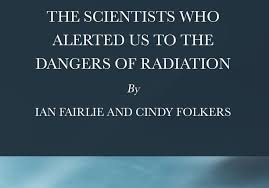
Jim Green, 2 May 24, A new book on radiation risks recently published by The Ethics Press International “The Scientists Who Alerted us to Radiation’s Dangers”. The book was written by myself and a US campaigner Cindy Folkers.
Recent epidemiology evidence clearly shows that radiation risks have increased and that previous denials on radiation risks by successive governments and their nuclear establishment on both sides of the Atlantic were and are wrong. Radiation is considerably more dangerous than official reports indicate, both in terms of the numerical magnitudes of cancer risks, and also in terms of new diseases, apart from cancer, ow shown to be radiogenic.
This is an up-to-date reference book for academics on the dangers and risks of radiation and radioactivity. The book also serves to help journalists and students counter the misrepresentations, incorrect assertions, wrong assumptions, and untruths about radiation risks often disseminated by the nuclear (power and weapons) establishments on both sides of the Atlantic. All scientific statements are backed by evidence via hundreds of references, 14 Appendices, 6 Annexes, a glossary and an extensive bibliography.
At present the book is only available in hardback from the Ethics Press. This is expensive but a 33% discount is available at
In addition, a paperback (~£30) version will be available in November 2024.https://www.amazon.co.uk/Scientists-Who-Alerted-Dangers-Radiation/dp/1804414468
In the meantime, the book’s first three chapters may be sampled at
Chernobyl – the Cloud Lingers On
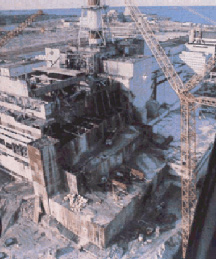
CHERNOBYL – THE FACTS
- The total radioactively released from Chernobyl was 20 times that of the combined releases of the Hiroshima and Nagasaki atomic bombs.
- At least 9 million people have been directly affected by the accident
- Over 160,000 square kilometres of land were contaminated with 42,000 squarekilometres rendered unusable.
- At least 400,000 people were forced to leave their homes in Russia, Ukraine and Belarus.
- Analysis concluded that the former Soviet Union would have been better off financially if it had never begun building nuclear reactors.
- It is estimated that the total cost of compensation paid to UK farmers is over £12 million.
- The Chernobyl disaster has caused a massive increase in thyroid cancers in the three most affected countries of Belarus, Russia and Ukraine.
- The sarcophagus built to contain the damaged reactor was supposed to last 30 years but some 300 yards of cracks and holes are already evident.
- In Ukraine, two million children live in contaminated areas with 900,000 still living in high-risk zones.
- The stricken reactor will remain radioactive for about 10,000 years.
BY MARIANNEWILDART, https://mariannewildart.wordpress.com/2024/04/26/chernobyl-the-cloud-lingers-on/
38th Anniversary of Chernobyl
Today is the 38th Anniversary of the ongoing Chernobyl nuclear disaster. A huge steel and concrete sarcophagus covers the site of the meltdown. Under its dome, called the New Safe Confinement, lie 200 tons of lava-like nuclear fuel, 30 tons of highly contaminated dust and 16 tons of uranium and plutonium that continue to release high levels of radiation. There is a rather odd link with the Russian state nuclear body Rosatom and Cumbria. Until recently Rosatom shared the same PR company as West Cumbria Mining – New Century Media. The coal mine plans have an uncanny resemblance to the Chernobyl sarcophagus
The damage from Chernobyl is ongoing, snowballing down through the generations with tenacious charities such as Chernobyl Children’s Project (UK) and Chernobyl Childern International doing their utmost to support those whose lives continue to be damaged.
Here we re-publish “The Cloud Lingers On”
a hard hitting article from 1996…in non other than Cumbria Life.
The lifestyle magazine, Cumbria Life, is not where you would expect to find a hard- hitting article on Chernobyl and the nuclear industry. But that is exactly what was published in this Cumbrian coffee table magazine in 1996. ….
(the article is in the public domain but not online – any mistakes in transcript are mine)
Ten years ago a cloud washed over the Cumbrian fells, coating the grass, trees, heather, bracken and rocks with a film of radiation. It came from Chernobyl, a ruptured nuclear reactor in the Ukraine, several thousand miles away. Early, confident predictions that the heavy Cumbrian rain, that brought down the radioactive Caesium in the first place would now wash it from the uplands, were quietly buried. No amount of rain was every going to wash away the poison from Chernobyl. Award winning environmental writer Alan Air reports.
At the height of the Cold War, the superpowers hid behind the perverted logic of the military defence acronym MAD – Mutually Assured Destruction – to shore up a global arms industry worth billions of pounds. We pointed our nuclear warheads at them. They pointed their nuclear warheads at us. Would they dare unleash their missiles? Would we dare unleash our missiles? All that awful tension.
Cumbria at first glance a global backwater of lakes, dry stone walls and back packing ramblers, seemed remote from the world stage but it played a part in the divide between West and East; Sellafield’s nuclear complex, the Broughton Moor arms depot, Anthorn’s submarine tracking station and even the Chapelcross nuclear plant just across the Solway Firth were all key components in the UK’s military and nuclear defence strategy.
Britain’s post-war civil atomic power programme was inextricably interwoven with its nuclear defence objectives; no British Government Minister wanted to enter the nuclear conference chamber naked.
Thankfully, Eastern Bloc missiles never did scream over Saddleback or the back o’ Skiddaw but in the spring of 1986, before the Soviet Union started to implode, Cumbrians felt the heat of Cold War politics on its back when an experiment at the Lenin nuclear plant at Chernobyl, in the Ukraine went wrong and Number 4 reactor exploded and threw up over Europe.
Spiralling weather patterns spread the atomic debris to dozens of countries in different time zones, heavy rain brought the radiation down on our county’s mountain tops and the alarms went berserk at Sellafield evoking a home-grown nuclear nightmare, the Windscale fire of ’57 that contaminated large parts of Cumbria and northern England. Chernobyl was nothing if not ironic.
Ten years later and Chernobyl – the noun is now instantly synonymous with the world’s worst nuclear disaster – is now in the hands of a ‘democratic’ Ukraine, but the perilous state of the infamous Number 4 reactor continues to cause concern among the international community. The cracking concrete sarcophagus, hastily erected around the molten core by nuclear workers a the stricken plant, many of whom later died from the radiation, is already crumbling and radioactive water is pouring from the site. Unless a new containment chamber is constructed, and much of the cash would have to come from a kitty topped up by the rich industrial nations of the West, then Chernobyl 2 – The Sequel, is not just a possibility but a probability, warns Janine Allis-Smith of the campaign group Cumbrians Opposed to a Radioactive Environment (CORE).
“Chernobyl proved that you can never, ever guard against human error, someone doing something stupid. Whatever nuclear experts say about the design of the Chernobyl reactor it was human error that triggered the explosion. It is bound to happen again,” she predicts.
In the weeks, months and years after Chernobyl, hundreds of Cumbrian hill farmers faced restrictions on the movement, and sale for meat, of radioactive-contaminated sheep. Initial Government estimates about the time it would take for dangerous radiation to leave the animals were constantly revised upwards as the main components of Chernobyl fallout, Caesium 137 and Caesium 134, persisted in dangerous amounts in the beasts’ tissues.
Early, confident predictions that the heavy Cumbrian rain that brought down the Caesium in the first place, would now wash it from the uplands were quietly buried.
It took scientists at the Merlewood Research Station at Grange over Sands in south Cumbria, to uncover some very down to earth truths about the persistence of cancer causing Caesium in the Cumbrian hills. The irony of the scientific explanation wasn’t lost on the county’s loose alliance of anti-nuclear and ‘green’ campaigners forever kicking up a stink about nuclear waste reprocessing at Sellafield.
It was all to do with recycling.
In the nutrient poor uplands of the Lake District, native grasses and heathers survive by carefully safeguarding what minerals are available. Elements – which in 1986 including Caesium – are taken up by the roots and then circulated to the succulent shoot tips during the growing season. However, they are not lost when the plant sheds its leaves in the Autumn. Instead they are sucked back into the woody, permanent tissues, to be stored for re-use in the Spring. By another quirk of nature, Caesium was readily absorbed by Cumbrian hill vegetation because of a lack of potassium in the upland soil.
Scientists discovered that plants in potassium deficient areas have a Caesium take up rate that is 12 times greater than those plants growing in potassium rich soil. Even more bizarrely, many of Cumbria’s hillside plants enjoy ‘symbiotic’ relationships with ‘mycorrhizal fungi’ – tiny plants that survive by assisting the host plant to take up minerals. In the case of Cumbrian heather, these fungi helped move Caesium from the roots to the shoot tips on which the sheep fed. Even the lack of clay in our upland soil, a material that binds Caesium and hinders root absorption meant that vegetation could easily access this radioactive ion.
No amount of rain was ever going to wash away the poison from Chernobyl.
Sheep feeding on hillside vegetation took in Caesium with every mouthful. For Ennerdale sheep farmer, John Hinde, who has a 1,500 strong flock at Low Moor End, the Chernobyl fallout meant nine stressful years of working within Government restrictions and monitoring. He has survived but recalls: “For a time it looked as if there wasn’t going to be any sheep left on the fells.”
Ten years on and only a dozen or so farms in Cumbria are regulated by movement restrictions compared to nearly 400 in Wales. That would appear to be good news for our farmers, and the mutton-eating consumer. Janine Allis-Smith of CORE isn’t so sure that radiation levels on the fells have declined quite so dramatically as the Government would have us believe, and she suggests that the de-restrictions are rooted in political pragmatism.
“It is interesting that the only area where this massive de-restriction has taken place is the Lake District. It is obviously important that Cumbrian and the whole tourist area is seen to be okay. I think a lot of Cumbrian farmers had their eyes opened when it was discovered that only 50% of the radiation on the hills came from Chernobyl. Some of the stuff was there long before May 1986” she says.
Indeed, scientists confirmed that radioactive contamination of the fells was not confined to Chernobyl but that much of it came from global nuclear bomb testing, the Windscale Fire of 1957 and routine discharges from Windscale, now Sellafield, in the 1960s and 1970s. Allis-Smith cites an aerial survey revealed the Ravenglass Estuary was contaminated by radioactive discharges from Sellafield long before Chernobyl dumped on us.
“If radiation was like confetti, the whole bloody Lake District would be like a wedding cake.” She suggests.
Cumbrian hill farmer’s daughter Jill Perry is equally suspicious of recent de-restrictions in the Lake District,
“The hill farm where I was born and brought up was one of those where milk had to be destroyed after the 1957 Windscale fire and one which, 29 years later, was placed under Chernobyl restrictions and has recently been exempted>” she explains.
“I think most farmers originally thought the Chernobyl testing was just a formality and were surprised and dismayed when they were placed under restriction, and equally wonder why restrictions have been lifted more quickly than those in Wales, where the number of restricted farms seems to fall much more slowly.”
Mrs Perry who now acts as the spokesman for West Cumbrian Friends of the Earth group, sees no point in differentiating between Windscale ’57 and Chernobyl ’86.
“What these two incidents show most graphically is that whether a nuclear accident happens locally or in another country, the radiation recognises no international borders and that we cannot afford to take lightly the risks brought about by human error in a high tech industry.”
The greatest irony of Chernobyl may yet lie ahead. British Nuclear Fuels, the company that now runs Sellafield in West Cumbria (and which has polluted areas of the UK coastline with its radioactive discharges) is now spreading tentacles around the globe. Selling its decontamination services to a tainted world. No-one can rule out experts from Sellafield, the plant that spawned the world’s first ‘civil’ nuclear disaster in 1957 and whose alarms bells rung out loud and clear when the Chernobyl could went over, will not, in the future, ret-trace the path of the Chernobyl radiation plume and venture into the plant’s exclusion zone.
Bridget Woodman, an anti nuclear campaigner with Greenpeace believes that Chernobyl taught Cumbrians about the universal nature of the nuclear power threat.
“When the Chernobyl explosion first appeared on the news bulletins, most Cumbrians probably never envisaged that it would impact directly on them. Yet within a few days, people were watching the skies apprehensively. Cumbrians may have become blasé about Sellafield on their own doorstep but Chernobyl proved that a nuclear disaster can affect them even if its happening thousands of miles away. There is no guarantee of safety. Chernobyl proved there is no escape.
“And while many of the restrictions on sheep movements in Cumbria have now been lifted, we should remember that there is no safe dose of radiation. No-one knows what the legacy of Chernobyl fallout will be on existing and future generations of Cumbrians.
RED GROUSEThe Red Grouse has escaped media attention but its almost exclusive diet of succulent heather shoots means that many birds will have concentrated Caesium in their bodies post Chernobyl. Work prior to the Chernobyl disaster established that the heather family, Ericaceae, could accumulate high concentrations of Caesium. Since then, surveys in the Lake District have revealed that one species of heather, calluna vulgaris, accumulates the highest Caesium burden.
CHERNOBYL – THE FACTS
- The total radioactively released from Chernobyl was 20 times that of the combined releases of the Hiroshima and Nagasaki atomic bombs.
- At least 9 million people have been directly affected by the accident
- Over 160,000 square kilometres of land were contaminated with 42,000 squarekilometres rendered unusable.
- At least 400,000 people were forced to leave their homes in Russia, Ukraine and Belarus.
Analysis concluded that the former Soviet Union would have been better off financially if it had never begun building nuclear reactors.- It is estimated that the total cost of compensation paid to UK farmers is over £12 million.
- The Chernobyl disaster has caused a massive increase in thyroid cancers in the three most affected countries of Belarus, Russia and Ukraine.
- The sarcophagus built to contain the damaged reactor was supposed to last 30 years but some 300 yards of cracks and holes are already evident.
- In Ukraine, two million children live in contaminated areas with 900,000 still living in high-risk zones.
- The stricken reactor will remain radioactive for about 10,000 years. ENDS
Russia declares ‘state of emergency’ after radiation detected in eastern city of Khabarovsk
Authorities in Russia’s far eastern city of Khabarovsk have declared a state of emergency in an area where a “radiation source” was found, TASS news agency reported on Friday, adding that elevated radiation levels were detected near a power pylon about 2.5 km (1.5 miles) from residential buildings.
Officials have not provided an explanation for the leak but have confirmed its containment and transfer to a secure radioactive waste storage site. A state of emergency is to persist for a minimum of three additional days as law enforcement continues investigations into the incident.
Reports indicate a delay of approximately one week before authorities responded to the leak. Video footage has surfaced depicting an individual in a nuclear protective mask, carrying a radiation reader, which displayed escalating readings as he traversed a designated “waste dump” area.
No one had been injured or exposed to radiation and “there is no threat to the health of citizens”, TASS quoted the local branch of Russia’s consumer safety watchdog as saying.
It said radiation levels would be monitored for the next two days and the source of the radiation would be investigated.
WHERE HAVE ALL THE INSECTS GONE? Satellites are taking them, every one.
The least noticed and greatest assault on Earthly life rains on us from the sky. Nature’s wires strung above us from horizon to horizon, carrying the electricity that helps power our bodies, and the information that informs our growth, healing, and daily lives, now carries dirty electricity — millions of frequencies and pulsations that confuse our cells and organs, and dim our nervous systems, be we humans, elephants, birds, insects, fish, or flowering plants.
The pulsations pollute the Earth beneath our feet, surround us in the air through which we fly, course through the oceans in which we swim, flow through our veins and our meridians, and enter us through our leaves and our roots. The planetary transformer that used to gentle the solar wind now agitates, inflames.
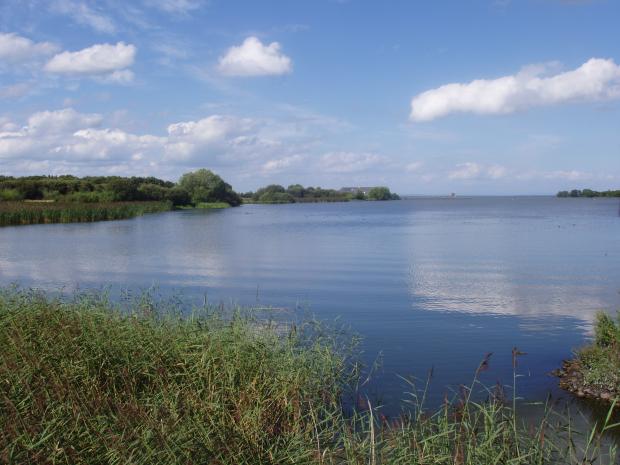
The lake pictured above is the United Kingdom’s largest. Located in Northern Ireland, Lough Neagh swarms so densely with flies every spring and summer that residents shut their windows against the living smoke. Clothes left out on a line are covered with them. So is any windshield on a vehicle traveling around the lough’s 90-mile shoreline. Until 2023.
Last year, unbelievably, no flies were to be seen. Windshields and hanging clothes were bare of them. None flew into open windows. Other species that used to eat them were gone as well — ducks, frogs, fish, eels, and predatory insects. Fly larvae were not there to keep the lake bottom clean. Little was alive in the lough except an overgrowth of algae. “Has the ecosystem of the UK’s largest lake collapsed?” asked The Guardian in a February 19, 2024 article.
Has the ecosystem of the entire Earth collapsed? we ask, for the same is happening all over, according to reports I have been receiving for a year from almost everywhere on every continent.
56 Years of Global Vandalism
On June 13, 1968, the United States completed its launch of the world’s first constellation of military satellites. Twenty-eight of them, more than twice as many satellites as were in orbit around the Earth until then, were lofted to an altitude of 18,000 miles, in the heart of the outer Van Allen radiation belt. The “Hong Kong” flu pandemic began two weeks later and lasted for almost two years.
For the next three decades, the skies slowly filled up with hundreds of satellites, mostly for military purposes. Then in the late 1990s, cell phones became popular.
On May 17, 1998, a company named Iridium completed its launch of a fleet of 66 satellites into the ionosphere, at an altitude of only 485 miles, and began testing them. They were going to provide cell phone service to the general public from anywhere on earth. Each satellite aimed 48 separate beams at the earth’s surface, thus dividing the planet into 3,168 cells. Reports of insomnia came from throughout the world………………………………………………………………
SpaceX has been launching rockets carrying dozens of satellites at a time on a weekly or biweekly basis, filling the heavens with luminous objects that interfere with astronomy, spewing chemicals that are destroying our planet’s protective ozone layer, filling the upper layers of the atmosphere with water vapor that should not be there and that is increasing the current in the global electric circuit and the violence of thunderstorms, and cluttering up space with satellites that are nothing but solar arrays and computers that are continually failing, wearing out, and having to be replaced, and which are deorbited to burn up in the lower atmosphere, filling it with metals and toxic chemicals for everyone to breathe — and altering the electromagnetic environment of the Earth that had not changed in three billion years and that life below depends on for its vitality and survival.
Last Thursday morning, from Boca Chica, Texas, SpaceX successfully launched its Starship — the largest rocket ever built, the one it wants to ferry men and women to Mars with — into space for the first time. And on Friday it launched yet another 23 Starlink satellites to bring its total polluting the ionosphere up to more than 6,000, now not only for internet communication with rooftop dishes but for direct communication with handheld cell phones. The 6,000 satellites are also now communicating directly with one another, wrapping the Earth with pulsating lasers carrying 42 million gigabytes of data every single day………
Since March 24, 2021, not only has human health deteriorated, but the biodiversity of the Earth, everywhere, has plummeted. People have not so much noticed the decline of the larger wildlife like wolves, bears, lions and tigers, which were already scarce, but they are shocked by the total disappearance of the smallest animals that were only recently so common you couldn’t open your windows without them flying in. They are shocked by the disappearance of all the frogs that used to swim in their ponds, the birds that used to nest in their trees, the worms that used to slither on the ground, the insects that used to fly through their windows and cover their clothes hanging on the line. My newsletters of March 29, June 21, September 20, October 17, and November 28, 2023 carried major stories about this from various parts of the world. My newsletters of December 5 and December 26, 2023, and January 9 and February 6, 2024 quoted from individuals all over the world who have emailed or called me, and I have a huge backlog of more such reports that you can read when I publish them in the future.
If we want to have a planet to live on, not only for our children but for ourselves, the [electromagnetic]radiation has to stop. Not only do the cell towers have to come down that are so ugly to look at, but also the cell phones that we hold in our hands and have become so dependent on, and the satellites that are squeezing all the life that remains out from under them. We are running out of time. https://cellphonetaskforce.org/where-have-all-the-insects-gone/

The horrors of nuclear weapons testing
I think that enough time has gone by that the longer-term dangers of nuclear weapons, such as radioactive fallout, have largely disappeared from the public consciousness—much to the agony and despair of those afflicted to this day.
Radioactive fallout and its long-term effects—things that the average person today does not really appreciate—would be the result from any future nuclear weapons explosion that touched the Earth’s surface. Fallout does not just affect the target, but also the surrounding areas—which could be as far as hundreds of miles away. And the effects could last for years, if not decades thereafter.
Bulletin By Walter Pincus, March 7, 2024
There has been talk in the national security community lately about the so-called “merits” of resuming underground or even atmospheric nuclear weapons tests. I think this would be a grave mistake for many reasons—chief among them is that it forgets the horrific health effects that resulted from some previous nuclear tests.
To be clear, since 1963, atmospheric tests of nuclear weapons have been banned, as have tests in outer space and under water. And underground explosive tests have been banned ever since the 1996 Comprehensive Nuclear Test Ban Treaty, or CTBT. (Technically speaking, while the United States and China have signed the CTBT, neither has ratified it. Russia did both sign and ratify the treaty but on November 2, 2023 Russia announced it had rescinded its ratification. All three countries, however, have so far abided by the CTBT treaty.)
Meanwhile, sub-critical nuclear tests—which use tiny amounts of plutonium but do not create self-sustaining, exponentially-growing, nuclear chain reactions—have continued to this day, in laboratories or in specially constructed underground tunnels. The US is building new tunnels for sub-critical tests at the Nevada Nuclear Test Site where they are expected to help in designing the new, US W93 nuclear warhead now under development.
Presumably, then, what we are referring to when we talk about the possible resumption of nuclear testing is not the latter sub-critical testing, but some version of atmospheric, outer space, underwater, or underground explosives testing.
And here things get tricky.
Because I think that enough time has gone by that the longer-term dangers of nuclear weapons, such as radioactive fallout, have largely disappeared from the public consciousness—much to the agony and despair of those afflicted to this day.
I believe that the more people understand and even can visualize the immediate and long-term dangers of nuclear weapons use, the less likely it is that they may be used. Several nuclear scientists have told me they have memories of specific past nuclear atmospheric tests, most memorably two who were involved in the Manhattan Project—Harold Agnew and Hans Bethe.
Agnew photographed the Hiroshima mushroom cloud from the US aircraft that followed the Enola Gay that dropped the atomic bomb. Agnew almost always brought up the effect that had on him when we met.
For his part, Bethe, at 88—on the 50th anniversary of the birth of the atomic bomb—wrote: “I feel the most intense relief that these weapons have not been used since World War II, mixed with horror that tens of thousands of such weapons have been built since that time—one hundred times more than any of us at Los Alamos could ever imagine.”
In an interview years earlier at Cornell University where he was teaching, Bethe had told me something similar—and at 91, I have never forgotten those words.
The closer you are to nuclear weapons, the more you are aware of the dangers if they were to be used again. However, I believe, most people today have forgotten, if they ever knew, what a single nuclear weapon could do.
Seeing is believing. But believing in this case should make you work to oppose their use, as can be seen in a very rough sort of timeline of my own life…………………………………………………………………………………………………………………
It was in February 1966, well after the 1963 atmospheric test ban treaty, that I first wrote about the impact of nuclear weapons. It was a rather flip, three-paragraph note in The Reporter Magazine, which no longer exists. The story concerned a law that had passed Congress the previous month, a measure which required the US Government to pay $11,000 to each of the 82 men, women and children—or their survivors—who had been on Rongelap Atoll in the Marshall Islands in the central Pacific on March 1, 1954 when the United States detonated Test Bravo from a tower on an artificial island built within Bikini Atoll, more than 120 miles west of Rongelap.
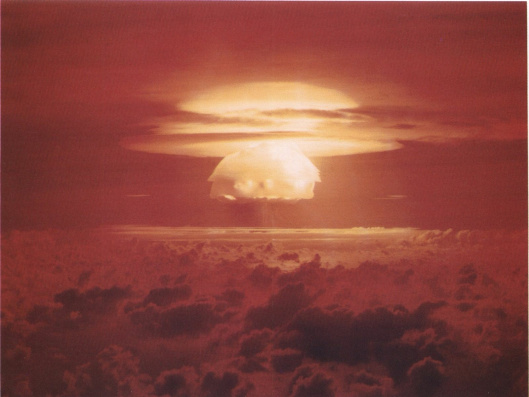
Bravo was the first US test of a deliverable thermonuclear bomb and was expected to have a six-megaton yield, the equivalent of six million tons of TNT. In fact, the explosion was more than double that—15 megatons—and one thousand times more powerful than the atomic bomb that destroyed Hiroshima.
Thanks in good part to thousands of documents on nuclear weapons declassified and released during the Clinton Administration, I was able to describe details about the Bravo explosion two years ago in my book, Blown To Hell: America’s Deadly Betrayal of the Marshall Islanders, as follows:
In a few seconds the fireball, recorded at one hundred million degrees, had spread nearly three miles in diameter, then quickly spread to ten miles. The sandspit and nearby reef where Bravo had stood, along with coral island areas, were vaporized down almost two hundred feet into the sea, creating a crater about one mile in diameter.
It was estimated that three hundred million tons of vaporized sand, coral and water shot up into the air as the fireball rose, and one-hundred-mile-an-hour winds created by the blast pulled additional debris up into the fireball. Within one minute, the fireball had gone up forty-five thousand feet with a stem four miles wide filled with radioactive debris. It continued to zoom upward, shooting through the troposphere and into the stratosphere within five minutes.
Later data showed the cloud bottom was at fifty-five thousand feet, the secondary mushroom cloud bottom was at one-hundred-fourteen thousand feet, and the upper cloud hit one-hundred-thirty thousand feet.
Ten minutes after detonation the mushroom cloud had widened and measured seventy-five miles across just below the stratosphere.
Original projections had predicted Bravo radioactive fallout would emanate from a fifteen-mile-wide cylinder that could stretch into the stratosphere. Instead, it turned out to be a one-hundred-mile-wide cloud where “debris was carried up and dispersed over a much larger area than was thought possible,” wrote Dr. William Ogle, the test’s task force commander of the scientific group that dealt with radioactivity.
Radioactive fallout and its long-term effects—things that the average person today does not really appreciate—would be the result from any future nuclear weapons explosion that touched the Earth’s surface. Fallout does not just affect the target, but also the surrounding areas—which could be as far as hundreds of miles away. And the effects could last for years, if not decades thereafter. These effects are worth spelling out in detail, using what happened downwind of the test as an example.
That March 1, 1954 morning, the Japanese fishing boat Lucky Dragon, with a crew of 23 aboard, was trawling its nets 90 miles east-northeast of Bikini. A crewman at the stern rail saw a whitish flare in the west that briefly lit up the clouds and the water. It grew in size, turned to yellow-red, then orange. After a few minutes, the colors faded and shortly thereafter the ship was rocked by the blast of an explosion.
The Lucky Dragon’s captain and the fishing master, who had read ship warnings before they left port, realized they might have strayed into a nuclear test area. They quickly decided to haul in their fishing nets and head back to Japan, almost 2,500 miles away.
It was another two or three hours before a fine white dust began to come down on the boat. With a light rain, the radioactive dust continued to settle on crewmen and the fish on the deck as they worked for another two hours to bring in their lines.
On Rongelap about 30 miles further east, at about 11:30 a.m., a similar powdery, radioactive ash began falling in the area. It stuck to the Marshallese people’s skin, hair, and eyes; many walked barefoot and the powder stuck to their toes; it fell on fish drying on wooden racks that would be eaten that night. Rain briefly fell as the fallout continued into afternoon, dissolving the powdery ash on roofs and carrying it down drains into water barrels that provided drinking water to each household.
On parts of Rongelap Island, where most people lived, the almost five hours of fallout led to drifts of up to one-inch or more high on the ground, on roofs, and along the beach. People recalled that when the moon broke through the clouds that night, it looked like patches of snow on the ground.
It would be two days before the Marshallese were evacuated from Rongelap and taken to the Kwajalein Navy Base by a US Navy destroyer. By then, most of the Rongelapese people had suffered from acute radiation exposure and nausea; some had experienced skin lesions as well.
Since the Bravo test was highly classified, a decision was made in Washington to keep the fallout incident secret, although the Atomic Agency Commission (AEC) had released a statement on March 1, 1954 that a nuclear test had taken place in the Marshall Islands Pacific Proving Ground. That had generated a small front page story in the March 2, 1954, edition of The New York Times. It was not until March 11, 1954, that the AEC admitted people “unexpectedly exposed to some radioactivity” had been moved to Kwajalein “according to a plan as a precautionary measure.”
Two weeks passed before the Lucky Dragon returned to its home port in Japan. It was only then that on March 16, 1954, the first story appeared in the Japanese Yomiuri Shimbun newspaper of what had happened to the boat’s crew and their fish—not what happened to the Marshallese. That story immediately triggered initial worldwide attention to the dangers of fallout from nuclear weapons.
However, it was not until President Eisenhower’s March 31, 1954 press conference that AEC Chairman Lewis Strauss, who had just returned from observing post-Bravo nuclear tests, admitted publicly that the Bravo test was “in the megaton range” and “the yield was about double that of the calculated estimate.” ……………………………………………………………………………………………………….
The early part of the 1955 report described the blast and heat effects of early atomic bombs detonated in the air, before discussing fallout from Bravo and other detonations. “In the air explosion, where the fireball does not touch the earth’s surface, the radioactivity produced in the bomb condenses only on solid particles from the bomb casing itself and the dust which happens to be in the air. In the absence of materials drawn up from the surface, these substances will condense with the vapors from the bomb and air dust to form only the smallest particles. These minute substances may settle to the surface over a very wide area—probably spreading around the world—over a period of days or even months. By the time they have reached the earth’s surface, the major part of their radioactivity has dissipated harmlessly in the atmosphere and the residual contamination is widely dispersed.”
The report then turned to what fallout would occur if the fireball hit the ground. “If however the weapon is detonated on the surface or close enough so that the fireball touches the surface, then large amounts of material will be drawn up into the bomb cloud. Many of the particles thus formed are heavy enough to descend rapidly while still intensely radioactive. The result is a comparatively localized area of extreme radioactive contamination, and a much larger area of some hazard. Instead of wafting down slowly over a vast area, the larger and heavier particles fall rapidly before there has been an opportunity for them to decay harmlessly in the atmosphere and before the winds have had an opportunity to scatter them.”
It described the Bravo fallout as looking like snow “because of calcium carbonate from coral,” and then noted its “adhesive” quality thanks to moisture picked up in the atmosphere as it descended. In the end it contaminated “a cigar-shaped area extending approximately 220 statute miles downwind, up to 40 miles wide,” from Bikini. It “seriously threatened the lives of nearly all persons in the area who did not take protective measures,” the report said.
The report then talked about radioactive strontium in fallout as having a long, average lifetime of nearly 30 years, noting it could enter the human body either by inhaling or swallowing. Deposited directly on edible plants, the strontium could be eaten by a human or animal. While rainfall or human washing of the plants would remove most of the radioactive material, radioactive strontium deposited directly on the soil or in the ocean, lakes, or rivers could be taken up by plants, animals, or fish. There it would lodge in their tissue where it could later be eaten by humans…………….
The other radioactive element in fallout described specifically as a threat in the report was radioactive iodine. Even though the average life of radioactive iodine was only 11.5 days, it was described as a serious hazard because, if inhaled, it concentrated in the thyroid gland where it could damage cells, depending on dosage………………………………………………………………………………………………………………………………………………………………..
Back on Rongelap, despite some cleanup, there are few in residence. A study published in the Proceedings of the National Academy of Sciences in July 2019, done by researchers from Columbia University, found that levels of plutonium and cesium in the soil on Rongelap and other Marshall Island atolls were “significantly higher” than levels that resulted from fallout existing from the July 1986 Chernobyl nuclear power accident—which occurred 28 years after US nuclear tests had ended in the Marshalls.
The Rongelap Marshallese as well as the Japanese seamen who were exposed to fallout on March 1, 1954, can be seen as surrogates for anyone caught in a future nuclear war. Rongelap Atoll, as well as Bikini Atoll, for the most part still cannot be inhabited despite attempts to decontaminate them. Think of what today’s cities would be like if hit by a thermonuclear weapon whose fireball struck the ground and created radioactive fallout.
Within weeks it will be 70 years since the Bravo test. The more the US public and the world are reminded of that test and the resulting Rongelap story, the more they should work to deter any potential use of nuclear weapons. https://thebulletin.org/premium/2024-03/the-horrors-of-nuclear-weapons-testing/?utm_source=Newsletter&utm_medium=Email&utm_campaign=ThursdayNewsletter03072024&utm_content=NuclearRisk_NuclearTestingHorrors_03072024
“Tritium Removal” A Report on the Proposed MCECE nuclear Facility at Chalk River
“Tritium Removal” A Report on the Proposed MCECE Facility at Chalk
River by Gordon Edwards, Ph.D. for the Keboawek First Nation. In a letter
to Keboawek First Nation dated February 2, 2024 (reference # 2), we read
that “CNL is restoring and protecting Canada’s environment by reducing
and effectively managing nuclear liabilities.
Among these liabilities is
Atomic Energy of Canada’s (AECL) large inventory of tritium contaminated
heavy water.” In an accompanying Fact Sheet (reference # 3) CNL states
that “tritiated heavy water cannot be used, re-used or disposed of in its
current form.”
The fact that tritium-contaminated heavy water cannot be
used, re-used, or even disposed of in its present form is a testament to
the considerable hazards posed by radioactive tritium. Nevertheless,
tritiated heavy water can be safely stored, and kept out of the
environment, as is being done at present. There is no reason given by CNL
as to why such storage cannot be continued indefinitely, until the
radioactive tritium has disintegrated to innocuous levels.
Canadian Coalition for Nuclear Responsibility 27th Feb 2024
Breakthrough research unveils effects of ionizing radiation on cellular DNA

Feb 14 2024The Korea Advanced Institute of Science and Technology (KAIST)
Recent release of the waste water from Japan’s Fukushima nuclear disaster stirred apprehension regarding the health implications of radiation exposure. Classified as a Group 1 carcinogen, ionizing radiation has long been associated with various cancers and genetic disorders, as evidenced by survivors and descendants of atomic bombings and the Chernobyl disaster. Despite much smaller amount, we remain consistently exposed to low levels of radiation in everyday life and medical procedures.
Radiation, whether in the form of high-energy particles or electromagnetic waves, is conventionally known to break our cellular DNA, leading to cancer and genetic disorders. Yet, our understanding of the quantitative and qualitative mutational impacts of ionizing radiation has been incomplete.
On the 14th, Professor Young Seok Ju and his research team from KAIST, in collaboration with Dr. Tae Gen Son from the Dongnam Institute of Radiological and Medical Science, and Professors Kyung Su Kim and Ji Hyun Chang from Seoul National University, unveiled a breakthrough. Their study, led by joint first authors Drs. Jeonghwan Youk, Hyun Woo Kwon, Eunji Kim and Tae-Woo Kim, titled “Quantitative and qualitative mutational impact of ionizing radiation on normal cells,” was published in Cell Genomics.
Employing meticulous techniques, the research team comprehensively analyzed the whole-genome sequences of cells pre- and post-radiation exposure, pinpointing radiation-induced DNA mutations. Experiments involving cells from different organs of humans and mice exposed to varying radiation doses revealed mutation patterns correlating with exposure levels.
Notably, exposure to 1 Gray (Gy) of radiation resulted in on average 14 mutations in every post-exposure cell. Unlike other carcinogens, radiation-induced mutations primarily comprised short base deletions and a set of structural variations including inversions, translocations, and various complex genomic rearrangements. (Figure 3) Interestingly, experiments subjecting cells to low radiation dose rate over 100 days demonstrated that mutation quantities, under equivalent total radiation doses, mirrored those of high-dose exposure. ……………………………………….. more https://www.news-medical.net/news/20240214/Breakthrough-research-unveils-effects-of-ionizing-radiation-on-cellular-DNA.aspx
Radiation heroes
In this Energy Revolutions podcast David Toke talks to Dr Ian Fairlie
about two scientists who were persecuted for uncovering dangerous
radioactive truths. The first scientist to be discussed is Alice Stewart.
She discovered that routine X-rays used on pregnant women were harming
unborn babies. Initially, she was dismissed, derided, and forced to leave
her job. Later her work was quietly recognised as being correct. On the
other hand, Yury Bandachevsky was jailed by the Government of Belarus for
insisting on researching and publishing on the impact of the Chernobyl
nuclear accident.
Dave Toke 27th Dec 2023, https://davidtoke.substack.com/p/radiation-heroes-podcast
Exposure to CT Radiation and Risk of Blood Cancers in Young Patients
By The ASCO Post Staff, 11/14/2023
Investigators may have uncovered an association between exposure to computed tomography (CT) radiation in young patients and an increased risk of hematologic malignancies, according to a recent study published by Bosch de Basea Gomez et al in Nature Medicine. These recent findings highlighted the significance of continuing to apply strict radiologic protection measures in young patients.
Background
Currently, more than 1 million young patients in Europe undergo CT scans each year. The impact of these scans in patient management—including diagnostic efficacy, treatment planning, and disease follow-up—is generally considered positive. However, the extensive use of this procedure in recent decades has raised concerns in the medical and scientific community about the potential cancer risks associated with exposure to ionizing radiation, particularly in young patients.
“The exposure associated with CT scans is considered low (< 100 mGy), but it is still higher than for other diagnostic procedures,” explained senior study author Elisabeth Cardis, PhD, Head of the Radiation Group at the Barcelona Institute for Global Health.
Previous studies have suggested that young patients exposed to CT scans may have an increased risk of developing cancer, but these studies faced several methodologic limitations.
Study Methods and Results
In the recent multinational EPI-CT study, the investigators—including clinicians, epidemiologists, and dosimetrists from Belgium, Denmark, France, Germany, the Netherlands, Norway, Spain, Sweden, and the United Kingdom—analyzed the data of 984,174 patients who underwent at least one CT scan prior to age 22 to address the limitations of the previous research.
The dose of radiation delivered to the bone marrow was estimated for each of the patients. By linking this information to national cancer registries, the investigators were able to identify those who developed hematologic malignancies after an average follow-up of 7.8 years. However, for those who had CT scans in the early years of the technology, the investigators were able to monitor cancer incidence for more than 20 years after their first scan.
The investigators determined there was a clear correlation between the total radiation doses to the bone marrow from CT scans and the risk of developing both myeloid and lymphoid malignancies. A dose of 100 mGy multiplied the risk of developing a hematologic malginancy by a factor of about three. The investigators suggested that a typical scan today (with an average dose of about 8 mGy) may increase the risk of developing hematologic malignancies by about 16%………………………………………………. more https://ascopost.com/news/november-2023/exposure-to-ct-radiation-and-risk-of-blood-cancers-in-young-patients/
Frozen fallout: radioactive dust from accidents and weapons testing accumulates on glaciers.
Physics World, 20 Jun 2023 James Dacey
Glacier surfaces in certain parts of the world contain concerning amounts of toxic radioactive materials, a result of weapons testing and nuclear accidents such as the Chernobyl disaster in 1986. Fallout radionuclides accumulate within cryoconite – a granular sediment found in holes on glacier surfaces – and there is a risk of this material entering local ecosystems as glaciers melt due to climate change. Glaciologists and ecologists say this poses urgent questions. What regions are at highest risk? How diluted is the nuclear material entering proglacial zones? What impact might that have on organisms?…..
Classified! The secret radiation files.

most of the exposure people received came in the form of internal exposures from ingesting radioactivity, not from external, ambient gamma rays in the environment.
Medical examinations of people in contaminated regions showed a significant increase in the general number of chromosomal mutations in newborns, and the frequency of birth defects in southern Belarus was found to be significantly higher than the control. In terms of general health, Konoplia reported, adults showed an increase in diseases of the circulatory system, hypertension, coronary illness, heart attacks, and myocardial problems, plus a rise in respiratory diseases.
Researchers on the UN team who had security clearances had access to classified studies that showed that 79 percent of children in the Marshall Islands exposed to American bomb blasts under the age of ten had developed thyroid cancer. Seventy-nine percent of several hundred children had thyroid cancer when the background rate was one in a million.
Health physicists fear lawsuits more than nuclear accidents
By Kate Brown, 12 Nov 23, https://beyondnuclearinternational.org/2023/11/12/classified-the-secret-radiation-files/
In 1987, a year after the Chernobyl accident, the US Health Physics Society met in Columbia, Maryland. Health physicists are scientists who are responsible for radiological protection at nuclear power plants, nuclear weapons plants, and hospitals. They are called on in cases of nuclear accidents. The conference’s keynote speaker came from the Department of Energy (DOE); the title of his talk drew on a sports analogy: “Radiation: The Offense and the Defense.” Switching metaphors to geopolitics, the speaker announced to the hall of nuclear professionals that his talk amounted to “the party line.” The biggest threat to nuclear industries, he told the gathered professionals, was not more disasters like Chernobyl and Three Mile Island but lawsuits.
After the address, lawyers from the Department of Justice (DOJ) met in break-out groups with the health physicists to prepare them to serve as “expert witnesses” against claimants suing the US government for alleged health problems due to exposure from radioactivity issued in the production and testing of nuclear weapons during the Cold War. That’s right: the DOE and the DOJ were preparing private citizens to defend the US government and its corporate contractors as they ostensibly served as “objective” scientific experts in US courts.
Health physics is an extremely important field for our everyday lives. Health physicists set standards for radiation protection and evaluate damage after nuclear emergencies. They determine where radiologists set the dial for CT scans and X-rays. They calculate how radioactive our food can be (and our food is often radioactive) and determine acceptable levels of radiation in our workplaces, environments, bodies of water, and air. Despite its importance, as it is practiced inside university labs and government organizations, health physics is far from an independent field engaged in the objective, open-ended pursuit of knowledge.
Compromised Science
The field of health physics emerged inside the Manhattan Project along with the development of the world’s first nuclear bombs. From the United States, it migrated abroad. For the past seventy-five years, the vast majority of health physicists have been employed in national nuclear agencies or in universities with research underwritten by national nuclear agencies. As much as we in the academy like to make distinctions between apolitical, academic research and politicized paid research outside the academy, during the Cold War those distinctions hardly made sense. From the end of World War II until the 1970s, federal grants paid for 70 percent of university research. The largest federal donors were the Department of Defense, the US Atomic Energy Agency, and a dozen federal security agencies.
Historian Peter Galison estimated in 2004 that the volume of classified research surpassed open literature in American libraries by five to ten times. Put another way, for every article published by American academics in open journals, five to ten articles were filed in sealed repositories available only to the 4 million Americans with security clearances. Often, the same researchers penned both open and classified work. Health physics benefited from the largesse of the Pentagon and the Atomic Energy Commission, which produced nuclear weapons for US arsenals. Correspondingly, the field suffered from a closed circle of knowledge that has had a major impact on our abilities to assess and respond to both nuclear emergencies and quotidian radioactive contamination.
Tracking the production of knowledge in the field of health physics shows how the effective renunciation of facts has played a major role in this branch of science. More generally, it demonstrates how the boundary between open and classified research is critical yet rarely acknowledged. The response of international health physicists to the Chernobyl disaster, which occurred in Soviet Ukraine in April 1986, shows heavily politicized science in action. History reveals that the official, federally sponsored cultivation of “alternative facts” is not new but has deep roots in the twentieth century.
Chernobyl came at an unfortunate time for nuclear professionals. As the Cold War creaked to an end, lawsuits abounded. In the 1980s, Marshall Islanders—their homes blasted in nuclear tests, their bodies subjected to classified medical study by scientists contracted by the Atomic Energy Agency—went to court. In Utah and Nevada, those who lived downwind from the Nevada Test Site were lining up for lawsuits. Meanwhile, the Metropolitan Edison Company in Pennsylvania faced lawsuits from plaintiffs living near the Three Mile Island nuclear power plant, which suffered a partial meltdown in 1979.
In the late 1980s, reporters and congressional investigators began to inquire into US government agencies’ wide-scale engagement in human radiation experiments, which included exposing tens of thousands of soldiers to nuclear blasts. These legal actions and investigations constituted an existential threat for nuclear industries, civilian and military. Chernobyl cast into doubt industry statements that nuclear energy is safer than coal, than flying, than living in high-altitude Denver. If another nuclear accident were to occur, UN International Atomic Energy Agency (IAEA) head Hans Blix told the IAEA board of governors a few weeks after the Chernobyl explosions, “I fear the general public will no longer believe any contention that the risk of a severe accident was so small as to be almost negligible.”
Because radioactivity is insensible, society relies on scientists and their technologies to count ionizing radiation and analyze its effect on biological organisms. In 1986, the three-decades-old Life Span Study of Japanese bomb survivors served in the West as the “gold standard” for radiation exposure. It became the chief referent in lawsuits over health damage from radioactive contaminants. The Life Span Study started in 1950. In subsequent decades, American and Japanese scientists followed bomb survivors and their offspring, looking for possible health effects from exposure to the bomb blasts. By 1986, the group had detected a significant increase in a handful of cancers and, surprisingly, no birth defects, though geneticists had expected them.
The Life Span Study told scientists a great deal about the effects of a single exposure of a terrifically large blast of radiation lasting less than a second but little about the impact of chronic, low doses of radioactivity—the kind of exposures served up by the Chernobyl accident and related to the ongoing lawsuits in the United States. At the time, like now, scientists confessed they knew very little about the effects of low doses of radioactivity on human health. For that reason, after Chernobyl, leading scientific administrators in UN agencies and national health agencies called for using the Chernobyl accident to carry out a long-term, large-scale epidemiological study to determine the effects of low doses of radiation on human health. Unfortunately, those requests went nowhere at first because Soviet officials asserted that health damage was limited to the two dozen firefighters who died from acute radiation poisoning. They insisted that they were monitoring the health of neighboring residents and found no change in their health. Soviet spokespeople told the international community that they did not need help, thank you very much.
Silos of Knowledge
Health physics, a moribund field in the West and a secretive field in the Soviet Union, suddenly appeared in the spotlight after the Chernobyl accident. Archival records show that two silos of knowledge about the effects of low doses of radiation on human health emerged in the wake of the Chernobyl accident. Western health physicists oriented around the Life Span Study, while Soviet health physicists worked from specialized, closed clinics producing literature that mostly was filed in classified libraries. A few months after the accident, Western health physicists— extrapolating from Hiroshima—announced that, given the reported levels of radioactivity released in the accident, they expected to see no detectable health problems as a result. From the Soviet side, spokespeople gave vague assurances, but scientists were silent. For security reasons, Soviet health physicists did not take the podium. Anyway, they were busy.
Behind the Iron Curtain, Soviet scientists near the accident quietly got to work figuring out the extent of the damage. A few days after the accident, Anatolii Romanenko, minister of health in Ukraine, called up medical brigades to examine evacuees and villagers in contaminated areas. Several thousand doctors and nurses fanned out across the Soviet countryside. The effort would have been unimaginable outside of a socialist state highly skilled in the art of mass mobilization. In Ukraine alone, doctors examined seventy thousand children and over one hundred thousand adults in the summer following the accident. People judged to have received high doses were sent to hospitals in Kiev, Leningrad, and Moscow. By late May, the number of hospitalized citizens rose to the tens of thousands.
For the subsequent five years, the last years of the Soviet Union, doctors and medical researchers in Ukraine and Belarus tracked health statistics in contaminated regions. They reported the results in classified documents each year. Their reports show that after the accident, frequencies of health problems in five major disease categories grew annually. Soviet doctors did not have access to ambient measurements of radioactivity in the environment and the food chain because that information was classified, so doctors did what they had long done in the Soviet Union. They used their patients’ bodies as biological barometers to determine doses of radioactivity. Medical practitioners counted white and red blood cells, held radiation detection counters to the thyroids of their patients, measured blood pressure, and scanned urine. They looked for chromosomal damage in blood cells and counts of radioactivity in tooth enamel. Using these biomarkers, Soviet doctors determined the doses of radioactivity their patients had encountered externally and ingested internally. Doctors calculated the range of radioactive isotopes lodged in their patients’ bodies. A KGB general who ran his own KGB clinic in Kiev for KGB agents and their families counted twelve different radioactive isotopes in organs and tissue of his patients.
In 1986, in neighboring Belarus, which received the majority of Chernobyl fallout, scientists at the Belarusian Academy of Science set up case-control studies to track the impact in real time on the health of children and pregnant women, two populations judged to be especially vulnerable. The academy also commissioned dozens of studies of radioactive contamination in the atmosphere, soils, plants, agricultural products, and livestock. They drew on a body of knowledge that Soviet scientists had clandestinely developed over four decades in clinics stationed near secret nuclear installations that had suffered a large number of accidents and spills of radioactive effluents during the Cold War rush to produce weapons. In April 1989, the respected president of the Belarusian Academy of Science sent to Moscow a twenty-five-page report that reflected the renaissance of science in the fields of radioecology and radiobiology that had flourished in the contaminated regions as a result of the Chernobyl disaster. Evgenii Konoplia laid out what his Institute of Radiobiology had found.
Almost the entire territory of Belarus had been contaminated, Konoplia wrote, except for a few northern regions.
Continue reading1 This Month

of the week – Nuclear Information and Resource Service



22,000+ miles voyaging for nuclear disarmament
and a radiation-free environment https://vfpgoldenruleproject.org/
To see nuclear-related stories in greater depth and intensity – go to https://nuclearinformation.wordpress.com
-
Archives
- July 2026 (241)
- June 2026 (287)
- May 2026 (306)
- April 2026 (356)
- March 2026 (251)
- February 2026 (267)
- January 2026 (308)
- December 2025 (358)
- November 2025 (359)
- October 2025 (375)
- September 2025 (257)
- August 2025 (319)
-
Categories
- 1
- 1 NUCLEAR ISSUES
- business and costs
- climate change
- culture and arts
- ENERGY
- environment
- health
- history
- indigenous issues
- Legal
- marketing of nuclear
- media
- opposition to nuclear
- PERSONAL STORIES
- politics
- politics international
- Religion and ethics
- safety
- secrets,lies and civil liberties
- spinbuster
- technology
- Uranium
- wastes
- weapons and war
- Women
- 2 WORLD
- ACTION
- AFRICA
- Atrocities
- AUSTRALIA
- Christina's notes
- Christina's themes
- culture and arts
- Events
- Fuk 2022
- Fuk 2023
- Fukushima 2017
- Fukushima 2018
- fukushima 2019
- Fukushima 2020
- Fukushima 2021
- general
- global warming
- Humour (God we need it)
- Nuclear
- RARE EARTHS
- Reference
- resources – print
- Resources -audiovicual
- Weekly Newsletter
- World
- World Nuclear
- YouTube
-
RSS
Entries RSS
Comments RSS
 nuclear-news