Harvard professor warns on the hazards of cumulative low level radiation from Fukuhsima
 California Newspaper: Health effects in U.S. from Fukushima radiation? Stanford Professor: “Am I concerned? Yes I am, that’s because I know radiation … there’s increased risk … avoid radiation as much as you can” — UC Berkeley Nuclear Prof: “Everyone is really scared of it … that’s what the big problem is” http://enenews.com/california-paper-fukushima-plume-health-effects-stanford-expert-concerned-because-radiation-pretty-increased-risk-uc-berkeley-nuclear-prof-everyone-really-scared
La Jolla Light (Calif. Newspaper), July 9, 2014: Scientists weigh-in on status of radioactive waters from Fukushima reaching California coast […] the potential health effects cut to the heart of the contemporary scientific debate on the biological consequences of low-level radiation. […] Experts project the radioactivity will be […] two-to-20 times greater than the residual radiation already in the Pacific from the nuclear weapons tests […] Bottom line? So what is the risk of swimming, surfing and splashing about in the low-level radioactive waters?
Dr. Herbert Abrams, Harvard and Stanford University professor of radiology & principal researcher for the National Research Council’s study ‘Biological Effects of Ionizing Radiation’ who testified before Congress about its conclusions: “The underlying premise that has to be considered as you talk about radioactivity, the water and people being exposed to it, is that the effects of radiation are cumulative […] what is the turning point? […] common sense is to avoid radiation as much as you can.” […] With the radiation from Fukushima predicted to [linger here for years] Abrams said the potential dose should not be dismissed as negligible. “Am I concerned? Yes I am. And that’s because I know radiation pretty well […] It shakes up the cell and it goes after the genetic material … The bottom line is that (radiation) is a carcinogenic agent […] there is increased risk. But how do you translate that into an understandable discussion of what’s going to happen to guys on their surfboards? I don’t know.” […] Abrams issues his own warning about those scientists declaring the low-level radiation to be absolutely “safe” […] “Physicists, or at least some of them, are the people in the nuclear industry itself. They play down (the risks) at such low doses, but they never talk about it as being cumulative.”
Prof. Kai Vetter, UC Berkeley Nuclear Engineering Dept.: “People don’t understand nuclear radiation and the impact […] Everyone is really scared of it […] It should not pose any health risk on swimmers, divers, people on the beach. […] The psychological stress and psychological impact which might actually cause health effects, we should never underestimate that […] that’s really what the big problem is, because there’s a lot of fear. There are a lot claims out there to increase the fear. From my perspective, it is completely unjustified and irresponsible to claim all the effects because that will just cause more and more fear in the public, which is probably the biggest impact. […] In a way, we feel as a journalist. We see ourselves really as [doing a] service to the community.”
Dr. Ken Buesseler, Woods Hole Oceanographic Institution: “A lot of people are dismissive of it because it’s so low, and that’s not a good thing to do because radiation can kill […] t doesn’t necessarily mean it’s at harmful levels […] We know it’s out there and we know it’s moving slowly across […] Any additional radioactivity can cause an increase in risk. […] when no one makes measurements, then people will get more worried […] We’re looking for agencies to step up […] we’re not getting any success with places like NOAA or the Department of Energy and that’s too bad. I think they have some responsibility.”
Judicious use of medical radiation
 Radiation risk or timely diagnosis, Kevin MD,com SKEPTICAL SCALPEL, MD | CONDITIONS | JULY 8, 2014 “………..An article in Scientific American puts some of the radiation risk into perspective. It is long, but worth reading as it explains how risk has been calculated, the best guess as to the true level of risk, and what radiologists are doing to lower the radiation exposure associated with CT scanning.
According to that article, “Any one person in the U.S. has a 20 percent chance of dying from cancer [of any type]. Therefore, a single CT scan increases the average patient’s risk of developing a fatal tumor from 20 to 20.05 percent.”
No one ever comments about weighing the potential harms that may have been prevented by a timely CT scan diagnosis against the radiation risk.
CT scans should be ordered judiciously. The area scanned and the amount of radiation should be limited as much as possible.
But if you need a CT scan to help diagnose your problem, go ahead and have it. Bottom line: When it comes to accuracy in diagnosis versus radiation-induced cancer risk, parents overwhelmingly chose the former.
“Skeptical Scalpel” is a surgeon blogs at his self-titled site, Skeptical Scalpel. http://www.kevinmd.com/blog/2014/07/radiation-risk-timely-diagnosis-parents-choose.html
Strange deaths of horses irradiated by Fukushima nuclear catastrophe
Japan Paper: “Horses became weak and died, one by one, from an unknown cause” at farm in Fukushima — Farmer: “There is something seriously wrong going on… This country is going mad, I‘m sure something grave is going to happen” — 14 out of 15 newborn horses died last year (PHOTOS) http://enenews.com/japan-paper-horses-became-weak-and-died-one-by-one-from-an-unknown-cause-at-farm-in-fukushima-farmer-there-is-something-seriously-wrong-going-on-this-country-is-going-mad-i?utm_source=feedburner&utm_medium=email&utm_campaign=Feed%3A+ENENews+%28Energy+News%29
Kyodo News, June 14, 2014: Tadao Mitome feels a duty to continue capturing images of the area to document the effects of the nuclear disaster […] Mitome, 75, published a photo book titled “3/11 Fukushima: Hibaku no Bokujo” (“Stock Farm Exposed to Radiation”), documenting a farm in the village of Iitate and its dying horses. “People should do whatever they are capable of doing,” Mitome said […] Iitate, about 40 km away from the wrecked power plant, [farmer Tokue Hosokawa] defied the central government’s order to evacuate. […] After nearly two years, horses became weak and died, one by one, from an unknown cause. Some horses in Fukushima were also put to death and sent away for autopsies. Mitome said he felt as though the eyes of the killed animals were trying to tell him that they would never let human beings forget about the nuclear disaster. […] “There are things that I must let people in the world know,” he said.
World Network For Saving Children From Radiation, Feb. 27, 2014: Mr. Hosokawa again lost three of his horses this summer. […] “Since then, three more horses have died. This village is reaching its end […] I don’t feel good”, he said.
Evacuee from Iitate: “University of Tohoku dissected the dead horses […] there were apparent abnormal results from the analysis of the blood […] 3 more horses have died here this summer. Hosokawa must be in shock […] I have demanded the Ministry of Environment to inform us of the results. But they keep saying, ‘we don’t know anything yet’ […] why can’t they at least publish the results so far? Surely there must be something wrong if they can’t publish.”
World Network For Saving Children From Radiation: “There is something seriously wrong going on” -Hosokawa […] According to him, horses have fallen ill one by one within these short weeks […] a white miniature horse, had the worst condition. Its skin was badly damaged. The veterinarian doctor who accompanied us saw it and indicated the symptoms of damaged liver […] It had jaundiced eyes. The doctor was wondering why its knees were so wobbly. […] 15 foals have been born since the beginning of this year, but 14 of them died within a month, sometimes within a week. “I have lived with horses since I was a kid, but I have never seen anything like this. It’s not normal. I think radiation is responsible for this”. Hosokawa stresses the effect of radiation as a cause. […] we asked a public health control centre to check the blood of the miniature horse. The results were negative for transmitted diseases or nutrient deficiency. […] We were overwhelmed by Hosokawa’s ghastly expression on his face and stunned with a shock by the grave situation, which was beyond our imagination. “This country is going mad, I‘m sure something grave is going to happen”.
CT scans as a cause of cancer
Before agreeing to a CT scan, they should ask:
■ Will it lead to a better treatment and outcome?
■ Would they get that therapy without the test?
■ Are there alternatives that don’t involve radiation, like ultrasound or MRI?
■ When a CT scan is necessary, how can radiation exposure be minimized?
Neither doctors nor patients want to return to the days before CT scans.
But we need to find ways to use them without killing people in the process.
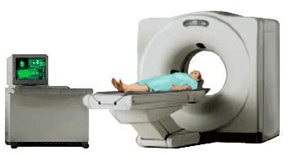 Are we giving ourselves cancer with CT scans? PENINSULA POLL BACKGROUNDER: By Rita F. Redberg and Rebecca Smith-Bindman 14 June 14, DESPITE great strides in prevention and treatment, cancer rates remain stubbornly high and may soon surpass heart disease as the leading cause of death in the United States.
Increasingly, we and many other experts believe that an important culprit may be our own medical practices: We are silently irradiating ourselves to death.
The use of medical imaging with high-dose radiation — CT scans in particular — has soared in the past 20 years.
Our resulting exposure to medical radiation has increased more than sixfold between the 1980s and 2006, according to the National Council on Radiation Protection & Measurements.
The radiation doses of CT scans (a series of X-ray images from multiple angles) are 100 to 1,000 times higher than conventional X-rays.
Of course, early diagnosis thanks to medical imaging can be lifesaving. But there is distressingly little evidence of better health outcomes associated with the current high rate of scans.
There is, however, evidence of its harms.
The relationship between radiation and the development of cancer is well-understood:
A single CT scan exposes a patient to the amount of radiation that epidemiologic evidence shows can be cancer-causing. The risks have been demonstrated directly in two large clinical studies in Britain and Australia.
Shortcomings in doctors’ understanding of ionising radiation in medicine
Residents lack knowledge of radiation safety By Eric Barnes, AuntMinnie.com staff writer May 30, 2014 — Medical residents have limited knowledge of radiation safety, with just over half knowing that fluoroscopy could produce radiation-induced skin burns, for example. Radiology residents were only marginally more informed, according to survey results published inAcademic Radiology.To their credit, 95% of residents, regardless of specialty, reported a link between ionizing radiation and the future development of cancer, the authors wrote. For radiology residents, 98% said they believe in such a link. Continue reading
Low levels of radioactive cesium produced insect deformities at Fukushima
New study reveals deaths and mutations ”increased sharply’ from exposure to Fukushima contamination, “especially at low doses” — ‘Small’ levels of cesium may be ‘significantly toxic’ — Smithsonian: “In other words, things don’t look good for the animals living around Fukushima” http://enenews.com/just-in-new-study-reveals-sharp-increase-in-deaths-and-mutations-from-exposure-to-fukushima-contamination-especially-at-low-doses-small-levels-of-cesium-may-be-significantly-toxic?utm_source=feedburner&utm_medium=email&utm_campaign=Feed%3A+ENENews+%28Energy+News%29
 Smithsonian Magazine, May 14, 2014: Even Tiny Amounts of Radioactive Food Made Caterpillars Become Abnormal Butterflies […] Researchers in Japan […] discovered, even a small amount of radiation is too much. […] The scientists collected plant material from around Fukushima and fed it to pale grass blue butterfly caterpillars. When the caterpillars turned into butterflies, they suffered from mutations and were more likely to die early [… even if they] had only eaten a small amount of artificial caesium […] In other words, things don’t look good for the animals living around Fukushima.
Nature — Scientific Reports (pdf), Published May 15, 2014: [We] examined possible relationships between the dose of ingested cesium per larva and the mortality and abnormality rates. Both the mortality and abnormality rates increased sharply, especially at low doses […] the mortality and abnormality rates increased sharply, especially at low doses. Additionally, there seemed to be no threshold level below which no biological response could be detected. […] the dose-response data suggests that the relatively small level of artificial cesium from the Fukushima Dai-ichi NPP may be significantly toxic to some individuals in butterfly populations […] the half lethal [i.e. LD50, amount that will kill 50% of a test subjects] dose [is 1.9 Bq per larva] and the half abnormal dose [is 0.76 Bq per larva] […] relatively small [levels] of artificial cesium from the Fukushima Dai-ichi NPP may be significantly toxic to some individuals in butterfly populations […] we assert that the half lethal and abnormal doses we obtained were quite high. […] it should be noted that we sampled contaminated leaves from Fukushima City, which many people inhabit as though nothing had happened […] Implications of the half lethal and abnormal doses we obtained in the present study will impact future discussions on the effects of radioactive exposure on other organisms, including humans. […] In conclusion, it is important to recognize the risk of internal radiation exposure due to ingested radioactive cesium, at least for the pale grass blue butterfly, and likely for certain other organisms living in the polluted area, possibly including humans. […]
Low dose radiation’s harmful effects on fruit flies – implications for the human species
“These results may have broader implications beyond the model organism. In particular, they may indicate an increased risk of pathological response to radiation in humans carrying hypomorphic mutations of these genes in their genome (note that both genes are highly evolutionarily conserved). Such individuals may be more vulnerable than the bulk of the population to even low levels of radiation
 Researchers reveal the secret of radiation vulnerability Medical EXpress, 15 May 14, The scientists – Boris Kuzin, Ekaterina Nikitina, Roman Cherezov, Julia Vorontsova, Mikhail Slezinger, Olga Zatsepina, Olga Simonova, Grigori Enikolopov and Elena Savvateeva-Popova – studied Drosophila flies, in whose genome weak mutations of two different genes were combined. They concluded that these mutations synergistically strengthen their mutual phenotypic expression. In other words, the aggregate effect of these mutations is much greater than that which can be produced by one of them individually.
The mutant flies bred by the scientists have a number of significant peculiarities. The experiments have shown that even low doses of X-ray irradiation (not exceeding 10 R) can cause serious defects in those flies’ legs.
In contrast, in the flies with normal (unchanged) genome such defects could not be caused even by doses of irradiation hundreds of times higher. What is more, the combination of the two mutations worsened the long-term memory impairment, earlier observed in the flies with only one of the mutations. Continue reading
Militarising the Pacific – “island people are better radiation test subjects than mice are”
In a 1956 Atomic Energy Commission meeting, Merril Eisenbud, director of the AEC Health and Safety Laboratory, described the Marshallese thus: “While it is true that these people do not live, I would say, the way Westerners do, civilized people, it is nevertheless also true that these people are more like us than the mice.”.

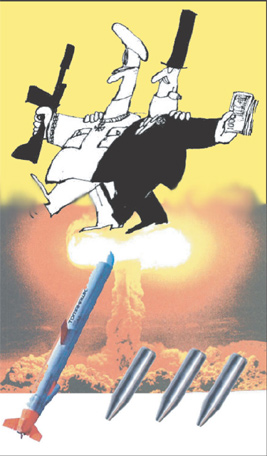 The Militarized Pacific: An Anniversary Without End 14 May 2014 By Jon Letman, Truthout | Op-Ed March 1, the 60th anniversary of the Castle Bravo test – a nuclear detonation over a thousand times more powerful than the bomb that destroyed Hiroshima – has come and gone. Predictably, major decadal events, like a 15-megaton explosion over a Micronesian atoll, garner fleeting attention, but it’s all the days between the anniversaries that tell the real story of those who live with the impacts.
For the people of the Marshall Islands, where Enewetak, Bikini and neighboring atolls were irradiated and rendered uninhabitable by 67 nuclear tests between 1946 and 1958, the brief anniversary recognition only underscores what little attention the Marshallese and, in a broader sense, millions of peoples of the Asia-Pacific are given by the US government and public……..
places like the US-backed naval base being built on South Korea’s Jeju island and the enormous military testing and training ranges in the Northern Mariana Islands (larger than much of the western United States) receive almost no attention. Names like Pagan, Rongelap and Kwajalein are scarcely known in the country that uses these islands for its own military testing……..
increased levels and types of cancers in the Marshall Islands, based on National Cancer Institute (NCI) research and firsthand accounts by Marshallese, are the result of nuclear testing. Continue reading
Effects of Chernobyl radiation over many generations
CHERNOBYL RADIATION EFFECTS: 28 YEARS LATER Green Fudge, Irini Chassiotou May 11th, 2014 “……… Many studies have shown that birds living in the area have eye cataracts or smaller brains, while insects, microbes and other decomposers exhibit abnormal behavior. Changes in abundance, distribution, life history and mutation rates are some more documented negative effects of Chernobyl’s radiation on the region’s plants and animals. In fact, the genetic effects of chronic radiation exposure on each species studied so far have often been subtle and varied and only conclusively shown after many generations.
What’s sure is that different species react to chronic exposure in different ways. Research into low-level radiation since 1986 have demonstrated that, for example, pine trees are more adversely effected by radiation than birch, while migrant barn swallows are more radio-sensitive than resident birds. In another study, winter wheat seeds were taken from the Exclusion Zone a few days after the disaster and they were germinated in uncontaminated soil, producing thousands of different mutant strains. This resulted to genetically unstable new generations, even 25 years after the accident.
Flora and fauna studies may reveal the effects of long-term radiation exposure on humans, obtaining statistically significant epidemiological data on cancer, which is rather complicated. Meanwhile, the Ukrainian government, satisfied with the anecdotal evidence of the zone-based research team, has opened the zone to tourism. Scientists fear that future plans will include repopulating the Exclusion Zone at the earliest opportunity.
The permanent hazard of nuclear radiation to global health
 The impact of the nuclear crisis on global health Australian Medical Student Journal By Helen Caldicott in Volume 4, Issue 2 2014
“………Conclusion In summary, the radioactive contamination and fallout from nuclear power plant accidents will have medical ramifications that will never cease, because the food will continue to concentrate the radioactive elements for hundreds to thousands of years. This will induce epidemics of cancer, leukemia and genetic disease. Already we are seeing such pathology and abnormalities in birds and insects, and because they reproduce very fast it is possible to observe disease caused by radiation over many generations within a relatively short space of time.
Pioneering research conducted by Dr Tim Mousseau, an evolutionary biologist, has demonstrated high rates of tumors, cataracts, genetic mutations, sterility and reduced brain size amongst birds in the exclusion zones of both Chernobyl and Fukushima. What happens to animals will happen to human beings. [7]
The Japanese government is desperately trying to “clean up” radioactive contamination. But in reality all that can be done is collect it, place it in containers and transfer it to another location. It cannot be made neutral and it cannot be prevented from spreading in the future. Some contractors have allowed their workers to empty radioactive debris, soil and leaves into streams and other illegal places. The main question becomes: Where can they place the contaminated material to be stored safely away from the environment for thousands of years? There is no safe place in Japan for this to happen, let alone to store thousands of tons of high level radioactive waste which rests precariously at the 54 Japanese nuclear reactors.
Last but not least, Australian uranium fuelled the Fukushima reactors. Australia exports uranium for use in nuclear power plants to 12 countries, including the US, Japan, France, Britain, Finland, Sweden, South Korea, China, Belgium, Spain, Canada and Taiwan. 270,000 metric tons of deadly radioactive waste exists in the world today, with 12,000 metric tons being added yearly. (Each reactor manufactures 30 tons per year and there are over 400 reactors globally.)
This high-level waste must be isolated from the environment for one million years – but no container lasts longer than 100 years. The isotopes will inevitably leak, contaminating the food chain, inducing epidemics of cancer, leukemia, congenital deformities and genetic diseases for the rest of time.
This, then, is the legacy we leave to future generations so that we can turn on our lights and computers or make nuclear weapons. It was Einstein who said “the splitting of the atom changed everything save mans’ mode of thinking, thus we drift towards unparalleled catastrophe.”
The question now is: Have we, the human species, the ability to mature psychologically in time to avert these catastrophes, or, is it in fact, too late? http://www.amsj.org/archives/3487
Dr Helen Caldicott explains the facts on radiation
 The impact of the nuclear crisis on global health
  Australian Medical Student Journal By Helen Caldicott in Volume 4, Issue 2 2014 “…….Types of ionizing radiation
- X-rays are electromagnetic, and cause mutations the instant they pass through the body.
- Similarly, gamma radiation is also electromagnetic, being emitted by radioactive materials generated in nuclear reactors and from some naturally occurring radioactive elements in the soil.
- Alpha radiation is particulate and is composed of two protons and two neutrons emitted from uranium atoms and other dangerous elements generated in reactors (such as plutonium, americium, curium, einsteinium, etc – all which are known as alpha emitters and have an atomic weight greater than uranium). Alpha particles travel a very short distance in the human body. They cannot penetrate the layers of dead skin in the epidermis to damage living skin cells. But when these radioactive elements enter the lung, liver, bone or other organs, they transfer a large dose of radiation over a long period of time to a very small volume of cells. Most of these cells are killed; however, some on the edge of the radiation field remain viable to be mutated, and cancer may later develop. Alpha emitters are among the most carcinogenic materials known.
- Beta radiation, like alpha radiation, is also particulate. It is a charged electron emitted from radioactive elements such as strontium 90, cesium 137 and iodine 131. The beta particle is light in mass, travels further than an alpha particle and is also mutagenic.
- Neutron radiation is released during the fission process in a reactor or a bomb. Reactor 1 at Fukushima has been periodically emitting neutron radiation as sections of the molten core become intermittently critical. Neutrons are large radioactive particles that travel many kilometers, and they pass through everything including concrete and steel. There is no way to hide from them and they are extremely mutagenic.
So, let’s describe just five of the radioactive elements that are continually being released into the air and water at Fukushima. Remember, though, there are over 200 such elements each with its own half-life, biological characteristic and pathway in the food chain and the human body. Most have never had their biological pathways examined. They are invisible, tasteless and odourless. When the cancer manifests it is impossible to determine its aetiology, but there is a large body of literature proving that radiation causes cancer, including the data from Hiroshima and Nagasaki.
- Tritium is radioactive hydrogen H3 and there is no way to separate tritium from contaminated water as it combines with oxygen to form H3O. There is no material that can prevent the escape of tritium except gold, so all reactors continuously emit tritium into the air and cooling water as they operate. It concentrates in aquatic organisms, including algae, seaweed, crustaceans and fish, and also in terrestrial food. Like all radioactive elements, it is tasteless, odorless and invisible, and will therefore inevitably be ingested in food, including seafood, for many decades. It passes unhindered through the skin if a person is immersed in fog containing tritiated water near a reactor, and also enters the body via inhalation and ingestion. It causes brain tumors, birth deformities and cancers of many organs.
- Cesium 137 is a beta and gamma emitter with a half-life of 30 years. That means in 30 years only half of its radioactive energy has decayed, so it is detectable as a radioactive hazard for over 300 years. Cesium, like all radioactive elements, bio-concentrates at each level of the food chain. The human body stands atop the food chain. As an analogue of potassium, cesium becomes ubiquitous in all cells. It concentrates in the myocardium where it induces cardiac irregularities, and in the endocrine organs where it can cause diabetes, hypothyroidism and thyroid cancer. It can also induce brain cancer, rhabdomyosarcomas, ovarian or testicular cancer and genetic disease.
- Strontium 90 is a high-energy beta emitter with a half-life of 28 years. As a calcium analogue, it is a bone-seeker. It concentrates in the food chain, specifically milk (including breast milk), and is laid down in bones and teeth in the human body. It can lead to carcinomas of the bone and leukaemia.
- Radioactive iodine 131 is a beta and gamma emitter. It has a half-life of eight days and is hazardous for ten weeks. It bio-concentrates in the food chain, in vegetables and milk, then in the the human thyroid gland where it is a potent carcinogen, inducing thyroid disease and/or thyroid cancer. It is important to note that of 174,376 children under the age of 18 that have been examined by thyroid ultrasound in the Fukushima Prefecture, 12 have been definitively diagnosed with thyroid cancer and 15 more are suspected to have the disease. Almost 200,000 more children are yet to be examined. Of these 174,367 children, 43.2% have either thyroid cysts and/or nodules.
In Chernobyl, thyroid cancers were not diagnosed until four years post-accident. This early presentation indicates that these Japanese children almost certainly received a high dose of radioactive iodine. High doses of other radioactive elements released during the meltdowns were received by the exposed population so the rate of cancer is almost certain to rise. - Plutonium, one of the most deadly radioactive substances, is an alpha emitter. It is highly toxic, and one millionth of a gram will induce cancer if inhaled into the lung. As an iron analogue, it combines with transferrin. It causes liver cancer, bone cancer, leukemia, or multiple myeloma. It concentrates in the testicles and ovaries where it can induce testicular or ovarian cancer, or genetic diseases in future generations. It also crosses the placenta where it is teratogenic, like thalidomide. There are medical homes near Chernobyl full of grossly deformed children, the deformities of which have never before been seen in the history of medicine.
The half-life of plutonium is 24,400 years, and thus it is radioactive for 250,000 years. It will induce cancers, congenital deformities, and genetic diseases for virtually the rest of time.
Plutonium is also fuel for atomic bombs. Five kilos is fuel for a weapon which would vaporize a city. Each reactor makes 250 kg of plutonium a year. It is postulated that less than one kilo of plutonium, if adequately distributed, could induce lung cancer in every person on earth………..http://www.amsj.org/archives/3487
Brain damage risk to astronauts from radiation
Could deep space cause BRAIN DAMAGE? Radiation could permanently destroy an astronaut’s attention span
- Rats were exposed to radiation levels similar to that found in deep space
- Serious lapses in attention occurred in 64% of the sensitive animals
- Increase in impulsiveness took place in 45% and slower reaction in 27%
- Difference based on a rat’s specific resilience after exposure to radiation
- If same proves true in humans, scientists could identify those more susceptible to radiation before the brain becomes permanently damaged
Daily Mail, By ELLIE ZOLFAGHARIFARD, 30 April 2014 Researchers came to the conclusion after exposing rats to high-energy particles that simulate the conditions astronauts could experience in deep space.
After exposure, a team at John Hopkins University in Maryland made the rats perform a fitness test similar to the ones astronauts, pilots, and soldiers have to take prior to a mission. …....‘In our radiated rats, we found that 40 to 45 percent had these attention-related deficits, while the rest were seemingly unaffected,’ said study leader Dr Robert Hienz……The radiation-sensitive animals all showed evidence of brain damage that began at 50 to 60 days after exposure…..

Currently, astronauts are not as exposed to the damaging effects of radiation because the International Space Station flies in an orbit low enough that the Earth’s magnetic field continues to provide protection.
But several years ago brain scans of Nasa astronauts who spent more than a month in space revealed damage to their eyeballs and brain tissue. http://www.dailymail.co.uk/sciencetech/article-2616792/Could-deep-space-cause-BRAIN-DAMAGE-Radiation-permanently-destroy-astronauts-attention-span.html#ixzz30Ur2J9NG
Medical authorities overwhelmingly agree that low-level ionising radiation is harmful to health
The view that low-level radiation is harmless is restricted to a small number of scientists whose voice is greatly amplified by the nuclear industry – in much the same way as corporate greenhouse polluters and their politicians amplify the voices of climate science sceptics.
Chernobyl – how many died?, The Ecologist Jim Green – Nuclear Monitor 26th April 2014“………Little scientific confidence on quantifying radiation risk While the overwhelming weight of scientific opinion holds that there is no threshold below which radiation exposure is harmless, there is less scientific confidence about how to quantify the risks.

Risk estimates for low-level radiation exposure are typically based on a linear extrapolation of better-understood risks from higher levels of exposure. This ‘Linear No Threshold’ (LNT) model has some heavy-hitting scientific support. For example a report in the Proceedings of the National Academy of Sciences states:
“Given that it is supported by experimentally grounded, quantifiable, biophysical arguments, a linear extrapolation of cancer risks from intermediate to very low doses currently appears to be the most appropriate methodology.” [1]
Likewise, the 2006 report of the US National Academy of Sciences’ Committee on the Biological Effects of Ionising Radiation (BEIR) states that “the risk of cancer proceeds in a linear fashion at lower doses without a threshold and … the smallest dose has the potential to cause a small increase in risk to humans.” [2]
Uncertain risk does not equal zero risk Continue reading
How many deaths were caused by the Chernobyl nuclear catastrophe?
A number of studies apply that basic method – based on collective radiation doses and risk estimates – and come up with estimates of the Chernobyl cancer death toll varying from 9,000 (in the most contaminated parts of the former Soviet Union) to 93,000 deaths (across Europe).
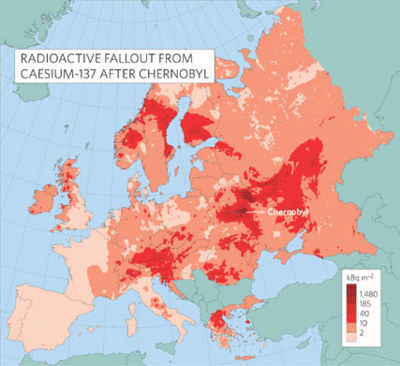
unqualified claims that the death toll was just 50, should be rejected as dishonest or uninformed spin from the nuclear industry and some of its scientifically-illiterate (in this field if not in others) supporters.
And sadly, that has to include every last one of the self-proclaimed ‘pro-nuclear environmentalists’ – among them James Hansen, Patrick Moore, Mark Lynas, George Monbiot, Stephen Tindale and James Lovelock.
Chernobyl – how many died?, The Ecologist, Jim Green – Nuclear Monitor 26th April 2014“………Fifty immediate deaths
About 50 people died in the immediate aftermath of the Chernobyl accident. Beyond that, studies generally don’t indicate a significant increase in cancer incidence in populations exposed to Chernobyl fallout.
Nor would anyone expect them to because of the data gaps and methodological problems mentioned above, and because the main part of the problem concerns the exposure of millions of people to low doses of radiation from Chernobyl fallout.
For a few fringe scientists and nuclear industry insiders and apologists, that’s the end of the matter – the statistical evidence is lacking and thus the death toll from Chernobyl was just 50.
If they were being honest, they would note an additional, unknown death toll from cancer and from other radiation-linked diseases including cardiovascular disease. Continue reading
NASA just doesn’t get it – that ionising radiation is a killer
 Cosmic ray radiation could prevent humans from travelling to Mars, Herald Sun, STAFF WRITERS NEWS.COM.AU APRIL 25, 2014
A NEW report has exposed one of the big problems confronting our ambition to send humans to Mars – galactic cosmic ray radiation.
Cosmic rays consist of high energy particles. When humans leave the earth’s atmosphere, these rays can kill cells and even cause cancer. They’re also extremely difficult to shield against, Wired reports.
The new study, published in the scientific journal PLOS One, says astronauts could receive doses of cosmic ray radiation exceeding their lifetime limit after just 18 months (for women) or two years (for men) on the International Space Station.
“The type of tumours that cosmic ray ions make are more aggressive than what we get from other radiation,” says radiation expert Francis Cucinotta, who wrote the report.
That conclusion obviously has wider repercussions for extended space travel. If we’re going to send anyone to Mars, we’d better be able to protect them against the effects of this radiation. Cucinotta estimates that, as technology currently stands, an astronaut’s lifespan would be shortened by 15-24 years by a trip to the red planet.
NASA does take steps to ensure its astronauts don’t vastly increase their chances of dying from cancer. Once an astronaut has spent too much time accumulating radiation in space, they’re grounded, Wired reports……..http://www.heraldsun.com.au/technology/science/cosmic-ray-radiation-could-prevent-humans-from-travelling-to-mars/story-fnjwlbuf-1226895669558
NASA Chief: Mars Mission Necessary For Human Survival Http://Www.Abc22now.Com/Shared/News/Top-Stories/Stories/Wkef_vid_19784.Shtml
Ultimately, Bolden said, the human race will need to become colonists.
“If this species is to survive indefinitely we need to become a multiplanet species,” Yahoo quotes Bolden as saying. “We need to go to Mars, and Mars is a stepping stone to other solar systems.”
Bolden said a journey to Mars should be possible by the 2030s, with modest increases to NASA’s budget.
1 This Month



26 September – International Day for the Total Elimination of Nuclear Weapons


PLEASE OPPOSE HR 8255 AND S.3639 – bills would accelerate satellite deployment, with no environmental review or safeguards – https://ncstd5li.quorum.us/campaign/169331/
To see nuclear-related stories in greater depth and intensity – go to https://nuclearinformation.wordpress.com
-
Archives
- September 2026 (219)
- August 2026 (330)
- July 2026 (355)
- June 2026 (287)
- May 2026 (306)
- April 2026 (356)
- March 2026 (251)
- February 2026 (267)
- January 2026 (308)
- December 2025 (358)
- November 2025 (359)
- October 2025 (375)
-
Categories
- 1
- 1 NUCLEAR ISSUES
- business and costs
- climate change
- culture and arts
- ENERGY
- environment
- health
- history
- indigenous issues
- Legal
- marketing of nuclear
- media
- opposition to nuclear
- PERSONAL STORIES
- politics
- politics international
- Religion and ethics
- safety
- secrets,lies and civil liberties
- spinbuster
- technology
- Uranium
- wastes
- weapons and war
- Women
- 2 WORLD
- ACTION
- AFRICA
- Atrocities
- AUSTRALIA
- Christina's notes
- Christina's themes
- culture and arts
- Events
- Fuk 2022
- Fuk 2023
- Fukushima 2017
- Fukushima 2018
- fukushima 2019
- Fukushima 2020
- Fukushima 2021
- general
- global warming
- Humour (God we need it)
- Nuclear
- RARE EARTHS
- Reference
- resources – print
- Resources -audiovicual
- Weekly Newsletter
- World
- World Nuclear
- YouTube
-
RSS
Entries RSS
Comments RSS
 nuclear-news