
Low doses of radiation used in medical imaging lead to mutations in cell cultures, https://www.sciencedaily.com/releases/2020/01/200116141731.htm–
Discovery that radiation creates breaks that allow in foreign DNA must be confirmed in animal studies January 16, 2020 Source: PLOS
- Summary:
- Common medical imaging procedures use low doses of radiation that are believed to be safe. A new study, however, finds that in human cell cultures, these doses create breaks that allow extra bits of DNA to integrate into the chromosome.
-
Common medical imaging procedures use low doses of radiation that are believed to be safe. A new study, however, finds that in human cell cultures, these doses create breaks that allow extra bits of DNA to integrate into the chromosome. Roland Kanaar and Alex Zelensky of Erasmus University Medical Center and Oncode Institute and colleagues report these new findings in a study published 16th January in PLOS Genetics.
Scientists have long known that exposing cells to high doses of ionizing radiation generates mutations by creating double-strand breaks that let in external segments of DNA. These extraneous fragments of DNA can occur in the nucleus, left over from natural processes, such as genomic DNA repair and viral infections. In the new study, researchers investigated whether low doses of ionizing radiation have damaging side effects by irradiating human and mouse cells grown in the lab. When they counted the cells that had taken up foreign DNA, they found that low doses of radiation, in the upper range of common diagnostic procedures, create mutations through inserted DNA even more efficiently than the much larger doses studied previously.
- While the new results in cell cultures are potentially concerning, the study’s authors stress that translating radiation’s effects on lab-grown cell cultures to effects in the body is premature. Future experiments using animal models will be necessary to determine the full effects of low-dose radiation, and whether its use in medical imaging has an impact on patient health. If the same phenomenon does occur inside the body, then doctors may need to take into account levels of extraneous DNA, such those resulting from a long-term viral infection, when assessing a patient’s risk from a procedure that requires radiation.
“Most molecular radiobiological research is focused on high doses of ionizing radiation relevant to cancer treatment, while effects of physiologically relevant doses of radiation on the cell are notoriously difficult to study at the molecular level,” said author Roland Kanaar. “Our discovery that mutagenic insertion of foreign DNA into cell’s genome is remarkably responsive to doses encountered during diagnostic, rather than therapeutic, procedures provides a new simple and sensitive tool to study their consequences and revealed surprising molecular genetic details of how cells cope with natural amounts of DNA damage.”
January 20, 2020
Posted by Christina Macpherson |
2 WORLD, radiation |
1 Comment
How Radiation Can Affect Brain Connections https://www.technologynetworks.com/neuroscience/news/how-radiation-can-affect-brain-connections-328547 Dec 17,| 2019 Original story from University of Rochester Medical Center, One of the potentially life-altering side effects that patients experience after cranial radiotherapy for brain cancer is cognitive impairment. Researchers now believe that they have pinpointed why this occurs and these findings could point the way for new therapies to protect the brain from the damage caused by radiation.
The new study – which appears in the journal Scientific Reports – shows that radiation exposure triggers an immune response in the brain that severs connections between nerve cells. While the immune system’s role in remodeling the complex network of links between neurons is normal in the healthy brain, radiation appears to send the process into overdrive, resulting in damage that could be responsible for the cognitive and memory problems that patients often face after radiotherapy. Continue reading →
|
December 28, 2019
Posted by Christina Macpherson |
radiation, Reference |
Leave a comment
 Nuclear Radiation Hot Spots Found At Starting Point Of Japan’s 2020 Olympic Torch Relay https://www.gizmodo.com.au/2019/12/nuclear-radiation-hot-spots-found-at-starting-point-of-japans-2020-olympic-torch-relay/, George Dvorsky, Dec 5, 2019, High levels of radiation have been detected near Japan’s J-Village, a sports facility and the starting point of the upcoming Olympic torch relay, according to Greenpeace. The discovery was made by surveyors with Greenpeace Japan, which warns that monitoring and decontamination efforts in Fukushima are inadequate.
Radiation levels as high as 71 microsieverts per hour were found on the surface near J-Village in northeastern Japan, according to a Greenpeace press release issued Wednesday. This level of radiation is hundreds of times greater than what’s stipulated in Japan’s decontamination guidelines, prompting Greenpeace Japan to demand that the Japanese government conduct regular radiation monitoring and decontamination of regions affected by the 2011 Fukushima nuclear disaster.
J-Village National Training Centre is in Fukushima prefecture, which is located 20 kilometres from the damaged nuclear power plant. This sports facility will be the starting point of the Tokyo 2020 Olympic Torch Relay, which is scheduled to begin on March 26, 2020. That J-Village was chosen as the starting point for the relay is by design, as the Japanese government is promoting the games as the “reconstruction Olympics.” The Olympics will begin on July 24, 2020 in Tokyo, some 239 kilometres from the damaged reactors.
|
J-Village recently underwent renovations, and the facility was used to host the Argentina team during the Rugby World Cup held just a few weeks ago, according to Reuters. And as the Guardian reports, the facility served as a “logistics hub” for crews working to manage and decommission the damaged reactors.
The readings were made over a two-hour period on October 26 by Greenpeace’s Nuclear Monitoring & Radiation Protection Advisors. High levels of radiation were detected along the boundary of the parking lot and a forest next to J-Village, reports Sankei Shimbun. Readings at ground level were as high as 71 microsieverts, which is 308.7 times more than the nationally accepted 0.23 microsieverts per hour—the standard for decontamination—and 1,775 times the level prior to the Fukushima disaster, according to Greenpeace. Continue reading →
|
December 5, 2019
Posted by Christina Macpherson |
Japan, radiation |
Leave a comment
DOES CHERNOBYL STILL MATTER? Public Books, BY GABRIELLE HECHT , 25 Nov 19, “……. The question is not whether an accident of Chernobyl’s gravity can happen elsewhere, but how to prepare for the consequences when it does.
 That’s one of the questions Kate Brown considers in Manual for Survival. Offering a wealth of new information and analysis, Brown speeds past the reactor explosion. Instead, she focuses on dozens of previously untold stories about how people coped with their newly radioactive lives.
Brown’s protagonists include women who worked at a wool factory fed by contaminated sheep and butchers ordered to grade meat according to radioactivity. Ukraine, we learn, kept serving as the Soviet breadbasket, despite food radiation levels that exceeded norms. The concentrations of radionuclides were biomagnified by receptive organisms and ecologies, such as mushrooms, wild boar, and the Pripyat Marshes. Defying expectations, some foods, over time, have even become more contaminated.
Brown’s descriptions add historical flesh to arguments first developed by Olga Kuchinskaya, in her 2014 book on Belarus’s Chernobyl experience, The Politics of Invisibility: Public Knowledge about Radiation Health Effects after Chernobyl.
Since the first studies of bomb survivors in Hiroshima and Nagasaki, science on the biological effects of radiation exposure has been subject to controversy. Like all scientific work, these early survivor studies had limitations. Exposure estimates were unreliable.
The largest study began data collection five years after the Hiroshima and Nagasaki blasts, so it didn’t include people who died or moved between 1945 and 1950. Another problem lies in the applicability of these studies. Bomb exposures, such as those in Japan, mostly consist of high, external doses from one big blast. Yet postwar exposures have mainly consisted of low doses, delivered steadily over a long period. They often involve internal exposures—such as inhalation of radioactive particles or consumption of irradiated food—which can be deadlier.
Irrespective of their limitations, however, the findings of these survivor studies have served as the basis for establishing regulatory limits for all types of radiation exposures. Critics argue that extrapolating from the Japan data underestimates low-dose effects: If you’ve already decided that the only possible health effects are the ones you’ve already found, surely you’re missing something? Among other limitations, studies of external gamma radiation exposures cannot illuminate the long-term health effects of inhaling radioactive alpha particles.
Brown injects the work of Dr. Angelina Gus’kova into this story. Gus’kova started treating radiation-induced illnesses in the 1950s, while working at the top-secret Mayak plutonium plant (where the radioactive spills from a 1957 accident continue to contaminate people, land, and water). A neurologist, Gus’kova made observations that extended beyond the narrow cancer focus of most Western practitioners who studied the health effects of radiation exposure. Her patients displayed a wide range of symptoms, which Gus’kova and her colleagues dubbed “chronic radiation syndrome.” Not that they neglected cancer: a 40-year study of 1.5 million people who lived near Mayak found significantly higher cancer and death rates than those reported in Hiroshima and Nagasaki.
The Soviet rubric of “chronic radiation syndrome” did not exist in the West. Yet Gus’kova’s findings did align with those of dissident scientists in the US and the UK. Thomas Mancuso, for example, was pushed out of the US Atomic Energy Commission because he refused to give the Hanford plutonium plant a clean bill of health after finding that workers there sustained high rates of cardiovascular disease, immune system damage, and other illnesses.
Alice Stewart, meanwhile, was shunned by the British establishment after her 1956 research showed that x-raying pregnant women increased the risk of cancer and leukemia in their children by 50 percent. Over the years, these and other scientists whose data challenged the findings of American and European nuclear establishments found themselves sidelined and defunded.
In tandem with perestroika, Chernobyl opened communication between Soviet and Western nuclear experts, engendering what Brown calls an “unholy alliance.” In 1990, the International Atomic Energy Agency (IAEA) sent a mission to Belarus and Ukraine to assess radiation damage. Belarusian scientists reported rising rates of many diseases in contaminated areas. Nevertheless, the IAEA team rejected radiation as a possible cause. Such correlations didn’t appear in Western data.
Instead, the IAEA teams used dose estimates provided by distant Moscow colleagues and ignored local Belarusian and Ukrainian descriptions of people’s actual consumption habits, which included significant amounts of contaminated food and milk. The IAEA assessments neglected the internal exposures resulting from this consumption. Yet these assessments now serve as international reference points. “Underestimating Chernobyl damage,” Brown warns, “has left humans unprepared for the next disaster.” …….
Brown is on the right track. Many modes of scientific inquiry aren’t equipped to address our most urgent questions. Clear causal chains are a laboratory ideal. The real world brims with confounding variables. Some scientists studying Chernobyl’s “exclusion zone”—the region officially declared uninhabitable due to contamination—are trying new techniques to grapple with this reality. Tim Mousseau and Anders Møller, for example, collect data on the zone in its ecological entirety, rather than focusing on single organisms. Their findings belie romantic tales of wildlife resurgence (such as the one offered up by a 2011 PBS special on the radioactive wolves of Chernobyl). They too have met resistance. …..
we can refuse to see Chernobyl and its kin as discrete events of limited duration. Brown, for example, treats Chernobyl as an acceleration of planetary-scale contamination that began with the atomic arms race.
Let’s be clear: the contamination continues. After the triple meltdown at Fukushima, scientists found highly radioactive, cesium-rich microparticles in Tokyo, 150 miles south of the accident site. When inhaled, such particles remain in human lungs, where their decay continues to release radioactivity for decades. Contaminants from future accidents will, in turn, accrete on the radioactive residues of their predecessors. https://www.publicbooks.org/does-chernobyl-still-matter/
November 26, 2019
Posted by Christina Macpherson |
2 WORLD, radiation, Reference |
Leave a comment
 Radiology efforts over past decade led to 20% drop in patient’s radiation dose, report shows https://www.healthimaging.com/topics/molecular-imaging/radiology-20-drop-patients-radiation-dose Matt O’Connor | November 18, 2019 Radiology has undertaken many efforts to reduce patient exposure to radiation during imaging exams, and findings from a new report suggest those campaigns have made a significant impact. Radiology efforts over past decade led to 20% drop in patient’s radiation dose, report shows https://www.healthimaging.com/topics/molecular-imaging/radiology-20-drop-patients-radiation-dose Matt O’Connor | November 18, 2019 Radiology has undertaken many efforts to reduce patient exposure to radiation during imaging exams, and findings from a new report suggest those campaigns have made a significant impact.
The report, published Monday, Nov. 18, by the National Council on Radiation Protection and Measurements, showed doses dropped by 15% to 20% among U.S. patients between 2006 and 2016. Per person, the estimated average dose fell from 2.92 millisievert (mSv) in 2006 to 2.16 mSv in 2016.
“We are pleased, but not surprised, that despite a steadily increasing and aging population, the medical radiation dose Americans receive is going down,” Continue reading →
|
November 18, 2019
Posted by Christina Macpherson |
radiation, USA |
Leave a comment
 Zac Eagle Nuclear Fuel Cycle Watch Australia, 11 Nov 19,
This is from the International Atomic Energy Agency admitting some radionuclides will be released into the environment even in Storage!
“The specific aims of disposal are:
(c) To inhibit, reduce and delay the migration of radionuclides at any time from
the waste to the accessible biosphere;
(d) To ensure that the amounts of radionuclides reaching the accessible
biosphere due to any migration from the disposal facility are such that
possible radiological consequences are acceptably low at all times.”
Some radionuclides can NOT be contained as they will diffuse in transport and storage, eg tritium.
Tritium is a carcinogen (causes cancer), teratogen (causes deformations of the embryo during pregnancy) and mutagen (causes mutations to DNA). Even very low rates of tritium exposure can lead to cancer, leukemia, and birth defects. https://www.facebook.com/groups/1021186047913052/
November 12, 2019
Posted by Christina Macpherson |
2 WORLD, radiation, Reference |
Leave a comment

 Citizens’ group in Fukushima puts out radiation map in English, Asahi Shimbun, By SHINICHI SEKIN E/ Staff Writer, November 3, 2019 FUKUSHIMA—A citizens’ group here has released an English radiation-level map for eastern Japan created with input from 4,000 volunteers in response to requests from abroad ahead of the Tokyo Olympics.
“We want people outside Japan to understand the reality of radioactive contamination following the nuclear accident,” said Nahoko Nakamura, a representative of Minna-No Data Site (Everyone’s Data Site), which published the map……
Titled “Citizens’ Radiation Data Map of Japan,” the 16-page booklet summarizes the content of the original Japanese map, released in November last year. It also shows projected declines in radiation levels by 2041.
The Japanese version was based on results of land contamination surveys conducted over three years at the request of Everyone’s Data Site.
About 4,000 volunteers took soil samples at 3,400 locations in 17 prefectures in eastern Japan, including Fukushima and Tokyo, and measured radiation levels. The map was compiled with advice from experts…… http://www.asahi.com/ajw/articles/AJ201911030001.html
November 4, 2019
Posted by Christina Macpherson |
Japan, radiation |
Leave a comment
|
Japan embassy in Seoul posts radiation data amid escalating row, Straits Times TOKYO (REUTERS) 29 Sept 19, – Japan’s embassy in South Korea has begun posting data on its website to show there is little difference in radiation levels between the two countries, in its latest retort in a diplomatic and trade row rooted in wartime history.South Korea said last month that it will double the radiation testing of some Japanese food exports due to potential contamination from the tsunami-damaged Fukushima nuclear plant.
The embassy said the radiation reading in Seoul as of last Friday (Sept 27) was 0.12 microsieverts per hour, around the same as 0.135 in Fukushima City, and higher than Tokyo’s 0.036. It will update the data every day the embassy is open, it said……. https://www.straitstimes.com/asia/east-asia/japan-embassy-in-seoul-posts-radiation-data-amid-escalating-row
|
|
September 30, 2019
Posted by Christina Macpherson |
Japan, radiation, South Korea |
Leave a comment
 “The destruction of a society”: First the U.S. invaded Iraq — then we left it poisoned Scientist: Bombs, bullets and military hardware abandoned by U.S. forces have left Iraq “toxic for millennia”, Salon.com DAVID MASCIOTRA 7 Sept 19
The political and moral culture of the United States allows for bipartisan cooperation to destroy an entire country, killing hundreds of thousands of people in the process, without even the flimsiest of justification. Then, only a few years later, everyone can act as if it never happened.
In 2011, the U.S. withdrew most of its military personnel from Iraq, leaving the country in ruins. Estimates of the number of civilians who died during the war in Iraq range from 151,000 to 655,000. An additional 4,491 American military personnel perished in the war. Because the bombs have stopped falling from the sky and the invasion and occupation of Iraq no longer makes headlines, Americans likely devote no thought to the devastation that occurred in their name.
With the exception of Rep. Tulsi Gabbard of Hawaii, who is currently polling at or below 2 percent, no candidate for the Democratic presidential nomination has consistently addressed the criminality, cruelty and cavalier wastefulness of American foreign policy. Joe Biden, the frontrunner in the race, not only supported the war in Iraq — despite his recent incoherent claims to the contrary — but as chair of the Senate Foreign Relations Committee acted as its most effective and influential salesman in the Democratic Party.
The blasé attitude of America toward the death and destruction it creates, all while boasting of its benevolence, cannot withstand the scrutiny of science. Dr. Mozhgan Savabieasfahani, an environmental toxicologist at the University of Michigan and recipient of the Rachel Carson Prize, has led several investigative expeditions in Iraq to determine how the pollutants and toxic chemicals from the U.S.-led war are poisoning Iraq’s people and environment. The health effects are catastrophic, and will remain so long after the war reached its official end.
I previously interviewed Savabieasfahani about her initial research, and recently acquired an update regarding her team’s latest discovery that there is a close correlation between proximity to a U.S. military base and birth defects in Iraqi children.
Average Americans, even many who opposed the war in Iraq, seem to believe that once the military campaign is over the casualties of war stop accumulating. What is the purpose of your general research regarding the toxicity of the Iraqi environment resulting from American bombs, munitions and other materials? How does the American invasion and occupation continue to adversely affect the health of Iraqis?
Bombs and bullets have been used on an extreme scale in Iraq. Dropping tons of bombs and releasing millions of bullets leaves toxic residues the in air, water and soil of the targeted population. These pollutants continue to poison those populations years after the bombing stops
What’s more, the United States imported thousands of tons of military equipment into Iraq to use in their occupation. They include, tanks, trucks, bombers, armored vehicles, infantry weapons, antiaircraft systems, artillery and mortars — some of which are coated with depleted uranium, and much more. These eventually find their way into U.S. military junkyards which remain across Iraq.
There are unknown numbers of military junkyards scattered across the Iraqi landscape.
Fluctuations in temperature facilitates the rusting and weathering of military junk, releasing toxic pollutants [including radioactive uranium compounds, neurotoxic lead and mercury, etc.] into the Iraqi environment.
Uranium and its related compounds remain toxic for millennia and poison local populations through food, air and water contamination.
The exposure of pregnant mothers to the pollutions of war, including uranium and thorium, irreversibly damages their unborn children. We found thorium, a product of depleted uranium decay, in the hair of Iraqi children with birth defects who lived in Nasiriyah and Ur City, near a U.S. military base.
The destruction of a society does not stop after U.S. bombs stop falling. Environmental contamination which the U.S. leaves behind continues to destroy our environment and poison our people decades after the bombs have stopped falling. The U.S. has a long history of irreversibly destroying human habitats. That must end…….
Forty-four years after U.S. forces left Vietnam, there are still Vietnamese babies born with birth defects from the American military’s use of Agent Orange. How long do you believe Iraqis will continue to suffer from the American-led war?
If left unmitigated, the population will be permanently exposed to elevated toxic exposures which can impact the Iraqi gene pool.
Through the use of the scientific method, you are gaining the ability to identify a severe problem in Iraq. Considering that the problem is a result of the U.S. invasion, what could the U.S. do to solve or at least mitigate the problem?
The U.S. must be held responsible and forced to clean up all the sites which it has polluted. Technology exists for the cleanup of radiation contamination. The removal and disposal of U.S.-created military junkyards would go a long way towards cleaning toxic releases out of the Iraqi environment.
You are a scientist, not a political analyst, but you must have some thoughts regarding the political implications of your work. How do you react to the lack of substantive conversation about the consequences of war in American politics and the press, and the American establishment’s evasion of responsibility on this issue?
I expect nothing from the American political establishment or their propaganda machines which masquerade as “news media” and feed uncritically off State Department press briefings.
Fortunately, there is a movement to criminalize environmental contamination caused by war. Damage to nature and the human environment must be considered a war crime.
Scientists are currently asking international lawmakers to adopt a fifth Geneva Convention which would recognize damage to nature as a war crime, alongside other war crimes. I hope that will make a difference in our ability to protect human lives and our environment. …… https://www.salon.com/2019/09/07/the-destruction-of-a-society-first-the-u-s-invaded-iraq-then-we-left-it-poisoned/
September 9, 2019
Posted by Christina Macpherson |
environment, Iraq, radiation, social effects, USA |
Leave a comment

Space Radiation Will Damage Mars Astronauts’ Brains, Space.com By Mike Wall 9 Aug 19, Space radiation will take a toll on astronauts’ brains during the long journey to Mars, a new study suggests.
Mice exposed for six months to the radiation levels prevalent in interplanetary space exhibited serious memory and learning impairments, and they became more anxious and fearful as well, the study reports.
The trip to Mars takes six to nine months one way with current propulsion technology. So, these results should ring a cautionary bell for NASA and other organizations that aim to send people to the Red Planet, study team members said.
These chronic low-dose-rate, low-dose-exposure scenarios are going to increase the risk of developing, perhaps, mission-critical performance deficits,” Limoli told Space.com. “What exactly those are, we’ll never know until we get out there.”
Researchers investigating the effects of deep-space radiation have historically given lab animals acute doses — high levels over a relatively short period of time. But Limoli and his colleagues — led by Munjal Acharya and Janet Baulch of UCI’s Department of Radiation Oncology and Peter Klein of Stanford University’s Department of Neurosurgery — took a different tack.
Using a neutron-irradiation facility, they exposed 40 mice to 1 milligray of radiation per day (1 mGy/day) for six months, about the same dose and duration that astronauts would experience on a trip to or from Mars. (Astronauts in low Earth orbit are exposed to lower doses, because they’re protected by our planet’s magnetosphere.)
“This is the first study that’s looked at space-relevant dose rates,” Limoli said. “And this is the first study to analyze the consequences of the low dose rate over the course of time on functional endpoints in the brain.”
The researchers analyzed the behavior of these mice over the course of the study, measuring the animals’ ability to learn and remember information, their willingness to interact with new mice introduced into their enclosure, and other variables. And at the end of the six months, the scientists euthanized the mice and studied their brains, looking for physiological changes.
All of these measurements and observations were compared with those gathered from a control group of 40 mice, which did not receive the 1 mGy/day dose.
The results were striking. Radiation-exposed mice exhibited more stress behaviors and a decreased ability to learn and remember. The physiological work bolstered these behavioral findings, identifying impaired cellular signaling in two key areas of the brain: the hippocampus, which is associated with learning and memory, and the prefrontal cortex, the site of many complex cognitive functions. …….https://www.space.com/space-radiation-damage-mars-astronauts-brains.html
August 10, 2019
Posted by Christina Macpherson |
deaths by radiation, radiation, space travel |
Leave a comment
 Radiation research facility opens to public on anniversary of Hiroshima bombing to raise awareness of effects, https://www.japantimes.co.jp/news/2019/08/05/national/radiation-research-facility-opens-public-anniversary-hiroshima-bombing/#.XUiq5m8zbIU
KYODOm HIROSHIMA – A Japan-U.S. joint research organization opened one of its radiation research facilities in Hiroshima to the public Monday to raise awareness of the effects of radiation on human health, ahead of the anniversary on Tuesday of the atomic bombing of the city.Although the Hiroshima facility will only be open to the public for two days, the Radiation Effects Research Foundation will open another research facility in the city of Nagasaki on Thursday and Friday to coincide with the city’s Aug. 9 A-bomb anniversary.
This marks the 25th annual public opening of the facility in Minami Ward, Hiroshima. It aims to share research content and help the public better understand the health effects of radiation. The research facility has been collecting data from hibakusha since the institute was established in 1975, when it succeeded the research efforts of its predecessor, the Atomic Bomb Casualty Commission.
Some of the exhibition booths explain the risks of radiation, as well as the role of blood. Visitors can also experiment with freezing cells in liquid nitrogen for preservation, which tends to be popular with children when the experiment is successful.
“The (facility was) full of things I didn’t know were there, like health research on second generation hibakusha. Even as a Hiroshima resident, I learned a lot,” said Sanae Yamamoto, a 41-year-old housewife from Asakita Ward in the city who visited the facility with her children.
August 6, 2019
Posted by Christina Macpherson |
Japan, radiation |
Leave a comment

|
Long-Term Radiation Exposure From Space Travel Harms Memory, Mood, D-brief,
Researchers also know that short, powerful doses of radiation are deadly. But less is known about long-term, low-dose radiation — the kind that settlers on Mars or the moon would face.
Now, a team of scientists led by Charles Limoli at the University of California, Irvine, has taken a step toward a better understanding of those long-term risks. The researchers exposed mice to chronic, low-dose radiation for six months. The results are troubling for the future of spaceflight. The radiation left the mice suffering from both memory and mood problems that the scientists say would likely show up in human subjects as well. The results were published Monday in the journal eNeuro.
Radiation on the Brain
In the study, the mice showed “severe impairments in learning and memory,” according to the research paper. The mice were also generally more stressed out by their environments. That isn’t a good sign for space settlers, who will need their wits to face unforeseen struggles. Other studies have also already shown the potential ill effects of the long-term isolation and stress.
In the past, scientists hit lab mice with radiation levels some 100,000 times higher than they’d actually experience on Mars’ surface. But the researchers say their test is the first that has used these lower, more realistic doses of radiation over long periods to study space travel. Their efforts were made possible by a new facility.
The radiation included both neutrons – heavy particles from atomic nuclei – and pure energy in the form of gamma rays and other scattered photons……
Researchers found both physical and chemical changes in the brains they examined, in addition to the behavioral changes they observed in the living mice……..
more tests need to be done, and the radiation, while more realistic than past experiments, still doesn’t exactly mimic the space environment. But if their results hold up, they’re not a good sign for the future of human space settlement, at least not without a lot of bulky and expensive radiation shielding. http://blogs.discovermagazine.com/d-brief/2019/08/05/long-term-radiation-exposure-from-space-travel-harms-memory-mood/#.XUionm8zbIU
|
|
August 6, 2019
Posted by Christina Macpherson |
2 WORLD, radiation, space travel |
2 Comments
|
Sunken Soviet Sub leaking high levels of radiation, Norwegian researchers sayNorwegian researchers have discovered that a Soviet nuclear submarine that sank in the Barents Sea 30 years ago, killing 41 sailors, is leaking radiation at nearly 1 million times normal levels. Bellona, August 5, 2019 by Charles Digges
Norwegian researchers have discovered that a Soviet nuclear submarine that sank in the Barents Sea 30 years ago, killing 41 sailors, is leaking radiation at nearly 1 million times normal levels.
The submarine, called the Komsomolets, was at the time the most advanced in the Soviet Navy. When it went down on April 7,1989, it was carrying two plutonium warheads, which now lie at a depth of 1,680 meters with the rest of the sub’s wreckage, including its reactor. The wreck has caused concern about possible radioactive leakage ever since.
Now those worries have been confirmed. Using a remote-controlled vehicle to probe the wreck, researchers from the Norwegian Radiation and Nuclear Safety Authority found extensive damage to the sub’s hull. Of particular disquiet, they say, are exceptionally high radiation levels in the area around one of the sub’s ventilation pipes.
The highest measurement researchers recorded stood at 800 becquerel per liter. Radiation levels in that body of water typically remain around 0.001 Bq per liter, the authority said.
“We found levels of radioactive cesium…that were close to 1 million times higher than the levels we find in [uncontaminated] seawater,” Hilde Elise Heldal, a researcher from Norway’s Institute of Marine Research who participated in the July 7 mission, told RFE/RL. In remarks to Reuters, she added that: “This is, of course, a higher level than we would usually measure out at sea, but the levels we have found now are not alarming.”
Heldal said team members “weren’t surprised” to discover elevated radiation levels, the BBC reported. Radioactive cesium is easily diluted in the depths of the Barents Sea, and few fish live in the area surrounding the wreck.
What we have found … has very little impact on Norwegian fish and seafood,” Heldal said, according to the Associated Press. “In general, cesium levels in the Norwegian Sea are very low, and as the wreck is so deep, the pollution from Komsomolets is quickly diluted.”
Still, the confirmation that the submarine is actively leaking radiation comes weeks after a fire aboard a top-secret Russian nuclear submarine in the Barents Sea killed 14 sailors, making it the deadliest submarine incident to hit the Russian Navy since 2008.
Norwegian scientists have been monitoring the wreck of the Komsomolets – which lies 180 kilometers southwest of Norway’s Bear Island and 350 kilometers northwest of the country’s mainland coast – since the 1990s……..
ven in its watery grave, the Komosomolets is the stuff of Cold War legend. Launched in May of 1983 from Severodvinsk on the Barents Sea, the sub could dive to deeper depths than any other vessel at the time. It was manned by a crew of 69 and could launch both nuclear and conventional weapons.
The Komsomolets had been patrolling the waters for 39 days when a fire broke out in one compartment and quickly spread through the submarine on April 7, 1989, according to the CIA report. Forty-two crew died either in the fire or while awaiting rescue, and the sub sank to the bottom of the sea.
The matter of the Komsomolets shook faith in an already ailing navy. Within two years of the accident, the Soviet Union would cease to be – leaving in its wake hundreds of derelict decommissioned nuclear submarines, and a host of other radioactive hazards dumped by the military.
By 1994, the government in Moscow would reveal the scale of its irradiated legacy in the Arctic. The Soviet navy had scuttled hundreds of barrels of nuclear waste in the Kara Sea, along with old nuclear reactors, and, in one case, an entire nuclear submarine. https://bellona.org/news/nuclear-issues/2019-08-sunken-soviet-sub-leaking-high-levels-of-radiation-norwegian-researchers-say
|
|
August 6, 2019
Posted by Christina Macpherson |
environment, radiation, Russia |
Leave a comment

The fallout of uncertainty in nuclear test communities https://www.hcn.org/articles/nuclear-energy-the-fallout-of-uncertainty-in-nuclear-test-communities
For downwinders of bomb testing, plans for compensation to redress past harms makes for tricky politics. Aria Alamalhodaei Aug. 2, 2019, The atomic bomb was born in the desert. In the early hours of July 16, 1945, after a spate of bad weather, a 20-kiloton plutonium-based nuke referred to as “the gadget” detonated near Alamogordo, New Mexico. Firsthand testimonies of the test, codenamed Trinity, converge on the uncanny axis of awe and dread. The Manhattan Project’s Chief of Field Operations, General Thomas Farrell, wrote that “the strong, sustained, awesome roar … warned of doomsday and made us feel that we puny things were blasphemous.”
The bomb produced a massive cloud column that drifted in several directions, dusting large swaths of the surrounding region with radioactive snow – fallout that settled on buildings, plants, and animals, and that continued to permeate the air as invisible particulate in the weeks and months that followed. Five years later, the Nevada Test Site was established to continue the work that Trinity set alight.
Although the mushroom cloud became the icon of American nuclear activity in the 20th century, the harms of these bombs did not fade with their dimming fireballs. No group in the U.S. understands this better than the downwinders, communities throughout the American Southwest and beyond who were exposed to the fallout of the military’s domestic nuclear test program.
In 1990, the U.S. government passed the Radiation Exposure Compensation Act (RECA), which provided financial remuneration to downwinders who had contracted cancer or other illnesses linked to radiation exposure. (The law also provided compensation for certain on-site test participants and uranium miners.) As of April 2018, the
program had awarded more than $2.2 billion to some 34,370 claimants.
As the law was written, however, only downwinders in
specific counties in Arizona, Utah, and Nevada were eligible for compensation. Even residents of New Mexico, the site of the Trinity test, were excluded. Since the law was passed, studies and fallout reconstructions have suggested that the health impacts of the nuclear tests likely extend to areas as far away as Idaho, Montana and Guam. Residents in those far-flung locales have provided vivid testimonies of
glowing dust,
strange maladies befalling livestock, and
cancer clusters ravaging whole families.
For more than a decade, civic groups have lobbied lawmakers, unsuccessfully, to open RECA to a broader population of downwinders. That Congress has so far balked at those proposals is a testament to many factors; legislative decisions are informed not only by science but by moral and political calculus. But lawmakers’ inability to come to terms on who suffered, and on who deserves reparations for that suffering, points to a little discussed weak spot of modern politics: its uneasy relationship with uncertainty.
RECA’S COMPACT DELIMITATION OF “affected areas” was based on dose estimates produced by the Department of Energy’s Off-Site Radiation Exposure Review Project — a complicated calculation that drew from atmospheric transport models, reconstructions of fallout patterns, and reports of dosimeters and other radiation recorders. The bill was amended once, in 2000, to include a larger population of uranium workers and to expand the time frame, eligible diseases, and geographic locations covered. Two years later, in response to a congressional mandate, the Health Resources and Services Administration commissioned the National Research Council (NRC) to review the RECA program and determine if additional populations should be covered. Their final report was published in 2005. Based in part on mortality and disease-incidence data on atomic bomb survivors in Japan, uranium miners in the U.S., and Utah schoolchildren exposed to fallout from the Nevada Test Site, the committee
concluded that in most cases involving downwinders who had been excluded from RECA, “it is unlikely that exposure to radiation from fallout was a substantial cause to developing cancer.”
But radiation epidemiology is a science of uncertainty, and tracing a person’s illness to a single exposure event can be challenging even in seemingly clear-cut cases. Although high doses of radiation are known to lead to disease and death, the effects of lower doses are far less predictable. Moreover, an individual’s radiation dose — the amount of radiation that he or she internalizes — depends on the person’s age, sex, diet, and pre-existing risk factors; weather conditions; and the characteristics of the nuclear event itself. Extrapolating results from one nuclear event to another, as the NRC study did, is bound to introduce some error.
Consider the Trinity test, which has been consistently ignored by lawmakers. According to the
Los Alamos Historical Document Retrieval and Assessment (LAHDRA), conducted in 2010 for the Centers for Disease Control and Prevention, previous efforts to determine exposures from Trinity ignored the specific characteristics that distinguished it from all other subsequent tests. Unlike tests conducted at the Nevada Test Site, the Trinity “gadget” detonated only 100 feet from the ground. At this height, more organic material would’ve been swept into the explosion and returned to the earth as fallout. Another compounding factor was the relative inefficiency of the device. Of the 13 pounds of fissile material contained in the device, only about 2.6 pounds exploded; the rest was dispersed into the environment, where it remained radioactive.
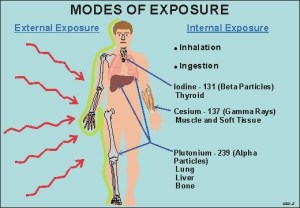 The LAHDRA report also faulted previous studies for failing to adequately account for internal exposure, caused by the inhalation or ingestion of radioactive material. Research shows that internal exposure is significantly more harmful to the human body than the external exposure that occurs, say, when X-rays or other high-energy radiation penetrate the skin. Internal dosages are influenced by occupation, diet, local environment, and other sociodemographic factors. Any assessment that does not account for those factors is incomplete. And, according to the LAHDRA report, no assessment has properly accounted for the internal radiation dosages experienced by residents near the Trinity site.
In the case of the Trinity test, there’s reason to believe that sociodemographic factors would have been significant. During the 1940s, New Mexican communities were largely agrarian; most people were farmers or ranchers who grew their food, hunted and fished, and drank water collected from cisterns or holding ponds. If those sources were contaminated, residents would likely have been at an increased risk for radiation-linked illnesses.
LAST SUMMER, MEMBERS OF THE NEW MEXICO community organization Tularosa Basin Downwinders Consortium (TBDC), along with representatives from the Navajo Nation, argued in a Senate Judiciary hearing for amending RECA.
Stated TBDC co-founder Tina Cordova, “The New Mexico downwinders are the collateral damage that resulted from the development and testing of the first atomic bomb.”
Their appeals appear to have fallen on receptive ears. This March, a bipartisan coalition of U.S. Senators, including New Mexico Senators Martin Heinrich and Tom Udall, reintroduced
Senate Bill 947 (S. 947), “Radiation Exposure Compensation Act Amendments of 2019.” It is the most recent in a long line of bills that attempt to expand the RECA’s coverage. Among other changes, it seeks coverage for downwinders in New Mexico, Colorado, Montana, Idaho, and Guam. A companion
was introduced in the House in July.
Meanwhile, the National Cancer Institute (NCI) is currently conducting a three-phase study on the diet and lifestyles of mid-century New Mexicans. The models generated in this study may help scientists draw firmer links between present day cancer cases and the Trinity test. In an email, NCI spokesperson Michael Levin confirmed that the results of the study are anticipated to be published in late 2019.
Like other epidemiological studies of its size, the NCI’s study has been expensive to run and frustratingly time-intensive. And time is precisely what many downwinders feel they don’t have. More than 70 years has passed since the Trinity test. Many downwinders have passed away or are battling cancers and other diseases. Over time, it becomes increasingly difficult to demonstrate that a disease was caused by nuclear fallout rather than, say, cigarettes or bad luck.
The government, meanwhile, plods along at its own pace, unconstrained by the length of a single lifetime or the distressing span between a diagnosis and its terminal conclusion. In response to a news article about S.947
posted to the Idaho Downwinders public Facebook page, one commenter wrote, “The government are just waiting for all of us to die off so they won’t have to be bothered with it.”
In its 2005 review of the RECA law, the National Research Council stated that, although scientific recommendations were meant to inform policy, the “attendant policy decisions must come from the larger body of citizenry” and “applying this new scientific knowledge may require additional societal value-based decisions.” This is particularly true of probability-based information on cancer epidemiology. When there is simply not enough data available to definitively estimate risk, the question of compensating the citizens who live in the long shadow of the nuclear testing era becomes a moral one: How much uncertainty can we stand?
August 3, 2019
Posted by Christina Macpherson |
radiation, Reference, USA |
Leave a comment

Mysterious Radiation Cloud Over Europe Traced to Secret Russian Nuclear Accident https://www.livescience.com/66050-radiation-cloud-secret-russian-nuclear-accident.html By Tom Metcalfe, Live Science Contributor | July 29, 2019 A vast cloud of nuclear radiation that spreadover continental Europe in 2017 has been traced to an unacknowledged nuclear accident in southern Russia, according to an international team of scientists.
The experts say the cloud of radiation detected over Europe in late September 2017 could only have been caused by a nuclear fuel-reprocessing accident at the Mayak Production Association, a nuclear facility in the Chelyabinsk region of the Ural Mountains in Russia, sometime between noon on Sept. 26 and noon on Sept. 27.
Russia confirmed that a cloud of nuclear radiation was detected over the Urals at the time, but the country never acknowledged any responsibility for a radiation leak, nor has it ever admitted that a nuclear accident took place at Mayak in 2017. [Top 10 Greatest Explosions Ever]
The lead author of the new research, nuclear chemist Georg Steinhauser of Leibniz University in Hanover, Germany, said that more than 1,300 atmospheric measurements from around the world showed that between 250 and 400 terabecquerels of radioactive ruthenium-106 had been released during that time.
Ruthenium-106 is a radioactive isotope of ruthenium, meaning that it has a different number of neutrons in its nucleus than the naturally occurring element has. The isotope can be produced as a byproduct during nuclear fission of uranium-235 atoms.
Although the resulting cloud of nuclear radiation was diluted enough that it caused no harm to people beneath it, the total radioactivity was between 30 and 100 times the level of radiation released after the Fukushima accident in Japan in 2011, Steinhauser told Live Science.
The research was published today (July 29) in the journal Proceedings of the National Academy of Sciences.
Ruthenium release
The cloud of radiation in September 2017 was detected in central and eastern Europe, Asia, the Arabian Peninsula and even the Caribbean.
Only radioactive ruthenium-106 — a byproduct of nuclear fission, with a half-life of 374 days — was detected in the cloud — Steinhauser said.
During the reprocessing of nuclear fuel — when radioactive plutonium and uranium are separated from spent nuclear fuel from nuclear power reactors — ruthenium-106 is typically separated out and placed into long-term storage with other radioactive waste byproducts, he said.
That meant that any massive release of ruthenium could only come from an accident during nuclear fuel reprocessing; and the Mayak facility was one of only a few places in the world that carries out that sort of reprocessing, he said.
Advanced meteorological studies made as part of this new research showed that the radiation cloud could only have come from the Mayak facility in Russia. “They have done a very thorough analysis and they have pinned down Mayak — there is no doubt about it,” he said.
The accident came a little more than 60 years since a nuclear accident at Mayak in 1957 caused one of the largest releases of radiation in the region’s history, second only to the 1986 explosion and fire at the Chernobyl nuclear power plant, which is now in the Ukraine. [Chernobyl Nuclear Disaster 25 Years Later (Infographic)]
In the 1957 accident, known as the Kyshtym disaster after a nearby town, a tank of liquid nuclear waste at the Mayak facility exploded, spreading radioactive particles over the site and causing a radioactive plume of smoke that stretched for hundreds of miles.
Nuclear accident
The study showed that the 2017 accident at Mayak was unlikely to have been caused by a relatively simple release of radioactive gas, Steinhauser said. Rather, a fire, or even an explosion, might have exposed workers at the plant to harmful levels of radiation, he added.
Russia has not acknowledged that any accident occurred at the Mayak facility, maybe because plutonium is made there for thermonuclear weapons. However, Russia had established a commission to investigate the radioactive cloud, Steinhauser said.
The Russian commission ruled that there was not enough evidence to determine if a nuclear accident was responsible for the cloud. But Steinhauser and his team hope it may look again at this decision in the light of the new research.
“They came to the conclusion that they need more data,” he said. “And so we feel like, okay, now you can have all of our data — but we would like to see yours as well.”
Any information from Russia about an accident at the Mayak facility would help scientists refine their research, instead of having to rely only on measurements of radioactivity from around the world, Steinhauser said.
The international team of scientists involved are keenly interested in learning more about its causes. “When everybody else is concerned, we are almost cheering for joy, because we have something to measure,” he said. “But it is our responsibility to learn from this accident. This is not about blaming Russia, but it is about learning our lessons,” he said.
July 30, 2019
Posted by Christina Macpherson |
incidents, radiation, Russia, secrets,lies and civil liberties |
Leave a comment









 nuclear-news