CT scans: benefits vs cancer risks
Program: CT scans: benefits vs cancer risks
CT scans can be vital in diagnosing disease, but they do come with small
increased risks because of the radiation exposure. A recent US study found
that if current practices persist, CT-associated cancer could account for
up to five per cent of all new diagnoses. So what can be done to drive down
the risk? One radiologist thinks mandating informed consent before a scan
is done would be a good start.
ABC 28th Nov 2025, https://www.abc.net.au/listen/programs/healthreport/ct-scans-cancer-radiation-risk/106076780
Prawns, sneakers and spices: What we know about Indonesia’s radioactive exports
Thu 27 Nov, https://www.abc.net.au/news/2025-11-27/indonesia-radiation-contamination-explained/106057730
Indonesian authorities are conducting a criminal investigation into the cause of radioactive contamination in a number of its exports.
It comes amid growing concern from the country’s trading partners, after traces of radiation were found in items such as prawns, spices and even sneakers.
So how does a radioactive element end up in such a variety of items?
Here’s what we know.
What has been affected?
Concerns about contamination first surfaced after Dutch authorities detected radiation in shipping containers from Indonesia earlier this year.
A report stated that several boxes of sneakers were found to be contaminated.
That was followed by a safety alert from the US Food and Drug Administration (FDA) in August, urging consumers not to eat certain imported frozen prawns from a company known as PT Bahari Makmur Sejati.
The FDA later found the same radioactive compound in a sample of cloves from PT Natural Java Spice.
In all three cases, the products were recalled.
The FDA also banned products from the two Indonesian companies until they were able to demonstrate they had resolved issues that allowed the contamination to occur.
What has been detected?
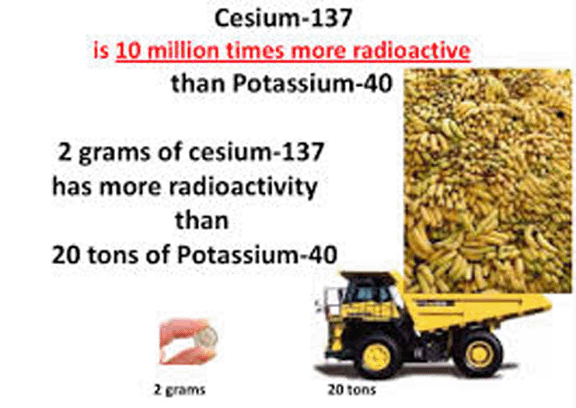
Both Dutch and American authorities say they found a radioactive element known as caesium-137.
The US Federal Drug Administration says long-term, repeated low-dose exposure to caesium-137 increases health risks.
But the agency adds that the levels detected in the Indonesian products posed no acute risk to health.
The radioactive isotope, which is created via nuclear reactions, is used in a variety of industrial, medical and research applications.
What is the source of radioactive contamination?
Investigations have so far centred on a metal-processing factory at the Cikande Industrial Estate, in Banten province on the island of Java.
The smelting company, called PT Peter Metal Technology, is believed to be China-owned, according to investigators.
Around 20 factories linked to the Cikande industrial estate are affected, including facilities that process shrimp and make footwear, authorities say.
Nine employees working on the industrial estate were detected to have been exposed to caesium-137. They have been treated at a government hospital in Jakarta and all contaminated facilities in the industrial area have been decontaminated.
In August, Indonesian authorities said the government would impose a restriction on scrap metal imports, which were reportedly a source of the contamination.
What is being done about it?
Indonesia’s nuclear agency last month said the sprawling industrial estate would be decontaminated.
On Wednesday, Indonesian authorities scaled up their probe into the suspected source of the contamination.
“The police have launched the criminal investigation,” said Bara Hasibuan, a spokesperson for the investigating task force.
Indonesian authorities have had difficulty conducting investigations as the management of PT Peter Metal Technology — which produces steel rods from scrap metal — has returned to China, Setia Diarta, director general of the Metal, Machinery, Transportation Equipment, and Electronics at Indonesia’s Ministry of Industry, told a hearing with politicians earlier this month.
In addition, Indonesian authorities say they are preventing goods contaminated with caesium-137 from entering Indonesia.
At one port, authorities said they detected and stopped eight containers of zinc powder from Angola that were contaminated with caesium-137.
After being re-exported, containers of the mineral were last month reported as being stranded off the Philippine coast amid a stoush between Jakarta and Manila over what to do with them.
Department of Energy Seeks to Eliminate Radiation Protections Requiring Controls “As Low As Reasonably Achievable”
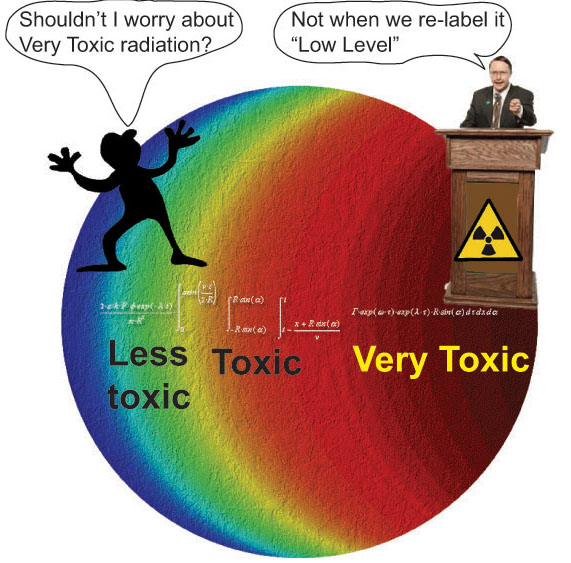
Santa Fe, NM – An internal Department of Energy (DOE) memorandum eliminates worker and public radiation protection rules known “As Low As Reasonably Achievable” (ALARA). This fundamental departure from decades of accepted health physics practices is being promoted by senior DOE political appointees with little background in health or radiation control. It is marked as “URGENCY: High” under the auspices of the DOE Deputy Secretary, the Under Secretary for Science, and the Administrator of the National Nuclear Security Administration. The memorandum awaits the final signature of DOE Secretary Chris Wright.
The memo’s stated goal is to:
“…remove the ALARA principle from all DOE directives and regulations, including DOE Order 458.1, Radiation Protection of the Public and the Environment, NE [Office of Nuclear Energy] Order 458.1, Radiation Protection of the Public, and, upon completion of the rulemaking process, 10 CFR [Code of Federal Regulations] 835, Occupational Radiation Protection.” [1]
It follows the playbook of the Heritage Foundation’s Project 2025, which called for:
“Set[ting] clear radiation exposure and protection standards by eliminating ALARA (“as low as reasonably achievable”) as a regulatory principle and setting clear standards according to radiological risk and dose rather than arbitrary objectives.”[2]
Contrary to Project 2025’s assertion that ALARA is just “arbitrary objectives,” the U.S. Occupational Safety and Health Administration declares it to be:
“…the cornerstone principle of radiation safety, emphasizing that radiation exposure should be minimized to the lowest possible levels while still allowing essential tasks to be performed. This principle applies everywhere radiation is present, including medical, industrial, nuclear, and research settings… ALARA is not just a recommendation—it is a legal and ethical requirement in radiation-related industries.”[3]
The elimination of ALARA protections is likely to increase radiation exposures to workers and weaken cleanup standards at contaminated sites where DOE has binding legal requirements with the impacted states (e.g., Los Alamos Lab, NM; Hanford Nuclear Reservation, WA and West Valley Demonstration Project, NY), as well as DOE Legacy Management sites where residual contamination remains after completion of claimed “cleanup” (e.g., Rocky Flats, CO and Weldon Spring, MO).
DOE’s memo purports to remove red tape constraining construction of new nuclear power plants, which inevitably experience huge cost overruns at ratepayers’ expense because of the inherent economic problems with nuclear power. However, because DOE’s primary mission is expanding nuclear weapons production, the elimination of ALARA protections will hit workers and nearby communities by allowing higher worker and public doses.
Two pertinent examples are the expanding production of plutonium “pit” bomb cores at the Los Alamos Lab and future pit production at the Savannah River Site in South Carolina. At the same time, the independent Defense Nuclear Facilities Safety Board’s role of nuclear safety oversight is being crippled by the Trump Administration’s refusal to nominate candidates to the Board. Moreover, DOE’s termination of ALARA rules can even downgrade international radiation protection standards because the Department provides staff and training for the United Nations’ International Atomic Energy Agency.
DOE’s high-level memorandum relies heavily upon a recent study by its Idaho National Laboratory.[4] According to the memo, the INL Report concluded:
“The balance of available scientific evidence indicates that annual dose rates of 5,000 mrem or less have not been shown to result in detectable increases in adverse health outcomes across diverse human populations and exposure scenarios. Furthermore, substantial evidence suggests that even 10,000 mrem/year may maintain a reasonable safety margin based on available epidemiological and radiobiological data.”
This is highly debatable (see comments by an independent epidemiologist below). By way of comparison, a standard chest X-ray is around 10 millirem (mrem) and an average annual radiation dose from all sources (including natural) to any one individual in the United States is around 600 mrem.[5] The INL report begins to rationalize public radioactive doses that are up to 16 times higher.
The Idaho National Laboratory is where DOE extracted weapons grade uranium from spent reactor fuel for warhead production, resulting in significant ground water contamination and “temporary” storage of liquid high-level waste now estimated to cost billions of dollars to stabilize. Nevertheless, according to INL Director John Wagner, the Idaho National Laboratory Report specifically recommends:
- Eliminating all ALARA requirements and limits below the 5,000 mrem occupational dose limit in order to reduce “unnecessary economic burdens.”
- Multiplying five-fold the allowed public radioactive dose limit from 100 mrem per year to 500 mrem per year.
- Supporting ongoing research on low-dose radiation effects to “further refine scientific understanding and regulatory approaches.”
Ongoing research on low-dose radiation effects” is aimed at the Linear No-Threshold principle, which maintains that no dose of radiation is safe. Related, ALARA is considered to be the global bedrock of radiation protection for nuclear workers and the public and is widely accepted as best practices by health physics professionals. Historically, more than 10,000 DOE workers have filed compensation claims for their occupational illnesses, which argues for strengthening, not weakening, occupational protection standards.
In parallel with DOE under Trump Executive Orders, the Nuclear Regulatory Commission (which oversees the nuclear energy industry) is questioning the Linear No-Threshold (LNT) principle. In recent written comment to the NRC, epidemiologist Joseph Mangano summarized decades of studies supporting LNT. His cited evidence includes:
- Studies of low-dose pelvic X-rays to pregnant women in the mid-1950s that concluded that a single X-ray would nearly double the risk of the child dying of cancer or leukemia by age ten.
- A 1990 study by the Committee on the Biological Effects of Ionizing Radiation (BEIR) that concluded that cancers and genetic damage increase with low-level radiation as a linear, non-threshold function of the dose. It included over 900 references that support LNT.
- A second BEIR study in 2005 that reiterated the risks of low-dose radiation exposures.
- A 2020 systematic review of 26 studies involving 91,000 individuals with solid cancers and 13,000 with leukemia that documented excess risks caused by low dose radiation.
- A 2023 study of 309,932 workers at nuclear plants in France, the United Kingdom, and the United States that found 28,089 had died of solid cancers with occupational doses well below Hiroshima and Nagasaki atomic bomb survivors. This suggests that the Linear No-Threshold model may actually underestimate the harmful effects of prolonged low radiation doses.[6]
Jay Coghlan, Director of Nuclear Watch New Mexico, concluded: “The Trump Administration is pumping taxpayers’ money into the much hyped “nuclear renaissance,” now in its third or fourth failed attempt, while cutting Medicaid for the poor and cutting taxes for the rich. But this time the corporate nuclear titans are being given a leg up by cutting nuclear safety protections for workers and the public, inevitably causing more illnesses. The good news is that fundamental market economics will eventually collapse the nuclear industry. However, one has to ask, at what safety costs to other sectors, such as the expanding production of nuclear weapons for the new arms race?”
Trump’s new radiation exposure limits could be ‘catastrophic’ for women and girls.
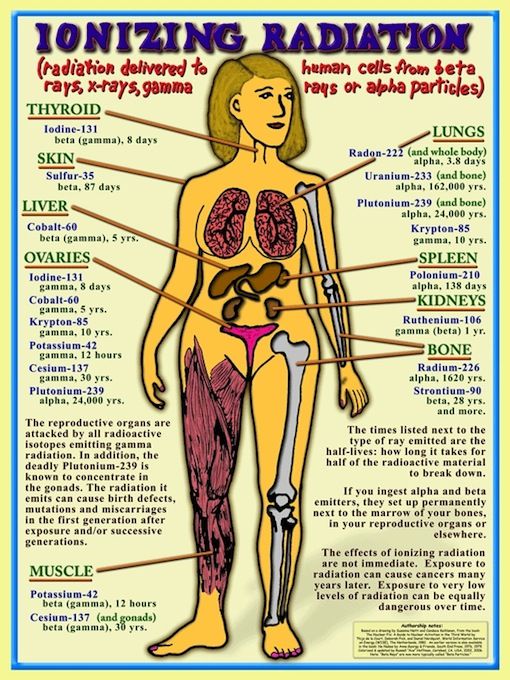
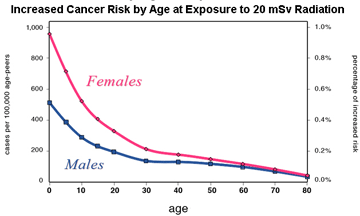
it has since been widely documented that women and young girls are significantly more vulnerable to radiation harm than men—in some cases by as much as a ten-fold difference………… Those most impacted by weaker exposure standards will be young girls under five years old
By Lesley M. M. Blume, Chloe Shrager | November 14, 2025, https://thebulletin.org/2025/11/trumps-new-radiation-exposure-limits-could-be-catastrophic-for-women-and-girls/
In a May executive order, aimed at ushering in what he described as an “American nuclear renaissance,” President Donald Trump declared moot the science underpinning decades-old radiation exposure standards set by the federal government. Executive Order 14300 directed the Nuclear Regulatory Commission (NRC) to conduct a “wholesale revision” of half-a-century of guidance and regulations. In doing so, it considers throwing out the foundational model used by the government to determine exposure limits, and investigates the possibility of loosening the standard on what is considered a “safe” level of radiation exposure for the general public. In a statement to the Bulletin, NRC spokesperson Scott Burnell confirmed that the NRC is reconsidering the standards long relied upon to guide exposure limits.
Now, some radiology and policy experts are sounding alarm bells, calling the directive a dangerous departure from a respected framework that has been followed and consistently reinforced by scientific review for generations. They warn that under some circumstances, the effects of the possible new limits could range from “undeniably homicidal” to “catastrophic” for those living close to nuclear operations and beyond.
“It’s an attack on the science and the policy behind radiation protection of people and the environment that has been in place for decades,” says radiologist Kimberly Applegate, a former chair of the radiological protection in medicine committee of the International Commission on Radiological Protection (ICRP) and a current council and scientific committee member of the National Council on Radiation Protection (NCRP)—two regulatory bodies that make radiation safety recommendations to the NRC. According to Applegate, current government sources have told her and other experts that the most conservative proposed change would raise the current limit on the amount of radiation that a member of the general public can be exposed to by five times. That would be a standard “far out of the international norms,” she says, and could significantly raise cancer rates among those living nearby. The NRC spokesperson did not respond to a question from the Bulletin about specific new exposure limits being considered.
Kathryn Higley, president of the NCRP, warns that a five-fold increase in radiation dose exposure would look like “potentially causing cancers in populations that you might not expect to see within a couple of decades.”
“There are many things that Executive Order does, but one thing that’s really important is that it reduces the amount of public input that will be allowed,” says Diane D’Arrigo, the Radioactive Waste Project Director at the Nuclear Information and Resource Service, a nonprofit group critical of the nuclear energy industry. In a statement to the Bulletin, the NRC said that once its standards reassessment process is completed, the NRC will publish its proposed rules in the Federal Register for public comment.* The NRC spokesperson did not respond to questions about when the proposed new standards would be made public and whether or how the general public would be further alerted to the changes.
Once the proposed policy change hits the Federal Register, the final decision will likely follow in a few days without advertising a period for public input, Applegate adds.
“I’m not sure I know why the loosening is needed,” says Peter Crane, who served as the NRC’s Counsel for Special Projects for nearly 25 years, starting in 1975. “I think it’s ideologically driven.” He points out that the probable loosening of the standards is set to coincide with increased pressure to greenlight new nuclear plants and could weaken emergency preparedness in case of leaks or other accidents: “I think it’s playing with fire.” (The NRC’s Office of Public Affairs did not respond to questions about the rationale for loosening the standards and the timing of the reconsideration.)
Possible shorter timelines for building nuclear power plants, coinciding with weakened radiation exposure standards, could spell disaster, warn other experts. It would be “undeniably homicidal” of the NRC to loosen current US exposure standards even slightly, adds Mary Olson, a biologist who has researched the effects of radiation for over 40 years and published a peer-reviewed study titled “Disproportionate impact of radiation and radiation regulation” in 2019. Olson cites NRC equations that found that the current exposure standards result in 3.5 fatal cancers per 1,000 people exposed for their lifetimes by living near a nuclear facility; a five-fold rate increase in allowable radiation exposure could therefore result in a little over 17.5 cancers per 1,000 people. Expressed another way, that means “one in 57 people getting fatal cancer from year in, year out exposure to an NRC facility,” she says.
The NRC’s Office of Public Affairs did not respond to questions about whether the NRC could guarantee the current level of safety for the general public or nuclear workers if adopting looser radiation exposure standards, and about whether new protections would be put into place.
Are women and children more vulnerable? According to Olson, increased radiation exposure could be even more “catastrophic” for women and children. Exposure standards have long been determined by studies on how radiation affects the “reference man,” defined by the ICRP as a white male “between 20-30 years of age, weighing around 70 kilograms [155 pounds].”
But Applegate, Olson, and other experts say that it has since been widely documented that women and young girls are significantly more vulnerable to radiation harm than men—in some cases by as much as a ten-fold difference, according to Olson’s 2019 study. Olson and Applegate cite another 2006 review assessing and summarizing 60 years of health data on the survivors of the Hiroshima and Nagasaki atomic bombings; the study showed that women are one-and-a-half to two times as likely to develop cancer from the same one-time radiation dose as men.
Young girls are seven times more at risk, they say. Those most impacted by weaker exposure standards will be young girls under five years old, Olson says. Her 2024 study of the A-bomb bomb survivor data for the United Nations Institute for Disarmament Research, titled “Gender and Ionizing Radiation,” found that they face twice the risk as boys of the same age, and have four to five times the risk of developing cancer later in life than a woman exposed in adulthood.
“Protections of the public from environmental poisons and dangerous materials have to be focused on those who will be most harmed, not average harmed,” Olson says. “That’s where the protection should be.”
Infants are especially vulnerable to radiation harm, says Rebecca Smith-Bindman, a radiologist and epidemiologist who is the lead author of a just-released major study in the New England Journal of Medicine documenting the relationship between medical imaging (such as X-rays and CT scans) and cancer risk for children and adolescents; more than 3.7 million children born between 1996 and 2016 participated and have been tracked. Smith-Bindman contests the idea that women are overall more vulnerable to cancer than men, saying that “in general, maybe women are a little bit more sensitive, …[but] women and men have different susceptibilities to different cancer types,” with women being more vulnerable to lung and breast cancers, among other types. But it is “absolutely true that children are more susceptible,” she adds. With children under the age of one, “the risks are markedly elevated.” While these findings are sobering, she points out that with medical imaging, “there’s a trade-off…it helps you make diagnoses; it might save your life. It’s very different from nuclear power or other sources of radiation where there’s no benefit to the patient or the population. It’s just a harm.”
“We’ve known for decades that pregnancy is [also] more impacted” by radiation exposure, says Cindy Folkers, radiation and health hazard specialist at Beyond Nuclear, a nonprofit anti-nuclear power and weapons organization. “Radiation does its damage to cells, and so when you have a pregnancy, you have very few cells that will be developing into various parts of the human body: the skeleton, the organs, the brain,” and exposing those cells to radiation during pregnancy can impact the embryo’s health, she says. Smith-Bindman and her team are also studying the impact of radiation exposure on pregnancy, and while their results are not yet in, “we do know that exposures during pregnancy are harmful,” she says, “and that they result in elevated cancer risks in the offspring of those patients.”
For children, lifetime cancer risk will be increased not only because of the “sensitivity and vulnerability of developing tissues, but also partly [because] they would be living longer under a different radiation protection framework,” adds David Richardson, a UC Irvine professor who studies occupational safety hazards.
Several experts noted the irony that these changes are being mandated by the same administration that is also overseeing a policy of “Make America Healthy Again” (MAHA), an effort being spearheaded by Secretary of Health and Human Services Robert F. Kennedy Jr. “In terms of general [public] knowledge, I think there has not been very large coverage or acceptance of the idea that radiation affects different people differently on the basis of both age and biological sex,” says Olson. “But we now have enough reviews, enough literature to say that the biological sex difference is there. I don’t think MAHA mothers know this because it’s been underreported, [and] they would be concerned if they knew it.”
The NRC’s Office of Public Affairs did not respond to questions about concerns being raised by radiologists and epidemiologists about possible health consequences—especially for children—as a result of increased radiation exposure.
Continue readingNon Government Organisations Warn that Recent Executive Orders Would Harm Public Health, Disproportionately Impacting Women and Children

“Young men like the Reference Man are harmed by radiation, but they’re more resistant to harm than are women and children. Radiation causes cancer in women at twice the rate of adult men, while the same exposure in early childhood, will, across their lifetimes, produce seven times more cancer in young females, and four times more in young males.”
Asheville, North Carolina – November 14, https://www.radiationproject.org/blog/ngos-warn-that-recent-executive-orders-would-harm-public-health-disproportionately-impacting-women-and-children?ss_source=sscampaigns&ss_campaign_id=6917d62bc4477007efdd4b63&ss_email_id=6917db9d43e3de1cada92627&ss_campaign_name=Welcome+to+GRIP%E2%80%99s+NEW+Blog&ss_campaign_sent_date=2025-11-15T01%3A47%3A30Z
Over forty citizen’s sector organizations including the national nonprofit Physicians for Social Responsibility have sent a joint letter to federal officials warning of public health consequences of a series of executive orders by President Trump which direct the NRC to dramatically weaken Standards for Protection Against Radiation in the US federal code. The letter points out sharply disproportionate impacts on women and children from weakening existing radiation exposure standards and calls for strengthening them.
The letter is posted here. It was spearheaded by the nonprofit Generational Radiation Impact Project (GRIP) and sent to US Nuclear Regulatory Commissioners, Health and Human Services Secretary Robert F. Kennedy Jr., Surgeon General Denise Hinton, and other key elected and appointed officials.
Recent Trump executive orders direct the NRC to “reconsider” the linear no-threshold (LNT) model. The joint letter argues that this “would undermine public trust by falsely claiming that the NRC’s radiation risk models lack scientific basis, despite decades of peer-reviewed evidence and international consensus.” The widely accepted LNT model has no limit “below regulatory concern,” i.e. no level below which radiation exposure can be treated as negligible or zero-risk. Where applied, LNT takes account of proportional cancer and health risks of all tiny exposures no matter how small.
Trump executive orders direct the NRC to undertake new rulemaking and “wholesale revision” of existing radiation regulations, which would likely lead to the NRC abandoning LNT and raising allowable exposure limits.
But past NRC opposition to such changes stands to be reversed by the Trump executive orders. If federal radiation regulations were weakened to permit exposures of 10 Rems a year, scientists estimate that over a 70-year lifetime, four out of five people would develop cancer they would not otherwise get.
Today’s joint letter stresses that health damage would not be evenly distributed across the population, but would disproportionately affect women and children, who are biologically more susceptible to ionizing radiation than men. And an article published today in the Bulletin of Atomic Scientists cites several lines of evidence “that women and young girls are significantly more vulnerable to radiation harm than men—in some cases by as much as a ten-fold difference” and that “infants are especially vulnerable to radiation harm.”
A July 2025 Idaho National Laboratory report commissioned by the Department of Energy recommended loosening the public radiation standard fivefold to 500 millirems. In 2021 the NRC roundly rejected a petition to raise allowable radiation exposures for all Americans, including children and pregnant women, to 10 Rems a year, 100 times the current limit.
“[NRC] bases its risk assessments on Reference Man, a model that represents a young adult male and fails to reflect the greater impacts to infants, children, and women—pregnant or not,” the joint letter states. “Newer research has shown that external radiation harms children more than adults and female bodies more than male bodies. Research on internal exposures…has not yet been sufficiently analyzed to discover if there are broad age-based or male/female differences in impact…. Existing standards should therefore be strengthened to account for these life-stage and gender disparities…not weakened. Radiation causes infertility, loss of pregnancy, birth complications and defects, as well as solid tumor cancer, leukemia, non-cancer outcomes including cardiovascular disease, increased incidence of autoimmune disease and ongoing new findings.”
In cases where cancer, heart disease, and vascular degradation including stroke are caused by radiation, they are documented at higher rates in women than in men, according to 2024 UNIDIR report Gender and Ionizing Radiation.
The joint letter urges the NRC to “to stand up to the Executive Order’s marching orders to ‘promote’ nuclear power—a mission outside its legal regulatory mandate,” and adopt “stronger, science-based radiation protections….Contemporary research shows that radiation’s impact is far greater on females, children, and fetuses—the most at-risk postnatal group being girls from birth to age five. A truly protective framework would replace Reference Man with a lifecycle model.”
“All US radiation regulations and most radiation risk assessments are based on outcomes for the Reference Man,” said Mary Olson, CEO of GRIP, the organization which spearheaded the joint letter, and co-author of Gender and Ionizing Radiation. “Young men like the Reference Man are harmed by radiation, but they’re more resistant to harm than are women and children. Radiation causes cancer in women at twice the rate of adult men, while the same exposure in early childhood, will, across their lifetimes, produce seven times more cancer in young females, and four times more in young males.”
“We know that exposure to radiation causes disproportionate harm from both cancer and non-cancer related disease outcomes over the course of the lifetime to women and especially to little girls, but radiation is dangerous for everyone,” said Amanda M. Nichols, Ph.D., lead author of Gender and Ionizing Radiation. “[President Trump’s] executive order will allow the industry to relax the current standards for radiological protection, which are already far from adequate. This will have detrimental health consequences for humans and for our shared environments and puts us all at higher risk for negative health consequences. “
“Living near nuclear power facilities doubles the risk of leukemia in children; and radiation is also associated with numerous reproductive harms including infertility, stillbirths and birth defects.,” said Cindy Folkers, Radiation and Health Hazard Specialist with the NGO Beyond Nuclear, a signatory to the joint letter. “Exposing people to more radiation, as this order would do if implemented, would be tantamount to legitimizing their suffering as the price of nuclear expansion.”
The remnants of Chernobyl are still present in the Black Sea
Forty years have passed since Chernobyl, but Chernobyl-related radioactive contamination in the Black Sea has not ended. TENMAK’s research has revealed that the concentration of caesium-137 in the Black Sea is seven times higher than in the Mediterranean Sea.
BirGün Daily, Giriş: 07.11.2025 , https://www.birgun.net/haber/the-remnants-of-chernobyl-are-still-present-in-the-black-sea-667018
Nearly 40 years have passed since the Chernobyl disaster, considered one of the world’s three largest nuclear accidents, but the radioactive contamination caused by the accident continues to affect the Black Sea. At the IVth National Symposium on Monitoring and Assessment in the Seas, Dr Aysun Kılınçarslan, presenting on behalf of the Turkish Energy, Nuclear and Mining Research Institute (TENMAK), announced the results of monitoring studies on radioactive contamination in Turkey’s coastal waters and sediments.
Analyses conducted in coastal sediments between 2015 and 2023 detected high levels of caesium-137 and strontium-90. While an average of 21 becquerels of caesium-137 isotope per kilogram was observed in the Black Sea, this rate was recorded as only 3.2 becquerels in the Mediterranean Sea. Values that are relatively high in the Sea of Marmara decrease as one moves towards the Aegean and Mediterranean Seas. The highest value found in the analyses exceeds 82 becquerels. This figure is 10 times higher than the highest value observed in the Mediterranean Sea. When viewed on a regional basis, the highest caesium-137 value in sediments, 50 becquerels, was found in Hopa. Hopa is followed by Trabzon and Sinop.
HIGH FIGURES IN TRABZON AND HOPA
In measurements taken in coastal surface waters between 2014 and 2023, the caesium-137 concentration averaged 9 millibecquerels per litre in the Black Sea, while this figure dropped to 1.6 millibecquerels in the Mediterranean Sea. Rates in the Bosphorus, Marmara and Çanakkale ranged between 8.4 and 6.9 millibecquerels, while the amount of caesium-137 in the water decreased in the Aegean Sea, falling to 1.8 millibecquerels. The highest figures were found in Trabzon and Hopa, which have been affected by Chernobyl for years and where cancer rates have increased. Tekirdağ, Ordu, Karasu and İğneada stand out as other regions with high measurements. Although the study’s findings indicate that these levels do not pose a risk to human health or environmental pollution, the significant difference between the Black Sea and the Mediterranean clearly demonstrates the consequences of Chernobyl-related contamination.
CHERNOBYL FLOWS
Another noteworthy finding of the study was the detection of plutonium-239, which does not occur naturally and is produced by nuclear reactions, alongside caesium-137. While average values do not differ between seas, the locations most affected by this contamination include Erdek, the Bosphorus Strait, Hopa, and Sinop. Experts point out that the sources of contamination linked to these isotopes are nuclear power plant accidents, nuclear weapons tests, and operational nuclear reactors. Chernobyl is also cited as a source of contamination in the Black Sea. Radioactive pollution from the out-of-control melted reactor and the surrounding area reaches the Black Sea via groundwater and the Dnieper River.
MARINE ASSESSMENT IS NECESSARY
Prof. Dr. İnci Gökmen, who revealed high levels of radiation in tea after Chernobyl, points out that the radiation level detected at 21 becquerels per kilogram is quite high. Gökmen states that data collected from the seas and coasts also highlights the need to measure radiation levels in the soil, adding, “It is surprising to see plutonium in the seas, even at low levels. Strontium is not surprising. However, since strontium does not emit gamma radiation and must be measured by chemical separation, measurements were rarely taken despite the presence of strontium in the environment and food after Chernobyl. However, the strontium values immediately after the accident can be estimated from the current results. By looking at the caesium levels in coastal surface water in some areas, it would be good to calculate the doses that swimmers or those working at sea, such as fishermen, would receive. It would be appropriate to take measurements in fish, mussels and other seafood. Thirty-nine years have passed since Chernobyl. Caesium has only undergone one half-life. This means that radioactive elements will remain in the seas for a long time to come,” he said. WHAT IS CAESIUM (CS-137)?
The most common radioactive form of caesium is Cs-137. Caesium-137 is produced by nuclear reactions. External exposure to Cs-137 can cause burns, acute radiation sickness and even death. Exposure to large amounts of Cs-137 can result from the misuse of a powerful industrial Cs-137 source, a nuclear explosion, or a major nuclear accident. Under normal conditions, large amounts of Cs-137 are not found in the environment. Exposure to Cs-137 can increase the risk of cancer due to the presence of high-energy gamma radiation. Ingestion or inhalation of Cs-137 increases the risk of cancer by causing the radioactive material to spread to soft tissues, particularly muscle tissue. Vascular plants do not accumulate high levels of caesium through root uptake because caesium is strongly adsorbed to the soil. However, the accumulation of radioactive residues on flora with large surface areas, such as lichens or mosses, is significant. Animals that feed on these plants can consume large amounts of radiocaesium (and other radionuclides present in radioactive fallout). Human consumption of the meat of such animals leads to the uptake of these radionuclides into the body.
Note: This article is translated from the original article titled Çernobil’in izleri hâlâ Karadeniz’de, published in BirGün newspaper on November 7, 2025.
New Radiation Protection Standards in 2026?

Tony Webb – November 2025.
In May 2025 US President Donald Trump ordered the US Nuclear Regulatory
Commission (NRC) to review US radiation protection standards for workers and the public. The order claims that these and other NRC regulatory processes hinder development of US nuclear power generation and need to be revised – in line with another set of his ‘alternative facts’ that overturn almost all the established principles that provide the basis of national and international protection standards.
This latest diktat will result in a significant weakening of current protection at a time when we have mounting scientific evidence that the existing standards need to be significantly improved/tightened. Permissible radiation exposures to workers will likely increase five-fold. Exposures to the public could be 100 times greater than currently permitted. Changes in the USA will lead to pressure for similar changes to standards in other countries, including Australia. Whether we end up with better or worse protection will require a sustained awareness and advocacy campaign. This will need to involve exposed workers, trade unions, environment and public health
interests arguing: first that our government and radiation protection agencies should reject the US approach, and second that new and improved national standards in line with the latest evidence should be adopted.
Health effects of radiation exposure
It has long been recognised that all radiation exposures present a risk to human health. Put simply there is no safe level of radiation – whether naturally occurring or artificially generated. Some we cannot avoid. Some like diagnostic medical x-rays we accept as having other countervailing benefits. High doses, like those received
by Japanese residents of Hiroshima and Nagasaki from nuclear bombs in 1945, or some of the first responders to the Ukrainian Chernobyl nuclear reactor meltdown in 1986, cause ‘radiation sickness’ where whole organs are damaged often with fatal
effects.
The results from high-dose exposures are what are known as ‘determinate’ effects.
Above a threshold dose these effects occur with severity determined by the dose. Radiation standards are set to keep exposures below the threshold, so these do not occur.
Lower doses cause a different kind of damage. Particularly concerning are increased rates of a wide range of cancers and genetic damage being passed on to future generations. These are referred to as ‘stochastic’ effects. The damage is not ‘determinate’ with a threshold below which they do not occur. Stochastic damage is a ‘hit and miss’ affair. You either get this type of health damage or you don’t. And if you do the scale of the damage isn’t related to the radiation dose you received.
The initial damage occurs at the cellular level where a radiation strike can have one of three outcomes. (i) It may simply pass through causing no damage. Alternatively, (ii) the radiation may kill the cell which isn’t a problem, unless too many cells are killed at once affecting functioning of whole organs. Our bodies are eliminating and replacing dead and dying cells all the time. Problems arise however when (iii) the cell is merely damaged and goes on to replicate in this damaged form.
Our bodies do have well developed repair mechanisms that often result in adequate repair of the damage. There is even some evidence suggesting that some such radiation damage and repair may assist the body’s capacity for repair in the future.
But where radiation leaves the damaged cell to survive and replicate uncontrollably in this damaged form the result is what we call a cancer – sometimes detectable only decades after the initial radiation damage. The process can be complicated further as growth of some cancers involves a two-stage process – initiation, where damage (from radiation or other environmental pollutants) leaves the cell susceptible,
followed by promotion (again from radiation or other sources) which drives the cell-cancer process forward.
Stochastic radiation damage is real. it doesn’t involve a threshold dose. Any exposure can be the one that causes the initial and/or subsequent damage leading to the health effects. We are in the world of ‘probability’ – far from certainty at the individual level but with fairly predictable outcomes at the population level which allow us to assess the risk (i.e., probability of an adverse outcome) individuals face from receiving small, sometimes repeated, doses of radiation.
Radiation protection principles.
In light of these established mechanisms for harm from radiation, standard setting bodies have long adopted three principles – that any exposure needs to be: (i) justified as necessary against some social benefits; (ii) kept as low as reasonably achievable (the ALARA principle); and (iii) kept below specified limits set in regulations.
The last of these has been the subject of much controversy over the years.
Standards have been set for workers’ occupational exposures and for public exposures. These, first, ensure exposures are below the threshold levels where deterministic effects might occur. Below these high levels, they have been set such that the risk of stochastic effects – particularly cancers and genetic damage are at levels deemed ‘acceptable’. There have been arguments over both what is ‘acceptable’ and how the probable level of risk from any given low dose is estimated.
Estimates of risk
A number of early studies of patients exposed as part of medical procedures indicated a problem with radiation exposure and some early estimates of the stochastic risk. Since then, the bulk of the data for the estimates of risk has come from studies of survivors of the Japanese nuclear bombings of Hiroshima and Nagasaki in 1945. These Life Span Studies (LSS) have consistently shown
increases in cancer rates among survivors higher than those in the non-exposed population. There are a number of problems with this data – not least that survivors were not wearing film badges when the bombs went off, so all doses have had to be estimated later. They were also the ‘hardy’ survivors of wide-ranging traumatic
events, perhaps less vulnerable to damage from radiation Most of these survivors received relatively high doses as a single exposure or within a relatively short time period. More accurate measures of small exposures repeated over longer time periods to a general population, might be expected to yield different results.
However, these were the best data to be had. The risks at lower doses are estimated using the assumption that, if there is no safe level of exposure, no threshold below which stochastic effects do not occur, we can estimate lower dose risks on a straight line from these higher LSS doses. This Linear No Threshold (LNT) assumption, though adopted by all stands setting bodies, has at times been contested. Some have suggested a sub-linear relationship with a threshold for any effects. Others have made the case for a super-linear or marginally higher effect at lower doses where these are spread over longer time periods or result from radiative material that gets inside the body.
For now all the significant agencies agree that radiation protection for workers and the public should be based on LNT and the three radiation protection principles: justification, ALARA, and Specific Exposure Limits. These agencies include: the International Commission on Radiological Protection (ICRP) the United Nations
Scientific Committee on the Effects of Atomic Radiation (UNSCEAR) the US National Academy of Sciences Committee on the Biological Effects of Ionising Radiation (known as the BEIR Committee) and national agencies like the Australian Radiation Protection and Nuclear Safety Agency (ARPANSA). The cancer risk from low
dose radiation is estimated to be in the range of 4-6% per Sievert (1000 mSv) of exposure. The risk of genetic damage (first two generations only) is estimated to be around 1.5% per Sievert.
These estimates have resulted in national protection bodies setting standards that limit annual exposures. For workers the annual limit is 20 mSv as a target – but with 50 mSv allowed in any year provided the average over five years does not exceed 20 mSv. The annual limit for public exposures is 1 mSv. All of these are for
exposures in addition to what might be received from natural background radiation or exposures due to medical procedures such as diagnostic x-rays and nuclear medicine.
Change is coming – one way or another.
It is these protection principles and the exposure standards for workers and the public that the Presidential directive to the US NRC seeks to overturn. It calls on the NRC to reconsider reliance on LNT (and ALARA) as the basis for standard setting at low doses, where there is a need to protect against probable stochastic effects and
directs that instead the NRC set standards based on deterministic effects.
This will likely result in a significant weakening of the current standards at a time when the evidence strongly suggests that they are in need of further tightening. The current standards have been in place since 1991. Revisions at that time were the result of a sustained campaign throughout the 1980s led by trade unions in the UK, Europe, USA and Canada for reduction of the then 50 mSv occupational and 5 mSv public limits -justified in large part by emerging evidence from the Japanese lifespan studies. As previously noted, estimates of risk from these was based on one-off
short-term exposure to relatively high doses (at and above 100 mSv). Since then, studies in Europe and North America of workers exposed over years of work in nuclear industries to doses below the current occupational limits, indicate the risks are around 2 to 3 times greater than those used for setting the current standards.
They also show a doubling of expected rates of cardio-vascular diseases: strokes, arthro-sclerosis, and heart damage. In addition, studies of populations living close to nuclear facilities in Europe and the USA show childhood cancer rates significantly higher than expected. This evidence is cause for concern, suggesting that the
current standards provide inadequate protection and need to be tightened.
A new campaign for improved protection?
Past experience suggests that persuading national and international bodies to improve radiation protection standards is far from easy but not impossible. In the short term, a campaign would be seeking clear and unequivocal statements from national protection agencies that reject the US president’s directive that the NRC abandon the fundamental principles which have formed the basis for regulating worker and public exposures. If implemented Trump’s proposals would likely result in occupational exposure limits five times higher than presently allowed, and public exposure limits could be 100 times greater.
The campaign should seek assurances that there will be no change to the established principles underpinning radiation protection: that there is no safe level of radiation, that all exposures should be kept as low as can be reasonably achievable; and that occupational and public limits need to be based on the best scientific evidence of risk to human populations.
Raising the concern about, and seeking rejection of, the likely US NRC changes will require building an informed coalition of trade union, environment and public health interests. Occupational and public radiation exposures are more widespread that commonly appreciated. Workers are routinely exposed in mining, industry and medicine as well as those associated with the nuclear power industry. The. campaign could involve local initiatives that focus concerns of workers in , and people living close to sites of: proposed nuclear power plants; existing uranium, mineral sands, and hard rock mines; proposed ‘rare earth’ mines; medical and other
radioactive waste storage sites; and other activities that routinely release radiative materials.
Opposing Trump’s latest proposals to weaken standards is fairly straightforward. If implemented by the NRC they would dismantle the whole edifice on which radiation protection has been built over the past 80 years – a framework that many concerned about radiation protection within the affected industries have invested time and energy to establish and maintain.
Pressing the claim for improvements is harder but not impossible given the evidence for greater harm that is emerging. The case can already be made for at least halving the permissible occupational and public exposure limits. If we are successful in pressing for improved protection standards, the nuclear industry is unlikely to thank President Trump for opening this can of worms with his NRC directive. Once opened it will be hard to close without increasing worker and public awareness of how any, and all radiation exposures increase health risks to workers the public and to future generations.
Tony Webb has worked as a researcher, consultant and advisor on radiation and health issues to politicians, trade unions, environment and public health groups in the UK, Europe, USA , Canada and Australasia since the late1970s. He can be contacted for information on how to assist the latest evolving international campaign via tonyrwebb@gmail.com.
Three workers at nuclear fuel reprocessing plant possibly exposed to internal radiation
AOMORI – https://www.japantimes.co.jp/news/2025/10/29/japan/society/nuclear-plant-internal-exposure/
Three workers may have suffered internal radiation exposure while working in a spent nuclear fuel reprocessing plant in Rokkasho, Aomori Prefecture, Japan Nuclear Fuel has said.
The men in their 20s to 40s are employees of a partner company sent to work in a controlled area of the plant, according to an announcement by Japan Nuclear Fuel on Monday.
Radiation was detected inside the nasal cavity of one of the three, who is in his 40s, prompting the company to check whether all three had been internally exposed.
None of them has reported any change in their health condition so far, Japan Nuclear Fuel said.
According to the company, the three were working to replace filters that remove radioactive materials from gas emitted from a tank, in a building used for denitration of uranium-plutonium mixed solution, when radiation levels rose at around 11:10 a.m. Friday.
After they left the area, as instructed, contamination was found on the outer surface of the filters of their protective masks.
When contamination is detected, workers are typically instructed to cover air intake filters with tape to prevent further contamination and replace the filter while holding their breath.
However, two of the three breathed without filters for up to three minutes, according to Japan Nuclear Fuel. It is not clear when that occurred.
The company is still investigating why the two men breathed without filters. It is also analyzing urine and stool samples from the three workers to determine whether internal radiation exposure occurred, and investigating the cause of the increase in radiation levels.
Dounreay waste particle ‘most radioactive’ find for three years

Steven McKenzie, Highlands and Islands reporter and Rachel Grant, BBC Scotland. 23 Oct 25
A fragment of waste found near the decommissioned experimental nuclear power facility in Dounreay in April was the most radioactive to be detected in the past three years, the Highland site’s operator has said.
The fragment, categorised as “significant”, was discovered during monitoring work around the nuclear power plant near Thurso. It is the latest in a long line of particle discoveries in the area.
Dounreay was built in the 1950s as the UK’s centre of fast reactor research, but during the 1960s and 1970s sand-sized particles of irradiated nuclear fuel got into the drainage system.
Work to clear the pollution began in the 1980s, after particles were found washed up on the nearby foreshore.
The facility closed in 1994. The multi-billion pound decommissioning process involves hundreds of workers and is expected to last into the 2070s.
The full decontamination of the site is expected to take more than 300 years.
A Dounreay spokesperson said: “Particles are a legacy of industrial practices dating back to the early 1960s and our commitment today to environmental protection includes their monitoring and removal from the marine environment and transparent reporting of our activities.”
A group of independent experts, who advise the Scottish Environment Protection Agency (Sepa) and Dounreay, classify particles by the radioactivity of their caesium-137 content.
The categories are minor, relevant and significant.
Significant means a reading greater than one million becquerels of CS-137.
A becquerel is the standard unit of radioactivity.
The particle was found on the western part of Dounreay’s foreshore on 7 April. Eight other finds reported since then have been categorised as “minor” or “relevant”.
A significant-category particle was last discovered in March 2022.
Thousands of particles of different categories have been removed from beaches, foreshore and seabed at Dounreay.
The site’s operator said monitoring on the site on the north Caithness coast continued to be done on a fortnightly basis.
On occasions it said the scheduled work could be interrupted by bad weather or the presence of protected species of ground-nesting birds……………………………………………………..
What risk is there to the public?
According to official reports, risk to people on local beaches is very low.
Guidance issued by the UK government’s Nuclear Restoration Services says the most at-risk area is not accessible to the public.
The particles found along the coast vary in size and radioactivity with smaller and less active particles generally found on beaches used by the public.
Larger particles have only been found only on the foreshore at Dounreay, which is not used by the public.
The particles found on beaches are believed to come from the disintegration of larger fragments in the seabed near Dounreay. The area is continuously monitored for traces of radioactive materials.
Harvesting of seafood is prohibited within a 2km (1.2 mile) radius of a point near Dounreay. This is where the largest and most hazardous fragments have been detected.
Dounreay’s radioactive history
- 1954 – A remote site on the north coast of Scotland is chosen as the site of a new type of nuclear reactor. Modern homes were built in Caithness to attract workers to the sparsely populated area.
- 1957 – A chain reaction which provided sustained and controlled nuclear energy is achieved for the first time.
- 1959 – A new disposal site for radioactive waste called the Shaft opens. It drops 65.4m (214.5ft) below ground.
- 1962 – The fast reactor inside the dome is the first in the world to provide electricity to a national grid.
- 1977 – The original “golf ball” reactor is shut down and waste disposal in the Shaft ends after an explosion.
- 1994 – Dounreay nuclear power generating facility closes.
- 1998 – Decommissioning programme is announced.
- 2008 – Operation to scour the seabed for hazardous material begins and the Shaft shaft is encircled in a boot-shaped ring of grout to prevent contamination.
- 2020 – Clean-up begins of the highly contaminated Shaft – a three decades-long project.
- 2333 – Decontamination expected to be complete, making the 148-acre site available for other uses. https://www.bbc.com/news/articles/cz91nx0lv59o
Generational RADIATION IMPACT Project
Uncovering Radiation’s Hidden Dangers
Protecting Women and Future Generations
Our Mission
The Generational Radiation Impact Project (GRIP) leads a global effort to bring gender-specific insights into radiation safety. Women are twice as likely to develop radiation-related cancer, yet this crucial fact is missing from most regulations. We aim to change that by conducting groundbreaking research, educating the public, and advocating for policy change. We envision a future where everyone has access to information about radiation risks, especially women and children, who are disproportionately affected. Learn more about how radiation affects women.
Why This Matters Now
Every day, millions of women and children are exposed to radiation through medical treatments, environmental pollution, and consumer goods. Yet, safety standards are based on outdated models that overlook biological differences between men and women. This leaves women—especially those of reproductive age—at greater risk for radiation-induced cancers. We are working to change this. With your support, we will continue our research to inform better policies and protect future generations.
…………………… Generational Radiation Impact Project works at the intersection of public health, medicine, and public policy. We are an educational and funding group that brings together top thinkers to understand the role biological sex plays in harm from radiation.
While this public health threat impacts us all, the risk is dramatically greater for girls and women. For every two men who develop cancer through exposure to ionizing radiation, three women will get the disease. Now we must learn why. https://www.radiationproject.org/
Major radiation warning as Israel says it’s ‘on verge of destroying 10 nuclear sites’
International Atomic Energy Agency director Rafael Mariano Grossi said protective measures need to be put in place due to the risk of radiation at the Natanz nuclear facility.
Chiara Fiorillo News Reporter, 17 Jun 2025, https://www.mirror.co.uk/news/world-news/major-radiation-warning-israel-says-35407962
A major radiation warning has been issued after Israel’s Defence Minister said his country is “on the verge” of destroying “more than 10 nuclear targets” in Iran. Israel Katz said the Israeli Air Force will strike “very significant targets, strategic targets, targets of the regime and infrastructure” in Tehran today. One of the targets include the underground Fordow facility which Katz said is “an issue that will certainly be addressed.”
The Natanz nuclear facility has already been hit by Israeli strikes and after the latest warning from Israel, the head of the UN nuclear watchdog agency, Rafael Mariano Grossi, warned of the widespread risks posed by attacks on such facilities. The International Atomic Energy Agency (IAEA) said there is a risk of of both radiological and chemical contamination within Iran’s main nuclear enrichment facility.
“Based on continued analysis of high resolution satellite imagery collected after Friday’s attacks, the IAEA has identified additional elements that indicate direct impacts on the underground enrichment halls at Natanz,” the agency said on X. “No change to report at Esfahan and Fordow,” the IAEA added.
The radiation poses significant danger if uranium is inhaled or ingested. Appropriate protective measures are needed to manage the risk, including using respiratory protection devices while inside the facilities. Mr Grossi said currently, radiation levels outside complex are normal.
Located 220km (135 miles) southeast of Tehran, the Natanz facility was protected by anti-aircraft batteries, fencing and Iran’s paramilitary Revolutionary Guard. The underground part of the facility is buried to protect it from airstrikes and contains the bulk of the enrichment facilities at Natanz, with 10,000 centrifuges that enrich uranium up to 5 per cent, experts assess.
The IAEA had earlier reported that Israeli strikes had destroyed an above-ground enrichment hall at Natanz and knocked out electrical equipment that powered the facility. However, most of Iran’s enrichment takes place underground.
Although Israel has struck Natanz repeatedly and claims to have inflicted significant damage on its underground facilities, Tuesday’s IAEA statement marked the first time the agency has acknowledged impacts there.
Iran has not discussed the damage done in depth at Natanz as the country is reeling from the ongoing Israeli strikes that are dismantling its air defence and killing its top military commanders.
The facility is located 220km southeast of Tehran(Image: Satellite image ©2021 Maxar Tech)
Israel says its sweeping assault on Iran’s top military leaders, nuclear scientists, uranium enrichment sites and ballistic missile program is necessary to prevent its adversary from getting any closer to building an atomic weapon.
The strikes have killed at least 224 people in Iran. Iran has retaliated by launching more than 370 missiles and hundreds of drones at Israel. So far, 24 people have been killed in Israel.
The Israeli military said a new barrage of missiles was launched on Tuesday. Iran maintains its nuclear program is peaceful, and the United States and others have assessed Tehran has not had an organized effort to pursue a nuclear weapon since 2003.
But the head of the IAEA has repeatedly warned that the country has enough enriched uranium to make several nuclear bombs should it choose to do so.
Radioactive Mussels May Pose Threat to Food Chain in Pennsylvania
By Tom Howarth, Science Reporter (Nature) Jan 07, 2025, https://www.newsweek.com/radioactive-mussels-food-chain-bioaccumulation-pennsylvania-2011149?fbclid=IwY2xjawJG4pxleHRuA2FlbQIxMQABHXBgrVgNhUUy1s_U9SLYXUIeD-gugNuUk75xBSTL9AG1vQ6REzIVWJiVGw_aem_0EvCj7mKrreGjCLuSViY1Q
Radioactive contamination in freshwater mussels is potentially affecting the food chain in Pennsylvania, including iconic animals such as bald eagles and possibly even humans.
A study published last year by scientists from Penn State University found elevated levels of radium in mussels downstream from a waste treatment facility in Franklin, Pennsylvania. Now, experts are raising the alarm over the secondary impacts on the ecosystem.
While the facility no longer discharges oil and gas wastewater into the Allegheny River, its legacy of pollution persists, with radioactive material bioaccumulating in the ecosystem.
Why This Matters
The findings highlighted that radioactive materials could be climbing the food chain, affecting not just aquatic life but also land animals, birds and people. Bald eagles, a species reintroduced to Pennsylvania in 1983, are among those at risk. Their diet includes muskrats, a primary predator of freshwater mussels, which are now confirmed to carry radium.
Although freshwater mussels are not consumed by humans, other species higher in the food chain may serve as a bridge for contaminants to eventually affect people. Local fishing activity in the Allegheny River also raises questions about indirect exposure to radioactive material.
Exposure to high levels of radium can result in adverse health conditions like anemia, cataracts, fractured teeth, cancer (especially bone cancer) and death, the U.S. Centers for Disease Control and Prevention says.
What To Know
Freshwater mussels act as ecological barometers because of their fixed locations and long life spans.
In this study, researchers found that mussels downstream of the waste treatment facility had absorbed radioactive particles into their soft tissue and hard shells. Mussels closest to the discharge site perished from salinity, while those farther away adapted but at a cost—they absorbed contaminants instead.
The study also compared the mussels’ radioactivity to Brazil nuts, which naturally absorb radiation from the soil. While a typical 28-gram serving of Brazil nuts contains 0.47 to 0.80 microsieverts, the maximum radioactivity found in a single mussel was 63.42 μSv.
While the International Atomic Energy Agency recommends an annual exposure limit of 1,000 μSv—far exceeding the amount found in even the most radioactive mussel—the findings are concerning because of the potential for radiation to accumulate within food chains over time.
What People Are Saying
Evan Clark, the waterkeeper at Three Rivers Waterkeeper, told Newsweek: “One concern that I immediately thought of after reading [the study] was bioaccumulation. Mussels live pretty close to the bottom of the food chain, eating a lot of algae and bacteria—they are unselective filter feeders.
“Muskrats are one of the larger consumers of freshwater mussels, eating hundreds and hundreds in a lifetime. Those muskrats are going to be eaten by bald eagles, and those bald eagles are only recently making a strong comeback into western Pennsylvania.”
Katharina Pankratz, a co-author of the study, said in a statement: “Depending on the contaminant and its chemistry, if it is small enough to pass through the gills of the mussel, it has the potential to accumulate in their tissue or precipitate within the hard-shell structure. This information may help shape future regulations for wastewater disposal to surface water, especially in regions where mussels are harvested for food.”
Nathaniel Warner, the study’s corresponding author, said in the statement: “Mussels that were closest to the water discharges died off. Further downstream, the mussels found a way to tolerate the salinity and radioactive materials and instead absorbed them into their shells and tissues.”
What Happens Next
The study’s findings could inform future policies on wastewater management, its authors said. While the waste treatment facility in Franklin is no longer discharging waste into the waterways, its impacts still linger and could do so for some time.
Key questions, such as how much radioactive material is accumulating up the food chain, remain.
40% of workers cite radiation concerns at Fukushima plant
By KEITARO FUKUCHI/ Asahi Shimbun, Staff Writer, February 2, 2025
Forty percent of the workforce at the crippled Fukushima No. 1 nuclear plant worry about radiation issues on the job, a nearly three-fold spike over the previous year, a survey found.
More than half of those respondents cited fears of their body coming into contact with a radioactive substance.
Tokyo Electric Power Co., the plant operator that conducted the annual survey, said recent incidents at the plant probably contributed to the heightened concerns.
For example, two workers were hospitalized in October 2023 after they were accidentally splashed with waste liquid containing highly radioactive substances while cleaning piping in a contaminated water treatment facility.
The survey was carried out between September and October to improve the working environment. TEPCO distributed a questionnaire to all workers at the plant and received responses from 5,498 individuals, or 94.5 percent……………………….
Asked to choose specific issues they were concerned about, 52.2 percent, the largest percentage, picked “physical contamination,” up about seven points from 2023.
In another incident, about 1.5 tons of contaminated water flowed out of a water purification facility at the plant through an air exhaust opening in February 2024…… more https://www.asahi.com/ajw/articles/15609878
How Fukushima’s radioactive fallout in Tokyo was concealed from the public

Because of the controversy surrounding Satoshi’s paper and the lack of research on the health impacts of these particles, it remains unclear to what extent Tokyo residents have been exposed to dangerous radiation levels as a result of the Fukushima accident.
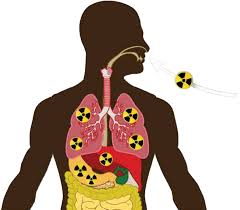
Because CsMPs are so small, typically two microns or less in diameter, if humans breathe them, they could potentially reach the bottom of the lung, and be lodged into sacs known as alveoli, where the lung generally cannot expel them.
By unit of mass, CsMPs are much more radioactive than even spent reactor fuel
Japanese radiochemist Satoshi Utsunomiya found that air samples from March 15, 2011, in Tokyo contained a very high concentration of insoluble cesium microparticles. He immediately realized the implications of the findings for public safety, but his study was kept from publication for years.
Bulletin, By François Diaz-Maurin, January 13, 2025 [excellent illustrations]
On March 14 and 15, 2011—three days after the Great East Japan Earthquake and its resulting tsunami hit the Fukushima nuclear power plant—explosions at two of the plant’s reactor buildings released a huge amount of invisible radioactivity. These radioactive plumes were blown away by the wind, descending over the surrounding area and into the ocean. Eventually, the radiation emitted from the Fukushima plants spread over the entire Northern Hemisphere. It also spread to Japan’s capital, Tokyo.
Following the explosions, Japanese researchers rushed to collect and study radioactive materials from the soil and the air to find out what had happened inside the reactors, believed now to have melted down because their cooling systems failed. On March 13, the Tokyo Metropolitan Industrial Technology Research Institute, the agency responsible for measuring the air quality of particulate matter in the Tokyo area, started to collect air samples more frequently. This effort was part of the Tokyo metropolitan government’s emergency monitoring program for environmental radiation, which aimed to detect gamma-emitting nuclides in airborne dust. The filters revealed that at around 10 a.m. on March 15, 2011, a large plume of radioactivity reached Tokyo, some 240 kilometers (149 miles) south of Fukushima. All samples taken on March 14 and March 15 showed spikes in radioactivity.
The institute’s researchers published their first results in the journal of the Japan Radioisotope Association in June 2011 (Nagakawa et al. 2011); they estimated the total exposure dose to humans from radioactive substances, including iodine 131 and cesium 137 found in airborne dust, foodstuffs, and drinking water from the Setagaya ward in the old Tokyo City. Extrapolating from their measurements from March 13 to May 31, they calculated the corresponding annual cumulative dose of radiation in that part of Tokyo as being 425.1 microsieverts, which is less than half the annual dose limit to the public recommended by the International Commission on Radiological Protection. In a second conference publication in English (Nagakawa et al. 2012), the researchers extended their monitoring period to October and estimated that the total annual effective dose due to inhalation for adults in the Tokyo metropolitan area from the Fukushima radioactive plumes was far lower, at 25 microsieverts.
But two years after the accident, Japanese scientists discovered a new type of highly radioactive microparticle in the exclusion zone around the Fukushima plant. The microparticles, which had been ejected from the Fukushima reactors, contained extremely high concentrations of cesium 137—a radioactive element that can cause burns, acute radiation sickness, and even death. Satoshi Utsunomiya, an environmental radiochemist from Kyushu University in southwestern Japan, soon found that these particles were also present in air filter samples collected in Tokyo in the aftermath of the Fukushima accident.
The controversy surrounding his attempts to publish his findings nearly cost him his career and prevented his results from being widely known by the Japanese public ahead of the 2020 Summer Olympics in Tokyo.[1] Scientists still don’t know if these highly radioactive microparticles present significant danger to people, and Satoshi is one of the very few scientists who is focused on trying to find out. “We have the measurements now that tell that the particles did pass over population centers and were being deposited in places,” Gareth Law, a radiochemist from the University of Helsinki, told me. “We should answer the question.”
The discovery
In May 2012, Toshihiko Ohnuki, an accomplished environmental radiochemist then at the Japan Atomic Energy Agency (JAEA), visited Yoshiyasu Nagakawa at the Tokyo Metropolitan Industrial Technology Research Institute, also known as TIRI. Nagakawa was the first author of two TIRI studies on radiation exposure in Tokyo, and Ohnuki asked Nagakawa if he could obtain some air samples for further analysis. Ohnuki had already studied how radioactive cesium fallout from Fukushima reacted with components of contaminated soil. Now, he wanted to do the same with the airborne dust samples from Tokyo.
Nagakawa gave Ohnuki five small filters that had been collected from the Setagaya ward in old Tokyo City at different times on March 15, 2011—the day the radioactive plume reached Tokyo. Ohnuki received the samples without restriction on their use, and no written agreement was made.[2]
Back in his laboratory at JAEA, Ohnuki performed autoradiography of the five samples, revealing many radioactive spots on all of them. The bulk radioactivity on each sample was measured to be between 300 counts per minute for the filter that covered the midnight to 7 a.m. period and 10,500 counts per minute between 10 a.m. and 11 a.m. on March 15.[3] The radiation rate was so high that Ohnuki had to cut some of the filters into small pieces, less than one square centimeter, to keep from saturating the scanning electron microscope. Ohnuki stored the unexamined filters for future analysis.
Months later, in August 2013, four researchers from the Meteorological Research Institute in Japan reported for the first time about a new type of spherical radioactive cesium-bearing particle that had been ejected in the early days of the Fukushima accident (Adachi et al. 2013). The researchers had collected air samples on quartz fiber filters at their institute in Tsukuba, located 170 kilometers southwest of the Fukushima plant. Their findings, published in Scientific Reports, were about to revolutionize the way environmental radiochemists understood the radioactive fallout from Fukushima.
Back in the lab, the researchers placed the filters on an imaging plate and inserted them into a portable radiography scanner. The images revealed many black dots, which indicated the presence of radioactive materials on the filters, with a maximum radioactivity level measured on the sample at 9:10 a.m. on March 15, 2011, four days after the Fukushima accident began. The researchers placed this sample under a scanning electron microscope and then into an energy-dispersive X-ray spectrometer to directly observe the shape and composition of the radioactive materials on the filters. What they saw stunned them………………………………………………………………
Shocking results
The newly discovered entities were initially called spherical cesium-bearing particles, but Satoshi and his co-workers coined the term cesium-rich microparticles, or CsMPs, in 2017, which is now what researchers call them generally (Furuki et al. 2017). CsMPs had not been noted in earlier major reactor accidents.
Scientists knew the microparticles came from the Fukushima reactors because their isotopic ratio between cesium 134 and cesium 137 matched the average ratio for the three damaged reactors calculated by the Oak Ridge National Laboratory.[5] Because these particles emanated from the Fukushima reactors, Satoshi and the other scientists studying them thought that they may contain evidence about reactions that occurred during the accident. But the environmental radiochemist’s curiosity was also triggered by the unique features of these microparticles: Their size is very small, typically two to three microns, even smaller than one micron in some cases.[6] And the cesium concentration in each of the particles is very high relative to their size.
After Satoshi obtained four small pieces of the Tokyo air filters, he designed what he calls “a very simple procedure” to find out whether the filters contained cesium-rich microparticles. In April 2015, he took autoradiograph images of the four pieces, confirming what Ohnuki had already seen with a digital microscope at JAEA. Then Satoshi moved to characterize the structural and chemical properties of the particles using scanning electron microscopy (SEM) and atomic-resolution transmission electron microscopy (TEM). Although the procedure’s design was simple, executing these steps would prove to be extremely difficult.
In July 2015, as Satoshi was busy working on the Tokyo air filters in his lab at Kyushu University, Ohnuki received a note from Nagakawa, the TIRI researcher who had provided the samples, asking him to return them so they could be reanalyzed. In his e-mail, Nagakawa did not specify the motive for his request, which appeared innocuous: “Please return at least some of the materials we gave you for reanalysis … if the location is unknown, it can’t be helped.”
Ohnuki immediately sent Nagakawa two filters from March 15, including the filter from 10 a.m. to 11 a.m. that had the highest level of radioactivity and contained the largest number of radioactive spots. Ohnuki added that he had discarded the other three filters after he analyzed them in 2013.
Nagakawa also asked Ohnuki whether he was planning to publish papers based on the samples. Ohnuki explained that he stopped analyzing them after his inconclusive attempts in 2013, but did not mention he had given Satoshi part of the filters for study.[9]
Satoshi was now ready to publish his results in a scientific journal. These were important findings that the scientific community needed to know. But Satoshi also understood that they could create a public relations crisis in Japan because his findings contradicted previous statements that played down the implications for public health of Fukushima fallout in Tokyo.
The Goldschmidt Conference—the foremost such international meeting on geochemistry—that year was held in the Japanese city of Yokohama. Satoshi was invited to give a plenary talk and present his research on environmental contamination from the Fukushima disaster (Utsunomiya 2016). During the talk, he presented his new findings on the Tokyo air filters. His talk received a lot of attention and was even reported by several Japanese and international newspapers. After his presentation, the scientific chair of the conference, Hisayoshi Yurimoto, said: “Very interesting results. And also very shocking results.”[1
In April and June 2016, Satoshi conducted dissolution experiments and quickly confirmed that the CsMPs were insoluble in water. The experiments also showed that most of the cesium activity on these filters came from CsMPs. In fact, up to 90 percent of the cesium radioactivity came from these microparticles, not from soluble forms of cesium—meaning that most of the cesium radioactivity detected during the March 15 plume in Tokyo was from CsMPs.
Between 2016 and 2019, a Kafkaesque sequence of events circled about Ohnuki, the former JAEA researcher who gave Satoshi the Tokyo air filter samples, and Satoshi. During that sequence of events, Satoshi’s research paper was accepted for publication by a prestigious scientific journal after peer review—but the journal delayed publication of the paper for years, eventually deciding not to publish it based on mysterious accusations of misconduct that, it turned out, were unwarranted. As a result, Satoshi’s findings were not made widely known, saving the Japanese authorities a possible public relations crisis as the summer Olympics in Tokyo neared. Because of the controversy surrounding Satoshi’s paper and the lack of research on the health impacts of these particles, it remains unclear to what extent Tokyo residents have been exposed to dangerous radiation levels as a result of the Fukushima accident.
I worked to reconstruct the sequence of events related to Satoshi’s research paper to find out whether the controversy over its publication was the result of some unethical practice on his part; competition between research laboratories; or attempted suppression of scientific results. The account that follows is based on the review of dozens of e-mails, letters, reports, and transcripts of phone conversations the Bulletin has obtained, as well as on multiple interviews with people directly involved in the events.
In August 2016, the leader of Nagakawa’s research group at TIRI, Noboru Sakurai, sent an e-mail to Ohnuki urging him to return filter samples he had earlier obtained from TIRI to the Tokyo Institute of Technology, where Ohnuki was now employed. Ohnuki responded that the filters had already been sent, but Sakurai maintained they had not received them. Ohnuki had asked a staff member of the research group he used to work in at the Japan Atomic Energy Agency to send the samples he had left there, but the samples were not sent. Because the samples were studied in a controlled area, theymay have been disposed of together with other Fukushima-related samples that had been stored at JAEA.
In October, as Ohnuki dealt with insistent requests that he return the filter samples, Satoshi submitted two research manuscripts to the journal Scientific Reports, one on the first successful isotopic analysis of individual cesium-rich microparticles based on soil samples collected from the exclusion zone at Fukushima, and one on the first characterization of the CsMPs from the Tokyo air filter samples that he had presented during his talk in Yokohama. Both articles were accepted in early January 2017 after peer review.[11]
The Tokyo paper, titled “Caesium fallout in Tokyo on 15th March, 2011 is dominated by highly radioactive, caesium-rich microparticles,” was co-authored by three graduate students from Satoshi’s lab—Jumpei Imoto, Genki Furuki, and Asumi Ochiai, who conducted the experiments—and three Japanese collaborators: Shinya Yamasaki from the University of Tsukuba who contributed to the measurement of samples; Kenji Nanba of Fukushima University, who contributed to the collection of samples; and Toshihiko Ohnuki, who had obtained the samples. The paper included two international collaborators who were world experts in the study of radioactive materials, Bernd Grambow of the French National Center for Scientific Research at the University of Nantes in France and Rodney C. Ewing of Stanford University, who contributed to the research ideas and participated in the analysis of the data. Satoshi was the lead author of the study.
……………………………………………..On the day of the visit, Moriguchi sent an e-mail to Ohnuki, pressing him to inform TIRI about the planned publication. “This type of information makes government agencies very sensitive,” Moriguchi wrote. “If the results obtained from these valuable sample collections conducted at a research institute under the administration were to incur the displeasure of government agencies and it becomes difficult to obtain cooperation from research institutions, we are concerned that this could hinder future research using these types of samples.”
…………………………………………………..Almost immediately, Sakurai moved to block the publication, according to e-mails obtained by the Bulletin.
………………………………………………………………………………………In July 2017, TIRI increased the pressure by sending a formal complaint to the Tokyo Institute of Technology, where Ohnuki was now employed. In a letter that the researchers were not able to see until a year after it was sent, TIRI accused Ohnuki of “suspected acts violating internal regulations, researcher’s ethics and code of conduct” in providing Satoshi with samples from TIRI without the institute’s consent.
As the issue became more political and involved more institutions, Satoshi continued his research on CsMPs and presented two other papers about Fukushima at the next Goldschmidt Conference in Paris in August 2017. Later that month, under pressure from the Tokyo Metropolitan Institute of Industrial Technology, the Tokyo Institute of Technology opened a formal investigation of Ohnuki on suspicion of improper research activities with Satoshi. “It was like a court,” Satoshi said of being called before the compliance committee. Except that, unlike in a trial, he did not know the exact terms of what they were accused of. “The team at TIRI didn’t even allow Kyushu University to show me this letter,” Satoshi said. “So at that point, I didn’t understand what the problem was.”
………………………………………………………………………………………………………………………………………………. Cleared but still harassed
During the investigation, Satoshi almost gave up on publishing the paper based on examination of the filters in Tokyo. He told the committee members that he would probably withdraw the paper, then “in press,” from Scientific Reports. Both the committee members and TIRI were pleased. “But then I talked to Rod [Ewing], and we did something clever,” Satoshi explained. They would not withdraw the paper; instead, they would keep it “in press” until the investigation was over.
…………………………………………………………………………….Tokyo Tech initiated a pressure campaign against Ohnuki and Satoshi to get the samples back…………………………………..
Satoshi did not want to give the samples away. “These are the only evidence to prove our article,” he said.
………………………………………………………“I sent all the samples to Stanford,” Satoshi said. Satoshi sent the air filter samples through regular postal services “in a UPS package.”[15] On September 13, Kyushu University’s executive vice president, Koji Inoue, called Satoshi to his office and yelled at him, urging him to give back the samples. Satoshi told Inoue that it was too late; he had already sent the samples to Stanford “for further investigation.”
Now the samples were secured, but Satoshi still needed his paper to be published.
……………………………………………………………………….. Thompson’s article in Scientific American was published on March 11, 2019, mentioning the fact that the paper had been rejected (Thompson 2019).
In June 2019, Satoshi and his co-authors posted their paper on arXiv (Utsunomiya et al. 2019), thereby making the findings public—two-and-a-half years after its acceptance by Scientific Reports. Ohnuki’s name does not appear in the list of co-authors on the arXiv paper, and Satoshi did not acknowledge TIRI for providing the samples.
……………………………………………………………………………………. After the paper was made public, the researchers received some attention, but not the visibility commensurate with the implications that the study had for public health in Japan.[16] The three institutions—TIRI, Tokyo Tech, and Kyushu University—were all “very happy,” Satoshi said. “People may think that we lost, but for me, we actually protected science.“
New risks
In the early days after the Fukushima accident, radiochemists thought that the situation was very different from Chernobyl. The three reactor-core damage events at Fukushima were considered to be of low energy, meaning that no actual explosion of the reactors had occurred, as was the case for Chernobyl. This led radiochemists to assume that radioactive particles probably had not come out of the reactors or, at least, not in large volume. A lot of the early post-accident research, therefore, focused on the traditional environmental radiochemist approach of collecting soils and sediments, doing bulk analysis, and learning from that.
It was only after scientists discovered the existence of cesium-rich microparticles that researchers, including Satoshi, realized that particles had actually been ejected from the reactors.
…………………………………………………………………………Because they were unknown until recently, CsMPs pose new risks that are still underappreciated by the research community and public authorities.
Once formed, radioactive cesium 137 has a half-life of about 30 years, after which half of the nuclides will have decayed into stable barium 137, whereas the other half will remain radioactive. CsMPs tend to accumulate, forming hotspots that contain many of the particles.[17] Hotspots of the microparticles have been found inside and outside abandoned buildings in the Fukushima exclusion zone and in other places (Fueda et al. 2023; Ikenoue et al. 2021; Utsunomiya 2024a). “They’re actually there in great numbers in many places, and then that’s when the health questions start to come in,” Law said. Despite their great numbers and potential risks, hotspots of CsMPs have not been systematically mapped around Fukushima. “When we visited the exclusion zone, we could still see some hot spot occurrences on the roadside without any protection,” Satoshi said. “We shouldn’t be able to access freely that kind of hot spots.”
Because CsMPs are so small, typically two microns or less in diameter, if humans breathe them, they could potentially reach the bottom of the lung, and be lodged into sacs known as alveoli, where the lung generally cannot expel them.[18] Scientists don’t know what would happen then. For instance, a typical immune system response would consist of some kind of clearance mechanism that seeks out foreign bodies and tries to either envelop or dissolve them. But it is still unknown how exactly CsMPs would dissolve in lung fluids.
Most knowledge about breathing and radioactive particulates is based on the assumption that particles dissolve, and researchers have calculated the rates for their dissolution in the human body. But because CsMPs don’t dissolve easily, once inhaled, they will likely stay longer in the human body. Researchers believe that, because CsMPs are so slow to dissolve, they may stay much longer—certainly for several months, maybe longer—in the body, compared to hours or days for suspended cesium.[19]
By unit of mass, CsMPs are much more radioactive than even spent reactor fuel. Some researchers from the Japan Atomic Energy Agency have shown that cultured cells exposed to the radiation from suspended CsMPs display a stronger local impact compared to what is known from previous radiological simulation studies using soluble radionuclides (Matsuya et al. 2022). Scientists are only now seeing some emerging evidence that the point-source nature of the radioactivity from CsMPs could lead to damage to cell systems. This is qualitatively different from the conventional estimate of internal radiation dose at the organ level based on uniform exposure to soluble cesium.
Despite the new risks that CsMPs might pose, the study of their impacts has received little interest.
…………………………………………………………………………………………………….Satoshi continues to study CsMPs actively and regularly presents his results to the Goldschmidt Conference and publishes his results in scientific journals. He and his collaborators work relentlessly to understand better the fate of CsMPs in the environment and their impacts on human health. In 2024, Satoshi received the Geochemical Society’s Clair C. Patterson Award in recognition of his innovative contributions to the understanding of CsMPs.[21]……………… more https://thebulletin.org/premium/2025-01/how-fukushimas-radioactive-fallout-in-tokyo-was-concealed-from-the-public/?utm_source=SocialShare&utm_medium=Facebook&utm_campaign=Facebook&utm_term&fbclid=IwY2xjawHyUndleHRuA2FlbQIxMQABHb1H3gK2UVzfBC5I7-s75EVtx4t5Q9uUi2MspvTqpluEOqbarYJJnhIwUA_aem_ok6x3HQOxccGg2I-7KnZjA
1 This Month

of the week – Shut Down Drone Warfare!


Tell the Ukrainian Government to Drop Prosecution of Peace Activist Yurii Sheliazhenko

Petition to revoke the licensing of the Near Surface Nuclear Disposal Facility (NSDF) at Chalk River. https://www.ourcommons.ca/petitions/en/Petition/Details?Petition=e-7247
To see nuclear-related stories in greater depth and intensity – go to https://nuclearinformation.wordpress.com
-
Archives
- March 2026 (237)
- February 2026 (268)
- January 2026 (308)
- December 2025 (358)
- November 2025 (359)
- October 2025 (376)
- September 2025 (257)
- August 2025 (319)
- July 2025 (230)
- June 2025 (348)
- May 2025 (261)
- April 2025 (305)
-
Categories
- 1
- 1 NUCLEAR ISSUES
- business and costs
- climate change
- culture and arts
- ENERGY
- environment
- health
- history
- indigenous issues
- Legal
- marketing of nuclear
- media
- opposition to nuclear
- PERSONAL STORIES
- politics
- politics international
- Religion and ethics
- safety
- secrets,lies and civil liberties
- spinbuster
- technology
- Uranium
- wastes
- weapons and war
- Women
- 2 WORLD
- ACTION
- AFRICA
- Atrocities
- AUSTRALIA
- Christina's notes
- Christina's themes
- culture and arts
- Events
- Fuk 2022
- Fuk 2023
- Fukushima 2017
- Fukushima 2018
- fukushima 2019
- Fukushima 2020
- Fukushima 2021
- general
- global warming
- Humour (God we need it)
- Nuclear
- RARE EARTHS
- Reference
- resources – print
- Resources -audiovicual
- Weekly Newsletter
- World
- World Nuclear
- YouTube
-
RSS
Entries RSS
Comments RSS
 nuclear-news