Vested interests — controlling the news about nuclear safety

Who controls the truth about a nuclear disaster?
The end of the monopoly of these experts would allow a proper debate on the risks of nuclear energy. At a time when many voices are speaking out in favor of the development of atomic energy as the lesser evil in the face of climate change, such a debate is urgent.
How monolithic institutions decide what is safe for the rest of us, Beyond Nuclear, By Christine Fassert and Tatiana Kasperski, 12 Sept 21,
In December 2020, twenty years after the final closure of the Chernobyl nuclear power plant, the Ministry of Culture of Ukraine announced its intention to prepare an application to include certain objects in the exclusion zone around Chernobyl in the UNESCO World Heritage List….
The Chernobyl site would symbolize the long history of accidents that have marked the atomic age, from Kychtym and Windscale (1957), to Three Mile Island (1979) and Fukushima (2011), whose tenth anniversary we commemorated this year.
Moreover, the Chernobyl accident constitutes a particular moment in this history, namely the beginning of the institutionalization of the international management of the consequences of nuclear accidents, whose impact became fully apparent at the time of the Fukushima accident.
A small group of organizations
If the origins of accidents are most often explained by factors related to the development of the nuclear industry and its regulatory bodies at the national level, the “management” of their consequences gradually extends beyond national borders
In this respect, Chernobyl established the monopolization of the authoritative knowledge of ionizing radiation by a small group of organizations — the International Atomic Energy Agency (IAEA), the International Commission on Radiological Protection (ICRP) and the United Nations Scientific Committee on the Effects of Atomic Radiation (UNSCEAR).
Through a series of alliances and co-options, these organizations formed a monolithic bloc on the issue of radiological risk.
Relegated to a militant marginality
From that moment on, divergent points of view were de-legitimized and relegated to a form of militant marginality. These included the positions of such individuals as “dissident” scientist Keith Baverstock who directed the radiation protection program at the World Health Organization’s Regional Office for Europe, and those of such organizations as the International Association of Physicians for the Prevention of Nuclear War (IPPNW).
This monopoly translates into an internationalization of accident management that relies on a series of tools designed to establish a “normalization” of the post accident situation through the depoliticization of the management of risks related to radioactive fallout. They enshrine the power of experts close to international nuclear organizations to determine what sacrifices in terms of health and the environment are acceptable.
As physicists Bella and Roger Belbéoch point out:
“Far from calling into question the power they have secured for themselves in society, the nuclear disaster allows them to constitute themselves into a unified international body with even greater powers. It is at the moment when the scientific experts can no longer promise anything other than disaster management that their power inevitably takes hold.”
Fukushima
This monopoly over knowledge and management of an accident was very much present in Japan in 2011, when the Japanese authorities put in place measures, which, by largely referring to international standards, warded off objections: the accident was dealt with by the experts.
However, a shift occurred in this monopoly when a UN rapporteur, Anand Grover, severely criticized Tokyo’s management of the disaster.
At the same time, new conceptual tools proposed by the social sciences, such as the “production of ignorance”, offer a framework for analysis that makes it possible to extend the criticisms beyond the domain of a purely expert debate, opening the way to a re-politicization of the accident and its consequences.
Making nuclear accidents manageable
But, first of all, how can you make a nuclear accident manageable when, as was the case at Chernobyl and Fukushima, it causes very large releases of radioactive particles, spreading around the globe and causing long-term contamination of tens of thousands of square kilometers?
Hundreds of thousands of people have been evacuated or relocated from these territories, and hundreds of thousands of others continue to live in an environment affected by radioactivity.
Zoning, that is, the division of these territories into several “zones” according to the density of contamination and the necessary protective measures, was the first instrument that made it possible, in Japan and in the former Soviet Union, to make the accident manageable……
This zoning mechanism set up by the Japanese government is part of a regulatory framework established by the two major international nuclear institutions, the IAEA and the ICRP. The ICRP sets the dose limit for the public at 1 millisievert (mSv)/year. Since 2007, the ICRP has authorized government authorities to raise this threshold (from 1 to 20 mSv/year) in the case of a nuclear accident.
When the Japanese authorities, like the Soviet authorities in 1986, chose to raise the threshold following the accident, they justified it in terms of the virtual absence of any health risks.
The radiological threshold
The mechanism is based in particular on the choice of a radiological threshold from which the population will be evacuated.
In Japan, government officials consider that the risk of developing cancer from exposure to a dose of 100mSv or less is so low according to “the international (scientific) consensus, (that) it is made undetectable by the carcinogenic effects of other factors.”
Limiting evacuations and compensations
The sociologist and historian of science Sezin Topçu shows how this zoning mechanism, which has become an indispensable element of nuclear accident management, is above all a way of limiting evacuation and compensation for damage caused by an accident, since its costs (economic, political or social) would be prohibitive for the nuclear industry and the State.
This optimization approach is also enshrined at the international level in the recommendations issued by the IAEA and the ICRP.
For example, in the case of Japan, the threshold of 20 mSv/year appears to have been chosen in part to avoid evacuating the Naka Dori region and its major cities: the established zone borders made it possible to exclude such cities in the center of the prefecture, including Fukushima, from evacuation orders…………………………..
Mechanisms of ignorance production
More recently, however, various social scientists have proposed an analysis of the promotion of a reassuring stance on these dangers as part of the mechanisms of ignorance production.
The production of ignorance, which can be both involuntary and intentional, was initially studied for a number of risks, such as tobacco.
Approaching radiological risks in terms of the production of ignorance makes it possible to break with the “exceptionalism” with which the nuclear issue has long been associated, and to consider the dangers of ionizing radiation within the broader field of health risks and its banal issues of power.
Minimizing gravity
The internationalized management of nuclear disasters is in fact based on various mechanisms of ignorance production. For instance, the sociologist of science, Olga Kuchinskaya,- describes the “politics of invisibility” that were adopted after the Chernobyl disaster.
She points out that the public visibility of the effects of ionizing radiation depends on the existence of material infrastructures – such as measuring devices, information systems and equipment — but also institutional infrastructures (for example, following a cohort of people in order to make health effects visible depends on this articulation between material and institutional elements).
This infrastructure is very costly and, in the case of Chernobyl, has not been maintained over time. Moreover, the assessment of the effects of radiation was essentially taken care of by international institutions, while local doctors and researchers, for their part, revealed a completely different and much more alarming picture of the health situation.
Kate Brown describes how various international bodies, primarily the IAEA and WHO, worked to redefine the health effects of Chernobyl, to minimize their severity, and thus actively to produce “ignorance” about the impact of the disaster.
This non-knowledge was in fact a crucial instrument that made the disaster “manageable” and allowed, as Adriana Petryna points out, “the deployment of authoritative knowledge, especially when applied to the management of the exposed population”.
The monopoly of international experts, until when?
By addressing the “exceptional” character of nuclear energy and ionizing radiation, these criticisms, whether they are made within UN bodies or by social science researchers, open the way to questioning the monopoly of international nuclear institutions in assessing radiological risk and framing so-called “post-accident” policies.
A re-politicization of the management of accident consequences that brings the “management” of a nuclear accident into the broader framework of human rights therefore becomes possible.
When the next nuclear accident occurs, it is not a given that citizens will accept the “inevitability” of the power of international experts to decide, on their behalf, what constitutes an acceptable risk.
The end of the monopoly of these experts would allow a proper debate on the risks of nuclear energy. At a time when many voices are speaking out in favor of the development of atomic energy as the lesser evil in the face of climate change, such a debate is urgent.
This article was first published in The Conversation in French on April 26, 2021, as well as on Beyond Nuclear International. English translation provided by the authors.
Christine Fassert is a social anthropologist at Université Paris 1 Panthéon-Sorbonne. Tatiana Kasperski is a research associate– Department of Humanities at Universitat Pompeu Fabra https://beyondnuclearinternational.org/2021/09/12/vested-interests/
Radiation, nuclear wastes, transportation, uncertainties – extract from Expert response to pro nuclear JRC Report

The DNSH-related TSCs state, among other things, that the repository facility must guarantee that the waste is contained and isolated from the biosphere. This also applies if extreme natural phenomena occur such as earthquakes, tornadoes, floods or the loss of technical barriers.
…… nuclear energy has been used for several decades, but there is still no repositoryfor high-level radioactive waste operating anywhere in the world. Responsibilities are therefore passed on to following generations and they are restricted in their freedom of choice. Section 6 of this expert response will deal with this matter in greater detail.
General results of the reviewThe JRC Report contains unfounded generalisations at many points. Conclusions are drawn from individual, selected examples and their global validity is assumed. Readers without any detailed specialist expertise will find it hard or impossible to recognise this.
.………. The JRC presents the disposal of high-level radioactive waste as a completely resolved problem by citing the example of the disposal projects in Finland and France. This largely ignores the fact that the Finnish repository is still under construction and the licence application from the operational company has already been delayed on several occasions. Both countries are still years away from starting to operate the facilities.
The JRC Report does not mention the aspect of transportation in its presentation of the life cycle analysis. This would have been necessary for a conclusive overall presentation of all the aspects of nuclear power.
the JRC Report states that a closed fuel cycle provides the advantage of significantly reducing the space required for a deep geological repository for HLW. It is necessary to add here that not only the volume, but also the decay heat at the time of disposing of the waste is relevant for the size of the disposal facility (KOM, 2016, p. 227). Additional low- and intermediate-level waste would also be produced and this would increase the disposal volume.
Expert response to the report by the Joint Research Centre entitled “Technical assessment of nuclear energy with respect to the ‛Do No Significant Harm’ criteria in Regulation (EU) 2020/852, the ‛Taxonomy Regulation’” 2021
“”………… 4.6 Ionising radiation and its impacts on people’s health and the environment during all the life cycle phases (apart from disposal and transportation)The JRC Report largely restricts itself in Part A 3.4 to the “impact of ionizing radiation on human health” (JRC Report, Part A 3.4.1, p. 167ff) and the environment (JRC Report, Part A 3.4.2, p. 173ff). The impact of emissions of non-radioactive substances is only considered at one point (publication [3.4-1]). ……..
The figures quoted for the radiation exposure of human beings in Part A 3.4.1 of the JRC Report are plausible. It is correct that human exposure to radiation as a result of the civil use of radioactive materials and ionising radiation is low in comparison with radiation exposure from natural sources and its range of variation. However, the report does not match the latest findings in radiation protection when specifying average effective doses per head of the population for nuclear facilities and installations. According to the latest recommendations of the International Commission on Radiological Protection (ICRP), the so-called “representative person” in the sense of the ICRP has to be considered an individual in the population, who is exposed to higher levels of radiation because of his or her lifestyle habits.
5 Criterion 2 in the Taxonomy Regulation – the DNSH criteria: disposal of radioactive waste, transportation, research and development The subject of disposing of radioactive waste is considered in this section. It professionally examines the scientific statements in the JRC Report about the topics of storage (section 5.1 of this expert response), disposing of low- and intermediate-level radioactive waste (section 5.2), disposing of high-level radioactive waste (section 5.3), transportation (section 5.4) and research and development (section 5.5). Sub-headlines have been used to interconnect the subsections
……….. The JRC Report does not adequately consider the fact that no successful, deep geological disposal of high-level radioactive waste, including the permanent seal, has yet been introduced anywhere in the world.
5.1 Interim storage of radioactive waste The JRC Report generally fails to provide any basis for the findings that are listed in the Executive Summary of the report related to storing radioactive waste. As a result, questions must be raised about the transparency of the conclusions that are drawn.
………….. the assessment of interim storage consistently takes place according to the standard adopted by the JRC, which, however, is inadequate from an expert point of view. For beyond design basis events it is impossible to exclude that uncontrolled discharges of radioactive substances and therefore considerable effects on the environment may occur through incidents and accidents or by some other intrusion involving third parties (e.g. terrorist attacks) when operating storage facilities; a risk therefore remains. A holistic assessment of using nuclear energy must therefore include a risk assessment related to these events too (cf. section 2.1 and 2.2.1 of this expert response).
Continue readingIrradiated man kept alive for nuclear research
Paul Richards, Nuclear Fuel Cycle Watch Australia, 10 Sept 21, TOTAL DESTRUCTION
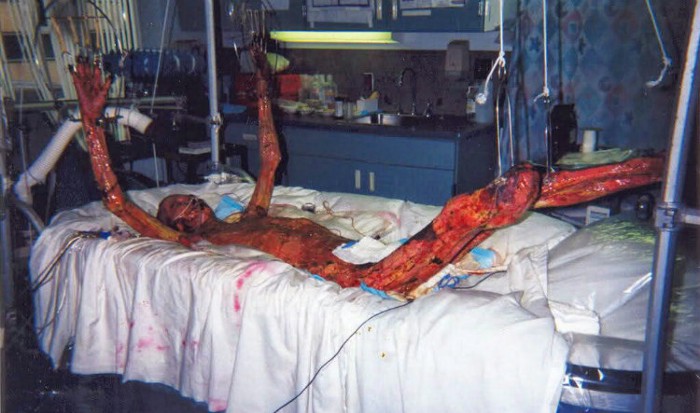
Although most of Hisashi Ouchi’s body had been completely destroyed, including his DNA and immune system, the doctors kept him alive as a human experiment.They kept him alive for a total of 83 days until he died of multiple organ failures.
During those 83 days, Hisashi Ouchi underwent the first transfusion of peripheral stem cells, as well as several blood transfusions and skin transplants.However, neither the transfusions or transplants could keep his bodily fluids from leaking out of his pores.
During the first week of experiments, Hisashi Ouchi had enough consciousness to tell the doctors“I can’t take it anymore… I am not a guinea pig…”but they continued to treat him for 11 more weeks. The nurses caring for him also recorded the narcotic load to abate pain was not enough to give him relief. At the time of recording his death, his heart had stopped for 70 minutes and the doctors chose this time not to resurrect him.
UNBREAKABLE RECORD To this day, Hisashi Ouchi holds the record for the most radiation experienced by a surviving person, however, this is not an accomplishment that his family likely celebrates.
The case of malpractice by these doctors is extremely horrific and one of the greatest examples of human torture of the 20th century.Thankfully, medical professionals values, would not be superseded by the nuclear state, so this record in all probability will never be broken._____________More on why the accident happened:https://sci-hub.se/…/abs/10.1080/00963402.2000.11456942 from https://www.facebook.com/groups/1021186047913052
Nuclear ”ethics” – fatally ill man kept alive against his will, in the cause of nuclear research
In 1999 an accident at a Japanese Nuclear Power Plant caused one of its technicians, Hisashi Ouchi, to be exposed to high levels of radiation. He was kept alive for 83 days, against his will, by doctors so they could use his body to study the effects of radiation on humans.Hisashi Ouchi was one of three employees of the Tokaimura nuclear plant to be heavily impacted by the accident on 30 September 1999.
The Man Kept Alive Against His Will
How modern medicine kept a ‘husk’ of a man alive for 83 days against his will
https://historyofyesterday.com/the-man-kept-alive-againsthttps://historyofyesterday.com/the-man-kept-alive-against-his-will-647c7a24784 Colin Aneculaese 27 July 2020, Radiation has always been a subject of great interest for many scientists. Since its discovery and weaponisation, many have looked into its impact on living organisms, especially humans. As a result, many living being suffered at the hands of those who sought to find the real impact of radiation on living beings. Throughout the years this experimentation was mainly focused on animals as it would be unethical to test such a thing on humans.
Outside of major nuclear events such as the bombing of Hiroshima and Nagasaki and the meltdowns of nuclear facilities such as nuclear power plants, the effect of radiation on humans could not be tested. As such after the 1999 Tokaimura nuclear accident, many scientists jumped at the opportunity to study the victims of such a high amount of explosion to radiation. Out of all the victims of the disaster, the case of Hisashi Ouchi stands out.
Tokaimura nuclear plant
Hisashi Ouchi was one of three employees of the Tokaimura nuclear plant to be heavily impacted by the accident on 30 September 1999. Leading up to the 30th of the month the staff at the Tokaimura nuclear plant were in charge of looking after the process of dissolving and mixing enriched uranium oxide with nitric acid to produce uranyl nitrate, a product which the bosses of the nuclear plant wanted to have ready by the 28th.
Due to the tight time constraints, the uranyl nitrate wasn’t prepared properly by the staff with many shortcuts being used to achieve the tight deadline. One of these shortcuts was to handle the highly radioactive produce by hand. During their handling of the radioactive produce while trying to convert it into nuclear fuel (uranyl nitrate is used as nuclear fuel) for transportation the inexperienced three-man crew handling the operation made a mistake.
During the mixing process, a specific compound had to be added to the mixture, the inexperienced technicians added seven times the recommended amount of the compound to the mixture leading to an uncontrollable chain reaction being started in the solution. As soon as the Gamma radiation alarms sounded the three technicians knew they made a mistake. All three were exposed to deadly levels of radiation, more specifically Ouchi receiving 17 Sv of radiation due to his proximity to the reaction, Shinohara 10 Sv and Yokokawa 3 Sv due to his placement at a desk several meters away from the accidents. When being exposed to radiation it is said that anything over 10 Sv is deadly, this would prove to be true in this instance.
The fallout of radiation
Shinohara, the least affected out of the two who received a deadly dose of radiation, lasted 7 months in hospital until 27 April 2000. The technician died of lung and liver failure after a long battle against the effects of the radiation he endured. During his, 7-month stay at the University of Tokyo Hospital several skin grafts, blood transfusions and cancer treatments were performed on him with minimal success. Shinohara’s time at the University of Tokyo Hospital would be much less painful than Ouchi’s.
Study: Mars Missions Should Be Limited to 4 Years to Protect from Radiation
Study: Mars Missions Should Be Limited to 4 Years to Protect from Radiation, VOA Learning English, 5 Sep 21, A new study has found that future missions to Mars should be limited to four years to protect astronauts from harmful radiation.
The study also says that missions should be carried out during specific times to reduce the level of exposure to dangerous particles.
The U.S. space agency NASA currently has plans to send astronauts back to the moon. It also plans to one day send astronauts to Mars. Those plans include missions that would keep astronauts in space for long periods.
China has also announced plans to send astronauts to Mars by 2033. Such missions present great risks to humans because of the high level of radiation in space.
Radiation exposure can cause a series of health issues, including skin burns, heart problems and cancer. NASA has spent many years studying ways to protect human space travelers from radiation.
On Earth, we also experience exposure to radiation from the sun. But our planet’s magnetic field protects us from dangerously high levels.
Two main kinds of radiation can affect humans and equipment in space. One is produced by particles released from the sun. The other comes from high energy particles created by cosmic rays from outside our solar system. NASA says the second kind can be more dangerous to humans and more destructive to equipment.
In the new study, researchers used modeling methods to predict levels of radiation exposure during future space missions. They combined geophysical models of particle radiation with models for how radiation would affect human passengers and spacecraft……………………. https://learningenglish.voanews.com/a/study-mars-missions-should-be-limited-to-four-years-to-protect-from-radiation/6202556.html
Exposure to radiation can affect DNA: Astronauts on long-duration missions in space at risk
Exposure to radiation can affect DNA: Astronauts on long-duration missions in space at risk https://www.indiatoday.in/science/story/space-radiation-dna-change-chromosomes-nasa-mars-moon-mission-1844172-2021-08-23
Scientists have measured the levels of chromosome alterations from radiation and other factors before and after a space mission. s countries rush to the Moon, with plans afoot for future manned exploration of Mars and beyond, one of the biggest threats to astronauts is being exposed to radiation in space. Researchers at the International Space Station (ISS) have now detected and measured the radiation exposure damage to astronauts during spaceflight.
Astronauts on board the flying outpost have continuously been studying ways to reduce the risks of the hazards of spaceflight and develop capabilities to predict space radiation exposure for future exploration missions.
In a study published in the journal Nature-Scientific Reports, scientists demonstrate how the sensitivity of an individual astronaut’s DNA to radiation exposure on Earth can predict their DNA’s response during spaceflight as measured by changes to their chromosomes.
Radiation exposure for astronauts
As part of the research, scientists studied blood samples of 43 crew missions taken pre-flight and post-flight. While pre-flight blood samples were exposed to varying doses of gamma rays, post-flight blood samples were collected shortly and several months after landing.
“We wanted to know if it is possible to detect and measure radiation exposure damage in the bodies of astronauts, and if there were differences based on age, sex, and other factors that could be measured before they go into space,” said senior scientist Honglu Wu from Nasa’s Johnson Space Center. Researchers studied the impact of these radiations on the chromosomes of astronauts. Chromosomes contain our bodies’ DNA building blocks, and altering them can increase the risk of developing cancer and other diseases.
During the experiment, scientists measured the levels of chromosome alterations from radiation and other factors before and after a mission. These alterations to chromosomes are observed in a very small percentage of individual cells within a person’s blood.
Here’s what they found
As part of the study, scientists conducted three measurements, first, they analysed blood samples of astronauts before they flew to the ISS, to assess their baseline chromosomal status, then these blood samples were intentionally exposed to gamma-ray radiation on Earth to measure how easily the cells accumulate changes, and third, after the astronauts returned from their missions, the study team again took blood samples from the individuals to assess their level of chromosomal alterations.
Following the deep analysis of samples scientists found:
- Older crew members had higher levels of baseline chromosomal irregularities
- Blood cells of older astronauts were more sensitive to developing chromosomal alterations
- Crew members with higher inherent sensitivity, as determined by gamma radiation on the ground, were more likely to see higher levels of changes to their chromosomes in their post-flight blood samples compared to those with lower sensitivity
- Individuals who showed higher baseline chromosomal alterations in their pre-flight blood samples tended to also be more sensitive to developing additional chromosomal changes
- “The findings suggest that if older astronauts indeed have higher sensitivities to radiation, they might be at higher risk of chromosome alterations,” said Wu.
What is space radiation?
The ISS is permanently exposed to several radiations emerging from the vastness of the cosmos including continuous bombardment of particles from the Sun. Space radiation originates from Earth’s magnetic field, particles shot into space during solar flares, and galactic cosmic rays, which originate outside our solar system.
Continuous exposure to these radiations can lead to cancer alterations to the central nervous system, cardiovascular disease, and other adverse health effects. While astronauts are protected from major radiation in low-earth orbit, due to Earth’s magnetic field, spacecraft shielding and a limited time in space, these factors would dramatically change for long-duration missions.
Therefore, studying these changes is critical so that new ways and medical treatments can be devised.
USA’s Nuclear Regulatory Commission affirms that a little ionising radiation may be bad for health

Nuclear Regulatory Commission Affirms that a Little Radiation may be Bad for Health https://srswatch.org/nuclear-regulatory-commission-affirms-that-a-little-radiation-may-be-bad-for-health/?utm_source=rss&utm_medium=rss&utm_campaign=nuclear-regulatory-commission-affirms-that-a-little-radiation-may-be-bad-for-health SRS Watch 21 August 21 Amazingly, the NRC denies industry friendly petitions that claim “a little radiation is good for you.”
“Petition for Rulemaking; Denial: Linear No-Threshold Model and Standards for Protection Against Radiation”Nuclear Regulatory Commission, August 17, 2021
“The U.S. Nuclear Regulatory Commission (NRC) is denying three petitions for rulemaking (PRMs), submitted by Dr. Carol S. Marcus, Mr. Mark L. Miller, Certified Health Physicist, and Dr. Mohan Doss, et al. (collectively, the petitioners) in correspondence dated February 9, 2015, February 13, 2015, and February 24, 2015, respectively.
The petitioners request that the NRC amend its regulations based on what they assert is new science and evidence that contradicts the linear no-threshold (LNT) dose-effect model that serves as the basis for the NRC’s radiation protection regulations. The NRC docketed these petitions on February 20, 2015, February 27, 2015, and March 16, 2015, and assigned them Docket Numbers PRM-20-28, PRM-20-29, and PRM-20-30, respectively.
The NRC is denying the three petitions because they fail to present an adequate basis supporting the request to discontinue use of the LNT model. The NRC has determined that the LNT model continues to provide a sound regulatory basis for minimizing the risk of unnecessary radiation exposure to both members of the public and radiation workers. Therefore, the NRC will maintain the current dose limit requirements contained in its regulations.”NRC webpage: https://www.regulations.gov/document/NRC-2015-0057-0671
Radioactive snakes may monitor Fukushima fallout
Radioactive snakes may monitor Fukushima fallout, Bulletin of the Atomic Scientists, By Susan D’Agostino | August 17, 2021 When a massive earthquake followed by a tsunami hit Japan a decade ago, the Fukushima Daiichi Nuclear Power Plant experienced a catastrophic meltdown. Humans fled a wide area around the plant that today is known as the Fukushima Exclusion Zone, while animals and plants remained. Now, scientists have enlisted the help of snakes in the zone to make sense of the disaster’s impact on the environment. Their findings, reported in an Ichthyology and Herpetology paper, indicate that Fukushima’s native rat snakes, like canaries in a coal mine, may act as living monitors of radiation levels in the region.
“Because snakes don’t move that much, and they spend their time in one particular local area, the level of radiation and contaminants in the environment is reflected by the level of contaminants in the snake itself,” Hannah Gerke, a lead author on the study, said.
………… The scientists’ findings reinforced their 2020 study that found a high correlation between levels of radiocesium—a radioactive isotope of cesium—in the snakes and levels of radiation in their environment.
………. rat snakes have relatively small home ranges; they travel an average of 65 meters (approximately 213 feet) each day, according to the study. And they are susceptible to accumulating radionuclides—unstable atoms with excess nuclear energy—from disasters such as the one that took place in Fukushima. A rat snake that makes its home in a small but heavily contaminated area will tell a different story than a rat snake lives in a less contaminated locale.
In the decade since the nuclear disaster, most of the contaminants have settled in the soil. This means that animals such as birds that spend much of their time in trees have limited insight to offer about contaminants on the ground. But snakes, whose long bodies slither in and burrow under the soil, can help determine degrees of contamination.
Also, snakes live long, which means that the data they gather provides information about environmental contaminants over time……………..
The scientists identified more than 1,700 locations in the region that the snakes frequented. Rat snakes in Fukushima, it turns out, avoid evergreen broadleaf forests but spend time close to streams, roads, and grassland. They also frequent trees and buildings.
What did the snakes reveal? Some of the snakes’ radiation exposure in the Fukushima Exclusion Zone hails from contaminated prey they eat, but most—80 percent—comes from contact with contaminated soil, trees, and plants.
“Understanding how contaminants move throughout an ecosystem and how they move in different animals throughout the food web gives us a better picture of the impacts [of the nuclear disaster] to the ecosystem,” Gerke said………….. https://thebulletin.org/2021/08/radioactive-snakes-may-monitor-fukushima-fallout/
New research on baby teeth will show the impact of nuclear bomb testing, and the connection with later cancers

Three decades later, [after the 1950s] Washington University staff discovered thousands of abandoned baby teeth that had gone untested. The school donated the teeth to the Radiation and Public Health Project, which was conducting a study of strontium-90 in teeth of U.S. children near nuclear reactors.
Now, using strontium-90 still present in teeth, the Radiation and Public Health Project will conduct an analysis of health risk, which was not addressed in the original tooth study, and minimally addressed by government agencies. Based on actual radiation exposure in bodies, the issue of how many Americans suffered from cancer and other diseases from nuclear testing fallout will be clarified.
Baby teeth collected six decades ago will reveal the damage to Americans’ health caused by US nuclear weapons tests https://peaceandhealthblog.com/2021/08/16/baby-teeth-collected-six-decades-ago-will-reveal-the-damage-to-americans-health-caused-by-us-nuclear-weapons-tests/ AUGUST 16, 2021 by Lawrence Wittner by Lawrence Wittner and Joseph Mangano
In 2020, Harvard University’s T. C. Chan School of Public Health began a five-year study, funded by the National Institutes of Health, that will examine the connection between early life exposure to toxic metals and later-life risk of neurological disease. A collaborator with Harvard, the Radiation and Public Health Project, will analyze the relationship of strontium-90 (a radioactive element in nuclear weapons explosions) and disease risk in later life.
The centerpiece of the study is a collection of nearly 100,000 baby teeth, gathered in the late 1950s and early 1960s by the St. Louis Committee for Nuclear Information.
The collection of these teeth occurred during a time of intense public agitation over the escalating nuclear arms race between the U.S. and Soviet governments that featured the new hydrogen bomb (H-bomb), a weapon more than a thousand times as powerful as the bomb that had annihilated Hiroshima. To prepare themselves for nuclear war, the two Cold War rivals conducted well-publicized, sometimes televised nuclear weapons tests in the atmosphere—434 of them between 1945 and 1963. These tests sent vast clouds of radioactive debris aloft where, carried along by the winds, it often traveled substantial distances before it fell to earth and was absorbed by the soil, plants, animals, and human beings.
Continue readingAcademies Panel to Consider Future of Revived DOE Low-Dose Radiation Program,
Academies Panel to Consider Future of Revived DOE Low-Dose Radiation Program, https://www.aip.org/fyi/2021/academies-panel-consider-future-revived-doe-low-dose-radiation-program Julia BauerAmerican Institute of Physics
fyi@aip.orgThe National Academies has kicked off development of a strategy for the Department of Energy’s low-dose radiation research program. DOE terminated the program in 2016 but recently revived it at the behest of Congress.
The National Academies held a kickoff meeting last month for a study that will propose a long-term strategy for research on the biological effects of low doses of ionizing radiation. Congress mandated the study through the Energy Act of 2020, which updated a 2018 law directing the Department of Energy to reestablish the low-dose radiation research program it had terminated two years earlier.
Continue readingEnvironment Working Group recommends stringent health-based standards for radiation exposure from wireless devices
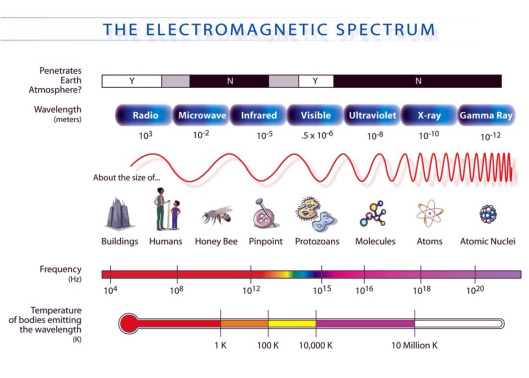
EWG study recommends stringent health-based standards for radiation exposure from wireless devices Medical Network News, 21 July 21, A peer-reviewed study by the Environmental Working Group recommends stringent health-based exposure standards for both children and adults for radiofrequency radiation emitted from wireless devices. EWG’s children’s guideline is the first of its kind and fills a gap left by federal regulators.
The study, published in the journal Environmental Health, relies on the methodology developed by the Environmental Protection Agency to assess human health risks arising from toxic chemical exposures. EWG scientists have applied the same methods to radiofrequency radiation from wireless devices, including cellphones and tablets.
EWG recommends the Federal Communications Commission, or FCC, adjust its woefully outdated health standards for wireless radiation, last revised a quarter-century ago, well before wireless devices became ubiquitous, heavily used appliances synonymous with modern life. The recommendation draws on data from a landmark 2018 study from the National Toxicology Program, or NTP, one of the largest long-term studies on the health effects of radiofrequency radiation exposure.
EWG’s new guidelines, the first developed in the U.S. to focus on children’s health, recommend that children’s exposure overall be 200 to 400 lower than the whole-body exposure limit set by the FCC in 1996.
The EWG recommended limit for so-called whole-body Specific Absorption Rate, or SAR, for children is 0.2 to 0.4 milliwatts per kilogram, or mW/kg. For adults, EWG recommends a whole-body SAR limit of 2 to 4 mW/kg, which is 20 to 40 times lower than the federal limit.
The FCC has not set a separate standard for children. Its standards for radiofrequency radiation set a maximum SAR of 0.08 watts per kilogram, or W/kg, for whole-body exposure and an SAR for localized spatial peak – the highest exposure level for a specific part of the body, such as the brain – of 1.6 W/kg for the general population.
The NTP studies examined the health effects of 2G and 3G wireless radiation and found there is “clear evidence” of a link between exposure to radiofrequency radiation and heart tumors in laboratory animals. Similar results were reported by a team of Italian scientists from the Ramazzini Institute.
Cellphone radiation was classified a “possible carcinogen” in 2011 by the International Agency for Research on Cancer, part of the World Health Organization, a conclusion based on human epidemiological studies that found an increased risk of glioma, a malignant brain cancer, associated with cellphone use.
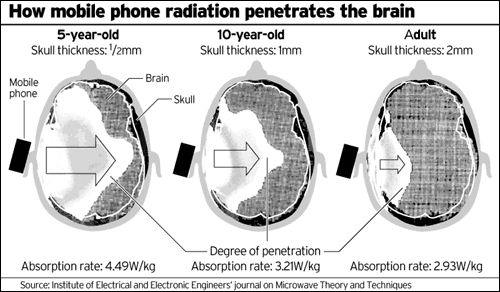
EWG scientists say that more research is needed on the health impacts of the latest generation of communication technologies, such as 5G. In the meantime, EWG’s recommendation for strict, lower exposure limits for all radiofrequency sources, especially for children………
“We have grave concerns over the outdated approach the federal government has relied on to study the health effects of cellphone radiation and set its current safety limit and advice for consumers,” said EWG President Ken Cook. “Government guidelines are a quarter-century old and were established at a time when wireless devices were not a constant feature of the lives of nearly every American, including children.”…………
“The evidence shows that children absorb more radiofrequency radiation than adults, and the developing body of a child is more vulnerable to such effects,” said Olga Naidenko, Ph.D., EWG’s vice president for science investigations and co-author of the study.
“More research on the safety and sustainability of wireless technology is essential,” added Naidenko. “Meanwhile, there are simple steps everyone can take to protect their health, such as keeping wireless devices farther from their bodies.”……
EWG’s recommendation for limits for radiofrequency radiation exposure is its latest effort to advance the public dialogue about science-based standards that protect public health. https://www.news-medical.net/news/20210720/EWG-study-recommends-stringent-health-based-standards-for-radiation-exposure-from-wireless-devices.aspx
Using snakes to monitor Fukushima radiation,
Using snakes to monitor Fukushima radiation, EurekAlert, 21 July 21,
Researchers placed tiny GPS trackers on rat snakes to track their movements at Fukushima
UNIVERSITY OF GEORGIA Ten years after one of the largest nuclear accidents in history spewed radioactive contamination over the landscape in Fukushima, Japan, a University of Georgia study has shown that radioactive contamination in the Fukushima Exclusion Zone can be measured through its resident snakes.
The team’s findings, published in the recent journal of Ichthyology & Herpetology, report that rat snakes are an effective bioindicator of residual radioactivity. Like canaries in a coal mine, bioindicators are organisms that can signal an ecosystem’s health.
An abundant species in Japan, rat snakes travel short distances and can accumulate high levels of radionuclides. According to the researchers, the snakes’ limited movement and close contact with contaminated soil are key factors in their ability to reflect the varying levels of contamination in the zone.
Hanna Gerke, an alumna of UGA’s Savannah River Ecology Laboratory and the Warnell School of Forestry and Natural Resources, said tracked snakes moved an average of just 65 meters (approximately 213 feet) per day.
An abundant species in Japan, rat snakes travel short distances and can accumulate high levels of radionuclides. According to the researchers, the snakes’ limited movement and close contact with contaminated soil are key factors in their ability to reflect the varying levels of contamination in the zone.
Our results indicate that animal behavior has a large impact on radiation exposure and contaminant accumulation,” Gerke said. “Studying how specific animals use contaminated landscapes helps increase our understanding of the environmental impacts of huge nuclear accidents such as Fukushima and Chernobyl.” https://www.eurekalert.org/pub_releases/2021-07/uog-ust072021.php
Astronauts to Mars – a game of cancer-russian-roulette, especially dangerous to women


women were more likely to develop lung cancer than men, suggesting a greater sex-based vulnerability to harmful radiation.
the risk to an astronaut exposed to space radiation is long-term rather than immediate. Without proper shielding (which tends to be rather heavy and thus prohibitively expensive to launch) their chances of developing cancer, as well as cardiovascular disease, cataracts and central nervous system damage, slightly increase each day they are in space. In a person’s cells, space radiation can sever both strands of a DNA molecule’s double helix. And while a few such instances might come with very limited risks, each additional severance raises the odds of developing a harmful mutation that could cause cancer………
New Space Radiation Limits Needed for NASA Astronauts, Report Says, Scientific American, By Ramin Skibba on July 14, 2021 https://www.scientificamerican.com/article/new-space-radiation-limits-needed-for-nasa-astronauts-report-says/ Although meant to minimize risks to human health, the proposed new limits would still be exceeded by any conceivable near-future crewed voyage to MarsAstronaut Scott Kelly famously spent an entire year residing onboard the International Space Station (ISS), about 400 kilometers above Earth, and his NASA colleague Christina Koch spent nearly that long “on station.” Each returned to Earth with slightly atrophied muscles and other deleterious physiological effects from their extended stay in near-zero gravity.
But another, more insidious danger lurks for spacefarers, especially those who venture beyond low-Earth orbit.
Space is filled with invisible yet harmful radiation, most of it sourced from energetic particles ejected by the sun or from cosmic rays created in extreme astrophysical events across the universe. Such radiation can damage an organism’s DNA and other delicate cellular machinery. And the damage increases in proportion to exposure, which is drastically higher beyond the protective cocoon of Earth’s atmosphere and magnetic field (such as on notional voyages to the moon or Mars). Over time, the accrued cellular damage significantly raises the risk of developing cancer.
To address the situation, at NASA’s request, a team of top scientists organized by the National Academies of Sciences, Engineering, and Medicine published a report in June recommending that the space agency adopt a maximum career-long limit of 600 millisieverts for the space radiation astronauts can receive. The sievert is a unit that measures the amount of radiation absorbed by a person—while accounting for the type of radiation and its impact on particular organs and tissues in the body—and is equivalent to one joule of energy per kilogram of mass. Scientists typically use the smaller (but still quite significant) quantity of the millisievert, or 0.001 sievert. Bananas, for instance, host minute quantities of naturally occurring radioactive isotopes, but to ingest a millisievert’s worth, one would have to eat 10,000 bananas within a couple of hours.
Every current member of NASA’s astronaut corps has received less than 600 millisieverts during their orbital sojourns, and most, including Koch, have received much less and can thus safely return to space. But a year on the ISS still exposes them to more radiation than experienced by residents of Japan who lived near the Fukushima Daiichi nuclear accidents of 2011.
“Everybody is planning trips to the moon and Mars,” and these missions could have high radiation exposures, says Hedvig Hricak, lead author of the report and a radiologist at Memorial Sloan Kettering Cancer Center in New York City. Using current spaceflight-proved technologies, long-distance voyages—especially to the Red Planet—would exceed the proposed threshold, she says.
That could be a big problem for NASA’s Artemis program, which seeks to send astronauts to the moon in preparation for future trips to Mars. Another problem for the space agency is that the epidemiological data it uses mostly come from a longevity study of Japanese survivors of atomic bomb blasts, as well as from the handful of astronauts and cosmonauts who have endured many months or even years in low-Earth orbit. NASA’s current space radiation limit, which was developed in 2014, involves a complicated risk assessment for cancer mortality that depends on age and sex, yet more relevant data are necessary, Hricak argues. In the atomic bomb survivor study, for instance, women were more likely to develop lung cancer than men, suggesting a greater sex-based vulnerability to harmful radiation. “But with the knowledge we presently have, we know we cannot make a comparison between high exposure versus chronic exposure,” Hricak says. “The environment is different. There are so many factors that are different.”
NASA wants to update its standards now because the agency is on the cusp of sending so many astronauts well beyond low-Earth orbit, where greater amounts of space radiation seem destined to exceed previously mandated exposure limits. Furthermore, Hricak says, having a single, universal radiation limit for all space travelers is operationally advantageous because of its simplicity. A universal limit could also be seen as a boon for female astronauts, [ Ed. a boon?when they still are more susceptible to cancer than men are?] who had a lower limit than men in the old system and therefore were barred from spending as many days in space as their male counterparts.
The new radiation limit proposed by Hricak and her team is linked to the risks to all organs of a 35-year-old woman—a demographic deemed most vulnerable in light of gender differences in the atomic bomb survivor data and the fact that younger people have higher radiation risks, partly because they have more time for cancers to develop. The goal of the radiation maximum is to keep an individual below a 3 percent risk of cancer mortality: in other words, with this radiation limit, at most three out of 100 astronauts would be expected to die of radiation-induced cancer in their lifetime.
“NASA uses standards to set spaceflight exposure limits to protect NASA astronauts’ health and performance, both in mission and after mission,” says Dave Francisco of NASA’s Office of the Chief Health and Medical Officer. He acknowledges that, while astronauts on Mars missions would benefit from the thin Martian atmosphere that provides some limited protection, “transit in deep space has the highest exposure levels.”
That means long-haul space trips come with the biggest risks. A stay on the lunar surface for six months or more—presuming, of course, that astronauts eventually have a presence there and do not spend most of their time in subsurface habitats—would involve nearly 200 millisieverts of exposure, a higher amount than an extended visit to the ISS. And an astronaut traveling to Mars would be exposed to even more radiation. Whether they reached the Red Planet through a lunar stopover or on a direct spaceflight, they could have experienced significant radiation exposure en route. Even before they embarked on the trip back home, they could have already exceeded the 600 millisievert limit. The entire voyage, which would likely last a couple of years, could involve well more than 1,000 millisieverts. So if astronauts—and not just robots—will be sent to Mars, NASA likely will need to request waivers for them,
Hricak says, although the exact process for obtaining a waiver has not yet been laid out.
The report’s proposal for a new radiation maximum is not without its critics. “For a mission to Mars, a 35-year-old woman right at that limit could have an over 10 percent chance of dying in 15 to 20 years. To me, this is like playing Russian roulette with the crew,” says Francis Cucinotta, a physicist at the University of Nevada, Las Vegas, and former radiation health officer at NASA. Despite the supposed benefits the new limits would have for female astronauts, he is concerned that the risks are particularly pronounced for younger women in space.
On the contrary, Hricak says, in its request for new limits, NASA has sought to be conservative. The European, Canadian, and Russian space agencies all currently have a higher maximum allowed dose of 1,000 millisieverts, while Japan’s limit is age- and sex-dependent like NASA’s current one, mainly because of a shared dependence on the atomic bomb survivor data.
But unlike someone in the vicinity of a nuclear explosion, the risk to an astronaut exposed to space radiation is long-term rather than immediate. Without proper shielding (which tends to be rather heavy and thus prohibitively expensive to launch) their chances of developing cancer, as well as cardiovascular disease, cataracts and central nervous system damage, slightly increase each day they are in space. In a person’s cells, space radiation can sever both strands of a DNA molecule’s double helix. And while a few such instances might come with very limited risks, each additional severance raises the odds of developing a harmful mutation that could cause cancer………
considering how little is known about various health risks from different kinds of space radiation, compared with radiation we are familiar with on Earth, researchers will surely continue with more studies like these to protect astronauts as much as possible. “I can tell you exactly how much exposure you’re going to get from a CT scan,” Hricak says, “but there are many uncertainties with space radiation.”….. https://www.scientificamerican.com/article/new-space-radiation-limits-needed-for-nasa-astronauts-report-says/
Mobile phones/cellphones – the health danger from electromagnetic radiation
Ed. note. We know that ionising radiation from nuclear activities causes cancer and other health ill-effects. But we should also be aware of non-ionising radiation, and its effects on health – electromagnetic radiation as emitted by mobile pnones.

Since then, he said, research has shown significant adverse biologic and health effects — including brain cancer — associated with the use of cellphones and other wireless devices. And now, he said, with the fifth generation of cellular technology, known as 5G, there is an even bigger reason for concern.

Moskowitz: Cellphone radiation is harmful, but few want to believe it. Berkely News, Anne Brice, Berkeley News| JULY 1, 2021 For more than a decade, Joel Moskowitz, a researcher in the School of Public Health at UC Berkeley and director of Berkeley’s Center for Family and Community Health, has been on a quest to prove that radiation from cellphones is unsafe. But, he said, most people don’t want to hear it.
“People are addicted to their smartphones,” said Moskowitz. “We use them for everything now, and, in many ways, we need them to function in our daily lives. I think the idea that they’re potentially harming our health is too much for some people.”
Since cellphones first came onto the market in 1983, they have gone from clunky devices with bad reception to today’s sleek, multifunction smartphones. And although cellphones are now used by nearly all American adults, considerable research suggests that long-term use poses health risks from the radiation they emit, said Moskowitz.
“Cellphones, cell towers and other wireless devices are regulated by most governments,” said Moskowitz. “Our government, however, stopped funding research on the health effects of radiofrequency radiation in the 1990s.”
Since then, he said, research has shown significant adverse biologic and health effects — including brain cancer — associated with the use of cellphones and other wireless devices. And now, he said, with the fifth generation of cellular technology, known as 5G, there is an even bigger reason for concern.
Berkeley News spoke with Moskowitz about the health risks of cellphone radiation, why the topic is so controversial and what we can expect with the rollout of 5G.
Berkeley News: I think we should address upfront is how controversial this research is. Some scientists have said that these findings are without basis and that there isn’t enough evidence that cellphone radiation is harmful to our health. How do you respond to that?
Joel Moskowitz: Well, first of all, few scientists in this country can speak knowledgeably about the health effects of wireless technology. So, I’m not surprised that people are skeptical, but that doesn’t mean the findings aren’t valid.
A big reason there isn’t more research about the health risks of radiofrequency radiation exposure is because the U.S. government stopped funding this research in the 1990s, with the exception of a $30 million rodent study published in 2018 by the National Institute of Environmental Health Sciences’ National Toxicology Program, which found “clear evidence” of carcinogenicity from cellphone radiation.
In 1996, the Federal Communications Commission, or FCC, adopted exposure guidelines that limited the intensity of exposure to radiofrequency radiation. These guidelines were designed to prevent significant heating of tissue from short-term exposure to radiofrequency radiation, not to protect us from the effects of long-term exposure to low levels of modulated, or pulsed, radiofrequency radiation, which is produced by cellphones, cordless phones and other wireless devices, including Wi-Fi. Yet, the preponderance of research published since 1990 finds adverse biologic and health effects from long-term exposure to radiofrequency radiation, including DNA damage.
More than 250 scientists, who have published over 2,000 papers and letters in professional journals on the biologic and health effects of non-ionizing electromagnetic fields produced by wireless devices, including cellphones, have signed the International EMF Scientist Appeal, which calls for health warnings and stronger exposure limits. So, there are many scientists who agree that this radiation is harmful to our health.
Our 2009 review, published in the Journal of Clinical Oncology, found that heavy cellphone use was associated with increased brain cancer incidence, especially in studies that used higher quality methods and studies that had no telecommunications industry funding.
Last year, we updated our review, published in the International Journal of Environmental Research and Public Health, based on a meta-analysis of 46 case-control studies — twice as many studies as we used for our 2009 review — and obtained similar findings Our main takeaway from the current review is that approximately 1,000 hours of lifetime cellphone use, or about 17 minutes per day over a 10-year period, is associated with a statistically significant 60% increase in brain cancer.
Why did the government stop funding this kind of research?
The telecommunications industry has almost complete control of the FCC, according to Captured Agency, a monograph written by journalist Norm Alster during his 2014-15 fellowship at Harvard University’s Center for Ethics. There’s a revolving door between the membership of the FCC and high-level people within the telecom industry that’s been going on for a couple of decades now.
The industry spends about $100 million a year lobbying Congress. The CTIA, which is the major telecom lobbying group, spends $12.5 million per year on 70 lobbyists. According to one of their spokespersons, lobbyists meet roughly 500 times a year with the FCC to lobby on various issues. The industry as a whole spends $132 million a year on lobbying and provides $18 million in political contributions to members of Congress and others at the federal level.
……… there are strong parallels between what the telecom industry has done and what the tobacco industry has done, in terms of marketing and controlling messaging to the public. ……… For safety tips on how to reduce exposure to wireless radiation from the California Department of Public Health and other organizations, Moskowitz recommends readers visit his website, saferemr.com, Physicians for Safe Technology and the Environmental Health Trust. https://news.berkeley.edu/2021/07/01/health-risks-of-cell-phone-radiation/#:~:text=Moskowitz%3A%20Cellphone%20radiation%20is%20harmful%2C%20but%20few%20want%20to%20believe%20it,-By%20Anne%20Brice&text=For%20more%20than%20a%20decade,radiation%20from%20cellphones%20is%20unsafe.
Japan is not being transparent about the radioactive content in Fukushima wastewater
A 2018 TEPCO report revealed that even after filtration the treated water still contained other radionuclides, such as strontium-90 and iodine-129, above regulatory-limit levels.
Japan’s nuclear wastewater plan is clouded by politics
29 June 2021 East Asia Forum Author: Yasuo Takao, Curtin University
The Japanese government’s approval of a plan to discharge treated radioactive water stored at the Fukushima Daiichi nuclear plant into the Pacific Ocean has unilaterally reversed a decade of nuclear safety reform in Japan. Although providing information to foreign embassies in Tokyo and online social networks, the Japanese government has failed to allay domestic concerns and rising international pressure.
The Tokyo Electric Power Company (TEPCO) proposes to use an Advanced Liquid Processing System (ALPS) to remove all the radionuclides from the wastewater except tritium — which poses the lowest health risk. It will then dilute the tritium concentration until levels are safe enough for release into the Pacific Ocean.
Japan’s Ministry of Economy, Trade and Industry and TEPCO, with the backing of the International Atomic Energy Agency (IAEA) and other experts, claim that this ‘dilution and discharge option’ is technically feasible and safe. Since the ALPS operations started in 2013, TEPCO has insisted that releasing treated water into the ocean is a normal part of nuclear plant operations around the world.
But the water directly injected into the cooling process of the damaged reactors and fuel debris is different from the water normally used for cooling nuclear plants. Japan’s Nuclear Regulation Authority (NRA) has described this cooling process as free-flowing (kakenagashi) because of its direct contact with the damaged reactors. The used cooling water from the Fukushima plant is much more radioactive than that from a normal operation.
A 2018 TEPCO report revealed that even after filtration the treated water still contained other radionuclides, such as strontium-90 and iodine-129, above regulatory-limit levels. In September 2020, TEPCO began to carry out secondary treatment tests on the water to reduce the amount of radioactive substance it contained.
Japanese Prime Minister Yoshihide Suga stated, ‘the disposal of ALPS treated water is unavoidable and experts have recommended that the release into the sea is the most realistic method’. If good nuclear safety governance is concerned with bringing stakeholders together to meet social needs, then the prime minister’s remark falls short.
Referring to ‘expert opinion’ as the main factor in the decision making process can be seen as a political strategy to avoid blame. The Suga cabinet is unwilling to take political responsibility for releasing the wastewater into the Pacific Ocean. The potential threats to human health and the environment call for closer scrutiny of Japan’s leadership………
TEPCO needs to regain public trust by exercising transparency and providing accurate and reliable information about the current state of radionuclides contained in each water storage tank at Fukushima Daiichi. The Japanese government should produce a clear technical plan at the operational level and an environmental impact report for stakeholders. The Japanese government and TEPCO should also actively seek views from all relevant stakeholders — including those in other countries — and show that their concerns are being adequately addressed…….https://www.eastasiaforum.org/2021/06/29/japans-nuclear-wastewater-plan-is-clouded-by-politics/
1 This Month

of the week – Shut Down Drone Warfare!


Tell the Ukrainian Government to Drop Prosecution of Peace Activist Yurii Sheliazhenko

Petition to revoke the licensing of the Near Surface Nuclear Disposal Facility (NSDF) at Chalk River. https://www.ourcommons.ca/petitions/en/Petition/Details?Petition=e-7247
To see nuclear-related stories in greater depth and intensity – go to https://nuclearinformation.wordpress.com
-
Archives
- March 2026 (244)
- February 2026 (268)
- January 2026 (308)
- December 2025 (358)
- November 2025 (359)
- October 2025 (376)
- September 2025 (257)
- August 2025 (319)
- July 2025 (230)
- June 2025 (348)
- May 2025 (261)
- April 2025 (305)
-
Categories
- 1
- 1 NUCLEAR ISSUES
- business and costs
- climate change
- culture and arts
- ENERGY
- environment
- health
- history
- indigenous issues
- Legal
- marketing of nuclear
- media
- opposition to nuclear
- PERSONAL STORIES
- politics
- politics international
- Religion and ethics
- safety
- secrets,lies and civil liberties
- spinbuster
- technology
- Uranium
- wastes
- weapons and war
- Women
- 2 WORLD
- ACTION
- AFRICA
- Atrocities
- AUSTRALIA
- Christina's notes
- Christina's themes
- culture and arts
- Events
- Fuk 2022
- Fuk 2023
- Fukushima 2017
- Fukushima 2018
- fukushima 2019
- Fukushima 2020
- Fukushima 2021
- general
- global warming
- Humour (God we need it)
- Nuclear
- RARE EARTHS
- Reference
- resources – print
- Resources -audiovicual
- Weekly Newsletter
- World
- World Nuclear
- YouTube
-
RSS
Entries RSS
Comments RSS
 nuclear-news