Simulated space radiation causes ill effects on central nervous system of male mice

Male mice exposed to simulated deep space radiation experienced impaired spatial learning, Phys Org by Bob Yirka , 22 Oct 21, A team of researchers working at multiple facilities in the San Francisco area has found that male mice exposed to radiation similar to that encountered by humans on long space missions experienced problems with spatial learning several months later……..
If humans are to colonize the moon or travel to Mars, scientists are going to have to find a way to protect them from galactic cosmic radiation (GCR). Some research has shown that it can have a negative impact on the central nervous system……… https://phys.org/news/2021-10-male-mice-exposed-simulated-deep.html
by Bob Yirka , Phys.org
Radioactive contamination from the partially-burned former Santa Susanna nuclear research facility

Radioactive microparticles related to the Woolsey Fire in Simi Valley, CA SCience Direct, MarcoKaltofenaMaggieGundersenbArnieGundersenb Worcester Polytechnic Institute, Dept. of Physics, Fairewinds Energy Education, 8 October 2021.
Highlights
Wildfire in radiologically contaminated zones is a global concern; contaminated areas around Chernobyl, Fukushima, Los Alamos, and the Nevada Nuclear Test Site have all experienced wildfires.
Three hundred sixty samples of soil, dust and ash were collected in the immediate aftermath of the Los Angeles (CA, USA) Woolsey fire in 2018.
Radioactive contamination from the partially-burned former Santa Susanna nuclear research facility was found in the fire zone.
A limited number of widely scattered locations had evidence of radioactive microparticles originating at the research facility.
X-ray data showed that ashes from the fire could spread site contaminants to distant, but widely spaced, locations.
Abstract
In November 2018, the Woolsey Fire burned north of Los Angeles, CA, USA, potentially remobilizing radioactive contaminants at the former Santa Susana Field Laboratory, a shuttered nuclear research facility contaminated by chemical and radiochemical releases. Wildfire in radiologically contaminated zones is a global concern; contaminated areas around Chernobyl, Fukushima, Los Alamos, and the Nevada Nuclear Test Site have all experienced wildfires. Three weeks after the Woolsey Fire was controlled, sampling of dusts, ashes, and surface soils (n = 360) began and were analyzed by alpha- and beta-radiation counting. Samples were collected up to a 16 km radius from the perimeter of the laboratory. Controls and samples with activities 1σ greater than background were also examined by alpha and/or gamma spectroscopy or Scanning Electron Microscopy with Energy Dispersive X-ray analysis. Of the 360 samples collected, 97% showed activities at or close to site-specific background levels. However, offsite samples collected in publicly-accessible areas nearest to the SSFL site perimeter had the highest alpha-emitting radionuclides radium, thorium, and uranium activities, indicating site-related radioactive material has escaped the confines of the laboratory.
In two geographically-separated locations, one as far away as 15 km, radioactive microparticles containing percent-concentrations of thorium were detected in ashes and dusts that were likely related to deposition from the Woolsey fire. These offsite radioactive microparticles were colocated with alpha and beta activity maxima. Data did not support a finding of widespread deposition of radioactive particles. However, two radioactive deposition hotspots and significant offsite contamination were detected near the site perimeter……………………………

4. Conclusions
A significant majority of samples (97% of 360 samples) collected in the study zone registered radioactivity levels that matched existing area background levels. Nevertheless, some ashes and dusts collected from the Woolsey Fire zone in the fire’s immediate aftermath contained high activities of radioactive isotopes associated with the Santa Susana Field Laboratory (SSFL). The data show that Woolsey Fire ash did, in fact, spread SSFL-related radioactive microparticles, and the impacts were confined to areas closest to SSFL and at least three other scattered locations in the greater Simi Valley area. Alpha and beta counting, high-resolution alpha and gamma spectroscopy, and X-ray microanalysis using SEM/EDS confirmed the presence of radioactive microparticles in the Woolsey Fire-related ashes and dusts.
Most of the fire-impacted samples found near the SSFL site’s perimeter were on lands accessible to the public. There were, however, scattered localized areas of increased radioactivity due to the presence of radioactive microparticles in ash and recently-settled dusts collected just after the Woolsey fire. These radioactive outliers were found in Thousand Oaks, CA, and Simi Valley, CA, about 15 and 5 km distant from SSFL, respectively. The Thousand Oaks samples had alpha count rates up to 19 times background, and X-ray spectroscopy (SEM) identified alpha-emitting thorium as the source of this excess radioactivity. Excessive alpha radiation in small particles is of particular interest because of the relatively high risk of inhalation-related long-term biological damage from internal alpha emitters compared to external radiation.
The nuclides identified as the sources of excess radioactivity in impacted samples were predominately isotopes of radium, uranium, and thorium. These have naturally-occurring sources, but these isotopes are also contaminants of concern at SSFL and were detected at generally increasing activities as the distance from SSFL decreased. In addition, the number of radioactive microparticles per gram of particulate matter also increased strongly with decreasing distance from SSFL. These data demonstrate that fire and/or other processes have spread SSFL contamination beyond the facility boundary………..
……https://www.sciencedirect.com/science/article/pii/S0265931X21002277?dgcid=coauthor
Lethal radiation levels detected in Fukushima nuclear plant reactor lid

Lethal radiation levels detected in Fukushima nuke plant reactor lid https://www.asahi.com/ajw/articles/14440765
By TSUYOSHI KAWAMURA/ Staff Writer
September 15, 2021 The operator of the crippled Fukushima No. 1 nuclear plant could be forced to reconsider the plant’s decommissioning process after lethal radiation levels equivalent to those of melted nuclear fuel were detected near one of the lids covering a reactor.
The Nuclear Regulation Authority said Sept. 14 that a radiation reading near the surface of the lid of the No. 2 reactor’s containment vessel was 1.2 sieverts per hour, higher than the level previously assumed.
The discovery came on Sept. 9 during a study by the NRA and Tokyo Electric Power Co., the operator of the plant.
TEPCO plans to insert a robotic arm into the No. 2 reactor’s containment vessel from its side in a trial planned for the second half of 2022 to retrieve pieces of melted nuclear fuel.
“We will consider what we can do during the trial on the basis of the detection of the concentration of contamination” in the upper area of the containment vessel, a TEPCO official said.
The round concrete lid, called the shield plug, is 12 meters in diameter and about 60 centimeters thick.
The shield plug consists of three lids placed on top of each other to block extremely high radiation emanating from the reactor core.
Each lid weighs 150 tons.
When operators work on the decommissioning, the shield plug will be removed to allow for the entry into the containment vessel.
The NRA said a huge amount of radioactive cesium that was released during the meltdown of the No. 2 reactor in March 2011 remained between the uppermost lid and middle lid.
In the Sept. 9 study, workers bored two holes measuring 7 cm deep each on the surface of the uppermost lid to measure radiation doses there by deploying remotely controlled robots.
One radiation reading was 1.2 sieverts per hour at a location 4 cm down from the surface in a hole near the center of the lid.Prior to the study, the NRA estimated that the dose from a contamination source that existed beneath the lid was more than 10 sieverts per hour, a level lethal to humans if exposed to it for about an hour.
But the finding suggested that the actual dose would likely be dozens of sieverts per hour, thus far more dangerous.
While it is expected to be a huge challenge to dismantle the lids, TEPCO has yet to decide what to do with them during the decades-long cleanup work.
The NRA also mentioned the possibility that radioactive cesium is also concentrated between the middle lid and the lowermost lid.
But there is no way at the moment to confirm whether that is the case, according to NRA officials
Radioactive risks of nuclear submarines

The radioactive waste from reactors poses a difficult and expensive problem to manage health and environmental hazards for geological time periods. The governments involved in this proposal have been silent about disposal of the high and intermediate level waste that would be generated. Despite many flawed and failed attempts at interim storage, Australia has no current plan for disposal of the much smaller amount of its existing intermediate level radioactive waste.
Proposed US/UK nuclear-powered submarines for Australia jeopardise health while escalating an arms race no one can win
Joint statement by International Physicians for the Prevention of Nuclear War and its affiliates in Australia, UK and USA: Medical Association for Prevention of War (Australia); Medact (UK); Physicians for Social Responsibility (USA) 10 Oct 21, ”……. Radioactive risk
Nuclear reactors on ships and submarines have been involved in numerous accidents. The risks of accident or attack causing release of radioactive material combined with the targeting by adversaries of such vessels including while they are in port, are why many cities around the world sensibly oppose visits of such vessels to their harbours. Such incidents could cause chaos and panic, the need to evacuate large areas of cities for years, and expose tens or hundreds of thousands of people to harmful radioactive fallout.
Australia’s lack of nuclear scientific, engineering, management and regulatory capacity and experience will inevitably mean that more is likely to go wrong building and operating nuclear submarines. If something does go wrong with one of its nuclear submarines, the likelihood of it being quickly and effectively managed is reduced and the risks of radioactive release in a port city or into the marine or coastal environment is increased.
A total of 8 nuclear-powered submarines have sunk because of accidents at sea between 1963 and 2003 – two because of fires, two by weapon explosions, two by flooding, and one each from storm damage and unknown reasons. These contribute substantially to the already widespread radioactive pollution resulting from naval reactors. The most recently reported fatal accident was a fire in a Russian nuclear submarine in 2019, which killed 14 people.
The radioactive waste from reactors poses a difficult and expensive problem to manage health and environmental hazards for geological time periods. The governments involved in this proposal have been silent about disposal of the high and intermediate level waste that would be generated. Despite many flawed and failed attempts at interim storage, Australia has no current plan for disposal of the much smaller amount of its existing intermediate level radioactive waste. …. https://beyondnuclearinternational.org/2021/10/10/nuclear-submarine-deal-needlessly-raises-tensions/
Nuclear Regulatory Commission backs Linear No-Threshold model for radiation safety

NRC backs Linear No-Threshold model for radiation safety, THE HINDUK. S. ParthasarathyOCTOBER 09, 2021
This decision of U.S. Nuclear Regulatory Commission was awaited by specialists
Now it is official. The U.S. Nuclear Regulatory Commission (NRC) decisively upheld the Linear No-Threshold model to prescribe radiation safety standards, ending the protracted controversy on the topic. Radiation protection specialists worldwide were eagerly awaiting the NRC’s decision.
Over six years ago, during February 2015, Dr. Carol S. Marcus, Mr. Mark L. Miller, Certified Health Physicist, and Dr. Mohan Doss, and others, through three……….(subscribers only) https://www.thehindu.com/sci-tech/science/nrc-backs-linear-no-threshold-model-for-radiation-safety/article36918797.ece
Low dose radiation and cancer – the Linear No Threshold model holds good

The public, legislators, and journalists are often at a loss to deal with the charges and counter charges that surface in the debate over low-level radiation exposures. It does not help to listen to industry leaders, nuclear activists, or individual researchers, who, one after another, propound their competing images of the underlying truth.
It is now reasonably clear that protracted exposure does not protect against radiation-induced cancer. Rather, it is the cumulative radiation exposure from all sources that must be examined.
There is no longer a convenient excuse to avoid using the LNT to estimate consequences from real or projected releases of radioactive materials, even when the dose of concern is below 0.1 Sv.

The scientific jigsaw puzzle: Fitting the pieces of the low-level radiation debate http://bos.sagepub.com/content/68/3/13.full Bulletin of the Atomic Scientists, May/June 2012, Jan Beyea “…..One of the biggest paradoxes in the low-level radiation debate is that an individual risk can be a minor concern, while the societal risk—the total delayed cancers in an exposed population—can be of major concern…..
Deconstructing the debate The debate over radiation risks has many tentacles that extend into the fields of biology, epidemiology, medicine, sociology, and political science. The biggest tentacle penetrates directly into the political sphere, wrapping itself around arguments on energy policy and the consequences of radioactive releases like those at Chernobyl and the Fukushima Daiichi Nuclear Power Station….
Continue readingMushrooms in Germany are still contaminated by Chernobyl radiation
Mushrooms in Germany are still contaminated by Chernobyl radiation https://nypost.com/2021/10/08/german-mushrooms-still-contaminated-by-chernobyl-radiation/ By Reuters Around 95% of wild mushroom samples collected in Germany in the last six years still showed radioactive contamination from the 1986 Chernobyl nuclear disaster, albeit not above legal limits, the German food safety regulator said on Friday.
Elevated concentrations of caesium-137 and caesium-134 isotopes bearing the characteristic signature of the Chernobyl blast were found especially in southern Germany, the federal office for consumer protection and food safety (BVL) said.
However, none of the 74 samples tested exceeded the legal limit of 600 becquerels of radiation per kg.
The Chernobyl reactor, located in what is now Ukraine, spewed tonnes of nuclear waste into the atmosphere, spreading radioactivity across swathes of the continent and causing a spike in cancers in the more immediate region.
The BVL said the radioactive material lingered in forests because their ecosystems recycled nutrients so efficiently, meaning that wild mushrooms will show contamination for much longer than other agricultural products.
Concern at the long-term impact of nuclear disasters has fueled public opposition to nuclear power, and in Germany triggered a decision, shortly after the accident at Japan’s Fukushima plant in 2011, to abandon it altogether.
Chris Busby on the truth about black rain, radiation and cancer

the major cause of cancer in the low and medium dose groups (0-100mSv) in the Hiroshima lifespan study was not the immediate radiation from the detonation, the external gamma radiation and neutrons, but was in fact exposure to Uranium 234 particles from the bomb itself which rained out over the city in the black rain. Torrential black rain fell over the city and surrounding areas from 30 minutes to several hours after the atomic explosion.
Hiroshima Black Rain and the Test Veterans, https://www.labrats.international/post/hiroshima-black-rain-and-the-test-veterans Chris Busby, 13th Sept 2021
The absolute key study of the effects of radiation on cancer risk is the Lifespan Study (LSS) of the survivors of the Hiroshima bomb. It provides the evidence used by the Secretary of State for Defence (the MoD) to refuse pensions in all the UK Test Vet cases. Groups were assembled in 1952 some 7 years after the bomb and divided into high, medium and low doses on the basis of their distance from Ground Zero, with a No Dose group consisting of those who were outside the City and came in later. They were thrown out in 1973 as using them as a control gave too many cancers. This study continues today and the risks of different cancers after exposures are obtained from the excess risk of any type of cancer in each dose group. The risk factors for cancer which are currently the basis for all laws relating to exposure are based on this study. You have to get a Dose of about 1000mSv to get a 40% excess risk of cancer on the basis of the LSS results. Naturally, since no Test veteran got anywhere near this dose, all the pension applications (and appeals) are refused.
But on Sept 9th a scientific report I wrote was published in the peer-reviewed Journal Cancer Investigations. My paper The Hiroshima A-Bomb black rain and the lifespan study—a resolution of the Enigma shows that the LSS was dishonestly manipulated and that its results are totally unsafe. It spells the end of the radiation risk model and the beginning of justice for the test veterans. How?
What it shows, is that the major cause of cancer in the low and medium dose groups (0-100mSv) in the Hiroshima lifespan study was not the immediate radiation from the detonation, the external gamma radiation and neutrons, but was in fact exposure to Uranium 234 particles from the bomb itself which rained out over the city in the black rain. Torrential black rain fell over the city and surrounding areas from 30 minutes to several hours after the atomic explosion. Doses from the inhalation and ingestion of the Uranium particles in the black rain were very low. Since the Christmas Island vets were also exposed to rainout after the bombs, they are in the same category of victims as the Hiroshima low dose LSS victims (<5mSv). The Japanese government lost a court case in July on this issue, one which it will not appeal. Those living in the black rain areas who developed cancer will get compensation and attention in the same way as those who received an external dose from the detonation, even though the black rain victims’ dose was zero. The separation of external radiation from internal in terms of risk also shows that the types of cancers believed in the model to result from radiation must also be reassessed.
Of course, the MoD knew all this. It is the biggest secret of all, since it supports everything nuclear: bombs, energy, naval propulsion, Depleted Uranium, winnable nuclear war and raises the issue of enormous amounts of compensation. It had to be kept out. In 2013, during the run-up to the big test veteran appeal in the Royal Courts of Justice, I obtained from the late Major Alan Batchelor in Australia an official British document which was submitted to the Australian National Commission test vet hearings. It listed the quantity of Uranium isotopes in the Enriched Uranium used by the British in their bombs. I also had obtained a copy (when I was advising Rosenblatts in 2009 in the Foskett case) of a memo from 1953 on the dangers of Uranium 234 at the test sites. But these documents were suddenly made subject to the Official Secrets Act.
In 2013 after Rosenblatts had pulled out, Hogan Lovells removed all my 4 years of evidence and reports, 12 documents, and also removed me from the case without consulting any of the veterans they represented. In 2014 Judge Charles in the Upper Tier ruled that I could not act as an expert witness (I was biased) and anything I had written or argued previously had to be ignored. I neatly reverted from expert to representative and argued in 2016 before Judge Blake in the RCJ that the exposure of interest at Christmas Island was to Uranium from the material of the bomb. We flew in Professor Shoji Sawada all the way from Japan to make the same point. But Blake either ignored him or pretended to. In Blake’s final judgement he wrote:
14. . .it is submitted that prolonged exposure to radiation by inhalation or ingestion of radioactive particles deposited on the land or in the sea off CI is a real possibility. . .
15. In the appeals relating to Messrs Battersby and Smith Dr Busby, on their behalf, advances a more radical submission that the guidance issued by the International Commission on Radiological Protection in the UK and EU is flawed and underestimates the risk to health from internal exposure to radiation, and in particular radiation from Uranium.
What the new paper shows, is that we were exactly right and Blakes judgement exactly wrong; he listened to the experts brought in by the MoD, who did not (or they say they were told by MoD lawyer Adam Heppinstall) not to address our experts or their evidence; to keep the evidence out. The Scots Upper Tier has now reversed the Charles decision on my expertise, Judge DJ May QC calling it “Unlawful”. The British Tribunals, however, ignore the Scottish UT decision and persist in keeping my evidence out.
The Lifespan Study was dishonestly manipulated to provide support for the continued radioactive contamination of the environment by atmospheric bomb testing. The evidence is that this stitch-up has resulted in the biggest public health scandal in human history. The internal radiation effects on the children born at the peak period, 1959-63 caused genetic damage, infant deaths and the cancer epidemic which began in 1980. The effect is also in the children and grandchildren as new data clearly show. My study of the BNTVA also found a 10-fold congenital malformation rate in the children and 9-fold in the grandchildren. The Black Rain paper proves that the risk model that permitted this is wildly wrong. For those who are interested, read the paper: it is easy to understand. Then get angry and do something.
Meanwhile, I do what I can: I have two test vet cases ongoing: Trevor Butler and Christopher Donne, and also a Nuclear submarine sailor in Scotland who died from lymphoma. Here I am up against twisty Adam Heppinstall once more. He has begun, in true style, by removing all our evidence from the Bundle.
Nuclear Radiation – Incompatible with Life

Eiichiro Ochiai – from Nuclear Issues in the 21st Century – Invisible Radiation Effects on Life,As argued in this whole book, the basic reason for “NO NPP on the Earth” is “Radiation is Not Compatible with Life”. What this means is that life cannot defend itself against the damaging effects of radiation. This has been true throughout the whole history of life on earth, though such effect by the naturally occurring radiation is minimal, and cannot be identified as such unless careful and systematic studies are conducted. This issue is discussed in chapter 11.
The radiation effects on human health have increased since the human started to add radioactive materials artificially to the environment. This is a fact, and needs to be recognized by the entire human race,
Very Small Quantity of Radioactive Nuclides can be Lethal
It was argued in section xxx why external exposure of such a small energy (10 Gy) is lethal. This energy is to raise the body temperature by only 0.0024 degrees. The following is an example of lethal internal radiation caused by a much smaller radiation exposure.
One of the Bandazhevsky investigations showed that the Cs-137 Bq value in the heart was 200 Bq/kg on average in those died from heart failure after Chernobyl accident [Fig. 8.x on original]. This radioactivity is caused by 6 x 10-11 g of Cs-137. If the body (heart) was exposed to this radiation activity for a year, the exposure dose would have been about 1 mGy/kg. In terms of ICRP and other such organizations’ estimate, this low level exposure should have no significant health effect. The fact is that it was lethal. This radiation source emitted 6.3 x 10⁹ radioactive particles. Assuming 1 MeV per particle, the exposure would have destroyed about 1 x 10¹⁴ molecules in the heart cells. Some critically important molecules for heart activity could have been destroyed; hence heart failure and death.
This is to illustrate how small quantities of radionuclides can be lethal. If this argument is reasonable, even smaller quantities can be supposed to be able to cause serious diseases, including cancers.
he operation of NPP inevitably produces a large amount of radioactive material. Typically 3-4 kg of U-235 will be burned per day at a NPP, so that a NPP burns about 1 tons of U-235 per year. The basic problem is to dispose safely the radioactive nuclides.
The wastes we produce, whether biological or industrial, can be dealt with. The biological wastes can be thrown into “toilet”, after which they are processed chemically, biologically, otherwise and eventually returned in harmless forms back to the environment. They can be used as manure, as well. Or animals’ wastes are collected and dried, and then used as fuel without any harm to people in certain regions. These ways of dealing with the wastes are possible because they are chemicals. Of course the problems are not simply theoretical matters, and are big problems in reality, as exemplified by the “plastic wastes”.
NPP have no toilet for its radioactive wastes; the spent fuel rods are typically stored in cooling pools. The radioactive wastes produce both heat and radiation through decaying processes. When the fuel rods become sufficiently cool after certain period of time (years), they would be transferred into sturdy containers being cooled by air, and no further treatment. Well they are supposed to be deposited in deep caves where they would be left in forever. The basic problem with radionuclides is that we, chemical means, cannot change them to the non-radioactive. Therefore, they are left radioactive; some of them last million years (see Fig. 24.1). How safely they are stored in such places (deep cave, etc) is a good question. Geological activities may damage the containers or radioactivity may be enough to damage the containers for such a long period (may feel forever for human race).
Independent scientists speak the truth about ionising radiation.


How monolithic institutions decide what is safe for the rest of us, Beyond Nuclear, By Christine Fassert and Tatiana Kasperski, 12 Sept 21,
”………………..The condemnation of this [ Fukushima area radiation] threshold came first of all from within: the special adviser on radiation protection of the Prime Minister’s Office, Professor Toshiso Kosako, resigned in tears on April 30, 2011:
“I cannot accept such a threshold, being applied to babies, children, and elementary school students, not only from an academic point of view, but also because of my humanistic values,” he said.
Many critiques
At the international level, the decision to raise the threshold was also criticized by the two successive UN Special Rapporteurs, Anand Grover and Baskut Tuncak. Moreover, the two experts question the very foundations of radiation protection, which rely on the ALARA principle: As Low as Reasonably Achievable.
This “reasonably” indicates that criteria other than health are taken into account, which Grover criticizes, referring to the “right to health”. Indeed, the rapporteur points out that “the ICRP recommendations are based on the principle of optimization and justification, according to which all government actions should maximize the benefits over the detriments. Such a risk-benefit analysis is not in line with the framework of the right to health, because it gives priority to collective interests over individual rights”.
Tuncak echoes Grover’s criticism in his October 2018 report, stating that “the Japanese government’s decision to increase what is considered the acceptable level of radiation exposure by a factor of 20 is deeply troubling.”
Better protecting individuals
Similar arguments were also used by Belarusian and Ukrainian scientists who, in the late 1980s, opposed the lifetime dose limit of 35 rem (350msv) over a maximum period of 70 years from the time of the accident — a limit that Soviet experts in Moscow, with the support of ICRP representatives, including the head of the French Central Service for Protection against Ionizing Radiation, Pierre Pellerin, were trying to impose as the basis for all post-accident response measures.
The Belarusian and Ukrainian researchers considered the 35 rem criterion to be unacceptable not only from a scientific point of view but also, and above all, from an ethical point of view.
They pointed out that under the conditions of scientific uncertainty about the effects of ionizing radiation, it was dangerous to underestimate the risks that radioactivity represented for the inhabitants of the affected territories, and they considered that the country’s authorities had a moral obligation to devote all the necessary means to greater protection of the inhabitants of the affected regions, especially the most vulnerable individuals.
The danger of low doses
The protagonists of the optimization of radiation protection in the post-accident context insist on the absence of studies proving significant health effects below these thresholds.
For a long time, the arguments for and against these thresholds have been discussed in the public arena and by social scientists in terms of scientific and medical “controversies” — opposing scientists connected to the nuclear sphere who have long denied the harmfulness of low doses, to scientists outside this sphere who consider that the risks were underestimated.
The question of the level of danger of low doses of radioactivity is one of the best known examples of such controversies, which regularly resurface despite the development of scientific knowledge about these risks.
This debate did not arise at the time of the Fukushima accident, but has been going on for a long time and is part of the “motives” also found in the debates about Chernobyl as well as other nuclear accidents such as Kyshtym, in Russia, in 1957………………… https://beyondnuclearinternational.org/2021/09/12/vested-interests/
Russian and American nuclear wastes in the Arctic may release radiation as global heating melts the ice.
Climate change: Arctic’s unknown viruses’ and nuclear waste, A rapidly warming Arctic could cause the spread of nuclear waste, undiscovered viruses and antibiotic resistant bacteria, a report has found. BBC, 2 Oct 21,
It said potential radioactive waste from Cold War nuclear submarines and reactors and damage from mining could be released as the ice melts.
The nine million square miles of Artic dates to about a million years old.
Co-author Dr Arwyn Edwards from Aberystwyth University said much of the Arctic is still unknown.
Writing in Nature Climate Change, Dr Edwards co-authored report with academics from universities in the United States and NASA’s Jet Propulsion Laboratory in Southern California.
The Arctic houses a diverse range of chemical compounds whether through natural processes, accidents or deliberate storage.
Nuclear waste, viruses and chemicals
Thawing permafrost, or permanently frozen land, has widely been seen as a contributor to greenhouse gas emissions as massive stores of Arctic soil carbon are released to the atmosphere as carbon dioxide and methane, as well as causing abrupt change to the landscape.
However, the research found the implications are more widespread and less understood – with potential for the release of nuclear waste and radiation, unknown viruses and other chemicals of concern.
Between 1955 and 1990, the Soviet Union conducted 130 nuclear weapons tests in the atmosphere and near surface ocean of the Novaya Zemlya archipelago off the coast of north-west Russia.
The tests used 224 separate explosive devices, releasing about 265 megatons of nuclear energy and more than 100 decommissioned nuclear submarines were scuttled in the nearby Kara and Barents seas.
Despite a Russian government launching a strategic clean-up plan, the review notes the area has tested highly for the radioactive substances caesium and plutonium, between undersea sediment, vegetation and ice sheets.
The United States’ Camp Century nuclear-powered under-ice research facility in Greenland also produced considerable nuclear and diesel waste.
Decommissioned in 1967, waste was left in the accumulating ice, which faces a longer term threat from changes to the Greenland Ice Sheet.
The 1968 Thule bomber crash in the same country also dispersed huge amounts of plutonium on the Greenland ice sheet……………………..
The report said despite its findings, it is still poorly understood and largely unquantified and further in-depth research in the area is vital to gain further insight into the risks……….. https://www.bbc.com/news/uk-wales-58724710
With its reprocessing plant in La Hague, France has the highest radioactive discharges at sea in Europe.

With its reprocessing plant in La Hague, France has the highest radioactive discharges at sea in Europe. And these discharges are not decreasing, despite the commitments made in 1998, in Sintra, Portugal, by
the Member States of the OSPAR Convention for the protection of the North-East Atlantic.
But the results of the citizen surveillance ofradioactivity in the environment carried out by ACRO for more than 25years, show that the account is not there: the discharges from the Orano reprocessing plant in La Hague are visible. all along the Channel coast and, in the summer of 2021, they could still be detected as far as the Danish border.
The association therefore urges France to respect its international commitments by significantly reducing its radioactive discharges at sea. It will, for its part, maintain its vigilance.
ACRO 29th Sept 2021
Nuclear for climate? – DON’T MENTION RADIATION! – theme for October 21.
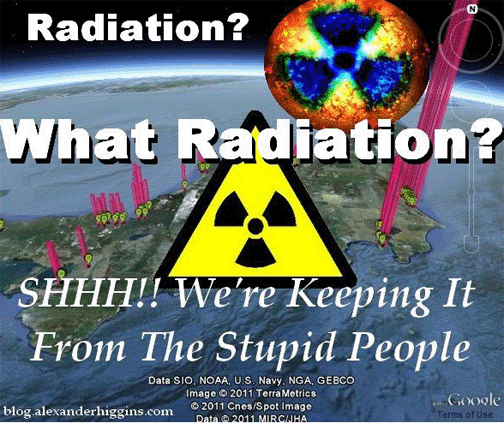
Recommending nuclear power as a a cure for climate change is like recommending cigarette-smoking as a cure for obesity – Helen Caldicott
Well, it’s just not nice to talk about ionising radiation right now – when we’re all gearing up for the COP26 Glascow climate change talkfest . I mean, by now the nuclear lobby has probably bribed its way into the conference, along with other corporations.
You’re allowed to mention – costs , safety, even time delay – in assessing the relationship of the nuclear industry to global heating.
Strangely – you can talk about the rapid health effects of tiny invisible viruses. BUT NOT the slow drawn out effects of tiny particles of low-level ionising radiation. Health impacts of unseen dangers
Especially ignored are thg effects of Internal exposure – radioactive particles taken in by breathing or swallowing:
The dangers are probably still small for most foods, but hazards are tenfold to a hundredfold for children, infants, and fetuses, who have the fastest rates of mitosis and development. Rapidly dividing cells in the young are most sensitive in any organism. Similarly, organs with rapidly dividing cells are affected (bone marrow, digestive tract, skin). So risk avoidance is most important for the young.

Some of the list of long-term impacts for human health include the following:
- Circulatory damage (high blood pressure, rhythm disturbances, MI, stroke, cardiomyopathies, rhythm disturbances artery spasm, especially during cardiac stress such as temperature extremes, physical/emotional stress) (Bandazhevsky, 2001)
- Hematologic problems (leukemias especially)
- Endocrine problems (especially Hypothyroidism, thyroid nodules/Cancer, and Diabetes)
- Immune system
- Uro-genital system
- Musculoskeletal system
- Dental problems as cesium replaces calcium in teeth and bones
- Central nervous system and psyche
- The eye (cataracts and retinopathies)
- Increase in congenital malformations
- Increase in cancers
- Accelerated aging
- Increased frequency of mutations
- Fertility problems and Change in secondary sex ratio (Yablokov, 2012)
Interaction of Nuclear Waste With the Environment More Complicated Than Previously Thought

Interaction of Nuclear Waste With the Environment May Be More Complicated Than Previously Thought, https://www.technologynetworks.com/applied-sciences/news/interaction-of-nuclear-waste-with-the-environment-may-be-more-complicated-than-previously-thought-353879, September 22 2021
| Original story from the Lawrence Livermore National Laboratory Lawrence Livermore National Laboratory (LLNL) scientists and collaborators have proposed a new mechanism by which nuclear waste could spread in the environment.
The new findings, which involve researchers at Penn State and Harvard Medical School, have implications for nuclear waste management and environmental chemistry. The research is published in the Journal of the American Chemical Society.
“This study relates to the fate of nuclear materials in nature, and we stumbled upon a previously unknown mechanism by which certain radioactive elements could spread in the environment,” said LLNL scientist and lead author Gauthier Deblonde. “We show that there are molecules in nature that were not considered before, notably proteins like ‘lanmodulin’ that could have a strong impact on radioelements that are problematic for nuclear waste management, such as americium, curium, etc.”
Past and present nuclear activities (e.g., for energy, research or weapon tests) have increased the urgency to understand the behavior of radioactive materials in the environment. Nuclear wastes containing actinides (e.g. plutonium, americium, curium and neptunium) are particularly problematic, as they remain radioactive and toxic for thousands of years.
However, very little is known about the chemical form of these elements in the environment, forcing scientists and engineers to use models to predict their long-term behavior and migration patterns. Thus far, these models have only considered interactions with small natural compounds, mineral phases and colloids, and the impact of more complex compounds like proteins has been largely ignored. The new study demonstrates that a type of protein that is abundant in nature vastly outcompetes molecules that scientists previously considered as the most problematic in terms of actinide migration in the environment.
“The recent discovery that some bacteria specifically use rare-earth elements has opened new areas of biochemistry with important technological applications and potential implications for actinide geochemistry, because of chemical similarities between the rare-earths and actinides,” said Joseph Cotruvo Jr., Penn State assistant professor and co-corresponding author on the paper.
The protein called lanmodulin is a small and abundant protein in many rare-earth-utilizing bacteria. It was discovered by the Penn State members of the team in 2018. While the Penn State and LLNL team has studied in detail how this remarkable protein works and how it can be applied to extract rare-earths, the protein’s relevance to radioactive contaminants in the environment was previously unexplored.
“Our results suggest that lanmodulin, and similar compounds, play a more important role in the chemistry of actinides in the environment than we could have imagined,” said LLNL scientist Annie Kersting. “Our study also points to the important role that selective biological molecules can play in the differential migration patterns of synthetic radioisotopes in the environment.”
“The study also shows for the first time that lanmodulin prefers the actinide elements over any other metals, including the rare-earth elements, an interesting property than could be used for novel separation processes,” said LLNL scientist Mavrik Zavarin.
Rare-earth element biochemistry is a very recent field that Penn State and LLNL have helped to pioneer, and the new work is the first to explore how the environmental chemistry of actinides may be linked to nature’s use of rare-earth elements. Lanmodulin’s higher affinity for actinides might even mean that rare-earth-utilizing organisms that are ubiquitous in nature may preferentially incorporate certain actinides into their biochemistry, according to Deblonde.
Reference
Deblonde GJ-P, Mattocks JA, Wang H, et al. Characterization of Americium and Curium Complexes with the Protein Lanmodulin: A Potential Macromolecular Mechanism for Actinide Mobility in the Environment. J Am Chem Soc. Published online September 20, 2021. doi:10.1021/jacs.1c07103
Chernobyl nuclear zone is becoming more radioactive: they don’t know why.
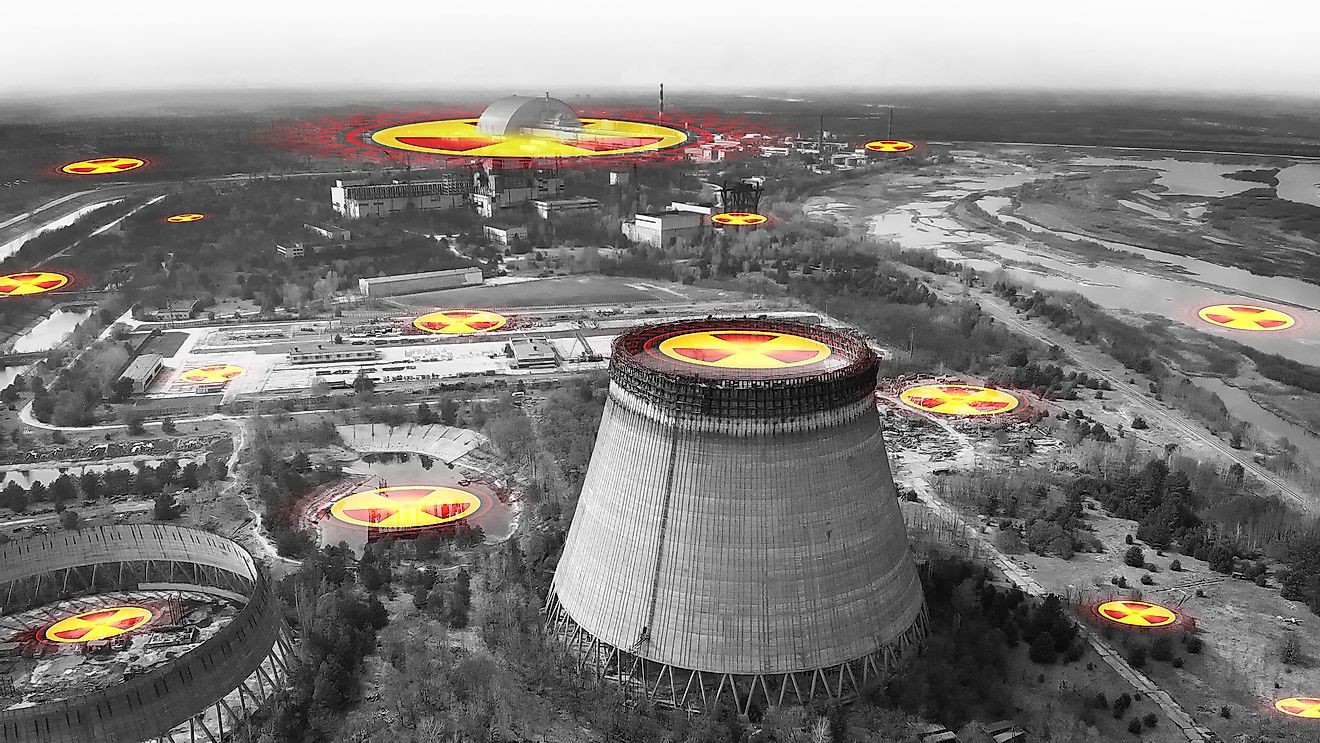
Chernobyl’s Blown Up Reactor 4 Just Woke Up. Scientists don’t understand why. https://historyofyesterday.com/chernobyls-blown-up-reactor-4-just-woke-up-74bedd5fc92d—
Andrei Tapalaga
The nuclear disaster that occurred in 1986 will forever be remembered, but the world will soon have a reminder of the event as the zone for some reason (yet unexplained by scientists)is becoming more radioactive. For those who may not be aware of the incident here is an article to get you up to speed.
“Chernobyl will never be a problem”
Underneath reactor 4 there is still nuclear fuel that is active and which will take around 20,000 years for it to deplete. The uranium is too radioactive for anyone to live in the city and since the incident, the European Union had created a shield around the reactor which should not allow for the radioactive rays to come out.Chernobyl officials presumed any criticality risk would fade when the massive New Safe Confinement (NSC) was slid over the Shelter in November 2016.”
“The €1.5 billion structure was meant to seal off the Shelter so it could be stabilized and eventually dismantled.”
However, many other parts around Chernobyl have also been affected due to prolonged exposure, some more than others, and many of them have not been contained as they were not presenting any major radioactive activity until now. Neil Hyatt, a nuclear chemist from the University of Sheffield had mentioned that there is a possibility for the uranium fuel to reignite on its own.
Hyatt also offered a simple explanation on how this is possible, just like charcoal can reignite in a barbeque, so can nuclear materials that have once been ignited. He as well as a handful of nuclear chemists have mentioned previously the possibility of the uranium from Chernobyl to reignite, but the scientists from Ukraine that are responsible for managing the nuclear activity within the vicinity never really listened, until now.
Scientists from Ukraine have placed many sensors around reactor 4 that constantly monitor the level of radioactivity. Recently those sensors have detected a constant increase in the level of radioactivity. It seems that this radioactivity is coming from an unreachable chamber from underneath reactor 4 that has been blocked since the night of the explosion on the 26th of April, 1986.
What could be causing this?
The experts from Ukraine don’t really understand why this is happening although they do have a hypothesis. Water is used to start the fission process within nuclear materials, this makes the nuclear material release energy that within a nuclear reactor can be maintained under control, but in this instance, the experts are afraid they will not be able to control it.
Another hypothesis is that since reactor 4 has been completely shielded, no water from the rain was able to reach the nuclear fuel. The water from rain may have been what kept the nuclear material under control. With no water, the nuclear fuel may be at risk of overheating, leading to another nuclear disaster.
There may be another reason for this constant increase in radioactivity, what has been mentioned above are only hypotheses, maybe something totally different is occurring under reactor 4 or within the nuclear material left inside. This is something that definitely should ring some alarm bells in order to prepare for the worst sort of situation and hopefully the world’s smartest in the field of nuclear chemistry can come together to identify the problem and come up with a potential solution.
Sources:…………
1 This Month

of the week – Shut Down Drone Warfare!


Tell the Ukrainian Government to Drop Prosecution of Peace Activist Yurii Sheliazhenko

Petition to revoke the licensing of the Near Surface Nuclear Disposal Facility (NSDF) at Chalk River. https://www.ourcommons.ca/petitions/en/Petition/Details?Petition=e-7247
To see nuclear-related stories in greater depth and intensity – go to https://nuclearinformation.wordpress.com
-
Archives
- March 2026 (244)
- February 2026 (268)
- January 2026 (308)
- December 2025 (358)
- November 2025 (359)
- October 2025 (376)
- September 2025 (257)
- August 2025 (319)
- July 2025 (230)
- June 2025 (348)
- May 2025 (261)
- April 2025 (305)
-
Categories
- 1
- 1 NUCLEAR ISSUES
- business and costs
- climate change
- culture and arts
- ENERGY
- environment
- health
- history
- indigenous issues
- Legal
- marketing of nuclear
- media
- opposition to nuclear
- PERSONAL STORIES
- politics
- politics international
- Religion and ethics
- safety
- secrets,lies and civil liberties
- spinbuster
- technology
- Uranium
- wastes
- weapons and war
- Women
- 2 WORLD
- ACTION
- AFRICA
- Atrocities
- AUSTRALIA
- Christina's notes
- Christina's themes
- culture and arts
- Events
- Fuk 2022
- Fuk 2023
- Fukushima 2017
- Fukushima 2018
- fukushima 2019
- Fukushima 2020
- Fukushima 2021
- general
- global warming
- Humour (God we need it)
- Nuclear
- RARE EARTHS
- Reference
- resources – print
- Resources -audiovicual
- Weekly Newsletter
- World
- World Nuclear
- YouTube
-
RSS
Entries RSS
Comments RSS
 nuclear-news